
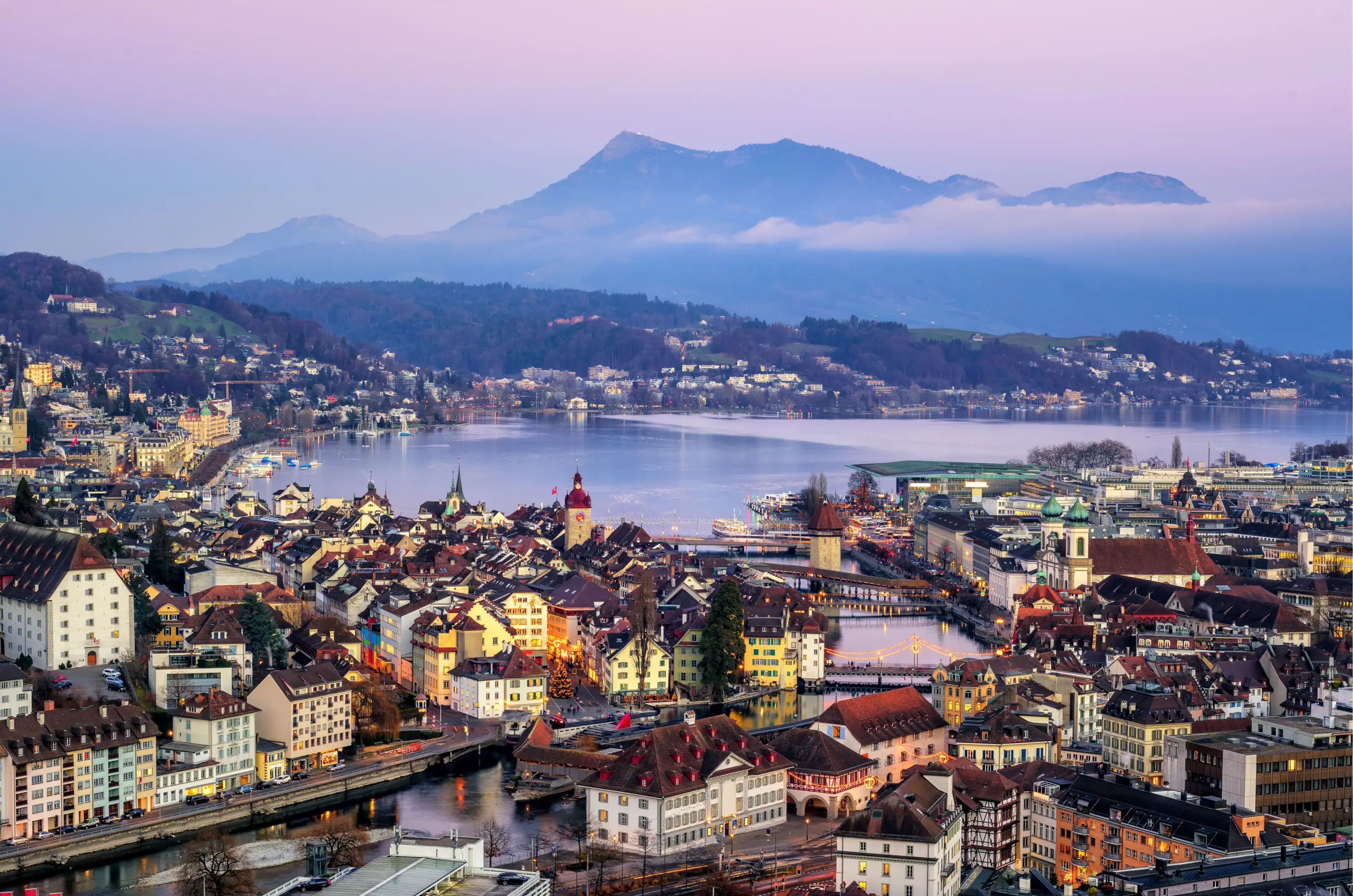


Lucerne Travel Guide

Must See Attractions in Lucerne

Kapellbrücke, also known as Chapel Bridge, is the oldest covered wooden bridge in Europe that was constructed around 1332. The bridge was named after St. Peter’s Chapel, which is located near the bridge. There are many 17th century paintings inside the bridge, however many of them were destroyed in a fire in 1993. Chapel Bridge is connected to the octagonal water tower located at the southern end of the bridge. The two are considered to be Lucerne’s most famous landmarks and are a must-see on any trip to Lucerne.
Read more

Glacier-fed water and a dreamy fjord-like landscape make Switzerland’s fourth-largest lake one of the top attractions in Lucerne. The shores of Lake Lucerne are lined with small fishing villages and towns that can be visited by ferry boats all year round. Sail away on one of the many cruises operating on Lake Lucerne. Many of the routes include stops at the quaint Swiss villages found along the shore. You can also hike or cycle along one of the trails surrounding the lake. One of the most popular is the Swiss Path, starting on the southern end, which offers gorgeous views of the lake and alps.
Read more
Set on the north side of the River Reuss, Old Town Lucerne is a charming neighborhood filled with well-preserved medieval buildings and romantic cobblestone streets. Despite its small size, stunning pieces of architecture and vivid murals can be seen every which way your turn. Give yourself a few hours to soak in the quaint ambiance of this historic district. You can stop at one of the cozy cafes or decadent chocolate shops along the way, and walk through the marketplace situated near the town hall.
Read more
Located at the southern end of Old Town Lucerne, the Spreuer Bridge is a medieval wooden footbridge that was originally constructed around 1400. Its name can be traced back to the medieval ages when citizens threw chaffs of wheat (spreu) into the river from the bridge. The artist, Kaspar Meglinger, painted 67 works that represent the Dance of Death along the roof of the bridge. These dark paintings depict local feelings about death during the time of the Black Plague. As you walk through the covered bridge, you can gaze at the paintings tucked beneath the rafters.
Read more
Carved into the face of a former sandstone quarry, the Lion of Lucerne (Lion Monument) is a rock relief dedicated to more than 600 Swiss Guards who were killed on duty during a massacre in 1792. The slain lion is portrayed in his lair, a broken spear pierced through the shoulder. The Latin inscription, under the Lion reads “Helvetiorum fidei ac virtuti”, meaning “To the loyalty and bravery of the Swiss.” The American author, Mark Twain, stated that the monument is “the saddest and most moving piece of rock in the world.” Be sure to see this impressive attraction on your visit to Lucerne.
Read moreShow more
Optional Day Trips from Lucerne

Bern is the capital city of Switzerland, with roots that can be traced all the way back to the 12th century. Bern’s Altstadt (Old Town) became a UNESCO World Heritage site in 1983 and remains full of the preserved medieval architecture of its early days. Don’t miss the Französische Kirche (French Church) and the Zytglogge clock tower, both of which were built during the 13th century. Stroll along the covered arcade extending through the city, filled with shops, restaurants, and cafes. Visitors who wish to learn more about Swiss history will enjoy a tour through the House of Parliament (Bundeshaus). Other attractions in Bern include the Rose Garden above Bear Park, the Swiss Alpine Museum, and the Zentrum Paul Klee.
Read more
With its towering height, Mount Pilatus keeps watch over the city of Lucerne. A variety of legends surround this magnificent mountain. Some claim that dragons with healing powers once lived within the mountain’s caverns. Others say that Roman General Pontius Pilate was buried somewhere around the slopes. The top of Mount Pilatus is easily accessible via the Pilatus Railway, the steepest cogwheel railway in the world. On the way up you’ll pass by forests, meadows, and rock faces. At the summit, you’ll be greeted by surreal panoramic views of the Swiss Alps; there are also hiking trails, a toboggan run, and a restaurant.
Read more
Often referred to as the Queen of the Mountains, Rigi Klum is the highest peak of Mount Rigi with a height of 1798m/5896ft above sea level. The summit can be reached by either the Vitznau or Arth-Goldau route via the cogwheel train. From the peak, it is possible to see as many as 13 Swiss lakes, the Black Forest in Germany, and the Vosges mountain range in France. At the mountain’s summit, you can choose from a variety of activities, including hiking trails along the ridge and toboggan runs during the winter. You can also enjoy a drink or meal at the restaurant on the peak to catch your breath before the next adventure.
Read more
Solothurn is the place where the three major cultural influences of Switzerland come together. This baroque city combines the charming qualities of the French, the grandeur of the Italians, and German pragmatism, resulting in a unique atmosphere all of its own. Eleven is a strangely symbolic number in Solothurn. There are 11 churches and cathedrals to match the 11 fountains and towers, as well as a historic clock that only counts up to the eleventh hour. For a mini excursion outside the city center, you can hike through the Verena gorge, which ends at a rustic hermitage nestled in lush greenery. There are also a variety of trails woven through the Jura mountain range for hikers of all experience levels.
Read moreShow more
Create a custom trip
plan for Lucerne


Travelling made easy:
- ✓ 100% customizable trip
- ✓ On-trip support, around the clock
- ✓ Local travel expertise
Trips Plans Including Lucerne


12 Days

10 Days

12 Days
10 Days
Featured Blogs



Your custom trip package includes

A day to day itinerary

Centrally located hotels
Door to door transportation
Self-guided & private tours
Create Your Perfect Trip in Minutes
Discover A Better Way To Travel.
Once you Go Real, you’ll never go back to ordinary travel.
Hi! Need help planning your dream trip? 🌍