




Split Travel Guide

Must See Attractions in Split

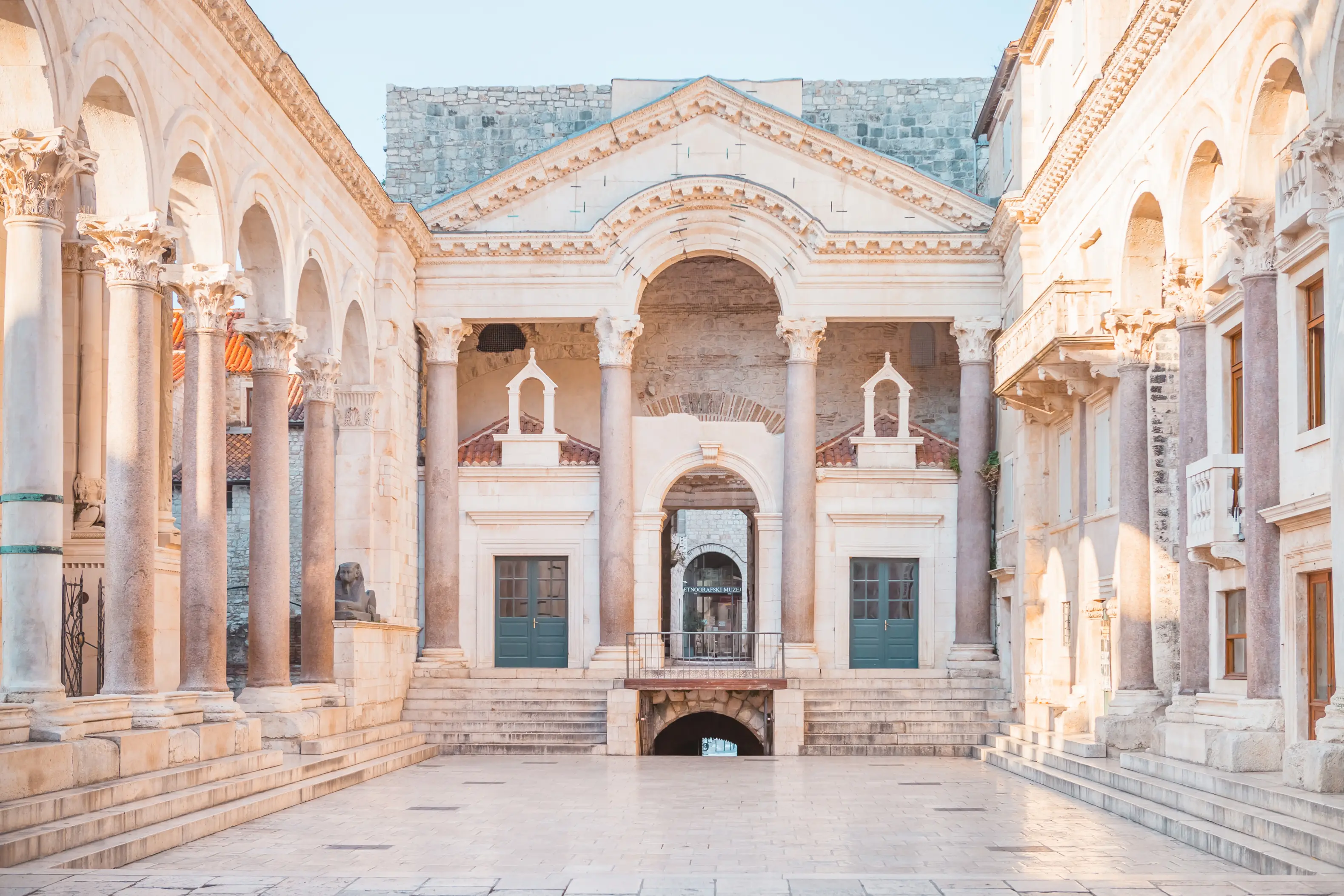
One of the best-preserved Roman ruins in the world, Diocletian’s Palace was built from limestone and marble in the 4th century as a retirement residence for, you guessed it, Emperor Diocletian. Now a UNESCO World Heritage site, the massive palace once covered about 30,000 square meters and today has come to house most of the old town of Split. Since its construction centuries ago, the palace itself has undergone many changes to fit the needs of the residents who still live there today, but the basic structure is still in place. Most of Diocletian’s Palace is open to the public since it makes up a good portion of the city. You can walk through the alleys, which were once hallways, and browse the trendy shops, cafes, and restaurants. There are also several monuments within the palace walls, such as the Split Bell Tower, the Cathedral of St. Domnius Treasury, and Diocletian’s Palace Underground. Game of Thrones fans will appreciate Diocletian’s Palace as it served as a filming location for the city of Meereen.
Read more

The most popular beach in Split since 1919, Bačvice Beach is a natural sandy beach and a favorite of locals and visitors alike. Perhaps most well-known for being the site of the invention and perfection of picigin, or “Split rugby,” Bačvice has hosted the picigin world championships each year since 2005. For any beachgoers visiting Split, this is the perfect place to go. It’s close to the center, large enough to hold over 10,000 people, and there are several shops, bars, and restaurants where you can buy refreshments during your beach day. The water here is also fairly shallow, making it perfect for families and beach games. At night, once most beachgoers have finished swimming and sunbathing, Bačvice transforms into a popular nightlife area, with many bars and nightclubs open until the wee hours of the morning.
Read more
When you’ve had enough of the crowds, head to the Veli Varos neighborhood of Split and up to Marjan Hill. Veli Varos is one of the oldest suburbs in Split, founded by farmers and fishermen in the 17th century. The hill of the Marjan Peninsula also holds its own bit of history: the remains of a Jewish cemetery from the 16th century, along with chapels and other religious structures from the 13th and 14th centuries. During your walk through the Veli Varos neighborhood, you’ll get an authentic idea of what daily life is like in Split. The winding streets are lined with old peasant houses, ancient churches, and monasteries. Once you reach the heights of Marjan Hill, you’ll find some of the best views in Split. From the highest point of the hill, you can see the islands of Brač, Hvar, and Šolta. Nearby are nature trails and forests, plus quiet beaches that are a pleasant escape from the chaotic beaches closer to the center.
Read moreShow more
Optional Day Trips from Split

Situated on the steep cliffs in the pass between the mountains Mosor and Kozjak, Klis Fortress overlooks the city of Split. The fortress itself is over 2000 years old and was initially used as a stronghold before the fall of the Roman Empire, after which it became the seat of Croatian kings. The fortress continued to play a significant and strategic role in empires, kingdoms, invasions, and conflicts to come until finally, the Republic of Croatia was established. The entire fortress is open to the public, with no locked doors or restricted areas, so you’re free to explore. The view from the fortress is unparalleled: you’ll be able to see all of the city of Split below, along with the Adriatic Sea. An on-site museum will tell you more about Klis’s role in history. Most notably, Klis Fortress was used as a filming location for the city of Meereen in Game of Thrones.
Read more
Island-hopping is a popular pastime for visitors to Split, and if it’s on your itinerary, Hvar Island is one you won’t want to miss. People have been living on the island since prehistoric times, and the oldest representation of a boat in Europe was discovered on a piece of ancient island pottery. Throughout the centuries, Hvar came to be inhabited and controlled by several different rulers, including the early Croatians, the Venetians, the Austrian empire, and finally, the Kingdom of Yugoslavia. Today, traces of the island’s turbulent and culturally diverse history can be seen at every turn. Hvar is home to Europe’s first civic theatre, which is now open to the public. You can also visit other historical landmarks like the Church of St. Mark and the Archaeological Collection or the fort Fortica. Hvar Island is known as one of the most luxurious beach destinations and is also the sunniest place in Croatia. Whether you’re looking to have a night out at a club or relax in lavender fields and quiet coves, Hvar has something for every type of traveler.
Read more
Brač is another Croatian Island whose history dates back to prehistoric times, supposedly as far back as the Bronze Age. Throughout the centuries to come, the island was also dominated by many different empires, including the Romans, the Venetians, the Austro-Hungarians, and the Yugoslavians. The largest island in central Dalmatia, Brač Island is famous for being the source of the stone used to build the magnificent Diocletian’s Palace in Split. Brač Island is also well-known for Zlatni Rat, a pebble beach in the small village of Bol, one of the main centers of the island. The other main center is Supetar, which is much more built-up than Bol. Supetar is the capital of the island and also its largest town. Here, you’ll find exclusive beach resorts, along with some historical relics, such as an 18th-century church and a cemetery full of old sculptures. Less crowded than the other Croatian islands and full of beautiful beaches waiting to be explored, this island is the perfect getaway.
Read more
Trogir, nicknamed “The Stone Beauty,” is another town that changed hands quite a few times throughout history. Trogir reached its peak between the 13th and 15th centuries during Venetian rule, and most of the pieces of historical architecture you can admire today come from the same period. Because of its impressive collection of both Roman and Renaissance architecture, Trogir became a UNESCO World Heritage Site in 1997. Located on a small island linked by bridges to the mainland of Croatia and the larger Čiovo Island, Trogir is surrounded by medieval walls and boasts a lot of history and culture in its center. Once you’re done sightseeing, meander over to the marble streets of the waterside promenade, where you’ll find seaside dining, cafes, yachts, and bustling markets with local specialties and crafts.
Read more
For those of you looking for a more active outdoor adventure, you’ll want to check out Mosor Mountain. Part of the Dinaric Alps, Mosor stretches parallel to the Adriatic coast, and the views are absolutely incredible from all sides. Mosor looms over the area between Split and Omiš and makes up one side of the ravine where the Klis Fortress is located. Hiking Mosor Mountain is bound to take your breath away. From its highest peak at 1339 meters, you can see the open Adriatic Sea, along with all the Dalmatian islands. It also offers a panoramic view of Split. Thanks to several paths and marked trails, hikers of all levels will find something to explore. Hiking typically starts close to the observatory at Sitno gornje, and from there, you can choose your route. The mountain lodge Umberto Girometta is also located along the trails, so you’ll have a place to rest your feet before continuing up the mountain to those spectacular views.
Read moreShow more
Create a custom trip
plan for Split
Travelling made easy:
- ✓ 100% customizable trip
- ✓ On-trip support, around the clock
- ✓ Local travel expertise


Featured Blogs





Your custom trip package includes

A day to day itinerary

Centrally located hotels

Door to door transportation

Self-guided & private tours
Create Your Perfect Trip in Minutes
Discover A Better Way To Travel.
Once you Go Real, you’ll never go back to ordinary travel.
Hi! Need help planning your dream trip? 🌍