Austria, Germany, and Switzerland: Castles, Culture & Captivating Nature

destination-icon12 Day Tour of Vienna, Salzburg, Heidelberg and Lucerne

Destinations on this trip: Vienna,Salzburg,Heidelberg,Lucerne

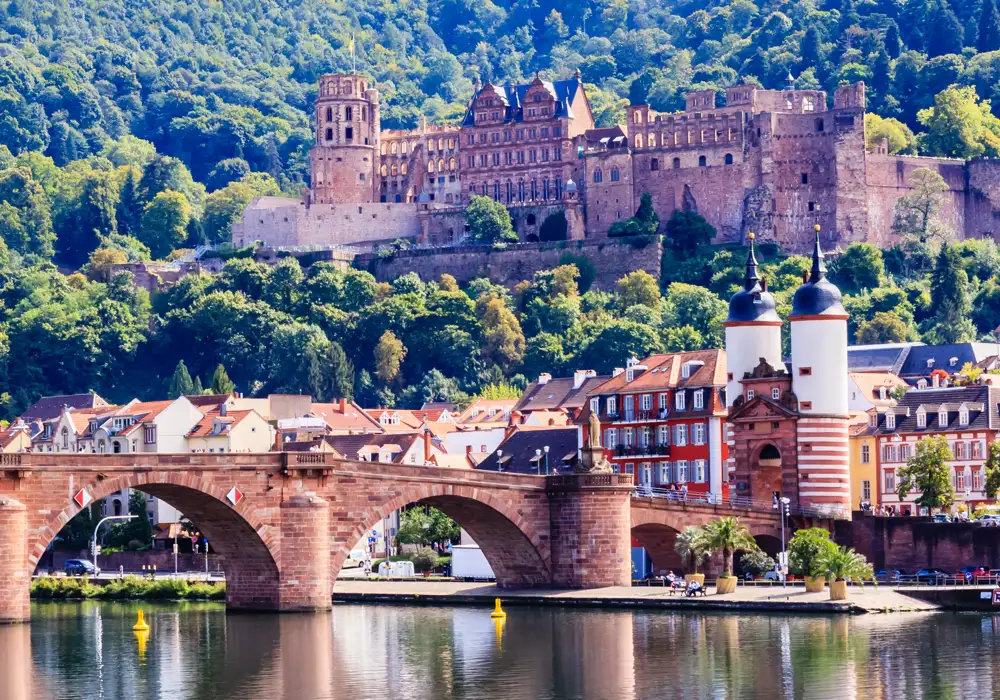
Heidelberg bridge
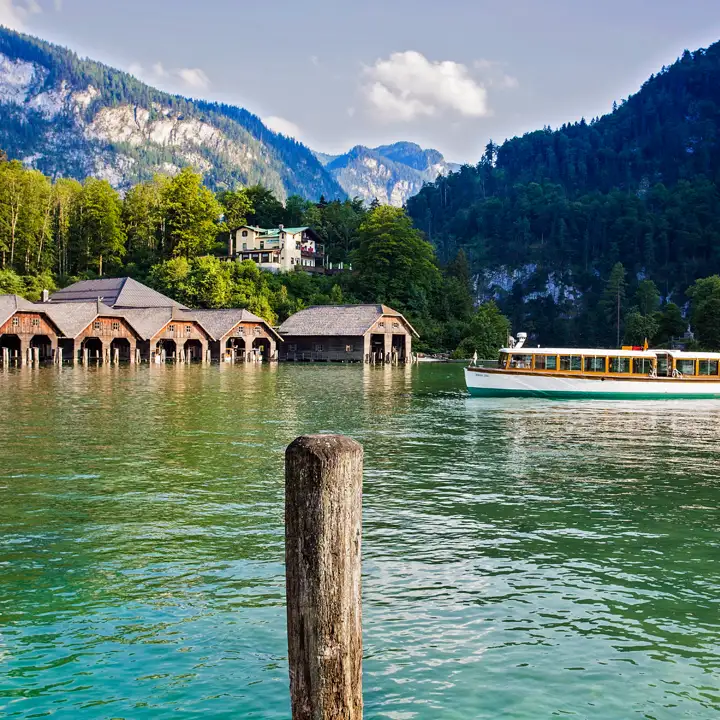
View of the Alps from Berchtesgaden
Wachau Valley on the Danube in Austria
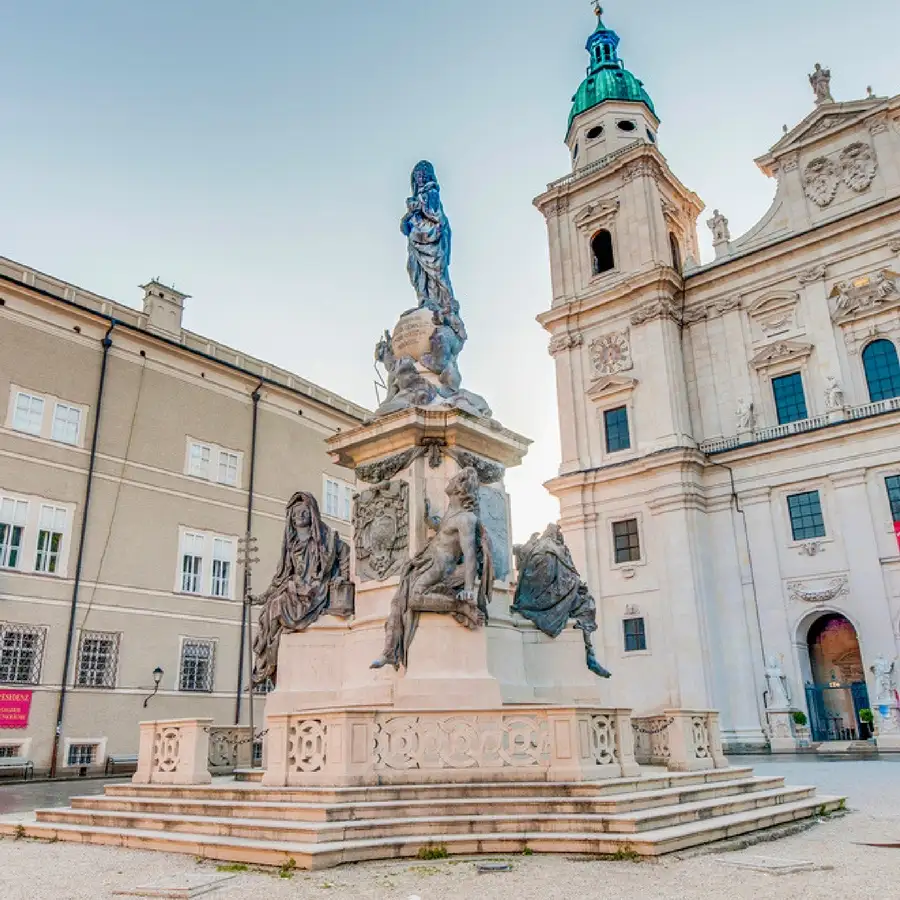
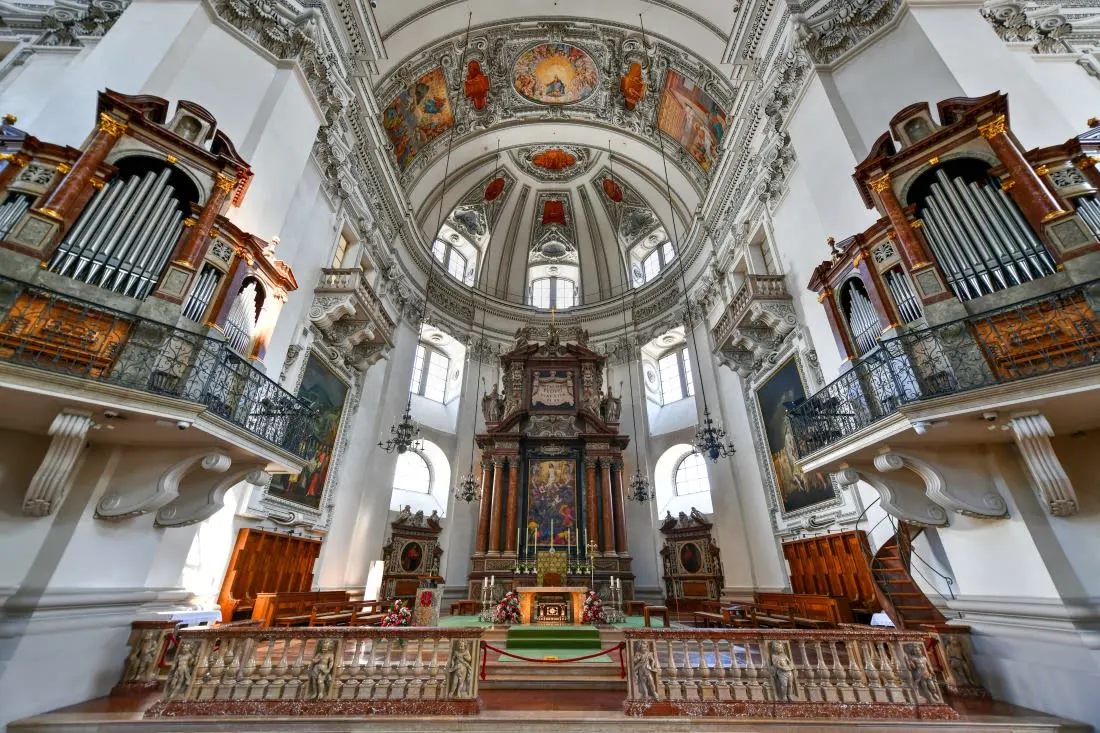
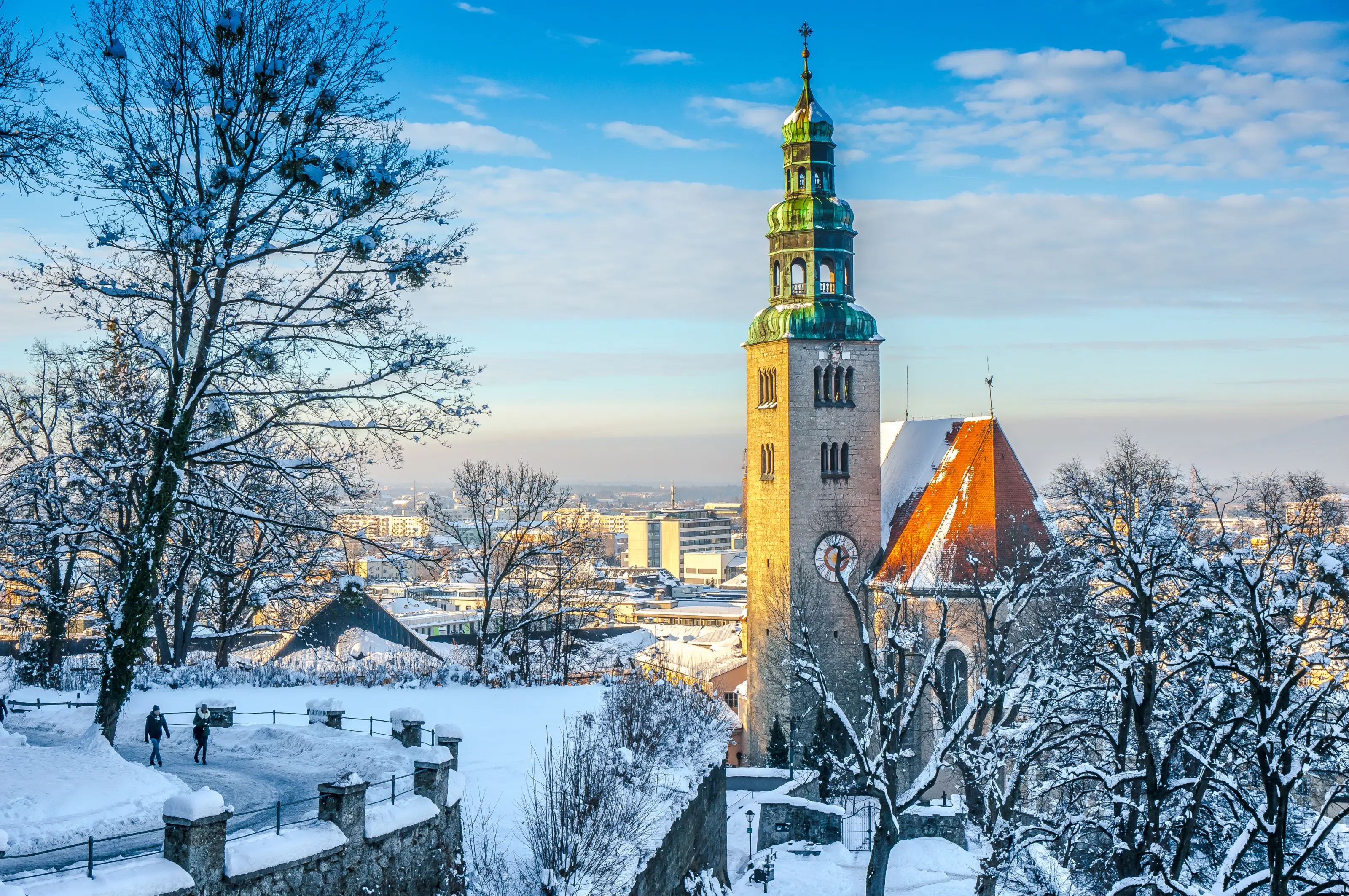
Salzburg Cathedral
image
arrowLightLeft
arrowLightRight

How Long Is the Austria, Germany & Switzerland Trip and What Does It Cost?

Nature LoversCastle & Palace Tours
  • Duration
    12 days / 11 nights
  • Best time
    Jan-Dec
  • From
    $2675 / person (Flights not included)
See charming towns, dramatic castles, and stunning landscapes on this remarkable journey through the heart of Europe. This itinerary takes you from Vienna’s imperial splendor to Salzburg’s Baroque treasures, and then from Heidelberg’s old town to Lucerne’s elegant lakeside historic center. You’ll see some of Europe’s most storied palaces and castles, visiting Schönbrunn Palace, Neuschwanstein Castle, and Heidelberg Castle. Wander picturesque old towns, savor Swiss chocolates, and marvel at the Swiss Alps from Mount Pilatus. With detailed travel guidance via our mobile app, Go Real Travel ensures a seamless, enriching adventure.
  • Explore Schönbrunn Palace’s opulent rooms and vast gardens in Vienna.
  • Cruise the Danube River’s most scenic valley and an enchanting lake in the Bavarian Alps.
  • Discover Heidelberg Castle’s atmospheric ruins and stunning views over its Altstadt.
  • Experience the world’s steepest cog-wheel train ride up Mount Pilatus and be amazed by the views.
  • Enjoy a private guided tour of Lucerne, including the Lion Monument and Chapel Bridge.
See charming towns, dramatic castles, and stunning landscapes on this remarkable journey through the heart of Europe. This itinerary takes you from Vienna’s imperial splendor to Salzburg’s Baroque treasures, and then from Heidelberg’s old town to Lucerne’s elegant lakeside historic center. You’ll see some of Europe’s most storied palaces and castles, visiting Schönbrunn Palace, Neuschwanstein Castle, and Heidelberg Castle. Wander picturesque old towns, savor Swiss chocolates, and marvel at the Swiss Alps from Mount Pilatus. With detailed travel guidance via our mobile app, Go Real Travel ensures a seamless, enriching adventure.
  • Explore Schönbrunn Palace’s opulent rooms and vast gardens in Vienna.
  • Cruise the Danube River’s most scenic valley and an enchanting lake in the Bavarian Alps.
  • Discover Heidelberg Castle’s atmospheric ruins and stunning views over its Altstadt.
  • Experience the world’s steepest cog-wheel train ride up Mount Pilatus and be amazed by the views.
  • Enjoy a private guided tour of Lucerne, including the Lion Monument and Chapel Bridge.
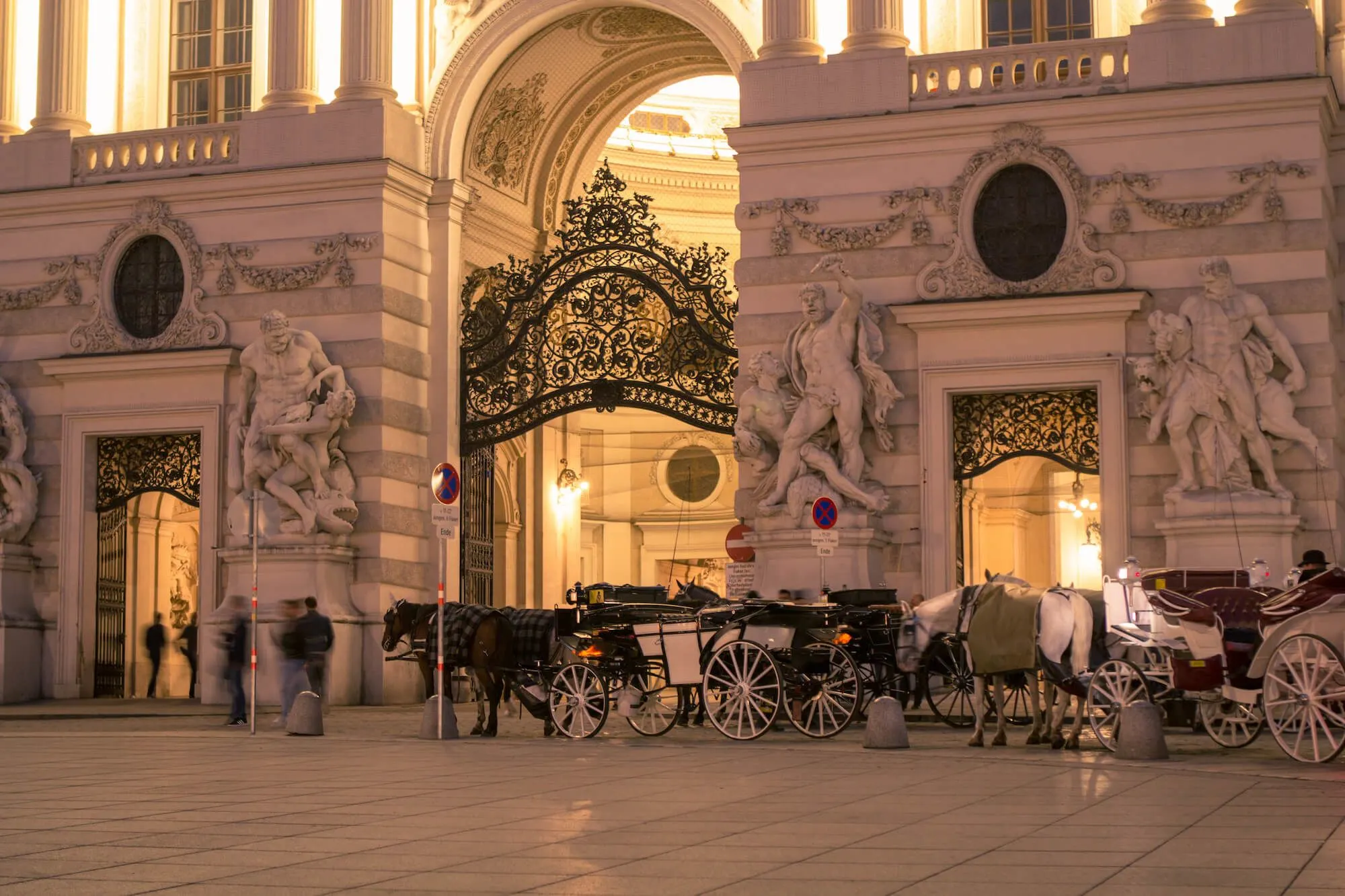
Hofburg Palace - Must-See Sight
Hofburg Palace
Castles & Chateaux
St Stephen’s Cathedral - Must-See Sight
St Stephen’s Cathedral
Churches & Monasteries
Schönbrunn Palace & Zoo - Must-See Sight
Schönbrunn Palace & Zoo
Parks & Gardens
Hohensalzburg Fortress - Must-See Sight
Hohensalzburg Fortress
Castles & Chateaux
Old Town - Must-See Sight
Old Town
Architecture
Heidelberg Castle - Must-See Sight
Heidelberg Castle
Castles & Chateaux
Church of the Holy Spirit  - Must-See Sight
Church of the Holy Spirit
Churches & Monasteries
Lake Lucerne - Must-See Sight
Lake Lucerne
Natural Beauty
Old Town  - Must-See Sight
Old Town
Historic Landmarks

Must see sights

Hofburg Palace - Must-See Sight
Hofburg Palace
Castles & Chateaux
St Stephen’s Cathedral - Must-See Sight
St Stephen’s Cathedral
Churches & Monasteries
Schönbrunn Palace & Zoo - Must-See Sight
Schönbrunn Palace & Zoo
Parks & Gardens
Hohensalzburg Fortress - Must-See Sight
Hohensalzburg Fortress
Castles & Chateaux
Old Town - Must-See Sight
Old Town
Architecture
Heidelberg Castle - Must-See Sight
Heidelberg Castle
Castles & Chateaux
Church of the Holy Spirit  - Must-See Sight
Church of the Holy Spirit
Churches & Monasteries
Lake Lucerne - Must-See Sight
Lake Lucerne
Natural Beauty
Old Town  - Must-See Sight
Old Town
Historic Landmarks
Loading...

Starting from

$2675

per person

no-flightNot included

Price varies by group size, hotel selection, and travel season.


Secure Your Customizable Trip

Enter your details to embark on a journey that can be tailored just for you.

Start

Travelers

0 travelers
Add Room
Remove Room

Preferred Hotel Stars

Select Hotel Stars
Craft Your Own Itinerary

Select your interests and destinations for a trip plan inspired by you.

Where Does the Austria, Germany & Switzerland Trip Trip Go?

Enable/Disable Map Scrolling

Click To Make Map Interactive

Austria, Germany & Switzerland Trip Timeline

Arrival

3 nights

Vienna

Austria

Train: 2.5h

3 nights

Salzburg

Austria

Train: 5h

2 nights

Heidelberg

Germany

Train: 0.5h

Train: 2.5h

Train: 1.5h

3 nights

Lucerne

Switzerland

Departure

What Does the Austria, Germany & Switzerland Trip Itinerary Look Like?

image

Day 1

Arrive Vienna

Day 1

Arrive Vienna

icon
icon
icon

To Be Determined

Taxi Transfer to Hotel

Vienna has one main airport, Vienna International Airport, where almost all visitors arrive. Taxis are available directly at the terminal exit, or you can arrange a private transfer for added convenience. Uber is also available to those who have the app.

Taxi Transfer to Hotel

To Be Determined — Taxi Transfer to Hotel

Vienna has one main airport, Vienna International Airport, where almost all visitors arrive. Taxis are available directly at the terminal exit, or you can arrange a private transfer for added convenience. Uber is also available to those who have the app.

Mid-Day/Afternoon — Ring Street

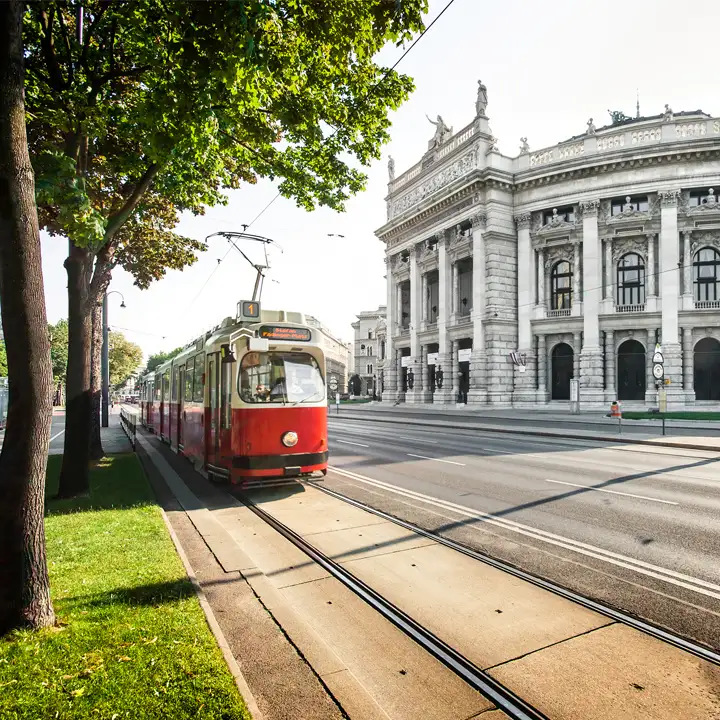
The Ringstrasse, or the Ring Street, surrounds Vienna's old town where the city walls once stood until the 19th century. The Austro-Hungarian Empire was at the height of its prosperity at the time the walls were torn down, and so it lined the wide Ringstrasse with monumental buildings such as the neo-Gothic town hall and neo-Classical parliament buildling. A fun experience is to take a tram ride around the entire length of the Ringstrasse, soaking in the full richness of the spectacle.

Rathaus (City Hall)

Get in touch with the local vibe at the Rathausplatz, a huge square in front of the Vienna City Hall.

The 19th-century city hall was built in a fanciful neo-Gothic style with 30 million bricks. It is an important center for social life in the city, hosting balls, concerts, and other events. The square in front of the hall is home to activities all year long, including markets, food fairs, exhibitions, and the city's biggest Christmas Market. 

Natural History Museum

Explore one of the world's most important natural history collections.

The museum is a treasure trove of anthropological and archeological exhibits, including dinosaurs and other extinct animals, precious gems, and more. It also holds the famous pre-historic finds from the Austrian village of Hallstatt, where an ancient salt mine was located.

Kunsthistorisches Museum

Find artistic bliss in this lavish 19th-century museum housing art collections & antiquities.

The Kunsthistorisches Museum, or Art History Museum, is one of the world's most important collections of art. It houses many masterpieces as well as ancient and classical art antiquities. Its amazing interior is worth seeing just on its own merits, and includes an incredible mural painted by Gustav Klimt.

Late Afternoon/Early Evening — Inner City

When the Viennese say they are going “into the city”, they are talking about the Inner City (Innere Stadt). The Inner City corresponds to Vienna’s original medieval city, which was once surrounded by defensive walls that stood where the Ringstrasse (Ring Street) now runs. A warren of medieval alleyways crowded into the protected space between the walls, creating a dense network of pedestrian streets that remains to this day.

St. Stephen's Cathedral

Visit this awe-inspiring cathedral which is one of the most important and renowned Gothic buildings in Central Europe.

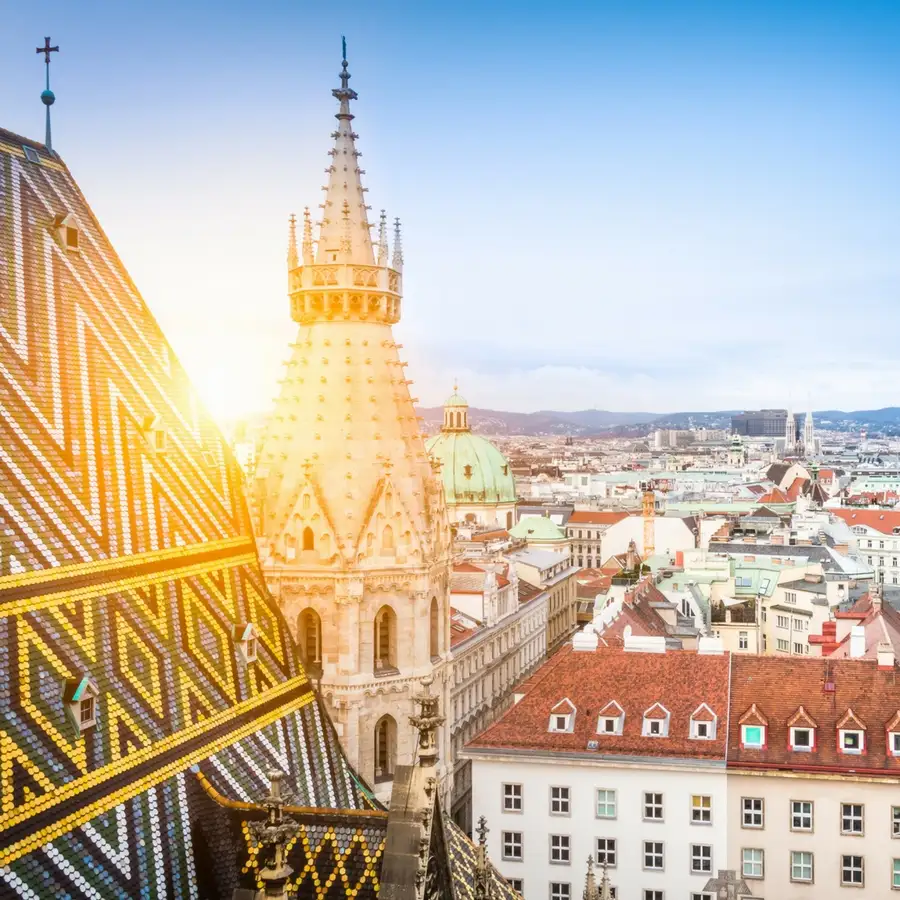
The cathedral is Vienna’s most famous landmark and dominates the Inner City. Founded in 1147 A.D. and built over hundreds of years, it has elements of both Romanesque and Gothic architecture. You can also climb the (many) steps of the tower for a view.

The Graben

Walk the most famous street in Vienna and see stunning monuments and beautiful architecture.

Vienna’s main street since the Middle Ages, this wide pedestrian boulevard abounds in cafes, smart shops, and atmosphere. There are two fountains and a column (built as thanks for the end of the plague), which are beautiful examples of Baroque architecture. Also hidden on the street is the world's most beautiful public restroom.

Mozarthaus

Get to know Mozart in his former apartment, where he spent his happiest years.

Despite his modern-day association with Salzburg, Mozart's time in Vienna was his most productive and happy. Here you can learn about Mozart and what life was like for him and others in the city at the time. You can listen to musical selections and see original scores and other materials. 

Peterskirche (Church of St. Peter)

Step into this heavenly 18th-century church featuring incredibly ornate baroque art & architecture.

This church from the early 1700's is Vienna’s first domed baroque building. Amazing architectural details are crammed into the small interior, and glass crypts contain the human remains of martyred saints. There are daily organ recitals in the church.

Jewish Museum

Discover Vienna's rich history of Jewish life.

The museum is located in two separate buildings within the Inner City (one ticket covers both). The branch on the Judenplatz showcases medieval Jewish life, including a virtual tour of life in the 14th century. It is fronted by a monumental Holocaust Memorial. The main branch is located on the street Dorotheergasse.  

image

Day 1

Arrive Vienna


icon
icon
icon

To Be Determined:

Taxi Transfer to Hotel

Mid-Day/Afternoon:

Ring Street

Late Afternoon/Early Evening:

Inner City

Taxi Transfer to Hotel

Taxi Transfer to Hotel

Vienna has one main airport, Vienna International Airport, where almost all visitors arrive. Taxis are available directly at the terminal exit, or you can arrange a private transfer for added convenience. Uber is also available to those who have the app.

To Be Determined — Taxi Transfer to Hotel

Vienna has one main airport, Vienna International Airport, where almost all visitors arrive. Taxis are available directly at the terminal exit, or you can arrange a private transfer for added convenience. Uber is also available to those who have the app.

Mid-Day/Afternoon — Ring Street

The Ringstrasse, or the Ring Street, surrounds Vienna's old town where the city walls once stood until the 19th century. The Austro-Hungarian Empire was at the height of its prosperity at the time the walls were torn down, and so it lined the wide Ringstrasse with monumental buildings such as the neo-Gothic town hall and neo-Classical parliament buildling. A fun experience is to take a tram ride around the entire length of the Ringstrasse, soaking in the full richness of the spectacle.

Rathaus (City Hall)

Get in touch with the local vibe at the Rathausplatz, a huge square in front of the Vienna City Hall.

The 19th-century city hall was built in a fanciful neo-Gothic style with 30 million bricks. It is an important center for social life in the city, hosting balls, concerts, and other events. The square in front of the hall is home to activities all year long, including markets, food fairs, exhibitions, and the city's biggest Christmas Market. 

Natural History Museum

Explore one of the world's most important natural history collections.

The museum is a treasure trove of anthropological and archeological exhibits, including dinosaurs and other extinct animals, precious gems, and more. It also holds the famous pre-historic finds from the Austrian village of Hallstatt, where an ancient salt mine was located.

Kunsthistorisches Museum

Find artistic bliss in this lavish 19th-century museum housing art collections & antiquities.

The Kunsthistorisches Museum, or Art History Museum, is one of the world's most important collections of art. It houses many masterpieces as well as ancient and classical art antiquities. Its amazing interior is worth seeing just on its own merits, and includes an incredible mural painted by Gustav Klimt.

Late Afternoon/Early Evening — Inner City

When the Viennese say they are going “into the city”, they are talking about the Inner City (Innere Stadt). The Inner City corresponds to Vienna’s original medieval city, which was once surrounded by defensive walls that stood where the Ringstrasse (Ring Street) now runs. A warren of medieval alleyways crowded into the protected space between the walls, creating a dense network of pedestrian streets that remains to this day.

St. Stephen's Cathedral

Visit this awe-inspiring cathedral which is one of the most important and renowned Gothic buildings in Central Europe.

The cathedral is Vienna’s most famous landmark and dominates the Inner City. Founded in 1147 A.D. and built over hundreds of years, it has elements of both Romanesque and Gothic architecture. You can also climb the (many) steps of the tower for a view.

The Graben

Walk the most famous street in Vienna and see stunning monuments and beautiful architecture.

Vienna’s main street since the Middle Ages, this wide pedestrian boulevard abounds in cafes, smart shops, and atmosphere. There are two fountains and a column (built as thanks for the end of the plague), which are beautiful examples of Baroque architecture. Also hidden on the street is the world's most beautiful public restroom.

Mozarthaus

Get to know Mozart in his former apartment, where he spent his happiest years.

Despite his modern-day association with Salzburg, Mozart's time in Vienna was his most productive and happy. Here you can learn about Mozart and what life was like for him and others in the city at the time. You can listen to musical selections and see original scores and other materials. 

Peterskirche (Church of St. Peter)

Step into this heavenly 18th-century church featuring incredibly ornate baroque art & architecture.

This church from the early 1700's is Vienna’s first domed baroque building. Amazing architectural details are crammed into the small interior, and glass crypts contain the human remains of martyred saints. There are daily organ recitals in the church.

Jewish Museum

Discover Vienna's rich history of Jewish life.

The museum is located in two separate buildings within the Inner City (one ticket covers both). The branch on the Judenplatz showcases medieval Jewish life, including a virtual tour of life in the 14th century. It is fronted by a monumental Holocaust Memorial. The main branch is located on the street Dorotheergasse.  

image

Day 2

Vienna

Day 2

Vienna

icon
icon
icon

9:00 AM - 11:30 AM

Guided Walk of the Inner City

This tour takes you back in history to explore the Vienna that stood within the old city walls. You will learn about the humble beginnings of Vienna before it became the capital of a great empire and one of the most important cities in Europe. You will discover how Vienna's early inhabitants lived and how they left their mark on the city and its beautiful Medieval, Renaissance, and Baroque architecture.

Guided Walk of the Inner City

9:00 AM - 11:30 AM — Guided Walk of the Inner City

This tour takes you back in history to explore the Vienna that stood within the old city walls. You will learn about the humble beginnings of Vienna before it became the capital of a great empire and one of the most important cities in Europe. You will discover how Vienna's early inhabitants lived and how they left their mark on the city and its beautiful Medieval, Renaissance, and Baroque architecture.

Afternoon/Late Afternoon — Schönbrunn Palace

The magnificent Baroque palace of Schönbrunn is most famously associated with Empress Maria Theresa, who lived here surrounded by 16 little archdukes and duchesses who also happened to be her children. On your tour of the palace, you will see how Maria Theresa and other past imperial residents lived. No visit is complete without a stroll in the vast gardens surrounding the palace.

Schönbrunn Zoo

Join local families enjoying one of Europe's best zoos.

With an entrance directly connected to the Schönbrunn palace gardens, visiting the zoo can be a great addition to any trip to the palace. Founded as an imperial menagerie in 1752, it is the oldest continually operated zoo in the world, and today is home to many rare species such as giant pandas.

Schönbrunn Gardens

Get lost in the huge imperial gardens.

The beautiful park is a mix of formal gardens and woodlands, and is dotted with enchanting statues & fountains, including a massive fountain of Neptune. The Gloriette pavilion sits on a rise opposite the palace and commands a wonderful view. Kids will love the labyrinth, racing to find the tower at the center of the maze.

Early Evening/Evening — Wine Village

Nothing better symbolizes the Viennese love of “gemütlichkeit” (roughly translated as coziness) than the wine villages and vineyards which hug the gentle slopes beneath the Vienna woods. They are home to wine taverns known as Heurigen. The most famous of the wine villages is Grinzing, which is easily reached from the city center by tram. Despite its closeness to the city center, a visit to Grinzing seems to transport you to the countryside, as quaint cottages and cozy old farmhouses create a charming village atmosphere.

image

Day 2

Vienna

image

Day 3

Vienna

Day 3

Vienna

icon
icon

Early Morning to Early Evening

Wachau Valley

A one-and-a-half-hour train ride from Vienna brings you to the town of Melk, where you can tour the vast Melk Abbey. From there you can begin a 22-mile cruise through the Wachau Valley, considered the most beautiful stretch of the entire Danube River. You'll pass medieval castle ruins, hills covered in vineyards, and several charming villages, where you can debark to try some wine or take a hike up to a castle. The valley is also a perfect destination for cyclers and winery tours.

Wachau Valley

Early Morning to Early Evening — Wachau Valley

A one-and-a-half-hour train ride from Vienna brings you to the town of Melk, where you can tour the vast Melk Abbey. From there you can begin a 22-mile cruise through the Wachau Valley, considered the most beautiful stretch of the entire Danube River. You'll pass medieval castle ruins, hills covered in vineyards, and several charming villages, where you can debark to try some wine or take a hike up to a castle. The valley is also a perfect destination for cyclers and winery tours.

Melk Abbey

Tour a huge and splendid Baroque monastery.

Founded in 1089 when the Austrian duke gave one of his castles to Benedictine monks, Melk Abbey is now both a place of pilgrimage and a major tourist attraction. Visitors come for the museum of religious artifacts, the jaw-dropping library, and the sublime church. The town square below the abbey is also a great place for a meal or wine.

Spitz

Stop to taste the wine in a postcard-pretty town surrounded by vineyards.

Spitz is a favorite stop due to its bucolic atmosphere and abundance of wine taverns and restaurants. It is also home to the Tausendeimerberg or "House of a Thousand Buckets" (so named for the abundance of wine fields) and the castle ruins of Hinterhaus, which make for a nice (if steep) hike from the village.

Dürnstein

Explore the twisting narrow lanes of this delightful monastery town.

Named for the castle that overlooks it, Dürnstein is probably the most-visited stop in the Wachau valley. Reached by an ancient tunnel leading from the boat docks,  it is well-known for its wine as well as the beautiful blue church tower of its Augustinian monastery. 

Dürnstein Castle Ruins

Hike to the dramatic ruins of a medieval castle built in 1100's.

The hike leading to the castle is steep, but the amazing view you are rewarded with makes it all worth while. The fascinating ruins are extensive and can be freely explored. The castle was made famous by its most illustrious prisoner, King Richard the Lionhearted of England, who was held there for ransom.

Evening/Late Evening — Spittelberg Quarter

One of the most enjoyable places for an evening out in Vienna is the Spittelberg quarter. Its narrow lanes are filled with pleasant traditional restaurants. The Spittelberg Quarter’s history stretches back to the 1600’s when the Austrian rulers imported artisans and servants from Hungary, Croatia, and other subject lands to help serve the Emperor’s court.

image

Day 3

Vienna

image

Day 4

Vienna to Salzburg

Day 4

Vienna to Salzburg

icon
icon
icon
icon
icon

10:40 AM

Taxi Transfer to Rail Station

Your hotel front desk will also be happy to arrange a taxi pick up for you. Vienna taxis are generally reliable and honest, so this is cheaper than a pre-arranged transfer. Your itinerary will provide more information on ordering a taxi, as well as detailed information on navigating the train station and finding your train, making the whole process simple and stress-free.

Taxi Transfer to Rail Station

10:40 AM — Taxi Transfer to Rail Station

Your hotel front desk will also be happy to arrange a taxi pick up for you. Vienna taxis are generally reliable and honest, so this is cheaper than a pre-arranged transfer. Your itinerary will provide more information on ordering a taxi, as well as detailed information on navigating the train station and finding your train, making the whole process simple and stress-free.

11:38 - 14:08 — Train to Salzburg

The scenic journey on the comfortable train will take about two and a half hours. The journey is aboard a comfortable, modern train with wi-fi, provided either by the Austrian rail company or a private rail carrier called Westbahn. The verdant rolling countryside of northern Austria makes for a pleasant voyage, and on clear days, you can also enjoy a view on the Alps in the distance from the left side of the train. You also have detailed instructions below for the voyage, as well as a translation and explanation of your tickets in your ticket booklet.

2:08 PM — Rail Station Transfer

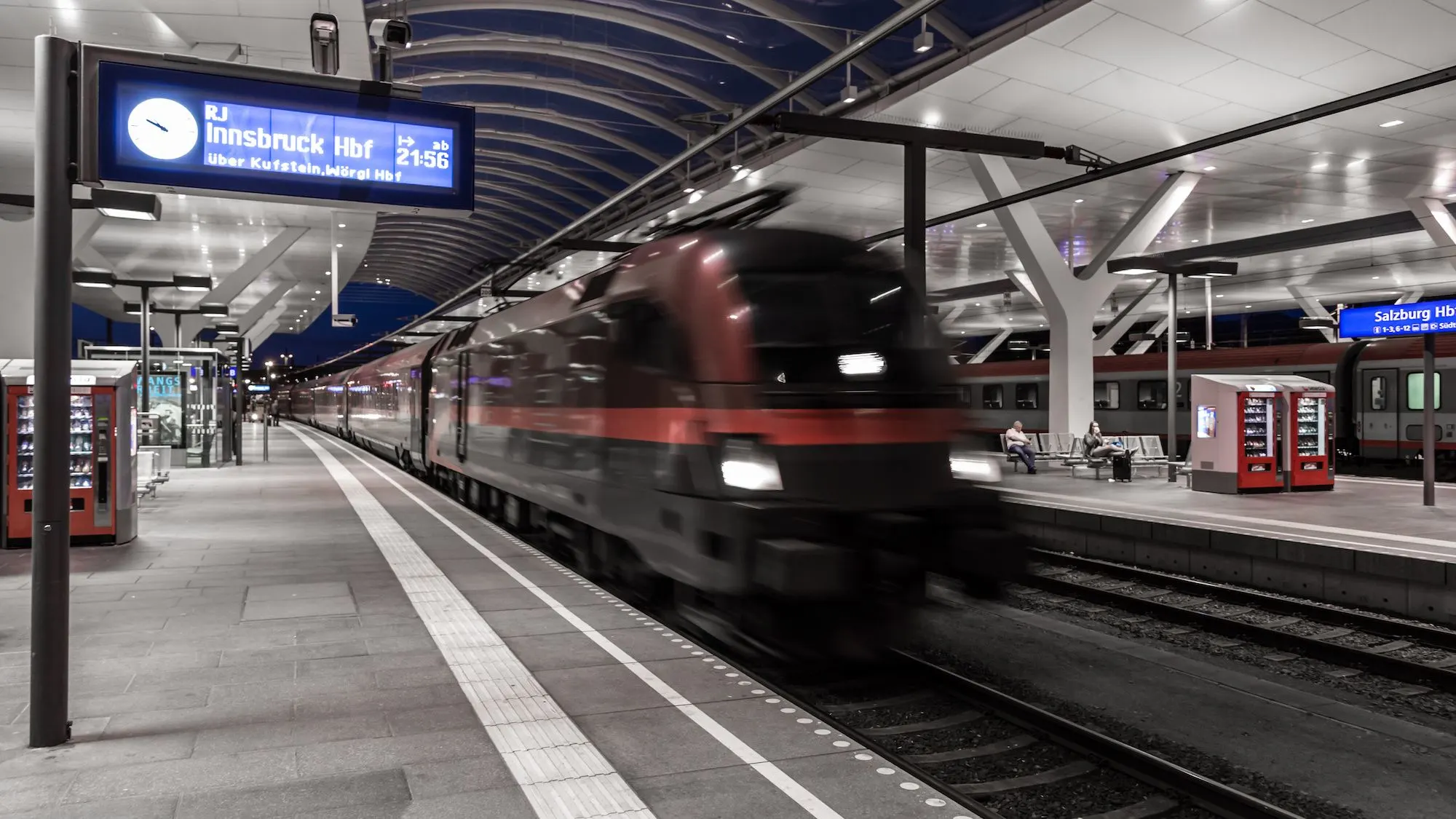
Most trains arrive in Salzburg Main Station (Salzburg Hbf) station, the largest station in the city. Before spending money on a transfer, be sure to check whether your hotel is within easy walking distance. Also consider that public transport is the cheapest and sometimes fastest option, and buses pickup directly in front of the station. Taxis are available near the station entrance and are generally honest. Uber is also available for those with the app.

Late Afternoon/Early Evening — Old Town (Altstadt)

Salzburg's Altstadt, which simply means Old Town, is one of the world's most charming city centers. It possesses an amazing wealth of Baroque buildings, as its 17th and 18th centuries archbishop rulers focused on beautifying their town rather than fighting foreign wars like neighboring states. A series of squares runs through the old town, and most you will find dominated by a beautiful church. Throughout the Altstadt, you will find markets, pleasant shops, and cozy restaurants.

Salzburg Cathedral

Visit Salzburg's largest and most impressive church.

The current cathedral was built between 1614-1628 and is a masterpiece of baroque architecture. The cathedral was largely destroyed by an Allied bomb in WWII but was restored by 1959. One of the most significant treasures in the cathedral is the Baptismal Font, which was cast in 1321 and rests on copper lions dating back to the 1100s.

Mozart Birthhouse

Tour the historic home where Mozart was born.

The Altstadt is where Mozart was born and his music is still closely associated with Salzburg. You can visit his birth house on Getreidegasse. If possible, it is better to visit this particular attraction early in the day, as it gets quite crowded. 

Felsenreitschule Concert Hall

Sing Eidelweis in the concert venue made famous by The Sound of Music.

 You can visit the concert halls of the world's most prestigious international music festival, the Salzburger Festspiele. Carved into the rock of the mountain, this is where the Von Trapp family sang at the climax of the movie (and also in reality). The 50-minute tour (provided in English and German simultaneously) includes all the major venues and many backstages as well.

Early Evening/Evening — Concert

Birthplace of Mozart, home to the world's most prestigious music festival (the Salzburger Festspiele), and forever associated with The Sound of Music, Salzburg is practically synonymous with music. The city fully embraces this heritage and today there are abundant opportunities to enjoy performances of classical music in the city. While it possesses several fine concert halls, its palaces, churches, and gardens also host performances and often provide the perfect venue.

image

Day 4

Vienna to Salzburg

image

Day 5

Salzburg

Day 5

Salzburg

icon
icon
icon

9:00 AM - 11:30 AM

Guided Walking Tour of Salzburg

Salzburg is simply overwhelming in all the best ways. It is alive with fascinating history, grandiose and sublime architecture fills every street and square, culture and music permeate the atmosphere, and it is surrounded by breath-taking natural scenery. This guided tour with a local will provide the context needed to bring all of this beauty into perspective, and to connect the physical city to its history, culture, and environment.

Guided Walking Tour of Salzburg

9:00 AM - 11:30 AM — Guided Walking Tour of Salzburg

Salzburg is simply overwhelming in all the best ways. It is alive with fascinating history, grandiose and sublime architecture fills every street and square, culture and music permeate the atmosphere, and it is surrounded by breath-taking natural scenery. This guided tour with a local will provide the context needed to bring all of this beauty into perspective, and to connect the physical city to its history, culture, and environment.

Mozartplatz

One of several grand squares in the center of Altstadt in Salzburg.

One of several grand squares in the center of Altstadt in Salzburg. In the Mozartplatz you can find a statue of the famous composer. 

Salzburg Cathedral

Visit Salzburg's largest and most impressive church.

The current cathedral was built between 1614-1628 and is a masterpiece of baroque architecture. The cathedral was largely destroyed by an Allied bomb in WWII but was restored by 1959. One of the most significant treasures in the cathedral is the Baptismal Font, which was cast in 1321 and rests on copper lions dating back to the 1100s.

Mid-Day/Afternoon — Hohensalzburg Fortress

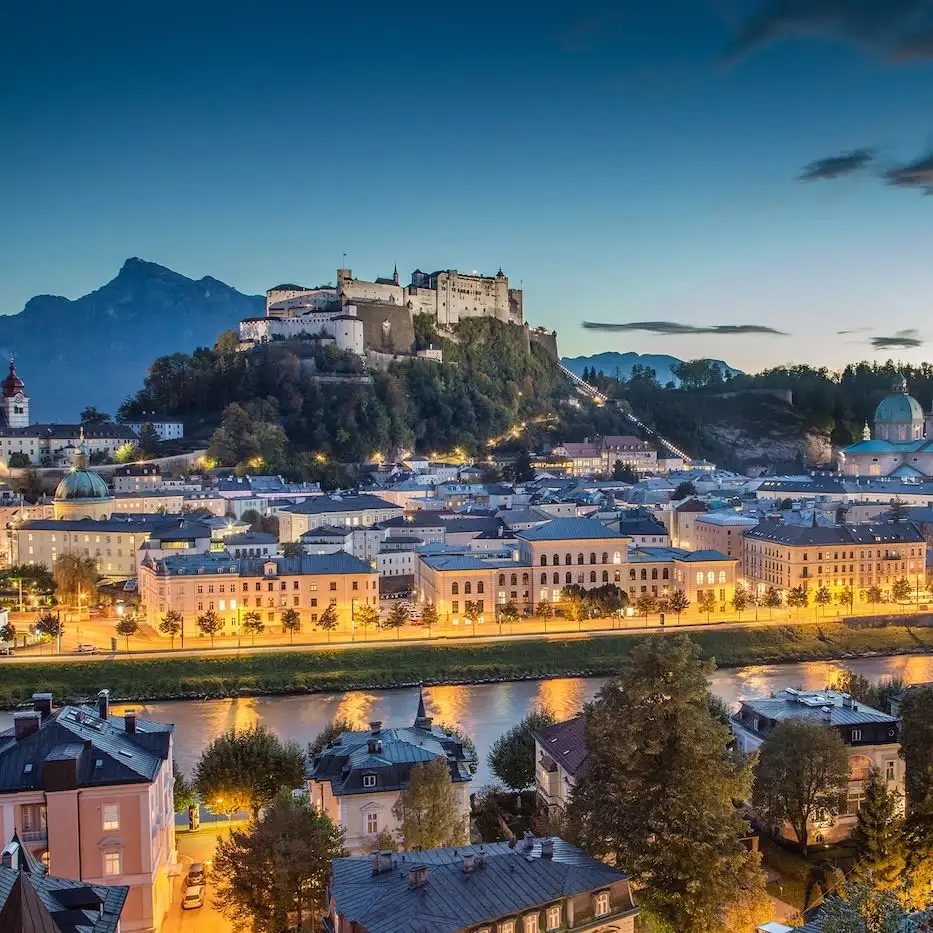
The Festung Hohensalzburg dominates Salzburg, appearing simultaneously formidable and enticing. From one side of the fortress you will enjoy a breathtaking view of the city and from the other a beautiful view of the nearby Alps. In addition to touring the fortress staterooms, you can also visit the Fortress Museum, a Marionette Museum, the Torture Chamber, an observation tower, and more.

Fortress Funicular

Ascend the steep mountain to the fortress in seconds on the fortress funicular railway.

The fortress was never taken by force, even though it was not for a lack of trying. Luckily for you, today you can simply buy a ticket and easily reach the fortress by a steep funicular railway. 

Fortress Museums and Interior

Experience the impressive splendor and craftmanship of the castle interior.

The State Apartments/Regency Chambers (Fürstenzimmer) are the top attraction within the fortress. These rooms were built as a showcase for state functions and to receive foreign visitors and dignitaries. You can also visit the Fortress Museum, a Marionette Museum, and the WWI-focused Rainer Museum. 

Nonnberg Abbey

Take a short walk from the fortress to discover Maria's abbey from the Sound of Music.

Sadly the abbey is down to only a handful of nuns, so you are unlikely to see large groups of nuns in black habits singing in unison as they wonder aloud what to do with a problem like Maria. However, you can still walk some of the grounds and visit a lovely Romanesque and Gothic church, which is almost empty of tourists. Since it is usually empty, you must pay to light up the Romanesque frescoes and a Gothic altar, although this is half of a Euro well spent (especially in the case of the altar).

Fortress Terrace

Take in a breathtaking view of the nearby Alps.

The terrace of the fortress offers an absolutely stunning view of the Alps. You can see the Untersberg especially well. It was the mountain which the Von Trapp family climbed at the end of The Sound of Music to escape Austria. Ironically, it's on the Bavarian border, so they were actually climbing into Germany. In reality they took a train to Italy.

Afternoon/Late Afternoon — Neustadt

On the right bank of Salzach river lies the Neustadt (New Town). Although it may be just a bit newer than the Altstadt, it still boasts hundreds of years of history in it's winding and narrow Medieval lanes. The Mirabell Palace, a Baroque masterpiece built in 1606 by the Prince-Archbishop of Salzburg for his concubine, is the most famous site in the Neustadt. As impressive as the palace and its interior are, the elaborate gardens surrounding the palace are more famous than the palace itself.

Mirabell Palace Gardens

Stroll this tranquil garden amidst the city hubbub and sing "Do-Re-Me" .

Within the gardens, you will discover not only greenery and flowers but also statues of a pegasus, unicorns, lions and other exotic animals, as well as a gnome garden, grand staircases, fountains, and other picturesque spots. Sound of Music fans will recognize it, as this is where several parts of the "Do-Re-Me" song were filmed. Maria and the children march around the pegasus statue and fountain, race through the lattice garden tunnels, pose at the garden gates, and pet the gnomes on the head. Not much of the palace interior is open to visitors, however, the best part of the palace, a marble staircase lined by Raphael Donner statues, is open to those who know how to find it. The corridor to the staircase can be found in the passage that connects the palace courtyard to the gardens and the Pegasus fountain. If you are coming from the courtyard, the door to the corridor is on your right. You will find the staircase within a few steps.

Linzer Gasse

Hang out with locals on this street lined by shopping and restaurants.

The Linzer Gasse and the streets surrounding it, with their historic storefronts and a multitude of restaurants and old guesthouses, give the Altstadt a run for its money in terms of liveliness and charm.  One of the best views in Salzburg is hidden near the Linzer Gasse. Just look for the gateway passage, which is located on the right side of the Linzer Gasse if you are coming from the river and head up the mountain side.

St. Sebastian's cemetery

Wander off of the beaten path to find one of Salzburg's hidden treasures, St. Sebastian's cemetery.

The peaceful cemetery is the resting place of many prominent Salzburgers, including Mozart's wife and father. The cemetery is lined by a cloister passageway, and in the center of the cemetery lies the magnificent mausoleum of the Prince Archbishop Wolf Dietrich. To find the cemetery just walk towards the church tower on the Linzer Gasse. The cemetery is located behind the church. There is usually an entrance open to the right of the church, but if that is closed, go the sidestreet to the left of the church (where you see the archway). You will find another entrance on the right side of the courtyard.

image

Day 5

Salzburg

image

Day 6

Salzburg

Day 6

Salzburg

icon
icon

Morning

Königssee Lake

The breathtakingly beautiful Königssee (King's Lake) is the deepest lake in the Alps and is surrounded by steep mountains. Taking a cruise on the lake is an unforgettable experience. The boat will take you to the red-onion domed Kloster St. Bartolomä, where you then take a relaxing and enchanting walk along the forested lakeshore. For serious hikers, you can also continue on the boat to the far end of the lake, and then take a hike to a dramatic waterfall.

Königssee Lake

Morning — Königssee Lake

The breathtakingly beautiful Königssee (King's Lake) is the deepest lake in the Alps and is surrounded by steep mountains. Taking a cruise on the lake is an unforgettable experience. The boat will take you to the red-onion domed Kloster St. Bartolomä, where you then take a relaxing and enchanting walk along the forested lakeshore. For serious hikers, you can also continue on the boat to the far end of the lake, and then take a hike to a dramatic waterfall.

Malerwinkl

Venture a little further to find a perfect view of the lake.

The Malerwinkl (i.e. the Painters Angle) is less than a mile walk from the boat docks and offers a picture-frame view of the lake. You can walk down to the water and soak your feet. After enjoying the view, you can head back, or take a strenuous, approximately hour-long hike to the Jennerbahn cable car station. Just follow the signs for the Malerwinkl-Rundweg and the Jennerbahn-Talstation. This is a trail for experienced hikers with proper footwear, which includes a climb of about 400 feet.

Jennerbahn Cable Car

Take an exhilarating ride into the Alpine peaks above the lake.

You will enjoy amazing views of the lake and the surrounding Bavarian Alps. If you are up for it, you can even hike in the mountains as well, or ski in the winter. You can board the Jennerbahn cable car near the same parking area and bus stop which services the lake. It costs approx. 27.50 EUR for an adult roundtrip ticket to the top. You can save money by hiking back down, but this is only recommended for experienced hikers with good footwear.

Obersee

Take a short hike to this stunning lake nestled within the mountains.

You can take a quick jaunt to the Obersee, or better yet, you can take a 5 miles hike to a waterfall above the lake. The trail is well-maintained and well-traveled, although rocky and steep at times. The hike begins with a fairly flat and easy walk from the boat docks to the Obersee lake. You will then follow a trail along the right shore of the lake. The trail becomes rocky and steep, and you must ascend about 250 feet. At the high points of the trail, you will have a beautiful view of the lake below and surrounding mountains. You will then descend and reach the far end of the lake, where you will enjoy another beautiful view. You will then continue hiking towards the end of the valley, climbing another approximately 350 feet to reach the end of the valley, where you will see the waterfalls. Keep in mind that at the end of summer or in fall the waterfall may not be very impressive.

St Bartholomew's Church

Hop off the boat for a pleasant and easy walk along the lake shore near this onion-domed church.

To take this easy, flat, but very beautiful hike, from the boat docks, follow the orange signs for the "St. Bartholomä-Rundweg". You will make a circle on a well-maintained trail, first walking along the lakeshore for about half a mile, and then turn left into the forest. Continue following the signs for the Rundweg, taking another left after about 350 yards, and returning to the docks in a little less than half a mile.

Königssee Cruise

Relax on an unforgettable cruise across the lake, hopping on an off when you please.

The cruises are made all the more enjoyable as the electric boats are almost completely quiet. Nothing will distract you for the atmosphere and scenery. Cruises occur all year long unless the lake is iced over. Tickets are sold directly at the docks, although getting there early is highly recommended to avoid long lines.

Afternoon to Early Evening — Berchtesgaden

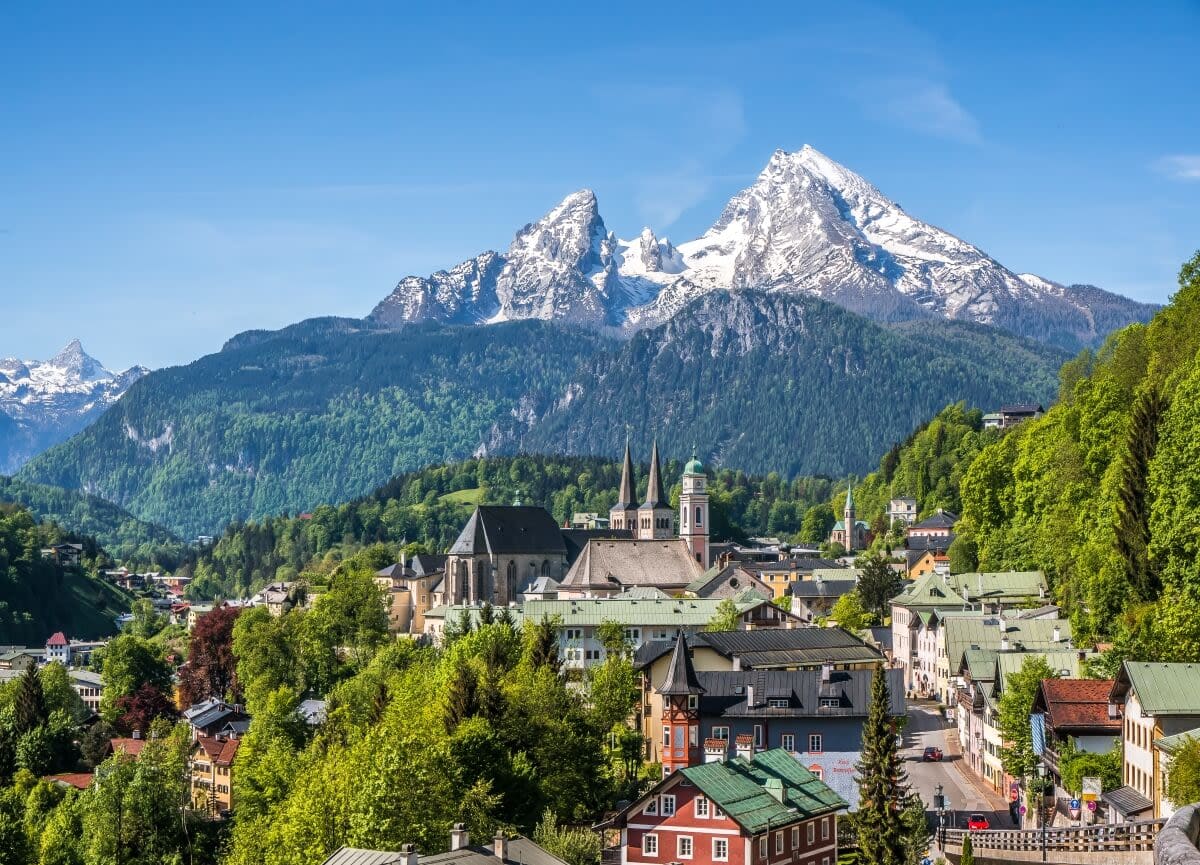
About 20 miles from Salzburg, just across the German border, lies Berchtesgaden. This charming Bavarian town is nestled amidst a dramatic Alpine valley, and is actually located within a national park. Berchtesgaden boasts charming market squares, imposing churches, and even a medieval palace. There are also plenty of traditional Bavarian restaurants and shops selling local crafts and art.

Berchtesgaden Salt Mines

Embark on an underground adventure that's both educational and thrilling.

Riding a miner's train deep into the mountain, you'll ride a miner's train into the mountain, explore ancient salt deposits, slide down miners' slides, and marvel at an illuminated subterranean salt lake. This unique experience offers a glimpse into the rich mining heritage of the region.

Royal Palace Berchtesgaden

Tour the palace to experience a blend of historical architectural styles and Bavarian royal heritage.

The Royal Palace, originally a church collegium, showcases various architectural styles including Romanesque, Gothic, Renaissance, Baroque, and Rococo, reflecting its long history of expansions and renovations. Inside, visitors can explore rooms filled with period furniture and artwork, providing insight into the lives and times of its historical inhabitants. 

image

Day 6

Salzburg

image

Day 7

Salzburg to Heidelberg

Day 7

Salzburg to Heidelberg

icon
icon
icon
icon
icon

7:00 AM

Transfer to Rail Station

Most trains depart from Salzburg Main Station (Salzburg Hbf) station, the largest station in the city. Before spending money on a transfer, be sure to check whether your hotel is within easy walking distance. Also consider that public transport is the cheapest and sometimes fastest option. If staying at a hotel, they can order a reliable taxi. Some private transfers will even help with your bags. Uber is also available for those with the app.

Transfer to Rail Station

7:00 AM — Transfer to Rail Station

Most trains depart from Salzburg Main Station (Salzburg Hbf) station, the largest station in the city. Before spending money on a transfer, be sure to check whether your hotel is within easy walking distance. Also consider that public transport is the cheapest and sometimes fastest option. If staying at a hotel, they can order a reliable taxi. Some private transfers will even help with your bags. Uber is also available for those with the app.

08:00 - 12:44 — Salzburg to Heidelberg by Rail

Tickets and seat reservations for this scenic 4hr45min direct journey to Heidelberg are included with the purchase of an itinerary. In most cases, the journey will include a transfer in Munich and will be aboard some of Central Europe's nicest and most modern trains - the RailJet and ICE (Inter City Express). The green countryside of Austria and Bavaria makes for a pleasant voyage, and on clear days, you can also enjoy a view on the Alps in the distance.

12:44 PM — Transfer from Rail Station

Most trains arrive in Heidelberg Hbf station, the largest station in the city. Before spending money on a transfer, be sure to check whether your hotel is within easy walking distance. Also consider that public transport is the cheapest and sometimes fastest option, and the local tram system picks up directly in front of the station. Taxis are available at all rail stations and are generally honest, although you can also arrange a private transfer if you prefer. Uber is not yet available in Heidelberg.

Afternoon/Late Afternoon — Philosopher's Way Hike

Enjoy a gentle hike up into the hills above Heidelberg from the Old Bridge to get magnificent views of the castle on the other side, then trek up further to visit the wonderfully atmospheric ruins of St. Michael's ruins and Thingstätte, the pseudo-Grecian amphitheater built by the Nazis in the mid-1930s to stage opera and theater plays extolling the virtues of the Aryan race.

Thingstätte

Find the open-air amphiteater built by the Nazis as a site for their rallies.

This open-air amphitheater was built in 1935 by the Nazi party and was designed by Heidelberg native Albert Speer.It was used by the Nazi party during WWII for rallies and solstice festivals. It is now preserved as a monument, but it is still used for many festivals and cultural events throughout the year. 

Monastary Ruins

Discover the isolated ruins at the top of the hill overlooking Heidelberg.

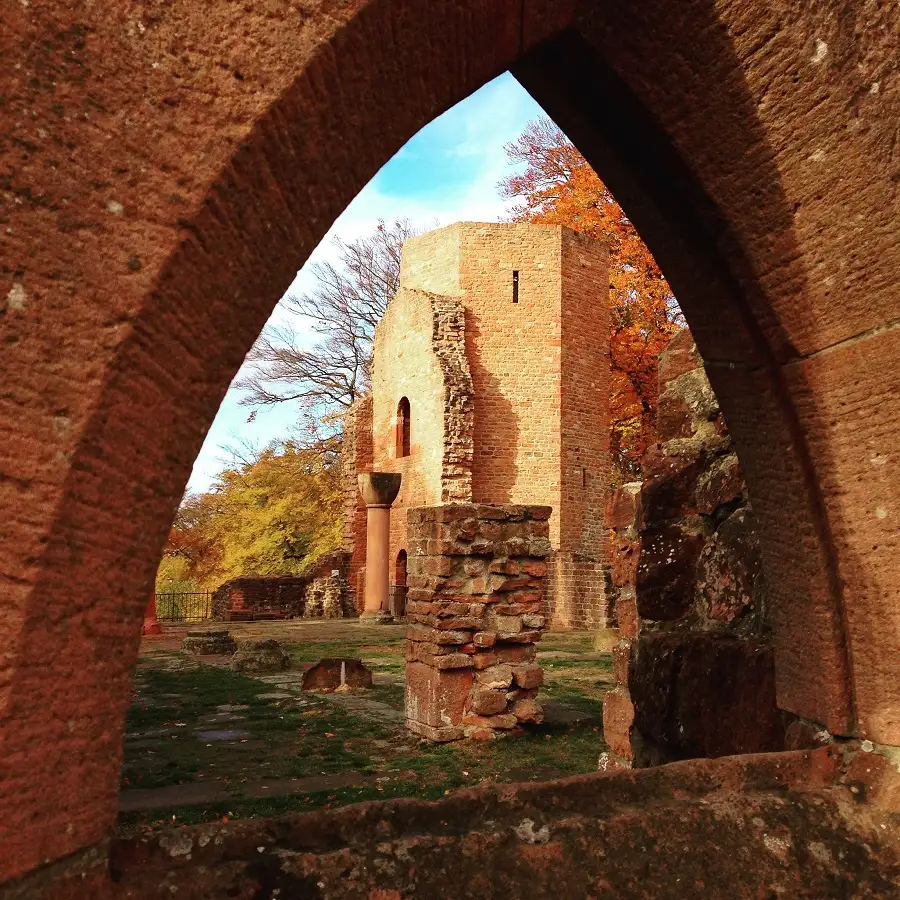
In 1023, Abbot Reginbald, who later became Bishop of Speyer, built St. Michael’s Monastery, and it is these remains which are still visible today. After the death of Abbott Friedrich in 1070, the monastery became a place of pilgrimage. In 1503, the last three monks living in the monastery were killed in their beds when part of the steeple collapsed. After that, the monastery became abandoned and was forgotten.

Early Evening/Evening — Old Town

Heidelberg's Altstadt (i.e. its Old Town) is full of cafes, restaurants, and pubs, and is almost always abuzz with foot traffic. With one of Germany's most prestigious universities partially located within the Altstadt, it also has a youthful and international vibe which makes it seem especially vibrant. The baroque buildings which line the market squares and quaint sidestreets by themselves make the Altstadt undeniably charming. But factor in its perfect setting, wedged between the river and forested green hills dominated by a castle, and it is no wonder it is one of Germany's most photographed locales.

Student Jail

Check out where misbehaving university students once ended up.

Between 1823 to 1914, this was the lock up for Heidelberg's often rowdy student population. Crimes that could land a student in jail included, but were not limited to, public inebriation, loud nocturnal singing, freeing the local pigs or fighting. Delinquents were sent to jail for a minimum of 24 hours and released only to attend lectures or take exams. In some circles, doing time in the Karzer was considered to be a right of passage. The inventive graffiti on the walls in a good indication of how seriously the students took their prison sentences.

Church of the Holy Spirit (Heiliggeistkirche)

Pause for a moment beneath the Gothic arches of Heidelberg's most important and historic church, and then climb the tower for a view of the town.

The church was first mentioned in 1239, and in 1398, the foundations for the current Gothic church were laid on the site of a Romanesque basilica. From 1706 until 1936 it was shared by both Catholics and Protestants, but is now an active Protestant church that holds services regularly. It also hosts regular concerts and half-hour organ recitals. For a bird’s eye view of Altstadt and the surrounding area, you can climb the 208 stairs to the top of the church’s Gothic steeple.

Alte Brücke

Stroll across this centuries-old bridge and enjoy wonderful views on all sides.

The bridge connects the Altstadt with the Neuenheim district of the city on the opposite bank. The current bridge is made from Neckar sandstone and is the ninth one to be built on the site. The Romans built the first bridge in the first century out of wood, but it was rebuilt from stone around the year 200 AD. After the Roman bridge collapsed, Heidelberg went without a bridge for nearly a thousand years. This version of the bridge was built in 1788, and the locals have no desire to replace it. 

Hauptstrasse

Stroll the lively heart of Heidelberg and soak in the setting with a drink at a sidewalk cafe.

Heidelberg’s Hauptstraße, or Main Street, passes straight through the heart of the Altstadt. It crosses several charming market squares along the way, such as the Kornmarkt, where you can look up at the castle situated above the town. The street and squares are filled with name brand shops, lively bars, high-end restaurants, and cozy cafes.

Neckarwiese

Hang with the locals on the riverbank and enjoy the view.

This popular park lies along the northern bank of the Neckar River, on just the opposite side of the river from the Altstadt. It is a great place to enjoy an afternoon picnic or relax after a long day of exploring the city. In the summer, it is the frequent site of fireworks.

image

Day 7

Salzburg to Heidelberg

image

Day 8

Heidelberg

Day 8

Heidelberg

icon
icon
icon

Morning/Mid-Day

Castle & Königstuhl

Heidelberg has the fortune to have some uniquely atmospheric castle ruins and is home to the oldest yet most modern funicular railway in Germany. Use this funicular to take a trip up Heidelberg Castle and stroll through the castle gardens. Continue up to the top of the hill where you will reach the Königstuhl to experience spectacular views of Heidelberg and the Neckar River valley.

Castle & Königstuhl

Morning/Mid-Day — Castle & Königstuhl

Heidelberg has the fortune to have some uniquely atmospheric castle ruins and is home to the oldest yet most modern funicular railway in Germany. Use this funicular to take a trip up Heidelberg Castle and stroll through the castle gardens. Continue up to the top of the hill where you will reach the Königstuhl to experience spectacular views of Heidelberg and the Neckar River valley.

Heidelberg Castle

Gaze down upon Heidelberg from the battlements of this romantic castle ruin.

These ruins are one of the most important Renaissance structures north of the Alps, and the contrast of the deep green forests and the red sandstone building make for a beautiful sight from the city center, though it's a much altered view since 1688, when French troops damaged the city and again in 1693, when they did much worse.  This led to a contemporary French writer to muse, "Heidelberger deleta" ("Heidelberg is 'deleted'"). Because of its delapidation, the castle regained stature during the 18th and 19th centuries as a powerful muse for many a Romantic poet.  It will inspire you as well.

Königstuhl

Ascend to the top of this mountain for a perfect view of the Neckar and Rhine Valleys.

The locals are very proud of this peak, easily reached from the top station of the funicular, as its views of Heidelberg and the Neckar River draw crowds.

Bergbahn Funicular

Easily reach the castle by taking the Bergbahn, which happens to simultaneously be both Germany's oldest and newest funicular.

Following a refurbishment in 2005, Germany's oldest funicular railway became it's most modern. The funicular takes you to Heidelberg Castle where you can visit the ruins and stroll through the castle gardens. You can then continue up to the top of the hill where you will reach the Königstuhl to experience spectacular views of Heidelberg and the Neckar River valley. If you prefer, you can always save some money and take a beautiful but somewhat strenuous hike, capturing perfect pictures of the castle as you make your way up the hill.

1:45 PM - 5:45 PM — Guided Walking Tour of Heidelberg

On this 4 hour tour, your guide will show you the highlights of Heidelberg and help you understand what makes this city so unique. Sites visited will include the Heidelberg University, the Old Bridge, Altstadt, Town Hall and Heidelberg Castle.

Altstadt

The light and colors of this historic city are a happy sight to behold.

The Old Town of Heidelberg, Germany, seduces with its views. Framed by the Neckar River and overlooked by the majestic Heidelberg Castle, its cobblestone streets, baroque architecture, and the oldest university in Germany beckon visitors. Highlights include the Hauptstrasse, a bustling pedestrian shopping street, and the historic Holy Spirit Church. Heidelberg's Old Town embodies the romantic spirit of Germany.

Heidelberg University

Founded in 1386, this is Germany’s oldest and one of its most prestigious universities.

The university is currently comprised of 12 faculties with over 30,000 German and international students enrolled. The college is known for its reputable science, art, law, and medical programs. The most historic facilities are located around the Universitätsplatz and dominated by the Alte Universität (Old University, 1712–28; on the south side) and the Neue Universität (New University, 1931; on the north side).

Early Evening/Evening — Dining Out

Heidelberg is a fun city to enjoy at night as the city streets fill with locals, tourists, and students from Heidelberg University. Heidelberg has a plethora of bars, cafes, and restaurants, sure to please any visitor. Most are located within the Old Town, so it is easy to hop between spots and sample all the city has on offer.

image

Day 8

Heidelberg

image

Day 9

Heidelberg to Lucerne

Day 9

Heidelberg to Lucerne

icon
icon
icon
icon

9:25 AM

Transfer to Rail Station

Most trains depart from Heidelberg Hbf station, the largest station in the city. Before spending money on a transfer, be sure to check whether your hotel is within easy walking distance. Also consider that public transport is the cheapest and sometimes fastest option, and the local tram network stops directly in front of the station. If staying at a hotel, they can order a reliable taxi. Some private transfers will even help with your bags. Uber is not yet available in Heidelberg.

Transfer to Rail Station

9:25 AM — Transfer to Rail Station

Most trains depart from Heidelberg Hbf station, the largest station in the city. Before spending money on a transfer, be sure to check whether your hotel is within easy walking distance. Also consider that public transport is the cheapest and sometimes fastest option, and the local tram network stops directly in front of the station. If staying at a hotel, they can order a reliable taxi. Some private transfers will even help with your bags. Uber is not yet available in Heidelberg.

10:25 - 10:37, 10:46 - 12:55, 13:03 - 14:05 — Train to Lucerne

This scenic journey requires about four hours, and will also include one to two connections, in either Mannheim, Basel, and/or Karlsruhe. In most cases, you will travel on a EuroCity or InterCity train, which is a modern and comfortable train with air conditioning and usually a good wifi connection. While not taking you through the high mountains, this train ride will take you through the charming countryside of the southern Rhine Valley, where you will travel alongside the famous Black Forest, and then into the beautiful Swiss landscape before arriving in Lucerne.

2:05 PM — Taxi Transfer to Hotel

Upon arrival in Lucerne, you will exit the rail station and proceed to the taxi stand where you will find taxis waiting for arriving passengers. Taxis in Lucerne are generally reliable and honest and are less expensive than using a pre-arranged pick up service for your transfer to the hotel. Detailed arrival information and instructions for taking a taxi are provided in the Full-Length itinerary with the purchase of an itinerary.

Late Afternoon/Early Evening — Lucerne's North Bank

Wander the Old Town on the north side of the Reuss River and discover the intricately cobbled squares and exquisitely preserved architecture of the townhouses before walking along part of the fortified Musegg city walls from tower to tower. Further north of the river you'll come across the famously heart-rending sculpture of the Löwendenkmal (Lion Monument), built to commemorate Swiss soldiers who fought and died defending Louis XVI during the French Revolution.

Bourbaki Panorama

A modern glass building on Löwenplatz called the Bourbaki Panorama

Inside is a giant 114m-by-10m circular mural depicting the retreat into Switzerland of the French Eastern Army under General Bourbaki during the Franco-Prussian War of 1870-71

Gletschergarten (Glacier Garden)

Discover the fascinating Glacier Garden, where Lucerne’s deep past comes alive in stone and ice.

The Gletschergarten (Glacier Garden) his open-air museum showcases giant potholes formed by glacial meltwater during the last Ice Age, alongside fossils dating back 20 million years. Wander through the rocky formations, climb the observation tower for sweeping city views, and don’t miss the quirky mirror maze built in 1896. A blend of natural wonder and playful history, the Glacier Garden is one of Lucerne’s most distinctive attractions.

image

Day 9

Heidelberg to Lucerne

image

Day 10

Lucerne

Day 10

Lucerne

icon
icon
icon

9:00 AM - 11:00 AM

Walking Tour of Lucerne

During this 2 hour guided private tour you will take in all the major highlights of Lucerne including: Lion Monument, Chapel Bridge, the Old Town and the Jesuit Church. Your professional guide will tell you about the fascinating history of the town and why Lucerne is a favorite destination for the Swiss and foreign visitors alike. You will also enjoy stunning views around Lake Lucerne, especially of the city's mountain, Mount Pilatus.

Walking Tour of Lucerne

9:00 AM - 11:00 AM — Walking Tour of Lucerne

During this 2 hour guided private tour you will take in all the major highlights of Lucerne including: Lion Monument, Chapel Bridge, the Old Town and the Jesuit Church. Your professional guide will tell you about the fascinating history of the town and why Lucerne is a favorite destination for the Swiss and foreign visitors alike. You will also enjoy stunning views around Lake Lucerne, especially of the city's mountain, Mount Pilatus.

Lake Lucerne Boat Docks (Luzern Bahnhofquai)

Jesuit Church

One of the most beautiful Baroque buildings in Switzerland

One of the most beautiful Baroque buildings in Switzerland

Mid-Day/Afternoon — South Bank

Explore Lucerne's Old Town on the south bank of the Reuss River, including its iconic Chapel Bridge and Jesuit Church. Close to the station you'll also find two of Switzerland's many premier league art galleries, or the city's most relaxing lakeside park. An enjoyable short hike further south along the lakefront will lead you to the exquisite villa where the composer Richard Wagner spent his last years.

Richard Wagner Museum Lucerne

15th century home where the composer, Richard Wagner, once lived

His manor house is now an important museum for students and lovers of his music. Numerous paintings and photographs, along with hundreds of letters he wrote to admirers such as King Ludwig II, the philosopher, Friedrich Nietzsche, and the composer, Franz Liszt, all of whom visited the Tribschen house.

Kultur und Kongresszentrum Luzern

A contemporary cultural complex featuring a concert hall, an art museum, restaurants, and a convention center.

A contemporary cultural complex featuring a concert hall, an art museum, restaurants, and a convention center.

Ritterscher Palace

Built in 1557 as a private mansion, but now hosting Lucerne's cantonal government

 Built in 1557 as a private mansion, but now hosting Lucerne's cantonal government

Early Evening/Evening — Dining Out, Self-Selected

­Lucerne affords some really interesting culinary options with a focus on homegrown, handmade and freshly foraged that help dispell the age-old notion that Swiss cuisine is only about chocolate-box cliches and high cholesterol counts resulting from heavy cheese-based dishes like fondue, rosti, and raclette. Make use of the list of our restaurant and cafe recommendations included in the Full Itinerary to treat yourself to an evening out on the town and discover real Swiss cooking at its best.

image

Day 10

Lucerne

image

Day 11

Lucerne

Day 11

Lucerne

icon

Early Morning to Afternoon

Excursion to Mount Pilatus

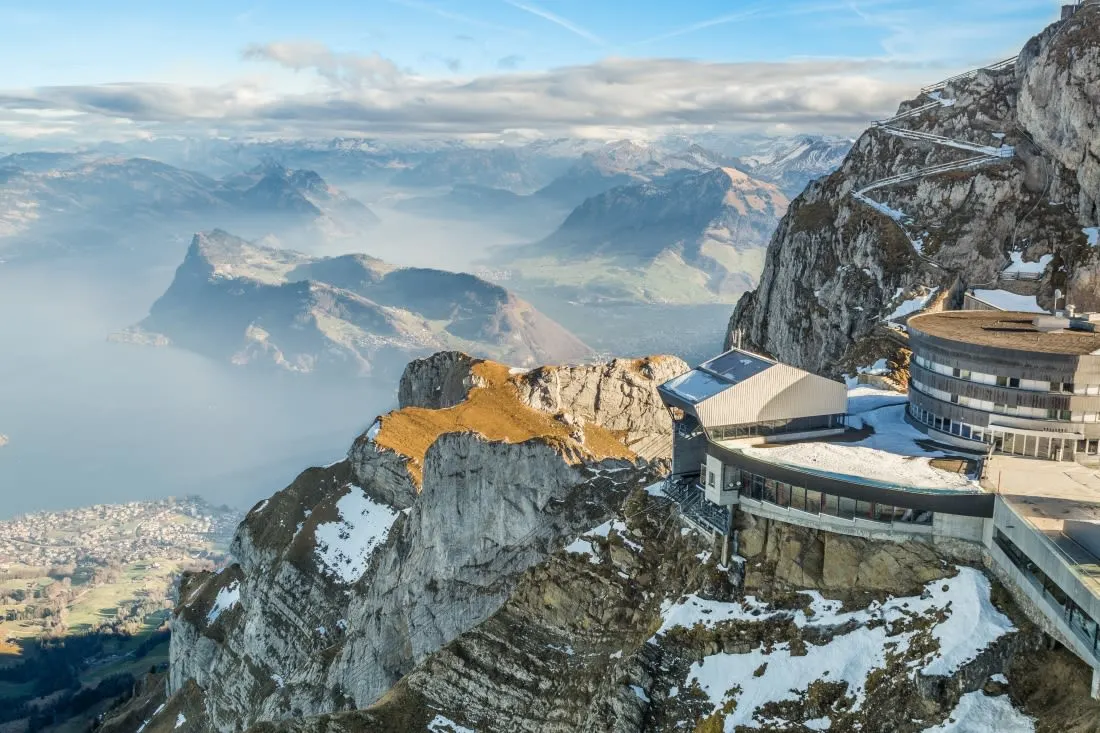
Ride the steepest rack-railway in the world at a gradient of nearly 48 percent from Alpnachstad up the giant mountain of Mt Pilatus that looms over the city of Lucerne, or glide up the other side on a gondola from Kriens. The highest point, Tomlishorn, with superlative views of Lake Lucerne, is only 30min on foot from the hotels and restaurants near the top.

Excursion to Mount Pilatus

Early Morning to Afternoon — Excursion to Mount Pilatus

Ride the steepest rack-railway in the world at a gradient of nearly 48 percent from Alpnachstad up the giant mountain of Mt Pilatus that looms over the city of Lucerne, or glide up the other side on a gondola from Kriens. The highest point, Tomlishorn, with superlative views of Lake Lucerne, is only 30min on foot from the hotels and restaurants near the top.

Kriens-Pilatus Cable Car Station

image

Day 11

Lucerne

image

Day 12

Depart Lucerne

Day 12

Depart Lucerne

icon

To Be Determined

Rail or Taxi to Zurich Airport

The most affordable way to reach the airport is via train from the Lucerne rail station. In most cases, your itinerary will include a Swiss Travel Pass, which covers the cost of this scenic journey to Zurich Airport, which takes just over 1 hour. If you prefer, you can also take a taxi or book a pre-arranged transfer. The journey by car takes only about 45 minutes. Directions and instructions for either option are included in the Full Itinerary, so you can enjoy a stress-free trip to the airport.

Rail or Taxi to Zurich Airport

To Be Determined — Rail or Taxi to Zurich Airport

The most affordable way to reach the airport is via train from the Lucerne rail station. In most cases, your itinerary will include a Swiss Travel Pass, which covers the cost of this scenic journey to Zurich Airport, which takes just over 1 hour. If you prefer, you can also take a taxi or book a pre-arranged transfer. The journey by car takes only about 45 minutes. Directions and instructions for either option are included in the Full Itinerary, so you can enjoy a stress-free trip to the airport.

image

Day 12

Depart Lucerne

What's Included in the Austria, Germany & Switzerland Trip Trip?

Fork

Pre-Paid Tours and Activities:

  • Guided Walk through Vienna's Inner City
  • Guided Walking Tour of Salzburg
  • Guided Walking Tour of the Heidelberg's Altstadt and Castle
  • Private Walking Tour of Lucerne
train

Pre-Paid Transportation:

  • 2nd Class Train Tickets from Vienna to Salzburg
  • 2nd Class Train Tickets from Salzburg-Heidelberg
  • 2nd Class Train Tickets from Heidelberg to Mannheim
  • 2nd Class Train Tickets from Mannheim to Basel
  • 2nd Class Train Tickets from Basel to Lucerne
  • Public Transport Tickets for Vienna
train

Accommodation:

  • 3 nights at a hotel of your choice in Vienna
  • 3 nights at a hotel of your choice in Salzburg
  • 2 nights at a hotel of your choice in Heidelberg
  • 3 nights at a hotel of your choice in Lucerne
mobile

Go Real Travel Mobile App:

  • Itinerary Plan & Reservations Info
  • Points of Interest
  • Detailed Travel Information
  • Maps & Directions

Other Trips You May Like

Austrian Serenade: Imperial Cities and Alpine Splendors

9 Days

From$1598USD

Austrian Serenade: Imperial Cities and Alpine Splendors

View Trip
Melodic Journeys in Austria: Vienna to Salzburg

5 Days

From$868USD

Melodic Journeys in Austria: Vienna to Salzburg

View Trip
One Week in Austria: Charming Cities & Scenic Beauty

7 Days

From$1240USD

One Week in Austria: Charming Cities & Scenic Beauty

View Trip
Winter Escape: Vienna & Salzburg, including the Bavarian Alps

7 Days

From$1675USD

Winter Escape: Vienna & Salzburg, including the Bavarian Alps

View Trip
Melodies and Marvels: A 10-Day Musical Journey through Vienna, Salzburg, and Hallstatt

10 Days

From$1749USD

Melodies and Marvels: A 10-Day Musical Journey through Vienna, Salzburg, and Hallstatt

View Trip
Austrian and Slovenian Escapade: Cities, Nature, and History

10 Days

From$1940USD

Austrian and Slovenian Escapade: Cities, Nature, and History

View Trip
Discover Munich, Salzburg & Vienna in Just 7 Days

7 Days

From$1498USD

Discover Munich, Salzburg & Vienna in Just 7 Days

View Trip
Enchanting Trio: Vienna, Salzburg & Prague - 10 Days of Discovery

10 Days

From$1749USD

Enchanting Trio: Vienna, Salzburg & Prague - 10 Days of Discovery

View Trip
Alpine Majesty: A 10-Day Rail Journey Through Austria and Switzerland

10 Days

From$3725USD

Alpine Majesty: A 10-Day Rail Journey Through Austria and Switzerland

View Trip

Featured Blogs

10 European Cities to Visit in Winter
Europe
Seasonal guide

10 European Cities to Visit in Winter

Flying Solo: The Best Places to Travel Alone in Europe
Europe
Travel solo

Flying Solo: The Best Places to Travel Alone in Europe

How to Plan a Trip to Germany – Step-by-Step Guide
Germany
Trip planning

How to Plan a Trip to Germany – Step-by-Step Guide

Top 5 Castles In Central Europe
Central Europe
Castles

Top 5 Castles In Central Europe

14 Most Beautiful Villages in Austria: Discover the Hidden Gems
Austria
Villages

14 Most Beautiful Villages in Austria: Discover the Hidden Gems

15 Most Beautiful Towns & Villages in Germany
Germany
Villages

15 Most Beautiful Towns & Villages in Germany

How to Plan the Perfect Family Trip to Europe
Europe
Family

How to Plan the Perfect Family Trip to Europe

Our Customers Say It Best

Malini Dutta, Boston, Massachusetts
We can't thank you enough for the detailed plans, maps, and suggestions. It really felt that someone was holding our hands and showing us around. We had all the excitement of discovering foreign lands, with none of the problems that can happen while negotiating unfamiliar places. In fact, all the cities felt like home within a few hours of arriving and exploring.
Bev and Mark Frankel, Williamsburg, Virginia
We could not be more pleased with Go Real Travel! You took the guess work out of things like public transport but still managed to allow us the freedom to tour as we wanted. Our guides were exceptional and every time I saw a Viking Cruise tour of 25 people, I realized the quality experience we were getting with Go Real.
Marianne Strydom, Paarl, South Africa
I just wanted to thank you for organizing an amazing trip for me – I packed in so much in such a short period of time and everything was just perfect. The way you do things makes it possible to really get to know the destination, which for me as a travel agent could not have been better.
Otto Chuy, Los Angeles, California
I am still surprised how everything worked as planned, without a hitch. All instructions in your itinerary were precise and correct. Your suggestions and comments in each of the locations we went to were very helpful. All your guides, without exception, were wonderful and exactly on time.
Go Real Travel, Inc. BBB Business ReviewASTA Member

Explore cities in more detail

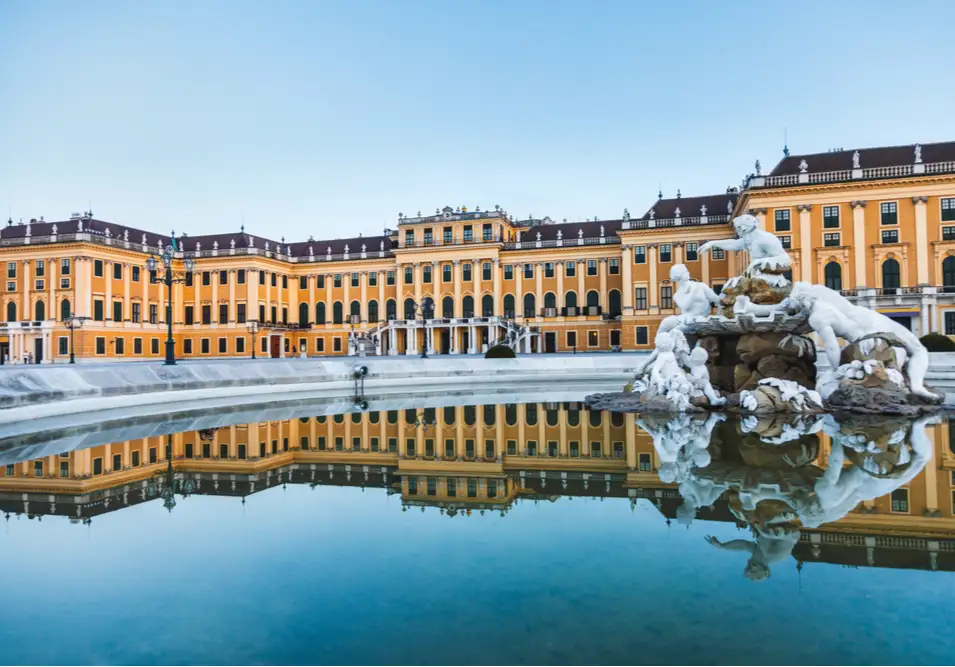
winter Schönbrunn Palace in Vienna austria

Vienna

Artistic and musical, historical and elegant, Vienna is the definition of class. The seat of the Habsburg monarchy for over six centuries, it's no wonder this city is still fit for royalty. Baroque buildings and imperial palaces dominate the cityscape, while locals stride gracefully through the streets, likely on their way to a classical music concert or art exhibition. Visitors from all over the world flock to Schonbrunn Palace, historical museums, and local eateries for authentic Viennese schnitzel.  Vienna is also home to world-class wining and dining. Famous dishes include Wiener schnitzel, Tafelspitz (prime boiled beef), and apfelstrudel (apple strudel), all of which pair well with a glass of fine Austrian wine. No matter how long you spend in Vienna, you'll leave with a new appreciation for the finer things in life. 

winter in salzburg germany

Salzburg

You've probably heard this before— the city of Salzburg is straight out of a fairytale. Nestled in the mountains, this romantic city's Baroque architecture with colorful domes and spires is especially striking against the ancient fortress and Austrian Alpine backdrop. If you're looking for an amazing view, climb up to Hohensalzburg Fortress, Central Europe's largest intact fortress, for a jaw-dropping panorama of the city backed by misty mountains. Perhaps most famous for being the birthplace of the renowned composer Wolfgang Amadeus Mozart and the filming location for the classic The Sound of Music, this city has much to offer. Salzburg has become an important artistic and cultural center, featuring magnificent concert halls that uphold the city's tradition of classical music every day of the year, as well as acclaimed art exhibitions and museums. If you do it right, your visit to Salzburg will immerse you in the city's unforgettable atmosphere and keep you coming back for more. 

castle and bridge in heidelberg germany

Heidelberg

Heidelberg is buried deep in the forests of southwest Germany. Flanking both sides of the Neckar River, Heidelberg's red and white baroque old town looks like something from a book of folktales. On the hillside above the town, you'll see the looming, tumbledown remains of Heidelberg's Gothic-Renaissance castle, Heidelberger Schloss. The subject of strange local legends, Heidelberg Castle was once home to knights, a famous court jester, and even a witch. It is said the first person who pulls out an iron ring embedded in one of the great doors will be the castle's true owner. Surely on your visit, it's worth a try? Across the river, follow in the footsteps of scholars on a hiking trail known as The Philosophers’ Way. Heidelberg University is the oldest in Germany, and its leafy, temple-like campus contributes to the gentle, contemplative atmosphere of the town.  A poetic city with the dreamy feel of a watercolor painting, it's no wonder Heidelberg inspired writers like Mark Twain and Johann Wolfgang von Goethe. The city has even been recognized by UNESCO as a City of Literature. Especially on misty, grey days, Heidelberg has a way of sweeping you up in its romanticism.      

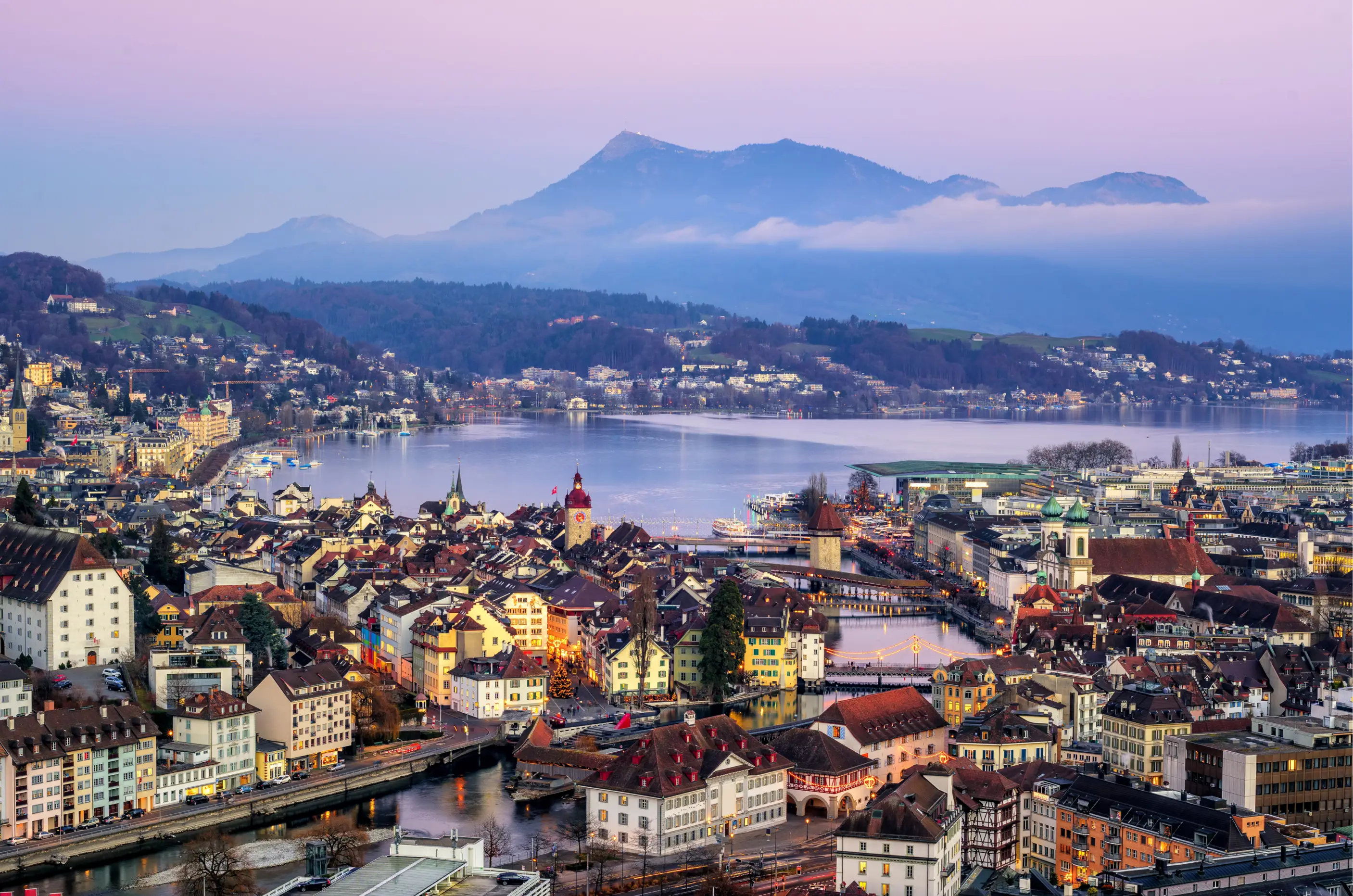
aerial view of mountains and lucerne switzerland

Lucerne

Lucerne’s international name may be French, but this spellbinding little city is actually situated in the heart of Switzerland’s German area. Lucerne was one of the first cities to join the Swiss Confederation and is a microcosm of all the typical Swiss quirks and charm that draw visitors to the country from all over the world. The city’s old town is beautifully preserved and also extremely compact. This is a place that is perfect for walking and looking. You’ll soon start to get an in-depth feel for the Old Town after just a few hours. Stroll across the famous Kapellbrücke bridge or the smaller Spreuerbrücke, or wander to the Löwendenkmal, the wounded lion memorial carved from a rock face. Stunning nature surrounds Lucerne, and the landmark Mount Pilatus towers over the city. It’s possible to climb the mountain, where hikers (and cable-car riders) will be rewarded with breathtaking views of the town below and the Alps beyond. Back at ground level, Lake Lucerne calls out for boat trips, which stop at the many villages and parks around the shores.

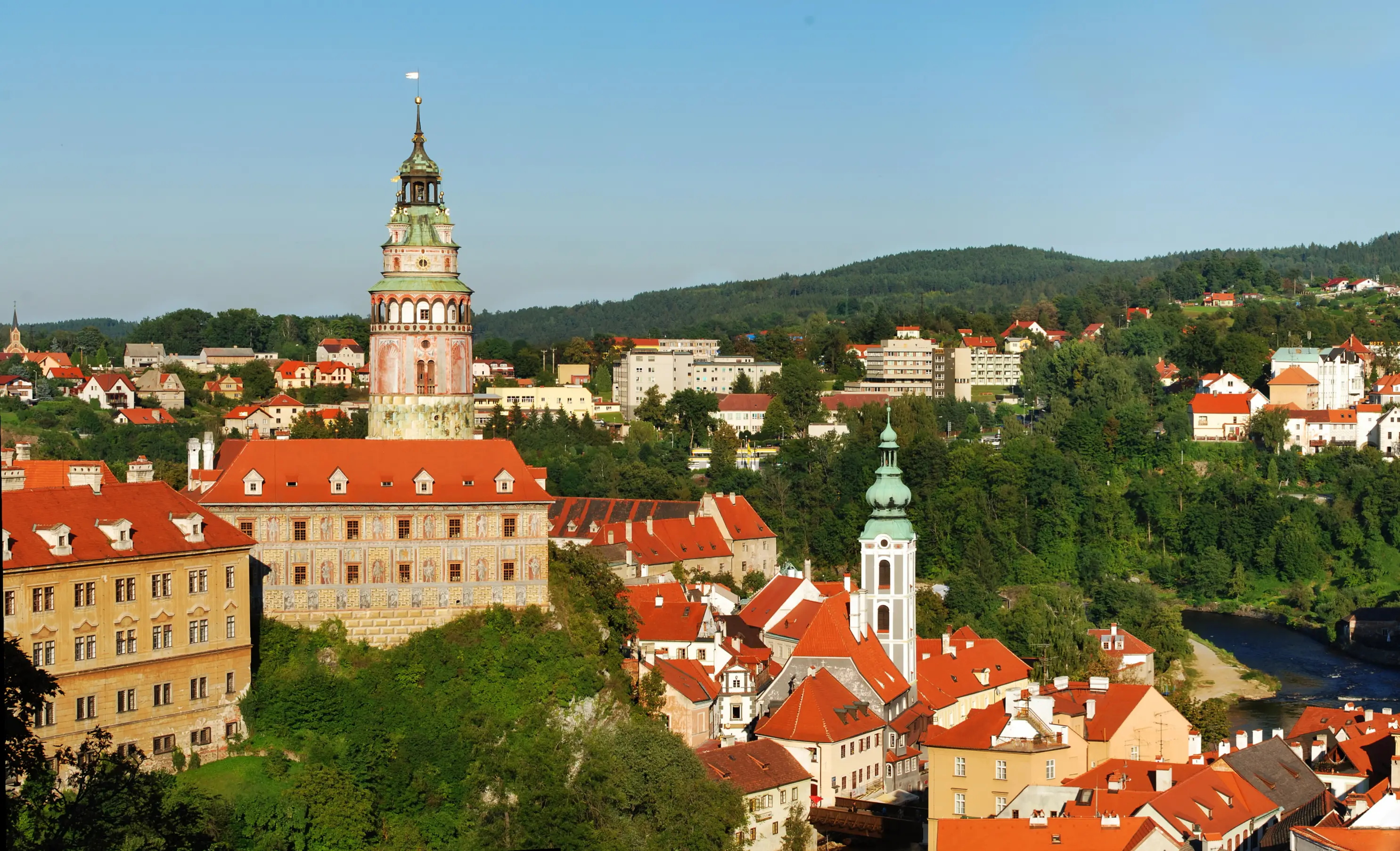
Overhead View of Red Rooftops in Cesky Krumlov

Cesky Krumlov

Cesky Krumlov is a charming little town in South Bohemia. It might be small, but it’s full of whimsical character and mystery. Walking through the narrow streets and across the bridge, the views of the medieval Cesky Krumlov Castle will take your breath away. At night, street musicians serenade visitors on the bridge where you can dance beneath the stars and the watchful eye of the magnificent tower.  Dozens of unique local artisan shops, cafes, and restaurants are woven among the winding streets. In the summer, the city is lush with life and greenery. Rafters race down the river, stopping in the center along the way to enjoy a hearty meal before continuing their journey. In the winter, the main square transforms into a magnificent Christmas market and light blankets of snow cover the rooftops. This quaint little town will exceed your expectations and you may never want to leave.  

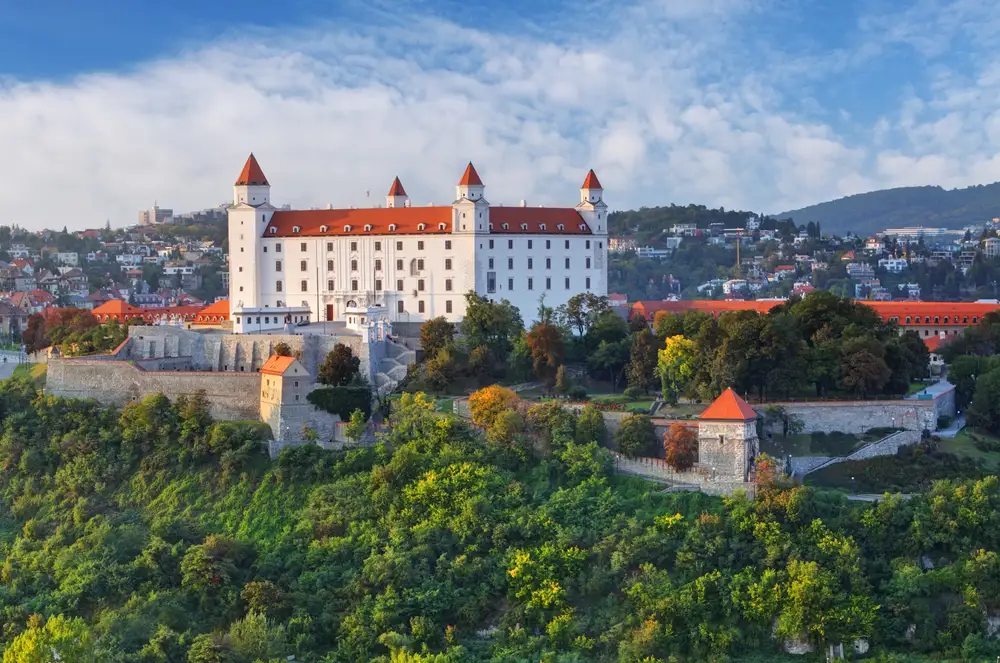
The white and red Bratislava castle on a hilltop

Bratislava

Bratislava is one of the most up-and-coming cities in central Europe. After years in the shadows of the Soviet bloc, and often drowned out by Prague, Bratislava has finally broken out. The Bratislavan region is now one of the richest per capita in the EU. This economic upswing has infused Bratislava with a newfound zeal. Trendy cafes and cool shopping centers are popping up everywhere, and the city’s already happening nightlife scene is only set to get better. Still less crowded than its central European neighbors Prague, Vienna, and Budapest, but just as intriguing, there’s really never been a better time for a visit to Bratislava. Ruled over by the Hungarians, Austrians, and most recently the Soviets, Bratislava is a city of strange contrasts. As soon as you arrive in Bratislava, you’ll see the pastel-hued churches, baroque houses, and the cobbled Old Town Square brush shoulders with modern brutalist buildings, retrofuturistic towers, and the clunky communist built UFO bridge. The city’s oldest building, its castle, is set atop the western edge of the Little Carpathian Hills like a trophy, the city’s hard-won main icon. For the first time in nearly a millennium, Bratislava has now seized control of its own destiny, and it shows.  

👋

Hi! Need help planning your dream trip? 🌍

Go Real Travel Assistant
Online

Welcome! Where are you in your journey?

Pick the option that fits you best so we can route you to the right help.