



Bratislava Travel Guide

Must See Attractions in Bratislava
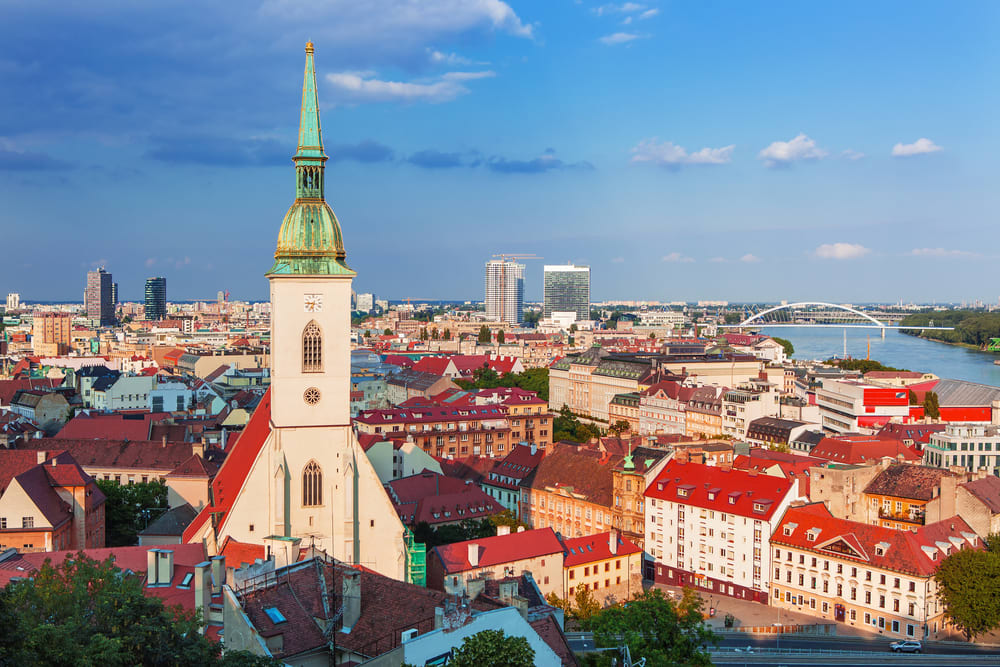
Bratislava’s Old Town (or ‘Stare Mesto’ in Slovakian) is one of the most easy-going town centers to visit in central Eastern Europe. Handsome, compact, and relatively less touristed, there’s lots of history to encounter in and around Bratislava’s main town square, Hlavné Námesti. Although much of the Old Town was destroyed by communists under the Soviet Regime, this has lead to Slovakia rejuvenating what physical remains are left of the past. Architecture knock-outs here include the neoclassical Primate’s Palace and the Art Noveau Blue Church. For those who enjoy controversial communist design, the upside-down pyramid Slovak Radio Building is sure to spark discussion.
Read more

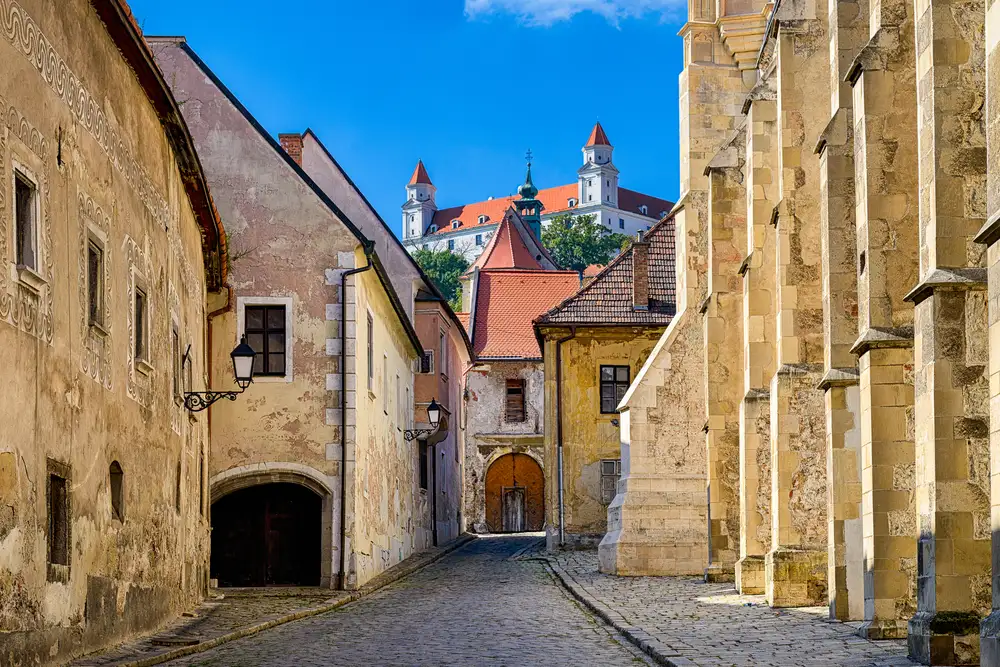
Bratislava Castle presides on a rocky hillside on the western side of the city. Dating from as early as the 9th Century, the Castle has been renovated many times. As much a fixture of Bratislava as the Little Carpathian Hills it rests on, legends swirl around the castle, adding to its mystery and stature. According to local Slovaks, the castle’s four corner turrets and creamy white stonework look like ‘a table turned upside down’, flipped by a mythological giant. Inside the Castle walls, you’ll find the Slovak National Museum devoted to telling the country’s story. The castle’s vantage point offers some of the best views of the Danube to be found in Bratislava.
Read more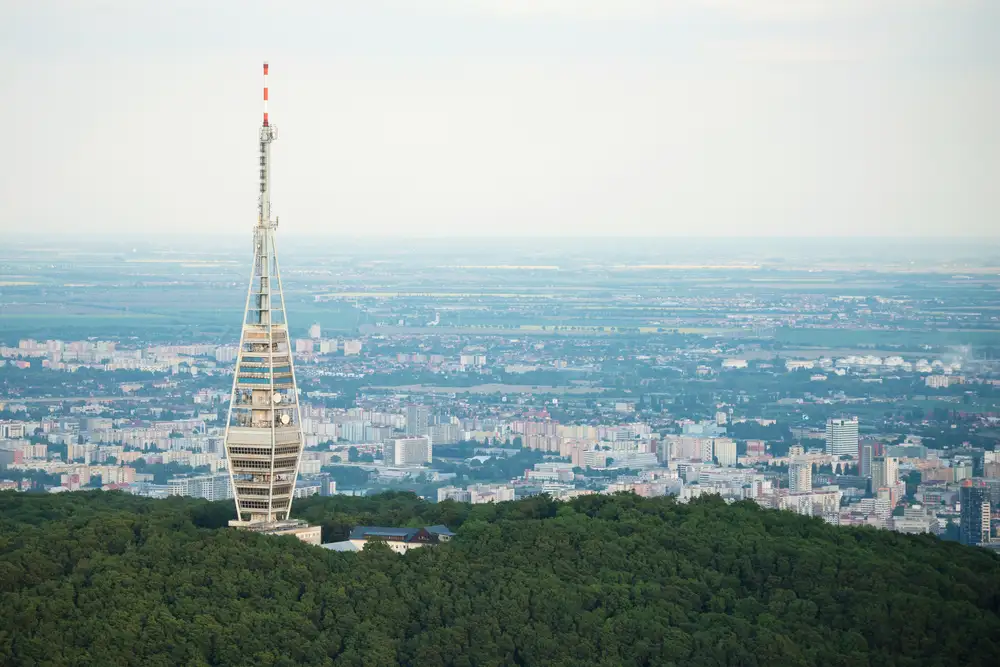
Venture through the Bratislava Forest Park and you’ll find the outlandish, diamond-shaped Kamzik Television Tower. Constructed under the Soviets in 1957, the tower’s retro-futuristic vibe speaks to Slovakia’s communist past. At 196 meters tall, the Television Tower is by far the highest point in Bratislava and offers spectacular views over the city. Home to a very reasonably priced restaurant, the tower is a great spot to dine before exploring its surrounding Forest Park. Hikes, a chairlift, and even a Summer Toboggan run make a trip to the tower a quirky, energetic, and fun family day out.
Read more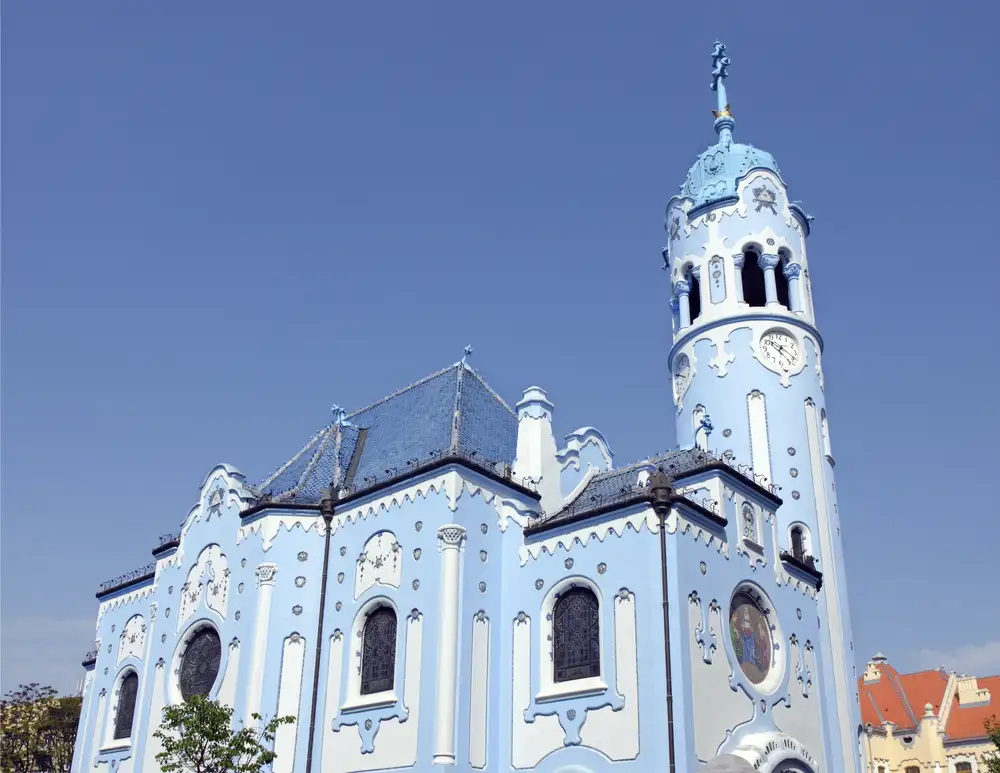
As soon as you see it, you’ll know why St. Elisabeth’s is more commonly known as ‘the Blue Church’. This art nouveau, or more technically, Hungarian Secessionist church is a striking shade of powdery sky blue. Decked out with Zsolnay tile patterns inspired by old Magyar and Turkic folk art, the church playfully combines oriental, Romanesque and classical features. The overall effect is like an easter egg, a theme that continues throughout the interior. The church is consecrated to St Elisabeth, a medieval princess and saint, native to Bratislava. Elisabeth allegedly risked her rank by giving alms to the poor. There is a mosaic above the main door depicting a miracle she performed. The church (and its survival post-communism), is nearly a miracle of itself.
Read more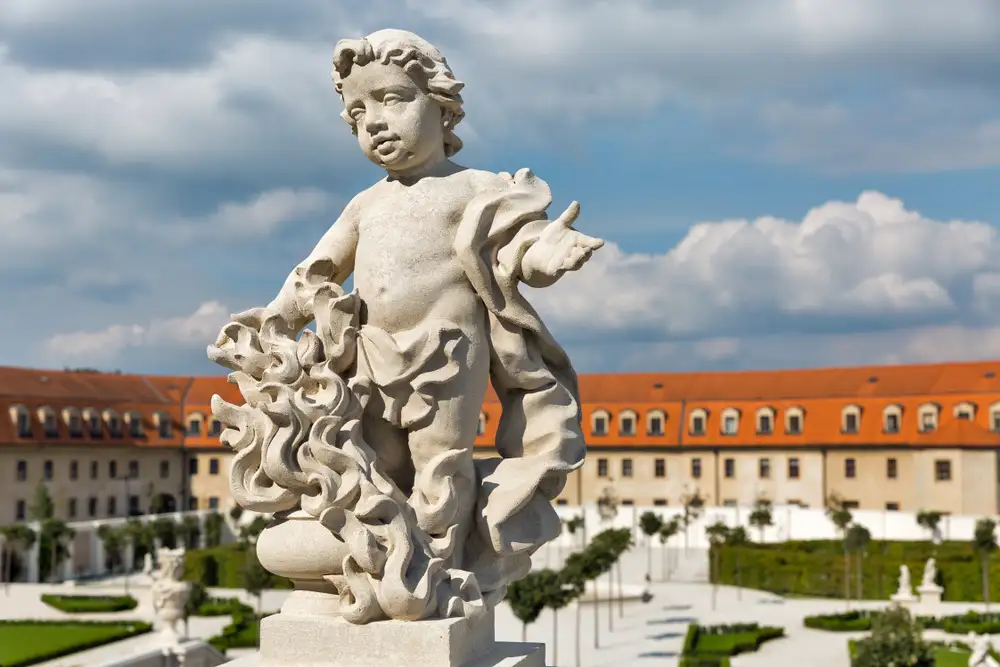
The Baroque Gardens at Castle Bratislava are nearly as popular as the castle itself. Baroque style is the castle’s dominant aesthetic and has been since Maria Therese, queen of the Kingdom of Hungary, renovated the castle in the 1760s. The gardens make a harmonious complement to the castle itself and are a tranquil space to wander during your visit. Only recently restored to their former glory, the garden’s hedgerows and winding paths spiral pleasingly across the castle grounds. The reconstruction was painstakingly researched from historical records. Hundreds of Linden trees have been planted, as well as thousands of other plants. Small signs explain the history of the gardens as you stroll the paths.
Read moreShow more
Optional Day Trips from Bratislava
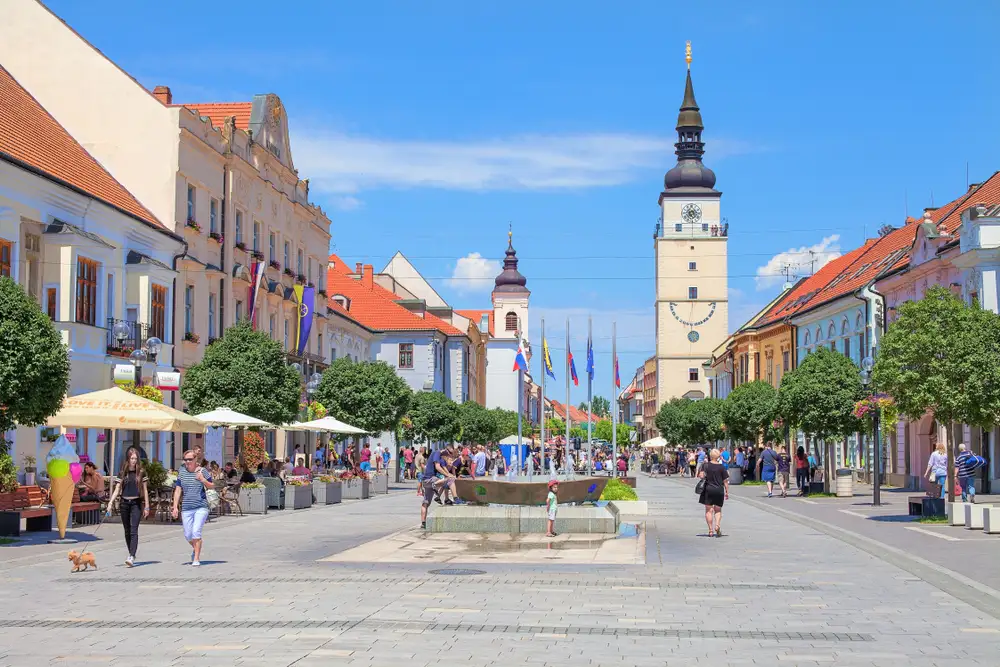
Trnava rose to glory in the 16th century, when insurgent Turks threatened the Hungarian city of Esztergom. Duly alarmed, the Archbishop of Esztergom moved his seat northwest to Trnava, turning the town into the Kingdom of Hungary's center of cultural and ecclesiastical life. The effects of this decision can still be seen around Trnava today, and the city is known as the ‘Slovak Rome’ for its numerous churches. One of the worthiest attractions near Trnava is the Driny Cave. The only show cave in western Slovakia, this limestone cavern drips with stunning rock formations. The nearby Smolenice Chateau is also truly something to see, while you’re in the neighborhood.
Read more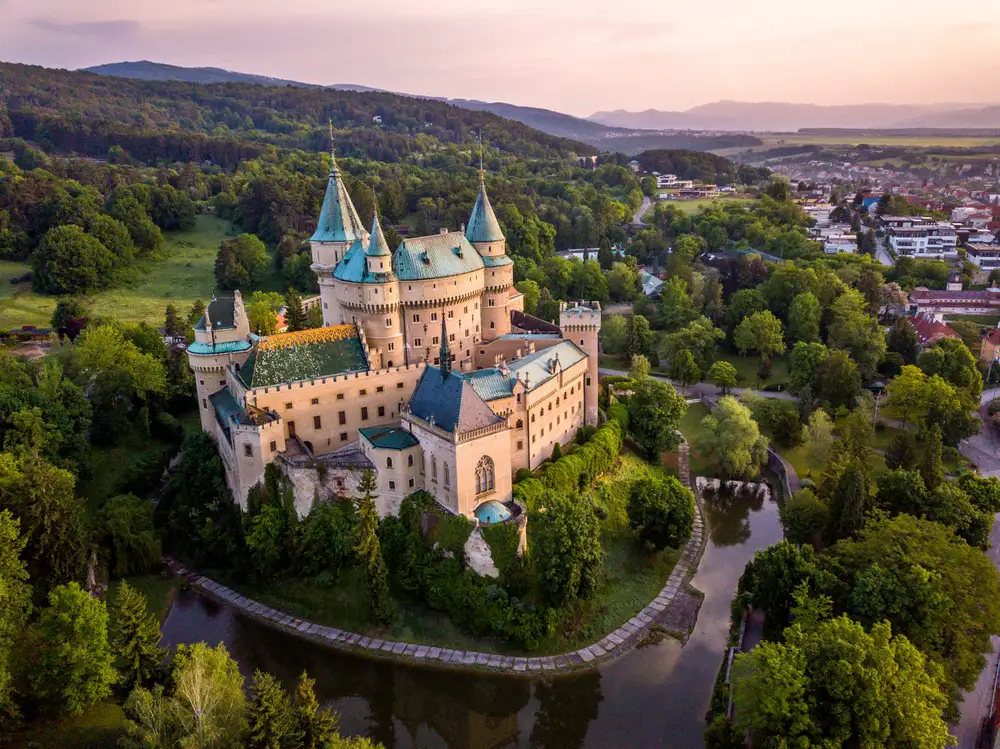
The castle to end all castles, Bojnice Chateau really must be seen to be believed. The site of a palace since the 12th century, Bojnice was remodeled in the late 1800s by Count Jan Pálffy, a romanticist who wished to mimic the much-loved French chateaus he saw in the Loire Valley. Pálffy filled his castle with paintings, tapestries, and other objets d’art. Although the 20th century was not kind to the chateau, today the palace has been lavishly restored. As you enter the castle, you’ll feel as if you’ve stepped inside a fairy-tale, or Disney movie come to life. After you stroll the grounds and zoo, and dine at one of the nearby restaurants, you may even leave Bojnnice believing in magic.
Read more
Čičmany village is special. Home to the first folk architecture reserve in the world, this incredibly unique village feels like a live-in Pinterest board. The dark wooden houses in Čičmany are daubed with white paint in hypnotic folk motifs. Entrenched with old-world meanings, the paintings have been compared to ancient runes. The village sustains other folk traditions, including embroidery, dance, and music. Peeping inside the houses, which have been preserved as museums, you’ll feel like you’re looking inside the 19th century. This quaint town is essential for history lovers, or anyone who wants to appreciate the old Slovak way of life.
Read more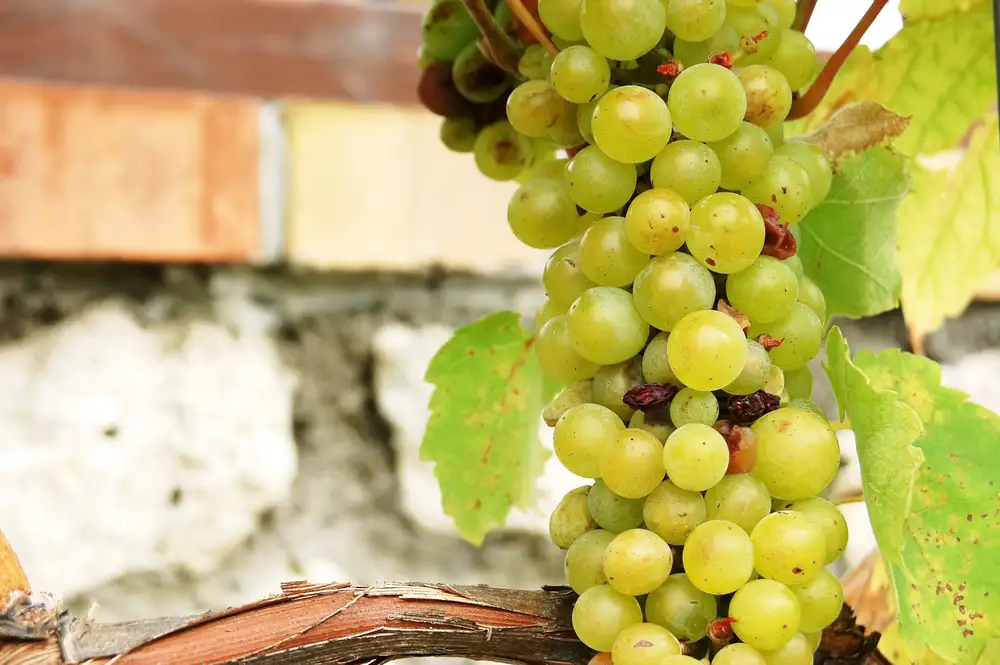
Slovak wine is one of the quiet pleasures of Eastern Europe. Winemaking was brought to Slovakia by the early Romans. Slovak viticulture has been maturing ever since, although it was briefly disrupted under Soviet rule. Although Tonkaj wine has hit the world stage, lesser-known wines Slovak wines from regions like the Little Carpathians are intriguing to try. On this tour, you’ll be offered the chance to savor wines from small vineyards around the rural town of Svätý Jur. As a bonus, the tour includes the tumbledown ruins of Biely Kameň, a medieval castle. Tipsily exploring the ruins makes for a fun end to the day in the countryside.
Read more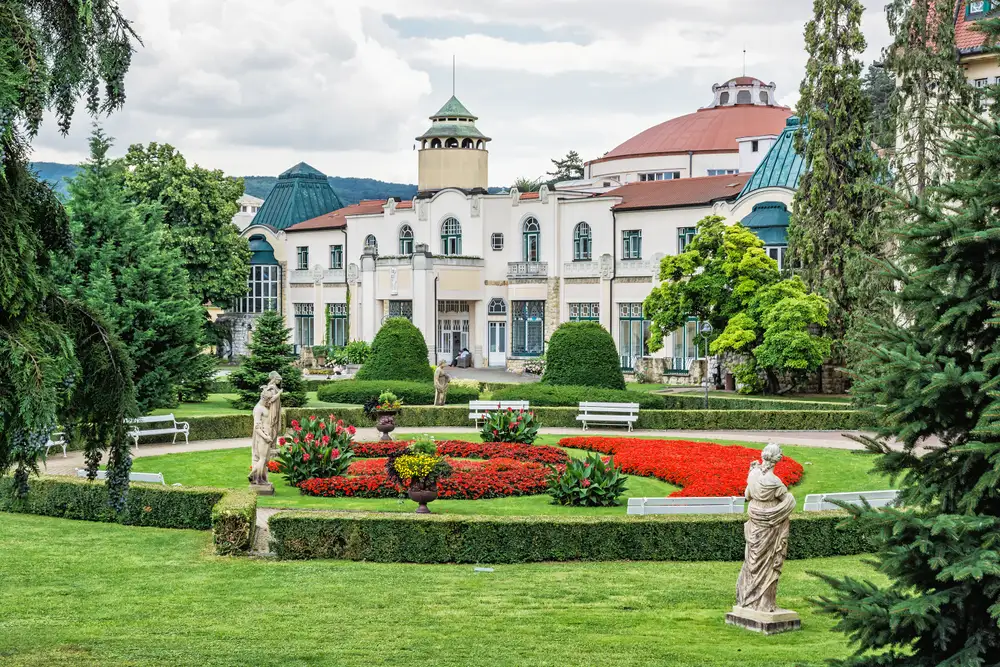
Did you know the same network thermal waters that draw crowds to Budapest also bubble throughout Slovakia? The spa town of Piešťany is situated only half-an-hour by fast train from Bratislava and is famed for its curative geothermal waters and medicinal sulphuric mud. The town’s main bathing hotel, Thermia Palace, is dotted with fountains and statues and has all the grandeur that comes with 18th-century bathing institutions. The waters here are said to be especially soothing for Rheumatic conditions, but anyone who visits can take a dip and emerge feeling rejuvenated.
Read more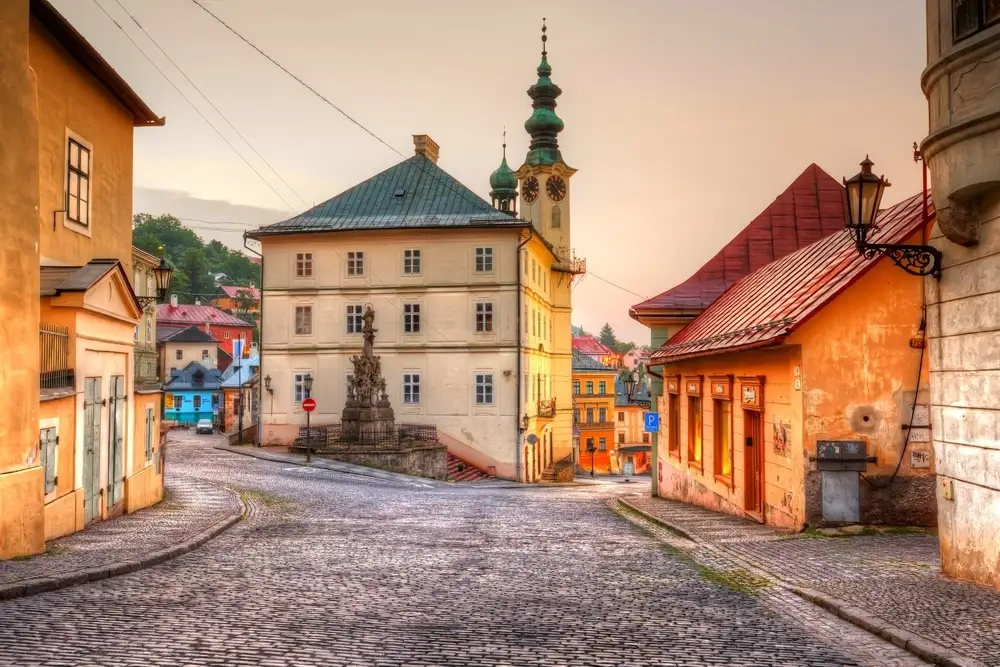
A good rule of thumb in Slovakia is any town beginning with Banská designates an old silver mining settlement. Of all such towns, Banská Štiavnica is arguably the most illustrious. It’s where Hapsburg Empress Maria Theresa established the first mining and forestry university in the world. Banská Štiavnica is now UNESCO-listed, and the town is scattered with evidence of its rich mining heritage. Highlights of Banská Štiavnica include the Old and New castles built to keep the marauding Ottoman Turks at bay, and the majestic Holy Trinity Square with its monumental plague column. The square is skirted by wonderful old burgher houses and public buildings, and it doesn’t take much imagination to picture Banská Štiavnica as it was hundreds of years ago.
Read more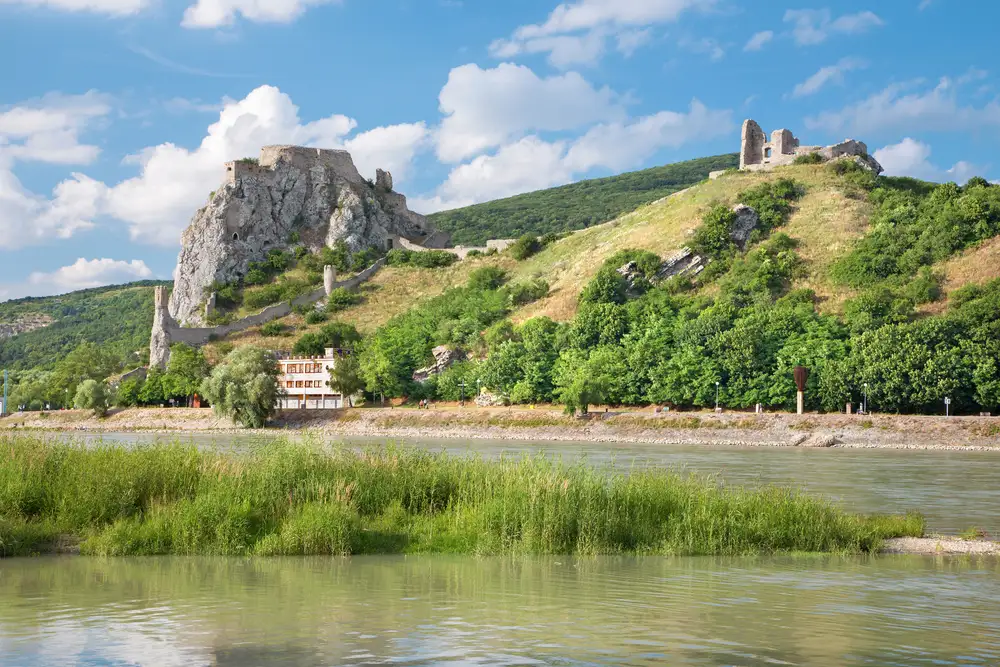
Devín Castle’s odd, gloomy beauty and fascinating history make it a must-see on any journey through Slovakia. One of the oldest castles in Slovakia, Devin Castle castle was originally built for its strategic prowess, atop a high crag overlooking the confluence of the Danube and Morava rivers. When Slovakia was a communist state, the rivers marked the boundary of the Iron Curtain, as it verged on the border with Austria. Devin Castle played a harrowing role in escapees trying to flee the Soviet Bloc. Today, the castle’s vantage point provides panoramic views across the countryside. The lonely remnants of the castle’s Maiden Tower perch like a crow on the edge of a destroyed rampart, one of the most photographed sights in all Slovakia.
Read moreShow more
Create a custom trip
plan for Bratislava
Travelling made easy:
- ✓ 100% customizable trip
- ✓ On-trip support, around the clock
- ✓ Local travel expertise


Featured Blogs




Your custom trip package includes

A day to day itinerary

Centrally located hotels

Door to door transportation
Self-guided & private tours
Create Your Perfect Trip in Minutes
Discover A Better Way To Travel.
Once you Go Real, you’ll never go back to ordinary travel.