Overview
Overview
Overview
Overview
Overview
This website uses ‘cookies’ to give you the best, most relevant experience. By using this website, you consent to our Privacy Policy
×Overview
Trip Map
Itinerary
Inclusions
Reviews


Must see sights


Starting from
per person
Enter your details to embark on a journey that can be tailored just for you.
Start
Travelers
Preferred Hotel Stars
Select your interests and destinations for a trip plan inspired by you.
| ← | Move left |
| → | Move right |
| ↑ | Move up |
| ↓ | Move down |
| + | Zoom in |
| - | Zoom out |
| Home | Jump left by 75% |
| End | Jump right by 75% |
| Page Up | Jump up by 75% |
| Page Down | Jump down by 75% |


Click To Make Map Interactive
Overview
Overview
Overview
Overview
OverviewArrival
2 nights
Frankfurt
Germany
Train: 3.5h
3 nights
Munich
Germany
Train: 4.5h
Train: 1h
3 nights
Lucerne
Switzerland
Train: 2h
2 nights
Interlaken
Switzerland
Train: 1h
Train: 2h
3 nights
Geneva
Switzerland
Departure

Day 1
Arrive Frankfurt
Day 1
Arrive Frankfurt
Mid-Day/Afternoon
You can explore Frankfurt's Financial District and Jewish museums on the northern bank of the Main River and then spend some time walking along the river in Nizza Park. Once you're ready, cross the pedestrian Iron Bridge, weighted down with love locks, to the South Bank and Sachsenhausen, a district of Frankfurt that is renowned for its riverside museums dedicated to the arts and film as well as its lively restaurants and nightlife.

Capture the best view of Frankfurt's skyline from this charming iron bridge.
Show More
Check out the lovely mid-century stained-glass windows in this riverside church.
Show More
Make a visit to Frankfurt's most important art collection.
Show More
Browse the gallery to see some of the highlights

Take a trip across the river to see Frankfurt's laid back side.
Show More
Find a nice bench to relax and take in the river view, and then go for a stroll with the locals.
Show More
Capture the best view of Frankfurt's skyline from this charming iron bridge.
Show More
Check out the lovely mid-century stained-glass windows in this riverside church.
Show More
Make a visit to Frankfurt's most important art collection.
Show More
Browse the gallery to see some of the highlights

Take a trip across the river to see Frankfurt's laid back side.
Show More
Find a nice bench to relax and take in the river view, and then go for a stroll with the locals.
Show More
Day 1
Arrive Frankfurt

Day 1
Arrive Frankfurt
To Be Determined:
Airport Transfer
Mid-Day/Afternoon:
North & South Banks


Iron Bridge (Eiserner Steg)
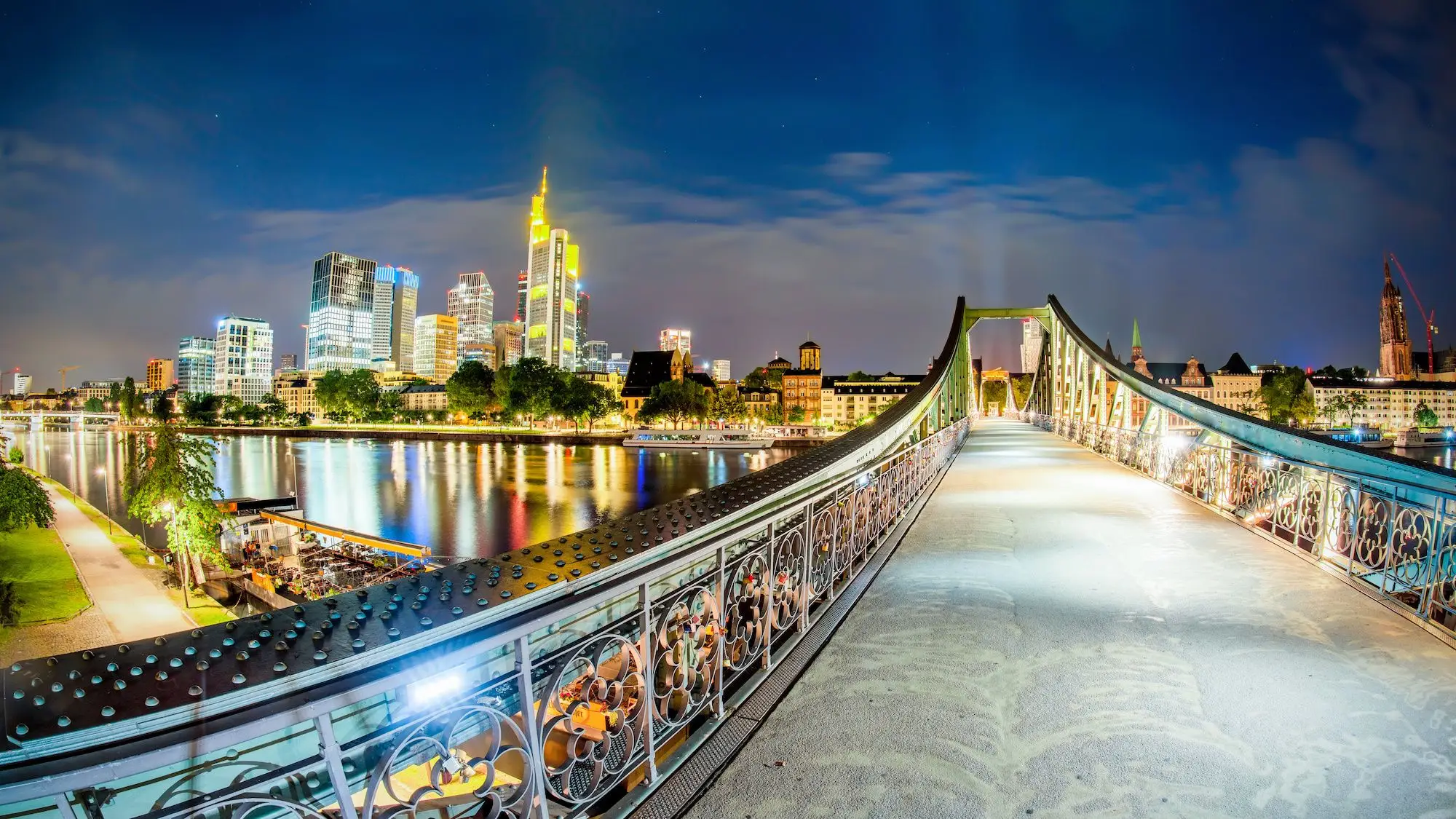
Highlight of North & South BanksCapture the best view of Frankfurt's skyline from this charming iron bridge.
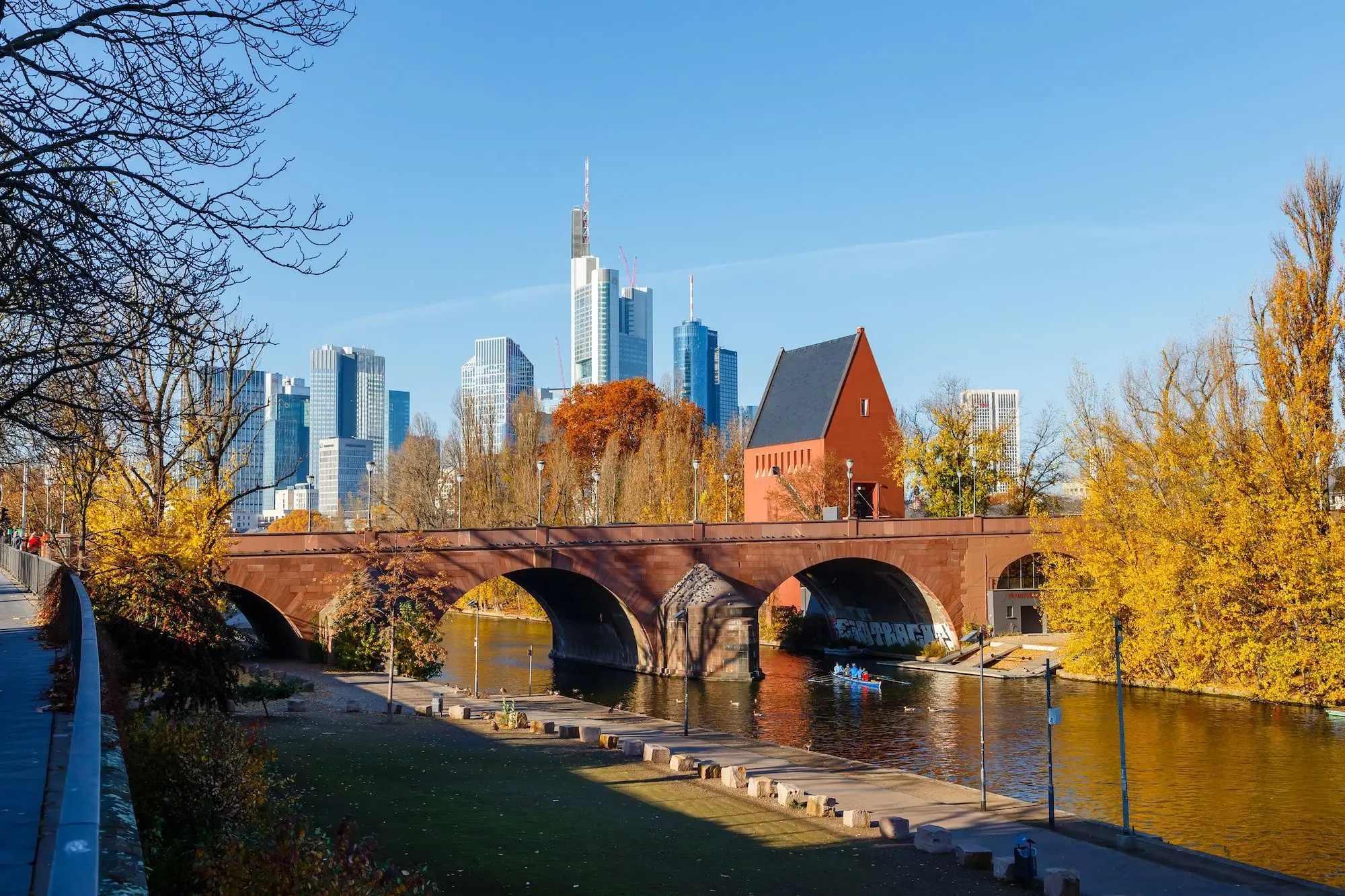
The Eiserner Steg is the 170m/557ft iron footbridge that connects Frankfurt’s north and south banks. The bridge offers scenic views of both sides of the river, and undoubtedly the best view of Frankfurt’s famous skyline is from the Eiserner Steg looking north. Be sure to go in the evenings for the best lighting.


Dreikönigskirche (Church of the Three Kings)
Highlight of North & South BanksCheck out the lovely mid-century stained-glass windows in this riverside church.
The neo-Gothic church is a Lutheran parish located directly on the south bank of the river. Visitors come mainly to enjoy the wonderful stained-glass windows by artist Charles Crodel, which were installed in 1956 to replace those destroyed in the war.


Städel Museum
Highlight of North & South BanksMake a visit to Frankfurt's most important art collection.
Städel is an art museum with 2,700 paintings, 100,000 drawings and prints, and 600 sculptures, including many masterpieces. The museum was founded in 1815 when the banker Johann Friedrich Städel left his priceless personal art collection to the city in his will. The exhibited art stretches back into the middle ages, however, the museum has worked hard to continuously increase its contemporary art collection as well.


North & South Banks
OverviewNorth & South Banks
You can explore Frankfurt's Financial District and Jewish museums on the northern bank of the Main River and then spend some time walking along the river in Nizza Park. Once you're ready, cross the pedestrian Iron Bridge, weighted down with love locks, to the South Bank and Sachsenhausen, a district of Frankfurt that is renowned for its riverside museums dedicated to the arts and film as well as its lively restaurants and nightlife.


Sachsenhausen
Highlight of North & South BanksTake a trip across the river to see Frankfurt's laid back side.
The city of Frankfurt protected itself with a wall from 1390, and the village of Sachsenhausen was fortunate enough to be enveloped within the walls. This district still has a village atmosphere thanks to its cobblestone lanes and small squares. The Alte Sachsenhausen is located on the eastern part of the district close to the river. It is here that visitors can find traditional pubs, half-timbered houses, and narrow alleyways, and can choose from a good selection of bars and restaurants as well as music and nightlife. Be sure to try some of the famous Aplfelwein (apple wine or cider), that Sachsenhausen is famous for, with a plate of Frankfurt Green Sauce.


Nizza Park
Highlight of North & South BanksFind a nice bench to relax and take in the river view, and then go for a stroll with the locals.
The park is the perfect place to experience the river bank while taking in the optimistic, can-do atmosphere of this business-focused city. The park runs for 2.5km between the Lower Main Quay and the Friedensbrücke (Bridge of Peace). The park dates all the way back to the 17th century, and due to the moderate climate along the river, it's even possible to grow Mediterranean plants such as figs and olive trees. In warm weather, you'll find beer tents and other opportunities for refreshment and socializing.


Iron Bridge (Eiserner Steg)
Highlight of North & South BanksCapture the best view of Frankfurt's skyline from this charming iron bridge.
The Eiserner Steg is the 170m/557ft iron footbridge that connects Frankfurt’s north and south banks. The bridge offers scenic views of both sides of the river, and undoubtedly the best view of Frankfurt’s famous skyline is from the Eiserner Steg looking north. Be sure to go in the evenings for the best lighting.


Dreikönigskirche (Church of the Three Kings)
Highlight of North & South BanksCheck out the lovely mid-century stained-glass windows in this riverside church.
The neo-Gothic church is a Lutheran parish located directly on the south bank of the river. Visitors come mainly to enjoy the wonderful stained-glass windows by artist Charles Crodel, which were installed in 1956 to replace those destroyed in the war.


Städel Museum
Highlight of North & South BanksMake a visit to Frankfurt's most important art collection.
Städel is an art museum with 2,700 paintings, 100,000 drawings and prints, and 600 sculptures, including many masterpieces. The museum was founded in 1815 when the banker Johann Friedrich Städel left his priceless personal art collection to the city in his will. The exhibited art stretches back into the middle ages, however, the museum has worked hard to continuously increase its contemporary art collection as well.


North & South Banks
OverviewNorth & South Banks
You can explore Frankfurt's Financial District and Jewish museums on the northern bank of the Main River and then spend some time walking along the river in Nizza Park. Once you're ready, cross the pedestrian Iron Bridge, weighted down with love locks, to the South Bank and Sachsenhausen, a district of Frankfurt that is renowned for its riverside museums dedicated to the arts and film as well as its lively restaurants and nightlife.


Sachsenhausen
Highlight of North & South BanksTake a trip across the river to see Frankfurt's laid back side.
The city of Frankfurt protected itself with a wall from 1390, and the village of Sachsenhausen was fortunate enough to be enveloped within the walls. This district still has a village atmosphere thanks to its cobblestone lanes and small squares. The Alte Sachsenhausen is located on the eastern part of the district close to the river. It is here that visitors can find traditional pubs, half-timbered houses, and narrow alleyways, and can choose from a good selection of bars and restaurants as well as music and nightlife. Be sure to try some of the famous Aplfelwein (apple wine or cider), that Sachsenhausen is famous for, with a plate of Frankfurt Green Sauce.


Nizza Park
Highlight of North & South BanksFind a nice bench to relax and take in the river view, and then go for a stroll with the locals.
The park is the perfect place to experience the river bank while taking in the optimistic, can-do atmosphere of this business-focused city. The park runs for 2.5km between the Lower Main Quay and the Friedensbrücke (Bridge of Peace). The park dates all the way back to the 17th century, and due to the moderate climate along the river, it's even possible to grow Mediterranean plants such as figs and olive trees. In warm weather, you'll find beer tents and other opportunities for refreshment and socializing.

Iron Bridge (Eiserner Steg)
Highlight of North & South BanksCapture the best view of Frankfurt's skyline from this charming iron bridge.
The Eiserner Steg is the 170m/557ft iron footbridge that connects Frankfurt’s north and south banks. The bridge offers scenic views of both sides of the river, and undoubtedly the best view of Frankfurt’s famous skyline is from the Eiserner Steg looking north. Be sure to go in the evenings for the best lighting.

Dreikönigskirche (Church of the Three Kings)
Highlight of North & South BanksCheck out the lovely mid-century stained-glass windows in this riverside church.
The neo-Gothic church is a Lutheran parish located directly on the south bank of the river. Visitors come mainly to enjoy the wonderful stained-glass windows by artist Charles Crodel, which were installed in 1956 to replace those destroyed in the war.

Städel Museum
Highlight of North & South BanksMake a visit to Frankfurt's most important art collection.
Städel is an art museum with 2,700 paintings, 100,000 drawings and prints, and 600 sculptures, including many masterpieces. The museum was founded in 1815 when the banker Johann Friedrich Städel left his priceless personal art collection to the city in his will. The exhibited art stretches back into the middle ages, however, the museum has worked hard to continuously increase its contemporary art collection as well.

North & South Banks
OverviewNorth & South Banks
You can explore Frankfurt's Financial District and Jewish museums on the northern bank of the Main River and then spend some time walking along the river in Nizza Park. Once you're ready, cross the pedestrian Iron Bridge, weighted down with love locks, to the South Bank and Sachsenhausen, a district of Frankfurt that is renowned for its riverside museums dedicated to the arts and film as well as its lively restaurants and nightlife.

Sachsenhausen
Highlight of North & South BanksTake a trip across the river to see Frankfurt's laid back side.
The city of Frankfurt protected itself with a wall from 1390, and the village of Sachsenhausen was fortunate enough to be enveloped within the walls. This district still has a village atmosphere thanks to its cobblestone lanes and small squares. The Alte Sachsenhausen is located on the eastern part of the district close to the river. It is here that visitors can find traditional pubs, half-timbered houses, and narrow alleyways, and can choose from a good selection of bars and restaurants as well as music and nightlife. Be sure to try some of the famous Aplfelwein (apple wine or cider), that Sachsenhausen is famous for, with a plate of Frankfurt Green Sauce.

Nizza Park
Highlight of North & South BanksFind a nice bench to relax and take in the river view, and then go for a stroll with the locals.
The park is the perfect place to experience the river bank while taking in the optimistic, can-do atmosphere of this business-focused city. The park runs for 2.5km between the Lower Main Quay and the Friedensbrücke (Bridge of Peace). The park dates all the way back to the 17th century, and due to the moderate climate along the river, it's even possible to grow Mediterranean plants such as figs and olive trees. In warm weather, you'll find beer tents and other opportunities for refreshment and socializing.

Iron Bridge (Eiserner Steg)
Highlight of North & South BanksCapture the best view of Frankfurt's skyline from this charming iron bridge.
The Eiserner Steg is the 170m/557ft iron footbridge that connects Frankfurt’s north and south banks. The bridge offers scenic views of both sides of the river, and undoubtedly the best view of Frankfurt’s famous skyline is from the Eiserner Steg looking north. Be sure to go in the evenings for the best lighting.

Dreikönigskirche (Church of the Three Kings)
Highlight of North & South BanksCheck out the lovely mid-century stained-glass windows in this riverside church.
The neo-Gothic church is a Lutheran parish located directly on the south bank of the river. Visitors come mainly to enjoy the wonderful stained-glass windows by artist Charles Crodel, which were installed in 1956 to replace those destroyed in the war.

Städel Museum
Highlight of North & South BanksMake a visit to Frankfurt's most important art collection.
Städel is an art museum with 2,700 paintings, 100,000 drawings and prints, and 600 sculptures, including many masterpieces. The museum was founded in 1815 when the banker Johann Friedrich Städel left his priceless personal art collection to the city in his will. The exhibited art stretches back into the middle ages, however, the museum has worked hard to continuously increase its contemporary art collection as well.

North & South Banks
OverviewNorth & South Banks
You can explore Frankfurt's Financial District and Jewish museums on the northern bank of the Main River and then spend some time walking along the river in Nizza Park. Once you're ready, cross the pedestrian Iron Bridge, weighted down with love locks, to the South Bank and Sachsenhausen, a district of Frankfurt that is renowned for its riverside museums dedicated to the arts and film as well as its lively restaurants and nightlife.

Sachsenhausen
Highlight of North & South BanksTake a trip across the river to see Frankfurt's laid back side.
The city of Frankfurt protected itself with a wall from 1390, and the village of Sachsenhausen was fortunate enough to be enveloped within the walls. This district still has a village atmosphere thanks to its cobblestone lanes and small squares. The Alte Sachsenhausen is located on the eastern part of the district close to the river. It is here that visitors can find traditional pubs, half-timbered houses, and narrow alleyways, and can choose from a good selection of bars and restaurants as well as music and nightlife. Be sure to try some of the famous Aplfelwein (apple wine or cider), that Sachsenhausen is famous for, with a plate of Frankfurt Green Sauce.

Nizza Park
Highlight of North & South BanksFind a nice bench to relax and take in the river view, and then go for a stroll with the locals.
The park is the perfect place to experience the river bank while taking in the optimistic, can-do atmosphere of this business-focused city. The park runs for 2.5km between the Lower Main Quay and the Friedensbrücke (Bridge of Peace). The park dates all the way back to the 17th century, and due to the moderate climate along the river, it's even possible to grow Mediterranean plants such as figs and olive trees. In warm weather, you'll find beer tents and other opportunities for refreshment and socializing.

Day 2
Frankfurt
Day 2
Frankfurt
Morning to Afternoon
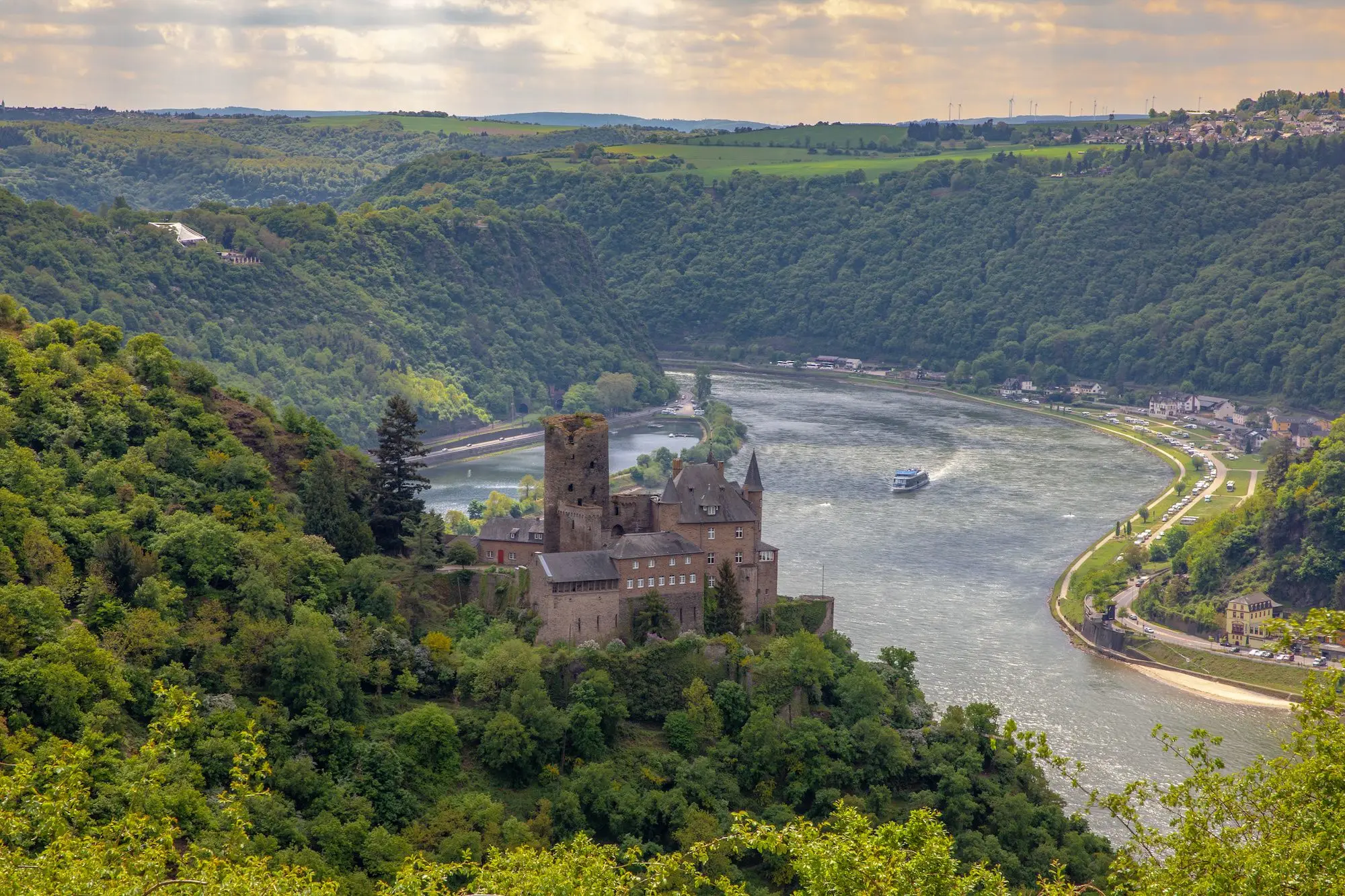
Board a riverboat from the town of Rüdesheim and take a cruise northwards up the incomparable Rhine River Gorge wreathed on either side with vineyards groaning with Reisling and Pinot Noir grapes, and colonized with impossibly romantic chateaux and castle ruins. Alternatively, hire a bicycle and pedal up the gorge, stopping off at rustic villages along the way, before heading back for a well-earned glass of the local wine.

Hike about one mile (1.6km) from the top chairlift station to this over-the-top but undeniably impressive monument celebrating German unification.
Show More
Hike to these castle ruins overlooking the river.
Show More
Browse the gallery to see some of the highlights

Effortlessly ascend to the top of the hills overlooking the valley and go for a walk among the vineyards and forests.
Show More
Hike about one mile (1.6km) from the top chairlift station to this over-the-top but undeniably impressive monument celebrating German unification.
Show More
Hike to these castle ruins overlooking the river.
Show More
Browse the gallery to see some of the highlights

Effortlessly ascend to the top of the hills overlooking the valley and go for a walk among the vineyards and forests.
Show More
Day 2
Frankfurt

Niederwalddenkmal
Highlight of Rhine Gorge CruiseHike about one mile (1.6km) from the top chairlift station to this over-the-top but undeniably impressive monument celebrating German unification.
Niederwalddenkmal (Niederwald Monument, or Statue of Germania) is a gargantuan and rather bellicose monument celebrating the 1871 foundation of the German Reich after the end of the Franco-Prussian War. Until then, most people within the new empire had continued to think of themselves first and foremost as Prussians, Bavarians or Saxons, and only secondly as Germans, so the erection of national monuments such as Germania was therefore intended to awaken German national feeling.

Castle Ehrenfels
Highlight of Rhine Gorge CruiseHike to these castle ruins overlooking the river.
From the Niederwald Monument, you can also follow the markings to the town of Assmannshausen and the picturesque medieval castle ruins of Burg Ehrenfels facing the equally romantic Mäuseturm (Mouse Tower) on an islet in the river originally used to collect river tolls until wrecked by the French in 1688. The hike from the Niederwalddenkmal to Assmannshausen takes two hours, and from there you can take a boat or train back to Rüdesheim.

Rhine Gorge Cruise
OverviewRhine Gorge Cruise
Board a riverboat from the town of Rüdesheim and take a cruise northwards up the incomparable Rhine River Gorge wreathed on either side with vineyards groaning with Reisling and Pinot Noir grapes, and colonized with impossibly romantic chateaux and castle ruins. Alternatively, hire a bicycle and pedal up the gorge, stopping off at rustic villages along the way, before heading back for a well-earned glass of the local wine.

Seilbahn
Highlight of Rhine Gorge CruiseEffortlessly ascend to the top of the hills overlooking the valley and go for a walk among the vineyards and forests.
This antique 1950s chairlift offers great views over the town and the Rhine Valley that streches away to Mainz. The upper station above many of the local vineyards is close to one of the most popular tourist sights in Germany for German tourists, the Niederwalddenkmal (Niederwald Monument, or Statue of Germania).

Niederwalddenkmal
Highlight of Rhine Gorge CruiseHike about one mile (1.6km) from the top chairlift station to this over-the-top but undeniably impressive monument celebrating German unification.
Niederwalddenkmal (Niederwald Monument, or Statue of Germania) is a gargantuan and rather bellicose monument celebrating the 1871 foundation of the German Reich after the end of the Franco-Prussian War. Until then, most people within the new empire had continued to think of themselves first and foremost as Prussians, Bavarians or Saxons, and only secondly as Germans, so the erection of national monuments such as Germania was therefore intended to awaken German national feeling.

Castle Ehrenfels
Highlight of Rhine Gorge CruiseHike to these castle ruins overlooking the river.
From the Niederwald Monument, you can also follow the markings to the town of Assmannshausen and the picturesque medieval castle ruins of Burg Ehrenfels facing the equally romantic Mäuseturm (Mouse Tower) on an islet in the river originally used to collect river tolls until wrecked by the French in 1688. The hike from the Niederwalddenkmal to Assmannshausen takes two hours, and from there you can take a boat or train back to Rüdesheim.

Rhine Gorge Cruise
OverviewRhine Gorge Cruise
Board a riverboat from the town of Rüdesheim and take a cruise northwards up the incomparable Rhine River Gorge wreathed on either side with vineyards groaning with Reisling and Pinot Noir grapes, and colonized with impossibly romantic chateaux and castle ruins. Alternatively, hire a bicycle and pedal up the gorge, stopping off at rustic villages along the way, before heading back for a well-earned glass of the local wine.

Seilbahn
Highlight of Rhine Gorge CruiseEffortlessly ascend to the top of the hills overlooking the valley and go for a walk among the vineyards and forests.
This antique 1950s chairlift offers great views over the town and the Rhine Valley that streches away to Mainz. The upper station above many of the local vineyards is close to one of the most popular tourist sights in Germany for German tourists, the Niederwalddenkmal (Niederwald Monument, or Statue of Germania).

Day 3
Frankfurt to Munich
Day 3
Frankfurt to Munich
8:55 AM
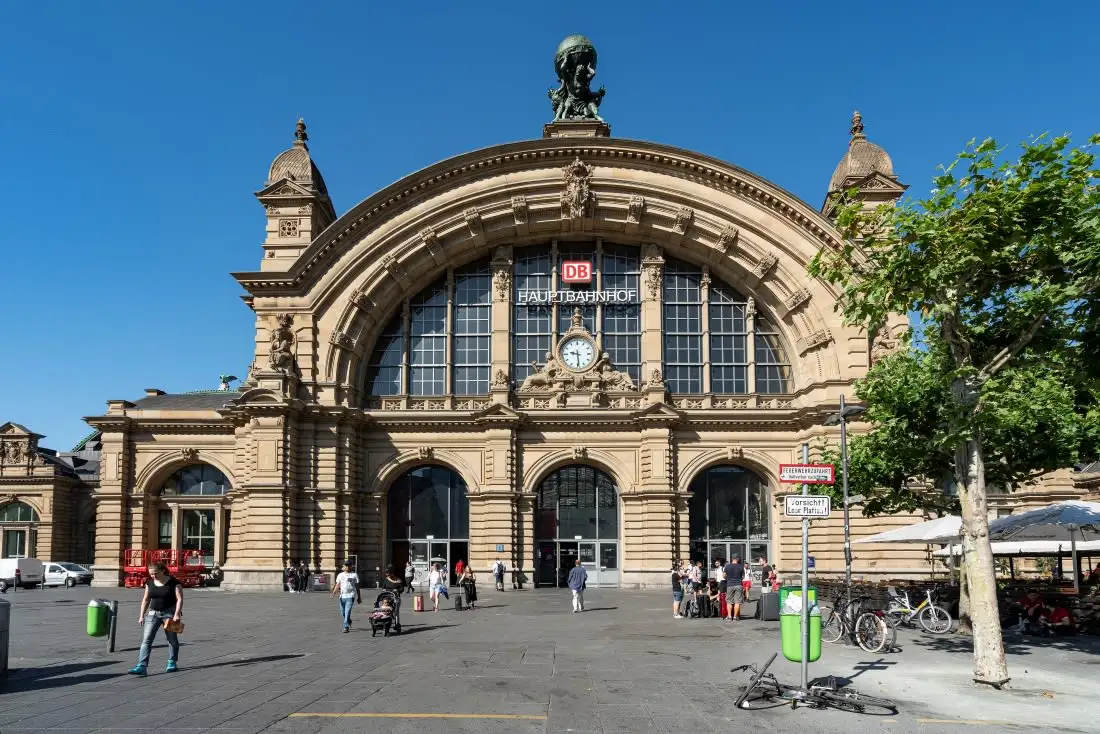
Most trains depart from Frankfurt hbf (i.e. Frankfurt Main Station) station, the largest station in the city. Before spending money on a transfer, be sure to check whether your hotel is within easy walking distance. Also consider that public transport is the cheapest and sometimes fastest option. If staying at a hotel, they can order a reliable taxi. Some private transfers will even help with your bags. Uber is also available for those with the app.


Day 3
Frankfurt to Munich
Transfer to Rail Station
OverviewTransfer to Rail Station
Most trains depart from Frankfurt hbf (i.e. Frankfurt Main Station) station, the largest station in the city. Before spending money on a transfer, be sure to check whether your hotel is within easy walking distance. Also consider that public transport is the cheapest and sometimes fastest option. If staying at a hotel, they can order a reliable taxi. Some private transfers will even help with your bags. Uber is also available for those with the app.

Transfer to Rail Station
OverviewTransfer to Rail Station
Most trains depart from Frankfurt hbf (i.e. Frankfurt Main Station) station, the largest station in the city. Before spending money on a transfer, be sure to check whether your hotel is within easy walking distance. Also consider that public transport is the cheapest and sometimes fastest option. If staying at a hotel, they can order a reliable taxi. Some private transfers will even help with your bags. Uber is also available for those with the app.

Transfer to Rail Station
OverviewTransfer to Rail Station
Most trains depart from Frankfurt hbf (i.e. Frankfurt Main Station) station, the largest station in the city. Before spending money on a transfer, be sure to check whether your hotel is within easy walking distance. Also consider that public transport is the cheapest and sometimes fastest option. If staying at a hotel, they can order a reliable taxi. Some private transfers will even help with your bags. Uber is also available for those with the app.

Transfer to Rail Station
OverviewTransfer to Rail Station
Most trains depart from Frankfurt hbf (i.e. Frankfurt Main Station) station, the largest station in the city. Before spending money on a transfer, be sure to check whether your hotel is within easy walking distance. Also consider that public transport is the cheapest and sometimes fastest option. If staying at a hotel, they can order a reliable taxi. Some private transfers will even help with your bags. Uber is also available for those with the app.

Transfer to Rail Station
OverviewTransfer to Rail Station
Most trains depart from Frankfurt hbf (i.e. Frankfurt Main Station) station, the largest station in the city. Before spending money on a transfer, be sure to check whether your hotel is within easy walking distance. Also consider that public transport is the cheapest and sometimes fastest option. If staying at a hotel, they can order a reliable taxi. Some private transfers will even help with your bags. Uber is also available for those with the app.

Day 4
Munich
Day 4
Munich
9:00 AM - 11:30 AM
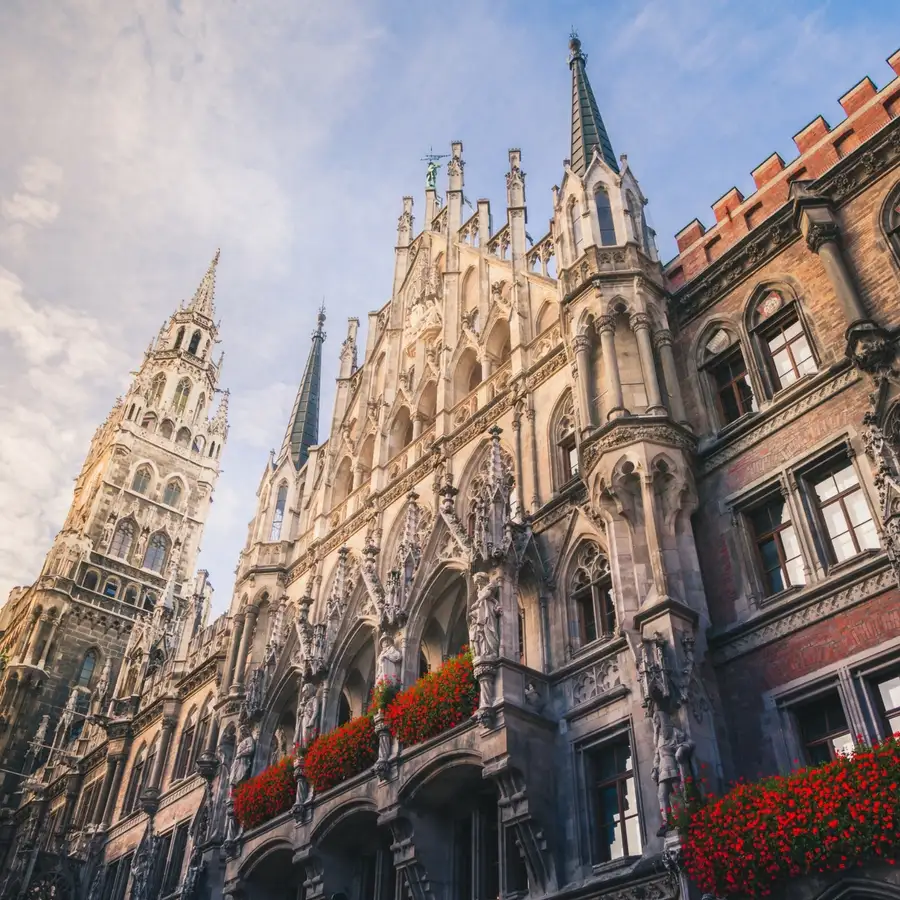
Munich contains many reminders of a long and varied history but also encompasses the modern features of a strong and vibrant city. The insights of a local help make sense of the traditions, trends, and promises of Bavaria's Capital - sometimes referred to as the city of laptops and lederhosen. On this tour, your guide will show you the highlights of Munich and point out the many hidden treasures.


Day 4
Munich
Guided Walk Tour of Historic Munich
OverviewGuided Walk Tour of Historic Munich
Munich contains many reminders of a long and varied history but also encompasses the modern features of a strong and vibrant city. The insights of a local help make sense of the traditions, trends, and promises of Bavaria's Capital - sometimes referred to as the city of laptops and lederhosen. On this tour, your guide will show you the highlights of Munich and point out the many hidden treasures.

Guided Walk Tour of Historic Munich
OverviewGuided Walk Tour of Historic Munich
Munich contains many reminders of a long and varied history but also encompasses the modern features of a strong and vibrant city. The insights of a local help make sense of the traditions, trends, and promises of Bavaria's Capital - sometimes referred to as the city of laptops and lederhosen. On this tour, your guide will show you the highlights of Munich and point out the many hidden treasures.

Guided Walk Tour of Historic Munich
OverviewGuided Walk Tour of Historic Munich
Munich contains many reminders of a long and varied history but also encompasses the modern features of a strong and vibrant city. The insights of a local help make sense of the traditions, trends, and promises of Bavaria's Capital - sometimes referred to as the city of laptops and lederhosen. On this tour, your guide will show you the highlights of Munich and point out the many hidden treasures.

Guided Walk Tour of Historic Munich
OverviewGuided Walk Tour of Historic Munich
Munich contains many reminders of a long and varied history but also encompasses the modern features of a strong and vibrant city. The insights of a local help make sense of the traditions, trends, and promises of Bavaria's Capital - sometimes referred to as the city of laptops and lederhosen. On this tour, your guide will show you the highlights of Munich and point out the many hidden treasures.

Guided Walk Tour of Historic Munich
OverviewGuided Walk Tour of Historic Munich
Munich contains many reminders of a long and varied history but also encompasses the modern features of a strong and vibrant city. The insights of a local help make sense of the traditions, trends, and promises of Bavaria's Capital - sometimes referred to as the city of laptops and lederhosen. On this tour, your guide will show you the highlights of Munich and point out the many hidden treasures.

Day 5
Munich
Day 5
Munich
Early Morning to Late Afternoon
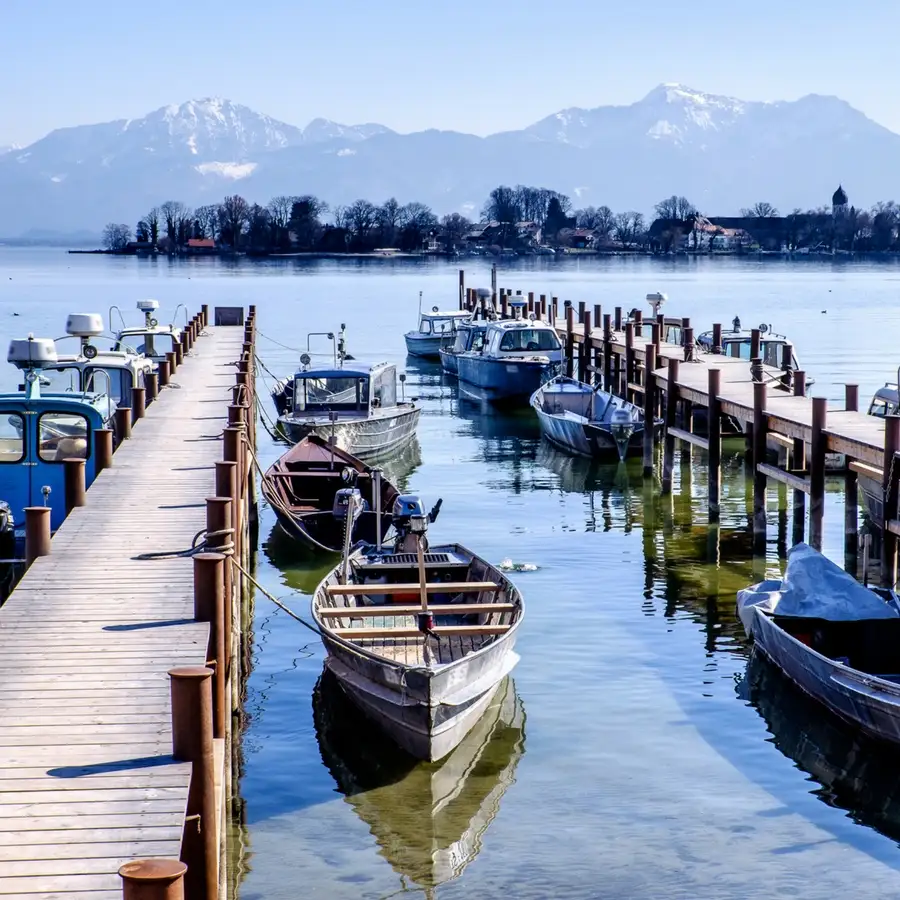
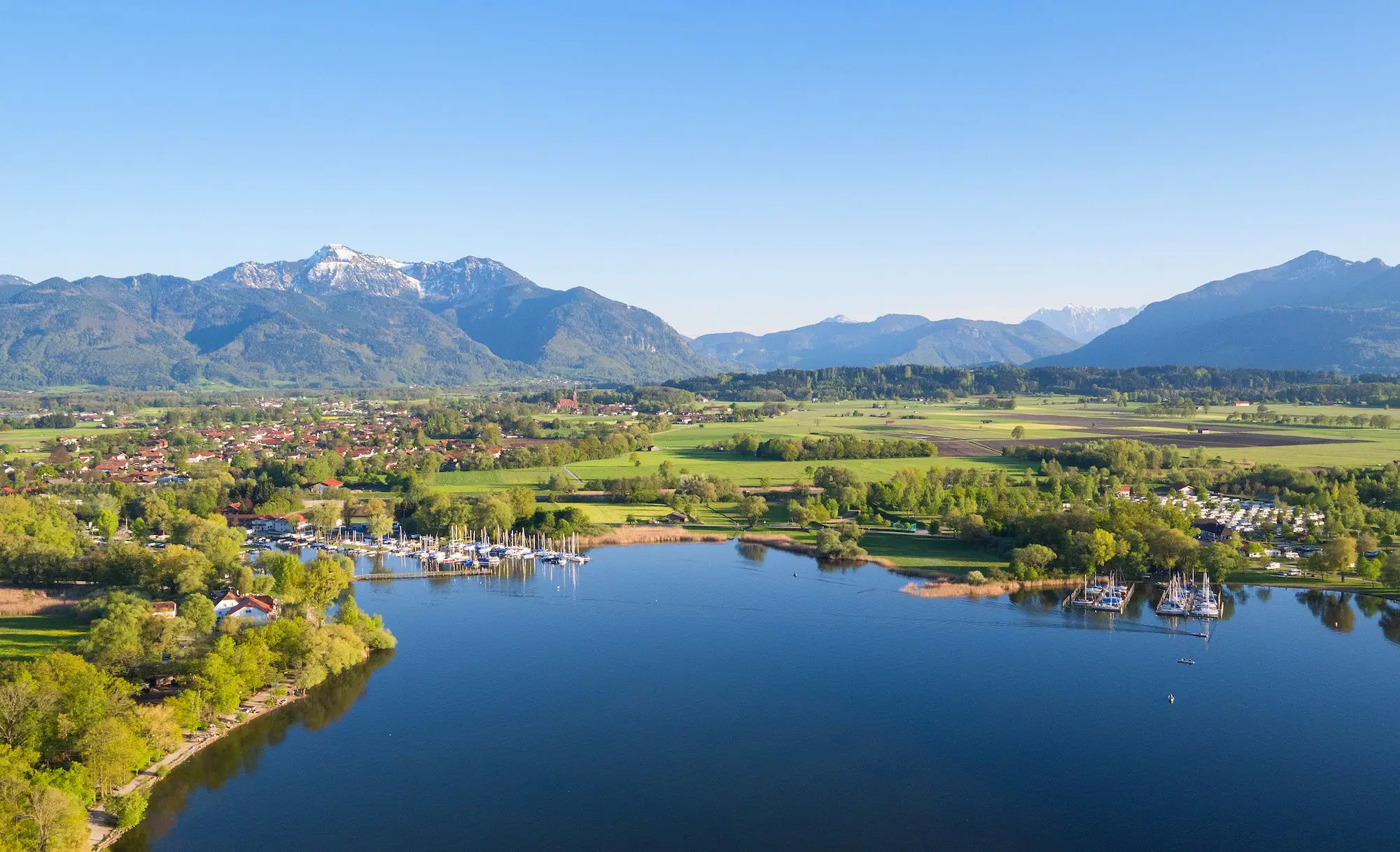
Also known as the 'Bavarian Sea', the majestic Lake Chiemsee is the largest lake in Bavaria with three beautiful islands which all benefit from regular ferry connections to the mainland. King Ludwig II built yet another grand palace, Herrenchiemsee Palace (also known as the Bavarian Versailles), on Herrenchiemsee island, while Fraueninsel island has an 8th-century Benedictine convent with some of the best Bavarian restaurants around and Krautinsel island is uninhabited.

Explore King Ludwig II's own version of Versaille on the island of Herreninsel.
Show More
Journey by boat to a splendid little island within the lake where you'll find a 1200-year old convent.
Show More
Browse the gallery to see some of the highlights

Explore King Ludwig II's own version of Versaille on the island of Herreninsel.
Show More
Journey by boat to a splendid little island within the lake where you'll find a 1200-year old convent.
Show More
Browse the gallery to see some of the highlights

Explore King Ludwig II's own version of Versaille on the island of Herreninsel.
Show More
Day 5
Munich

Herrenchiemsee Palace
Highlight of Excursion to Lake ChiemseeExplore King Ludwig II's own version of Versaille on the island of Herreninsel.
The Herrenchiemsee Palace is yet another of King Ludwig II's megalomaniacal building projects (such as Neuschwanstein Castle). This monument to regal absolutism, which is far more magnificently furnished than the palace of Versailles on which it was modeled, was begun in 1878. The State Bedroom is the most expensive single room built in the 19th century, helping to explain how Ludwig brought Bavaria to the brink of bankruptcy and why his ministers sought to have him declared unfit to rule. Inside the palace, there's a museum documenting Ludwig II's life.

Frauneninsel
Highlight of Excursion to Lake ChiemseeJourney by boat to a splendid little island within the lake where you'll find a 1200-year old convent.
The 15.5-hectare (38-acre) Frauneninsel (the 'women's island' as opposed to Herreninsel, the 'men's island'), is home to 300 permanent residents and an active Benedictine convent called Frauenwörth, which was founded in the 800's AD. A number of pubs and cafés serve what are said to be among the best Bavarian dishes around, and the island's fishermen offer freshly smoked Chiemsee whitefish and other delicacies in their gardens.

Excursion to Lake Chiemsee
OverviewExcursion to Lake Chiemsee
Also known as the 'Bavarian Sea', the majestic Lake Chiemsee is the largest lake in Bavaria with three beautiful islands which all benefit from regular ferry connections to the mainland. King Ludwig II built yet another grand palace, Herrenchiemsee Palace (also known as the Bavarian Versailles), on Herrenchiemsee island, while Fraueninsel island has an 8th-century Benedictine convent with some of the best Bavarian restaurants around and Krautinsel island is uninhabited.

Herrenchiemsee Palace
Highlight of Excursion to Lake ChiemseeExplore King Ludwig II's own version of Versaille on the island of Herreninsel.
The Herrenchiemsee Palace is yet another of King Ludwig II's megalomaniacal building projects (such as Neuschwanstein Castle). This monument to regal absolutism, which is far more magnificently furnished than the palace of Versailles on which it was modeled, was begun in 1878. The State Bedroom is the most expensive single room built in the 19th century, helping to explain how Ludwig brought Bavaria to the brink of bankruptcy and why his ministers sought to have him declared unfit to rule. Inside the palace, there's a museum documenting Ludwig II's life.

Frauneninsel
Highlight of Excursion to Lake ChiemseeJourney by boat to a splendid little island within the lake where you'll find a 1200-year old convent.
The 15.5-hectare (38-acre) Frauneninsel (the 'women's island' as opposed to Herreninsel, the 'men's island'), is home to 300 permanent residents and an active Benedictine convent called Frauenwörth, which was founded in the 800's AD. A number of pubs and cafés serve what are said to be among the best Bavarian dishes around, and the island's fishermen offer freshly smoked Chiemsee whitefish and other delicacies in their gardens.

Excursion to Lake Chiemsee
OverviewExcursion to Lake Chiemsee
Also known as the 'Bavarian Sea', the majestic Lake Chiemsee is the largest lake in Bavaria with three beautiful islands which all benefit from regular ferry connections to the mainland. King Ludwig II built yet another grand palace, Herrenchiemsee Palace (also known as the Bavarian Versailles), on Herrenchiemsee island, while Fraueninsel island has an 8th-century Benedictine convent with some of the best Bavarian restaurants around and Krautinsel island is uninhabited.

Herrenchiemsee Palace
Highlight of Excursion to Lake ChiemseeExplore King Ludwig II's own version of Versaille on the island of Herreninsel.
The Herrenchiemsee Palace is yet another of King Ludwig II's megalomaniacal building projects (such as Neuschwanstein Castle). This monument to regal absolutism, which is far more magnificently furnished than the palace of Versailles on which it was modeled, was begun in 1878. The State Bedroom is the most expensive single room built in the 19th century, helping to explain how Ludwig brought Bavaria to the brink of bankruptcy and why his ministers sought to have him declared unfit to rule. Inside the palace, there's a museum documenting Ludwig II's life.

Day 6
Munich to Lucerne
Day 6
Munich to Lucerne
Morning
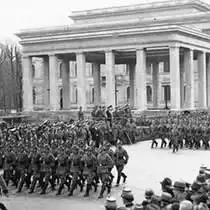
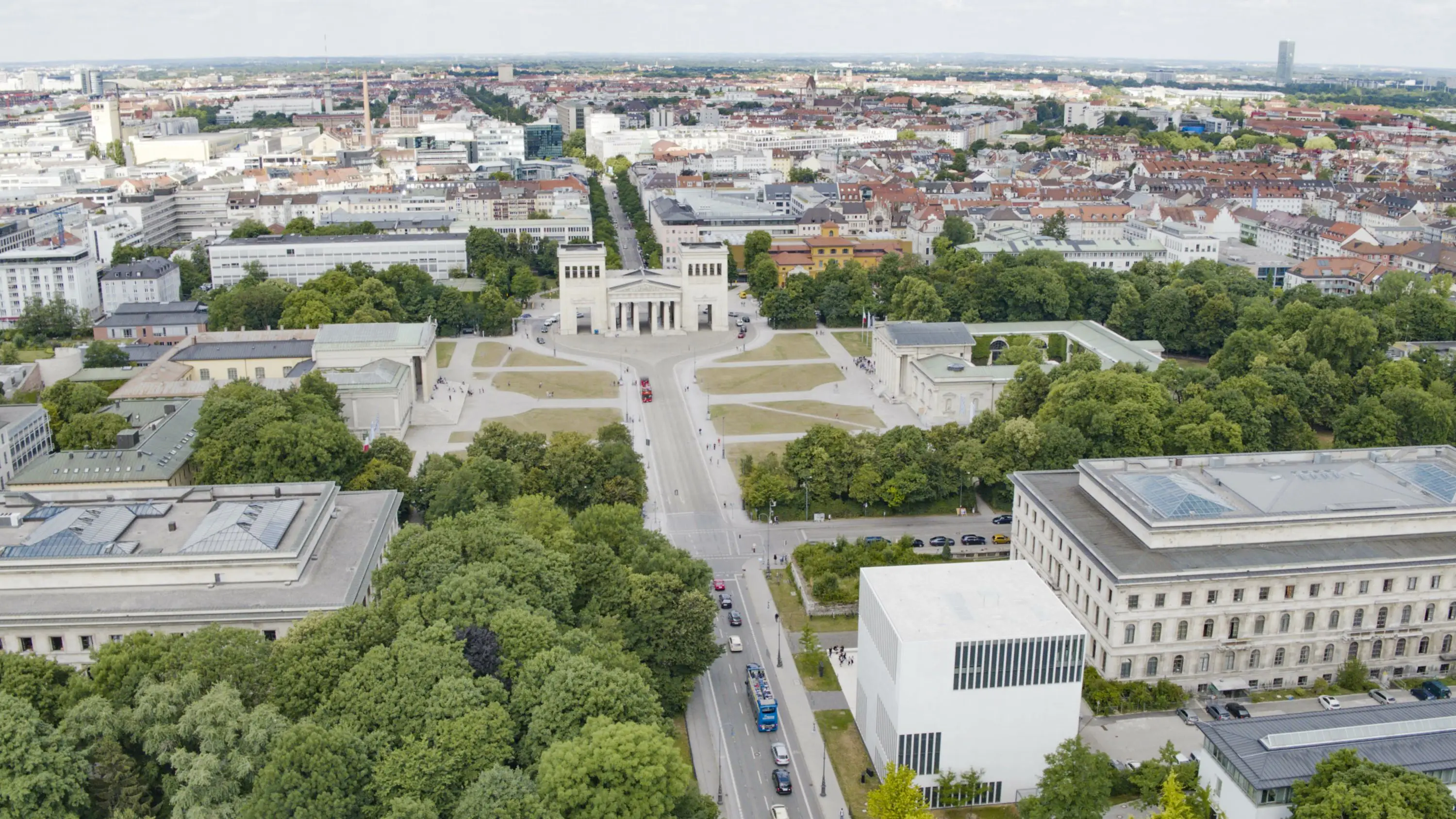
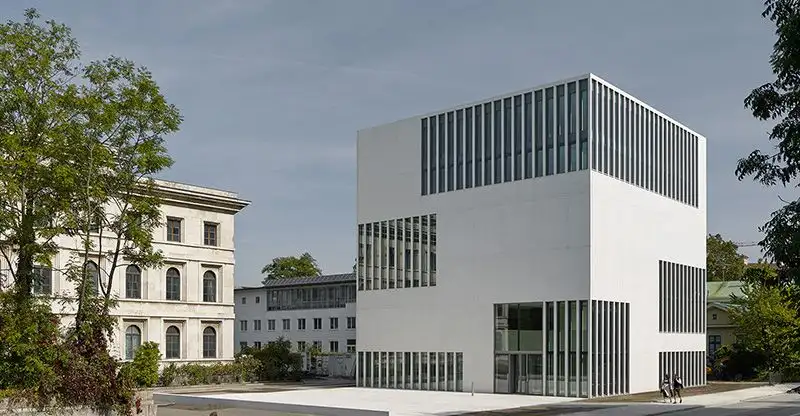
Munich is the city where the National Socialist German Workers' Party (NSDAP), or Nazi Party, first took root. As the Nazis came into power, the Königsplatz was paved over and transformed into a perfect backdrop for staging their militaristic spectacles. Many of the physical changes they made to the space endure to this day. The history of the birth of German National Socialism to its horrific end in 1945 is brilliantly captured and displayed at the National Socialist Documentation Center which is located on the square.
Browse the gallery to see some of the highlights

Learn how Nazism managed to capture Germany and about the terrible consequences.
Show More
Browse the gallery to see some of the highlights

Learn how Nazism managed to capture Germany and about the terrible consequences.
Show More
Browse the gallery to see some of the highlights

Learn how Nazism managed to capture Germany and about the terrible consequences.
Show More
Day 6
Munich to Lucerne

Documentation Center
OverviewDocumentation Center
Munich is the city where the National Socialist German Workers' Party (NSDAP), or Nazi Party, first took root. As the Nazis came into power, the Königsplatz was paved over and transformed into a perfect backdrop for staging their militaristic spectacles. Many of the physical changes they made to the space endure to this day. The history of the birth of German National Socialism to its horrific end in 1945 is brilliantly captured and displayed at the National Socialist Documentation Center which is located on the square.

NS Documentation Centre
Highlight of Documentation CenterLearn how Nazism managed to capture Germany and about the terrible consequences.
Opened in 2015, the documentation center shows how the Nazi Party was able to rise and rule Germany, and the role which the city of Munich played. Visitors learn not only about the origins of the Nazi movement and how they managed to seize power, but also about the regime during the war, and the post-war process of de-Nazification.

Documentation Center
OverviewDocumentation Center
Munich is the city where the National Socialist German Workers' Party (NSDAP), or Nazi Party, first took root. As the Nazis came into power, the Königsplatz was paved over and transformed into a perfect backdrop for staging their militaristic spectacles. Many of the physical changes they made to the space endure to this day. The history of the birth of German National Socialism to its horrific end in 1945 is brilliantly captured and displayed at the National Socialist Documentation Center which is located on the square.

NS Documentation Centre
Highlight of Documentation CenterLearn how Nazism managed to capture Germany and about the terrible consequences.
Opened in 2015, the documentation center shows how the Nazi Party was able to rise and rule Germany, and the role which the city of Munich played. Visitors learn not only about the origins of the Nazi movement and how they managed to seize power, but also about the regime during the war, and the post-war process of de-Nazification.

Documentation Center
OverviewDocumentation Center
Munich is the city where the National Socialist German Workers' Party (NSDAP), or Nazi Party, first took root. As the Nazis came into power, the Königsplatz was paved over and transformed into a perfect backdrop for staging their militaristic spectacles. Many of the physical changes they made to the space endure to this day. The history of the birth of German National Socialism to its horrific end in 1945 is brilliantly captured and displayed at the National Socialist Documentation Center which is located on the square.

NS Documentation Centre
Highlight of Documentation CenterLearn how Nazism managed to capture Germany and about the terrible consequences.
Opened in 2015, the documentation center shows how the Nazi Party was able to rise and rule Germany, and the role which the city of Munich played. Visitors learn not only about the origins of the Nazi movement and how they managed to seize power, but also about the regime during the war, and the post-war process of de-Nazification.

Day 7
Lucerne
Day 7
Lucerne
9:00 AM - 11:00 AM
During this 2 hour guided private tour you will take in all the major highlights of Lucerne including: Lion Monument, Chapel Bridge, the Old Town and the Jesuit Church. Your professional guide will tell you about the fascinating history of the town and why Lucerne is a favorite destination for the Swiss and foreign visitors alike. You will also enjoy stunning views around Lake Lucerne, especially of the city's mountain, Mount Pilatus.


One of the most beautiful Baroque buildings in Switzerland
Show More
Browse the gallery to see some of the highlights


One of the most beautiful Baroque buildings in Switzerland
Show More
Browse the gallery to see some of the highlights


Day 7
Lucerne

Lake Lucerne Boat Docks (Luzern Bahnhofquai)
Highlight of Walking Tour of Lucerne

Jesuit Church
Highlight of Walking Tour of LucerneOne of the most beautiful Baroque buildings in Switzerland
One of the most beautiful Baroque buildings in Switzerland

Walking Tour of Lucerne
OverviewWalking Tour of Lucerne
During this 2 hour guided private tour you will take in all the major highlights of Lucerne including: Lion Monument, Chapel Bridge, the Old Town and the Jesuit Church. Your professional guide will tell you about the fascinating history of the town and why Lucerne is a favorite destination for the Swiss and foreign visitors alike. You will also enjoy stunning views around Lake Lucerne, especially of the city's mountain, Mount Pilatus.

Lake Lucerne Boat Docks (Luzern Bahnhofquai)
Highlight of Walking Tour of Lucerne

Jesuit Church
Highlight of Walking Tour of LucerneOne of the most beautiful Baroque buildings in Switzerland
One of the most beautiful Baroque buildings in Switzerland

Walking Tour of Lucerne
OverviewWalking Tour of Lucerne
During this 2 hour guided private tour you will take in all the major highlights of Lucerne including: Lion Monument, Chapel Bridge, the Old Town and the Jesuit Church. Your professional guide will tell you about the fascinating history of the town and why Lucerne is a favorite destination for the Swiss and foreign visitors alike. You will also enjoy stunning views around Lake Lucerne, especially of the city's mountain, Mount Pilatus.

Lake Lucerne Boat Docks (Luzern Bahnhofquai)
Highlight of Walking Tour of Lucerne

Day 8
Lucerne
Day 8
Lucerne
Morning to Late Afternoon
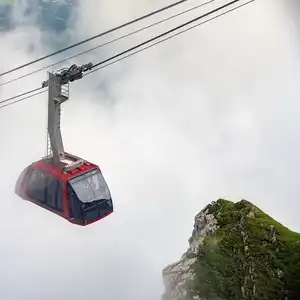
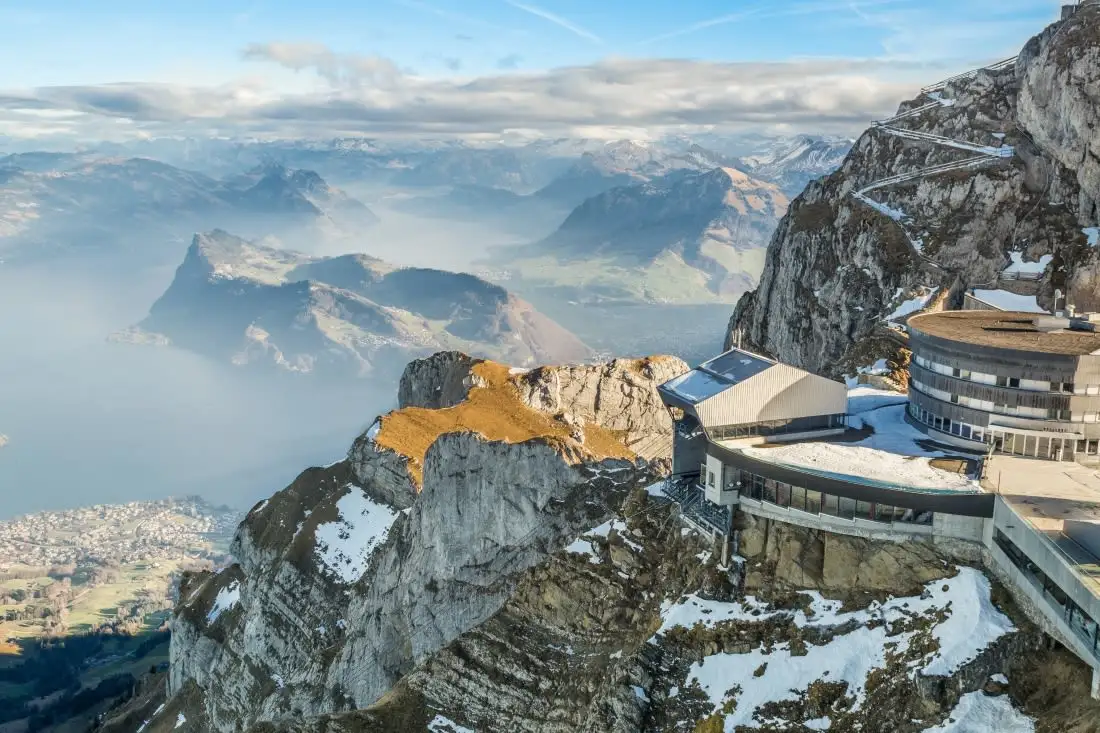
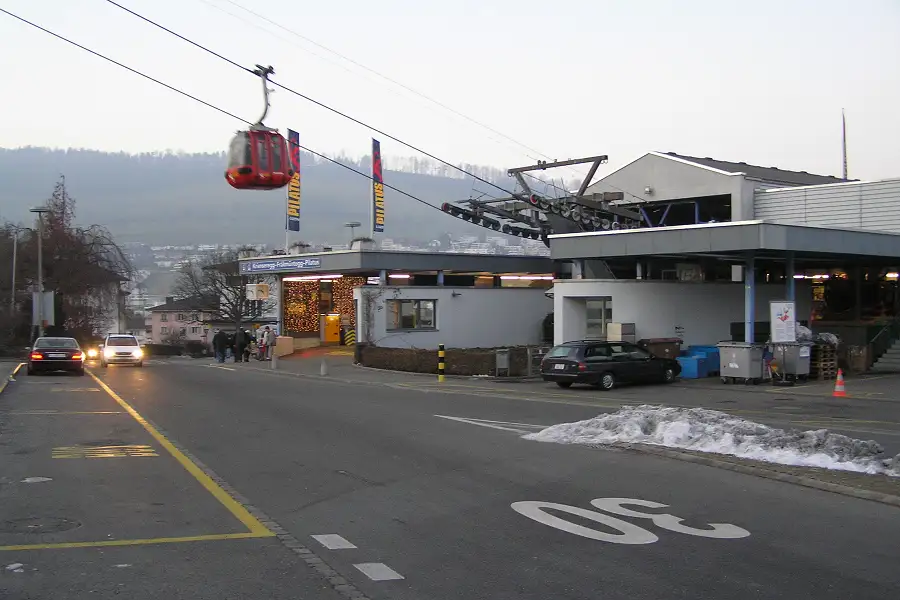
Ride the steepest rack-railway in the world at a gradient of nearly 48 percent from Alpnachstad up the giant mountain of Mt Pilatus that looms over the city of Lucerne, or glide up the other side on a gondola from Kriens. The highest point, Tomlishorn, with superlative views of Lake Lucerne, is only 30min on foot from the hotels and restaurants near the top.
Browse the gallery to see some of the highlights


Browse the gallery to see some of the highlights


Browse the gallery to see some of the highlights


Day 8
Lucerne

Excursion to Mount Pilatus
OverviewExcursion to Mount Pilatus
Ride the steepest rack-railway in the world at a gradient of nearly 48 percent from Alpnachstad up the giant mountain of Mt Pilatus that looms over the city of Lucerne, or glide up the other side on a gondola from Kriens. The highest point, Tomlishorn, with superlative views of Lake Lucerne, is only 30min on foot from the hotels and restaurants near the top.

Kriens-Pilatus Cable Car Station
Highlight of Excursion to Mount Pilatus

Excursion to Mount Pilatus
OverviewExcursion to Mount Pilatus
Ride the steepest rack-railway in the world at a gradient of nearly 48 percent from Alpnachstad up the giant mountain of Mt Pilatus that looms over the city of Lucerne, or glide up the other side on a gondola from Kriens. The highest point, Tomlishorn, with superlative views of Lake Lucerne, is only 30min on foot from the hotels and restaurants near the top.

Kriens-Pilatus Cable Car Station
Highlight of Excursion to Mount Pilatus

Excursion to Mount Pilatus
OverviewExcursion to Mount Pilatus
Ride the steepest rack-railway in the world at a gradient of nearly 48 percent from Alpnachstad up the giant mountain of Mt Pilatus that looms over the city of Lucerne, or glide up the other side on a gondola from Kriens. The highest point, Tomlishorn, with superlative views of Lake Lucerne, is only 30min on foot from the hotels and restaurants near the top.

Kriens-Pilatus Cable Car Station
Highlight of Excursion to Mount Pilatus

Day 9
Lucerne to Interlaken
Day 9
Lucerne to Interlaken
9:05 AM
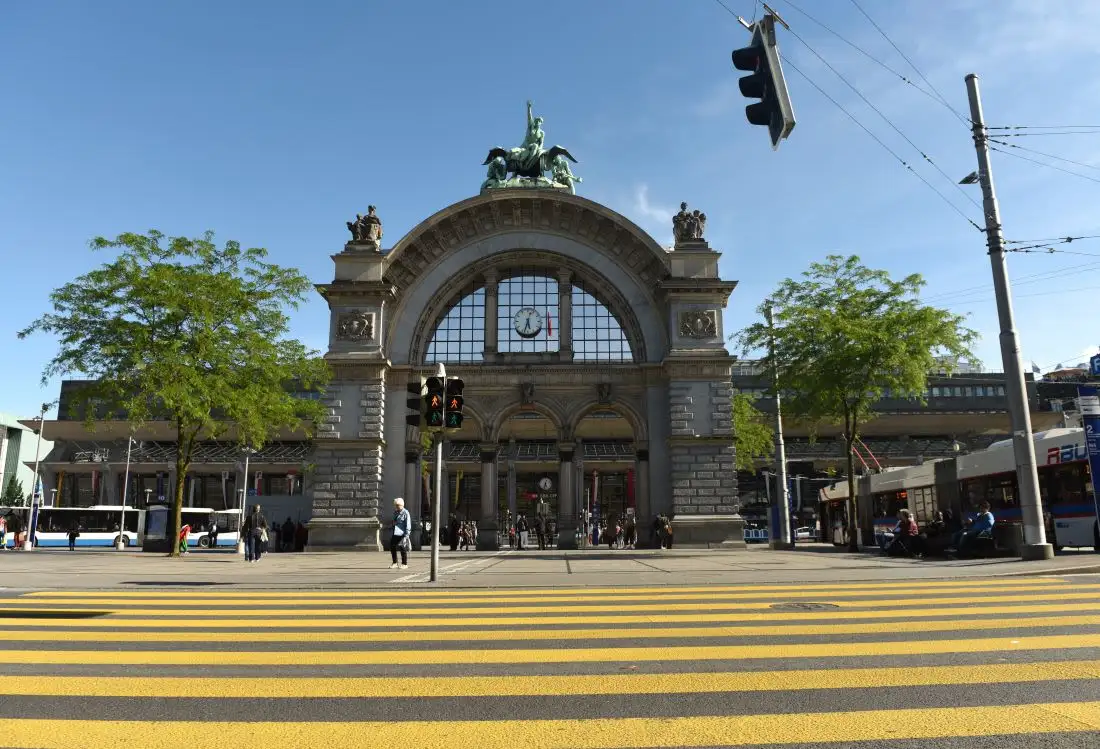
Lucerne taxis are generally reliable and honest, so this is cheaper than a pre-arranged transfer. If you are picked up one hour prior to departure, you should have plenty of time to catch your train.


Day 9
Lucerne to Interlaken

Taxi Rail Drop-Off at Station
OverviewTaxi Rail Drop-Off at Station
Lucerne taxis are generally reliable and honest, so this is cheaper than a pre-arranged transfer. If you are picked up one hour prior to departure, you should have plenty of time to catch your train.

Taxi Rail Drop-Off at Station
OverviewTaxi Rail Drop-Off at Station
Lucerne taxis are generally reliable and honest, so this is cheaper than a pre-arranged transfer. If you are picked up one hour prior to departure, you should have plenty of time to catch your train.

Taxi Rail Drop-Off at Station
OverviewTaxi Rail Drop-Off at Station
Lucerne taxis are generally reliable and honest, so this is cheaper than a pre-arranged transfer. If you are picked up one hour prior to departure, you should have plenty of time to catch your train.

Taxi Rail Drop-Off at Station
OverviewTaxi Rail Drop-Off at Station
Lucerne taxis are generally reliable and honest, so this is cheaper than a pre-arranged transfer. If you are picked up one hour prior to departure, you should have plenty of time to catch your train.

Taxi Rail Drop-Off at Station
OverviewTaxi Rail Drop-Off at Station
Lucerne taxis are generally reliable and honest, so this is cheaper than a pre-arranged transfer. If you are picked up one hour prior to departure, you should have plenty of time to catch your train.

Day 10
Interlaken
Day 10
Interlaken
Early Morning to Late Afternoon
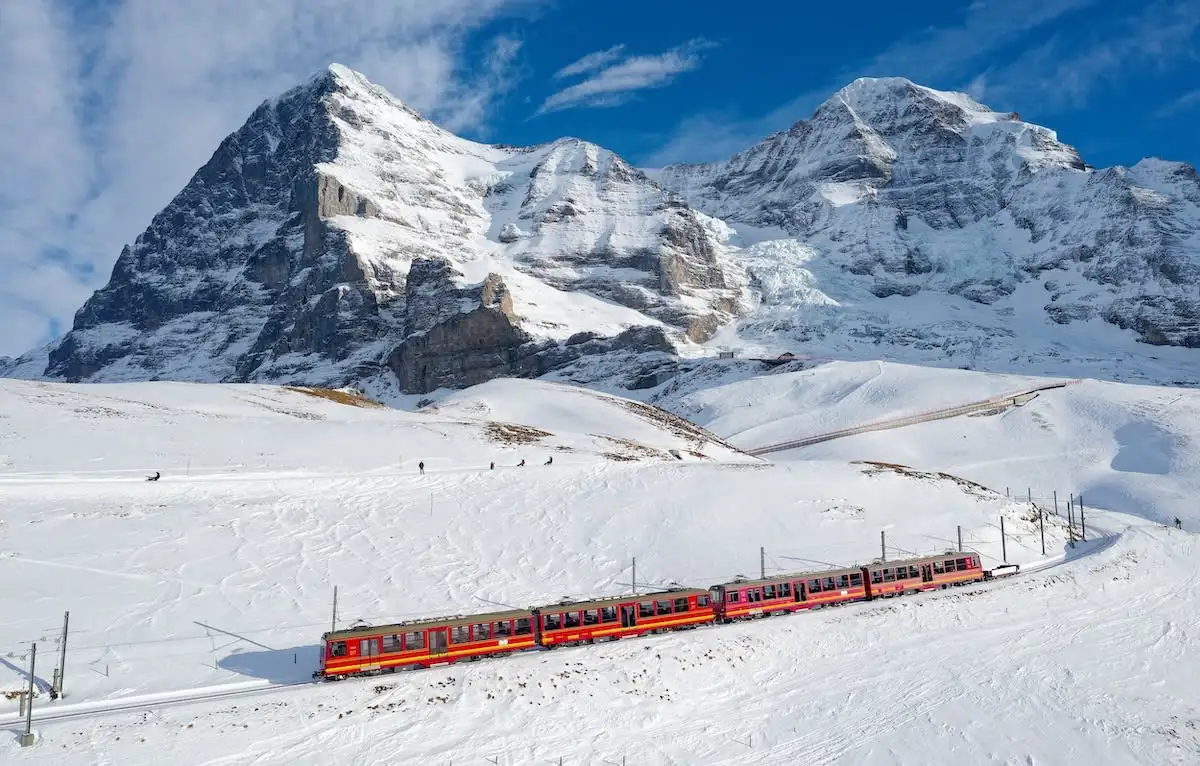
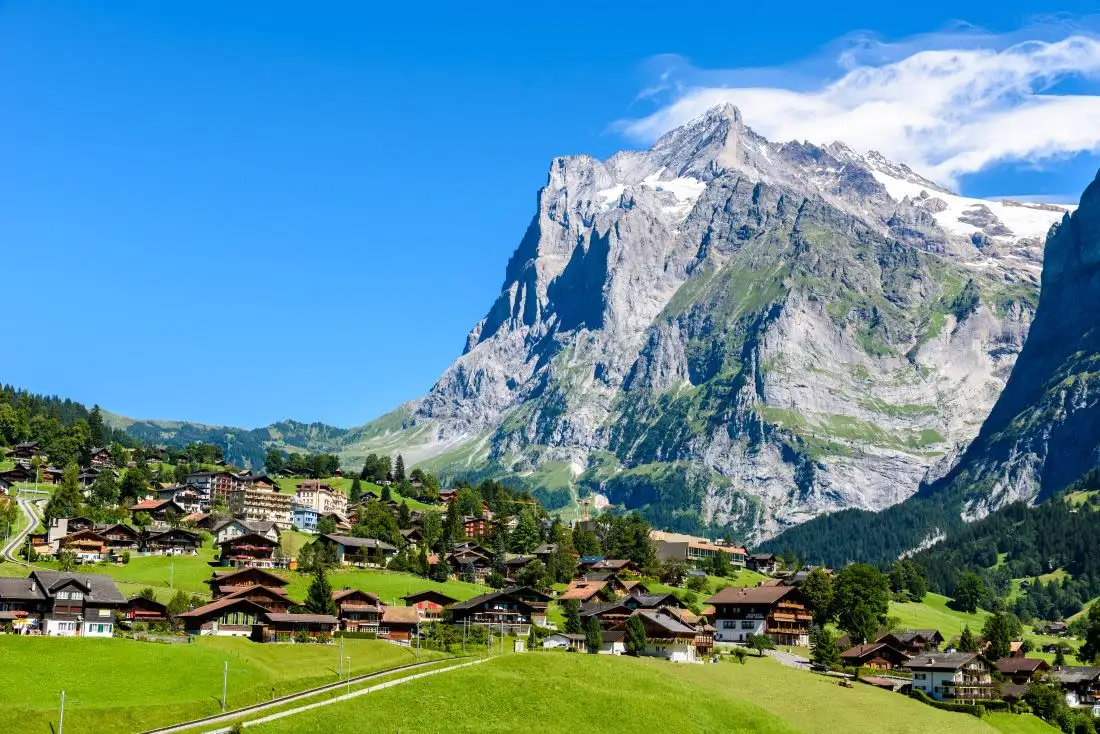
Journey directly through the famous Eiger Mountain to what the Swiss called "The Top of Europe", the icy, windswept gap in the mountain ridges known as Jungfraujoch at 3,454m/11,332ft just below the summit of Jungfrau. The train ride to the top is not cheap, but it's the highest train station in Europe and definitely an unforgettable experience.

Browse the gallery to see some of the highlights

Village in the Bernese Alps
Show More
Browse the gallery to see some of the highlights

Village in the Bernese Alps
Show More
Browse the gallery to see some of the highlights

Village in the Bernese Alps
Show More
Day 10
Interlaken

Jungfrau
OverviewJungfrau
Journey directly through the famous Eiger Mountain to what the Swiss called "The Top of Europe", the icy, windswept gap in the mountain ridges known as Jungfraujoch at 3,454m/11,332ft just below the summit of Jungfrau. The train ride to the top is not cheap, but it's the highest train station in Europe and definitely an unforgettable experience.

Grindelwald
Highlight of JungfrauVillage in the Bernese Alps
Village in the Bernese Alps that is considered to be the gateway to the Jungfrau Region. This village is popular among hikers and alpinists

Jungfrau
OverviewJungfrau
Journey directly through the famous Eiger Mountain to what the Swiss called "The Top of Europe", the icy, windswept gap in the mountain ridges known as Jungfraujoch at 3,454m/11,332ft just below the summit of Jungfrau. The train ride to the top is not cheap, but it's the highest train station in Europe and definitely an unforgettable experience.

Grindelwald
Highlight of JungfrauVillage in the Bernese Alps
Village in the Bernese Alps that is considered to be the gateway to the Jungfrau Region. This village is popular among hikers and alpinists

Jungfrau
OverviewJungfrau
Journey directly through the famous Eiger Mountain to what the Swiss called "The Top of Europe", the icy, windswept gap in the mountain ridges known as Jungfraujoch at 3,454m/11,332ft just below the summit of Jungfrau. The train ride to the top is not cheap, but it's the highest train station in Europe and definitely an unforgettable experience.

Grindelwald
Highlight of JungfrauVillage in the Bernese Alps
Village in the Bernese Alps that is considered to be the gateway to the Jungfrau Region. This village is popular among hikers and alpinists

Day 11
Interlaken to Geneva
Day 11
Interlaken to Geneva
Early Morning to Mid-Day
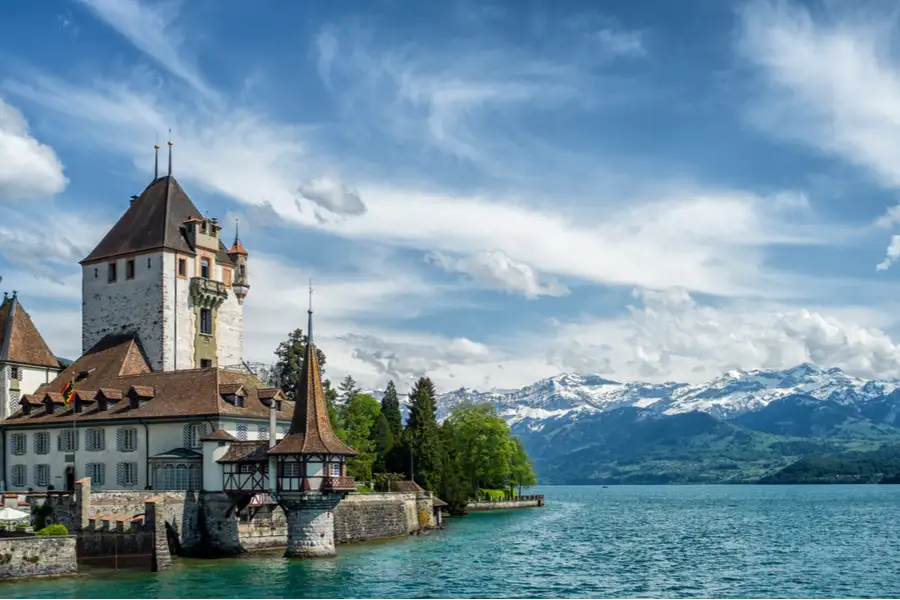
Surrounded by dazzling mountain scenery and a staccato of smart villages, Lake Thun is one of the two highly attractive waterways sandwiching the town of Interlaken that offers the opportunity of a relaxing boat ride from one end to the other. After disembarkation you can wander Thun's low-lying Old Town and its fairy-tale turreted castle before returning to Interlaken by train. Travel by boat and train is free with the Swiss Travel Pass included in your Full Itinerary.

Browse the gallery to see some of the highlights

Small village along Lake Thun
Show More
Browse the gallery to see some of the highlights

Small village along Lake Thun
Show More
Browse the gallery to see some of the highlights

Small village along Lake Thun
Show More
Day 11
Interlaken to Geneva

Self-Guided Cruise on Lake Thun
OverviewSelf-Guided Cruise on Lake Thun
Surrounded by dazzling mountain scenery and a staccato of smart villages, Lake Thun is one of the two highly attractive waterways sandwiching the town of Interlaken that offers the opportunity of a relaxing boat ride from one end to the other. After disembarkation you can wander Thun's low-lying Old Town and its fairy-tale turreted castle before returning to Interlaken by train. Travel by boat and train is free with the Swiss Travel Pass included in your Full Itinerary.

Oberhofen
Highlight of Self-Guided Cruise on Lake ThunSmall village along Lake Thun

Self-Guided Cruise on Lake Thun
OverviewSelf-Guided Cruise on Lake Thun
Surrounded by dazzling mountain scenery and a staccato of smart villages, Lake Thun is one of the two highly attractive waterways sandwiching the town of Interlaken that offers the opportunity of a relaxing boat ride from one end to the other. After disembarkation you can wander Thun's low-lying Old Town and its fairy-tale turreted castle before returning to Interlaken by train. Travel by boat and train is free with the Swiss Travel Pass included in your Full Itinerary.

Oberhofen
Highlight of Self-Guided Cruise on Lake ThunSmall village along Lake Thun

Self-Guided Cruise on Lake Thun
OverviewSelf-Guided Cruise on Lake Thun
Surrounded by dazzling mountain scenery and a staccato of smart villages, Lake Thun is one of the two highly attractive waterways sandwiching the town of Interlaken that offers the opportunity of a relaxing boat ride from one end to the other. After disembarkation you can wander Thun's low-lying Old Town and its fairy-tale turreted castle before returning to Interlaken by train. Travel by boat and train is free with the Swiss Travel Pass included in your Full Itinerary.

Oberhofen
Highlight of Self-Guided Cruise on Lake ThunSmall village along Lake Thun

Day 12
Geneva
Day 12
Geneva
9:00 AM - 11:00 AM
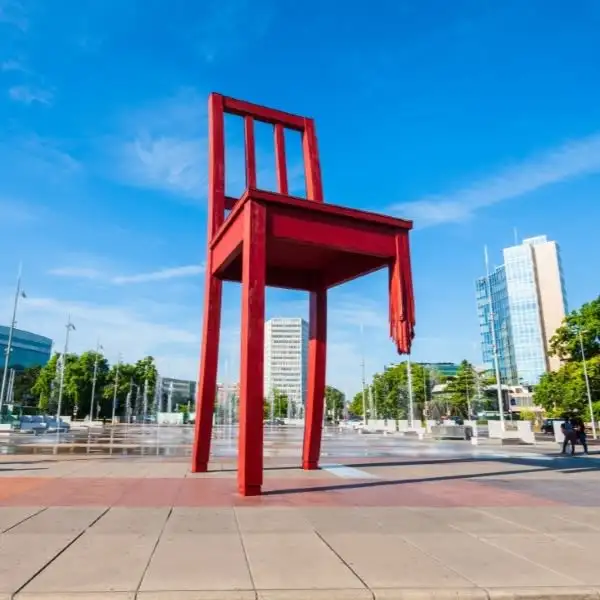
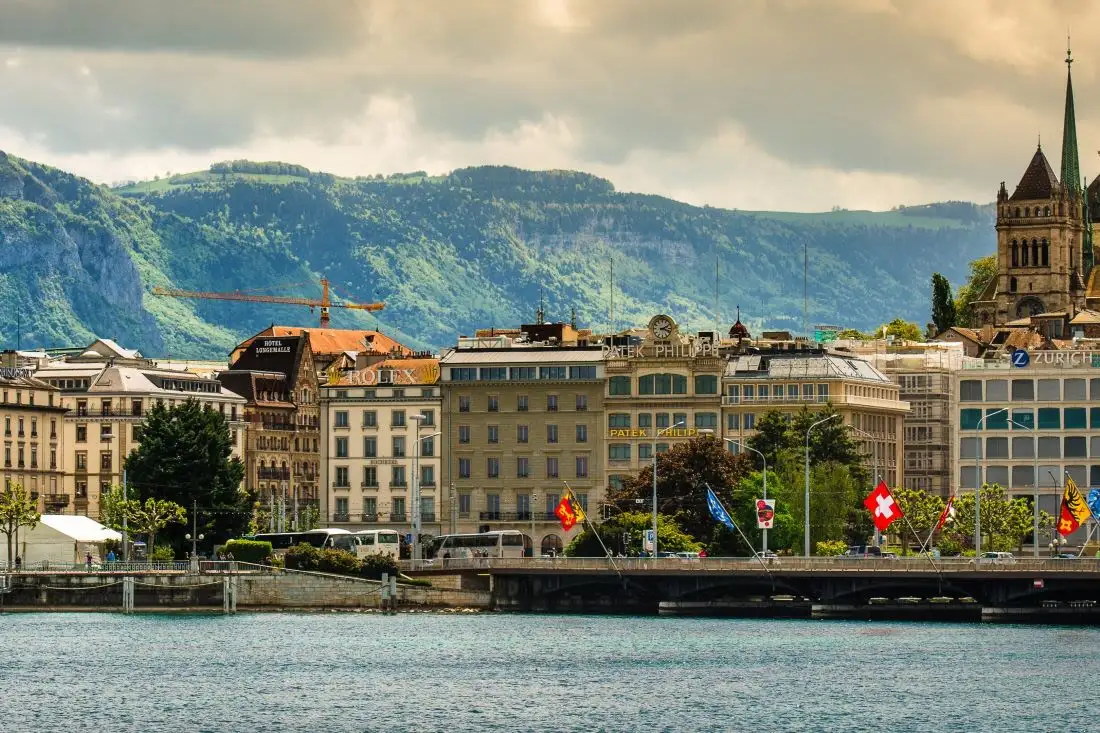
Your private guide will pick you up from your hotel and take you for a 2-hour walk through the center of Geneva. On this walk, you will visit Bastions Park where you’ll see the Reformation Wall, built in 1909 to celebrate religious reform in Europe. You'll discover special places related to people like Jean Calvin and Jean-Jacques Rousseau, or even presidents of the United States like Woodrow Wilson or Bill Clinton. You will also visit the peaceful Old Town with its majestic St. Peter’s Cathedral, the Jardin d’Anglais, to admire one of Patek Philippe’s most famous works, and the surprising, delightful Flower Clock. The tour will end at the Nations Park, where you will see the United Nations Organization Headquarters.
Browse the gallery to see some of the highlights

A monumental reminder of Geneva’s history and influence during the Reformation.
Show More
Browse the gallery to see some of the highlights

A monumental reminder of Geneva’s history and influence during the Reformation.
Show More
Browse the gallery to see some of the highlights

A monumental reminder of Geneva’s history and influence during the Reformation.
Show More
Day 12
Geneva

Highlights Walking Tour
OverviewHighlights Walking Tour
Your private guide will pick you up from your hotel and take you for a 2-hour walk through the center of Geneva. On this walk, you will visit Bastions Park where you’ll see the Reformation Wall, built in 1909 to celebrate religious reform in Europe. You'll discover special places related to people like Jean Calvin and Jean-Jacques Rousseau, or even presidents of the United States like Woodrow Wilson or Bill Clinton. You will also visit the peaceful Old Town with its majestic St. Peter’s Cathedral, the Jardin d’Anglais, to admire one of Patek Philippe’s most famous works, and the surprising, delightful Flower Clock. The tour will end at the Nations Park, where you will see the United Nations Organization Headquarters.

Reformation Wall
Highlight of Highlights Walking TourA monumental reminder of Geneva’s history and influence during the Reformation.
The men depicted on the wall are the main protagonists of the Reformation, John Calvin, Willian Farel, Theodore Beza, and John Knox. Engraved on the wall is the Genevan motto “Post Tenebras Lux” which translates to “light after darkness.”

Highlights Walking Tour
OverviewHighlights Walking Tour
Your private guide will pick you up from your hotel and take you for a 2-hour walk through the center of Geneva. On this walk, you will visit Bastions Park where you’ll see the Reformation Wall, built in 1909 to celebrate religious reform in Europe. You'll discover special places related to people like Jean Calvin and Jean-Jacques Rousseau, or even presidents of the United States like Woodrow Wilson or Bill Clinton. You will also visit the peaceful Old Town with its majestic St. Peter’s Cathedral, the Jardin d’Anglais, to admire one of Patek Philippe’s most famous works, and the surprising, delightful Flower Clock. The tour will end at the Nations Park, where you will see the United Nations Organization Headquarters.

Reformation Wall
Highlight of Highlights Walking TourA monumental reminder of Geneva’s history and influence during the Reformation.
The men depicted on the wall are the main protagonists of the Reformation, John Calvin, Willian Farel, Theodore Beza, and John Knox. Engraved on the wall is the Genevan motto “Post Tenebras Lux” which translates to “light after darkness.”

Highlights Walking Tour
OverviewHighlights Walking Tour
Your private guide will pick you up from your hotel and take you for a 2-hour walk through the center of Geneva. On this walk, you will visit Bastions Park where you’ll see the Reformation Wall, built in 1909 to celebrate religious reform in Europe. You'll discover special places related to people like Jean Calvin and Jean-Jacques Rousseau, or even presidents of the United States like Woodrow Wilson or Bill Clinton. You will also visit the peaceful Old Town with its majestic St. Peter’s Cathedral, the Jardin d’Anglais, to admire one of Patek Philippe’s most famous works, and the surprising, delightful Flower Clock. The tour will end at the Nations Park, where you will see the United Nations Organization Headquarters.

Reformation Wall
Highlight of Highlights Walking TourA monumental reminder of Geneva’s history and influence during the Reformation.
The men depicted on the wall are the main protagonists of the Reformation, John Calvin, Willian Farel, Theodore Beza, and John Knox. Engraved on the wall is the Genevan motto “Post Tenebras Lux” which translates to “light after darkness.”

Day 13
Geneva
Day 13
Geneva
Morning to Late Afternoon
Chamonix is a city of superlatives perfectly situated at the base of the highest peak of not only the Alps but in all of Europe, Mont Blanc. This French town has much to offer outdoor enthusiasts. For those who wish to get up close and personal with the mighty mountain, take the highest vertical cable car to Aiguille du Midi to come face to face with Mont Blanc and Step into the Void. See the largest glacier in France, Mer de Glace and walk through ice caves that have been carved into the glacier. Then explore the town center filled with outdoor shops, high-end boutiques, and traditional restaurants.

Browse the gallery to see some of the highlights

The Sea of Ice in French is the largest glacier in France and the third largest glacier in the Alps
Show More
Browse the gallery to see some of the highlights

The Sea of Ice in French is the largest glacier in France and the third largest glacier in the Alps
Show More
Browse the gallery to see some of the highlights

The Sea of Ice in French is the largest glacier in France and the third largest glacier in the Alps
Show More
Day 13
Geneva

Excursion to Chamonix
OverviewExcursion to Chamonix
Chamonix is a city of superlatives perfectly situated at the base of the highest peak of not only the Alps but in all of Europe, Mont Blanc. This French town has much to offer outdoor enthusiasts. For those who wish to get up close and personal with the mighty mountain, take the highest vertical cable car to Aiguille du Midi to come face to face with Mont Blanc and Step into the Void. See the largest glacier in France, Mer de Glace and walk through ice caves that have been carved into the glacier. Then explore the town center filled with outdoor shops, high-end boutiques, and traditional restaurants.

Mer de Glace
Highlight of Excursion to ChamonixThe Sea of Ice in French is the largest glacier in France and the third largest glacier in the Alps
Many attractions can be seen at the Mer de Glace including the Grotto de Glace, Gallery of Crystals, and the Glaciorium.

Excursion to Chamonix
OverviewExcursion to Chamonix
Chamonix is a city of superlatives perfectly situated at the base of the highest peak of not only the Alps but in all of Europe, Mont Blanc. This French town has much to offer outdoor enthusiasts. For those who wish to get up close and personal with the mighty mountain, take the highest vertical cable car to Aiguille du Midi to come face to face with Mont Blanc and Step into the Void. See the largest glacier in France, Mer de Glace and walk through ice caves that have been carved into the glacier. Then explore the town center filled with outdoor shops, high-end boutiques, and traditional restaurants.

Mer de Glace
Highlight of Excursion to ChamonixThe Sea of Ice in French is the largest glacier in France and the third largest glacier in the Alps
Many attractions can be seen at the Mer de Glace including the Grotto de Glace, Gallery of Crystals, and the Glaciorium.

Excursion to Chamonix
OverviewExcursion to Chamonix
Chamonix is a city of superlatives perfectly situated at the base of the highest peak of not only the Alps but in all of Europe, Mont Blanc. This French town has much to offer outdoor enthusiasts. For those who wish to get up close and personal with the mighty mountain, take the highest vertical cable car to Aiguille du Midi to come face to face with Mont Blanc and Step into the Void. See the largest glacier in France, Mer de Glace and walk through ice caves that have been carved into the glacier. Then explore the town center filled with outdoor shops, high-end boutiques, and traditional restaurants.

Mer de Glace
Highlight of Excursion to ChamonixThe Sea of Ice in French is the largest glacier in France and the third largest glacier in the Alps
Many attractions can be seen at the Mer de Glace including the Grotto de Glace, Gallery of Crystals, and the Glaciorium.

Day 14
Depart Geneva
Day 14
Depart Geneva
To Be Determined
Geneva taxis are always reliable and honest, so taking a taxi is cheaper than a pre-arranged transfer. Your hotel will be happy to arrange a pick up for you. If you are picked up about 2.5 hours before your departure time, you should arrive at the airport with a little over two hours to spare. If you are leaving during rush hour, you may want to budget an extra fifteen minutes or so.


Day 14
Depart Geneva

Airport Taxi Drop-off, Self-Arranged
OverviewAirport Taxi Drop-off, Self-Arranged
Geneva taxis are always reliable and honest, so taking a taxi is cheaper than a pre-arranged transfer. Your hotel will be happy to arrange a pick up for you. If you are picked up about 2.5 hours before your departure time, you should arrive at the airport with a little over two hours to spare. If you are leaving during rush hour, you may want to budget an extra fifteen minutes or so.

Airport Taxi Drop-off, Self-Arranged
OverviewAirport Taxi Drop-off, Self-Arranged
Geneva taxis are always reliable and honest, so taking a taxi is cheaper than a pre-arranged transfer. Your hotel will be happy to arrange a pick up for you. If you are picked up about 2.5 hours before your departure time, you should arrive at the airport with a little over two hours to spare. If you are leaving during rush hour, you may want to budget an extra fifteen minutes or so.

Airport Taxi Drop-off, Self-Arranged
OverviewAirport Taxi Drop-off, Self-Arranged
Geneva taxis are always reliable and honest, so taking a taxi is cheaper than a pre-arranged transfer. Your hotel will be happy to arrange a pick up for you. If you are picked up about 2.5 hours before your departure time, you should arrive at the airport with a little over two hours to spare. If you are leaving during rush hour, you may want to budget an extra fifteen minutes or so.

Airport Taxi Drop-off, Self-Arranged
OverviewAirport Taxi Drop-off, Self-Arranged
Geneva taxis are always reliable and honest, so taking a taxi is cheaper than a pre-arranged transfer. Your hotel will be happy to arrange a pick up for you. If you are picked up about 2.5 hours before your departure time, you should arrive at the airport with a little over two hours to spare. If you are leaving during rush hour, you may want to budget an extra fifteen minutes or so.

Airport Taxi Drop-off, Self-Arranged
OverviewAirport Taxi Drop-off, Self-Arranged
Geneva taxis are always reliable and honest, so taking a taxi is cheaper than a pre-arranged transfer. Your hotel will be happy to arrange a pick up for you. If you are picked up about 2.5 hours before your departure time, you should arrive at the airport with a little over two hours to spare. If you are leaving during rush hour, you may want to budget an extra fifteen minutes or so.
Pre-Paid Tours and Activities:
Pre-Paid Transportation:
Accommodation:
Go Real Travel Mobile App:

10 Days

8 Days

10 Days

10 Days
Peaks to Palaces: 10 Days in Switzerland, Germany, and Austria
Switzerland, Austria, Germany

10 Days

14 Days
Swiss Adventure with Germany & Italy: Lakes, Castles & Cultural Wonders
Germany, Switzerland, Italy

14 Days
2-Weeks of Cultural, Gastronomic & Natural Wonders in Munich, Switzerland & Paris
Germany, Switzerland, France

7 Days

10 Days

10 Days

8 Days

10 Days

10 Days
Peaks to Palaces: 10 Days in Switzerland, Germany, and Austria
Switzerland, Austria, Germany

10 Days

14 Days
Swiss Adventure with Germany & Italy: Lakes, Castles & Cultural Wonders
Germany, Switzerland, Italy

14 Days
2-Weeks of Cultural, Gastronomic & Natural Wonders in Munich, Switzerland & Paris
Germany, Switzerland, France

7 Days

10 Days


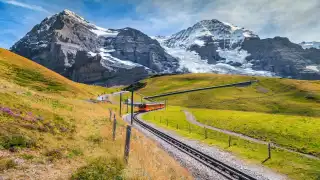
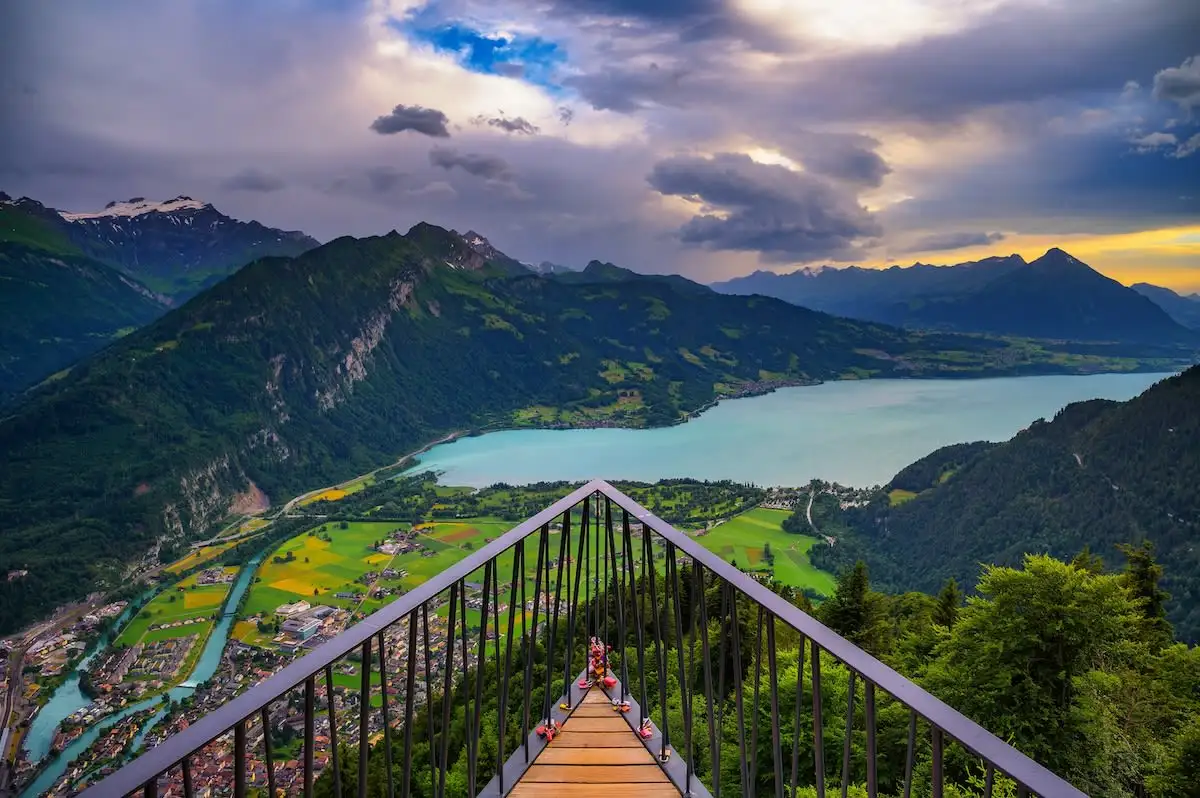
Located between two bodies of water — Lake Brienz and Lake Thun — Interlaken is the perfect place to explore the serene natural beauty at Switzerland’s heart. Interlaken is a place for those who seek adventure amid spectacular natural surrounds. Rock climbing, canyoning, bungee jumping, and paragliding are just some of the ways to fill a day here, and countless backpackers descend on the town every summer to do all of these and more. Less intense, but no less rewarding, are the many opportunities for hiking, sailing, and swimming. Or, take to the rails. At the nearby Kleine Scheidegg pass, a train runs through the snowy Swiss Alps to the highest train station on the continent. The fun here doesn’t stop at night. After a hard day of adventure, backpackers flock to the town’s many pubs and bars to soothe their aches and pains with steins of beer. Interlaken is a place where fun and excitement reign supreme and somewhere to experience Switzerland’s striking nature in the most thrilling way.

Switzerland’s second-most populous city, Geneva is a place where languages, cultures, and institutions have converged for hundreds of years. Here, diplomacy and sophistication play a central role. Formerly home to the headquarters of the UN, Geneva still hosts the International Red Cross, World Trade Organization, and World Health Organization. Lake Geneva, the largest body of water in Switzerland, dominates the surrounding landscape with its calm waters and brooding presence. By the lakeside, the imposing Jet d’Eau blasts water 140 meters into the air for most of every day. As you stroll through the city’s enchanting old town, you'll find its winding streets dusted with antique shops, ancient architecture, galleries, and world-class restaurants. Centuries of influence from countless cultures have given Geneva a special, complex identity. Travelers here can spend hours sampling food and drink from across the world. Or, simply sit by the water, and sip an Espresso while you soak up Geneva's unique and cosmopolitan vibe.
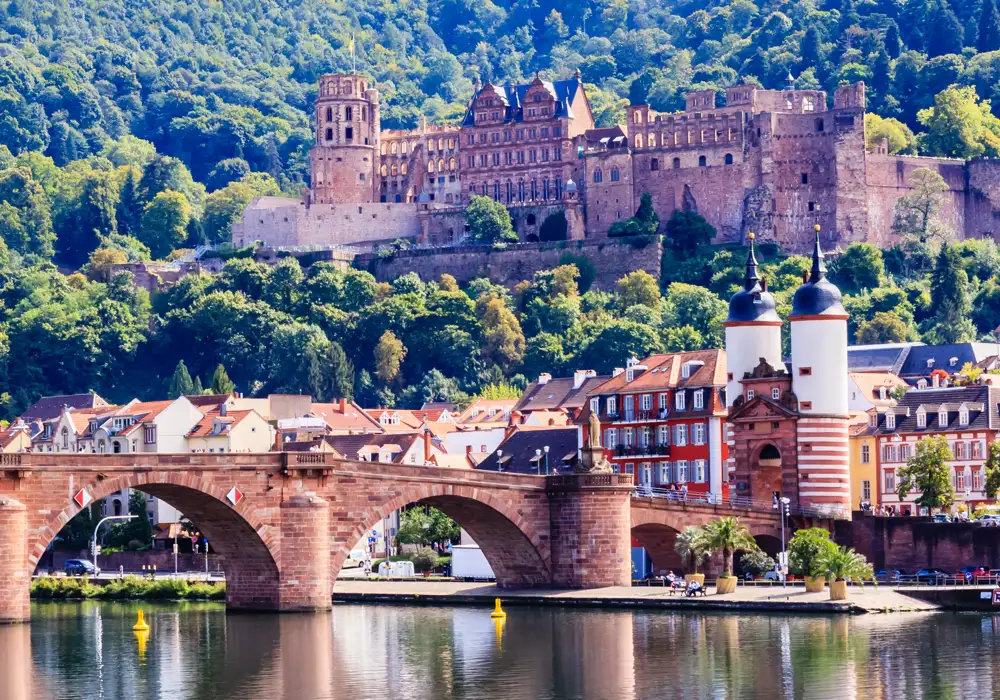
Heidelberg is buried deep in the forests of southwest Germany. Flanking both sides of the Neckar River, Heidelberg's red and white baroque old town looks like something from a book of folktales. On the hillside above the town, you'll see the looming, tumbledown remains of Heidelberg's Gothic-Renaissance castle, Heidelberger Schloss. The subject of strange local legends, Heidelberg Castle was once home to knights, a famous court jester, and even a witch. It is said the first person who pulls out an iron ring embedded in one of the great doors will be the castle's true owner. Surely on your visit, it's worth a try? Across the river, follow in the footsteps of scholars on a hiking trail known as The Philosophers’ Way. Heidelberg University is the oldest in Germany, and its leafy, temple-like campus contributes to the gentle, contemplative atmosphere of the town. A poetic city with the dreamy feel of a watercolor painting, it's no wonder Heidelberg inspired writers like Mark Twain and Johann Wolfgang von Goethe. The city has even been recognized by UNESCO as a City of Literature. Especially on misty, grey days, Heidelberg has a way of sweeping you up in its romanticism.
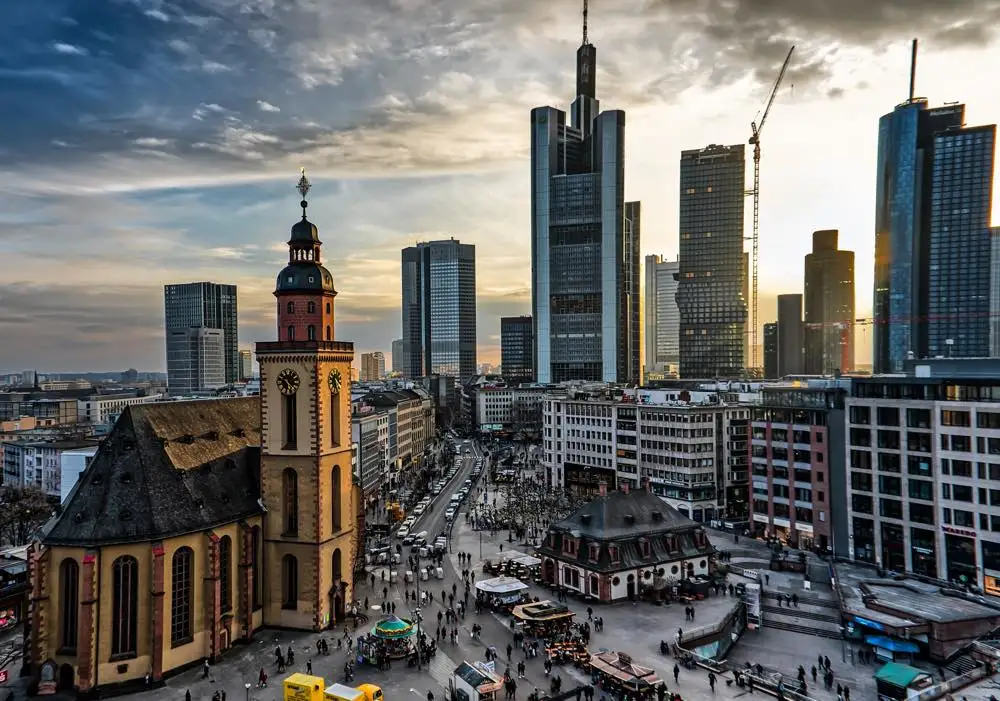
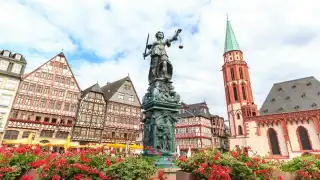
Dubbed ‘Mainhatten’ for its glass highrises, financial prowess, and proximity to the Main River, Frankfurt offers a fascinating glimpse into the ‘engine room’ of Europe’s economy with an unexpected twist. Among the glass and steel buildings, the old-worldly Römerberg square will give you a double-take. The square’s 15th-century half-timbered houses, old statues, and church spires contrast dramatically against the modern 21st-century skyscrapers beyond. If you visit at Christmas, the Römerberg is truly special, aglow with the light of the tallest Christmas tree in Germany. The square fills with stalls selling handicrafts, and the air is scented with hot apple wine, honey, and cinnamon. Delve deeper into Frankfurt and you’ll find a substantial museum district, the Museumsufer (Museum Embankment). This area features a cluster of twelve museums on either side of Main River. This includes the Städel, home to Tischbein’s famous painting of renowned writer Johann Wolfgang von Goethe, one of Frankfurt’s most prestigious sons. The more time you spend in Frankfurt, the more you’ll discover a highly cultured city lurking beneath its glass facades. If you have the time, Frankfurt is certainly worth a second look.
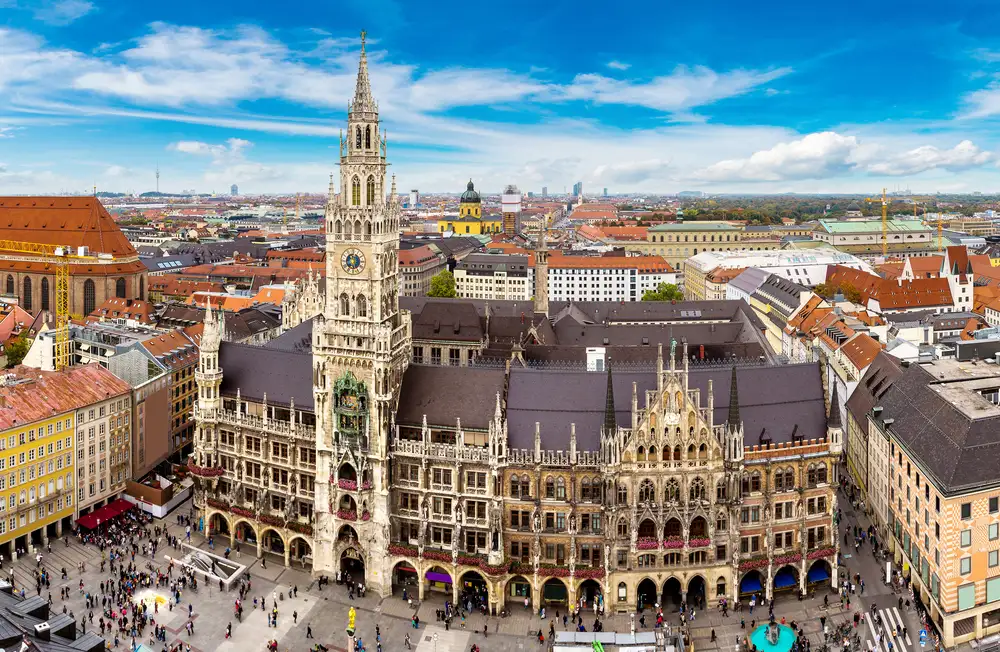
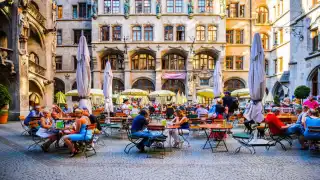
Arriving in Munich, you would be forgiven for thinking you were on the set of a movie about old Bavaria. At the Old Town beer halls, barmaids laced in dirndl dresses serve up frosty Helles lager, as oom-pah music drifts across the Marienplatz square. Men in lederhosen and checked shirts merrily give toasts as they knock glasses, or steins, as they’re known here. They sit at tables laden with wurst sausage and giant pretzels oozing with herby butter. This is Germany’s Germany, a place where folk traditions never stopped, and the revelry doesn’t either. Even when it isn’t Oktoberfest, the town’s notorious beer-drinking celebration, Munich is always happy to show you a good time. Simply cast your eyes around the lavish, gilded banquet hall at the Munich Residenz, the 13th-century Wittelsbach palace. You’ll see Munich has been impressing guests for centuries. Or, swing by the BMW Museum and check out the classic German cars. They even let you sit inside to test out the new models. At the city’s English Gardens, surfers ride waves on one of the park’s rivers. Munich is filled to the brim with this kind of pure-hearted German fun.
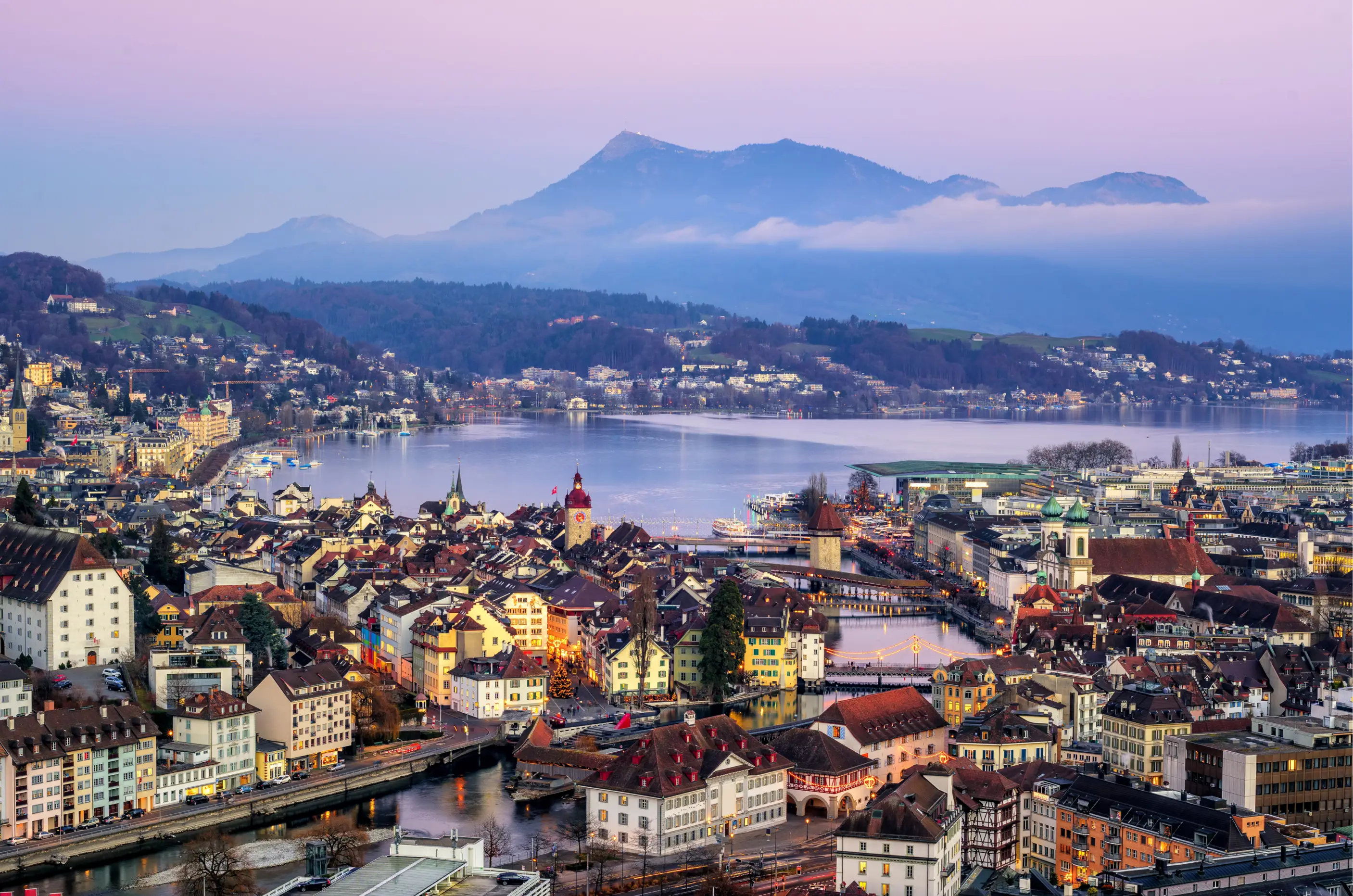
Lucerne’s international name may be French, but this spellbinding little city is actually situated in the heart of Switzerland’s German area. Lucerne was one of the first cities to join the Swiss Confederation and is a microcosm of all the typical Swiss quirks and charm that draw visitors to the country from all over the world. The city’s old town is beautifully preserved and also extremely compact. This is a place that is perfect for walking and looking. You’ll soon start to get an in-depth feel for the Old Town after just a few hours. Stroll across the famous Kapellbrücke bridge or the smaller Spreuerbrücke, or wander to the Löwendenkmal, the wounded lion memorial carved from a rock face. Stunning nature surrounds Lucerne, and the landmark Mount Pilatus towers over the city. It’s possible to climb the mountain, where hikers (and cable-car riders) will be rewarded with breathtaking views of the town below and the Alps beyond. Back at ground level, Lake Lucerne calls out for boat trips, which stop at the many villages and parks around the shores.

Located between two bodies of water — Lake Brienz and Lake Thun — Interlaken is the perfect place to explore the serene natural beauty at Switzerland’s heart. Interlaken is a place for those who seek adventure amid spectacular natural surrounds. Rock climbing, canyoning, bungee jumping, and paragliding are just some of the ways to fill a day here, and countless backpackers descend on the town every summer to do all of these and more. Less intense, but no less rewarding, are the many opportunities for hiking, sailing, and swimming. Or, take to the rails. At the nearby Kleine Scheidegg pass, a train runs through the snowy Swiss Alps to the highest train station on the continent. The fun here doesn’t stop at night. After a hard day of adventure, backpackers flock to the town’s many pubs and bars to soothe their aches and pains with steins of beer. Interlaken is a place where fun and excitement reign supreme and somewhere to experience Switzerland’s striking nature in the most thrilling way.

Switzerland’s second-most populous city, Geneva is a place where languages, cultures, and institutions have converged for hundreds of years. Here, diplomacy and sophistication play a central role. Formerly home to the headquarters of the UN, Geneva still hosts the International Red Cross, World Trade Organization, and World Health Organization. Lake Geneva, the largest body of water in Switzerland, dominates the surrounding landscape with its calm waters and brooding presence. By the lakeside, the imposing Jet d’Eau blasts water 140 meters into the air for most of every day. As you stroll through the city’s enchanting old town, you'll find its winding streets dusted with antique shops, ancient architecture, galleries, and world-class restaurants. Centuries of influence from countless cultures have given Geneva a special, complex identity. Travelers here can spend hours sampling food and drink from across the world. Or, simply sit by the water, and sip an Espresso while you soak up Geneva's unique and cosmopolitan vibe.

Heidelberg is buried deep in the forests of southwest Germany. Flanking both sides of the Neckar River, Heidelberg's red and white baroque old town looks like something from a book of folktales. On the hillside above the town, you'll see the looming, tumbledown remains of Heidelberg's Gothic-Renaissance castle, Heidelberger Schloss. The subject of strange local legends, Heidelberg Castle was once home to knights, a famous court jester, and even a witch. It is said the first person who pulls out an iron ring embedded in one of the great doors will be the castle's true owner. Surely on your visit, it's worth a try? Across the river, follow in the footsteps of scholars on a hiking trail known as The Philosophers’ Way. Heidelberg University is the oldest in Germany, and its leafy, temple-like campus contributes to the gentle, contemplative atmosphere of the town. A poetic city with the dreamy feel of a watercolor painting, it's no wonder Heidelberg inspired writers like Mark Twain and Johann Wolfgang von Goethe. The city has even been recognized by UNESCO as a City of Literature. Especially on misty, grey days, Heidelberg has a way of sweeping you up in its romanticism.

Dubbed ‘Mainhatten’ for its glass highrises, financial prowess, and proximity to the Main River, Frankfurt offers a fascinating glimpse into the ‘engine room’ of Europe’s economy with an unexpected twist. Among the glass and steel buildings, the old-worldly Römerberg square will give you a double-take. The square’s 15th-century half-timbered houses, old statues, and church spires contrast dramatically against the modern 21st-century skyscrapers beyond. If you visit at Christmas, the Römerberg is truly special, aglow with the light of the tallest Christmas tree in Germany. The square fills with stalls selling handicrafts, and the air is scented with hot apple wine, honey, and cinnamon. Delve deeper into Frankfurt and you’ll find a substantial museum district, the Museumsufer (Museum Embankment). This area features a cluster of twelve museums on either side of Main River. This includes the Städel, home to Tischbein’s famous painting of renowned writer Johann Wolfgang von Goethe, one of Frankfurt’s most prestigious sons. The more time you spend in Frankfurt, the more you’ll discover a highly cultured city lurking beneath its glass facades. If you have the time, Frankfurt is certainly worth a second look.

Arriving in Munich, you would be forgiven for thinking you were on the set of a movie about old Bavaria. At the Old Town beer halls, barmaids laced in dirndl dresses serve up frosty Helles lager, as oom-pah music drifts across the Marienplatz square. Men in lederhosen and checked shirts merrily give toasts as they knock glasses, or steins, as they’re known here. They sit at tables laden with wurst sausage and giant pretzels oozing with herby butter. This is Germany’s Germany, a place where folk traditions never stopped, and the revelry doesn’t either. Even when it isn’t Oktoberfest, the town’s notorious beer-drinking celebration, Munich is always happy to show you a good time. Simply cast your eyes around the lavish, gilded banquet hall at the Munich Residenz, the 13th-century Wittelsbach palace. You’ll see Munich has been impressing guests for centuries. Or, swing by the BMW Museum and check out the classic German cars. They even let you sit inside to test out the new models. At the city’s English Gardens, surfers ride waves on one of the park’s rivers. Munich is filled to the brim with this kind of pure-hearted German fun.

Lucerne’s international name may be French, but this spellbinding little city is actually situated in the heart of Switzerland’s German area. Lucerne was one of the first cities to join the Swiss Confederation and is a microcosm of all the typical Swiss quirks and charm that draw visitors to the country from all over the world. The city’s old town is beautifully preserved and also extremely compact. This is a place that is perfect for walking and looking. You’ll soon start to get an in-depth feel for the Old Town after just a few hours. Stroll across the famous Kapellbrücke bridge or the smaller Spreuerbrücke, or wander to the Löwendenkmal, the wounded lion memorial carved from a rock face. Stunning nature surrounds Lucerne, and the landmark Mount Pilatus towers over the city. It’s possible to climb the mountain, where hikers (and cable-car riders) will be rewarded with breathtaking views of the town below and the Alps beyond. Back at ground level, Lake Lucerne calls out for boat trips, which stop at the many villages and parks around the shores.


Zoom In to the cities to see your itinerary in more detail