Germany’s Dynamic Duo: Munich & Berlin Discovery Tour

destination-icon7 Day Tour of Munich and Berlin

Destinations on this trip: Munich,Berlin

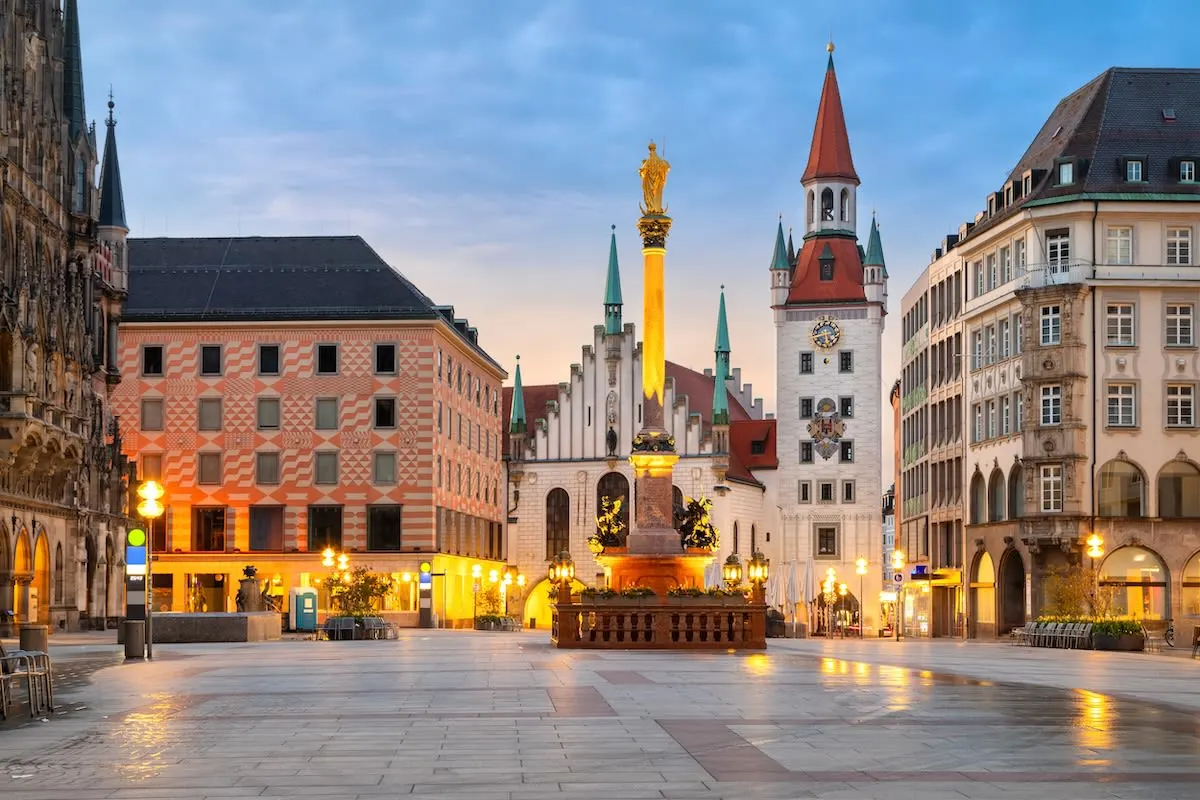
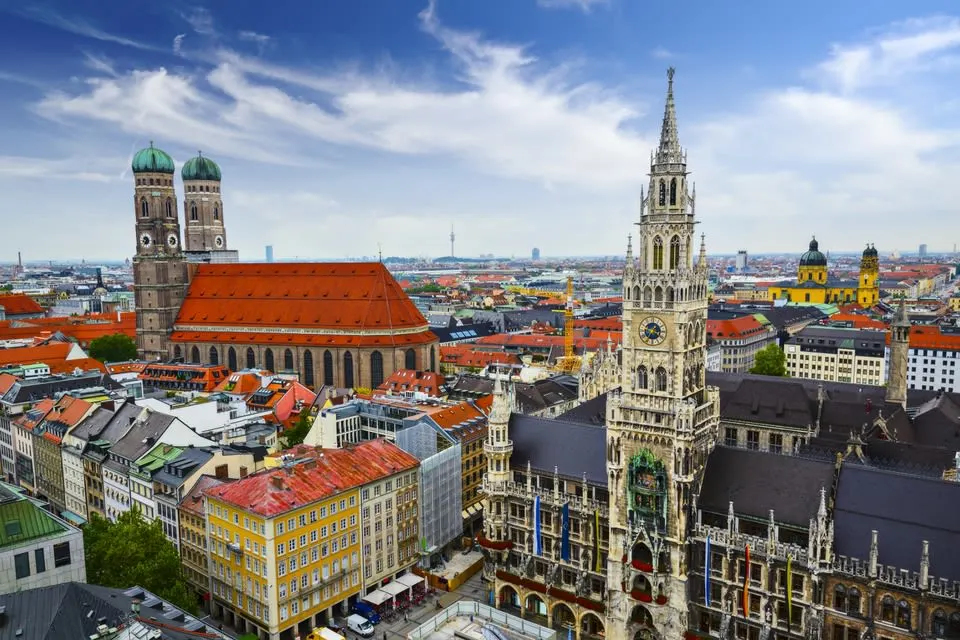
Munich Marienplatz at Dusk
Cycling past the Reichstag
Brandenburg Gate
View over Marienplatz and Munich's Altstadt
image
arrowLightLeft
arrowLightRight

How Long Is the Germany’s Dynamic Duo Trip and What Does It Cost?

History BuffsCultural Exploration
  • Duration
    7 days / 6 nights
  • Best time
    Jan-Dec
  • From
    $1375 / person (Flights not included)
Embark on a seven-day journey into Germany's most vibrant and important cities, uncovering the sometimes troubling but always fascinating history of Munich and Berlin. Wander Munich's enchanting English Garden with the locals, and pass in and out of historic eras as you explore Berlin's dynamic, art-filled streets. Highlights include in-depth private guided tours that share a true understanding of the cities from a local's perspective, and city cards providing easy access to top attractions. With Go Real Travel’s comprehensive guidance provided via our mobile app, your experience will be both seamless and unforgettable.
  • Bask in the historic ambiance of Munich's Altstadt, and tour the royal Munich Residenz Palace.
  • Experience Berlin's cultural tapestry with visits to the Jewish Museum and East Side Gallery.
  • Appreciate Munich's historic architecture on a guided walk and unwind in its bustling beer gardens.
  • Follow Berlin's path of history including the Brandenburg Gate, Reichstag, and Holocaust Memorial.
  • Explore the expansive Tiergarten and Berlin's Museum Island on an optional cycling tour of the city.
Embark on a seven-day journey into Germany's most vibrant and important cities, uncovering the sometimes troubling but always fascinating history of Munich and Berlin. Wander Munich's enchanting English Garden with the locals, and pass in and out of historic eras as you explore Berlin's dynamic, art-filled streets. Highlights include in-depth private guided tours that share a true understanding of the cities from a local's perspective, and city cards providing easy access to top attractions. With Go Real Travel’s comprehensive guidance provided via our mobile app, your experience will be both seamless and unforgettable.
  • Bask in the historic ambiance of Munich's Altstadt, and tour the royal Munich Residenz Palace.
  • Experience Berlin's cultural tapestry with visits to the Jewish Museum and East Side Gallery.
  • Appreciate Munich's historic architecture on a guided walk and unwind in its bustling beer gardens.
  • Follow Berlin's path of history including the Brandenburg Gate, Reichstag, and Holocaust Memorial.
  • Explore the expansive Tiergarten and Berlin's Museum Island on an optional cycling tour of the city.
Old Town - Must-See Sight
Old Town
Architecture
Residence Palace - Must-See Sight
Residence Palace
Castles & Chateaux
Deutsches Museum  - Must-See Sight
Deutsches Museum
Museums & Galleries
The English Gardens - Must-See Sight
The English Gardens
Parks & Gardens
Oktoberfest - Must-See Sight
Oktoberfest
Cultural
The Brandenburg Gate - Must-See Sight
The Brandenburg Gate
Historic Landmarks
The Berlin Wall - Must-See Sight
The Berlin Wall
Historic Landmarks
Checkpoint Charlie - Must-See Sight
Checkpoint Charlie
European History
The Reichstag - Must-See Sight
The Reichstag
Architecture

Must see sights

Old Town - Must-See Sight
Old Town
Architecture
Residence Palace - Must-See Sight
Residence Palace
Castles & Chateaux
Deutsches Museum  - Must-See Sight
Deutsches Museum
Museums & Galleries
The English Gardens - Must-See Sight
The English Gardens
Parks & Gardens
Oktoberfest - Must-See Sight
Oktoberfest
Cultural
The Brandenburg Gate - Must-See Sight
The Brandenburg Gate
Historic Landmarks
The Berlin Wall - Must-See Sight
The Berlin Wall
Historic Landmarks
Checkpoint Charlie - Must-See Sight
Checkpoint Charlie
European History
The Reichstag - Must-See Sight
The Reichstag
Architecture
Loading...

Starting from

$1375

per person

no-flightNot included

Price varies by group size, hotel selection, and travel season.


Secure Your Customizable Trip

Enter your details to embark on a journey that can be tailored just for you.

Start

Travelers

0 travelers
Add Room
Remove Room

Preferred Hotel Stars

Select Hotel Stars
Craft Your Own Itinerary

Select your interests and destinations for a trip plan inspired by you.

Where Does the Germany’s Dynamic Duo Trip Trip Go?

Enable/Disable Map Scrolling

Click To Make Map Interactive

Germany’s Dynamic Duo Trip Timeline

Arrival

2 nights

Munich

Germany

Train: 4h

4 nights

Berlin

Germany

Departure

What Does the Germany’s Dynamic Duo Trip Itinerary Look Like?

image

Day 1

Arrive Munich

Day 1

Arrive Munich

icon
icon
icon

To Be Determined

Transfer from Airport

Munich has one main airport, Munich International Airport, where almost all visitors arrive. Taxis are available directly at the terminal exit, or you can arrange a private transfer for added convenience. The cheapest and fastest way to reach central Munich from is by train. The regional "S-bahn" trains delivers you from the airport train station (just follow the signs) directly to Munich's main station (München hbf) in the center of the city, from where you can easily hail a taxi that will be much less expensive than from the airport.

Transfer from Airport

To Be Determined — Transfer from Airport

Munich has one main airport, Munich International Airport, where almost all visitors arrive. Taxis are available directly at the terminal exit, or you can arrange a private transfer for added convenience. The cheapest and fastest way to reach central Munich from is by train. The regional "S-bahn" trains delivers you from the airport train station (just follow the signs) directly to Munich's main station (München hbf) in the center of the city, from where you can easily hail a taxi that will be much less expensive than from the airport.

Mid-Day/Afternoon — English Gardens

The English Garden is one of Europe's largest parks; in fact, it is larger than New York's Central Park. While it is called the "English Garden" after the style of the park, it was actually designed by an American-Englishman and is now a symbol of the very Bavarian city of Munich. The park is a perfect place to escape the city for a long stroll, where you can enjoy the natural scenery and the people watching.

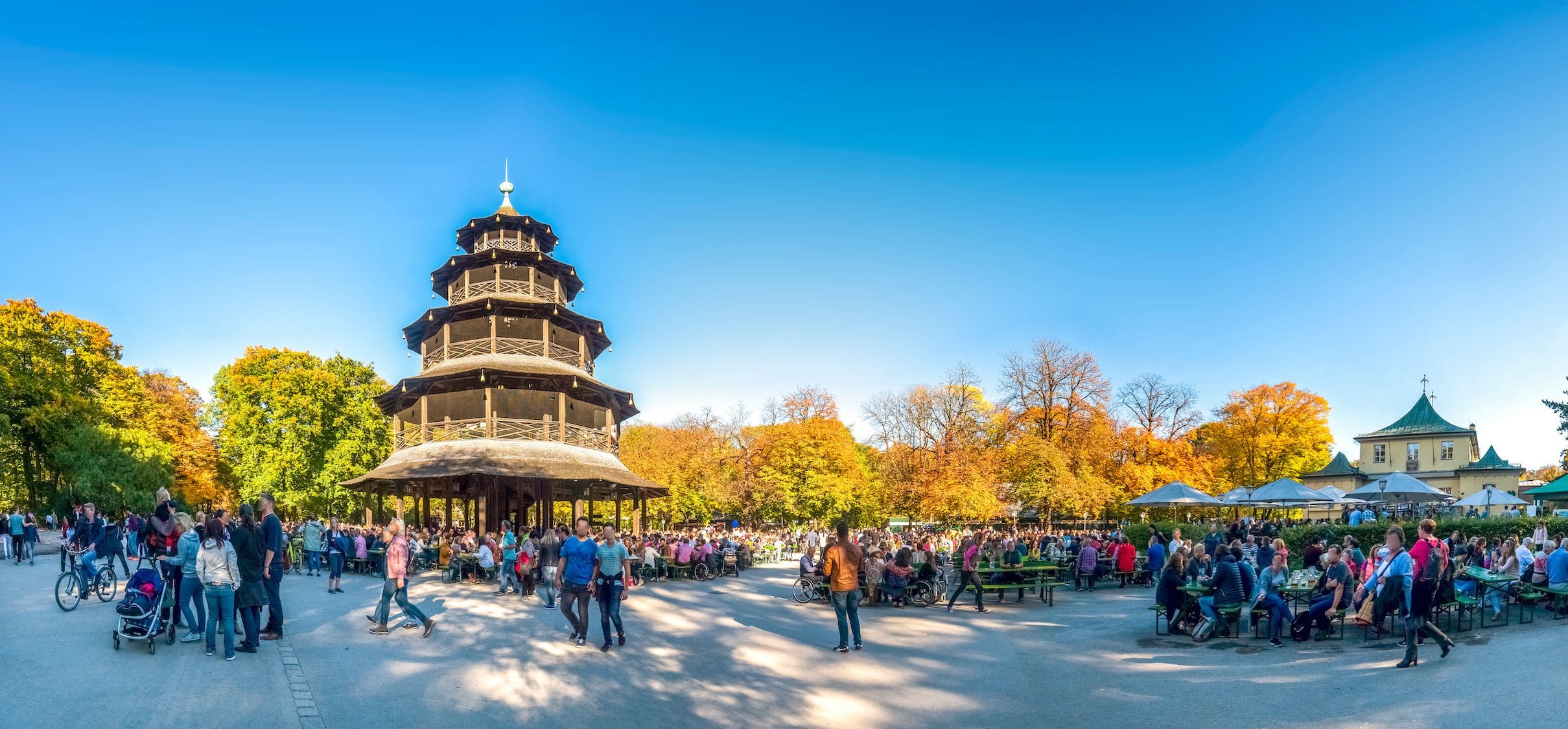
Chinese Tower

Enjoy some Bavarian brews with the locals in Munich's second largest beer garden.

Located in the middle of the English Gardens, this beer garden (7,000 seats) is located beneath the wooden Chinese Tower. The 25 meter high (75 feet) pagoda was built in 1789 during a pan-European craze for all things East Asian. The food stalls around the pagoda offer traditional beer garden food such as Steckerlfisch (grilled fish on a stick), Hendl (roasted chicken) and Schweinshaxn (roasted pork knuckle). The beer served is Hofbräu and a Maß Hell (lager).

Eisbachwelle

Watch surfers catch some waves in the middle of the city.

At the extreme southern end of the park you can find one of the more unusual and entertaining pastimes enjoyed by the locals - surfing on the man-made Eisbach river. There is a standing wave produced by the water pumping mechanism and surfers line up along the bank taking turns entering the water with their boards. After a minute or so, successful surfers will voluntarily drop out, returning to the end of the line allowing the next person in line an opportunity. The water is cold and shallow (sometimes only 40 cm deep), making it suitable only for experienced surfers.

Early Evening — Maxvorstadt

Maxvorstadt is not just Munich’s most central nightlife hotspot, it’s one of the most historically fascinating neighborhoods in all of Bavaria. The area is often called the “Brains of Munich” for its concentration of arts and education centers, including seven universities and several museums and galleries. It’s a lively spot from day to evening to be sure, with a diversity of cozy bars, restaurants, and cafes appealing to the large student population and foreign visitors.

image

Day 1

Arrive Munich


icon
icon
icon

To Be Determined:

Transfer from Airport

Mid-Day/Afternoon:

English Gardens

Early Evening:

Maxvorstadt

Transfer from Airport

Transfer from Airport

Munich has one main airport, Munich International Airport, where almost all visitors arrive. Taxis are available directly at the terminal exit, or you can arrange a private transfer for added convenience. The cheapest and fastest way to reach central Munich from is by train. The regional "S-bahn" trains delivers you from the airport train station (just follow the signs) directly to Munich's main station (München hbf) in the center of the city, from where you can easily hail a taxi that will be much less expensive than from the airport.

To Be Determined — Transfer from Airport

Munich has one main airport, Munich International Airport, where almost all visitors arrive. Taxis are available directly at the terminal exit, or you can arrange a private transfer for added convenience. The cheapest and fastest way to reach central Munich from is by train. The regional "S-bahn" trains delivers you from the airport train station (just follow the signs) directly to Munich's main station (München hbf) in the center of the city, from where you can easily hail a taxi that will be much less expensive than from the airport.

Mid-Day/Afternoon — English Gardens

The English Garden is one of Europe's largest parks; in fact, it is larger than New York's Central Park. While it is called the "English Garden" after the style of the park, it was actually designed by an American-Englishman and is now a symbol of the very Bavarian city of Munich. The park is a perfect place to escape the city for a long stroll, where you can enjoy the natural scenery and the people watching.

Chinese Tower

Enjoy some Bavarian brews with the locals in Munich's second largest beer garden.

Located in the middle of the English Gardens, this beer garden (7,000 seats) is located beneath the wooden Chinese Tower. The 25 meter high (75 feet) pagoda was built in 1789 during a pan-European craze for all things East Asian. The food stalls around the pagoda offer traditional beer garden food such as Steckerlfisch (grilled fish on a stick), Hendl (roasted chicken) and Schweinshaxn (roasted pork knuckle). The beer served is Hofbräu and a Maß Hell (lager).

Eisbachwelle

Watch surfers catch some waves in the middle of the city.

At the extreme southern end of the park you can find one of the more unusual and entertaining pastimes enjoyed by the locals - surfing on the man-made Eisbach river. There is a standing wave produced by the water pumping mechanism and surfers line up along the bank taking turns entering the water with their boards. After a minute or so, successful surfers will voluntarily drop out, returning to the end of the line allowing the next person in line an opportunity. The water is cold and shallow (sometimes only 40 cm deep), making it suitable only for experienced surfers.

Early Evening — Maxvorstadt

Maxvorstadt is not just Munich’s most central nightlife hotspot, it’s one of the most historically fascinating neighborhoods in all of Bavaria. The area is often called the “Brains of Munich” for its concentration of arts and education centers, including seven universities and several museums and galleries. It’s a lively spot from day to evening to be sure, with a diversity of cozy bars, restaurants, and cafes appealing to the large student population and foreign visitors.

image

Day 2

Munich

Day 2

Munich

icon
icon
icon
icon

9:30 AM - 12:00 PM

Guided Walk Tour of Historic Munich

Munich contains many reminders of a long and varied history but also encompasses the modern features of a strong and vibrant city. The insights of a local help make sense of the traditions, trends, and promises of Bavaria's Capital - sometimes referred to as the city of laptops and lederhosen. On this tour, your guide will show you the highlights of Munich and point out the many hidden treasures.

Guided Walk Tour of Historic Munich

9:30 AM - 12:00 PM — Guided Walk Tour of Historic Munich

Munich contains many reminders of a long and varied history but also encompasses the modern features of a strong and vibrant city. The insights of a local help make sense of the traditions, trends, and promises of Bavaria's Capital - sometimes referred to as the city of laptops and lederhosen. On this tour, your guide will show you the highlights of Munich and point out the many hidden treasures.

Mid-Day/Afternoon — Residence Palace

The Munich Residenz was the seat of Bavaria's Dukes and Kings from the middle ages until 1918. Originally a medieval castle, it was transformed over the centuries into a beautiful palace. Today it is open to the public and you can explore its magnificent interiors, numerous courtyards, and elegant garden. The living quarters of the royal family have been transformed into a museum which provides a fascinating glimpse into the lives of Kings and Queens. You can also peruse numerous jewels, gold objects, and other precious items which are held in the Residenz Schatzkammer (treasury).

Residenz Palace Museum

Wander where you will, audio guide in hand, through the spectactular royal residence.

You'll experience jaw-dropping architecture and beautiful artwork as you explore the museum and the adjacent Royal Treasury. Among the many highlights, unmissable is the Antiquarium, the largest and most lavish Renaissance hall north of the Alps. The window reveals are decorated with 102 views of towns, markets, and palaces in what was then the Duchy of Bavaria, providing an unique insight into how the country once looked. The Rich Chapel (Reiche Kapelle) was the private place of worship of Duke Maximilian I and his wife, and it was decorated with particular magnificence using colored marble and gilt reliefs. The Ornate Rooms (Reiche Zimmer) meanwhile represent a high point of the court Rococo style, and are works of art in their own right. 

Cuvilliés-Theatre

Visit what is perhaps the most ostentatious and sensually overwhelming building in Munich.

The exceptionally extravagant court theatre was built by Elector Max III Joseph's court architect François Cuvilliés between 1751 and 1755, and was intended to showcase Munich as a home to the arts and the enlightenment. It only survived the destruction of WWII because the elaborately carved tiers of boxes were removed from their original location in the Alte Residenztheater building for safekeeping. It's still used as a theatre today.FYI - to visit the Cuvilliés-Theatre you need to exit the museum and walk around the palace to get onto Residenzstraße and then re-enter the palace and cross through either the Chapel Courtyard or the Imperial Courtyard. 

Odeonsplatz

See the square where Hitler's Beer Hall Putsch came to a bloody end.

The square directly adjacent to the Residence is the Odeonsplatz, which is guarded by the Feldherrnhalle (Field Marshalls' Hall) in honor of the Bavarian army. It was here that Hitler's Beer Hall Putsch in 1923 came to a bloody end in a gun battle with the police. During the Nazi regime, anyone passing the Feldherrnhalle was obliged to give the Nazi salute, which prompted some locals to instead take a side street. The Nazis derogatorily nicknamed it the Shirkers' Alley, but the 'shirkers' are memorialized in a trail of brass cobblestones. Also on the square is the bright yellow Theatinerkirche with its two massive twin towers. It was the personal church of Bavaria's rulers and many of them are interred there.  

Late Afternoon/Early Evening — Altstadt

Munich boasts a large old town (Altstadt) with many beautiful historic buildings. Sometimes called the world's largest village, it is a perfect place to wander. You will discover many Medieval, Renaissance, and Baroque buildings, as well as several stunning examples of modern architecture. Pleasant cafes, beer halls, cozy restaurants, and great shopping all add to the charming atmosphere.

Hofbräuhaus

Enjoy some fine Bavarian brews in a beer hall that dates back to 1589.

Originally built in 1598 by Maximilian I, Duke of Bavaria, as an extension to the state brewery, this beer hall was opened to the public in 1828, remodeled in 1897, almost completely destroyed during World War II, and reopened following its restoration in 1958. It is now situated across three floors, with a restaurant, ballroom, and beer garden, and is one of the largest tourist attractions in the city as well as a favorite of locals. This is where the ingurgitation of vast quantities of beer and pretzels has been taking place since 1644. Even if you're a teetotaller, you'll want to at least take a look at the interior of the three-storied temple to the consumption of fermented hops and watch the odd local quaff his or her ale amid the sea of tourists. There's also an attractive courtyard where you can escape the din on a summer's day or evening.

New Town Hall & Glockenspiel

Enjoy the mechanical show as the figures on the Glockenspiel on the New City Hall come to life and re-enact stories from the 16th century.

The Marienplatz is the main square of the Altstadt, and its centerpiece is the domineering facade of the neo-Gothic Neues Rathaus (New Town Hall). It is decorated with gargoyles and statues, including a dragon scaling the turrets. For a great view of the city, ascend the 279ft (85m) tower (elevator available to the left just inside the main entrance to the town hall). The highlight of the building is the Glockenspiel, which attracts large numbers of tourists at 11 am and noon (and 5pm in the summer) who come to watch the contraption in operation. There's dancing, a joust, and more, all set to musical chimes. Unusually, the New Town Hall mostly survived WWII intact, probably because it was used by Allied bombers as a direction finder for obliterating the rest of the city.

Peterskirche

Climb to the top of Munich's oldest church tower for what is still today its best view.

The best views of central Munich can be viewed from the 302ft (92m) tower of St Peterskirche, inner Munich's oldest church and possibly the city's origin point. The presence of a church on its site goes back to before the city's founding, and it has existed in a number of iterations since. Its nearly 3000ft-tall tower is affectionately called "Alter Pete" or "Old Pete" as a recognition of its significance to Munich's social and cultural history.

Viktualienmarkt

Assemble a gourmet picnic lunch in one of Europe's best known markets.

The Viktualienmarkt is one of Central Europe's finest gourmet markets where many of the stalls have been run by generations of the same family. Prices are high, but you can gather all the ingredients for an haute cuisine picnic and then seat yourself in the market's own beer garden to enjoy an al fresco lunch. The very existence of such a market in an old town quarter is the result of Munich's dedication to preserving its past. Fearing that fast food chains will replace the old-fashioned market stalls and quaint eateries that make the Viktulienmarkt one of Europe’s most charming squares, the city subsidizes the rent so they can survive on the some of Germany’s most expensive real estate.

Jewish Museum

Learn about Munich's rich Jewish heritage and see it's most striking synagogue.

The museum focuses on Munich's Jewish heritage, as well as Jewish history and culture in general, with a contemporary flair and modern means of display. Adjacent to the museum is the Ohel Jakob synagogue, which ranks among the most striking structures built in the city in recent years. It is the first synagogue to serve as the main synagogue of the city since the Nazi Kristallnacht (i.e. the Night of Broken Glass). Tours are offered but must be arranged 10 days in advance.

Frauenkirche

Restored Gothic church.

The Frauenkirche, or Church of Our Lady, dominates the Altstadt. This is because the twin onion-domed towers inspired the city council to prohibit any other building in the Altstadt from exceeding their height of 325ft (99m). Much of the interior was destroyed during WWII, but it has been rebuilt. An attraction that survived the bombing in original form is the Teufelstritt, or Devil's Footstep, at the entrance. This is a black mark resembling a footprint, which according to legend is the result of a deal the devil made with the builder to finance construction of the church on the condition that it contains no windows. The clever builder, however, tricked the devil by positioning columns so that the windows were not visible from the spot where the devil stood in the foyer. By the time the devil discovered that he had been tricked, he could not enter the already consecrated church. The devil could only stand in the foyer and stomp his foot furiously, which left the dark footprint that remains visible in the church's entrance today.

Early Evening/Evening — Augustiner Keller

This vast beer garden under leafy chestnut trees is immensely popular with the locals, so you can study the lederhosen-clad men and dirndl attired women at close quarters while quaffing the Augustiner's own Edelstaff beer from your Maßkrug (one-liter glass beer mug) and wolfing down a plate stacked high with Bavarian sausage and mashed potato.

image

Day 2

Munich

image

Day 3

Munich to Berlin

Day 3

Munich to Berlin

icon
icon
icon
icon

Early Morning/Morning

Documentation Center

Munich is the city where the National Socialist German Workers' Party (NSDAP), or Nazi Party, first took root. As the Nazis came into power, the Königsplatz was paved over and transformed into a perfect backdrop for staging their militaristic spectacles. Many of the physical changes they made to the space endure to this day. The history of the birth of German National Socialism to its horrific end in 1945 is brilliantly captured and displayed at the National Socialist Documentation Center which is located on the square.

Documentation Center

Early Morning/Morning — Documentation Center

Munich is the city where the National Socialist German Workers' Party (NSDAP), or Nazi Party, first took root. As the Nazis came into power, the Königsplatz was paved over and transformed into a perfect backdrop for staging their militaristic spectacles. Many of the physical changes they made to the space endure to this day. The history of the birth of German National Socialism to its horrific end in 1945 is brilliantly captured and displayed at the National Socialist Documentation Center which is located on the square.

NS Documentation Centre

Learn how Nazism managed to capture Germany and about the terrible consequences.

Opened in 2015, the documentation center shows how the Nazi Party was able to rise and rule Germany, and the role which the city of Munich played. Visitors learn not only about the origins of the Nazi movement and how they managed to seize power, but also about the regime during the war, and the post-war process of de-Nazification. 

2:55 PM — Transfer to Rail Station

Most trains depart from Müchen Hbf station, the largest station in the city. Before spending money on a transfer, be sure to check whether your hotel is within easy walking distance. Also consider that public transport is the cheapest and sometimes fastest option. If staying at a hotel, they can order a reliable taxi. Some private transfers will even help with your bags. Uber is also available for those with the app.

15:56 - 19:44 — Train to Berlin

This scenic 4.5 hour journey aboard an Intercity Express Train (ICE) will first take you through the the pretty Bavarian countryside north of Munich. You'll then enter the region of Franconia, where you will pass through the historic cities of Bamberg and Nuremberg.  After crossing the now irrelevent border between the former East and West Germany, you reach the city of Leipzig, which was once the highly polluted industrial center of East Germany, but is now rated among Germany's most livable cities. A short while later you enter the thick pine forests surrounding Berlin, and then arrive at the station in the center of the city.

7:44 PM — Taxi from Rail Station

Most trains arrive in Berlin Hbf station, the largest station in the city. Before spending money on a transfer, be sure to check whether your hotel is within easy walking distance. The station is well connected by public transport to all of central Berlin; U-Bahn, S-Bahn, and bus all service the station. This means public transport is often the fastest and easiest way of reaching the station. Berlin taxis are generally reliable and honest, so if you prefer the convenience of not carrying your bags on public transport, they are a good option. Uber is also a good option, and some private transfers even meet you directly on the platform to help with bags.

image

Day 3

Munich to Berlin

image

Day 4

Berlin

Day 4

Berlin

icon
icon
icon
icon

9:00 AM - 12:00 PM

Guided Walking Tour of Berlin

On this 3 hour tour, your guide will show you the highlights of Berlin and help you understand what makes this city so unique. Sites visited will include the boulevard Unter den Linden, the Gendarmenmarkt, Check Point Charlie, remnants of the Berlin Wall, Potsdamer Platz, the Holocaust Memorial, the Brandenburg Gate, and the Reichstag.

Guided Walking Tour of Berlin

9:00 AM - 12:00 PM — Guided Walking Tour of Berlin

On this 3 hour tour, your guide will show you the highlights of Berlin and help you understand what makes this city so unique. Sites visited will include the boulevard Unter den Linden, the Gendarmenmarkt, Check Point Charlie, remnants of the Berlin Wall, Potsdamer Platz, the Holocaust Memorial, the Brandenburg Gate, and the Reichstag.

Brandenburg Gate

Quadriga. Hey, There's a Word to Know When Learning About this Historic Gate

The Brandenburg Gate was built as a symbol of peace, perverted into a symbol of power by the Nazis, and became a symbol of division during the Cold War. Now, however, it is a symbol of reunification. Completed in 1791, it was topped by the quadriga, a chariot drawn by four horses driven by the goddess of peace. Napoleon seized the quadriga as a spoil of war, but after his defeat, it was returned to the city and met by cheering crowds along the way, transforming the goddess of peace into a goddess of victory, holding a  Germanic cross.

Reichstag

Make your way to the top of the dome enjoying amazing views and looking down at debating members of the German Parliament below.

Officially, the Reichstag is actually the Bundestag, which means the federal parliament. The Reichstag was reduced to a ruined shell by arson in 1933 and by World War II fighting, but it was rebuilt with a striking egg-shaped glass dome. Visitors are given a free audio guide that discusses the building’s history and architecture, while also orientating you to the sites of Berlin. It is an excellent introduction to the city. Note that it is usually necessary to book well in advance!

Mid-Day/Afternoon — Iconic Berlin

Many of Berlin’s most iconic symbols are found within a short walk of each other. Most famous of all is the Brandenburg Gate. First built as a symbol of peace, it became a symbol of division during the Cold War. A few steps away stands the Reichstag, which was destroyed in the climax of World War II but which has been beautifully rebuilt with a glass dome. Meanwhile, the modernistic Sony Center also symbolizes a revitalized and rebuilt Berlin. Also close by is the sobering Holocaust Memorial, with its more than 2700 concrete slabs creating an ominous impression of loss. Just beyond it is another reminder of Germany's darkest period - the site of Hitler's bunker during the seige of Berlin.

Brandenburg Gate

Quadriga. Hey, There's a Word to Know When Learning About this Historic Gate

The Brandenburg Gate was built as a symbol of peace, perverted into a symbol of power by the Nazis, and became a symbol of division during the Cold War. Now, however, it is a symbol of reunification. Completed in 1791, it was topped by the quadriga, a chariot drawn by four horses driven by the goddess of peace. Napoleon seized the quadriga as a spoil of war, but after his defeat, it was returned to the city and met by cheering crowds along the way, transforming the goddess of peace into a goddess of victory, holding a  Germanic cross.

Reichstag

Make your way to the top of the dome enjoying amazing views and looking down at debating members of the German Parliament below.

Officially, the Reichstag is actually the Bundestag, which means the federal parliament. The Reichstag was reduced to a ruined shell by arson in 1933 and by World War II fighting, but it was rebuilt with a striking egg-shaped glass dome. Visitors are given a free audio guide that discusses the building’s history and architecture, while also orientating you to the sites of Berlin. It is an excellent introduction to the city. Note that it is usually necessary to book well in advance!

Sony Center

Check out the futuristic and ground-breaking Sony Center at Potsdamer Platz.

The visually dramatic and future-aesthetic Sony Center is a complex of entertainment, shopping, and office buildings surrounding a plaza canopied by a tentlike glass roof with supporting beams radiating out like bicycle spokes. It also integrates rare relics from Potsdamer Platz's prewar era, such as the opulent Kaisersaal – a fragment of the luxurious pre-war Esplanade Hotel.

Holocaust Memorial

Wander amongst 2,711 columns forming a vast mazelike Holocaust memorial.

The Memorial to the Murdered Jews of Europe. It consists of a 19,000 square meter site with over 2700 concrete slabs that grow larger and more ominous as you approach the center of the monument. Beneath the monument lies an information center. 

Late Afternoon/Early Evening — TV Tower & Old Berlin

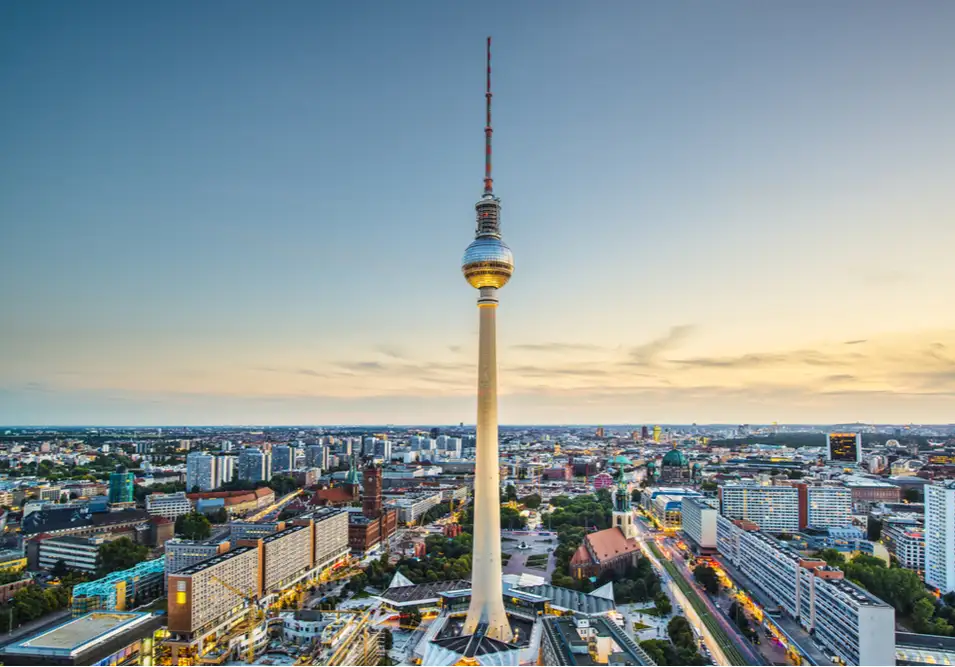
The Television Tower and its surroundings in Alexanderplatz are Berlin's main architectural monument to the former East Germany. Despite the high-rent stores and offices that now fill the buildings, you can still detect quite a bit of that old communist character. Somewhat ironically, you'll find the medieval Nikolaiviertel, the oldest residential area of Berlin, just a few steps away. You'll also find nearby the Marienkirche (Berlin's oldest parish church), the displaced Neptune Fountain, the Red Town Hall, statues of Karl Marx and Friedrich Engels, and the massive Loxx model railway that even non-model train enthusiasts will gasp at.

Television Tower

Soar to the top of this iconic symbol of Berlin in just 40 seconds, and enjoy amazing views from its observation deck.

The 1960s TV Tower (Fernsehturm) is possibly the best surviving example of East Germany’s architectural legacy. In total, it is 1,197 feet tall (368 meters), but you can only go 666 ft to the observation deck, or a bit higher if you have a ticket to the revolving Sphere Restaurant. You ascend in one of two 10-person elevators that take a mere 40 seconds to reach the observation deck.

DDR Museum

Experience life in Communist East Germany in this interactive museum.

This brilliantly evocative and interactive museum helps visitors imagine what life under the Communist East German regime was like. A homage to Ostalgie (nostalgia for East Germany), it offers up memories of the school system, pioneer camps (something like Communist scouts), and the wonderfully clumsy attempts to rival Western clothing and food fashions. It'd all be adorable, if it weren't so oppressive.

Nikolaikirche

Visit the beautifully restored medieval Gothic church which gave the surrounding neighborhood its name.

Dating all the way back to the earliest days of Berlin, this church was probably built just after Berlin was granted town privileges. An unusual feature of its interior is the bright colouring of the vault ribbings: the orange, purple, green and other vivid lines look like a 1960s Pop Art addition, but actually follow a medieval pattern discovered by a 1980s restorer. 

Nikolaiviertel

Escape to Berlin's medieval past in this reconstructed historic district.

The Nikolaiviertel or St. Nicholas Quarter is Berlin's oldest residential area. With its medieval lanes and numerous restaurants and bars, it was a favorite haunt of the artistically-minded in the years before WWII, but that war left it a devastated wasteland. In the 1980's the East German regime attempted a renovation of the neighborhood based on historical models, but the “old Berlin” illusion is not all entirely convincing. The use of East German construction techniques is glaringly obvious in some places, such as prefabricated gables and corrugated concrete panels. As a result, it was scornfully nicknamed “Honecker's Disneyland” after the former East German leader, but today it is a historic curiousity in its own right.

Evening/Late Evening — East Side Gallery

Kreuzberg was a rough, poor area in West Berlin until students, artists, and immigrants began moving there for the cheap rents. Over time it became Berlin’s most hip and happening district, filled with cafes, restaurants, and bars. After 1989, Friedrichshain, a grungy, working-class district just across the river in the former East Berlin, began to compete with Kreuzberg as Berlin's trendiest neighborhood. It's also home to the East Side Gallery, the longest remaining stretch of the Berlin Wall.

Oberbaumbrücke

Cross between the ultra-hip neighborhoods of Friedrichshain and Kreuzberg on this picturesque double-decked bridge.

This bridge over the River Spree is used by cars, pedestrians, and cyclists, also carries a line of the U-Bahn. It was built to resemble the distinct style of brick Gothic, which was popular in northern Germany in the middle ages. It also possesses two decorative towers which symbolize the historic importance of the site, when it served as a gateway into the city.

East Side Gallery

Admire the street art as you walk the longest remaining stretch of the Berlin Wall.

Painted with graffiti art, the East Side gallery is considered the world’s largest and longest open-air art gallery in the world, with over 100 graffiti murals set along the Spree river. One of the most famous murals is the controversial and oft-depicted “My God, Help Me to Survive This Deadly Love”, which shows former Communist leaders Leonid Brezhnev and Erich Honecker kissing. 

Berghain

Try to get into Berlin's most famous nightclub.

Located in an abandoned power plant, and with space for more than 1,500 guests, you might think it is easy to get into this club. But in reality it's still quite tough to make it inside. While the harsh, industrial interior is dominated by steel and concrete, the club has a reputation for sensuousness and hedonism. 

image

Day 4

Berlin

image

Day 5

Berlin

Day 5

Berlin

icon
icon
icon
icon

Morning

Tiergarten

Once the hunting ground of the Prussian kings, the Tiergarten is Berlin’s most famous and expansive park. It is a wonderful escape from urban stress located in the very center of the city. You will discover beautiful forests, fields, and ponds, all easily reached through an extensive and well maintained network of trails. Some of Berlin's favorite beer gardens are also located in the park.

Tiergarten

Morning — Tiergarten

Once the hunting ground of the Prussian kings, the Tiergarten is Berlin’s most famous and expansive park. It is a wonderful escape from urban stress located in the very center of the city. You will discover beautiful forests, fields, and ponds, all easily reached through an extensive and well maintained network of trails. Some of Berlin's favorite beer gardens are also located in the park.
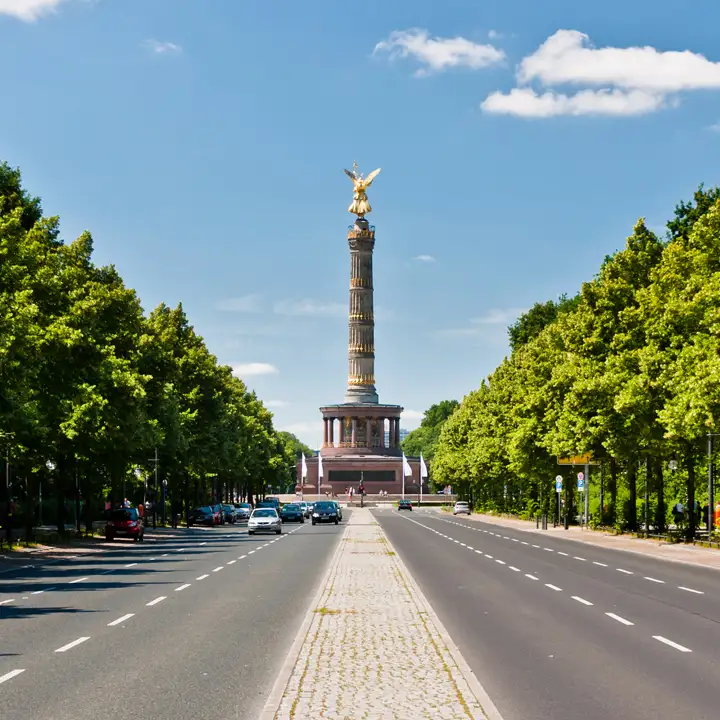
Victory Column

Climb the historic column for a panoramic view of the city amidst a sea of green trees.

One of Berlin’s most familiar sights, the column commemorates victories over Denmark, Austria, and France during the mid-19th century. These victories enabled the founding of the German Empire in 1871. It was moved to the current location on the express orders of Hitler. 

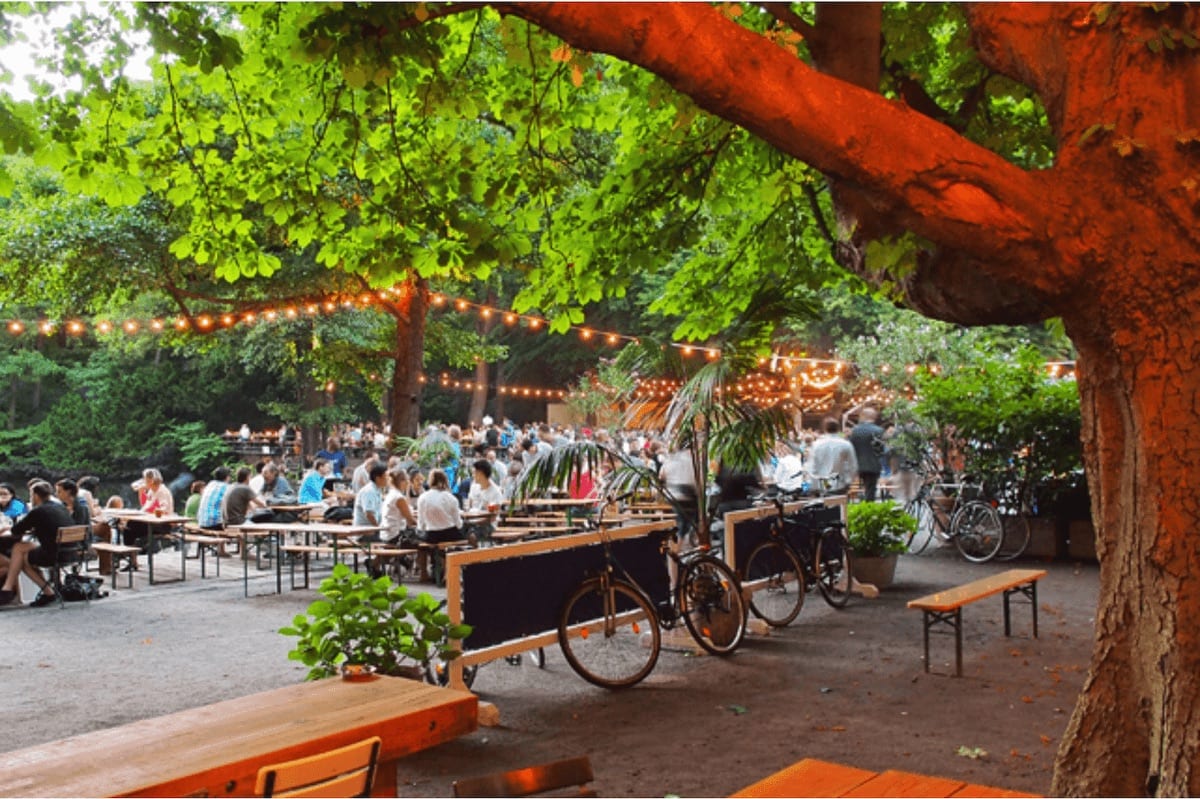
Café am Neuen See

Take a Break in a Popular Beer Garden Nestled Within the Park.

Even if you don’t feel like stopping for a drink or a meal, it is still worth a quick peek just to experience the atmosphere. The location is absolutely ideal, surrounded by forest and looking over the lake with its many paddle boaters. There's a formal sit-down café on the terrace and a self-service beer garden, where sharing benches is expected and completely normal.

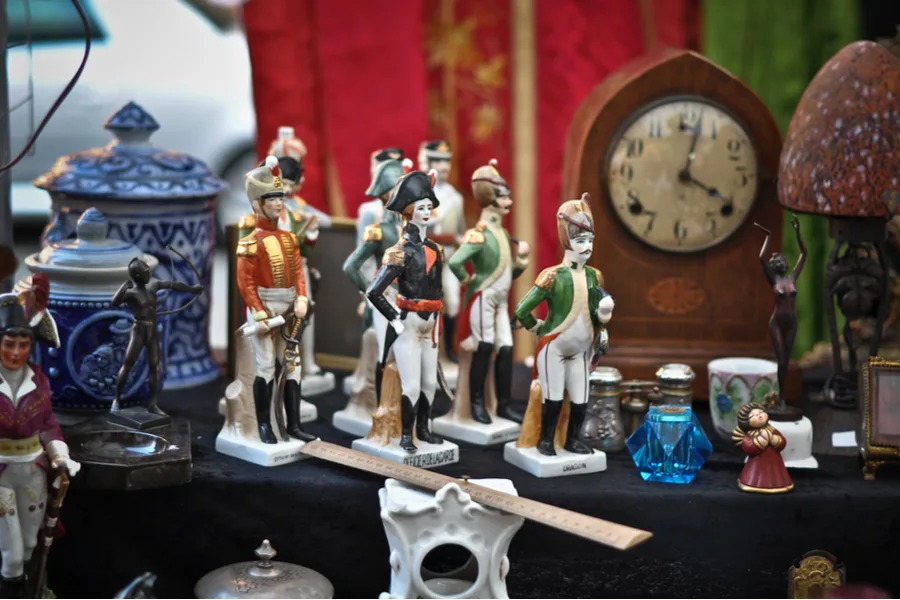
Trödel Markt

Shop within the forest at Berlin’s best flea market.

If you are looking for a unique purchase then this is the place. The market takes place every weekend from 10am-5pm. Discover art, family heirlooms, furniture, clothing, souvenirs, food, and more. 

Mid-Day/Afternoon — City West

In the 1920's the elegant, tree-line boulevard known as the Kurfürstendamm was the center of Berlin's nightlife and leisure scene, attracting writers, film stars, and artists. WWII left it in ruins, and today at the end of the boulevard you'll discover a chilling reminder of that destruction: the purposefully unrecontructed remains of the Memorial Church. During the Cold War, the Kurfürstendamm and its surroundings were central to West Berlin's revitalized identity. This was perhaps best symbolized by the famous KaDeWe, the gigantic department store which served as a symbol of market capitalism lodged in the heart of the Iron Curtain.

Memorial Church

Remind yourself of war's destructiveness by visiting the ruins of this church destroyed during WWII.

After its destruction in WWII, the Kaiser Wilhelm Memorial Church was partially rebuilt in modernist style, and partially left in ruins as a powerful reminder of the war. Built-in the 1890s, Kaiser Wilhelm II hoped to inspire the secular proletariat to return to traditional religious values. The neo-Gothic design became ever more colorful as Wilhelm insisted on more bling. The small exhibition inside shows the wartime destruction and a “before and after” model of the city center.

Story of Berlin Museum

Take an interactive crash course in Berlin history. (Re-opening Autumn 2021)

This museum uses reconstructed street scapes, homes, and other interactive exibits to give you good feeling for the atmosphere of Berlin during it's long and often times turbulent history, including during the Nazi and Communist era. You can also tour an underground nuclear shelter.

Berlin Zoo

Visit Germany's Oldest and Best Known Zoo.

Founded in 1844, the Zoologischer Garten Berlin was the first zoo in Germany and features some wonderful animal-inspired architecture as well. The original animals were donated by King Frederick William IV of Prussia, and it now has a collection of around 20,500 animals representing 1,500 different species. The zoo’s aquarium opened in 1913 and now contains one of the largest collections of aquatic life in Europe. 

KaDeWe

Shop in the iconic department store of capitalist West Berlin

Opened in 1907, the Kaufhaus des Westens, or KaDeWe, quickly became a temple of luxury in a rapidly modernising city. It took off again following the German post-war economic miracle and gained new impetus again following German reunification. During Communism, due to it's proximity to East Germany, it became a symbol of the material wealth of the West in comparison to that of countries stuck behind the Iron Curtain.

Late Afternoon/Early Evening — Checkpoint Charlie

The best-known Berlin Wall crossing point between East Berlin and West Berlin during the Cold War, Checkpoint Charlie was the main gateway between the two Berlins for most non-Germans. Next to it is the Mauermuseum recounting the history of the Berlin Wall, while a few hundred yards away is the Topography of Terror depicting the history of the Nazi regime. Nearby, the Jewish Museum explores the fascinating history of Germany's Jewish heritage in a striking modern building - uneven floors, empty spaces, and sharp zig-zags reflect its turbulent experience in Germany.

Jewish Museum

Unveil a fascinating story of triumph, tragedy, and also everyday life in Germany's leading Jewish history museum.

The history of Germany’s once-thriving Jewish population and culture is brilliantly detailed behind American architect Daniel Libeskind’s equally brilliant and shimmering titanium-zinc facade.

Trabi Museum

Sit behind the wheel of East Germany's infamously toxic Trabi.

This little museum is devoted to East Germany's iconic product - the Trabant automobile. Here you'll learn to appreciate the “fewer parts means less trouble” principles of the fibreglass car. 

Topography of Terror

Learn about the horrors of Nazism and the security apparatus it used to enforce its will in this documentation center.

The center has free admission. It is located on a site that headquartered Adolf Hitler's elite killers, the SS, the Gestapo secret police and the Reich Main Security Office, making it the main cog in the Nazi security regime. Standing there today in testament to the evil perpetrated during those years is the Topography of Terror, Germany’s most significant museum on the agents of Nazi terror. 

Early Evening/Evening — River Cruise

The Spree is a 250 mile long river that flows through the German states of Saxony and Brandenburg. But it’s best known for its final stretch where it drifts through the city center of Berlin, flowing under more bridges than in Venice and passing the Berlin Cathedral (Berliner Dom), the Reichstag and the Charlottenburg chateau. Taking a cruise, whether for an hour or half the day, offers a wonderful way to see the city in a relaxed manner.

image

Day 5

Berlin

image

Day 6

Berlin

Day 6

Berlin

icon
icon
icon

Morning/Mid-Day

Museum Island

This island in the River Spree is home to five world-renowned museums, which could easily fill up a whole trip just by themselves. The island is covered in trees and green lawns, while the classically-inspired architecture of the museums can be enjoyed without even stepping inside. Unfortunately, the biggest star of the island, the Pergamon Museum, with its wholly reconstructed ancient buildings, is closed until 2026 for renovations. However, you can still visit a massive 360-panorama depicting the ancient city of Pergamon, and there's still more museums to visit than you could possibly fit in. Also to be found on and around Museum Island are the majestic Berliner Dom cathedral and the huge Berlin Palace.

Museum Island

Morning/Mid-Day — Museum Island

This island in the River Spree is home to five world-renowned museums, which could easily fill up a whole trip just by themselves. The island is covered in trees and green lawns, while the classically-inspired architecture of the museums can be enjoyed without even stepping inside. Unfortunately, the biggest star of the island, the Pergamon Museum, with its wholly reconstructed ancient buildings, is closed until 2026 for renovations. However, you can still visit a massive 360-panorama depicting the ancient city of Pergamon, and there's still more museums to visit than you could possibly fit in. Also to be found on and around Museum Island are the majestic Berliner Dom cathedral and the huge Berlin Palace.

Pergamonmuseum

Relive the past in one of the world's premier museums of archealogy and ancient art. You can step into enormous ancient structures, wholly reconstructed.

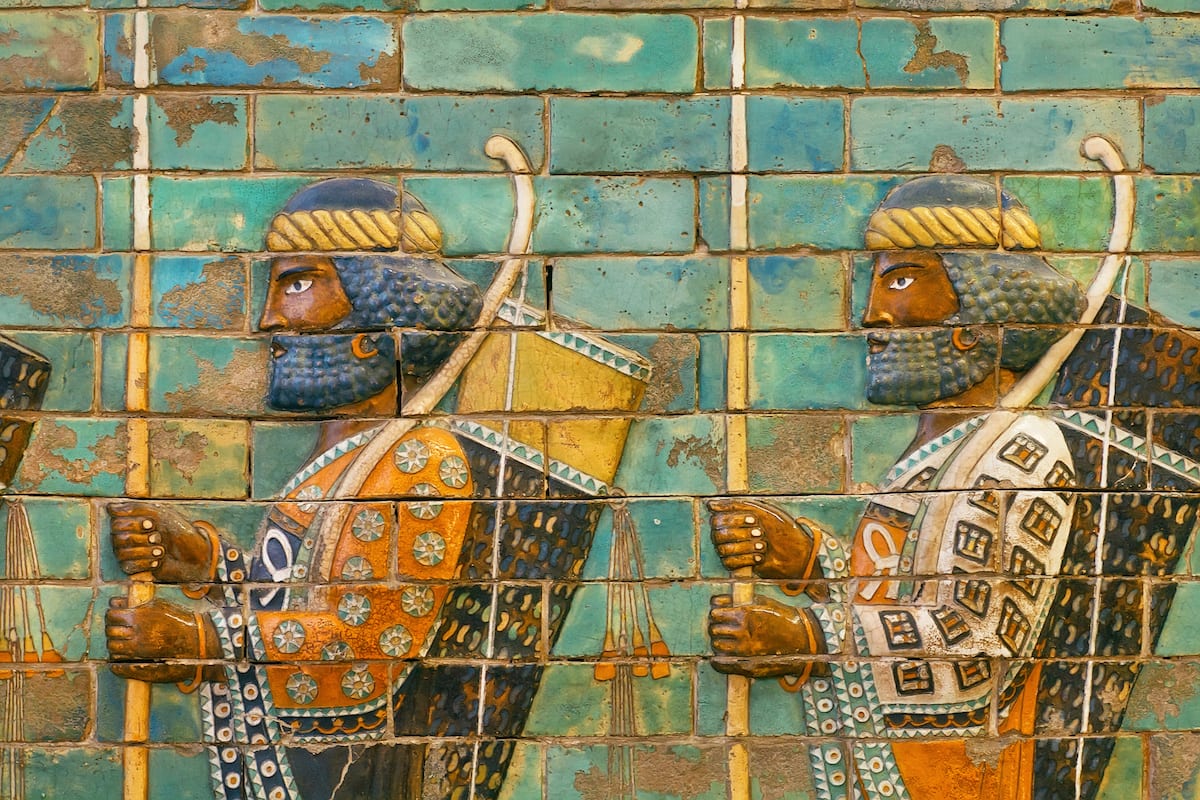
The museum is a jaw-dropping feast of classical sculpture and monumental architecture from Greece, Rome, Babylon and the Middle East divided into three parts. Highlights include the radiant-blue Ishtar Gate from Babylon, the Roman Market Gate of Miletus and the Caliph's Palace of Mshatta.

Neues Museum

Stare into the eyes of the famed Egyptian queen Nefertiti and see other ancient artwork and archeological artifacts.

The New Museum was opened in 1859 to relieve pressure on the over-crowded Old Museum. The three exhibition floors were decorated by leading Classical painters, with a focal point being a grand staircase winding up all three stories. Exhibits include the archaeological collections of the Egyptian Museum and Papyrus Collection, the Museum of Pre- and Early History, and the Collection of Classical Antiquities. The 3300-year-old bust of Egyptian Queen Nefertiti is the showstopper.

Berliner Dom

Climb 270 steps to the top of this massive 19th century cathedral for a unique panoramic view of the city.

Berlin Cathedral, nestled on Museum Island, epitomizes German neo-Renaissance grandeur with its striking dome. Built from 1894 to 1905 and restored post-World War II, its lavish interior, stained glass, and notable pipe organ draw visitors. Beyond a place of worship, it houses the former imperial ruling family's, the Hohenzollern, crypt, revealing the dynastic past of Germany.

Afternoon/Late Afternoon — Cycling Tour

It is said that some cities were made for pedestrians, and others were made for cars. In that case then, Berlin was made for bicycles. Nearly perfectly flat, the streets are wonderfully broad, cycling ways line the sidewalks, and car drivers respect cyclists. What's more, the city is filled with beautiful parks and is crisscrossed by one of the world’s most extensive networks of urban bike paths and lanes.

Late Afternoon/Early Evening — Courtyards of Berlin

With booming 19th-century population growth, nearly every unoccupied space in Berlin was filled by tenement buildings surrounding small courtyards. The Spandauer Vorstadt neighborhood possesses some of Berlin’s most beautiful courtyards, the Hackesche Höfe, as well as other courtyards which better recall the crowded conditions of industrial Berlin. Here you can discover the partially reconstructed New Synagogue, the former site of the Jewish cemetery, and many hidden reminders of a once vibrant community.

Hackesche Höfe

Stop for a drink or go shopping within Berlin’s most beautiful courtyards.

These nine courtyards are classic examples of Art Deco. Built in 1905-1907 to house businesses, flats and places of entertainment, Hackesche Höfe was conceived of as an antidote to the dowdy and overcrowded courtyards of working-class Berlin. They are elaborately decorated with blue mosaic tiles and other artistic finishes, but nevertheless preserve a layout that was highly typical of much of pre-war Berlin.

Haus Schwarzenberg

Explore a traditional Berlin alleyway courtyard which harbours a trio of small museums relating to the Jewish experience during WWII.

The courtyard's crumbling and grafittied facades give visitors a feel for Berlin tenement life during the late 19th and early 20th centuries. Among the museums is the fascinating Museum Blindenwerkstatt Otto Wendt (free; open 10am-8pm daily). It is located in the former rooms of a broom and brush factory run by one Otto Wendt, whose employees were mainly deaf, blind and Jewish. He managed to protect his workers from the concentration camps by having the factory declared essential to the war effort.  

New Synagogue

Visit one of the most important legacies of Berlin's pre-Holocaust Jewish community.

The partially reconstructed synagogue was damaged on Kristallnacht, an anti-Jewish Nazi pogrom. It was not completely destroyed thanks to the intervention of the local police chief. Its ultimate destruction was left to Allied bombers and reconstruction didn’t begin until the late 1980s. While large parts remain unreconstructed, it is still possible to visit the interior.

image

Day 6

Berlin

image

Day 7

Depart Berlin

Day 7

Depart Berlin

icon

To Be Determined

Airport Transfer by Taxi or Rail

The most affordable and fast way to reach Berlin Brandenburg airport is by train. The Airport Express train takes only 30 minutes and leaves directly from the main station in central Berlin (Berlin Hbf). Regional and S-Bahn trains also depart from other locations in Berlin. Berlin taxis are generally reliable and honest, so you may wish to take a taxi or Uber, although this is more expensive than the train and puts you at the mercy of traffic. You can also arrange a private transfer. If you are picked up about 3 hours before your departure time, you should arrive at the airport with about two hours to spare, depending on traffic. If you are leaving during rush hour, you may want to budget an extra fifteen to thirty minutes.

Airport Transfer by Taxi or Rail

To Be Determined — Airport Transfer by Taxi or Rail

The most affordable and fast way to reach Berlin Brandenburg airport is by train. The Airport Express train takes only 30 minutes and leaves directly from the main station in central Berlin (Berlin Hbf). Regional and S-Bahn trains also depart from other locations in Berlin. Berlin taxis are generally reliable and honest, so you may wish to take a taxi or Uber, although this is more expensive than the train and puts you at the mercy of traffic. You can also arrange a private transfer. If you are picked up about 3 hours before your departure time, you should arrive at the airport with about two hours to spare, depending on traffic. If you are leaving during rush hour, you may want to budget an extra fifteen to thirty minutes.

image

Day 7

Depart Berlin

What's Included in the Germany’s Dynamic Duo Trip Trip?

Fork

Pre-Paid Tours and Activities:

  • Guided Walk Tour of Historic Munich
  • Highlights of Berlin Guided Walking Tour
  • City Cards for Berlin and Munich, including discounts to many popular attractions
train

Pre-Paid Transportation:

  • Train Tickets from München Hbf to Berlin Hbf
  • Public Transport Tickets for Munich and Berlin
train

Accommodation:

  • 2 nights at a hotel of your choice in Munich
  • 4 nights at a hotel of your choice in Berlin
mobile

Go Real Travel Mobile App:

  • Itinerary Plan & Reservations Info
  • Points of Interest
  • Detailed Travel Information
  • Maps & Directions

Other Trips You May Like

12 Days in the Heart of Central Europe: Berlin, Prague, Vienna, and Munich

12 Days

From$2449USD

12 Days in the Heart of Central Europe: Berlin, Prague, Vienna, and Munich

View Trip
10 Days of Holiday Spirit in Germany's Best Christmas Markets

10 Days

From$1415USD

10 Days of Holiday Spirit in Germany's Best Christmas Markets

View Trip
Canals, Castles, and Culture: A Three-Week Journey in the Netherlands & Germany

21 Days

From$5199USD

Canals, Castles, and Culture: A Three-Week Journey in the Netherlands & Germany

View Trip
3-Week Epic All Around Germany Tour

21 Days

From$5899USD

3-Week Epic All Around Germany Tour

View Trip
4 Days of Culture, Food, and Bavarian Beer in Munich

4 Days

From$799USD

4 Days of Culture, Food, and Bavarian Beer in Munich

View Trip
Berlin in Winter: Historic Echoes & Urban Experience

5 Days

From$999USD

Berlin in Winter: Historic Echoes & Urban Experience

View Trip
5 Days in Berlin: A Perfect Itinerary for Nightlife, Culture, and Outdoor Fun

5 Days

From$899USD

5 Days in Berlin: A Perfect Itinerary for Nightlife, Culture, and Outdoor Fun

View Trip
Oktoberfest in Munich: Bavarian Hops and Alpine Tops

7 Days

From$1650USD

Oktoberfest in Munich: Bavarian Hops and Alpine Tops

View Trip
Discover Eastern Europe: 10-Day Journey through Prague, Dresden, and Berlin

10 Days

From$1925USD

Discover Eastern Europe: 10-Day Journey through Prague, Dresden, and Berlin

View Trip

Featured Blogs

How to Plan a Trip to Germany – Step-by-Step Guide
Germany
Trip planning

How to Plan a Trip to Germany – Step-by-Step Guide

15 Most Beautiful Towns & Villages in Germany
Germany
Villages

15 Most Beautiful Towns & Villages in Germany

Top 5 Castles In Central Europe
Central Europe
Castles

Top 5 Castles In Central Europe

How to Plan the Perfect Family Trip to Europe
Europe
Family

How to Plan the Perfect Family Trip to Europe

11 Tips for First Time Travelers to Europe
Europe
Travel tips

11 Tips for First Time Travelers to Europe

What’s The Best Time to Book International Flights to Europe?
Europe
Booking flights

What’s The Best Time to Book International Flights to Europe?

A Guide To Public Transportation and Taxis in Europe
Europe
Transport

A Guide To Public Transportation and Taxis in Europe

Our Customers Say It Best

Malini Dutta, Boston, Massachusetts
We can't thank you enough for the detailed plans, maps, and suggestions. It really felt that someone was holding our hands and showing us around. We had all the excitement of discovering foreign lands, with none of the problems that can happen while negotiating unfamiliar places. In fact, all the cities felt like home within a few hours of arriving and exploring.
Bev and Mark Frankel, Williamsburg, Virginia
We could not be more pleased with Go Real Travel! You took the guess work out of things like public transport but still managed to allow us the freedom to tour as we wanted. Our guides were exceptional and every time I saw a Viking Cruise tour of 25 people, I realized the quality experience we were getting with Go Real.
Marianne Strydom, Paarl, South Africa
I just wanted to thank you for organizing an amazing trip for me – I packed in so much in such a short period of time and everything was just perfect. The way you do things makes it possible to really get to know the destination, which for me as a travel agent could not have been better.
Otto Chuy, Los Angeles, California
I am still surprised how everything worked as planned, without a hitch. All instructions in your itinerary were precise and correct. Your suggestions and comments in each of the locations we went to were very helpful. All your guides, without exception, were wonderful and exactly on time.
Go Real Travel, Inc. BBB Business ReviewASTA Member

Explore cities in more detail

old town square munich germany

Munich

Arriving in Munich, you would be forgiven for thinking you were on the set of a movie about old Bavaria. At the Old Town beer halls, barmaids laced in dirndl dresses serve up frosty Helles lager, as oom-pah music drifts across the Marienplatz square. Men in lederhosen and checked shirts merrily give toasts as they knock glasses, or steins, as they’re known here. They sit at tables laden with wurst sausage and giant pretzels oozing with herby butter. This is Germany’s Germany, a place where folk traditions never stopped, and the revelry doesn’t either. Even when it isn’t Oktoberfest, the town’s notorious beer-drinking celebration, Munich is always happy to show you a good time. Simply cast your eyes around the lavish, gilded banquet hall at the Munich Residenz, the 13th-century Wittelsbach palace. You’ll see Munich has been impressing guests for centuries. Or, swing by the BMW Museum and check out the classic German cars. They even let you sit inside to test out the new models. At the city’s English Gardens, surfers ride waves on one of the park’s rivers. Munich is filled to the brim with this kind of pure-hearted German fun.     

The Television Tower in Berlin at Sunrise

Berlin

Since the fall of its notorious wall, Berlin’s unification has seen it go from strength to strength. No wonder the city feels like it hasn’t stopped partying since the 1990s. There is so much to celebrate here. Fueled by the robust economy, a thriving tech scene, and straight-up German bonhomie, when you step into Berlin you’ll soon be caught up in its spirit.  For all this gusto, Berlin hasn’t forgotten its troubled past. A visit to Berlin is to bear witness to history. Portions of the wall remain intact, and the city’s Jewish Museum offers a detailed, emotional examination of the Holocaust. Inside the reconstructed Reichstag, every attempt has been made to preserve the parliament’s beleaguered history. The buildings' glass dome addition feels less like a triumphal crown and more like a freshly healed battle scar.  Days in Berlin are easily spent wandering from a cafe to the cultural institutions on Museum Island, or over to the Charlottenburg Palace. By night, crowds wander through the booming bars and nightclubs or gaze upon the floodlit Brandenburg Gate and Victory Column monuments. An international city that can offer something to everyone, Berlin is an unmissable stop on your German journey.  

winter in salzburg germany

Salzburg

You've probably heard this before— the city of Salzburg is straight out of a fairytale. Nestled in the mountains, this romantic city's Baroque architecture with colorful domes and spires is especially striking against the ancient fortress and Austrian Alpine backdrop. If you're looking for an amazing view, climb up to Hohensalzburg Fortress, Central Europe's largest intact fortress, for a jaw-dropping panorama of the city backed by misty mountains. Perhaps most famous for being the birthplace of the renowned composer Wolfgang Amadeus Mozart and the filming location for the classic The Sound of Music, this city has much to offer. Salzburg has become an important artistic and cultural center, featuring magnificent concert halls that uphold the city's tradition of classical music every day of the year, as well as acclaimed art exhibitions and museums. If you do it right, your visit to Salzburg will immerse you in the city's unforgettable atmosphere and keep you coming back for more. 

Overhead View of Red Rooftops in Cesky Krumlov

Cesky Krumlov

Cesky Krumlov is a charming little town in South Bohemia. It might be small, but it’s full of whimsical character and mystery. Walking through the narrow streets and across the bridge, the views of the medieval Cesky Krumlov Castle will take your breath away. At night, street musicians serenade visitors on the bridge where you can dance beneath the stars and the watchful eye of the magnificent tower.  Dozens of unique local artisan shops, cafes, and restaurants are woven among the winding streets. In the summer, the city is lush with life and greenery. Rafters race down the river, stopping in the center along the way to enjoy a hearty meal before continuing their journey. In the winter, the main square transforms into a magnificent Christmas market and light blankets of snow cover the rooftops. This quaint little town will exceed your expectations and you may never want to leave.  

half timbered houses in nuremberg germany

Nuremberg

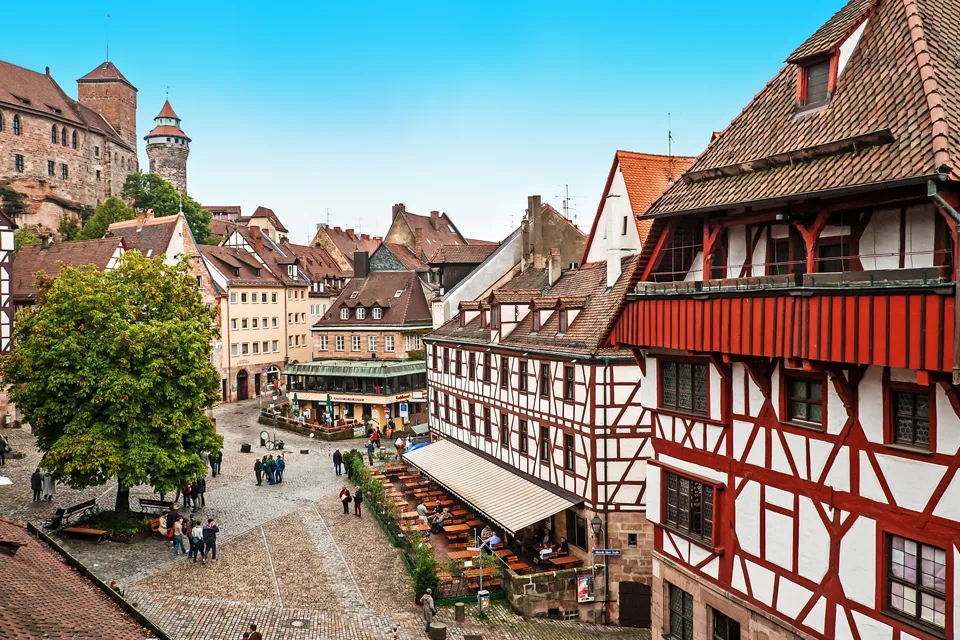
One of the most authentic, storied German destinations, Nuremberg's picturesque old town, glorious castle, and buzzing Christmas Market makes this city a time-true classic. The ideal gateway to old Bavaria, Nuremberg offers a primer in German history before you embark on the lovely journey through old Bavaria, known as the Romantic Road. Considered the capital of the Holy Roman Empire in the middle ages, Nuremberg would have felt like the center of the world as a procession of kings and emperors passed through its magnificent gates. When the German Renaissance came, Nuremberg was at its heart. Albrecht Dürer, the great German master artist, was born here, and Martin Luther called Nuremberg Germany's 'eyes and ears'. Skip forward a few centuries, and the city took a dark turn, as Nuremberg became a gathering point for the German National Socialists. Slightly outside of town, you can still find the Nazi Party Rallying Grounds, a sobering reminder of the not so distant past. If it all gets too heavy, you can end the day with a glass of rotbier (red beer) and mull it over. Nuremberg is a must-see for anyone who wants to delve into Germany's past. 

Skyscrapers and an old church at sunset in Frankfurt

Frankfurt

Dubbed ‘Mainhatten’ for its glass highrises, financial prowess, and proximity to the Main River, Frankfurt offers a fascinating glimpse into the ‘engine room’ of Europe’s economy with an unexpected twist. Among the glass and steel buildings, the old-worldly Römerberg square will give you a double-take. The square’s 15th-century half-timbered houses, old statues, and church spires contrast dramatically against the modern 21st-century skyscrapers beyond. If you visit at Christmas, the Römerberg is truly special, aglow with the light of the tallest Christmas tree in Germany. The square fills with stalls selling handicrafts, and the air is scented with hot apple wine, honey, and cinnamon.  Delve deeper into Frankfurt and you’ll find a substantial museum district, the Museumsufer (Museum Embankment). This area features a cluster of twelve museums on either side of Main River. This includes the Städel, home to Tischbein’s famous painting of renowned writer Johann Wolfgang von Goethe, one of Frankfurt’s most prestigious sons. The more time you spend in Frankfurt, the more you’ll discover a highly cultured city lurking beneath its glass facades. If you have the time, Frankfurt is certainly worth a second look.      

👋

Hi! Need help planning your dream trip? 🌍

Go Real Travel Assistant

Online

Welcome! Where are you in your journey?

Pick the option that fits you best so we can route you to the right help.