Canals, Castles, and Culture: A Three-Week Journey in the Netherlands & Germany

destination-icon21 Day Tour of Amsterdam, Hamburg, Berlin, Nuremberg, Munich, Heidelberg, Cologne and Amsterdam

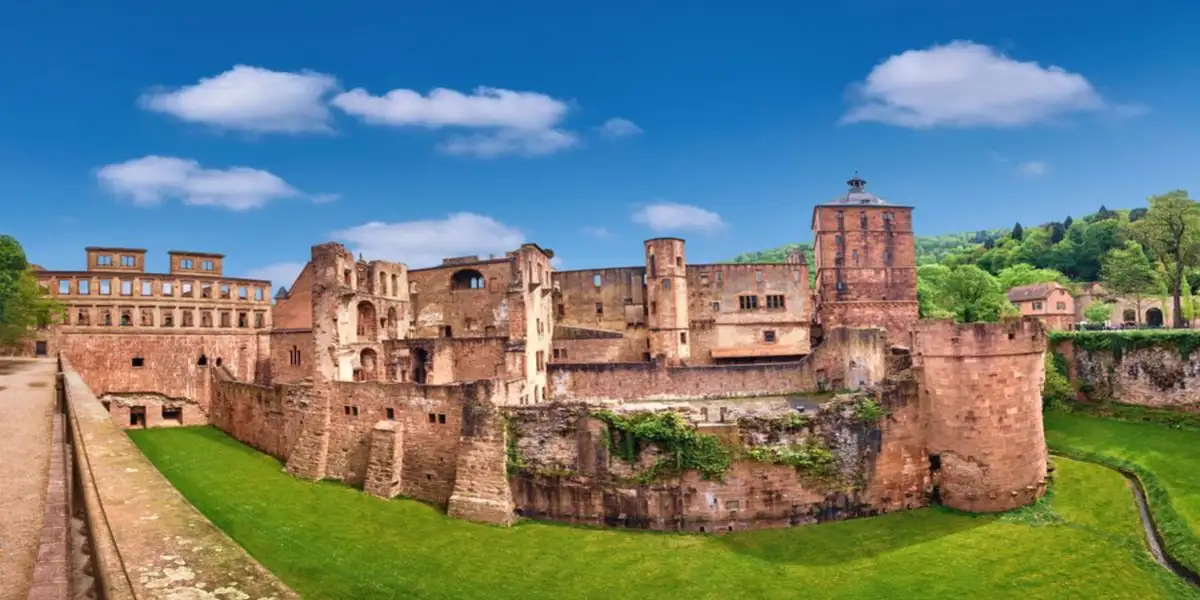
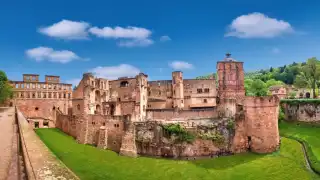
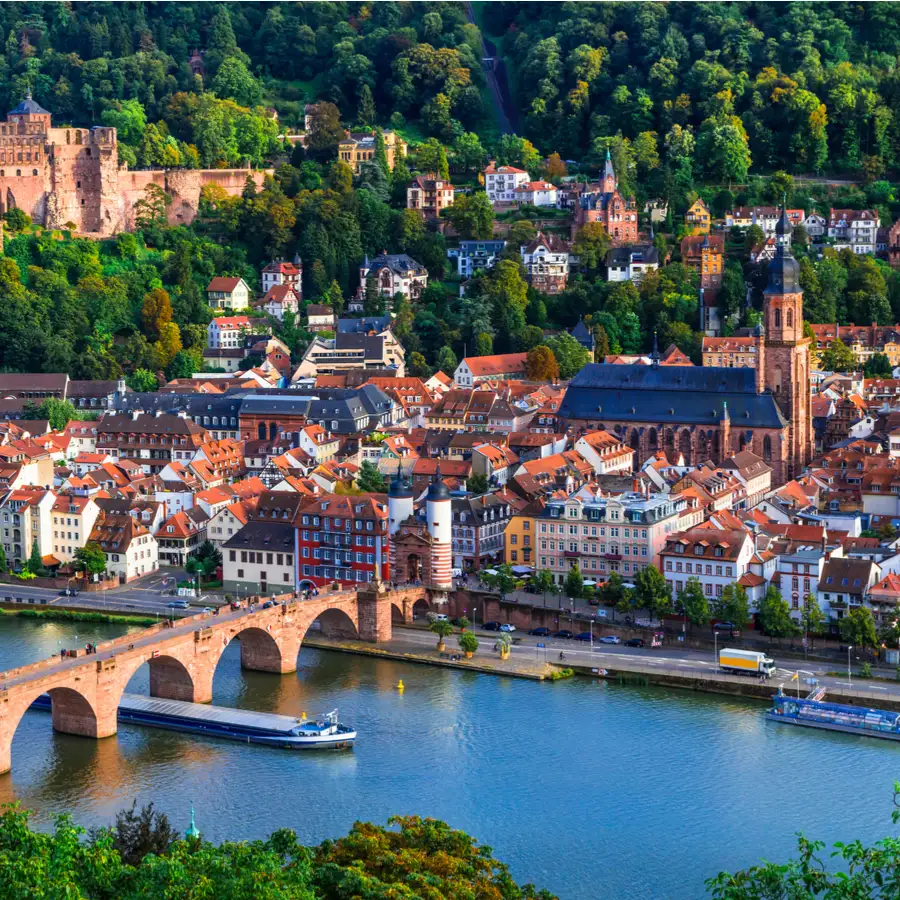
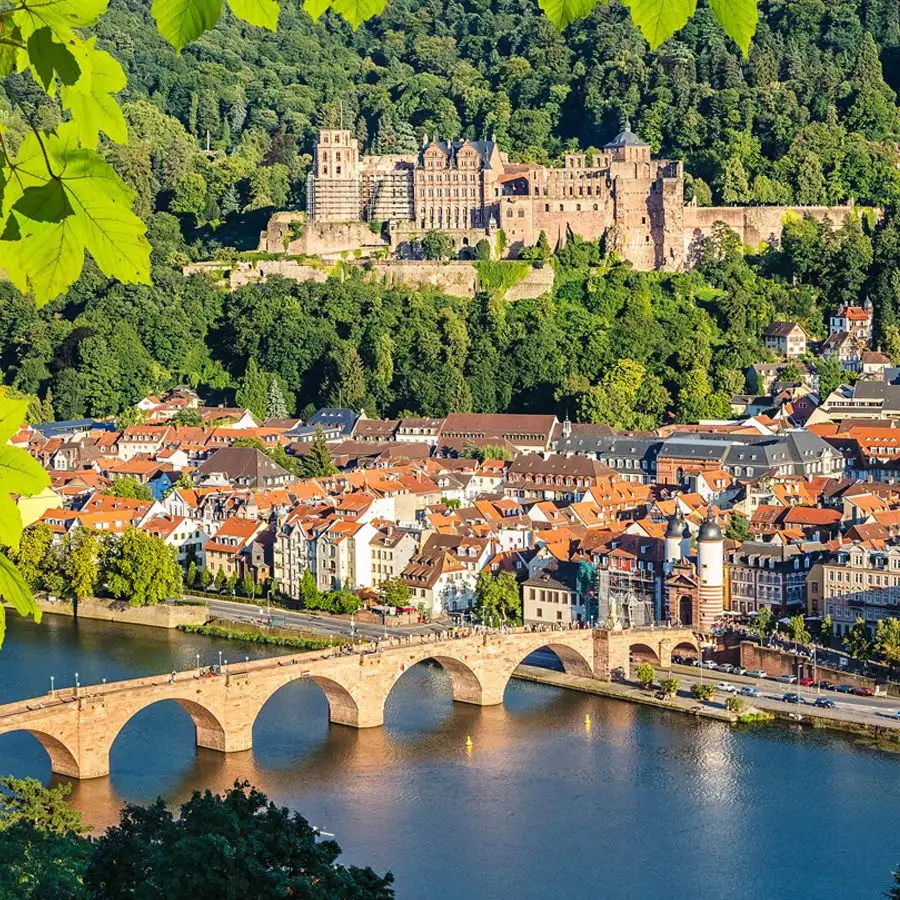
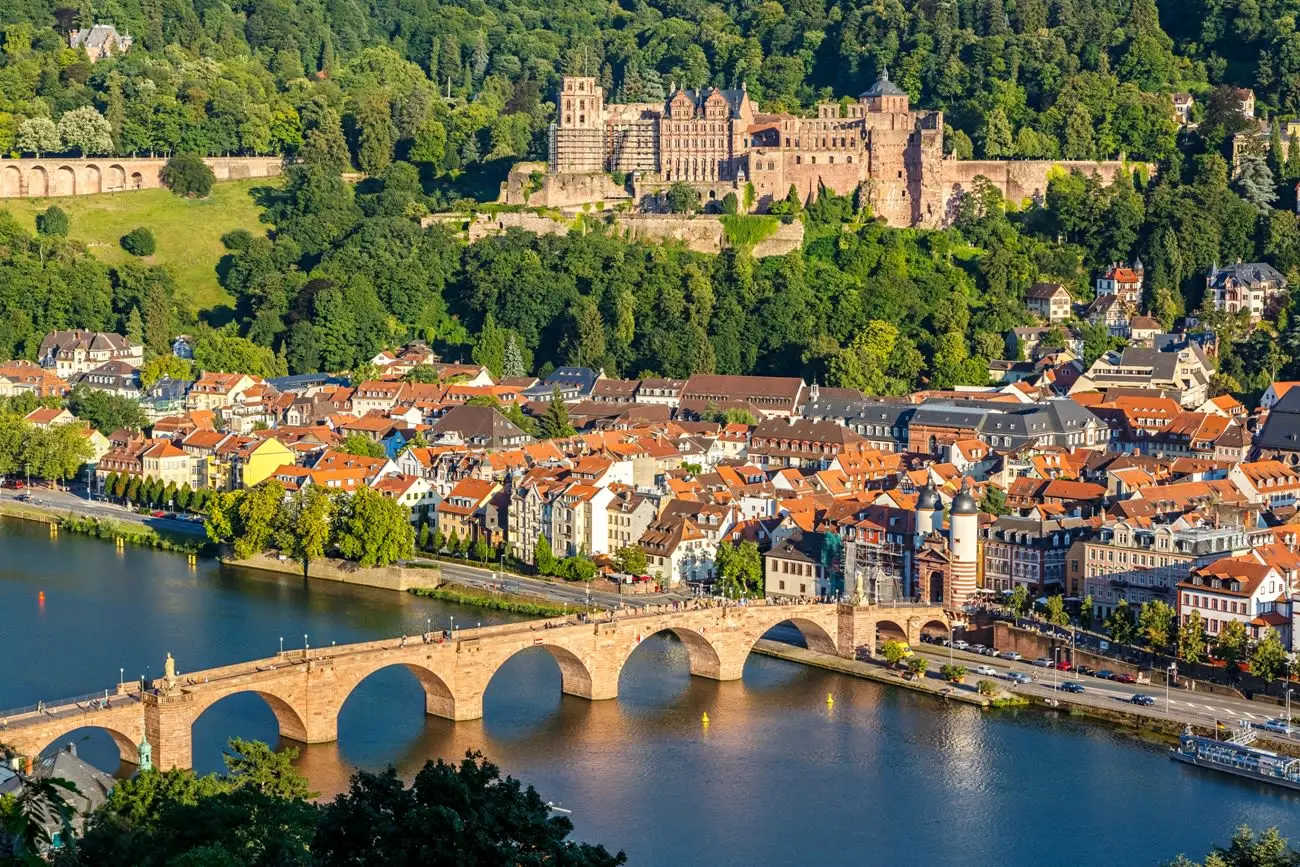
Heidelberg Castle
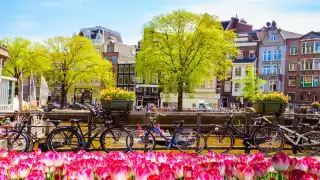
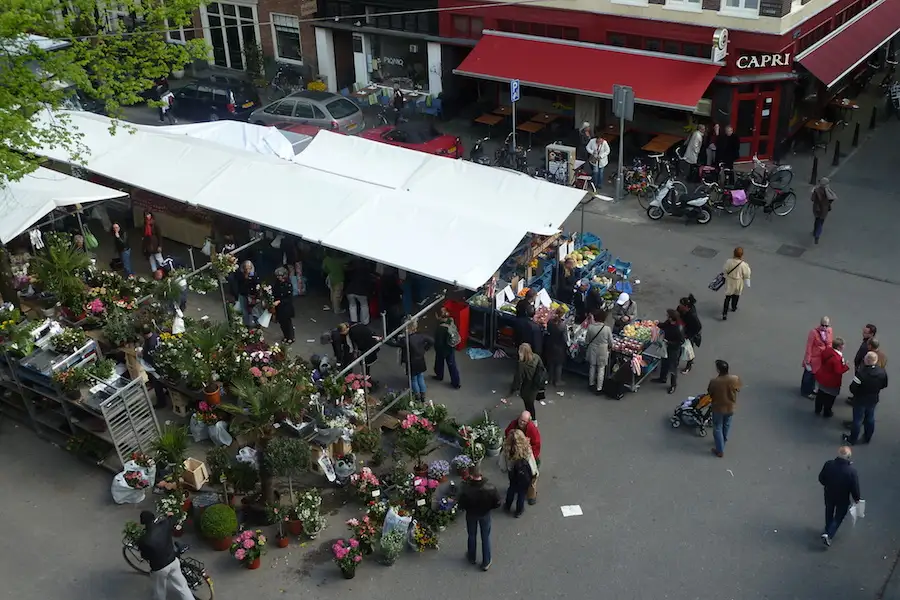
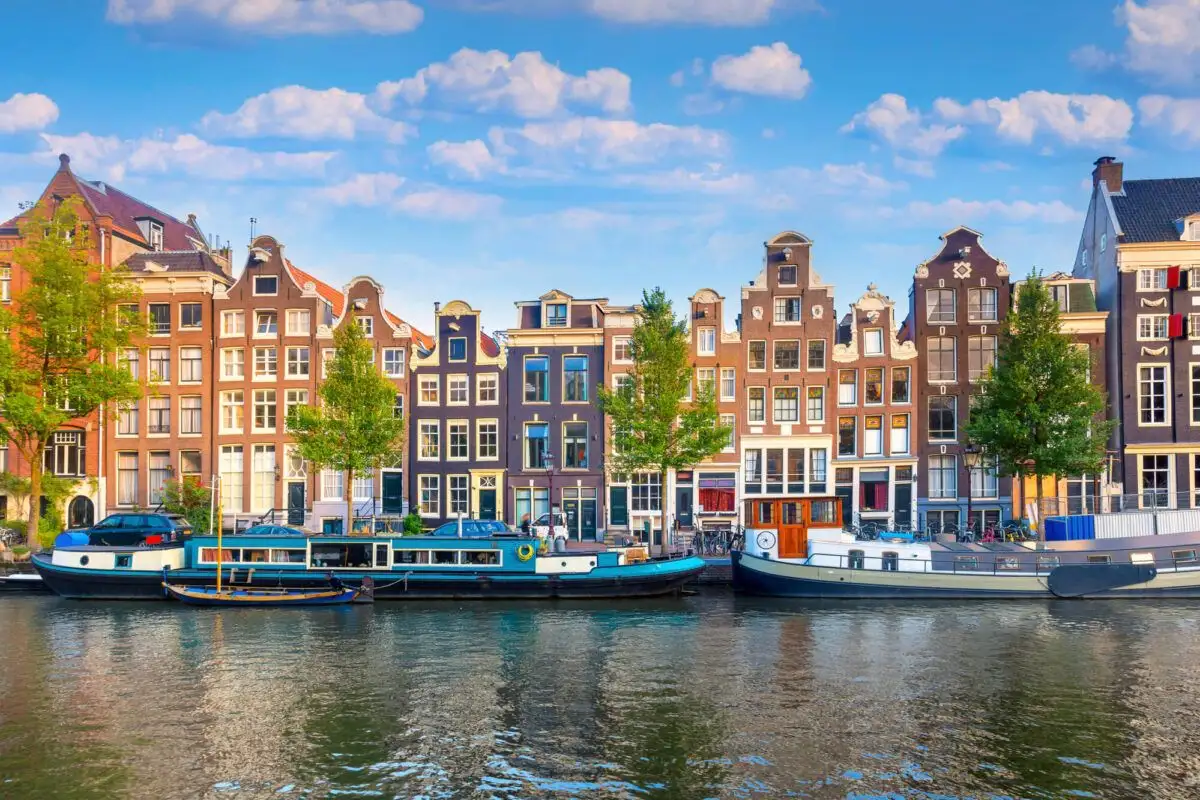
Tulips and bicycles on an Amsterdam street
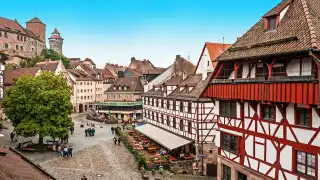
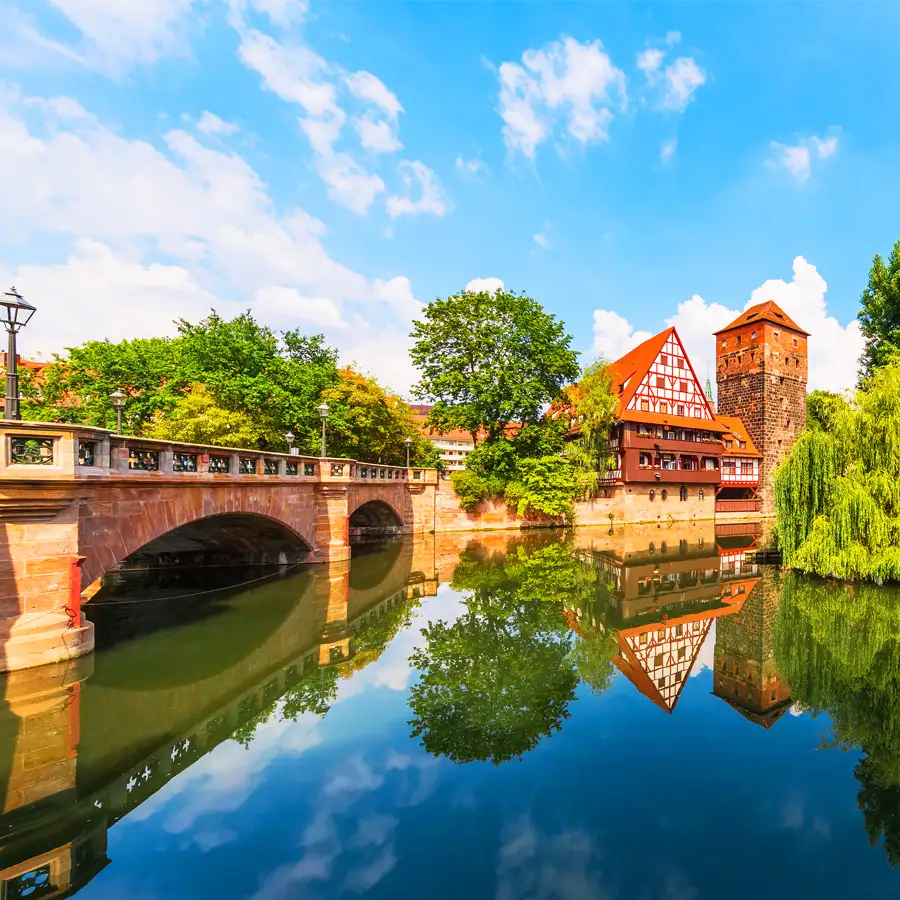
Nuremberg Alststadt, gabled house and Imperial Castle
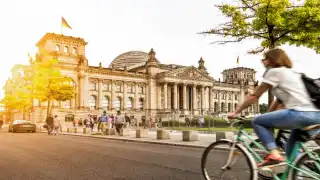
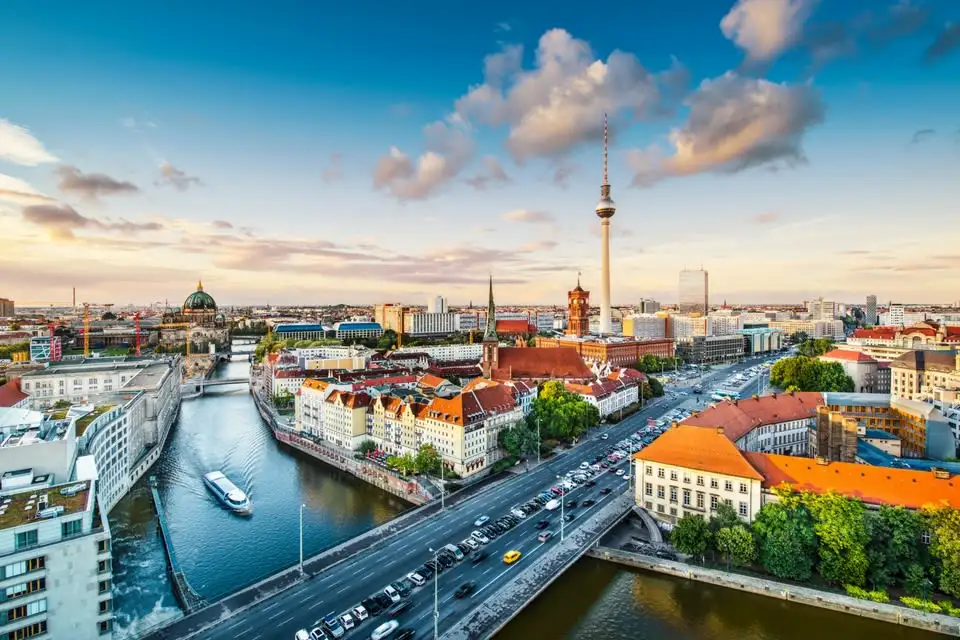
Reichstag
image
arrowLightLeft
arrowLightRight

How Long Is the Netherlands & Germany Grand Tour Trip and What Does It Cost?

Cultural ExplorationHistory Buffs
  • Duration
    21 days / 20 nights
  • Best time
    Jan-Dec
  • From
    $5199 / person (Flights not included)
Explore the Netherlands and Germany over three weeks, discovering the culture and history of these two fascinating nations. You'll see both cities and countryside, from Amsterdam's iconic canals to the cobblestoned lanes of Haarlem, and from Berlin’s Brandenburg Gate to the towers of Neuschwanstein Castle. Enjoy private guided tours in each city and also explore independently. You'll discover Hamburg's maritime legacy, wander the Old Towns of Nuremberg and Munich, visit romantic castle ruins in Heidelberg, and uncover Cologne's vibrant Kölsch beer scene. It will all be easy with the detailed travel guidance provided in our mobile app.
  • Cruise through Amsterdam’s iconic canals, marveling at historic gabled houses and charming bridges.
  • Pass beneath Berlin's Brandenburg Gate and feel the history at the Berlin Wall's East Side Gallery.
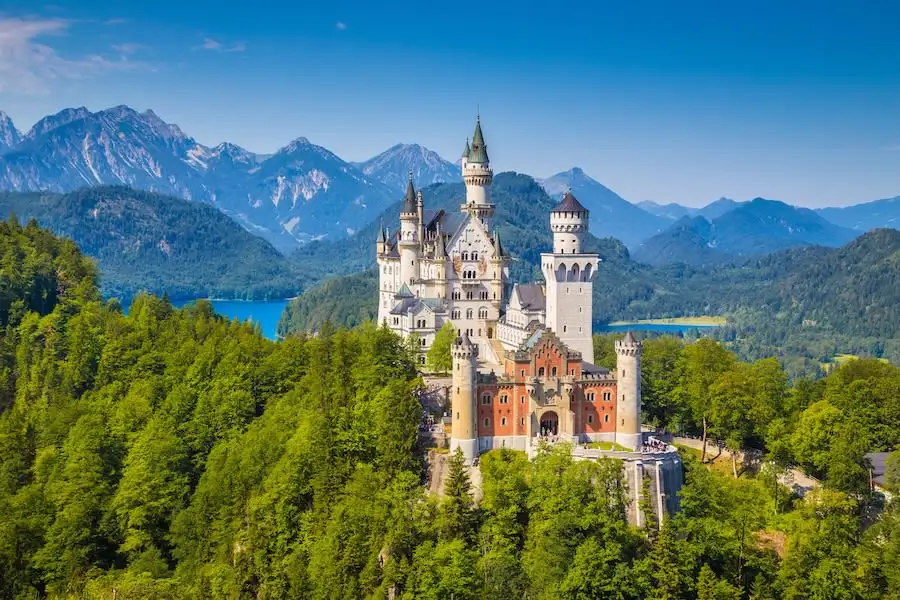
  • Embrace the fairy tale allure of Neuschwanstein Castle amidst the Bavarian Alpls.
  • Experience the enchanting Altstadt of Heidelberg and take a stroll along its Philosopher's Way.
  • See where old meets new in Cologne, from the awe-inspiring Cathedral to the Kölsch beer culture.
Explore the Netherlands and Germany over three weeks, discovering the culture and history of these two fascinating nations. You'll see both cities and countryside, from Amsterdam's iconic canals to the cobblestoned lanes of Haarlem, and from Berlin’s Brandenburg Gate to the towers of Neuschwanstein Castle. Enjoy private guided tours in each city and also explore independently. You'll discover Hamburg's maritime legacy, wander the Old Towns of Nuremberg and Munich, visit romantic castle ruins in Heidelberg, and uncover Cologne's vibrant Kölsch beer scene. It will all be easy with the detailed travel guidance provided in our mobile app.
  • Cruise through Amsterdam’s iconic canals, marveling at historic gabled houses and charming bridges.
  • Pass beneath Berlin's Brandenburg Gate and feel the history at the Berlin Wall's East Side Gallery.
  • Embrace the fairy tale allure of Neuschwanstein Castle amidst the Bavarian Alpls.
  • Experience the enchanting Altstadt of Heidelberg and take a stroll along its Philosopher's Way.
  • See where old meets new in Cologne, from the awe-inspiring Cathedral to the Kölsch beer culture.
Old Town - Must-See Sight
Old Town
Historic Landmarks
Anne Frank House  - Must-See Sight
Anne Frank House
Historic Landmarks
St Nicholas Church - Must-See Sight
St Nicholas Church
Churches & Monasteries
Hamburg Rathaus (Town Hall) - Must-See Sight
Hamburg Rathaus (Town Hall)
Historic Landmarks
The Brandenburg Gate - Must-See Sight
The Brandenburg Gate
Historic Landmarks
Nuremberg Castle - Must-See Sight
Nuremberg Castle
Castles & Chateaux
Old Town - Must-See Sight
Old Town
Architecture
Heidelberg Castle - Must-See Sight
Heidelberg Castle
Castles & Chateaux
Cologne Cathedral - Must-See Sight
Cologne Cathedral
UNESCO World Heritage

Must see sights

Old Town - Must-See Sight
Old Town
Historic Landmarks
Anne Frank House  - Must-See Sight
Anne Frank House
Historic Landmarks
St Nicholas Church - Must-See Sight
St Nicholas Church
Churches & Monasteries
Hamburg Rathaus (Town Hall) - Must-See Sight
Hamburg Rathaus (Town Hall)
Historic Landmarks
The Brandenburg Gate - Must-See Sight
The Brandenburg Gate
Historic Landmarks
Nuremberg Castle - Must-See Sight
Nuremberg Castle
Castles & Chateaux
Old Town - Must-See Sight
Old Town
Architecture
Heidelberg Castle - Must-See Sight
Heidelberg Castle
Castles & Chateaux
Cologne Cathedral - Must-See Sight
Cologne Cathedral
UNESCO World Heritage
Loading...

Starting from

$5199

per person

no-flightNot included

Price varies by group size, hotel selection, and travel season.


Secure Your Customizable Trip

Enter your details to embark on a journey that can be tailored just for you.

Start

Travelers

0 travelers
Add Room
Remove Room

Preferred Hotel Stars

Select Hotel Stars
Craft Your Own Itinerary

Select your interests and destinations for a trip plan inspired by you.

Where Does the Netherlands & Germany Grand Tour Trip Trip Go?

Enable/Disable Map Scrolling

Click To Make Map Interactive

Netherlands & Germany Grand Tour Trip Timeline

Arrival

3 nights

Amsterdam

Netherlands

Train: 5.5h

Train: 1.5h

2 nights

Hamburg

Germany

Train: 2h

4 nights

Berlin

Germany

Train: 3.5h

3 nights

Nuremberg

Germany

Train: 1.5h

3 nights

Munich

Germany

Train: 3h

2 nights

Heidelberg

Germany

Train: 3h

2 nights

Cologne

Germany

Train: 3.5h

1 nights

Amsterdam

Netherlands

Departure

What Does the Netherlands & Germany Grand Tour Trip Itinerary Look Like?

image

Day 1

Arrive Amsterdam

Day 1

Arrive Amsterdam

icon
icon
icon

To Be Determined

Taxi Transfer from Airport

Amsterdam has one main airport, Amsterdam Airport Schiphol. Taxis are available directly at the terminal exit, or you can arrange a private transfer for added convenience. Uber is also available. The cheapest and often fastest way to reach central Amsterdam from the airport is by train, which delivers you in about 20 minutes to Amsterdam's Central station (Centraal), from where you can walk to your hotel, take public transport, or easily hail a taxi that will be much less expensive than from the airport. The NS train station is located directly below the airport terminal, so all you need to do is follow the signs.

Taxi Transfer from Airport

To Be Determined — Taxi Transfer from Airport

Amsterdam has one main airport, Amsterdam Airport Schiphol. Taxis are available directly at the terminal exit, or you can arrange a private transfer for added convenience. Uber is also available. The cheapest and often fastest way to reach central Amsterdam from the airport is by train, which delivers you in about 20 minutes to Amsterdam's Central station (Centraal), from where you can walk to your hotel, take public transport, or easily hail a taxi that will be much less expensive than from the airport. The NS train station is located directly below the airport terminal, so all you need to do is follow the signs.

Mid-Day/Afternoon — Jordaan

The Jordaan district beckons with its narrow streets and quaint canals, epitomizing the charm and history of Amsterdam. Originally a working-class neighborhood established in the 17th century, Jordaan has evolved into one of Amsterdam's most sought-after areas. Known for its bohemian vibe, the district boasts an array of art galleries, unique shops, and cozy cafes, alongside traditional cafés and indie music venues. The Jordaan is also famous for its outdoor markets, such as the Noordermarkt, where locals and tourists alike browse for organic food, vintage clothes, and antiques. The area's historical architecture, including beautifully restored houses and hidden courtyards, provides a picturesque backdrop for leisurely walks.

Westerkerk

Visit Rembrandt's burial place in this Renaissance-era Protestant church with a crown-topped spire.

Westerkerk, in English, the Western Church, is is the most largest and most important church in the city. Built between 1619 to 1631, the church and its bell tower – the Westerkerk Tower – are often regarded as the symbol of the city.  Come visit Westerkerk, if only to pay respects to that great master, the painter Rembrandt. Although technically a part of the canal ring, both the church and Anne Frank House are often described as a part of the Jordaan district as well. Since both these highlights rest on right on the border, it is the perfect starting point to explore either neighborhood!

Noorderkerk

Visit this beautiful 17th-century Protestant church built for the common folk of Jordaan.

Besides functioning as an active community, the church serves as one of the city’s most beautiful event venues. Built in the years 1620–1623 to serve the rapidly growing population of the Jordaan neighborhood, the Noorderkerk became the church for the common people. The classical appearance of the church and excellent acoustics make it well suited for a variety of events, including receptions, small conferences, meetings, fashion shows, concerts, and more. 

Lindengracht Market

There's something for all tastes at the Lindengracht Market

Lindengracht, which translates into the Lindentree Canal in English, was filled in 1895 and has been turned into a wide street with two rows of linden trees in the middle. This market, more than 900 meters long and offering a large variety of products, was held for the first time in 1894. Now, each Saturday, 232 market stands are erected along the whole street. Together with the nearby Farmer’s Market on the Nordermarkt, (both open on Saturday); Lindenmarkt is probably the best food market in Amsterdam. Local in nature, the market, and its many stalls feature cheeses, fresh fish, and beautiful bouquets.

Afternoon/Late Afternoon — Grachtengordel

The Grachtengordel, or Canal Ring, in Amsterdam, a UNESCO World Heritage Site, embodies the city's 17th-century architectural and urban planning. This historic network of canals, designed during the Dutch Golden Age, is lined with elegant merchant houses and bridges, reflecting Amsterdam's rich past. Today, it's a lively district filled with cafes, galleries, and boutiques, A visit here is essential to understanding both Amsterdam's past and present.

Westerkerk

Visit Rembrandt's burial place in this Renaissance-era Protestant church with a crown-topped spire.

Westerkerk, in English, the Western Church, is is the most largest and most important church in the city. Built between 1619 to 1631, the church and its bell tower – the Westerkerk Tower – are often regarded as the symbol of the city.  Come visit Westerkerk, if only to pay respects to that great master, the painter Rembrandt. Although technically a part of the canal ring, both the church and Anne Frank House are often described as a part of the Jordaan district as well. Since both these highlights rest on right on the border, it is the perfect starting point to explore either neighborhood!

Amsterdam Anne Frank House

Learn about one life of six million lives

The Anne Frank House in Amsterdam stands as a poignant tribute to the young Jewish girl who, along with her family, hid from Nazi persecution during World War II. Visitors are invited to explore the secret annex where Anne penned her now-famous diary, offering a deeply moving glimpse into the struggles faced during one of history's darkest periods.

image

Day 1

Arrive Amsterdam


icon
icon
icon

To Be Determined:

Taxi Transfer from Airport

Mid-Day/Afternoon:

Jordaan

Afternoon/Late Afternoon:

Grachtengordel

Taxi Transfer from Airport

Taxi Transfer from Airport

Amsterdam has one main airport, Amsterdam Airport Schiphol. Taxis are available directly at the terminal exit, or you can arrange a private transfer for added convenience. Uber is also available. The cheapest and often fastest way to reach central Amsterdam from the airport is by train, which delivers you in about 20 minutes to Amsterdam's Central station (Centraal), from where you can walk to your hotel, take public transport, or easily hail a taxi that will be much less expensive than from the airport. The NS train station is located directly below the airport terminal, so all you need to do is follow the signs.

To Be Determined — Taxi Transfer from Airport

Amsterdam has one main airport, Amsterdam Airport Schiphol. Taxis are available directly at the terminal exit, or you can arrange a private transfer for added convenience. Uber is also available. The cheapest and often fastest way to reach central Amsterdam from the airport is by train, which delivers you in about 20 minutes to Amsterdam's Central station (Centraal), from where you can walk to your hotel, take public transport, or easily hail a taxi that will be much less expensive than from the airport. The NS train station is located directly below the airport terminal, so all you need to do is follow the signs.

Mid-Day/Afternoon — Jordaan

The Jordaan district beckons with its narrow streets and quaint canals, epitomizing the charm and history of Amsterdam. Originally a working-class neighborhood established in the 17th century, Jordaan has evolved into one of Amsterdam's most sought-after areas. Known for its bohemian vibe, the district boasts an array of art galleries, unique shops, and cozy cafes, alongside traditional cafés and indie music venues. The Jordaan is also famous for its outdoor markets, such as the Noordermarkt, where locals and tourists alike browse for organic food, vintage clothes, and antiques. The area's historical architecture, including beautifully restored houses and hidden courtyards, provides a picturesque backdrop for leisurely walks.

Westerkerk

Visit Rembrandt's burial place in this Renaissance-era Protestant church with a crown-topped spire.

Westerkerk, in English, the Western Church, is is the most largest and most important church in the city. Built between 1619 to 1631, the church and its bell tower – the Westerkerk Tower – are often regarded as the symbol of the city.  Come visit Westerkerk, if only to pay respects to that great master, the painter Rembrandt. Although technically a part of the canal ring, both the church and Anne Frank House are often described as a part of the Jordaan district as well. Since both these highlights rest on right on the border, it is the perfect starting point to explore either neighborhood!

Noorderkerk

Visit this beautiful 17th-century Protestant church built for the common folk of Jordaan.

Besides functioning as an active community, the church serves as one of the city’s most beautiful event venues. Built in the years 1620–1623 to serve the rapidly growing population of the Jordaan neighborhood, the Noorderkerk became the church for the common people. The classical appearance of the church and excellent acoustics make it well suited for a variety of events, including receptions, small conferences, meetings, fashion shows, concerts, and more. 

Lindengracht Market

There's something for all tastes at the Lindengracht Market

Lindengracht, which translates into the Lindentree Canal in English, was filled in 1895 and has been turned into a wide street with two rows of linden trees in the middle. This market, more than 900 meters long and offering a large variety of products, was held for the first time in 1894. Now, each Saturday, 232 market stands are erected along the whole street. Together with the nearby Farmer’s Market on the Nordermarkt, (both open on Saturday); Lindenmarkt is probably the best food market in Amsterdam. Local in nature, the market, and its many stalls feature cheeses, fresh fish, and beautiful bouquets.

Afternoon/Late Afternoon — Grachtengordel

The Grachtengordel, or Canal Ring, in Amsterdam, a UNESCO World Heritage Site, embodies the city's 17th-century architectural and urban planning. This historic network of canals, designed during the Dutch Golden Age, is lined with elegant merchant houses and bridges, reflecting Amsterdam's rich past. Today, it's a lively district filled with cafes, galleries, and boutiques, A visit here is essential to understanding both Amsterdam's past and present.

Westerkerk

Visit Rembrandt's burial place in this Renaissance-era Protestant church with a crown-topped spire.

Westerkerk, in English, the Western Church, is is the most largest and most important church in the city. Built between 1619 to 1631, the church and its bell tower – the Westerkerk Tower – are often regarded as the symbol of the city.  Come visit Westerkerk, if only to pay respects to that great master, the painter Rembrandt. Although technically a part of the canal ring, both the church and Anne Frank House are often described as a part of the Jordaan district as well. Since both these highlights rest on right on the border, it is the perfect starting point to explore either neighborhood!

Amsterdam Anne Frank House

Learn about one life of six million lives

The Anne Frank House in Amsterdam stands as a poignant tribute to the young Jewish girl who, along with her family, hid from Nazi persecution during World War II. Visitors are invited to explore the secret annex where Anne penned her now-famous diary, offering a deeply moving glimpse into the struggles faced during one of history's darkest periods.

image

Day 2

Amsterdam

Day 2

Amsterdam

icon
icon
icon

9:00 AM - 1:00 PM

Highlights Walking Tour

Enjoy an introduction to Amsterdam with this 4-hour private guided walking tour. After picking you up from your hotel, your professional guide will lead you past many of the city's highlights, including its center, as well as the Jordaan, the Grachtengordel, and the infamous Red-Light District. The guide will explain how all these feature in the city's history and contemporary life. Your guide will be happy to share some great tips for the rest of your stay.

Highlights Walking Tour

9:00 AM - 1:00 PM — Highlights Walking Tour

Enjoy an introduction to Amsterdam with this 4-hour private guided walking tour. After picking you up from your hotel, your professional guide will lead you past many of the city's highlights, including its center, as well as the Jordaan, the Grachtengordel, and the infamous Red-Light District. The guide will explain how all these feature in the city's history and contemporary life. Your guide will be happy to share some great tips for the rest of your stay.

Afternoon to Early Evening — Old Town

The basis of the old joke that 'God created Earth, but the Dutch created the Netherlands' can best be seen in the horseshoe-shaped old center of Amsterdam where the early inhabitants reclaimed much of their city from the sea and built the perfectly straight canals to keep the new land dry. Most of the picture-perfect gabled houses still retain their winch beams and hooks for hauling goods to the attic. These days its most renown historic buildings share space with Amsterdam's famous Red Light District.

Koninklijk Paleis

Yes, the Dutch Have Royalty, and You Can Often Visit Their Home.

Amsterdam's Royal Palace, originally built as the city hall in the 17th century during the Dutch Golden Age, stands majestically in Dam Square. Renowned for its classical architecture and opulent interiors, the palace serves as one of the King's official residences and is used for state visits, awards ceremonies, and other official functions. Its rich history and architectural grandeur, including lavish rooms and intricate sculptures, reflect Amsterdam's past prominence and wealth.

Jewish History Museum

Examine hundreds of years of stories and histories.

The Jewish Historical Museum in Amsterdam, set in the city's former Jewish Quarter in four 17th-century synagogues, delves into Jewish traditions, religion, and contributions to Dutch society. It features artifacts, personal Holocaust stories, and interactive exhibits, highlighting Amsterdam's Jewish heritage and its impact on the Netherlands. This museum fosters understanding and dialogue, making it vital for anyone interested in exploring Jewish history and culture.

Evening — Oost District Dining

Eating out in Amsterdam Oost district has never been more popular as it is now, with all its new hotspots. There are so many great options for food and drinks that any foodie will see this district as it is …the place to be! Whether you are looking for fine dining for a family dinner or a great burger for lunch, you can find everything here, from a quick bite to an Instagrammable spot for brunch. Oost has its charm, a district with a nice mixture of everything: busy streets, green parks, historical boroughs or modern cultural gems and of course everything is very diverse and colorful. The neighborhood is continuously developing and is an ideal place to witness the city's lifestyle. Oost is where the first movements in Amsterdam started – a once shady Javastraat is full of the most exciting bars, restaurants, and places to hang out. In Oost, you can find a good mix of different cultures, brown cafes, hip hotspots, and young creatives.

image

Day 2

Amsterdam

image

Day 3

Amsterdam

Day 3

Amsterdam

icon
icon

Morning to Late Afternoon

Haarlem, Self-Guided

Haarlem, only a short 20-minute train ride away from the hustle and bustle of Amsterdam, is celebrated for its medieval architecture, cultural vibrancy, and historical significance as North Holland's capital. Home to the majestic Grote Kerk, the city's Grote Markt serves as a focal point surrounded by historical buildings. Famous for its contribution to the 17th-century tulip mania and picturesque canals, Haarlem offers a blend of art, history, and natural beauty, making it an enriching visit with a quiet charm.
Haarlem, Self-Guided

Morning to Late Afternoon — Haarlem, Self-Guided

Haarlem, only a short 20-minute train ride away from the hustle and bustle of Amsterdam, is celebrated for its medieval architecture, cultural vibrancy, and historical significance as North Holland's capital. Home to the majestic Grote Kerk, the city's Grote Markt serves as a focal point surrounded by historical buildings. Famous for its contribution to the 17th-century tulip mania and picturesque canals, Haarlem offers a blend of art, history, and natural beauty, making it an enriching visit with a quiet charm.

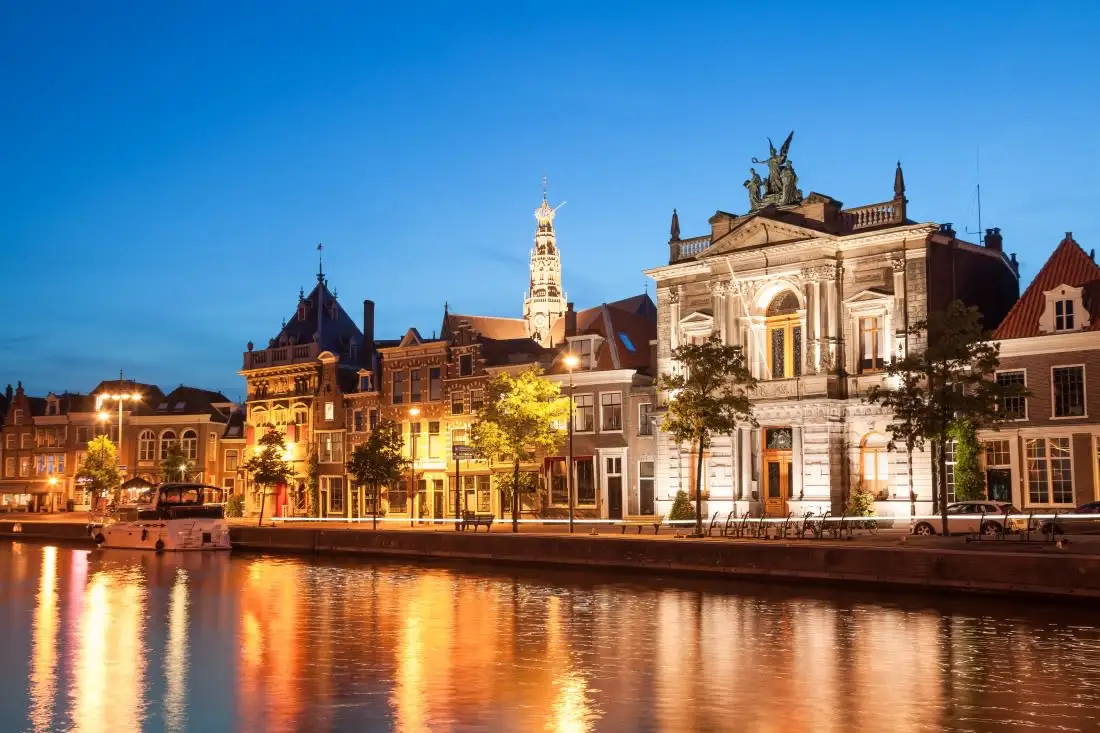
Teylers Museum

Enlighten Yourself with a Wise Visit to this Enlightenment Museum

The Teylers Museum in Haarlem, Netherlands, is a remarkable journey back into the Age of Enlightenment, where art and science converge in the oldest museum in the country. Established in 1784, it houses an eclectic collection ranging from rare books and fossils to historical scientific instruments and works by great masters like Michelangelo and Rembrandt. The museum's unique atmosphere is enhanced by its preserved 18th-century interior, offering visitors a genuine experience of stepping back in time.

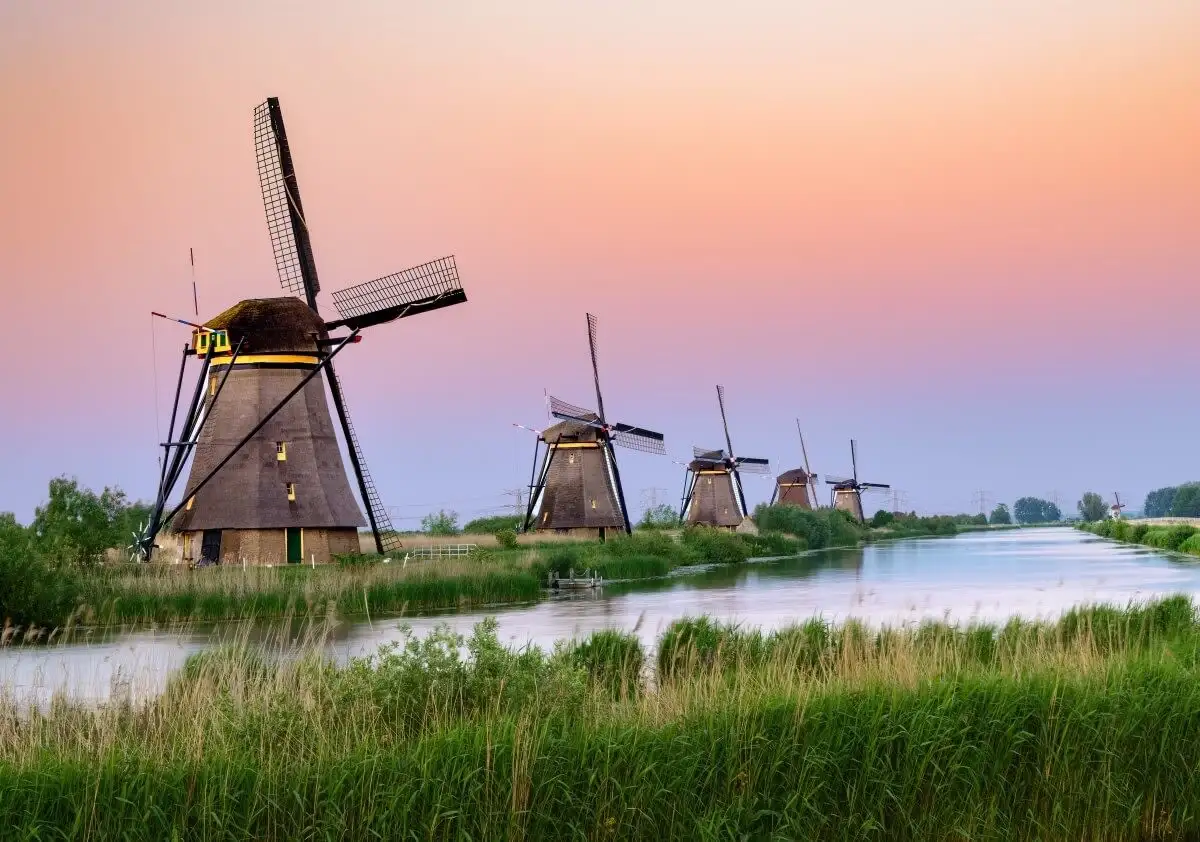
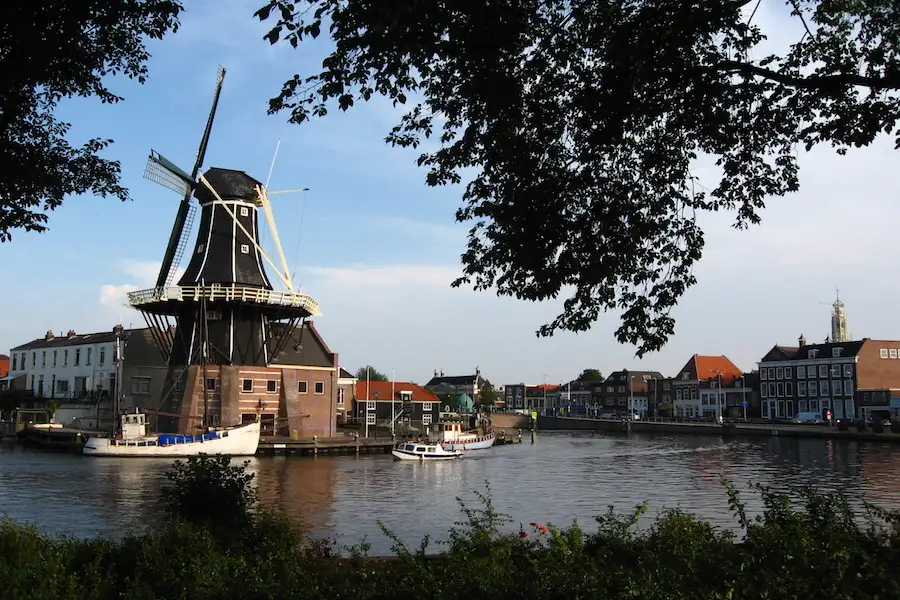
Windmill De Adriaan

Enjoy this quintessential windmill in Haarlem...

... And the story of its place in the hearts of locals. Windmill De Adriaan, perched on the banks of the River Spaarne in Haarlem, is a striking landmark that offers a glimpse into Dutch windmill engineering since its original construction in 1779. Though it was rebuilt in 2002 after a devastating fire decades before, De Adriaan retains its historic charm and functionality, demonstrating traditional milling techniques used for various purposes, including producing paint, tobacco, and flour. Visitors can explore the interior through guided tours, learning about the windmill's mechanics and its role in Dutch culture and industry.

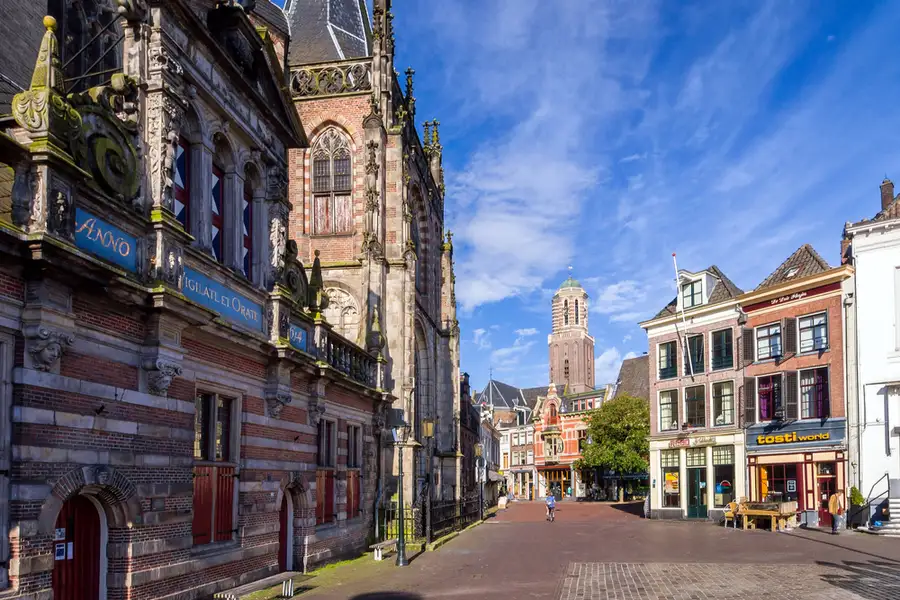
Grote Kerk, Zwolle

A Swell Tower and Church in Zwolle

The Grote Kerk (St. Michael's Church) in Zwolle, notable for its late Gothic architecture, dates back to the 15th century. Though its tower was aimed to outdo Utrecht's Dom Tower, it remains unfinished thanks to a series of lightning strikes. The church's interior features a carved pulpit, an ornate organ, and beautiful stained glass windows. The church has indirectly given Zwolle's inhabitants their nickname, Blauwvingers (Bluefingers).  For once, a Dutch story that doesn't reward frugality.

5:00 PM - 6:00 PM — Canal Cruise

A canal cruise is one of the best ways to discover Amsterdam! A 1-hour tour includes many of Amsterdam's most famous monuments and memorials. Starting from the dock near the Anne Frank House, you will float along the impressive Unesco Heritage Golden Age canals of Amsterdam, and pass the Jordaan neighborhood known for its famous Prinsengracht (Princes' Canal). Spy the romantic Magere Brug, the Amstel river, the 7 bridges, and the important Golden Bend before returning to land.

image

Day 3

Amsterdam

image

Day 4

Amsterdam to Hamburg

Day 4

Amsterdam to Hamburg

icon
icon
icon
icon

8:55 AM

Transfer to Rail Station

Most trains depart from Amsterdam Central Station (Centraal) station, the largest station in the city. Before spending money on a transfer, be sure to check whether your hotel is within easy walking distance. Also consider that public transport is the cheapest and sometimes fastest option. Trams and the metro deliver you to the main entrance of the station. If staying at a hotel, they can order a reliable taxi. Uber is also available for those with the app. There is not such convenient access by car to the Central Station, but your taxi driver will nonetheless be able to drop you off on the lakeside side of the station. To get to the platforms you need to swipe the bar code on your train ticket on the small screen on the automatic gates. The main entry tunnel, as well as two other tunnels, lead you to the station platforms.

Transfer to Rail Station

8:55 AM — Transfer to Rail Station

Most trains depart from Amsterdam Central Station (Centraal) station, the largest station in the city. Before spending money on a transfer, be sure to check whether your hotel is within easy walking distance. Also consider that public transport is the cheapest and sometimes fastest option. Trams and the metro deliver you to the main entrance of the station. If staying at a hotel, they can order a reliable taxi. Uber is also available for those with the app. There is not such convenient access by car to the Central Station, but your taxi driver will nonetheless be able to drop you off on the lakeside side of the station. To get to the platforms you need to swipe the bar code on your train ticket on the small screen on the automatic gates. The main entry tunnel, as well as two other tunnels, lead you to the station platforms.

10:00 - 15:11, 15:20 - 16:36 — Train to Hamburg

Your approximately 5-hour rail journey to Hamburg will pass through the bucolic farmlands of the coastal plains of the Netherlands and northern Germany. You will likely connect trains either in Osnabrück or Duisburg.

4:36 PM — Transfer from Rail Station

Most trains arrive in Hamburg Hbf (i.e. Hauptbahnhof - Main Rail Station), the largest station in the city. Before spending money on a transfer, be sure to check whether your hotel is within easy walking distance. Also consider that public transport is the cheapest and sometimes fastest option. Taxis are available at all rail stations and are generally honest, so if you prefer the convenience of not carrying your bags on public transport, they are an option. Some private transfers even meet you directly on the platform to help with bags. Uber is also available for those with the app.

Evening — Dining Out

Eating out in Hamburg has never been more popular as it is now due to all the new hotspots in the district known as HafenCity. Hamburg’s former industrial port area was largely in disuse for many years – and now it’s home to Europe’s largest urban renewal project and is the city’s most exciting district. It is flourishing with new hangouts set against a scenic waterfront and a warehouse quarter. Along with such sparkling new structures, the area’s industrial bones, like old freight and railway buildings, are also getting a second life as some of Hamburg’s coolest havens. There are so many great options for food and drinks that any foodie will see this district as it is …the place to be! You can also make your way along the Elbe river towards St. Pauli. There you will find plenty of riverside fish restaurants where you can watch the boats pass. In the streets nearby, there are plenty of affordable spots, representing cuisine from all over the world, but popular with the locals for everyday dining. .

image

Day 4

Amsterdam to Hamburg

image

Day 5

Hamburg

Day 5

Hamburg

icon
icon
icon

9:00 AM - 12:00 PM

Highlights Walking Tour

During this privately guided tour you will visit a lot of the important places and monuments of Hamburg. You will get a unique view of the city, explore the town center, the warehouse district, the new city planning project HafenCity and the port area.

Highlights Walking Tour

9:00 AM - 12:00 PM — Highlights Walking Tour

During this privately guided tour you will visit a lot of the important places and monuments of Hamburg. You will get a unique view of the city, explore the town center, the warehouse district, the new city planning project HafenCity and the port area.

Aussenalster Lake

Enjoy a peaceful walk, rent a boat, or take a bike ride around the public parks surrounding the Außenalster Lake just to the north of the old town.

The banks of the Außenalster, or Outer Lake, are the perfect spot for a gentle stroll at any time of the year.  During the summer, make like a real Hamburger and take to the  placid water by boat; there plenty of lakeside rental sites.  In cold winters, you can follow the Hamburgers out onto the ice. The lakeshore is also populated by a number of restaurants and cafes; if you want to go fully native, try the beer garden at the Alsterperle on the eastern side of the lake, though the best food is at either Alster Cliff or Portonovo. But, whatever you do, don't eat the Hamburgers, they're generally quite pleasant people.

Speicherstadt Museum

Make a quick stop at this small museum showcasing the history of the district.

The Speicherstadt Museum is on the small side and quite edifying. This is where you can find out more about the history of the Speicherstadt district, the reasons for its construction, the industries that were headquartered here, and its reconstruction after WWII. 

Mid-Day/Afternoon — Hamburg Altstadt

Ravaged by floods and fires, the story of old Hamburg is one of disaster, persistence, and regeneration. Following heavy bombing during World War II, the city has rebuilt itself again with an emphasis on economy and pragmatism. At a glance it would appear little remains of the Hamburg Altstadt, making what does all the more significant. The burnt remnants of St. Nikolai's church stands as a lasting monument to Hamburg's wartime events. while many cherished fragments of Hamburg’s lively past hide throughout the city center, awaiting discovery. Keep your eyes open, and an illustrious past will open up to you.

Hamburg Rathaus

Take a tour of the ornate town hall or explore the ground floor and courtyards on your own.

Completed in 1897, the Rathaus (Town Hall) tells the story of Hamburg in ornate detail. A phoenix symbolizes the renewal of the city follwing the Great Fire of 1842.  Other sculptures represent important virtues. Ribboned around the building are twenty kings and emperors, but above windows rest "everyday folk", such as fishermen and merchants; the Rathaus serves all. In the main courtyard, one can find the "wedding gate," a door carved with an oafish husband and henpecking wife. Originally intended as the exit for the newly-wedded, this inauspicious door has never been used, lest it curse the just-married with  the fate of the aged spouses.

St. Nikolai Memorial

Experience a somber reminder of the horrors of war.

The charred remains of St. Nikolai loom over the Altstadt, a haunting reminder of July 1943 when Allied bombers attacked Hamburg for 8 relentless days. Upwards of 42,600 civilians were killed, much of the city decimated. The resulting inferno created tornadic fires with flames reaching an estimated thousand feet - twice the height of St. Nikolai’s spire. The accompanying stories are grisly. Preserved as a memorial against conflict, the remnants of the church house a museum that explains Hamburg’s role in WWII. Included with admission is access to the observation tower; an elevator can take you up the structurally secure old spire.

Deichstraße

Wander down the oldest street in Hamburg and follow the alleyways to the canal.

From Deichstraße (‘Dike street’), the oldest street in Hamburg, began one of the city's greatest tragedies. On May 5th, 1842, a fire started in a cigar factory at 42 Deichstraße; little could be done and the fire consumed the Altstadt.  You will see, the area has recovered. If you would like to stop for lunch or dinner, the restaurants on Deichstraße are generally of high quality and reasonably priced. Follow the alleyways between the restaurants to the canal where you can see the old merchant houses as they were rebuilt after the fire. These half-timbered houses were historically used as warehouses on the lower floors, while a family lived above.

Church of St. Michel

Visit the sea-shell like interior of one of Germany's most beautiful Lutheran churches, and climb to the observation deck for a city view.

Unlike older churches in Hamburg originally Catholic, St. Michel’s was built in Baroque after the Reformation, as a Protestant church. The 132-meter-high steeple has been a constant landmark for sailors on the Elbe since its construction in 1786. Covered in copper, it gleams in the sunlight, and the clockface is the largest of its kind in Germany. Inside the church gives the impression of a curled seashell. Boasting 5 organs, concerts at St. Michel’s are renowned for their acoustics. The church is free to enter. For 10 €, you can visit the tower's observation deck, which offers the best views over Hamburg, and the crypt as well.

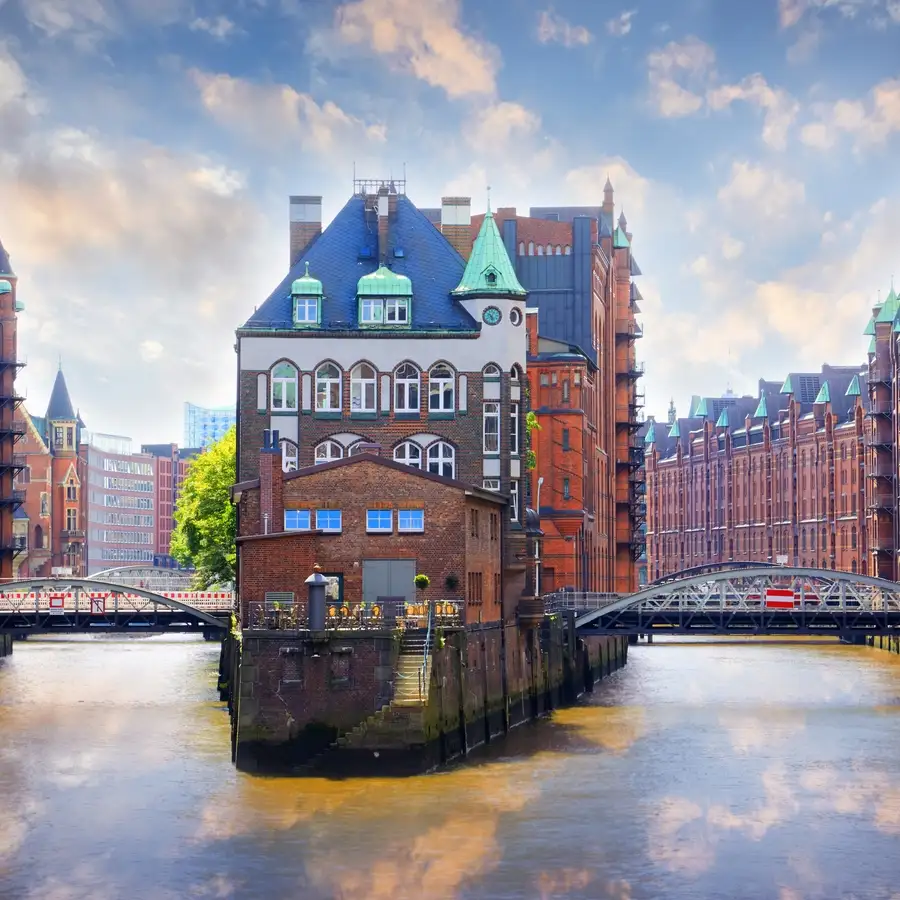
Late Afternoon/Early Evening — Speicherstadt

The warehouses of Speicherstadt helped make Hamburg a world-class port in the late 19th century, and despite severe damage in Allied bombing raids during the WWII, it's been restored to its pristine best.  Here you'll find the incredibly instructive nine-floor Maritime Museum, the world's largest model railway exhibition at Miniatur Wunderland, and the city's latest architectural icon, the Elbphilharmonie. Literally "Warehouse City," Speicherstadt contains the world's largest complex of warehouses, spanning an area of 260,000 square meters (a little over 64 acres). It was built on the Elbe river between 1883 and the late 1920s on thousands of oak piles. Its beautiful neo-gothic brick architecture makes for a curious contrast to the modern steel-and-glass constructions of neighbouring HafenCity.

Minatur Wunderland

Experience the world in miniature on the planet's largest model railroad system.

Whether you're a model train enthusiast or not, you can't help but be mesmerized by the world's largest model railroad system at Minatur Wunderland (Miniature Wonderland).​​​​​​​ This mind-boggling exhibit goes into breathtaking detail to create a bewildering number of scenes. If you're well traveled in Europe, you'll instantly recognize some of the most iconic places on the continent. Tiny, and humourous, details populate the exhibit, such as the man leading his pigs into Rome's Termini rail station, or the nude flash mob on a Swiss mountain side. The Wonderland includes a restaurant and one of the best gift shops in Hamburg. 

International Maritime Museum Hamburg

Get lost in the dizzyingly labryinthine Maritime Museum, one of the best of its kind.

You could spend several days on the nine "decks" of the Maritime Museum, exploring three thousand years of extraordinarily precious exhibits. Highlights include the deck dedicated to German military navel history, and the exhibit explaining the Cape Horn Captains' Brotherhood - captains who sailed a commercial sailing ships around the notorious waters at Cape Horn. Pick up some brilliant trivial knowledge as well, including the tale of Mississippi boat pilots who would measure the river depth beneath them; when they had 3.65m, indicating there was no danger of grounding, they would exclaim "Mark twain!" One of those pilots was then know as Samuel Langhorne Clemens. 

Elbphilharmonie Hamburg

See one of the largest and most acoustically advanced concert halls in the entire world, built on top of an old warehouse.

Hamburg boasts one of the largest and most acoustically advanced concert halls in the world in the Elbphilharmonie. Built onto the top of an old warehouse at a cost of 789 million EUR (a bit more than the estimated 200 million EUR) and opened in 2017, you can be sure to get your money's worth from a performance here. The glassy construction resembles a hoisted sail or a wave. The Elbphilharmonie has three concert venues, including the illustrious Great Concert Hall that accommodates 2,100 visitors seated to surround the performers. About 10,000 individually installed microshaped drywall plates disperse sound waves.  It's a sight, and sound to behold. 

Cap San Diego

Experience a by-gone era of the high seas on this former cargo ship.

The ship is docked on the Elbe River within a short walk of the Speicherstadt. Built in 1961, it has been converted into a maritime museum having been made obsolescent by the massive container ships of today. Visiting the ship is a must for those that have a technical interest in sea-faring and naval engineering, but it is also interesting for those with a more general interest in how life was lived on the high seas. So in addition to massive engine and mechanical rooms, you'll also see cabins, dining quarters, a swimming pool, and much more.

image

Day 5

Hamburg

image

Day 6

Hamburg to Berlin

Day 6

Hamburg to Berlin

icon
icon
icon
icon
icon
icon

Morning/Mid-Day

Kunstmeile Art Museums

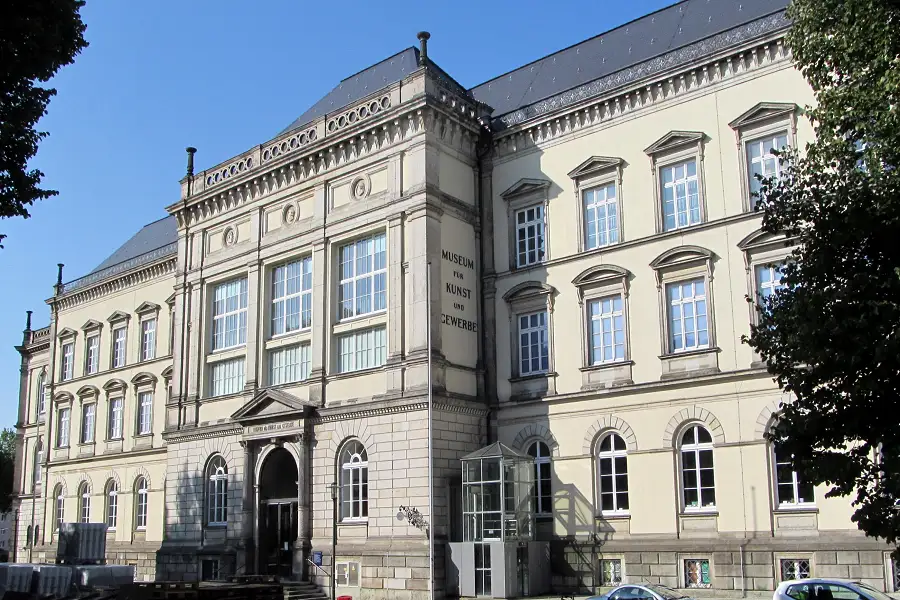
Prosperous Hamburg boasts an array of art museums and galleries, with something sure to please every art lover. The Hamburger Kunsthalle showcases a trove of historic German and European art alongside a vibrant modern collection, while the Museum Für Kunst Und Gewerbe is one of the best applied-arts museums in Europe, full of ancient treasures. The Bucerius Kunst Forum switches focus every few months with a series of high-quality rotating exhibitions that blur old and new art. Photography fans should not miss the renowned Deichtorhallen Hamburg, while those who enjoy contemporary art will love the Kunstverein In Hamburg.
Kunstmeile Art Museums

Morning/Mid-Day — Kunstmeile Art Museums

Prosperous Hamburg boasts an array of art museums and galleries, with something sure to please every art lover. The Hamburger Kunsthalle showcases a trove of historic German and European art alongside a vibrant modern collection, while the Museum Für Kunst Und Gewerbe is one of the best applied-arts museums in Europe, full of ancient treasures. The Bucerius Kunst Forum switches focus every few months with a series of high-quality rotating exhibitions that blur old and new art. Photography fans should not miss the renowned Deichtorhallen Hamburg, while those who enjoy contemporary art will love the Kunstverein In Hamburg.

Kunsthalle Hamburg

The Hamburger Kunsthalle is an Excellent First Port of Call for Anyone Interested in the Art History of Germany and the Surrounding Region.

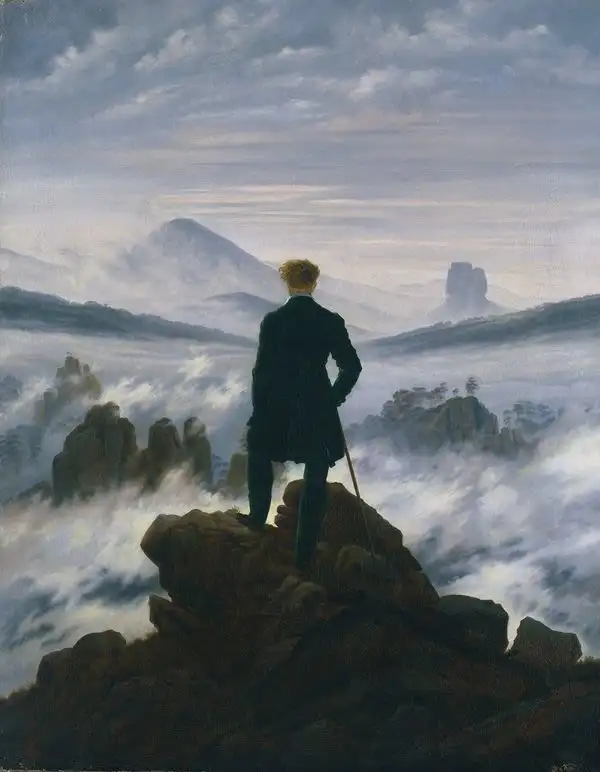
The Hamburger Kunsthalle is an excellent first port of call for anyone interested in the art history of Germany and the surrounding region. Of special note is the collection of northern German medieval paintings, with altarpieces by Bertram von Minden and Master Francke. However, the absolute star of this show is Casper David Friedrich’s Wanderer above the Sea of Fog. Painted in 1818, this masterwork captures the spirit of the romantic age, evoking wonderment, sublimity, and the mastery and fear of nature. 

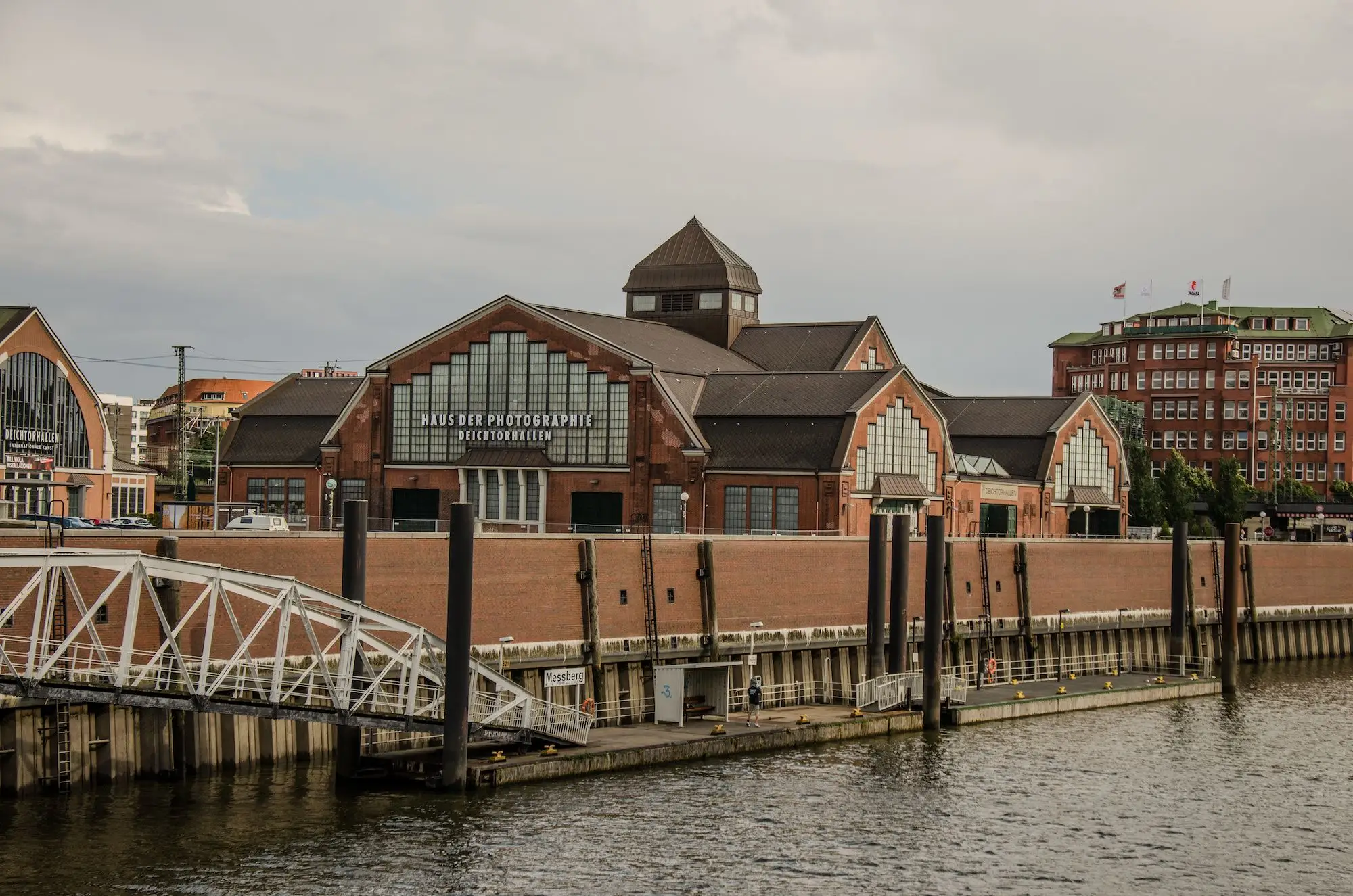
Deichtorhallen Hamburg

Peruse contemporary art in a converted market hall.

Local favorite Deichtorhallen Hamburg focuses on photography and contemporary art. Fans of early industrial architecture will especially enjoy the gallery building. The museum is situated in a turn-of-the-century market hall made of glass and steel, featuring a ‘lantern roof’ which casts spectacular natural light into the exhibition space below. The museum splits into three galleries, each with separate entrance. Exhibitions at the Hall of Contemporary Art and House of Photography rotate year round, while the Falckenberg Collection of recent American and German art is on permanent display. 

Museum für Kunst und Gewerbe Hamburg

Visit this museum filled with a remarkably diverse collection of applied art.

A short walk from the Hauptbahnhof, the Museum Für Kunst Und Gewerbe (Museum of Arts and Crafts) collects ‘everything except images’. Among other rarities, look out for the Coptic textiles collection of ancient Egyptian garments, the Osterteppich von Lüne; a splendid Eastertide medieval textile from Lüne Abbey, and the lavishly painted Baroque harpsichords. Immerse yourself in one of the museum’s many period rooms, including the Spiegel Canteen, a fully intact canteen interior from the Spiegel publishing house, swirling with 1960s psychedelia.

Afternoon/Late Afternoon — Alster Wander Way

The Außenalster, or Outer Lake, is the perfect spot for a gentle stroll or cycling trip at any time of the year since it provides respite from the city crowds while remaining within the city. It's a walk of approximately 5.5km/3.4mi around the lake. During the summer, it's covered in pleasure craft as the Hamburgers take to the water with a vengeance. There are also plenty of boat rental sites should you feel drawn to the lake's placid waters yourself. The lakeshore is also populated by a number of restaurants and cafes, and if you're wanting to go fully native, then we recommend the beer garden at the Alsterperle on the eastern side of the lake, though the best food is at either Alster Cliff or Portonovo. In cold winters, the lake sometimes freezes over and thousands of Hamburgers swarm onto the ice.

Jungfernstieg

Take a stroll down Hamburg's most stylish promendade and stop for coffee and people-watching.

Reclining along the southern shore of Binnealster Lake, the Jungfernstieg boulevard elegantly wears its banks, art galleries, and high-end shops. Its name originates from when the city's elite families accompanied their unmarried daughters along the boulevard, seeking a suitable matrimonial partnership; hence, Jungfernstieg derives from Jungfern (i.e. maiden) and Stieg (i.e. stair, walk). For dining out and a quiet drink - well, darling, it's simply a must.  At least take a coffee at Café Alex, located inside the atmospheric Alsterpavillon; it has been serving coffees since 1799.

Late Afternoon/Early Evening — St. Pauli

St. Pauli is known best for its Reeperbahn street, one of Hamburg's main centers for nightlife. The district is also infamous for its red-light districts and the amount of erotic entertainment and retail outlets available for those so inclined. Notwithstanding this, however, the area is safe and well-policed and has much to offer for those of more conventional tastes, including parks, museums, the fish market and decommissioned Soviet U-Boat along the river, and many types of more family-friendly entertainment. St. Pauli and especially the Reeperbahn are also bound up with the Beatles' genesis, with John Lennon having declared "I might have been born in Liverpool - but I grew up in Hamburg." For this reason, you can find a monument to the group on the eponymous "Beatles-platz" as a testament to the impact they and the city had on each other.

Reeperbahn

Check out the nightlife where Hamburg attempts to combine Bourbon Street, Amsterdam, and Las Vegas in one street.

The street is filled with nightclubs and restaurants, as well as strip clubs, brothels, and similar businesses. There is plenty to do in the way of more innocent entertainment, however, as there are theaters, musicals, and other attractions to enjoy. One should be aware that while the area is safe, travelers, especially unaccompanied males, are often approached by sex workers.  At the far western end of the Reeperbahn, before entering the neon-lit Große Freiheit street, you will find the Beatles-platz, a circular plaza designed to look like a vinyl record in its dimensions and coloring.

Red Light District (Hamburg)

Take a cautious peek at the "not-so-family-friendly" side of Hamburg.

While there are numerous clubs spread around the area, you will find the core of the Red Light District on Herbertstraße. A barrier blocks the view of the street, and signs advise women and underage men not to enter. While this is not legally binding, prostitutes have been known behave aggressively and chase out women. If you do enter, be prepared to be loudly solicited. Try to keep your wits about you, not to mention your valuables and even your scruples.

Hamburg Fischmarkt and Harbor

Stroll Along the Boat-lined Harbor and See Where Locals Go for Fresh-Caught Fish.

For a change of scenery from the Reeperbahn, you can head down towards the Fish Market. This market operates every Sunday morning throughout the year, starting at 5am in the summer (April-October) and 7am in the winter (November-March), ending in both cases at 9:30am. Even if you don’t manage to get there for the market itself, however, the walk and view along the harbor is well worth it, and the Reeperbahn party can continue with live music and dancing in the Fischauktionshalle (the Fish Auction Hall).

U-Boat Museum

Descend beneath the surface in the steel bowels of a Soviet submarine.

A former Soviet U-434 submarine has rested in Hamburg’s harbor in front of the Fischmarkt market hall since 2002, having been built in Krasnoe Sormovo in 1976 and subsequently serving the Russian North Sea fleet. The submarine museum is a great way to experience the claustrophobia and the uncomfortable living conditions that came with being housed underwater among dozens of other sailors. 

7:35 PM — Transfer to Rail Station

Most trains depart from Hamburg Hbf (i.e. Hauptbahnhof - Main Rail Station), the largest station in the city. Before spending money on a transfer, be sure to check whether your hotel is within easy walking distance. Also consider that public transport is the cheapest and sometimes fastest option. If staying at a hotel, they can order a reliable taxi. Some private transfers will even help with your bags. Uber is also available for those with the app.

20:34 - 22:24 — Train to Berlin

You will likely be traveling on the high-speed inter-city express train (ICE), which reaches speeds up to 300 km/h when traveling from Hamburg to Berlin. This means you can reach Berlin in under two hours, and you will have a free Wifi connection, a socket at your seat for charging your electronic devices, and the option of onboard catering with meals, drinks, and snacks. After departing Hamburg you will travel through the flat but pleasant countryside of northern Germany before reaching a region of thick pine forests surrounding Berlin.

10:24 PM — Transfer from Rail Station

Most trains arrive in Berlin Hbf station, the largest station in the city. Before spending money on a transfer, be sure to check whether your hotel is within easy walking distance. The station is well connected by public transport to all of central Berlin; U-Bahn, S-Bahn, and bus all service the station. This means public transport is often the fastest and easiest way of reaching the station. Berlin taxis are generally reliable and honest, so if you prefer the convenience of not carrying your bags on public transport, they are a good option. Uber is also a good option, and some private transfers even meet you directly on the platform to help with bags.

image

Day 6

Hamburg to Berlin

image

Day 7

Berlin

Day 7

Berlin

icon
icon
icon

9:00 AM - 12:00 PM

Guided Walking Tour of Berlin

On this 3 hour tour, your guide will show you the highlights of Berlin and help you understand what makes this city so unique. Sites visited will include the boulevard Unter den Linden, the Gendarmenmarkt, Check Point Charlie, remnants of the Berlin Wall, Potsdamer Platz, the Holocaust Memorial, the Brandenburg Gate, and the Reichstag.
Guided Walking Tour of Berlin

9:00 AM - 12:00 PM — Guided Walking Tour of Berlin

On this 3 hour tour, your guide will show you the highlights of Berlin and help you understand what makes this city so unique. Sites visited will include the boulevard Unter den Linden, the Gendarmenmarkt, Check Point Charlie, remnants of the Berlin Wall, Potsdamer Platz, the Holocaust Memorial, the Brandenburg Gate, and the Reichstag.

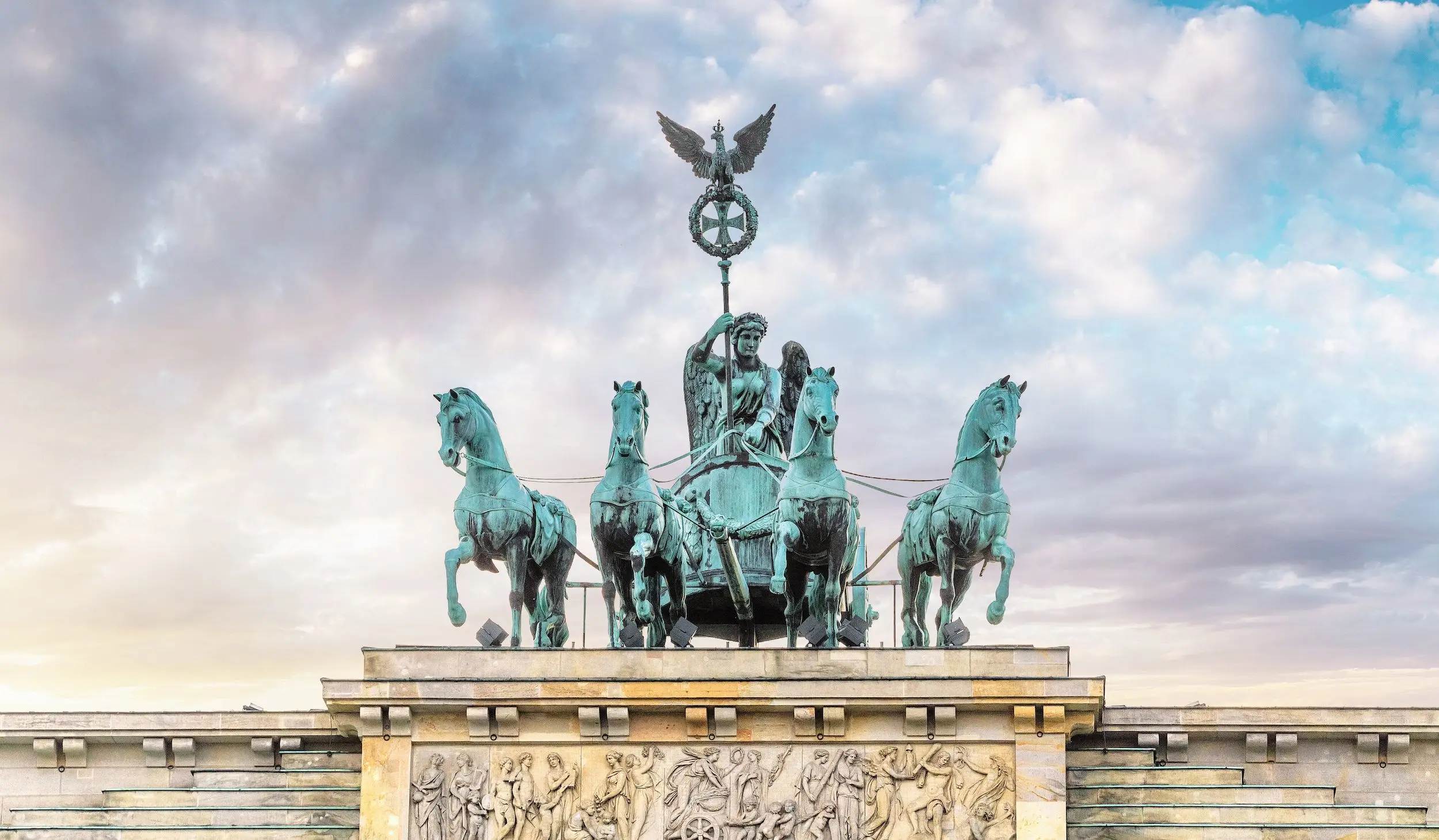
Brandenburg Gate

Quadriga. Hey, There's a Word to Know When Learning About this Historic Gate

The Brandenburg Gate was built as a symbol of peace, perverted into a symbol of power by the Nazis, and became a symbol of division during the Cold War. Now, however, it is a symbol of reunification. Completed in 1791, it was topped by the quadriga, a chariot drawn by four horses driven by the goddess of peace. Napoleon seized the quadriga as a spoil of war, but after his defeat, it was returned to the city and met by cheering crowds along the way, transforming the goddess of peace into a goddess of victory, holding a  Germanic cross.

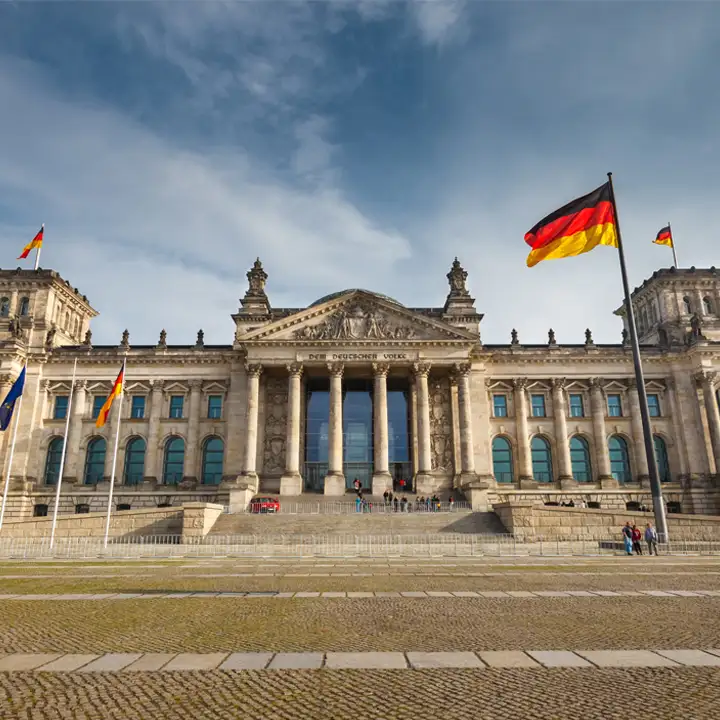
Reichstag

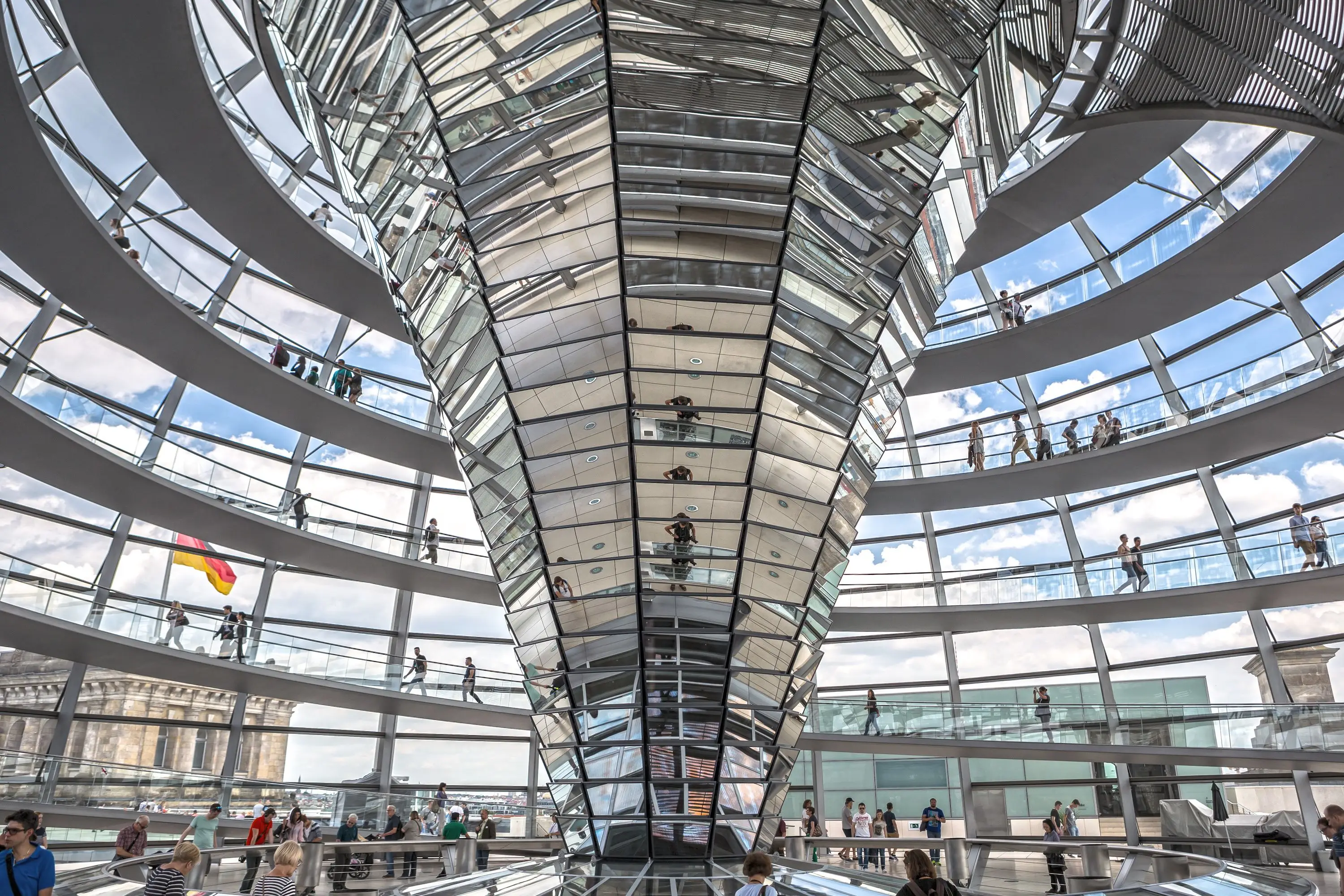
Make your way to the top of the dome enjoying amazing views and looking down at debating members of the German Parliament below.

Officially, the Reichstag is actually the Bundestag, which means the federal parliament. The Reichstag was reduced to a ruined shell by arson in 1933 and by World War II fighting, but it was rebuilt with a striking egg-shaped glass dome. Visitors are given a free audio guide that discusses the building’s history and architecture, while also orientating you to the sites of Berlin. It is an excellent introduction to the city. Note that it is usually necessary to book well in advance!

Mid-Day to Late Afternoon — Iconic Berlin

Many of Berlin’s most iconic symbols are found within a short walk of each other. Most famous of all is the Brandenburg Gate. First built as a symbol of peace, it became a symbol of division during the Cold War. A few steps away stands the Reichstag, which was destroyed in the climax of World War II but which has been beautifully rebuilt with a glass dome. Meanwhile, the modernistic Sony Center also symbolizes a revitalized and rebuilt Berlin. Also close by is the sobering Holocaust Memorial, with its more than 2700 concrete slabs creating an ominous impression of loss. Just beyond it is another reminder of Germany's darkest period - the site of Hitler's bunker during the seige of Berlin.

Brandenburg Gate

Quadriga. Hey, There's a Word to Know When Learning About this Historic Gate

The Brandenburg Gate was built as a symbol of peace, perverted into a symbol of power by the Nazis, and became a symbol of division during the Cold War. Now, however, it is a symbol of reunification. Completed in 1791, it was topped by the quadriga, a chariot drawn by four horses driven by the goddess of peace. Napoleon seized the quadriga as a spoil of war, but after his defeat, it was returned to the city and met by cheering crowds along the way, transforming the goddess of peace into a goddess of victory, holding a  Germanic cross.

Reichstag

Make your way to the top of the dome enjoying amazing views and looking down at debating members of the German Parliament below.

Officially, the Reichstag is actually the Bundestag, which means the federal parliament. The Reichstag was reduced to a ruined shell by arson in 1933 and by World War II fighting, but it was rebuilt with a striking egg-shaped glass dome. Visitors are given a free audio guide that discusses the building’s history and architecture, while also orientating you to the sites of Berlin. It is an excellent introduction to the city. Note that it is usually necessary to book well in advance!

Sony Center

Check out the futuristic and ground-breaking Sony Center at Potsdamer Platz.

The visually dramatic and future-aesthetic Sony Center is a complex of entertainment, shopping, and office buildings surrounding a plaza canopied by a tentlike glass roof with supporting beams radiating out like bicycle spokes. It also integrates rare relics from Potsdamer Platz's prewar era, such as the opulent Kaisersaal – a fragment of the luxurious pre-war Esplanade Hotel.

Holocaust Memorial

Wander amongst 2,711 columns forming a vast mazelike Holocaust memorial.

The Memorial to the Murdered Jews of Europe. It consists of a 19,000 square meter site with over 2700 concrete slabs that grow larger and more ominous as you approach the center of the monument. Beneath the monument lies an information center. 

Late Afternoon to Evening — TV Tower & Old Berlin

The Television Tower and its surroundings in Alexanderplatz are Berlin's main architectural monument to the former East Germany. Despite the high-rent stores and offices that now fill the buildings, you can still detect quite a bit of that old communist character. Somewhat ironically, you'll find the medieval Nikolaiviertel, the oldest residential area of Berlin, just a few steps away. You'll also find nearby the Marienkirche (Berlin's oldest parish church), the displaced Neptune Fountain, the Red Town Hall, statues of Karl Marx and Friedrich Engels, and the massive Loxx model railway that even non-model train enthusiasts will gasp at.

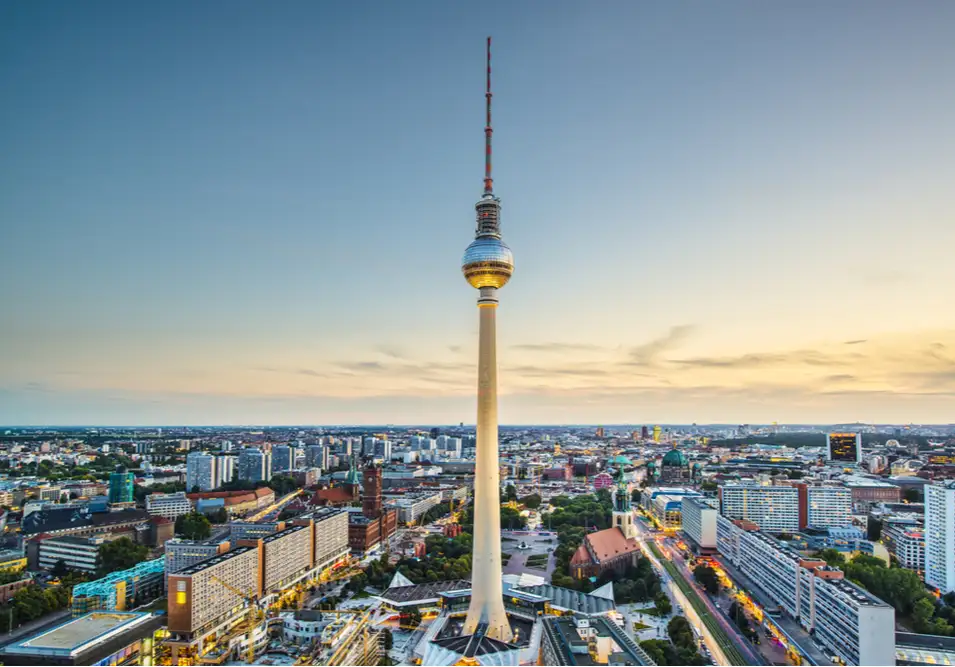
Television Tower

Soar to the top of this iconic symbol of Berlin in just 40 seconds, and enjoy amazing views from its observation deck.

The 1960s TV Tower (Fernsehturm) is possibly the best surviving example of East Germany’s architectural legacy. In total, it is 1,197 feet tall (368 meters), but you can only go 666 ft to the observation deck, or a bit higher if you have a ticket to the revolving Sphere Restaurant. You ascend in one of two 10-person elevators that take a mere 40 seconds to reach the observation deck.

DDR Museum

Experience life in Communist East Germany in this interactive museum.

This brilliantly evocative and interactive museum helps visitors imagine what life under the Communist East German regime was like. A homage to Ostalgie (nostalgia for East Germany), it offers up memories of the school system, pioneer camps (something like Communist scouts), and the wonderfully clumsy attempts to rival Western clothing and food fashions. It'd all be adorable, if it weren't so oppressive.

Nikolaikirche

Visit the beautifully restored medieval Gothic church which gave the surrounding neighborhood its name.

Dating all the way back to the earliest days of Berlin, this church was probably built just after Berlin was granted town privileges. An unusual feature of its interior is the bright colouring of the vault ribbings: the orange, purple, green and other vivid lines look like a 1960s Pop Art addition, but actually follow a medieval pattern discovered by a 1980s restorer. 

Nikolaiviertel

Escape to Berlin's medieval past in this reconstructed historic district.

The Nikolaiviertel or St. Nicholas Quarter is Berlin's oldest residential area. With its medieval lanes and numerous restaurants and bars, it was a favorite haunt of the artistically-minded in the years before WWII, but that war left it a devastated wasteland. In the 1980's the East German regime attempted a renovation of the neighborhood based on historical models, but the “old Berlin” illusion is not all entirely convincing. The use of East German construction techniques is glaringly obvious in some places, such as prefabricated gables and corrugated concrete panels. As a result, it was scornfully nicknamed “Honecker's Disneyland” after the former East German leader, but today it is a historic curiousity in its own right.

image

Day 7

Berlin

image

Day 8

Berlin

Day 8

Berlin

icon
icon
icon

Morning/Mid-Day

Tiergarten

Once the hunting ground of the Prussian kings, the Tiergarten is Berlin’s most famous and expansive park. It is a wonderful escape from urban stress located in the very center of the city. You will discover beautiful forests, fields, and ponds, all easily reached through an extensive and well maintained network of trails. Some of Berlin's favorite beer gardens are also located in the park.

Tiergarten

Morning/Mid-Day — Tiergarten

Once the hunting ground of the Prussian kings, the Tiergarten is Berlin’s most famous and expansive park. It is a wonderful escape from urban stress located in the very center of the city. You will discover beautiful forests, fields, and ponds, all easily reached through an extensive and well maintained network of trails. Some of Berlin's favorite beer gardens are also located in the park.

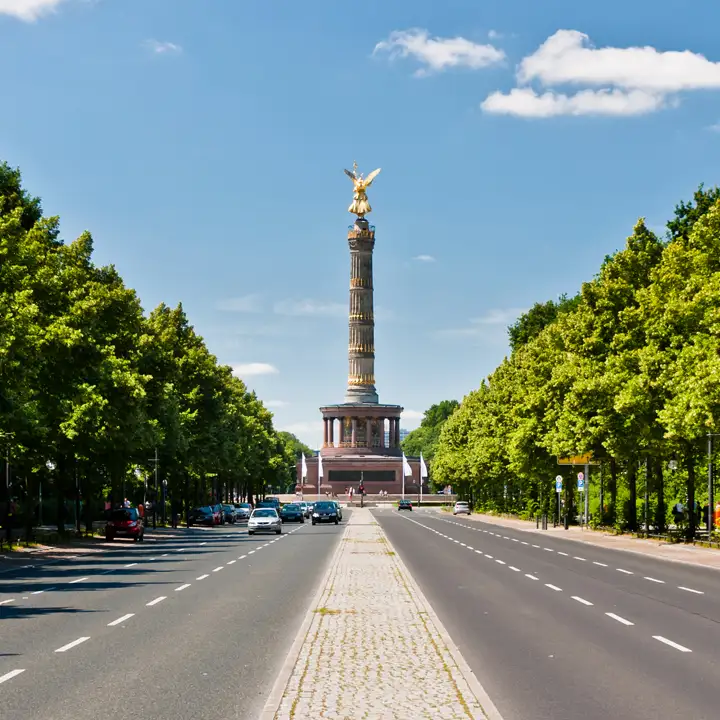
Victory Column

Climb the historic column for a panoramic view of the city amidst a sea of green trees.

One of Berlin’s most familiar sights, the column commemorates victories over Denmark, Austria, and France during the mid-19th century. These victories enabled the founding of the German Empire in 1871. It was moved to the current location on the express orders of Hitler. 

Café am Neuen See

Take a Break in a Popular Beer Garden Nestled Within the Park.

Even if you don’t feel like stopping for a drink or a meal, it is still worth a quick peek just to experience the atmosphere. The location is absolutely ideal, surrounded by forest and looking over the lake with its many paddle boaters. There's a formal sit-down café on the terrace and a self-service beer garden, where sharing benches is expected and completely normal.

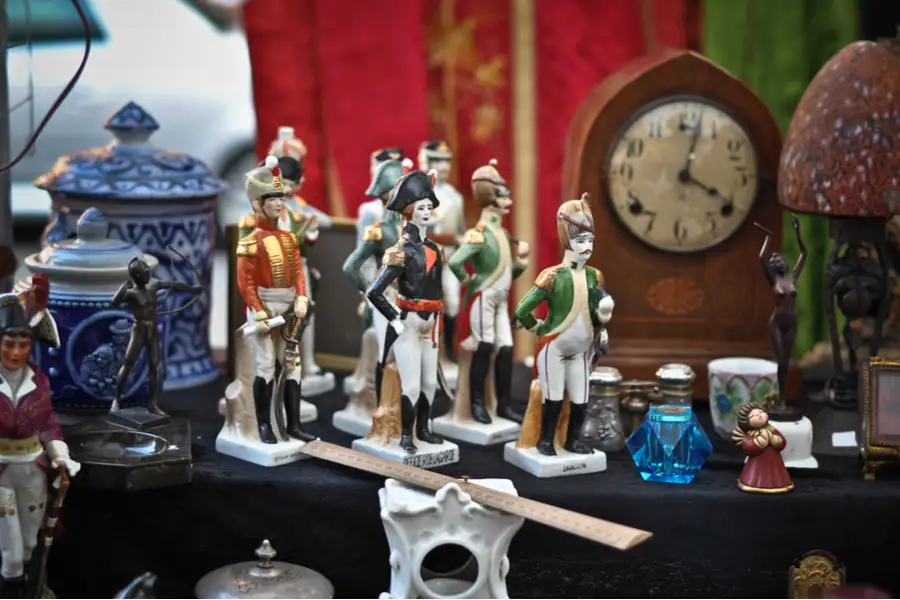
Trödel Markt

Shop within the forest at Berlin’s best flea market.

If you are looking for a unique purchase then this is the place. The market takes place every weekend from 10am-5pm. Discover art, family heirlooms, furniture, clothing, souvenirs, food, and more. 

Mid-Day to Late Afternoon — Checkpoint Charlie

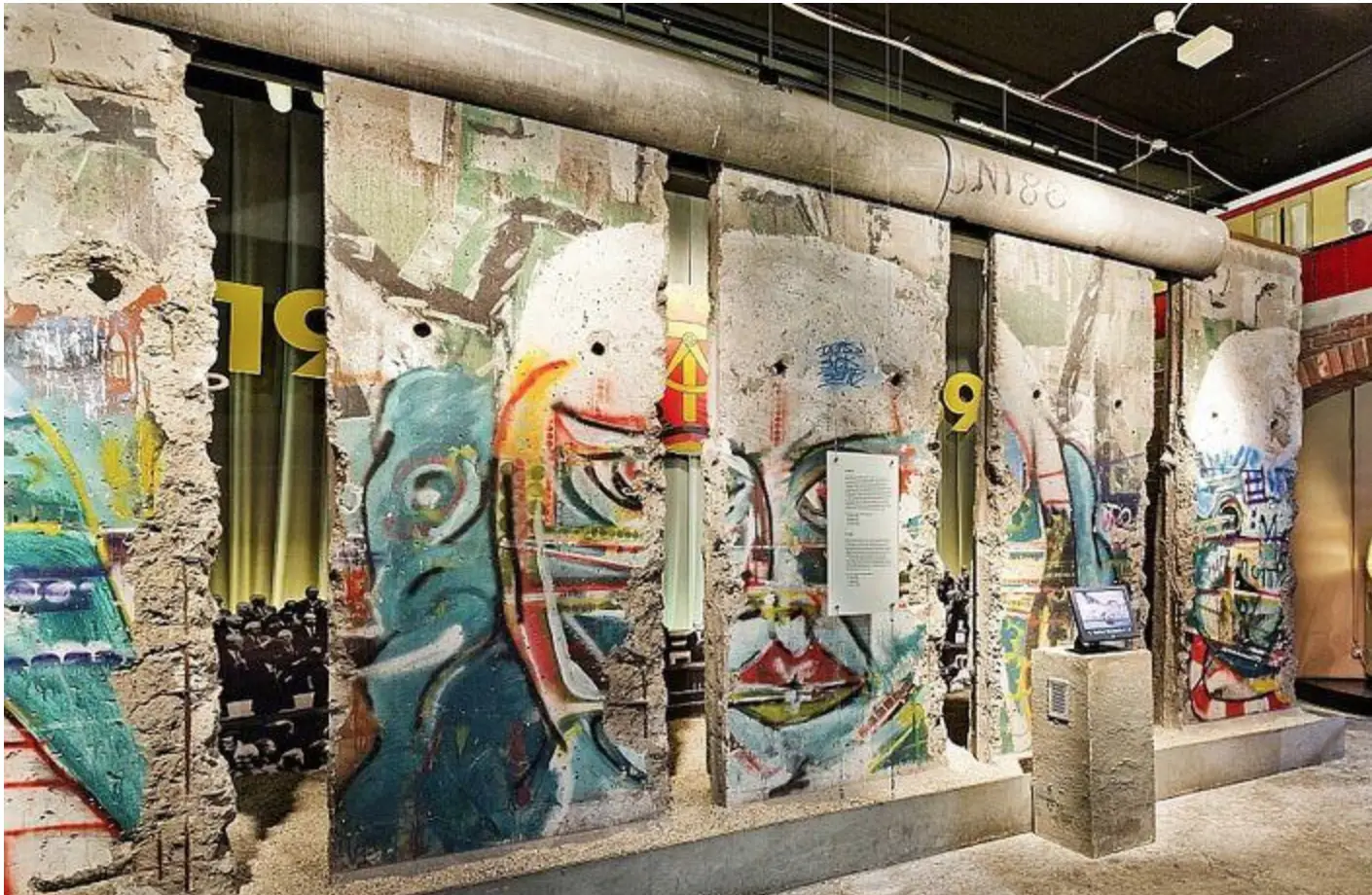
The best-known Berlin Wall crossing point between East Berlin and West Berlin during the Cold War, Checkpoint Charlie was the main gateway between the two Berlins for most non-Germans. Next to it is the Mauermuseum recounting the history of the Berlin Wall, while a few hundred yards away is the Topography of Terror depicting the history of the Nazi regime. Nearby, the Jewish Museum explores the fascinating history of Germany's Jewish heritage in a striking modern building - uneven floors, empty spaces, and sharp zig-zags reflect its turbulent experience in Germany.

Jewish Museum

Unveil a fascinating story of triumph, tragedy, and also everyday life in Germany's leading Jewish history museum.

The history of Germany’s once-thriving Jewish population and culture is brilliantly detailed behind American architect Daniel Libeskind’s equally brilliant and shimmering titanium-zinc facade.

Trabi Museum

Sit behind the wheel of East Germany's infamously toxic Trabi.

This little museum is devoted to East Germany's iconic product - the Trabant automobile. Here you'll learn to appreciate the “fewer parts means less trouble” principles of the fibreglass car. 

Topography of Terror

Learn about the horrors of Nazism and the security apparatus it used to enforce its will in this documentation center.

The center has free admission. It is located on a site that headquartered Adolf Hitler's elite killers, the SS, the Gestapo secret police and the Reich Main Security Office, making it the main cog in the Nazi security regime. Standing there today in testament to the evil perpetrated during those years is the Topography of Terror, Germany’s most significant museum on the agents of Nazi terror. 

Early Evening/Evening — Courtyards of Berlin

With booming 19th-century population growth, nearly every unoccupied space in Berlin was filled by tenement buildings surrounding small courtyards. The Spandauer Vorstadt neighborhood possesses some of Berlin’s most beautiful courtyards, the Hackesche Höfe, as well as other courtyards which better recall the crowded conditions of industrial Berlin. Here you can discover the partially reconstructed New Synagogue, the former site of the Jewish cemetery, and many hidden reminders of a once vibrant community.

Hackesche Höfe

Stop for a drink or go shopping within Berlin’s most beautiful courtyards.

These nine courtyards are classic examples of Art Deco. Built in 1905-1907 to house businesses, flats and places of entertainment, Hackesche Höfe was conceived of as an antidote to the dowdy and overcrowded courtyards of working-class Berlin. They are elaborately decorated with blue mosaic tiles and other artistic finishes, but nevertheless preserve a layout that was highly typical of much of pre-war Berlin.

Haus Schwarzenberg

Explore a traditional Berlin alleyway courtyard which harbours a trio of small museums relating to the Jewish experience during WWII.

The courtyard's crumbling and grafittied facades give visitors a feel for Berlin tenement life during the late 19th and early 20th centuries. Among the museums is the fascinating Museum Blindenwerkstatt Otto Wendt (free; open 10am-8pm daily). It is located in the former rooms of a broom and brush factory run by one Otto Wendt, whose employees were mainly deaf, blind and Jewish. He managed to protect his workers from the concentration camps by having the factory declared essential to the war effort.  

New Synagogue

Visit one of the most important legacies of Berlin's pre-Holocaust Jewish community.

The partially reconstructed synagogue was damaged on Kristallnacht, an anti-Jewish Nazi pogrom. It was not completely destroyed thanks to the intervention of the local police chief. Its ultimate destruction was left to Allied bombers and reconstruction didn’t begin until the late 1980s. While large parts remain unreconstructed, it is still possible to visit the interior.

image

Day 8

Berlin

image

Day 9

Berlin

Day 9

Berlin

icon

Morning to Evening

Potsdam

For most visitors, Potsdam means Sanssouci, Frederick the Great's palace and his majestically landscaped park of architectural treasures that once competed with Berlin as the grand Prussian capital. But there is much more to Potsdam than just Sanssouci. From taking a cruise through pristine lakes, exploring the charming city center, or wandering the numerous tranquil parks studded with fantastical palaces, visitors will be hard pressed to fit a visit to Potsdam into just one day. In fact many choose to rent a bike to fit more in, as well they should, as Potsdam is the perfect place to discover on a bicycle.

Potsdam

Morning to Evening — Potsdam

For most visitors, Potsdam means Sanssouci, Frederick the Great's palace and his majestically landscaped park of architectural treasures that once competed with Berlin as the grand Prussian capital. But there is much more to Potsdam than just Sanssouci. From taking a cruise through pristine lakes, exploring the charming city center, or wandering the numerous tranquil parks studded with fantastical palaces, visitors will be hard pressed to fit a visit to Potsdam into just one day. In fact many choose to rent a bike to fit more in, as well they should, as Potsdam is the perfect place to discover on a bicycle.

Bridge of Spies

Furtively cross the Bridge of Spies which once separated East and West Berlin

The Glienicke Bridge was the site of Cold War intrigue and drama, earning it the title role in the 2015 Tom Hanks movie, Bridge of Spies. The bridge was off-limits to citizens on both sides of the border and therefore it was the site of the famous prisoner exchange which brought captured American pilot Gary Powers home. In 1988 three citizens of Potsdam (then part of East Germany) spectacularly broke through the border in a truck. 

Dutch Quarter

Visit Holland in this delightful quarter of Potsdam.

The Prussian King Friedrich Wilhelm I - the Soldier King and the father of Frederick the Great - wanted to extend his garrison quarters in Potsdam and needed skilled Dutch workers. So he had the Dutch builders already in his service construct the 134 gabled, red-brick houses in Dutch style, attracting further Dutch immigrants.  Nowadays, its streets contain galleries, cafes and antique shops, all you need for a lackadaisical Pottsdammer afternoon.

Sansscouci Palace

See how Frederick the Great lived in his beautiful baroque summer palace and gardens.

In 1744 Frederick built a terraced garden in his Sanssouci Park to cultivate plums, figs and wine on Potsdam’s doorstep. But because the view was so exceptionally beautiful, the king decided to build a large and elegant summer residence above the terraces just a year later.

Neues Palais

Tour a colossal palace building built by Frederick the Great as a demonstration of the Prussian state’s power and wealth.

Neues Palais contrasts hugely with the intimate and rather modest Sanssouci Palace, with its grand banquet halls, sumptuous galleries and regally designed suites, as well as a Baroque palace theater in the southern wing. The last imperial resident was Kaiser Wilhelm II, who fled from there after World War I with much of the palace's furnishings and content.

image

Day 9

Berlin

image

Day 10

Berlin to Nuremberg

Day 10

Berlin to Nuremberg

icon
icon
icon
icon

Morning/Mid-Day

City West

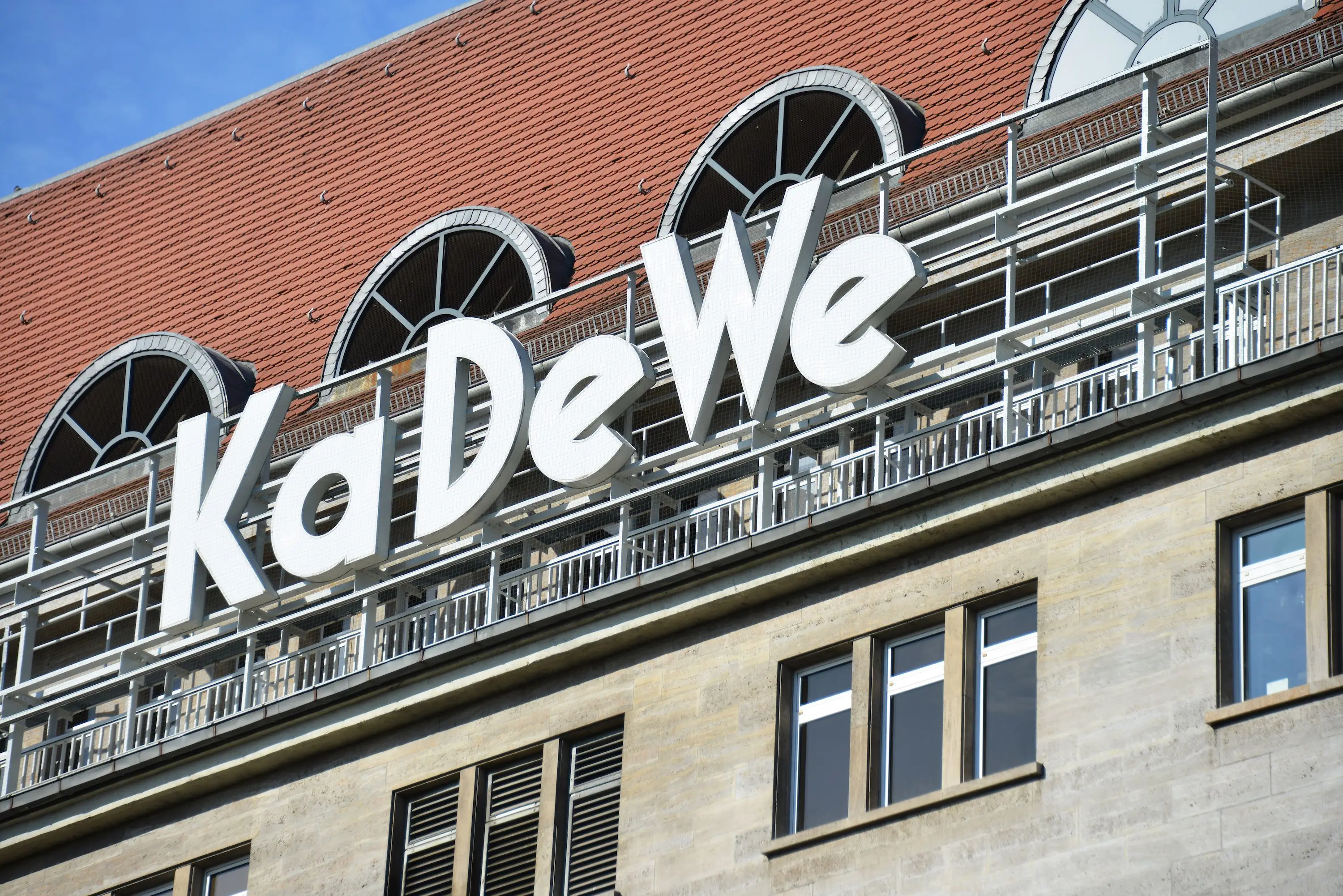
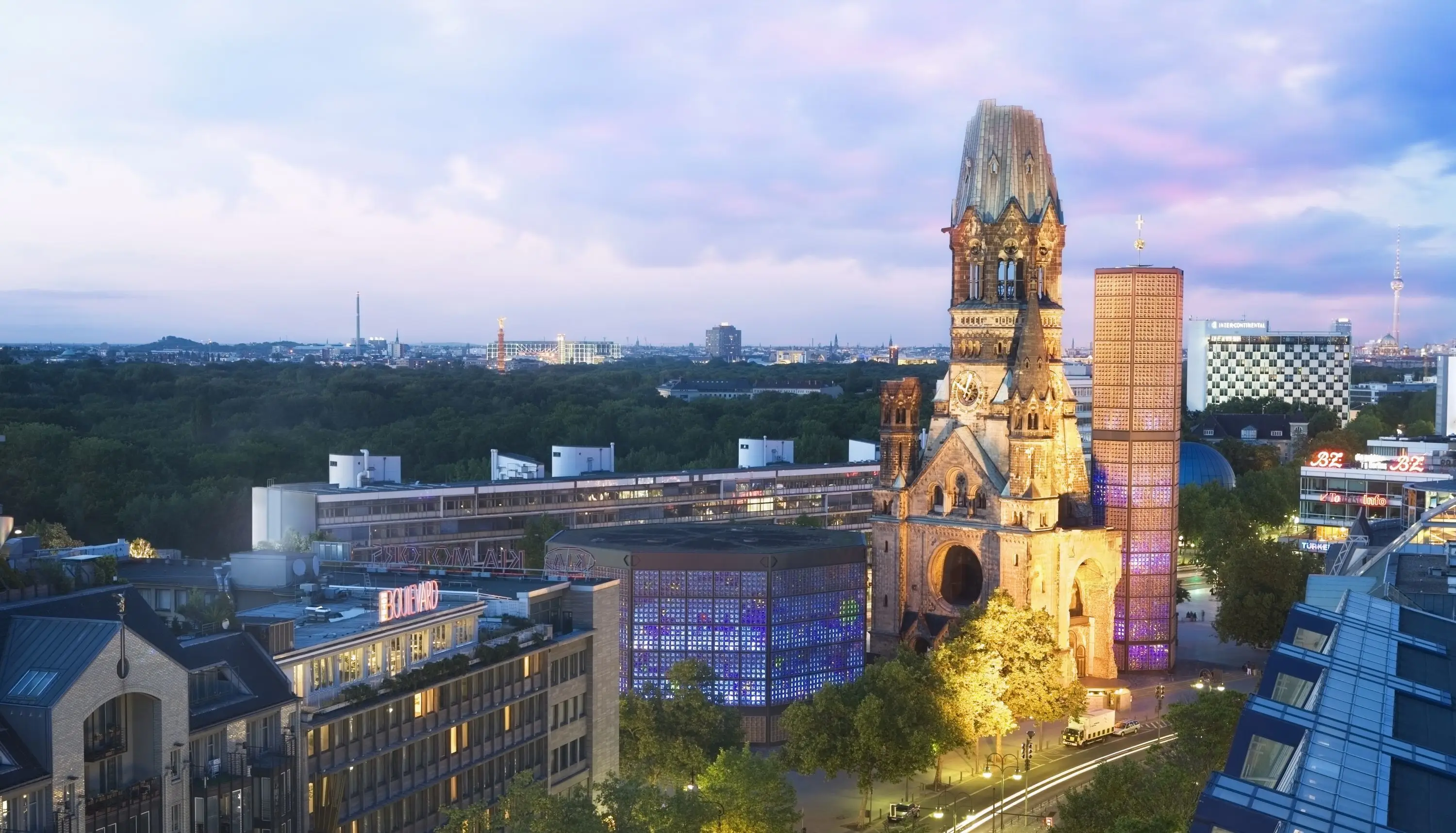
In the 1920's the elegant, tree-line boulevard known as the Kurfürstendamm was the center of Berlin's nightlife and leisure scene, attracting writers, film stars, and artists. WWII left it in ruins, and today at the end of the boulevard you'll discover a chilling reminder of that destruction: the purposefully unrecontructed remains of the Memorial Church. During the Cold War, the Kurfürstendamm and its surroundings were central to West Berlin's revitalized identity. This was perhaps best symbolized by the famous KaDeWe, the gigantic department store which served as a symbol of market capitalism lodged in the heart of the Iron Curtain.
City West

Morning/Mid-Day — City West

In the 1920's the elegant, tree-line boulevard known as the Kurfürstendamm was the center of Berlin's nightlife and leisure scene, attracting writers, film stars, and artists. WWII left it in ruins, and today at the end of the boulevard you'll discover a chilling reminder of that destruction: the purposefully unrecontructed remains of the Memorial Church. During the Cold War, the Kurfürstendamm and its surroundings were central to West Berlin's revitalized identity. This was perhaps best symbolized by the famous KaDeWe, the gigantic department store which served as a symbol of market capitalism lodged in the heart of the Iron Curtain.

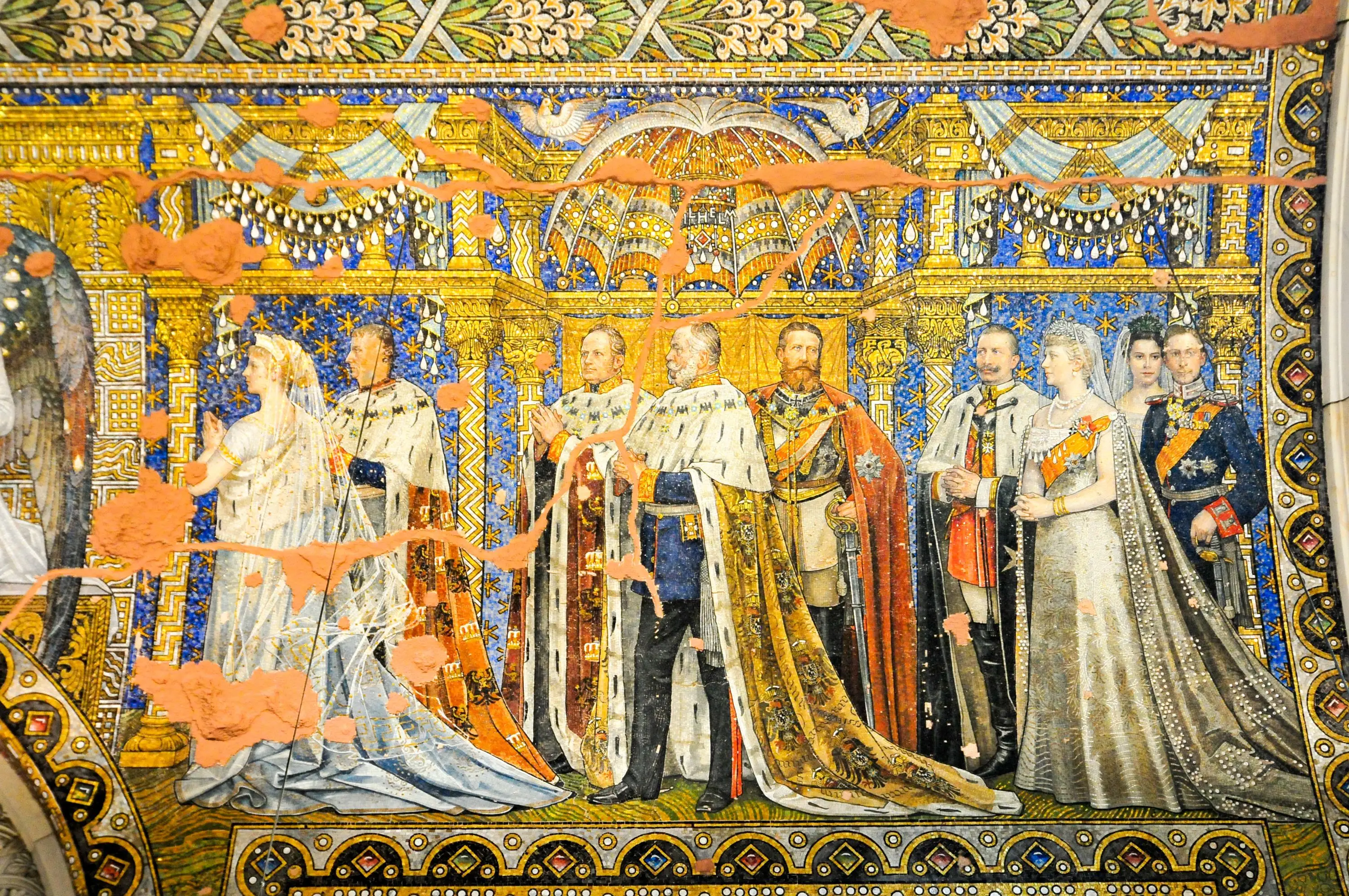
Memorial Church

Remind yourself of war's destructiveness by visiting the ruins of this church destroyed during WWII.

After its destruction in WWII, the Kaiser Wilhelm Memorial Church was partially rebuilt in modernist style, and partially left in ruins as a powerful reminder of the war. Built-in the 1890s, Kaiser Wilhelm II hoped to inspire the secular proletariat to return to traditional religious values. The neo-Gothic design became ever more colorful as Wilhelm insisted on more bling. The small exhibition inside shows the wartime destruction and a “before and after” model of the city center.

Story of Berlin Museum

Take an interactive crash course in Berlin history. (Re-opening Autumn 2021)

This museum uses reconstructed street scapes, homes, and other interactive exibits to give you good feeling for the atmosphere of Berlin during it's long and often times turbulent history, including during the Nazi and Communist era. You can also tour an underground nuclear shelter.

Berlin Zoo

Visit Germany's Oldest and Best Known Zoo.

Founded in 1844, the Zoologischer Garten Berlin was the first zoo in Germany and features some wonderful animal-inspired architecture as well. The original animals were donated by King Frederick William IV of Prussia, and it now has a collection of around 20,500 animals representing 1,500 different species. The zoo’s aquarium opened in 1913 and now contains one of the largest collections of aquatic life in Europe. 

KaDeWe

Shop in the iconic department store of capitalist West Berlin

Opened in 1907, the Kaufhaus des Westens, or KaDeWe, quickly became a temple of luxury in a rapidly modernising city. It took off again following the German post-war economic miracle and gained new impetus again following German reunification. During Communism, due to it's proximity to East Germany, it became a symbol of the material wealth of the West in comparison to that of countries stuck behind the Iron Curtain.

2:30 PM — Transfer to Rail Station

Most trains depart from Berlin Hbf station, the largest station in the city. Before spending money on a transfer, be sure to check whether your hotel is within easy walking distance. It is well connected by public transport, including U-bahn, S-bahn, and bus, making it relatively easy and often fastest to reach by public transport. However, if traveling with bags, you may prefer the convenience of taking a taxi, Uber, or private transfer. Berlin taxis are generally reliable and honest. If you are staying in central Berlin and are picked up one hour prior to departure, you should have time to catch your train.

15:34 - 18:52 — Train to Nuremberg

This scenic 3.5 hour journey aboard an Intercity Express Train (ICE) will first take you through the thick pine forests surrounding Berlin. You will then travel through the city of Leipzig, which was once the highly polluted industrial center of East Germany, but is now rated among Germany's most livable cities. As you cross over the now irrelevent border between the former East and West Germany, you will enter not only the state of Bavaria, but the region of Franconia, where the locals will explain that they are Franconian first, and Bavarian second. You will pass through the historic town of Bamberg before reaching Nuremberg, which is considered the unofficial capital of Franconia.

6:52 PM — Transfer from Rail Station

Most trains arrive in Nürnberg Hbf station, the largest station in the city. Before spending money on a transfer, be sure to check whether your hotel is within easy walking distance (many are located very nearby). Also consider that public transport is the cheapest and sometimes fastest option, and the station is the public transport hub of the city, meaning you can easily connect to anywhere in the city. Uber is not yet available in Nuremberg, but taxis are available at all rail stations and are generally honest. Some private transfers even meet you directly on the platform to help with bags.

image

Day 10

Berlin to Nuremberg

image

Day 11

Nuremberg

Day 11

Nuremberg

icon
icon
icon

9:00 AM - 11:00 AM

Guided Walking Tour of Nuremberg

Discover a truly extraordinarily place on this 2-hour private guided walking tour of Nuremberg’s medieval walled old city. Enjoy a pleasant walk around the Old Town, passing churches, art treasures, wells and fountains as you make your way up to the Imperial Castle. Explore the outer courtyards with your guide before returning to the Main Market Place.

Guided Walking Tour of Nuremberg

9:00 AM - 11:00 AM — Guided Walking Tour of Nuremberg

Discover a truly extraordinarily place on this 2-hour private guided walking tour of Nuremberg’s medieval walled old city. Enjoy a pleasant walk around the Old Town, passing churches, art treasures, wells and fountains as you make your way up to the Imperial Castle. Explore the outer courtyards with your guide before returning to the Main Market Place.

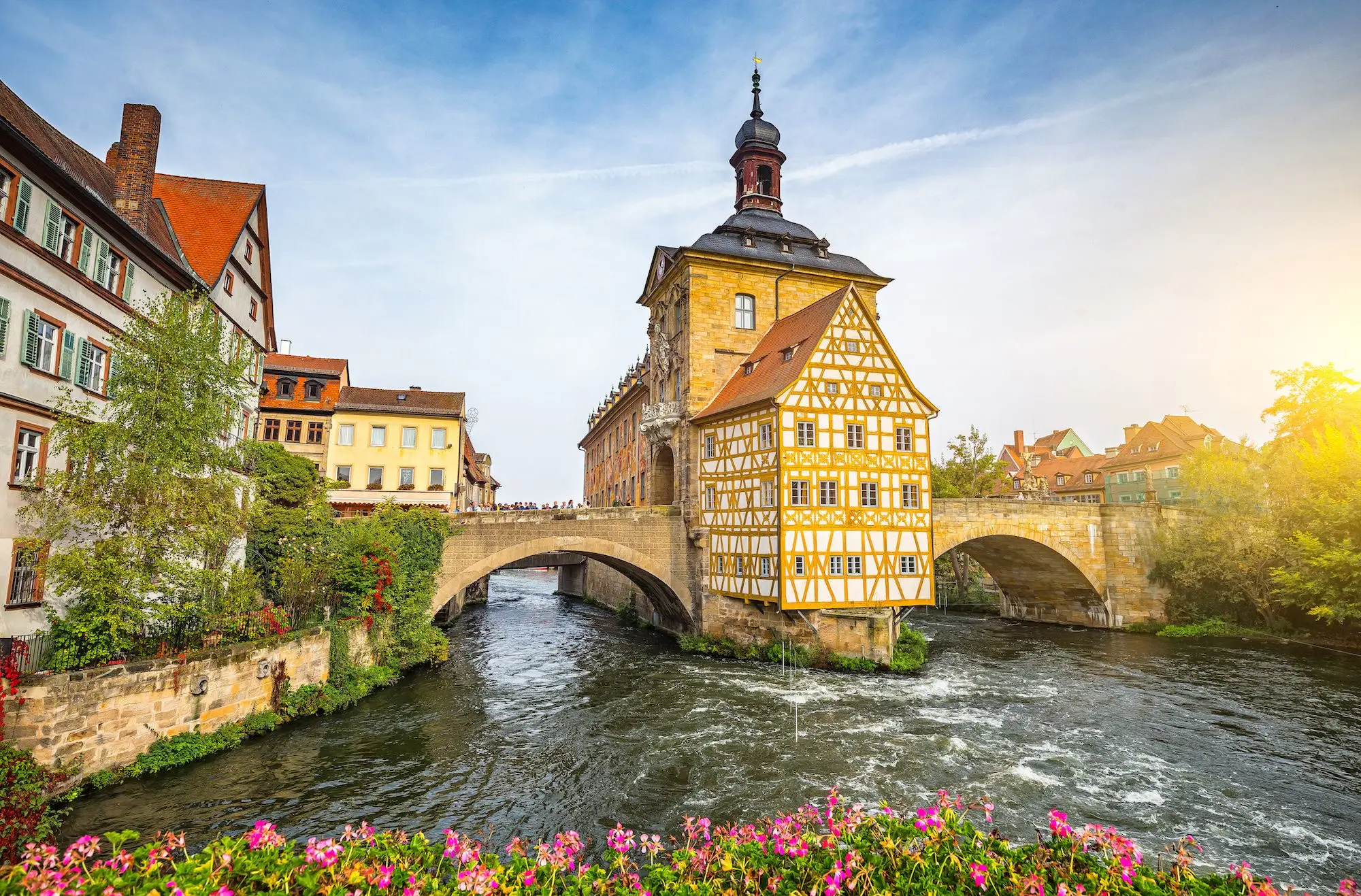
Old Town Hall

See the most iconic building in Bamberg, precariously perched on an island in the river.

According to legend, it was built on an artificial island because the bishop of Bamberg would not grant the citizens any land for its construction. It is one of the most beautiful buildings in the Old Town, particularly due to its wonderful frescoes that depict the story of how the building came to be built on the island.

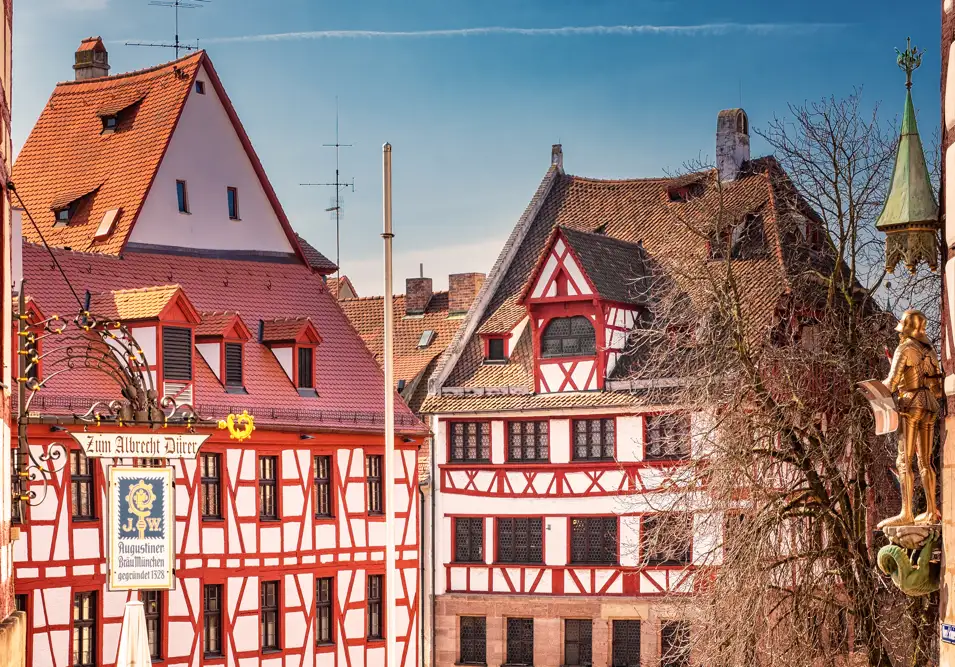
Mid-Day/Afternoon — Alststadt & Castle

With its abundance of half-timbered homes, Gothic churches, and a dramatic castle, Nuremberg was once an ideal representative of Germany’s architectural inheritance. While most of its Old Town was destroyed in World War II, much of it was rebuilt to reflect this pre-war appearance. The beauty and vibrancy of the historic city can still be easily imagined as you shop on the Market Square or explore the narrow lanes of the Old Town, which are lined by brightly painted and steeply gabled half-timbered burgher houses. The impressive castle overlooking the city is also a must see when visiting the Sebalder Altstadt.

Market Square

Shop for something tasty and check out Nuremberg's greatest architectural gems on the Market Square.

The Market Square, or Hauptmarkt, is the ideal point to start exploring the Sebald Old Town. Its two most notable features, the magnificent Frauenkirche (Church of Our Lady) and Schöner Brunnen were built in the 14th century. For many visitors, the colorful fountain is the most memorable site in Nuremberg, with its forty statues depicting figures from the Bible, mythology, and German history. The city’s famous Christmas Market is launched from the Frauenkirche’s balcony each year, and the clock on its gable performs a daily show at noon, as a procession of noblemen pays homage to the seated Emperor Charles IV. The interior of the church is also worth a visit, with its collection of altars and artwork taken from nearby monasteries. The square is also an open-air market for vendors of produce, meats, baked goods, & gifts.

Historic Beer Cellars (Felsangänge)

Take a guided tour within the labyrinthine underground rock passages where Nuremberg's burghers stored their beer.

Another highlight of the Old Town are the chilly beer cellars below it. Bring a sweater or jacket, as the temperature averages about 46° F / 8° C. Carved through sandstone bedrock, the cellars form an interconnected maze that served as storage for ripening beer. During World War II they also provided a refuge from Allied bombing raids and saved thousands of lives with their good ventilation.

Albrecht Dürer House Visitor

Tour the well-preserved Gothic home of the famed Renaissance artist Albrecht Dürer.

The former residence of the artist is interesting on several levels. The well-preserved interiors host a museum illustrate how a well-off family in the Renaissance lived, and explains how Dürer worked from his home. It does not hold any of his original paintings, nor of his woodcut prints. However, it illustrates the influence Dürer had in making art accessible to the masses through his revolutionary use of woodcuts in the then new era of the printing press. Very worthwhile.

Weißgerbergasse

Take a stroll down Nuremberg’s most charming street.

Beautifully painted half-timbered houses line the street, each with some interesting architectural detail to discover. Most of the houses are filled with restaurants, shops, galleries, and pubs, so you will certainly find a reason to linger.

Imperial Castle

Make the gentle climb up to this 11th-century castle to enjoy a beautiful view of Nuremberg's old town.

The castle is open for tours and is one of Nuremberg's top attractions. The castle’s history stretches back to the early Middle Ages when it began as a simple wooden fort on the hilltop. It grew increasingly more intricate and impressive over the centuries. While it was officially a castle of the Holy Roman Emperor, it was controlled by local noblemen known as Burgraves, creating a never-ending source of conflict with the independent-minded city just below the castle. The city finally gained control of the castle from the Emperor in 1422, shortly after having burned much of it down. The castle still remained an imperial castle, however, and would host the Emperors during their frequent visits to the city.

Late Afternoon/Early Evening — Lorenz Old Town

The Old Town to the south of the Pegnitz River is known as the Lorenz Old Town, after the magnificent medieval Church of St. Lorenz. Like the Sebald Old Town to the north, it was also rebuilt after being nearly completely destroyed in Allied air raids in January 1945. While it doesn’t have quite the old world charm found on the other side of the river, it makes up for this with liveliness and activity. This is the true heart of the city for locals, as it is filled with shopping, restaurants, pubs, and other attractions.

Königstraße and Karolinenstraße

Bratwurst and Pretzels and Gingerbread, oh my! And plenty of shopping and coffee drinking too!

Two large pedestrian streets intersect in front of the Lorenzkirche; the Karolinenstraße (Emperor Charles’ Street) and the Königstraße (King’s Street). Lined by shopping and sidewalk cafes, these are Nuremberg’s best spots for people watching. It's also the perfect place to score some of Nuremberg's delicious gingerbread (Lebkuchen). Legend says gingerbread was first created for a local baker’s daughter 600 years ago. You will never want to go back to store-bought gingerbread. Lovers of bratwurst will also be in paradise on Karolinenstraße, as every few steps a different stand is grilling up bratwurst. Nuremberg’s style of making bratwurst is so unique that the EU bestowed upon it the special designation of "Protected Geographical Indication" (similar to how only sparkling wine from Champagne can be called champagne). There’s even a Nuremberg Sausage Protection Society to guard the quality of the city’s fabled wurst. Soft, salty pretzels are another wonder of Nuremberg that you'll find here. It’s not just the pretzel, but what goes in it. Pretzel sandwiches are slathered in butter, mustard, cream cheese, etc., and filled with salami, salmon, and other treats.

Handwerkerhof

Shop for hand-made artisan crafts in a market with a medieval atmosphere.

In the courtyard of the Frauentor, which is the main gate tower on the south side of the Old Town just across from the main rail station, you will discover an enchanting cluster of shops and restaurants known as the Handwerkerhof (Craftsman Courtyard). While a bit pricey, it offers a great selection of handmade artisanal goods, such as porcelain, wooden toys, clothing, artwork, and other goods, as well as traditional restaurants. Even if you don’t feel like buying anything, it is still worth checking out the village-like medieval atmosphere.

German National Museum

Get lost for hours in the largest museum of German art and culture.

The collection includes items dating as far back as three millennia ago and is especially rich in items from the medieval and Renaissance eras. A highlight is the Behaim globe, which was created in 1491, and so naturally is missing the New World. There is an extensive collection of paintings, sculptures, and other artwork stretching into modern times, as well as applied arts, such as toys, which help to show how people once lived. A visit is a must for lovers of art and history.

Pegnitz River

Linger on Nuremberg's bridges to discover the city at its most delightful.

The Pegnitz River isn’t a wide expanse or a rushing torrent, but rather a petite river crowded with buildings on either side of its banks, and crisscrossed by a succession of charming small bridges. If you want to know Nuremberg intimately, make a point to walk its bridges. At the western edge of the Old Town, you’ll find the Kettensteg, or Chain Bridge, a narrow pedestrian bridge dating back to 1824. The Henkersteg, or Hangman’s Bridge, crosses a pleasant little island once site to flea markets. This covered bridge is probably city’s most charming, yet hides a sinister history, as the town executioner's residence was built onto the bridge. From the wide Museumsbrücke you can take in the view of the medieval Holy Ghost Hospital, resting on arched foundations that rise above the river waters. Beyond the eastern end of the Old Town, you’ll find a lovely forested park where the Pegnitz breaks into a network of small and clear waterways.

Church of St. Lorenz

Step inside one of the most beautiful and important Lutheran churches in all of Germany.

Constructed around 1400, the church is exceptional for a Protestant church due to the wealth of beautiful sculptures, altars, and other art within the church. Cities and states that became Protestant during the Reformation usually stripped their churches of many of their medieval treasures. The burghers of Nuremberg, however, insisted that they remain as a symbol of civic pride. During World War II everything that was removable was hidden in beer cellars beneath the city, and thus they survived even though the church itself was severely damaged. Included amongst the art are several works by Veit Stoß, one of the Renaissance Germany’s greatest sculptors and a sometime resident of Nuremberg. Be sure to check out his so-called “Angel’s Greeting”, a candelabrum showing the Virgin Mary and Archangel Gabriel, suspended in the middle of the church. You can also find several examples of outstanding stained glass work.

Marriage Carousel fountain

Honeymooners may want to skip this controversial fountain.

The Karolinenstraße (Charles Street) is enlivened by statuary and fountains, including the Marriage Carousel fountain (Ehekarussell). Erected in 1984, it shows the artist’s less than rosy picture of marriage. The fountain is located at the end of the Karolinenstraße, just below the 13th century White Tower, which once served as a gateway into the city.

image

Day 11

Nuremberg

image

Day 12

Nuremberg

Day 12

Nuremberg

icon
icon

Morning to Afternoon

Nazi Rally Grounds

Perhaps more than any other German city, Nuremberg was unequivocally linked to the National Socialist German Workers’ Party or Nazi Party. Once Hitler declared Nuremberg “City of Nazi Party Rallies” in 1933, construction began on grand buildings for the party’s mass meetings. Today's visit to the grounds is both enthralling and haunting, as what was once the heart of the Nazi Party Rallies now lies in ruins as a reminder of the megalomania of the Nazi party regime.
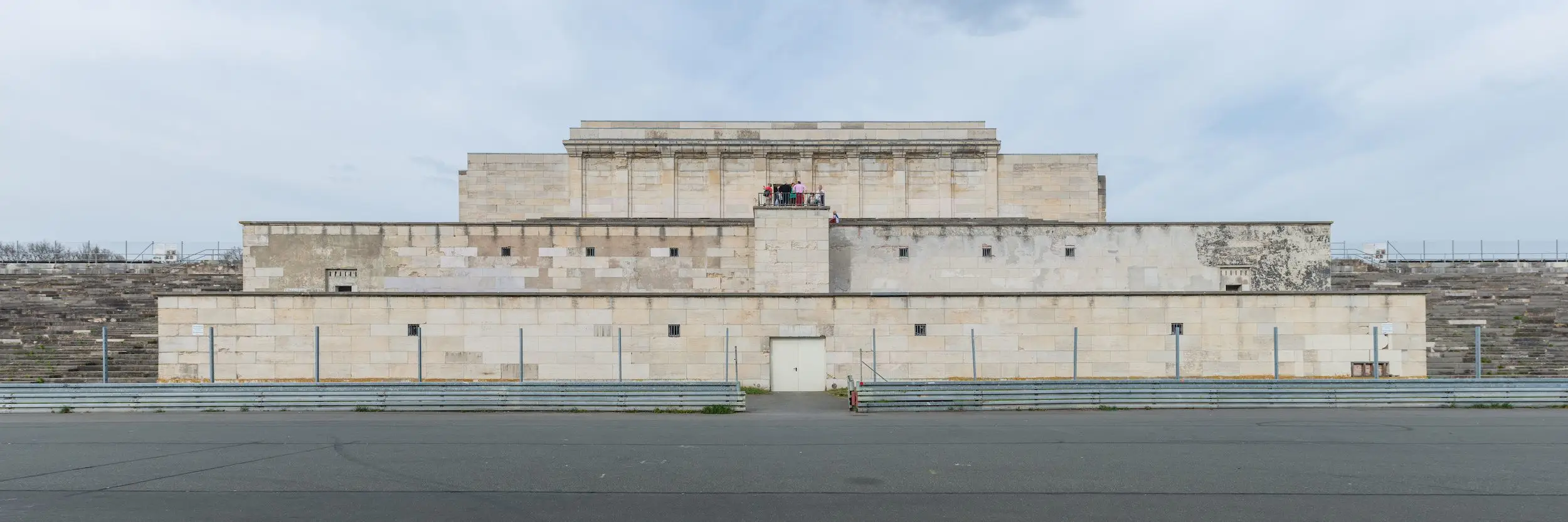
Nazi Rally Grounds

Morning to Afternoon — Nazi Rally Grounds

Perhaps more than any other German city, Nuremberg was unequivocally linked to the National Socialist German Workers’ Party or Nazi Party. Once Hitler declared Nuremberg “City of Nazi Party Rallies” in 1933, construction began on grand buildings for the party’s mass meetings. Today's visit to the grounds is both enthralling and haunting, as what was once the heart of the Nazi Party Rallies now lies in ruins as a reminder of the megalomania of the Nazi party regime.

Doku-Zentrum Museum

Learn how Nuremberg and its rally grounds fit into the Nazis' perverse vision of the global domination and Aryan purity.

The unfinished Congress Hall is one of the largest examples of National Socialist architecture. It was designed to evoke the grandness of the Colosseum in Rome and was meant to hold over 50,000 people. The exterior was finished in late 1938 and construction work continued during the war with the help of Soviet prisoners, but Hitler’s vision was never finished. Today it is home to the Documentation Center, a multi-media museum that provides visitors with detailed information on the ‘fascination and terror’ of the Third Reich. The permanent exhibition has a strong focus on Nuremberg’s history during the Third Reich as well as information that spans from the early days of the National Socialism in 1918 to the end of the war and the Nuremberg Trials in 1945. Aside from the museum, visitors can also gain a great perspective of the grandness of Hitler’s vision for the Congress Hall from the protruding walkway that has been since been built as part of the museum.

Zeppelinfeld

Stand in the very spot from which Hitler once mesmerized crowds with his dark vision.

The Zeppelin Field with its Grandstand designed by Albert Speer was the most important part of the Party rally grounds during the Third Reich. Bigger than 12 football fields, it could hold far more than 100,000 people. Two gigantic outside flights of stairs and pillar colonnades flanked the center part, decorated with a colossal gold-plated swastika bedded on a laurel wreath. Each end originally had towers adorned with fire bowls. It was here that the famous “Cathedral of Light” provided the spectacular effect, with over 150 very strong floodlights beamed right up into the sky. The empire that was supposed to last a millennium lasted only 12 years, and all that can be found today are the crumbling remains of the large staircase and the center section.

Hall of Honor

Search for the traces of a vast amphitheater that once surrounded a WWI Memorial Hall, which was perverted by the Nazis for use in their propaganda machine.

Built 1929-30, the Hall of Honor memorializes the dead from the First World War. However, the Nazis used it for their own means, and it become a part of their rituals and cult of death. This was the original location of the Party Rallies, and in 1933 the park in front of the Hall of Honor was transformed into the Luitpold Arena in order to improve the theatrical effect. A pathway of granite slabs was laid down the middle, creating a direct line to the newly built speaker’s pulpit from where Hitler would later stand to address the masses. Now you will find nothing but some stairways and mounds in the parkside to give you an idea of where the arena once stood.

Late Afternoon/Early Evening — Nuremberg Trials Museum

On 20th November 1945, the trial of 21 leaders of the Nazi regime began in courtroom 600 of the Nuremberg Palace of Justice. Renovated into a museum in 2010, it is a must visit for anyone interested in World War II history. Visit the very courtroom where Hermann Goering and the other Nazi leaders were sentenced to death and learn about the trial proceedings and various sentences that were issued in the captivating multi-media museum. The permanent exhibition provides detailed information and documentation about the history leading up to the trials, the subsequent trial of 1945-46, the repercussions and impact of the Nuremberg Trial up to present day.

image

Day 12

Nuremberg

image

Day 13

Nuremberg to Munich

Day 13

Nuremberg to Munich

icon
icon
icon
icon
icon
icon

8:20 AM

Transfer to Rail Station

Most trains depart from Nürnberg Hbf station, the largest station in the city. Before spending money on a transfer, be sure to check whether your hotel is within easy walking distance. Also consider that public transport is the cheapest and sometimes fastest option, and you can easily reach the station from almost anywhere in the city, as it is the public transport hub. Uber is not yet available in Nuremberg, but if staying at a hotel, they can order a reliable taxi. Some private transfers will even help with your bags.
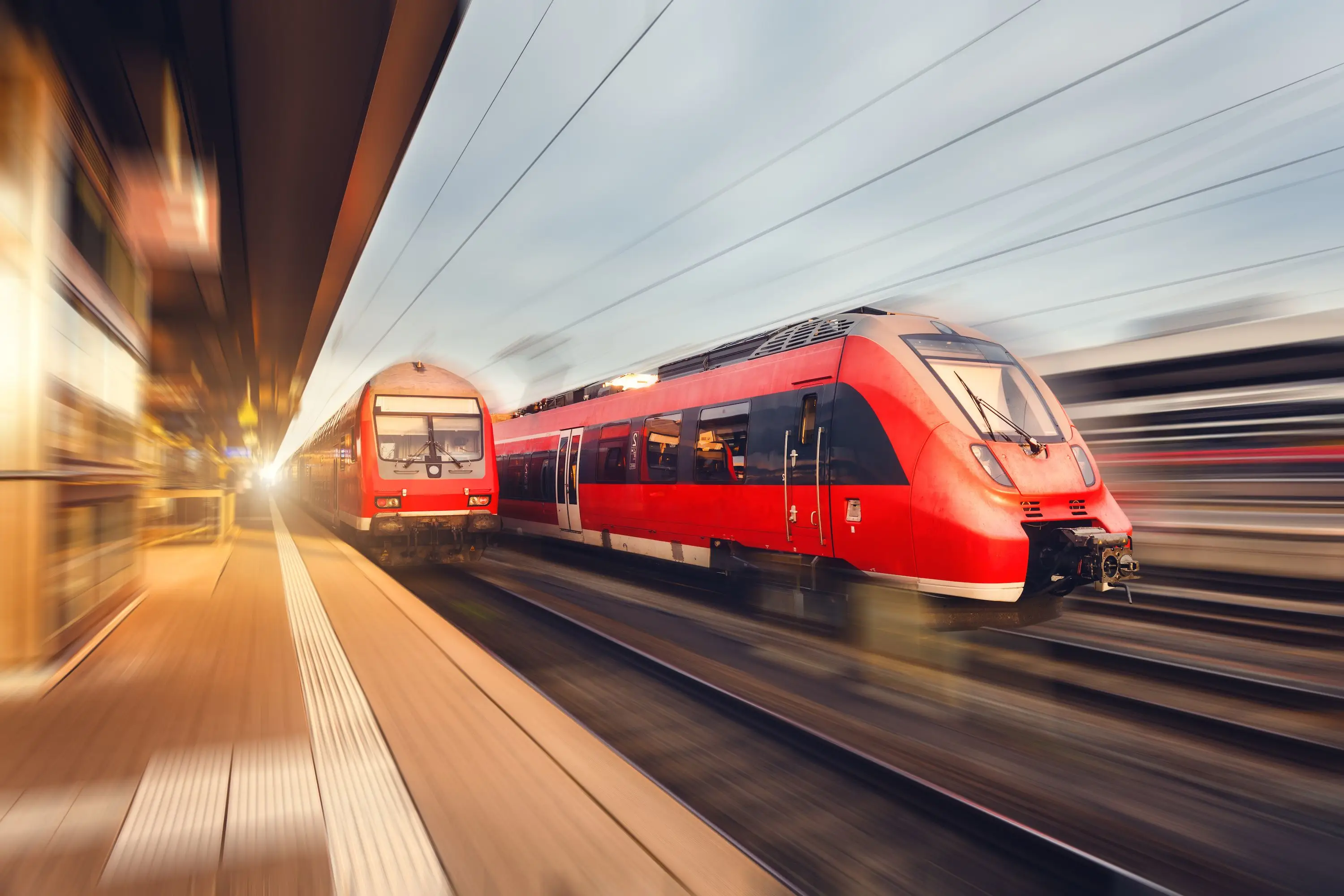
Transfer to Rail Station

8:20 AM — Transfer to Rail Station

Most trains depart from Nürnberg Hbf station, the largest station in the city. Before spending money on a transfer, be sure to check whether your hotel is within easy walking distance. Also consider that public transport is the cheapest and sometimes fastest option, and you can easily reach the station from almost anywhere in the city, as it is the public transport hub. Uber is not yet available in Nuremberg, but if staying at a hotel, they can order a reliable taxi. Some private transfers will even help with your bags.

09:03 - 10:06 — Rail to Munich

The short but scenic train journey from Nuremberg to Munich will take you north through the charming Bavarian countryside, as well as the Audi-producing industrial city of Ingolstadt and the town of Dachau where the first Nazi concentration camp was infamously located.

10:06 AM — Transfer from Rail Station

Most trains arrive in Müchen Hbf station, the largest station in the city. Before spending money on a transfer, be sure to check whether your hotel is within easy walking distance. Also consider that public transport is the cheapest and sometimes fastest option - there is a subway and local rail station co-located with the train station. Taxis are available at all rail stations and are generally honest. Some private transfers even meet you directly on the platform to help with bags. Uber is also available for those with the app.

1:00 PM - 3:30 PM — Guided Walk Tour of Historic Munich

Munich contains many reminders of a long and varied history but also encompasses the modern features of a strong and vibrant city. The insights of a local help make sense of the traditions, trends, and promises of Bavaria's Capital - sometimes referred to as the city of laptops and lederhosen. On this tour, your guide will show you the highlights of Munich and point out the many hidden treasures.

Late Afternoon/Early Evening — Altstadt

Munich boasts a large old town (Altstadt) with many beautiful historic buildings. Sometimes called the world's largest village, it is a perfect place to wander. You will discover many Medieval, Renaissance, and Baroque buildings, as well as several stunning examples of modern architecture. Pleasant cafes, beer halls, cozy restaurants, and great shopping all add to the charming atmosphere.

Hofbräuhaus

Enjoy some fine Bavarian brews in a beer hall that dates back to 1589.

Originally built in 1598 by Maximilian I, Duke of Bavaria, as an extension to the state brewery, this beer hall was opened to the public in 1828, remodeled in 1897, almost completely destroyed during World War II, and reopened following its restoration in 1958. It is now situated across three floors, with a restaurant, ballroom, and beer garden, and is one of the largest tourist attractions in the city as well as a favorite of locals. This is where the ingurgitation of vast quantities of beer and pretzels has been taking place since 1644. Even if you're a teetotaller, you'll want to at least take a look at the interior of the three-storied temple to the consumption of fermented hops and watch the odd local quaff his or her ale amid the sea of tourists. There's also an attractive courtyard where you can escape the din on a summer's day or evening.

New Town Hall & Glockenspiel

Enjoy the mechanical show as the figures on the Glockenspiel on the New City Hall come to life and re-enact stories from the 16th century.

The Marienplatz is the main square of the Altstadt, and its centerpiece is the domineering facade of the neo-Gothic Neues Rathaus (New Town Hall). It is decorated with gargoyles and statues, including a dragon scaling the turrets. For a great view of the city, ascend the 279ft (85m) tower (elevator available to the left just inside the main entrance to the town hall). The highlight of the building is the Glockenspiel, which attracts large numbers of tourists at 11 am and noon (and 5pm in the summer) who come to watch the contraption in operation. There's dancing, a joust, and more, all set to musical chimes. Unusually, the New Town Hall mostly survived WWII intact, probably because it was used by Allied bombers as a direction finder for obliterating the rest of the city.

Peterskirche

Climb to the top of Munich's oldest church tower for what is still today its best view.

The best views of central Munich can be viewed from the 302ft (92m) tower of St Peterskirche, inner Munich's oldest church and possibly the city's origin point. The presence of a church on its site goes back to before the city's founding, and it has existed in a number of iterations since. Its nearly 3000ft-tall tower is affectionately called "Alter Pete" or "Old Pete" as a recognition of its significance to Munich's social and cultural history.

Viktualienmarkt

Assemble a gourmet picnic lunch in one of Europe's best known markets.

The Viktualienmarkt is one of Central Europe's finest gourmet markets where many of the stalls have been run by generations of the same family. Prices are high, but you can gather all the ingredients for an haute cuisine picnic and then seat yourself in the market's own beer garden to enjoy an al fresco lunch. The very existence of such a market in an old town quarter is the result of Munich's dedication to preserving its past. Fearing that fast food chains will replace the old-fashioned market stalls and quaint eateries that make the Viktulienmarkt one of Europe’s most charming squares, the city subsidizes the rent so they can survive on the some of Germany’s most expensive real estate.

Jewish Museum

Learn about Munich's rich Jewish heritage and see it's most striking synagogue.

The museum focuses on Munich's Jewish heritage, as well as Jewish history and culture in general, with a contemporary flair and modern means of display. Adjacent to the museum is the Ohel Jakob synagogue, which ranks among the most striking structures built in the city in recent years. It is the first synagogue to serve as the main synagogue of the city since the Nazi Kristallnacht (i.e. the Night of Broken Glass). Tours are offered but must be arranged 10 days in advance.

Frauenkirche

Restored Gothic church.

The Frauenkirche, or Church of Our Lady, dominates the Altstadt. This is because the twin onion-domed towers inspired the city council to prohibit any other building in the Altstadt from exceeding their height of 325ft (99m). Much of the interior was destroyed during WWII, but it has been rebuilt. An attraction that survived the bombing in original form is the Teufelstritt, or Devil's Footstep, at the entrance. This is a black mark resembling a footprint, which according to legend is the result of a deal the devil made with the builder to finance construction of the church on the condition that it contains no windows. The clever builder, however, tricked the devil by positioning columns so that the windows were not visible from the spot where the devil stood in the foyer. By the time the devil discovered that he had been tricked, he could not enter the already consecrated church. The devil could only stand in the foyer and stomp his foot furiously, which left the dark footprint that remains visible in the church's entrance today.

Evening/Late Evening — Augustiner Keller

This vast beer garden under leafy chestnut trees is immensely popular with the locals, so you can study the lederhosen-clad men and dirndl attired women at close quarters while quaffing the Augustiner's own Edelstaff beer from your Maßkrug (one-liter glass beer mug) and wolfing down a plate stacked high with Bavarian sausage and mashed potato.

image

Day 13

Nuremberg to Munich

image

Day 14

Munich

Day 14

Munich

icon
icon
icon

Morning/Mid-Day

Residence Palace

The Munich Residenz was the seat of Bavaria's Dukes and Kings from the middle ages until 1918. Originally a medieval castle, it was transformed over the centuries into a beautiful palace. Today it is open to the public and you can explore its magnificent interiors, numerous courtyards, and elegant garden. The living quarters of the royal family have been transformed into a museum which provides a fascinating glimpse into the lives of Kings and Queens. You can also peruse numerous jewels, gold objects, and other precious items which are held in the Residenz Schatzkammer (treasury).
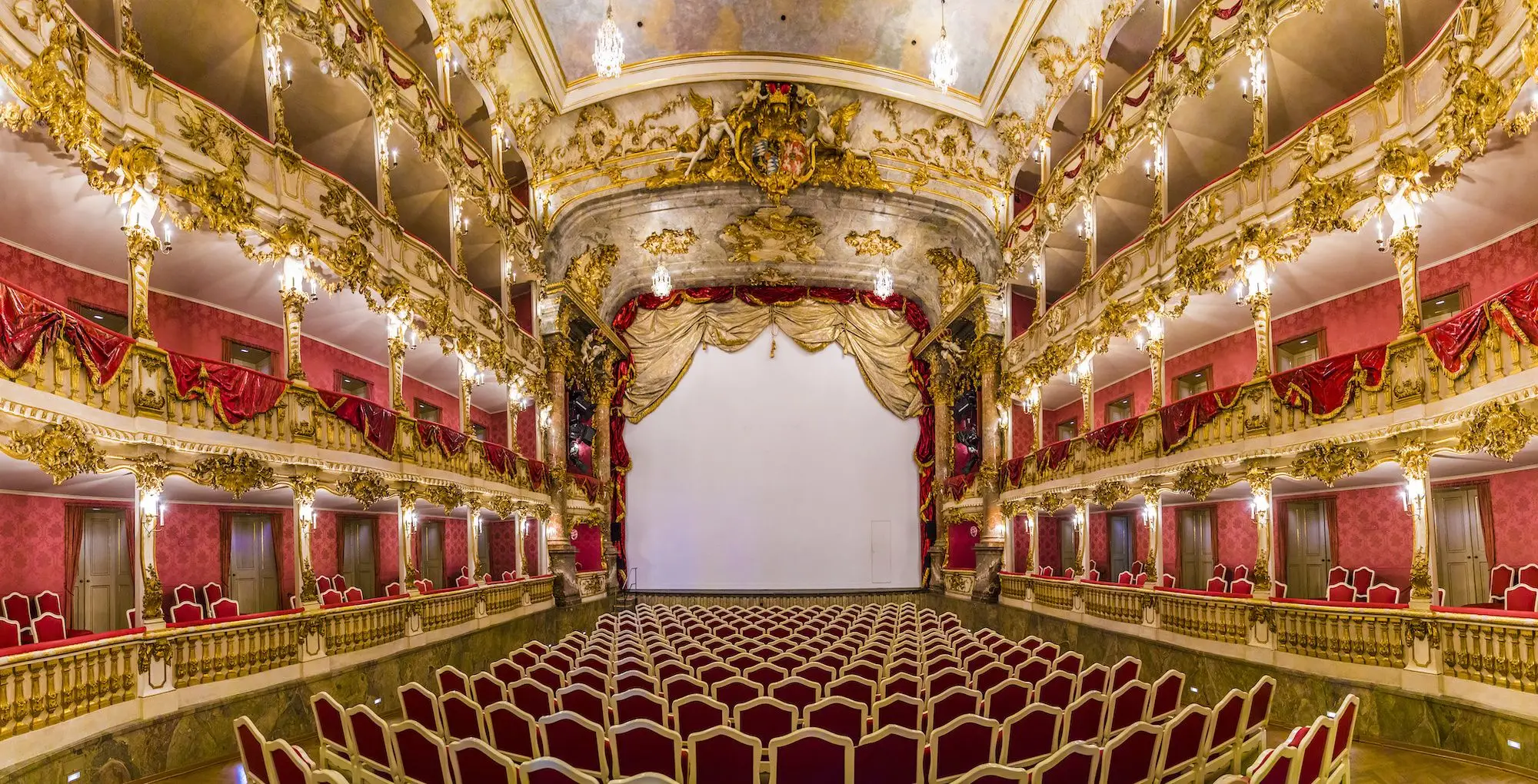
Residence Palace

Morning/Mid-Day — Residence Palace

The Munich Residenz was the seat of Bavaria's Dukes and Kings from the middle ages until 1918. Originally a medieval castle, it was transformed over the centuries into a beautiful palace. Today it is open to the public and you can explore its magnificent interiors, numerous courtyards, and elegant garden. The living quarters of the royal family have been transformed into a museum which provides a fascinating glimpse into the lives of Kings and Queens. You can also peruse numerous jewels, gold objects, and other precious items which are held in the Residenz Schatzkammer (treasury).

Residenz Palace Museum

Wander where you will, audio guide in hand, through the spectactular royal residence.

You'll experience jaw-dropping architecture and beautiful artwork as you explore the museum and the adjacent Royal Treasury. Among the many highlights, unmissable is the Antiquarium, the largest and most lavish Renaissance hall north of the Alps. The window reveals are decorated with 102 views of towns, markets, and palaces in what was then the Duchy of Bavaria, providing an unique insight into how the country once looked. The Rich Chapel (Reiche Kapelle) was the private place of worship of Duke Maximilian I and his wife, and it was decorated with particular magnificence using colored marble and gilt reliefs. The Ornate Rooms (Reiche Zimmer) meanwhile represent a high point of the court Rococo style, and are works of art in their own right. 

Cuvilliés-Theatre

Visit what is perhaps the most ostentatious and sensually overwhelming building in Munich.

The exceptionally extravagant court theatre was built by Elector Max III Joseph's court architect François Cuvilliés between 1751 and 1755, and was intended to showcase Munich as a home to the arts and the enlightenment. It only survived the destruction of WWII because the elaborately carved tiers of boxes were removed from their original location in the Alte Residenztheater building for safekeeping. It's still used as a theatre today.FYI - to visit the Cuvilliés-Theatre you need to exit the museum and walk around the palace to get onto Residenzstraße and then re-enter the palace and cross through either the Chapel Courtyard or the Imperial Courtyard. 

Odeonsplatz

See the square where Hitler's Beer Hall Putsch came to a bloody end.

The square directly adjacent to the Residence is the Odeonsplatz, which is guarded by the Feldherrnhalle (Field Marshalls' Hall) in honor of the Bavarian army. It was here that Hitler's Beer Hall Putsch in 1923 came to a bloody end in a gun battle with the police. During the Nazi regime, anyone passing the Feldherrnhalle was obliged to give the Nazi salute, which prompted some locals to instead take a side street. The Nazis derogatorily nicknamed it the Shirkers' Alley, but the 'shirkers' are memorialized in a trail of brass cobblestones. Also on the square is the bright yellow Theatinerkirche with its two massive twin towers. It was the personal church of Bavaria's rulers and many of them are interred there.  

Afternoon/Late Afternoon — English Gardens

The English Garden is one of Europe's largest parks; in fact, it is larger than New York's Central Park. While it is called the "English Garden" after the style of the park, it was actually designed by an American-Englishman and is now a symbol of the very Bavarian city of Munich. The park is a perfect place to escape the city for a long stroll, where you can enjoy the natural scenery and the people watching.

Chinese Tower

Enjoy some Bavarian brews with the locals in Munich's second largest beer garden.

Located in the middle of the English Gardens, this beer garden (7,000 seats) is located beneath the wooden Chinese Tower. The 25 meter high (75 feet) pagoda was built in 1789 during a pan-European craze for all things East Asian. The food stalls around the pagoda offer traditional beer garden food such as Steckerlfisch (grilled fish on a stick), Hendl (roasted chicken) and Schweinshaxn (roasted pork knuckle). The beer served is Hofbräu and a Maß Hell (lager).

Eisbachwelle

Watch surfers catch some waves in the middle of the city.

At the extreme southern end of the park you can find one of the more unusual and entertaining pastimes enjoyed by the locals - surfing on the man-made Eisbach river. There is a standing wave produced by the water pumping mechanism and surfers line up along the bank taking turns entering the water with their boards. After a minute or so, successful surfers will voluntarily drop out, returning to the end of the line allowing the next person in line an opportunity. The water is cold and shallow (sometimes only 40 cm deep), making it suitable only for experienced surfers.

Early Evening/Evening — Maxvorstadt

Maxvorstadt is not just Munich’s most central nightlife hotspot, it’s one of the most historically fascinating neighborhoods in all of Bavaria. The area is often called the “Brains of Munich” for its concentration of arts and education centers, including seven universities and several museums and galleries. It’s a lively spot from day to evening to be sure, with a diversity of cozy bars, restaurants, and cafes appealing to the large student population and foreign visitors.

image

Day 14

Munich

image

Day 15

Munich

Day 15

Munich

icon

Morning to Late Afternoon

Excursion to Neuschwanstein Castle

An inspiration for the Disney Castles, numerous fairy tales, and countless dreamers, the Castle of Neuschwanstein is perhaps the most famous castle in the world. The eccentric Bavarian King Ludwig II created this amazing palace in the 19th century as an idyllic version of a medieval castle. You can visit by taking a guided tour from Munich or traveling independently by train and bus. In addition to enjoying spectacular views you can take a guided tour of the castle interior which is well worth the experience (but keep in mind that there a lots of steps to negotiate). If traveling independentally, be sure to book your interior tour reservations at least two days in advance.

Excursion to Neuschwanstein Castle

Morning to Late Afternoon — Excursion to Neuschwanstein Castle

An inspiration for the Disney Castles, numerous fairy tales, and countless dreamers, the Castle of Neuschwanstein is perhaps the most famous castle in the world. The eccentric Bavarian King Ludwig II created this amazing palace in the 19th century as an idyllic version of a medieval castle. You can visit by taking a guided tour from Munich or traveling independently by train and bus. In addition to enjoying spectacular views you can take a guided tour of the castle interior which is well worth the experience (but keep in mind that there a lots of steps to negotiate). If traveling independentally, be sure to book your interior tour reservations at least two days in advance.

Linderhof Palace

Stop by King Ludwig II's smallest palace on your way to Neuschwanstein and explore its delightful gardens.

Another of the eccentric (some say mad) King Ludwig II's creations is Linderhof Palace, which with its fantastic grotto and Moorish pavilion testifies to the king's vision. The smallest of his three palaces that he built, it is the only one that he lived to see completed. The palace is in between Munich and Neuschwanstein, meaning many tours stop there along the way.

Mary's Bridge

Enjoy a stunning view of the castle while suspended over a mountainous gorge.

You definitely won't want to miss taking in the best views and photographs of Neuschwanstein from Marienbrücke (Mary's Bridge) over the dramatic Pöllat Gorge. The minibus terminal is very close at just 5 min walk away, while it's a steepish 10-15min climb on a wide and well-groomed path to get there from behind the castle. As noted above, Mary's Bridge can get a little crowded, so you might have to wait for a gap before you can fit on.

image

Day 15

Munich

image

Day 16

Munich to Heidelberg

Day 16

Munich to Heidelberg

icon
icon
icon
icon
icon

10:45 AM

Transfer to Rail Station

Most trains depart from Müchen Hbf station, the largest station in the city. Before spending money on a transfer, be sure to check whether your hotel is within easy walking distance. Also consider that public transport is the cheapest and sometimes fastest option. If staying at a hotel, they can order a reliable taxi. Some private transfers will even help with your bags. Uber is also available for those with the app.

Transfer to Rail Station

10:45 AM — Transfer to Rail Station

Most trains depart from Müchen Hbf station, the largest station in the city. Before spending money on a transfer, be sure to check whether your hotel is within easy walking distance. Also consider that public transport is the cheapest and sometimes fastest option. If staying at a hotel, they can order a reliable taxi. Some private transfers will even help with your bags. Uber is also available for those with the app.

11:47 - 14:44 — Munich to Heidelberg by rail

Most journeys will be on the modern and comfortable Euro City trains. After leaving Munich, you will pass through the beautiful countryside of Bavaria, and depending on the route, also pass through a scenic region known as the Swabian Alps. You may have to change trains in a city like Stuttgart or Mannheim and then take a regional train on Heidelberg. Your journey should take around 3 hours and 30 minutes.

2:44 PM — Transfer from Rail Station

Most trains arrive in Heidelberg Hbf station, the largest station in the city. Before spending money on a transfer, be sure to check whether your hotel is within easy walking distance. Also consider that public transport is the cheapest and sometimes fastest option, and the local tram system picks up directly in front of the station. Taxis are available at all rail stations and are generally honest, although you can also arrange a private transfer if you prefer. Uber is not yet available in Heidelberg.

Late Afternoon/Early Evening — Old Town

Heidelberg's Altstadt (i.e. its Old Town) is full of cafes, restaurants, and pubs, and is almost always abuzz with foot traffic. With one of Germany's most prestigious universities partially located within the Altstadt, it also has a youthful and international vibe which makes it seem especially vibrant. The baroque buildings which line the market squares and quaint sidestreets by themselves make the Altstadt undeniably charming. But factor in its perfect setting, wedged between the river and forested green hills dominated by a castle, and it is no wonder it is one of Germany's most photographed locales.

Student Jail

Check out where misbehaving university students once ended up.

Between 1823 to 1914, this was the lock up for Heidelberg's often rowdy student population. Crimes that could land a student in jail included, but were not limited to, public inebriation, loud nocturnal singing, freeing the local pigs or fighting. Delinquents were sent to jail for a minimum of 24 hours and released only to attend lectures or take exams. In some circles, doing time in the Karzer was considered to be a right of passage. The inventive graffiti on the walls in a good indication of how seriously the students took their prison sentences.

Church of the Holy Spirit (Heiliggeistkirche)

Pause for a moment beneath the Gothic arches of Heidelberg's most important and historic church, and then climb the tower for a view of the town.

The church was first mentioned in 1239, and in 1398, the foundations for the current Gothic church were laid on the site of a Romanesque basilica. From 1706 until 1936 it was shared by both Catholics and Protestants, but is now an active Protestant church that holds services regularly. It also hosts regular concerts and half-hour organ recitals. For a bird’s eye view of Altstadt and the surrounding area, you can climb the 208 stairs to the top of the church’s Gothic steeple.

Alte Brücke

Stroll across this centuries-old bridge and enjoy wonderful views on all sides.

The bridge connects the Altstadt with the Neuenheim district of the city on the opposite bank. The current bridge is made from Neckar sandstone and is the ninth one to be built on the site. The Romans built the first bridge in the first century out of wood, but it was rebuilt from stone around the year 200 AD. After the Roman bridge collapsed, Heidelberg went without a bridge for nearly a thousand years. This version of the bridge was built in 1788, and the locals have no desire to replace it. 

Hauptstrasse

Stroll the lively heart of Heidelberg and soak in the setting with a drink at a sidewalk cafe.

Heidelberg’s Hauptstraße, or Main Street, passes straight through the heart of the Altstadt. It crosses several charming market squares along the way, such as the Kornmarkt, where you can look up at the castle situated above the town. The street and squares are filled with name brand shops, lively bars, high-end restaurants, and cozy cafes.

Neckarwiese

Hang with the locals on the riverbank and enjoy the view.

This popular park lies along the northern bank of the Neckar River, on just the opposite side of the river from the Altstadt. It is a great place to enjoy an afternoon picnic or relax after a long day of exploring the city. In the summer, it is the frequent site of fireworks.

Evening — Dining Out

Heidelberg is a fun city to enjoy at night as the city streets fill with locals, tourists, and students from Heidelberg University. Heidelberg has a plethora of bars, cafes, and restaurants, sure to please any visitor. Most are located within the Old Town, so it is easy to hop between spots and sample all the city has on offer.

image

Day 16

Munich to Heidelberg

image

Day 17

Heidelberg

Day 17

Heidelberg

icon
icon

9:00 AM - 1:00 PM

Guided Walking Tour of Heidelberg

On this 4 hour tour, your guide will show you the highlights of Heidelberg and help you understand what makes this city so unique. Sites visited will include the Heidelberg University, the Old Bridge, Altstadt, Town Hall and Heidelberg Castle.
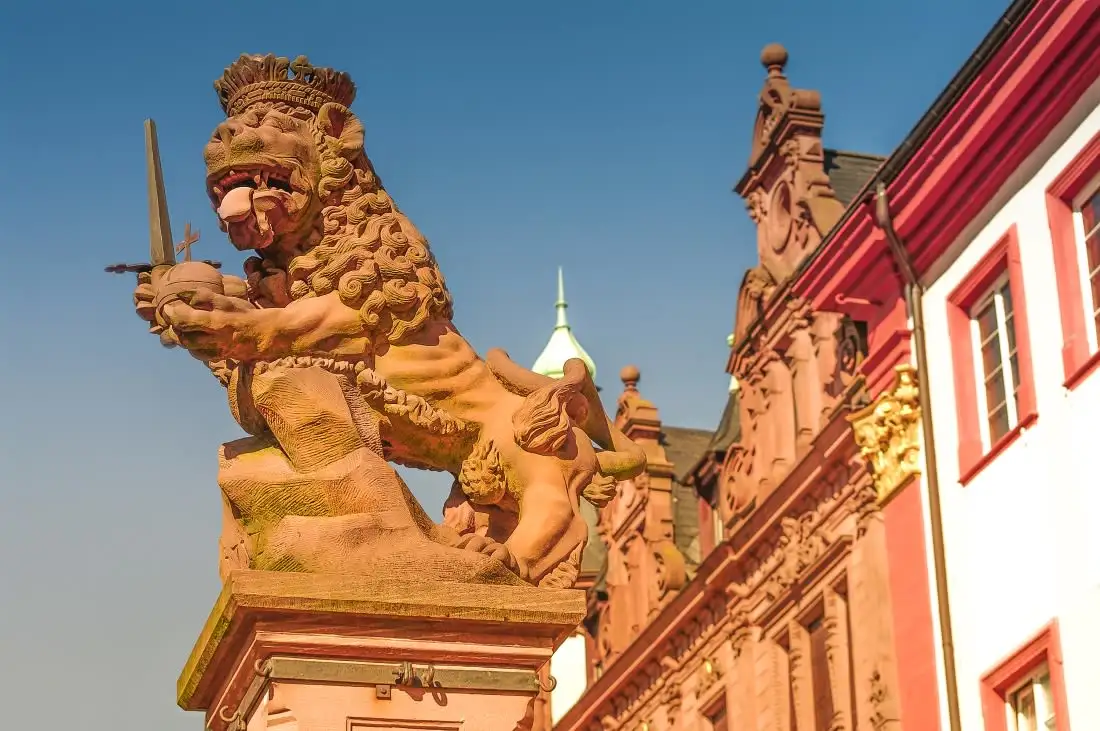
Guided Walking Tour of Heidelberg

9:00 AM - 1:00 PM — Guided Walking Tour of Heidelberg

On this 4 hour tour, your guide will show you the highlights of Heidelberg and help you understand what makes this city so unique. Sites visited will include the Heidelberg University, the Old Bridge, Altstadt, Town Hall and Heidelberg Castle.

Altstadt

The light and colors of this historic city are a happy sight to behold.

The Old Town of Heidelberg, Germany, seduces with its views. Framed by the Neckar River and overlooked by the majestic Heidelberg Castle, its cobblestone streets, baroque architecture, and the oldest university in Germany beckon visitors. Highlights include the Hauptstrasse, a bustling pedestrian shopping street, and the historic Holy Spirit Church. Heidelberg's Old Town embodies the romantic spirit of Germany.

Heidelberg University

Founded in 1386, this is Germany’s oldest and one of its most prestigious universities.

The university is currently comprised of 12 faculties with over 30,000 German and international students enrolled. The college is known for its reputable science, art, law, and medical programs. The most historic facilities are located around the Universitätsplatz and dominated by the Alte Universität (Old University, 1712–28; on the south side) and the Neue Universität (New University, 1931; on the north side).

Afternoon/Late Afternoon — Castle & Königstuhl

Heidelberg has the fortune to have some uniquely atmospheric castle ruins and is home to the oldest yet most modern funicular railway in Germany. Use this funicular to take a trip up Heidelberg Castle and stroll through the castle gardens. Continue up to the top of the hill where you will reach the Königstuhl to experience spectacular views of Heidelberg and the Neckar River valley.

Heidelberg Castle

Gaze down upon Heidelberg from the battlements of this romantic castle ruin.

These ruins are one of the most important Renaissance structures north of the Alps, and the contrast of the deep green forests and the red sandstone building make for a beautiful sight from the city center, though it's a much altered view since 1688, when French troops damaged the city and again in 1693, when they did much worse.  This led to a contemporary French writer to muse, "Heidelberger deleta" ("Heidelberg is 'deleted'"). Because of its delapidation, the castle regained stature during the 18th and 19th centuries as a powerful muse for many a Romantic poet.  It will inspire you as well.

Königstuhl

Ascend to the top of this mountain for a perfect view of the Neckar and Rhine Valleys.

The locals are very proud of this peak, easily reached from the top station of the funicular, as its views of Heidelberg and the Neckar River draw crowds.

Bergbahn Funicular

Easily reach the castle by taking the Bergbahn, which happens to simultaneously be both Germany's oldest and newest funicular.

Following a refurbishment in 2005, Germany's oldest funicular railway became it's most modern. The funicular takes you to Heidelberg Castle where you can visit the ruins and stroll through the castle gardens. You can then continue up to the top of the hill where you will reach the Königstuhl to experience spectacular views of Heidelberg and the Neckar River valley. If you prefer, you can always save some money and take a beautiful but somewhat strenuous hike, capturing perfect pictures of the castle as you make your way up the hill.

image

Day 17

Heidelberg

image

Day 18

Heidelberg to Cologne

Day 18

Heidelberg to Cologne

icon
icon
icon
icon
icon

Morning/Mid-Day

Philosopher's Way Hike

Enjoy a gentle hike up into the hills above Heidelberg from the Old Bridge to get magnificent views of the castle on the other side, then trek up further to visit the wonderfully atmospheric ruins of St. Michael's ruins and Thingstätte, the pseudo-Grecian amphitheater built by the Nazis in the mid-1930s to stage opera and theater plays extolling the virtues of the Aryan race.

Philosopher's Way Hike

Morning/Mid-Day — Philosopher's Way Hike

Enjoy a gentle hike up into the hills above Heidelberg from the Old Bridge to get magnificent views of the castle on the other side, then trek up further to visit the wonderfully atmospheric ruins of St. Michael's ruins and Thingstätte, the pseudo-Grecian amphitheater built by the Nazis in the mid-1930s to stage opera and theater plays extolling the virtues of the Aryan race.

Thingstätte

Find the open-air amphiteater built by the Nazis as a site for their rallies.

This open-air amphitheater was built in 1935 by the Nazi party and was designed by Heidelberg native Albert Speer.It was used by the Nazi party during WWII for rallies and solstice festivals. It is now preserved as a monument, but it is still used for many festivals and cultural events throughout the year. 

Monastary Ruins

Discover the isolated ruins at the top of the hill overlooking Heidelberg.

In 1023, Abbot Reginbald, who later became Bishop of Speyer, built St. Michael’s Monastery, and it is these remains which are still visible today. After the death of Abbott Friedrich in 1070, the monastery became a place of pilgrimage. In 1503, the last three monks living in the monastery were killed in their beds when part of the steeple collapsed. After that, the monastery became abandoned and was forgotten.

2:20 PM — Transfer to Rail Station

Most trains depart from Heidelberg Hbf station, the largest station in the city. Before spending money on a transfer, be sure to check whether your hotel is within easy walking distance. Also consider that public transport is the cheapest and sometimes fastest option, and the local tram network stops directly in front of the station. If staying at a hotel, they can order a reliable taxi. Some private transfers will even help with your bags. Uber is not yet available in Heidelberg.

15:20 - 18:01 — Train to Cologne

Your less than 3-hour rail journey to Cologne will cross the charming landscape of Germany's Rhine Valley, where you'll enjoy views of the hills which run alongside the valley. The journey is especially convenient since you can take a direct train.

6:01 PM — Transfer from Rail Station

There are two main rail stations where visitors arrive in Cologne. You will likely arrive in the Cologne main station (Köln hbf, i.e. hauptbahnhof) although keep in mind that you amay arrive in the Messe/Deutz station just across the river from the main station.. Before spending money on a transfer, be sure to check whether your hotel is within easy walking distance. Also consider that public transport is the cheapest and sometimes fastest option. Taxis are available at all rail stations and are generally honest, so if you prefer the convenience of not carrying your bags on public transport, they are an option. Some private transfers even meet you directly on the platform to help with bags. Uber is also available for those with the app.

Evening — Kölsch Beer Culture

Kölsch beer is a special beer only brewed in Cologne. It's a light ale and is served in traditional tall and cylindrical 0.2 litre Kölsch glasses which waiters carry around in purpose-built circular serving receptacles that look like communion trays. Beer lovers often find that the regional specialties are the brews that are most distinctive and memorable, and no style better exemplifies that spirit of community pride and distinction than Kölsch. Indeed, Cologne boasts more breweries than any other major city worldwide. You can taste for yourself and get to know the etiquette associated with Kölsch beer during an evening out in Cologne's bars and brew houses.

image

Day 18

Heidelberg to Cologne

image

Day 19

Cologne

Day 19

Cologne

icon
icon
icon
icon

9:00 AM - 11:00 AM

Highlights Walking Tour of Cologne

Your private guide will pick you up from your hotel. During this 2-hour walking tour, you will have a chance to get to know many interesting facts about the history of Cologne and visit the biggest highlights of the town. Among the others you will see: Cologne Cathedral, Hohenzollern Bridge, Roncalliplatz, Rheinboulevard, Heumarkt & Alter Markt, Hänneschentheater, Cologne City Hall, Typical Kölsch brewery. After the end of the tour the guide will be happy to give you the recommendations for the rest of your stay in Cologne.

Highlights Walking Tour of Cologne

9:00 AM - 11:00 AM — Highlights Walking Tour of Cologne

Your private guide will pick you up from your hotel. During this 2-hour walking tour, you will have a chance to get to know many interesting facts about the history of Cologne and visit the biggest highlights of the town. Among the others you will see: Cologne Cathedral, Hohenzollern Bridge, Roncalliplatz, Rheinboulevard, Heumarkt & Alter Markt, Hänneschentheater, Cologne City Hall, Typical Kölsch brewery. After the end of the tour the guide will be happy to give you the recommendations for the rest of your stay in Cologne.

Cologne Cathedral

See Germany's most visited landmark for yourself and then climb a tower that was once the tallest in the world.

Construction began in 1248 but was paused in the 1500's and did not continue until the 19th century. Once completed in 1880, it was the tallest building in the world and to this day it has the tallest twin spires of any Gothic church in the world. The towers’ spires reach a height of 157 m (515 ft). The cathedral is as large as it is strong. During WWII the church was struck with 14 aerial bombs; its enormous size made it a good landmark for the Allied aircraft bombers. Although it was badly damaged by these attacks, it remained standing. The cathedral is home to many treasures, such as the high altar which was constructed in 1322 and is made out of solid black marble. Its most celebrated work of art is the Shrine of the Three Kings. The golden structure is believed to hold the remains to the Three Wise Men, whose remnants were brought from Milan in 1164. Those with a strong constitution can climb 533 steps to a viewing platform on the south tower.

Mid-Day/Afternoon — Old Town

Cologne has a history stretching well back into Roman times, and it is most famous for its massive Gothic Cathedral. While the Altstadt, i.e. the Old Town, is full of small alleyways and historic buildings, many are not in their original form because nearly three quarters of the city was leveled by WWII bombing raids. Indeed, in many ways Cologne feels like a modern city built onto the bones of an ancient city. With that said, there are many sites well-worth seeing, as well as great museums, such as the Romano-Germanic and Ludwig Museums. Taking a walk along the promenade on the Rhine River is also a must.

Cologne Cathedral

See Germany's most visited landmark for yourself and then climb a tower that was once the tallest in the world.

Construction began in 1248 but was paused in the 1500's and did not continue until the 19th century. Once completed in 1880, it was the tallest building in the world and to this day it has the tallest twin spires of any Gothic church in the world. The towers’ spires reach a height of 157 m (515 ft). The cathedral is as large as it is strong. During WWII the church was struck with 14 aerial bombs; its enormous size made it a good landmark for the Allied aircraft bombers. Although it was badly damaged by these attacks, it remained standing. The cathedral is home to many treasures, such as the high altar which was constructed in 1322 and is made out of solid black marble. Its most celebrated work of art is the Shrine of the Three Kings. The golden structure is believed to hold the remains to the Three Wise Men, whose remnants were brought from Milan in 1164. Those with a strong constitution can climb 533 steps to a viewing platform on the south tower.

Modern Art Museum/Ludwig Museum

Explore a tremendous collection of modern art from greats such as Pablo Picasso and Andy Warhol.

The Museum of Modern Art is a former collection of Peter Ludwig, a German chocolatier who is said to have had the largest private collection of art until his passing in 1996. Ludwig also helped many other museums by donating or lending them pieces from his collection after WWII. In 1976 Ludwig donated 350 art pieces, then valued at $45 million, to the Wallraf-Richartz Museum. The collection donated was so large that the Ludwig Museum of Modern Art was constructed. The collection ranges from Pop Art to Abstract and Surrealism. It is also said to be the largest collection of works by Pablo Picasso in all of Europe. The Cologne Card provides a 20% discount on entrance.

Church of Great St. Martin

Descend into the basement to find the Roman origins of this distinctive church.

The unusual crossing tower of the Church of Great St. Martin has shaped the Cologne skyline since the middle ages. Built on top of the remains of a Roman warehouse, it actually incorporates the remains. The church was severely damaged during WWII and during the repairs many archeological excavations took place. The reconstruction created a smooth transition from the foundations of the Roman warehouse to the walls of the church aisles. The church is open to the public and the Roman remains may be seen in the basement.

Chocolate Museum

Visit the real-life Willy Wonka Chocolate factory on an island in the Rhine River.

Founded in 1993 by Hans Imhoff and his wife, this museum is dedicated to the history and production of chocolate. The large complex sits on an island in the Rhine. It not only displays the discovery and history of chocolate as it was used by the Mayans and the Aztecs but also includes a walk-through palm house to show the environment in which cocoa beans are grown. The museum is also a working chocolate factory and visitors can see the production of chocolate from start to finish behind glass walls. Visitors even have the opportunity to create a custom bar of chocolate. As one of the most visited museums in the city, the Chocolate Museum is not to be missed. The Cologne Card provides a 25% entry discount.

Late Afternoon/Early Evening — Nazi Documentation Center, Self-Guided

Cologne’s National Socialism Documentation Center is the largest regional memorial site in Germany for the victims of Nazism. Housed in the city's former Gestapo Headquarters, the Center is a place of commemoration, learning and research all in one, with a highly effective and evocative interactive permanent exhibition at its core.

Evening — Concert

Cologne is a city which truly appreciates the performing arts and so it is a perfect choice to experience a classical concert, ballet, or opera. You can choose from several prestigious concert venues in Cologne, where renowned opera companies and philharmonic orchestras perform. The Cologne Opera, for example, has a reputation as one of the best municipal opera companies in Germany. The Cologne Philharmonic is housed in a striking modern concert hall, and you can take a sneak peak at their performances on philharmonie.tv. You may also prefer a jazz club or other type of performance, but that's not a problem, as Cologne has many options.

image

Day 19

Cologne

image

Day 20

Cologne to Amsterdam

Day 20

Cologne to Amsterdam

icon
icon
icon
icon

9:40 AM

Taxi Dropoff at Rail Station

There are two main rail stations where visitors depart from Cologne. You will likely depart from the Cologne main station (Köln hbf, i.e hauptbahnhof), but be careful to check that you should not depart from the station Messe/Deutz, which is located just across the river. Before spending money on a transfer, be sure to check whether your hotel is within easy walking distance. Also consider that public transport is the cheapest and sometimes fastest option. If staying at a hotel, they can order a reliable taxi. Some private transfers will even help with your bags. Uber is also available for those with the app.

Taxi Dropoff at Rail Station

9:40 AM — Taxi Dropoff at Rail Station

There are two main rail stations where visitors depart from Cologne. You will likely depart from the Cologne main station (Köln hbf, i.e hauptbahnhof), but be careful to check that you should not depart from the station Messe/Deutz, which is located just across the river. Before spending money on a transfer, be sure to check whether your hotel is within easy walking distance. Also consider that public transport is the cheapest and sometimes fastest option. If staying at a hotel, they can order a reliable taxi. Some private transfers will even help with your bags. Uber is also available for those with the app.

10:39 - 13:52 — Train to Amsterdam

Your approximately 3-hour rail journey to Amsterdam will first cross Germany's industrial heartland and then travel through the bucolic countryside of Germany's northern Rhine Valley and the Netherlands. The journey is especially convenient since you can take a direct train.

1:52 PM — Taxi Transfer from Rail Station

Most trains arrive in Amsterdam Central Station (Centraal) station, the largest station in the city. Before spending money on a transfer, be sure to check whether your hotel is within easy walking distance. Also consider that public transport is the cheapest and sometimes fastest option, and trams pick up directly in front of the station at the main entrance (on the Centrum side of the station). You'll also find an entrance to the Metro just outside the main entrance. You won't, however, find taxis or Uber drivers in front of the main entrance, as it is a pedestrian zone. Instead, taxis can be found on the Ij-zijde (waterside) to the left of the Western tunnel. Simply look at the overhead signs that indicate the direction. If in any doubt, follow the ferry symbols.

Afternoon to Evening — Eastern Districts

The Eastern Districts of Amsterdam host a wide array of museums and activities that serve all ages. The districts include the areas of Waterlooplein, Eastern Docklands, Weesperbuurt, and Plantage. Get in touch with nature at the Botanical Garden or ARTIS, Amsterdam's famous zoo. Experience some hands-on learning at the NEMO Science Museum. See where the famous Dutch painter, Rembrandt, lived and created some of his most famous works. It might not be the most well-known area of the city but there is plenty to explore!

NEMO Science Museum

Explore Five Stories of Hands-on Exhibitions in the Largest Science Center in the Netherlands.

Using a variety of exhibitions, the NEMO Science Museum introduces people of all ages to the world of science and technology. The museum is filled with continuously updated and changing exhibitions, theatre performances, films, workshops, and demonstrations. Everything is interactive, so everyone can join in on the fun and learning, especially in NEMO's Laboratory.  When you've exhausted your hypothesis, the Center maintains a lovely cafe on its roof with great views of the city.

Rembrandt House

Wander through the restored 17th-century house where Rembrandt lived and worked for 20 years.

The famous Dutch painter, Rembrandt, was at the height of his fame when he moved into this house with his beloved wife Saskia. He mingled with the wealthy and powerful and was awarded the most prestigious commissions by merchants, nobles and clergymen. However, it was a turbulent time in the house where bad times followed the good in quick succession. The Night Watch was painted in the house. Saskia gave birth to three children in the home, all of whom died within a few months, before their son Titus, who lived to adulthood, was born. Soon afterward Saskia died in the same bed, probably from tuberculosis, leaving Rembrandt to raise their infant son. In total, Rembrandt owned and lived in this house between 1639 and 1660. A modern annex has been built next to Rembrandt’s house and, together, are a museum of Rembrandt’s life and work. While he was most renown for being a painter, this museum also shows the other sides of Rembrandt. In the museum, you will see him as a teacher, collector of art, entrepreneur and “Amsterdammer.”

National Opera House

Visit the elegant home of the Dutch National Opera and Ballet.

Get a Dutch take on the performing arts in the home of the Dutch National Opera and Ballet. Both groups rehearse and perform the majority of their works at the venue, housed uniquely in the same building as Amsterdam's City Hall. The institution is celebrated for its diverse repertoire, ranging from classic to contemporary works, attracting talent and audiences from around the globe.

Botanical Garden

Grow calmer in one of the world's oldest botanical gardens.

Amsterdam’s Hortus Botanicus is located on the eastern side of the city. Established in 1638, it was originally home to an herb garden filled with medicinal plants; today, Hortus Botanicus is home to more than 6,000 different flora. By the time the garden moved to its current location in 1682, it had collected many specimens unknown to Europeans. The Dutch East India Company, the organization that made the Netherlands such a economic powerhouse at the time, often brought exotic plants back that would be housed in the botanical garden, including Europe’s first Coffea Arabica plant and two small oil palms. Some of the original varieties brought here went on to populate Europe.

ARTIS Zoo

Visit the animals in this Royal Zoo, one of Europe's oldest .

ARTIS Zoo in Amsterdam, established in 1838, is the Netherlands' oldest zoo and a beloved destination for both locals and tourists. This historic zoo offers an immersive experience into the animal kingdom, housing a diverse collection of species from around the world, including exotic birds, mammals, reptiles, and marine life. Beyond its role as a wildlife sanctuary, ARTIS also emphasizes education and conservation, providing visitors with insights into animal behavior and habitat preservation.

image

Day 20

Cologne to Amsterdam

image

Day 21

Depart Amsterdam

Day 21

Depart Amsterdam

icon

To Be Determined

Taxi Transfer to Airport

Amsterdam has one main airport, Amsterdam Airport Schiphol. The most affordable and often fastest way to reach the airport is by train. Local direct trains to the airport depart every ten minutes, usually from platform 14a or platform 15, and get you there in about 20 minutes. Your hotel can arrange a reliable taxi or if you have the app, Uber is also a good option. You can also arrange a private transfer. If you are picked up about two hours and 45 minutes before your departure time, you should arrive at the airport with about two hours to spare, depending on traffic. If you are leaving during rush hour, you may want to budget an extra fifteen to thirty minutes.

Taxi Transfer to Airport

To Be Determined — Taxi Transfer to Airport

Amsterdam has one main airport, Amsterdam Airport Schiphol. The most affordable and often fastest way to reach the airport is by train. Local direct trains to the airport depart every ten minutes, usually from platform 14a or platform 15, and get you there in about 20 minutes. Your hotel can arrange a reliable taxi or if you have the app, Uber is also a good option. You can also arrange a private transfer. If you are picked up about two hours and 45 minutes before your departure time, you should arrive at the airport with about two hours to spare, depending on traffic. If you are leaving during rush hour, you may want to budget an extra fifteen to thirty minutes.

image

Day 21

Depart Amsterdam

What's Included in the Netherlands & Germany Grand Tour Trip Trip?

Fork

Pre-Paid Tours and Activities:

  • Privately Guided Walking Tour of Amsterdam
  • Canal Cruise in Amsterdam
  • Privately Guided Walking Tour of Hamburg
  • Highlights of Berlin Guided Walking Tour
  • Guided Walking Tour of Nuremberg's Old Town & Imperial Castle Courtyards
  • Guided Walk Tour of Historic Munich
  • Guided Walking Tour of the Heidelberg's Altstadt and Castle
  • Private Highlights Walking Tour of Cologne
  • City Cards for Berlin, Cologne, Hamburg, and Munich, including discounts to many popular attractions
train

Pre-Paid Transportation:

  • 2nd Class Train Tickets from Amsterdam Centraal to Hannover Hbf
  • 2nd Class Train Tickets from Hannover Hbf to Hamburg Hbf
  • 2nd Class Train Tickets from Hamburg Hbf to Berlin Hbf
  • 2nd Class Train Tickets from Berlin Hbf to Nürnberg Hbf
  • 2nd Class Train Tickets from Nuremberg-Munich
  • 2nd Class Train Tickets from Munich to Heidelberg
  • 2nd Class Train Tickets from Heidelberg Hbf to Köln Hbf
  • 2nd Class Train Tickets from Köln Hbf to Amsterdam Centraal
  • Public Transport Tickets for Munich, Berlin, Amsterdam, Cologne, and Hamburg
train

Accommodation:

  • 5 nights at a hotel of your choice in Amsterdam
  • 2 nights at a hotel of your choice in Hamburg
  • 4 nights at a hotel of your choice in Berlin
  • 3 nights at a hotel of your choice in Nuremberg
  • 3 nights at a hotel of your choice in Munich
  • 2 nights at a hotel of your choice in Heidelberg
  • 2 nights at a hotel of your choice in Cologne
mobile

Go Real Travel Mobile App:

  • Itinerary Plan & Reservations Info
  • Points of Interest
  • Detailed Travel Information
  • Maps & Directions

Other Trips You May Like

3-Week Epic All Around Germany Tour

21 Days

From$5899USD

3-Week Epic All Around Germany Tour

View Trip
Winter Wonderland: Germany’s Iconic Cities and Alpine Landscapes

10 Days

From$1899USD

Winter Wonderland: Germany’s Iconic Cities and Alpine Landscapes

View Trip
10 Days of Holiday Spirit in Germany's Best Christmas Markets

10 Days

From$1415USD

10 Days of Holiday Spirit in Germany's Best Christmas Markets

View Trip
A Journey Through Culture and Time in Paris, Amsterdam, and Germany

10 Days

From$3099USD

A Journey Through Culture and Time in Paris, Amsterdam, and Germany

View Trip
European Castles & Cultural Tapestry Tour

17 Days

From$4530.9234235USD

European Castles & Cultural Tapestry Tour

View Trip
Capitals of Cool: Berlin and Amsterdam

7 Days

From$1950USD

Capitals of Cool: Berlin and Amsterdam

View Trip
Germany’s Dynamic Duo: Munich & Berlin Discovery Tour

7 Days

From$1375USD

Germany’s Dynamic Duo: Munich & Berlin Discovery Tour

View Trip
Capitals, Canals, and Castles: A 9-Day Tour of Amsterdam, Berlin, and Prague

9 Days

From$2240USD

Capitals, Canals, and Castles: A 9-Day Tour of Amsterdam, Berlin, and Prague

View Trip
Enchanting Christmas Market Trip to Bavaria & Prague with Gabriella-Maria

10 Days

From$3250USD

Enchanting Christmas Market Trip to Bavaria & Prague with Gabriella-Maria

View Trip

Featured Blogs

How to Plan a Trip to Germany – Step-by-Step Guide
Germany
Trip planning

How to Plan a Trip to Germany – Step-by-Step Guide

18 Most Romantic Things to do in Amsterdam
Amsterdam
Romantic

18 Most Romantic Things to do in Amsterdam

Plan a Trip To Netherlands: Your Ultimate Travel Guide
Netherlands
Travel guide

Plan a Trip To Netherlands: Your Ultimate Travel Guide

Flying Solo: The Best Places to Travel Alone in Europe
Europe
Travel solo

Flying Solo: The Best Places to Travel Alone in Europe

16 Most Romantic Destinations in Europe
Europe
Romantic

16 Most Romantic Destinations in Europe

15 Most Beautiful Towns & Villages in Germany
Germany
Villages

15 Most Beautiful Towns & Villages in Germany

Top 5 Castles In Central Europe
Central Europe
Castles

Top 5 Castles In Central Europe

Our Customers Say It Best

Malini Dutta, Boston, Massachusetts
We can't thank you enough for the detailed plans, maps, and suggestions. It really felt that someone was holding our hands and showing us around. We had all the excitement of discovering foreign lands, with none of the problems that can happen while negotiating unfamiliar places. In fact, all the cities felt like home within a few hours of arriving and exploring.
Bev and Mark Frankel, Williamsburg, Virginia
We could not be more pleased with Go Real Travel! You took the guess work out of things like public transport but still managed to allow us the freedom to tour as we wanted. Our guides were exceptional and every time I saw a Viking Cruise tour of 25 people, I realized the quality experience we were getting with Go Real.
Marianne Strydom, Paarl, South Africa
I just wanted to thank you for organizing an amazing trip for me – I packed in so much in such a short period of time and everything was just perfect. The way you do things makes it possible to really get to know the destination, which for me as a travel agent could not have been better.
Otto Chuy, Los Angeles, California
I am still surprised how everything worked as planned, without a hitch. All instructions in your itinerary were precise and correct. Your suggestions and comments in each of the locations we went to were very helpful. All your guides, without exception, were wonderful and exactly on time.
Go Real Travel, Inc. BBB Business ReviewASTA Member

Explore cities in more detail

A Row of Colorful Gable Houses by a Canal

Amsterdam

A waterside metropolis with a low-key vibe, a visit to Amsterdam is as fun and freewheeling as a fixed-gear bicycle. This is the city where you can let it all go. The streets of Amsterdam chime with bicycle bells and the laughter of people making their way between bars. Yellow wheels of cheese line shop windows, and in springtime, market stalls are abundant with the famous Dutch tulips.      Younger than other cities in the Netherlands, Amsterdam sprang to life in the 17th century, when it became flush with trade from the Dutch colonies. From the gable tipped houses standing shoulder-to-shoulder on the canals to the Rembrandt paintings hanging on the walls of the Rijksmuseum, Amsterdam is strewn with relics from the Dutch Golden Age. Whether you rent a bicycle, float down a canal, or just sip on an amber-colored lager and watch the world go by, Amsterdam makes a lasting impression from start to finish.   

concert hall in hamburg germany

Hamburg

Compared to other German cities, Hamburg has a moody, nautical charisma all of its own. Despite being battered throughout history by floods, fires, and bombs, Hamburg has always held its head up high. Resilience is in the air in Hamburg, along with the briny smell of the North Sea. In recent years Hamburg has garnered a reputation for commerce and nightlife. Frequent travelers whisper that Hamburg is Germany’s ‘undiscovered’ city, the place to go for a little business and a lot of fun.  Known as Germany’s ‘gateway to the world’, ships dock in Hamburg as they haul cargo up and down the Elbe River. The city thrives as Germany’s primary seaport and has been a center of trade since the middle ages. Its affluence shows in the 19th-century brick warehouses, flourishing restaurant scene, and recently constructed Elbphilharmonie concert hall, which floats majestically in the harbor, part ship and part island. Hamburg is a city for those who like to live large - in a cultured, German kind of way. Attend a performance at the orchestra, cruise on a boat around the Außenalster Lake, or have a night on the Reeperbahn, the Vegas-like strip where the Beatles once performed. Whatever you do in the city, Hamburg will make you look twice and see Germany from a totally different point of view.       

The Television Tower in Berlin at Sunrise

Berlin

Since the fall of its notorious wall, Berlin’s unification has seen it go from strength to strength. No wonder the city feels like it hasn’t stopped partying since the 1990s. There is so much to celebrate here. Fueled by the robust economy, a thriving tech scene, and straight-up German bonhomie, when you step into Berlin you’ll soon be caught up in its spirit.  For all this gusto, Berlin hasn’t forgotten its troubled past. A visit to Berlin is to bear witness to history. Portions of the wall remain intact, and the city’s Jewish Museum offers a detailed, emotional examination of the Holocaust. Inside the reconstructed Reichstag, every attempt has been made to preserve the parliament’s beleaguered history. The buildings' glass dome addition feels less like a triumphal crown and more like a freshly healed battle scar.  Days in Berlin are easily spent wandering from a cafe to the cultural institutions on Museum Island, or over to the Charlottenburg Palace. By night, crowds wander through the booming bars and nightclubs or gaze upon the floodlit Brandenburg Gate and Victory Column monuments. An international city that can offer something to everyone, Berlin is an unmissable stop on your German journey.  

half timbered houses in nuremberg germany

Nuremberg

One of the most authentic, storied German destinations, Nuremberg's picturesque old town, glorious castle, and buzzing Christmas Market makes this city a time-true classic. The ideal gateway to old Bavaria, Nuremberg offers a primer in German history before you embark on the lovely journey through old Bavaria, known as the Romantic Road. Considered the capital of the Holy Roman Empire in the middle ages, Nuremberg would have felt like the center of the world as a procession of kings and emperors passed through its magnificent gates. When the German Renaissance came, Nuremberg was at its heart. Albrecht Dürer, the great German master artist, was born here, and Martin Luther called Nuremberg Germany's 'eyes and ears'. Skip forward a few centuries, and the city took a dark turn, as Nuremberg became a gathering point for the German National Socialists. Slightly outside of town, you can still find the Nazi Party Rallying Grounds, a sobering reminder of the not so distant past. If it all gets too heavy, you can end the day with a glass of rotbier (red beer) and mull it over. Nuremberg is a must-see for anyone who wants to delve into Germany's past. 

old town square munich germany

Munich

Arriving in Munich, you would be forgiven for thinking you were on the set of a movie about old Bavaria. At the Old Town beer halls, barmaids laced in dirndl dresses serve up frosty Helles lager, as oom-pah music drifts across the Marienplatz square. Men in lederhosen and checked shirts merrily give toasts as they knock glasses, or steins, as they’re known here. They sit at tables laden with wurst sausage and giant pretzels oozing with herby butter. This is Germany’s Germany, a place where folk traditions never stopped, and the revelry doesn’t either. Even when it isn’t Oktoberfest, the town’s notorious beer-drinking celebration, Munich is always happy to show you a good time. Simply cast your eyes around the lavish, gilded banquet hall at the Munich Residenz, the 13th-century Wittelsbach palace. You’ll see Munich has been impressing guests for centuries. Or, swing by the BMW Museum and check out the classic German cars. They even let you sit inside to test out the new models. At the city’s English Gardens, surfers ride waves on one of the park’s rivers. Munich is filled to the brim with this kind of pure-hearted German fun.     
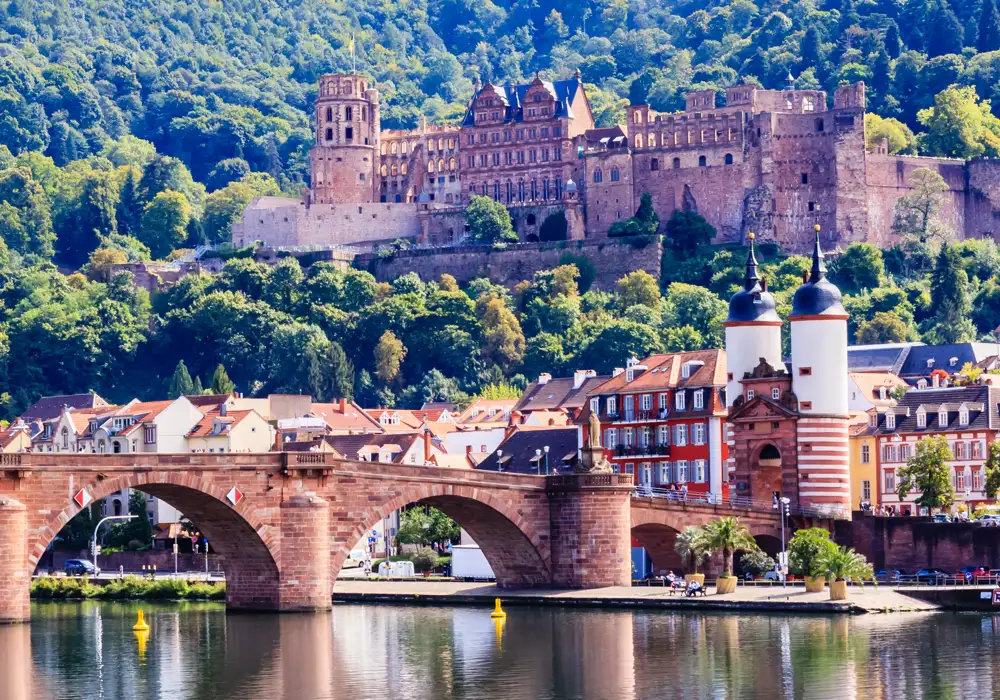
castle and bridge in heidelberg germany

Heidelberg

Heidelberg is buried deep in the forests of southwest Germany. Flanking both sides of the Neckar River, Heidelberg's red and white baroque old town looks like something from a book of folktales. On the hillside above the town, you'll see the looming, tumbledown remains of Heidelberg's Gothic-Renaissance castle, Heidelberger Schloss. The subject of strange local legends, Heidelberg Castle was once home to knights, a famous court jester, and even a witch. It is said the first person who pulls out an iron ring embedded in one of the great doors will be the castle's true owner. Surely on your visit, it's worth a try? Across the river, follow in the footsteps of scholars on a hiking trail known as The Philosophers’ Way. Heidelberg University is the oldest in Germany, and its leafy, temple-like campus contributes to the gentle, contemplative atmosphere of the town.  A poetic city with the dreamy feel of a watercolor painting, it's no wonder Heidelberg inspired writers like Mark Twain and Johann Wolfgang von Goethe. The city has even been recognized by UNESCO as a City of Literature. Especially on misty, grey days, Heidelberg has a way of sweeping you up in its romanticism.      
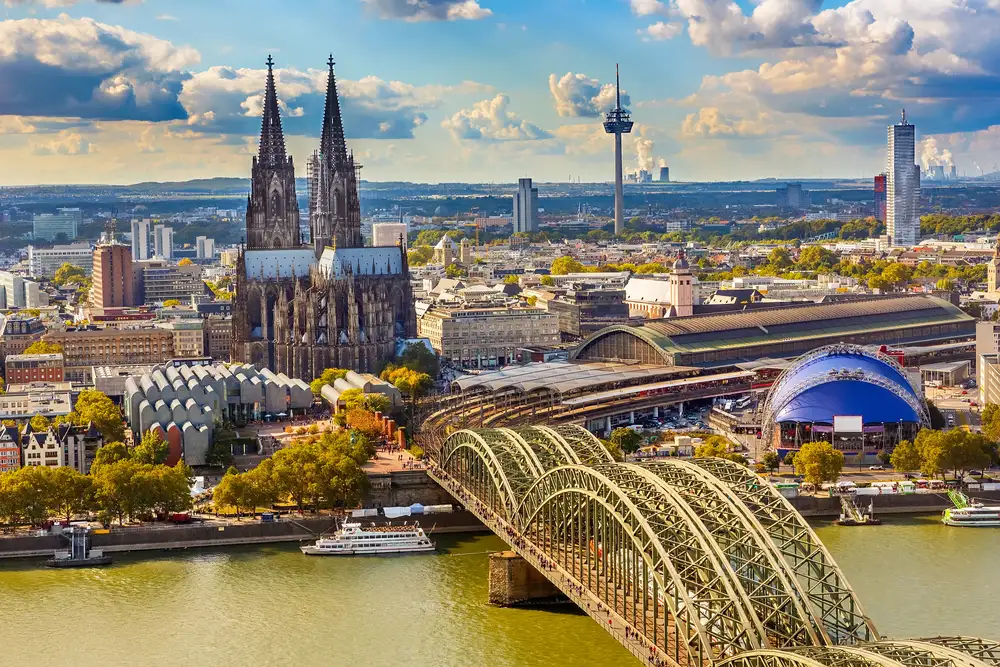
Cologne cathedral next to a bridge across the Rhine

Cologne

As you travel through Western Germany, Cologne is a cheerful, fun city to stop for a night or two. Flanking both sides of the Rhine river, Cologne's delightful architectural pastiche reflects the breezy anything-goes attitude of its inhabitants. Like most German cities, Cologne took a hit during WWII, losing some of its old-world buildings and neighborhoods. However, thanks to the endurance of the Cologne Cathedral and iconic Hohenzollern Bridge, the city has kept its identity close to hand. Sometimes quite literally in the form of a glass of sparkling Kölsch local beer.  A visit to Cologne should always include paying a call to its eponymous Cathedral. A sensational, Gothic behemoth of a building and a UNESCO Heritage Site, Cologne Cathedral will get you right in the heart, humbling all who enter it. Just outside the cathedral, the Hohenzollern Bridge spans the Rhine, with three iron truss arches looping over the river like the bounces of a skimming stone. After wandering the riverside, if you're looking for some indulgence, Cologne's Chocolate Museum is an eternally popular choice. Maybe you'll be under the influence of the cocoa, but at the end of a day in Cologne, life can seem pretty sweet.       
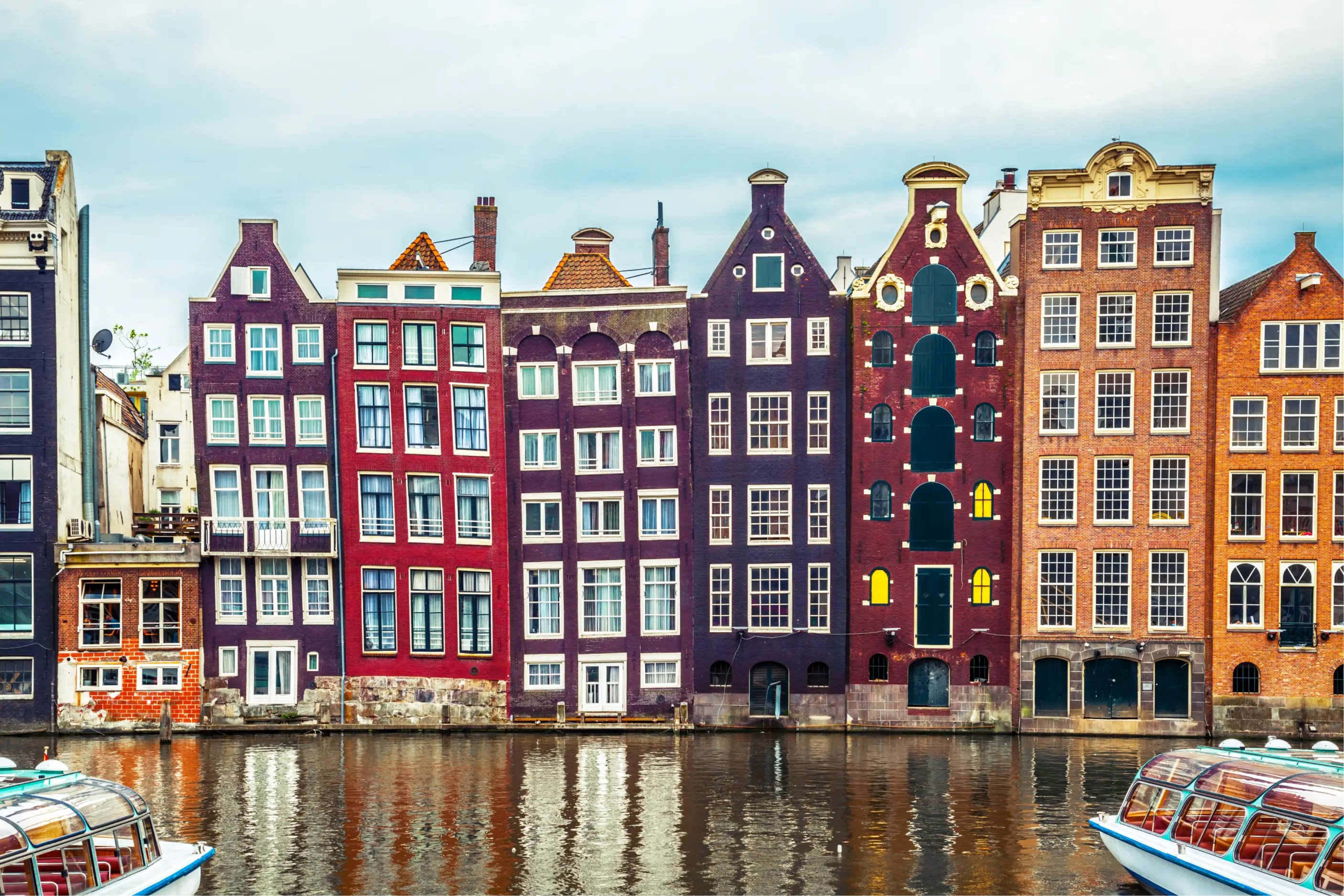
A Row of Colorful Gable Houses by a Canal

Amsterdam

A waterside metropolis with a low-key vibe, a visit to Amsterdam is as fun and freewheeling as a fixed-gear bicycle. This is the city where you can let it all go. The streets of Amsterdam chime with bicycle bells and the laughter of people making their way between bars. Yellow wheels of cheese line shop windows, and in springtime, market stalls are abundant with the famous Dutch tulips.      Younger than other cities in the Netherlands, Amsterdam sprang to life in the 17th century, when it became flush with trade from the Dutch colonies. From the gable tipped houses standing shoulder-to-shoulder on the canals to the Rembrandt paintings hanging on the walls of the Rijksmuseum, Amsterdam is strewn with relics from the Dutch Golden Age. Whether you rent a bicycle, float down a canal, or just sip on an amber-colored lager and watch the world go by, Amsterdam makes a lasting impression from start to finish.   
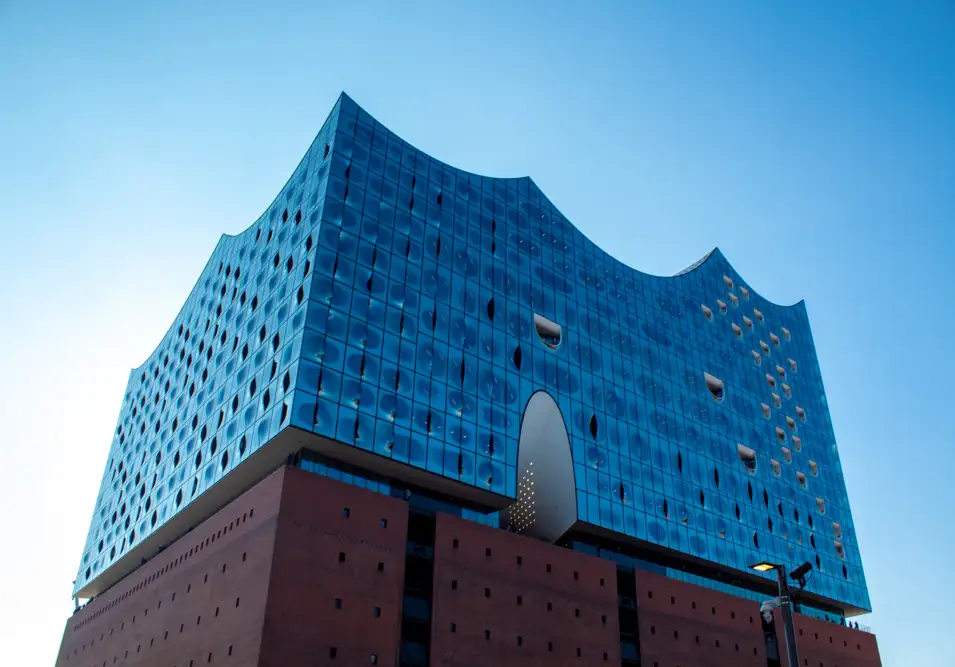
👋

Hi! Need help planning your dream trip? 🌍

Go Real Travel Assistant

Online

Welcome! Where are you in your journey?

Pick the option that fits you best so we can route you to the right help.