
Berlin in Winter: Historic Echoes & Urban Experience
 5 Day Tour of Berlin
Destinations on this trip: Berlin
Overview
Trip Map
Itinerary
Inclusions
Reviews





How Long Is the Berlin’s Winter Charm Trip and What Does It Cost?
 Duration5 days / 4 nights
- Best timeJan-Dec
 From$999 / person (Flights not included)
- See Checkpoint Charlie on a private guided walking tour focused on Berlin's WWII & Cold War history.
- Savor the essence of Berlin nightlife and culinary delights in the lively neighborhood of Kreuzberg.
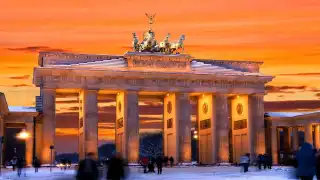
- Discover sights like the East Side Gallery and Brandenburg Gate, symbols of Berlin's past & rebirth.
- Take a day trip to Tropical Islands and swim at the beach in the middle of winter.
- Visit the former West Berlin's cultural landmarks, from the poignantly beautiful Memorial Church.
- See Checkpoint Charlie on a private guided walking tour focused on Berlin's WWII & Cold War history.
- Savor the essence of Berlin nightlife and culinary delights in the lively neighborhood of Kreuzberg.
- Discover sights like the East Side Gallery and Brandenburg Gate, symbols of Berlin's past & rebirth.
- Take a day trip to Tropical Islands and swim at the beach in the middle of winter.
- Visit the former West Berlin's cultural landmarks, from the poignantly beautiful Memorial Church.


Must see sights
Starting from
$999
per person
 Not included
 Price varies by group size, hotel selection, and travel season.
Secure Your Customizable Trip
Enter your details to embark on a journey that can be tailored just for you.
Start
Travelers
Preferred Hotel Stars

Craft Your Own Itinerary
Select your interests and destinations for a trip plan inspired by you.
Where Does the Berlin’s Winter Charm Trip Trip Go?
| ← | Move left |
| → | Move right |
| ↑ | Move up |
| ↓ | Move down |
| + | Zoom in |
| - | Zoom out |
| Home | Jump left by 75% |
| End | Jump right by 75% |
| Page Up | Jump up by 75% |
| Page Down | Jump down by 75% |


Click To Make Map Interactive
Berlin’s Winter Charm Trip Timeline
Arrival
4 nights
Berlin
Germany
Departure
What Does the Berlin’s Winter Charm Trip Itinerary Look Like?

Day 1
Arrive Berlin

Day 1
Arrive Berlin


Mid-Day/Afternoon
TV Tower & Old Berlin
The Television Tower and its surroundings in Alexanderplatz are Berlin's main architectural monument to the former East Germany. Despite the high-rent stores and offices that now fill the buildings, you can still detect quite a bit of that old communist character. Somewhat ironically, you'll find the medieval Nikolaiviertel, the oldest residential area of Berlin, just a few steps away. You'll also find nearby the Marienkirche (Berlin's oldest parish church), the displaced Neptune Fountain, the Red Town Hall, statues of Karl Marx and Friedrich Engels, and the massive Loxx model railway that even non-model train enthusiasts will gasp at.
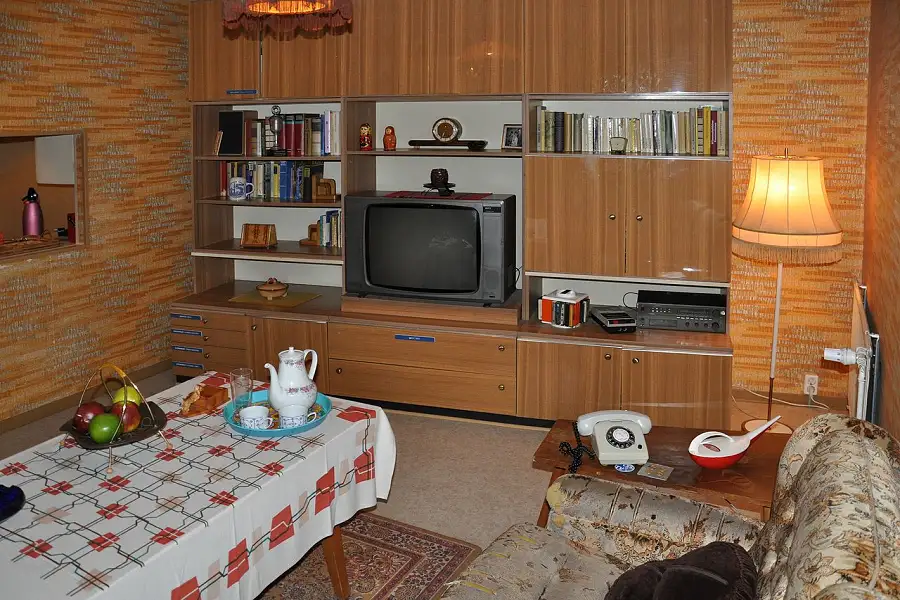
Experience life in Communist East Germany in this interactive museum.
Show More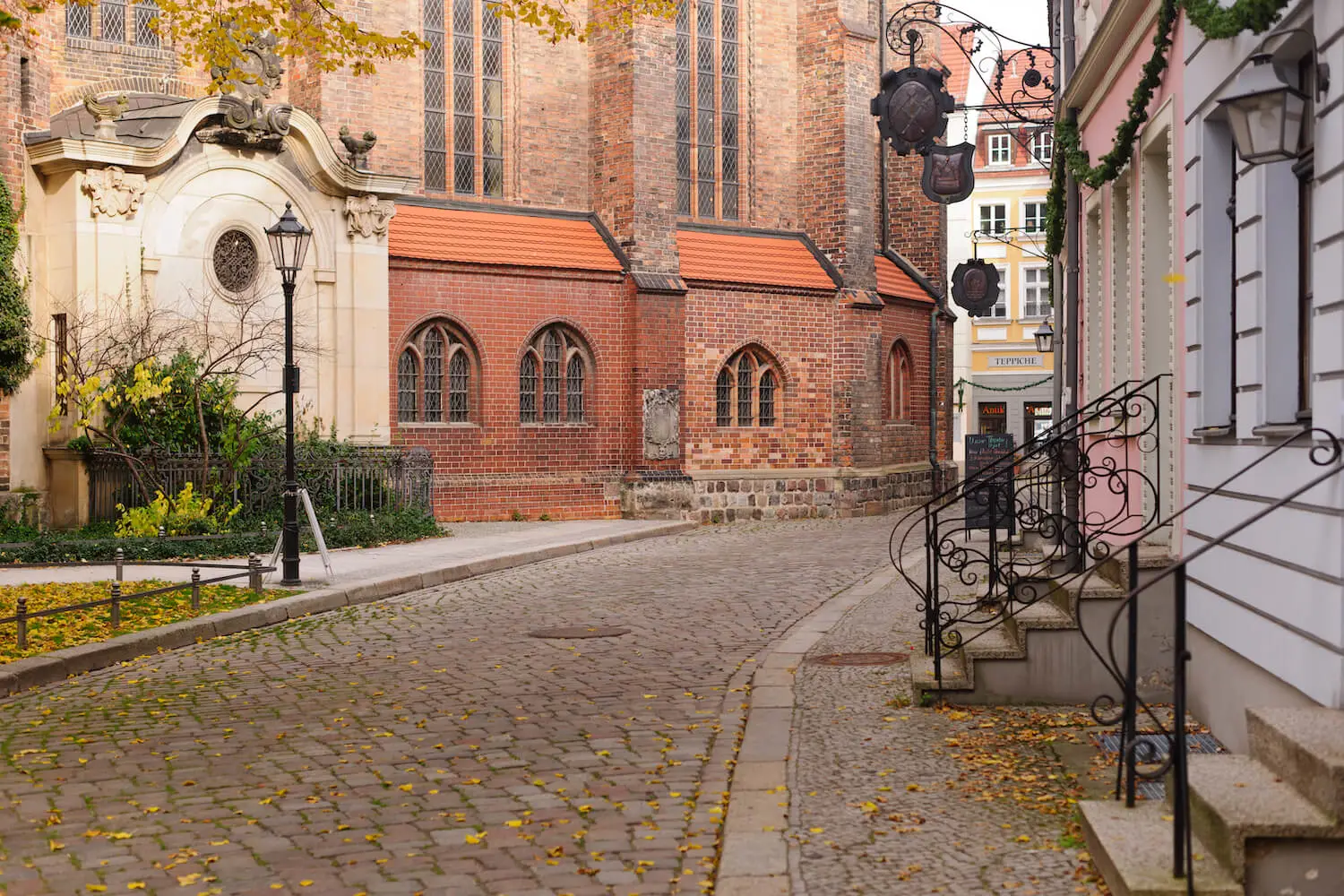
Visit the beautifully restored medieval Gothic church which gave the surrounding neighborhood its name.
Show More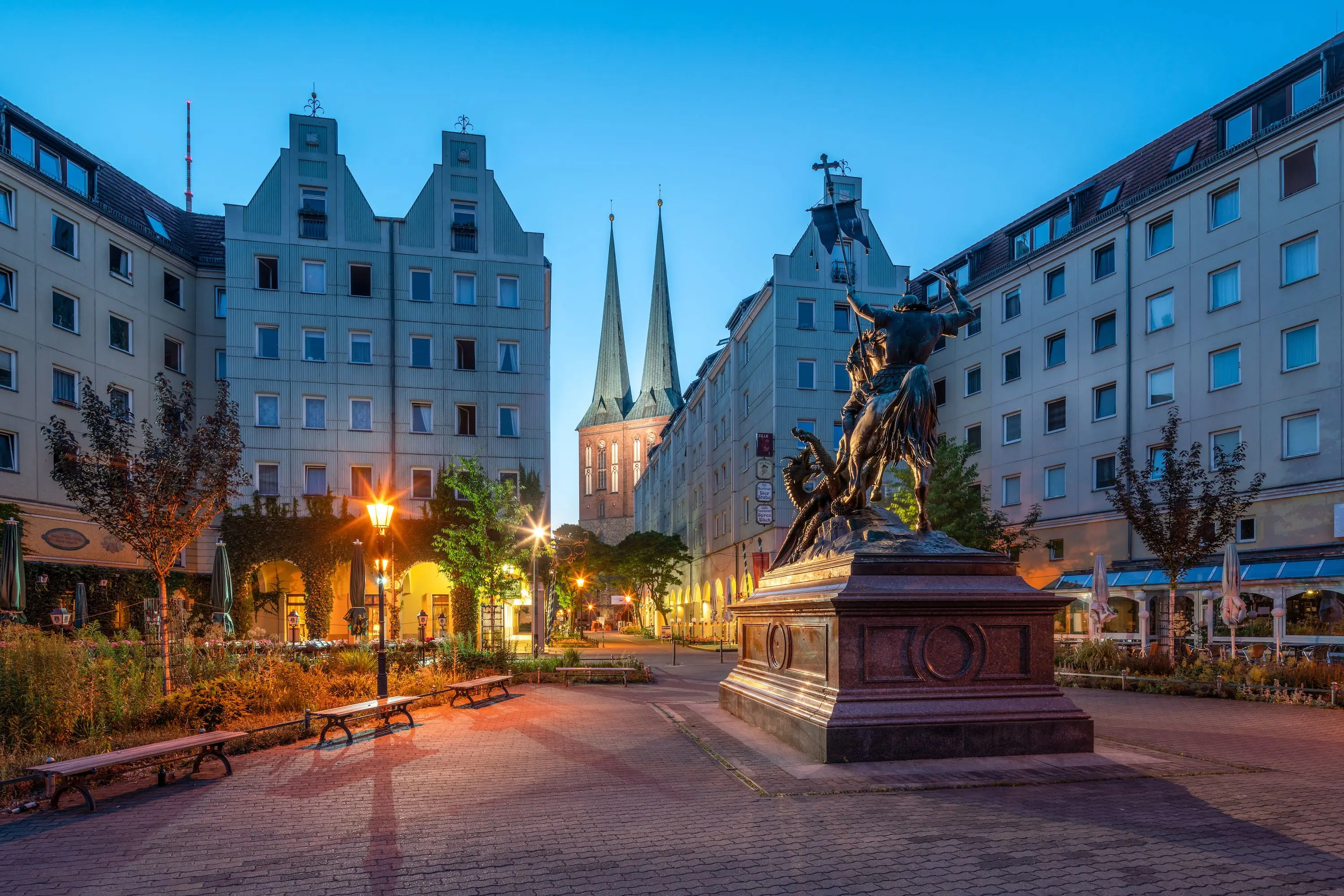
Escape to Berlin's medieval past in this reconstructed historic district.
Show More

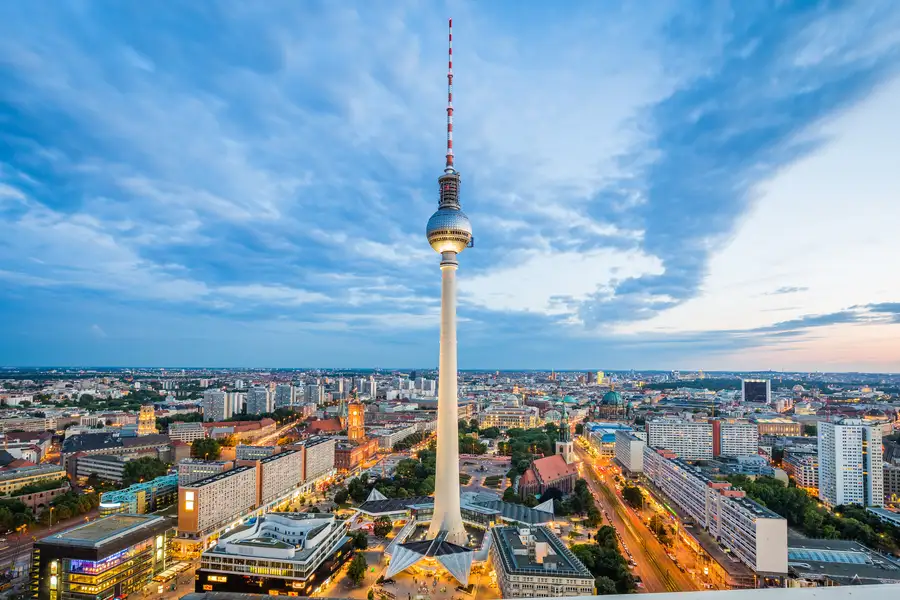
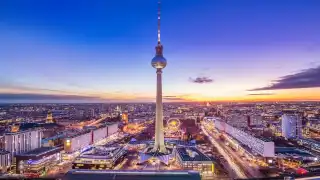
Soar to the top of this iconic symbol of Berlin in just 40 seconds, and enjoy amazing views from its observation deck.
Show MoreExperience life in Communist East Germany in this interactive museum.
Show MoreVisit the beautifully restored medieval Gothic church which gave the surrounding neighborhood its name.
Show MoreEscape to Berlin's medieval past in this reconstructed historic district.
Show MoreSoar to the top of this iconic symbol of Berlin in just 40 seconds, and enjoy amazing views from its observation deck.
Show MoreExperience life in Communist East Germany in this interactive museum.
Show MoreDay 1
Arrive Berlin

Day 1
Arrive Berlin
To Be Determined:
Airport Transfer
Mid-Day/Afternoon:
TV Tower & Old Berlin
Late Afternoon/Early Evening:
Courtyards of Berlin
:
:
DDR Museum
 Highlight of TV Tower & Old Berlin
Experience life in Communist East Germany in this interactive museum.
This brilliantly evocative and interactive museum helps visitors imagine what life under the Communist East German regime was like. A homage to Ostalgie (nostalgia for East Germany), it offers up memories of the school system, pioneer camps (something like Communist scouts), and the wonderfully clumsy attempts to rival Western clothing and food fashions. It'd all be adorable, if it weren't so oppressive.
Nikolaikirche
Highlight of TV Tower & Old BerlinVisit the beautifully restored medieval Gothic church which gave the surrounding neighborhood its name.
Dating all the way back to the earliest days of Berlin, this church was probably built just after Berlin was granted town privileges. An unusual feature of its interior is the bright colouring of the vault ribbings: the orange, purple, green and other vivid lines look like a 1960s Pop Art addition, but actually follow a medieval pattern discovered by a 1980s restorer.
Nikolaiviertel
Highlight of TV Tower & Old BerlinEscape to Berlin's medieval past in this reconstructed historic district.
The Nikolaiviertel or St. Nicholas Quarter is Berlin's oldest residential area. With its medieval lanes and numerous restaurants and bars, it was a favorite haunt of the artistically-minded in the years before WWII, but that war left it a devastated wasteland. In the 1980's the East German regime attempted a renovation of the neighborhood based on historical models, but the “old Berlin” illusion is not all entirely convincing. The use of East German construction techniques is glaringly obvious in some places, such as prefabricated gables and corrugated concrete panels. As a result, it was scornfully nicknamed “Honecker's Disneyland” after the former East German leader, but today it is a historic curiousity in its own right.
TV Tower & Old Berlin
OverviewTV Tower & Old Berlin
The Television Tower and its surroundings in Alexanderplatz are Berlin's main architectural monument to the former East Germany. Despite the high-rent stores and offices that now fill the buildings, you can still detect quite a bit of that old communist character. Somewhat ironically, you'll find the medieval Nikolaiviertel, the oldest residential area of Berlin, just a few steps away. You'll also find nearby the Marienkirche (Berlin's oldest parish church), the displaced Neptune Fountain, the Red Town Hall, statues of Karl Marx and Friedrich Engels, and the massive Loxx model railway that even non-model train enthusiasts will gasp at.
Television Tower
Highlight of TV Tower & Old BerlinSoar to the top of this iconic symbol of Berlin in just 40 seconds, and enjoy amazing views from its observation deck.
The 1960s TV Tower (Fernsehturm) is possibly the best surviving example of East Germany’s architectural legacy. In total, it is 1,197 feet tall (368 meters), but you can only go 666 ft to the observation deck, or a bit higher if you have a ticket to the revolving Sphere Restaurant. You ascend in one of two 10-person elevators that take a mere 40 seconds to reach the observation deck.
DDR Museum
Highlight of TV Tower & Old BerlinExperience life in Communist East Germany in this interactive museum.
This brilliantly evocative and interactive museum helps visitors imagine what life under the Communist East German regime was like. A homage to Ostalgie (nostalgia for East Germany), it offers up memories of the school system, pioneer camps (something like Communist scouts), and the wonderfully clumsy attempts to rival Western clothing and food fashions. It'd all be adorable, if it weren't so oppressive.
Nikolaikirche
Highlight of TV Tower & Old BerlinVisit the beautifully restored medieval Gothic church which gave the surrounding neighborhood its name.
Dating all the way back to the earliest days of Berlin, this church was probably built just after Berlin was granted town privileges. An unusual feature of its interior is the bright colouring of the vault ribbings: the orange, purple, green and other vivid lines look like a 1960s Pop Art addition, but actually follow a medieval pattern discovered by a 1980s restorer.
Nikolaiviertel
Highlight of TV Tower & Old BerlinEscape to Berlin's medieval past in this reconstructed historic district.
The Nikolaiviertel or St. Nicholas Quarter is Berlin's oldest residential area. With its medieval lanes and numerous restaurants and bars, it was a favorite haunt of the artistically-minded in the years before WWII, but that war left it a devastated wasteland. In the 1980's the East German regime attempted a renovation of the neighborhood based on historical models, but the “old Berlin” illusion is not all entirely convincing. The use of East German construction techniques is glaringly obvious in some places, such as prefabricated gables and corrugated concrete panels. As a result, it was scornfully nicknamed “Honecker's Disneyland” after the former East German leader, but today it is a historic curiousity in its own right.
TV Tower & Old Berlin
OverviewTV Tower & Old Berlin
The Television Tower and its surroundings in Alexanderplatz are Berlin's main architectural monument to the former East Germany. Despite the high-rent stores and offices that now fill the buildings, you can still detect quite a bit of that old communist character. Somewhat ironically, you'll find the medieval Nikolaiviertel, the oldest residential area of Berlin, just a few steps away. You'll also find nearby the Marienkirche (Berlin's oldest parish church), the displaced Neptune Fountain, the Red Town Hall, statues of Karl Marx and Friedrich Engels, and the massive Loxx model railway that even non-model train enthusiasts will gasp at.
Television Tower
Highlight of TV Tower & Old BerlinSoar to the top of this iconic symbol of Berlin in just 40 seconds, and enjoy amazing views from its observation deck.
The 1960s TV Tower (Fernsehturm) is possibly the best surviving example of East Germany’s architectural legacy. In total, it is 1,197 feet tall (368 meters), but you can only go 666 ft to the observation deck, or a bit higher if you have a ticket to the revolving Sphere Restaurant. You ascend in one of two 10-person elevators that take a mere 40 seconds to reach the observation deck.
DDR Museum
Highlight of TV Tower & Old BerlinExperience life in Communist East Germany in this interactive museum.
This brilliantly evocative and interactive museum helps visitors imagine what life under the Communist East German regime was like. A homage to Ostalgie (nostalgia for East Germany), it offers up memories of the school system, pioneer camps (something like Communist scouts), and the wonderfully clumsy attempts to rival Western clothing and food fashions. It'd all be adorable, if it weren't so oppressive.
Day 2
Berlin
Day 2
Berlin


9:00 AM - 12:00 PM
Guided Walking Tour of Berlin
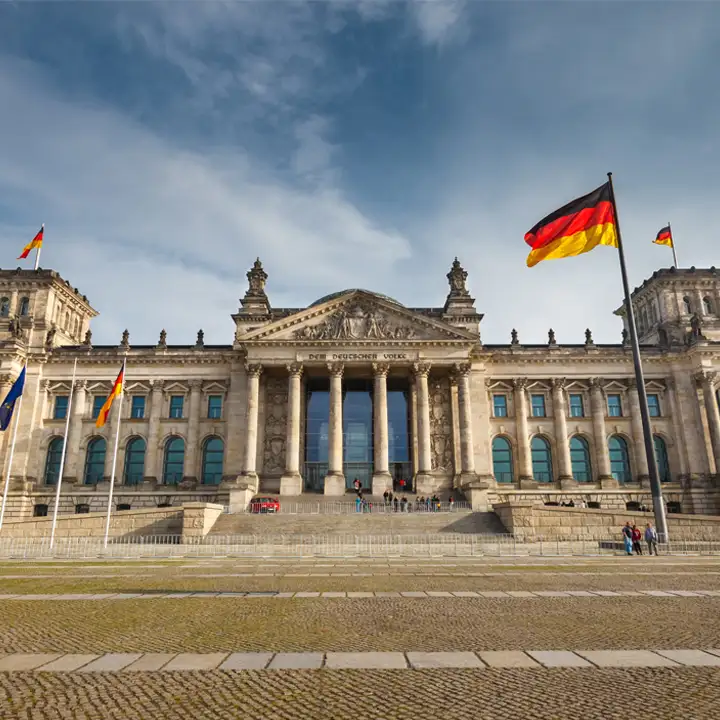
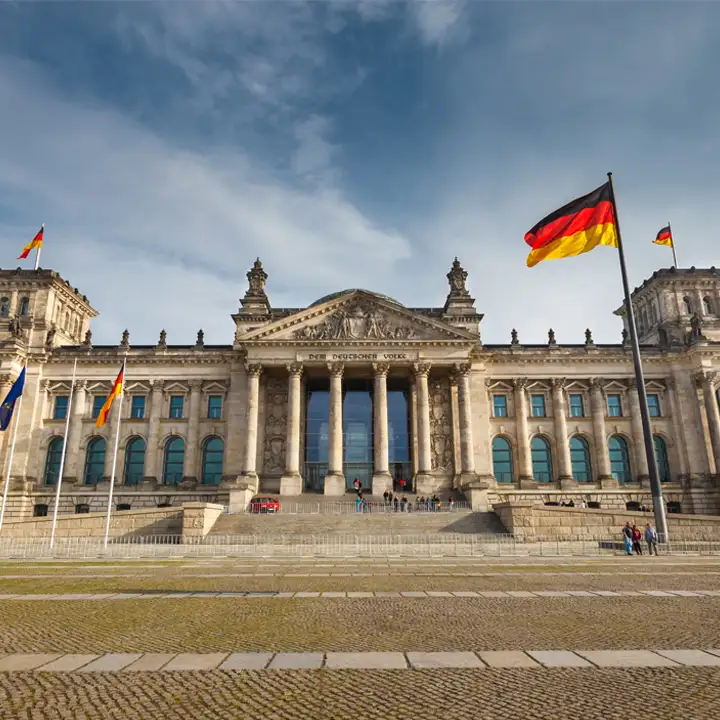
On this 3 hour tour, your guide will show you the highlights of Berlin and help you understand what makes this city so unique. Sites visited will include the boulevard Unter den Linden, the Gendarmenmarkt, Check Point Charlie, remnants of the Berlin Wall, Potsdamer Platz, the Holocaust Memorial, the Brandenburg Gate, and the Reichstag.
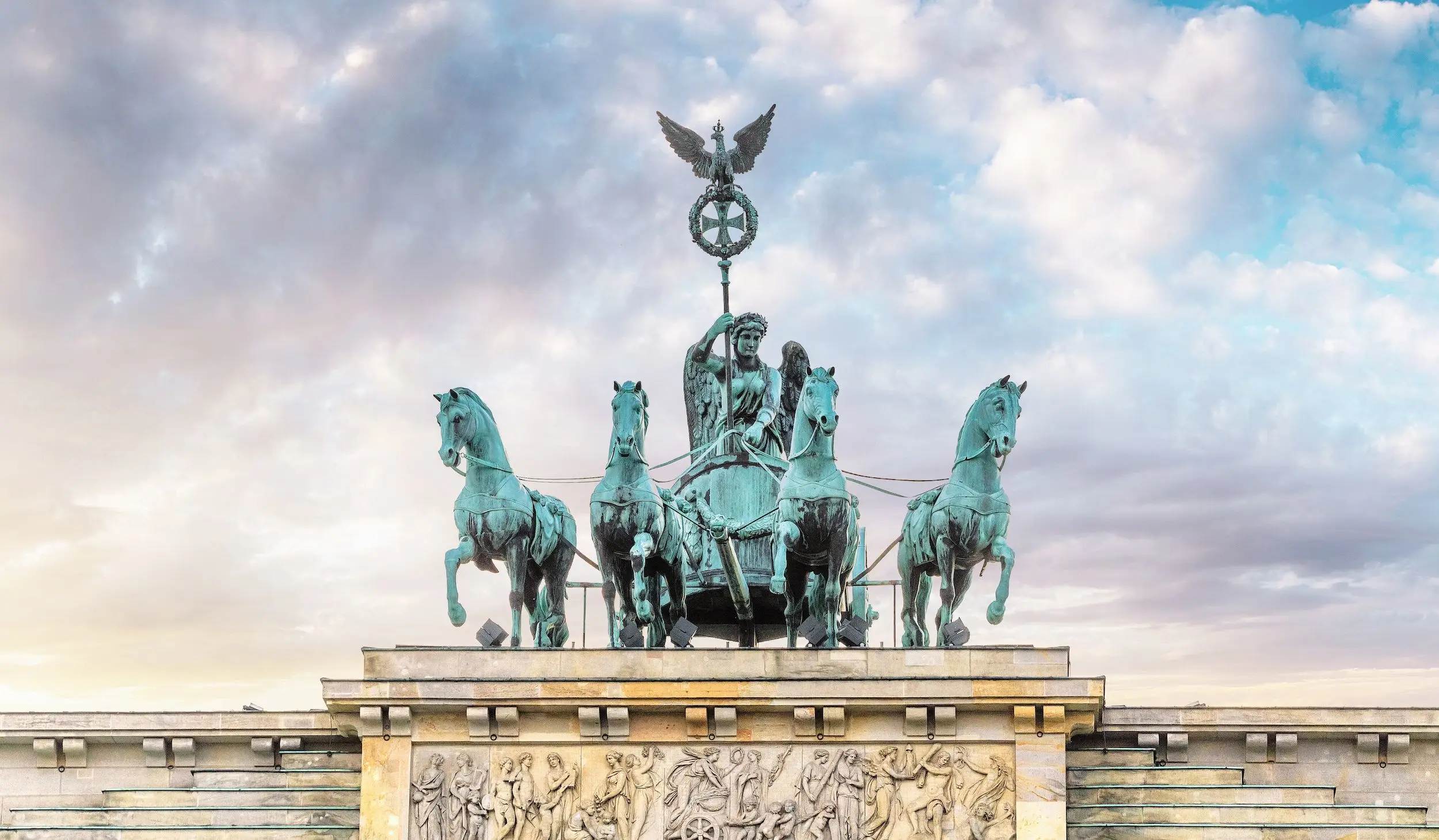
Quadriga. Hey, There's a Word to Know When Learning About this Historic Gate
Show More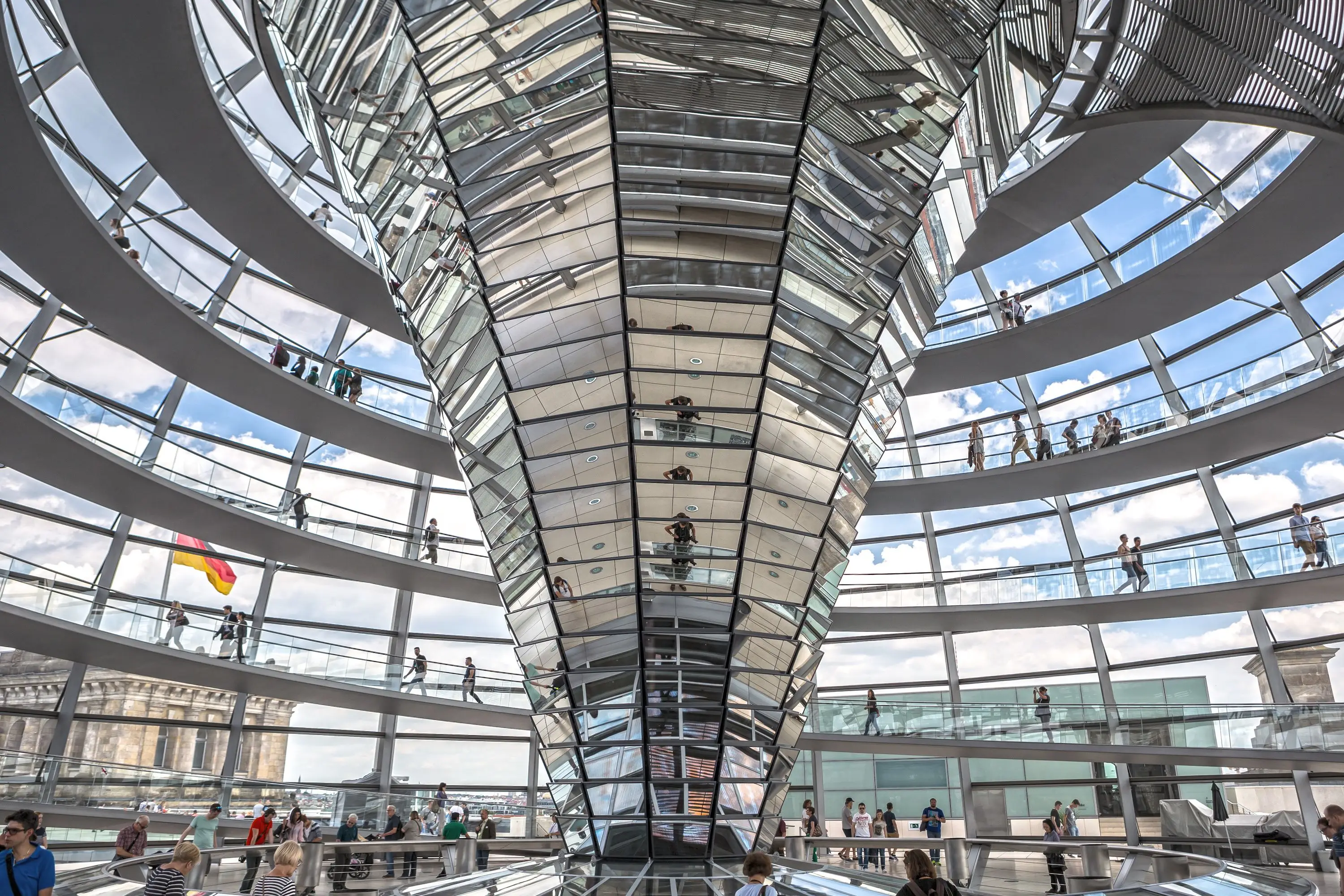
Make your way to the top of the dome enjoying amazing views and looking down at debating members of the German Parliament below.
Show More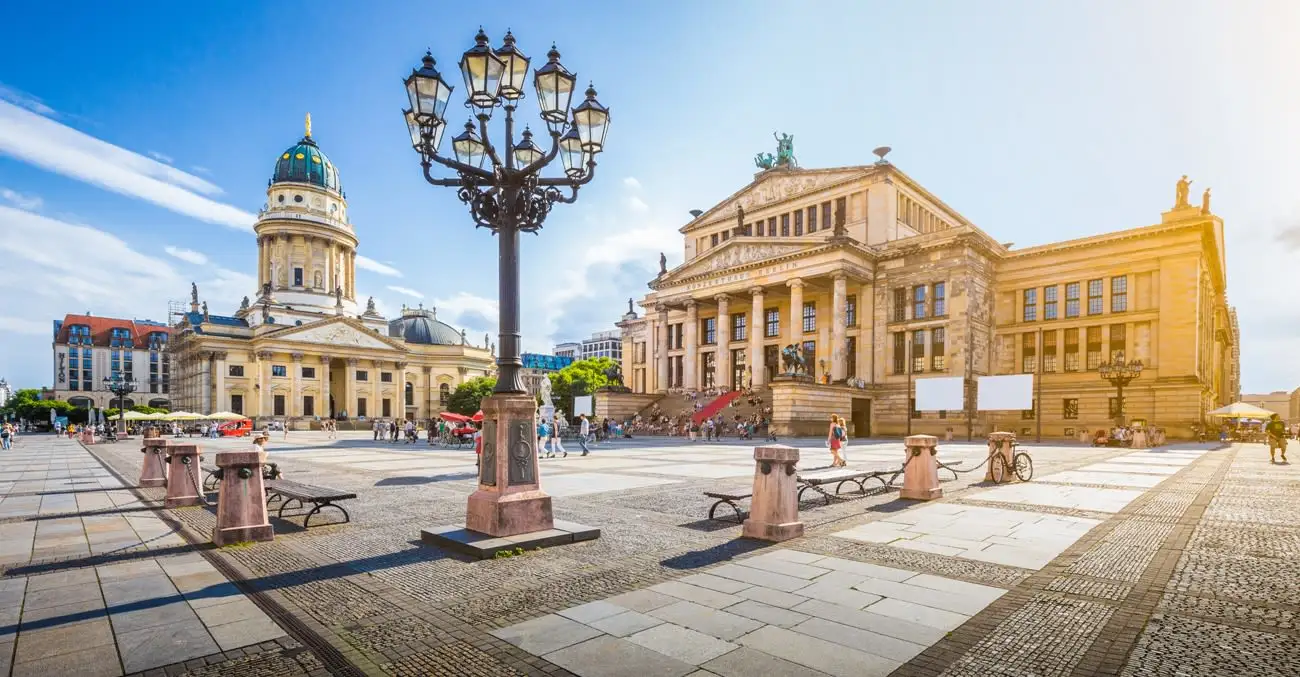
Quadriga. Hey, There's a Word to Know When Learning About this Historic Gate
Show MoreMake your way to the top of the dome enjoying amazing views and looking down at debating members of the German Parliament below.
Show MoreQuadriga. Hey, There's a Word to Know When Learning About this Historic Gate
Show MoreDay 2
Berlin
Day 3
Berlin
Day 3
Berlin
Morning/Mid-Day
Tiergarten
Once the hunting ground of the Prussian kings, the Tiergarten is Berlin’s most famous and expansive park. It is a wonderful escape from urban stress located in the very center of the city. You will discover beautiful forests, fields, and ponds, all easily reached through an extensive and well maintained network of trails. Some of Berlin's favorite beer gardens are also located in the park.

Take a Break in a Popular Beer Garden Nestled Within the Park.
Show More
Shop within the forest at Berlin’s best flea market.
Show More

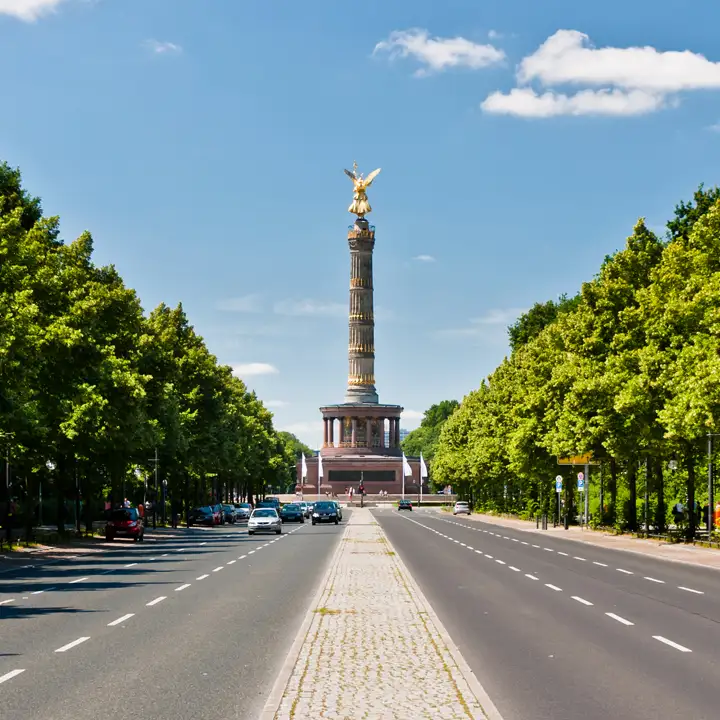
Climb the historic column for a panoramic view of the city amidst a sea of green trees.
Show MoreTake a Break in a Popular Beer Garden Nestled Within the Park.
Show MoreShop within the forest at Berlin’s best flea market.
Show MoreClimb the historic column for a panoramic view of the city amidst a sea of green trees.
Show MoreDay 3
Berlin

Day 4
Berlin
Day 4
Berlin
Morning to Late Afternoon
Tropical Islands
The Tropical Islands theme park is a great opportunity for a family escape. It is lots of fun for adults who want to take time out from a busy sight-seeing schedule to experience a tropical climate on their European holiday. Swim in a South Seas lagoon, or lounge on a sandy beach. Explore the biggest indoor rain forest in the world, or let the kids play in the expansive playgrounds. Relax in the saunas and spas (but watch out as the saunas are nude only - it's Germany after all!).
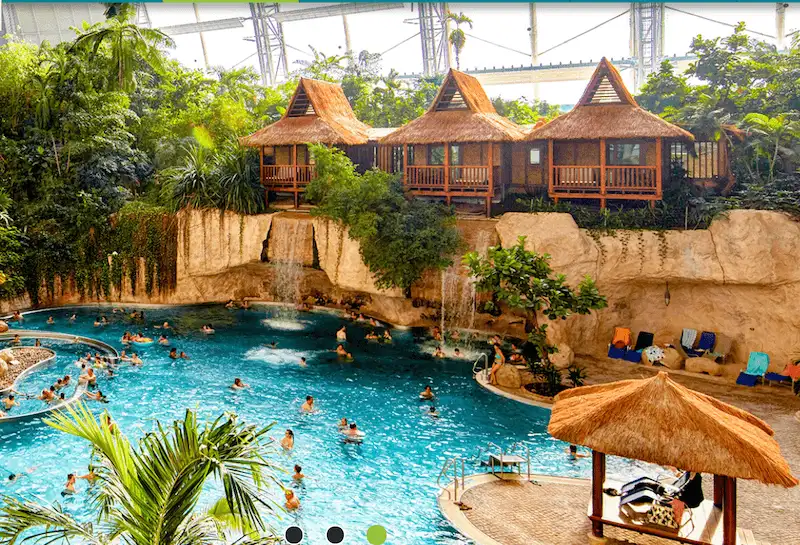
The South Seas lagoon is a pool complete with waterfalls and a grotto.
Show More
The “tropical sea” comes complete with a sandy beach.
Show More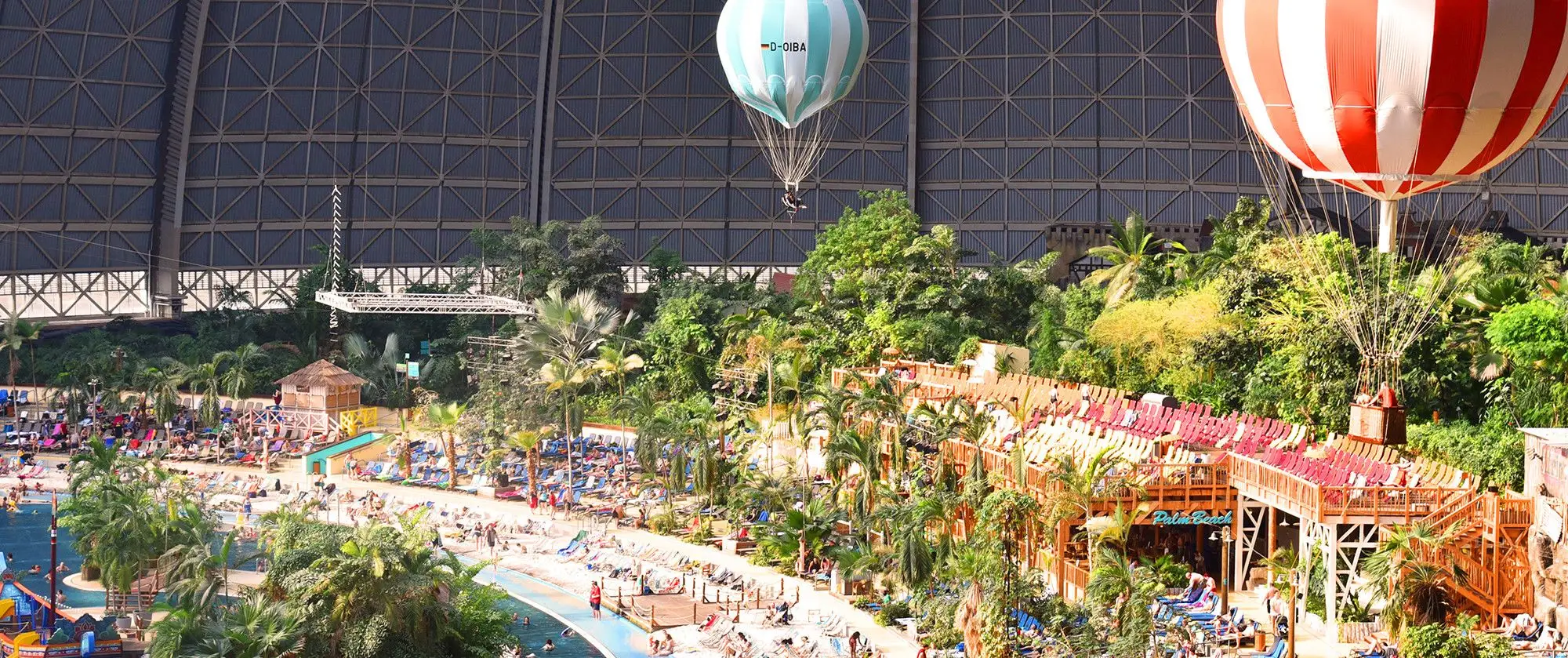
The South Seas lagoon is a pool complete with waterfalls and a grotto.
Show MoreThe “tropical sea” comes complete with a sandy beach.
Show MoreThe South Seas lagoon is a pool complete with waterfalls and a grotto.
Show MoreDay 4
Berlin
Day 5
Depart Berlin
Day 5
Depart Berlin

9:00 AM - 12:00 PM
Guided Walking Tour of WW2 & Cold War
Berlin hides a turbulent past scarred by Nazism and Communism, and on this 3 hour guided tour you will uncover this fascinating history. You will visit the locations where Hitler’s bunker and the SS and Gestapo headquarters once stood, and see remnants of the Cold War such as Check Point Charlie and sections of the Berlin Wall.
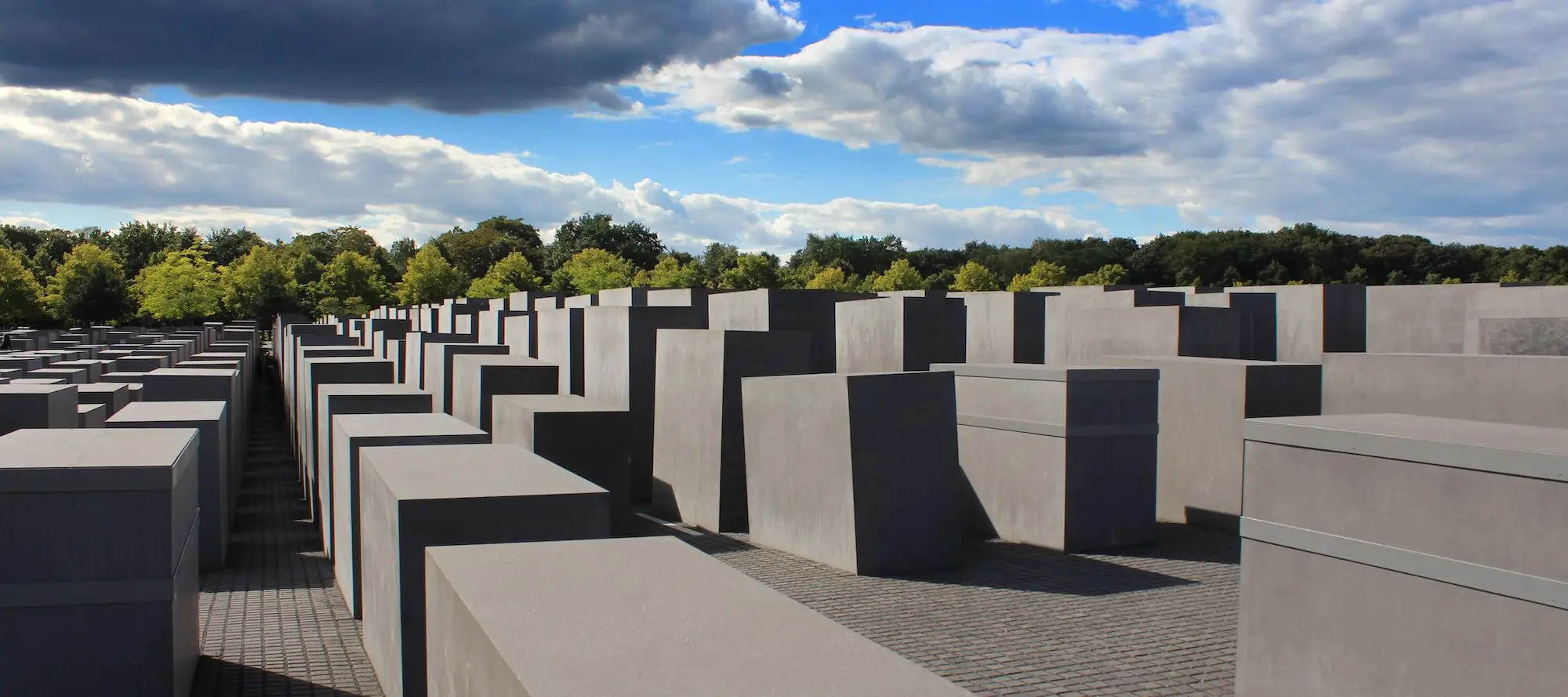
Wander amongst 2,711 columns forming a vast mazelike Holocaust memorial.
Show More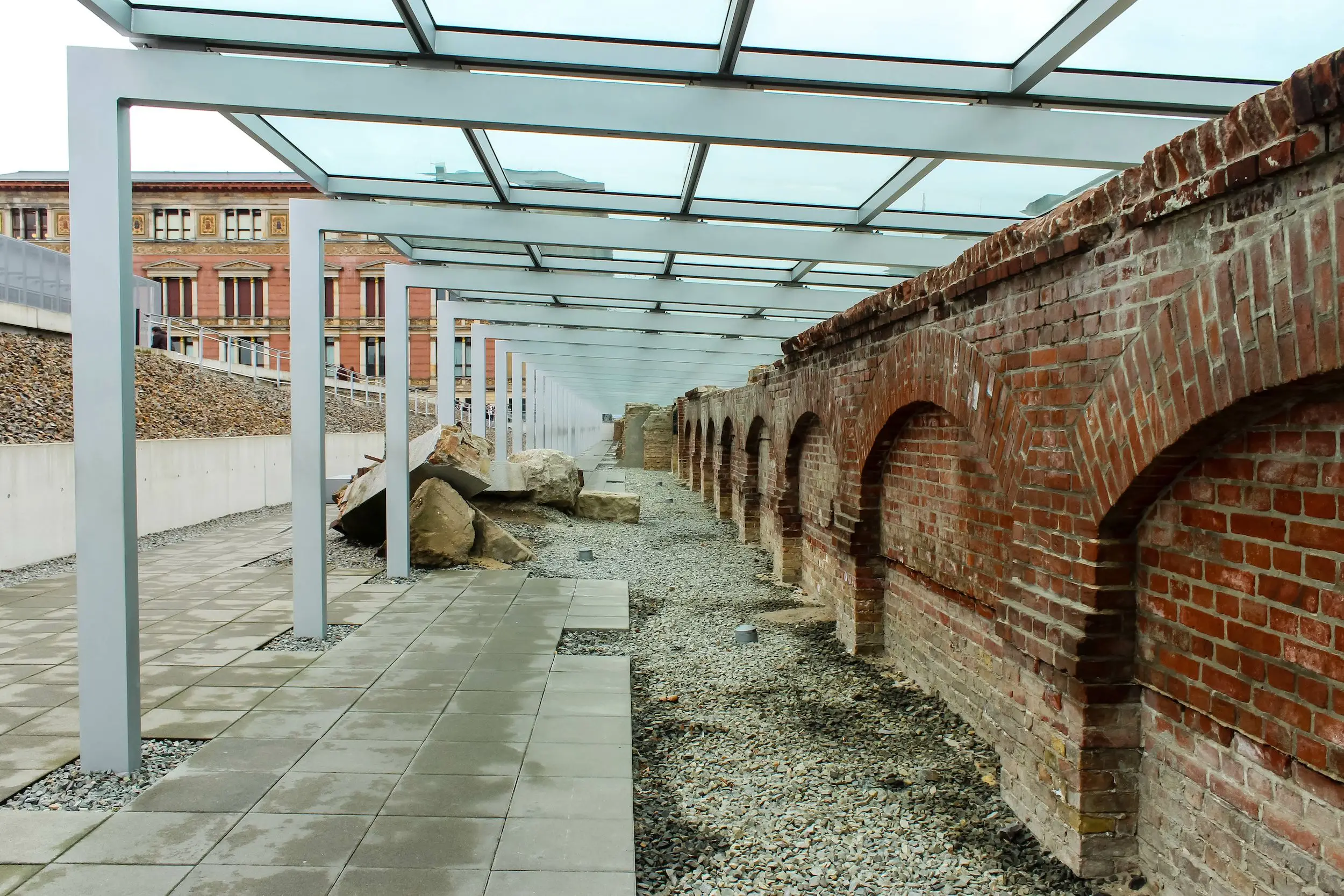
Learn about the horrors of Nazism and the security apparatus it used to enforce its will in this documentation center.
Show More
The site of the bunkers where the Nazi leadership holed up during the final days of World War II, and where Hitler committed suicide on April 30th, 1945.
Show More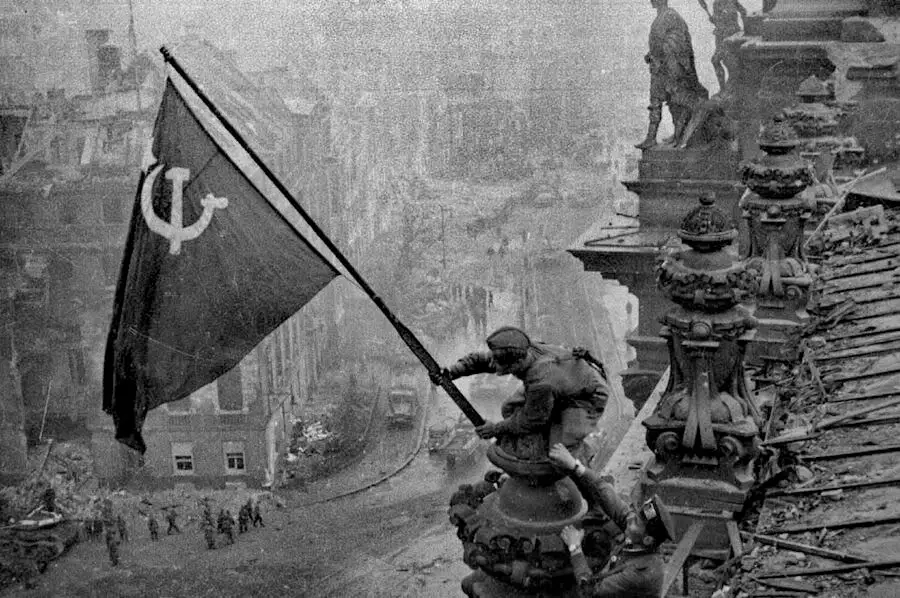
Make your way to the top of the dome enjoying amazing views and looking down at debating members of the German Parliament below.
Show MoreWander amongst 2,711 columns forming a vast mazelike Holocaust memorial.
Show MoreLearn about the horrors of Nazism and the security apparatus it used to enforce its will in this documentation center.
Show MoreThe site of the bunkers where the Nazi leadership holed up during the final days of World War II, and where Hitler committed suicide on April 30th, 1945.
Show MoreMake your way to the top of the dome enjoying amazing views and looking down at debating members of the German Parliament below.
Show MoreWander amongst 2,711 columns forming a vast mazelike Holocaust memorial.
Show MoreDay 5
Depart Berlin
What's Included in the Berlin’s Winter Charm Trip Trip?
Pre-Paid Tours and Activities:
- Highlights of Berlin Guided Walking Tour
- Berlin in World War II and the Cold War - A Guided Tour
- City Card for Berlin, including discounts to many popular attractions

Pre-Paid Transportation:
- Public Transport Tickets for Berlin

Accommodation:
- 4 nights at a hotel of your choice in Berlin

Go Real Travel Mobile App:
- Itinerary Plan & Reservations Info
- Points of Interest
- Detailed Travel Information
- Maps & Directions
Other Trips You May Like




Featured Blogs




Our Customers Say It Best


Malini Dutta, Boston, Massachusetts

Bev and Mark Frankel, Williamsburg, Virginia
Marianne Strydom, Paarl, South Africa
Otto Chuy, Los Angeles, California
Malini Dutta, Boston, Massachusetts
Bev and Mark Frankel, Williamsburg, Virginia
Marianne Strydom, Paarl, South Africa
Otto Chuy, Los Angeles, California
Malini Dutta, Boston, Massachusetts
Bev and Mark Frankel, Williamsburg, Virginia
Marianne Strydom, Paarl, South Africa
Otto Chuy, Los Angeles, California



Explore cities in more detail
Nuremberg
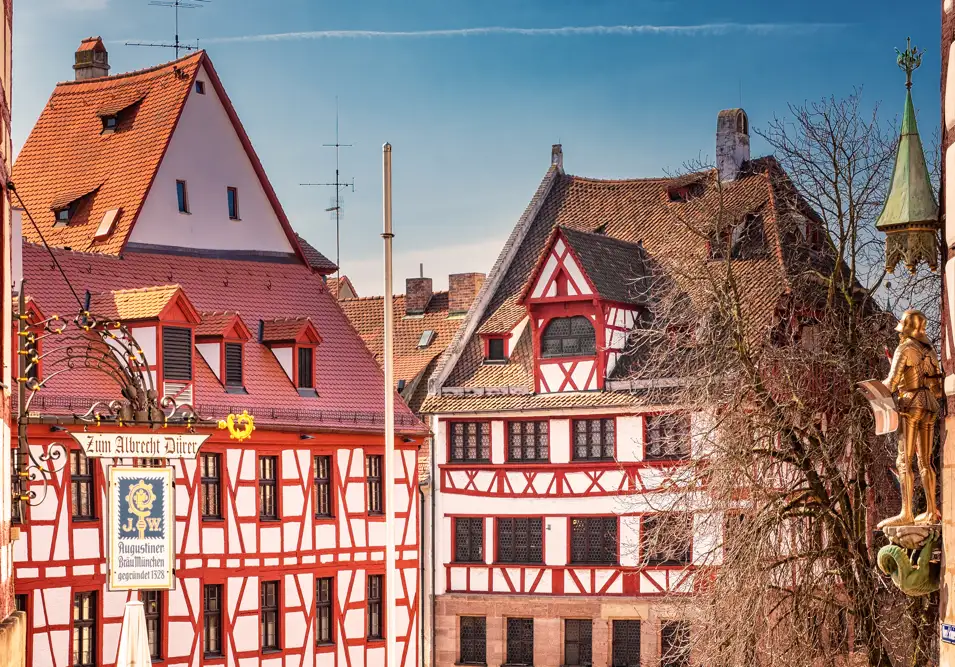
One of the most authentic, storied German destinations, Nuremberg's picturesque old town, glorious castle, and buzzing Christmas Market makes this city a time-true classic. The ideal gateway to old Bavaria, Nuremberg offers a primer in German history before you embark on the lovely journey through old Bavaria, known as the Romantic Road. Considered the capital of the Holy Roman Empire in the middle ages, Nuremberg would have felt like the center of the world as a procession of kings and emperors passed through its magnificent gates. When the German Renaissance came, Nuremberg was at its heart. Albrecht Dürer, the great German master artist, was born here, and Martin Luther called Nuremberg Germany's 'eyes and ears'. Skip forward a few centuries, and the city took a dark turn, as Nuremberg became a gathering point for the German National Socialists. Slightly outside of town, you can still find the Nazi Party Rallying Grounds, a sobering reminder of the not so distant past. If it all gets too heavy, you can end the day with a glass of rotbier (red beer) and mull it over. Nuremberg is a must-see for anyone who wants to delve into Germany's past.
Frankfurt
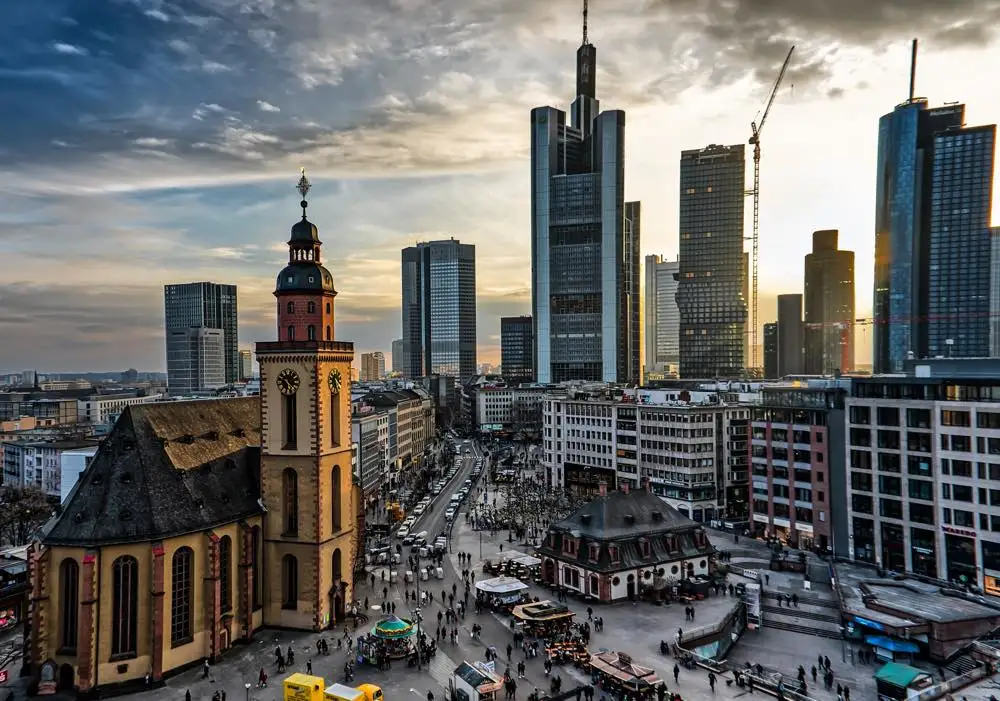
Dubbed ‘Mainhatten’ for its glass highrises, financial prowess, and proximity to the Main River, Frankfurt offers a fascinating glimpse into the ‘engine room’ of Europe’s economy with an unexpected twist. Among the glass and steel buildings, the old-worldly Römerberg square will give you a double-take. The square’s 15th-century half-timbered houses, old statues, and church spires contrast dramatically against the modern 21st-century skyscrapers beyond. If you visit at Christmas, the Römerberg is truly special, aglow with the light of the tallest Christmas tree in Germany. The square fills with stalls selling handicrafts, and the air is scented with hot apple wine, honey, and cinnamon. Delve deeper into Frankfurt and you’ll find a substantial museum district, the Museumsufer (Museum Embankment). This area features a cluster of twelve museums on either side of Main River. This includes the Städel, home to Tischbein’s famous painting of renowned writer Johann Wolfgang von Goethe, one of Frankfurt’s most prestigious sons. The more time you spend in Frankfurt, the more you’ll discover a highly cultured city lurking beneath its glass facades. If you have the time, Frankfurt is certainly worth a second look.
Hamburg
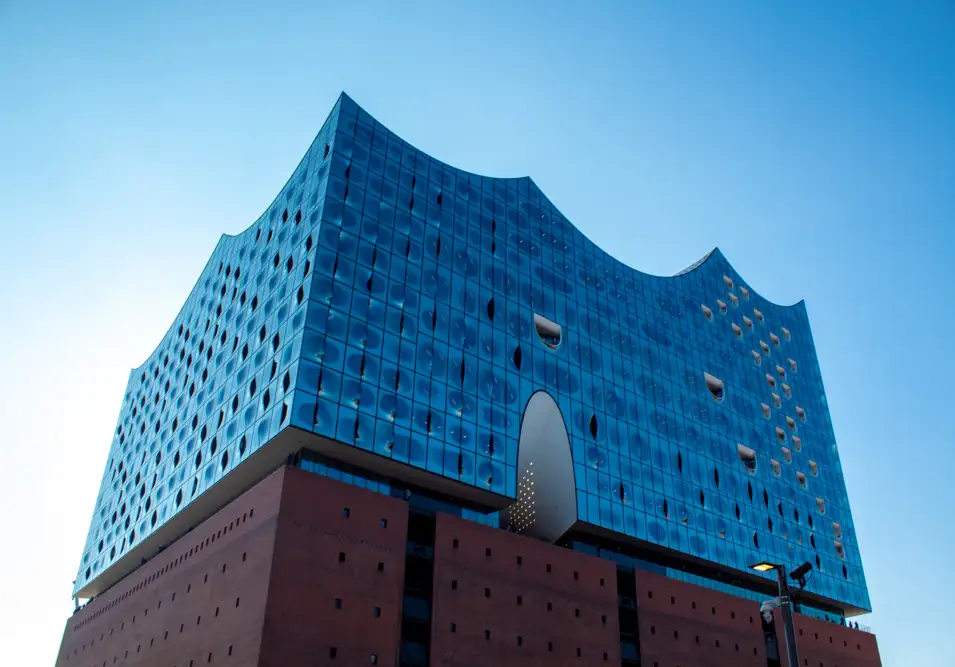
Compared to other German cities, Hamburg has a moody, nautical charisma all of its own. Despite being battered throughout history by floods, fires, and bombs, Hamburg has always held its head up high. Resilience is in the air in Hamburg, along with the briny smell of the North Sea. In recent years Hamburg has garnered a reputation for commerce and nightlife. Frequent travelers whisper that Hamburg is Germany’s ‘undiscovered’ city, the place to go for a little business and a lot of fun. Known as Germany’s ‘gateway to the world’, ships dock in Hamburg as they haul cargo up and down the Elbe River. The city thrives as Germany’s primary seaport and has been a center of trade since the middle ages. Its affluence shows in the 19th-century brick warehouses, flourishing restaurant scene, and recently constructed Elbphilharmonie concert hall, which floats majestically in the harbor, part ship and part island. Hamburg is a city for those who like to live large - in a cultured, German kind of way. Attend a performance at the orchestra, cruise on a boat around the Außenalster Lake, or have a night on the Reeperbahn, the Vegas-like strip where the Beatles once performed. Whatever you do in the city, Hamburg will make you look twice and see Germany from a totally different point of view.
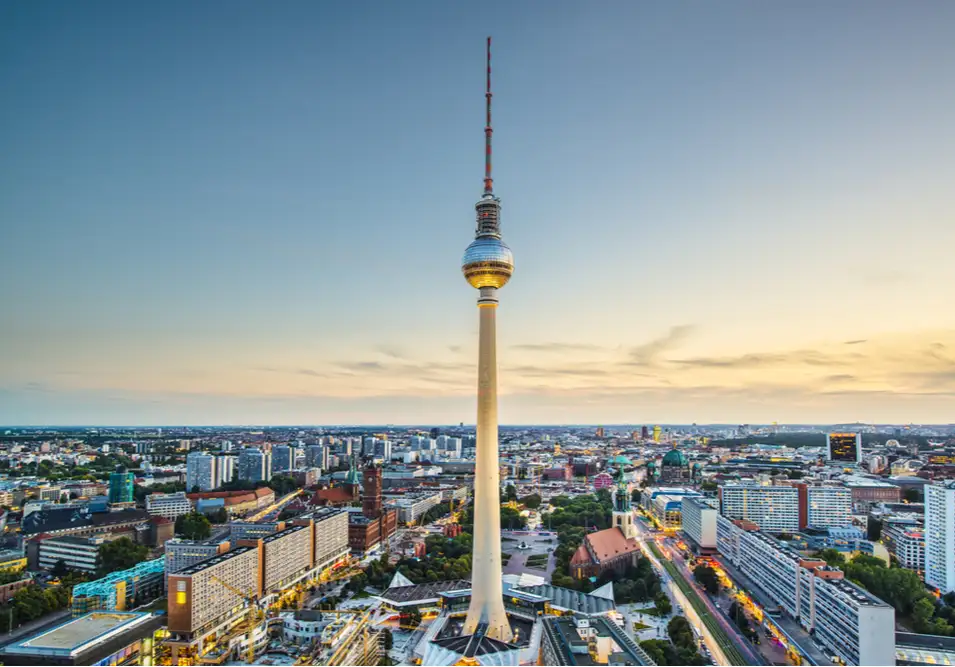
Berlin
Since the fall of its notorious wall, Berlin’s unification has seen it go from strength to strength. No wonder the city feels like it hasn’t stopped partying since the 1990s. There is so much to celebrate here. Fueled by the robust economy, a thriving tech scene, and straight-up German bonhomie, when you step into Berlin you’ll soon be caught up in its spirit. For all this gusto, Berlin hasn’t forgotten its troubled past. A visit to Berlin is to bear witness to history. Portions of the wall remain intact, and the city’s Jewish Museum offers a detailed, emotional examination of the Holocaust. Inside the reconstructed Reichstag, every attempt has been made to preserve the parliament’s beleaguered history. The buildings' glass dome addition feels less like a triumphal crown and more like a freshly healed battle scar. Days in Berlin are easily spent wandering from a cafe to the cultural institutions on Museum Island, or over to the Charlottenburg Palace. By night, crowds wander through the booming bars and nightclubs or gaze upon the floodlit Brandenburg Gate and Victory Column monuments. An international city that can offer something to everyone, Berlin is an unmissable stop on your German journey.
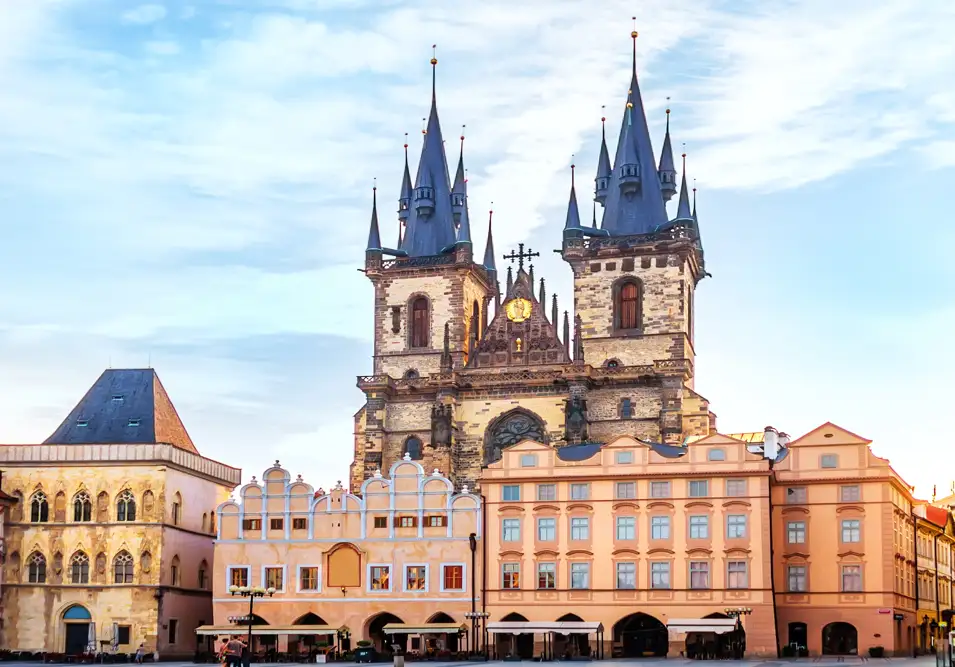
Prague
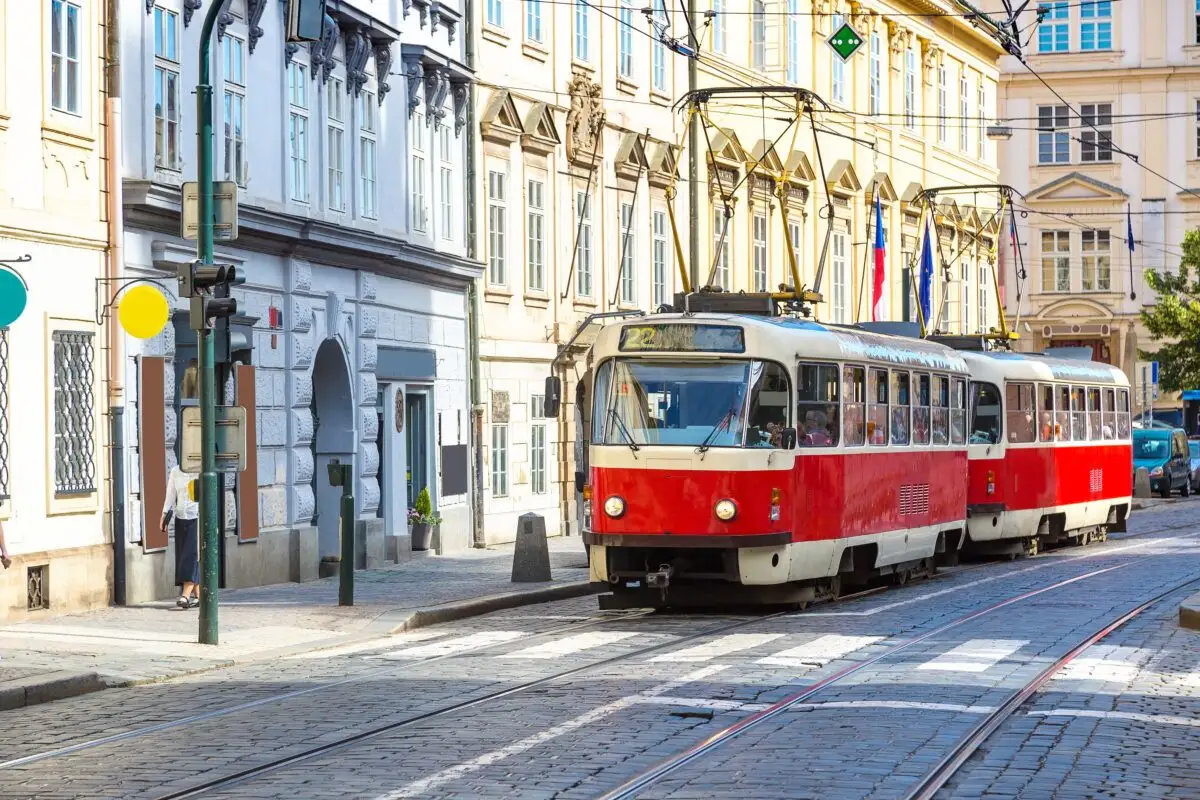
The city of Prague is indisputably the gem of Central Europe. Full of history, culture, and classic Czech pubs around every corner, Prague is teeming with nooks and crannies just waiting to be discovered. The narrow cobblestone streets and warm red rooftops give the city a homey feel, while the well-preserved medieval architecture transports you back in time. Walking across the Charles Bridge with the view of the Prague Castle will make you feel like you’re living in a fairytale, and you might as well be. As an up-and-coming destination, Prague is a perfect mix of classic and modern. New trendy cafes and bistros are always popping up, and you can always find a group of lively locals chowing down on goulash and quaffing pivo (the best beer in Europe!) at traditional Czech restaurants across the city. The clash of modernity and tradition, preservation and innovation, gives this city a mysterious air that you won’t soon forget.
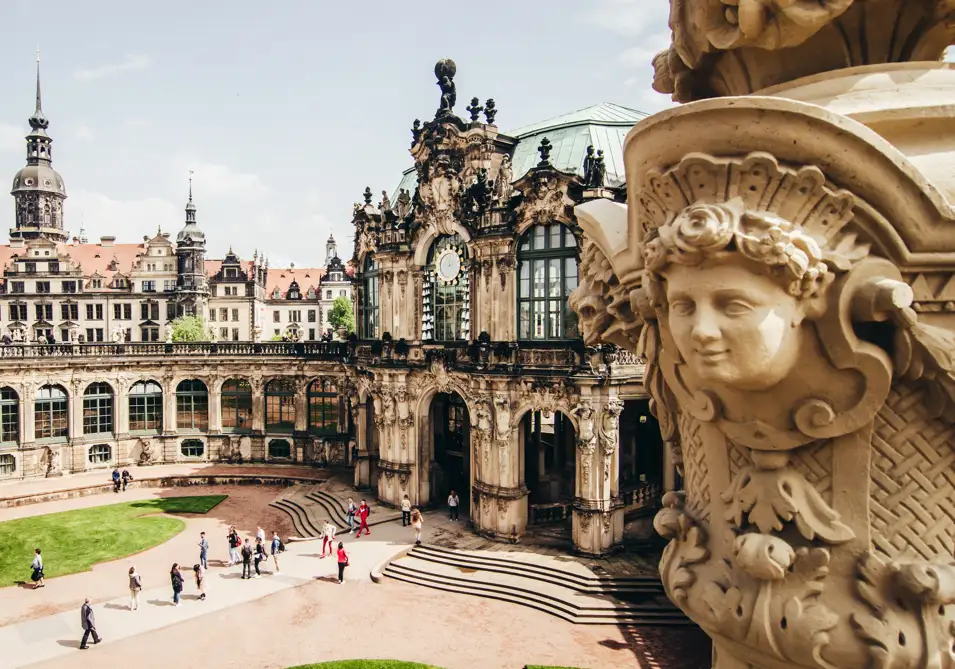
Dresden
Nearly every wall and rooftop in Dresden seems to be finished with a flourish. Defined by its ornamental baroque architecture, a power statement of Saxon royalty, Dresden is made all the more miraculous considering the city was leveled by firebombing in WWII. After the war, the city was reconstructed, brick by painstaking brick. Even under East German-Soviet rule, which usually eschewed frivolous design, buildings like the Semper Opera House were pieced back to their former glory. Restoration of the majestic Zwinger Palace and bell domed Church of Our Lady slowly followed, with the Frauenkirche only fully repaired in 2005. Arguably there is no other city in Europe that cherishes its hard-won architecture as much as Dresden. Although it is a compact city, so many of its buildings will stop you in your tracks that architecture fans will easily lose a whole day in the Old Town area. Especially during the winter months, Dresden sparkles with a joyous, uplifting ambiance. The city is recognized as having the best-ever Christmas market in all of Europe. Between the twinkling lights, the scent of hot wine and gingerbread, and the towering Christmas tree, it’s worth going out of your way to see Dresden at this time of year.
Nuremberg
One of the most authentic, storied German destinations, Nuremberg's picturesque old town, glorious castle, and buzzing Christmas Market makes this city a time-true classic. The ideal gateway to old Bavaria, Nuremberg offers a primer in German history before you embark on the lovely journey through old Bavaria, known as the Romantic Road. Considered the capital of the Holy Roman Empire in the middle ages, Nuremberg would have felt like the center of the world as a procession of kings and emperors passed through its magnificent gates. When the German Renaissance came, Nuremberg was at its heart. Albrecht Dürer, the great German master artist, was born here, and Martin Luther called Nuremberg Germany's 'eyes and ears'. Skip forward a few centuries, and the city took a dark turn, as Nuremberg became a gathering point for the German National Socialists. Slightly outside of town, you can still find the Nazi Party Rallying Grounds, a sobering reminder of the not so distant past. If it all gets too heavy, you can end the day with a glass of rotbier (red beer) and mull it over. Nuremberg is a must-see for anyone who wants to delve into Germany's past.
Frankfurt
Dubbed ‘Mainhatten’ for its glass highrises, financial prowess, and proximity to the Main River, Frankfurt offers a fascinating glimpse into the ‘engine room’ of Europe’s economy with an unexpected twist. Among the glass and steel buildings, the old-worldly Römerberg square will give you a double-take. The square’s 15th-century half-timbered houses, old statues, and church spires contrast dramatically against the modern 21st-century skyscrapers beyond. If you visit at Christmas, the Römerberg is truly special, aglow with the light of the tallest Christmas tree in Germany. The square fills with stalls selling handicrafts, and the air is scented with hot apple wine, honey, and cinnamon. Delve deeper into Frankfurt and you’ll find a substantial museum district, the Museumsufer (Museum Embankment). This area features a cluster of twelve museums on either side of Main River. This includes the Städel, home to Tischbein’s famous painting of renowned writer Johann Wolfgang von Goethe, one of Frankfurt’s most prestigious sons. The more time you spend in Frankfurt, the more you’ll discover a highly cultured city lurking beneath its glass facades. If you have the time, Frankfurt is certainly worth a second look.
Hamburg
Compared to other German cities, Hamburg has a moody, nautical charisma all of its own. Despite being battered throughout history by floods, fires, and bombs, Hamburg has always held its head up high. Resilience is in the air in Hamburg, along with the briny smell of the North Sea. In recent years Hamburg has garnered a reputation for commerce and nightlife. Frequent travelers whisper that Hamburg is Germany’s ‘undiscovered’ city, the place to go for a little business and a lot of fun. Known as Germany’s ‘gateway to the world’, ships dock in Hamburg as they haul cargo up and down the Elbe River. The city thrives as Germany’s primary seaport and has been a center of trade since the middle ages. Its affluence shows in the 19th-century brick warehouses, flourishing restaurant scene, and recently constructed Elbphilharmonie concert hall, which floats majestically in the harbor, part ship and part island. Hamburg is a city for those who like to live large - in a cultured, German kind of way. Attend a performance at the orchestra, cruise on a boat around the Außenalster Lake, or have a night on the Reeperbahn, the Vegas-like strip where the Beatles once performed. Whatever you do in the city, Hamburg will make you look twice and see Germany from a totally different point of view.
Berlin
Since the fall of its notorious wall, Berlin’s unification has seen it go from strength to strength. No wonder the city feels like it hasn’t stopped partying since the 1990s. There is so much to celebrate here. Fueled by the robust economy, a thriving tech scene, and straight-up German bonhomie, when you step into Berlin you’ll soon be caught up in its spirit. For all this gusto, Berlin hasn’t forgotten its troubled past. A visit to Berlin is to bear witness to history. Portions of the wall remain intact, and the city’s Jewish Museum offers a detailed, emotional examination of the Holocaust. Inside the reconstructed Reichstag, every attempt has been made to preserve the parliament’s beleaguered history. The buildings' glass dome addition feels less like a triumphal crown and more like a freshly healed battle scar. Days in Berlin are easily spent wandering from a cafe to the cultural institutions on Museum Island, or over to the Charlottenburg Palace. By night, crowds wander through the booming bars and nightclubs or gaze upon the floodlit Brandenburg Gate and Victory Column monuments. An international city that can offer something to everyone, Berlin is an unmissable stop on your German journey.
Prague
The city of Prague is indisputably the gem of Central Europe. Full of history, culture, and classic Czech pubs around every corner, Prague is teeming with nooks and crannies just waiting to be discovered. The narrow cobblestone streets and warm red rooftops give the city a homey feel, while the well-preserved medieval architecture transports you back in time. Walking across the Charles Bridge with the view of the Prague Castle will make you feel like you’re living in a fairytale, and you might as well be. As an up-and-coming destination, Prague is a perfect mix of classic and modern. New trendy cafes and bistros are always popping up, and you can always find a group of lively locals chowing down on goulash and quaffing pivo (the best beer in Europe!) at traditional Czech restaurants across the city. The clash of modernity and tradition, preservation and innovation, gives this city a mysterious air that you won’t soon forget.
Dresden
Nearly every wall and rooftop in Dresden seems to be finished with a flourish. Defined by its ornamental baroque architecture, a power statement of Saxon royalty, Dresden is made all the more miraculous considering the city was leveled by firebombing in WWII. After the war, the city was reconstructed, brick by painstaking brick. Even under East German-Soviet rule, which usually eschewed frivolous design, buildings like the Semper Opera House were pieced back to their former glory. Restoration of the majestic Zwinger Palace and bell domed Church of Our Lady slowly followed, with the Frauenkirche only fully repaired in 2005. Arguably there is no other city in Europe that cherishes its hard-won architecture as much as Dresden. Although it is a compact city, so many of its buildings will stop you in your tracks that architecture fans will easily lose a whole day in the Old Town area. Especially during the winter months, Dresden sparkles with a joyous, uplifting ambiance. The city is recognized as having the best-ever Christmas market in all of Europe. Between the twinkling lights, the scent of hot wine and gingerbread, and the towering Christmas tree, it’s worth going out of your way to see Dresden at this time of year.
Hi! Need help planning your dream trip? 🌍
Go Real Travel Assistant
OnlineWelcome! Where are you in your journey?
Pick the option that fits you best so we can route you to the right help.