👋

Hi! Need help planning your dream trip? 🌍

Go Real Travel Assistant

Online

Welcome! Where are you in your journey?

Pick the option that fits you best so we can route you to the right help.

From Normandy to Bavaria: Exploring the Heritage of France and Germany

destination-icon14 Day Tour of Bayeux, Rennes, Paris, Heidelberg and Munich

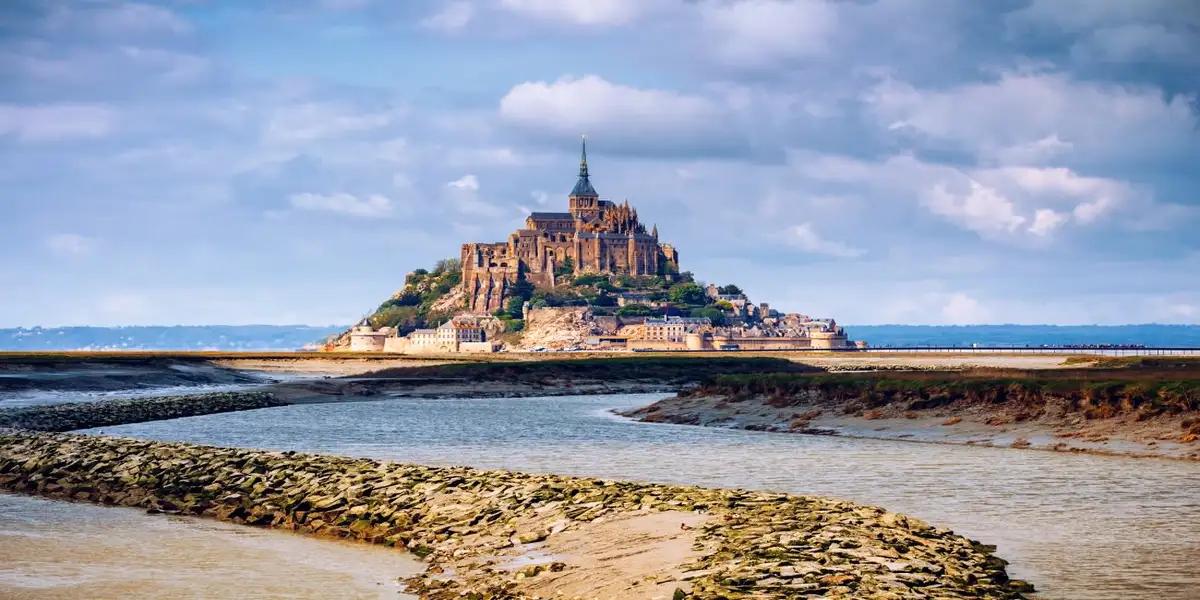
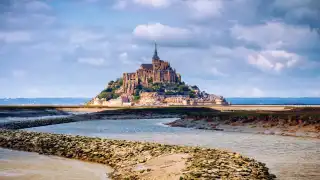
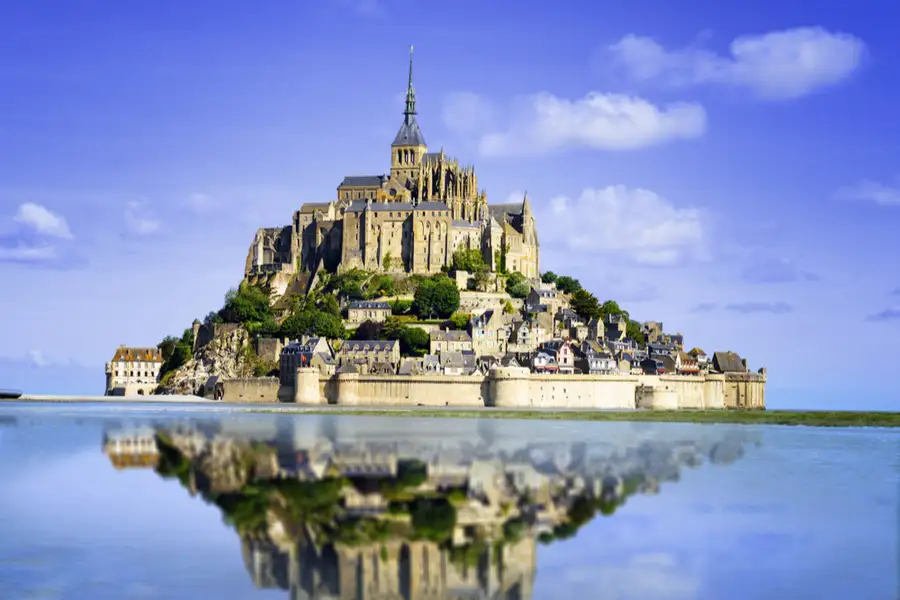
Mont-St.-Michele rises from the water under a blue sky
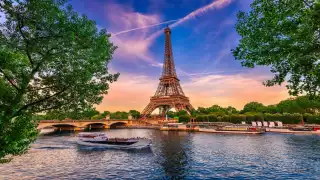
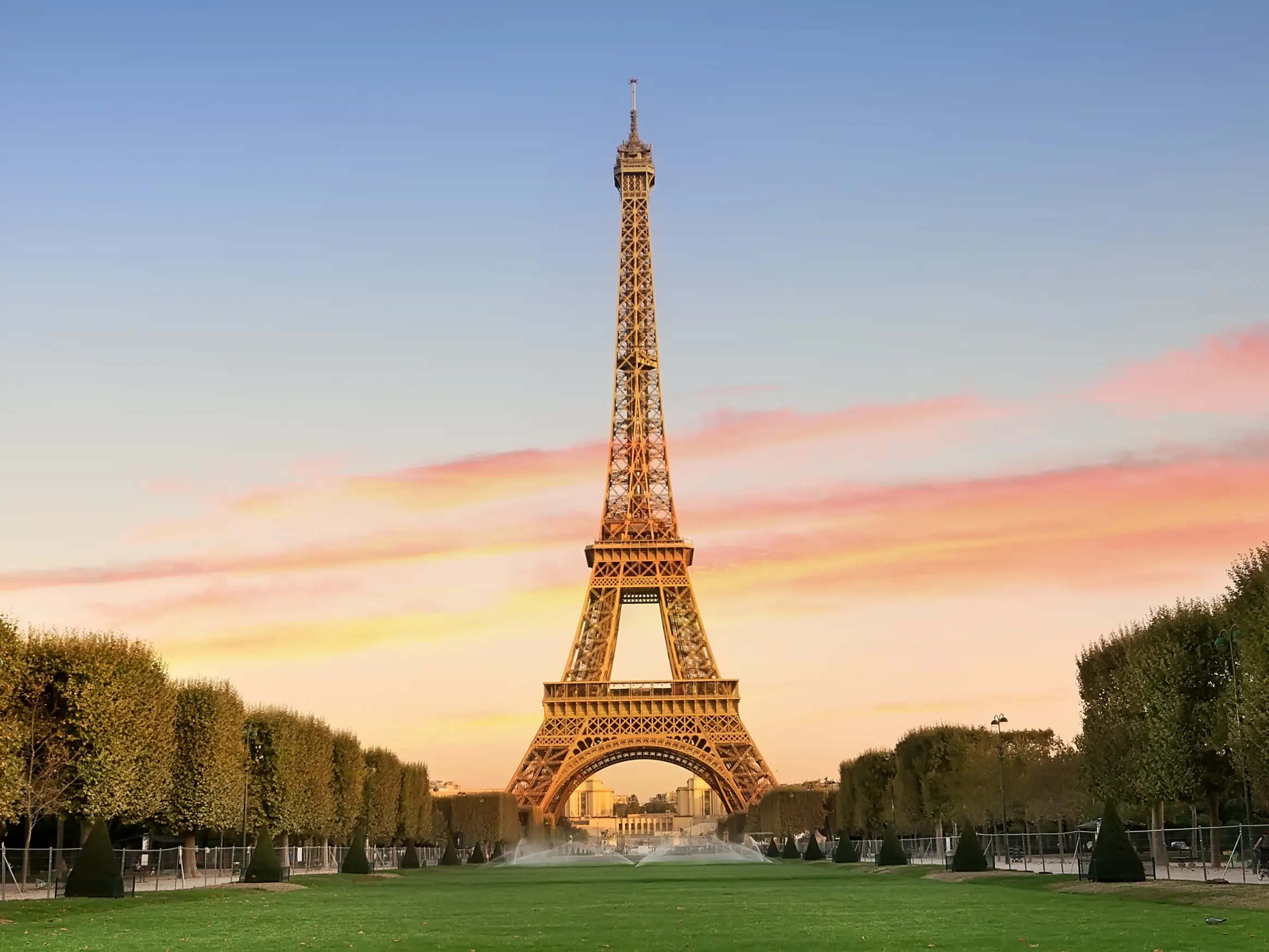
Paris, Eiffel Tower over the Seine River
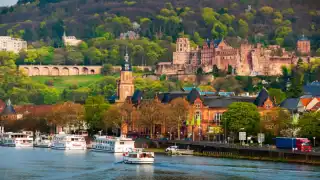
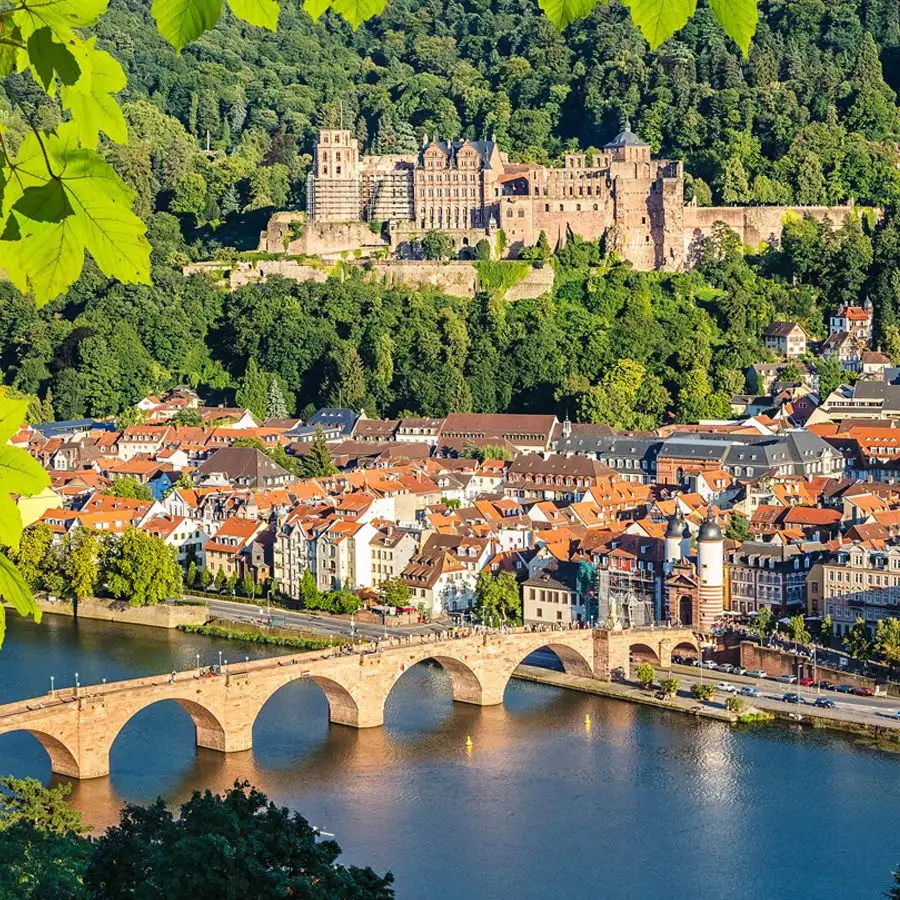
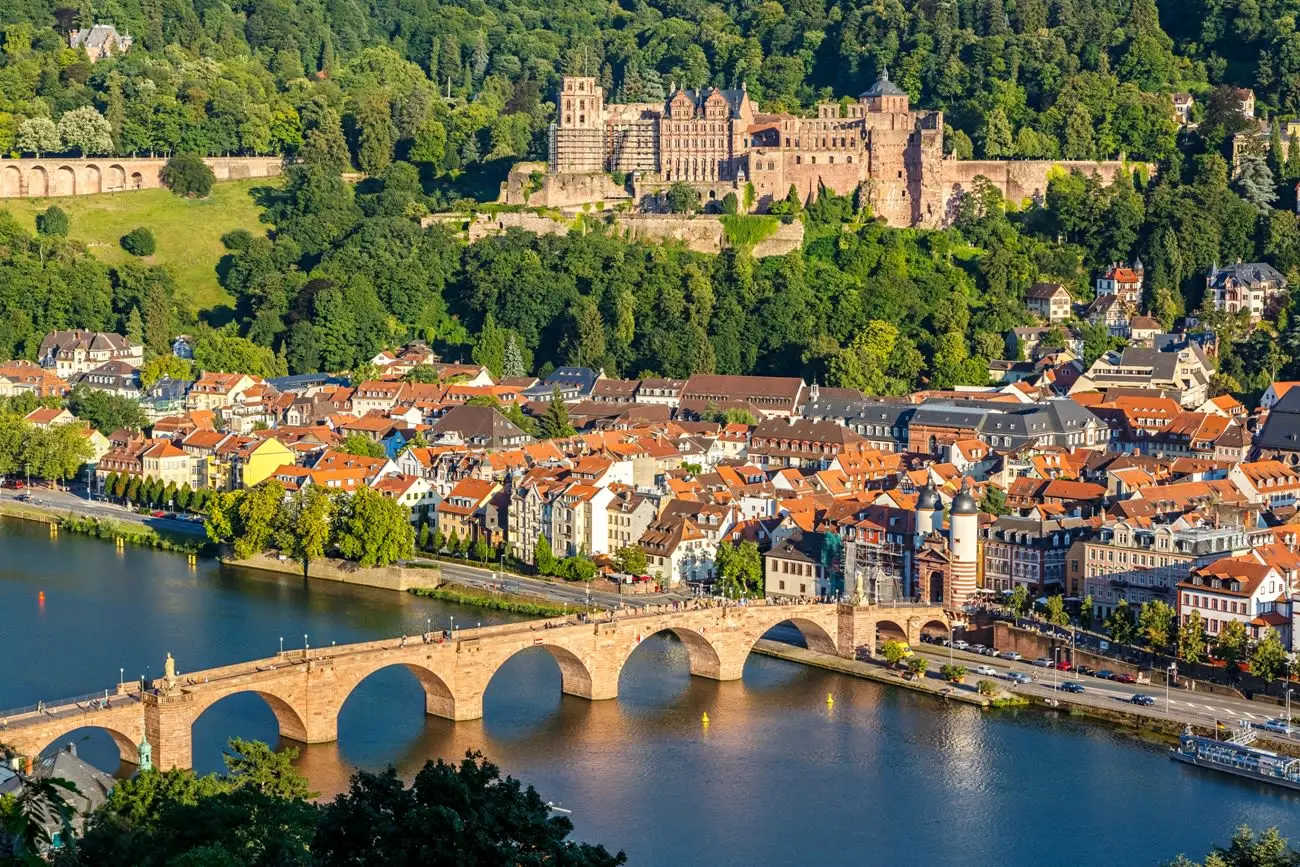
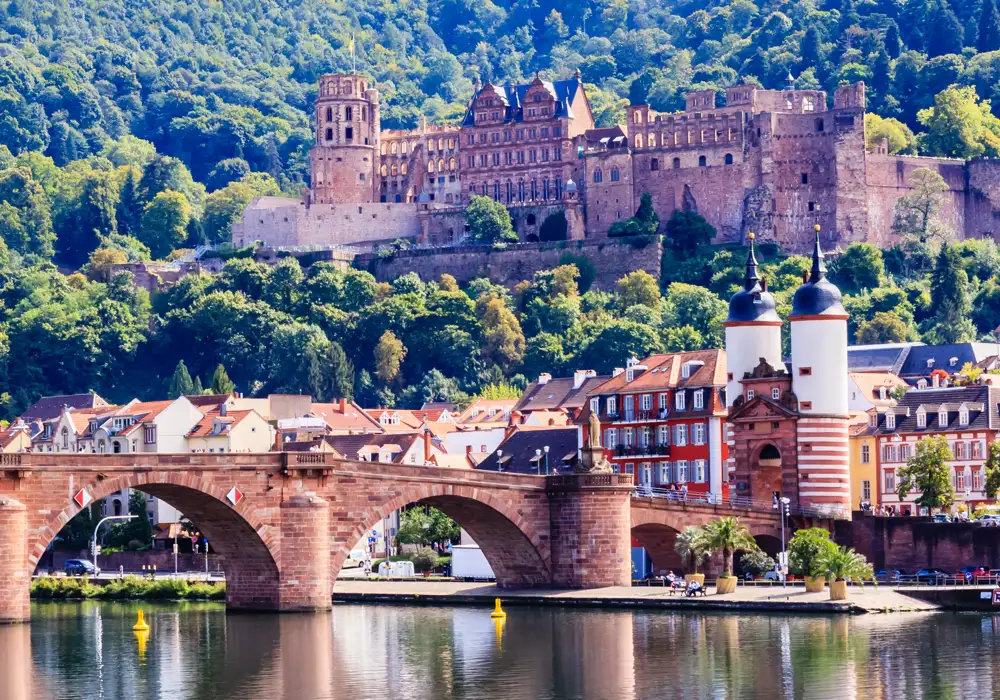
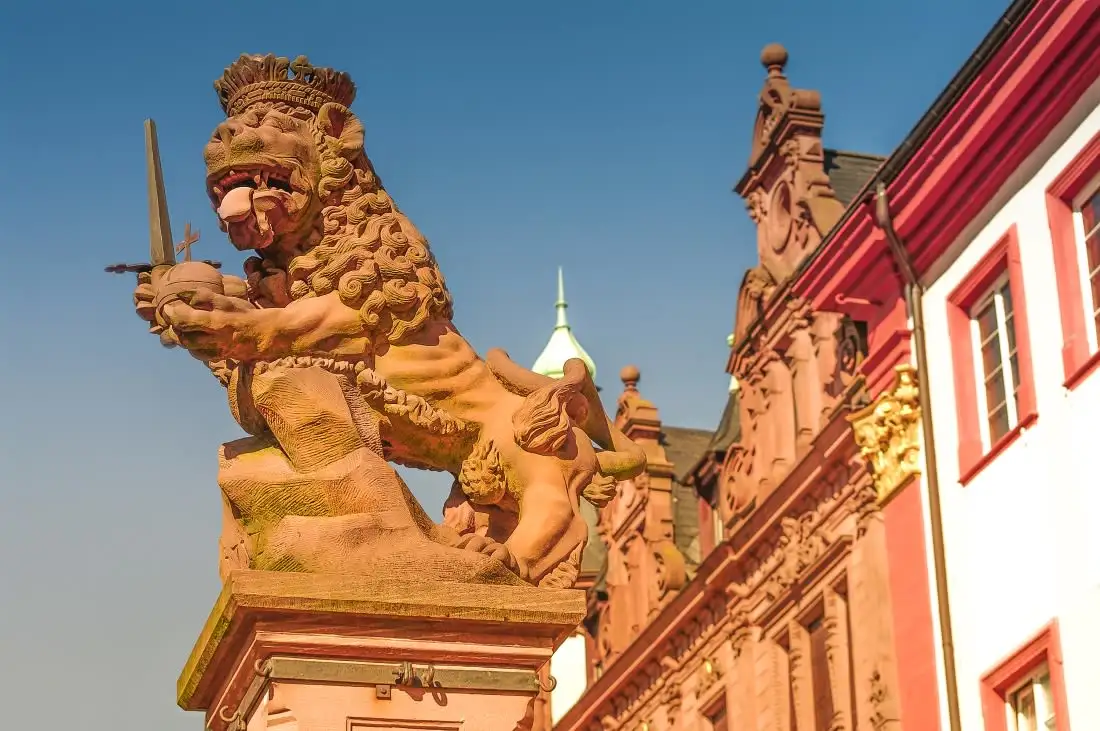
Heidelberg from the River Neckar
Beer server in Munich
image
arrowLightLeft
arrowLightRight
calendar-icon
14 Days 13 Nights
calendar-icon
Best Time: Jan-Dec
building-icon
Castle & Palace Tours
family-icon
WWII History & Communist Era
Take a captivating journey to France and Germany, unveiling a tapestry of diverse histories, cultures, and breathtaking landscapes. Begin in the charming towns of Bayeux and Rennes, exploring the famed D-Day beaches and the medieval marvel of Mont Saint Michel. Then travel to Paris, Heidelberg, and Munich, where you'll enjoy private guided tours and visit architectural wonders like the Eiffel Tower, Neuschwanstein Castle, and Nymphenburg Palace. Delight in exploring picturesque medieval towns, experiencing vibrant city life, and discovering fascinating history, all with detailed travel guidance from Go Real Travel.
  • Reflect on history at the American D-Day Beaches and enjoy the beauty of the Normandy coast.
  • Visit the enchanting island abbey of Mont St. Michel, a marvel of medieval architecture.
  • Wander through Heidelberg's Altstadt and visit its castle for stunning views of the Neckar River.
  • Experience quintessential Parisian landmarks with visits to the Eiffel Tower, Louvre, & Versailles.
  • Explore the fairy-tale castle of Neuschwanstein amidst the Bavarian Alps.
Take a captivating journey to France and Germany, unveiling a tapestry of diverse histories, cultures, and breathtaking landscapes. Begin in the charming towns of Bayeux and Rennes, exploring the famed D-Day beaches and the medieval marvel of Mont Saint Michel. Then travel to Paris, Heidelberg, and Munich, where you'll enjoy private guided tours and visit architectural wonders like the Eiffel Tower, Neuschwanstein Castle, and Nymphenburg Palace. Delight in exploring picturesque medieval towns, experiencing vibrant city life, and discovering fascinating history, all with detailed travel guidance from Go Real Travel.
  • Reflect on history at the American D-Day Beaches and enjoy the beauty of the Normandy coast.
  • Visit the enchanting island abbey of Mont St. Michel, a marvel of medieval architecture.
  • Wander through Heidelberg's Altstadt and visit its castle for stunning views of the Neckar River.
  • Experience quintessential Parisian landmarks with visits to the Eiffel Tower, Louvre, & Versailles.
  • Explore the fairy-tale castle of Neuschwanstein amidst the Bavarian Alps.
European Adventure
D-Day Tour
The Great War & WWII
Scenic Europe
The Bayeux Tapestry
European History
Exploring European Beauty
Mont-Saint-Michel
Churches & Monasteries
Traveling Through Europe
Dinan
Small Towns
European Wonders
Eiffel Tower
Historic Landmarks
Captivating European Destinations
Louvre Museum
Museums & Galleries
Picturesque Europe
Heidelberg Castle
Castles & Chateaux
European Charm
Church of the Holy Spirit
Churches & Monasteries
Discovering Europe's Treasures
Old Town
Architecture

Must see sights

European Adventure
D-Day Tour
The Great War & WWII
Scenic Europe
The Bayeux Tapestry
European History
Exploring European Beauty
Mont-Saint-Michel
Churches & Monasteries
Traveling Through Europe
Dinan
Small Towns
European Wonders
Eiffel Tower
Historic Landmarks
Captivating European Destinations
Louvre Museum
Museums & Galleries
Picturesque Europe
Heidelberg Castle
Castles & Chateaux
European Charm
Church of the Holy Spirit
Churches & Monasteries
Discovering Europe's Treasures
Old Town
Architecture
Loading...

Starting from

$4050

per person

no-flightNot included

Secure Your Customizable Trip

Enter your details to embark on a journey that can be tailored just for you.

Start

Travelers

0 travelers
Add Room
Remove Room

Preferred Hotel Stars

Select Hotel Stars
Craft Your Own Itinerary

Select your interests and destinations for a trip plan inspired by you.

France & Germany Adventure Trip - Map & Itinerary

Enable/Disable Map Scrolling

Click To Make Map Interactive

France & Germany Adventure Trip Timeline

Arrival

2 nights

Bayeux

France

Shuttle: 5h30m

2 nights

Rennes

France

Train: 2h

3 nights

Paris

France

Train: 3.5h

Train: 0.5h

2 nights

Heidelberg

Germany

Train: 3h

4 nights

Munich

Germany

Departure

Day-By-Day Itinerary of France & Germany Adventure Trip

image

Day 1

Arrive Bayeux

Day 1

Arrive Bayeux

icon
icon
icon

11:30 AM

Private Transfer from Paris to Bayeux

A private transfer service will pick you up directly from the airport in Paris and take you to your hotel in Bayeux, N/A. The drive time is approximately 3 hours. This transfer is pre-paid and is private for your travel party only.

Private Transfer from Paris to Bayeux

11:30 AM — Private Transfer from Paris to Bayeux

A private transfer service will pick you up directly from the airport in Paris and take you to your hotel in Bayeux, N/A. The drive time is approximately 3 hours. This transfer is pre-paid and is private for your travel party only.

Mid-Day — Bayeux Tapestry Museum and Museum of Art and History

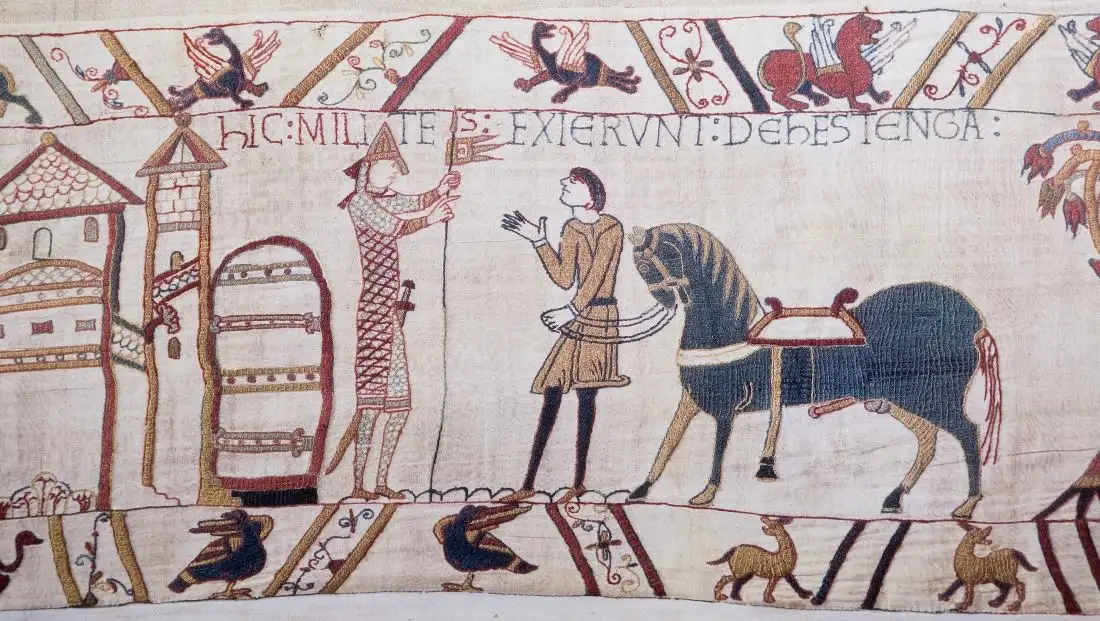
How will you weave your story of seeing the Bayeux Tapestry? Depicting William of Normandy's conquest of England in 1066, the tapestry - which is actually an elaborate embroidery - is thought to be nearly 1000 years old and brings the medieval era to life. A close inspection might change the way you look at Normandy and England and their closely braided histories. If Bayeux's history draws you in, you can explore the town's past even further at the MAHB Museum of Art and History Baron Gérard.
Bayeux Tapestry

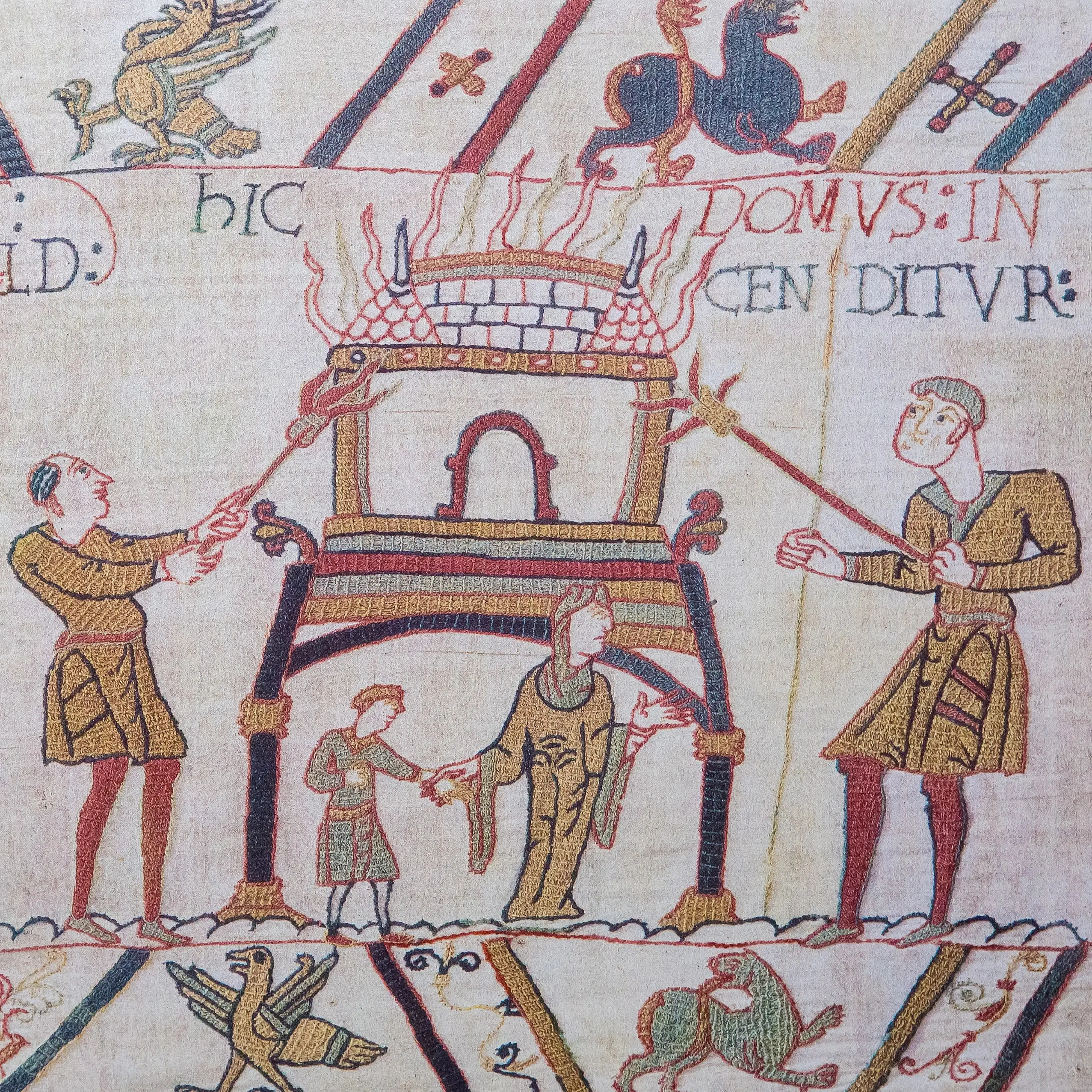
This 11th-century tapestry visually recounts the details of the Battle of Hastings in 1066. This battle led to the Norman conquest of England and changed the course of British history and by proxy, the history of much of the world. But that is a much longer story than the t wo-hundred and twenty-four feet (68,3m) of the tapestry, filled with incredible, and sometimes blood-curdling, details.

Late Afternoon/Early Evening — Old Town Bayeux

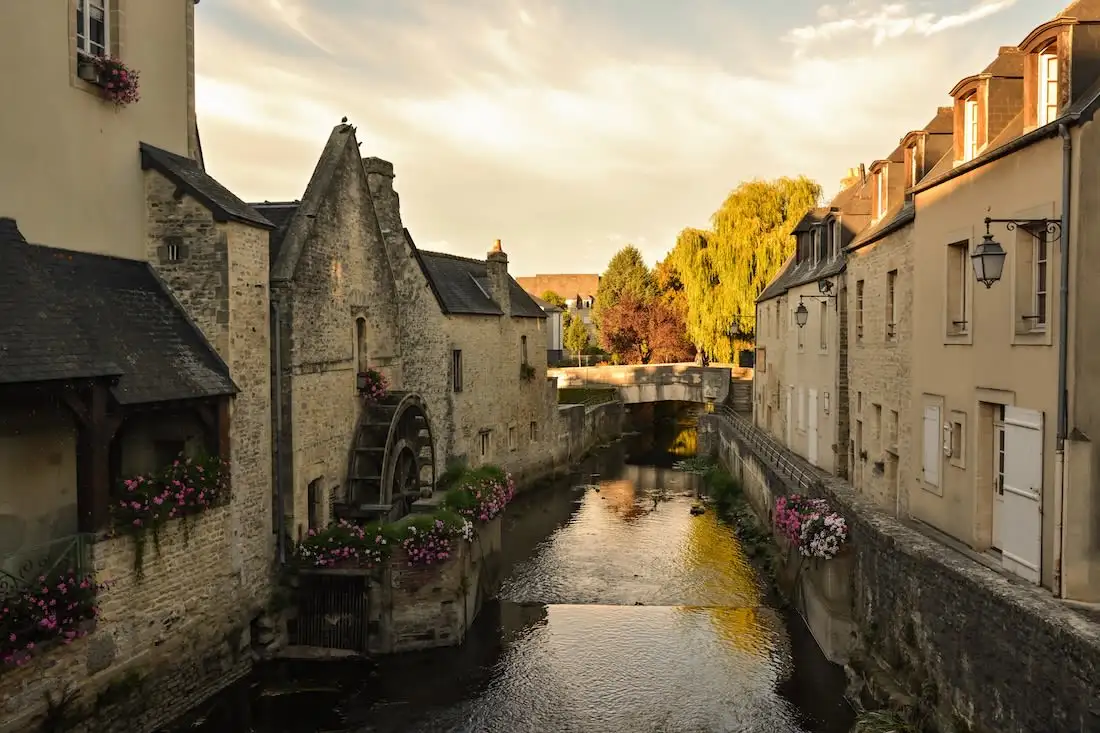
The center of Bayeux survived WWII miraculously unscathed, leaving a medieval town with roads built as far back as Roman times. From your arrival in Bayeux, you're sure to have noticed its Gothic Romanesque Cathedral, picturesque river, and striking stone buildings. This self-guided walk around Bayeux outlines the history of Bayeux, and points out some sites of interest you may wish to explore.

Bayeux Cathedral

Listen closely, some of these stones heard the treachery that led to the Saxons' downfall...

Rebuilt after a fire in the 12th century, the previous structure possibly saw regal intrigue that led to the Battle of Hastings in which the Normands defeated the Saxons A monumnet of history and especially of glorious Gothic architecture, the cathedral makes a fine pause while visiting Bayeux.

Museum of Art and History of Baron Gérard

Exploring the art history of Bayeux and Normandy at the Museum of Art and History of Baron Gérard, named for its major, 19th-century patron. With a scope reaching from pre-history all the way to the modern day, the museum places the city and Normandy in their greater contexts of time and their importance to France. Not limited simply to painitings, the museum also explores the delicate craft of lacework highly practiced in Normandy.

image

Day 1

Arrive Bayeux


icon
icon
icon

11:30 AM:

Private Transfer from Paris to Bayeux

Mid-Day:

Bayeux Tapestry Museum and Museum of Art and History

Late Afternoon/Early Evening:

Old Town Bayeux

Private Transfer from Paris to Bayeux

Private Transfer from Paris to Bayeux

A private transfer service will pick you up directly from the airport in Paris and take you to your hotel in Bayeux, N/A. The drive time is approximately 3 hours. This transfer is pre-paid and is private for your travel party only.

11:30 AM — Private Transfer from Paris to Bayeux

A private transfer service will pick you up directly from the airport in Paris and take you to your hotel in Bayeux, N/A. The drive time is approximately 3 hours. This transfer is pre-paid and is private for your travel party only.

Mid-Day — Bayeux Tapestry Museum and Museum of Art and History

How will you weave your story of seeing the Bayeux Tapestry? Depicting William of Normandy's conquest of England in 1066, the tapestry - which is actually an elaborate embroidery - is thought to be nearly 1000 years old and brings the medieval era to life. A close inspection might change the way you look at Normandy and England and their closely braided histories. If Bayeux's history draws you in, you can explore the town's past even further at the MAHB Museum of Art and History Baron Gérard.

Bayeux Tapestry

This 11th-century tapestry visually recounts the details of the Battle of Hastings in 1066. This battle led to the Norman conquest of England and changed the course of British history and by proxy, the history of much of the world. But that is a much longer story than the t wo-hundred and twenty-four feet (68,3m) of the tapestry, filled with incredible, and sometimes blood-curdling, details.

Late Afternoon/Early Evening — Old Town Bayeux

The center of Bayeux survived WWII miraculously unscathed, leaving a medieval town with roads built as far back as Roman times. From your arrival in Bayeux, you're sure to have noticed its Gothic Romanesque Cathedral, picturesque river, and striking stone buildings. This self-guided walk around Bayeux outlines the history of Bayeux, and points out some sites of interest you may wish to explore.

Bayeux Cathedral

Listen closely, some of these stones heard the treachery that led to the Saxons' downfall...

Rebuilt after a fire in the 12th century, the previous structure possibly saw regal intrigue that led to the Battle of Hastings in which the Normands defeated the Saxons A monumnet of history and especially of glorious Gothic architecture, the cathedral makes a fine pause while visiting Bayeux.

Museum of Art and History of Baron Gérard

Exploring the art history of Bayeux and Normandy at the Museum of Art and History of Baron Gérard, named for its major, 19th-century patron. With a scope reaching from pre-history all the way to the modern day, the museum places the city and Normandy in their greater contexts of time and their importance to France. Not limited simply to painitings, the museum also explores the delicate craft of lacework highly practiced in Normandy.

image

Day 2

Bayeux

Day 2

Bayeux

icon
icon

8:30 AM - 4:30 PM

American D-Day Beaches Guided

Discover the somber and honorable history of the Normandy Invasion on this full-day, private, guided tour, exploring the D-Day landing beaches while learning about America's involvement in World War II. The tour takes 9 hours. Your private guide will pick you up and drop you off in your hotel, and includes visits to key places like Omaha Beach, Pointe du Hoc, Sainte-Mère-Église as well as Utah Beach. Your professional and educated private guide will tell you more about the battles fought and sacrifices made at each site. You will also visit the American Cemetery where you'll read the names of soldiers missing in action after the Normandy landing.
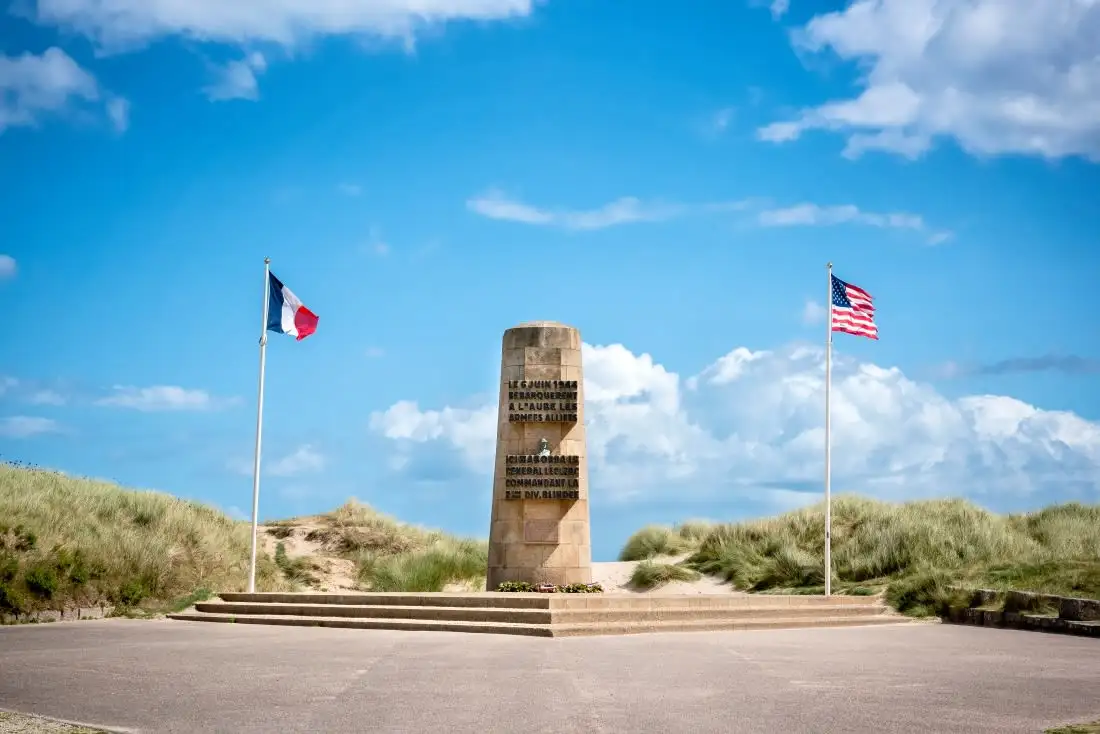
American D-Day Beaches Guided

8:30 AM - 4:30 PM — American D-Day Beaches Guided

Discover the somber and honorable history of the Normandy Invasion on this full-day, private, guided tour, exploring the D-Day landing beaches while learning about America's involvement in World War II. The tour takes 9 hours. Your private guide will pick you up and drop you off in your hotel, and includes visits to key places like Omaha Beach, Pointe du Hoc, Sainte-Mère-Église as well as Utah Beach. Your professional and educated private guide will tell you more about the battles fought and sacrifices made at each site. You will also visit the American Cemetery where you'll read the names of soldiers missing in action after the Normandy landing.

Early Evening/Evening — Dining Out

As a well populated tourist town in the heart of Normandy, the dining scene in Bayeux is replete with bars, restaurants, and cafes. One of the delights of dining in France is sampling the regional specialities; in Normandy these are seafood, dairy, and apples. You’ll find all three in one of the region’s classic dishes, Marmite Dieppoise. This is a shellfish stew cooked in crème fraîche, butter, and cider. Cider is also served with the meal.  If you like apple-based drinks, you’re in for a treat. As well as producing some of the best cider in the world, the Normans love a glass of calvados, a strong apple brandy. You may also be offered a ‘trou Normand’, a dessert or digestif of apple sorbet with some calvados poured over the top. You’ll find apple tarts, pies, and pastries in abundance here. Regional cheeses include the infamous soft and creamy camembert, named for the local town where it was first made. A few tips: on Sundays many eateries in Bayeux may be closed. Make a reservation to avoid disappointment, especially in the busy season, and be advised opening hours may change.

image

Day 2

Bayeux

image

Day 3

Bayeux to Rennes

Day 3

Bayeux to Rennes

icon
icon

8:00 AM - 1:30 PM

Shuttle to Rennes via Mt.-St.-Michele

Your own, personal, English-speaking driver will pick you up promptly at the designated time from your hotel. This is a pre-paid transfer, so you only need to sit back and enjoy the ride while your driver answers any questions you may have. While the drive takes about two hours, you have the opportunity for a three-hour self-guided stop at the breathtaking Mont-St.-Michel. One of the most evocative towns in France, this island / abbey / fortress repelled medieval England but has has captured thousands of hearts with its ambiance and views towards the sea. Should you prefer a different stop, we can also suggest other options, Fougères and its castle, or Granville.
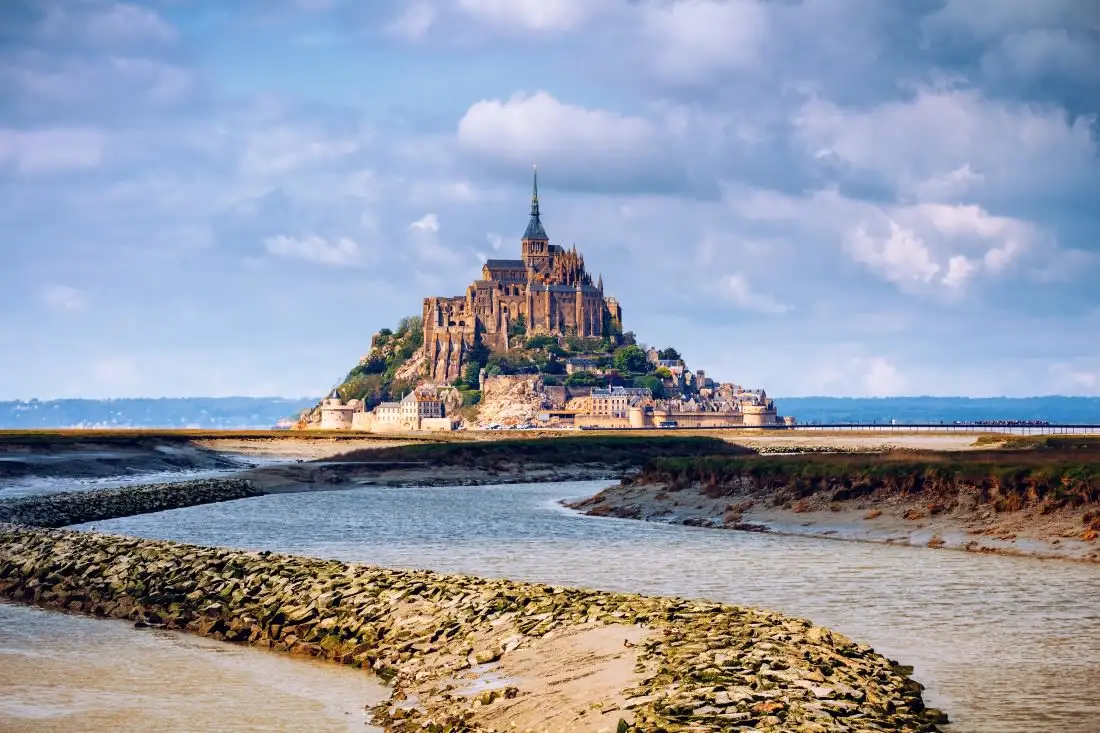
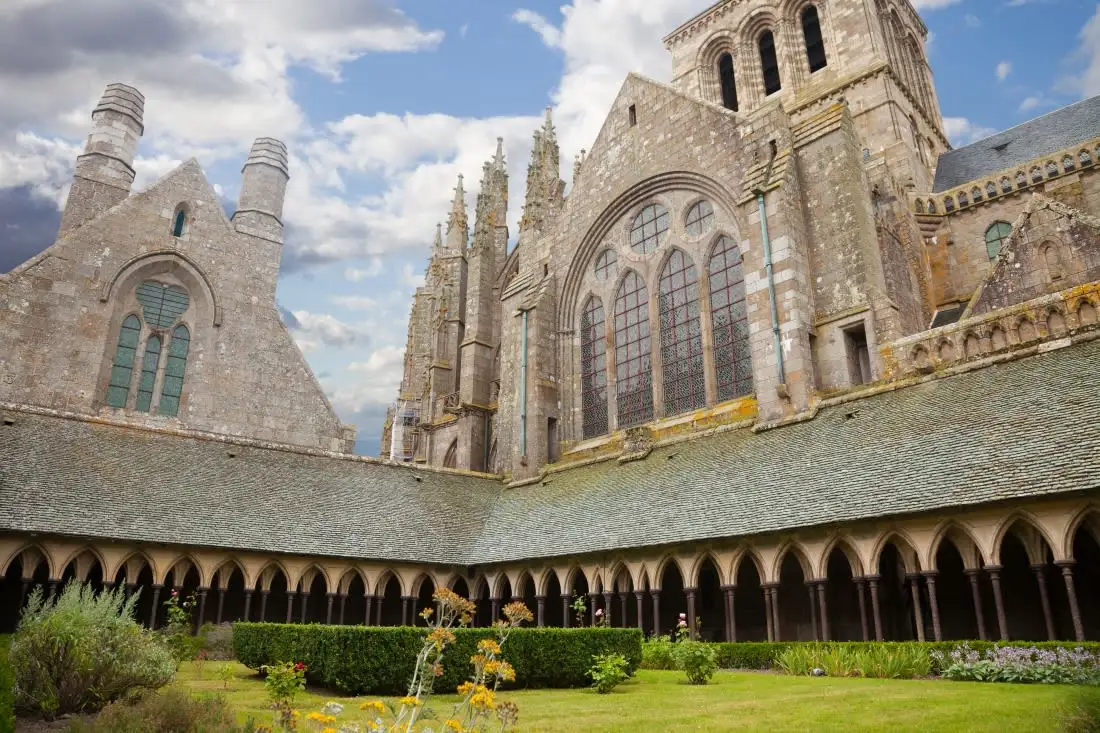
Shuttle to Rennes via Mt.-St.-Michele

8:00 AM - 1:30 PM — Shuttle to Rennes via Mt.-St.-Michele

Your own, personal, English-speaking driver will pick you up promptly at the designated time from your hotel. This is a pre-paid transfer, so you only need to sit back and enjoy the ride while your driver answers any questions you may have. While the drive takes about two hours, you have the opportunity for a three-hour self-guided stop at the breathtaking Mont-St.-Michel. One of the most evocative towns in France, this island / abbey / fortress repelled medieval England but has has captured thousands of hearts with its ambiance and views towards the sea. Should you prefer a different stop, we can also suggest other options, Fougères and its castle, or Granville.

Mont-St.-Michel

Step foot upon Mont-Saint-Michel, a stunning village and UNESCO World Heritage Site that attracts visitors the world over for its dramatic setting on a rocky islet surrounded by powerful tides. The highlight, the Abbey of Mont-Saint-Michel, stands as a testament to medieval architecture, and withstood both seiges of the Hundred Years' War. Adored by the French for centuries,Mont-St. Micheletrances visitors with its natural beauty, historical richesse , and architecture, its winding streets and panoramic views transporting you to another era.

Afternoon/Late Afternoon — Medieval Rennes

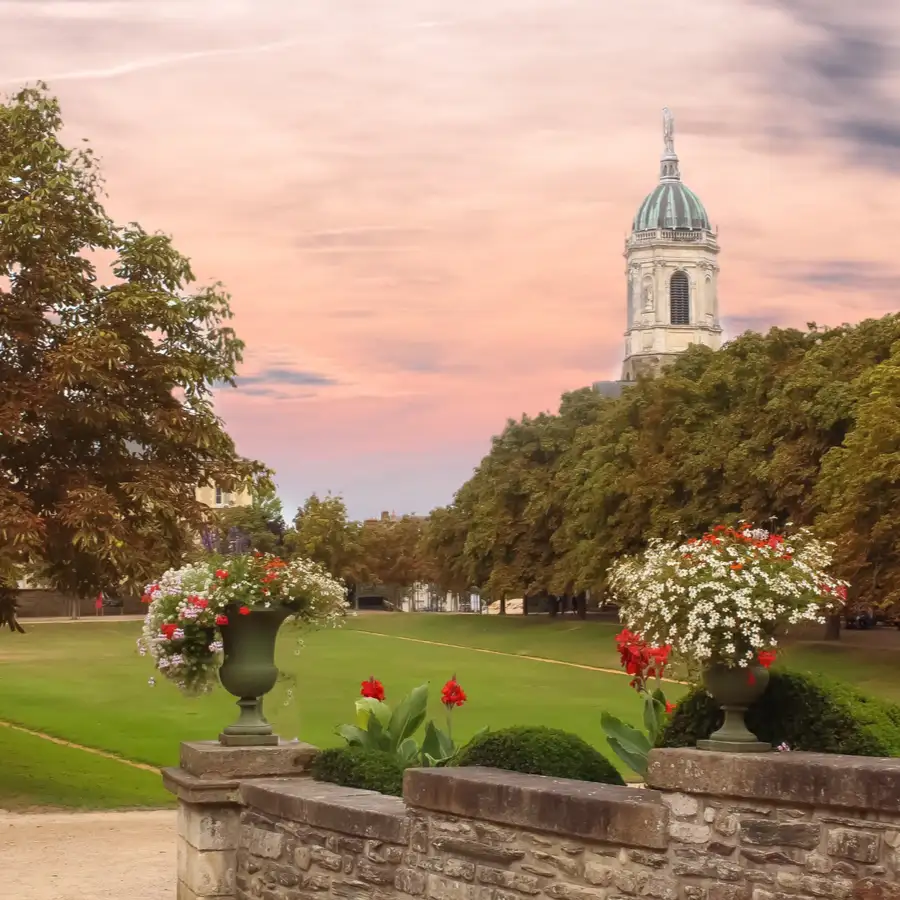
"Une tête des Bretons," or, "A head like the people of Brittany," means, "stubborn, hard-headed," in colloquial French. True to this image, Rennes, the capital of Brittany rest at the Eastern extreme of the region, facing head-first the France it long resisted (And still does, a bit). In Rennes, Parisian French will start to blend with the very distict Breton language: It's demat instead of bonjour. One starts to find more seafood on the menu, and salty butter intstead of a myriad local cheeses. Rennes medieval half-timbered houses and the grand Rennes Cathedral have also endured, worth a look along with the tranquil Parc du Thabor. The city's museum of fine arts truly merits a visit. In the end, Rennes offers the visitor a chance to visit modern France and see how that modernity has its roots in the past.

Rennes Cathedral

Stepping into This Cathedral Means Stepping through Over 1300 Years of History.

The Cathedral Saint-Pierre de Rennes flaunts a French Gothic exterior and a particularly rich Neo-classical interior. Its interior features stunning art, including stained glass windows and an elaborate altar, reflecting by its walls and art many of the events of past centuries.

Parlement de Bretagne

Tour an impressive court where justice has been administered since baroque times.

The Parlement de Bretagne opened in the 17th century, full of splendor to awe those judged in its courts. It is still a court today, and, given its beauty, a major attraction in Rennes, the historic chambers open regularly to the public. One of the rare places where governance is asthetically pleasing.

Museum of the Beaux-Arts de Rennes

Check out the masterpieces without crowds in this small but delightful gallery.

Compact, with a main street squeezed between it and the La Vilaine River, it would be easy to overlook the Muséé des Beaux-arts of Rennes. That would be a mistake. With a moderately small, but important collection, the museum will delight without itimidation. If you go for one painting, George De la Tour's "Le Nouveau-Né" is the very definition of tenderness, with a use of light that rivals Vermeer. Go for that piece, but then other works will draw your attention... after a pleasant exploration, you'll come out the museum's doors a more knowledgable person and none the worse for wear.

Thabor Park

Relax with the locals in this former monastery orchid.

This large park offers citizen and visitor alike, a cool, green space in the center of Rennes. Lovely to visit after a museum or city tour, this former monastery orchard became public in the years following the French Revolution.  Bring a few cheeses and bread, and a bottle of whatever pleases you, and Thabor allow you the moments to relax and simply "be."

image

Day 3

Bayeux to Rennes

image

Day 4

Rennes

Day 4

Rennes

icon

Morning to Late Afternoon

Dinan

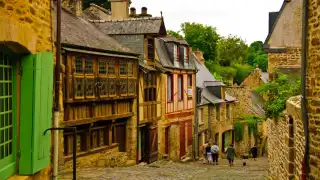
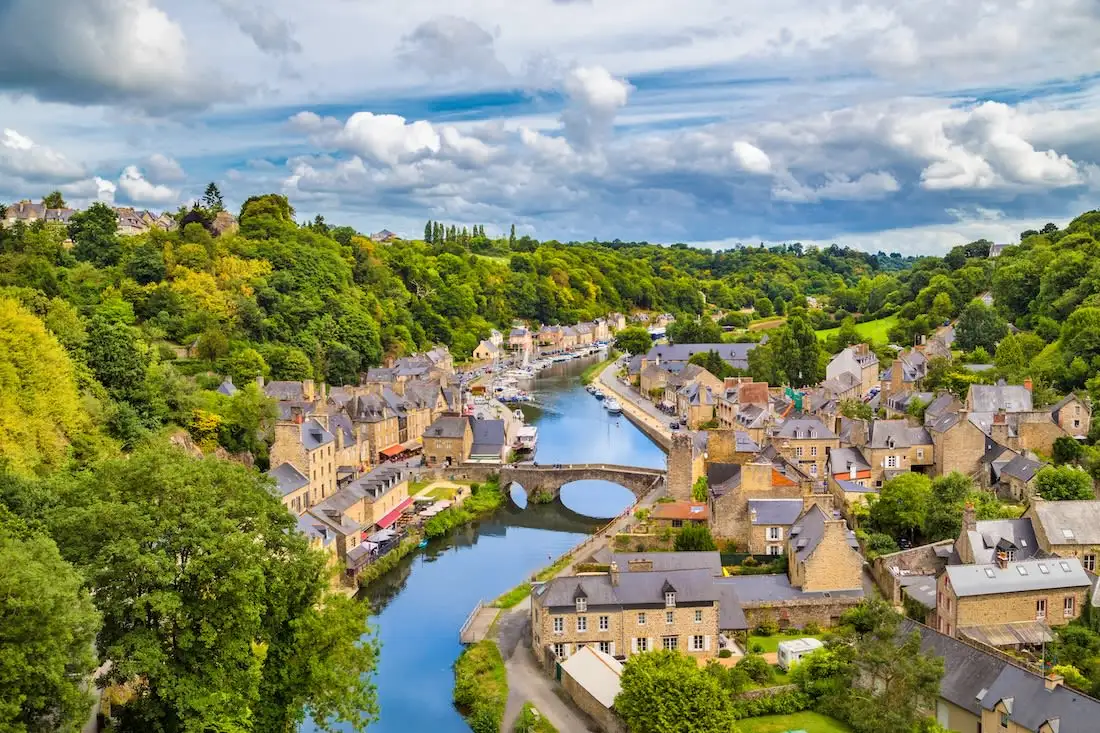
Dinan guards its medieval heart of half-timbered homes and winding streets. An important crossing over the Rance River since time immemorial, written documents first mention the city in the 11th century, and its warriors even appear in the Bayeux Tapestry. Noteworthy sites include the Basilique St-Sauveur, the 14th-century Château de Dinan, and the artisan-lined Rue du Jerzual. The town's panoramic views and market in Place du Guesclin offer a taste of local life amid the well-preserved homes of a bygone era.

Dinan

Morning to Late Afternoon — Dinan

Dinan guards its medieval heart of half-timbered homes and winding streets. An important crossing over the Rance River since time immemorial, written documents first mention the city in the 11th century, and its warriors even appear in the Bayeux Tapestry. Noteworthy sites include the Basilique St-Sauveur, the 14th-century Château de Dinan, and the artisan-lined Rue du Jerzual. The town's panoramic views and market in Place du Guesclin offer a taste of local life amid the well-preserved homes of a bygone era.

image

Day 4

Rennes

image

Day 5

Rennes to Paris

Day 5

Rennes to Paris

icon
icon
icon
icon
icon

8:35 AM

Gare de Rennes Rail Dropoff by Taxi

Rennes taxis are generally reliable and honest, so this is cheaper than a pre-arranged transfer. If you are picked up one hour prior to departure, you should have plenty of time to catch your train. Detailed instructions are contained in the Full Itinerary.
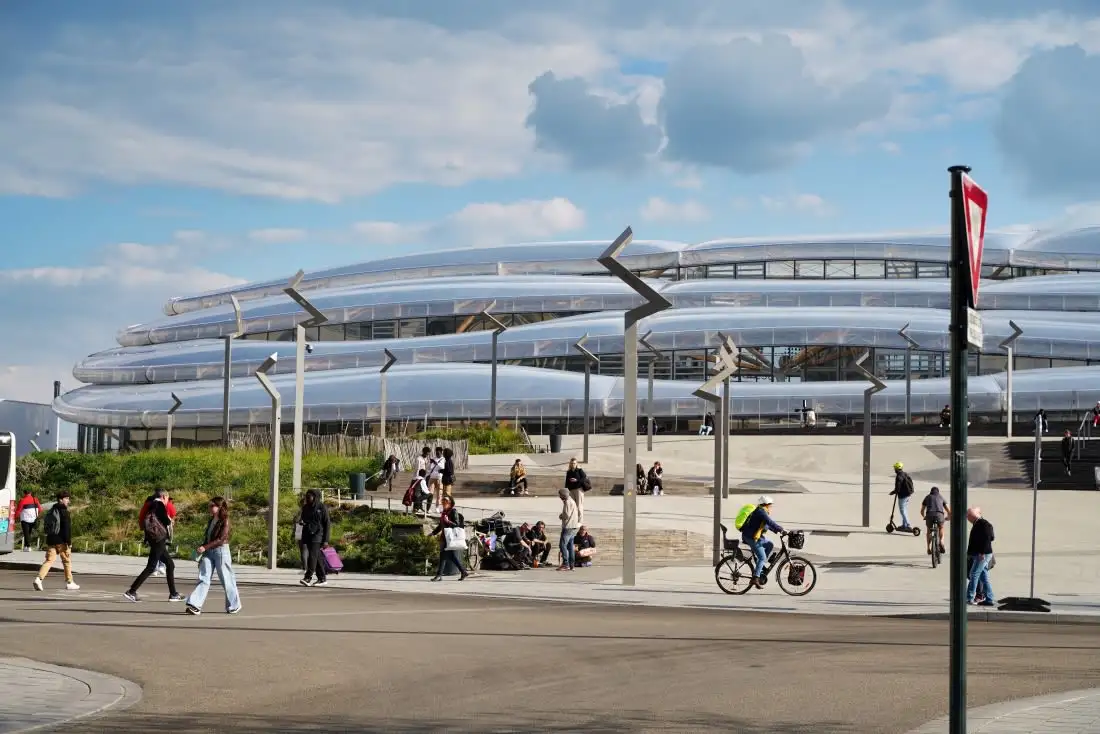
Gare de Rennes Rail Dropoff by Taxi

8:35 AM — Gare de Rennes Rail Dropoff by Taxi

Rennes taxis are generally reliable and honest, so this is cheaper than a pre-arranged transfer. If you are picked up one hour prior to departure, you should have plenty of time to catch your train. Detailed instructions are contained in the Full Itinerary.

09:35 - 11:18 — Train to Paris

Tickets and seat reservations for this approximately 1h30min rail journey from Rennes to Paris are included in the purchase of the itinerary package. Detailed directions and instructions that make the trip easy and stress-free are also included in the Full Itinerary.

11:18 AM — Rail Pick-Up by Taxi

Paris taxis are generally reliable and honest, so this is cheaper than a pre-arranged transfer. Detailed information on navigating your way around your particular arrival station (Paris has many) and finding a taxi can be found in the Full Itinerary. If you would prefer a private transfer to your hotel, please ask your travel consultant.

2:00 PM - 6:00 PM — Paris Highlights Walking Tour

Embark on a captivating 4-hour walking tour of the center of Paris, the City of Lights, where history and modernity blend seamlessly along its enchanting streets. Starting from Odette Pastry Shop (77 Rue Galande), you will explore the heart of this dynamic city and learn how to navigate Paris as a local.

Early Evening/Evening — Eiffel Tower

Maybe the most recognized landmark in the world, the Eiffel Tower never fails to impress and inspire.  Its elegance has always drawn crowds, and it demands a little logistical planning in order to expedite the security checks and avoid the crowds. We'll provide you with very detailed information on how to do this in the Full Itinerary, along with how to purchase tickets to speed up your visit. Let your consultant know if you wish to have your Eiffel Tower tickets purchased for you - they require a very specific time slot. We will also provide you with information on the other grand sights to visit nearby, including the famous Museum of Man across the river at Trocadero, and the Quai Branly Museum.

Quai Branly Museum

Discover a captivating collection of indigenous art in this literally verdant building.

The Quai Branly Museum, oficially known as L'Musée du quai Branly - Jacques Chirac, is a vibrant celebration of indigenous art and cultures from Africa, Asia, Oceania, and the Americas. Located on the banks of the Seine near the Eiffel Tower, this innovative museum stands out with its striking modern architecture and a lush wall garden adorning its exterior. Inside, visitors are treated to a rich tapestry of artifacts, including traditional costumes, masks, sculptures, and jewelry, all showcased in a dynamic and immersive display. The museum's commitment to cultural diversity and its extensive collection offer a unique opportunity to explore the history, art, and traditions of non-Western civilizations.

Museum of Man

Ponder some of the Big Questions while visiting this museum...

Le Musée de l'Homme in Paris's Place du Trocadéro delves into human evolution and diversity through anthropology, ethnology, and prehistory. Showcasing artifacts from prehistoric tools to modern art, it highlights humans' biological and cultural development while exploring our identities, societies, and relationship with nature. Interactive and engaging, the museum offers a profound investigation into the essence of humanity, prompting reflection on our collective past and future.

Palais de Tokyo

Discovering the greatest of modern and contemporary French art in this dramatic structure

Que vous seriez un peu plus parisien(ne)... That you would be a bit more Parisian, visit the Palais de Tokyo in the 16th arrondissement, a beacon of contemporary art known for its avant-garde exhibitions and innovative art installations. Blending historical elegance with modern creativity, it offers visitors a privilaged exploration of the latest artistic expressions. Highlights include its own modernist architecture, a constantly evolving array of exhibitions showcasing everything from installations to live performances, and the Yoyo nightclub and Le Tokyo Eat for leisure and dining. Visit the Palais de Tokyo to step into an intersection of art, culture, and architecture, and let the cutting edge of contemporary art in Paris take you away.

image

Day 5

Rennes to Paris

image

Day 6

Paris

Day 6

Paris

icon
icon
icon
icon

Early Morning/Morning

Louvre Museum

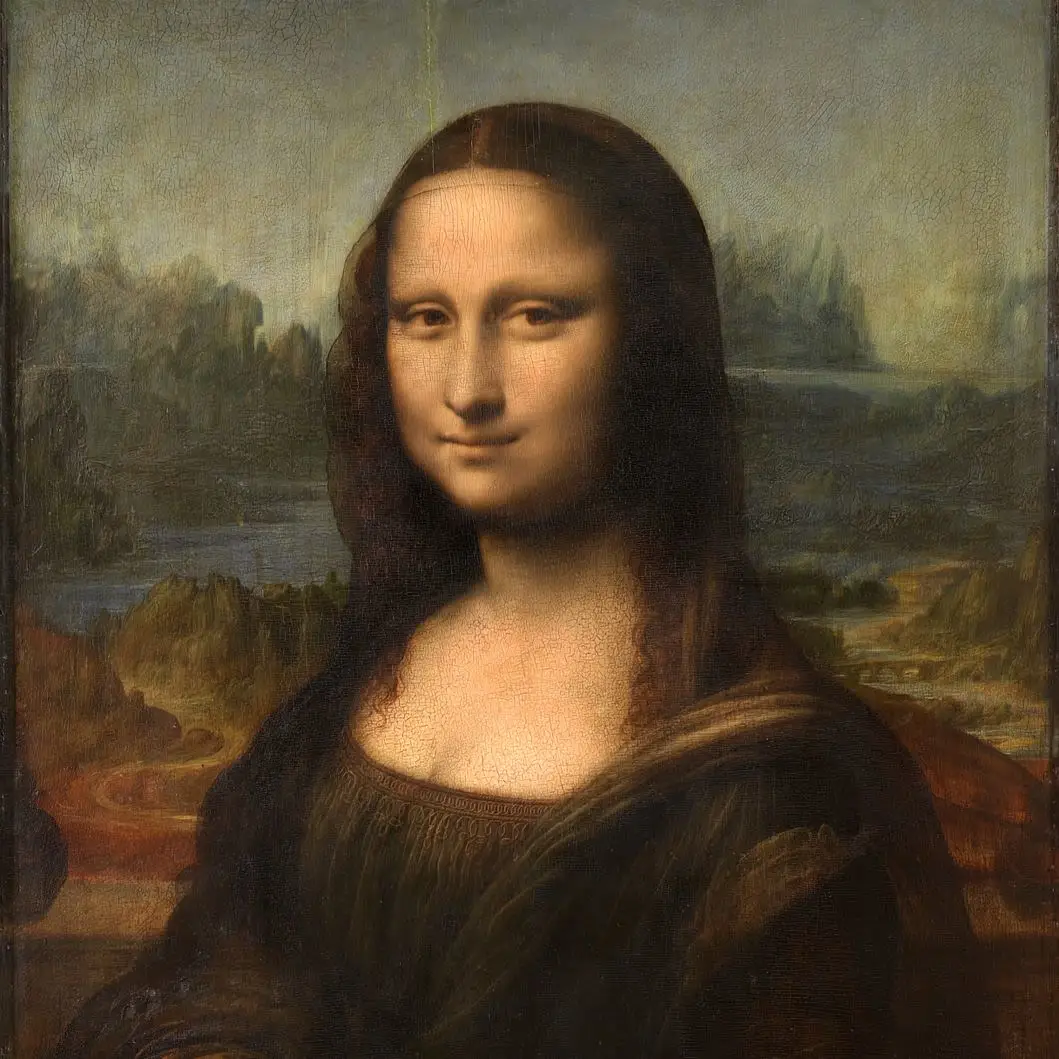
It might be the greatest art museum in the world; it certainly is the largest with over 380,000 objects; to view every single one for even a minute apiece would take 75 days.  And those descriptions still don't do the building and its collection justice. Marvel at treasures inside, including Leonardo Da Vinci's mysterious woman, the Mona Lisa, and everything from an Egyptian masterpiece of mummification to the famed Hellenistic sculpture, Venus de Milo, to patriotic French masterpieces like Delacroix’s Liberty Leading the People. Although the Louvre is vast and ever-crowded, with some strategy and a few helpful tips your visit will take in maximum artworks with minimal hassle.

Louvre Museum

Early Morning/Morning — Louvre Museum

It might be the greatest art museum in the world; it certainly is the largest with over 380,000 objects; to view every single one for even a minute apiece would take 75 days.  And those descriptions still don't do the building and its collection justice. Marvel at treasures inside, including Leonardo Da Vinci's mysterious woman, the Mona Lisa, and everything from an Egyptian masterpiece of mummification to the famed Hellenistic sculpture, Venus de Milo, to patriotic French masterpieces like Delacroix’s Liberty Leading the People. Although the Louvre is vast and ever-crowded, with some strategy and a few helpful tips your visit will take in maximum artworks with minimal hassle.

Mid-Day/Afternoon — Île de la Cité

Discover the origins of Paris on the Ile de la Cité, it's glorious heart. The original settlement from which Paris grew overwhelms with the iconic Notre-Dame Cathedral, the Revolutionary history of the Conciergerie, the numinous kaleidoscope of Sainte-Chapelle's stained glass, and a plethora of other interesting sights. This island is a captivating blend of Parisian history and beauty, offering unforgettable experiences at every turn. A visit here traverses the river Seine and centuries, perfect for capturing the spirit of Paris.

Sainte-Chapelle

It's ok, you can be dumbstruck at the incomparable stained glass of this royal chapel

The Sainte-Chapelle glows in the heart of Paris with its breathtaking stained-glass windows. Regard in awe the 15 windows, each 15m high, illustrating biblical stories in vibrant colors and intricate detail. Built in the 13th century on the Île de la Cité for Saint King Louis IX, this chapel was originally conceived to house precious Christian relics, including spines from Jesus Christ's Crown of Thorns. Visitors today, like kings and kings of yesteryear are often awestruck by the celestial light and serene ambiance that these windows transmit, casting a kaleidoscope of colors across the chapel's interior. The upper chapel, in particular, offers an ethereal experience, with its towering windows and star-studded vaulted ceiling.

Conciergerie

Explore the somber past of this Gothic riverside fortress, a heart of the Great Terror that followed the French Revolution

  The Conciergerie in Paris is a historic monument and former prison on the Île de la Cité, and an inflection point between France's royal and revolutionary pasts. Once part of the royal palace, but later transformed into a prison during the French Revolution, its most infamous inmate was Queen Marie Antoinette before her execution. Visitors can explore the medieval halls, the somber cells - even the Queen's own - while absorbing the tales of justice, power, and tragedy that echo through its walls. This site stands as a poignant reminder of France's turbulent history, here where the Revolutionary Tribunal sat from 1793, condemning some 2,600 persons to the guillotine.

Notre-Dame de Paris

Thrill at one of the most beautiful and recognized churches on Earth.

Gaze at the heart of Paris, Notre-Dame Cathedral, as iconic to the city as it is to Gothic architecture. Standing on the Île de la Cité, this 13th-century medieval masterpiece, still boasts its stunning rose windows, flying buttresses, and sculpted facades, despite a devastating fire in 2019.  The ongoing reconstruction of this center of French spirituality is captivating in itself, and people around the world await the full restoration's of this symbol's élégance, planned for December 8th, 2024.

Late Afternoon — Arc de Triomphe

The Arc de Triomphe de l'Étoile is an enduring icon of Paris and offers a spectacular view across the city. In fact, some people say the best view of Paris is from the Arc de Triomphe, as the sweeping vista found at the top includes the Eiffel Tower. 'De l'Étoile' or 'star' refers to the junction on which the Arc de Triomphe stands. This is the meeting point of 12 straight avenues including the Avenue des Champs-Élysées, famous for its theatres, cafés, and luxury shops, and the inspiration for the catchy, eponymous song by Joe Dassin. Although this area of Paris bustles with shoppers, tourists, and commercial enterprises there is still much to explore, see, and do here, and some secret places to be found away from the crowds.

Arc de Triomphe

Ascend one of the most iconic monuments in the world, and view Paris from this beloved symbol of France

L' Arc is not just a symbol of French pride and triumph. Yes, this monument crowning the western end of the Champs-Élysées honors those who fought and died in the French Revolutionary and Napoleonic War. However, it also commorates the horrific losses of World War I with the Tomb of the Unknown Soldier.  Your visit here can be surprisingly poignant. Visitors can ascend to the top for panoramic views of the City of Lights below, whose energy somehow rotates around this reminder that there is a little sobriety in every party.

Grand Palais

Structure built for the Universal Exhibition in 1900, now a children's science museum and art gallery.

The Grand Palais, built for the Universal Exhibition in 1900, boasts a large glass and iron roof. It is home to the Palais de la Découverte science museum for children - be aware this museum only offers information in French, which greatly reduces its value to English speakers. Another wing of the building features rotating art exhibitions, which are usually curated by theme (such as The Moon or Soviet Art). Look on the website https://www.grandpalais.fr/en if you are interested in finding out what's on during your time in Paris. You may purchase tickets on site should you choose to attend.

Petit Palais

Pop in for a Rembrandt painting and discover a secret garden in one of Paris's "hidden gems".

The Petit Palais in Paris, built for the 1900 Exposition Universelle, is a Beaux-Arts architectural marvel that houses the City of Paris Museum of Fine Arts. With free admission to its permanent collections, it showcases an extensive array of artworks from ancient to early 20th century, including notable pieces by Rembrandt and Courbet. Its stunning architecture, complete with a grand dome and a serene courtyard garden, makes it a cultural and visual haven. Located just off the Champs-Élysées, the Petit Palais is a key destination for art enthusiasts.

Champs-Elysées

Experience a promenade on the most famous road in the world!

Stretch your legs on the Avenue Champs-Élysées, an emblem of French prestige and elegance. On this unparalleled thoroughfare stretching from Place de la Concorde to the Arc de Triomphe waits a parade of luxury shops, fine dining, and lush greenery, offering an unparalleled urban experience. On the "Champs" you can indulge in world-class shopping, savor exquisite French cuisine at chic cafés, and marvel at the architectural beauty of illustrious building.

Early Evening — Seine Cruise

Embark on an enchanting Seine River Boat Cruise that offers an unparalleled view of the City of Light. Glide past iconic landmarks such as the Eiffel Tower, Notre-Dame Cathedral, and the Louvre, all while basking in Paris' famed romantic ambiance. Whether you choose a daytime voyage to admire the city in its full glory or a nighttime excursion to see Paris illuminated against the night sky, a Seine River Boat Cruise is an unforgettable highlight that offers a new perspective on the timeless beauty of Paris.

image

Day 6

Paris

image

Day 7

Paris

Day 7

Paris

icon
icon
icon

Early Morning to Mid-Day

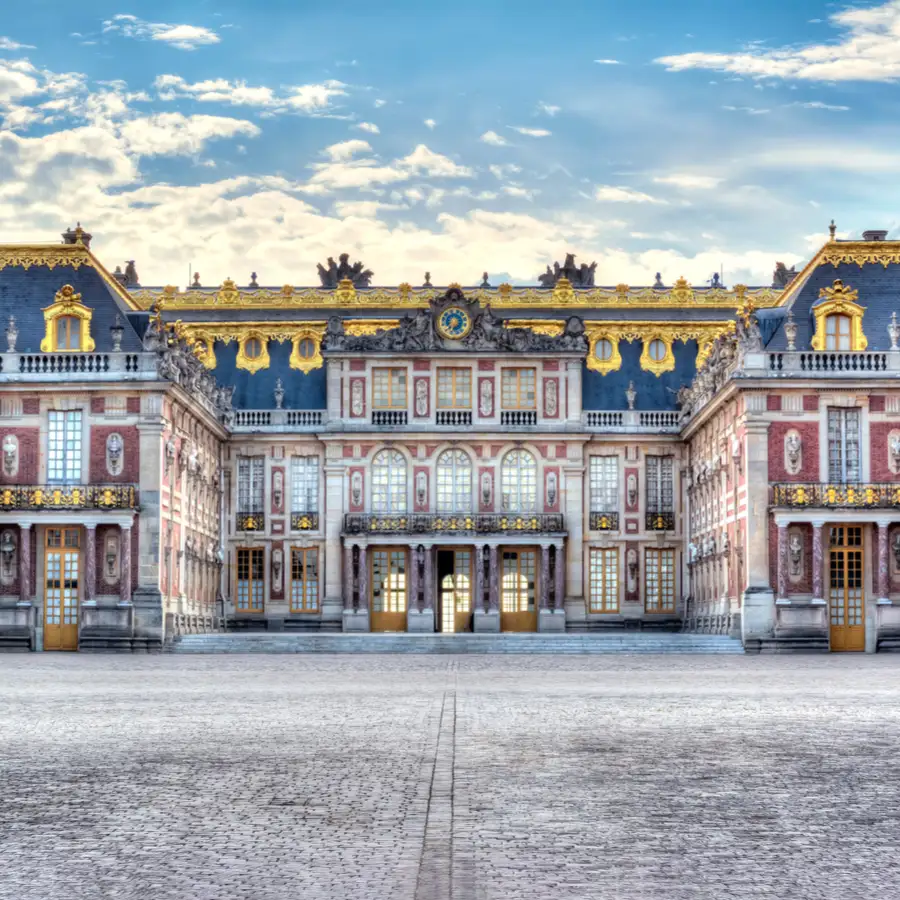
Palace of Versailles

The Château of Versailles, a symbol of the grandeur of French monarchy, invites visitors to explore its lavish history and architectural majesty. From the spellbinding elegance of the Hall of Mirrors, where the Treaty of Versailles was signed, to the vast, meticulously manicured Gardens the pinnacle of French garden design, every corner tells a story of opulence and power. Discover the intimate escapes of royalty at the Grand and Petit Trianon, and marvel at the divine beauty of the Royal Chapel, a masterpiece of Baroque architecture.

Palace of Versailles

Early Morning to Mid-Day — Palace of Versailles

The Château of Versailles, a symbol of the grandeur of French monarchy, invites visitors to explore its lavish history and architectural majesty. From the spellbinding elegance of the Hall of Mirrors, where the Treaty of Versailles was signed, to the vast, meticulously manicured Gardens the pinnacle of French garden design, every corner tells a story of opulence and power. Discover the intimate escapes of royalty at the Grand and Petit Trianon, and marvel at the divine beauty of the Royal Chapel, a masterpiece of Baroque architecture.

Main Palace of Versailles

There are palaces, and then there is Versailles...

Enlarged by for Emperor Louis XIV as an escape from the dreary political tension of Paris, Versailles might have been the most luxurious palace in the world.  Even now, the building stuptifies with its grandeur and elegance, a stunning representation of the French monarchy's opulence. The famous Hall of Mirrors is just one of many, many (2300!)  stunning rooms, only a small percentage of which are open for display.  It might be too much, or one visit might never be enough.

The Queen's Hamlet

Imagine living like the "peasants" here?

Desiring something different, Queen Marie Antoinette had a hamlet erected where she could supervise servants milking cows, tending pigs, collecting eggs from chickens.  She dressed down to play her part, but apparently never got her hands dirty, as far as we know.  Her peasant cottage only had two living rooms, a billiard room, a dining hall, and a library.  If you are accustomed to palaces, only two living rooms is roughing it.  Lest the queen got tired of it all, she could return to the Petit Trianon, a beautiful chateau built on the grounds of the Grand Trianon, which was the retreat chateau built on the grounds of the Palace of Versailles, which was a retreat from the Louvre Palace in Paris.

Parc de Versailles

Feel like a king, feel like a queen, hopefully you'll feel good looking out across the park

The Parc de Versailles, features some 800 hectares of manicured lawns, stunning fountains, and the Grand Canal, all masterminded by André Le Nôtre. Highlights include the Neptune and Apollo Fountains, the Trianon Palaces, and the Queen's Hamlet. This vast garden symbolizes royal power, but you are welcomed to enjoy yourself on these pleasure grounds.

Afternoon/Late Afternoon — Hôtel des Invalides

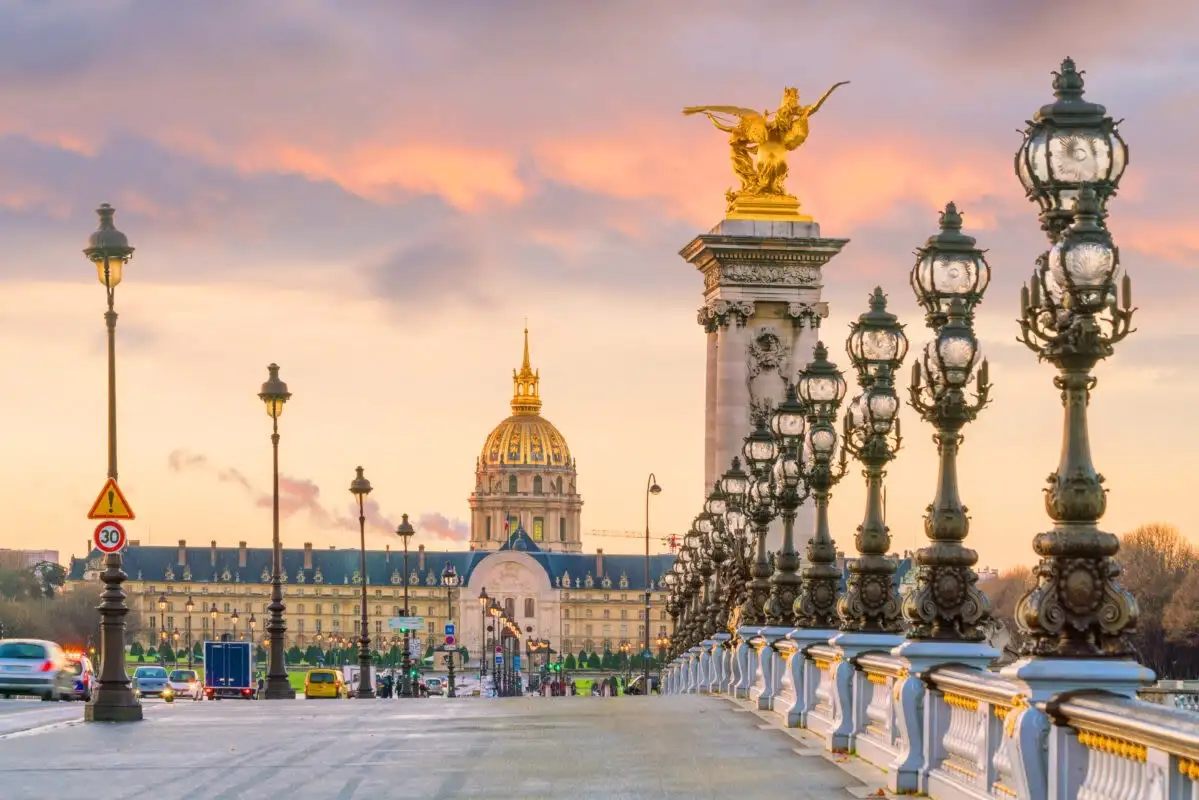
The Eglise du Dome Church close to the Eiffel Tower is where you observe the gilded tomb of the historic French General and Emperor, Napoleon, but his bones are just a miniscule part of the gigantic Hôtel des Invalides housing the French National Army Museum. Spend some time learning about French warfare from the earliest times to the wax and wane of the Napoloenic Wars and on to the modern French army and a new section dedicated to the life of General Charles de Gaulle.

Napoleon's Tomb

Discover the tomb of one of history's most fearsome generals, and a controversial figure of the 19th century.

Reflect at the sarcophagus resting underneath the dome of Les Invalides' church - Napoleon's tomb is as still as his life was frenetic. Crafted from red quartzite and set upon a green granite base within a circular crypt, Napoleon's sarcophagus is surrounded by a series of statues representing his victories and achievements. The entire ensemble, designed with solemn grandeur, reflect both the power and complexity of his legacy. But visitors can come and go please, this great general commands no one now.

The Army Museum

Exploring the martial history of France in this regal strucure

Gather your forces and lay touristic seige to the French Army Museum and its immersive expositions of French military history from medieval times to the present. Will you conquer the extensive Medieval Collections, Napoleon Bonaparte's grand tomb, and detailed exhibits of the World Wars, or will they conquer you? These exhibts and more offer insights into the evolution of warfare, strategic intracacies, and personal narratives of conflict. A visit to the Army Museum encourages discussion about the contradictions and complexities of war, one of the most important, and disturbing, traits of our humanity.

Rodin Museum

Let the greatest sculptures of the 19th and 20th centuries inspire you

The remarkable sanctuary of art and beauty that is the Musée de Rodin displays the greatest works of the French sculptor Auguste Rodin. Nestled in the exquisite Hôtel Biron, and its serene garden, this museum invites visitors to discover the profound depth of Rodin's creativity. Thrill at the world-reknowned pieces "The Thinker" and "The Gates of Hell," among others, each piece exploring  human emotion and thought through its dynamic forms. Wander through the garden paths to encounter these and other masterpieces in an intimate setting, where the fusion of art and nature crafts a truly unforgettable experience.

Early Evening/Evening — Montmartre

Montmartre, Paris's bohemian heart, where countless artists have whiled away their time, beckons with its cobblestone streets and vibrant history. Ascend the butte to find the Sacré-Cœur Basilica, a white-domed sentinel offering breathtaking views of the city below. Wander through Place du Tertre, where artists capture the essence of Paris on canvas. Delve into the nightlife at the Moulin Rouge, a testament to the area's hedonistic past. Montmartre, a blend of artistic legacy and lively modern culture, offers a captivating escape into the soul of Paris, where every corner tells a story, and every moment is a brushstroke on the canvas of the city.

Moulin Rouge

World Famous Dinner Theater and Cabaret

The Moulin Rouge, the iconic cabaret of Paris, beckons visitors with an unforgettable evening in the City of Lights. Famous for pioneering the can-can dance, this legendary establishment has been dazzling audiences since 1889 with its extravagant performances, featuring a troupe of highly-trained dancers adorned in outrageous costumes. Dive into an evening of glamour and romance, where the spirit of Parisian nightlife comes alive amidst spectacular shows in the historic ambiance of a venue that has hosted generations of artists and admirers.

Montmartre Museum

Experience la vie bohémienne at the Montmartre museum

To peruse the charming Montmartre Museum is to experience the captivating, artistic history of bohemian Paris. Housed in a 17th-century building that once served as a studio for many notable artists, including Renoir and Raoul Dufy, the museum invites visitors to its rich collection of paintings, photographs, and memorabilia. The museum vividly brings to life the rollicking, artistic fervor that defined Montmartre at the turn of the 20th century.

L’Espace Dali

Indulge your surreality in Dalí Paris while twitching your mustache at his largest collection in France, over 300 pieces.

The Spaniard found fame in Paris in the 1920s and 30s, and developed his paranoic-critical method designed to access the sub-conscious and enhance creativity. He lived in Montmartre for a while before moving to Montparnasse. The collection here, mostly of sculpture and etchings, with titles like Space Elephant and Moses and Montheism, will have you questioning your sensibilities, or maybe Dalí's.

Sacre-Coeur Basilica

Iconic white domed church that features mosaics, stained glass windows, and a crypt

The exterior, with its domes and stark white façade, looks ancient but was finished only a century ago. In 1870 war broke out between France and Prussia. The Council that was being held in the Vatican at the time was suspended and the Pope, no longer under the protection of French troops, considered himself a prisoner within the Vatican. France was subsequently defeated and partially occupied by German troops. Alexandre Legentil and Hubert Rohault de Fleury vowed to build a church dedicated to the Sacred Heart “as reparation,” as penance for infidelity and sin for they held that the misfortunes of France had spiritual rather than political causes.

Mur des je t’aime (I Love You Wall)

A wall trying to bring a little tenderness into the world

The singer Paul Simon wrote a song "Fifty Ways To Leave Your Lover,"  but this wall below Montmartre teaches you how to say "I love you" in 250 languages. Find the one that sounds most beautiful to you, and then practice saying it to yourself and others.

image

Day 7

Paris

image

Day 8

Paris to Heidelberg

Day 8

Paris to Heidelberg

icon
icon
icon
icon
icon

Morning

Tuileries Gardens & Nearby Museums

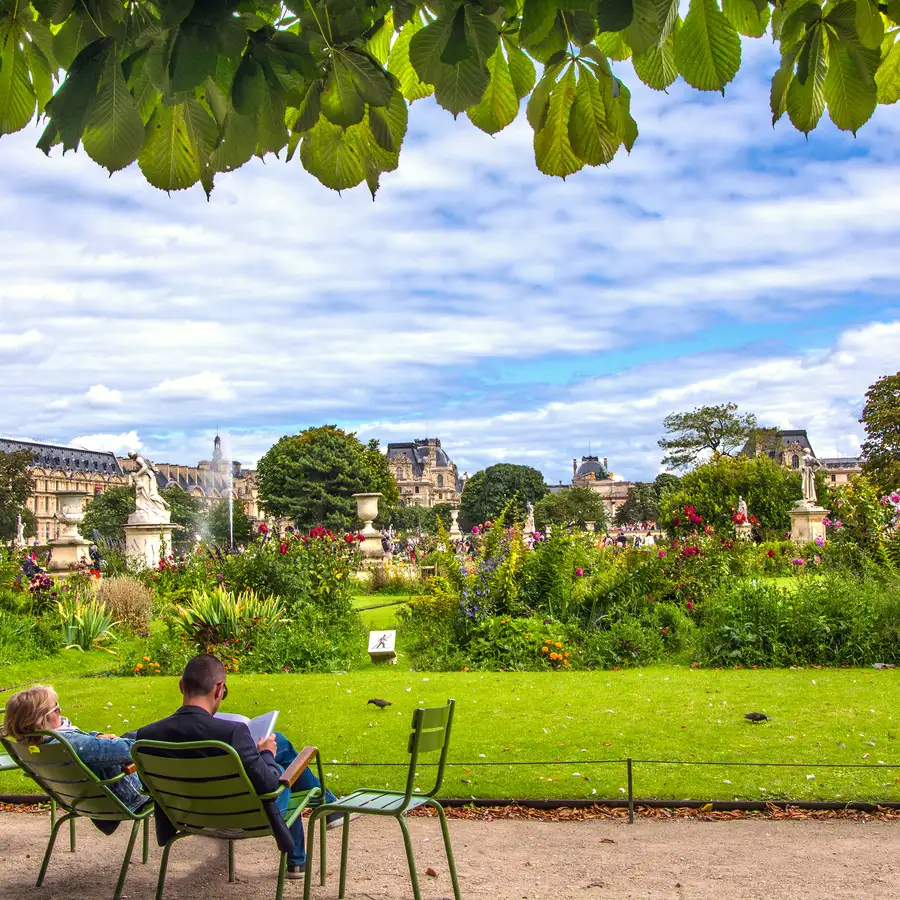
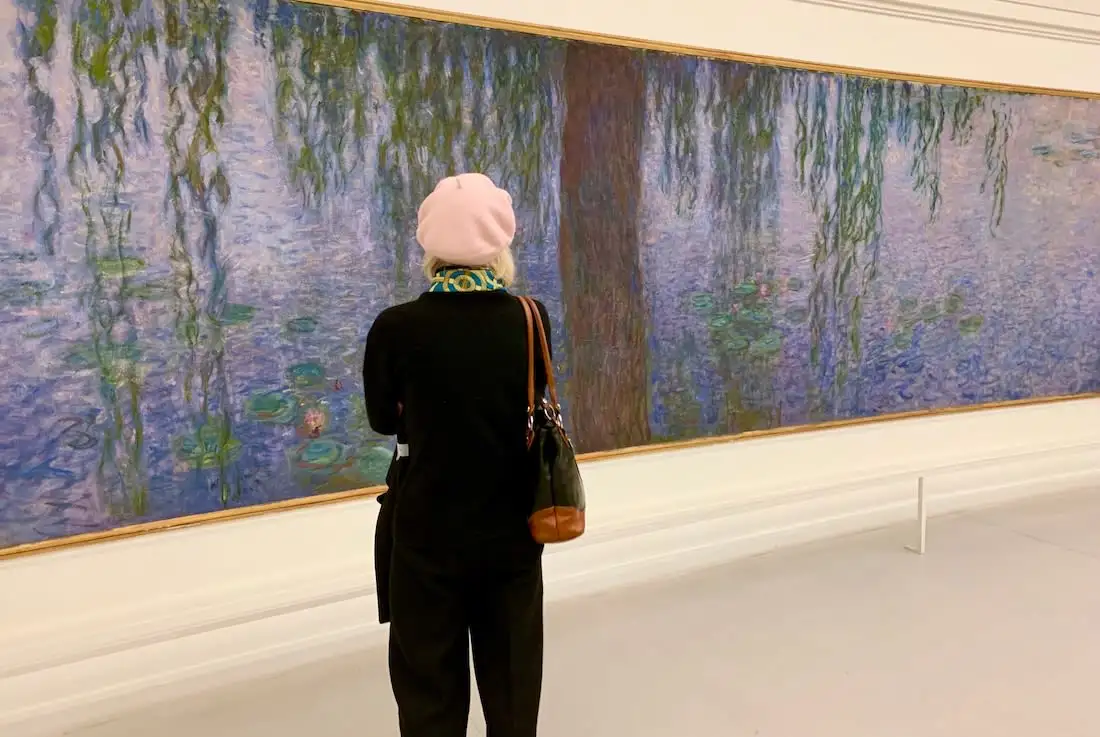
Stroll in the Tuileries and attend one of the nearby museums, a classic way to spend your free hours in Paris. Originally cultivated in 1564 as the grounds for the Tuileries Palace, the gardens are the oldest in Paris. Its succession of royal owners ended and the garden became a public park in the 19th century; Parisians congregated to relax and socialize beside the fountains and leafy horse chestnut trees - they still do today. The Musée de l'Orangerie, in the Western corner of the gardens, exhibits many Impressionist and 20th-century artworks, including Claude Monet’s famous water lilies.

Tuileries Gardens & Nearby Museums

Morning — Tuileries Gardens & Nearby Museums

Stroll in the Tuileries and attend one of the nearby museums, a classic way to spend your free hours in Paris. Originally cultivated in 1564 as the grounds for the Tuileries Palace, the gardens are the oldest in Paris. Its succession of royal owners ended and the garden became a public park in the 19th century; Parisians congregated to relax and socialize beside the fountains and leafy horse chestnut trees - they still do today. The Musée de l'Orangerie, in the Western corner of the gardens, exhibits many Impressionist and 20th-century artworks, including Claude Monet’s famous water lilies.

Tuileries Garden

Relax in the beautiful Tuileries Gardens, an oasis of manicured landscapes and historic statues in the heart of Paris.

The Tuileries Gardens, located next to the Louvre Museum, offer a peaceful retreat amidst the bustling city. Originally created as the royal gardens for the Tuileries Palace in the 16th century, they represent a classic example of French garden design. Visitors can marvel at the array of statues, including works by Rodin and Maillol, stroll along its perfectly aligned trees and flowerbeds, and enjoy panoramic views of the Seine and the Eiffel Tower.

Museum d'Orsay

Soak it all in at the Musée d'Orsay, a former Beaux-Arts railway station transformed into a stunning showcase of Impressionist and Post-Impressionist masterpieces.

The Musée d'Orsay, housed in an elegantly converted railway station, offers a world-renowned collection of Impressionist and Post-Impressionist art, featuring works by masters like Monet, Van Gogh, and Renoir. Its unique architecture, with grand clocks and sweeping galleries, complements the diverse array of sculptures, paintings, and decorative arts on display. A visit to the Musée d'Orsay is not just a tour of art history, but an immersive experience in a space where the past and present merge beautifully.

Orangerie

Let your vision swim with Monet's Water Lilies and other Impressionist artwork at the Musée de l'Orangerie

The Musée de l'Orangerie, nestled in a corner of the Tuileries Gardens, exhibits the stunning "Water Lilies" series by Claude Monet. This series of large-scale paintings, designed specifically for the two oval rooms they inhabit, offers an immersive experience into Monet's impressionist vision of his garden at Giverny. Beyond Monet, the museum boasts the Jean Walter and Paul Guillaume collection, featuring masterpieces by renowned artists such as Renoir, Cézanne, Matisse, Picasso, and Modigliani.   

Mid-Day/Afternoon — Montparnasse

Montparnasse grew in esthetic stature in the earlier 20th century, as artists congregated their for inexpensive living close to the center of Paris. Vestiges of this bohemian era remain,  lively cafes and restaurants allude to painterly luminaries like Alphonse Mucha and Paul Gauguin.  As interesting as their lives were, as busy as the neighborhood is, still more dramatic is what lies under Monparnasse: the Paris Catacombs, the final resting place of over 6 million Parisians dating back centuries.

Catacombs of Paris - Entrance

Wander the corridors of this eerie but matter-of-fact underground filled with skeletal remains.

The Catacombs of Paris offer a disturbing journey beneath the city, where millions of Parisians' remains line the ancient corridors. From the stark warning at the entrance hall, inviting visitors into the Empire of Death, to the dark depths where the Crypt of the Sepulchral Lamp casts a solemn glow, each highlight contributes to the macabre atmosphere. Notable curiosities include the artistic Barrel of Passion, and the intricately carved Sculpture of Port-Mahon, both testaments to the catacombs' dual function as a burial site and a monument to humanity's strangeness.

Bourdelle Museum

Immerse yourself in this a hidden treasure of Parisian art, the original atelier of celebrated sculptor, Antoine Bourdelle.

The Antoine Bourdelle Museum, set in the artist's former studio in Montparnasse, showcases an impressive collection of his sculptures, paintings, and drawings. Here, visitors can experience the authentic atmosphere of Bourdelle's creative space and enjoy the serene garden, which displays his monumental works in bronze and marble. This intimate museum offers a unique glimpse into the artistic process of one of France's great sculptors.

Fondation Cartier

Supporting contemporary art in many luxurious ways

Confront your artistic sensibilities, or maybe just luxuriate at the Fondation Cartier pour l'Art Contemporain, a cornerstone of contemporary art. Housed in an architectural masterpiece by Jean Nouvel that blends verdant surroundings with glass and steel, it showcases diverse  exhibitions of both renowned and emerging global artists, alongside commissioned site-specific works. Contemplate today's masterpieces in the foundation's lush garden, designed by Lothar Baumgarten, that acts as a living art installation, complementing cultural programs like concerts, lectures, and the unique "Nomadic Nights" series.

Montparnasse Tower

Get a different perspective from Paris' modern skyscraper

The Montparnasse Tower remains one of Paris' few traditional skyscrapers and with its rare standing offers an unparalleled vantage point from its 56th floor and rooftop terrace. Rising to a height of 210 meters, it punctuates the Parisian skyline and provides breathtaking 360-degree views that stretch out over the city, from the winding Seine to the majestic Eiffel Tower and beyond. Visitors can ascend this towering skyscraper to witness the beauty of Paris from above, capturing the essence of the city's layout and landmarks in a single glance.

3:55 PM — Taxi to Rail Station

Paris traffic can be heavy and unpredictable, so we recommend leaving for the station with plenty of time to spare. Taxis in Paris are generally reliable and often more economical than pre-arranged private transfers. Gare de l'Est is a large and busy station, but with a little advance planning it is straightforward to navigate. Below, we provide instructions to help you find your way through the station and locate your train.

17:10 - 20:17, 20:30 - 20:47 — Train to Heidelberg

Your approximately 4-hour rail journey to Heidelberg will first take you through the famed terroire of Champagne. The vineyards in Champagne are the only ones who can rightly call their sparkling wine champagne. As you approach the German border, you will be passing through the region of Alsace-Lorraine. On crossing the border into Germany, you may notice some similarities as the region of Alsace-Lorraine shares some common history and culture with its German neighbors. You'll then travel north through the bucolic landscape of the southern Rhine Valley of Germany. You will likely connect trains either in Mannheim or Karlsruhe before reaching Heidelberg.

8:47 PM — Transfer from Rail Station

Most trains arrive in Heidelberg Hbf station, the largest station in the city. Before spending money on a transfer, be sure to check whether your hotel is within easy walking distance. Also consider that public transport is the cheapest and sometimes fastest option, and the local tram system picks up directly in front of the station. Taxis are available at all rail stations and are generally honest, although you can also arrange a private transfer if you prefer. Uber is not yet available in Heidelberg.

image

Day 8

Paris to Heidelberg

image

Day 9

Heidelberg

Day 9

Heidelberg

icon
icon
icon
icon

9:00 AM - 1:00 PM

Guided Walking Tour of Heidelberg

On this 4 hour tour, your guide will show you the highlights of Heidelberg and help you understand what makes this city so unique. Sites visited will include the Heidelberg University, the Old Bridge, Altstadt, Town Hall and Heidelberg Castle.
Guided Walking Tour of Heidelberg

9:00 AM - 1:00 PM — Guided Walking Tour of Heidelberg

On this 4 hour tour, your guide will show you the highlights of Heidelberg and help you understand what makes this city so unique. Sites visited will include the Heidelberg University, the Old Bridge, Altstadt, Town Hall and Heidelberg Castle.

Altstadt

The light and colors of this historic city are a happy sight to behold.

The Old Town of Heidelberg, Germany, seduces with its views. Framed by the Neckar River and overlooked by the majestic Heidelberg Castle, its cobblestone streets, baroque architecture, and the oldest university in Germany beckon visitors. Highlights include the Hauptstrasse, a bustling pedestrian shopping street, and the historic Holy Spirit Church. Heidelberg's Old Town embodies the romantic spirit of Germany.

Heidelberg University

Founded in 1386, this is Germany’s oldest and one of its most prestigious universities.

The university is currently comprised of 12 faculties with over 30,000 German and international students enrolled. The college is known for its reputable science, art, law, and medical programs. The most historic facilities are located around the Universitätsplatz and dominated by the Alte Universität (Old University, 1712–28; on the south side) and the Neue Universität (New University, 1931; on the north side).

Afternoon — Castle & Königstuhl

Heidelberg has the fortune to have some uniquely atmospheric castle ruins and is home to the oldest yet most modern funicular railway in Germany. Use this funicular to take a trip up Heidelberg Castle and stroll through the castle gardens. Continue up to the top of the hill where you will reach the Königstuhl to experience spectacular views of Heidelberg and the Neckar River valley.

Heidelberg Castle

Gaze down upon Heidelberg from the battlements of this romantic castle ruin.

These ruins are one of the most important Renaissance structures north of the Alps, and the contrast of the deep green forests and the red sandstone building make for a beautiful sight from the city center, though it's a much altered view since 1688, when French troops damaged the city and again in 1693, when they did much worse.  This led to a contemporary French writer to muse, "Heidelberger deleta" ("Heidelberg is 'deleted'"). Because of its delapidation, the castle regained stature during the 18th and 19th centuries as a powerful muse for many a Romantic poet.  It will inspire you as well.

Königstuhl

Ascend to the top of this mountain for a perfect view of the Neckar and Rhine Valleys.

The locals are very proud of this peak, easily reached from the top station of the funicular, as its views of Heidelberg and the Neckar River draw crowds.

Bergbahn Funicular

Easily reach the castle by taking the Bergbahn, which happens to simultaneously be both Germany's oldest and newest funicular.

Following a refurbishment in 2005, Germany's oldest funicular railway became it's most modern. The funicular takes you to Heidelberg Castle where you can visit the ruins and stroll through the castle gardens. You can then continue up to the top of the hill where you will reach the Königstuhl to experience spectacular views of Heidelberg and the Neckar River valley. If you prefer, you can always save some money and take a beautiful but somewhat strenuous hike, capturing perfect pictures of the castle as you make your way up the hill.

Late Afternoon/Early Evening — Old Town

Heidelberg's Altstadt (i.e. its Old Town) is full of cafes, restaurants, and pubs, and is almost always abuzz with foot traffic. With one of Germany's most prestigious universities partially located within the Altstadt, it also has a youthful and international vibe which makes it seem especially vibrant. The baroque buildings which line the market squares and quaint sidestreets by themselves make the Altstadt undeniably charming. But factor in its perfect setting, wedged between the river and forested green hills dominated by a castle, and it is no wonder it is one of Germany's most photographed locales.

Student Jail

Check out where misbehaving university students once ended up.

Between 1823 to 1914, this was the lock up for Heidelberg's often rowdy student population. Crimes that could land a student in jail included, but were not limited to, public inebriation, loud nocturnal singing, freeing the local pigs or fighting. Delinquents were sent to jail for a minimum of 24 hours and released only to attend lectures or take exams. In some circles, doing time in the Karzer was considered to be a right of passage. The inventive graffiti on the walls in a good indication of how seriously the students took their prison sentences.

Church of the Holy Spirit (Heiliggeistkirche)

Pause for a moment beneath the Gothic arches of Heidelberg's most important and historic church, and then climb the tower for a view of the town.

The church was first mentioned in 1239, and in 1398, the foundations for the current Gothic church were laid on the site of a Romanesque basilica. From 1706 until 1936 it was shared by both Catholics and Protestants, but is now an active Protestant church that holds services regularly. It also hosts regular concerts and half-hour organ recitals. For a bird’s eye view of Altstadt and the surrounding area, you can climb the 208 stairs to the top of the church’s Gothic steeple.

Alte Brücke

Stroll across this centuries-old bridge and enjoy wonderful views on all sides.

The bridge connects the Altstadt with the Neuenheim district of the city on the opposite bank. The current bridge is made from Neckar sandstone and is the ninth one to be built on the site. The Romans built the first bridge in the first century out of wood, but it was rebuilt from stone around the year 200 AD. After the Roman bridge collapsed, Heidelberg went without a bridge for nearly a thousand years. This version of the bridge was built in 1788, and the locals have no desire to replace it. 

Hauptstrasse

Stroll the lively heart of Heidelberg and soak in the setting with a drink at a sidewalk cafe.

Heidelberg’s Hauptstraße, or Main Street, passes straight through the heart of the Altstadt. It crosses several charming market squares along the way, such as the Kornmarkt, where you can look up at the castle situated above the town. The street and squares are filled with name brand shops, lively bars, high-end restaurants, and cozy cafes.

Neckarwiese

Hang with the locals on the riverbank and enjoy the view.

This popular park lies along the northern bank of the Neckar River, on just the opposite side of the river from the Altstadt. It is a great place to enjoy an afternoon picnic or relax after a long day of exploring the city. In the summer, it is the frequent site of fireworks.

Early Evening/Evening — Dining Out

Heidelberg is a fun city to enjoy at night as the city streets fill with locals, tourists, and students from Heidelberg University. Heidelberg has a plethora of bars, cafes, and restaurants, sure to please any visitor. Most are located within the Old Town, so it is easy to hop between spots and sample all the city has on offer.

image

Day 9

Heidelberg

image

Day 10

Heidelberg to Munich

Day 10

Heidelberg to Munich

icon
icon
icon
icon
icon

Morning

Philosopher's Way Hike

Enjoy a gentle hike up into the hills above Heidelberg from the Old Bridge to get magnificent views of the castle on the other side, then trek up further to visit the wonderfully atmospheric ruins of St. Michael's ruins and Thingstätte, the pseudo-Grecian amphitheater built by the Nazis in the mid-1930s to stage opera and theater plays extolling the virtues of the Aryan race.

Philosopher's Way Hike

Morning — Philosopher's Way Hike

Enjoy a gentle hike up into the hills above Heidelberg from the Old Bridge to get magnificent views of the castle on the other side, then trek up further to visit the wonderfully atmospheric ruins of St. Michael's ruins and Thingstätte, the pseudo-Grecian amphitheater built by the Nazis in the mid-1930s to stage opera and theater plays extolling the virtues of the Aryan race.

Thingstätte

Find the open-air amphiteater built by the Nazis as a site for their rallies.

This open-air amphitheater was built in 1935 by the Nazi party and was designed by Heidelberg native Albert Speer.It was used by the Nazi party during WWII for rallies and solstice festivals. It is now preserved as a monument, but it is still used for many festivals and cultural events throughout the year. 

Monastary Ruins

Discover the isolated ruins at the top of the hill overlooking Heidelberg.

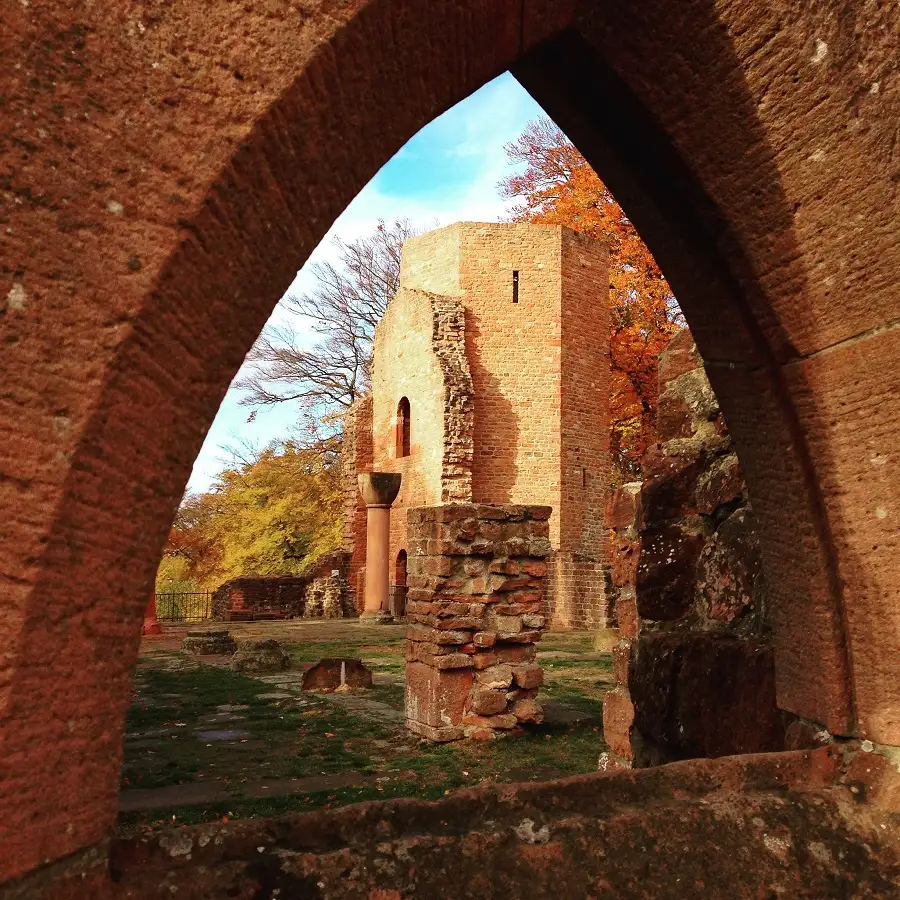
In 1023, Abbot Reginbald, who later became Bishop of Speyer, built St. Michael’s Monastery, and it is these remains which are still visible today. After the death of Abbott Friedrich in 1070, the monastery became a place of pilgrimage. In 1503, the last three monks living in the monastery were killed in their beds when part of the steeple collapsed. After that, the monastery became abandoned and was forgotten.

12:15 PM — Transfer to Rail Station

Most trains depart from Heidelberg Hbf station, the largest station in the city. Before spending money on a transfer, be sure to check whether your hotel is within easy walking distance. Also consider that public transport is the cheapest and sometimes fastest option, and the local tram network stops directly in front of the station. If staying at a hotel, they can order a reliable taxi. Some private transfers will even help with your bags. Uber is not yet available in Heidelberg.

13:14 - 16:11 — Train to Munich

Shortly after leaving Heidelberg, you may have to change trains in a city like Stuttgart or Mannheim. After connecting, you will likely continue the journey on a modern and comfortable Euro City train. In most cases, you will travel through a scenic region known as the Swabian Alps before continuing through the beautiful countryside of Bavaria until reaching Munich.

4:11 PM — Transfer from Rail Station

Most trains arrive in Müchen Hbf station, the largest station in the city. Before spending money on a transfer, be sure to check whether your hotel is within easy walking distance. Also consider that public transport is the cheapest and sometimes fastest option - there is a subway and local rail station co-located with the train station. Taxis are available at all rail stations and are generally honest. Some private transfers even meet you directly on the platform to help with bags. Uber is also available for those with the app.

Early Evening/Evening — Augustiner Keller

This vast beer garden under leafy chestnut trees is immensely popular with the locals, so you can study the lederhosen-clad men and dirndl attired women at close quarters while quaffing the Augustiner's own Edelstaff beer from your Maßkrug (one-liter glass beer mug) and wolfing down a plate stacked high with Bavarian sausage and mashed potato.

image

Day 10

Heidelberg to Munich

image

Day 11

Munich

Day 11

Munich

icon
icon
icon
icon

9:00 AM - 11:30 AM

Guided Walk Tour of Historic Munich

Munich contains many reminders of a long and varied history but also encompasses the modern features of a strong and vibrant city. The insights of a local help make sense of the traditions, trends, and promises of Bavaria's Capital - sometimes referred to as the city of laptops and lederhosen. On this tour, your guide will show you the highlights of Munich and point out the many hidden treasures.

Guided Walk Tour of Historic Munich

9:00 AM - 11:30 AM — Guided Walk Tour of Historic Munich

Munich contains many reminders of a long and varied history but also encompasses the modern features of a strong and vibrant city. The insights of a local help make sense of the traditions, trends, and promises of Bavaria's Capital - sometimes referred to as the city of laptops and lederhosen. On this tour, your guide will show you the highlights of Munich and point out the many hidden treasures.

Mid-Day/Afternoon — Residence Palace

The Munich Residenz was the seat of Bavaria's Dukes and Kings from the middle ages until 1918. Originally a medieval castle, it was transformed over the centuries into a beautiful palace. Today it is open to the public and you can explore its magnificent interiors, numerous courtyards, and elegant garden. The living quarters of the royal family have been transformed into a museum which provides a fascinating glimpse into the lives of Kings and Queens. You can also peruse numerous jewels, gold objects, and other precious items which are held in the Residenz Schatzkammer (treasury).

Residenz Palace Museum

Wander where you will, audio guide in hand, through the spectactular royal residence.

You'll experience jaw-dropping architecture and beautiful artwork as you explore the museum and the adjacent Royal Treasury. Among the many highlights, unmissable is the Antiquarium, the largest and most lavish Renaissance hall north of the Alps. The window reveals are decorated with 102 views of towns, markets, and palaces in what was then the Duchy of Bavaria, providing an unique insight into how the country once looked. The Rich Chapel (Reiche Kapelle) was the private place of worship of Duke Maximilian I and his wife, and it was decorated with particular magnificence using colored marble and gilt reliefs. The Ornate Rooms (Reiche Zimmer) meanwhile represent a high point of the court Rococo style, and are works of art in their own right. 

Cuvilliés-Theatre

Visit what is perhaps the most ostentatious and sensually overwhelming building in Munich.

The exceptionally extravagant court theatre was built by Elector Max III Joseph's court architect François Cuvilliés between 1751 and 1755, and was intended to showcase Munich as a home to the arts and the enlightenment. It only survived the destruction of WWII because the elaborately carved tiers of boxes were removed from their original location in the Alte Residenztheater building for safekeeping. It's still used as a theatre today.FYI - to visit the Cuvilliés-Theatre you need to exit the museum and walk around the palace to get onto Residenzstraße and then re-enter the palace and cross through either the Chapel Courtyard or the Imperial Courtyard. 

Odeonsplatz

See the square where Hitler's Beer Hall Putsch came to a bloody end.

The square directly adjacent to the Residence is the Odeonsplatz, which is guarded by the Feldherrnhalle (Field Marshalls' Hall) in honor of the Bavarian army. It was here that Hitler's Beer Hall Putsch in 1923 came to a bloody end in a gun battle with the police. During the Nazi regime, anyone passing the Feldherrnhalle was obliged to give the Nazi salute, which prompted some locals to instead take a side street. The Nazis derogatorily nicknamed it the Shirkers' Alley, but the 'shirkers' are memorialized in a trail of brass cobblestones. Also on the square is the bright yellow Theatinerkirche with its two massive twin towers. It was the personal church of Bavaria's rulers and many of them are interred there.  

Afternoon/Late Afternoon — Altstadt

Munich boasts a large old town (Altstadt) with many beautiful historic buildings. Sometimes called the world's largest village, it is a perfect place to wander. You will discover many Medieval, Renaissance, and Baroque buildings, as well as several stunning examples of modern architecture. Pleasant cafes, beer halls, cozy restaurants, and great shopping all add to the charming atmosphere.

Hofbräuhaus

Enjoy some fine Bavarian brews in a beer hall that dates back to 1589.

Originally built in 1598 by Maximilian I, Duke of Bavaria, as an extension to the state brewery, this beer hall was opened to the public in 1828, remodeled in 1897, almost completely destroyed during World War II, and reopened following its restoration in 1958. It is now situated across three floors, with a restaurant, ballroom, and beer garden, and is one of the largest tourist attractions in the city as well as a favorite of locals. This is where the ingurgitation of vast quantities of beer and pretzels has been taking place since 1644. Even if you're a teetotaller, you'll want to at least take a look at the interior of the three-storied temple to the consumption of fermented hops and watch the odd local quaff his or her ale amid the sea of tourists. There's also an attractive courtyard where you can escape the din on a summer's day or evening.

New Town Hall & Glockenspiel

Enjoy the mechanical show as the figures on the Glockenspiel on the New City Hall come to life and re-enact stories from the 16th century.

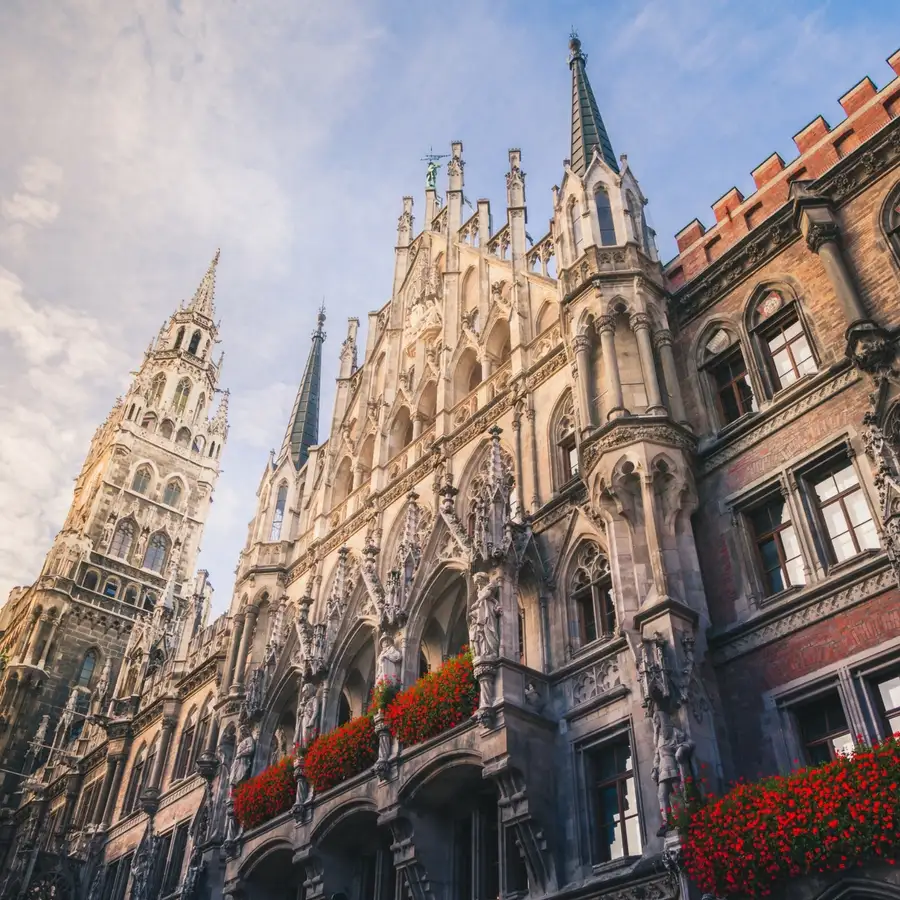
The Marienplatz is the main square of the Altstadt, and its centerpiece is the domineering facade of the neo-Gothic Neues Rathaus (New Town Hall). It is decorated with gargoyles and statues, including a dragon scaling the turrets. For a great view of the city, ascend the 279ft (85m) tower (elevator available to the left just inside the main entrance to the town hall). The highlight of the building is the Glockenspiel, which attracts large numbers of tourists at 11 am and noon (and 5pm in the summer) who come to watch the contraption in operation. There's dancing, a joust, and more, all set to musical chimes. Unusually, the New Town Hall mostly survived WWII intact, probably because it was used by Allied bombers as a direction finder for obliterating the rest of the city.

Peterskirche

Climb to the top of Munich's oldest church tower for what is still today its best view.

The best views of central Munich can be viewed from the 302ft (92m) tower of St Peterskirche, inner Munich's oldest church and possibly the city's origin point. The presence of a church on its site goes back to before the city's founding, and it has existed in a number of iterations since. Its nearly 3000ft-tall tower is affectionately called "Alter Pete" or "Old Pete" as a recognition of its significance to Munich's social and cultural history.

Viktualienmarkt

Assemble a gourmet picnic lunch in one of Europe's best known markets.

The Viktualienmarkt is one of Central Europe's finest gourmet markets where many of the stalls have been run by generations of the same family. Prices are high, but you can gather all the ingredients for an haute cuisine picnic and then seat yourself in the market's own beer garden to enjoy an al fresco lunch. The very existence of such a market in an old town quarter is the result of Munich's dedication to preserving its past. Fearing that fast food chains will replace the old-fashioned market stalls and quaint eateries that make the Viktulienmarkt one of Europe’s most charming squares, the city subsidizes the rent so they can survive on the some of Germany’s most expensive real estate.

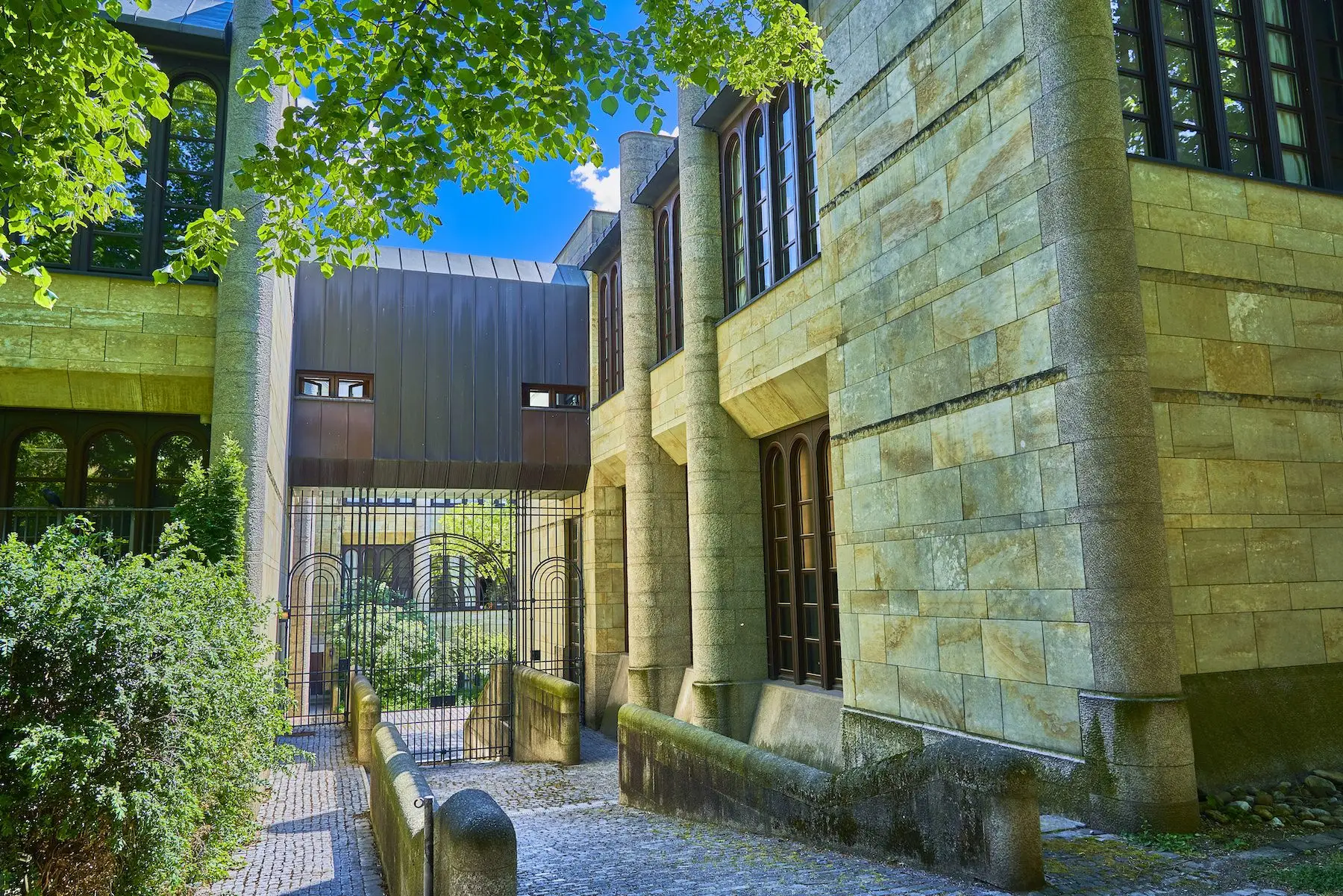
Jewish Museum

Learn about Munich's rich Jewish heritage and see it's most striking synagogue.

The museum focuses on Munich's Jewish heritage, as well as Jewish history and culture in general, with a contemporary flair and modern means of display. Adjacent to the museum is the Ohel Jakob synagogue, which ranks among the most striking structures built in the city in recent years. It is the first synagogue to serve as the main synagogue of the city since the Nazi Kristallnacht (i.e. the Night of Broken Glass). Tours are offered but must be arranged 10 days in advance.

Frauenkirche

Restored Gothic church.

The Frauenkirche, or Church of Our Lady, dominates the Altstadt. This is because the twin onion-domed towers inspired the city council to prohibit any other building in the Altstadt from exceeding their height of 325ft (99m). Much of the interior was destroyed during WWII, but it has been rebuilt. An attraction that survived the bombing in original form is the Teufelstritt, or Devil's Footstep, at the entrance. This is a black mark resembling a footprint, which according to legend is the result of a deal the devil made with the builder to finance construction of the church on the condition that it contains no windows. The clever builder, however, tricked the devil by positioning columns so that the windows were not visible from the spot where the devil stood in the foyer. By the time the devil discovered that he had been tricked, he could not enter the already consecrated church. The devil could only stand in the foyer and stomp his foot furiously, which left the dark footprint that remains visible in the church's entrance today.

Early Evening/Evening — Maxvorstadt

Maxvorstadt is not just Munich’s most central nightlife hotspot, it’s one of the most historically fascinating neighborhoods in all of Bavaria. The area is often called the “Brains of Munich” for its concentration of arts and education centers, including seven universities and several museums and galleries. It’s a lively spot from day to evening to be sure, with a diversity of cozy bars, restaurants, and cafes appealing to the large student population and foreign visitors.

image

Day 11

Munich

image

Day 12

Munich

Day 12

Munich

icon
icon
icon

Morning/Mid-Day

Arts District

Munich's Museum Quarter (Kunstareal) has grown continuously over a period of 200 years offering an extraordinary variety of museums with works from Pharaonic Egypt right through to the present day. There are 18 museums and exhibition halls, more than 40 galleries, six internationally renowned universities and numerous cultural institutions all in close proximity and within walking distance of each other.

Arts District

Morning/Mid-Day — Arts District

Munich's Museum Quarter (Kunstareal) has grown continuously over a period of 200 years offering an extraordinary variety of museums with works from Pharaonic Egypt right through to the present day. There are 18 museums and exhibition halls, more than 40 galleries, six internationally renowned universities and numerous cultural institutions all in close proximity and within walking distance of each other.

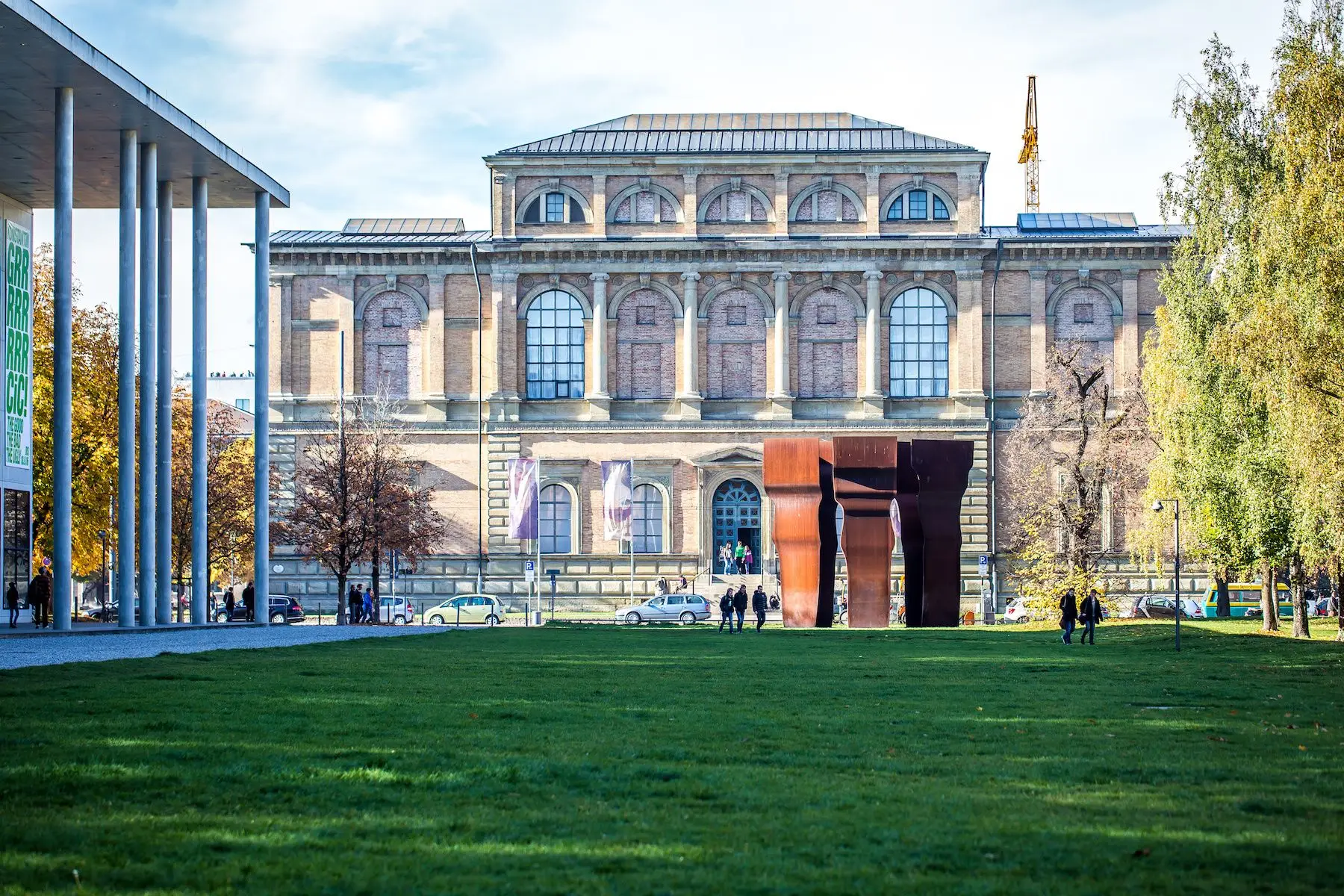
Alte Pinakothek

Enjoy a tremendous collection of art in what was once the world's largest art gallery.

The largest art gallery in the world when it was first opened in 1836, the Alte Pinakothek can still be an overwhelming experience: the collections, which are based on the royal collection of the Wittelsbach dynasty over five hundred years, are arranged geographically and chronologically, encompassing German, Dutch, Flemish, Spanish, French and Italian art, with a timespan from the Middle Ages to the 18th century. It houses the largest collection of Rubens in the world, so be sure to stop by the Flemish paintings. Also worthy of particular attention if you're short on time are the richly comic works by Pieter Brueghel in the Netherlandish collection, and the German late Gothic and Renaissance art collection represented by the likes of Albrecht Dürer and Cranach the Elder.

Neue Pinakothek

See some of the 19th and early 20th centuries' greatest artworks.

Directly across the road from Alte Pinakothek, the Neue Pinakothek picks up where the older museum leaves off, concentrating on art from the 19th century to Jugendstil. The audio-guide tour starts with art from around 1800, prominent among which are a number of canvases by Goya, before progressing to English painting from the likes of Gainsborough, Constable, and Turner. Much of the rest of the museum is given over to German Art, with an emphasis on artists active in the court of Ludwig I, such as work by the architect who designed the Alte Pinakothek, Leo von Klenze, and the Berlin architect Karl Friedrich Schinkel. There are also works by Caspar David Friedrich and Adolph von Menzel.

Pinakothek der Moderne

Peruse 19th and 20th century art in a stylishly modern setting.

The strikingly clean-lined Pinakothek der Moderne, gathers its eclectic collection of classic modern and contemporary art, design and architecture around a central rotunda. On the west side of the building are works representing last century's key artistic movements, from Cubism through to Surrealism and beyond. The east wing is devoted to contemporary art.

Museum Brandhorst

Peruse modern art in this remarkably different building.

The Museum Brandhorst is an eye-catching structure covered with 36,000 polychromatic ceramic rods in 23 custom colors and a second layer consisting of a horizontally folded metal skin, coated in two colors. This layering and its polychromy lend the skin a varied appearance: What is vivid and three-dimensional from close up appears homogeneous and flat from afar. It was opened in 2009 to house a collection of German and modern art in a setting of restrained, spacious modernism. Its rotating exhibits include works by Andy Warhol, Jeff Koons, and Picasso, as well as major contemporary German artists.

State Museum of Egyptian Art

History buffs will love this underappreciated museum dedicated to Egyptian archaeology.

The impressive entrance to the brand spanking new State Museum of Egyptian Art is reminiscent of a grand descent into a Pharoah's tomb. Opened in 2013 to house artifacts formerly contained in the Residenz, the museum has a collection which spans 5000 years of Egyptian history.

Mid-Day/Afternoon — Documentation Center

Munich is the city where the National Socialist German Workers' Party (NSDAP), or Nazi Party, first took root. As the Nazis came into power, the Königsplatz was paved over and transformed into a perfect backdrop for staging their militaristic spectacles. Many of the physical changes they made to the space endure to this day. The history of the birth of German National Socialism to its horrific end in 1945 is brilliantly captured and displayed at the National Socialist Documentation Center which is located on the square.

NS Documentation Centre

Learn how Nazism managed to capture Germany and about the terrible consequences.

Opened in 2015, the documentation center shows how the Nazi Party was able to rise and rule Germany, and the role which the city of Munich played. Visitors learn not only about the origins of the Nazi movement and how they managed to seize power, but also about the regime during the war, and the post-war process of de-Nazification. 

Late Afternoon/Early Evening — English Gardens

The English Garden is one of Europe's largest parks; in fact, it is larger than New York's Central Park. While it is called the "English Garden" after the style of the park, it was actually designed by an American-Englishman and is now a symbol of the very Bavarian city of Munich. The park is a perfect place to escape the city for a long stroll, where you can enjoy the natural scenery and the people watching.

Chinese Tower

Enjoy some Bavarian brews with the locals in Munich's second largest beer garden.

Located in the middle of the English Gardens, this beer garden (7,000 seats) is located beneath the wooden Chinese Tower. The 25 meter high (75 feet) pagoda was built in 1789 during a pan-European craze for all things East Asian. The food stalls around the pagoda offer traditional beer garden food such as Steckerlfisch (grilled fish on a stick), Hendl (roasted chicken) and Schweinshaxn (roasted pork knuckle). The beer served is Hofbräu and a Maß Hell (lager).

Eisbachwelle

Watch surfers catch some waves in the middle of the city.

At the extreme southern end of the park you can find one of the more unusual and entertaining pastimes enjoyed by the locals - surfing on the man-made Eisbach river. There is a standing wave produced by the water pumping mechanism and surfers line up along the bank taking turns entering the water with their boards. After a minute or so, successful surfers will voluntarily drop out, returning to the end of the line allowing the next person in line an opportunity. The water is cold and shallow (sometimes only 40 cm deep), making it suitable only for experienced surfers.

image

Day 12

Munich

image

Day 13

Munich

Day 13

Munich

icon

Early Morning to Late Afternoon

Excursion to Neuschwanstein Castle

An inspiration for the Disney Castles, numerous fairy tales, and countless dreamers, the Castle of Neuschwanstein is perhaps the most famous castle in the world. The eccentric Bavarian King Ludwig II created this amazing palace in the 19th century as an idyllic version of a medieval castle. You can visit by taking a guided tour from Munich or traveling independently by train and bus. In addition to enjoying spectacular views you can take a guided tour of the castle interior which is well worth the experience (but keep in mind that there a lots of steps to negotiate). If traveling independentally, be sure to book your interior tour reservations at least two days in advance.

Excursion to Neuschwanstein Castle

Early Morning to Late Afternoon — Excursion to Neuschwanstein Castle

An inspiration for the Disney Castles, numerous fairy tales, and countless dreamers, the Castle of Neuschwanstein is perhaps the most famous castle in the world. The eccentric Bavarian King Ludwig II created this amazing palace in the 19th century as an idyllic version of a medieval castle. You can visit by taking a guided tour from Munich or traveling independently by train and bus. In addition to enjoying spectacular views you can take a guided tour of the castle interior which is well worth the experience (but keep in mind that there a lots of steps to negotiate). If traveling independentally, be sure to book your interior tour reservations at least two days in advance.

Linderhof Palace

Stop by King Ludwig II's smallest palace on your way to Neuschwanstein and explore its delightful gardens.

Another of the eccentric (some say mad) King Ludwig II's creations is Linderhof Palace, which with its fantastic grotto and Moorish pavilion testifies to the king's vision. The smallest of his three palaces that he built, it is the only one that he lived to see completed. The palace is in between Munich and Neuschwanstein, meaning many tours stop there along the way.

Mary's Bridge

Enjoy a stunning view of the castle while suspended over a mountainous gorge.

You definitely won't want to miss taking in the best views and photographs of Neuschwanstein from Marienbrücke (Mary's Bridge) over the dramatic Pöllat Gorge. The minibus terminal is very close at just 5 min walk away, while it's a steepish 10-15min climb on a wide and well-groomed path to get there from behind the castle. As noted above, Mary's Bridge can get a little crowded, so you might have to wait for a gap before you can fit on.

image

Day 13

Munich

image

Day 14

Depart Munich

Day 14

Depart Munich

icon

To Be Determined

Transfer to Airport

Munich has one main airport, Munich International Airport, where almost all visitors depart. The most affordable and often fastest way to reach the airport is by train. The "S-bahn" local trains takes 40 minutes and leaves directly from the main station in central Munich (München hbf). Other regional trains to the airport depart from other stations in Munich, so you may have an even better departure option near your hotel.  Your hotel can arrange a reliable taxi or if you have the app, Uber is also a good option. You can also arrange a private transfer. If you are picked up about 3 hours before your departure time, you should arrive at the airport with a little over 2 hours to spare, depending on traffic. If you are leaving during rush hour, you may want to budget an extra fifteen to thirty minutes.

Transfer to Airport

To Be Determined — Transfer to Airport

Munich has one main airport, Munich International Airport, where almost all visitors depart. The most affordable and often fastest way to reach the airport is by train. The "S-bahn" local trains takes 40 minutes and leaves directly from the main station in central Munich (München hbf). Other regional trains to the airport depart from other stations in Munich, so you may have an even better departure option near your hotel.  Your hotel can arrange a reliable taxi or if you have the app, Uber is also a good option. You can also arrange a private transfer. If you are picked up about 3 hours before your departure time, you should arrive at the airport with a little over 2 hours to spare, depending on traffic. If you are leaving during rush hour, you may want to budget an extra fifteen to thirty minutes.

image

Day 14

Depart Munich

What's Included In France & Germany Adventure Trip

Fork

Pre-Paid Tours and Activities:

  • Private Guided Excursion to the American D-Day Beaches
  • Private Guided Walking Tour of the Center of Paris
  • Guided Walking Tour of the Heidelberg's Altstadt and Castle
  • Guided Walk Tour of Historic Munich
  • City Card for Munich, including discounts to many popular attractions
train

Pre-Paid Transportation:

  • 2nd Class Train Tickets from Rennes-Paris
  • 2nd Class Train Tickets from Paris to Mannheim
  • 2nd Class Train Tickets from Mannheim to Heidelberg
  • 2nd Class Train Tickets from Heidelberg-Munich
  • Shuttle Service from Bayeux to Rennes
  • Public Transport Tickets for Munich
  • Private transfer from Paris Airport to Bayeux
train

Accommodation:

  • 2 nights at a hotel of your choice in Bayeux
  • 2 nights at a hotel of your choice in Rennes
  • 3 nights at a hotel of your choice in Paris
  • 2 nights at a hotel of your choice in Heidelberg
  • 4 nights at a hotel of your choice in Munich
mobile

Go Real Travel Mobile App:

  • Itinerary Plan & Reservations Info
  • Points of Interest
  • Detailed Travel Information
  • Maps & Directions

Other Trips You May Like

Trip image

8 Days

From$2375USD

Paris, Normandy & Brittany: A Journey Through Iconic France

View Trip
Trip image

14 Days

From$3390USD

Relaxed Tour of Paris and Northern France

View Trip
Trip image

15 Days

From$3990USD

Paris to Provence: A 15-Day Family-Friendly France Itinerary

View Trip
Trip image

17 Days

From$4530.9234235USD

European Castles & Cultural Tapestry Tour

View Trip
Trip image

10 Days

From$1899USD

Winter Wonderland: Germany’s Iconic Cities and Alpine Landscapes

View Trip
Trip image

10 Days

From$3390USD

Historic Grandeur and Countryside Charm in Paris and Germany

View Trip
Trip image

10 Days

From$3099USD

A Journey Through Culture and Time in Paris, Amsterdam, and Germany

View Trip
Trip image

14 Days

From$4075USD

2-Weeks of Cultural, Gastronomic & Natural Wonders in Munich, Switzerland & Paris

View Trip
Trip image

21 Days

From$5199USD

Canals, Castles, and Culture: A Three-Week Journey in the Netherlands & Germany

View Trip

Featured Blogs

Trip image
France
Trip planning

8 Places to Visit in France That Aren’t Paris

Trip image
Germany
Trip planning

How to Plan a Trip to Germany – Step-by-Step Guide

Trip image
Paris
Seasonal guide

The Best Time to Visit Paris: A Seasonal Guide

Trip image
Europe
Romantic

16 Most Romantic Destinations in Europe

Trip image
Germany
Villages

15 Most Beautiful Towns & Villages in Germany

Trip image
Central Europe
Castles

Top 5 Castles In Central Europe

Trip image
Europe
Family

How to Plan the Perfect Family Trip to Europe

Our Customers Say It Best

Malini Dutta, Boston, Massachusetts
We can't thank you enough for the detailed plans, maps, and suggestions. It really felt that someone was holding our hands and showing us around. We had all the excitement of discovering foreign lands, with none of the problems that can happen while negotiating unfamiliar places. In fact, all the cities felt like home within a few hours of arriving and exploring.
Bev and Mark Frankel, Williamsburg, Virginia
We could not be more pleased with Go Real Travel! You took the guess work out of things like public transport but still managed to allow us the freedom to tour as we wanted. Our guides were exceptional and every time I saw a Viking Cruise tour of 25 people, I realized the quality experience we were getting with Go Real.
Marianne Strydom, Paarl, South Africa
I just wanted to thank you for organizing an amazing trip for me – I packed in so much in such a short period of time and everything was just perfect. The way you do things makes it possible to really get to know the destination, which for me as a travel agent could not have been better.
Otto Chuy, Los Angeles, California
I am still surprised how everything worked as planned, without a hitch. All instructions in your itinerary were precise and correct. Your suggestions and comments in each of the locations we went to were very helpful. All your guides, without exception, were wonderful and exactly on time.

Explore cities in more detail

A cemetery with American and French flags

Bayeux

Bayeux is an old, well-preserved town in Normandy. Most known as the backdrop for the Battle of Normandy, visitors who descend from WWII veterans often feel a special, somber connection to this part of France. On June 6, 1944, otherwise known as ‘D-Day’, thousands of Allied troops landed on Normandy’s Atlantic Coast, with a mission to drive out the German occupying forces. More than 120,000 Allied soldiers died in combat over the next three months. Although victorious, the campaign for Normandy caused the highest number of losses for America in all of WWII. A landscape of remembrance, on a tour of the Norman countryside you’ll see the remains of tanks, aircraft, and military bunkers. Special cemeteries and memorials in the area pay tribute to the sacrifice of fallen soldiers.  Despite the destruction of nearly every neighboring village, the town of Bayeux endured WWII unscathed. Along with all its medieval architecture, the town’s most precious treasure, the Bayeux Tapestry, was miraculously spared. Stitched in the 11th century, the Tapestry tells the story of William the Conqueror’s invasion of England in 1066. As you view the tapestry and stroll through the charming streets of Bayeux, the sweeping cathedral spires and gently flowing River Aure cast you back to another time. A landscape of war, but also remembrance, a trip to Bayeux and Normandy will deepen your appreciation and respect for the past.  

Mont-Saint-Michel

Rennes

Rennes is the capital of Brittany, the most northwest region in France. A sea and countryside getaway, Brittany is famous for its medieval towns, ancient rocky landscapes, and seaside villages. Dotted along the blue-green Atlantic coastline, towns like St. Malo, Dinard, and Cancale are long-time summer vacation spots for the French. Needless to say, you have to try the fresh seafood. Offshore, the island of Mont-Saint-Michel rests dreamily amongst the waves. One of the most beloved UNESCO heritage sites in France, this medieval abbey is connected to the mainland by a bridge over a causeway.   Heading inland, there are centuries-old churches, stone cottages, and castles that belonged to Brittany’s medieval royalty, who were known for constantly feuding over successions. The river town of Dinan is surrounded by a fortress wall, a must-see for both its history and profound beauty. In Rennes, half-timbered houses and cobbled streets give way to some of the oldest marketplaces in France. Rennes itself is a tranquil, medium-sized city, easily explored in half a day. In the evening, the city’s gastronomic scene invites you to try local specialties - pancakes, such as savory stuffed galettes and thin, lemony crêpes, are the order of the day here.

the Eiffel tower at sunset in Paris

Paris

The magic of Paris is undeniable. This is the most romantic destination in Europe, and surely the number one bucket list destination of all time. If you want to say you've traveled, you have to visit Paris at least once.  Along with classic must-sees like the Eiffel Tower and the  Sacre-Coeur, there is so much to see and do in Paris that it helps to narrow it down by interest. Fashion and shopping enthusiast? Look no further than the Galeries Lafayette, Avenue des Champs-Élysées, or the Marais. Art aficionado? Once you're done with the Louvre, make a start on the Musée d'Orsay. History buffs won't be able to walk a block without uncovering a monument to Napoleon or Louis XIV. If you visit Paris with a foodie, be warned — you'll gaze in a lot of patisserie windows, and sample your weight in croissants. Because Paris always has so much on offer, it never grows old.  At dusk, as you stroll the wide boulevards past Haussmann apartment buildings and sharply dressed Parisians, or gaze down at the city from the hill at Montmarte, you might find yourself saying 'Paris Je t' aime'. This is, after all, the City of Love.

castle and bridge in heidelberg germany

Heidelberg

Heidelberg is buried deep in the forests of southwest Germany. Flanking both sides of the Neckar River, Heidelberg's red and white baroque old town looks like something from a book of folktales. On the hillside above the town, you'll see the looming, tumbledown remains of Heidelberg's Gothic-Renaissance castle, Heidelberger Schloss. The subject of strange local legends, Heidelberg Castle was once home to knights, a famous court jester, and even a witch. It is said the first person who pulls out an iron ring embedded in one of the great doors will be the castle's true owner. Surely on your visit, it's worth a try? Across the river, follow in the footsteps of scholars on a hiking trail known as The Philosophers’ Way. Heidelberg University is the oldest in Germany, and its leafy, temple-like campus contributes to the gentle, contemplative atmosphere of the town.  A poetic city with the dreamy feel of a watercolor painting, it's no wonder Heidelberg inspired writers like Mark Twain and Johann Wolfgang von Goethe. The city has even been recognized by UNESCO as a City of Literature. Especially on misty, grey days, Heidelberg has a way of sweeping you up in its romanticism.      
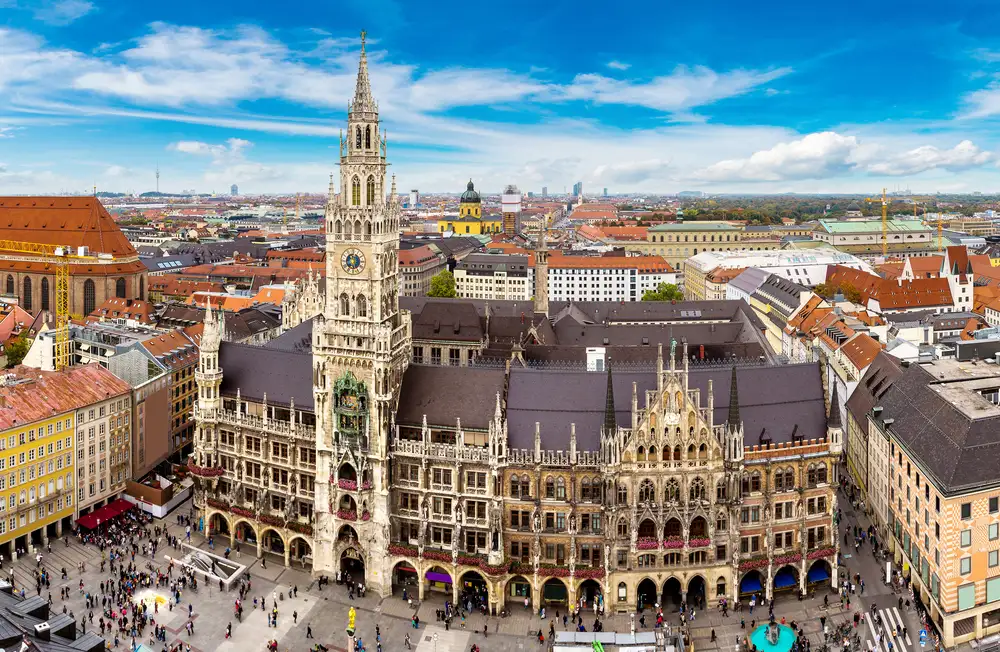
old town square munich germany

Munich

Arriving in Munich, you would be forgiven for thinking you were on the set of a movie about old Bavaria. At the Old Town beer halls, barmaids laced in dirndl dresses serve up frosty Helles lager, as oom-pah music drifts across the Marienplatz square. Men in lederhosen and checked shirts merrily give toasts as they knock glasses, or steins, as they’re known here. They sit at tables laden with wurst sausage and giant pretzels oozing with herby butter. This is Germany’s Germany, a place where folk traditions never stopped, and the revelry doesn’t either. Even when it isn’t Oktoberfest, the town’s notorious beer-drinking celebration, Munich is always happy to show you a good time. Simply cast your eyes around the lavish, gilded banquet hall at the Munich Residenz, the 13th-century Wittelsbach palace. You’ll see Munich has been impressing guests for centuries. Or, swing by the BMW Museum and check out the classic German cars. They even let you sit inside to test out the new models. At the city’s English Gardens, surfers ride waves on one of the park’s rivers. Munich is filled to the brim with this kind of pure-hearted German fun.     
Lavender Fields of Provence with sunset in background

Aix en Provence

Aix en Provence is a warm city baked into the Provence-Alpes-Côte region of Southern France. Often referred to as simply ‘Aix’, this city is a starting point for traveling the Provencal region. Aix is set amongst a backdrop of rambling vineyards, quaint villages, and the imposing Sainte-Victoire mountain range. It’s no surprise that artists like Cézanne have devoted lifetimes to painting this landscape. Aromatic lavender fields in the north blossom once a year with a scent that defines the French countryside. Head south and you’ll find the rocky Mediterranean shore with dramatic Calanques cliffs and clear blue waters. With the sun out nearly all year round, locals live the epitome of the Mediterranean lifestyle. Wander through narrow medieval streets, shop at lively marketplaces, and enjoy a glass of rosé on a cafe terrace beneath the gentle Provencal sun. From old-world architecture and bubbling fountains to refined galleries and leafy parks, this leisurely city has everything you could ask of a French vacation.