👋

Hi! Need help planning your dream trip? 🌍

Go Real Travel Assistant

Online

Welcome! Where are you in your journey?

Pick the option that fits you best so we can route you to the right help.

2-Weeks of Cultural, Gastronomic & Natural Wonders in Munich, Switzerland & Paris

destination-icon14 Day Tour of Munich, Zurich, Interlaken, Geneva and Paris

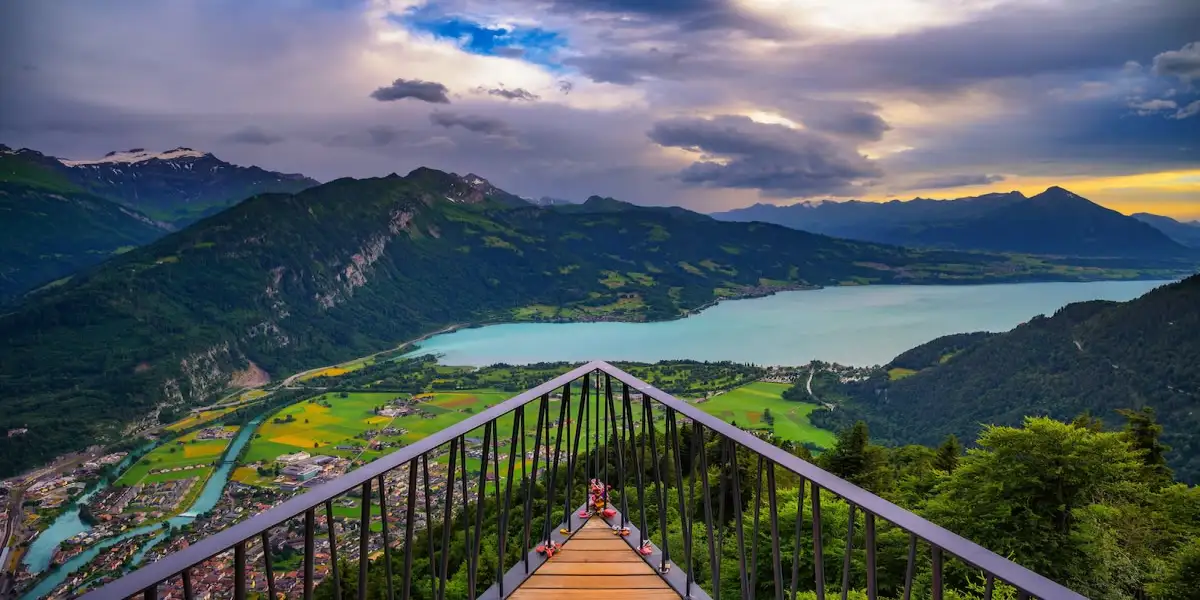
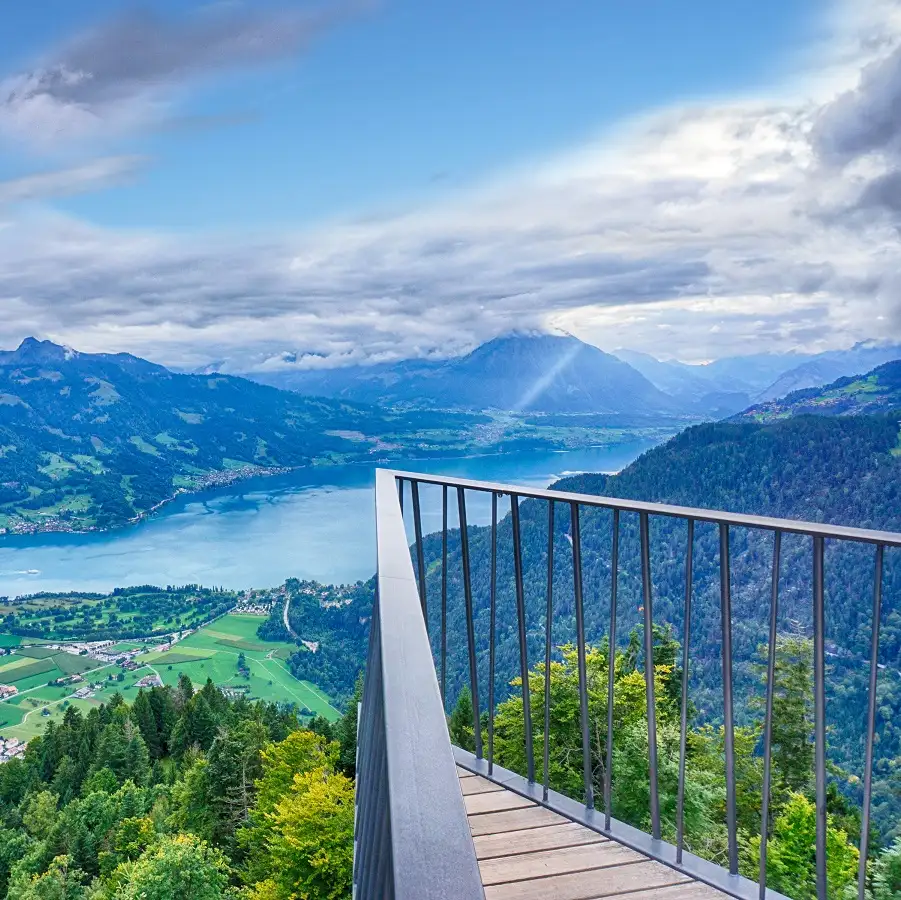
Harder Kulm view over Interlaken
Paris view with the Eiffel Tower
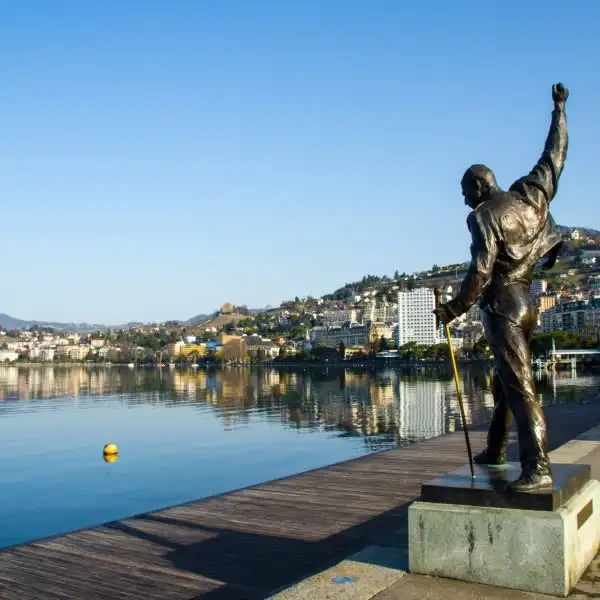
Lake Front in Geneva
A glass of red wine on a rustic table-top with a plate of cured meats.
image
arrowLightLeft
arrowLightRight
calendar-icon
14 Days 13 Nights
calendar-icon
Best Time: Jan-Dec
building-icon
Nature Lovers
family-icon
Local Cuisine & Wine
Discover where natural & cultural wonders meet culinary excellence on this 14-day journey through Munich, Zurich, Interlaken, Geneva, and Paris. Discover majestic landscapes and immerse yourself in European culture on private guided tours that reveal each city's history. You'll also enjoy a guided culinary tour in Paris's romantic Montmartre district, and savor regional delicacies and fine wines as you explore some of Europe's culinary hotspots. With Go Real Travel's comprehensive guidance provided via our exclusive mobile app, you'll enjoy seamless exploration, independence, and personalized experiences.
  • Revel in Munich's architecture and enjoy an epicurean adventure through its beer gardens & markets.
  • Explore Zurich's Old Town & along Lake Zurich, fortifying yourself with Swiss chocolate on the way.
  • Discover Interlaken's scenic vistas in Harder Kulm and journey to the Jungfrau, the "Top of Europe".
  • Encounter Geneva's charm on a private walking tour, and take a dinner cruise on serene Lake Geneva.
  • Conclude in Paris by visiting the Louvre & Eiffel Tower, and take a culinary tour of hip Montmartre.
Discover where natural & cultural wonders meet culinary excellence on this 14-day journey through Munich, Zurich, Interlaken, Geneva, and Paris. Discover majestic landscapes and immerse yourself in European culture on private guided tours that reveal each city's history. You'll also enjoy a guided culinary tour in Paris's romantic Montmartre district, and savor regional delicacies and fine wines as you explore some of Europe's culinary hotspots. With Go Real Travel's comprehensive guidance provided via our exclusive mobile app, you'll enjoy seamless exploration, independence, and personalized experiences.
  • Revel in Munich's architecture and enjoy an epicurean adventure through its beer gardens & markets.
  • Explore Zurich's Old Town & along Lake Zurich, fortifying yourself with Swiss chocolate on the way.
  • Discover Interlaken's scenic vistas in Harder Kulm and journey to the Jungfrau, the "Top of Europe".
  • Encounter Geneva's charm on a private walking tour, and take a dinner cruise on serene Lake Geneva.
  • Conclude in Paris by visiting the Louvre & Eiffel Tower, and take a culinary tour of hip Montmartre.
European Adventure
Old Town
Architecture
Scenic Europe
Residence Palace
Castles & Chateaux
Exploring European Beauty
Fraumunster
Churches & Monasteries
Traveling Through Europe
Lake Zurich
Natural Beauty
European Wonders
Unterseen
Small Towns
Captivating European Destinations
Interlaken Monastery & Castle
Castles & Chateaux
Picturesque Europe
Hohematte Park
Natural Beauty
European Charm
Old Town
Historic Landmarks
Discovering Europe's Treasures
Eiffel Tower
Historic Landmarks

Must see sights

European Adventure
Old Town
Architecture
Scenic Europe
Residence Palace
Castles & Chateaux
Exploring European Beauty
Fraumunster
Churches & Monasteries
Traveling Through Europe
Lake Zurich
Natural Beauty
European Wonders
Unterseen
Small Towns
Captivating European Destinations
Interlaken Monastery & Castle
Castles & Chateaux
Picturesque Europe
Hohematte Park
Natural Beauty
European Charm
Old Town
Historic Landmarks
Discovering Europe's Treasures
Eiffel Tower
Historic Landmarks
Loading...

Starting from

$4075

per person

no-flightNot included

Secure Your Customizable Trip

Enter your details to embark on a journey that can be tailored just for you.

Start

Travelers

0 travelers
Add Room
Remove Room

Preferred Hotel Stars

Select Hotel Stars
Craft Your Own Itinerary

Select your interests and destinations for a trip plan inspired by you.

Wonders of the Alps & Paris Trip - Map & Itinerary

Enable/Disable Map Scrolling

Click To Make Map Interactive

Wonders of the Alps & Paris Trip Timeline

Arrival

2 nights

Munich

Germany

Train: 4.5h

2 nights

Zurich

Switzerland

Train: 1h

Train: 1h

2 nights

Interlaken

Switzerland

Train: 1h

Train: 2h

2 nights

Geneva

Switzerland

Train: 3.5h

5 nights

Paris

France

Departure

Day-By-Day Itinerary of Wonders of the Alps & Paris Trip

image

Day 1

Arrive Munich

Day 1

Arrive Munich

icon
icon
icon
icon

To Be Determined

Transfer from Airport

Munich has one main airport, Munich International Airport, where almost all visitors arrive. Taxis are available directly at the terminal exit, or you can arrange a private transfer for added convenience. The cheapest and fastest way to reach central Munich from is by train. The regional "S-bahn" trains delivers you from the airport train station (just follow the signs) directly to Munich's main station (München hbf) in the center of the city, from where you can easily hail a taxi that will be much less expensive than from the airport.

Transfer from Airport

To Be Determined — Transfer from Airport

Munich has one main airport, Munich International Airport, where almost all visitors arrive. Taxis are available directly at the terminal exit, or you can arrange a private transfer for added convenience. The cheapest and fastest way to reach central Munich from is by train. The regional "S-bahn" trains delivers you from the airport train station (just follow the signs) directly to Munich's main station (München hbf) in the center of the city, from where you can easily hail a taxi that will be much less expensive than from the airport.

Mid-Day/Afternoon — Residence Palace

The Munich Residenz was the seat of Bavaria's Dukes and Kings from the middle ages until 1918. Originally a medieval castle, it was transformed over the centuries into a beautiful palace. Today it is open to the public and you can explore its magnificent interiors, numerous courtyards, and elegant garden. The living quarters of the royal family have been transformed into a museum which provides a fascinating glimpse into the lives of Kings and Queens. You can also peruse numerous jewels, gold objects, and other precious items which are held in the Residenz Schatzkammer (treasury).
Residenz Palace Museum

Wander where you will, audio guide in hand, through the spectactular royal residence.

You'll experience jaw-dropping architecture and beautiful artwork as you explore the museum and the adjacent Royal Treasury. Among the many highlights, unmissable is the Antiquarium, the largest and most lavish Renaissance hall north of the Alps. The window reveals are decorated with 102 views of towns, markets, and palaces in what was then the Duchy of Bavaria, providing an unique insight into how the country once looked. The Rich Chapel (Reiche Kapelle) was the private place of worship of Duke Maximilian I and his wife, and it was decorated with particular magnificence using colored marble and gilt reliefs. The Ornate Rooms (Reiche Zimmer) meanwhile represent a high point of the court Rococo style, and are works of art in their own right. 
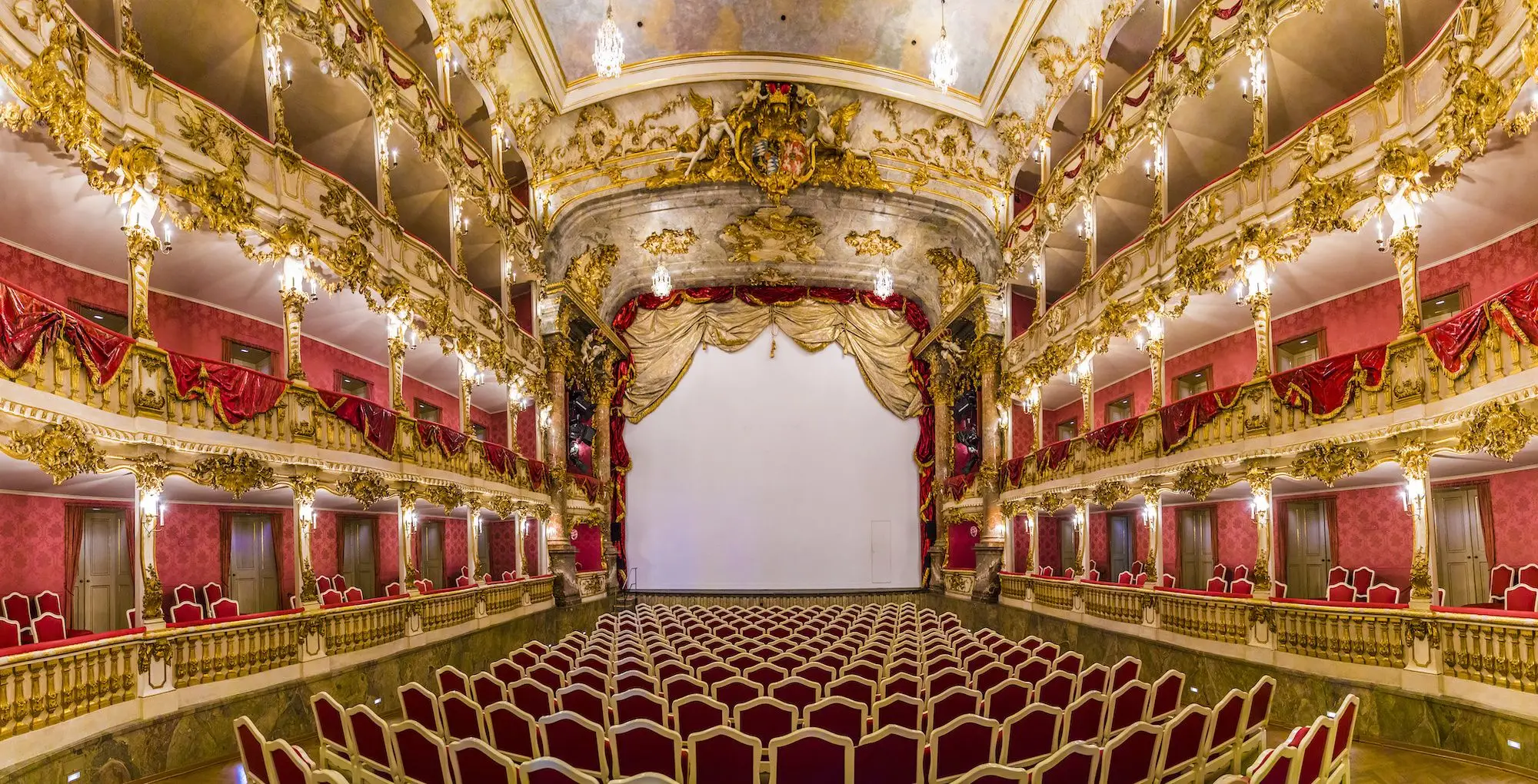
Cuvilliés-Theatre

Visit what is perhaps the most ostentatious and sensually overwhelming building in Munich.

The exceptionally extravagant court theatre was built by Elector Max III Joseph's court architect François Cuvilliés between 1751 and 1755, and was intended to showcase Munich as a home to the arts and the enlightenment. It only survived the destruction of WWII because the elaborately carved tiers of boxes were removed from their original location in the Alte Residenztheater building for safekeeping. It's still used as a theatre today.FYI - to visit the Cuvilliés-Theatre you need to exit the museum and walk around the palace to get onto Residenzstraße and then re-enter the palace and cross through either the Chapel Courtyard or the Imperial Courtyard. 

Odeonsplatz

See the square where Hitler's Beer Hall Putsch came to a bloody end.

The square directly adjacent to the Residence is the Odeonsplatz, which is guarded by the Feldherrnhalle (Field Marshalls' Hall) in honor of the Bavarian army. It was here that Hitler's Beer Hall Putsch in 1923 came to a bloody end in a gun battle with the police. During the Nazi regime, anyone passing the Feldherrnhalle was obliged to give the Nazi salute, which prompted some locals to instead take a side street. The Nazis derogatorily nicknamed it the Shirkers' Alley, but the 'shirkers' are memorialized in a trail of brass cobblestones. Also on the square is the bright yellow Theatinerkirche with its two massive twin towers. It was the personal church of Bavaria's rulers and many of them are interred there.  

Afternoon/Late Afternoon — English Gardens

The English Garden is one of Europe's largest parks; in fact, it is larger than New York's Central Park. While it is called the "English Garden" after the style of the park, it was actually designed by an American-Englishman and is now a symbol of the very Bavarian city of Munich. The park is a perfect place to escape the city for a long stroll, where you can enjoy the natural scenery and the people watching.

Chinese Tower

Enjoy some Bavarian brews with the locals in Munich's second largest beer garden.

Located in the middle of the English Gardens, this beer garden (7,000 seats) is located beneath the wooden Chinese Tower. The 25 meter high (75 feet) pagoda was built in 1789 during a pan-European craze for all things East Asian. The food stalls around the pagoda offer traditional beer garden food such as Steckerlfisch (grilled fish on a stick), Hendl (roasted chicken) and Schweinshaxn (roasted pork knuckle). The beer served is Hofbräu and a Maß Hell (lager).

Eisbachwelle

Watch surfers catch some waves in the middle of the city.

At the extreme southern end of the park you can find one of the more unusual and entertaining pastimes enjoyed by the locals - surfing on the man-made Eisbach river. There is a standing wave produced by the water pumping mechanism and surfers line up along the bank taking turns entering the water with their boards. After a minute or so, successful surfers will voluntarily drop out, returning to the end of the line allowing the next person in line an opportunity. The water is cold and shallow (sometimes only 40 cm deep), making it suitable only for experienced surfers.

Early Evening/Evening — Maxvorstadt

Maxvorstadt is not just Munich’s most central nightlife hotspot, it’s one of the most historically fascinating neighborhoods in all of Bavaria. The area is often called the “Brains of Munich” for its concentration of arts and education centers, including seven universities and several museums and galleries. It’s a lively spot from day to evening to be sure, with a diversity of cozy bars, restaurants, and cafes appealing to the large student population and foreign visitors.

image

Day 1

Arrive Munich


icon
icon
icon
icon

To Be Determined:

Transfer from Airport

Mid-Day/Afternoon:

Residence Palace

Afternoon/Late Afternoon:

English Gardens

Early Evening/Evening:

Maxvorstadt

Transfer from Airport

Transfer from Airport

Munich has one main airport, Munich International Airport, where almost all visitors arrive. Taxis are available directly at the terminal exit, or you can arrange a private transfer for added convenience. The cheapest and fastest way to reach central Munich from is by train. The regional "S-bahn" trains delivers you from the airport train station (just follow the signs) directly to Munich's main station (München hbf) in the center of the city, from where you can easily hail a taxi that will be much less expensive than from the airport.

To Be Determined — Transfer from Airport

Munich has one main airport, Munich International Airport, where almost all visitors arrive. Taxis are available directly at the terminal exit, or you can arrange a private transfer for added convenience. The cheapest and fastest way to reach central Munich from is by train. The regional "S-bahn" trains delivers you from the airport train station (just follow the signs) directly to Munich's main station (München hbf) in the center of the city, from where you can easily hail a taxi that will be much less expensive than from the airport.

Mid-Day/Afternoon — Residence Palace

The Munich Residenz was the seat of Bavaria's Dukes and Kings from the middle ages until 1918. Originally a medieval castle, it was transformed over the centuries into a beautiful palace. Today it is open to the public and you can explore its magnificent interiors, numerous courtyards, and elegant garden. The living quarters of the royal family have been transformed into a museum which provides a fascinating glimpse into the lives of Kings and Queens. You can also peruse numerous jewels, gold objects, and other precious items which are held in the Residenz Schatzkammer (treasury).

Residenz Palace Museum

Wander where you will, audio guide in hand, through the spectactular royal residence.

You'll experience jaw-dropping architecture and beautiful artwork as you explore the museum and the adjacent Royal Treasury. Among the many highlights, unmissable is the Antiquarium, the largest and most lavish Renaissance hall north of the Alps. The window reveals are decorated with 102 views of towns, markets, and palaces in what was then the Duchy of Bavaria, providing an unique insight into how the country once looked. The Rich Chapel (Reiche Kapelle) was the private place of worship of Duke Maximilian I and his wife, and it was decorated with particular magnificence using colored marble and gilt reliefs. The Ornate Rooms (Reiche Zimmer) meanwhile represent a high point of the court Rococo style, and are works of art in their own right. 

Cuvilliés-Theatre

Visit what is perhaps the most ostentatious and sensually overwhelming building in Munich.

The exceptionally extravagant court theatre was built by Elector Max III Joseph's court architect François Cuvilliés between 1751 and 1755, and was intended to showcase Munich as a home to the arts and the enlightenment. It only survived the destruction of WWII because the elaborately carved tiers of boxes were removed from their original location in the Alte Residenztheater building for safekeeping. It's still used as a theatre today.FYI - to visit the Cuvilliés-Theatre you need to exit the museum and walk around the palace to get onto Residenzstraße and then re-enter the palace and cross through either the Chapel Courtyard or the Imperial Courtyard. 

Odeonsplatz

See the square where Hitler's Beer Hall Putsch came to a bloody end.

The square directly adjacent to the Residence is the Odeonsplatz, which is guarded by the Feldherrnhalle (Field Marshalls' Hall) in honor of the Bavarian army. It was here that Hitler's Beer Hall Putsch in 1923 came to a bloody end in a gun battle with the police. During the Nazi regime, anyone passing the Feldherrnhalle was obliged to give the Nazi salute, which prompted some locals to instead take a side street. The Nazis derogatorily nicknamed it the Shirkers' Alley, but the 'shirkers' are memorialized in a trail of brass cobblestones. Also on the square is the bright yellow Theatinerkirche with its two massive twin towers. It was the personal church of Bavaria's rulers and many of them are interred there.  

Afternoon/Late Afternoon — English Gardens

The English Garden is one of Europe's largest parks; in fact, it is larger than New York's Central Park. While it is called the "English Garden" after the style of the park, it was actually designed by an American-Englishman and is now a symbol of the very Bavarian city of Munich. The park is a perfect place to escape the city for a long stroll, where you can enjoy the natural scenery and the people watching.

Chinese Tower

Enjoy some Bavarian brews with the locals in Munich's second largest beer garden.

Located in the middle of the English Gardens, this beer garden (7,000 seats) is located beneath the wooden Chinese Tower. The 25 meter high (75 feet) pagoda was built in 1789 during a pan-European craze for all things East Asian. The food stalls around the pagoda offer traditional beer garden food such as Steckerlfisch (grilled fish on a stick), Hendl (roasted chicken) and Schweinshaxn (roasted pork knuckle). The beer served is Hofbräu and a Maß Hell (lager).

Eisbachwelle

Watch surfers catch some waves in the middle of the city.

At the extreme southern end of the park you can find one of the more unusual and entertaining pastimes enjoyed by the locals - surfing on the man-made Eisbach river. There is a standing wave produced by the water pumping mechanism and surfers line up along the bank taking turns entering the water with their boards. After a minute or so, successful surfers will voluntarily drop out, returning to the end of the line allowing the next person in line an opportunity. The water is cold and shallow (sometimes only 40 cm deep), making it suitable only for experienced surfers.

Early Evening/Evening — Maxvorstadt

Maxvorstadt is not just Munich’s most central nightlife hotspot, it’s one of the most historically fascinating neighborhoods in all of Bavaria. The area is often called the “Brains of Munich” for its concentration of arts and education centers, including seven universities and several museums and galleries. It’s a lively spot from day to evening to be sure, with a diversity of cozy bars, restaurants, and cafes appealing to the large student population and foreign visitors.

image

Day 2

Munich

Day 2

Munich

icon
icon
icon
icon

9:00 AM - 11:30 AM

Guided Walk Tour of Historic Munich

Munich contains many reminders of a long and varied history but also encompasses the modern features of a strong and vibrant city. The insights of a local help make sense of the traditions, trends, and promises of Bavaria's Capital - sometimes referred to as the city of laptops and lederhosen. On this tour, your guide will show you the highlights of Munich and point out the many hidden treasures.

Guided Walk Tour of Historic Munich

9:00 AM - 11:30 AM — Guided Walk Tour of Historic Munich

Munich contains many reminders of a long and varied history but also encompasses the modern features of a strong and vibrant city. The insights of a local help make sense of the traditions, trends, and promises of Bavaria's Capital - sometimes referred to as the city of laptops and lederhosen. On this tour, your guide will show you the highlights of Munich and point out the many hidden treasures.

Mid-Day/Afternoon — Altstadt

Munich boasts a large old town (Altstadt) with many beautiful historic buildings. Sometimes called the world's largest village, it is a perfect place to wander. You will discover many Medieval, Renaissance, and Baroque buildings, as well as several stunning examples of modern architecture. Pleasant cafes, beer halls, cozy restaurants, and great shopping all add to the charming atmosphere.

Hofbräuhaus

Enjoy some fine Bavarian brews in a beer hall that dates back to 1589.

Originally built in 1598 by Maximilian I, Duke of Bavaria, as an extension to the state brewery, this beer hall was opened to the public in 1828, remodeled in 1897, almost completely destroyed during World War II, and reopened following its restoration in 1958. It is now situated across three floors, with a restaurant, ballroom, and beer garden, and is one of the largest tourist attractions in the city as well as a favorite of locals. This is where the ingurgitation of vast quantities of beer and pretzels has been taking place since 1644. Even if you're a teetotaller, you'll want to at least take a look at the interior of the three-storied temple to the consumption of fermented hops and watch the odd local quaff his or her ale amid the sea of tourists. There's also an attractive courtyard where you can escape the din on a summer's day or evening.

New Town Hall & Glockenspiel

Enjoy the mechanical show as the figures on the Glockenspiel on the New City Hall come to life and re-enact stories from the 16th century.

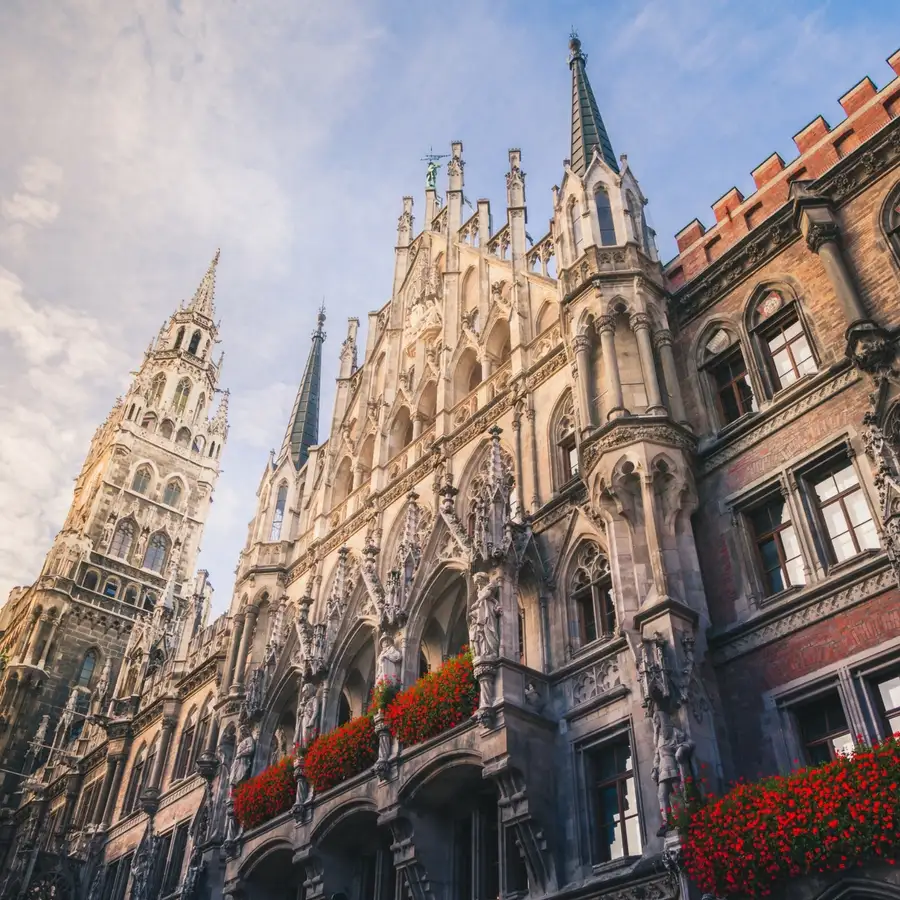
The Marienplatz is the main square of the Altstadt, and its centerpiece is the domineering facade of the neo-Gothic Neues Rathaus (New Town Hall). It is decorated with gargoyles and statues, including a dragon scaling the turrets. For a great view of the city, ascend the 279ft (85m) tower (elevator available to the left just inside the main entrance to the town hall). The highlight of the building is the Glockenspiel, which attracts large numbers of tourists at 11 am and noon (and 5pm in the summer) who come to watch the contraption in operation. There's dancing, a joust, and more, all set to musical chimes. Unusually, the New Town Hall mostly survived WWII intact, probably because it was used by Allied bombers as a direction finder for obliterating the rest of the city.

Peterskirche

Climb to the top of Munich's oldest church tower for what is still today its best view.

The best views of central Munich can be viewed from the 302ft (92m) tower of St Peterskirche, inner Munich's oldest church and possibly the city's origin point. The presence of a church on its site goes back to before the city's founding, and it has existed in a number of iterations since. Its nearly 3000ft-tall tower is affectionately called "Alter Pete" or "Old Pete" as a recognition of its significance to Munich's social and cultural history.

Viktualienmarkt

Assemble a gourmet picnic lunch in one of Europe's best known markets.

The Viktualienmarkt is one of Central Europe's finest gourmet markets where many of the stalls have been run by generations of the same family. Prices are high, but you can gather all the ingredients for an haute cuisine picnic and then seat yourself in the market's own beer garden to enjoy an al fresco lunch. The very existence of such a market in an old town quarter is the result of Munich's dedication to preserving its past. Fearing that fast food chains will replace the old-fashioned market stalls and quaint eateries that make the Viktulienmarkt one of Europe’s most charming squares, the city subsidizes the rent so they can survive on the some of Germany’s most expensive real estate.

Jewish Museum

Learn about Munich's rich Jewish heritage and see it's most striking synagogue.

The museum focuses on Munich's Jewish heritage, as well as Jewish history and culture in general, with a contemporary flair and modern means of display. Adjacent to the museum is the Ohel Jakob synagogue, which ranks among the most striking structures built in the city in recent years. It is the first synagogue to serve as the main synagogue of the city since the Nazi Kristallnacht (i.e. the Night of Broken Glass). Tours are offered but must be arranged 10 days in advance.

Frauenkirche

Restored Gothic church.

The Frauenkirche, or Church of Our Lady, dominates the Altstadt. This is because the twin onion-domed towers inspired the city council to prohibit any other building in the Altstadt from exceeding their height of 325ft (99m). Much of the interior was destroyed during WWII, but it has been rebuilt. An attraction that survived the bombing in original form is the Teufelstritt, or Devil's Footstep, at the entrance. This is a black mark resembling a footprint, which according to legend is the result of a deal the devil made with the builder to finance construction of the church on the condition that it contains no windows. The clever builder, however, tricked the devil by positioning columns so that the windows were not visible from the spot where the devil stood in the foyer. By the time the devil discovered that he had been tricked, he could not enter the already consecrated church. The devil could only stand in the foyer and stomp his foot furiously, which left the dark footprint that remains visible in the church's entrance today.

Afternoon/Late Afternoon — Deutsches Museum

The Deutsches Museum (i.e., the German Museum) is the world's largest museum of science and technology. It is located on a small island in the River Isar, which flows through central Munich. The museum's vast and fascinating collection is spread out among 40 different exhibitions. You will encounter examples of technology stretching across humanity's long history, from a reproduction of pre-historic cave paintings to the laboratory where the atom was split.

Evening/Late Evening — Augustiner Keller

This vast beer garden under leafy chestnut trees is immensely popular with the locals, so you can study the lederhosen-clad men and dirndl attired women at close quarters while quaffing the Augustiner's own Edelstaff beer from your Maßkrug (one-liter glass beer mug) and wolfing down a plate stacked high with Bavarian sausage and mashed potato.

image

Day 2

Munich

image

Day 3

Munich to Zurich

Day 3

Munich to Zurich

icon
icon
icon
icon
icon

Morning

BMW Museum & Olympiapark

If you have a passion for cars and German engineering precision, then you'll love the shrines to one of Germany's finest automobiles - the ultra-modern BMW Museum and the futuristic-looking BMW World. Adjacent to BMW World are the extensive and beautifully sculpted grounds of 1972's Olympic Park built on top of the mountain of rubble transported there during the post-WWII city clean-up operation.

BMW Museum & Olympiapark

Morning — BMW Museum & Olympiapark

If you have a passion for cars and German engineering precision, then you'll love the shrines to one of Germany's finest automobiles - the ultra-modern BMW Museum and the futuristic-looking BMW World. Adjacent to BMW World are the extensive and beautifully sculpted grounds of 1972's Olympic Park built on top of the mountain of rubble transported there during the post-WWII city clean-up operation.

Mid-Day/Afternoon — Arts District

Munich's Museum Quarter (Kunstareal) has grown continuously over a period of 200 years offering an extraordinary variety of museums with works from Pharaonic Egypt right through to the present day. There are 18 museums and exhibition halls, more than 40 galleries, six internationally renowned universities and numerous cultural institutions all in close proximity and within walking distance of each other.

Alte Pinakothek

Enjoy a tremendous collection of art in what was once the world's largest art gallery.

The largest art gallery in the world when it was first opened in 1836, the Alte Pinakothek can still be an overwhelming experience: the collections, which are based on the royal collection of the Wittelsbach dynasty over five hundred years, are arranged geographically and chronologically, encompassing German, Dutch, Flemish, Spanish, French and Italian art, with a timespan from the Middle Ages to the 18th century. It houses the largest collection of Rubens in the world, so be sure to stop by the Flemish paintings. Also worthy of particular attention if you're short on time are the richly comic works by Pieter Brueghel in the Netherlandish collection, and the German late Gothic and Renaissance art collection represented by the likes of Albrecht Dürer and Cranach the Elder.

Neue Pinakothek

See some of the 19th and early 20th centuries' greatest artworks.

Directly across the road from Alte Pinakothek, the Neue Pinakothek picks up where the older museum leaves off, concentrating on art from the 19th century to Jugendstil. The audio-guide tour starts with art from around 1800, prominent among which are a number of canvases by Goya, before progressing to English painting from the likes of Gainsborough, Constable, and Turner. Much of the rest of the museum is given over to German Art, with an emphasis on artists active in the court of Ludwig I, such as work by the architect who designed the Alte Pinakothek, Leo von Klenze, and the Berlin architect Karl Friedrich Schinkel. There are also works by Caspar David Friedrich and Adolph von Menzel.

Pinakothek der Moderne

Peruse 19th and 20th century art in a stylishly modern setting.

The strikingly clean-lined Pinakothek der Moderne, gathers its eclectic collection of classic modern and contemporary art, design and architecture around a central rotunda. On the west side of the building are works representing last century's key artistic movements, from Cubism through to Surrealism and beyond. The east wing is devoted to contemporary art.

Museum Brandhorst

Peruse modern art in this remarkably different building.

The Museum Brandhorst is an eye-catching structure covered with 36,000 polychromatic ceramic rods in 23 custom colors and a second layer consisting of a horizontally folded metal skin, coated in two colors. This layering and its polychromy lend the skin a varied appearance: What is vivid and three-dimensional from close up appears homogeneous and flat from afar. It was opened in 2009 to house a collection of German and modern art in a setting of restrained, spacious modernism. Its rotating exhibits include works by Andy Warhol, Jeff Koons, and Picasso, as well as major contemporary German artists.

State Museum of Egyptian Art

History buffs will love this underappreciated museum dedicated to Egyptian archaeology.

The impressive entrance to the brand spanking new State Museum of Egyptian Art is reminiscent of a grand descent into a Pharoah's tomb. Opened in 2013 to house artifacts formerly contained in the Residenz, the museum has a collection which spans 5000 years of Egyptian history.

3:50 PM — Transfer to Rail Station

Most trains depart from Müchen Hbf station, the largest station in the city. Before spending money on a transfer, be sure to check whether your hotel is within easy walking distance. Also consider that public transport is the cheapest and sometimes fastest option. If staying at a hotel, they can order a reliable taxi. Some private transfers will even help with your bags. Uber is also available for those with the app.

16:52 - 20:57 — Rail Journey to Zurich

Your journey should take about four hours in total. You'll travel on a modern and comfortable train with air conditioning and usually a good wifi connection. The train takes you through the beautiful Bavarian countryside before crossing the border into Switzerland and shortly arriving in Zurich.

8:57 PM — Taxi Transfer to Hotel

Upon arrival in Zurich, you will exit the rail station and proceed to the taxi stand where you will find taxis waiting for arriving passengers. Taxis in Zurich are generally reliable and honest and are less expensive than using a pre-arranged pick up service for your transfer to the hotel. You can also use the Uber App if you have it installed on your phone. Detailed arrival information and instructions for taking a taxi are provided in the Full Itinerary.

image

Day 3

Munich to Zurich

image

Day 4

Zurich

Day 4

Zurich

icon
icon

Early Morning to Mid-Day

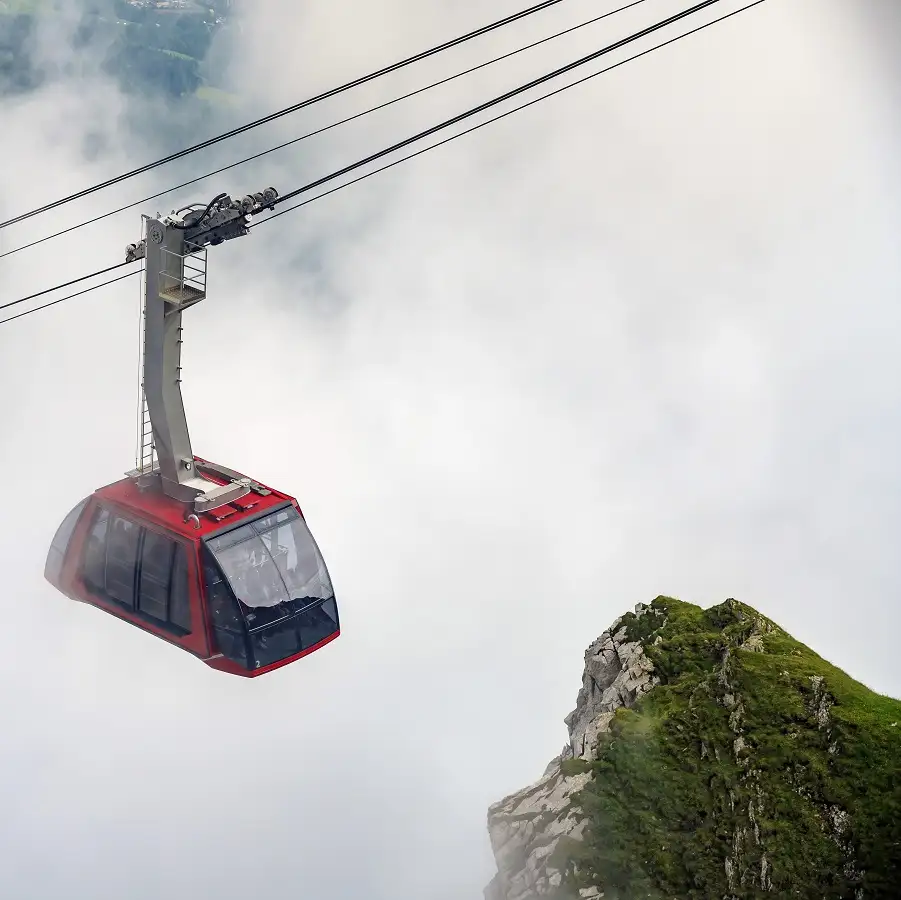
Mt Pilatus

In summer months, you can ride the steepest rack-railway in the world at a gradient of nearly 48 percent from Alpnachstad up the giant mountain of Mt Pilatus that looms over the city of Lucerne. In winter you can glide up the other side of the mountain on a cable car from Kriens. The highest point, Tomlishorn, with superlative views of Lake Lucerne, is only 30min on foot from the hotels and restaurants near the top.

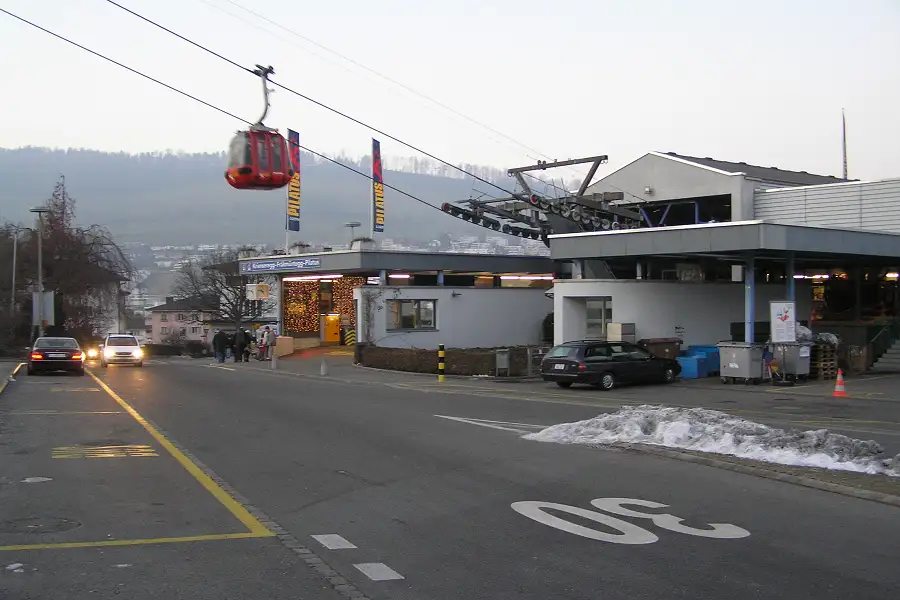
Mt Pilatus

Early Morning to Mid-Day — Mt Pilatus

In summer months, you can ride the steepest rack-railway in the world at a gradient of nearly 48 percent from Alpnachstad up the giant mountain of Mt Pilatus that looms over the city of Lucerne. In winter you can glide up the other side of the mountain on a cable car from Kriens. The highest point, Tomlishorn, with superlative views of Lake Lucerne, is only 30min on foot from the hotels and restaurants near the top.

Kriens-Pilatus Cable Car Station

Early Evening/Evening — East Bank, Self Guided

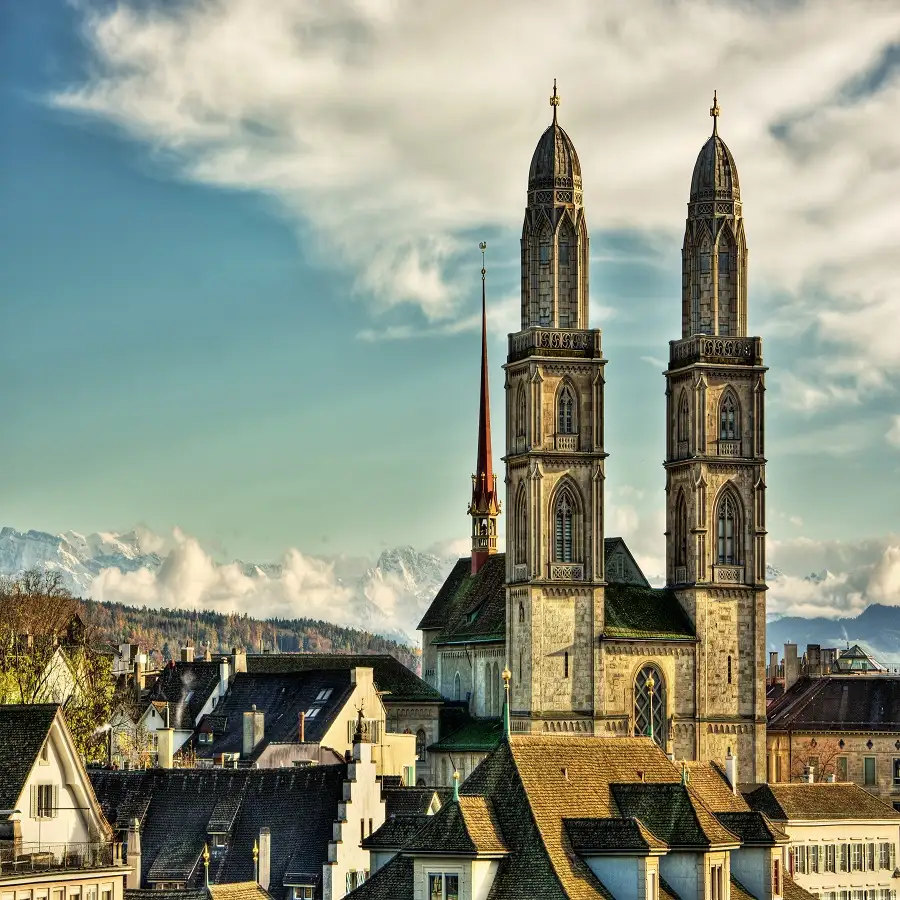
Explore the environs of the left bank of the Limmat River in Zurich, including, for example, Grossmünster church where the Protestant Reformation found a receptive audience, as well as the modern artistic masterpieces housed in the Kunsthaus, before settling down to a traditional hearty cheese fondue somewhere along the pedestrianized Niederdorfstrasse.

Wasserkirche

13th century church and crypt

The Gothic church is the site of the alleged martyrdom of Zurich's patron saints, Felix and Regula (they had deserted from their Roman legion in 286 and fled to Zurich before they were caught, tried and executed; after decapitation, they miraculously stood to their feet, picked up their own heads, walked forty paces uphill, and prayed before lying down in death). Behind the church is a statue of a sword-wielding Zwingli.

Kunsthaus Zürich

Art museum with major European collections from the 15th century

An absolute must for art enthusiasts. The collection begins before you even get inside: besides the main door is Rodin's vivid Gate of Hell depicting a scene from Dante's Inferno, while sculptures by Moore, Maillol, and others populate the grounds. Inside, Dutch and Flemish paintings are well represented by Rubens, Rembrandt, Hals, and others, and there's a Venetian room with works by Canaletto and El Greco. The collection of 20th-century art is one of the best in the world, with a selection of pop, concrete, and abstract expressionist art headlined by Warhol, Rothko, Bacon, and Twombly. Cubism, Fauvism, Dada, and Surrealism haven't been forgotten either. There are plenty of examples too of Picasso, Chagall, and Kandinsky, plus two canvasses by Monet, in addition to works by Van Gogh, Gauguin, and Cezanne, along with the largest Munch collection outside of Norway.

image

Day 4

Zurich

image

Day 5

Zurich to Interlaken

Day 5

Zurich to Interlaken

icon
icon
icon
icon
icon

9:00 AM - 11:30 AM

Old Town Zurich Tour

During this 2.5-hour private walking tour, you will learn how Switzerland became Switzerland, and why Zurich is its most populated and important city. The walk towards the lake will take you to the Lindenhof, where you will enjoy a marvelous view of the Limmat all the way over to the Grossmünster. From there you will head to the Fraumünster, passing by St. Peter's Church, which bears the biggest clock face in Europe. Passing by the side of the city's Grossmünster, you will walk from the Lake to the Niederdorfstrasse, where you will experience the focal point of Zurich's restaurants and bars.

Old Town Zurich Tour

9:00 AM - 11:30 AM — Old Town Zurich Tour

During this 2.5-hour private walking tour, you will learn how Switzerland became Switzerland, and why Zurich is its most populated and important city. The walk towards the lake will take you to the Lindenhof, where you will enjoy a marvelous view of the Limmat all the way over to the Grossmünster. From there you will head to the Fraumünster, passing by St. Peter's Church, which bears the biggest clock face in Europe. Passing by the side of the city's Grossmünster, you will walk from the Lake to the Niederdorfstrasse, where you will experience the focal point of Zurich's restaurants and bars.

Afternoon — West Bank, Self-Guided

A wander around the West Bank of Zürich's Limmat River will help you experience the city's development over the centuries, from its iconic Fraumünster church, the rise of its famous banking industry around Paradeplatz, its associations with the Irish writer James Joyce, and its impact on modern sporting history at the FIFA World Football Museum.

Schweizerisches Landesmuseum (Swiss National Museum)

Museum displaying Swiss history

 Housed in a purpose-built mock-Gothic castle, the museum is often visited just to marvel at its architecture, but actually, this massive building has such superbly presented state-of-the-art displays on the history of the Swiss Confederation that you're sure to find something here that's worth at least an hour or two. If there's one thing the Swiss do, it's that they don't skimp on culture, so you can expect excellent value for money here.

James Joyce Foundation

Museum dedicated to the great Irish writer, James Joyce, wrote Ulysses during his wartime exile in Zurich from 1915-19

Museum dedicated to the great Irish writer, James Joyce, wrote Ulysses during his wartime exile in Zurich from 1915-19

FIFA World Football Museum

Modern museum with over 1000 displays on football (soccer)

Covering three floors in total, the museum traces the history of the game, FIFA, and both men's and women's World Cup competitions. Football junkies will delight in the details and memorabilia like old programs, shirts, boots and footballs, and even an unopened bottle of champagne from England's 1966 World Cup celebrations.

3:55 PM — Taxi to Zurich Rail Station

Zurich taxis are generally reliable and honest, so this is cheaper than a pre-arranged transfer. If you are picked up one hour prior to departure, you should have plenty of time to catch your train.

17:02 - 17:58, 18:04 - 18:57 — Rail to Interlaken

A Swiss Travel Pass for this two-hour and fifteen-minute train journey to Interlaken is included with the purchase of an itinerary. You will receive detailed instructions for the trip and a translation and explanation of your tickets. Bern is the capital of Switzerland and the home of Toblerone chocolate.

6:57 PM — Rail Pickup, Self-Arranged Taxi

Upon arrival in Interlaken, you will exit the rail station and proceed to the taxi stand where you will find taxis waiting for arriving passengers. Taxis in Interlaken are generally reliable and honest and are less expensive than using a pre-arranged pick up service for your transfer to the hotel. Detailed arrival information and instructions for taking a taxi are provided in the Full-Length itinerary with purchase of an itinerary.

image

Day 5

Zurich to Interlaken

image

Day 6

Interlaken

Day 6

Interlaken

icon
icon

Early Morning to Late Afternoon

Jungfrau

Journey directly through the famous Eiger Mountain to what the Swiss called "The Top of Europe", the icy, windswept gap in the mountain ridges known as Jungfraujoch at 3,454m/11,332ft just below the summit of Jungfrau. The train ride to the top is not cheap, but it's the highest train station in Europe and definitely an unforgettable experience.

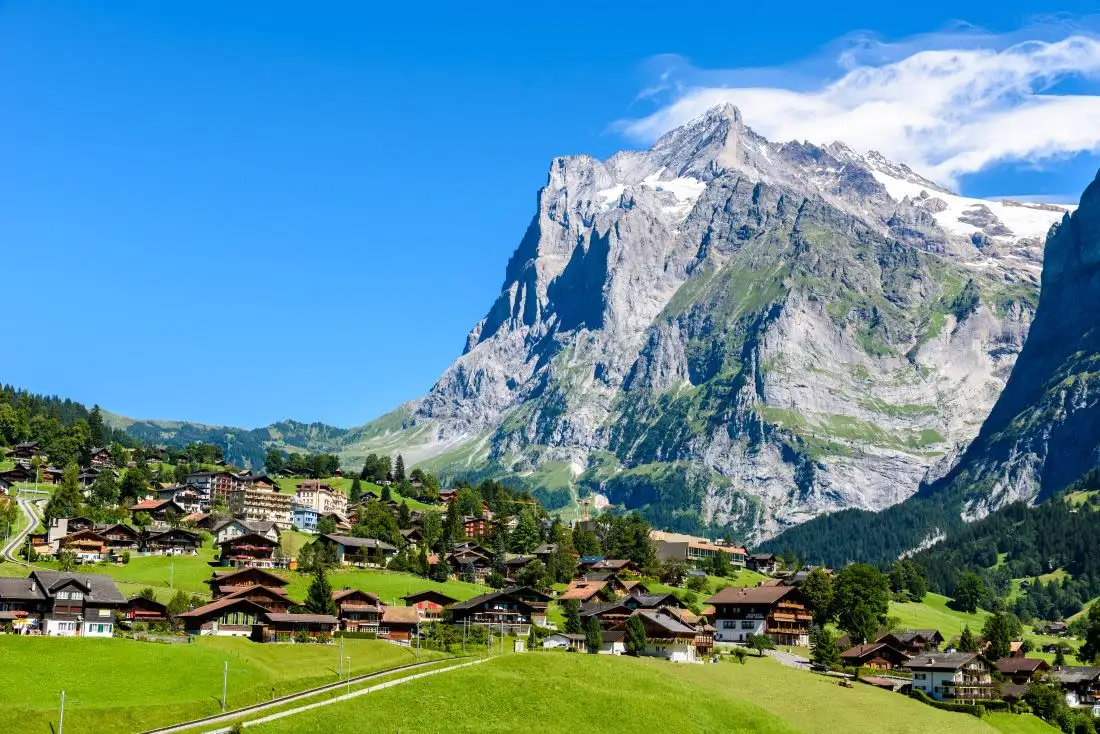
Jungfrau

Early Morning to Late Afternoon — Jungfrau

Journey directly through the famous Eiger Mountain to what the Swiss called "The Top of Europe", the icy, windswept gap in the mountain ridges known as Jungfraujoch at 3,454m/11,332ft just below the summit of Jungfrau. The train ride to the top is not cheap, but it's the highest train station in Europe and definitely an unforgettable experience.

Grindelwald

Village in the Bernese Alps

Village in the Bernese Alps that is considered to be the gateway to the Jungfrau Region. This village is popular among hikers and alpinists

Late Afternoon/Early Evening — Interlaken Historic Center

Although the overwhelming number of visitors to Interlaken come to the city to access the mountains throughout the Bernese Oberland in general and the Jungfrau region in particular, there are nevertheless a number of attractions in the town worth seeing, like the castle, the Unterseen (Old Town) district, and the Museum of Tourism.

Museum of Tourism

Museum showcasing the history of tourism in the Jungfrau region

Featuring excellent commentaries on the history of tourism in the Jungfrau Region presented in three floors of exhibits that cover everything from early transport and hotels to travel clothing and skiing. Housed in a lovely restored 17th-century timbered house, the museum includes models of early postal coaches, rack railway locomotives, bicycles and lake steamers, as well as actual historical carriages and vehicles.

Schloss Interlaken

Former Augustinian monastery turned castle with a chapel and Gothic cloister

A picturesque gem located close to the center of the city. The castle dates back to the 12th century. You can see the 14th-century bell tower along with a Gothic cloister and remains of a chapel dating from 1452. 

image

Day 6

Interlaken

image

Day 7

Interlaken to Geneva

Day 7

Interlaken to Geneva

icon
icon
icon
icon

Morning/Mid-Day

Harder Kulm Funicular

Travel by funicular from close to the Old Town in Interlaken to the Harder Kulm viewing platform at 1,322 meters above sea level from where you're able to soak up majestic panoramas of Lake Brienz and Lake Thun, or admire the Eiger, Mönch, and Jungfrau mountains. The castle-like the Harder Kulm Panorama Restaurant sometimes hosts folk music and dancing. The hike down, should you choose to go that way, will take around one hour.

Harder Kulm Funicular

Morning/Mid-Day — Harder Kulm Funicular

Travel by funicular from close to the Old Town in Interlaken to the Harder Kulm viewing platform at 1,322 meters above sea level from where you're able to soak up majestic panoramas of Lake Brienz and Lake Thun, or admire the Eiger, Mönch, and Jungfrau mountains. The castle-like the Harder Kulm Panorama Restaurant sometimes hosts folk music and dancing. The hike down, should you choose to go that way, will take around one hour.

3:15 PM — Rail Dropoff, Self-Arrranged

Interlaken taxis are reliable and honest, so this is cheaper than a pre-arranged transfer. If you are picked up 45 minutes prior to departure, you should have plenty of time to catch your train.

15:59 - 16:56, 17:34 - 19:25 — Interlaken to Geneva by Rail

A Swiss Travel Pass for this approximately 3h rail journey from Interlaken to Geneva are included in the purchase of the itinerary package. Detailed directions and instructions that make the trip easy and stress-free are also included in the Full Itinerary.

7:25 PM — Taxi Transfer to Hotel

Upon arrival in Geneva, you will exit the rail station and proceed to the taxi stand where you will find taxis waiting for arriving passengers. Taxis in Geneva are generally reliable and honest and are less expensive than using a pre-arranged pick up service for your transfer to the hotel. Detailed arrival information and instructions for taking a taxi are provided in the Full-Length itinerary with purchase of an itinerary.

image

Day 7

Interlaken to Geneva

image

Day 8

Geneva

Day 8

Geneva

icon
icon
icon
icon

9:00 AM - 11:00 AM

Highlights Walking Tour

Your private guide will pick you up from your hotel and take you for a 2-hour walk through the center of Geneva. On this walk, you will visit Bastions Park where you’ll see the Reformation Wall, built in 1909 to celebrate religious reform in Europe. You'll discover special places related to people like Jean Calvin and Jean-Jacques Rousseau, or even presidents of the United States like Woodrow Wilson or Bill Clinton. You will also visit the peaceful Old Town with its majestic St. Peter’s Cathedral, the Jardin d’Anglais, to admire one of Patek Philippe’s most famous works, and the surprising, delightful Flower Clock. The tour will end at the Nations Park, where you will see the United Nations Organization Headquarters.
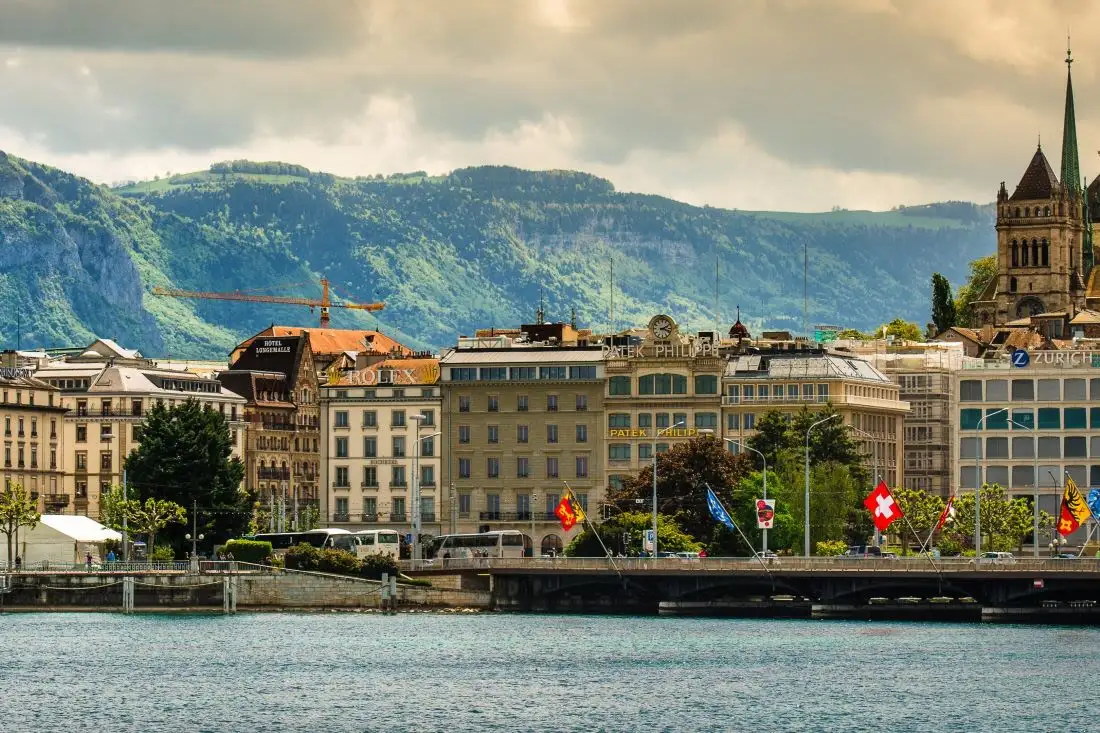
Highlights Walking Tour

9:00 AM - 11:00 AM — Highlights Walking Tour

Your private guide will pick you up from your hotel and take you for a 2-hour walk through the center of Geneva. On this walk, you will visit Bastions Park where you’ll see the Reformation Wall, built in 1909 to celebrate religious reform in Europe. You'll discover special places related to people like Jean Calvin and Jean-Jacques Rousseau, or even presidents of the United States like Woodrow Wilson or Bill Clinton. You will also visit the peaceful Old Town with its majestic St. Peter’s Cathedral, the Jardin d’Anglais, to admire one of Patek Philippe’s most famous works, and the surprising, delightful Flower Clock. The tour will end at the Nations Park, where you will see the United Nations Organization Headquarters.

Reformation Wall

A monumental reminder of Geneva’s history and influence during the Reformation.

The men depicted on the wall are the main protagonists of the Reformation, John Calvin, Willian Farel, Theodore Beza, and John Knox. Engraved on the wall is the Genevan motto “Post Tenebras Lux” which translates to “light after darkness.”

Mid-Day — Old Town

Geneva’s Old Town, overlooking Lake Geneva, is a winding maze of narrow streets and small squares that are filled with cozy cafes and quaint restaurants. At the very center of the Old Town, or Vieille Ville, is Bourg-de-Four Square where the ancient Romans used to trade goods in the marketplace. The Maison Tavel, St. Pierre’s Cathedral, and the Old Arsenal are among some of the top places to visit in the city’s historic Old Town area. Be sure to explore the rich history concentrated in this part of the city.

Bourg-de-Four Square

City Square

Geneva's oldest square that is filled with high-end shops, cafes with patios & fountains.

Reformation Wall

A monumental reminder of Geneva’s history and influence during the Reformation.

The men depicted on the wall are the main protagonists of the Reformation, John Calvin, Willian Farel, Theodore Beza, and John Knox. Engraved on the wall is the Genevan motto “Post Tenebras Lux” which translates to “light after darkness.”

Afternoon/Late Afternoon — United Nations, Self-Guided

Geneva is home to the United Nations European office, as well as the headquarters of many international and non-governmental organizations, and even the birthplace of the Red Cross. In the international area, you can find three unique but very different museums – the Red Cross and Red Crescent Museum, the Ariana Museum, and the ICT Discovery. All of these museums are within walking distance of the United Nations European Headquarters.

Entrance to UN

The United Nations Office at Geneva

The UNOG encompasses an array of offices dedicated to economic and social development. It is the UN hub for delivery and distribution of humanitarian aid as well as a force that upholds human rights around the world. Today more than 25,000 delegates pass through the center each year.

Ariana Museum

Former mansion converted into a cermanic museum

The 1880s Neo-Baroque mansion has been converted into the Ariana Museum which is dedicated to ceramics and glassware from Europe to the Middle and the Far East. The interior of this museum is elaborately decorated with a vaulted ceiling and a great hall with bold colonnades. 

Early Evening/Evening — Dinner Cruise

On this Dinner Cruise you will join the Eldora Prestige team aboard the “Savoie” for a refined dining experience. The “Savoire,” originally built in 1914, has been restored to its previous Belle Epoque status to create the perfect setting for a delicious dinner.

Lake Geneva

Lake

Lake Geneva (Lac Léman) is a crescent-shaped lake shared between France and Switzerland and overlooked by the Alps.

image

Day 8

Geneva

image

Day 9

Geneva to Paris

Day 9

Geneva to Paris

icon
icon
icon
icon

Early Morning to Mid-Day

Excursion to Montreux

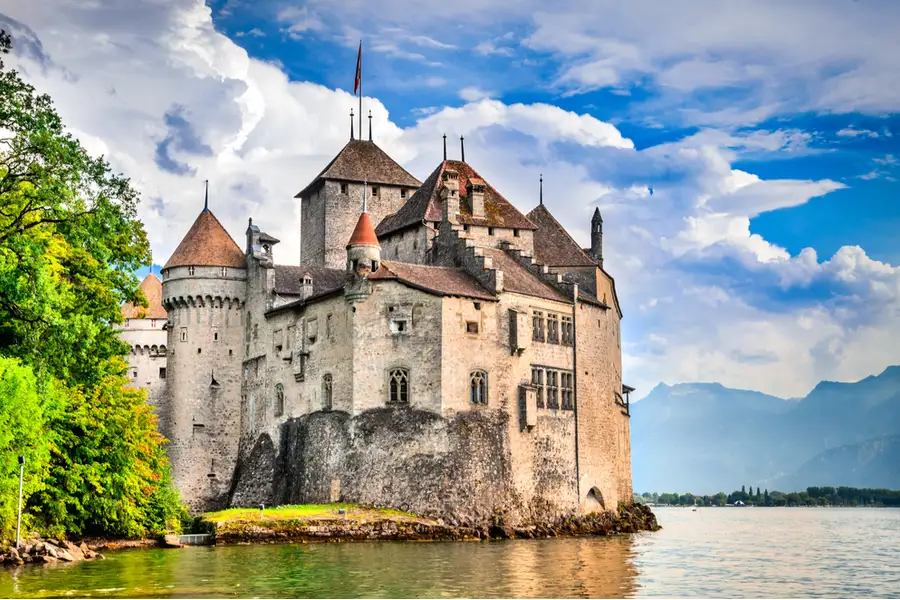
The traditional Swiss city of Montreux lies nestled among the mountains along the shore of Lake Geneva. Montreux is known for its microclimate, and the Montreux jazz festival held every year in July. Spend the day strolling along the promenade admiring not only the typical Swiss views of Lake Geneva and the Alps, but also the Mediterranean tree and Belle Époque buildings. Not far from the city is the famous Château de Chillon, a medieval castle on an island that is complete with ramparts, halls, and chapel.
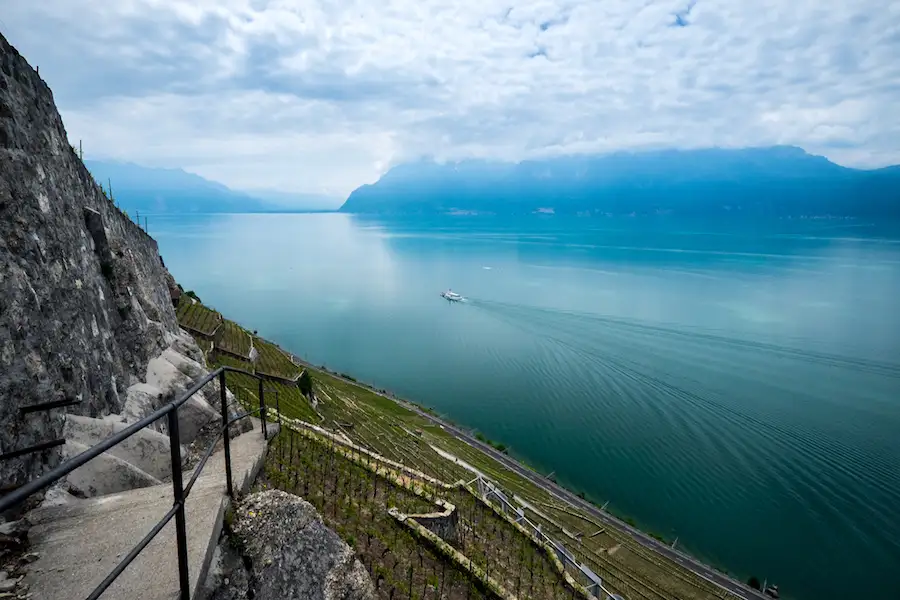
Excursion to Montreux

Early Morning to Mid-Day — Excursion to Montreux

The traditional Swiss city of Montreux lies nestled among the mountains along the shore of Lake Geneva. Montreux is known for its microclimate, and the Montreux jazz festival held every year in July. Spend the day strolling along the promenade admiring not only the typical Swiss views of Lake Geneva and the Alps, but also the Mediterranean tree and Belle Époque buildings. Not far from the city is the famous Château de Chillon, a medieval castle on an island that is complete with ramparts, halls, and chapel.

Lake Geneva

Lake

Lake Geneva (Lac Léman) is a crescent-shaped lake shared between France and Switzerland and overlooked by the Alps.

Chillon Castle

Lakeside castle that is a popular attraction near Montreux

Chillon Castle is an island castle located on Lake Geneva, south of Veytaux. It is one of the most visited castles in Switzerland. During the 16th century Wars of Religion, it was used by the dukes of Savoy to house prisoners

3:25 PM — Taxi to Geneva Rail Station

Geneva taxis are generally reliable and honest, so this is cheaper than a pre-arranged transfer. If you are picked up one hour prior to departure, you should have plenty of time to catch your train.

16:29 - 19:42 — Train to Paris

Tickets and seat reservations for this approximately 3h10min rail journey from Geneva to Paris are included in the purchase of the itinerary package. Detailed directions and instructions that make the trip easy and stress-free are also included in the Full Itinerary.

7:42 PM — Rail Pick-Up by Taxi

Paris taxis are generally reliable and honest, so this is cheaper than a pre-arranged transfer. Detailed information on navigating your way around your particular arrival station (Paris has many) and finding a taxi can be found in the Full Itinerary. If you would prefer a private transfer to your hotel, please ask your travel consultant.

image

Day 9

Geneva to Paris

image

Day 10

Paris

Day 10

Paris

icon
icon
icon
icon

9:00 AM - 1:00 PM

Paris Highlights Walking Tour

Embark on a captivating 4-hour walking tour of the center of Paris, the City of Lights, where history and modernity blend seamlessly along its enchanting streets. Starting from Odette Pastry Shop (77 Rue Galande), you will explore the heart of this dynamic city and learn how to navigate Paris as a local.

Paris Highlights Walking Tour

9:00 AM - 1:00 PM — Paris Highlights Walking Tour

Embark on a captivating 4-hour walking tour of the center of Paris, the City of Lights, where history and modernity blend seamlessly along its enchanting streets. Starting from Odette Pastry Shop (77 Rue Galande), you will explore the heart of this dynamic city and learn how to navigate Paris as a local.

Afternoon/Late Afternoon — Île de la Cité

Discover the origins of Paris on the Ile de la Cité, it's glorious heart. The original settlement from which Paris grew overwhelms with the iconic Notre-Dame Cathedral, the Revolutionary history of the Conciergerie, the numinous kaleidoscope of Sainte-Chapelle's stained glass, and a plethora of other interesting sights. This island is a captivating blend of Parisian history and beauty, offering unforgettable experiences at every turn. A visit here traverses the river Seine and centuries, perfect for capturing the spirit of Paris.

Sainte-Chapelle

It's ok, you can be dumbstruck at the incomparable stained glass of this royal chapel

The Sainte-Chapelle glows in the heart of Paris with its breathtaking stained-glass windows. Regard in awe the 15 windows, each 15m high, illustrating biblical stories in vibrant colors and intricate detail. Built in the 13th century on the Île de la Cité for Saint King Louis IX, this chapel was originally conceived to house precious Christian relics, including spines from Jesus Christ's Crown of Thorns. Visitors today, like kings and kings of yesteryear are often awestruck by the celestial light and serene ambiance that these windows transmit, casting a kaleidoscope of colors across the chapel's interior. The upper chapel, in particular, offers an ethereal experience, with its towering windows and star-studded vaulted ceiling.

Conciergerie

Explore the somber past of this Gothic riverside fortress, a heart of the Great Terror that followed the French Revolution

  The Conciergerie in Paris is a historic monument and former prison on the Île de la Cité, and an inflection point between France's royal and revolutionary pasts. Once part of the royal palace, but later transformed into a prison during the French Revolution, its most infamous inmate was Queen Marie Antoinette before her execution. Visitors can explore the medieval halls, the somber cells - even the Queen's own - while absorbing the tales of justice, power, and tragedy that echo through its walls. This site stands as a poignant reminder of France's turbulent history, here where the Revolutionary Tribunal sat from 1793, condemning some 2,600 persons to the guillotine.

Notre-Dame de Paris

Thrill at one of the most beautiful and recognized churches on Earth.

Gaze at the heart of Paris, Notre-Dame Cathedral, as iconic to the city as it is to Gothic architecture. Standing on the Île de la Cité, this 13th-century medieval masterpiece, still boasts its stunning rose windows, flying buttresses, and sculpted facades, despite a devastating fire in 2019.  The ongoing reconstruction of this center of French spirituality is captivating in itself, and people around the world await the full restoration's of this symbol's élégance, planned for December 8th, 2024.

Late Afternoon/Early Evening — Seine Cruise

Embark on an enchanting Seine River Boat Cruise that offers an unparalleled view of the City of Light. Glide past iconic landmarks such as the Eiffel Tower, Notre-Dame Cathedral, and the Louvre, all while basking in Paris' famed romantic ambiance. Whether you choose a daytime voyage to admire the city in its full glory or a nighttime excursion to see Paris illuminated against the night sky, a Seine River Boat Cruise is an unforgettable highlight that offers a new perspective on the timeless beauty of Paris.

Early Evening/Evening — Eiffel Tower

Maybe the most recognized landmark in the world, the Eiffel Tower never fails to impress and inspire.  Its elegance has always drawn crowds, and it demands a little logistical planning in order to expedite the security checks and avoid the crowds. We'll provide you with very detailed information on how to do this in the Full Itinerary, along with how to purchase tickets to speed up your visit. Let your consultant know if you wish to have your Eiffel Tower tickets purchased for you - they require a very specific time slot. We will also provide you with information on the other grand sights to visit nearby, including the famous Museum of Man across the river at Trocadero, and the Quai Branly Museum.

Quai Branly Museum

Discover a captivating collection of indigenous art in this literally verdant building.

The Quai Branly Museum, oficially known as L'Musée du quai Branly - Jacques Chirac, is a vibrant celebration of indigenous art and cultures from Africa, Asia, Oceania, and the Americas. Located on the banks of the Seine near the Eiffel Tower, this innovative museum stands out with its striking modern architecture and a lush wall garden adorning its exterior. Inside, visitors are treated to a rich tapestry of artifacts, including traditional costumes, masks, sculptures, and jewelry, all showcased in a dynamic and immersive display. The museum's commitment to cultural diversity and its extensive collection offer a unique opportunity to explore the history, art, and traditions of non-Western civilizations.

Museum of Man

Ponder some of the Big Questions while visiting this museum...

Le Musée de l'Homme in Paris's Place du Trocadéro delves into human evolution and diversity through anthropology, ethnology, and prehistory. Showcasing artifacts from prehistoric tools to modern art, it highlights humans' biological and cultural development while exploring our identities, societies, and relationship with nature. Interactive and engaging, the museum offers a profound investigation into the essence of humanity, prompting reflection on our collective past and future.

Palais de Tokyo

Discovering the greatest of modern and contemporary French art in this dramatic structure

Que vous seriez un peu plus parisien(ne)... That you would be a bit more Parisian, visit the Palais de Tokyo in the 16th arrondissement, a beacon of contemporary art known for its avant-garde exhibitions and innovative art installations. Blending historical elegance with modern creativity, it offers visitors a privilaged exploration of the latest artistic expressions. Highlights include its own modernist architecture, a constantly evolving array of exhibitions showcasing everything from installations to live performances, and the Yoyo nightclub and Le Tokyo Eat for leisure and dining. Visit the Palais de Tokyo to step into an intersection of art, culture, and architecture, and let the cutting edge of contemporary art in Paris take you away.

image

Day 10

Paris

image

Day 11

Paris

Day 11

Paris

icon
icon
icon

Early Morning/Morning

Louvre Museum

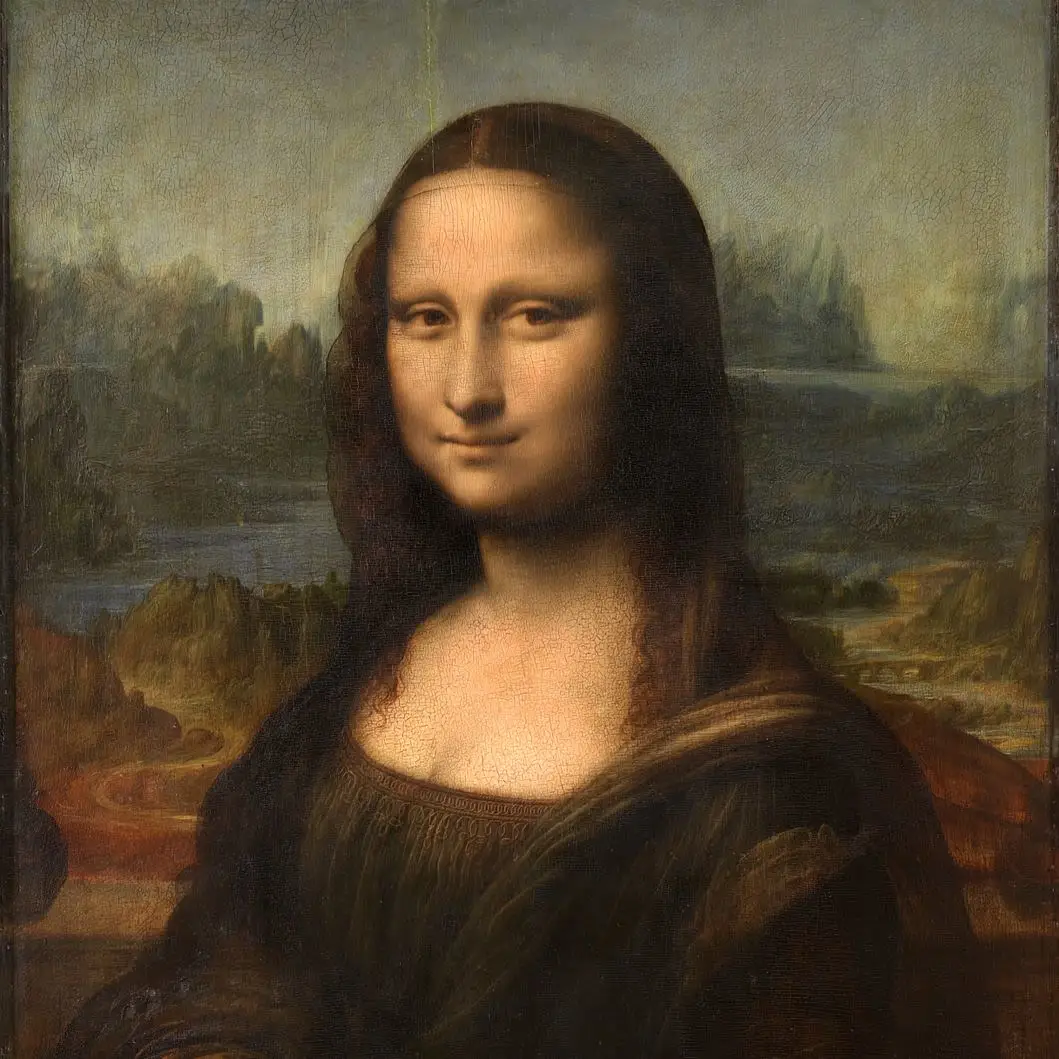
It might be the greatest art museum in the world; it certainly is the largest with over 380,000 objects; to view every single one for even a minute apiece would take 75 days.  And those descriptions still don't do the building and its collection justice. Marvel at treasures inside, including Leonardo Da Vinci's mysterious woman, the Mona Lisa, and everything from an Egyptian masterpiece of mummification to the famed Hellenistic sculpture, Venus de Milo, to patriotic French masterpieces like Delacroix’s Liberty Leading the People. Although the Louvre is vast and ever-crowded, with some strategy and a few helpful tips your visit will take in maximum artworks with minimal hassle.

Louvre Museum

Early Morning/Morning — Louvre Museum

It might be the greatest art museum in the world; it certainly is the largest with over 380,000 objects; to view every single one for even a minute apiece would take 75 days.  And those descriptions still don't do the building and its collection justice. Marvel at treasures inside, including Leonardo Da Vinci's mysterious woman, the Mona Lisa, and everything from an Egyptian masterpiece of mummification to the famed Hellenistic sculpture, Venus de Milo, to patriotic French masterpieces like Delacroix’s Liberty Leading the People. Although the Louvre is vast and ever-crowded, with some strategy and a few helpful tips your visit will take in maximum artworks with minimal hassle.

Mid-Day/Afternoon — Tuileries Gardens & Nearby Museums

Stroll in the Tuileries and attend one of the nearby museums, a classic way to spend your free hours in Paris. Originally cultivated in 1564 as the grounds for the Tuileries Palace, the gardens are the oldest in Paris. Its succession of royal owners ended and the garden became a public park in the 19th century; Parisians congregated to relax and socialize beside the fountains and leafy horse chestnut trees - they still do today. The Musée de l'Orangerie, in the Western corner of the gardens, exhibits many Impressionist and 20th-century artworks, including Claude Monet’s famous water lilies.

Tuileries Garden

Relax in the beautiful Tuileries Gardens, an oasis of manicured landscapes and historic statues in the heart of Paris.

The Tuileries Gardens, located next to the Louvre Museum, offer a peaceful retreat amidst the bustling city. Originally created as the royal gardens for the Tuileries Palace in the 16th century, they represent a classic example of French garden design. Visitors can marvel at the array of statues, including works by Rodin and Maillol, stroll along its perfectly aligned trees and flowerbeds, and enjoy panoramic views of the Seine and the Eiffel Tower.

Museum d'Orsay

Soak it all in at the Musée d'Orsay, a former Beaux-Arts railway station transformed into a stunning showcase of Impressionist and Post-Impressionist masterpieces.

The Musée d'Orsay, housed in an elegantly converted railway station, offers a world-renowned collection of Impressionist and Post-Impressionist art, featuring works by masters like Monet, Van Gogh, and Renoir. Its unique architecture, with grand clocks and sweeping galleries, complements the diverse array of sculptures, paintings, and decorative arts on display. A visit to the Musée d'Orsay is not just a tour of art history, but an immersive experience in a space where the past and present merge beautifully.

Orangerie

Let your vision swim with Monet's Water Lilies and other Impressionist artwork at the Musée de l'Orangerie

The Musée de l'Orangerie, nestled in a corner of the Tuileries Gardens, exhibits the stunning "Water Lilies" series by Claude Monet. This series of large-scale paintings, designed specifically for the two oval rooms they inhabit, offers an immersive experience into Monet's impressionist vision of his garden at Giverny. Beyond Monet, the museum boasts the Jean Walter and Paul Guillaume collection, featuring masterpieces by renowned artists such as Renoir, Cézanne, Matisse, Picasso, and Modigliani.   

Early Evening/Evening — Arc de Triomphe

The Arc de Triomphe de l'Étoile is an enduring icon of Paris and offers a spectacular view across the city. In fact, some people say the best view of Paris is from the Arc de Triomphe, as the sweeping vista found at the top includes the Eiffel Tower. 'De l'Étoile' or 'star' refers to the junction on which the Arc de Triomphe stands. This is the meeting point of 12 straight avenues including the Avenue des Champs-Élysées, famous for its theatres, cafés, and luxury shops, and the inspiration for the catchy, eponymous song by Joe Dassin. Although this area of Paris bustles with shoppers, tourists, and commercial enterprises there is still much to explore, see, and do here, and some secret places to be found away from the crowds.

Arc de Triomphe

Ascend one of the most iconic monuments in the world, and view Paris from this beloved symbol of France

L' Arc is not just a symbol of French pride and triumph. Yes, this monument crowning the western end of the Champs-Élysées honors those who fought and died in the French Revolutionary and Napoleonic War. However, it also commorates the horrific losses of World War I with the Tomb of the Unknown Soldier.  Your visit here can be surprisingly poignant. Visitors can ascend to the top for panoramic views of the City of Lights below, whose energy somehow rotates around this reminder that there is a little sobriety in every party.

Grand Palais

Structure built for the Universal Exhibition in 1900, now a children's science museum and art gallery.

The Grand Palais, built for the Universal Exhibition in 1900, boasts a large glass and iron roof. It is home to the Palais de la Découverte science museum for children - be aware this museum only offers information in French, which greatly reduces its value to English speakers. Another wing of the building features rotating art exhibitions, which are usually curated by theme (such as The Moon or Soviet Art). Look on the website https://www.grandpalais.fr/en if you are interested in finding out what's on during your time in Paris. You may purchase tickets on site should you choose to attend.

Petit Palais

Pop in for a Rembrandt painting and discover a secret garden in one of Paris's "hidden gems".

The Petit Palais in Paris, built for the 1900 Exposition Universelle, is a Beaux-Arts architectural marvel that houses the City of Paris Museum of Fine Arts. With free admission to its permanent collections, it showcases an extensive array of artworks from ancient to early 20th century, including notable pieces by Rembrandt and Courbet. Its stunning architecture, complete with a grand dome and a serene courtyard garden, makes it a cultural and visual haven. Located just off the Champs-Élysées, the Petit Palais is a key destination for art enthusiasts.

Champs-Elysées

Experience a promenade on the most famous road in the world!

Stretch your legs on the Avenue Champs-Élysées, an emblem of French prestige and elegance. On this unparalleled thoroughfare stretching from Place de la Concorde to the Arc de Triomphe waits a parade of luxury shops, fine dining, and lush greenery, offering an unparalleled urban experience. On the "Champs" you can indulge in world-class shopping, savor exquisite French cuisine at chic cafés, and marvel at the architectural beauty of illustrious building.

image

Day 11

Paris

image

Day 12

Paris

Day 12

Paris

icon
icon

Early Morning to Mid-Day

Palace of Versailles

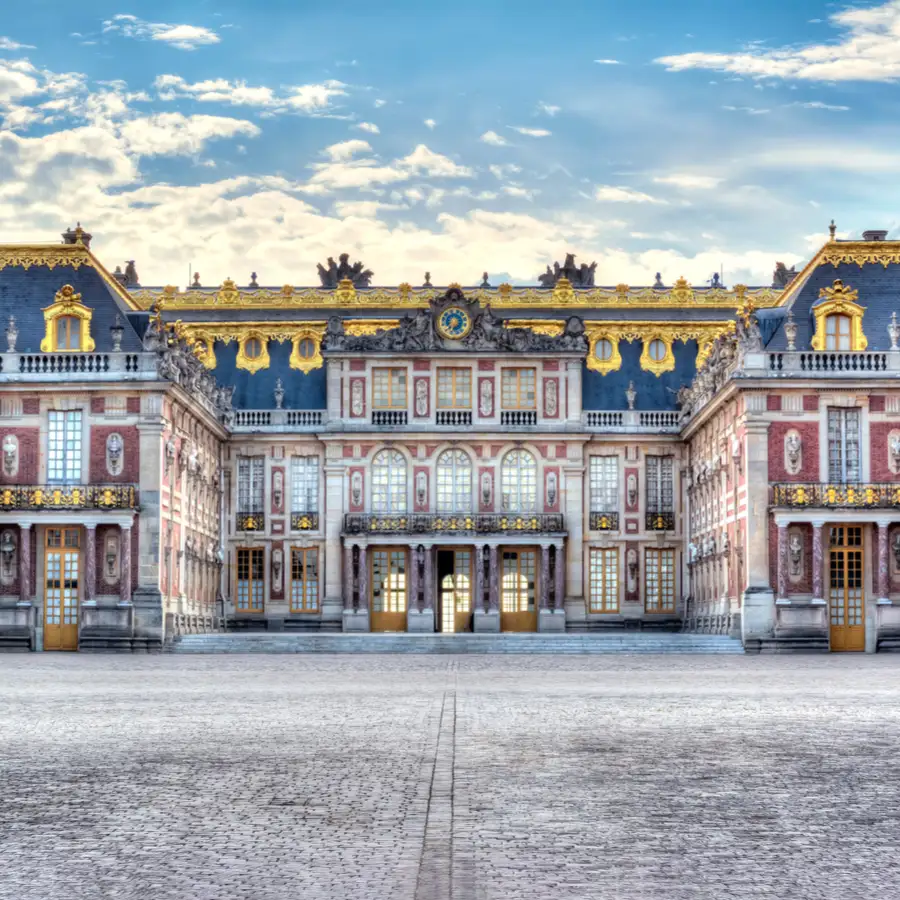
The Château of Versailles, a symbol of the grandeur of French monarchy, invites visitors to explore its lavish history and architectural majesty. From the spellbinding elegance of the Hall of Mirrors, where the Treaty of Versailles was signed, to the vast, meticulously manicured Gardens the pinnacle of French garden design, every corner tells a story of opulence and power. Discover the intimate escapes of royalty at the Grand and Petit Trianon, and marvel at the divine beauty of the Royal Chapel, a masterpiece of Baroque architecture.

Palace of Versailles

Early Morning to Mid-Day — Palace of Versailles

The Château of Versailles, a symbol of the grandeur of French monarchy, invites visitors to explore its lavish history and architectural majesty. From the spellbinding elegance of the Hall of Mirrors, where the Treaty of Versailles was signed, to the vast, meticulously manicured Gardens the pinnacle of French garden design, every corner tells a story of opulence and power. Discover the intimate escapes of royalty at the Grand and Petit Trianon, and marvel at the divine beauty of the Royal Chapel, a masterpiece of Baroque architecture.

Main Palace of Versailles

There are palaces, and then there is Versailles...

Enlarged by for Emperor Louis XIV as an escape from the dreary political tension of Paris, Versailles might have been the most luxurious palace in the world.  Even now, the building stuptifies with its grandeur and elegance, a stunning representation of the French monarchy's opulence. The famous Hall of Mirrors is just one of many, many (2300!)  stunning rooms, only a small percentage of which are open for display.  It might be too much, or one visit might never be enough.

The Queen's Hamlet

Imagine living like the "peasants" here?

Desiring something different, Queen Marie Antoinette had a hamlet erected where she could supervise servants milking cows, tending pigs, collecting eggs from chickens.  She dressed down to play her part, but apparently never got her hands dirty, as far as we know.  Her peasant cottage only had two living rooms, a billiard room, a dining hall, and a library.  If you are accustomed to palaces, only two living rooms is roughing it.  Lest the queen got tired of it all, she could return to the Petit Trianon, a beautiful chateau built on the grounds of the Grand Trianon, which was the retreat chateau built on the grounds of the Palace of Versailles, which was a retreat from the Louvre Palace in Paris.

Parc de Versailles

Feel like a king, feel like a queen, hopefully you'll feel good looking out across the park

The Parc de Versailles, features some 800 hectares of manicured lawns, stunning fountains, and the Grand Canal, all masterminded by André Le Nôtre. Highlights include the Neptune and Apollo Fountains, the Trianon Palaces, and the Queen's Hamlet. This vast garden symbolizes royal power, but you are welcomed to enjoy yourself on these pleasure grounds.

Late Afternoon to Evening — Latin Quarter

If you are looking for a breezy stroll through Paris, look no further than the Latin Quarter in the 5th arrondissement, on the Left Bank. The area’s many cafés and restaurants are laid-back and welcoming, and filled with Parisians, students, and tourists alike. There are several attractions to visit, among them the Pantheon and the Cluny Museum. As you adventure through the district you will discover the Sorbonne, one of the most illustrious universities in the world.  For more visceral pleasure romp down the major shopping streets like Rue Mouffetard.

Musée de Cluny

Step back into the Middle Ages at the Musée de Cluny in Paris, where ancient art and history come alive

The Musée de Cluny, officially known as the Musée National du Moyen Âge, is a hidden gem located in the Latin Quarter of Paris. This museum, housed in a 15th-century abbey, showcases a remarkable collection of medieval art, including the famous "Lady and the Unicorn" tapestry series. The museum also contains a variety of sculptures, stained glass, and artifacts that illuminate the richness of medieval culture. Its unique blend of architectural styles, from ancient Roman baths to Gothic structures, makes it a captivating journey through time and an essential destination for those fascinated by the medieval era.

Sorbonne University

Ponder along with the greats from Aquinas to Foucault and back in one of the greatest universities in the world

Put on your thinking caps and visit the Sorbonne, a beacon of intellectual achievement in the heart of the Latin Quarter that embodies centuries of academic excellence. This prestigious university, founded in the 13th century, is the source of many world-changing theories and theorists. Wander through its historic courtyards and grand lecture halls, where some of the world's most brilliant minds have studied and taught. The Sorbonne is not just a place of learning; it's a symbol of the enduring relationship between Paris and the pursuit of knowledge.

Panthéon

Guarding the remains of some of France's greatest luminaries in typical French splendour.

Pay tribute to intellectual and artistic founders of modern France at the Panthéon, a neoclassical building in the Latin Quarter, originally a church and now a mausoleum for France's eminent personalities like Voltaire and Marie Curie. Known for its imposing architectural beauty, it features significant art, sculptures, and the famous Foucault's pendulum. Beyond its role as a tribute to French intellectual and cultural heritage, the Panthéon offers visitors stunning views of Paris from its dome, blending historical exploration with scenic beauty.

National Museum of Natural History

Peruse the wonders of the natural world at the National Museum of Natural History in Paris, a treasure trove of biodiversity.

Nestled in the Jardin des Plantes, the National Museum of Natural History is a must-visit for nature enthusiasts. Founded in the 17th century, it boasts a rich collection that spans paleontology, mineralogy, and botany. The museum is renowned for its Gallery of Evolution, showcasing thousands of animal specimens in a grand, historic setting, and provides a unique insight into the diversity and complexity of life on Earth, making it a notable and educational experience for all ages.

image

Day 12

Paris

image

Day 13

Paris

Day 13

Paris

icon
icon
icon

Morning

Hôtel des Invalides

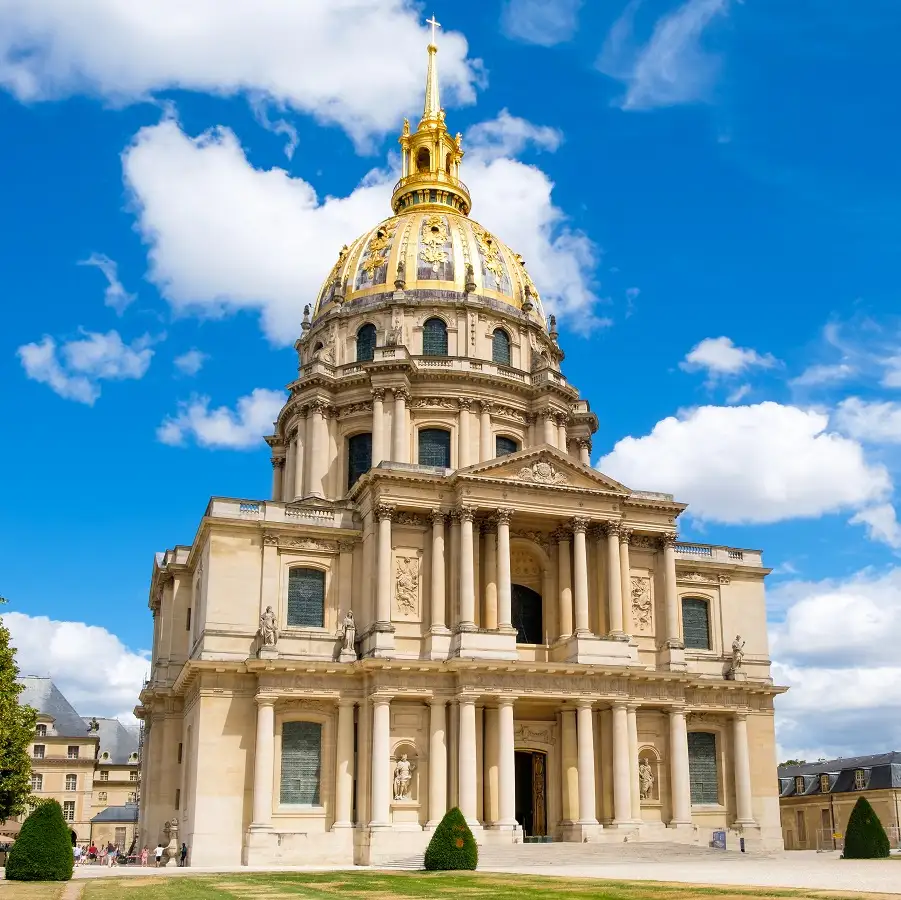
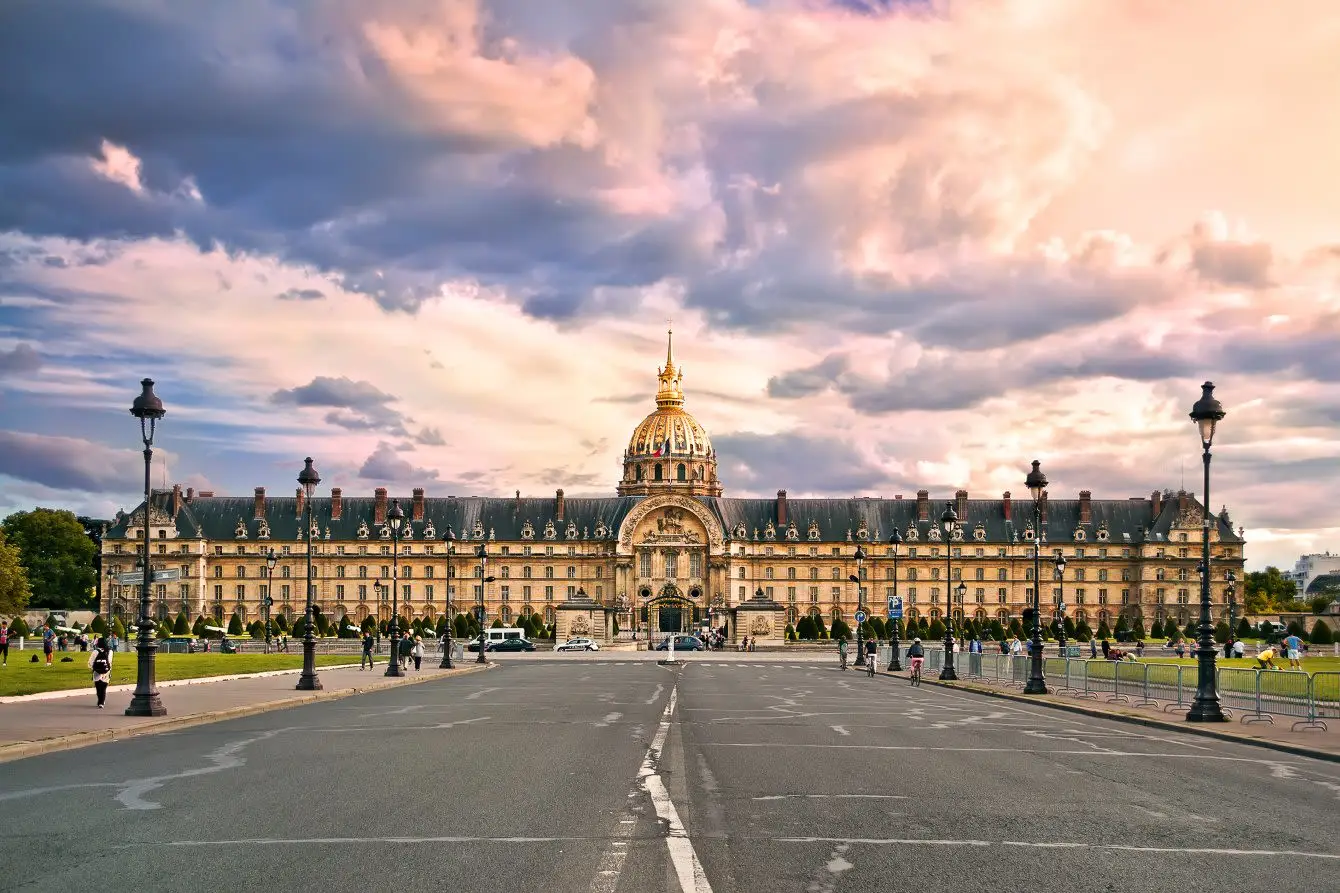
The Eglise du Dome Church close to the Eiffel Tower is where you observe the gilded tomb of the historic French General and Emperor, Napoleon, but his bones are just a miniscule part of the gigantic Hôtel des Invalides housing the French National Army Museum. Spend some time learning about French warfare from the earliest times to the wax and wane of the Napoloenic Wars and on to the modern French army and a new section dedicated to the life of General Charles de Gaulle.
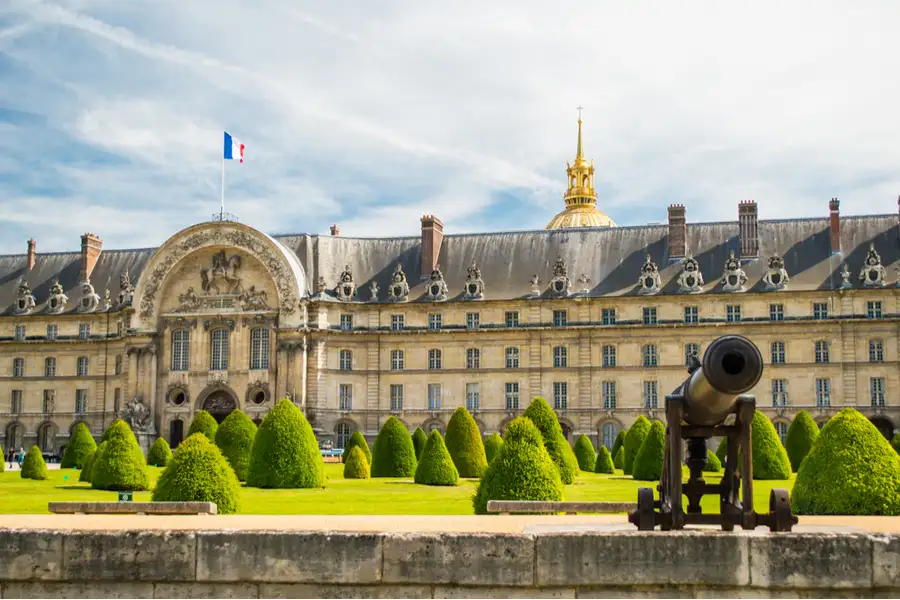
Hôtel des Invalides

Morning — Hôtel des Invalides

The Eglise du Dome Church close to the Eiffel Tower is where you observe the gilded tomb of the historic French General and Emperor, Napoleon, but his bones are just a miniscule part of the gigantic Hôtel des Invalides housing the French National Army Museum. Spend some time learning about French warfare from the earliest times to the wax and wane of the Napoloenic Wars and on to the modern French army and a new section dedicated to the life of General Charles de Gaulle.

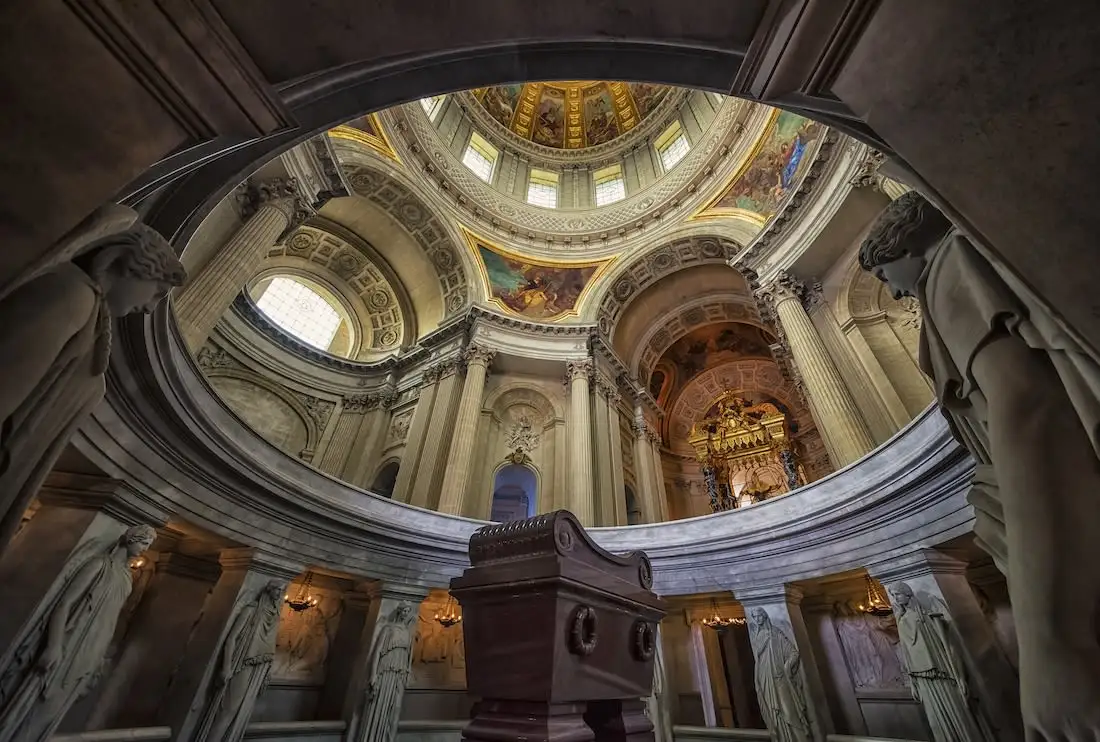
Napoleon's Tomb

Discover the tomb of one of history's most fearsome generals, and a controversial figure of the 19th century.

Reflect at the sarcophagus resting underneath the dome of Les Invalides' church - Napoleon's tomb is as still as his life was frenetic. Crafted from red quartzite and set upon a green granite base within a circular crypt, Napoleon's sarcophagus is surrounded by a series of statues representing his victories and achievements. The entire ensemble, designed with solemn grandeur, reflect both the power and complexity of his legacy. But visitors can come and go please, this great general commands no one now.

The Army Museum

Exploring the martial history of France in this regal strucure

Gather your forces and lay touristic seige to the French Army Museum and its immersive expositions of French military history from medieval times to the present. Will you conquer the extensive Medieval Collections, Napoleon Bonaparte's grand tomb, and detailed exhibits of the World Wars, or will they conquer you? These exhibts and more offer insights into the evolution of warfare, strategic intracacies, and personal narratives of conflict. A visit to the Army Museum encourages discussion about the contradictions and complexities of war, one of the most important, and disturbing, traits of our humanity.

Rodin Museum

Let the greatest sculptures of the 19th and 20th centuries inspire you

The remarkable sanctuary of art and beauty that is the Musée de Rodin displays the greatest works of the French sculptor Auguste Rodin. Nestled in the exquisite Hôtel Biron, and its serene garden, this museum invites visitors to discover the profound depth of Rodin's creativity. Thrill at the world-reknowned pieces "The Thinker" and "The Gates of Hell," among others, each piece exploring  human emotion and thought through its dynamic forms. Wander through the garden paths to encounter these and other masterpieces in an intimate setting, where the fusion of art and nature crafts a truly unforgettable experience.

2:30 PM - 6:00 PM — Montmartre Food Tour

Embark on a three-hour discovery of Parisian gastronomy. A professional guide will lead you to quintessential French offerings, and you will leave this tour satiated and a little bit more the connoisseur, not just of the food and wine, but also of Montmartre. Thanks to its bohemian past, the restaurants of Montmartre offer a special ambiance both charming and historical. In the past, windmills, farming areas and art studios were prominent features of the Montmartre landscape, but now the area is full of first-class wine bars, fine-dining restaurants and rare shops, all adding to its appeal as one of the best and most pleasurable food destinations in the world.

Early Evening/Evening — Bastille District

The famous Bastille fortress where the French Revolution began may no longer exist, but you can still gain a sense of the history of those remarkable times around Place de la Bastille and the famous working-class faubourg (suburb) surrounding it, especially along Faubourg-St-Antoine and the streets emanating off it. At the Cimetiere de Picpus you can also visit the tomb of General Lafayette. Don't miss the idyllic 4.5km Promenade plantée, an elevated walkway built from a former rail viaduct, which ends close to the picturesque urban park at Bercy Village. Finally, there's France's only surviving medieval royal residence at Vincennes a short metro ride away.

La maison du jardinage, Parc Bercy

Teaching Parisians urban gardening in a quaint structure in the Parc de Bercy.

The restful Maison du Jardinage in the Parc de Bercy serves tourists and locals alike, teaching everyone the ins-and-outs of growing verdure and even nutrious food in urban settings.  Geared towards bettering health and living conditions for Parisian citizens, the resources inside this building could help you make your home and town a greener place!

Place de la Bastille

Commemorating the French revolutions, on the site of the infamous Bastille prison

Contemplate this former site of the Bastille prison, breached on July 14th,1789. This event started the original French Revolution, the repercusssions of which still affect the daily life of French people. Take a coffee and admire the July Column (Colonne de Juillet) with the Spirit of Liberty atop it; this column also commemorates a second revolt, the July Revolution of 1830. 

image

Day 13

Paris

image

Day 14

Depart Paris

Day 14

Depart Paris

icon

To Be Determined

Airport Dropoff by Taxi

Paris taxis are generally reliable and honest, so taking a taxi is cheaper than a pre-arranged transfer. Your hotel will be happy to arrange a pick up for you. If you are picked up about 3.5 hours before your departure time, you should arrive at the airport with a little over two hours to spare. If you are leaving during rush hour, you may want to budget an extra fifteen minutes or so. There are also alternative transport instructions for buses and trains in the Full Itinerary if wish you save on the taxi fare.  line-holder  NOTE : If you're leaving from Beauvais Airport you should definitely take a shuttle bus because it's 75km/46.6mi from the city center.

Airport Dropoff by Taxi

To Be Determined — Airport Dropoff by Taxi

Paris taxis are generally reliable and honest, so taking a taxi is cheaper than a pre-arranged transfer. Your hotel will be happy to arrange a pick up for you. If you are picked up about 3.5 hours before your departure time, you should arrive at the airport with a little over two hours to spare. If you are leaving during rush hour, you may want to budget an extra fifteen minutes or so. There are also alternative transport instructions for buses and trains in the Full Itinerary if wish you save on the taxi fare.  line-holder  NOTE : If you're leaving from Beauvais Airport you should definitely take a shuttle bus because it's 75km/46.6mi from the city center.

image

Day 14

Depart Paris

What's Included In Wonders of the Alps & Paris Trip

Fork

Pre-Paid Tours and Activities:

  • Guided Walk Tour of Historic Munich
  • Private Introductory tour of the Zurich Old Town
  • Privately Guided Walking Tour of Geneva
  • Private Guided Walking Tour of the Center of Paris
  • Small Group Food Tour of Montmartre District
  • City Card for Munich, including discounts to many popular attractions
train

Pre-Paid Transportation:

  • 2nd Class Train Tickets from Munich-Zurich
  • 2nd Class Train Tickets from Genève to Paris Gare de Lyon
  • Public Transport Tickets for Munich
  • Swiss Travel Pass
train

Accommodation:

  • 2 nights at a hotel of your choice in Munich
  • 2 nights at a hotel of your choice in Zurich
  • 2 nights at a hotel of your choice in Interlaken
  • 2 nights at a hotel of your choice in Geneva
  • 5 nights at a hotel of your choice in Paris
mobile

Go Real Travel Mobile App:

  • Itinerary Plan & Reservations Info
  • Points of Interest
  • Detailed Travel Information
  • Maps & Directions

Other Trips You May Like

Trip image

10 Days

From$3675USD

Swiss Alps & Cities in Winter: A Cultural and Natural Odyssey

View Trip
Trip image

10 Days

From$3599USD

Alpine Majesty with Urban Delights - Zurich, Lucerne, Interlaken & Geneva

View Trip
Trip image

14 Days

From$4250USD

An Immersive Two-Week Trip in Beautiful Austria and Switzerland

View Trip
Trip image

14 Days

From$3885USD

Rhine and Alpine Adventures in Germany and Switzerland

View Trip
Trip image

14 Days

From$4249USD

Swiss Adventure with Germany & Italy: Lakes, Castles & Cultural Wonders

View Trip
Trip image

14 Days

From$3775USD

Alpine Enchantment: A Family Adventure Through Historic Cities & Scenic Landscapes

View Trip
Trip image

21 Days

From$5199USD

Central European Journey through Switzerland, Germany, Austria and the Czech Republic

View Trip
Trip image

10 Days

From$2639USD

Germany, Switzerland & Italy in 10 Days: A Perfect Journey

View Trip
Trip image

8 Days

From$2979USD

Culture, History, and Epic Alpine Vistas in Zurich, Lucerne, Munich

View Trip

Featured Blogs

Trip image
Europe
Romantic

16 Most Romantic Destinations in Europe

Trip image
Europe
Seasonal guide

10 European Cities to Visit in Winter

Trip image
Paris
Seasonal guide

The Best Time to Visit Paris: A Seasonal Guide

Trip image
Germany
Trip planning

How to Plan a Trip to Germany – Step-by-Step Guide

Trip image
Germany
Villages

15 Most Beautiful Towns & Villages in Germany

Trip image
Central Europe
Castles

Top 5 Castles In Central Europe

Trip image
Europe
Family

How to Plan the Perfect Family Trip to Europe

Our Customers Say It Best

Malini Dutta, Boston, Massachusetts
We can't thank you enough for the detailed plans, maps, and suggestions. It really felt that someone was holding our hands and showing us around. We had all the excitement of discovering foreign lands, with none of the problems that can happen while negotiating unfamiliar places. In fact, all the cities felt like home within a few hours of arriving and exploring.
Bev and Mark Frankel, Williamsburg, Virginia
We could not be more pleased with Go Real Travel! You took the guess work out of things like public transport but still managed to allow us the freedom to tour as we wanted. Our guides were exceptional and every time I saw a Viking Cruise tour of 25 people, I realized the quality experience we were getting with Go Real.
Marianne Strydom, Paarl, South Africa
I just wanted to thank you for organizing an amazing trip for me – I packed in so much in such a short period of time and everything was just perfect. The way you do things makes it possible to really get to know the destination, which for me as a travel agent could not have been better.
Otto Chuy, Los Angeles, California
I am still surprised how everything worked as planned, without a hitch. All instructions in your itinerary were precise and correct. Your suggestions and comments in each of the locations we went to were very helpful. All your guides, without exception, were wonderful and exactly on time.

Explore cities in more detail

old town square munich germany

Munich

Arriving in Munich, you would be forgiven for thinking you were on the set of a movie about old Bavaria. At the Old Town beer halls, barmaids laced in dirndl dresses serve up frosty Helles lager, as oom-pah music drifts across the Marienplatz square. Men in lederhosen and checked shirts merrily give toasts as they knock glasses, or steins, as they’re known here. They sit at tables laden with wurst sausage and giant pretzels oozing with herby butter. This is Germany’s Germany, a place where folk traditions never stopped, and the revelry doesn’t either. Even when it isn’t Oktoberfest, the town’s notorious beer-drinking celebration, Munich is always happy to show you a good time. Simply cast your eyes around the lavish, gilded banquet hall at the Munich Residenz, the 13th-century Wittelsbach palace. You’ll see Munich has been impressing guests for centuries. Or, swing by the BMW Museum and check out the classic German cars. They even let you sit inside to test out the new models. At the city’s English Gardens, surfers ride waves on one of the park’s rivers. Munich is filled to the brim with this kind of pure-hearted German fun.     

st peter clocktower in zurich with mountain backdrop

Zurich

Zurich is Switzerland’s biggest city, located in the center of the country’s German-speaking region. It’s this location, superbly connected to almost everywhere else by train and close to an international airport, that makes Zurich an obvious destination for tourists. Well, that’s one of the reasons. There’s also the city’s bevy of bars and restaurants, the lakeside views, and stunning architecture around every corner.Take a stroll down the Bahnhofstrasse, a street known around the world for its unrivaled shopping. Weave through crowds of shoppers as you pass rows of world-famous and exclusive brands. Zurich is a small city, but that just makes it easier to get around. Lindenhof Hill, a slight rise of land in the center, offers views across all of the town. Among the city’s most striking features are the Grossmünster towers, which can also be climbed. This is a proud, sophisticated, and elegant city.

aare river in interlaken switzerland

Interlaken

Located between two bodies of water — Lake Brienz and Lake Thun — Interlaken is the perfect place to explore the serene natural beauty at Switzerland’s heart. Interlaken is a place for those who seek adventure amid spectacular natural surrounds. Rock climbing, canyoning, bungee jumping, and paragliding are just some of the ways to fill a day here, and countless backpackers descend on the town every summer to do all of these and more. Less intense, but no less rewarding, are the many opportunities for hiking, sailing, and swimming. Or, take to the rails. At the nearby Kleine Scheidegg pass, a train runs through the snowy Swiss Alps to the highest train station on the continent. The fun here doesn’t stop at night. After a hard day of adventure, backpackers flock to the town’s many pubs and bars to soothe their aches and pains with steins of beer. Interlaken is a place where fun and excitement reign supreme and somewhere to experience Switzerland’s striking nature in the most thrilling way.

sunset over mountain alps in geneva switzerland

Geneva

Switzerland’s second-most populous city, Geneva is a place where languages, cultures, and institutions have converged for hundreds of years. Here, diplomacy and sophistication play a central role. Formerly home to the headquarters of the UN, Geneva still hosts the International Red Cross, World Trade Organization, and World Health Organization. Lake Geneva, the largest body of water in Switzerland, dominates the surrounding landscape with its calm waters and brooding presence. By the lakeside, the imposing Jet d’Eau blasts water 140 meters into the air for most of every day. As you stroll through the city’s enchanting old town, you'll find its winding streets dusted with antique shops, ancient architecture, galleries, and world-class restaurants.   Centuries of influence from countless cultures have given Geneva a special, complex identity. Travelers here can spend hours sampling food and drink from across the world. Or, simply sit by the water, and sip an Espresso while you soak up Geneva's unique and cosmopolitan vibe. 
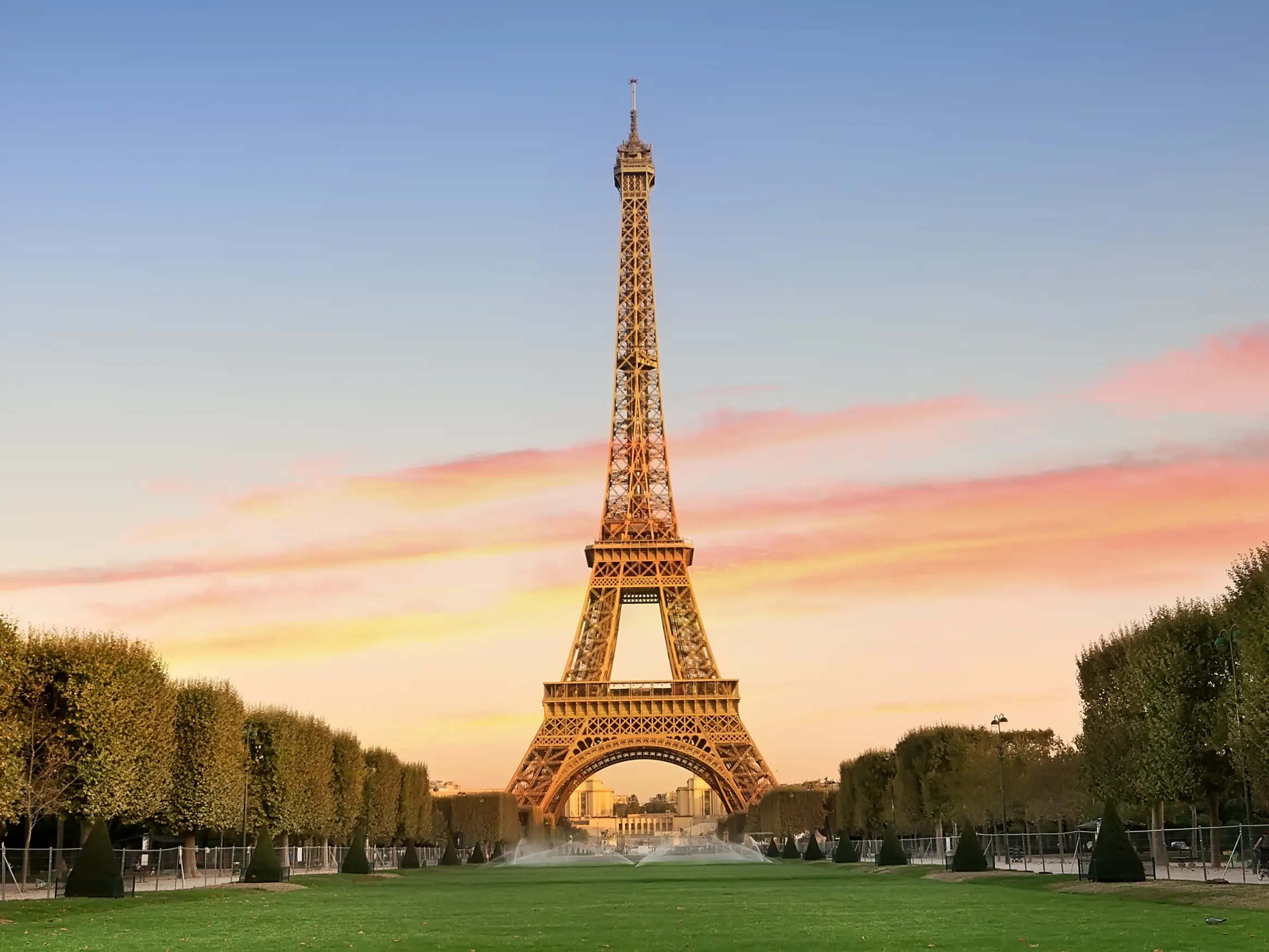
the Eiffel tower at sunset in Paris

Paris

The magic of Paris is undeniable. This is the most romantic destination in Europe, and surely the number one bucket list destination of all time. If you want to say you've traveled, you have to visit Paris at least once.  Along with classic must-sees like the Eiffel Tower and the  Sacre-Coeur, there is so much to see and do in Paris that it helps to narrow it down by interest. Fashion and shopping enthusiast? Look no further than the Galeries Lafayette, Avenue des Champs-Élysées, or the Marais. Art aficionado? Once you're done with the Louvre, make a start on the Musée d'Orsay. History buffs won't be able to walk a block without uncovering a monument to Napoleon or Louis XIV. If you visit Paris with a foodie, be warned — you'll gaze in a lot of patisserie windows, and sample your weight in croissants. Because Paris always has so much on offer, it never grows old.  At dusk, as you stroll the wide boulevards past Haussmann apartment buildings and sharply dressed Parisians, or gaze down at the city from the hill at Montmarte, you might find yourself saying 'Paris Je t' aime'. This is, after all, the City of Love.
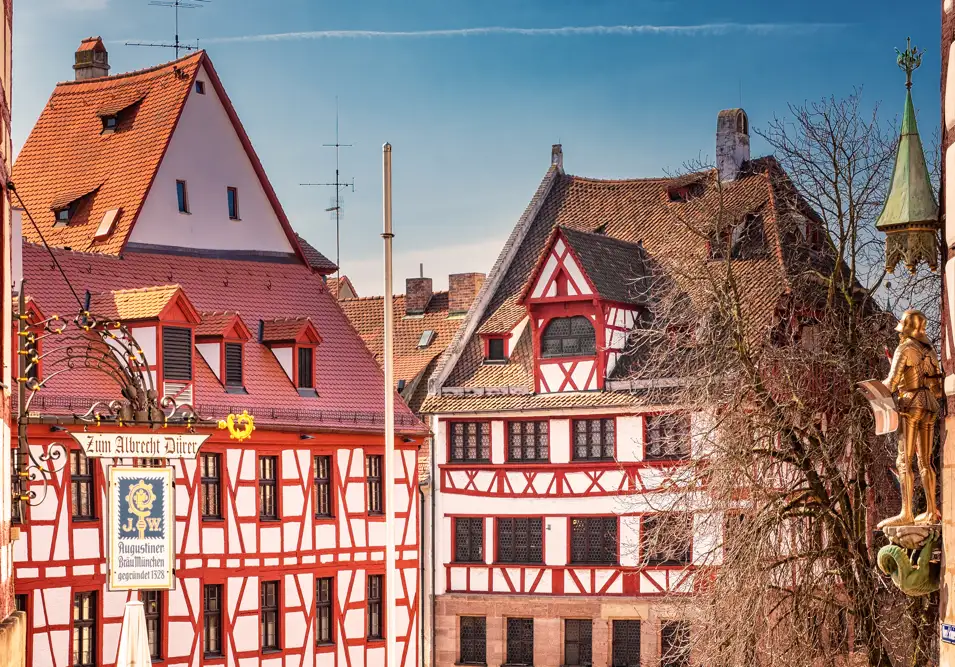
half timbered houses in nuremberg germany

Nuremberg

One of the most authentic, storied German destinations, Nuremberg's picturesque old town, glorious castle, and buzzing Christmas Market makes this city a time-true classic. The ideal gateway to old Bavaria, Nuremberg offers a primer in German history before you embark on the lovely journey through old Bavaria, known as the Romantic Road. Considered the capital of the Holy Roman Empire in the middle ages, Nuremberg would have felt like the center of the world as a procession of kings and emperors passed through its magnificent gates. When the German Renaissance came, Nuremberg was at its heart. Albrecht Dürer, the great German master artist, was born here, and Martin Luther called Nuremberg Germany's 'eyes and ears'. Skip forward a few centuries, and the city took a dark turn, as Nuremberg became a gathering point for the German National Socialists. Slightly outside of town, you can still find the Nazi Party Rallying Grounds, a sobering reminder of the not so distant past. If it all gets too heavy, you can end the day with a glass of rotbier (red beer) and mull it over. Nuremberg is a must-see for anyone who wants to delve into Germany's past.