👋

Hi! Need help planning your dream trip? 🌍

Go Real Travel Assistant

Online

Welcome! Where are you in your journey?

Pick the option that fits you best so we can route you to the right help.

Adriatic Dream: 10-Day Croatian Journey including Bosnia & Montenegro

destination-icon10 Day Tour of Split and Dubrovnik

image
arrowLightLeft
arrowLightRight
calendar-icon
10 Days 9 Nights
calendar-icon
Best Time: Jan-Dec
building-icon
Beach Lovers
family-icon
Exploring Scenic Countryside
Take a captivating 10-day adventure through Croatia’s breathtaking Adriatic coastline. Enjoy an immersive experience in Split and Dubrovnik, blending stunning landscapes, historic cities, and serene beaches. Discover the ancient Roman ruins of Diocletian's Palace, the lively atmosphere of Hvar Island, and the tranquil beauty of Lokrum Island. Wander through the narrow, cobblestone streets of Dubrovnik, explore the majestic Elafiti Islands, and take exciting day trips to Bosnia and Montenegro. With private guided tours and comprehensive travel guidance through our mobile app, you will uncover the rich history, culture, and natural beauty.
  • Marvel at the ancient Roman architecture in Split's Diocletian's Palace.
  • Relax on the pristine beaches and enjoy the lively vibe on Hvar Island.
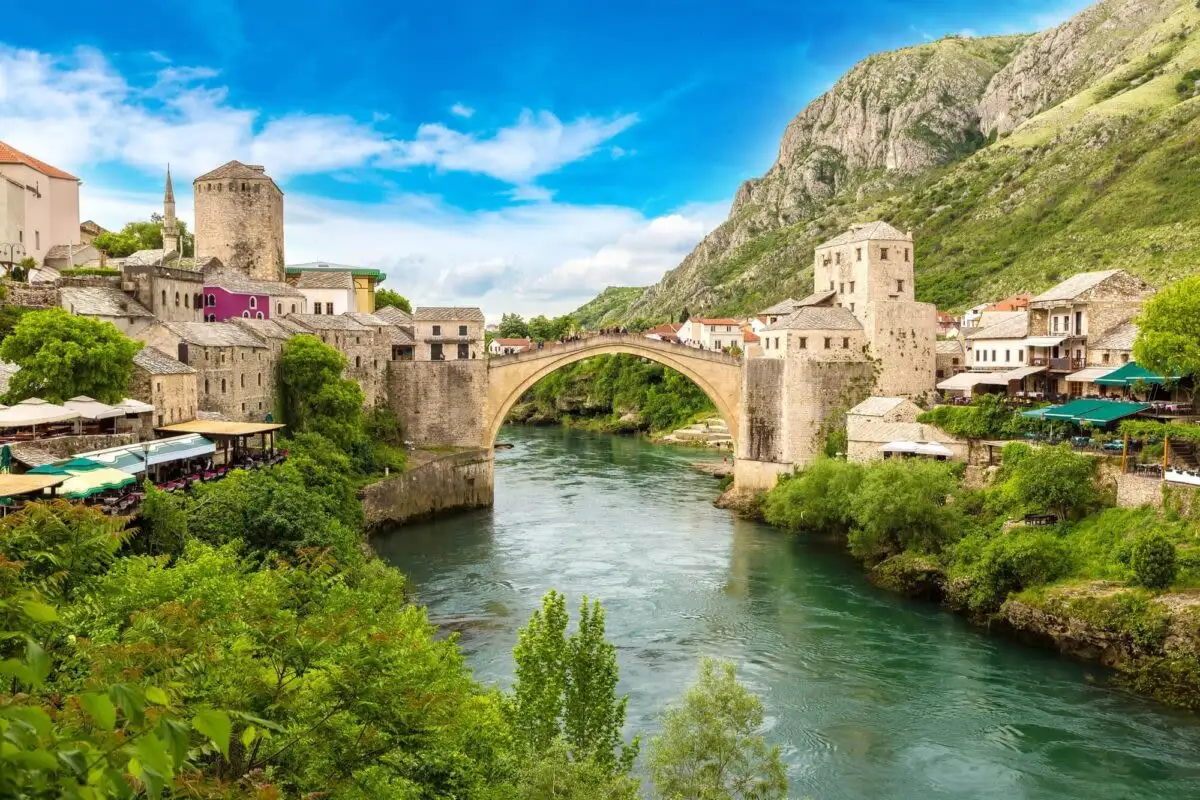
  • Travel to the enchanting town of Mostar in Bosnia and see its iconic bridge.
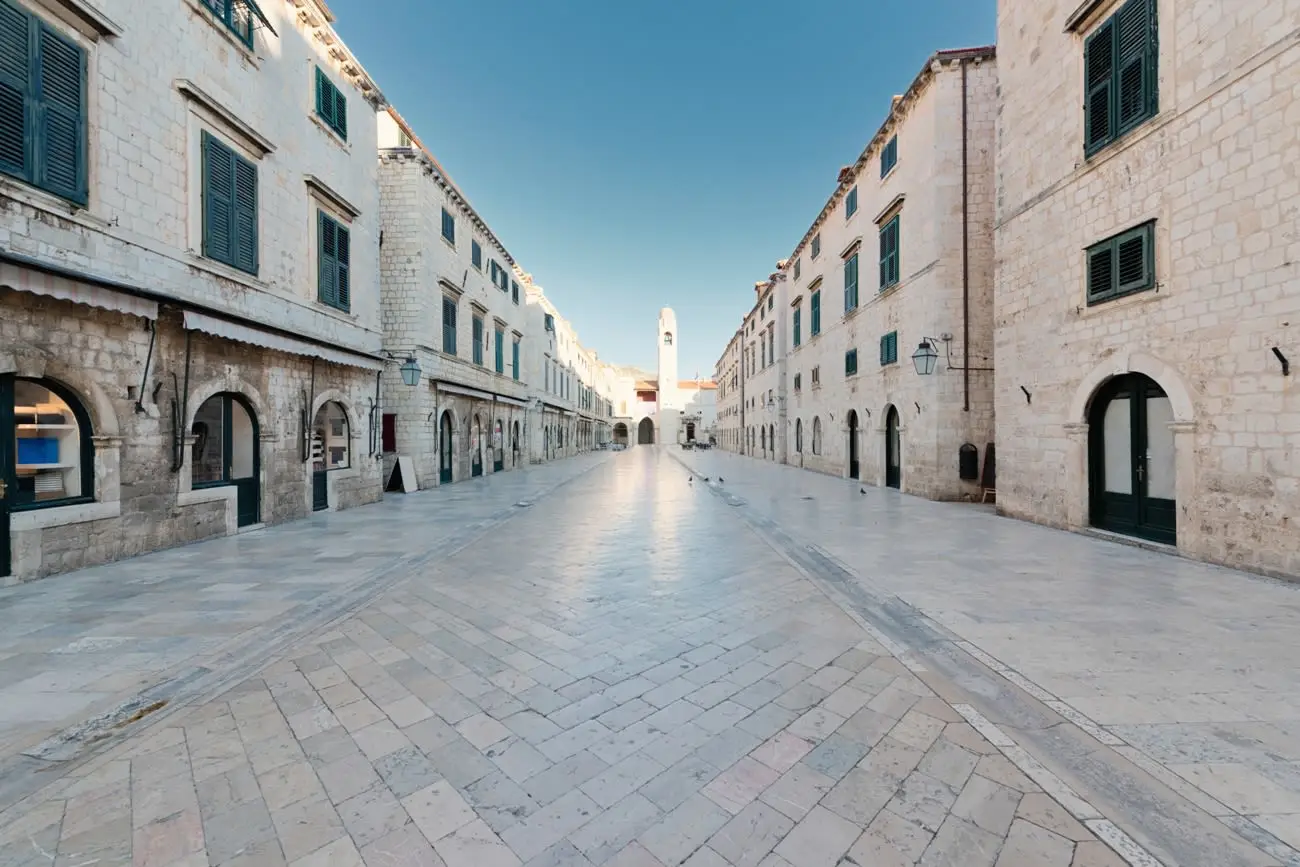
  • Discover Dubrovnik's iconic city walls and picturesque Old Town.
  • See Kotor's medieval charm in Montenegro on a day trip, combining history, mountains, and seaside.
Take a captivating 10-day adventure through Croatia’s breathtaking Adriatic coastline. Enjoy an immersive experience in Split and Dubrovnik, blending stunning landscapes, historic cities, and serene beaches. Discover the ancient Roman ruins of Diocletian's Palace, the lively atmosphere of Hvar Island, and the tranquil beauty of Lokrum Island. Wander through the narrow, cobblestone streets of Dubrovnik, explore the majestic Elafiti Islands, and take exciting day trips to Bosnia and Montenegro. With private guided tours and comprehensive travel guidance through our mobile app, you will uncover the rich history, culture, and natural beauty.
  • Marvel at the ancient Roman architecture in Split's Diocletian's Palace.
  • Relax on the pristine beaches and enjoy the lively vibe on Hvar Island.
  • Travel to the enchanting town of Mostar in Bosnia and see its iconic bridge.
  • Discover Dubrovnik's iconic city walls and picturesque Old Town.
  • See Kotor's medieval charm in Montenegro on a day trip, combining history, mountains, and seaside.
European Adventure
Diocletian’s Palace
Castles & Chateaux
Scenic Europe
Bačvice Beach
Natural Beauty
Exploring European Beauty
Veli Varoš & The Marjan Peninsula
Architecture
Traveling Through Europe
Old City Walls
Historic Landmarks
European Wonders
Dubrovnik's Beaches
Natural Beauty
Captivating European Destinations
Mount Srd
Natural Beauty
Picturesque Europe
Game of Thrones
Adventure Seeking
European Charm
Sea Kayaking
Hiking, Biking & Kayaking
Discovering Europe's Treasures
Lokrum Island
Churches & Monasteries

Must see sights

European Adventure
Diocletian’s Palace
Castles & Chateaux
Scenic Europe
Bačvice Beach
Natural Beauty
Exploring European Beauty
Veli Varoš & The Marjan Peninsula
Architecture
Traveling Through Europe
Old City Walls
Historic Landmarks
European Wonders
Dubrovnik's Beaches
Natural Beauty
Captivating European Destinations
Mount Srd
Natural Beauty
Picturesque Europe
Game of Thrones
Adventure Seeking
European Charm
Sea Kayaking
Hiking, Biking & Kayaking
Discovering Europe's Treasures
Lokrum Island
Churches & Monasteries
Loading...

Starting from

$2750

per person

no-flightNot included

Secure Your Customizable Trip

Enter your details to embark on a journey that can be tailored just for you.

Start

Travelers

0 travelers
Add Room
Remove Room

Preferred Hotel Stars

Select Hotel Stars
Craft Your Own Itinerary

Select your interests and destinations for a trip plan inspired by you.

Adriatic Dream Trip - Map & Itinerary

Enable/Disable Map Scrolling

Click To Make Map Interactive

Adriatic Dream Trip Timeline

Arrival

4 nights

Split

Croatia

Shuttle: 7h

5 nights

Dubrovnik

Croatia

Departure

Day-By-Day Itinerary of Adriatic Dream Trip

image

Day 1

Arrive Split

Day 1

Arrive Split

icon
icon
icon

To Be Determined

Transfer from Airport

Split has one main airport, Split Airport, also known as Resnik Airport. Taxis are available directly at the terminal exit, or you can arrange a private transfer for added convenience. UberX is also available in Split for those with the mobile app. It will cost about 250 HRK to reach the city by car. Keep in mind that if staying in Old Town, your driver will likely need to drop you off near your hotel as cars are not allowed in the pedestrian zones. If you need help with your bags, you should arrange it beforehand with your hotel or a private transfer. If you want to save money, there is a direct shuttle bus line for 35 HRK which departs from in front of the terminal and drops off at the Split bus station, from where it is a relatively short walk to the historic center of Split. If you really want to save money, the public bus line no. 38 picks up near the airport as well, but of course you'll need to make a lot of stops along the way and it may not be the most convenient way to travel if you have bags.

Transfer from Airport

To Be Determined — Transfer from Airport

Split has one main airport, Split Airport, also known as Resnik Airport. Taxis are available directly at the terminal exit, or you can arrange a private transfer for added convenience. UberX is also available in Split for those with the mobile app. It will cost about 250 HRK to reach the city by car. Keep in mind that if staying in Old Town, your driver will likely need to drop you off near your hotel as cars are not allowed in the pedestrian zones. If you need help with your bags, you should arrange it beforehand with your hotel or a private transfer. If you want to save money, there is a direct shuttle bus line for 35 HRK which departs from in front of the terminal and drops off at the Split bus station, from where it is a relatively short walk to the historic center of Split. If you really want to save money, the public bus line no. 38 picks up near the airport as well, but of course you'll need to make a lot of stops along the way and it may not be the most convenient way to travel if you have bags.

Mid-Day/Afternoon — Diocletian's Palace

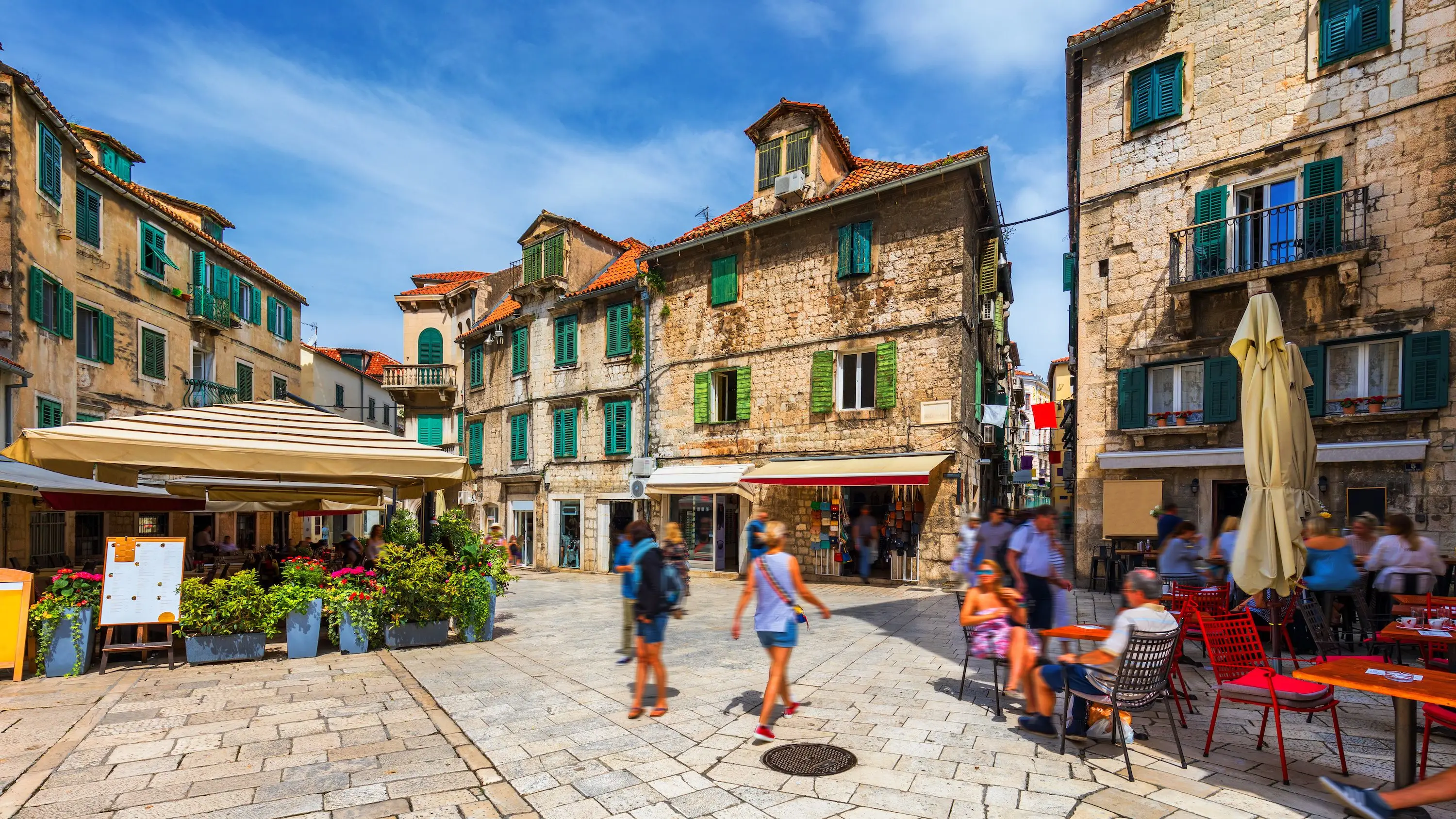
Split's Old Town started out as a luxurious retirement palace for the Roman Emperor Diocletian. As Roman emperors often met bloody ends, about half of the palace consisted of a less luxurious fortress designed to accommodate a large garrison of loyal Roman soldiers. Within the palace's high walls there were also temples, streets, and large courtyards, meaning it was only natural that long after the Diocletian was gone and the empire fallen, much of the palace was incorporated into Split's Old Town. Indeed about half of the Old Town consists of the former palace area. Despite falling into disrepair and constant reconstructions over the intervening millennia, the Palace remains one of the best-preserved examples of Roman architecture in the world. It's principal set-piece buildings, such as Diocletian's mausoleum and the Temple of Jupiter still remain. But the palace is far from being just an archeological site and it continues to this day as a living and breathing historical monument with 2,000 to 3,000 people still resident within its ancient walls. This means that so much tinkering has gone on over the centuries that it's no longer immediately recognizable as an ancient Roman structure. On the other hand, up close and personal you can still make out the remains of some of the imperial apartments that are used today as outdoor bars and cafes and shops. And the medieval tenements built by the Venetians were built in large part from the stones scavenged from Diocletian's original buildings. The tangled mass of alleyways, small squares, and narrow lanes just outside the Palace is also well worth exploring. The Venetian architecture makes the setting particularly enchanting (Split was ruled by the Republic of Venice for centuries).

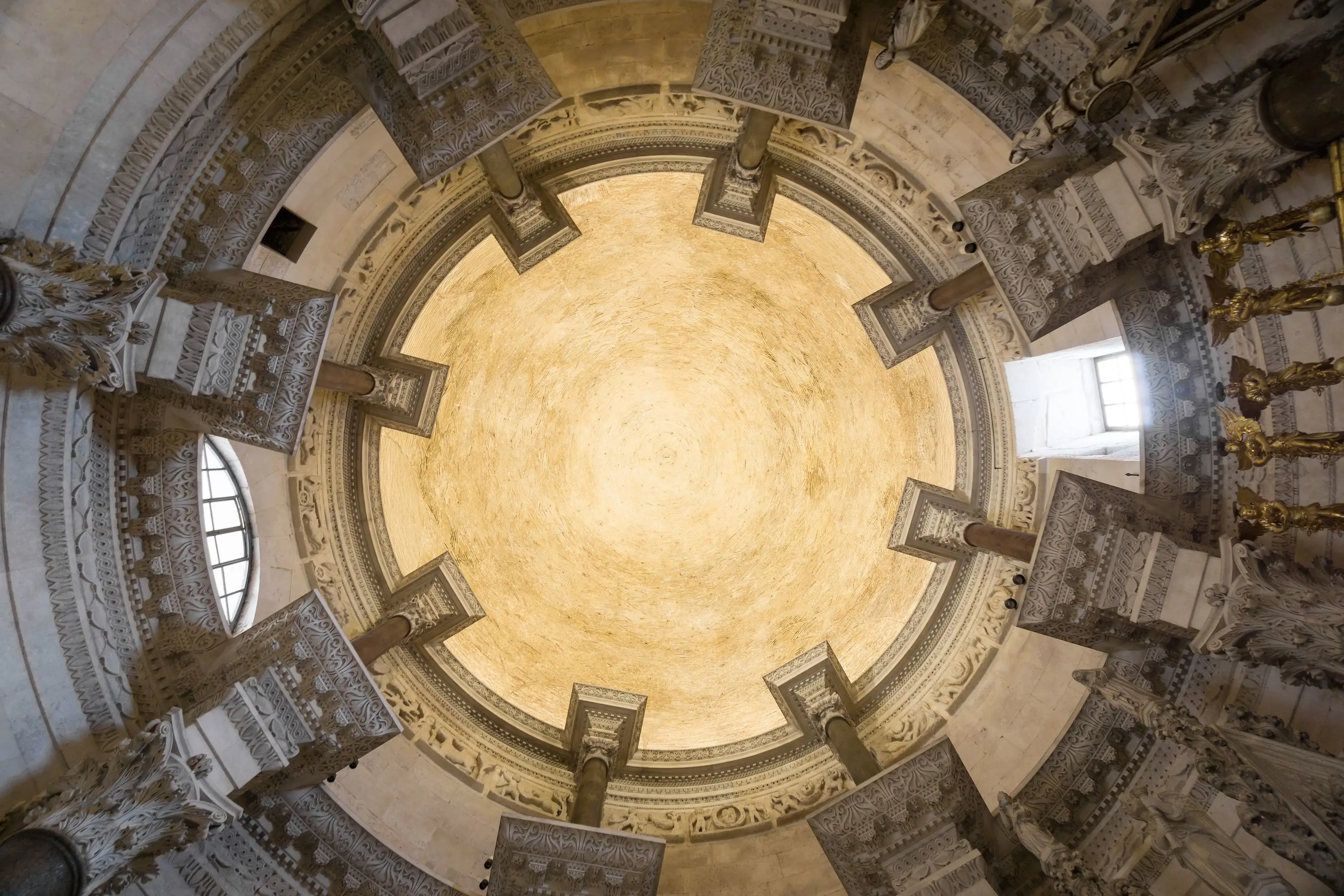
Peristyle

See the beautiful courtyard which was once the center of the palace, and is now the heart of Split.

The Peristyle was the central courtyard of the palace complex and the crossing point of its main streets. The columns around the courtyard were pillaged from Egypt, though the officer in charge of the operation must have forgotten to get some extras as four of the columns are clearly different from the others. There's also a black granite Egyptian sphinx on one side dating from 1500 BC which originally flanked the entrance to Diocletian's mausoleum (other sphinxes around the palace were decapitated by Diocletian to allay his superstition that they posed a threat to his rule). If you sit on one of the red cushions scattered around the Peristyle you'll be approached by a waiter with a menu of very expensive drinks, but it may be worth it just to sit and lap up the history and watch people go by. At the southern end of the Peristyle, steps lead up to a cone-shaped, roofless chamber which once served as the palace vestibule. Visitors would wait here before being summoned before the ex-emperor into his private apartments.

Riva

Take in the scene on Split's swanky seaside promenade.

Along the exterior face of the former palace and down the length of the Old Town runs the wide and breezy Riva, the principal sea-side promenade in central Split. Lined by palm trees, restaurants, and cafes, it gets wildly busy on summer evenings. It is the perfect place to relax, take in the scene, and watch people and boats pass by.

St Domnius

See how the mausoleum of an emperor who persecuted Christians was converted into a stunning medieval church.

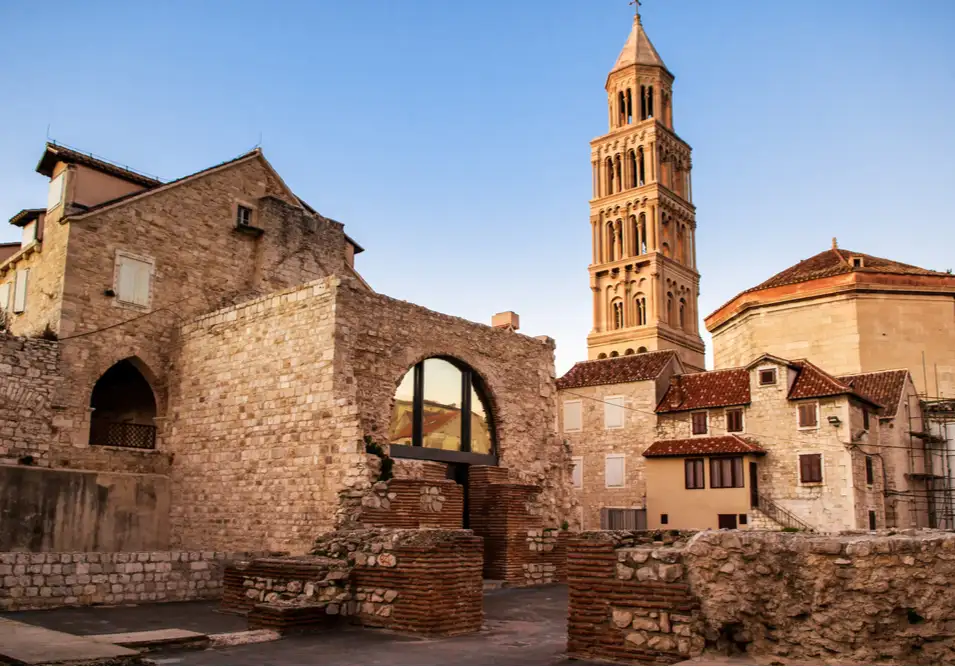
Looming over the Peristyle and over all of Old Split for that matter is the belfry of the Cathedral of St Domnius. The dome of the church was originally Diocletian's mausoleum. Diocletian's body disappeared 170 years after internment and nobody knows where. Ironically though, the church does hold the bones of St. Anastiasius, a saint killed by order of Diocletian. Indeed, the altar which holds his relics is the finest in the church, and the sarcophagus contains a fascinating relief called The Flagellation of Christ. The cathedral also houses a treasury full of monstrances and fascinating reliquaries in the shape of heads containing relics in small transparent lockets encased in the forehead. Another highlight is the walnut-and-oak main entrance doors with an inspired comic-strip-style sequence showing 28 scenes from the life of Christ. The bell tower started in the 13th century and not completed until 1908 is definitely worth climbing up for the panoramic view over the city, though it is quite steep.

Bronze Gate and Palace Cellars

Enter this ancient gateway to discover palace cellars used as film sets for Game of Thrones.

While today about 200 feet (60m) from the water, the Bronze Gate originally sat directly on the sea, allowing boats to pull directly up to the palace. As you enter the gate you will find a mass of souvenir and arts & crafts stalls, but just inside the entrance on either side are the substructures, or cellars of the palace. After the palace fell into disrepair, the cellars were used as rubbish pits. Families occupying the apartments above would simply create holes in the floor and voila, they had an instant trash dump with a seemingly unending supply of space. Of course centuries of trash did eventually them fill up and they were only rediscovered in 1956; the excavations continue to this very day. While entrance to the cellar is not free, it provides an excellent idea of what the palace must originally have looked like, as they're an exact mirror image of the imperial living quarters above. Game of Thrones fans will also be happy to learn that the cellar was used as a filming set, including as Daenerys Targaryen's grand Meereen throne room.

Fish market & Marmontova Street

Join the locals at Split's main fish market.

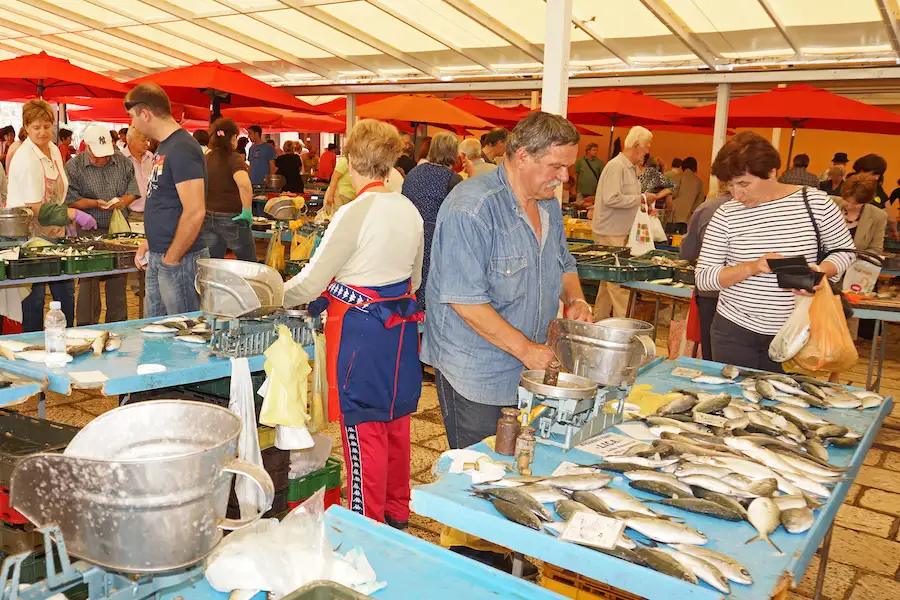
This is a genuine fish market rather than a set piece for tourists. So it is a bit smelly and bloody, just like a real fish market should be. If you want fresh fish and seafood, its the best place to go in Split. There is a bit of a frenzy in the morning when the fresh catch is brought in, so that is the most intersting time to visit. If you aren't in the market for raw seafood, on the adjacent Marmontova street you'll find take out places where you can get cooked seafood to go. This elegant pedestrian street is also lined by high-end shops, and is definitely worth a stroll.

Late Afternoon/Early Evening — Bačvice Beach

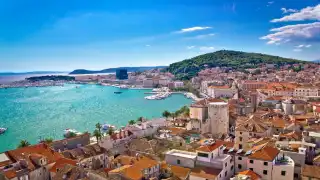
A rare sandy beach, Bačvice is a favorite among Split locals and hence a great place to indulge in some covert people watching while lapping up the sun. Just a few minutes' walk from the bus and train stations and the ferry terminal, Bačvice beach is also the spiritual home of the traditional Croatian water sport of picigin - a form of volleyball in which a group of players tries to keep a ball in the air in shallow water using the most athletic and acrobatic moves possible. There are showers and changing rooms at both ends of the beach, while Café Zbirac has a reputation for good food and drink. Immediately behind the beach is a swanky modern three-tier pavilion with several cafes and a couple of chic eating places inside. It's a popular venue for after-dark drinking and feasting whatever the time of the year. A coastal path leads from Bačvice past a couple smaller bays and many more cafes; it's a pleasant area for late afternoon or evening perambulations all year round.

image

Day 1

Arrive Split


icon
icon
icon

To Be Determined:

Transfer from Airport

Mid-Day/Afternoon:

Diocletian's Palace

Late Afternoon/Early Evening:

Bačvice Beach

Transfer from Airport

Transfer from Airport

Split has one main airport, Split Airport, also known as Resnik Airport. Taxis are available directly at the terminal exit, or you can arrange a private transfer for added convenience. UberX is also available in Split for those with the mobile app. It will cost about 250 HRK to reach the city by car. Keep in mind that if staying in Old Town, your driver will likely need to drop you off near your hotel as cars are not allowed in the pedestrian zones. If you need help with your bags, you should arrange it beforehand with your hotel or a private transfer. If you want to save money, there is a direct shuttle bus line for 35 HRK which departs from in front of the terminal and drops off at the Split bus station, from where it is a relatively short walk to the historic center of Split. If you really want to save money, the public bus line no. 38 picks up near the airport as well, but of course you'll need to make a lot of stops along the way and it may not be the most convenient way to travel if you have bags.

To Be Determined — Transfer from Airport

Split has one main airport, Split Airport, also known as Resnik Airport. Taxis are available directly at the terminal exit, or you can arrange a private transfer for added convenience. UberX is also available in Split for those with the mobile app. It will cost about 250 HRK to reach the city by car. Keep in mind that if staying in Old Town, your driver will likely need to drop you off near your hotel as cars are not allowed in the pedestrian zones. If you need help with your bags, you should arrange it beforehand with your hotel or a private transfer. If you want to save money, there is a direct shuttle bus line for 35 HRK which departs from in front of the terminal and drops off at the Split bus station, from where it is a relatively short walk to the historic center of Split. If you really want to save money, the public bus line no. 38 picks up near the airport as well, but of course you'll need to make a lot of stops along the way and it may not be the most convenient way to travel if you have bags.

Mid-Day/Afternoon — Diocletian's Palace

Split's Old Town started out as a luxurious retirement palace for the Roman Emperor Diocletian. As Roman emperors often met bloody ends, about half of the palace consisted of a less luxurious fortress designed to accommodate a large garrison of loyal Roman soldiers. Within the palace's high walls there were also temples, streets, and large courtyards, meaning it was only natural that long after the Diocletian was gone and the empire fallen, much of the palace was incorporated into Split's Old Town. Indeed about half of the Old Town consists of the former palace area. Despite falling into disrepair and constant reconstructions over the intervening millennia, the Palace remains one of the best-preserved examples of Roman architecture in the world. It's principal set-piece buildings, such as Diocletian's mausoleum and the Temple of Jupiter still remain. But the palace is far from being just an archeological site and it continues to this day as a living and breathing historical monument with 2,000 to 3,000 people still resident within its ancient walls. This means that so much tinkering has gone on over the centuries that it's no longer immediately recognizable as an ancient Roman structure. On the other hand, up close and personal you can still make out the remains of some of the imperial apartments that are used today as outdoor bars and cafes and shops. And the medieval tenements built by the Venetians were built in large part from the stones scavenged from Diocletian's original buildings. The tangled mass of alleyways, small squares, and narrow lanes just outside the Palace is also well worth exploring. The Venetian architecture makes the setting particularly enchanting (Split was ruled by the Republic of Venice for centuries).

Peristyle

See the beautiful courtyard which was once the center of the palace, and is now the heart of Split.

The Peristyle was the central courtyard of the palace complex and the crossing point of its main streets. The columns around the courtyard were pillaged from Egypt, though the officer in charge of the operation must have forgotten to get some extras as four of the columns are clearly different from the others. There's also a black granite Egyptian sphinx on one side dating from 1500 BC which originally flanked the entrance to Diocletian's mausoleum (other sphinxes around the palace were decapitated by Diocletian to allay his superstition that they posed a threat to his rule). If you sit on one of the red cushions scattered around the Peristyle you'll be approached by a waiter with a menu of very expensive drinks, but it may be worth it just to sit and lap up the history and watch people go by. At the southern end of the Peristyle, steps lead up to a cone-shaped, roofless chamber which once served as the palace vestibule. Visitors would wait here before being summoned before the ex-emperor into his private apartments.

Riva

Take in the scene on Split's swanky seaside promenade.

Along the exterior face of the former palace and down the length of the Old Town runs the wide and breezy Riva, the principal sea-side promenade in central Split. Lined by palm trees, restaurants, and cafes, it gets wildly busy on summer evenings. It is the perfect place to relax, take in the scene, and watch people and boats pass by.

St Domnius

See how the mausoleum of an emperor who persecuted Christians was converted into a stunning medieval church.

Looming over the Peristyle and over all of Old Split for that matter is the belfry of the Cathedral of St Domnius. The dome of the church was originally Diocletian's mausoleum. Diocletian's body disappeared 170 years after internment and nobody knows where. Ironically though, the church does hold the bones of St. Anastiasius, a saint killed by order of Diocletian. Indeed, the altar which holds his relics is the finest in the church, and the sarcophagus contains a fascinating relief called The Flagellation of Christ. The cathedral also houses a treasury full of monstrances and fascinating reliquaries in the shape of heads containing relics in small transparent lockets encased in the forehead. Another highlight is the walnut-and-oak main entrance doors with an inspired comic-strip-style sequence showing 28 scenes from the life of Christ. The bell tower started in the 13th century and not completed until 1908 is definitely worth climbing up for the panoramic view over the city, though it is quite steep.

Bronze Gate and Palace Cellars

Enter this ancient gateway to discover palace cellars used as film sets for Game of Thrones.

While today about 200 feet (60m) from the water, the Bronze Gate originally sat directly on the sea, allowing boats to pull directly up to the palace. As you enter the gate you will find a mass of souvenir and arts & crafts stalls, but just inside the entrance on either side are the substructures, or cellars of the palace. After the palace fell into disrepair, the cellars were used as rubbish pits. Families occupying the apartments above would simply create holes in the floor and voila, they had an instant trash dump with a seemingly unending supply of space. Of course centuries of trash did eventually them fill up and they were only rediscovered in 1956; the excavations continue to this very day. While entrance to the cellar is not free, it provides an excellent idea of what the palace must originally have looked like, as they're an exact mirror image of the imperial living quarters above. Game of Thrones fans will also be happy to learn that the cellar was used as a filming set, including as Daenerys Targaryen's grand Meereen throne room.

Fish market & Marmontova Street

Join the locals at Split's main fish market.

This is a genuine fish market rather than a set piece for tourists. So it is a bit smelly and bloody, just like a real fish market should be. If you want fresh fish and seafood, its the best place to go in Split. There is a bit of a frenzy in the morning when the fresh catch is brought in, so that is the most intersting time to visit. If you aren't in the market for raw seafood, on the adjacent Marmontova street you'll find take out places where you can get cooked seafood to go. This elegant pedestrian street is also lined by high-end shops, and is definitely worth a stroll.

Late Afternoon/Early Evening — Bačvice Beach

A rare sandy beach, Bačvice is a favorite among Split locals and hence a great place to indulge in some covert people watching while lapping up the sun. Just a few minutes' walk from the bus and train stations and the ferry terminal, Bačvice beach is also the spiritual home of the traditional Croatian water sport of picigin - a form of volleyball in which a group of players tries to keep a ball in the air in shallow water using the most athletic and acrobatic moves possible. There are showers and changing rooms at both ends of the beach, while Café Zbirac has a reputation for good food and drink. Immediately behind the beach is a swanky modern three-tier pavilion with several cafes and a couple of chic eating places inside. It's a popular venue for after-dark drinking and feasting whatever the time of the year. A coastal path leads from Bačvice past a couple smaller bays and many more cafes; it's a pleasant area for late afternoon or evening perambulations all year round.

image

Day 2

Split

Day 2

Split

icon
icon
icon

9:00 AM - 11:00 AM

Split Old Town Walking Tour

This two-hour guided tour will take you to the Roman emperor Diocletian's 1700-year-old palace which was built as his personal rest home. Walk from the Bronze Gate through the central hall of the ancient cellars is the main communication line between the busy waterfront promenade, the Riva, and the palace's main forecourt, the Peristyle. You'll also stop by the Cathedral of St Duje, one of the most beautiful cultural attractions on the Adriatic coast, the Roman temple of Jupiter (latterly a Christian baptistry), the fabulous Golden Gate, and the medieval Croatian bishop who introduced the Croatian language in religious services.

Split Old Town Walking Tour

9:00 AM - 11:00 AM — Split Old Town Walking Tour

This two-hour guided tour will take you to the Roman emperor Diocletian's 1700-year-old palace which was built as his personal rest home. Walk from the Bronze Gate through the central hall of the ancient cellars is the main communication line between the busy waterfront promenade, the Riva, and the palace's main forecourt, the Peristyle. You'll also stop by the Cathedral of St Duje, one of the most beautiful cultural attractions on the Adriatic coast, the Roman temple of Jupiter (latterly a Christian baptistry), the fabulous Golden Gate, and the medieval Croatian bishop who introduced the Croatian language in religious services.

Peristyle

See the beautiful courtyard which was once the center of the palace, and is now the heart of Split.

The Peristyle was the central courtyard of the palace complex and the crossing point of its main streets. The columns around the courtyard were pillaged from Egypt, though the officer in charge of the operation must have forgotten to get some extras as four of the columns are clearly different from the others. There's also a black granite Egyptian sphinx on one side dating from 1500 BC which originally flanked the entrance to Diocletian's mausoleum (other sphinxes around the palace were decapitated by Diocletian to allay his superstition that they posed a threat to his rule). If you sit on one of the red cushions scattered around the Peristyle you'll be approached by a waiter with a menu of very expensive drinks, but it may be worth it just to sit and lap up the history and watch people go by. At the southern end of the Peristyle, steps lead up to a cone-shaped, roofless chamber which once served as the palace vestibule. Visitors would wait here before being summoned before the ex-emperor into his private apartments.

Bronze Gate and Palace Cellars

Enter this ancient gateway to discover palace cellars used as film sets for Game of Thrones.

While today about 200 feet (60m) from the water, the Bronze Gate originally sat directly on the sea, allowing boats to pull directly up to the palace. As you enter the gate you will find a mass of souvenir and arts & crafts stalls, but just inside the entrance on either side are the substructures, or cellars of the palace. After the palace fell into disrepair, the cellars were used as rubbish pits. Families occupying the apartments above would simply create holes in the floor and voila, they had an instant trash dump with a seemingly unending supply of space. Of course centuries of trash did eventually them fill up and they were only rediscovered in 1956; the excavations continue to this very day. While entrance to the cellar is not free, it provides an excellent idea of what the palace must originally have looked like, as they're an exact mirror image of the imperial living quarters above. Game of Thrones fans will also be happy to learn that the cellar was used as a filming set, including as Daenerys Targaryen's grand Meereen throne room.

Mid-Day/Afternoon — Klis Fortress

For thousands of years the mighty and imposing Klis Fortress, with its grand views of the Dalmatian Coast, has been guarding the strategic mountain pass just above Split. For many modern visitors, however, more significant than the real history of the castle is its use as a film set for the city-state of Meereen in Game of Thrones. In either case, ciimbing the fortress's steep trails and exploring its ruins makes for a fascinating visit. The remarkably intact structure with grand views of the Dalmatian Coast was first fortified by the ancient Illyrian tribe of the Dalmatae, and later by Romans. In medieval times it was a seat of power for the expanding medieval kingdom of the Croats, even repelling a Mongol army in 1242. Klis was later defended by a band of irregular Croatian defenders, the Uskoks, who managed to hold off repeated sieges by the Ottoman Turks until finally being defeated in 1537. Within the fortress you'll find an interesting exhibit on the Uskoks. Retaken from the Turks in 1648, the fortress changed hands several more times, and saw its last military action during the Second World War when it was a stronghold for Italian and German occupation forces. These days, you can easily conquer the fortifications yourself via the local bus line 22 from Split. Even more easy is the Promet tourist bus which leaves from the main bus station and reaches the fortress in 20 minutes. Of course most convenient is take a guided tour which can explain both the real and the cinematic story behind the fortress.

Afternoon to Early Evening — Fishermen's Quarter

Veli Varoš is a neighborhood situated at the western end of the old town that is crammed full of charming old stone houses and apartments characteristic of Dalmatia, and narrow cobbled streets that wind up the Marjan Hill. The district once represented the poorer part of Split developed by farmers and fishermen looking to make a better living in the city and seeking shelter from Ottoman military incursions. Today property prices have accelerated northwards, but it's still well worth reconnoitering the maze of paths and traffic-free lanes as you head to the top of the neighborhood to catch magical views of the city. Venture beyond the Fisherman's Quarter and you will be surrounded by typically Mediterranean forest landscape on the Marjan Peninsula.

Vidilica Terrace

Walk up to this terrace for the best view of Split.

No terrace offers a better view than this, the whole of Split laid out before you - and islands beyond. There is a nearby cafe and bar which contains blown-up sepia postcards of pre-war Split scenes. Most visitors, however, try to find an outside table, the children kept safe within the stone wall guarding the steep drop. The grounds behind the cafe contain Split's old Jewish cemetery.

Mestrovic Gallery

Hike the Marjan Peninsula to reach the seaside villa of 20th-century sculptor Ivan Meštrović.

Many consider Ivan Meštrovič to be greatest sculptor of religious subjects since the Renaissance. The Meštrovič Gallery is located in an ostentatiously palatial building that Meštrovič himself planned as his home and studio. Fronted by a veranda supported by Ionic columns, the house was completed in 1939, giving Meštrovič just two years to live in it before fleeing to Zagreb to escape the Italian occupation. The gallery is also a wonderful sanctuary away from the hubbub of the city with wonderfully romantic views of the Adriatic. Even if you're not interested in religious sculptures (they're not all religious) the gallery still contains a highly impressive collection of art. 

image

Day 2

Split

image

Day 3

Split

Day 3

Split

icon

Early Morning to Evening

Hvar Island

Hvar has a reputation as the Croatian Ibiza, i.e. lots of young people partying as if their lives depended on it, but it's actually much more than that and remains relatively unspoiled and comparatively affordable in relation to the mainland coast. Both of its main towns, Hvar and Star Grad, are lovely medieval towns full of traffic-free alleys surrounded by ancient stone houses; these act as a romantic backdrop to the towns' many cafes from where you can indulge in people-watching and view the fancy yachts filling up the harbor. In the summer, you can take a passenger-only 1-hour catamaran trip directly to Hvar Town. In other months, Hvar is still relatively easy to get to via a 2-hour car ferry to the main island port of Stari Grad. If you do take the ferry, it's still just a short bus or taxi ride to Hvar or Stari Grad - you can even walk to Stari Grad from the ferry port. Keep in mind though that you must be quick off the ferry to catch the bus. If you can afford it, taking a private boat is the ultimate way to experience Hvar, as you can swim, snorkel, and sunbathe along the way. Also keep in mind that while Hvar is happening in the warmer months, it is quite sleepy in the off season. Many restaurants and attractions will be closed, but if you enjoy exploring in peace and quiet, it is the perfect time to visit.
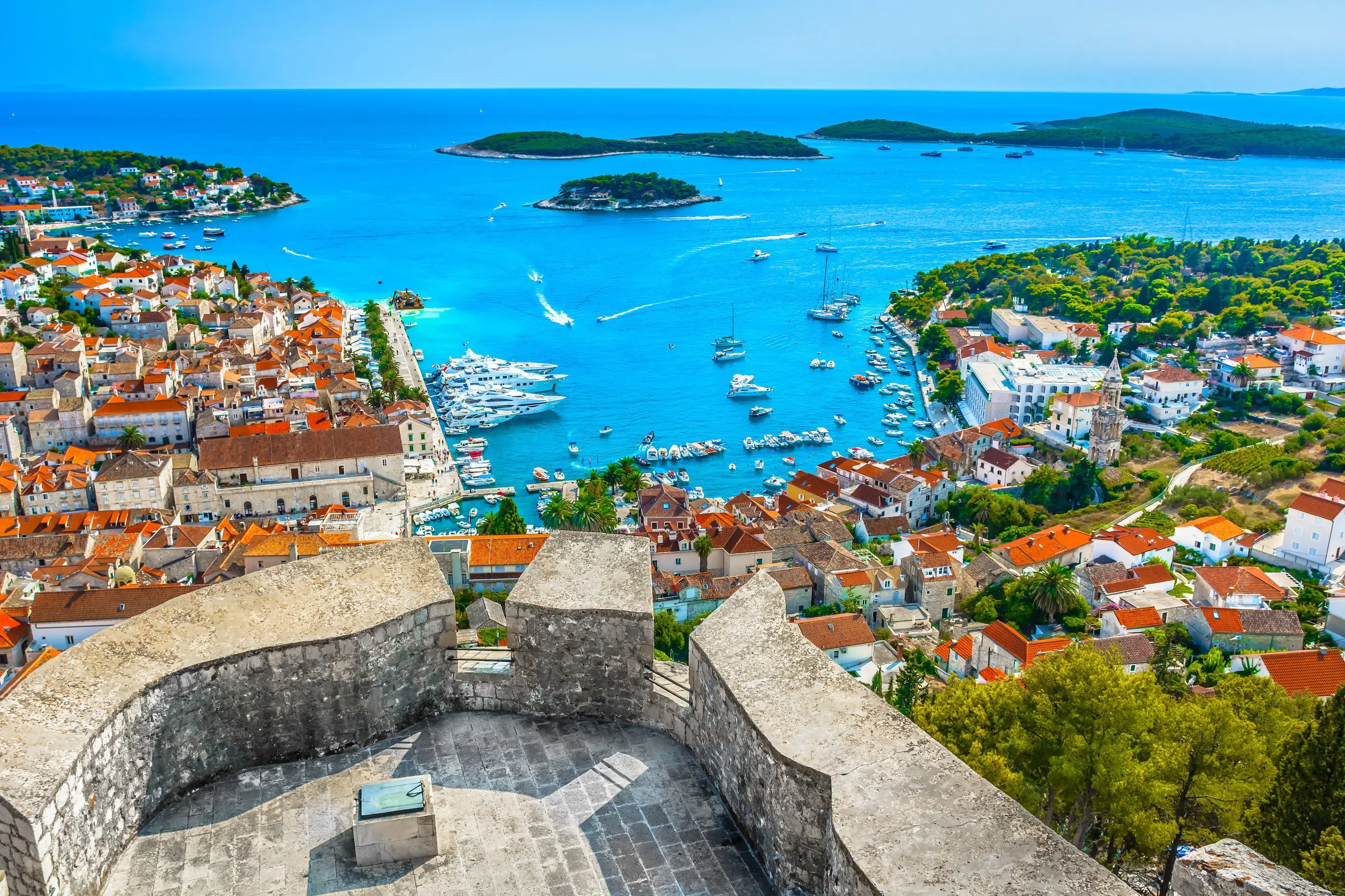
Hvar Island

Early Morning to Evening — Hvar Island

Hvar has a reputation as the Croatian Ibiza, i.e. lots of young people partying as if their lives depended on it, but it's actually much more than that and remains relatively unspoiled and comparatively affordable in relation to the mainland coast. Both of its main towns, Hvar and Star Grad, are lovely medieval towns full of traffic-free alleys surrounded by ancient stone houses; these act as a romantic backdrop to the towns' many cafes from where you can indulge in people-watching and view the fancy yachts filling up the harbor. In the summer, you can take a passenger-only 1-hour catamaran trip directly to Hvar Town. In other months, Hvar is still relatively easy to get to via a 2-hour car ferry to the main island port of Stari Grad. If you do take the ferry, it's still just a short bus or taxi ride to Hvar or Stari Grad - you can even walk to Stari Grad from the ferry port. Keep in mind though that you must be quick off the ferry to catch the bus. If you can afford it, taking a private boat is the ultimate way to experience Hvar, as you can swim, snorkel, and sunbathe along the way. Also keep in mind that while Hvar is happening in the warmer months, it is quite sleepy in the off season. Many restaurants and attractions will be closed, but if you enjoy exploring in peace and quiet, it is the perfect time to visit.

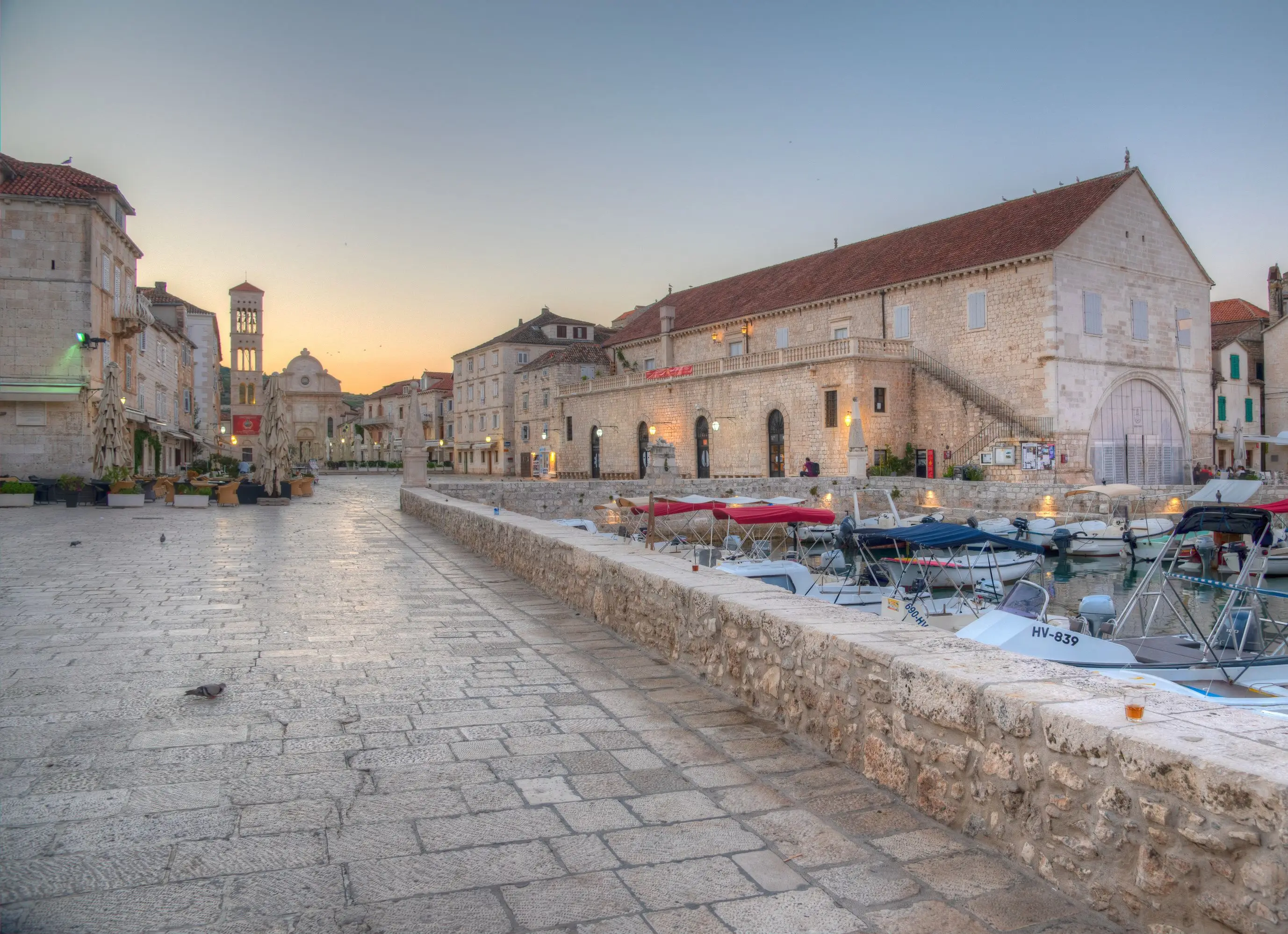
Arsenal & Cathedral of St. Stephen

Check out where war galleys were once repaired on Hvar's main square.

There's plenty to see in Hvar Town beginning at the main square, Trg svetog Stjepana (St Stephen Square) where you'll find the 17th century Venetian arsenal in which war galleys were once hauled for repair. The upper story was adapted in 1612 to house the town theatre, one of the oldest Baroque playhouses in Europe. St Stephen's Cathedral at the eastern end of the square is a 16th-century building with a fragile looking four-story campanile. Some of the artwork inside might be worth your time popping in to see. The Bishop's treasury next door contains a small but fine selection of religious.

Citadel

Climb to this stone fortress above the town of Hvar for the perfect photo.

Resting atop of the hill with breathtaking views of Hvar Town and the nearby Pakleni Islands is the Citadel, built by the Venetians in the 1550s but with the help of Spanish engineers, hence it is another name: the Spanish Fortress. It is the perfect spot for a photo of yourself standing on the turrets and overlooking the town and harbor. During the season it is open to visitors for a 40 Kuna entry fee. To reach the citadel just walk up the stairs located next to the Loggia, which is the colonnaded white building located just in front of the port. Once you reach the gardens above the town, then follow a zig-zagging path through the gardens. When you reach a gate in the garden, go through it, instead of taking the other path which is helpfully spray-painted with the word "stop". This will take you to the entrance of the citadel.

Town of Stari Grad

Stroll the atmospheric narrow streets of this small town nestled at the end of a clear blue bay.

Stari Grad is more laid back and family-oriented than Hvar Town but is becoming more popular with younger crowds and the jet-set as time goes by. Its streets are lined by stone houses decorated with bright window boxes, and there are plenty of small squares to explore that suddenly open up at the end of shoulder-rubbing alleyways. The fertile plain stretching south and west of Stari Grad is one of the few places in Europe where the ancient Greek system of field division has been preserved almost untouched. With olive groves and vineyards divided by a grid of dry stone walls and country lanes, it is easily explored on foot or by bike. A highlight within the town is the summer house and walled garden of the 16th-century poet and aristocrat Petar Hektorović called the Tvrdalj. This simple stone structure purpose-built for quiet contemplation and as a refuge for the locals in time of the attack is built around a central cloister with a turquoise pond packed with mullet. Almost immediately adjacent to the Tvrdalj is the Biankini Palace, an impressively restored Renaissance building that now houses the Town Museum

Pakleni Islands

Hop over to these rocky islands to swim and snorkel in their picturesque little coves and lagoons.

If weather permits, Hvar can be a splendid place for swimming as the sea conditions are truly exceptional, with crystal clear water. If you are hoping for soft sand beaches though, you will be disappointed. Beaches range from "pebbly" to "rocky ledge". A great option is to catch a water taxi (about 50 Kuna per person roundtrip) from the town of Hvar to the forested Pakleni Island, where the best beaches are to be found. The contorted, crooked shorelines of the islands create numerous little coves and lagoons that are nice spots for swimming and relaxing. Sveti Klement is the largest of the islands and hence has the best facilities, but there are restaurants, bars, snack stands, and toilets located near most of the beaches. Snorkeling is also possible at the Pakleni Islands, although generally there are no reefs, as is the case along most of the Croatian coastline. However, visibility is amazing and there are plenty of interesting rock formations. The best option if you are serious about snorkeling is to go with an organized boat tour.

image

Day 3

Split

image

Day 4

Split

Day 4

Split

icon

Early Morning to Evening

Brač Island

The third-largest of Croatia's islands, Brač is also the nearest major island to Split and therefore the easiest to get to with ferries running regular 50-minute trips to Supetar, an attractive former fishing village with shallow and swimmable pebbly beaches. On the opposite side of the island is the similarly picturesque village of Bol, boasting the magnificent beach of Zlatni Rat, pictures of which adorn just about every advertising brochure there is on Dalmatia's islands. Zlatni Rat has a mild-breezy climate that makes it perfect for windsurfing. Bol is accessible from Supetar by public bus, but to get around the island to see smaller coastal settlements like Postira, Pučišća, Povlja, and Milna, and the highest peak of Vidova Gora, it's best to take a guided tour, hire a taxi, or rent a car. Renting a bicycle is also a great option for exploring the island. This will also give you the chance to explore the island's beautiful interior, with its scrub-covered rocky uplands interspersed with fertile valleys, where you'll find vineyards, olive groves, and orange trees. You'll also see the great man-made piles of limestone built up over centuries by small farmers clearing a place to grow their crops. Just keep in mind that if you visit Brač in the off season, it will be very sleepy. This is great if you like to explore without crowds, but not so great if you mind closed restaurants and attractions.

Brač Island

Early Morning to Evening — Brač Island

The third-largest of Croatia's islands, Brač is also the nearest major island to Split and therefore the easiest to get to with ferries running regular 50-minute trips to Supetar, an attractive former fishing village with shallow and swimmable pebbly beaches. On the opposite side of the island is the similarly picturesque village of Bol, boasting the magnificent beach of Zlatni Rat, pictures of which adorn just about every advertising brochure there is on Dalmatia's islands. Zlatni Rat has a mild-breezy climate that makes it perfect for windsurfing. Bol is accessible from Supetar by public bus, but to get around the island to see smaller coastal settlements like Postira, Pučišća, Povlja, and Milna, and the highest peak of Vidova Gora, it's best to take a guided tour, hire a taxi, or rent a car. Renting a bicycle is also a great option for exploring the island. This will also give you the chance to explore the island's beautiful interior, with its scrub-covered rocky uplands interspersed with fertile valleys, where you'll find vineyards, olive groves, and orange trees. You'll also see the great man-made piles of limestone built up over centuries by small farmers clearing a place to grow their crops. Just keep in mind that if you visit Brač in the off season, it will be very sleepy. This is great if you like to explore without crowds, but not so great if you mind closed restaurants and attractions.

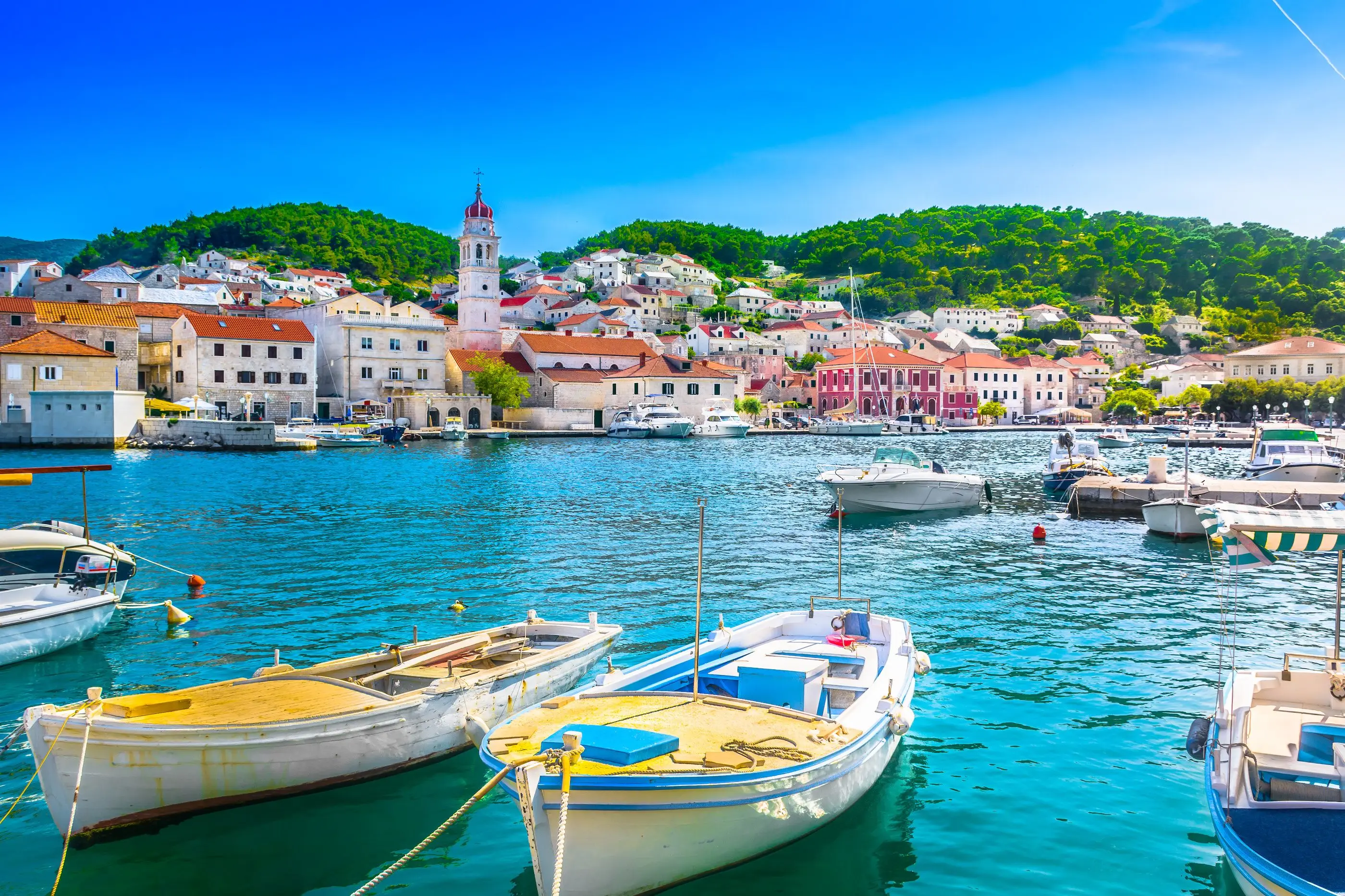
Pučišća

Visit this seaside hamlet recently rated as one of the top ten most picturesque villages in all of Europe.

The stone-quarrying village of Pučišća is hidden in the western arm of a long Y-shaped inlet and is assembled around a rough-hewn pair of medieval defensive towers and a gnarled church belfry. The harbor is clean enough to swim in and there are pleasant rocky beaches on the northwestern side of the inlet. There's a stone-carving school in the village and white-stone souvenirs are the stock-in-trade here.

Škrip

Discover the oldest continually inhabited settlement on the island.

Located on the interior of the island, Škrip has an entirely different atmosphere from the ritzy beach towns. Indeed, it's a sleepy nest of stone houses with heavy stone roof-tiles and feels a bit lost in time - in a good way. You'll also find 16th-century castle ruins and the island's museum at its eastern end. The museum contains a well-preserved Roman relief of Hercules and miscellaneous 19th-century agricultural tools. There's a Roman mausoleum outside that allegedly contains the wife or daughter of Diocletian.  At the top of the village you'll find an ancient church and graveyard from where you'll enjoy a wonderful view of the countryside.

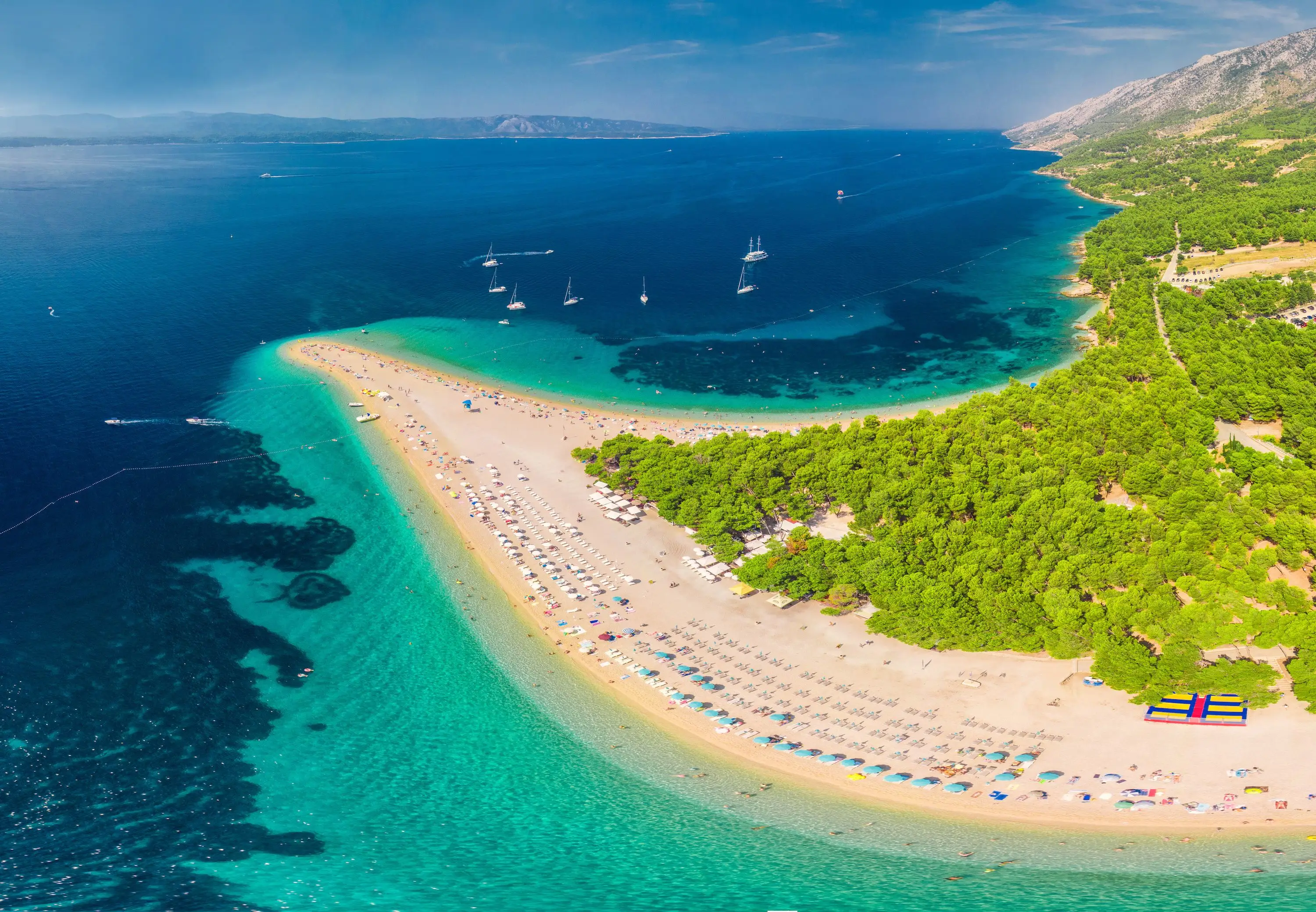
Zlatni Rat

Take a swim in one of Croatia's most famous and beautiful beaches.

Zlatni Rat (Golden Cape) is a beautiful tongue of white pebble beach jutting into the sea, and is one of the most popular swimming and sunbathing spots in Croatia. Its summer breezes also make it a favorite among wind surfers. Huge crowds flock to it in the summer months, so it is not ideal for those looking for an isolated spot to themselves. You can easily reach the beach from the town of Bol, as it is only a 20 minute walk along a tree-lined promenade. In high season you'll find all manner of diversions here, including food options, bicycles for hire, scooters and quad bikes, boat rentals, windsurfing, water taxis to more isolated coves and beaches, and snorkeling and scuba diving courses.

Dominican Monastery of Bol

Explore the picturesque town of Bol and take a quick walk to the Dominican monastery.

Bol's setting is indeed quite beautiful, hugging the coastal flanks of Brac's tallest mountain, but it attracts huge crowds in the summer months that flock to the nearby beautiful beach of Zlatni Rat (Golden Cape). The town of Bol itself is thankfully free of high rise package hotels and somehow manages to retain some modesty and charm around its attractive harbor. Take time to pop up to the Dominican monastery which is dramatically located high on an outcrop just east of Bol's center - the assiduously maintained monastery gardens overlooking the sea are worth the walk up.

image

Day 4

Split

image

Day 5

Split to Dubrovnik

Day 5

Split to Dubrovnik

icon

12:00 PM - 7:00 PM

Private Transfer to Dubrovnik via Mostar

Your own personal driver will pick you up from your hotel and drive you all the way to the southern Dalmatian coastal city of Dubrovnik via a detour to the beautifully reconstructed old Ottoman town of Mostar in Bosnia-Hercegovina. Mostar was heavily damaged in the Balkans wars of the early 1990s, but the historic core of the town has been restored to its glorious former self, including its iconic arched bridge from which you can watch daredevil divers plunging into the rather shallow waters below, and all its old mosques.  IMPORTANT NOTE:  Please be aware the car service can fit up to 1 checked item of luggage and 1 personal item per person, such as a purse or small backpack. If you think you will have more baggage, please inform your travel consultant as this may result in an additional fee.

Private Transfer to Dubrovnik via Mostar

12:00 PM - 7:00 PM — Private Transfer to Dubrovnik via Mostar

Your own personal driver will pick you up from your hotel and drive you all the way to the southern Dalmatian coastal city of Dubrovnik via a detour to the beautifully reconstructed old Ottoman town of Mostar in Bosnia-Hercegovina. Mostar was heavily damaged in the Balkans wars of the early 1990s, but the historic core of the town has been restored to its glorious former self, including its iconic arched bridge from which you can watch daredevil divers plunging into the rather shallow waters below, and all its old mosques.  IMPORTANT NOTE:  Please be aware the car service can fit up to 1 checked item of luggage and 1 personal item per person, such as a purse or small backpack. If you think you will have more baggage, please inform your travel consultant as this may result in an additional fee.

image

Day 5

Split to Dubrovnik

image

Day 6

Dubrovnik

Day 6

Dubrovnik

icon
icon
icon
icon

9:00 AM - 11:00 AM

Guided Walking Tour of Dubrovnik's Old Town

Dubrovnik was able to accumulate vast fortunes as a safe trade route into the Balkan hinterland and thus create a remarkably beautiful city and gargantuan fortifications that remain astonishingly well preserved to today. On this two-hour private guided walking tour, you will experience the supreme delight of viewing the old town almost as it was centuries ago and learning about the history and culture of the city through the ages.

Guided Walking Tour of Dubrovnik's Old Town

9:00 AM - 11:00 AM — Guided Walking Tour of Dubrovnik's Old Town

Dubrovnik was able to accumulate vast fortunes as a safe trade route into the Balkan hinterland and thus create a remarkably beautiful city and gargantuan fortifications that remain astonishingly well preserved to today. On this two-hour private guided walking tour, you will experience the supreme delight of viewing the old town almost as it was centuries ago and learning about the history and culture of the city through the ages.

Orlando's Column

Monument

A monument in the heart of Old Town Dubrovnik. The column, erected in 1418, features the armored knight Orlando who according to the legend, helped the people of old Dubrovnik defeat invaders in the middle ages, therefore, helping Dubrovnik remain a free trade city-state. 

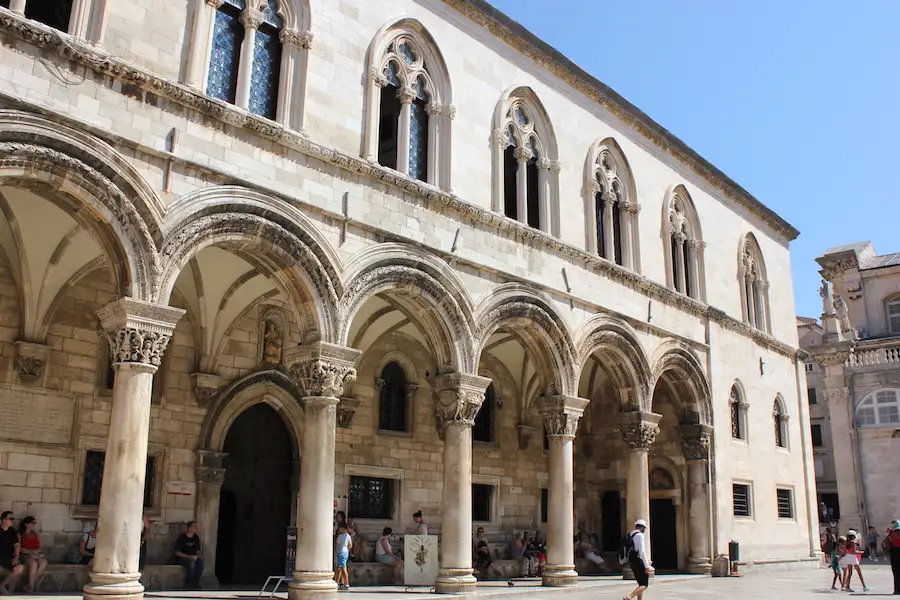
Rector's Palace

14th-century Gothic-Renaissance palace

14th-century Gothic-Renaissance palace featuring a museum

Mid-Day/Afternoon — Mount Srd

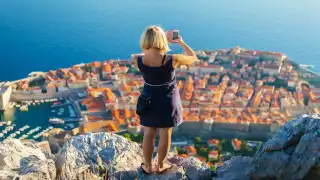
Mount Srd, towering above the ancient city of Dubrovnik, undoubtedly offers the best panoramic views of the old town and the surrounding coastline. You can ascend the 412m (1352ft) peak via an ultra-modern cable car near the old city walls, or get the blood pumping by hiking up a steep zig-zag trail to the top. Apart from the astonishing scenery, there's also a museum dedicated to the 1991-95 Croatian War of Independence. The original cable car was built back in 1969 but had to be completely rebuilt after suffering extensive damage during the conflict of the early 1990s. On a clear day, you can see up to 60 km (37 miles). It's for this reason the neighboring Imperial Fortress was built by the French on this spot back in the early 19th century. The cable car runs as soon as there are enough passengers, and the last departure from the lower station is thirty minutes before closing time, which can be as early as 4pm during the winter, and as late as midnight in the summer.

Homeland War Museum

Visit a fort held by the Croatians in their desperate struggle to defend Dubrovnik in the Yugoslav wars of the 1990s.

This fort at the summit of Mt Srd is called the Imperial Fort. Built on the orders of Napoleon, it was being used as a disco by the 1980s. However, it reverted to its original military purpose during the 1991-95 Balkans War, when it was heroically held by Dubrovnik's rag-tag defenders. Croatia had no army worthy of the name at the outbreak of hostilities, so it was mostly a local force of former army soldiers, policeman and untrained volunteers who manned the extremely precarious position. The Serb-dominated Yugoslav Federal Army overran all the surrounding territory and infamously bombarded the historic core of Dubrovnik, but somehow the Imperial Fort held on against overwhelming odds, so Dubrovnik was never occupied. The fort now houses the Museum of the Homeland War and recounts the story of the epic defense. The exhibits include: art and documentary photographs, weapons, mines and explosive devices, war maps, military orders, parts of military equipment, objects from every-day life which belonged to the residents and defenders of Dubrovnik during the siege, authentic recordings and video material, reminiscences of the participants, the armed forces war flags, the original flag that was raised on Mt Srd after the city was finally relieved, minefield maps, and war log books, etc. A memorial plaque with the names of those who died defending Dubrovnik has also been placed on Mount Srd.

Afternoon/Late Afternoon — Old City Walls

The mighty walls of Dubrovnik are considered to be among the greatest defensive fortifications of the Middle Ages. Impregnable throughout their history, the walls run for an incredible 2km (1.24mi), encircling the entire old city, and reaching a maximum height of 25m (82ft). They are reinforced by 17 towers, 5 bastions, and 3 fortresses. No wonder enemy sieges were ultimately unsuccessful, including the Serb siege during the Croatian War of Independence in the early 1990s when the ancient walls proved more effective at resisting modern weaponry than contemporary structures on the city's periphery. A dedicated walk along the entire length of the walls offers unsurpassed views of the city. The City Walls are paid entrance and are open all year round (but keep in mind that they close at 3:00 PM between November and March. The best time to do the walk in summer is early in the morning or as late in the afternoon as possible when the numbers of other people touring the walls are fewest. There are three entrances to the City Walls: at the start of the main thoroughfare called the Stradun, at St John's Fortress, and at St Lucas's Fortress.

Old Port

Check out the sailboats and other small craft in this fortified historic port.

The Old Town Harbour was built into the fortifications in the 15th century, although you can also see three enormous arches of an arsenal which dates all the way back to the 12th century. This was the home port for Dubrovnik’s large trading fleet which operated across the Mediterranean. While it may no longer be the main port for the city, it's still a good place to catch a boat or ferry to one of the many islands off the coast of Dubrovnik.

St John's Fortress (Fort St Ivana)

Gaze up at this 16th century fortress from a boardwalk jutting into the sea.

This massive fortress which once guarded the port also houses an aquarium and maritime museum.

Bokar Fortress

Breathe in the salty air as you gaze out upon the sea from the battlements of this fortress.

Built between 1461 and 1463, this tower juts out into the sea but overlooks the western entrance to the city, Pile Gate. It's primary purpose was to protect that gate from an expected Turkish invasion. From the tower you have a great view not only of the sea, but also across the water to Lovrijenac (St. Lawrence) Fortress, which is the film location of the Red Keep in Game of the Thrones.  

Minceta Fortress

Climb to the highest point of Dubrovnik to be rewarded with stunning views.

This impressive fort anchors the northern, landward side of the city. It was built in the 1460's on top of an older tower, in order to protect against a feared Turkish invasion. It is so massive, that legend says that each visitor to Dubrovnik was required to bring a stone to help in its construction. If you can climb to the top terrace of this fort you'll be rewarded with possibly the best views of the city and the Adriatic in the distance.

Late Afternoon to Evening — Old Town

The intricately fortified city of Dubrovnik acquired fabulous wealth as the Republic of Ragusa, which pursued a policy of strict neutrality and was managed by a semi-democratic system of government. It prospered for several centuries until the Napoleonic Wars brought its independence to an end. The income it earned from facilitating Mediterranean trade with the Balkan hinterland was used not only to build its impregnable stone walls and fortresses, but also to construct sumptuous churches, monasteries, and palaces inside the city walls. These remain so well preserved, even despite the military conflict of the early 1990s, that you could be mistaken for thinking you'd been transported back in time while exploring the maze of alleyways and back streets. The first thing to know about Dubrovnik's Old Town is that it gets very, very crowded during the high tourist season, and so if possible, it's best to tour it as early as possible. The main problem is caused by cruise liners that disgorge hundreds of passengers at a time; there can be up to six gargantuan liners in town at any one time, placing huge pressure on the city's facilities and infrastructure and leading to bottle-necks of tourists.

Onofrio's Large Fountain

Refresh yourself with a splash from what was once the city's main source of water.

This fountain dating back to 1444 was fed by an elaborate 7-mile (12km) long water system that delivered water from Mount Srd to Dubrovnik. The system was designed by the Italian architect Onofrio di Giordano della Cava, and the water was delivered to the populace by this fountain and a smaller one (the Small Onofrio fountain). Water poured out of 16 spouts in the large fountain and medieval visitors would have to wash here before being admitted into the hygiene-conscious city. This was hugely important to the city's standard of living and locals relied on the water supply until the 19th century. The fountain is much less grand than it once was, as it was badly damaged in a 1667 earthquake.

Franciscan Monastery

Take refuge from the tourist crowds in a serene retreat located just off the Stradun.

The 14th century Franciscan Monastery should be near the top of your 'must visit' list. When the Stradun just outside is chock-a-block with visitors, the monastery remains totally serene. The cloister, decorated with rows of double arches and confusion of animal heads and fantastic animals, is the perfect sanctuary from the blazing sun and the hordes outside. The museum and apothecary's shop (allegedly the oldest pharmacy in Europe) is also worth a look. On your way out, try standing on the small stone jutting out of the wall to the left of the entrance - it's become a modern-day endurance test.

Sponza Palace

See what's up in Dubrovnik's most beautiful coutryard.

This 16th century palace, built in a mix of Gothic and Renaissance style, has served many functions over the centuries, such as a customs house, mint, and treasury. It also became a cultural center as it housed a literary academy. Today the cultural connection remains as its wonderful courtyard is given over to art exhibitions and occasional concerts. The Palace also houses the Memorial Room of the Defenders of Dubrovnik, a discreet exhibition of photographs of those killed during the 1991-92 siege by the Yugoslav Federal Army.

The Cathedral and Pustijerna

Check out the light and airy cathedral and then wander into the dense medieval neighborhood just south of it.

Dubrovnik's cathedral is an unusually restrained Baroque church completed in 1731, with large windows that give it a light and bright atmosphere. Legend has it that the original church destroyed in the 1667 earthquake was funded by a gift from Richard the Lionheart, who was shipwrecked and saved near Dubrovnik on his way home from the Third Crusade. The treasury to the left of the high altar occupies a purpose-built room hidden behind heavy wooden doors secured with three locks. The standout objects here are reliquaries containing various body parts of St Blaise. To the south of the cathedral you will enter the Pustijerna, the city's oldest quarter and a great place to explore tiny lanes and passageways. Unlike the previous cathedral, it mostly survived the earthquake of 1667 and thus still preserves its medieval feel.

Jesuit Church & Staircase

Climb the steps made famous by the Game of Thrones to visit Dubrovnik's largest church.

Dubrovnik's largest church, the Jesuit Church, is modeled on the Church of the Gesù in Rome and the steps that sweep up to it resemble Rome's Spanish Steps as well. Both will be recognizable to any fan of Game of Thrones - the church was partly used as a location for the Great Sept of Baelor, while the steps are where Cersei began her Walk of Shame. The church of course has an important history stretching back much further than Game of Thrones. Completed in 1725, it is decorated with frescoes which tell the story of the Jesuit order's founder, St. Ignatius. Adjacent to the church is the Jesuit College, which has educated Dubrovnik's brightest for centuries, and is still the  best high school in the city. 

Stradun

Take a walk down the austere yet very impressive main street of Dubrovnik.

This is the main thoroughfare of Dubrovnik, and follows the line of a marshy channel that once separated the island of Laus from the mainland. The striking uniformity of the street is the legacy of the earthquake of 1667 and the resulting reconstruction that placed a higher value on order and purity than innovation and design. This discipline has been maintained to this day, meaning there are no conspicuous shop and hotel signs, creating a refreshing contrast with most modern streets. The Stradun disects the Old Town into northern and southern halves, and connects the western Pile Gate with the eastern Ploče Gate. You'll also find Bell Towers and 15th-century fountains (the Large and Small Onofrio's Fountains) on either end. At the eastern end the Stradun widens to form a small square, the Luža, or "Loggia". Lined by palaces and the beautiful Church of St. Blaise, this is the very heart of the Old Town.

image

Day 6

Dubrovnik

image

Day 7

Dubrovnik

Day 7

Dubrovnik

icon
icon
icon

Morning/Mid-Day

Lokrum Island

Almost a stone's throw from Dubrovnik's walled city, the island of Lokrum is the perfect getaway spot if you're looking for some quiet walking, lounging in the sun or bathing in crystal clear waters from rocky beaches far from the clamor of the crowds and motorboats. There's also an exquisite little green lagoon on the island connected to the sea by a tunnel through the rocks that makes for an impossibly romantic swimming spot. Plus there's an atmospheric old Benedictine monastery with a good quality restaurant, a handful of cafes and ice-cream booths, and a botanical garden to which admission is normally included in the price of the ferry to the island. Getting there is easy - during the warm months there is a ferry that leaves Dubrovnik's Old Port every 30min beginning at 9 am and finishing at 7 pm. Once arrived its easy to explore since the island is criss-crossed by trails.
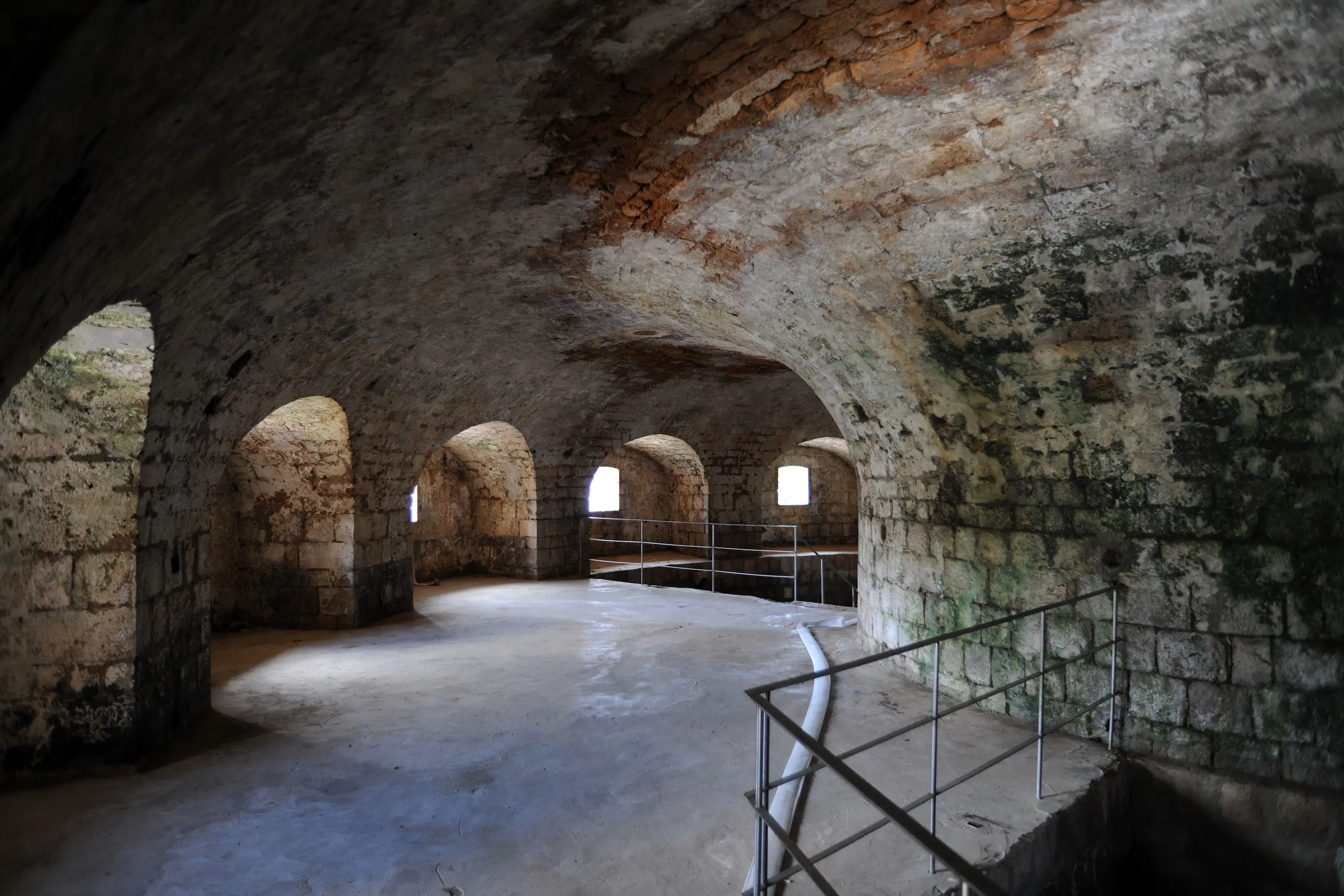
Lokrum Island

Morning/Mid-Day — Lokrum Island

Almost a stone's throw from Dubrovnik's walled city, the island of Lokrum is the perfect getaway spot if you're looking for some quiet walking, lounging in the sun or bathing in crystal clear waters from rocky beaches far from the clamor of the crowds and motorboats. There's also an exquisite little green lagoon on the island connected to the sea by a tunnel through the rocks that makes for an impossibly romantic swimming spot. Plus there's an atmospheric old Benedictine monastery with a good quality restaurant, a handful of cafes and ice-cream booths, and a botanical garden to which admission is normally included in the price of the ferry to the island. Getting there is easy - during the warm months there is a ferry that leaves Dubrovnik's Old Port every 30min beginning at 9 am and finishing at 7 pm. Once arrived its easy to explore since the island is criss-crossed by trails.

Benedictine Monastery

Explore the ruins of a Benedictine monastery which was the rightful owner of the island.

The island was actually the possession of this former monastery for several centuries until it was sold by the Republic of Regusa to make debt payments to Napoleon in the late 18th century. When the monks were unfairly evicted, legend says that they cursed "anyone who should claim Lokrum for his own pleasure!” Sure enough, all the noblemen involved in the eviction met untimely and gruesome deaths. The island was bought in 1859 by Maximilian von Hapsburg, Archduke of Austria. He transformed the former Benedictine monastery into his summer palace, laid out gardens and wrote bad verse about the island's beauty. The monks' curse followed Maximilian as well, as he met his end in front of a firing squad in Mexico in 1867. Later it was handed over to the Emperor Franz Josef's son Rudolf, who wintered here to soothe his bronchial problems. He also met a famously sinister end; in a murder-suicide with his underage lover. While its owners have met sinister fates, those visitors who come only for a day's enjoyment find it a place of simple delights. 

Fort Royal

Climb to the top of the island to visit the ruins of a 19th century fortress.

After the French took control of Dubrovnik during the Napoleonic wars, they seized the strategically located island from the Benedictine monastery and began building this fortress on the highest point of the island. It was not completed until 1835, by which point Dubrovnik was under Austrian rule. In addition to checking out the fort, you'll enjoy a great view.

Dead Sea

Take a dip in this completely calm saltwater swimming hole.

Linked to the sea by underground channels in the karst, this small but deep saltwater lagoon is definitely a romantic place for a swim. It is named after the Dead Sea, because it is similarly easy to swim in.

Afternoon to Early Evening — Beach Time

Dubrovnik is much more than just the Old Town and there are a number of attractive beaches in and around the city where you can enjoy a swim in near pristine waters or simply soak up the sun on a rented deck chair; there's never a cafe or ice-cream seller too far away. Croatia's beaches are usually quite rocky, but in Dubrovnik, they're often pebble beaches or a mixture of fine shingle and sand, although there's also a beach called Copacabana that has imported sand. Locals talk about their favorite bathing spots like the British discuss the weather; we make it easy to discover the place that's right for you so you don't have to ask. When you first arrive in Dubrovnik and you're touring the Old Town it's often not immediately apparent where the swimming beaches are. You'll see people swimming in the sea around the city walls, but usually they're sunning themselves and jumping into the water from rocky outcrops that can be difficult to access if you don't know where exactly to go. There are, however, a good dozen sandy or pebbly beaches in the greater Dubrovnik area, with two or three within an easy walking distance of the old town. Other good beaches can be reached without too much trouble by boarding a municipal bus from Pile Gate or other nearby stops according to where your hotel is located.

Danče Beach

Hang out in this secluded beach which is nearest to the Old Town.

This rock-strewn stretch of coast popular with the locals, and is a few minutes' walk southwest of the Lovrijenac fortress. It has clean and rather deep water, so it's ideal for actual swimming rather than playing in the surf (but NOT ideal for children). There is a church and the monastery of St. Mary above the beach from where you can sometimes see the nuns waving to passing ships in the traditional Dubrovnik manner. This beach was the training site of the “Jug” water polo club which was the Croatian and European champion over 20 times, so Danče is referred to by locals as the cradle of Dubrovnik and world water polo.

Banje

See for yourself why this sand beach is the most popular in Dubrovnik.

Another beach very close to the Old Town is Banje. This is the busiest of Dubrovnik's beaches with a mixture of fine shingle and sand, backed by trendy cafes, and with good views of the island of Lokrum. It holds a special place in the hearts of the locals, as almost all of them spent at least part of their childhoods here. The beach is equipped with a shower area, a changing area, and sunbeds and parasols for rent. Other than the sun, you can enjoy a round of water sports, such as jet-skiing, paragliding, water tubing, banana rides, and other similar activities.

Sveti Jakov

Take a walk to reach this pebble beach which enjoys great views.

Sveti Jakov lies a bit further to the southeast of the Old Town - a 20 minute walk along the coastal lane. This is a smallish stretch of pebble at the bottom of a cliff, reached by steps that descend from the coastal path midway between St James's Monastery and the Belvedere Hotel. It has fantastic views back towards the Old Town, and it's west-facing, so it catches the afternoon and evening sun.

Copacabana Beach

Hang out on this small crescent beach and enjoy the nice cafes and great view.

Copacabana beach is the furthest from the Old Town. Unlike its Brazilian namesake, this is a small crescent comprising pebbles and imported sand on the northwest side of Babin Kuk. The combination of enjoyable cafes and good views of coastal mountains makes it a good place for chilling out. The nearest bus stop is Babin Kuk at the end of the no.6 Pile Gate to Babin Kuk line; you'll have to walk an extra few hundred yards/meters to get to the beach from the bus stop.

Early Evening/Evening — Dining Out

Due to the mass tourism which often overwhelms the city, Dubrovnik doesn't have a particularly great reputation as a purveyor of haute cuisine, and many restaurants favor high prices over quality. Nonetheless, you can find some really great restaurants in the city, which is only as it should be considering Dubrovnik's seaside location and the quite wonderful Dalmation culinary tradition which it has to draw upon. Indeed, the atmosphere of the city, with its ancient stone buildings and al fresco cafes lining the cobblestone streets, makes for a perfect dining setting. Meaning that if you choose well, you have all the ingredients necessary for an ideal culinary experience.

image

Day 7

Dubrovnik

image

Day 8

Dubrovnik

Day 8

Dubrovnik

icon
icon

Morning to Late Afternoon

Elafiti Islands

A day trip to one of the lush, vegetation-carpeted Elafiti Islands presents the perfect opportunity to savor the Croatian Adriatic at its unspoiled, get-away-from-it-all best. The largest three islands – Koločep, Lopud, and Šipan – are the ones you will likely aim for as it's only those that are permanently inhabited and serviced by ferries. All the islands have nice beaches, attractive harbor towns and are peppered with enchanting stone churches and old fortresses.  Tourism in the Elafiti remains very low key despite the influx of day-trippers and numerous boat excursion operators; the almost total absence of cars contributes to the relaxing ambiance, as private vehicles on not allowed on any of the islands except Šipan.
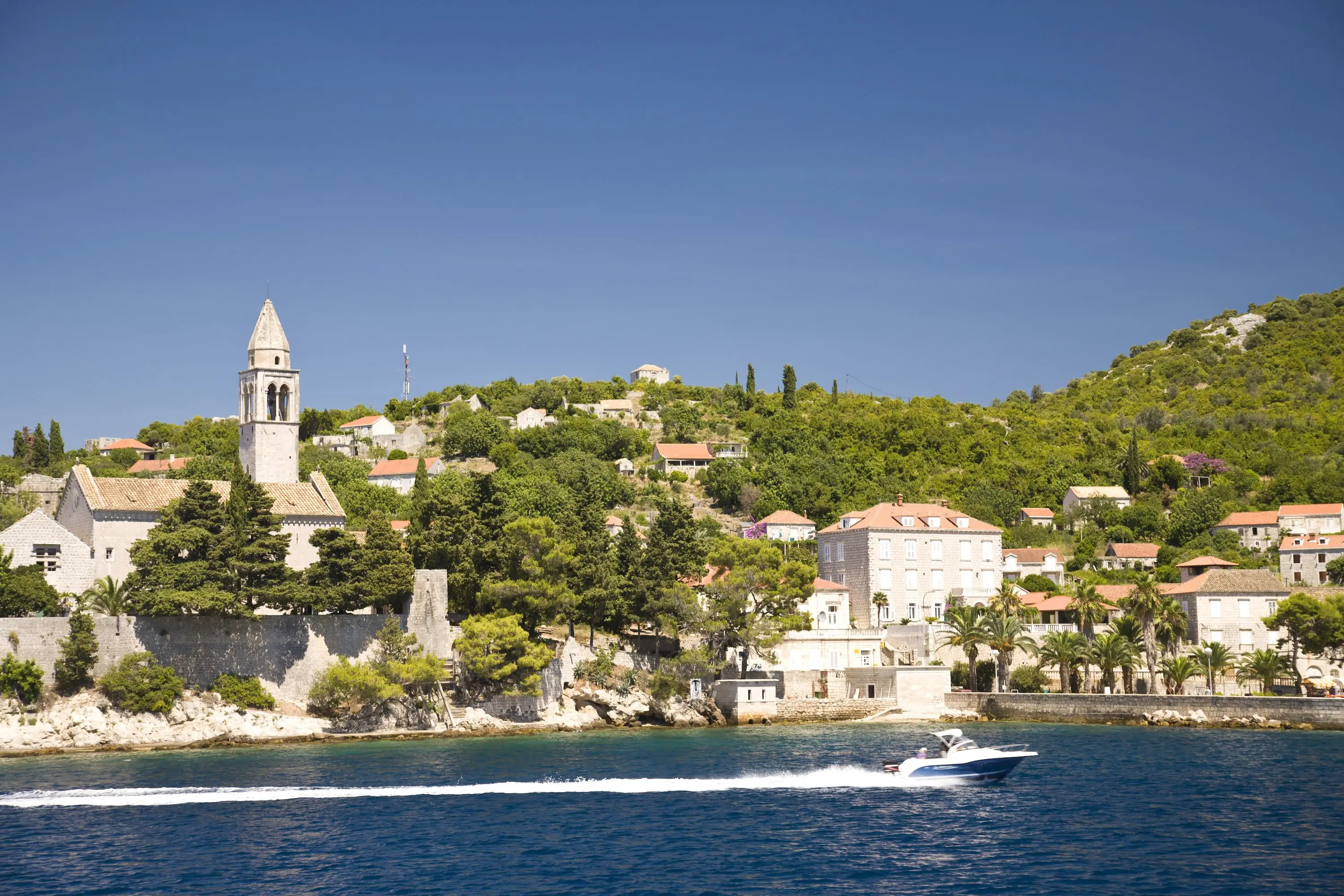
Elafiti Islands

Morning to Late Afternoon — Elafiti Islands

A day trip to one of the lush, vegetation-carpeted Elafiti Islands presents the perfect opportunity to savor the Croatian Adriatic at its unspoiled, get-away-from-it-all best. The largest three islands – Koločep, Lopud, and Šipan – are the ones you will likely aim for as it's only those that are permanently inhabited and serviced by ferries. All the islands have nice beaches, attractive harbor towns and are peppered with enchanting stone churches and old fortresses.  Tourism in the Elafiti remains very low key despite the influx of day-trippers and numerous boat excursion operators; the almost total absence of cars contributes to the relaxing ambiance, as private vehicles on not allowed on any of the islands except Šipan.

Koločep Island

Hop over to the closest of the islands and enjoy its pleasant sand beach.

Only 30 minutes from Dubrovnik, Koločep is the smallest of inhabited Elafiti Islands with a population of fewer than 150. The main settlement of Donje Čelo is a pleasant cluster of stone houses with an excellent curving sandy beach. Inland there are several paths that lead you into dense. fragrant pine and deciduous forest that covers the southern part of the island.

Lopud Island, Fortified Monastery

Explore Lopud's fortified monastery and take a hike to an abandoned fortress.

Lopud used to act as a retreat for nobles from the city of Dubrovnik, and a large part of the Republic's fleet used to be based here; the ruined palaces of shipowners still occupy crumbling corners of the island's only village (also called Lopud). Like all coastal island ports in Dalmatia, Lopud hugs a wide curving bay that boasts a long, sometimes crowded and reasonably sandy beach. Its most prominent monument is the fortified monastery not far from the quay where most catamarans and boats dock. In the other direction along the waterfront, steps lead up to the ruined palace and private chapel of Miho Pracat, a 16th-century merchant, and shipowner whose bust adorns the Rector's Palace in Dubrovnik. Not far from that is the Đorđić-Mayner Park, which is one of the nicest in a region, with trees from around the world grouped beneath soaring pines, and roses and cacti and other ornamental plants spread out underneath. There are some very pleasant hiking paths that start at the back of the village and lead up onto the high ground at the center of the island, one of which (look for signs indicating 'Kaštio' or 'Trvdava') climbs towards the Ragusan fortress, which is about a 40min walk away. It's a total ruin these days, but the view from its highly atmospheric ramparts is magnificent, with stark coastal mountains to the east, the green, cone-shaped hills of Šipan and Pelješac ringed by deep blue water to the north. You'll also stumble upon numerous photogenic ancient church ruins along the way.

Sipan Island, Village of Suđurađ

Wander or cycle through this landscape of craggy hills, olive orchards, orange groves, and small vineyards.

The largest of the populated Elafiti, Šipan is a sleepy island full of craggy hills, but with the largest population in the island group it also has a slightly more diversified economy, hence the proliferation of olive orchards, orange groves and small vineyards strung out along the fertile plain in the hinterland. The main port of call is Suđurađ, another bay-straddling clump of stone houses, but this time overlooked by a pair of imposing stone towers built to guard the walled summer villa of a wealthy 16th century Dubrovnik shipowner. Parts of the villa have been restored, but unfortunately, it's not open to the public. Running around the side of the villa (veer left behind it), the village's main alleyway ascends towards the blockhouse-shaped Church of the Holy Spirit, a fortified structure built to serve as a refuge for the locals in the event of a pirate attack. Ask at any of the cafes or souvenir shops in Suđurađ if you'd like to rent a bicycle for a few hours to see as much of the island as possible before your return sailing.

Late Afternoon to Evening — Sea Kayaking in Dubrovnik

Dubrovnik is the perfect place to try out some sea kayaking if you've never done it before; even experienced kayakers will enjoy this adventure. The water is warm, crystal clear and very smooth, and you get to see the old city walls of Dubrovnik from a different angle. Accompanied by English speaking instructors, you will set off to explore the caves and sights of Lokrum island, also called 'The Land of Love'.

Lokrum

Small island near Dubrovnik

Small island near Dubrovnik

image

Day 8

Dubrovnik

image

Day 9

Dubrovnik

Day 9

Dubrovnik

icon

8:00 AM - 5:00 PM

Guided Excursion to Montenegro

Barely one hour from Dubrovnik, the Montenegro Littoral provides visitors with incomparable natural beauty and a dizzying array of historical sites. On this private excursion, your driver will take you to the mouth of the Bay of Kotor and along a road that snakes through the towns of Risan and Perast to the port city of Kotor.

Guided Excursion to Montenegro

8:00 AM - 5:00 PM — Guided Excursion to Montenegro

Barely one hour from Dubrovnik, the Montenegro Littoral provides visitors with incomparable natural beauty and a dizzying array of historical sites. On this private excursion, your driver will take you to the mouth of the Bay of Kotor and along a road that snakes through the towns of Risan and Perast to the port city of Kotor.

image

Day 9

Dubrovnik

image

Day 10

Depart Dubrovnik

Day 10

Depart Dubrovnik

icon

To Be Determined

Transfer to Airport

Dubrovnik has one main airport, Dubrovnik Airport, also referred to as Čilipi Airport. The most affordable way to reach Dubrovnik airport is by public bus (2 EUR), however, this will take quite a lot of time. You can still save quite a bit of money in comparison to a taxi by taking the direct Atlas Shuttle bus (6 EUR). The buses pick up near the western entrance to Dubrovnik, Pile Gate, and departs roughly every 30 minutes during the day. Your hotel can arrange a reliable taxi which will cost roughly 35-50 EUR. UberX is also available, or you can also arrange a private transfer for added convenience. If you are picked up about 2 hours and 45 minutes before your departure time, you should arrive at the airport with over two hours to spare, depending on traffic. Keep in mind that if staying in Old Town, the taxi cannot pick you up directly from the hotel, meaning you will have to walk to the Pile Gate with your bags. If this is an issue, be sure to arrange assistance with a private transfer service or with your hotel beforehand.

Transfer to Airport

To Be Determined — Transfer to Airport

Dubrovnik has one main airport, Dubrovnik Airport, also referred to as Čilipi Airport. The most affordable way to reach Dubrovnik airport is by public bus (2 EUR), however, this will take quite a lot of time. You can still save quite a bit of money in comparison to a taxi by taking the direct Atlas Shuttle bus (6 EUR). The buses pick up near the western entrance to Dubrovnik, Pile Gate, and departs roughly every 30 minutes during the day. Your hotel can arrange a reliable taxi which will cost roughly 35-50 EUR. UberX is also available, or you can also arrange a private transfer for added convenience. If you are picked up about 2 hours and 45 minutes before your departure time, you should arrive at the airport with over two hours to spare, depending on traffic. Keep in mind that if staying in Old Town, the taxi cannot pick you up directly from the hotel, meaning you will have to walk to the Pile Gate with your bags. If this is an issue, be sure to arrange assistance with a private transfer service or with your hotel beforehand.

image

Day 10

Depart Dubrovnik

What's Included In Adriatic Dream Trip

Fork

Pre-Paid Tours and Activities:

  • Walking Tour of Split Old Town & Diocletian's Palace
  • Guided Walking Tour of Dubrovnik's Old Town
  • Guided Excursion to Montenegro
train

Pre-Paid Transportation:

  • Shuttle Service from Split to Dubrovnik
train

Accommodation:

  • 4 nights at a hotel of your choice in Split
  • 5 nights at a hotel of your choice in Dubrovnik
mobile

Go Real Travel Mobile App:

  • Itinerary Plan & Reservations Info
  • Points of Interest
  • Detailed Travel Information
  • Maps & Directions

Other Trips You May Like

Trip image

8 Days

From$1585USD

Explore the Hidden Gems of Croatia: 8-Day Itinerary

View Trip
Trip image

10 Days

From$2239USD

Croatia & Slovenia: 10 Days of Historic Coastline, Waterfalls & Mountains

View Trip
Trip image

14 Days

From$3495USD

A Perfect 2 Week Itinerary in Croatia and Slovenia for Active Travelers

View Trip
Trip image

7 Days

From$1525USD

Captivating Croatia & Slovenia: A Week of Coastal Charms and Alpine Wonders

View Trip
Trip image

7 Days

From$1390USD

7-Day Adventure in Croatia and Slovenia

View Trip
Trip image

10 Days

From$1749USD

From the Adriatic to Europe's Heart: Exploring Croatia, Budapest, and Prague

View Trip
Trip image

3 Days

From$875USD

3 Day Budapest Escape - The Pearl of the Danube

View Trip
Trip image

3 Days

From$499USD

Seville Unveiled: A 3-Day Journey Through History, Culture, and Nightlife

View Trip
Trip image

3 Days

From$479USD

Belgrade Nights and Cultural Lights

View Trip

Featured Blogs

Trip image
Croatia
Trip planning

Your Ultimate 12-Step Guide to Plan a Trip to Croatia

Trip image
Dubrovnik
Day trips

10 Fun Day Trips From Dubrovnik – Complete Guide

Trip image
Europe
Seasonal guide

10 European Cities to Visit in Winter

Trip image
Europe
Family

How to Plan the Perfect Family Trip to Europe

Trip image
Europe
Travel tips

11 Tips for First Time Travelers to Europe

Trip image
Europe
Booking flights

What’s The Best Time to Book International Flights to Europe?

Trip image
Europe
Transport

A Guide To Public Transportation and Taxis in Europe

Our Customers Say It Best

Malini Dutta, Boston, Massachusetts
We can't thank you enough for the detailed plans, maps, and suggestions. It really felt that someone was holding our hands and showing us around. We had all the excitement of discovering foreign lands, with none of the problems that can happen while negotiating unfamiliar places. In fact, all the cities felt like home within a few hours of arriving and exploring.
Bev and Mark Frankel, Williamsburg, Virginia
We could not be more pleased with Go Real Travel! You took the guess work out of things like public transport but still managed to allow us the freedom to tour as we wanted. Our guides were exceptional and every time I saw a Viking Cruise tour of 25 people, I realized the quality experience we were getting with Go Real.
Marianne Strydom, Paarl, South Africa
I just wanted to thank you for organizing an amazing trip for me – I packed in so much in such a short period of time and everything was just perfect. The way you do things makes it possible to really get to know the destination, which for me as a travel agent could not have been better.
Otto Chuy, Los Angeles, California
I am still surprised how everything worked as planned, without a hitch. All instructions in your itinerary were precise and correct. Your suggestions and comments in each of the locations we went to were very helpful. All your guides, without exception, were wonderful and exactly on time.

Explore cities in more detail

medieval walls and buildings in split croatia

Split

A lively port city situated between mountains and sea, Split is one of Croatia's most visited—and most beautiful— cities. With historical monuments sprinkled across the Dalmatian coastline and trendy cafes and shops popping up within the ancient walls of the city center, it's easy to see why this extraordinary city is such a popular travel destination. Split is always abuzz with visitors and locals alike enjoying a seafood meal outside, relaxing on the beach, or boating on the Adriatic. The weather is almost always beautiful, so the streets tend to be crowded with people looking to take advantage of the sunshine. A walk through Split feels like a journey through past centuries. The coastal town showcases modern architecture next to structures like Diocletian's Palace, which date back to the times of the Roman Empire. In fact, Split's Old Town resides within the walls of Diocletian's Palace. As you stroll through the narrow marble streets, you'll be amazed by the number of modern restaurants and bars populating this ancient area. It's easy to pack plenty of culture, history, activity, and leisure all into one amazing trip.   

red rooftops and medieval walls of dubrovnik croatia

Dubrovnik

Situated in southern Croatia on the Adriatic Sea, Dubrovnik is famous for many different reasons. Everywhere you look in Dubrovnik is a stunning view. Known for its beautiful Old Town and ancient walls, Dubrovnik is a resilient city that deserves its nickname as the pearl of the Adriatic. Strolling through the limestone streets lined with baroque buildings, alongside the animated locals, will inspire you to keep exploring.  The city walls offer spectacular views of the red rooftops in Old Town and the shimmering blues of the Adriatic Sea. After a tiring trek in the hot Croatian sun, cool off at one of Dubrovnik’s divine pebbly beaches and go swimming in the sea. The best way to end the day is a visit to Stradun, the main street, to pop into one of the cafes or restaurants, and relax during a delicious meal of Croatian specialties and wine.   

river and cityscape of the Slovenian capital Ljubljana.

Ljubljana

One of Europe's smallest capitals, Ljubljana is still Slovenia's biggest city. What it lacks in size, though, it more than makes up for in charm, beauty, and personality. It's also one of Europe's greenest cities and is perfect for a bike ride or a leisurely walk. With plenty of open spaces, gorgeous architecture, and cultural treats, it's easy to fill the time here. The Tromostovje, or Triple Bridge, is one of Ljubljana's main attractions, connecting the Old Town with the new. Excellent pizza can be found here, and a series of bars and cafes are dotted throughout the town and along the banks of the river. The anarchic Metelkova City reveals Ljubljana's grittier side, with art exhibitions and performances housed in a disused military barracks. Ljubljana is charm and beauty compressed neatly into a small and pretty space.

waterfalls in plitvice lakes croatia

Plitvice Lakes

Plitvice Lakes in Croatia is a national park featuring 16 interconnected lakes. It was once one of Yugoslavia’s most popular tourist hotspots, and today this UNESCO World Heritage Site attracts visitors from all over the world. The lakes’ main draw is their sublime natural beauty. Turquoise pools, joined by a series of waterfalls and cascades, are set like jewels within the park’s lush green hillsides. Wooden hiking paths snake between the lakes and along the shores.   Plitvice hosts an impressive variety of wildlife, from wild boars and dormice to hundreds of butterfly species, and countless types of birds. The park’s most famous resident is the elusive brown bear. Occupied by hostile forces during the Croatian War of Independence, this park’s history isn’t all paradisical. However, it’s easy to forget that troubled past when spending time by the lakes today. Today, Plitvice’s mood is all about peace, relaxation, and appreciation of stunning natural beauty.

hvar docks with churchtower

Hvar

Hvar, an enchanting Croatian island in the Adriatic Sea, is a gem waiting to be discovered. Located just an hour’s ferry ride from Split, it’s known for its sun-drenched days, shimmering waters, and vibrant lavender fields. Visitors can explore charming medieval streets, elegant harbors, and enjoy stunning views from ancient hilltop fortresses. Stroll through Hvar Town’s lively squares, savor local wines at quaint seaside cafes, or relax on secluded beaches surrounded by crystal-clear waters. With a laid-back Mediterranean vibe, Hvar offers a perfect blend of culture, history, and natural beauty that makes it a must-see for those seeking an idyllic island escape.

Rovinj Croatia Main

Rovinj

Rovinj, set along the western coast of Croatia’s Istrian Peninsula, feels at once deeply Mediterranean and distinctly its own. The old town rises from a small peninsula in a tangle of narrow stone lanes, pastel façades, and worn stairways that lead gradually upward to the hilltop Church of St. Euphemia. Fishing boats still drift in the harbor below, while small cafés and galleries occupy buildings shaped by centuries of Venetian influence. Life here unfolds at an easy, unhurried pace. Locals gather along the waterfront promenade in the evening light, and the sea is never far from view—glimmering between houses or stretching wide beyond the rocky shoreline. Rovinj is less about grand monuments than atmosphere: the scent of salt in the air, the rhythm of waves against the harbor, and the quiet beauty of a town that has grown slowly and gracefully beside the Adriatic.