👋

Hi! Need help planning your dream trip? 🌍

Go Real Travel Assistant

Online

Welcome! Where are you in your journey?

Pick the option that fits you best so we can route you to the right help.

From the Adriatic to Europe's Heart: Exploring Croatia, Budapest, and Prague

destination-icon10 Day Tour of Split, Zagreb, Budapest and Prague

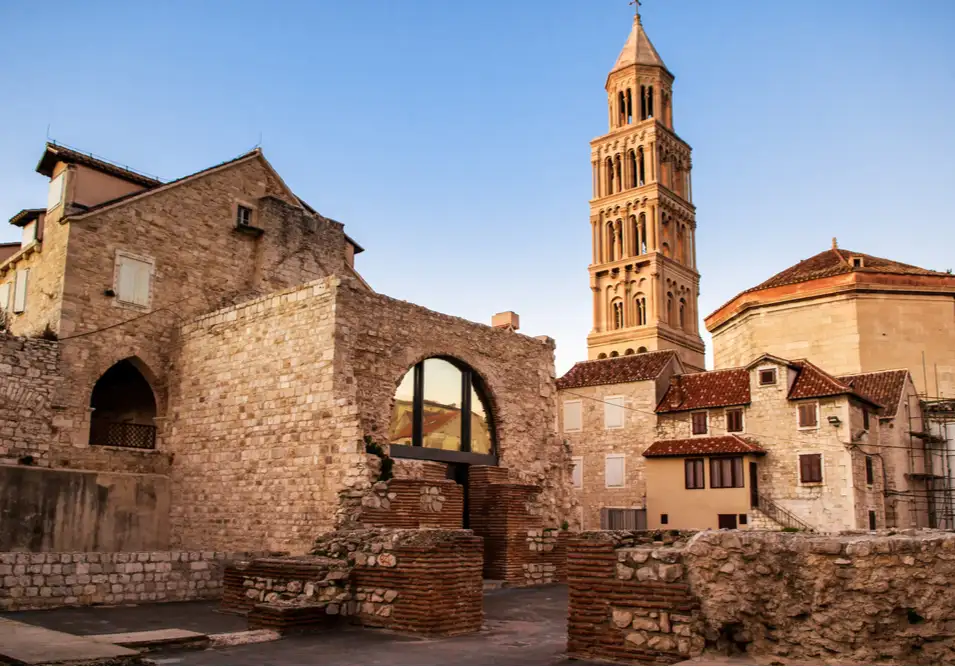
Diocletian's Palace in Split
Split
Chain Bridge in Budapest
The Little Quarter in Prague
image
arrowLightLeft
arrowLightRight
calendar-icon
10 Days 9 Nights
calendar-icon
Best Time: Jan-Dec
building-icon
Cultural Exploration
family-icon
History Buffs
Take an enchanting trip from the Adriatic Sea to the heart of Europe, exploring some of Central Europe’s most scenic & historic cities. Start in Split, where the remnants of Diocletian's Palace transport you back to Roman times. Wander charming medieval lanes in Zagreb and discover why Croatia’s capital is one of Europe’s hottest new destinations. In Budapest, marvel at the stunning Buda Castle and unwind in historic thermal baths. Conclude in Prague, where Prague Castle and the medieval town of Kutná Hora await. With private guided tours and detailed travel guidance through our mobile app, you’ll enjoy stress-free authentic discovery.
  • Explore the Roman emperor Diocletian's Palace and wander the Venetian alleyways of Split's Old Town.
  • Tour Zagreb's historic neighborhoods of Kaptol and Gradec with a private guide.
  • Enjoy panoramic views from Budapest's Buda Castle and relax in the historic Gellért and Rudas baths.
  • Follow the Royal Route to the majestic Prague Castle, the largest castle complex in Europe.
  • Take an excursion to the medieval Kutná Hora, renowned for its history and striking "bone church".
Take an enchanting trip from the Adriatic Sea to the heart of Europe, exploring some of Central Europe’s most scenic & historic cities. Start in Split, where the remnants of Diocletian's Palace transport you back to Roman times. Wander charming medieval lanes in Zagreb and discover why Croatia’s capital is one of Europe’s hottest new destinations. In Budapest, marvel at the stunning Buda Castle and unwind in historic thermal baths. Conclude in Prague, where Prague Castle and the medieval town of Kutná Hora await. With private guided tours and detailed travel guidance through our mobile app, you’ll enjoy stress-free authentic discovery.
  • Explore the Roman emperor Diocletian's Palace and wander the Venetian alleyways of Split's Old Town.
  • Tour Zagreb's historic neighborhoods of Kaptol and Gradec with a private guide.
  • Enjoy panoramic views from Budapest's Buda Castle and relax in the historic Gellért and Rudas baths.
  • Follow the Royal Route to the majestic Prague Castle, the largest castle complex in Europe.
  • Take an excursion to the medieval Kutná Hora, renowned for its history and striking "bone church".
European Adventure
Diocletian’s Palace
Castles & Chateaux
Scenic Europe
Bačvice Beach
Natural Beauty
Exploring European Beauty
Old Town
Architecture
Traveling Through Europe
Lower Town
Architecture
European Wonders
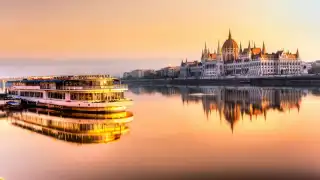
Hungarian Parliament
Architecture
Captivating European Destinations
National Museum
Museums & Galleries
Picturesque Europe
Central Market
Street Markets
European Charm
Castle Hill
Castles & Chateaux
Discovering Europe's Treasures
Prague Castle
Castles & Chateaux

Must see sights

European Adventure
Diocletian’s Palace
Castles & Chateaux
Scenic Europe
Bačvice Beach
Natural Beauty
Exploring European Beauty
Old Town
Architecture
Traveling Through Europe
Lower Town
Architecture
European Wonders
Hungarian Parliament
Architecture
Captivating European Destinations
National Museum
Museums & Galleries
Picturesque Europe
Central Market
Street Markets
European Charm
Castle Hill
Castles & Chateaux
Discovering Europe's Treasures
Prague Castle
Castles & Chateaux
Loading...

Starting from

$1749

per person

no-flightNot included

Secure Your Customizable Trip

Enter your details to embark on a journey that can be tailored just for you.

Start

Travelers

0 travelers
Add Room
Remove Room

Preferred Hotel Stars

Select Hotel Stars
Craft Your Own Itinerary

Select your interests and destinations for a trip plan inspired by you.

Adriatic and Heart of Europe Trip - Map & Itinerary

Enable/Disable Map Scrolling

Click To Make Map Interactive

Adriatic and Heart of Europe Trip Timeline

Arrival

3 nights

Split

Croatia

Train: 6.5h

1 nights

Zagreb

Croatia

Train: 6h

2 nights

Budapest

Hungary

Train: 7h

3 nights

Prague

Czech Republic

Departure

Day-By-Day Itinerary of Adriatic and Heart of Europe Trip

image

Day 1

Arrive Split

Day 1

Arrive Split

icon
icon

To Be Determined

Arrival in Split and Private Transfer to Hotel from Airport

We will schedule a pick up for 15 minutes after your flight's arrival time. You will be met in the terminal by an English speaking driver holding a sign with your name on it. The ride is for your party only - you will not be sharing a vehicle. The cost of the ride will be included in your itinerary package.  IMPORTANT NOTE:  Please be aware the car service can fit up to 1 checked item of luggage and 1 personal item per person, such as a purse or small backpack. If you think you will have more baggage, please inform your travel consultant as this may result in an additional fee.

Arrival in Split and Private Transfer to Hotel from Airport

To Be Determined — Arrival in Split and Private Transfer to Hotel from Airport

We will schedule a pick up for 15 minutes after your flight's arrival time. You will be met in the terminal by an English speaking driver holding a sign with your name on it. The ride is for your party only - you will not be sharing a vehicle. The cost of the ride will be included in your itinerary package.  IMPORTANT NOTE:  Please be aware the car service can fit up to 1 checked item of luggage and 1 personal item per person, such as a purse or small backpack. If you think you will have more baggage, please inform your travel consultant as this may result in an additional fee.

Mid-Day/Afternoon — Diocletian's Palace

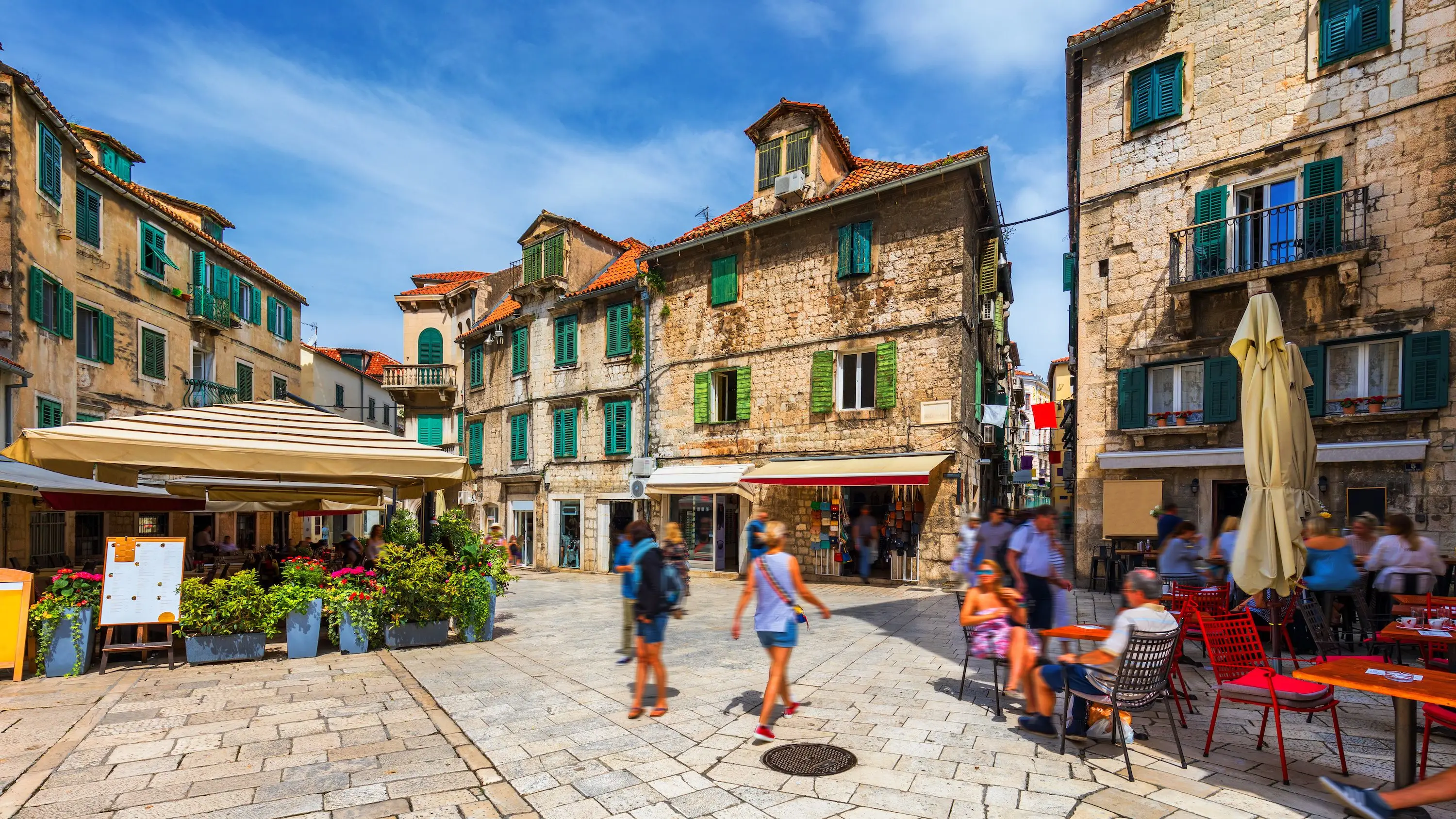
Split's Old Town started out as a luxurious retirement palace for the Roman Emperor Diocletian. As Roman emperors often met bloody ends, about half of the palace consisted of a less luxurious fortress designed to accommodate a large garrison of loyal Roman soldiers. Within the palace's high walls there were also temples, streets, and large courtyards, meaning it was only natural that long after the Diocletian was gone and the empire fallen, much of the palace was incorporated into Split's Old Town. Indeed about half of the Old Town consists of the former palace area. Despite falling into disrepair and constant reconstructions over the intervening millennia, the Palace remains one of the best-preserved examples of Roman architecture in the world. It's principal set-piece buildings, such as Diocletian's mausoleum and the Temple of Jupiter still remain. But the palace is far from being just an archeological site and it continues to this day as a living and breathing historical monument with 2,000 to 3,000 people still resident within its ancient walls. This means that so much tinkering has gone on over the centuries that it's no longer immediately recognizable as an ancient Roman structure. On the other hand, up close and personal you can still make out the remains of some of the imperial apartments that are used today as outdoor bars and cafes and shops. And the medieval tenements built by the Venetians were built in large part from the stones scavenged from Diocletian's original buildings. The tangled mass of alleyways, small squares, and narrow lanes just outside the Palace is also well worth exploring. The Venetian architecture makes the setting particularly enchanting (Split was ruled by the Republic of Venice for centuries).

Peristyle

See the beautiful courtyard which was once the center of the palace, and is now the heart of Split.

The Peristyle was the central courtyard of the palace complex and the crossing point of its main streets. The columns around the courtyard were pillaged from Egypt, though the officer in charge of the operation must have forgotten to get some extras as four of the columns are clearly different from the others. There's also a black granite Egyptian sphinx on one side dating from 1500 BC which originally flanked the entrance to Diocletian's mausoleum (other sphinxes around the palace were decapitated by Diocletian to allay his superstition that they posed a threat to his rule). If you sit on one of the red cushions scattered around the Peristyle you'll be approached by a waiter with a menu of very expensive drinks, but it may be worth it just to sit and lap up the history and watch people go by. At the southern end of the Peristyle, steps lead up to a cone-shaped, roofless chamber which once served as the palace vestibule. Visitors would wait here before being summoned before the ex-emperor into his private apartments.

Riva

Take in the scene on Split's swanky seaside promenade.

Along the exterior face of the former palace and down the length of the Old Town runs the wide and breezy Riva, the principal sea-side promenade in central Split. Lined by palm trees, restaurants, and cafes, it gets wildly busy on summer evenings. It is the perfect place to relax, take in the scene, and watch people and boats pass by.

St Domnius

See how the mausoleum of an emperor who persecuted Christians was converted into a stunning medieval church.

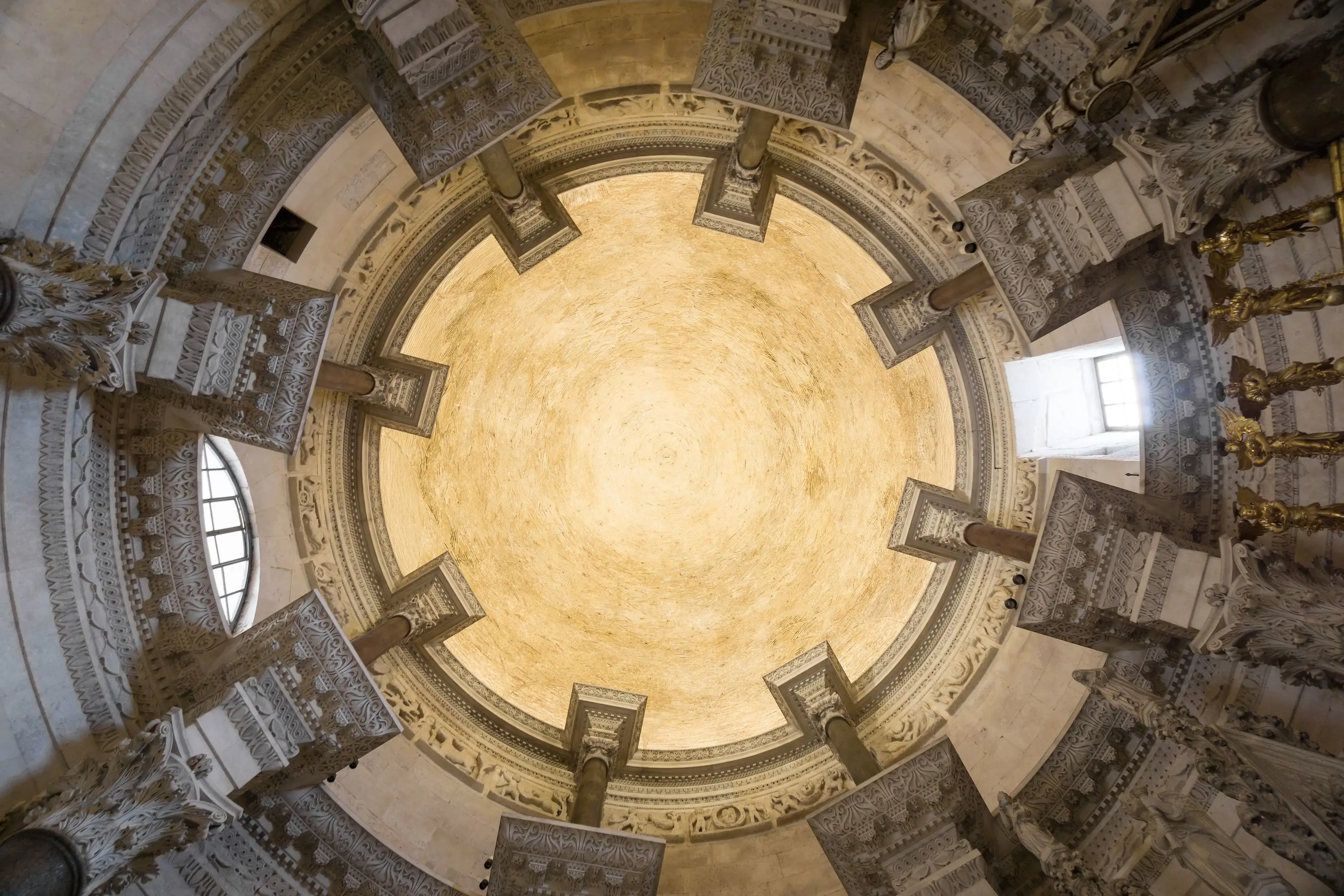
Looming over the Peristyle and over all of Old Split for that matter is the belfry of the Cathedral of St Domnius. The dome of the church was originally Diocletian's mausoleum. Diocletian's body disappeared 170 years after internment and nobody knows where. Ironically though, the church does hold the bones of St. Anastiasius, a saint killed by order of Diocletian. Indeed, the altar which holds his relics is the finest in the church, and the sarcophagus contains a fascinating relief called The Flagellation of Christ. The cathedral also houses a treasury full of monstrances and fascinating reliquaries in the shape of heads containing relics in small transparent lockets encased in the forehead. Another highlight is the walnut-and-oak main entrance doors with an inspired comic-strip-style sequence showing 28 scenes from the life of Christ. The bell tower started in the 13th century and not completed until 1908 is definitely worth climbing up for the panoramic view over the city, though it is quite steep.

Bronze Gate and Palace Cellars

Enter this ancient gateway to discover palace cellars used as film sets for Game of Thrones.

While today about 200 feet (60m) from the water, the Bronze Gate originally sat directly on the sea, allowing boats to pull directly up to the palace. As you enter the gate you will find a mass of souvenir and arts & crafts stalls, but just inside the entrance on either side are the substructures, or cellars of the palace. After the palace fell into disrepair, the cellars were used as rubbish pits. Families occupying the apartments above would simply create holes in the floor and voila, they had an instant trash dump with a seemingly unending supply of space. Of course centuries of trash did eventually them fill up and they were only rediscovered in 1956; the excavations continue to this very day. While entrance to the cellar is not free, it provides an excellent idea of what the palace must originally have looked like, as they're an exact mirror image of the imperial living quarters above. Game of Thrones fans will also be happy to learn that the cellar was used as a filming set, including as Daenerys Targaryen's grand Meereen throne room.

Fish market & Marmontova Street

Join the locals at Split's main fish market.

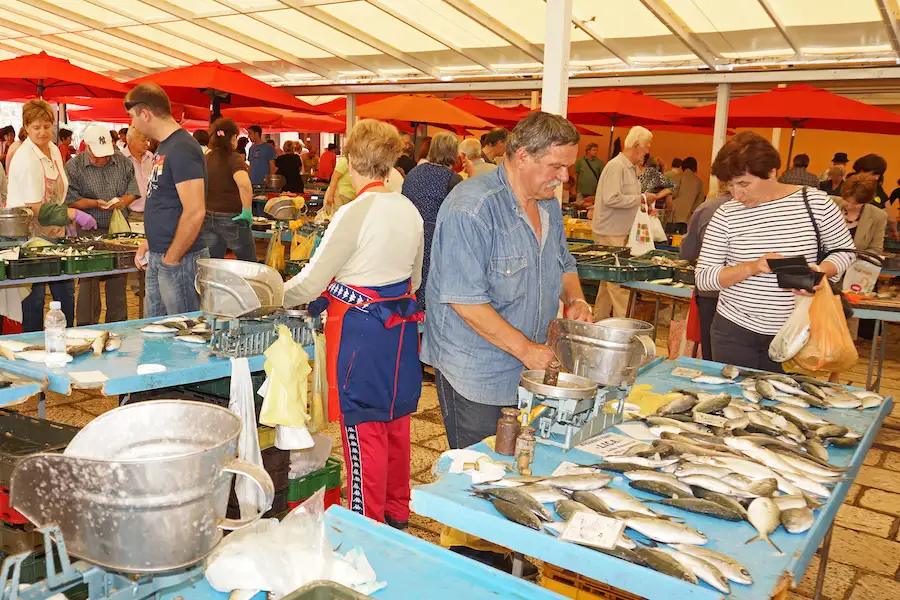
This is a genuine fish market rather than a set piece for tourists. So it is a bit smelly and bloody, just like a real fish market should be. If you want fresh fish and seafood, its the best place to go in Split. There is a bit of a frenzy in the morning when the fresh catch is brought in, so that is the most intersting time to visit. If you aren't in the market for raw seafood, on the adjacent Marmontova street you'll find take out places where you can get cooked seafood to go. This elegant pedestrian street is also lined by high-end shops, and is definitely worth a stroll.

image

Day 1

Arrive Split


icon
icon

To Be Determined:

Arrival in Split and Private Transfer to Hotel from Airport

Mid-Day/Afternoon:

Diocletian's Palace

Arrival in Split and Private Transfer to Hotel from Airport

Arrival in Split and Private Transfer to Hotel from Airport

We will schedule a pick up for 15 minutes after your flight's arrival time. You will be met in the terminal by an English speaking driver holding a sign with your name on it. The ride is for your party only - you will not be sharing a vehicle. The cost of the ride will be included in your itinerary package.  IMPORTANT NOTE:  Please be aware the car service can fit up to 1 checked item of luggage and 1 personal item per person, such as a purse or small backpack. If you think you will have more baggage, please inform your travel consultant as this may result in an additional fee.

To Be Determined — Arrival in Split and Private Transfer to Hotel from Airport

We will schedule a pick up for 15 minutes after your flight's arrival time. You will be met in the terminal by an English speaking driver holding a sign with your name on it. The ride is for your party only - you will not be sharing a vehicle. The cost of the ride will be included in your itinerary package.  IMPORTANT NOTE:  Please be aware the car service can fit up to 1 checked item of luggage and 1 personal item per person, such as a purse or small backpack. If you think you will have more baggage, please inform your travel consultant as this may result in an additional fee.

Mid-Day/Afternoon — Diocletian's Palace

Split's Old Town started out as a luxurious retirement palace for the Roman Emperor Diocletian. As Roman emperors often met bloody ends, about half of the palace consisted of a less luxurious fortress designed to accommodate a large garrison of loyal Roman soldiers. Within the palace's high walls there were also temples, streets, and large courtyards, meaning it was only natural that long after the Diocletian was gone and the empire fallen, much of the palace was incorporated into Split's Old Town. Indeed about half of the Old Town consists of the former palace area. Despite falling into disrepair and constant reconstructions over the intervening millennia, the Palace remains one of the best-preserved examples of Roman architecture in the world. It's principal set-piece buildings, such as Diocletian's mausoleum and the Temple of Jupiter still remain. But the palace is far from being just an archeological site and it continues to this day as a living and breathing historical monument with 2,000 to 3,000 people still resident within its ancient walls. This means that so much tinkering has gone on over the centuries that it's no longer immediately recognizable as an ancient Roman structure. On the other hand, up close and personal you can still make out the remains of some of the imperial apartments that are used today as outdoor bars and cafes and shops. And the medieval tenements built by the Venetians were built in large part from the stones scavenged from Diocletian's original buildings. The tangled mass of alleyways, small squares, and narrow lanes just outside the Palace is also well worth exploring. The Venetian architecture makes the setting particularly enchanting (Split was ruled by the Republic of Venice for centuries).

Peristyle

See the beautiful courtyard which was once the center of the palace, and is now the heart of Split.

The Peristyle was the central courtyard of the palace complex and the crossing point of its main streets. The columns around the courtyard were pillaged from Egypt, though the officer in charge of the operation must have forgotten to get some extras as four of the columns are clearly different from the others. There's also a black granite Egyptian sphinx on one side dating from 1500 BC which originally flanked the entrance to Diocletian's mausoleum (other sphinxes around the palace were decapitated by Diocletian to allay his superstition that they posed a threat to his rule). If you sit on one of the red cushions scattered around the Peristyle you'll be approached by a waiter with a menu of very expensive drinks, but it may be worth it just to sit and lap up the history and watch people go by. At the southern end of the Peristyle, steps lead up to a cone-shaped, roofless chamber which once served as the palace vestibule. Visitors would wait here before being summoned before the ex-emperor into his private apartments.

Riva

Take in the scene on Split's swanky seaside promenade.

Along the exterior face of the former palace and down the length of the Old Town runs the wide and breezy Riva, the principal sea-side promenade in central Split. Lined by palm trees, restaurants, and cafes, it gets wildly busy on summer evenings. It is the perfect place to relax, take in the scene, and watch people and boats pass by.

St Domnius

See how the mausoleum of an emperor who persecuted Christians was converted into a stunning medieval church.

Looming over the Peristyle and over all of Old Split for that matter is the belfry of the Cathedral of St Domnius. The dome of the church was originally Diocletian's mausoleum. Diocletian's body disappeared 170 years after internment and nobody knows where. Ironically though, the church does hold the bones of St. Anastiasius, a saint killed by order of Diocletian. Indeed, the altar which holds his relics is the finest in the church, and the sarcophagus contains a fascinating relief called The Flagellation of Christ. The cathedral also houses a treasury full of monstrances and fascinating reliquaries in the shape of heads containing relics in small transparent lockets encased in the forehead. Another highlight is the walnut-and-oak main entrance doors with an inspired comic-strip-style sequence showing 28 scenes from the life of Christ. The bell tower started in the 13th century and not completed until 1908 is definitely worth climbing up for the panoramic view over the city, though it is quite steep.

Bronze Gate and Palace Cellars

Enter this ancient gateway to discover palace cellars used as film sets for Game of Thrones.

While today about 200 feet (60m) from the water, the Bronze Gate originally sat directly on the sea, allowing boats to pull directly up to the palace. As you enter the gate you will find a mass of souvenir and arts & crafts stalls, but just inside the entrance on either side are the substructures, or cellars of the palace. After the palace fell into disrepair, the cellars were used as rubbish pits. Families occupying the apartments above would simply create holes in the floor and voila, they had an instant trash dump with a seemingly unending supply of space. Of course centuries of trash did eventually them fill up and they were only rediscovered in 1956; the excavations continue to this very day. While entrance to the cellar is not free, it provides an excellent idea of what the palace must originally have looked like, as they're an exact mirror image of the imperial living quarters above. Game of Thrones fans will also be happy to learn that the cellar was used as a filming set, including as Daenerys Targaryen's grand Meereen throne room.

Fish market & Marmontova Street

Join the locals at Split's main fish market.

This is a genuine fish market rather than a set piece for tourists. So it is a bit smelly and bloody, just like a real fish market should be. If you want fresh fish and seafood, its the best place to go in Split. There is a bit of a frenzy in the morning when the fresh catch is brought in, so that is the most intersting time to visit. If you aren't in the market for raw seafood, on the adjacent Marmontova street you'll find take out places where you can get cooked seafood to go. This elegant pedestrian street is also lined by high-end shops, and is definitely worth a stroll.

image

Day 2

Split

Day 2

Split

icon
icon
icon

9:00 AM - 11:00 AM

Split Old Town Walking Tour

This two-hour guided tour will take you to the Roman emperor Diocletian's 1700-year-old palace which was built as his personal rest home. Walk from the Bronze Gate through the central hall of the ancient cellars is the main communication line between the busy waterfront promenade, the Riva, and the palace's main forecourt, the Peristyle. You'll also stop by the Cathedral of St Duje, one of the most beautiful cultural attractions on the Adriatic coast, the Roman temple of Jupiter (latterly a Christian baptistry), the fabulous Golden Gate, and the medieval Croatian bishop who introduced the Croatian language in religious services.

Split Old Town Walking Tour

9:00 AM - 11:00 AM — Split Old Town Walking Tour

This two-hour guided tour will take you to the Roman emperor Diocletian's 1700-year-old palace which was built as his personal rest home. Walk from the Bronze Gate through the central hall of the ancient cellars is the main communication line between the busy waterfront promenade, the Riva, and the palace's main forecourt, the Peristyle. You'll also stop by the Cathedral of St Duje, one of the most beautiful cultural attractions on the Adriatic coast, the Roman temple of Jupiter (latterly a Christian baptistry), the fabulous Golden Gate, and the medieval Croatian bishop who introduced the Croatian language in religious services.

Peristyle

See the beautiful courtyard which was once the center of the palace, and is now the heart of Split.

The Peristyle was the central courtyard of the palace complex and the crossing point of its main streets. The columns around the courtyard were pillaged from Egypt, though the officer in charge of the operation must have forgotten to get some extras as four of the columns are clearly different from the others. There's also a black granite Egyptian sphinx on one side dating from 1500 BC which originally flanked the entrance to Diocletian's mausoleum (other sphinxes around the palace were decapitated by Diocletian to allay his superstition that they posed a threat to his rule). If you sit on one of the red cushions scattered around the Peristyle you'll be approached by a waiter with a menu of very expensive drinks, but it may be worth it just to sit and lap up the history and watch people go by. At the southern end of the Peristyle, steps lead up to a cone-shaped, roofless chamber which once served as the palace vestibule. Visitors would wait here before being summoned before the ex-emperor into his private apartments.

Bronze Gate and Palace Cellars

Enter this ancient gateway to discover palace cellars used as film sets for Game of Thrones.

While today about 200 feet (60m) from the water, the Bronze Gate originally sat directly on the sea, allowing boats to pull directly up to the palace. As you enter the gate you will find a mass of souvenir and arts & crafts stalls, but just inside the entrance on either side are the substructures, or cellars of the palace. After the palace fell into disrepair, the cellars were used as rubbish pits. Families occupying the apartments above would simply create holes in the floor and voila, they had an instant trash dump with a seemingly unending supply of space. Of course centuries of trash did eventually them fill up and they were only rediscovered in 1956; the excavations continue to this very day. While entrance to the cellar is not free, it provides an excellent idea of what the palace must originally have looked like, as they're an exact mirror image of the imperial living quarters above. Game of Thrones fans will also be happy to learn that the cellar was used as a filming set, including as Daenerys Targaryen's grand Meereen throne room.

Mid-Day — Fishermen's Quarter

Veli Varoš is a neighborhood situated at the western end of the old town that is crammed full of charming old stone houses and apartments characteristic of Dalmatia, and narrow cobbled streets that wind up the Marjan Hill. The district once represented the poorer part of Split developed by farmers and fishermen looking to make a better living in the city and seeking shelter from Ottoman military incursions. Today property prices have accelerated northwards, but it's still well worth reconnoitering the maze of paths and traffic-free lanes as you head to the top of the neighborhood to catch magical views of the city. Venture beyond the Fisherman's Quarter and you will be surrounded by typically Mediterranean forest landscape on the Marjan Peninsula.

Vidilica Terrace

Walk up to this terrace for the best view of Split.

No terrace offers a better view than this, the whole of Split laid out before you - and islands beyond. There is a nearby cafe and bar which contains blown-up sepia postcards of pre-war Split scenes. Most visitors, however, try to find an outside table, the children kept safe within the stone wall guarding the steep drop. The grounds behind the cafe contain Split's old Jewish cemetery.

Mestrovic Gallery

Hike the Marjan Peninsula to reach the seaside villa of 20th-century sculptor Ivan Meštrović.

Many consider Ivan Meštrovič to be greatest sculptor of religious subjects since the Renaissance. The Meštrovič Gallery is located in an ostentatiously palatial building that Meštrovič himself planned as his home and studio. Fronted by a veranda supported by Ionic columns, the house was completed in 1939, giving Meštrovič just two years to live in it before fleeing to Zagreb to escape the Italian occupation. The gallery is also a wonderful sanctuary away from the hubbub of the city with wonderfully romantic views of the Adriatic. Even if you're not interested in religious sculptures (they're not all religious) the gallery still contains a highly impressive collection of art. 

Afternoon — Bačvice Beach

A rare sandy beach, Bačvice is a favorite among Split locals and hence a great place to indulge in some covert people watching while lapping up the sun. Just a few minutes' walk from the bus and train stations and the ferry terminal, Bačvice beach is also the spiritual home of the traditional Croatian water sport of picigin - a form of volleyball in which a group of players tries to keep a ball in the air in shallow water using the most athletic and acrobatic moves possible. There are showers and changing rooms at both ends of the beach, while Café Zbirac has a reputation for good food and drink. Immediately behind the beach is a swanky modern three-tier pavilion with several cafes and a couple of chic eating places inside. It's a popular venue for after-dark drinking and feasting whatever the time of the year. A coastal path leads from Bačvice past a couple smaller bays and many more cafes; it's a pleasant area for late afternoon or evening perambulations all year round.

image

Day 2

Split

image

Day 3

Split

Day 3

Split

icon

Early Morning to Afternoon

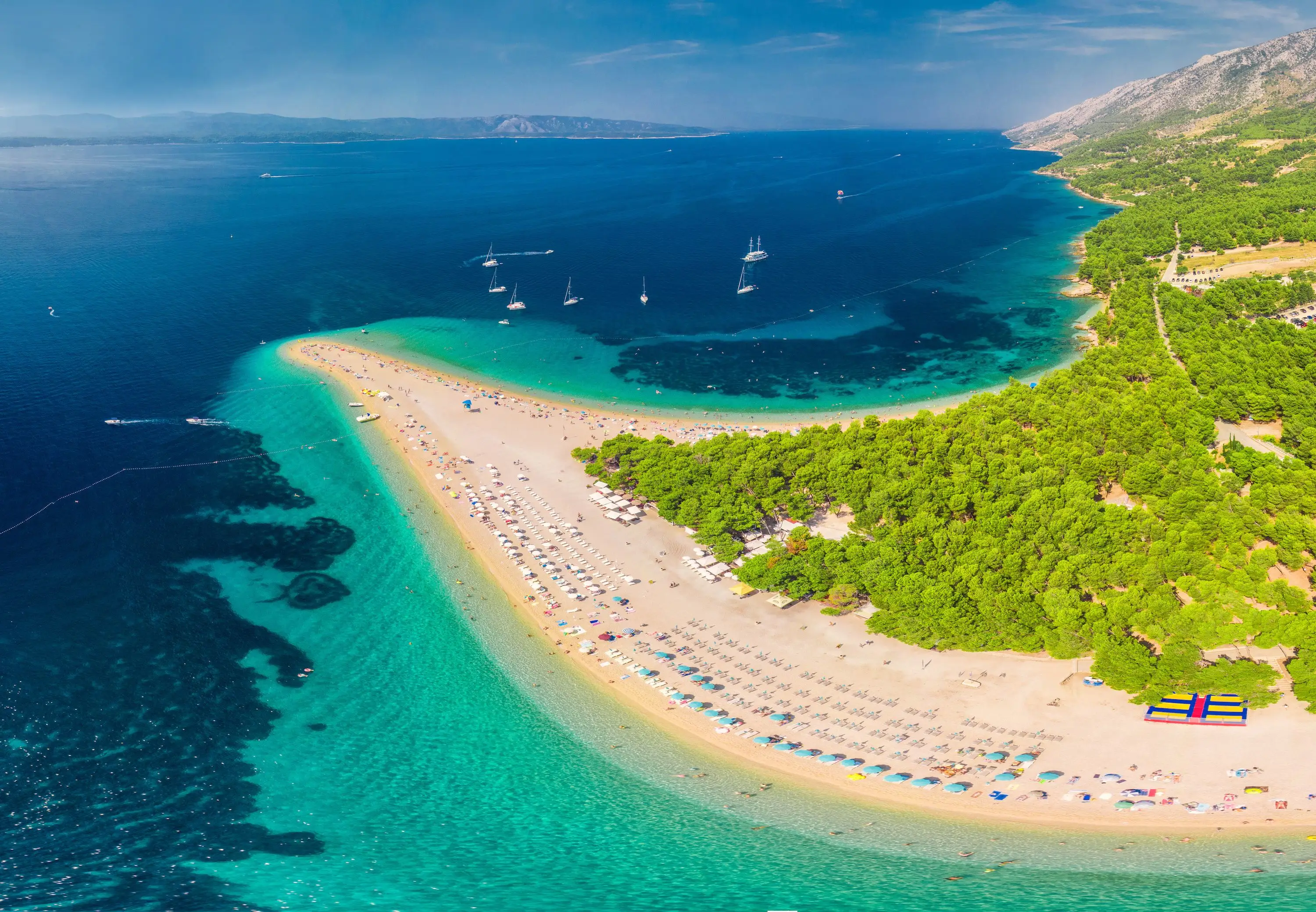
Brač Island

The third-largest of Croatia's islands, Brač is also the nearest major island to Split and therefore the easiest to get to with ferries running regular 50-minute trips to Supetar, an attractive former fishing village with shallow and swimmable pebbly beaches. On the opposite side of the island is the similarly picturesque village of Bol, boasting the magnificent beach of Zlatni Rat, pictures of which adorn just about every advertising brochure there is on Dalmatia's islands. Zlatni Rat has a mild-breezy climate that makes it perfect for windsurfing. Bol is accessible from Supetar by public bus, but to get around the island to see smaller coastal settlements like Postira, Pučišća, Povlja, and Milna, and the highest peak of Vidova Gora, it's best to take a guided tour, hire a taxi, or rent a car. Renting a bicycle is also a great option for exploring the island. This will also give you the chance to explore the island's beautiful interior, with its scrub-covered rocky uplands interspersed with fertile valleys, where you'll find vineyards, olive groves, and orange trees. You'll also see the great man-made piles of limestone built up over centuries by small farmers clearing a place to grow their crops. Just keep in mind that if you visit Brač in the off season, it will be very sleepy. This is great if you like to explore without crowds, but not so great if you mind closed restaurants and attractions.

Brač Island

Early Morning to Afternoon — Brač Island

The third-largest of Croatia's islands, Brač is also the nearest major island to Split and therefore the easiest to get to with ferries running regular 50-minute trips to Supetar, an attractive former fishing village with shallow and swimmable pebbly beaches. On the opposite side of the island is the similarly picturesque village of Bol, boasting the magnificent beach of Zlatni Rat, pictures of which adorn just about every advertising brochure there is on Dalmatia's islands. Zlatni Rat has a mild-breezy climate that makes it perfect for windsurfing. Bol is accessible from Supetar by public bus, but to get around the island to see smaller coastal settlements like Postira, Pučišća, Povlja, and Milna, and the highest peak of Vidova Gora, it's best to take a guided tour, hire a taxi, or rent a car. Renting a bicycle is also a great option for exploring the island. This will also give you the chance to explore the island's beautiful interior, with its scrub-covered rocky uplands interspersed with fertile valleys, where you'll find vineyards, olive groves, and orange trees. You'll also see the great man-made piles of limestone built up over centuries by small farmers clearing a place to grow their crops. Just keep in mind that if you visit Brač in the off season, it will be very sleepy. This is great if you like to explore without crowds, but not so great if you mind closed restaurants and attractions.

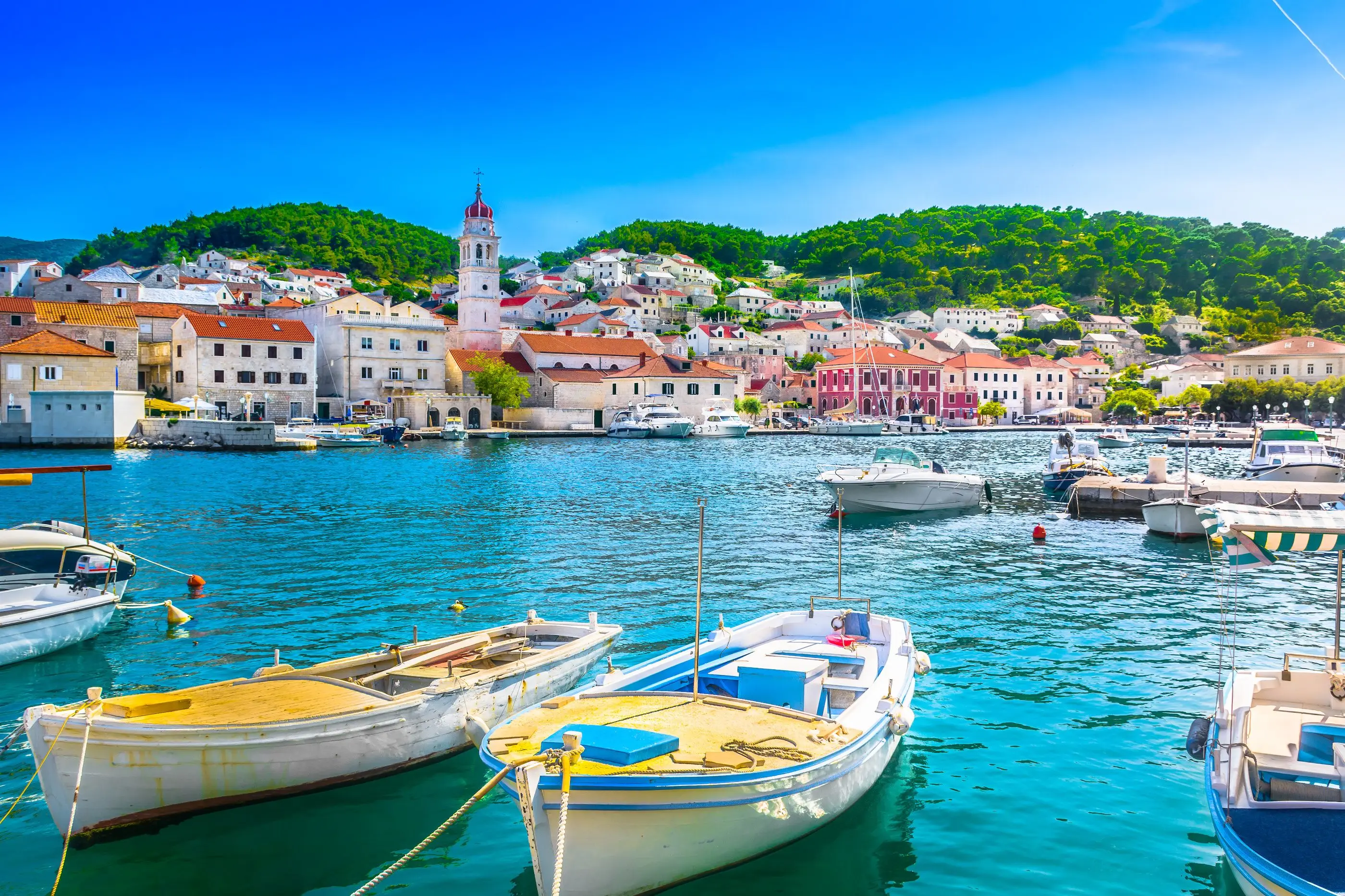
Pučišća

Visit this seaside hamlet recently rated as one of the top ten most picturesque villages in all of Europe.

The stone-quarrying village of Pučišća is hidden in the western arm of a long Y-shaped inlet and is assembled around a rough-hewn pair of medieval defensive towers and a gnarled church belfry. The harbor is clean enough to swim in and there are pleasant rocky beaches on the northwestern side of the inlet. There's a stone-carving school in the village and white-stone souvenirs are the stock-in-trade here.

Škrip

Discover the oldest continually inhabited settlement on the island.

Located on the interior of the island, Škrip has an entirely different atmosphere from the ritzy beach towns. Indeed, it's a sleepy nest of stone houses with heavy stone roof-tiles and feels a bit lost in time - in a good way. You'll also find 16th-century castle ruins and the island's museum at its eastern end. The museum contains a well-preserved Roman relief of Hercules and miscellaneous 19th-century agricultural tools. There's a Roman mausoleum outside that allegedly contains the wife or daughter of Diocletian.  At the top of the village you'll find an ancient church and graveyard from where you'll enjoy a wonderful view of the countryside.

Zlatni Rat

Take a swim in one of Croatia's most famous and beautiful beaches.

Zlatni Rat (Golden Cape) is a beautiful tongue of white pebble beach jutting into the sea, and is one of the most popular swimming and sunbathing spots in Croatia. Its summer breezes also make it a favorite among wind surfers. Huge crowds flock to it in the summer months, so it is not ideal for those looking for an isolated spot to themselves. You can easily reach the beach from the town of Bol, as it is only a 20 minute walk along a tree-lined promenade. In high season you'll find all manner of diversions here, including food options, bicycles for hire, scooters and quad bikes, boat rentals, windsurfing, water taxis to more isolated coves and beaches, and snorkeling and scuba diving courses.

Dominican Monastery of Bol

Explore the picturesque town of Bol and take a quick walk to the Dominican monastery.

Bol's setting is indeed quite beautiful, hugging the coastal flanks of Brac's tallest mountain, but it attracts huge crowds in the summer months that flock to the nearby beautiful beach of Zlatni Rat (Golden Cape). The town of Bol itself is thankfully free of high rise package hotels and somehow manages to retain some modesty and charm around its attractive harbor. Take time to pop up to the Dominican monastery which is dramatically located high on an outcrop just east of Bol's center - the assiduously maintained monastery gardens overlooking the sea are worth the walk up.

image

Day 3

Split

image

Day 4

Split to Zagreb

Day 4

Split to Zagreb

icon
icon
icon
icon
icon

7:50 AM

Transfer to Rail Station

First keep in mind that the rail station is located only about a 1/2-mile (800m) from the Split Old Town. Also consider that if staying in the pedestrian area of Old Town, a car cannot pick you up directly from the hotel, meaning you will have to walk a short distance with your bags anyway. If this is an issue, be sure to arrange assistance with a private transfer service or with your hotel beforehand. UberX is available in Split if you prefer to take a car. If staying in a hotel, they can also arrange a taxi pick up for you. The price should be about 50-100 HRK depending on your hotel location. For the most convenience, you can arrange a private transfer to the rail station. Although antiquated, the Split train station is pleasantly small in comparison with other European cities. You will be dropped off directly in front of the main station building on the waterfront where the main bus station and the ferry terminal are also located. This makes it slightly chaotic when a lot of buses arrive at the same time, but it is much less busy inside the train station where you'll find a number of electronic screens displaying arrival and departure times and platform numbers in both Croat and English. You'll find the train platforms lined up directly out the back of the station hall.

Transfer to Rail Station

7:50 AM — Transfer to Rail Station

First keep in mind that the rail station is located only about a 1/2-mile (800m) from the Split Old Town. Also consider that if staying in the pedestrian area of Old Town, a car cannot pick you up directly from the hotel, meaning you will have to walk a short distance with your bags anyway. If this is an issue, be sure to arrange assistance with a private transfer service or with your hotel beforehand. UberX is available in Split if you prefer to take a car. If staying in a hotel, they can also arrange a taxi pick up for you. The price should be about 50-100 HRK depending on your hotel location. For the most convenience, you can arrange a private transfer to the rail station. Although antiquated, the Split train station is pleasantly small in comparison with other European cities. You will be dropped off directly in front of the main station building on the waterfront where the main bus station and the ferry terminal are also located. This makes it slightly chaotic when a lot of buses arrive at the same time, but it is much less busy inside the train station where you'll find a number of electronic screens displaying arrival and departure times and platform numbers in both Croat and English. You'll find the train platforms lined up directly out the back of the station hall.

08:35 - 14:54 — Train to Zagreb

The geography of Croatia is not friendly to trains. Towering karst-formation mountains stand between Split and Zagreb, meaning that trains must take a meandering route following river valleys to pass through Dalmatia. The journey takes over 6 hours, which is an hour longer than the fastest buses usually require. But that's okay, because all those steep mountains and narrow valleys make for a wonderfully scenic journey. Plus, you can stretch your legs and use the restroom whenever you like, which is not the case on many buses.

2:54 PM — Transfer to Hotel

Upon your arrival in Zagreb, your driver will meet you on the platform. He or she will be carrying a sign with your name on it. The driver will drop you off at your hotel. This is a private transfer. The price of the pickup is already included in your itinerary cost so you will not have to pay the driver.

Late Afternoon — Bishop's Old Town

In the quaint streets of Kaptol you will find the center of Zagreb's nightlife and dining scene, as well as plenty of shopping and historical sight-seeing opportunities. The main landmark and original raison d'etre of Kaptol is the impressive Zagreb cathedral, but you can also discover an open-air farmer's market and architectural gems ranging from the middle ages to the 19th century. The main entrance into Kaptol is through Zagreb's most prominent public space, Ban Jelačić Square. While most visitors do not realize it, Zagreb's Old Town was historically two towns with two very distinct identities and personalities: the bishop's town of Kaptol, and the merchant's town of Gradec on the hill above it. They were in fact often bitter and sometimes even violent rivals, and were separated by a small river where Tkalčićeva Street now runs.

Ban Jelačić Statue and Square

Experience the lively vibe on Ban Jelačić Square, the pulsing heart of Zagreb.

Trg bana Jelačić (Governor Jelačić Square) is the heart of the city with the main tram line running through it and commuters purposefully striding across its pedestrianized space. It's a traditional meeting point for young and old which lies just below the Kaptol district. Your attention is immediately drawn to the imposing statue of the Croatian field marshall Josip Jelačić. It commemorates the semi-autonomy Jelačić won from the Austrian Hapsburg Empire for the Croat people in the mid-19th century. He was able to do this by helping the Hapsburgs put down the Hungarian revolution of 1848. Originally positioned with Jelačić's drawn sabre pointing north as a gesture of defiance to the Hungarians, it now points southwards, as if to emphasize the historic rupture between Croatia and her Balkan neighbors. Before you set out on your sightseeing tour from the square you might want to take a look at the large brass model of the old city located just past the north eastern corner of the square. This will help with orientation around Kaptol and Gradec.

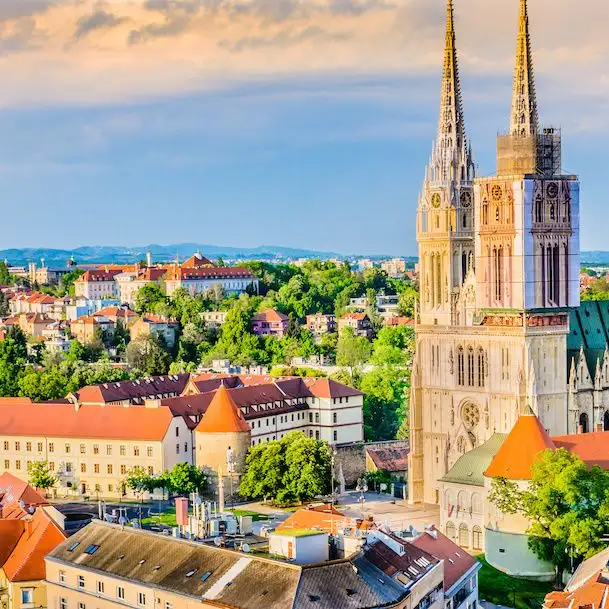
Zagreb cathedral

See Zagreb's stunning cathedral, which even features a bit of Las Vegas bling.

The cathedral is a neo-Gothic edifice built after a catastrophic earthquake in 1880, with much of the effort going into the grand architectural statement of the two giant spires at the front of the cathedral. The interior is unusually rather restrained, reflecting perhaps the amount of money spent on the spires. There is some conspicuous bling, however, in the form of the three large main chandeliers, which are from the Gold Coast Casino in Las Vegas - a gift from the Croatian immigrant Stefan Stankić. The cathedral has a castle-like appearance as it is surrounded on three sides by 16th century fortifications meant to protect the cathedral and bishop from a Ottoman invasion. The front section was torn down in 1907, so now visitors experience the unusual sight of an imposing fortress with a big missing piece.

Tkalčića Street

Enjoy an evening out on this charming street lined by hip restaurants.

Considered to be possibly the city's prettiest street with its well-preserved steep-roofed 19th-century houses that have largely disappeared elsewhere, Tkalčićeva is stacked full of restaurants and youthful cafe-bars that turn the street into a prime drinking and dining area in the late afternoons and evenings, even during winter. A number of attractive alleyways and stairs lead up and away from Tkalčićeva to the higher part of old Zagreb known as Gradec. Tkalčićeva Street wasn't always so hip, however. In the first half of the 20th century, the whole area had a much more unseemly reputation when Kožarska Street, the alleyway which runs parallel to Tkalčićeva to the west, served as the city's red-light district. The prostitutes themselves invented their own way of signaling whether they were open for business or not: they would use small garden gnomes located in their windows which indicated if they were available (standing gnome), not in (no gnome), or currently engaged (gnome lying down).

Early Evening — Merchant's Old Town

Zagreb won't strike you as a particularly hilly city, yet it nevertheless has its own funicular which leads to one of its most historic neighborhoods; the former walled medieval town of Gradec. While small, Gradec has all the charms of more famous destinations such as Prague or Krakow, but with fewer crowds. Wandering its cobblestoned lanes you will also be surprised with several delightful viewpoints where you can take in the city spread out below you. Unlike the adjacent Kaptol Old Town, which was built around the cathedral and relied on church administration for its livelihood, Gradec was a town of merchants. Today, however, Gradec is at the heart of Croatian government, as it is where the Sabor (Croatian Parliament) and other Croatian government ministries are located. The center of Gradec is St. Mark's Square, where each weekend from April to October (weather permitting) you can watch Zagreb's Cravat Regiment perform a changing of the guard ceremony. Fun fact - the word cravat, i.e. tie, was derived from these soldiers and their colorful neckties.

Funicular and Lotrščak Tower

Save a bit of walking and take the world's shortest funicular ride up to Gradec.

The funicular retains the original design and structure from when it was constructed in 1890, and at 66m (72yd) it is the shortest funicular in the world, taking you from the lower city to Gradec. The price of one ride is 4 HRK. At the top of the funicular, you'll see the Lotrščak Tower, which once protected the southern city gate from danger. A spiral staircase inside leads to a small wooden terrace offering superb views of Zagreb's roofscape. On the way up you'll see a small cannon behind a window which is fired every day at noon - a practice begun in 1877 to coordinate the city's bell-ringers.

Museum of Broken Relationships

Enjoy an intriguing and bitter-sweet visit to a unique museum focused on heartbreak.

One of Zagreb's most quirky museums is the Museum of Broken Relationships. At first a temporary exhibition only, it struck such a chord with the public that it became a permanent museum in 2010, displaying objects connected with all aspects of human relationships and break-ups. A compelling and sometimes visceral monument to wistful memory and raw emotion, visitors are invited to overcome a difficult separation by donating memories and thus recognizing the end of a relationship.

Stone Gate

Walk past walls darkened by candle smoke in this city gate, which does double duty as one of Zagreb's most beloved religious shrines.

Another entrance into Gradec is via the Kamenita vrata or 'Stone Gate', which originally formed the main eastern entry into town. More of a curving tunnel than a gate, it's also one of Zagreb's most popular shrines (to the city guardian, St Mary) in what is still a rather religious city despite the party atmosphere of nearby Tkalčićeva street; there are a couple of wooden benches inside the gate for those wanting to offer a quick prayer.

St Mark's Church and Square

Be sure to stop by the picturesque square and church at the heart of Old Zagreb.

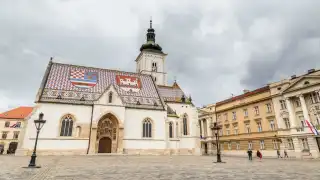
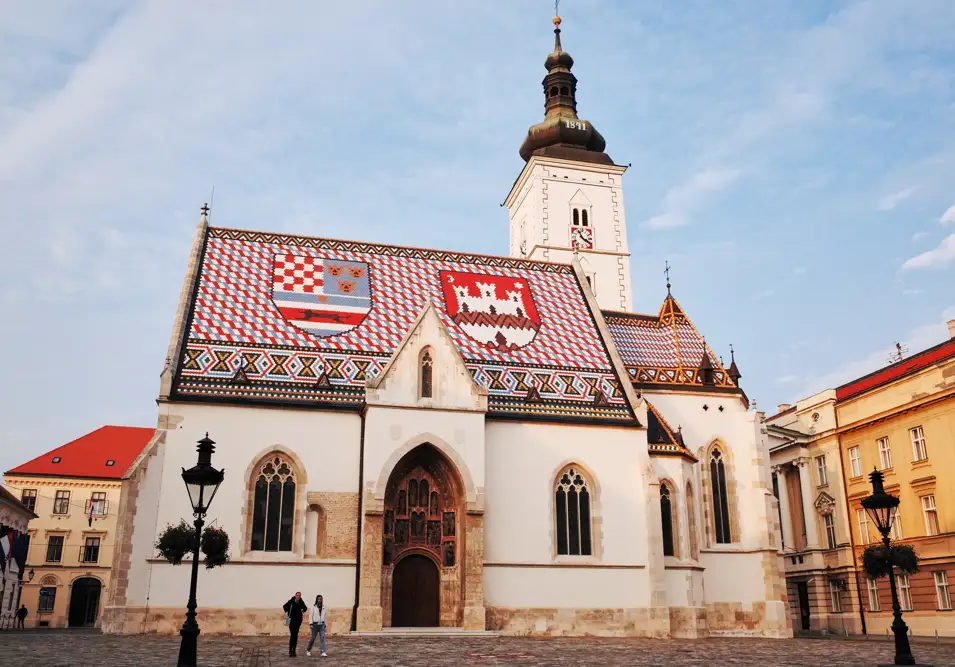
Markov trg at the center of Gradec hosts the surprisingly modest Sabor or national parliament and the rather squat but nonetheless attractive St Mark's Church, with its famously multi-colored roof tiles displaying the coat of arms of Zagreb and Croatia. The interior has been ravaged over time by earthquake, fire, and 19th-century "restorers", but some parts, like the south portal, are original. The building on the other side is the Banski dvor, or Ban's Palace, originally the seat of the Hapsburg-appointed governor and now the seat of Croatia's government.

Strossmeyer Promenade and Grič Tunnel

Take in delightful views of the city from this tree-lined promenade.

The Strossmeyerovo šetalište is a promenade running along the southern edge of the Gradec hill, and provides great views of the city and hosts a range of artistic 'happenings' in the summer months. There are also plenty of snacking and sipping opportunities along the way. At the western end of Strossmeyerovo šetalište, you will find the landscaped Grič Park, including excavation of the medieval city walls, which is a favorite hang-out spot for young couples. If you go past the park and walk down the steps at the end of Strossmeyer Promenade, you will find the entrance to the Grič Tunnel. Built as a WWII air-raid shelter and rarely used since – except as another shelter during the 'Homeland War' of the early 1990s and for a legendary rave party that took place here in 1993. It measures 350m and leads from Mesnička Street to Radićeva Street, with two other exits leading down to Ilica Street and the Art Park at Tomić Street. It is open to the public from 9 AM to 10 PM. Radićeva Street, by the way, is perhaps the best for Croatian souvenir shopping, such as truffles, jewelry, and alcohol, etc.

image

Day 4

Split to Zagreb

image

Day 5

Zagreb to Budapest

Day 5

Zagreb to Budapest

icon
icon
icon
icon
icon

9:00 AM - 11:30 AM

Highlights of Zagreb, Guided Tour

On this 2.5-hour private tour, you will see the main sights and vibrant everyday life in Zagreb. You will visit the oldest parts of town, hear genuine Zagreb stories and legends, and enjoy a walk through the old town's green promenade. Highlights include Zagreb cathedral, the short funicular connecting the lower and uppers parts of the city, the oldest part of the city called Gradec were the city's parliament and best museums are to be found, the famous pedestrianized Tkalčićeva Street that has one of the most engaging and fun dining areas in Southern Europe and the open-air market of Dolac.

Highlights of Zagreb, Guided Tour

9:00 AM - 11:30 AM — Highlights of Zagreb, Guided Tour

On this 2.5-hour private tour, you will see the main sights and vibrant everyday life in Zagreb. You will visit the oldest parts of town, hear genuine Zagreb stories and legends, and enjoy a walk through the old town's green promenade. Highlights include Zagreb cathedral, the short funicular connecting the lower and uppers parts of the city, the oldest part of the city called Gradec were the city's parliament and best museums are to be found, the famous pedestrianized Tkalčićeva Street that has one of the most engaging and fun dining areas in Southern Europe and the open-air market of Dolac.

Lotrščak Tower

Historic lookout tower

A tower that once protected the southern city gate from danger. A spiral staircase inside leads to a small wooden terrace offering superb views of Zagreb's roofscape. 

Museum of Broken Relationships

Enjoy an intriguing and bitter-sweet visit to a unique museum focused on heartbreak.

One of Zagreb's most quirky museums is the Museum of Broken Relationships. At first a temporary exhibition only, it struck such a chord with the public that it became a permanent museum in 2010, displaying objects connected with all aspects of human relationships and break-ups. A compelling and sometimes visceral monument to wistful memory and raw emotion, visitors are invited to overcome a difficult separation by donating memories and thus recognizing the end of a relationship.

St Mark's Church and Square

Be sure to stop by the picturesque square and church at the heart of Old Zagreb.

Markov trg at the center of Gradec hosts the surprisingly modest Sabor or national parliament and the rather squat but nonetheless attractive St Mark's Church, with its famously multi-colored roof tiles displaying the coat of arms of Zagreb and Croatia. The interior has been ravaged over time by earthquake, fire, and 19th-century "restorers", but some parts, like the south portal, are original. The building on the other side is the Banski dvor, or Ban's Palace, originally the seat of the Hapsburg-appointed governor and now the seat of Croatia's government.

Mid-Day — Lower Town

Walking the Lower Town transports you back to the Belle Époque of the late 19th and early 20th century, when Europe experienced the height of elegance and culture. True, the Lower Town is not as famous as the oldest parts of Zagreb in the Upper Town, but it is where the Croatian national revival made its greatest architectural impact in the final decades of the Austro-Hungarian Empire. The refined influences of that period are seen in the numerous Secessionist-style public buildings which are reminiscent of 'Late Empire' Vienna and Prague. Unlike the Upper Town, the streets are mostly wide and airy, and the layout is intended to give the impression of grandeur. The Lower Town is also the site of Zagreb's 'green horseshoe' where many of the city's best museums and galleries are interlaced with large beautifully manicured garden squares.

Zrinjevac Park & the Green Horseshoe

Walk a horseshoe shaped route through the Lower Town by following its green parks.

Zagreb's 'green horseshoe' is where you'll find many of the city's best museums and galleries, interlaced with large beautifully manicured garden squares. A good starting point is Zrinjevac Park, just south of the Upper Town and Jelačić Square. The series of interconnected public gardens, parks, and squares were laid out from the 1870s onwards and interspersed with set-piece public institutions like galleries, museums, academies, and theatres that were de rigueur for every European capital that aspired to be 'modern'. 

Serbian Orthodox Church and Flower Square

Check out the lively street-life around the Orthodox church.

It's well worth your time to pop into Zagreb's only Orthodox church, with its candle-lit, icon-filled interior. It is surrounded by a pedestrianized area around Gajeva Street, Bogovićeva Street, and Preradovićev Square, named after one of the country's great poets, whose statue stands there today. The area is a favorite among locals for shopping, sipping coffee and dining out. Preradovićev Square is also known locally as Flower Square after the florists' market that was cleaned up in the 1980s; nowadays it's the beating heart of Zagreb's pavement-cafe culture. 

Croatian National Theatre

See one of Zagreb's most beautiful and iconic buildings.

Like all increasingly self-confident nationalities in the late-era Austro-Hungarian Empire, the Croats built the Croatian National Theatre as an embodiment of national self-pride and cultural self-confidence. To ensure their theater ranked among the best, they contracted the same architects responsible for building opera houses all over Europe from Augsburg to Odessa. The theatre is located on what was once known as Marshal Tito Square, but was finally renamed to the Square of the Croatian Republic in 2017.

Museums of the Green Horseshoe

Museum-hop through the parks from one beautiful late-19th century building to the next.

You'll find a string of good museums in the green horseshoe, starting with the Archeological Museum on the northern end of Zrinjevac Park. As you make your way down the park you'll encounter several excellent art galleries, including the the Modern Gallery, with a wide-ranging collection of Croatian art from 1850 to the present day, the Strossmayer Gallery of Old Masters, and the Art Pavillion. On the opposite wing of the horseshoe you'll discover the Museum of Arts and Crafts, which anyone with an interest in the history of interiors will enjoy immensely. There's also an Ethnographic Museum, as well as the music-focused Museum Franjo Schneider. And you don't have to wander to far from the parks to find several other interesting museums, including the Museum of Illusion, the Museum of Chocolate, and even the Museum of Hangovers.

3:50 PM — Transfer to Rail Station

Most trains depart from Zagreb Main Station (i.e. Zagreb Glavni kolodvor), the largest station in the city. Before spending money on a transfer, be sure to check whether your hotel is within easy walking distance. Also consider that public transport is the cheapest and sometimes fastest option - trams drop off directly in front of the station. If staying at a hotel, they can order a reliable taxi. Some private transfers will even help with your bags. Uber is also available for those with the app.

16:35 - 22:24 — Train to Budapest

Your scenic journey to Budapest should take about 5.5 to 8 hours, depending on whether you are able to take a direct train or not. In most cases, you will travel on an InterCity train, which is a modern and comfortable train with air conditioning. You will have to go passport control as you cross over from the Croatian town of Koprivnica to Gyékényes to on the Hungarian side. The look and feel of the natural setting will change slightly as you travel northward. The train will roll through what is known as Continental Croatia before passing into the Hungarian region of Southern Transdanubia; you'll notice that Croatia is noticeably more hilly and densely forested, while Transdanubia is rather flat without too many prominent geographical features. If taking the direct train, you will travel along scenic Lake Balaton for part of the journey.

10:24 PM — Private Transfer to Hotel

Upon your arrival in Budapest, your driver will meet you on the platform. He will be carrying a sign with your name on it. The driver will drop you off at your hotel. This is a private transfer. The price of the pickup is already included in your itinerary cost so you will not have to pay the driver.  IMPORTANT NOTE:  Please be aware the car service can fit up to 1 checked item of luggage and 1 personal item per person, such as a purse or small backpack. If you think you will have more baggage, please inform your travel consultant as this may result in an additional fee.

image

Day 5

Zagreb to Budapest

image

Day 6

Budapest

Day 6

Budapest

icon
icon
icon

9:30 AM - 1:00 PM

Guided Walk in Budapest

During your tour you will take in a gorgeous vista of the city from the Fisherman's Bastion, explore the winding streets of the Castle District, gaze in awe at the striking interior of St. Stephen's Basilica, travel along the city's most elegant avenue and more. Along the way you will experience the city as a local does, stopping to check out intimate courtyards, enjoying a pastry and soaking in the ambiance of Budapest's most elegant cafes.

Guided Walk in Budapest

9:30 AM - 1:00 PM — Guided Walk in Budapest

During your tour you will take in a gorgeous vista of the city from the Fisherman's Bastion, explore the winding streets of the Castle District, gaze in awe at the striking interior of St. Stephen's Basilica, travel along the city's most elegant avenue and more. Along the way you will experience the city as a local does, stopping to check out intimate courtyards, enjoying a pastry and soaking in the ambiance of Budapest's most elegant cafes.

Afternoon — Castle Hill

The historic Renaissance and Baroque architecture of Buda's hilltop Castle District make it feel like a quaint step back in time. Indeed, in the little squares and narrow lanes of the Castle District, you will find the heart of historic Hungary. Numerous points in the Castle District also provide breathtaking views over the Danube and the Pest side of the city.

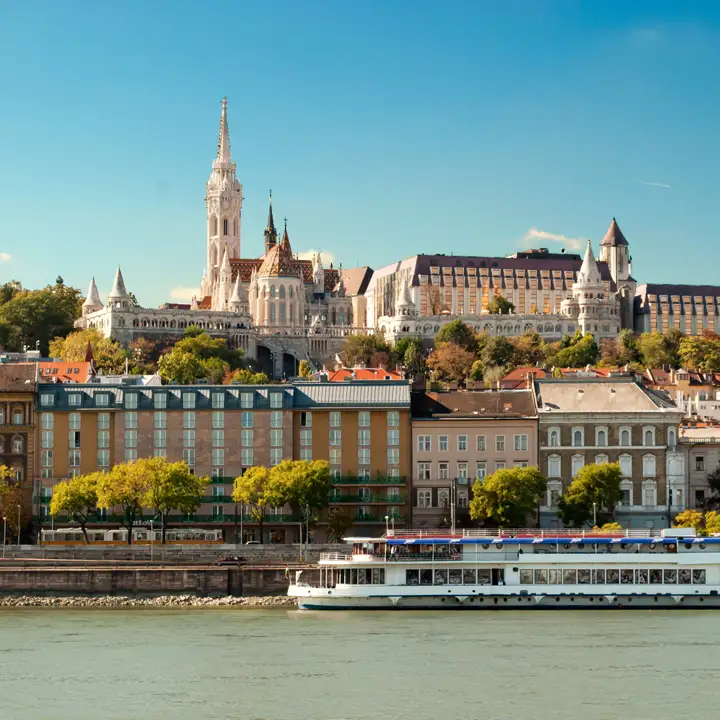
Matthias Church

Visit this lovely, late-gothic church and learn its storied history.

This 13th century church is named after King Matthius, who was married here twice. Under Turkish occupation it was converted into a Mosque, then reconverted into a baroque church, and finally was splendidly reinvented in the late 1800's by combining historic elements with neo-Gothic reconstruction. It holds the tomb of Béla III, one of Hungary's tallest medieval kings. 

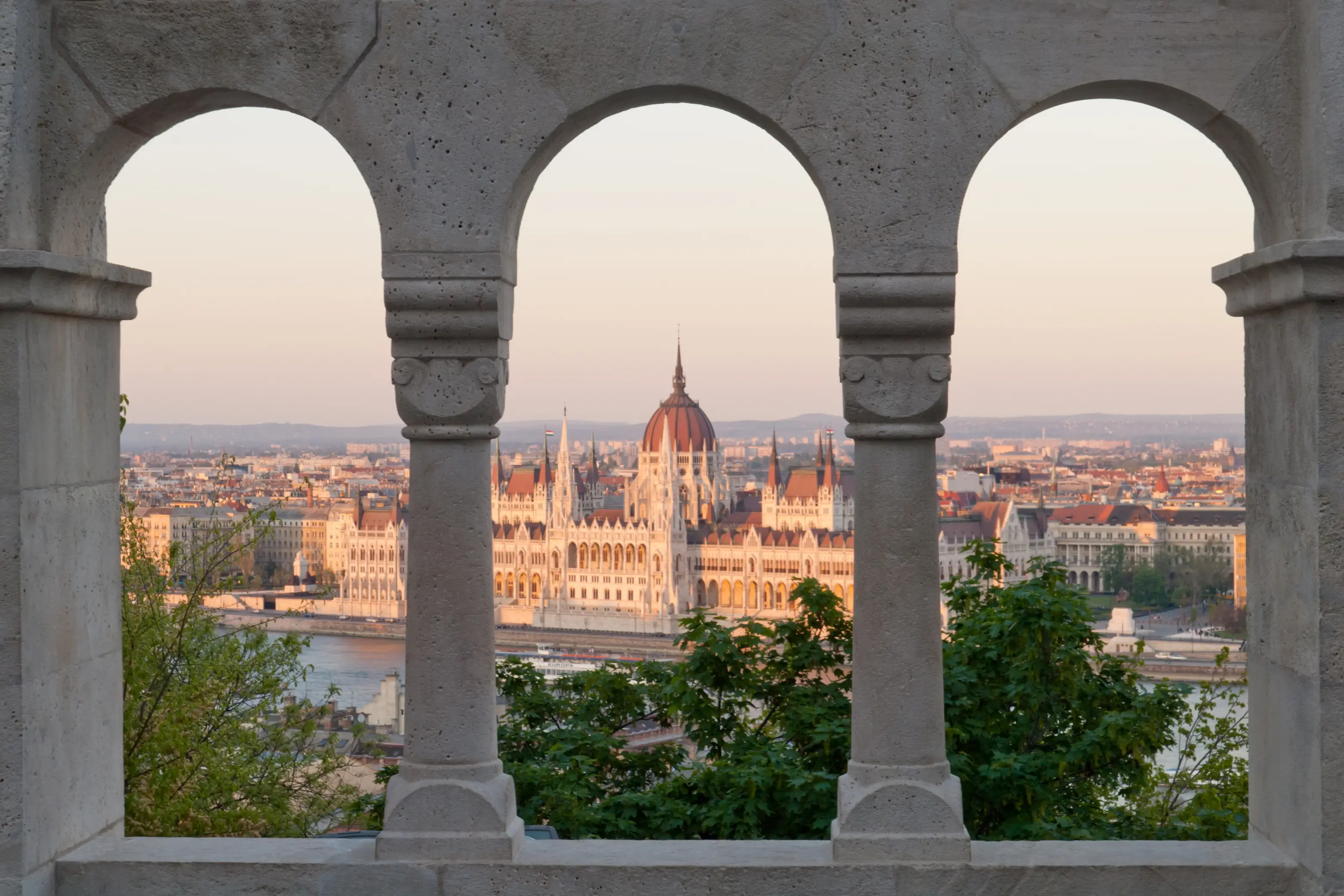
Fisherman's Bastion

Take in stunning panoramic views from this faux fortress with 7 turreted lookout towers.

This fanciful late-19th century creation replaced the original walls where the Fisherman's guild was responsible for town defense. It offers outstanding views of Pest and the river. More photos are taken here than any other place in Budapest. The upper terrace of the bastion offers the best views, but you must pay for entry. 

Palace Courtyard

Discover a beautiful fountain in this courtyard in the center of the castle complex.

The north gate into the courtyard features a raven (the symbol of the famed King Matthias) and the south gate features two lions. In the center of the square is a statue of a cowboy and horse from the Hungarian plains. Most strikingly, an ornate fountain shows King Matthias on a hunt and the peasant girl who fell in love with him.

National Gallery

Experience exquisite Hungarian national art in this museum located in the former Royal Palace.

The museum contains the most important collection of Hungarian art works from the 15th century to the modern day. Exquisite Gothic altarpieces, Károly Lotz's Secession-era paintings, and Mihály Munkácsy's tender realism are only a few of its many highlights. 

Late Afternoon/Early Evening — Gellert Hill and Baths

You can enjoy the best view in Budapest from Gellért Hill. Just beneath it you will find two of the city's most famous baths. The Secession-style Gellért baths, with an elegant collonaded main pool and incredible tile-work, and the 500-year-old Rudas Baths, which were built by the Turks when they ruled Hungary.

Gellért Baths

Go for a swim in one of Budapest's most famous and architecturally significant baths.

These early 19th century Secession-style baths are some of city's most popular. They offer open air baths with a wave pool, a glass-ceilinged indoor pool surrounded by columns, and thermal baths separated by sex. The men's thermal baths feature beautiful mosaic tile. 

Rudas Baths

Enjoy an otherworldly experience in this 16th-century spa complex with traditional Turkish baths.

These nearly 500 year old steam baths date back to the Turkish occupation. It is a fascinating and exotic experience to bathe beneath the stone cupola, with the dim light filtering through colored stained glass. Bathing is co-ed on weekends, women only on Tuesdays, and men only on other days.

Gellért Hill

Hike up this small mountain in the heart of the city for perfect panoramic views.

A walk up this small hill leads to balconies with scenic views of the Danube. With numerous trails criss-crossing it, the park offers a green oasis in the city and has long been a favorite spot for picnics and weekend outings. The walk to the top is somewhat strenuous, but the park can be enjoyed without making it to the top.

image

Day 6

Budapest

image

Day 7

Budapest to Prague

Day 7

Budapest to Prague

icon
icon
icon
icon
icon

Early Morning/Morning

Central Pest

In Central Pest you will discover the beating heart of the city, with grand apartment houses and art nouveau architectural gems. No visit to Budapest is complete without seeing its highlights, including St. Stephen's Basilica, which dramatically rises above the city, and the Chain Bridge, which regally spans the Danube.
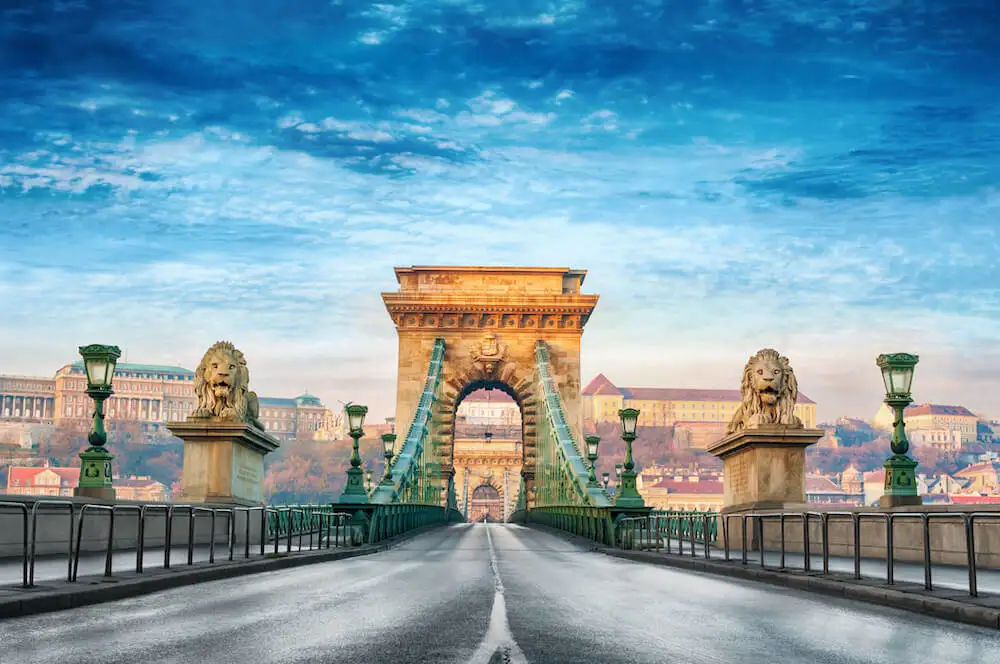
Central Pest

Early Morning/Morning — Central Pest

In Central Pest you will discover the beating heart of the city, with grand apartment houses and art nouveau architectural gems. No visit to Budapest is complete without seeing its highlights, including St. Stephen's Basilica, which dramatically rises above the city, and the Chain Bridge, which regally spans the Danube.

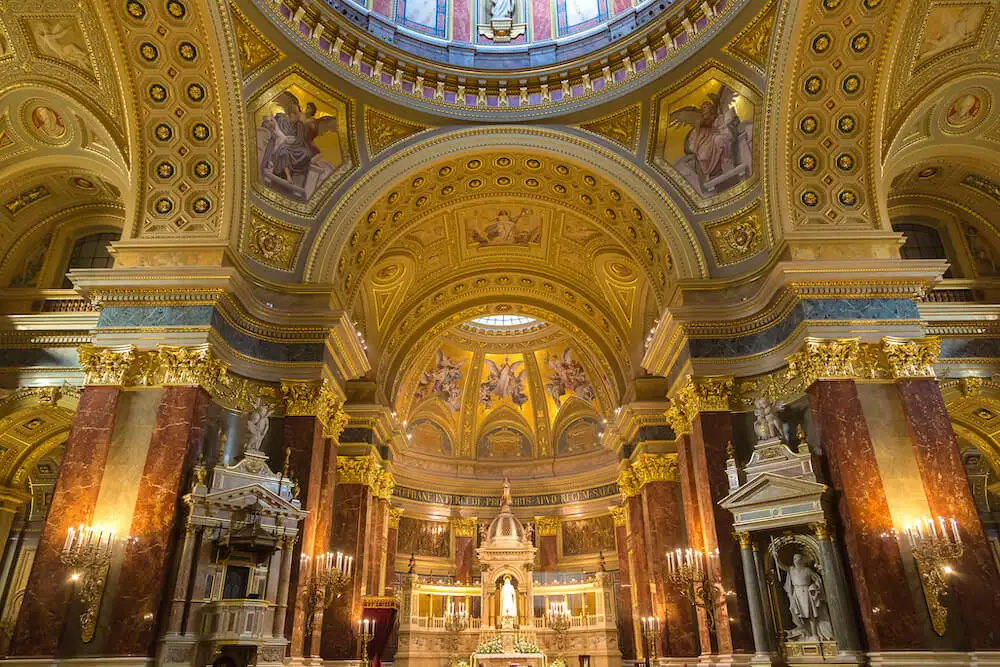
St. Stephen's Basilica

Enjoy an awe-inspiring visit to this vast cupola-topped church; the most famous in Budapest.

Completed in 1905, the construction of the neo-classical Catholic church took over 50 years. The mummified hand of Hungary's first king, St. Stephen, is kept in a small chapel in the rear. Take a lift to the dome to enjoy one of Budapest's most interesting panoramic views. The church hosts frequent concerts. 

Széchenyi Chain Bridge

Stroll across a beautiful landmark 19th-century suspension bridge which is a symbol of Budapest.

This was Budapest's first permanent bridge over the Danube, enabling the cities of Buda and Pest to merge. Named after Count István Széchenyi, it hangs from iron chains (hence, the Chain Bridge) anchored by two towering river piers. These piers were the only elements to survive WWII fighting. The rest was rebuilt.

Café Gerbeaud

Enjoy a leisurely coffee and cake in one of Budapest's most storied cafes.

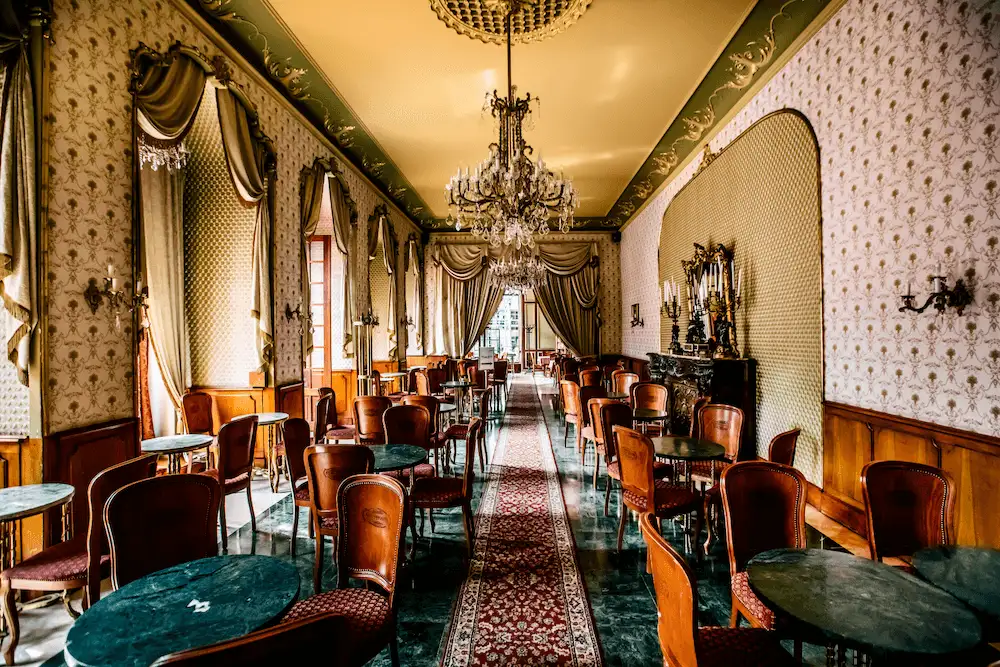
Over 160 years old, with a grand, high-ceilinged dining room, the cafe is deservedly one of Budapest's most popular attractions. It serves coffee, mouthwatering Hungarian pastries, and traditional bistro dishes. It retains the elegance and sophistication of its 19th century origins, and the terrace sits on the lively Vörösmarty Square. 

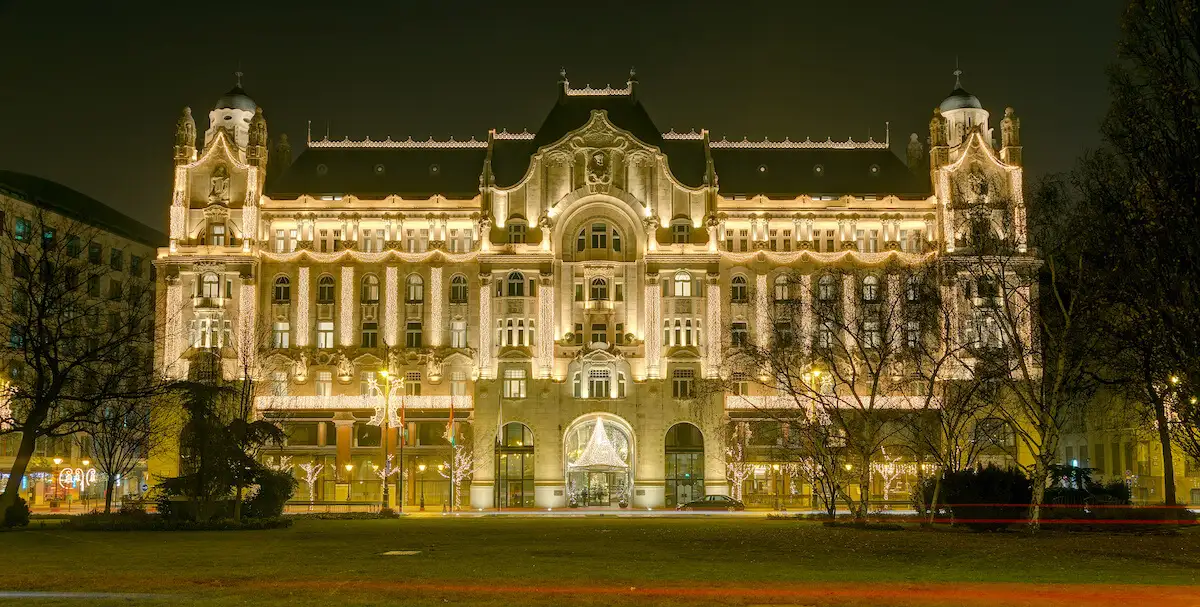
Gresham Palace

Take a peak at this pearl of art nouveau architecture, which now houses a Four Seasons Hotel.

The hotel doesn't mind tourists exploring the lavish arcade on the first floor, as it is lined by shops and a café. Be sure to note the organic themes of the façade and the beautiful wrought iron peacock gate on the north side of the building.

Morning/Mid-Day — Andrássy Avenue

The wide, tree-lined Andrássy Avenue is Budapest's most prominent street, and is lined by imposing neo-Renaissance palaces and buildings. It is home to the breathtakingly beautiful State Opera House, making it the musical heart of Hungary. You will also find the superb House of Terror museum, which focuses on the horrors inflicted by 20th century totalitarian regimes.

State Opera House & Opera Metro Station

Experience an unforgettable visit to the incredibly lavish neo-Renaissance Hungarian State Opera House.

The Opera House is a symbol of the Hungarian nation and is one of it's most beautiful buildings. It is among the world's finest venues in terms of beauty and acoustics. When completed in 1886, the Austro-Hungarian Emperor was said to be upset because it outshone the opera house of Vienna. You can experience a performance here, or take an entertaining guided tour. 

House of Terror Museum

Experience a chilling museum documenting the terrors of Fascism & Communism in Hungary .

This somber and foreboding interactive museum tells the tragic story of Hungary's totalitarian experiences under Fascism and Communism. It is located in the headquarters building of the Arrow Cross Party (Hungarian fascists), and later the Communist secret police after WWII. Hear stories of those who suffered as well as their oppressors, and wander the dank cells where victims were tortured and interrogated.

2:30 PM — Private Transfer to Budapest Rail Station

A private transfer service will pick you up from the N/A and deliver you to Budapest Nyugati Train Station. Your itinerary will provide detailed information on navigating the train station and finding your train, making the whole process simple and stress-free.  IMPORTANT NOTE:  Please be aware the car service can fit up to 1 checked item of luggage and 1 personal item per person, such as a purse or small backpack. If you think you will have more baggage, please inform your travel consultant as this may result in an additional fee.

15:30 - 22:11 — Train to Prague

This seven-hour journey will take you across three countries – Hungary, Slovakia, and the Czech Republic. In Hungary you will follow along one of the prettiest stretches of the Danube River. In Slovakia, you will pass through the flat western portion of the country, and its capital of Bratislava. In the Czech Republic, the terrain will become more hilly again, and you will pass through some beautiful countryside on your way to Prague.

10:11 PM — Transfer from Rail Station

Most trains arrive in Prague Main Station (Praha hl.n.) station, the largest station in the city. Before spending money on a transfer, be sure to check whether your hotel is within easy walking distance. Also consider that the easiest way to reach your hotel may be by public transport. Taxis are available but are known for taking advantage of tourists. However if you prefer the convenience of not carrying your bags on public transport, they are an option. Some private transfers even meet you directly on the platform to help with bags. Uber and Bolt Taxis are also available for those with the app.

image

Day 7

Budapest to Prague

image

Day 8

Prague

Day 8

Prague

icon
icon
icon

9:00 AM - 12:30 PM

Royal Route Guided Tour

On this charming guided walk, you will explore the Prague Castle, the largest castle complex in all of Europe. To reach the castle you will trace the Royal Coronation Route and cross the Charles Bridge, whose “speaking stones” reveal the amazing and often cruel history that occurred there. Your tour guide will then take you either through the castle courtyards and into the dramatic St. Vitus Cathedral in the center of the castle complex, or through the upper part of the castle district around the oversized palaces of the old Catholic nobility and the top of the Castle Steps for incomparable views over the red rooftops of the Little Quarter.

Royal Route Guided Tour

9:00 AM - 12:30 PM — Royal Route Guided Tour

On this charming guided walk, you will explore the Prague Castle, the largest castle complex in all of Europe. To reach the castle you will trace the Royal Coronation Route and cross the Charles Bridge, whose “speaking stones” reveal the amazing and often cruel history that occurred there. Your tour guide will then take you either through the castle courtyards and into the dramatic St. Vitus Cathedral in the center of the castle complex, or through the upper part of the castle district around the oversized palaces of the old Catholic nobility and the top of the Castle Steps for incomparable views over the red rooftops of the Little Quarter.

Prague Castle

Prague Castle is one of the main attractions in Prague and is also the largest castle complex in the world.

The Prague Castle is the largest castle complex in the world with structures dating back to the 9th century. The St Vitus Cathedral and Basilica of St George can be found within the castle walls. The Prague Castle also includes several gardens, palaces, and a monastery. This castle was the seat of power for the Kings of Bohemia, Holy Roman Emperors, and presidents of former Czechoslovakia. Prague Castle is a UNESCO world heritage site and is one of the most visited places in the country. 

Charles Bridge

Cross the river dividing Prague's most historic neighborhoods, and experience one of Europe's most iconic landmarks.

Bridge construction began in 1357 under King Charles IV (hence the name), and it was the only bridge across the Vltava River until 1841. 30 baroque statues of saints line the bridge, and it is filled with street artists and entertainers. Not to be missed.

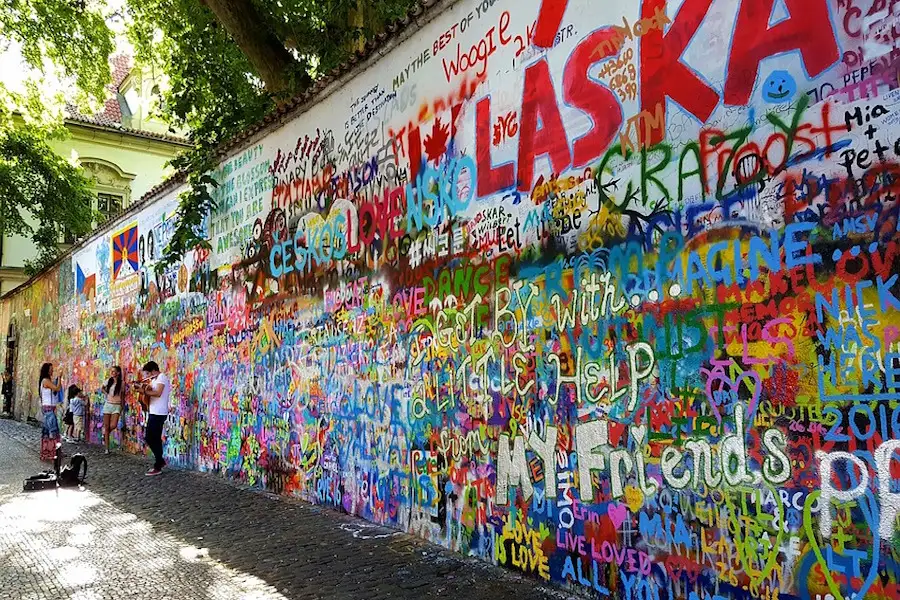
Maltese Square & Lennon Wall

See a historic wall that has been covered in John Lennon-inspired graffiti since Communist days.

The wall has been covered in graffiti since the 1960s, and during Communism anti-regime sentiment was common. John Lennon's assassination inspired grafitti reflecting his song, Imagine, which earned the wall its current moniker. It is now a favorite gathering place for tourists, and musicians sometimes congregate there as well. Just around the corner is the Maltese Square, which is one of Prague's more quaint and relaxed public spaces, despite being just off the main tourist route.

Mid-Day/Afternoon — Prague Castle

Prague Castle is the most visited destination in Prague, and for good reason. The castle's history stretches back over a 1000 years, and it has served as the seat of government for Bohemian kings, Holy Roman Emperors, and presidents of Czechoslovakia and the Czech Republic. The castle sits impressively perched on a hill overlooking the city, providing a breathtaking and romantic view.

St Vitus Cathedral

Venture into a mesmerizing gothic church which is the resting place of saints, Bohemian kings, and Holy Roman emperors .

Located within the castle walls and acting as a symbol of the Czech nation, St Vitus Cathedral is the country's largest and most prominent church. Although construction on the cathedral began in 1344 it was not completed for another 600 years, although the later construction was faithful to the original medieval design. It even contains stained glass windows from the famed Czech artist Alfons Mucha. Entry to the front nave is free, although the crypts and other parts of the church are paid entry.

Golden Lane

Wander a narrow street of brightly painted and picturesque cottages literally built out from the walls of the castle.

The Golden Lane is a street situated within the castle grounds. Originally built in the 16th century to house Rudolf II's castle guards, it takes its name from the goldsmiths that lived there in the 17th century. Throughout history, it's been occupied by castle guards, goldsmiths, and others, including for a short time Franz Kafka. The houses are now filled by shops. 

Strahov Monastery

Wander just slightly off-the-beaten-path to discover a hilltop medieval monastery with a stucco-paneled theological hall, a vast library, and a baroque church.

Strahov Monastery was founded in 1143 and in 1420, during the Hussite wars, it was attacked and plundered by the citizens of Prague. Luckily, this was before the monastery's prize attraction was built; a magnificent library with a magnificently painted ceiling. The monastery also contains a beautiful Baroque church, and you can find one of Prague's best viewpoints in the vineyards planted near its south entrance. 

Lobkowicz Palace

Take an intimate audio tour of an art-filled palace, which is narrated by its owners.

The Lobkowicz Palace is the only privately owned building in the Prague Castle complex. The excellent museum tells the fascinating tale of the noble family that once resided within it. An audio guide is narrated by actual family members, who tell the back story behind the beautiful art and artifacts their ancestors collected over the centuries, and describe their flight to America after Nazi and Communist political persecution. 

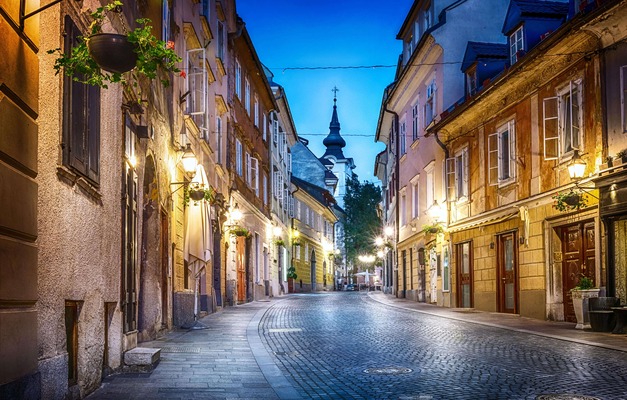
Afternoon/Late Afternoon — The Little Quarter

The Little Quarter is a quaint yet lively quarter of Prague tightly nestled on the slope and riverbank beneath the Prague Castle. It is filled with the homes of medieval and renaissance nobility who wanted to live as closely as possible to the castle. Picturesque side streets, beautiful churches, and impressive Baroque architecture all abound within the Little Quarter.

Charles Bridge

Cross the river dividing Prague's most historic neighborhoods, and experience one of Europe's most iconic landmarks.

Bridge construction began in 1357 under King Charles IV (hence the name), and it was the only bridge across the Vltava River until 1841. 30 baroque statues of saints line the bridge, and it is filled with street artists and entertainers. Not to be missed.

Church of St. Nicholas

Stare in wonder at Prague's largest and most beautiful baroque church.

Construction on this elegant and incredibly ornate church began in 1745 and took 100 years and 3 generations of architects to complete. You can also climb the tower for a view.

Wallenstein Garden

Escape to these tranquil 17th-century gardens located behind the walls of the Senate palace.

Open from April to October, these grand late renaissance gardens feature a massive limestone grotto created by artificial stalactites, ornamental pools, & classically-inspired statues. Most tourists miss this hidden gem, as the gardens are reached through inconspicious passageways in Wallenstein Palace, which houses the Czech Senate, and the nearby the Malostranská Metro station.

Maltese Square & Lennon Wall

See a historic wall that has been covered in John Lennon-inspired graffiti since Communist days.

The wall has been covered in graffiti since the 1960s, and during Communism anti-regime sentiment was common. John Lennon's assassination inspired grafitti reflecting his song, Imagine, which earned the wall its current moniker. It is now a favorite gathering place for tourists, and musicians sometimes congregate there as well. Just around the corner is the Maltese Square, which is one of Prague's more quaint and relaxed public spaces, despite being just off the main tourist route.

Infant Jesus of Prague

See the Infant Jesus of Prague, a wax effigy of the baby Jesus credited with many miracles, which attracts visitors from around the world.

The church was completed in 1613 in the Baroque style and houses the 18.5-inch statue. The church is somewhat plain in comparison to most churches in Prague, but visitors come to see the Infant Jesus of Prague (il Bambino di Praga).

image

Day 8

Prague

image

Day 9

Prague

Day 9

Prague

icon
icon

Early Morning to Afternoon

Kutna Hora

On this full day self-guided excursion you will discover the charming Bohemian town of Kutná Hora. An hour-long train ride will take you through the attractive countryside, and then you will begin exploring the medieval town. Due to its silver mines, Kutná Hora was rich and powerful during the Middle Ages. It was even declared a Royal town, meaning that the Bohemian King directly controlled the town. The town spent much of its wealth on beautiful buildings, many of which still exist today, and which have earned the town the status of a UNESCO World Cultural site. Your visit may include stops at the incredible Gothic church of St. Barbara, the Royal Mint, and if you choose, the famous "Bone Church".

Kutna Hora

Early Morning to Afternoon — Kutna Hora

On this full day self-guided excursion you will discover the charming Bohemian town of Kutná Hora. An hour-long train ride will take you through the attractive countryside, and then you will begin exploring the medieval town. Due to its silver mines, Kutná Hora was rich and powerful during the Middle Ages. It was even declared a Royal town, meaning that the Bohemian King directly controlled the town. The town spent much of its wealth on beautiful buildings, many of which still exist today, and which have earned the town the status of a UNESCO World Cultural site. Your visit may include stops at the incredible Gothic church of St. Barbara, the Royal Mint, and if you choose, the famous "Bone Church".

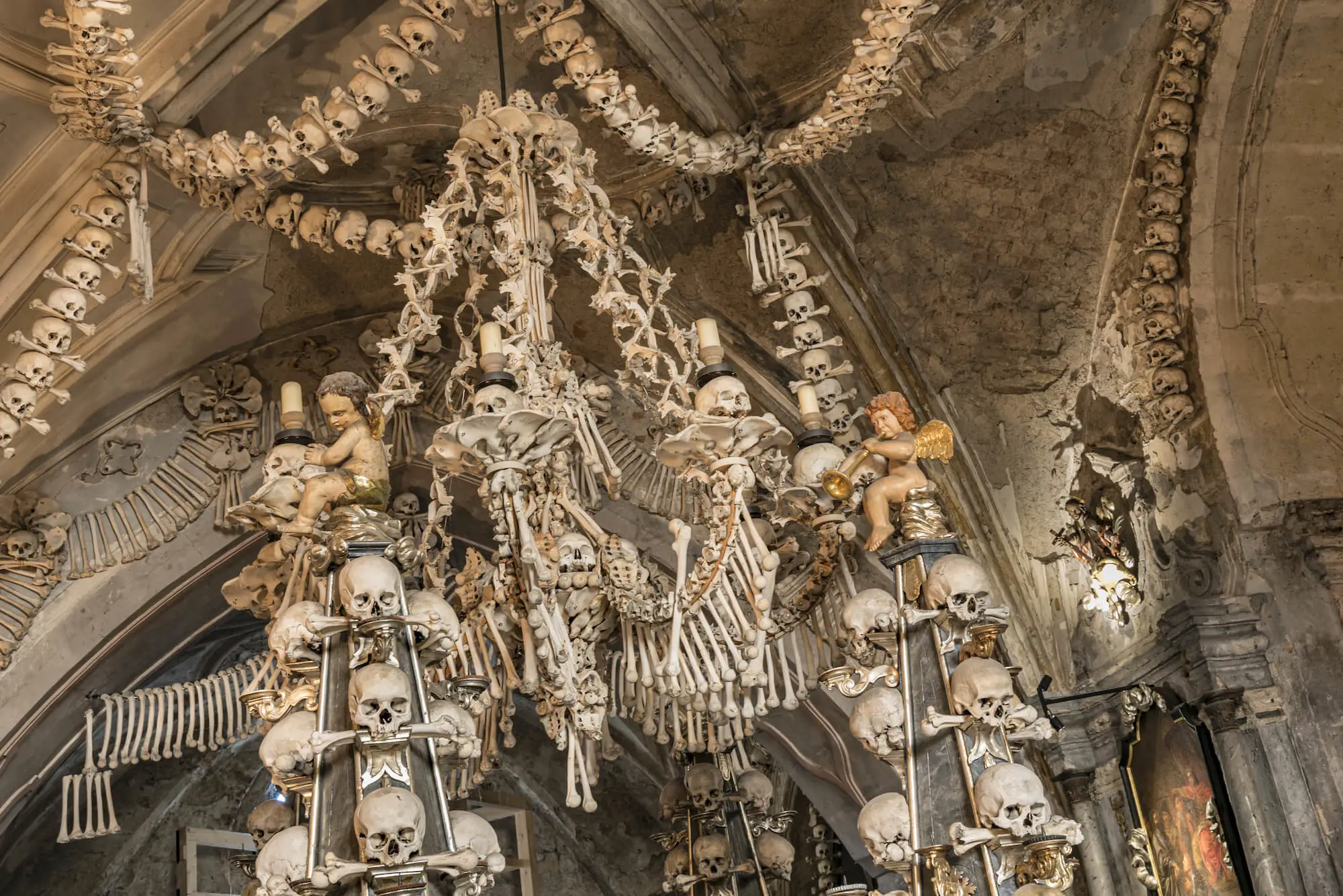
Sedlec Ossuary

Confront your own mortality in the crypt of a small Gothic church decorated with garlands of human skulls, plus a bone chandelier & chalices.

As macabre as it might appear, one cannot help but admire the imaginative ways in which thousands of human bones have been put to decorative use. There's everything from huge pyramids of skulls, to a chandelier to an aristocratic coat of arms composed of the remains of those who sought their final resting place in Sedlec. It’s a breath-taking reminder of the medieval practice of reflecting on mortality, summed up in the Latin expression ‘Memento mori’ or ‘remember you must die’.

St Barbara's Church

See a spectacular church decorated with sharp spines, flying buttresses & frescoes.

The church, which many mistake for a cathedral, is the exquisite result of a centuries-long struggle for autonomy in religious affairs that raged between Kutná Hora and the nearby Cistercian monastery. The church was built outside of the town walls, but on land not owned by the monastery, as a symbol of the city's independence from the monastery. It was fittingly dedicated to St. Barbara, the miners' patron saint.

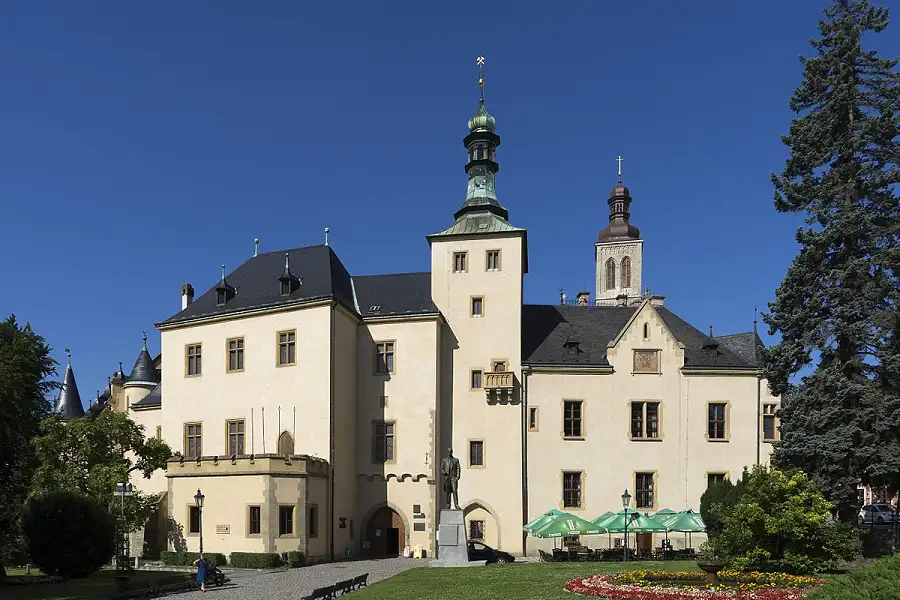
Italian Court

Visit a museum of coin minting located in a former royal palace.

This grand building is the former royal mint and a residence of the kings of Bohemia from the 13th century. It has served as the town hall since the 19th century. You can visit a coin exhibit, see a coiner stamping coins, and tour the former royal palace, including a beautiful Art nouveau chapel filled with valuable wooden altars.

The Stone House

Take a peak at a richly decorated family house built in medieval times.

In addition to admiring the home from outside, you can visit two museum expositions: Bourgeois Culture and Life in Kutná Hora between 17th and 19th century, and a lapidary showing the structural development of the town.

Afternoon/Late Afternoon — Old Town

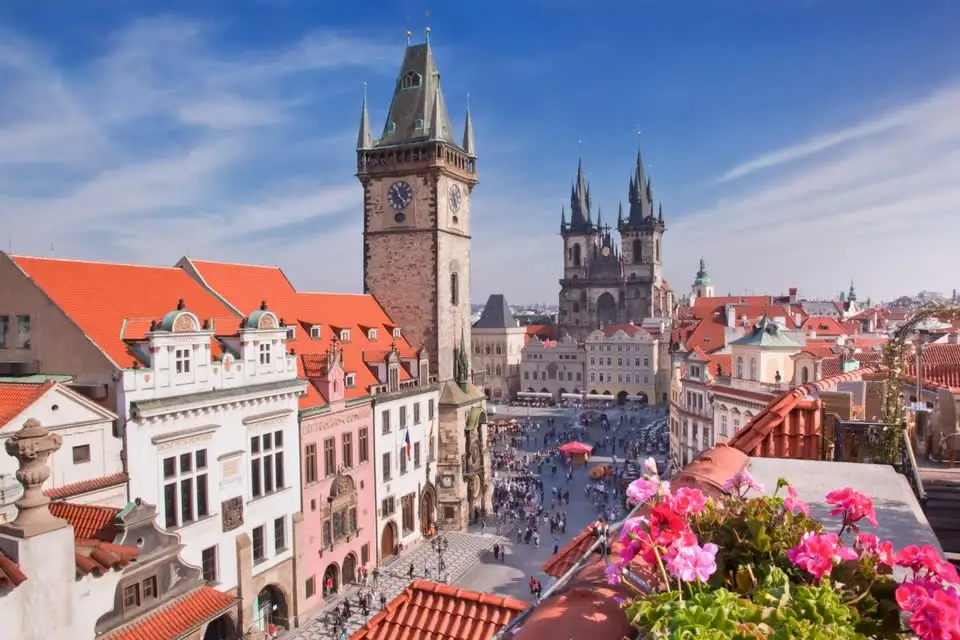
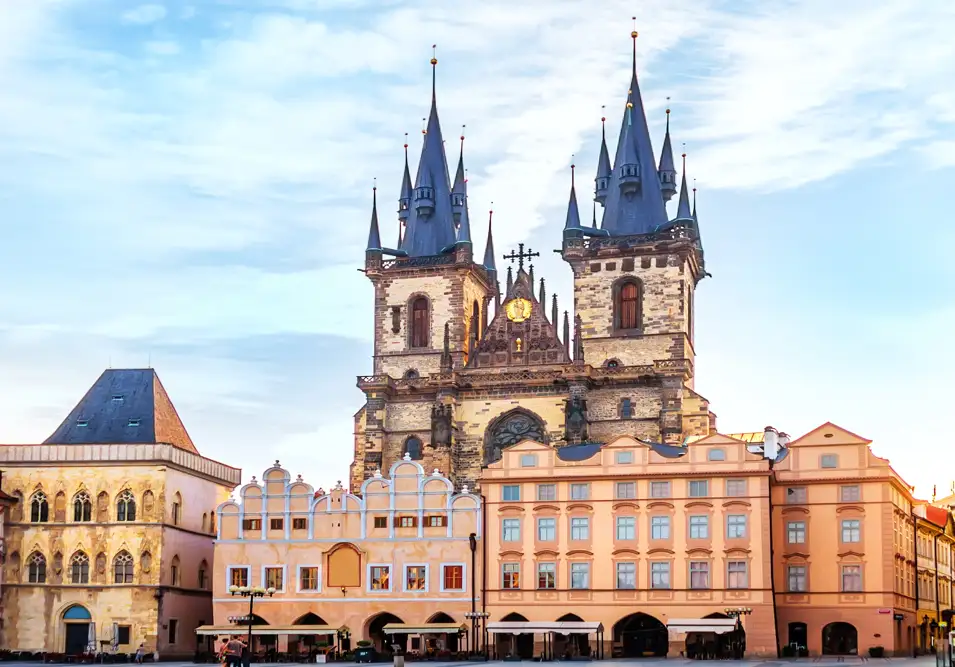
A visit to the Old Town transports you to an entirely different era. A labyrinth of twisting cobblestone lanes and alleys surrounds Old Town Square, which has been Prague's municipal center since the Middle Ages. The square is lined by magnificent churches and imposing Renaissance palaces. As you wander through the Old Town, you discover numerous other delights, including several beautiful churches, a plentiful supply of cozy cafes and pubs, and an outdoor market dating back to the Middle Ages.

Old Town Square

Make sure to visit one of Europe's most important, historic, and stunning city squares.

The square is filled with rich history and surrounded by many beautiful old buildings, such as the gothic church of Our Lady before Týn and the baroque church of St. Nicholas. At the center of the square is a large statue of Jan Hus, a church reformer burnt at the stake in 1415, and a lovely and recently-restored column topped by the Virgin Mary. Today the square is filled with street performers, food stalls, and horse-drawn carriages. 

Old Town Hall and Astronomical Clock

See Prague's most photographed moment when the late medieval timepiece constructed on the side of the Old Town Hall Tower comes to life at the top of the hour.

Apostles proceed from the tower’s 1410 astronomical clock hourly, flanked by figures representing vanity, greed, death, and pleasure. You can also take an elevator to the top of the Old Town Hall tower for a great view of the Old Town Square and rooftops. Tours of the town hall and its gothic cellars are also offered. 

Church of Our Lady before Týn

Count the spires on the Church of Our Lady Týn before discovering the hidden courtyard behind it.

The 14th-century, Gothic church is a stunning structure with asymmetrical towers (note that the one on the right is slightly larger than the one on the left). It is the dominant feature of Old Town square and serves as an extensive gallery of Gothic, Renaissance and Early Baroque works. The church is the final resting place for the great astronomer Tycho Brahe.

Clementinum

Discover a large historical complex of buildings and courtyards "hidden in plain sight" within the Old Town.

Founded as an abbey in the 11th century and later transformed into a Jesuit university, it is the second largest complex of buildings in Prague after the castle and contains four separate churches. Guided tours begin at 10am, and include an awe-inspiring Baroque library hall and the Astronomical Tower, from which you have a beautiful view of the Old Town.

image

Day 9

Prague

image

Day 10

Depart Prague

Day 10

Depart Prague

icon

To Be Determined

Prague Airport Transfer

A car service will pick you up from the N/A at the time listed above, and deliver you to the Prague Airport for your flight departure. This is a private transfer just for your travel party, and you will not need to pay the driver for the transfer, as it is already included in the cost of the itinerary.

Prague Airport Transfer

To Be Determined — Prague Airport Transfer

A car service will pick you up from the N/A at the time listed above, and deliver you to the Prague Airport for your flight departure. This is a private transfer just for your travel party, and you will not need to pay the driver for the transfer, as it is already included in the cost of the itinerary.

image

Day 10

Depart Prague

What's Included In Adriatic and Heart of Europe Trip

Fork

Pre-Paid Tours and Activities:

  • Walking Tour of Split Old Town & Diocletian's Palace
  • Highlights of Zagreb, Guided Tour
  • Best of Budapest: Half-Day Walking Tour of Highlights & Hidden Finds
  • Prague Castle & Royal Route Guided Walk
train

Pre-Paid Transportation:

  • 2nd Class Train Tickets from Split-Zagreb
  • 2nd Class Train Tickets from Zagreb-Budapest
  • 2nd Class Train Tickets from Budapest-Nyugati to Praha hl.n.
  • Arrival in Split and Private Transfer to Hotel from Airport
  • Arrival in Zagreb and Private Transfer to Hotel
  • Private Transfer from the Budapest Rail Station
  • Private Transfer to Rail Station in Budapest
  • Transfer to Prague Airport by Private Car
train

Accommodation:

  • 3 nights at a hotel of your choice in Split
  • 1 nights at a hotel of your choice in Zagreb
  • 2 nights at a hotel of your choice in Budapest
  • 3 nights at a hotel of your choice in Prague
mobile

Go Real Travel Mobile App:

  • Itinerary Plan & Reservations Info
  • Points of Interest
  • Detailed Travel Information
  • Maps & Directions

Other Trips You May Like

Trip image

8 Days

From$1585USD

Explore the Hidden Gems of Croatia: 8-Day Itinerary

View Trip
Trip image

10 Days

From$1927USD

Rivers and Revelries in the Cultural Capitals of Central Europe - Berlin, Prague & Budapest

View Trip
Trip image

12 Days

From$2675USD

Jewish Heritage and Scenic Rivers: A Journey through Prague, Vienna, and Budapest

View Trip
Trip image

14 Days

From$2350USD

Imperial Elegance: Prague, Vienna and Budapest Itinerary 14 Days

View Trip
Trip image

15 Days

From$2750USD

Prague, Vienna, and Budapest, 15 Days of Must See Sights & Local Scenes

View Trip
Trip image

7 Days

From$1695USD

Perfectly Planned Week in Prague, Vienna & Budapest

View Trip
Trip image

8 Days

From$1425USD

Enchanting Central Europe: 8-Days in Prague, Vienna & Budapest

View Trip
Trip image

12 Days

From$2350USD

Pearls of the Empire: A Central European Odyssey

View Trip
Trip image

11 Days

From$2098USD

Palaces, Culture & Capitals: Munich to Budapest Epic

View Trip

Featured Blogs

Trip image
Croatia
Trip planning

Your Ultimate 12-Step Guide to Plan a Trip to Croatia

Trip image
Europe
Travel solo

Flying Solo: The Best Places to Travel Alone in Europe

Trip image
Europe
Romantic

16 Most Romantic Destinations in Europe

Trip image
Europe
Seasonal guide

10 European Cities to Visit in Winter

Trip image
Prague
Nightlife

13 Most Happening Things to Do in Prague at Night

Trip image
Prague
Cheap

18 Cheap and Free Things to do in Prague

Trip image
Prague
Why visit

Top 10 Reasons to Visit Prague

Our Customers Say It Best

Malini Dutta, Boston, Massachusetts
We can't thank you enough for the detailed plans, maps, and suggestions. It really felt that someone was holding our hands and showing us around. We had all the excitement of discovering foreign lands, with none of the problems that can happen while negotiating unfamiliar places. In fact, all the cities felt like home within a few hours of arriving and exploring.
Bev and Mark Frankel, Williamsburg, Virginia
We could not be more pleased with Go Real Travel! You took the guess work out of things like public transport but still managed to allow us the freedom to tour as we wanted. Our guides were exceptional and every time I saw a Viking Cruise tour of 25 people, I realized the quality experience we were getting with Go Real.
Marianne Strydom, Paarl, South Africa
I just wanted to thank you for organizing an amazing trip for me – I packed in so much in such a short period of time and everything was just perfect. The way you do things makes it possible to really get to know the destination, which for me as a travel agent could not have been better.
Otto Chuy, Los Angeles, California
I am still surprised how everything worked as planned, without a hitch. All instructions in your itinerary were precise and correct. Your suggestions and comments in each of the locations we went to were very helpful. All your guides, without exception, were wonderful and exactly on time.

Explore cities in more detail

medieval walls and buildings in split croatia

Split

A lively port city situated between mountains and sea, Split is one of Croatia's most visited—and most beautiful— cities. With historical monuments sprinkled across the Dalmatian coastline and trendy cafes and shops popping up within the ancient walls of the city center, it's easy to see why this extraordinary city is such a popular travel destination. Split is always abuzz with visitors and locals alike enjoying a seafood meal outside, relaxing on the beach, or boating on the Adriatic. The weather is almost always beautiful, so the streets tend to be crowded with people looking to take advantage of the sunshine. A walk through Split feels like a journey through past centuries. The coastal town showcases modern architecture next to structures like Diocletian's Palace, which date back to the times of the Roman Empire. In fact, Split's Old Town resides within the walls of Diocletian's Palace. As you stroll through the narrow marble streets, you'll be amazed by the number of modern restaurants and bars populating this ancient area. It's easy to pack plenty of culture, history, activity, and leisure all into one amazing trip.   

church of st mark in zagreb croatia

Zagreb

Zagreb is Croatia's biggest city, known for its cultural roots and vibrant street life. The city's rich history is evident in the mix of different architectural styles, including secessionist, classical, neo-Baroque, neo-Gothic, and art deco. Even the seemingly lackluster parts of town have been brought to life by street artists. At first glance, the red rooftops and cobblestone streets might seem reminiscent of other popular European cities, but you'll soon learn that Zagreb has a spirit all its own. Everywhere you go, you'll be rubbing elbows with lively locals hanging out at open cafes, gardens, and parks, or rushing to the next event on the calendar. Thanks to the spacious pedestrian zones attracting locals, expats, and visitors alike, socializing with new people and finding something unexpected to do is effortless. At night, the youth of the city becomes even more exuberant. With plenty of jazz clubs, beer halls, cocktail bars, and casinos, there's always something to do because the city never sleeps.  

View of the Hungarian Parliament from a Hillside in Budapest

Budapest

Situated at the heart of Europe, Budapest is the capital of Hungary, appropriately named 'The Pearl of the Danube,' for its fixating and almost haunting beauty. Formerly two separate cities, Buda and Pest were forged into one by time, occupation, and the eight bridges that anchor them together today. From the Romans to the Communists, each occupier left its flavor profile in Budapest, evident in the famous spicy Hungarian stew known as 'goulash.'  Budapest is a melting pot of history, culture, and taste, from the magnificent Baroque and neo-Gothic architecture to the Turkish thermal baths. After a long day of sightseeing, treat yourself to a glass of Tokaj, what King Louis XIV of France referred to as the "Wine of Kings, King of Wines". Budapest has a flavor to satisfy any taste.

Church of Our Lady before Týn old town prague czech republic

Prague

The city of Prague is indisputably the gem of Central Europe. Full of history, culture, and classic Czech pubs around every corner, Prague is teeming with nooks and crannies just waiting to be discovered. The narrow cobblestone streets and warm red rooftops give the city a homey feel, while the well-preserved medieval architecture transports you back in time. Walking across the Charles Bridge with the view of the Prague Castle will make you feel like you’re living in a fairytale, and you might as well be.    As an up-and-coming destination, Prague is a perfect mix of classic and modern. New trendy cafes and bistros are always popping up, and you can always find a group of lively locals chowing down on goulash and quaffing pivo (the best beer in Europe!) at traditional Czech restaurants across the city. The clash of modernity and tradition, preservation and innovation, gives this city a mysterious air that you won’t soon forget.
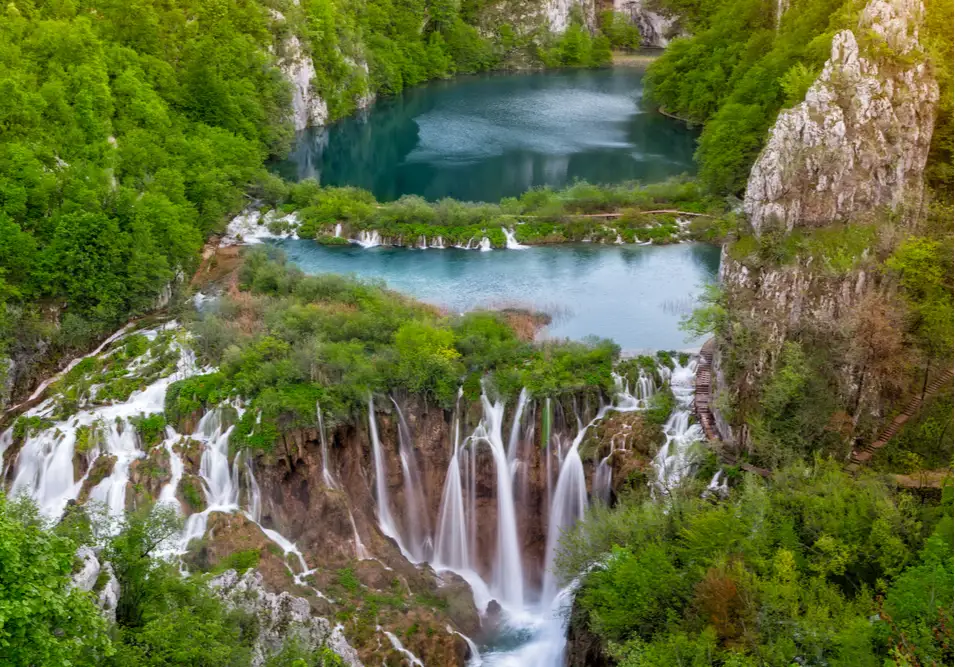
waterfalls in plitvice lakes croatia

Plitvice Lakes

Plitvice Lakes in Croatia is a national park featuring 16 interconnected lakes. It was once one of Yugoslavia’s most popular tourist hotspots, and today this UNESCO World Heritage Site attracts visitors from all over the world. The lakes’ main draw is their sublime natural beauty. Turquoise pools, joined by a series of waterfalls and cascades, are set like jewels within the park’s lush green hillsides. Wooden hiking paths snake between the lakes and along the shores.   Plitvice hosts an impressive variety of wildlife, from wild boars and dormice to hundreds of butterfly species, and countless types of birds. The park’s most famous resident is the elusive brown bear. Occupied by hostile forces during the Croatian War of Independence, this park’s history isn’t all paradisical. However, it’s easy to forget that troubled past when spending time by the lakes today. Today, Plitvice’s mood is all about peace, relaxation, and appreciation of stunning natural beauty.

hvar docks with churchtower

Hvar

Hvar, an enchanting Croatian island in the Adriatic Sea, is a gem waiting to be discovered. Located just an hour’s ferry ride from Split, it’s known for its sun-drenched days, shimmering waters, and vibrant lavender fields. Visitors can explore charming medieval streets, elegant harbors, and enjoy stunning views from ancient hilltop fortresses. Stroll through Hvar Town’s lively squares, savor local wines at quaint seaside cafes, or relax on secluded beaches surrounded by crystal-clear waters. With a laid-back Mediterranean vibe, Hvar offers a perfect blend of culture, history, and natural beauty that makes it a must-see for those seeking an idyllic island escape.