Peaks to Palaces: 10 Days in Switzerland, Germany, and Austria

destination-icon10 Day Tour of Zurich, Lucerne, Salzburg and Munich

Destinations on this trip: Zurich,Lucerne,Salzburg,Munich

Bridge in Lucerne, Switzerland
Neuschwanstein Castle in Bavaria
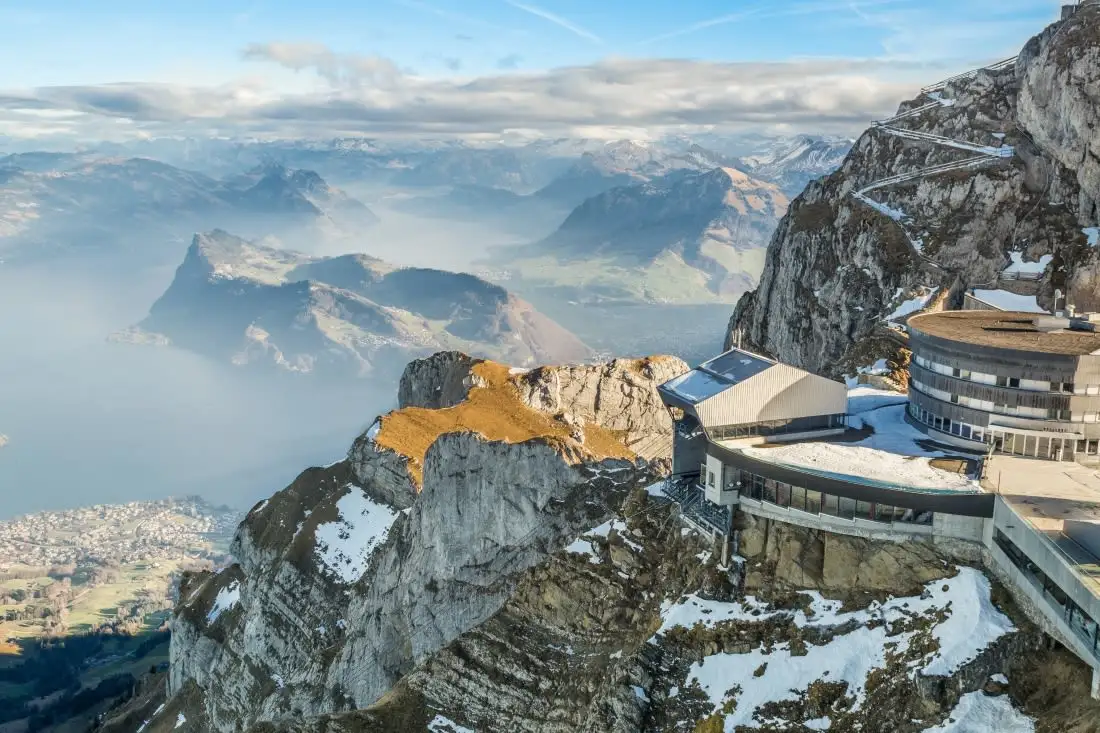
Stunning mountaintop view with a modern building overlooking valleys and lakes.
Salzburg Cathedral
image
arrowLightLeft
arrowLightRight

How Long Is the Alpine Peaks & Palaces Trip and What Does It Cost?

Nature LoversHistory Buffs
  • Duration
    10 days / 9 nights
  • Best time
    Jan-Dec
  • From
    $3691 / person (Flights not included)
Experience Europe's grand architecture and natural splendor over 10 days, visiting the historic cities of Zurich, Lucerne, Salzburg, and Munich. You'll get intimately acquainted with each city on private walking tours, and enjoy four excursions to the mountain-ringed lakes and lofty Alpine peaks of Switzerland, Austria, and Bavaria, including a visit to the fairy-tale castle of Neuschwanstein. You'll manage it all with ease, thanks to the detailed travel guidance provided by Go Real Travel's mobile app, ensuring you cover both the unmissable attractions as well as the hidden gems.
  • Discover Zurich on a private walking tour and follow it up with a serene cruise on Lake Zurich.
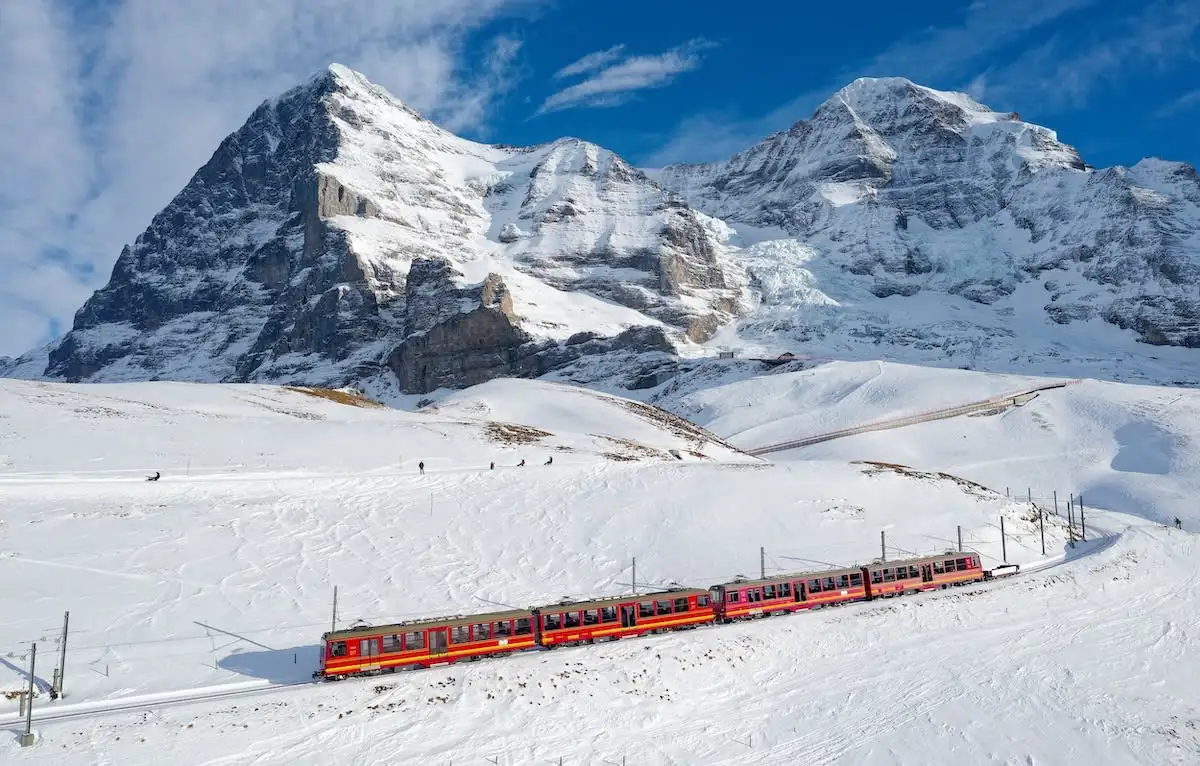
  • Take in epic Swiss Alpine views as you ascend the world's steepest cog-wheel train to Mt. Pilatus.
  • Enjoy Salzburg's musical & architectural heritage in the Mirabell Gardens & Hohensalzburg Fortress.
  • Explore the heart of Munich, from the historic Marienplatz to the English Garden, a local favorite.
  • Relax in Swiss lakeside cafes, Salzburg's historic taverns, and in Munich's bustling beer gardens.
Experience Europe's grand architecture and natural splendor over 10 days, visiting the historic cities of Zurich, Lucerne, Salzburg, and Munich. You'll get intimately acquainted with each city on private walking tours, and enjoy four excursions to the mountain-ringed lakes and lofty Alpine peaks of Switzerland, Austria, and Bavaria, including a visit to the fairy-tale castle of Neuschwanstein. You'll manage it all with ease, thanks to the detailed travel guidance provided by Go Real Travel's mobile app, ensuring you cover both the unmissable attractions as well as the hidden gems.
  • Discover Zurich on a private walking tour and follow it up with a serene cruise on Lake Zurich.
  • Take in epic Swiss Alpine views as you ascend the world's steepest cog-wheel train to Mt. Pilatus.
  • Enjoy Salzburg's musical & architectural heritage in the Mirabell Gardens & Hohensalzburg Fortress.
  • Explore the heart of Munich, from the historic Marienplatz to the English Garden, a local favorite.
  • Relax in Swiss lakeside cafes, Salzburg's historic taverns, and in Munich's bustling beer gardens.
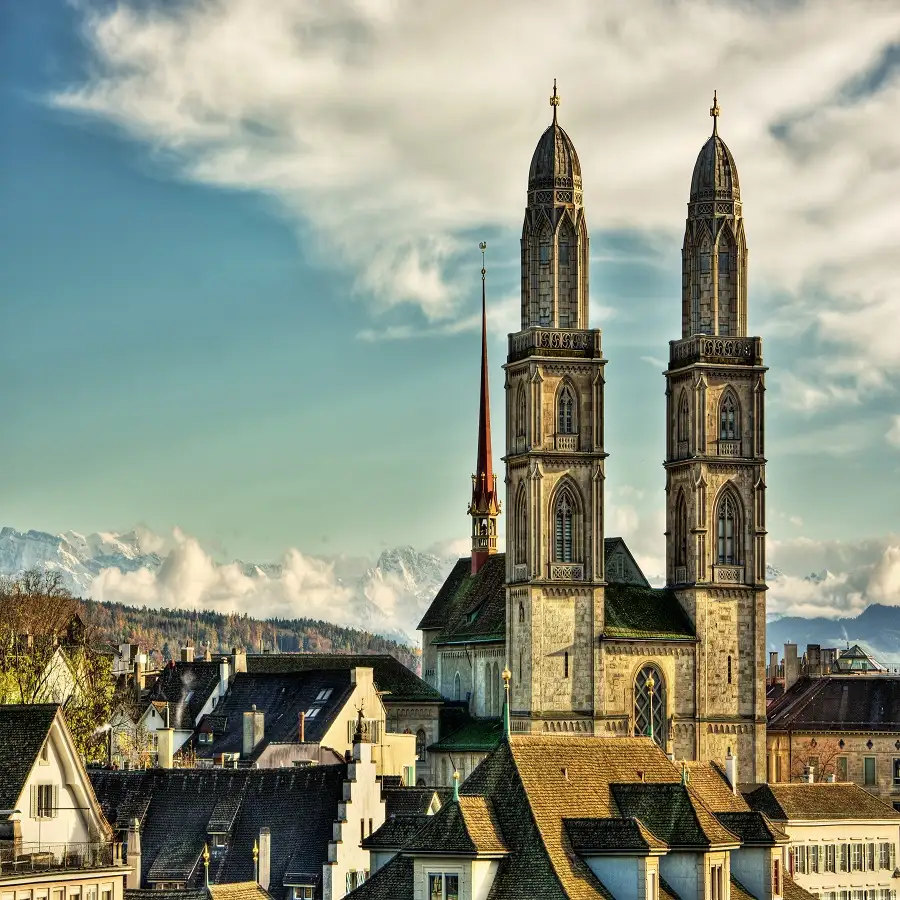
Fraumunster - Must-See Sight
Fraumunster
Churches & Monasteries
Lake Zurich - Must-See Sight
Lake Zurich
Natural Beauty
Chapel Bridge - Must-See Sight
Chapel Bridge
Natural Beauty
Lake Lucerne - Must-See Sight
Lake Lucerne
Natural Beauty
Old Town  - Must-See Sight
Old Town
Historic Landmarks
Hohensalzburg Fortress - Must-See Sight
Hohensalzburg Fortress
Castles & Chateaux
Old Town - Must-See Sight
Old Town
Architecture
Old Town - Must-See Sight
Old Town
Architecture
Residence Palace - Must-See Sight
Residence Palace
Castles & Chateaux

Must see sights

Fraumunster - Must-See Sight
Fraumunster
Churches & Monasteries
Lake Zurich - Must-See Sight
Lake Zurich
Natural Beauty
Chapel Bridge - Must-See Sight
Chapel Bridge
Natural Beauty
Lake Lucerne - Must-See Sight
Lake Lucerne
Natural Beauty
Old Town  - Must-See Sight
Old Town
Historic Landmarks
Hohensalzburg Fortress - Must-See Sight
Hohensalzburg Fortress
Castles & Chateaux
Old Town - Must-See Sight
Old Town
Architecture
Old Town - Must-See Sight
Old Town
Architecture
Residence Palace - Must-See Sight
Residence Palace
Castles & Chateaux
Loading...

Starting from

$3691

per person

no-flightNot included

Price varies by group size, hotel selection, and travel season.


Secure Your Customizable Trip

Enter your details to embark on a journey that can be tailored just for you.

Start

Travelers

0 travelers
Add Room
Remove Room

Preferred Hotel Stars

Select Hotel Stars
Craft Your Own Itinerary

Select your interests and destinations for a trip plan inspired by you.

Where Does the Alpine Peaks & Palaces Trip Trip Go?

Enable/Disable Map Scrolling

Click To Make Map Interactive

Alpine Peaks & Palaces Trip Timeline

Arrival

1 nights

Zurich

Switzerland

Train: 1h

2 nights

Lucerne

Switzerland

Train: 1h

Train: 5.5h

2 nights

Salzburg

Austria

Train: 2h

3 nights

Munich

Germany

Departure

What Does the Alpine Peaks & Palaces Trip Itinerary Look Like?

image

Day 1

Arrive Zurich

Day 1

Arrive Zurich

icon
icon
icon

To Be Determined

Zurich Airport Pickup

We will schedule a pick up for 20 minutes after your flight's arrival time. You will be met in the terminal by an English speaking driver holding a sign with your name on it. The ride is for your party only - you will not be sharing a vehicle. The cost of the ride will be included in your itinerary package.

Zurich Airport Pickup

To Be Determined — Zurich Airport Pickup

We will schedule a pick up for 20 minutes after your flight's arrival time. You will be met in the terminal by an English speaking driver holding a sign with your name on it. The ride is for your party only - you will not be sharing a vehicle. The cost of the ride will be included in your itinerary package.

Mid-Day/Afternoon — West Bank, Self-Guided

A wander around the West Bank of Zürich's Limmat River will help you experience the city's development over the centuries, from its iconic Fraumünster church, the rise of its famous banking industry around Paradeplatz, its associations with the Irish writer James Joyce, and its impact on modern sporting history at the FIFA World Football Museum.

Schweizerisches Landesmuseum (Swiss National Museum)

Museum displaying Swiss history

 Housed in a purpose-built mock-Gothic castle, the museum is often visited just to marvel at its architecture, but actually, this massive building has such superbly presented state-of-the-art displays on the history of the Swiss Confederation that you're sure to find something here that's worth at least an hour or two. If there's one thing the Swiss do, it's that they don't skimp on culture, so you can expect excellent value for money here.

James Joyce Foundation

Museum dedicated to the great Irish writer, James Joyce, wrote Ulysses during his wartime exile in Zurich from 1915-19

Museum dedicated to the great Irish writer, James Joyce, wrote Ulysses during his wartime exile in Zurich from 1915-19

FIFA World Football Museum

Modern museum with over 1000 displays on football (soccer)

Covering three floors in total, the museum traces the history of the game, FIFA, and both men's and women's World Cup competitions. Football junkies will delight in the details and memorabilia like old programs, shirts, boots and footballs, and even an unopened bottle of champagne from England's 1966 World Cup celebrations.

Late Afternoon/Early Evening — East Bank, Self Guided

Explore the environs of the left bank of the Limmat River in Zurich, including, for example, Grossmünster church where the Protestant Reformation found a receptive audience, as well as the modern artistic masterpieces housed in the Kunsthaus, before settling down to a traditional hearty cheese fondue somewhere along the pedestrianized Niederdorfstrasse.

Wasserkirche

13th century church and crypt

The Gothic church is the site of the alleged martyrdom of Zurich's patron saints, Felix and Regula (they had deserted from their Roman legion in 286 and fled to Zurich before they were caught, tried and executed; after decapitation, they miraculously stood to their feet, picked up their own heads, walked forty paces uphill, and prayed before lying down in death). Behind the church is a statue of a sword-wielding Zwingli.

Kunsthaus Zürich

Art museum with major European collections from the 15th century

An absolute must for art enthusiasts. The collection begins before you even get inside: besides the main door is Rodin's vivid Gate of Hell depicting a scene from Dante's Inferno, while sculptures by Moore, Maillol, and others populate the grounds. Inside, Dutch and Flemish paintings are well represented by Rubens, Rembrandt, Hals, and others, and there's a Venetian room with works by Canaletto and El Greco. The collection of 20th-century art is one of the best in the world, with a selection of pop, concrete, and abstract expressionist art headlined by Warhol, Rothko, Bacon, and Twombly. Cubism, Fauvism, Dada, and Surrealism haven't been forgotten either. There are plenty of examples too of Picasso, Chagall, and Kandinsky, plus two canvasses by Monet, in addition to works by Van Gogh, Gauguin, and Cezanne, along with the largest Munch collection outside of Norway.

image

Day 1

Arrive Zurich


icon
icon
icon

To Be Determined:

Zurich Airport Pickup

Mid-Day/Afternoon:

West Bank, Self-Guided

Late Afternoon/Early Evening:

East Bank, Self Guided

Zurich Airport Pickup

Zurich Airport Pickup

We will schedule a pick up for 20 minutes after your flight's arrival time. You will be met in the terminal by an English speaking driver holding a sign with your name on it. The ride is for your party only - you will not be sharing a vehicle. The cost of the ride will be included in your itinerary package.

To Be Determined — Zurich Airport Pickup

We will schedule a pick up for 20 minutes after your flight's arrival time. You will be met in the terminal by an English speaking driver holding a sign with your name on it. The ride is for your party only - you will not be sharing a vehicle. The cost of the ride will be included in your itinerary package.

Mid-Day/Afternoon — West Bank, Self-Guided

A wander around the West Bank of Zürich's Limmat River will help you experience the city's development over the centuries, from its iconic Fraumünster church, the rise of its famous banking industry around Paradeplatz, its associations with the Irish writer James Joyce, and its impact on modern sporting history at the FIFA World Football Museum.

Schweizerisches Landesmuseum (Swiss National Museum)

Museum displaying Swiss history

 Housed in a purpose-built mock-Gothic castle, the museum is often visited just to marvel at its architecture, but actually, this massive building has such superbly presented state-of-the-art displays on the history of the Swiss Confederation that you're sure to find something here that's worth at least an hour or two. If there's one thing the Swiss do, it's that they don't skimp on culture, so you can expect excellent value for money here.

James Joyce Foundation

Museum dedicated to the great Irish writer, James Joyce, wrote Ulysses during his wartime exile in Zurich from 1915-19

Museum dedicated to the great Irish writer, James Joyce, wrote Ulysses during his wartime exile in Zurich from 1915-19

FIFA World Football Museum

Modern museum with over 1000 displays on football (soccer)

Covering three floors in total, the museum traces the history of the game, FIFA, and both men's and women's World Cup competitions. Football junkies will delight in the details and memorabilia like old programs, shirts, boots and footballs, and even an unopened bottle of champagne from England's 1966 World Cup celebrations.

Late Afternoon/Early Evening — East Bank, Self Guided

Explore the environs of the left bank of the Limmat River in Zurich, including, for example, Grossmünster church where the Protestant Reformation found a receptive audience, as well as the modern artistic masterpieces housed in the Kunsthaus, before settling down to a traditional hearty cheese fondue somewhere along the pedestrianized Niederdorfstrasse.

Wasserkirche

13th century church and crypt

The Gothic church is the site of the alleged martyrdom of Zurich's patron saints, Felix and Regula (they had deserted from their Roman legion in 286 and fled to Zurich before they were caught, tried and executed; after decapitation, they miraculously stood to their feet, picked up their own heads, walked forty paces uphill, and prayed before lying down in death). Behind the church is a statue of a sword-wielding Zwingli.

Kunsthaus Zürich

Art museum with major European collections from the 15th century

An absolute must for art enthusiasts. The collection begins before you even get inside: besides the main door is Rodin's vivid Gate of Hell depicting a scene from Dante's Inferno, while sculptures by Moore, Maillol, and others populate the grounds. Inside, Dutch and Flemish paintings are well represented by Rubens, Rembrandt, Hals, and others, and there's a Venetian room with works by Canaletto and El Greco. The collection of 20th-century art is one of the best in the world, with a selection of pop, concrete, and abstract expressionist art headlined by Warhol, Rothko, Bacon, and Twombly. Cubism, Fauvism, Dada, and Surrealism haven't been forgotten either. There are plenty of examples too of Picasso, Chagall, and Kandinsky, plus two canvasses by Monet, in addition to works by Van Gogh, Gauguin, and Cezanne, along with the largest Munch collection outside of Norway.

image

Day 2

Zurich to Lucerne

Day 2

Zurich to Lucerne

icon
icon
icon
icon
icon

9:00 AM - 11:30 AM

Old Town Zurich Tour

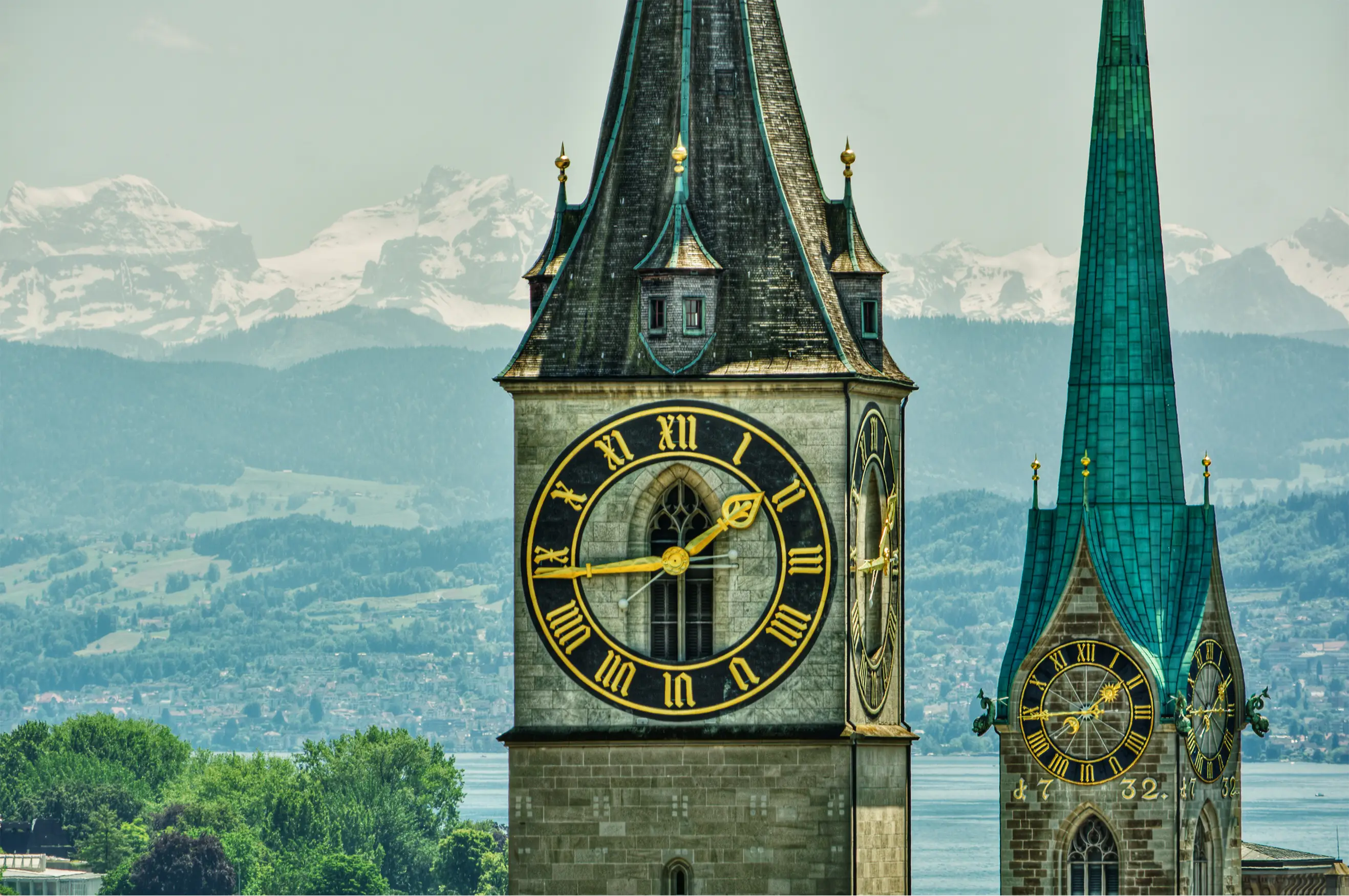
During this 2.5-hour private walking tour, you will learn how Switzerland became Switzerland, and why Zurich is its most populated and important city. The walk towards the lake will take you to the Lindenhof, where you will enjoy a marvelous view of the Limmat all the way over to the Grossmünster. From there you will head to the Fraumünster, passing by St. Peter's Church, which bears the biggest clock face in Europe. Passing by the side of the city's Grossmünster, you will walk from the Lake to the Niederdorfstrasse, where you will experience the focal point of Zurich's restaurants and bars.

Old Town Zurich Tour

9:00 AM - 11:30 AM — Old Town Zurich Tour

During this 2.5-hour private walking tour, you will learn how Switzerland became Switzerland, and why Zurich is its most populated and important city. The walk towards the lake will take you to the Lindenhof, where you will enjoy a marvelous view of the Limmat all the way over to the Grossmünster. From there you will head to the Fraumünster, passing by St. Peter's Church, which bears the biggest clock face in Europe. Passing by the side of the city's Grossmünster, you will walk from the Lake to the Niederdorfstrasse, where you will experience the focal point of Zurich's restaurants and bars.

Mid-Day/Afternoon — Lake Zurich

Leave the hubbub of the city behind and embark on a picturesque day trip from Zurich across Lake Zurich to discover the charming city of Rapperswil, renowned as the "City of Roses," where historic charm meets vibrant floral beauty on the shores of the lake. Immerse yourself in the city's rich culture, explore its medieval castle, and stroll through enchanting rose gardens for a delightful escape just a boat ride away from Zurich.

8:05 PM — Taxi to Zurich Rail Station

Zurich taxis are generally reliable and honest, so this is cheaper than a pre-arranged transfer. If you are picked up one hour prior to departure, you should have plenty of time to catch your train.

21:10 - 21:51 — Rail Zurich to Lucerne

A Swiss Travel Pass for this scenic direct journey to Lucerne, that takes about 45m, is included with the purchase of an itinerary. Detailed directions and instructions that make the trip easy and stress-free are also included in the Full Itinerary.

9:51 PM — Taxi Transfer to Hotel

Upon arrival in Lucerne, you will exit the rail station and proceed to the taxi stand where you will find taxis waiting for arriving passengers. Taxis in Lucerne are generally reliable and honest and are less expensive than using a pre-arranged pick up service for your transfer to the hotel. Detailed arrival information and instructions for taking a taxi are provided in the Full-Length itinerary with the purchase of an itinerary.

image

Day 2

Zurich to Lucerne

image

Day 3

Lucerne

Day 3

Lucerne

icon
icon
icon

Early Morning to Mid-Day

Excursion to Mount Pilatus

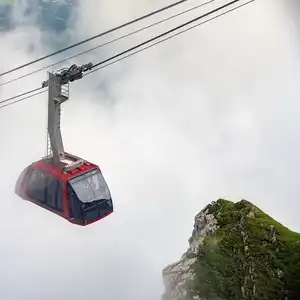
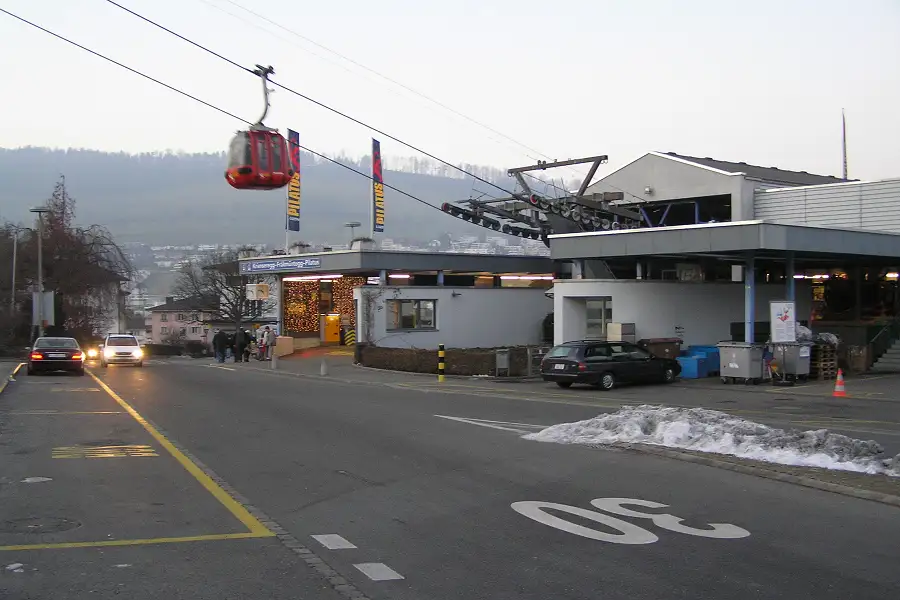
Ride the steepest rack-railway in the world at a gradient of nearly 48 percent from Alpnachstad up the giant mountain of Mt Pilatus that looms over the city of Lucerne, or glide up the other side on a gondola from Kriens. The highest point, Tomlishorn, with superlative views of Lake Lucerne, is only 30min on foot from the hotels and restaurants near the top.

Excursion to Mount Pilatus

Early Morning to Mid-Day — Excursion to Mount Pilatus

Ride the steepest rack-railway in the world at a gradient of nearly 48 percent from Alpnachstad up the giant mountain of Mt Pilatus that looms over the city of Lucerne, or glide up the other side on a gondola from Kriens. The highest point, Tomlishorn, with superlative views of Lake Lucerne, is only 30min on foot from the hotels and restaurants near the top.

Kriens-Pilatus Cable Car Station

Afternoon/Late Afternoon — South Bank

Explore Lucerne's Old Town on the south bank of the Reuss River, including its iconic Chapel Bridge and Jesuit Church. Close to the station you'll also find two of Switzerland's many premier league art galleries, or the city's most relaxing lakeside park. An enjoyable short hike further south along the lakefront will lead you to the exquisite villa where the composer Richard Wagner spent his last years.

Richard Wagner Museum Lucerne

15th century home where the composer, Richard Wagner, once lived

His manor house is now an important museum for students and lovers of his music. Numerous paintings and photographs, along with hundreds of letters he wrote to admirers such as King Ludwig II, the philosopher, Friedrich Nietzsche, and the composer, Franz Liszt, all of whom visited the Tribschen house.

Kultur und Kongresszentrum Luzern

A contemporary cultural complex featuring a concert hall, an art museum, restaurants, and a convention center.

A contemporary cultural complex featuring a concert hall, an art museum, restaurants, and a convention center.

Ritterscher Palace

Built in 1557 as a private mansion, but now hosting Lucerne's cantonal government

 Built in 1557 as a private mansion, but now hosting Lucerne's cantonal government

Late Afternoon/Early Evening — Lucerne's North Bank

Wander the Old Town on the north side of the Reuss River and discover the intricately cobbled squares and exquisitely preserved architecture of the townhouses before walking along part of the fortified Musegg city walls from tower to tower. Further north of the river you'll come across the famously heart-rending sculpture of the Löwendenkmal (Lion Monument), built to commemorate Swiss soldiers who fought and died defending Louis XVI during the French Revolution.

Bourbaki Panorama

A modern glass building on Löwenplatz called the Bourbaki Panorama

Inside is a giant 114m-by-10m circular mural depicting the retreat into Switzerland of the French Eastern Army under General Bourbaki during the Franco-Prussian War of 1870-71

Gletschergarten (Glacier Garden)

Discover the fascinating Glacier Garden, where Lucerne’s deep past comes alive in stone and ice.

The Gletschergarten (Glacier Garden) his open-air museum showcases giant potholes formed by glacial meltwater during the last Ice Age, alongside fossils dating back 20 million years. Wander through the rocky formations, climb the observation tower for sweeping city views, and don’t miss the quirky mirror maze built in 1896. A blend of natural wonder and playful history, the Glacier Garden is one of Lucerne’s most distinctive attractions.

image

Day 3

Lucerne

image

Day 4

Lucerne to Salzburg

Day 4

Lucerne to Salzburg

icon
icon
icon
icon

9:00 AM - 11:00 AM

Walking Tour of Lucerne

During this 2 hour guided private tour you will take in all the major highlights of Lucerne including: Lion Monument, Chapel Bridge, the Old Town and the Jesuit Church. Your professional guide will tell you about the fascinating history of the town and why Lucerne is a favorite destination for the Swiss and foreign visitors alike. You will also enjoy stunning views around Lake Lucerne, especially of the city's mountain, Mount Pilatus.

Walking Tour of Lucerne

9:00 AM - 11:00 AM — Walking Tour of Lucerne

During this 2 hour guided private tour you will take in all the major highlights of Lucerne including: Lion Monument, Chapel Bridge, the Old Town and the Jesuit Church. Your professional guide will tell you about the fascinating history of the town and why Lucerne is a favorite destination for the Swiss and foreign visitors alike. You will also enjoy stunning views around Lake Lucerne, especially of the city's mountain, Mount Pilatus.

Lake Lucerne Boat Docks (Luzern Bahnhofquai)

Jesuit Church

One of the most beautiful Baroque buildings in Switzerland

One of the most beautiful Baroque buildings in Switzerland

12:35 PM — Taxi Rail Drop-Off at Station

Lucerne taxis are generally reliable and honest, so this is cheaper than a pre-arranged transfer. If you are picked up one hour prior to departure, you should have plenty of time to catch your train.

13:35 - 14:25, 14:40 - 20:03 — Rail to Salzburg

The first part of this six-and-a-half hour journey will take you to Zurich where you will need to change trains. In most cases, you will then board a RailJet, EuroCity or InterCity train from Zurich to Salzburg, which are modern and comfortable trains with air conditioning and usually a good wifi connection. This train ride will take you past the exquisite Swiss lakes of Zürichsee, Obersee, and Walensee before crossing the border into Austria. The train will then continue through the beautiful landscape of the Austrian states of Vorarlberg and Tyrol, and stop briefly in Innsbruck before finally arriving in Salzburg.

8:03 PM — Rail Station Transfer

Most trains arrive in Salzburg Main Station (Salzburg Hbf) station, the largest station in the city. Before spending money on a transfer, be sure to check whether your hotel is within easy walking distance. Also consider that public transport is the cheapest and sometimes fastest option, and buses pickup directly in front of the station. Taxis are available near the station entrance and are generally honest. Uber is also available for those with the app.

image

Day 4

Lucerne to Salzburg

image

Day 5

Salzburg

Day 5

Salzburg

icon
icon
icon
icon

9:00 AM - 11:30 AM

Guided Walking Tour of Salzburg

Salzburg is simply overwhelming in all the best ways. It is alive with fascinating history, grandiose and sublime architecture fills every street and square, culture and music permeate the atmosphere, and it is surrounded by breath-taking natural scenery. This guided tour with a local will provide the context needed to bring all of this beauty into perspective, and to connect the physical city to its history, culture, and environment.

Guided Walking Tour of Salzburg

9:00 AM - 11:30 AM — Guided Walking Tour of Salzburg

Salzburg is simply overwhelming in all the best ways. It is alive with fascinating history, grandiose and sublime architecture fills every street and square, culture and music permeate the atmosphere, and it is surrounded by breath-taking natural scenery. This guided tour with a local will provide the context needed to bring all of this beauty into perspective, and to connect the physical city to its history, culture, and environment.

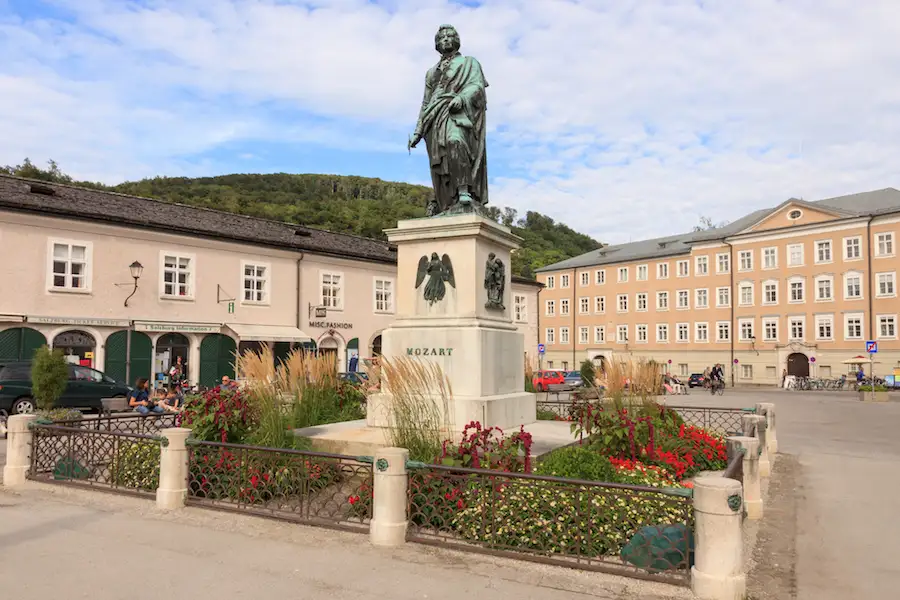
Mozartplatz

One of several grand squares in the center of Altstadt in Salzburg.

One of several grand squares in the center of Altstadt in Salzburg. In the Mozartplatz you can find a statue of the famous composer. 

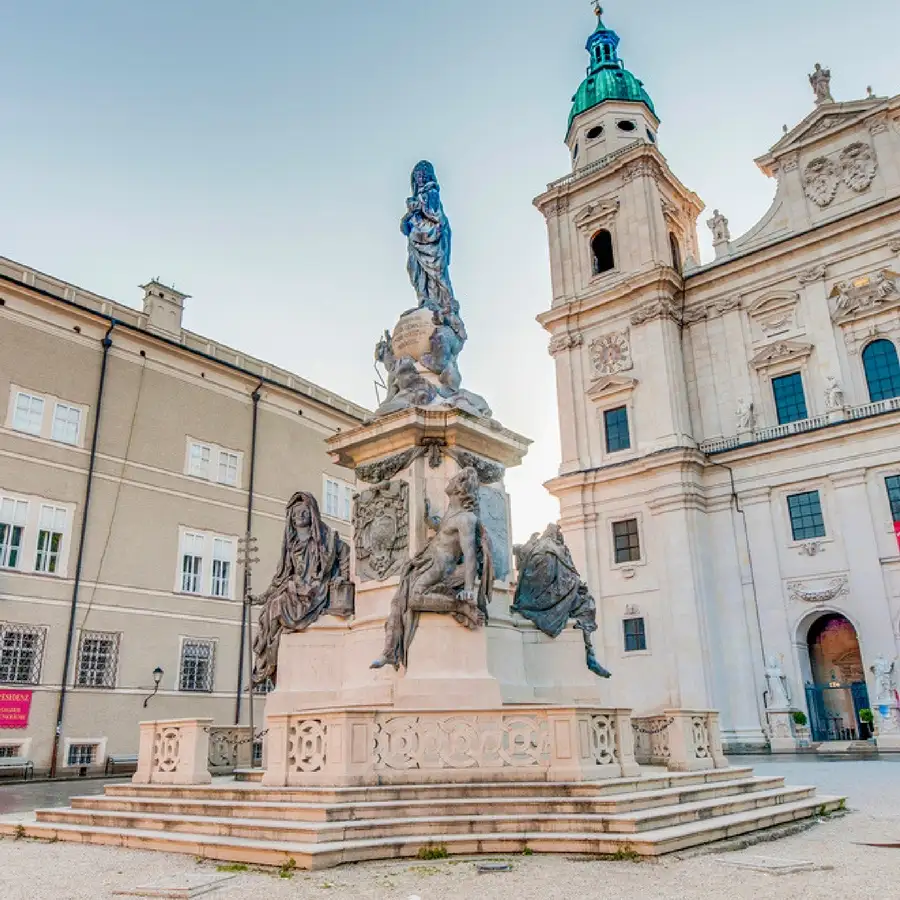
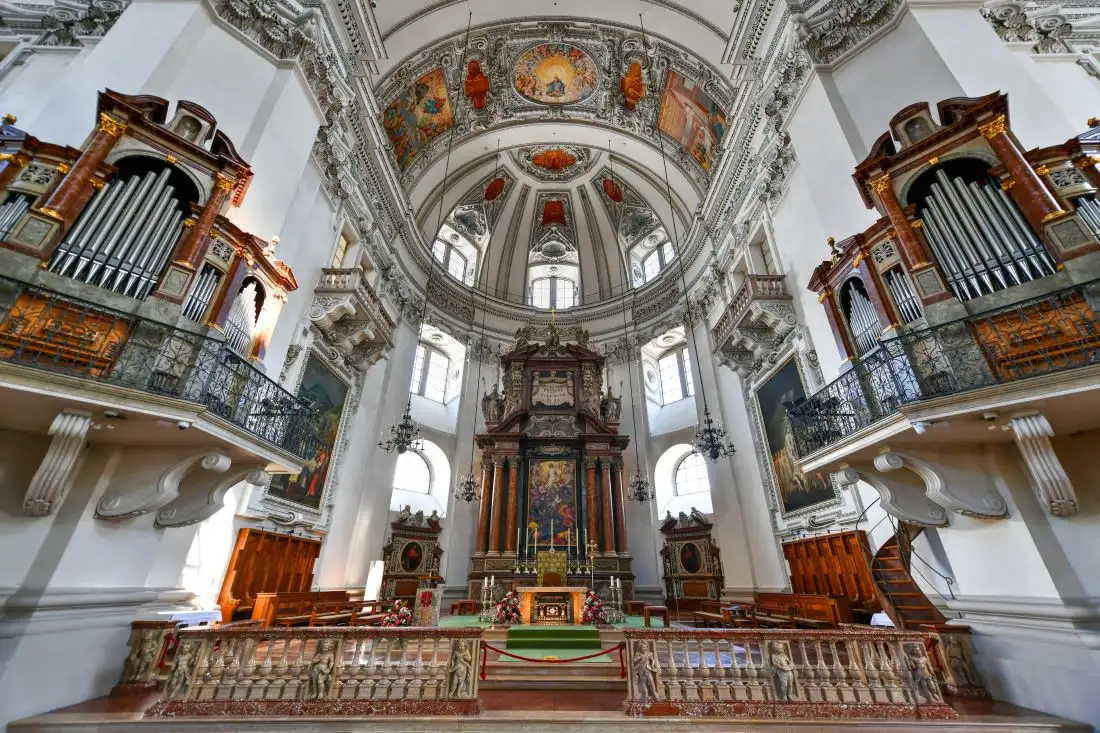
Salzburg Cathedral

Visit Salzburg's largest and most impressive church.

The current cathedral was built between 1614-1628 and is a masterpiece of baroque architecture. The cathedral was largely destroyed by an Allied bomb in WWII but was restored by 1959. One of the most significant treasures in the cathedral is the Baptismal Font, which was cast in 1321 and rests on copper lions dating back to the 1100s.

Mid-Day — Hohensalzburg Fortress

The Festung Hohensalzburg dominates Salzburg, appearing simultaneously formidable and enticing. From one side of the fortress you will enjoy a breathtaking view of the city and from the other a beautiful view of the nearby Alps. In addition to touring the fortress staterooms, you can also visit the Fortress Museum, a Marionette Museum, the Torture Chamber, an observation tower, and more.

Fortress Funicular

Ascend the steep mountain to the fortress in seconds on the fortress funicular railway.

The fortress was never taken by force, even though it was not for a lack of trying. Luckily for you, today you can simply buy a ticket and easily reach the fortress by a steep funicular railway. 

Fortress Museums and Interior

Experience the impressive splendor and craftmanship of the castle interior.

The State Apartments/Regency Chambers (Fürstenzimmer) are the top attraction within the fortress. These rooms were built as a showcase for state functions and to receive foreign visitors and dignitaries. You can also visit the Fortress Museum, a Marionette Museum, and the WWI-focused Rainer Museum. 

Nonnberg Abbey

Take a short walk from the fortress to discover Maria's abbey from the Sound of Music.

Sadly the abbey is down to only a handful of nuns, so you are unlikely to see large groups of nuns in black habits singing in unison as they wonder aloud what to do with a problem like Maria. However, you can still walk some of the grounds and visit a lovely Romanesque and Gothic church, which is almost empty of tourists. Since it is usually empty, you must pay to light up the Romanesque frescoes and a Gothic altar, although this is half of a Euro well spent (especially in the case of the altar).

Fortress Terrace

Take in a breathtaking view of the nearby Alps.

The terrace of the fortress offers an absolutely stunning view of the Alps. You can see the Untersberg especially well. It was the mountain which the Von Trapp family climbed at the end of The Sound of Music to escape Austria. Ironically, it's on the Bavarian border, so they were actually climbing into Germany. In reality they took a train to Italy.

Afternoon/Late Afternoon — Old Town (Altstadt)

Salzburg's Altstadt, which simply means Old Town, is one of the world's most charming city centers. It possesses an amazing wealth of Baroque buildings, as its 17th and 18th centuries archbishop rulers focused on beautifying their town rather than fighting foreign wars like neighboring states. A series of squares runs through the old town, and most you will find dominated by a beautiful church. Throughout the Altstadt, you will find markets, pleasant shops, and cozy restaurants.

Salzburg Cathedral

Visit Salzburg's largest and most impressive church.

The current cathedral was built between 1614-1628 and is a masterpiece of baroque architecture. The cathedral was largely destroyed by an Allied bomb in WWII but was restored by 1959. One of the most significant treasures in the cathedral is the Baptismal Font, which was cast in 1321 and rests on copper lions dating back to the 1100s.

Mozart Birthhouse

Tour the historic home where Mozart was born.

The Altstadt is where Mozart was born and his music is still closely associated with Salzburg. You can visit his birth house on Getreidegasse. If possible, it is better to visit this particular attraction early in the day, as it gets quite crowded. 

Felsenreitschule Concert Hall

Sing Eidelweis in the concert venue made famous by The Sound of Music.

 You can visit the concert halls of the world's most prestigious international music festival, the Salzburger Festspiele. Carved into the rock of the mountain, this is where the Von Trapp family sang at the climax of the movie (and also in reality). The 50-minute tour (provided in English and German simultaneously) includes all the major venues and many backstages as well.

Late Afternoon/Early Evening — Neustadt

On the right bank of Salzach river lies the Neustadt (New Town). Although it may be just a bit newer than the Altstadt, it still boasts hundreds of years of history in it's winding and narrow Medieval lanes. The Mirabell Palace, a Baroque masterpiece built in 1606 by the Prince-Archbishop of Salzburg for his concubine, is the most famous site in the Neustadt. As impressive as the palace and its interior are, the elaborate gardens surrounding the palace are more famous than the palace itself.

Mirabell Palace Gardens

Stroll this tranquil garden amidst the city hubbub and sing "Do-Re-Me" .

Within the gardens, you will discover not only greenery and flowers but also statues of a pegasus, unicorns, lions and other exotic animals, as well as a gnome garden, grand staircases, fountains, and other picturesque spots. Sound of Music fans will recognize it, as this is where several parts of the "Do-Re-Me" song were filmed. Maria and the children march around the pegasus statue and fountain, race through the lattice garden tunnels, pose at the garden gates, and pet the gnomes on the head. Not much of the palace interior is open to visitors, however, the best part of the palace, a marble staircase lined by Raphael Donner statues, is open to those who know how to find it. The corridor to the staircase can be found in the passage that connects the palace courtyard to the gardens and the Pegasus fountain. If you are coming from the courtyard, the door to the corridor is on your right. You will find the staircase within a few steps.

Linzer Gasse

Hang out with locals on this street lined by shopping and restaurants.

The Linzer Gasse and the streets surrounding it, with their historic storefronts and a multitude of restaurants and old guesthouses, give the Altstadt a run for its money in terms of liveliness and charm.  One of the best views in Salzburg is hidden near the Linzer Gasse. Just look for the gateway passage, which is located on the right side of the Linzer Gasse if you are coming from the river and head up the mountain side.

St. Sebastian's cemetery

Wander off of the beaten path to find one of Salzburg's hidden treasures, St. Sebastian's cemetery.

The peaceful cemetery is the resting place of many prominent Salzburgers, including Mozart's wife and father. The cemetery is lined by a cloister passageway, and in the center of the cemetery lies the magnificent mausoleum of the Prince Archbishop Wolf Dietrich. To find the cemetery just walk towards the church tower on the Linzer Gasse. The cemetery is located behind the church. There is usually an entrance open to the right of the church, but if that is closed, go the sidestreet to the left of the church (where you see the archway). You will find another entrance on the right side of the courtyard.

image

Day 5

Salzburg

image

Day 6

Salzburg to Munich

Day 6

Salzburg to Munich

icon
icon
icon
icon
icon
icon

Early Morning/Morning

Untersberg Peak

The nearly 6,000-foot high Untersberg is Salzburg's nearest Alpine Mountain, and a visit to its peak is the perfect way to experience the Alps without traveling too far.  Don't worry, there's no need to bring your climbing gear. You can take a bus from Salzburg to the base of the mountain, and then take an exhilarating cable lift ride all the way to the limestone summit. There you will find a stupendous view of the Alps spread out before you, and if you feel like wandering a bit, a network of rocky trails spreads out from the summit. The Salzburg card covers both the bus ride to the lift (it's the last stop of bus line #25) and the cable car tickets!

Untersberg Peak

Early Morning/Morning — Untersberg Peak

The nearly 6,000-foot high Untersberg is Salzburg's nearest Alpine Mountain, and a visit to its peak is the perfect way to experience the Alps without traveling too far.  Don't worry, there's no need to bring your climbing gear. You can take a bus from Salzburg to the base of the mountain, and then take an exhilarating cable lift ride all the way to the limestone summit. There you will find a stupendous view of the Alps spread out before you, and if you feel like wandering a bit, a network of rocky trails spreads out from the summit. The Salzburg card covers both the bus ride to the lift (it's the last stop of bus line #25) and the cable car tickets!

Mid-Day/Afternoon — Hellbrunn Palace

Built as a summer palace by Salzburg's Prince-Bishop, the Hellbrunn Palace is a picturesque palace surrounded by even more beautiful gardens.  The early baroque palace was built exclusively for the purpose of entertainment, as the Prince-Bishop would actually return to Salzburg in the evening.  It can be toured with an audio guide and includes several beautiful frescoed ceilings. There is a great deal to discover in the gardens - hidden grottos, clever statues, reflecting pools, as well as flora and fauna. And the trick fountains are a must for every visit. Both the transportation (bus #25) and the entry are covered by the Salzburg Card.

Trick Water Fountains

Get a little wet in this delightful garden of tricks.

The famous "Wasserspiele" are trick water fountains that never fail to delight, astonish, and befuddle. The fountains were actually built with the express purpose of playing practical jokes on guests, and they continue to provide plenty of amusement today. 

Afternoon/Late Afternoon — Mönchsberg

Although tiny in comparison to the mountains of the nearby Alps, the Mönchsberg (Monk’s Mountain) dominates the Altstadt. While the highest portion of the mountain is occupied by the Fortress Hohensalzburg, the rest of the mountain is covered by idyllic forests and pastures, romantic homes, and castle ruins. A stroll through this enchanting landscape also affords numerous beautiful views of Salzburg's Altstadt below. Perhaps best of all, it can all be enjoyed away from the crowds of the city. The Salzburg Card covers the cost of an elevator built into the side of mountain which will take you to the top!

Augustinian Beer Hall

Quaff a beer in Salzburg's favorite and most historic brewery.

At the foot of the Mönchsberg, in the village-like neighborhood of Mülln, lies Austria's largest beer hall. Since 1621 it has served the famously delicious brew of the Augustinian monks. Although it attracts many visitors, it remains a favorite among locals, especially in the warmer months when the beer garden is open. Even if you don't drink beer, it is still a great way to try some traditional Austrian cuisine and mingle with Salzburgers in a wonderfully authentic atmosphere.

Richterhöhe

Discover these castle ruins which most visitors never find and enjoy unique views of the fortress and the Alps.

The Richterhöhe castle ruins date back to the year 1367. After the castle became obsolete, it's courtyard actually provided an ideal locale for grape growing. Vineyards therefore soon took over the bailey and can still be seen today. The most outstanding feature of the Richterhöhe is the amazing panoramic view it offers. It is one of the best views in all of Salzburg, and you will likely have it all to yourself.

5:00 PM — Transfer to Rail Station

Most trains depart from Salzburg Main Station (Salzburg Hbf) station, the largest station in the city. Before spending money on a transfer, be sure to check whether your hotel is within easy walking distance. Also consider that public transport is the cheapest and sometimes fastest option. If staying at a hotel, they can order a reliable taxi. Some private transfers will even help with your bags. Uber is also available for those with the app.

18:00 - 19:38 — Train from Salzburg to Munich

In most cases, the journey will be aboard one of Central Europe's nicest and most modern trains - the RailJet. The green countryside of Bavaria makes for a pleasant voyage. Unless the visibility is poor, on the left side of the train you should be able to see the Alps in the distance. Germany and Austria both speak German and share many cultural similarities. This is especially the case with Bavaria and Austria, so the transition over the border will not seem too dramatic, although if you keep your eyes peeled you will notice some minor differences.

7:38 PM — Transfer from Rail Station

Most trains arrive in Müchen Hbf station, the largest station in the city. Before spending money on a transfer, be sure to check whether your hotel is within easy walking distance. Also consider that public transport is the cheapest and sometimes fastest option - there is a subway and local rail station co-located with the train station. Taxis are available at all rail stations and are generally honest. Some private transfers even meet you directly on the platform to help with bags. Uber is also available for those with the app.

image

Day 6

Salzburg to Munich

image

Day 7

Munich

Day 7

Munich

icon
icon
icon
icon

9:00 AM - 11:30 AM

Guided Walk Tour of Historic Munich

Munich contains many reminders of a long and varied history but also encompasses the modern features of a strong and vibrant city. The insights of a local help make sense of the traditions, trends, and promises of Bavaria's Capital - sometimes referred to as the city of laptops and lederhosen. On this tour, your guide will show you the highlights of Munich and point out the many hidden treasures.

Guided Walk Tour of Historic Munich

9:00 AM - 11:30 AM — Guided Walk Tour of Historic Munich

Munich contains many reminders of a long and varied history but also encompasses the modern features of a strong and vibrant city. The insights of a local help make sense of the traditions, trends, and promises of Bavaria's Capital - sometimes referred to as the city of laptops and lederhosen. On this tour, your guide will show you the highlights of Munich and point out the many hidden treasures.

Mid-Day/Afternoon — Residence Palace

The Munich Residenz was the seat of Bavaria's Dukes and Kings from the middle ages until 1918. Originally a medieval castle, it was transformed over the centuries into a beautiful palace. Today it is open to the public and you can explore its magnificent interiors, numerous courtyards, and elegant garden. The living quarters of the royal family have been transformed into a museum which provides a fascinating glimpse into the lives of Kings and Queens. You can also peruse numerous jewels, gold objects, and other precious items which are held in the Residenz Schatzkammer (treasury).

Residenz Palace Museum

Wander where you will, audio guide in hand, through the spectactular royal residence.

You'll experience jaw-dropping architecture and beautiful artwork as you explore the museum and the adjacent Royal Treasury. Among the many highlights, unmissable is the Antiquarium, the largest and most lavish Renaissance hall north of the Alps. The window reveals are decorated with 102 views of towns, markets, and palaces in what was then the Duchy of Bavaria, providing an unique insight into how the country once looked. The Rich Chapel (Reiche Kapelle) was the private place of worship of Duke Maximilian I and his wife, and it was decorated with particular magnificence using colored marble and gilt reliefs. The Ornate Rooms (Reiche Zimmer) meanwhile represent a high point of the court Rococo style, and are works of art in their own right. 

Cuvilliés-Theatre

Visit what is perhaps the most ostentatious and sensually overwhelming building in Munich.

The exceptionally extravagant court theatre was built by Elector Max III Joseph's court architect François Cuvilliés between 1751 and 1755, and was intended to showcase Munich as a home to the arts and the enlightenment. It only survived the destruction of WWII because the elaborately carved tiers of boxes were removed from their original location in the Alte Residenztheater building for safekeeping. It's still used as a theatre today.FYI - to visit the Cuvilliés-Theatre you need to exit the museum and walk around the palace to get onto Residenzstraße and then re-enter the palace and cross through either the Chapel Courtyard or the Imperial Courtyard. 

Odeonsplatz

See the square where Hitler's Beer Hall Putsch came to a bloody end.

The square directly adjacent to the Residence is the Odeonsplatz, which is guarded by the Feldherrnhalle (Field Marshalls' Hall) in honor of the Bavarian army. It was here that Hitler's Beer Hall Putsch in 1923 came to a bloody end in a gun battle with the police. During the Nazi regime, anyone passing the Feldherrnhalle was obliged to give the Nazi salute, which prompted some locals to instead take a side street. The Nazis derogatorily nicknamed it the Shirkers' Alley, but the 'shirkers' are memorialized in a trail of brass cobblestones. Also on the square is the bright yellow Theatinerkirche with its two massive twin towers. It was the personal church of Bavaria's rulers and many of them are interred there.  

Afternoon to Early Evening — Altstadt

Munich boasts a large old town (Altstadt) with many beautiful historic buildings. Sometimes called the world's largest village, it is a perfect place to wander. You will discover many Medieval, Renaissance, and Baroque buildings, as well as several stunning examples of modern architecture. Pleasant cafes, beer halls, cozy restaurants, and great shopping all add to the charming atmosphere.

Hofbräuhaus

Enjoy some fine Bavarian brews in a beer hall that dates back to 1589.

Originally built in 1598 by Maximilian I, Duke of Bavaria, as an extension to the state brewery, this beer hall was opened to the public in 1828, remodeled in 1897, almost completely destroyed during World War II, and reopened following its restoration in 1958. It is now situated across three floors, with a restaurant, ballroom, and beer garden, and is one of the largest tourist attractions in the city as well as a favorite of locals. This is where the ingurgitation of vast quantities of beer and pretzels has been taking place since 1644. Even if you're a teetotaller, you'll want to at least take a look at the interior of the three-storied temple to the consumption of fermented hops and watch the odd local quaff his or her ale amid the sea of tourists. There's also an attractive courtyard where you can escape the din on a summer's day or evening.

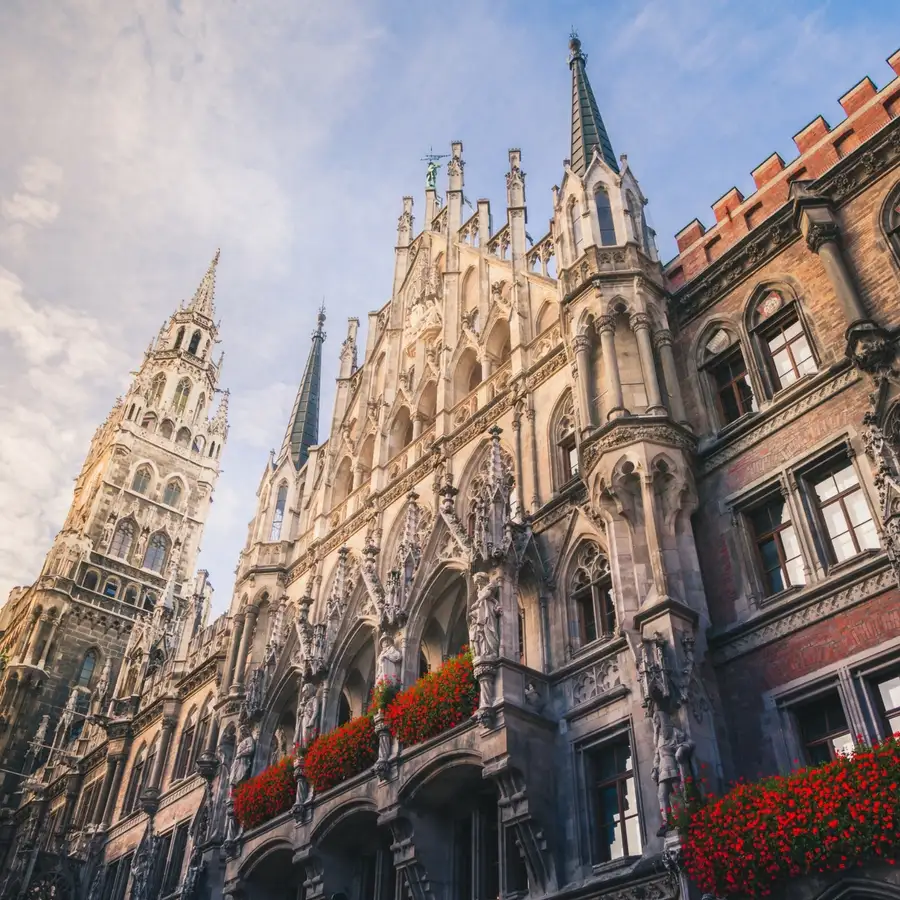
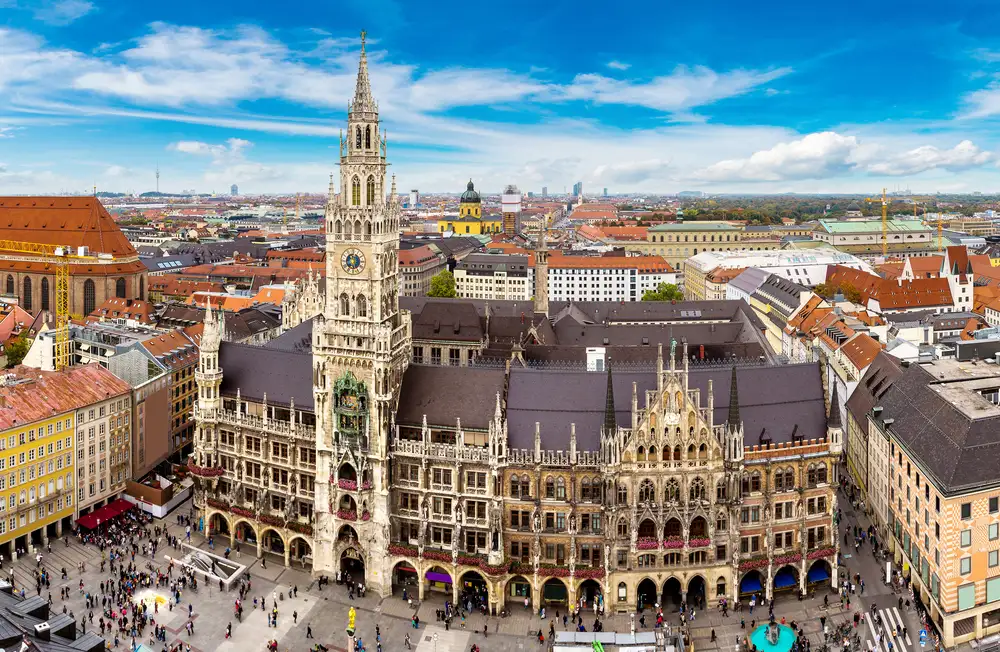
New Town Hall & Glockenspiel

Enjoy the mechanical show as the figures on the Glockenspiel on the New City Hall come to life and re-enact stories from the 16th century.

The Marienplatz is the main square of the Altstadt, and its centerpiece is the domineering facade of the neo-Gothic Neues Rathaus (New Town Hall). It is decorated with gargoyles and statues, including a dragon scaling the turrets. For a great view of the city, ascend the 279ft (85m) tower (elevator available to the left just inside the main entrance to the town hall). The highlight of the building is the Glockenspiel, which attracts large numbers of tourists at 11 am and noon (and 5pm in the summer) who come to watch the contraption in operation. There's dancing, a joust, and more, all set to musical chimes. Unusually, the New Town Hall mostly survived WWII intact, probably because it was used by Allied bombers as a direction finder for obliterating the rest of the city.

Peterskirche

Climb to the top of Munich's oldest church tower for what is still today its best view.

The best views of central Munich can be viewed from the 302ft (92m) tower of St Peterskirche, inner Munich's oldest church and possibly the city's origin point. The presence of a church on its site goes back to before the city's founding, and it has existed in a number of iterations since. Its nearly 3000ft-tall tower is affectionately called "Alter Pete" or "Old Pete" as a recognition of its significance to Munich's social and cultural history.

Viktualienmarkt

Assemble a gourmet picnic lunch in one of Europe's best known markets.

The Viktualienmarkt is one of Central Europe's finest gourmet markets where many of the stalls have been run by generations of the same family. Prices are high, but you can gather all the ingredients for an haute cuisine picnic and then seat yourself in the market's own beer garden to enjoy an al fresco lunch. The very existence of such a market in an old town quarter is the result of Munich's dedication to preserving its past. Fearing that fast food chains will replace the old-fashioned market stalls and quaint eateries that make the Viktulienmarkt one of Europe’s most charming squares, the city subsidizes the rent so they can survive on the some of Germany’s most expensive real estate.

Jewish Museum

Learn about Munich's rich Jewish heritage and see it's most striking synagogue.

The museum focuses on Munich's Jewish heritage, as well as Jewish history and culture in general, with a contemporary flair and modern means of display. Adjacent to the museum is the Ohel Jakob synagogue, which ranks among the most striking structures built in the city in recent years. It is the first synagogue to serve as the main synagogue of the city since the Nazi Kristallnacht (i.e. the Night of Broken Glass). Tours are offered but must be arranged 10 days in advance.

Frauenkirche

Restored Gothic church.

The Frauenkirche, or Church of Our Lady, dominates the Altstadt. This is because the twin onion-domed towers inspired the city council to prohibit any other building in the Altstadt from exceeding their height of 325ft (99m). Much of the interior was destroyed during WWII, but it has been rebuilt. An attraction that survived the bombing in original form is the Teufelstritt, or Devil's Footstep, at the entrance. This is a black mark resembling a footprint, which according to legend is the result of a deal the devil made with the builder to finance construction of the church on the condition that it contains no windows. The clever builder, however, tricked the devil by positioning columns so that the windows were not visible from the spot where the devil stood in the foyer. By the time the devil discovered that he had been tricked, he could not enter the already consecrated church. The devil could only stand in the foyer and stomp his foot furiously, which left the dark footprint that remains visible in the church's entrance today.

Early Evening/Evening — Augustiner Keller

This vast beer garden under leafy chestnut trees is immensely popular with the locals, so you can study the lederhosen-clad men and dirndl attired women at close quarters while quaffing the Augustiner's own Edelstaff beer from your Maßkrug (one-liter glass beer mug) and wolfing down a plate stacked high with Bavarian sausage and mashed potato.

image

Day 7

Munich

image

Day 8

Munich

Day 8

Munich

icon

9:00 AM - 7:00 PM

Private guided trip to Neuschwanstein Castle

Inspiration for the Disney Castles, numerous fairy tales, and countless dreamers, the castle of Neuschwanstein is perhaps the most famous castle in the world. Perched on a peak in the foothills of the Alps, the setting provides the perfect backdrop to the spiraling towers and turrets of the castle. On this full-day excursion, you will not only visit this amazing castle created by the eccentric Bavarian King Ludwig II, but also pick from a wide selection of optional activities.

Private guided trip to Neuschwanstein Castle

9:00 AM - 7:00 PM — Private guided trip to Neuschwanstein Castle

Inspiration for the Disney Castles, numerous fairy tales, and countless dreamers, the castle of Neuschwanstein is perhaps the most famous castle in the world. Perched on a peak in the foothills of the Alps, the setting provides the perfect backdrop to the spiraling towers and turrets of the castle. On this full-day excursion, you will not only visit this amazing castle created by the eccentric Bavarian King Ludwig II, but also pick from a wide selection of optional activities.

Linderhof Palace

Stop by King Ludwig II's smallest palace on your way to Neuschwanstein and explore its delightful gardens.

Another of the eccentric (some say mad) King Ludwig II's creations is Linderhof Palace, which with its fantastic grotto and Moorish pavilion testifies to the king's vision. The smallest of his three palaces that he built, it is the only one that he lived to see completed. The palace is in between Munich and Neuschwanstein, meaning many tours stop there along the way.

image

Day 8

Munich

image

Day 9

Munich

Day 9

Munich

icon

Early Morning to Late Afternoon

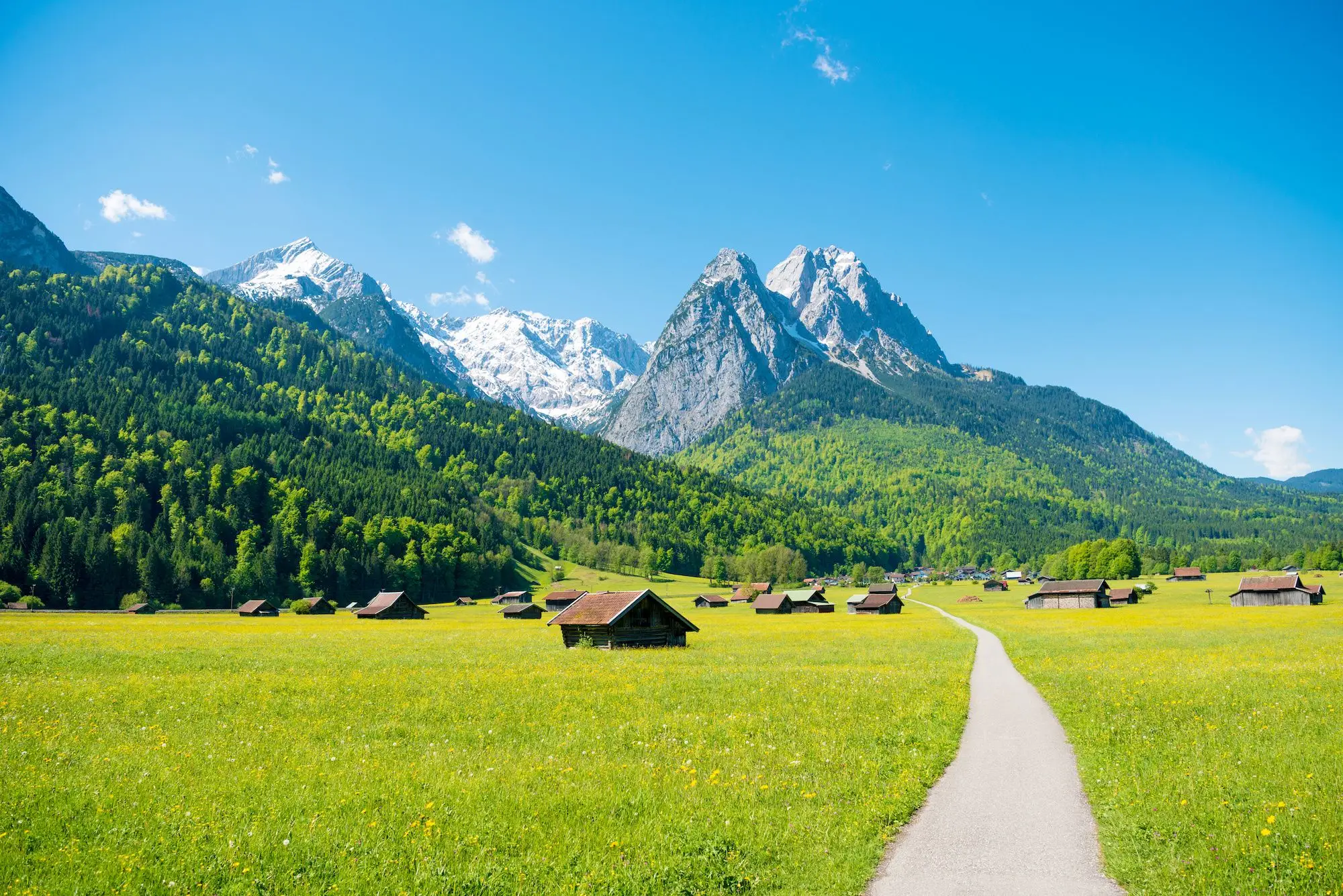
Excursion to Garmisch-Partenkirchen

Nestled in a magnificent setting at the foot of the Bavarian Alps, Garmisch-Partenkirchen is the German capital of summer hiking. The town has also been on the international winter-sports map ever since hosting the 1936 Winter Olympics.  Once two different villages, Garmisch and Partenkirchen, the two halves of the town do show sharply contrasting characters: Garmisch is lively and international (in winter at least), while Partenkirchen better preserves its original Alpine charm. Perhaps the biggest draw for tourists is the opportunity to ride the famous Zugspitzbahn railway to Germany's tallest mountain, the Zugspitze.

Excursion to Garmisch-Partenkirchen

Early Morning to Late Afternoon — Excursion to Garmisch-Partenkirchen

Nestled in a magnificent setting at the foot of the Bavarian Alps, Garmisch-Partenkirchen is the German capital of summer hiking. The town has also been on the international winter-sports map ever since hosting the 1936 Winter Olympics.  Once two different villages, Garmisch and Partenkirchen, the two halves of the town do show sharply contrasting characters: Garmisch is lively and international (in winter at least), while Partenkirchen better preserves its original Alpine charm. Perhaps the biggest draw for tourists is the opportunity to ride the famous Zugspitzbahn railway to Germany's tallest mountain, the Zugspitze.

Zugspitze

Take a ride on the famous Zugspitzbahn railway and a cable car to the peak of Germany's tallest mountain, the Zugspitze (2,962m or 9,718ft) for some truly breath-taking views.

The Zugspitzbahn railway is the classic and breathtaking way of ascending Germany's highest peak, the Zugspitze (2962m or 9718ft). The line reaches as high as 2650m, making it the third-highest railway line in the world. The station and ticket office for the Zugspitzbahn trains (#3) is right beside the Garmisch-Partenkirchen train station. From here you take the purpose-built train along a cogwheel railway as far as Grainau - don't miss the wonderfully picturesque Pfarrkirche church that comes into view on the left as you near Grainau. In Grainau you'll change to a railcar that operates a rack-and-pinion system. The final 11.5km (7.1mi) gets steeper and steeper until you get just past the Eibsee station where you enter the 975m (3199ft) 'Rosi Tunnel'. You finally emerge at the Zugspitzplatt plateau on the Schneefen glacier below the Zugspitze peak. From there you journey to the summit on the ultramodern Gletscherbahn cable car (no extra ticket needed).

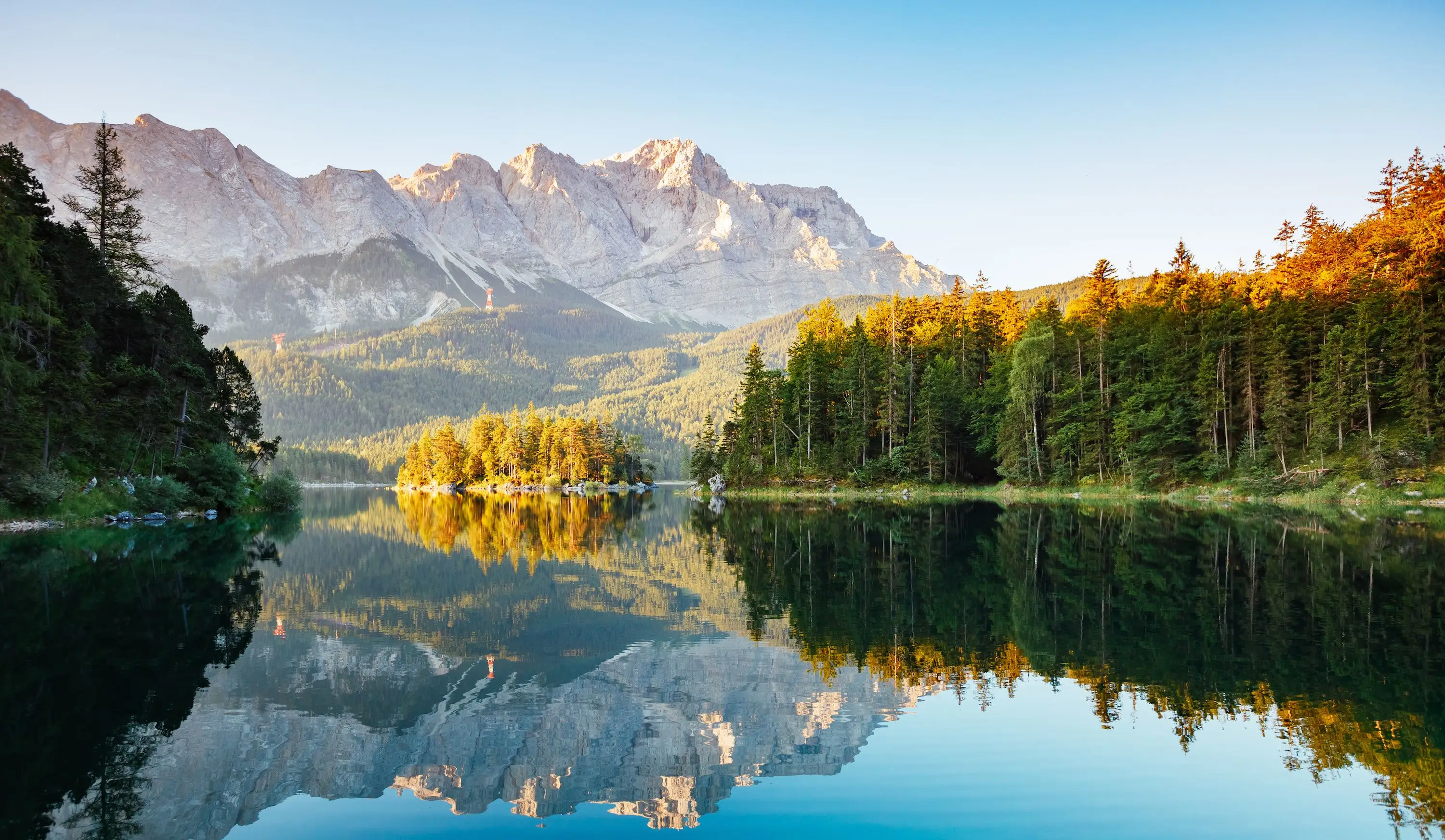
Eibsee Lake

Hike to one of Bavaria's most picturesque spots.

If hiking is one of your goals in Garmisch and you're looking for a gentle option after descending from Zugspitze (or you don't wish to ascend the mountain at all), then we can heartily recommend the Eibsee Lake, which is, of course, one of the stops on the Zugspitzbahn. Just follow the signs to the lake (you can't miss it) and then the signs for the gentle 7.5km (4.6mi) hike around the lake shore while soaking up the stunning views. Avail yourself of the Eibsee beer garden after you get back to cool down.

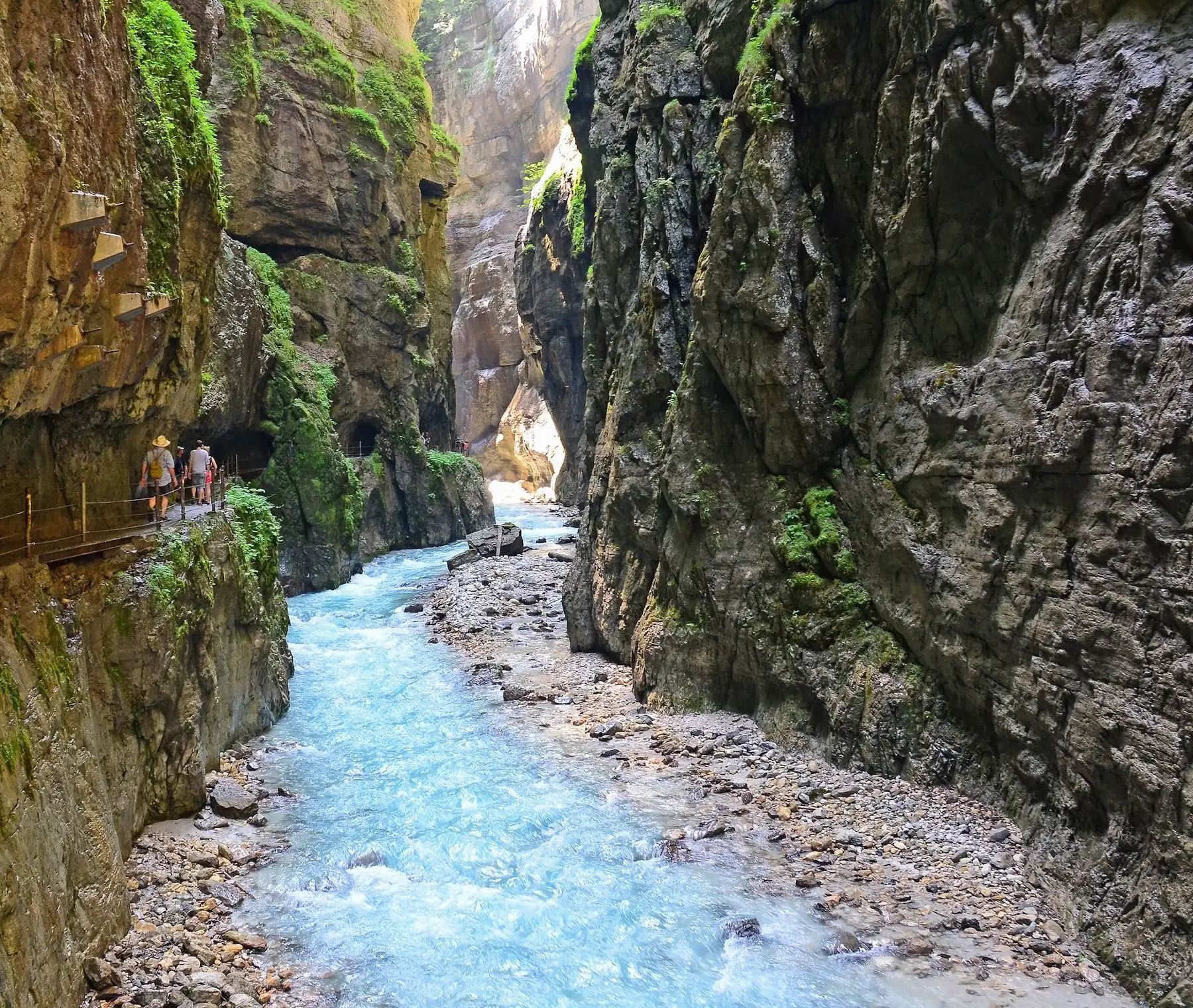
Partnach Gorge

Venture deep within a stunning Alpine gorge.

If you want to avoid the expense of the Zugspitzbahn, then an excellent short or long hiking option is to head south of the train station to the Partnachklamm (Partnach Gorge). The trail to the gorge starts from the Olympic Ski Stadium, which if you need to save time you can get to by city bus no.1 or no.2 directly from the train station rather walking 2km (1.25mi) to Skistadion. From there you follow the signs to the gorge, which is only 30min away (you can also take a horse-drawn carriage from the stadium).

image

Day 9

Munich

image

Day 10

Depart Munich

Day 10

Depart Munich

icon

To Be Determined

Transfer to Airport

Munich has one main airport, Munich International Airport, where almost all visitors depart. The most affordable and often fastest way to reach the airport is by train. The "S-bahn" local trains takes 40 minutes and leaves directly from the main station in central Munich (München hbf). Other regional trains to the airport depart from other stations in Munich, so you may have an even better departure option near your hotel.  Your hotel can arrange a reliable taxi or if you have the app, Uber is also a good option. You can also arrange a private transfer. If you are picked up about 3 hours before your departure time, you should arrive at the airport with a little over 2 hours to spare, depending on traffic. If you are leaving during rush hour, you may want to budget an extra fifteen to thirty minutes.

Transfer to Airport

To Be Determined — Transfer to Airport

Munich has one main airport, Munich International Airport, where almost all visitors depart. The most affordable and often fastest way to reach the airport is by train. The "S-bahn" local trains takes 40 minutes and leaves directly from the main station in central Munich (München hbf). Other regional trains to the airport depart from other stations in Munich, so you may have an even better departure option near your hotel.  Your hotel can arrange a reliable taxi or if you have the app, Uber is also a good option. You can also arrange a private transfer. If you are picked up about 3 hours before your departure time, you should arrive at the airport with a little over 2 hours to spare, depending on traffic. If you are leaving during rush hour, you may want to budget an extra fifteen to thirty minutes.

image

Day 10

Depart Munich

What's Included in the Alpine Peaks & Palaces Trip Trip?

Fork

Pre-Paid Tours and Activities:

  • Private Introductory tour of the Zurich Old Town
  • Private Walking Tour of Lucerne
  • Guided Walking Tour of Salzburg
  • Guided Walk Tour of Historic Munich
  • Guided Full-Day Private Excursion to Neuschwanstein Castle
  • City Card for Munich, including discounts to many popular attractions
train

Pre-Paid Transportation:

  • 2nd Class Train Tickets from Lucerne to Zurich
  • 2nd Class Train Tickets from Zurich to Salzburg
  • 2nd Class Train Tickets from Salzburg Hbf to München Hbf
  • Public Transport Tickets for Munich
  • Swiss Travel Pass
  • Private Transfer from the Zurich Airport
train

Accommodation:

  • 1 nights at a hotel of your choice in Zurich
  • 2 nights at a hotel of your choice in Lucerne
  • 2 nights at a hotel of your choice in Salzburg
  • 4 nights at a hotel of your choice in Munich
mobile

Go Real Travel Mobile App:

  • Itinerary Plan & Reservations Info
  • Points of Interest
  • Detailed Travel Information
  • Maps & Directions

Other Trips You May Like

Culture, History, and Epic Alpine Vistas in Zurich, Lucerne, Munich

8 Days

From$2979USD

Culture, History, and Epic Alpine Vistas in Zurich, Lucerne, Munich

View Trip
Explore Munich & Switzerland in 10 Days: Perfect Alpine Escape

10 Days

From$3095USD

Explore Munich & Switzerland in 10 Days: Perfect Alpine Escape

View Trip
Swiss Adventure with Germany & Italy: Lakes, Castles & Cultural Wonders

14 Days

From$4249USD

Swiss Adventure with Germany & Italy: Lakes, Castles & Cultural Wonders

View Trip
City Vistas and Mountain Redoubts in Switzerland, Austria and Prague

14 Days

From$4300USD

City Vistas and Mountain Redoubts in Switzerland, Austria and Prague

View Trip
Alpine Enchantment: A Family Adventure Through Historic Cities & Scenic Landscapes

14 Days

From$3775USD

Alpine Enchantment: A Family Adventure Through Historic Cities & Scenic Landscapes

View Trip
Central European Journey through Switzerland, Germany, Austria and the Czech Republic

21 Days

From$5199USD

Central European Journey through Switzerland, Germany, Austria and the Czech Republic

View Trip
Alpine Majesty and Cultural Splendor in Munich, Salzburg, & Hallstatt

7 Days

From$1635USD

Alpine Majesty and Cultural Splendor in Munich, Salzburg, & Hallstatt

View Trip
Discover Munich, Salzburg & Vienna in Just 7 Days

7 Days

From$1498USD

Discover Munich, Salzburg & Vienna in Just 7 Days

View Trip
Swiss Cityscapes & Alpine Escapes: A 7-Day Winter Adventure

7 Days

From$1899USD

Swiss Cityscapes & Alpine Escapes: A 7-Day Winter Adventure

View Trip

Featured Blogs

10 European Cities to Visit in Winter
Europe
Seasonal guide

10 European Cities to Visit in Winter

How to Plan a Trip to Germany – Step-by-Step Guide
Germany
Trip planning

How to Plan a Trip to Germany – Step-by-Step Guide

Top 5 Castles In Central Europe
Central Europe
Castles

Top 5 Castles In Central Europe

14 Most Beautiful Villages in Austria: Discover the Hidden Gems
Austria
Villages

14 Most Beautiful Villages in Austria: Discover the Hidden Gems

15 Most Beautiful Towns & Villages in Germany
Germany
Villages

15 Most Beautiful Towns & Villages in Germany

How to Plan the Perfect Family Trip to Europe
Europe
Family

How to Plan the Perfect Family Trip to Europe

11 Tips for First Time Travelers to Europe
Europe
Travel tips

11 Tips for First Time Travelers to Europe

Our Customers Say It Best

Malini Dutta, Boston, Massachusetts
We can't thank you enough for the detailed plans, maps, and suggestions. It really felt that someone was holding our hands and showing us around. We had all the excitement of discovering foreign lands, with none of the problems that can happen while negotiating unfamiliar places. In fact, all the cities felt like home within a few hours of arriving and exploring.
Bev and Mark Frankel, Williamsburg, Virginia
We could not be more pleased with Go Real Travel! You took the guess work out of things like public transport but still managed to allow us the freedom to tour as we wanted. Our guides were exceptional and every time I saw a Viking Cruise tour of 25 people, I realized the quality experience we were getting with Go Real.
Marianne Strydom, Paarl, South Africa
I just wanted to thank you for organizing an amazing trip for me – I packed in so much in such a short period of time and everything was just perfect. The way you do things makes it possible to really get to know the destination, which for me as a travel agent could not have been better.
Otto Chuy, Los Angeles, California
I am still surprised how everything worked as planned, without a hitch. All instructions in your itinerary were precise and correct. Your suggestions and comments in each of the locations we went to were very helpful. All your guides, without exception, were wonderful and exactly on time.
Go Real Travel, Inc. BBB Business ReviewASTA Member

Explore cities in more detail

st peter clocktower in zurich with mountain backdrop

Zurich

Zurich is Switzerland’s biggest city, located in the center of the country’s German-speaking region. It’s this location, superbly connected to almost everywhere else by train and close to an international airport, that makes Zurich an obvious destination for tourists. Well, that’s one of the reasons. There’s also the city’s bevy of bars and restaurants, the lakeside views, and stunning architecture around every corner.Take a stroll down the Bahnhofstrasse, a street known around the world for its unrivaled shopping. Weave through crowds of shoppers as you pass rows of world-famous and exclusive brands. Zurich is a small city, but that just makes it easier to get around. Lindenhof Hill, a slight rise of land in the center, offers views across all of the town. Among the city’s most striking features are the Grossmünster towers, which can also be climbed. This is a proud, sophisticated, and elegant city.

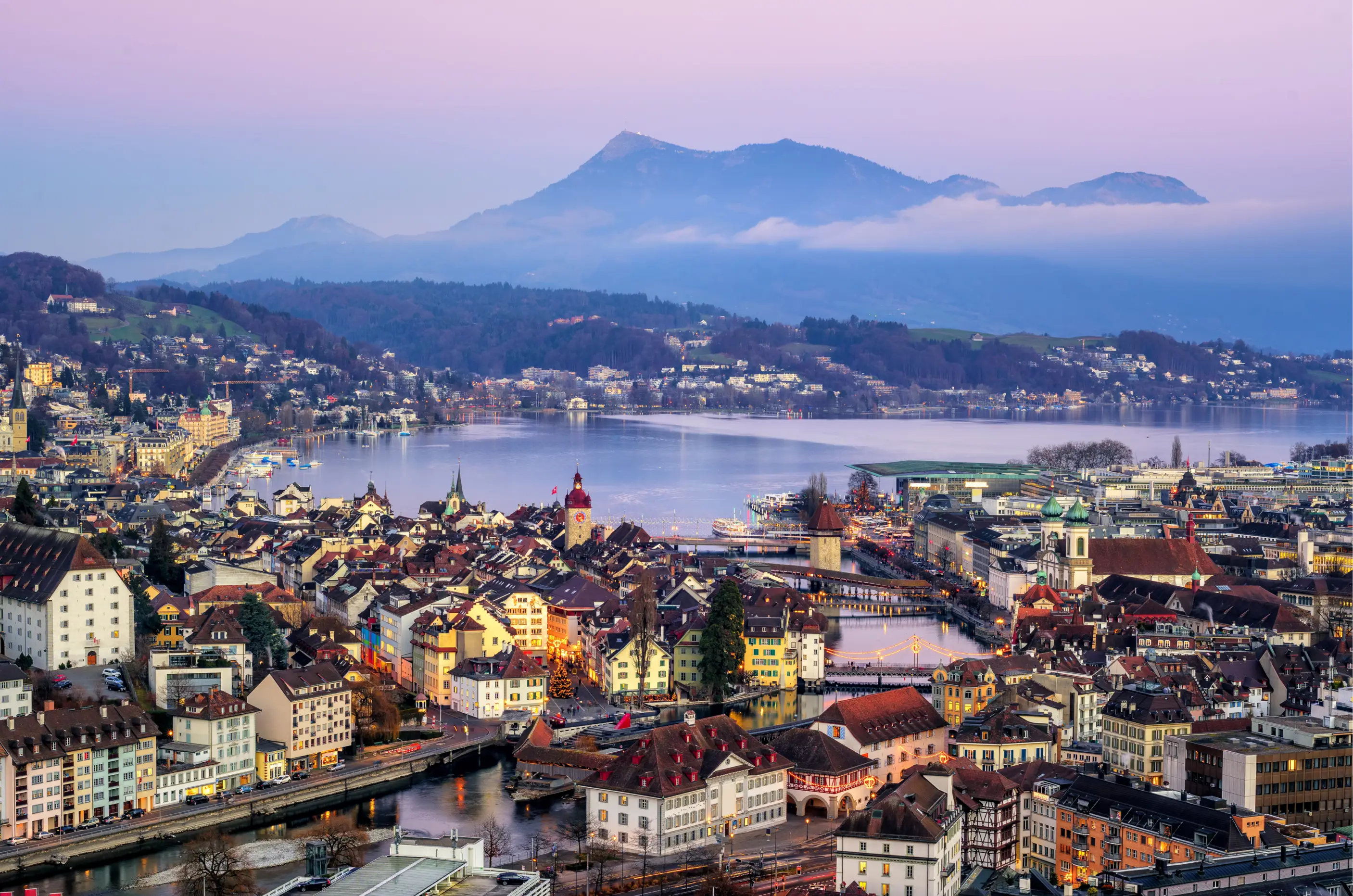
aerial view of mountains and lucerne switzerland

Lucerne

Lucerne’s international name may be French, but this spellbinding little city is actually situated in the heart of Switzerland’s German area. Lucerne was one of the first cities to join the Swiss Confederation and is a microcosm of all the typical Swiss quirks and charm that draw visitors to the country from all over the world. The city’s old town is beautifully preserved and also extremely compact. This is a place that is perfect for walking and looking. You’ll soon start to get an in-depth feel for the Old Town after just a few hours. Stroll across the famous Kapellbrücke bridge or the smaller Spreuerbrücke, or wander to the Löwendenkmal, the wounded lion memorial carved from a rock face. Stunning nature surrounds Lucerne, and the landmark Mount Pilatus towers over the city. It’s possible to climb the mountain, where hikers (and cable-car riders) will be rewarded with breathtaking views of the town below and the Alps beyond. Back at ground level, Lake Lucerne calls out for boat trips, which stop at the many villages and parks around the shores.

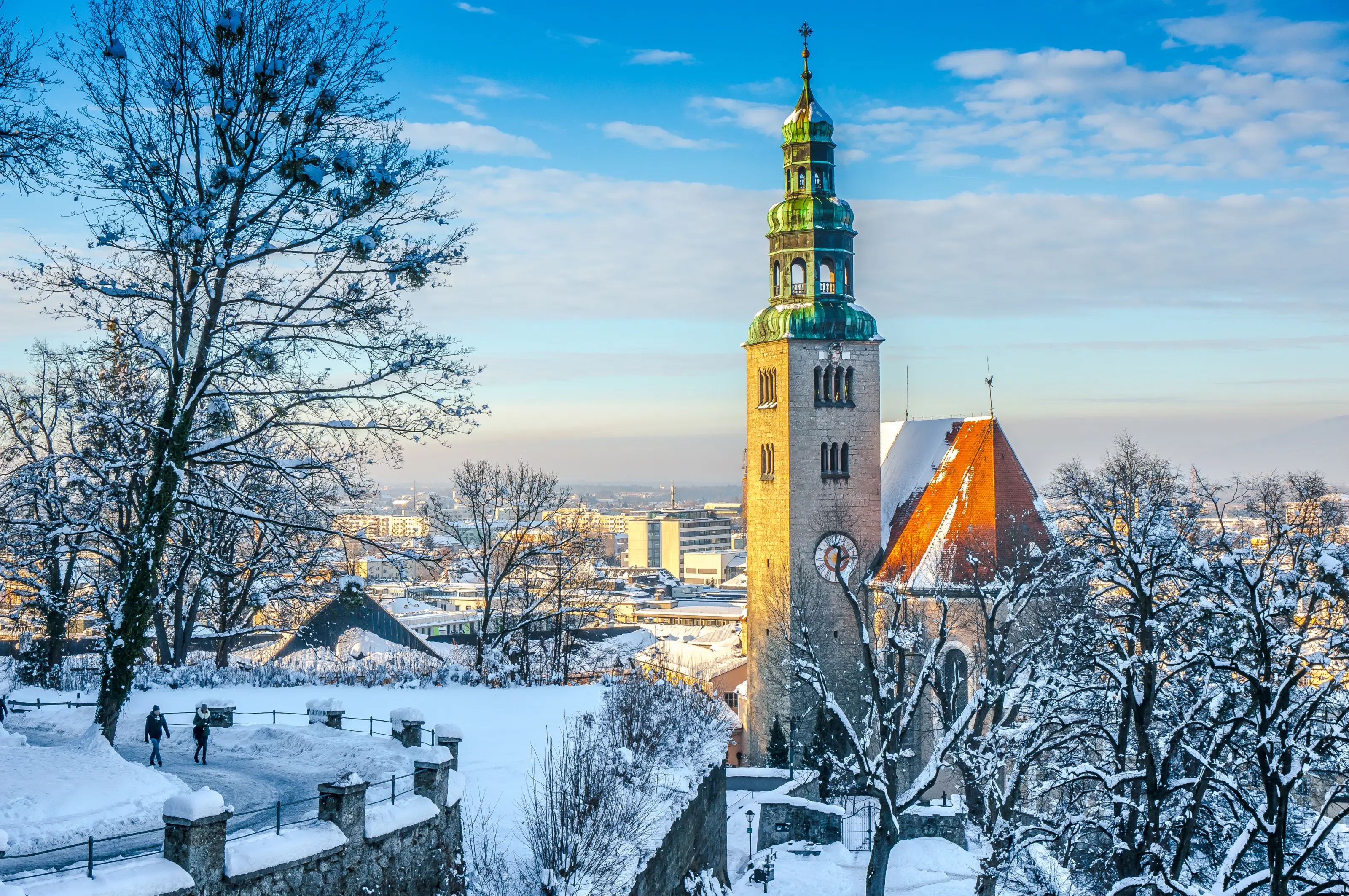
winter in salzburg germany

Salzburg

You've probably heard this before— the city of Salzburg is straight out of a fairytale. Nestled in the mountains, this romantic city's Baroque architecture with colorful domes and spires is especially striking against the ancient fortress and Austrian Alpine backdrop. If you're looking for an amazing view, climb up to Hohensalzburg Fortress, Central Europe's largest intact fortress, for a jaw-dropping panorama of the city backed by misty mountains. Perhaps most famous for being the birthplace of the renowned composer Wolfgang Amadeus Mozart and the filming location for the classic The Sound of Music, this city has much to offer. Salzburg has become an important artistic and cultural center, featuring magnificent concert halls that uphold the city's tradition of classical music every day of the year, as well as acclaimed art exhibitions and museums. If you do it right, your visit to Salzburg will immerse you in the city's unforgettable atmosphere and keep you coming back for more. 

old town square munich germany

Munich

Arriving in Munich, you would be forgiven for thinking you were on the set of a movie about old Bavaria. At the Old Town beer halls, barmaids laced in dirndl dresses serve up frosty Helles lager, as oom-pah music drifts across the Marienplatz square. Men in lederhosen and checked shirts merrily give toasts as they knock glasses, or steins, as they’re known here. They sit at tables laden with wurst sausage and giant pretzels oozing with herby butter. This is Germany’s Germany, a place where folk traditions never stopped, and the revelry doesn’t either. Even when it isn’t Oktoberfest, the town’s notorious beer-drinking celebration, Munich is always happy to show you a good time. Simply cast your eyes around the lavish, gilded banquet hall at the Munich Residenz, the 13th-century Wittelsbach palace. You’ll see Munich has been impressing guests for centuries. Or, swing by the BMW Museum and check out the classic German cars. They even let you sit inside to test out the new models. At the city’s English Gardens, surfers ride waves on one of the park’s rivers. Munich is filled to the brim with this kind of pure-hearted German fun.     

aare river in interlaken switzerland

Interlaken

Located between two bodies of water — Lake Brienz and Lake Thun — Interlaken is the perfect place to explore the serene natural beauty at Switzerland’s heart. Interlaken is a place for those who seek adventure amid spectacular natural surrounds. Rock climbing, canyoning, bungee jumping, and paragliding are just some of the ways to fill a day here, and countless backpackers descend on the town every summer to do all of these and more. Less intense, but no less rewarding, are the many opportunities for hiking, sailing, and swimming. Or, take to the rails. At the nearby Kleine Scheidegg pass, a train runs through the snowy Swiss Alps to the highest train station on the continent. The fun here doesn’t stop at night. After a hard day of adventure, backpackers flock to the town’s many pubs and bars to soothe their aches and pains with steins of beer. Interlaken is a place where fun and excitement reign supreme and somewhere to experience Switzerland’s striking nature in the most thrilling way.

sunset over mountain alps in geneva switzerland

Geneva

Switzerland’s second-most populous city, Geneva is a place where languages, cultures, and institutions have converged for hundreds of years. Here, diplomacy and sophistication play a central role. Formerly home to the headquarters of the UN, Geneva still hosts the International Red Cross, World Trade Organization, and World Health Organization. Lake Geneva, the largest body of water in Switzerland, dominates the surrounding landscape with its calm waters and brooding presence. By the lakeside, the imposing Jet d’Eau blasts water 140 meters into the air for most of every day. As you stroll through the city’s enchanting old town, you'll find its winding streets dusted with antique shops, ancient architecture, galleries, and world-class restaurants.   Centuries of influence from countless cultures have given Geneva a special, complex identity. Travelers here can spend hours sampling food and drink from across the world. Or, simply sit by the water, and sip an Espresso while you soak up Geneva's unique and cosmopolitan vibe. 

👋

Hi! Need help planning your dream trip? 🌍

Go Real Travel Assistant

Online

Welcome! Where are you in your journey?

Pick the option that fits you best so we can route you to the right help.