


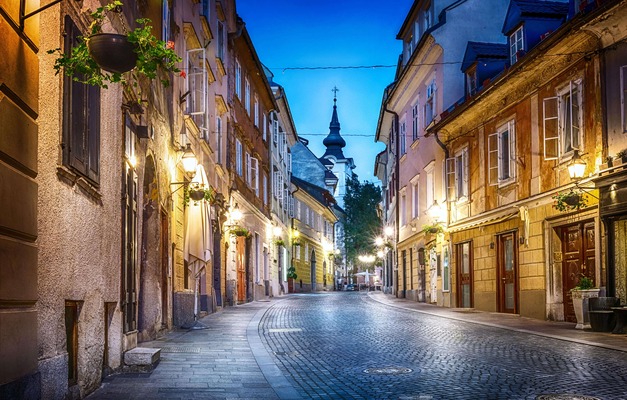



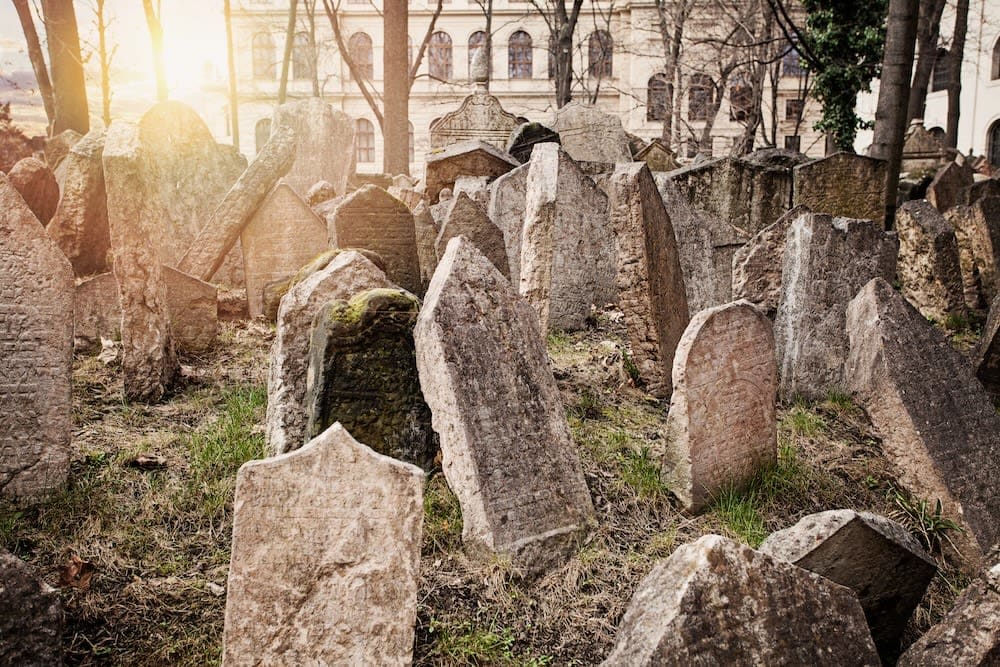
My Husband and I just retired from our trip to Prague and Budapest. The staff at Go Real Travel listened and planned the trip we wanted. The absolute highlight was the private guide in each location that spent the morning walking us through the historic cities and sharing the stories and sites we had only heard of in history class long ago. The transfers from airport to hotel then back again was a luxury. When we were exhausted it was so nice to have a driver waiting for us. I’m usually our trip planner so delegating this to Go Real Travel was a Risk for me. They didn’t disappoint. The hotels were clean and had the most attentive staff. Both hotels had issues that were given attention right away. I will definitely use Go Real again but I will upgrade my hotel choice on our next trip.
Rivers and Revelries in the Cultural Capitals of Central Europe - Berlin, Prague & Budapest
 10 Day Tour of Berlin, Prague and Budapest
Overview
Trip Map
Itinerary
Inclusions
Reviews ★4.9


How Long Is the Central European Trifecta Trip and What Does It Cost?
 Duration10 days / 9 nights
- Best timeJan-Dec
 From$1927 / person (Flights not included)
- Visit Checkpoint Charlie and relax on a delightful evening exploring Berlin's dynamic beer culture.
- Explore Berlin's vibrant nightlife in the shadow of the former Berlin Wall in Friedrichshain.
- See Prague's splendor on a Vltava River cruise and explore cobblestone lanes beneath Prague Castle.
- Tour Budapest's Castle Hill, and experience the city's nocturnal lights on a Danube River cruise.
- Enjoy the Baroque architecture and meet the locals while soaking in Budapest's famous thermal baths.
- Visit Checkpoint Charlie and relax on a delightful evening exploring Berlin's dynamic beer culture.
- Explore Berlin's vibrant nightlife in the shadow of the former Berlin Wall in Friedrichshain.
- See Prague's splendor on a Vltava River cruise and explore cobblestone lanes beneath Prague Castle.
- Tour Budapest's Castle Hill, and experience the city's nocturnal lights on a Danube River cruise.
- Enjoy the Baroque architecture and meet the locals while soaking in Budapest's famous thermal baths.


Must see sights
Starting from
per person
 Not included
 Price varies by group size, hotel selection, and travel season.
Enter your details to embark on a journey that can be tailored just for you.
Start
Travelers
Preferred Hotel Stars

Select your interests and destinations for a trip plan inspired by you.
Where Does the Central European Trifecta Trip Go?
| ← | Move left |
| → | Move right |
| ↑ | Move up |
| ↓ | Move down |
| + | Zoom in |
| - | Zoom out |
| Home | Jump left by 75% |
| End | Jump right by 75% |
| Page Up | Jump up by 75% |
| Page Down | Jump down by 75% |


Click To Make Map Interactive
Central European Trifecta Trip Timeline
Arrival
3 nights
Berlin
Germany
Train: 4.5h
2 nights
Prague
Czech Republic
Overnight Sleeper Train: 10.5h
3 nights
Budapest
Hungary
Departure
What Does the Central European Trifecta Trip Itinerary Look Like?

Day 1
Arrive Berlin

Day 1
Arrive Berlin


Mid-Day/Afternoon
TV Tower & Old Berlin
The Television Tower and its surroundings in Alexanderplatz are Berlin's main architectural monument to the former East Germany. Despite the high-rent stores and offices that now fill the buildings, you can still detect quite a bit of that old communist character. Somewhat ironically, you'll find the medieval Nikolaiviertel, the oldest residential area of Berlin, just a few steps away. You'll also find nearby the Marienkirche (Berlin's oldest parish church), the displaced Neptune Fountain, the Red Town Hall, statues of Karl Marx and Friedrich Engels, and the massive Loxx model railway that even non-model train enthusiasts will gasp at.

Experience life in Communist East Germany in this interactive museum.
Show More
Visit the beautifully restored medieval Gothic church which gave the surrounding neighborhood its name.
Show More
Escape to Berlin's medieval past in this reconstructed historic district.
Show More


Soar to the top of this iconic symbol of Berlin in just 40 seconds, and enjoy amazing views from its observation deck.
Show MoreExperience life in Communist East Germany in this interactive museum.
Show MoreVisit the beautifully restored medieval Gothic church which gave the surrounding neighborhood its name.
Show MoreEscape to Berlin's medieval past in this reconstructed historic district.
Show MoreSoar to the top of this iconic symbol of Berlin in just 40 seconds, and enjoy amazing views from its observation deck.
Show MoreExperience life in Communist East Germany in this interactive museum.
Show MoreDay 1
Arrive Berlin

Day 1
Arrive Berlin
To Be Determined:
Airport Transfer
Mid-Day/Afternoon:
TV Tower & Old Berlin
Late Afternoon/Early Evening:
Courtyards of Berlin
DDR Museum
 Highlight of TV Tower & Old Berlin
Experience life in Communist East Germany in this interactive museum.
This brilliantly evocative and interactive museum helps visitors imagine what life under the Communist East German regime was like. A homage to Ostalgie (nostalgia for East Germany), it offers up memories of the school system, pioneer camps (something like Communist scouts), and the wonderfully clumsy attempts to rival Western clothing and food fashions. It'd all be adorable, if it weren't so oppressive.
Nikolaikirche
Highlight of TV Tower & Old BerlinVisit the beautifully restored medieval Gothic church which gave the surrounding neighborhood its name.
Dating all the way back to the earliest days of Berlin, this church was probably built just after Berlin was granted town privileges. An unusual feature of its interior is the bright colouring of the vault ribbings: the orange, purple, green and other vivid lines look like a 1960s Pop Art addition, but actually follow a medieval pattern discovered by a 1980s restorer.
Nikolaiviertel
Highlight of TV Tower & Old BerlinEscape to Berlin's medieval past in this reconstructed historic district.
The Nikolaiviertel or St. Nicholas Quarter is Berlin's oldest residential area. With its medieval lanes and numerous restaurants and bars, it was a favorite haunt of the artistically-minded in the years before WWII, but that war left it a devastated wasteland. In the 1980's the East German regime attempted a renovation of the neighborhood based on historical models, but the “old Berlin” illusion is not all entirely convincing. The use of East German construction techniques is glaringly obvious in some places, such as prefabricated gables and corrugated concrete panels. As a result, it was scornfully nicknamed “Honecker's Disneyland” after the former East German leader, but today it is a historic curiousity in its own right.
TV Tower & Old Berlin
OverviewTV Tower & Old Berlin
The Television Tower and its surroundings in Alexanderplatz are Berlin's main architectural monument to the former East Germany. Despite the high-rent stores and offices that now fill the buildings, you can still detect quite a bit of that old communist character. Somewhat ironically, you'll find the medieval Nikolaiviertel, the oldest residential area of Berlin, just a few steps away. You'll also find nearby the Marienkirche (Berlin's oldest parish church), the displaced Neptune Fountain, the Red Town Hall, statues of Karl Marx and Friedrich Engels, and the massive Loxx model railway that even non-model train enthusiasts will gasp at.
Television Tower
Highlight of TV Tower & Old BerlinSoar to the top of this iconic symbol of Berlin in just 40 seconds, and enjoy amazing views from its observation deck.
The 1960s TV Tower (Fernsehturm) is possibly the best surviving example of East Germany’s architectural legacy. In total, it is 1,197 feet tall (368 meters), but you can only go 666 ft to the observation deck, or a bit higher if you have a ticket to the revolving Sphere Restaurant. You ascend in one of two 10-person elevators that take a mere 40 seconds to reach the observation deck.
DDR Museum
Highlight of TV Tower & Old BerlinExperience life in Communist East Germany in this interactive museum.
This brilliantly evocative and interactive museum helps visitors imagine what life under the Communist East German regime was like. A homage to Ostalgie (nostalgia for East Germany), it offers up memories of the school system, pioneer camps (something like Communist scouts), and the wonderfully clumsy attempts to rival Western clothing and food fashions. It'd all be adorable, if it weren't so oppressive.
Nikolaikirche
Highlight of TV Tower & Old BerlinVisit the beautifully restored medieval Gothic church which gave the surrounding neighborhood its name.
Dating all the way back to the earliest days of Berlin, this church was probably built just after Berlin was granted town privileges. An unusual feature of its interior is the bright colouring of the vault ribbings: the orange, purple, green and other vivid lines look like a 1960s Pop Art addition, but actually follow a medieval pattern discovered by a 1980s restorer.
Nikolaiviertel
Highlight of TV Tower & Old BerlinEscape to Berlin's medieval past in this reconstructed historic district.
The Nikolaiviertel or St. Nicholas Quarter is Berlin's oldest residential area. With its medieval lanes and numerous restaurants and bars, it was a favorite haunt of the artistically-minded in the years before WWII, but that war left it a devastated wasteland. In the 1980's the East German regime attempted a renovation of the neighborhood based on historical models, but the “old Berlin” illusion is not all entirely convincing. The use of East German construction techniques is glaringly obvious in some places, such as prefabricated gables and corrugated concrete panels. As a result, it was scornfully nicknamed “Honecker's Disneyland” after the former East German leader, but today it is a historic curiousity in its own right.
TV Tower & Old Berlin
OverviewTV Tower & Old Berlin
The Television Tower and its surroundings in Alexanderplatz are Berlin's main architectural monument to the former East Germany. Despite the high-rent stores and offices that now fill the buildings, you can still detect quite a bit of that old communist character. Somewhat ironically, you'll find the medieval Nikolaiviertel, the oldest residential area of Berlin, just a few steps away. You'll also find nearby the Marienkirche (Berlin's oldest parish church), the displaced Neptune Fountain, the Red Town Hall, statues of Karl Marx and Friedrich Engels, and the massive Loxx model railway that even non-model train enthusiasts will gasp at.
Television Tower
Highlight of TV Tower & Old BerlinSoar to the top of this iconic symbol of Berlin in just 40 seconds, and enjoy amazing views from its observation deck.
The 1960s TV Tower (Fernsehturm) is possibly the best surviving example of East Germany’s architectural legacy. In total, it is 1,197 feet tall (368 meters), but you can only go 666 ft to the observation deck, or a bit higher if you have a ticket to the revolving Sphere Restaurant. You ascend in one of two 10-person elevators that take a mere 40 seconds to reach the observation deck.
DDR Museum
Highlight of TV Tower & Old BerlinExperience life in Communist East Germany in this interactive museum.
This brilliantly evocative and interactive museum helps visitors imagine what life under the Communist East German regime was like. A homage to Ostalgie (nostalgia for East Germany), it offers up memories of the school system, pioneer camps (something like Communist scouts), and the wonderfully clumsy attempts to rival Western clothing and food fashions. It'd all be adorable, if it weren't so oppressive.
Day 2
Berlin
Day 2
Berlin


9:00 AM - 12:00 PM
Guided Walking Tour of Berlin
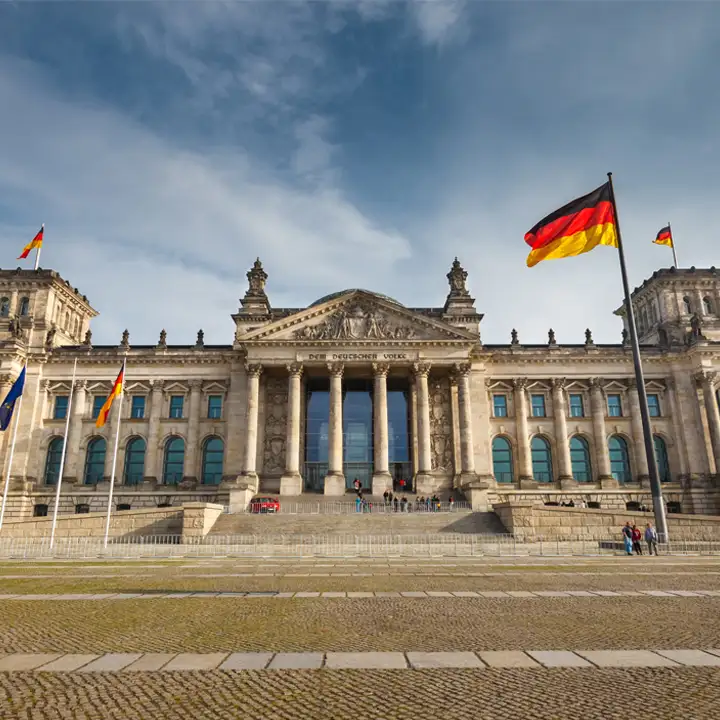
On this 3 hour tour, your guide will show you the highlights of Berlin and help you understand what makes this city so unique. Sites visited will include the boulevard Unter den Linden, the Gendarmenmarkt, Check Point Charlie, remnants of the Berlin Wall, Potsdamer Platz, the Holocaust Memorial, the Brandenburg Gate, and the Reichstag.

Quadriga. Hey, There's a Word to Know When Learning About this Historic Gate
Show More
Make your way to the top of the dome enjoying amazing views and looking down at debating members of the German Parliament below.
Show More
Quadriga. Hey, There's a Word to Know When Learning About this Historic Gate
Show MoreMake your way to the top of the dome enjoying amazing views and looking down at debating members of the German Parliament below.
Show MoreQuadriga. Hey, There's a Word to Know When Learning About this Historic Gate
Show MoreDay 2
Berlin
Day 3
Berlin
Day 3
Berlin
Morning
River Cruise
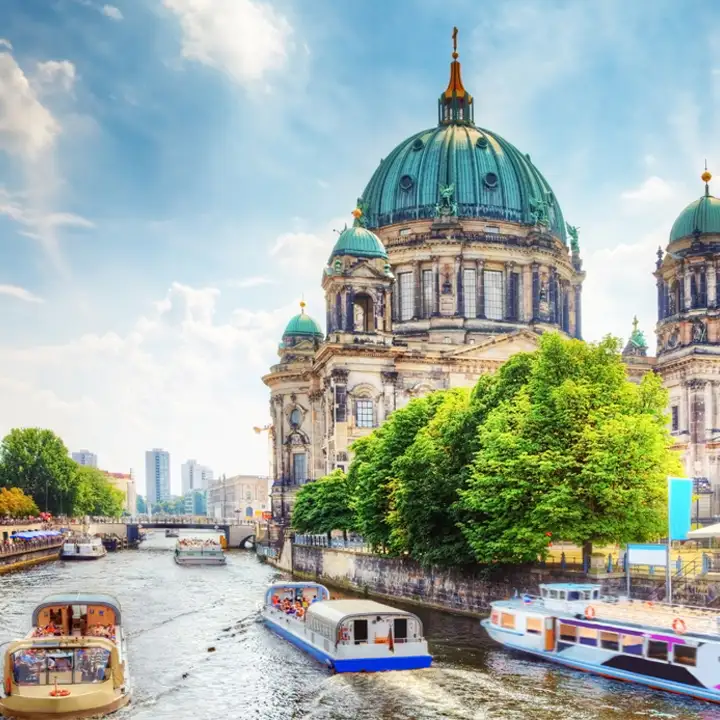
The Spree is a 250 mile long river that flows through the German states of Saxony and Brandenburg. But it’s best known for its final stretch where it drifts through the city center of Berlin, flowing under more bridges than in Venice and passing the Berlin Cathedral (Berliner Dom), the Reichstag and the Charlottenburg chateau. Taking a cruise, whether for an hour or half the day, offers a wonderful way to see the city in a relaxed manner.

Day 3
Berlin

Day 4
Berlin to Prague
Day 4
Berlin to Prague


10:10 AM
Transfer to Rail Station
Most trains depart from Berlin Hbf station, the largest station in the city. Before spending money on a transfer, be sure to check whether your hotel is within easy walking distance. It is well connected by public transport, including U-bahn, S-bahn, and bus, making it relatively easy and often fastest to reach by public transport. However, if traveling with bags, you may prefer the convenience of taking a taxi, Uber, or private transfer. Berlin taxis are generally reliable and honest. If you are staying in central Berlin and are picked up one hour prior to departure, you should have time to catch your train.

Day 4
Berlin to Prague
Day 5
Prague
Day 5
Prague
Morning/Mid-Day
Old Town
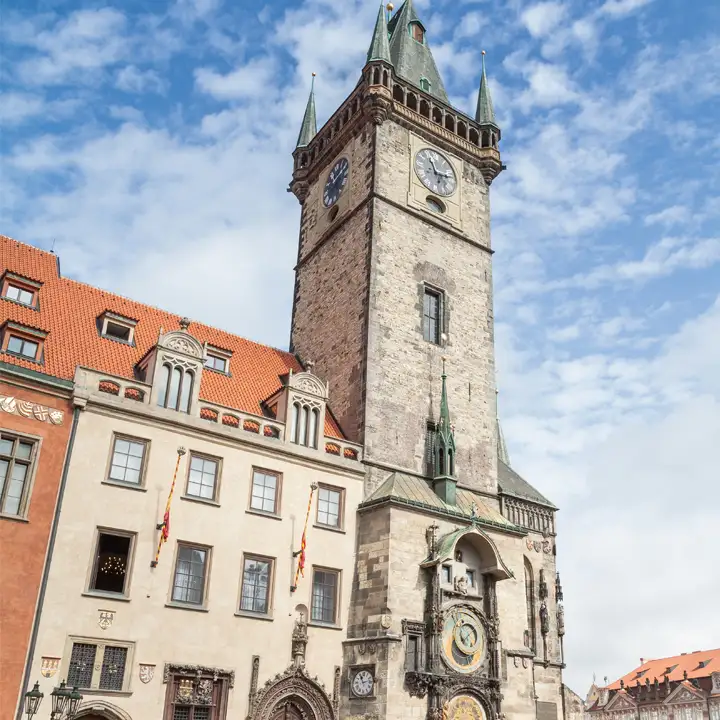
A visit to the Old Town transports you to an entirely different era. A labyrinth of twisting cobblestone lanes and alleys surrounds Old Town Square, which has been Prague's municipal center since the Middle Ages. The square is lined by magnificent churches and imposing Renaissance palaces. As you wander through the Old Town, you discover numerous other delights, including several beautiful churches, a plentiful supply of cozy cafes and pubs, and an outdoor market dating back to the Middle Ages.

See Prague's most photographed moment when the late medieval timepiece constructed on the side of the Old Town Hall Tower comes to life at the top of the hour.
Show More
Count the spires on the Church of Our Lady Týn before discovering the hidden courtyard behind it.
Show More
Discover a large historical complex of buildings and courtyards "hidden in plain sight" within the Old Town.
Show More

Make sure to visit one of Europe's most important, historic, and stunning city squares.
Show MoreSee Prague's most photographed moment when the late medieval timepiece constructed on the side of the Old Town Hall Tower comes to life at the top of the hour.
Show MoreCount the spires on the Church of Our Lady Týn before discovering the hidden courtyard behind it.
Show MoreDiscover a large historical complex of buildings and courtyards "hidden in plain sight" within the Old Town.
Show MoreMake sure to visit one of Europe's most important, historic, and stunning city squares.
Show MoreSee Prague's most photographed moment when the late medieval timepiece constructed on the side of the Old Town Hall Tower comes to life at the top of the hour.
Show MoreDay 5
Prague

Day 6
Prague
Day 6
Prague

Early Morning/Morning
New Town
Despite being 700 years old, the New Town (Nové Město) is the youngest of the original five independent towns that made up Medieval Prague. The heart of New Town is one of the three original markets around which the town was planned, Wenceslas Square. Not fully given over to tourism like the Old Town, the New Town combines a historic atmosphere with the daily commercial and social life of locals, making it a great place to get a taste of the real Prague.

Stroll down the river to find this curvaceous office block designed by Frank Gehry, and whi msically nicknamed Fred & Ginger.
Show More
Experience nationally-sponsored ballet & opera in a magnificent venue.
Show More
Explore an interesting museum collection in a grand building completed in 1891.
Show More

Experience a mishmash of interesting architecture on Wenceslas Square, Prague's main commercial center.
Show More
Tour a breathtaking art nouveau venue and stay for a concert, opera, or ballet.
Show MoreStroll down the river to find this curvaceous office block designed by Frank Gehry, and whi msically nicknamed Fred & Ginger.
Show MoreExperience nationally-sponsored ballet & opera in a magnificent venue.
Show MoreExplore an interesting museum collection in a grand building completed in 1891.
Show MoreExperience a mishmash of interesting architecture on Wenceslas Square, Prague's main commercial center.
Show MoreTour a breathtaking art nouveau venue and stay for a concert, opera, or ballet.
Show MoreDay 6
Prague
Day 7
Budapest
Day 7
Budapest

8:29 AM
Taxi Transfer from Rail Station
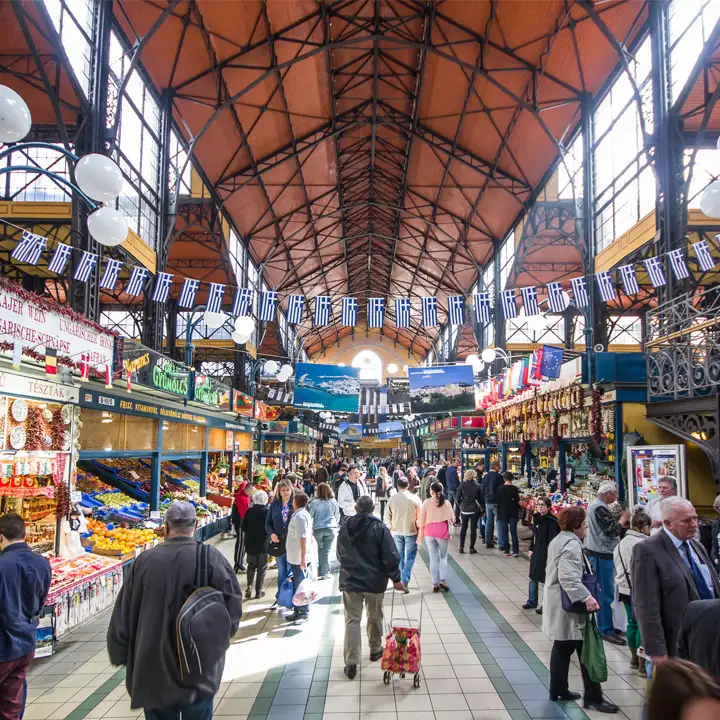
There are three significant rail stations where visitors arrive in Budapest. You are most likely to arrive in the Budapest-Keleti station (i.e. East Rail Station), although you may also arrive at the Budapest-Nyugati (western) or Budapest-Déli (southern) station. They are all three fairly centrally located. Before spending money on a transfer, be sure to check whether your hotel is within easy walking distance of station. Also consider that the cheapest and sometimes fastest way to reach your hotel may be by public transport, and all three stations are co-located with metro stations. Taxis are available at all rail stations but are known for taking advantage of tourists. A private transfer may be a better option; some will even meet you directly on the platform to help with bags.

Day 7
Budapest
Day 8
Budapest
Day 8
Budapest
9:00 AM - 12:30 PM
Guided Walk in Budapest
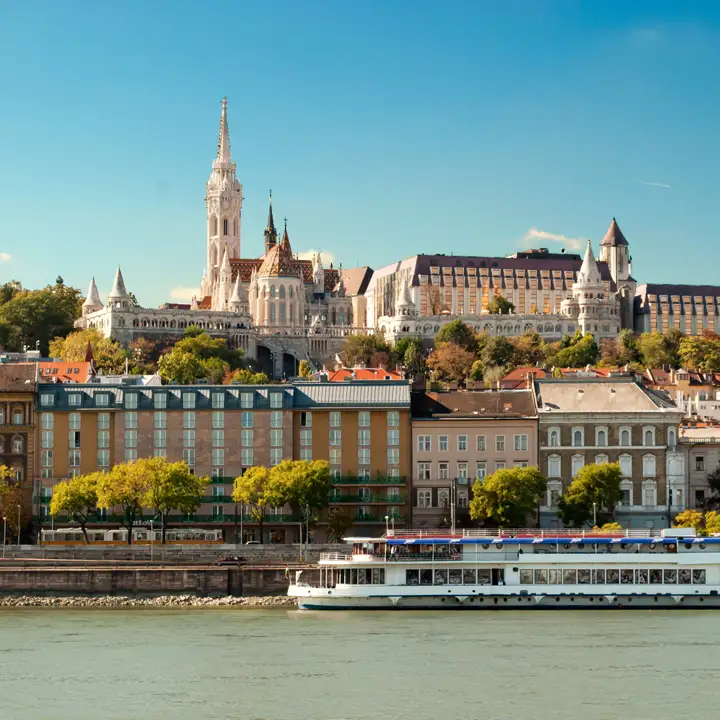
During your tour you will take in a gorgeous vista of the city from the Fisherman's Bastion, explore the winding streets of the Castle District, gaze in awe at the striking interior of St. Stephen's Basilica, travel along the city's most elegant avenue and more. Along the way you will experience the city as a local does, stopping to check out intimate courtyards, enjoying a pastry and soaking in the ambiance of Budapest's most elegant cafes.

Day 8
Budapest
Day 9
Budapest
Day 9
Budapest
Morning/Mid-Day
Jewish Quarter
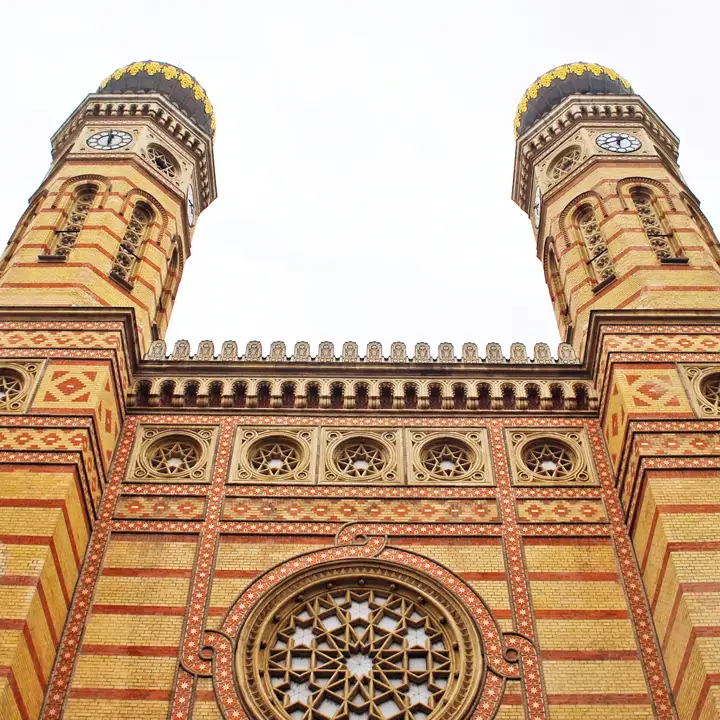
Budapest was once the site of one of Europe's largest and most vibrant Jewish communities and contains the world's second largest synagogue – the Dohány Street Synagogue. A visit there is an impressive reminder of the wealth and influence the Jewish community in Hungary once possessed. A small but vibrant Jewish population still inhabits the Jewish Quarter today.

Discover Budapest's most unique form of nightlife - pubs located in the ruins of old buildings!
Show More
Learn about the Holocaust in a former synagogue which honors Hungarian Jews killed in WWII.
Show More

Stare in awe at Europe's largest synagogue (and the second largest in the world).
Show MoreDiscover Budapest's most unique form of nightlife - pubs located in the ruins of old buildings!
Show MoreLearn about the Holocaust in a former synagogue which honors Hungarian Jews killed in WWII.
Show MoreStare in awe at Europe's largest synagogue (and the second largest in the world).
Show MoreDay 9
Budapest

Day 10
Depart Budapest
Day 10
Depart Budapest
To Be Determined
Taxi Transfer to Airport
Budapest has one main airport, Budapest Ferenc Liszt International Airport, where almost all visitors depart. Your hotel can arrange a reliable taxi (there is no Uber in Budapest). You can also arrange a private transfer. If you are picked up about two hours and forty-five minutes before your departure time, you should arrive at the airport with about two hours to spare, depending on traffic. If you are leaving during rush hour, you may want to budget an extra fifteen to thirty minutes.

Day 10
Depart Budapest
What's Included in the Central European Trifecta Trip?
Pre-Paid Tours and Activities:
- Highlights of Berlin Guided Walking Tour
- Guided Beer Tasting Tour
- Best of Budapest: Half-Day Walking Tour of Highlights & Hidden Finds
- City Card for Berlin, including discounts to many popular attractions

Pre-Paid Transportation:
- 2nd Class Train Tickets from Berlin Hbf to Praha hl.n.
- Train Tickets from Prague to Budapest
- Public Transport Tickets for Berlin

Accommodation:
- 3 nights at a hotel of your choice in Berlin
- 2 nights at a hotel of your choice in Prague
- 3 nights at a hotel of your choice in Budapest

Go Real Travel Mobile App:
- Itinerary Plan & Reservations Info
- Points of Interest
- Detailed Travel Information
- Maps & Directions
Other Trips You May Like
Reviews From Similar Trips
See what travelers who went to these destinations have to say.
Average traveler rating
Based on 314 traveler reviews
- Trustpilot (230)
- Facebook (50)
- Go Real Travel Reviews (34)
Just returned from Prague and Budapest! GO Real Travel nailed it! Incredible from start to finish. All pickup, transfers, tickets, tours and guides went flawlessly (one guide was late but it was quickly remedied) and ended up to be the best guide we had. The 5 star Hotels were incredible. Their self guides tours and food recommendations were spot on. I cannot wait to book another trip with this company. They listened and booked all the things we wanted to do. Highly recommend.
Jeff Meltzer
I found Go Real Europe on a google search. We used their services in Berlin, Prague and Budapest. I cannot recommend them highly enough. The hotels they used were central, clean and comfortable (all included breakfasts) The maps they provided were very detailed and easy to follow. Recommendations to such places as Roszwurm in Budapest mean you can indulge in famous kremes like you have not tasted before. Having tickets for trams/ buses/ metro provided simplified things...once we got the hang of the public transport. The private walking tours we did in each city were great. Jeanine in Berlin deserves a special mention. Born in the USA, she had travelled to Berlin before the wall came down and now lives there so her knowledge and personal experience were outstanding and she had no language problems with a trio of kiwis. We had a minor glich with a walking tour but one phone call had that rectified within minutes. They booked all our rail and bus travel between these cities, and arranged private transfers to and from the hotels to the travel depots. I would not hesitate to use this company again. Well done Go Real Europe.
Colleen Henderson
The hotels are excellent! The itinerary offers you a lot of free time to explore on your own. Customer service is extraordinary.
Daniel Sharkey
Amazing family trip We just finished a 5 city European vacation organized by Go Real. This was a graduation gift for our son who had just graduated high school. We also traveled with my wife's parents so our trip had to accommodate 3 generations. Go real Europe succeeded. We cannot say enough good things about our experience with Go Real Europe, with our agent Jared and the owner of this fantastic company David. We visited Krakow, Budapest, Munich, Prague and Berlin with small day trips to Dresden and Kutna Hora (to see the bone church). Jared was quick to respond to all of our requests and questions (and there were plenty). Jared even took the time to meet us for dinner in Prague to make sure our trip was going as planned. The itinerary was very detailed and included destinations we probably would not have sought out on our own. We used the train for all travel which really added to the amount of beautiful country that we got to see. The accommodations were very nice in all cities. Especially Budapest and Prague. We had a private city tour the first day at each destination. The tour guides were all great, but our guide in Budapest really stood out. She was so passionate about her country, her city and the Hungarian people. There were a few minor bumps in the road which should always be expected when travelling through 4 countries in 18 days. We learned so much and have already started to plan our next adventure. Thank you Jared, David and Go Real Europe. We will be back.
Donny Griffiths
By chance I found Go Read Europe when I was planning a trip to central Europe. Grace came up with a great itinerary based on our interests, and was very prompt in fixing a few small hiccups along the way. Go Real Europe took all the worry out of traveling to many different destinations.
Kathy Kennedy Edmondson
What Travelers Say About Go Real Travel
Our latest reviews from across all trips on Trustpilot.


Featured Blogs

13 Most Happening Things to Do in Prague at Night

18 Cheap and Free Things to do in Prague
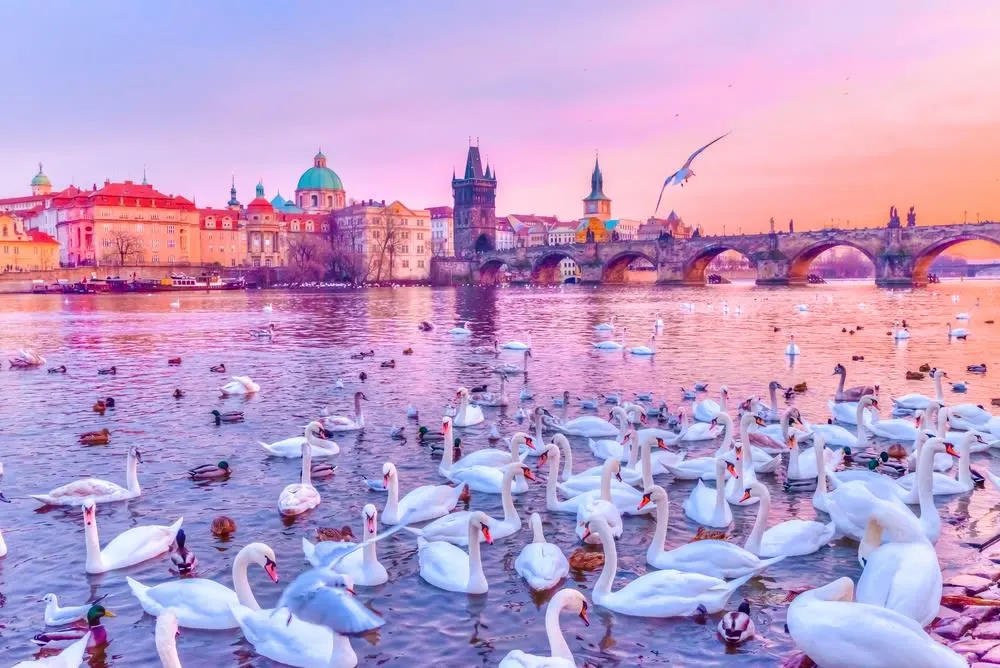

Why Visit Budapest? 8 Reasons To Go

Flying Solo: The Best Places to Travel Alone in Europe

16 Most Romantic Destinations in Europe

10 European Cities to Visit in Winter
13 Most Happening Things to Do in Prague at Night
18 Cheap and Free Things to do in Prague
Why Visit Budapest? 8 Reasons To Go
Flying Solo: The Best Places to Travel Alone in Europe
16 Most Romantic Destinations in Europe
10 European Cities to Visit in Winter
13 Most Happening Things to Do in Prague at Night
Explore cities in more detail
Dresden
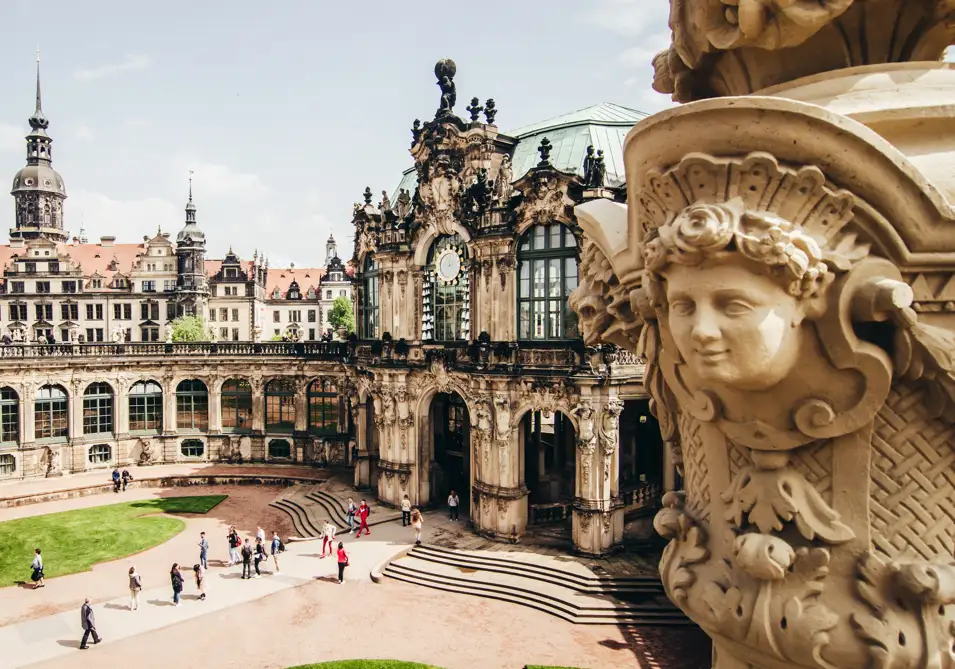
Nearly every wall and rooftop in Dresden seems to be finished with a flourish. Defined by its ornamental baroque architecture, a power statement of Saxon royalty, Dresden is made all the more miraculous considering the city was leveled by firebombing in WWII. After the war, the city was reconstructed, brick by painstaking brick. Even under East German-Soviet rule, which usually eschewed frivolous design, buildings like the Semper Opera House were pieced back to their former glory. Restoration of the majestic Zwinger Palace and bell domed Church of Our Lady slowly followed, with the Frauenkirche only fully repaired in 2005. Arguably there is no other city in Europe that cherishes its hard-won architecture as much as Dresden. Although it is a compact city, so many of its buildings will stop you in your tracks that architecture fans will easily lose a whole day in the Old Town area. Especially during the winter months, Dresden sparkles with a joyous, uplifting ambiance. The city is recognized as having the best-ever Christmas market in all of Europe. Between the twinkling lights, the scent of hot wine and gingerbread, and the towering Christmas tree, it’s worth going out of your way to see Dresden at this time of year.

Frankfurt
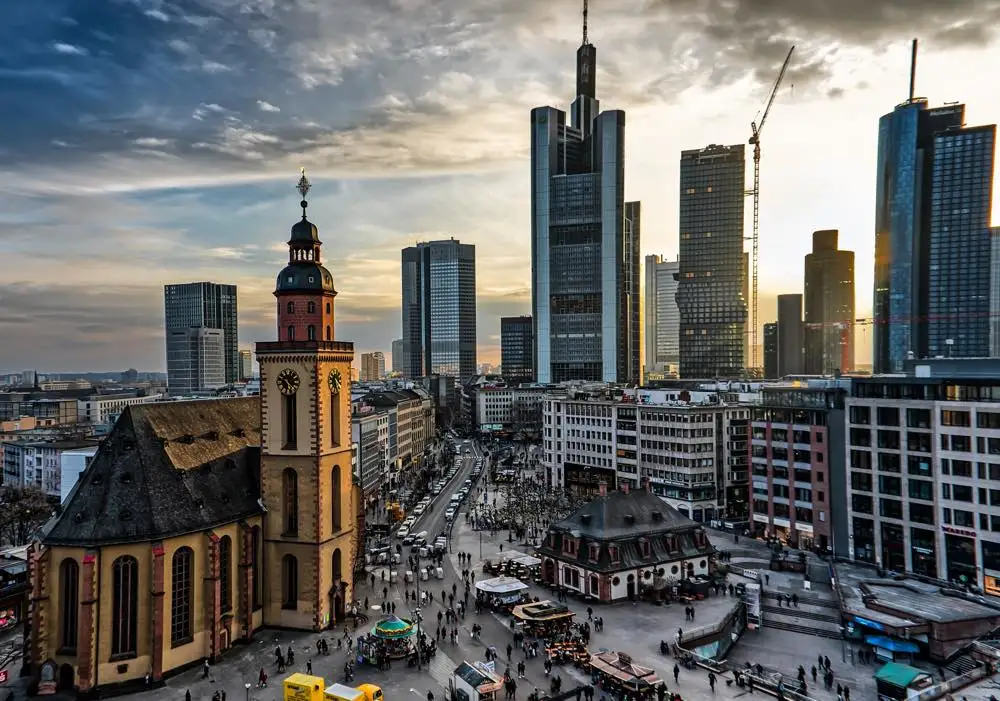
Dubbed ‘Mainhatten’ for its glass highrises, financial prowess, and proximity to the Main River, Frankfurt offers a fascinating glimpse into the ‘engine room’ of Europe’s economy with an unexpected twist. Among the glass and steel buildings, the old-worldly Römerberg square will give you a double-take. The square’s 15th-century half-timbered houses, old statues, and church spires contrast dramatically against the modern 21st-century skyscrapers beyond. If you visit at Christmas, the Römerberg is truly special, aglow with the light of the tallest Christmas tree in Germany. The square fills with stalls selling handicrafts, and the air is scented with hot apple wine, honey, and cinnamon. Delve deeper into Frankfurt and you’ll find a substantial museum district, the Museumsufer (Museum Embankment). This area features a cluster of twelve museums on either side of Main River. This includes the Städel, home to Tischbein’s famous painting of renowned writer Johann Wolfgang von Goethe, one of Frankfurt’s most prestigious sons. The more time you spend in Frankfurt, the more you’ll discover a highly cultured city lurking beneath its glass facades. If you have the time, Frankfurt is certainly worth a second look.
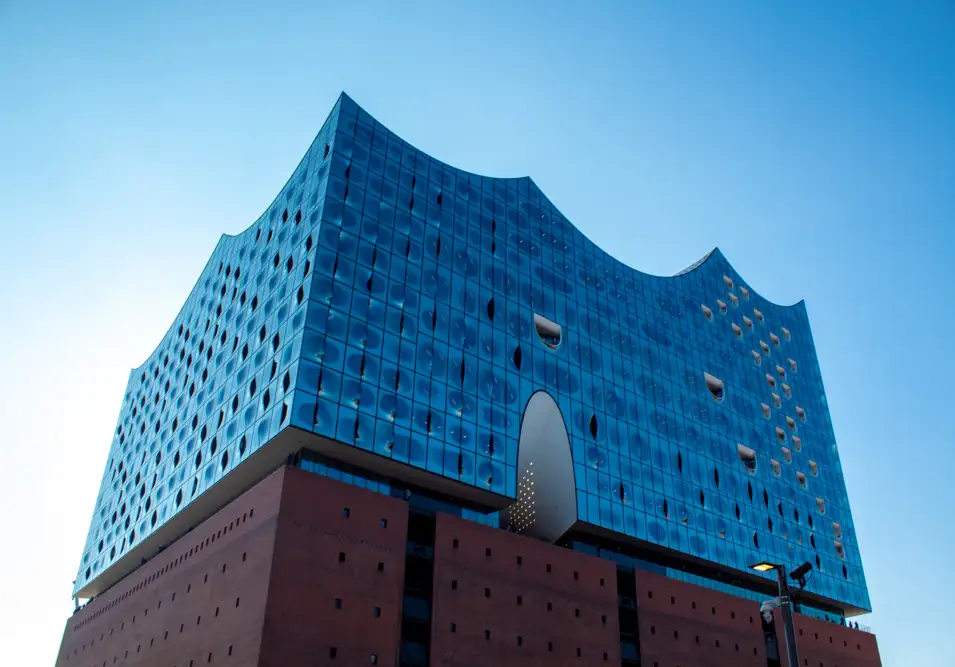
Hamburg
Compared to other German cities, Hamburg has a moody, nautical charisma all of its own. Despite being battered throughout history by floods, fires, and bombs, Hamburg has always held its head up high. Resilience is in the air in Hamburg, along with the briny smell of the North Sea. In recent years Hamburg has garnered a reputation for commerce and nightlife. Frequent travelers whisper that Hamburg is Germany’s ‘undiscovered’ city, the place to go for a little business and a lot of fun. Known as Germany’s ‘gateway to the world’, ships dock in Hamburg as they haul cargo up and down the Elbe River. The city thrives as Germany’s primary seaport and has been a center of trade since the middle ages. Its affluence shows in the 19th-century brick warehouses, flourishing restaurant scene, and recently constructed Elbphilharmonie concert hall, which floats majestically in the harbor, part ship and part island. Hamburg is a city for those who like to live large - in a cultured, German kind of way. Attend a performance at the orchestra, cruise on a boat around the Außenalster Lake, or have a night on the Reeperbahn, the Vegas-like strip where the Beatles once performed. Whatever you do in the city, Hamburg will make you look twice and see Germany from a totally different point of view.
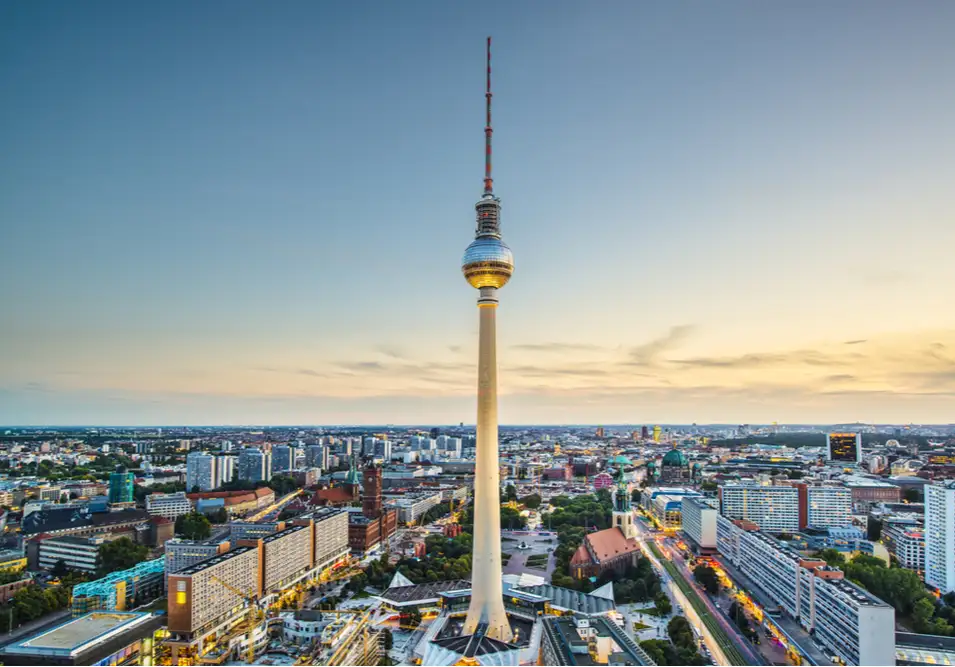
Berlin
Since the fall of its notorious wall, Berlin’s unification has seen it go from strength to strength. No wonder the city feels like it hasn’t stopped partying since the 1990s. There is so much to celebrate here. Fueled by the robust economy, a thriving tech scene, and straight-up German bonhomie, when you step into Berlin you’ll soon be caught up in its spirit. For all this gusto, Berlin hasn’t forgotten its troubled past. A visit to Berlin is to bear witness to history. Portions of the wall remain intact, and the city’s Jewish Museum offers a detailed, emotional examination of the Holocaust. Inside the reconstructed Reichstag, every attempt has been made to preserve the parliament’s beleaguered history. The buildings' glass dome addition feels less like a triumphal crown and more like a freshly healed battle scar. Days in Berlin are easily spent wandering from a cafe to the cultural institutions on Museum Island, or over to the Charlottenburg Palace. By night, crowds wander through the booming bars and nightclubs or gaze upon the floodlit Brandenburg Gate and Victory Column monuments. An international city that can offer something to everyone, Berlin is an unmissable stop on your German journey.
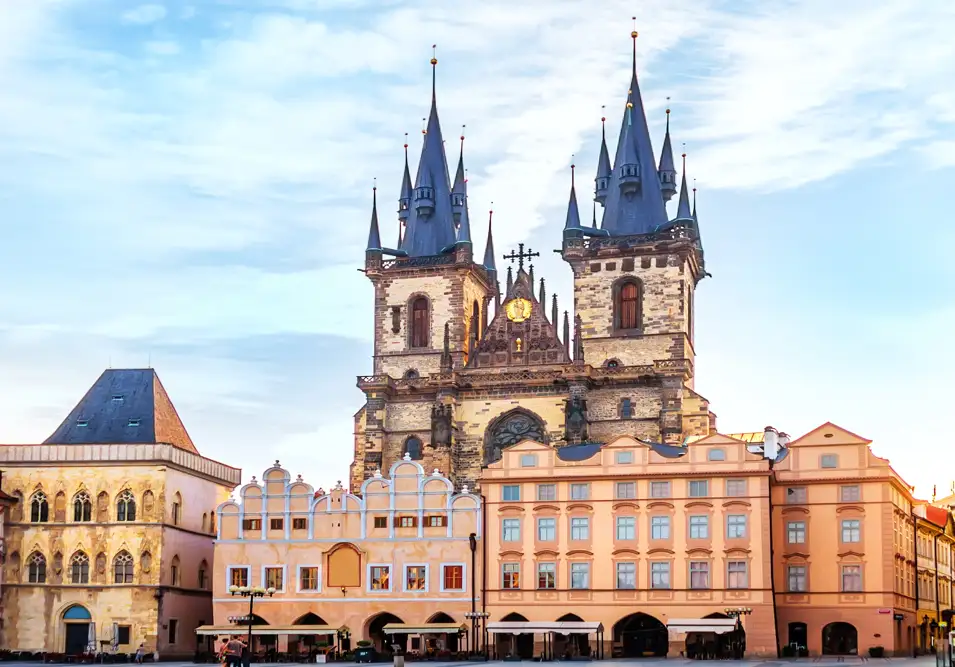
Prague
The city of Prague is indisputably the gem of Central Europe. Full of history, culture, and classic Czech pubs around every corner, Prague is teeming with nooks and crannies just waiting to be discovered. The narrow cobblestone streets and warm red rooftops give the city a homey feel, while the well-preserved medieval architecture transports you back in time. Walking across the Charles Bridge with the view of the Prague Castle will make you feel like you’re living in a fairytale, and you might as well be. As an up-and-coming destination, Prague is a perfect mix of classic and modern. New trendy cafes and bistros are always popping up, and you can always find a group of lively locals chowing down on goulash and quaffing pivo (the best beer in Europe!) at traditional Czech restaurants across the city. The clash of modernity and tradition, preservation and innovation, gives this city a mysterious air that you won’t soon forget.
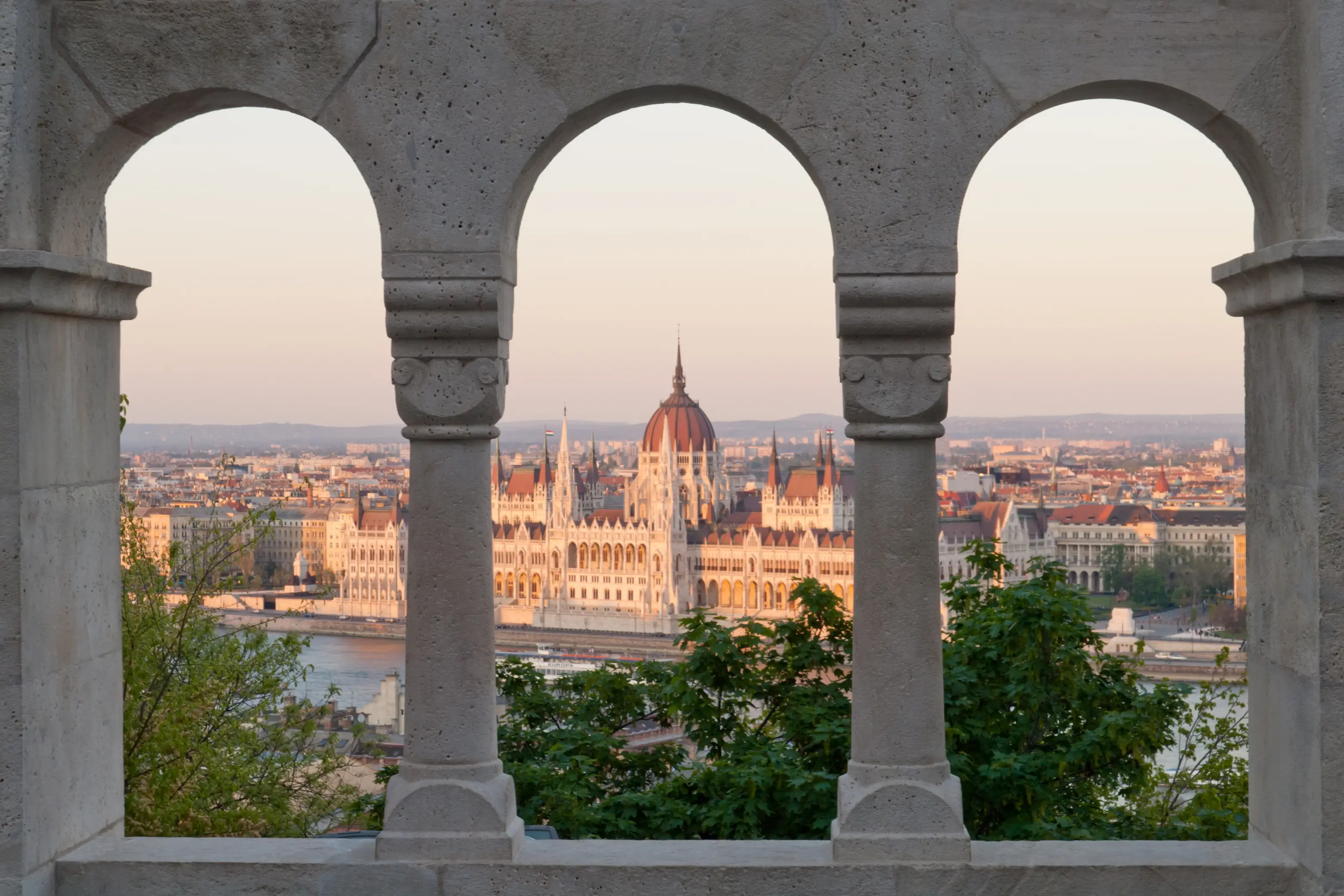
Budapest
Situated at the heart of Europe, Budapest is the capital of Hungary, appropriately named 'The Pearl of the Danube,' for its fixating and almost haunting beauty. Formerly two separate cities, Buda and Pest were forged into one by time, occupation, and the eight bridges that anchor them together today. From the Romans to the Communists, each occupier left its flavor profile in Budapest, evident in the famous spicy Hungarian stew known as 'goulash.' Budapest is a melting pot of history, culture, and taste, from the magnificent Baroque and neo-Gothic architecture to the Turkish thermal baths. After a long day of sightseeing, treat yourself to a glass of Tokaj, what King Louis XIV of France referred to as the "Wine of Kings, King of Wines". Budapest has a flavor to satisfy any taste.
Dresden
Nearly every wall and rooftop in Dresden seems to be finished with a flourish. Defined by its ornamental baroque architecture, a power statement of Saxon royalty, Dresden is made all the more miraculous considering the city was leveled by firebombing in WWII. After the war, the city was reconstructed, brick by painstaking brick. Even under East German-Soviet rule, which usually eschewed frivolous design, buildings like the Semper Opera House were pieced back to their former glory. Restoration of the majestic Zwinger Palace and bell domed Church of Our Lady slowly followed, with the Frauenkirche only fully repaired in 2005. Arguably there is no other city in Europe that cherishes its hard-won architecture as much as Dresden. Although it is a compact city, so many of its buildings will stop you in your tracks that architecture fans will easily lose a whole day in the Old Town area. Especially during the winter months, Dresden sparkles with a joyous, uplifting ambiance. The city is recognized as having the best-ever Christmas market in all of Europe. Between the twinkling lights, the scent of hot wine and gingerbread, and the towering Christmas tree, it’s worth going out of your way to see Dresden at this time of year.
Frankfurt
Dubbed ‘Mainhatten’ for its glass highrises, financial prowess, and proximity to the Main River, Frankfurt offers a fascinating glimpse into the ‘engine room’ of Europe’s economy with an unexpected twist. Among the glass and steel buildings, the old-worldly Römerberg square will give you a double-take. The square’s 15th-century half-timbered houses, old statues, and church spires contrast dramatically against the modern 21st-century skyscrapers beyond. If you visit at Christmas, the Römerberg is truly special, aglow with the light of the tallest Christmas tree in Germany. The square fills with stalls selling handicrafts, and the air is scented with hot apple wine, honey, and cinnamon. Delve deeper into Frankfurt and you’ll find a substantial museum district, the Museumsufer (Museum Embankment). This area features a cluster of twelve museums on either side of Main River. This includes the Städel, home to Tischbein’s famous painting of renowned writer Johann Wolfgang von Goethe, one of Frankfurt’s most prestigious sons. The more time you spend in Frankfurt, the more you’ll discover a highly cultured city lurking beneath its glass facades. If you have the time, Frankfurt is certainly worth a second look.
Hamburg
Compared to other German cities, Hamburg has a moody, nautical charisma all of its own. Despite being battered throughout history by floods, fires, and bombs, Hamburg has always held its head up high. Resilience is in the air in Hamburg, along with the briny smell of the North Sea. In recent years Hamburg has garnered a reputation for commerce and nightlife. Frequent travelers whisper that Hamburg is Germany’s ‘undiscovered’ city, the place to go for a little business and a lot of fun. Known as Germany’s ‘gateway to the world’, ships dock in Hamburg as they haul cargo up and down the Elbe River. The city thrives as Germany’s primary seaport and has been a center of trade since the middle ages. Its affluence shows in the 19th-century brick warehouses, flourishing restaurant scene, and recently constructed Elbphilharmonie concert hall, which floats majestically in the harbor, part ship and part island. Hamburg is a city for those who like to live large - in a cultured, German kind of way. Attend a performance at the orchestra, cruise on a boat around the Außenalster Lake, or have a night on the Reeperbahn, the Vegas-like strip where the Beatles once performed. Whatever you do in the city, Hamburg will make you look twice and see Germany from a totally different point of view.
Berlin
Since the fall of its notorious wall, Berlin’s unification has seen it go from strength to strength. No wonder the city feels like it hasn’t stopped partying since the 1990s. There is so much to celebrate here. Fueled by the robust economy, a thriving tech scene, and straight-up German bonhomie, when you step into Berlin you’ll soon be caught up in its spirit. For all this gusto, Berlin hasn’t forgotten its troubled past. A visit to Berlin is to bear witness to history. Portions of the wall remain intact, and the city’s Jewish Museum offers a detailed, emotional examination of the Holocaust. Inside the reconstructed Reichstag, every attempt has been made to preserve the parliament’s beleaguered history. The buildings' glass dome addition feels less like a triumphal crown and more like a freshly healed battle scar. Days in Berlin are easily spent wandering from a cafe to the cultural institutions on Museum Island, or over to the Charlottenburg Palace. By night, crowds wander through the booming bars and nightclubs or gaze upon the floodlit Brandenburg Gate and Victory Column monuments. An international city that can offer something to everyone, Berlin is an unmissable stop on your German journey.
Prague
The city of Prague is indisputably the gem of Central Europe. Full of history, culture, and classic Czech pubs around every corner, Prague is teeming with nooks and crannies just waiting to be discovered. The narrow cobblestone streets and warm red rooftops give the city a homey feel, while the well-preserved medieval architecture transports you back in time. Walking across the Charles Bridge with the view of the Prague Castle will make you feel like you’re living in a fairytale, and you might as well be. As an up-and-coming destination, Prague is a perfect mix of classic and modern. New trendy cafes and bistros are always popping up, and you can always find a group of lively locals chowing down on goulash and quaffing pivo (the best beer in Europe!) at traditional Czech restaurants across the city. The clash of modernity and tradition, preservation and innovation, gives this city a mysterious air that you won’t soon forget.
Budapest
Situated at the heart of Europe, Budapest is the capital of Hungary, appropriately named 'The Pearl of the Danube,' for its fixating and almost haunting beauty. Formerly two separate cities, Buda and Pest were forged into one by time, occupation, and the eight bridges that anchor them together today. From the Romans to the Communists, each occupier left its flavor profile in Budapest, evident in the famous spicy Hungarian stew known as 'goulash.' Budapest is a melting pot of history, culture, and taste, from the magnificent Baroque and neo-Gothic architecture to the Turkish thermal baths. After a long day of sightseeing, treat yourself to a glass of Tokaj, what King Louis XIV of France referred to as the "Wine of Kings, King of Wines". Budapest has a flavor to satisfy any taste.

Go Real Travel Assistant
OnlineWelcome! Where are you in your journey?
Pick the option that fits you best so we can route you to the right help.