Overview
Overview
Overview
Overview
Overview
This website uses ‘cookies’ to give you the best, most relevant experience. By using this website, you consent to our Privacy Policy
×Overview

Trip Map
Itinerary
Inclusions
Reviews


Must see sights


Starting from
per person
Enter your details to embark on a journey that can be tailored just for you.
Start
Travelers
Preferred Hotel Stars
Select your interests and destinations for a trip plan inspired by you.
| ← | Move left |
| → | Move right |
| ↑ | Move up |
| ↓ | Move down |
| + | Zoom in |
| - | Zoom out |
| Home | Jump left by 75% |
| End | Jump right by 75% |
| Page Up | Jump up by 75% |
| Page Down | Jump down by 75% |


Click To Make Map Interactive
Overview
Overview
Overview
Overview
OverviewArrival
3 nights
Berlin
Germany
Train: 4.5h
3 nights
Prague
Czech Republic
Train: 4.5h
4 nights
Vienna
Austria
Departure

Day 1
Arrive Berlin
Day 1
Arrive Berlin
Late Afternoon/Early Evening
With booming 19th-century population growth, nearly every unoccupied space in Berlin was filled by tenement buildings surrounding small courtyards. The Spandauer Vorstadt neighborhood possesses some of Berlin’s most beautiful courtyards, the Hackesche Höfe, as well as other courtyards which better recall the crowded conditions of industrial Berlin. Here you can discover the partially reconstructed New Synagogue, the former site of the Jewish cemetery, and many hidden reminders of a once vibrant community.

Explore a traditional Berlin alleyway courtyard which harbours a trio of small museums relating to the Jewish experience during WWII.
Show More
Visit one of the most important legacies of Berlin's pre-Holocaust Jewish community.
Show More
Browse the gallery to see some of the highlights

Stop for a drink or go shopping within Berlin’s most beautiful courtyards.
Show More
Explore a traditional Berlin alleyway courtyard which harbours a trio of small museums relating to the Jewish experience during WWII.
Show More
Visit one of the most important legacies of Berlin's pre-Holocaust Jewish community.
Show More
Browse the gallery to see some of the highlights

Stop for a drink or go shopping within Berlin’s most beautiful courtyards.
Show More
Day 1
Arrive Berlin

Day 1
Arrive Berlin
To Be Determined:
Airport Transfer
Mid-Day/Afternoon:
TV Tower & Old Berlin
Late Afternoon/Early Evening:
Courtyards of Berlin


Haus Schwarzenberg
Highlight of Courtyards of BerlinExplore a traditional Berlin alleyway courtyard which harbours a trio of small museums relating to the Jewish experience during WWII.
The courtyard's crumbling and grafittied facades give visitors a feel for Berlin tenement life during the late 19th and early 20th centuries. Among the museums is the fascinating Museum Blindenwerkstatt Otto Wendt (free; open 10am-8pm daily). It is located in the former rooms of a broom and brush factory run by one Otto Wendt, whose employees were mainly deaf, blind and Jewish. He managed to protect his workers from the concentration camps by having the factory declared essential to the war effort.


New Synagogue
Highlight of Courtyards of BerlinVisit one of the most important legacies of Berlin's pre-Holocaust Jewish community.
The partially reconstructed synagogue was damaged on Kristallnacht, an anti-Jewish Nazi pogrom. It was not completely destroyed thanks to the intervention of the local police chief. Its ultimate destruction was left to Allied bombers and reconstruction didn’t begin until the late 1980s. While large parts remain unreconstructed, it is still possible to visit the interior.


Courtyards of Berlin
OverviewCourtyards of Berlin
With booming 19th-century population growth, nearly every unoccupied space in Berlin was filled by tenement buildings surrounding small courtyards. The Spandauer Vorstadt neighborhood possesses some of Berlin’s most beautiful courtyards, the Hackesche Höfe, as well as other courtyards which better recall the crowded conditions of industrial Berlin. Here you can discover the partially reconstructed New Synagogue, the former site of the Jewish cemetery, and many hidden reminders of a once vibrant community.


Hackesche Höfe
Highlight of Courtyards of BerlinStop for a drink or go shopping within Berlin’s most beautiful courtyards.
These nine courtyards are classic examples of Art Deco. Built in 1905-1907 to house businesses, flats and places of entertainment, Hackesche Höfe was conceived of as an antidote to the dowdy and overcrowded courtyards of working-class Berlin. They are elaborately decorated with blue mosaic tiles and other artistic finishes, but nevertheless preserve a layout that was highly typical of much of pre-war Berlin.


Haus Schwarzenberg
Highlight of Courtyards of BerlinExplore a traditional Berlin alleyway courtyard which harbours a trio of small museums relating to the Jewish experience during WWII.
The courtyard's crumbling and grafittied facades give visitors a feel for Berlin tenement life during the late 19th and early 20th centuries. Among the museums is the fascinating Museum Blindenwerkstatt Otto Wendt (free; open 10am-8pm daily). It is located in the former rooms of a broom and brush factory run by one Otto Wendt, whose employees were mainly deaf, blind and Jewish. He managed to protect his workers from the concentration camps by having the factory declared essential to the war effort.


New Synagogue
Highlight of Courtyards of BerlinVisit one of the most important legacies of Berlin's pre-Holocaust Jewish community.
The partially reconstructed synagogue was damaged on Kristallnacht, an anti-Jewish Nazi pogrom. It was not completely destroyed thanks to the intervention of the local police chief. Its ultimate destruction was left to Allied bombers and reconstruction didn’t begin until the late 1980s. While large parts remain unreconstructed, it is still possible to visit the interior.


Courtyards of Berlin
OverviewCourtyards of Berlin
With booming 19th-century population growth, nearly every unoccupied space in Berlin was filled by tenement buildings surrounding small courtyards. The Spandauer Vorstadt neighborhood possesses some of Berlin’s most beautiful courtyards, the Hackesche Höfe, as well as other courtyards which better recall the crowded conditions of industrial Berlin. Here you can discover the partially reconstructed New Synagogue, the former site of the Jewish cemetery, and many hidden reminders of a once vibrant community.


Hackesche Höfe
Highlight of Courtyards of BerlinStop for a drink or go shopping within Berlin’s most beautiful courtyards.
These nine courtyards are classic examples of Art Deco. Built in 1905-1907 to house businesses, flats and places of entertainment, Hackesche Höfe was conceived of as an antidote to the dowdy and overcrowded courtyards of working-class Berlin. They are elaborately decorated with blue mosaic tiles and other artistic finishes, but nevertheless preserve a layout that was highly typical of much of pre-war Berlin.

Haus Schwarzenberg
Highlight of Courtyards of BerlinExplore a traditional Berlin alleyway courtyard which harbours a trio of small museums relating to the Jewish experience during WWII.
The courtyard's crumbling and grafittied facades give visitors a feel for Berlin tenement life during the late 19th and early 20th centuries. Among the museums is the fascinating Museum Blindenwerkstatt Otto Wendt (free; open 10am-8pm daily). It is located in the former rooms of a broom and brush factory run by one Otto Wendt, whose employees were mainly deaf, blind and Jewish. He managed to protect his workers from the concentration camps by having the factory declared essential to the war effort.

New Synagogue
Highlight of Courtyards of BerlinVisit one of the most important legacies of Berlin's pre-Holocaust Jewish community.
The partially reconstructed synagogue was damaged on Kristallnacht, an anti-Jewish Nazi pogrom. It was not completely destroyed thanks to the intervention of the local police chief. Its ultimate destruction was left to Allied bombers and reconstruction didn’t begin until the late 1980s. While large parts remain unreconstructed, it is still possible to visit the interior.

Courtyards of Berlin
OverviewCourtyards of Berlin
With booming 19th-century population growth, nearly every unoccupied space in Berlin was filled by tenement buildings surrounding small courtyards. The Spandauer Vorstadt neighborhood possesses some of Berlin’s most beautiful courtyards, the Hackesche Höfe, as well as other courtyards which better recall the crowded conditions of industrial Berlin. Here you can discover the partially reconstructed New Synagogue, the former site of the Jewish cemetery, and many hidden reminders of a once vibrant community.

Hackesche Höfe
Highlight of Courtyards of BerlinStop for a drink or go shopping within Berlin’s most beautiful courtyards.
These nine courtyards are classic examples of Art Deco. Built in 1905-1907 to house businesses, flats and places of entertainment, Hackesche Höfe was conceived of as an antidote to the dowdy and overcrowded courtyards of working-class Berlin. They are elaborately decorated with blue mosaic tiles and other artistic finishes, but nevertheless preserve a layout that was highly typical of much of pre-war Berlin.

Haus Schwarzenberg
Highlight of Courtyards of BerlinExplore a traditional Berlin alleyway courtyard which harbours a trio of small museums relating to the Jewish experience during WWII.
The courtyard's crumbling and grafittied facades give visitors a feel for Berlin tenement life during the late 19th and early 20th centuries. Among the museums is the fascinating Museum Blindenwerkstatt Otto Wendt (free; open 10am-8pm daily). It is located in the former rooms of a broom and brush factory run by one Otto Wendt, whose employees were mainly deaf, blind and Jewish. He managed to protect his workers from the concentration camps by having the factory declared essential to the war effort.

New Synagogue
Highlight of Courtyards of BerlinVisit one of the most important legacies of Berlin's pre-Holocaust Jewish community.
The partially reconstructed synagogue was damaged on Kristallnacht, an anti-Jewish Nazi pogrom. It was not completely destroyed thanks to the intervention of the local police chief. Its ultimate destruction was left to Allied bombers and reconstruction didn’t begin until the late 1980s. While large parts remain unreconstructed, it is still possible to visit the interior.

Courtyards of Berlin
OverviewCourtyards of Berlin
With booming 19th-century population growth, nearly every unoccupied space in Berlin was filled by tenement buildings surrounding small courtyards. The Spandauer Vorstadt neighborhood possesses some of Berlin’s most beautiful courtyards, the Hackesche Höfe, as well as other courtyards which better recall the crowded conditions of industrial Berlin. Here you can discover the partially reconstructed New Synagogue, the former site of the Jewish cemetery, and many hidden reminders of a once vibrant community.

Hackesche Höfe
Highlight of Courtyards of BerlinStop for a drink or go shopping within Berlin’s most beautiful courtyards.
These nine courtyards are classic examples of Art Deco. Built in 1905-1907 to house businesses, flats and places of entertainment, Hackesche Höfe was conceived of as an antidote to the dowdy and overcrowded courtyards of working-class Berlin. They are elaborately decorated with blue mosaic tiles and other artistic finishes, but nevertheless preserve a layout that was highly typical of much of pre-war Berlin.

Day 2
Berlin
Day 2
Berlin
9:00 AM - 12:00 PM
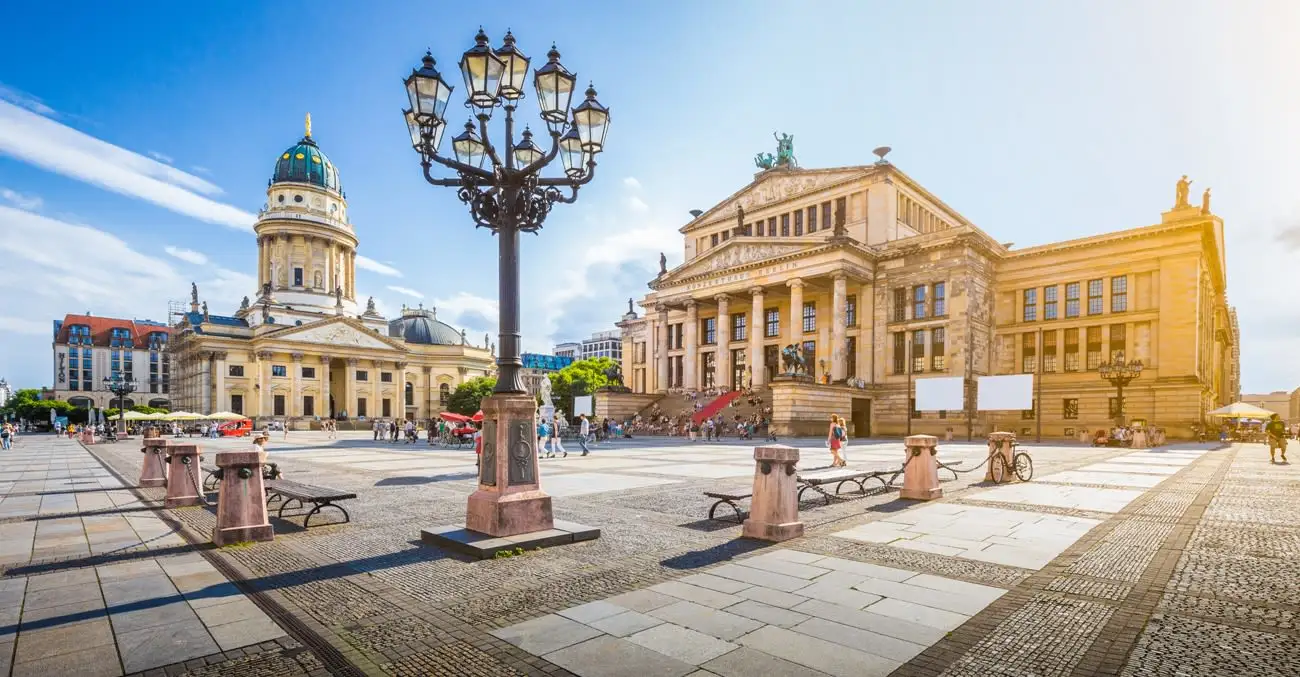
On this 3 hour tour, your guide will show you the highlights of Berlin and help you understand what makes this city so unique. Sites visited will include the boulevard Unter den Linden, the Gendarmenmarkt, Check Point Charlie, remnants of the Berlin Wall, Potsdamer Platz, the Holocaust Memorial, the Brandenburg Gate, and the Reichstag.
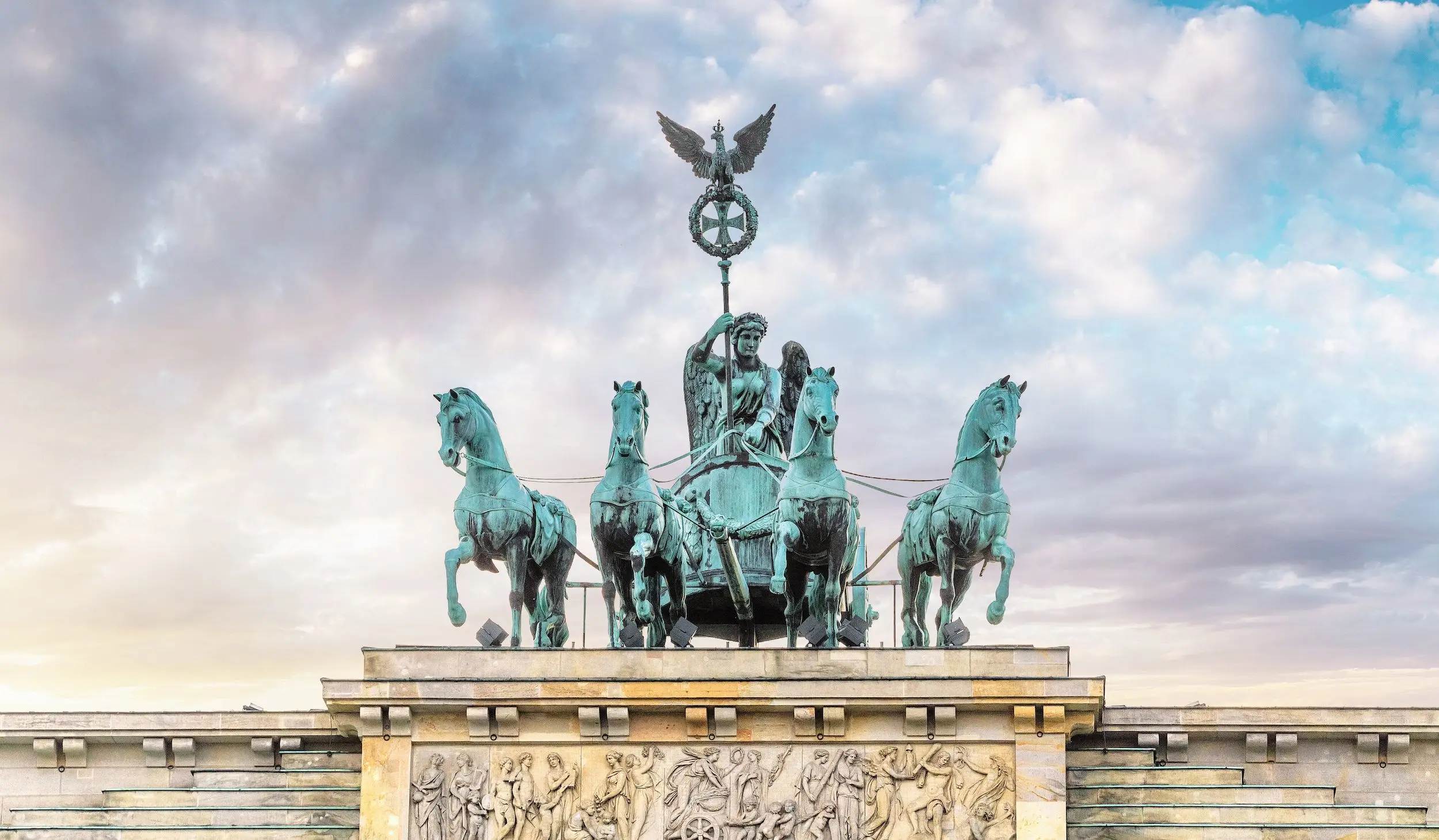
Quadriga. Hey, There's a Word to Know When Learning About this Historic Gate
Show More
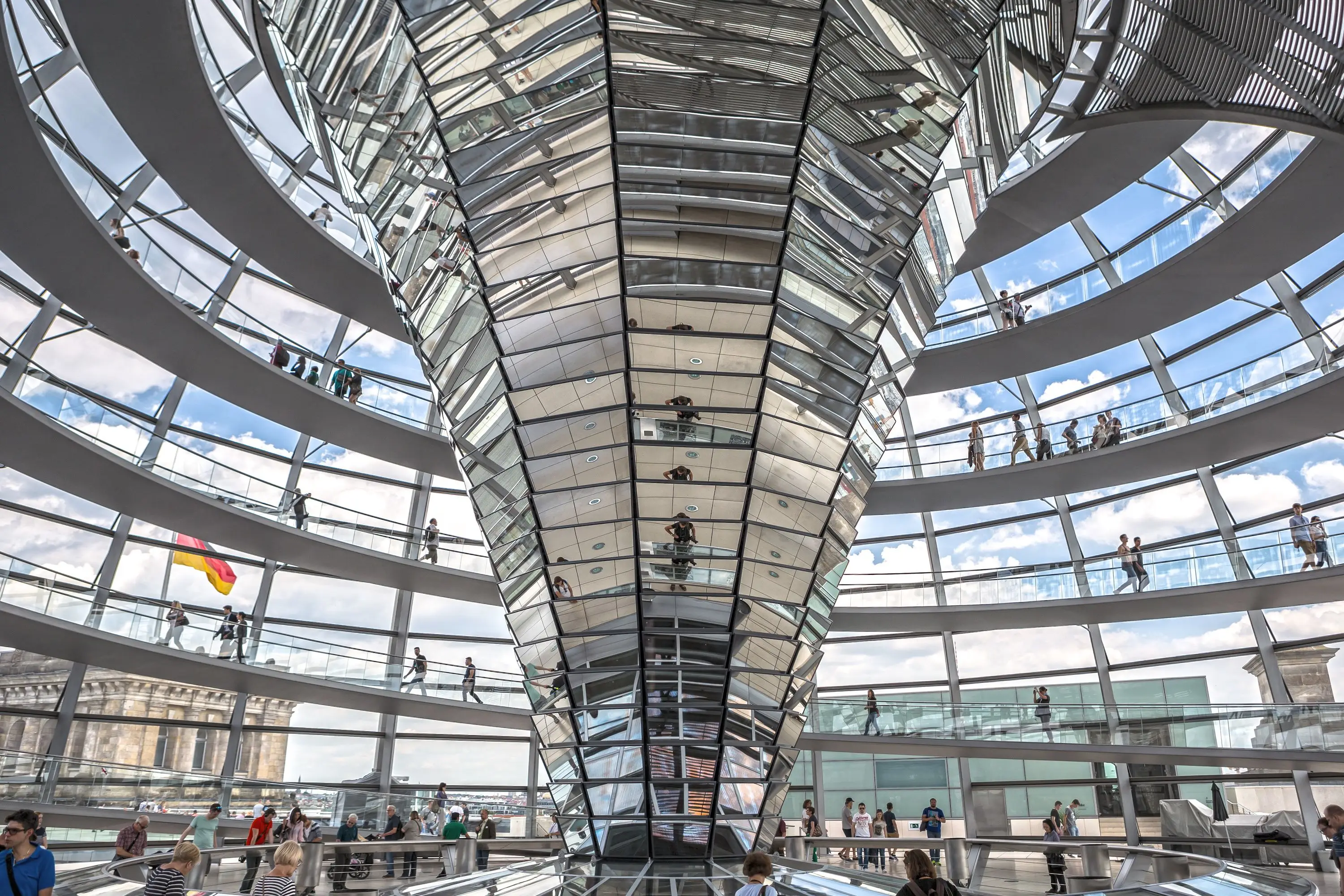
Make your way to the top of the dome enjoying amazing views and looking down at debating members of the German Parliament below.
Show More
Browse the gallery to see some of the highlights

Quadriga. Hey, There's a Word to Know When Learning About this Historic Gate
Show More
Make your way to the top of the dome enjoying amazing views and looking down at debating members of the German Parliament below.
Show More
Browse the gallery to see some of the highlights

Quadriga. Hey, There's a Word to Know When Learning About this Historic Gate
Show More
Day 2
Berlin

Brandenburg Gate
Highlight of Guided Walking Tour of BerlinQuadriga. Hey, There's a Word to Know When Learning About this Historic Gate
The Brandenburg Gate was built as a symbol of peace, perverted into a symbol of power by the Nazis, and became a symbol of division during the Cold War. Now, however, it is a symbol of reunification. Completed in 1791, it was topped by the quadriga, a chariot drawn by four horses driven by the goddess of peace. Napoleon seized the quadriga as a spoil of war, but after his defeat, it was returned to the city and met by cheering crowds along the way, transforming the goddess of peace into a goddess of victory, holding a Germanic cross.

Reichstag
Highlight of Guided Walking Tour of BerlinMake your way to the top of the dome enjoying amazing views and looking down at debating members of the German Parliament below.
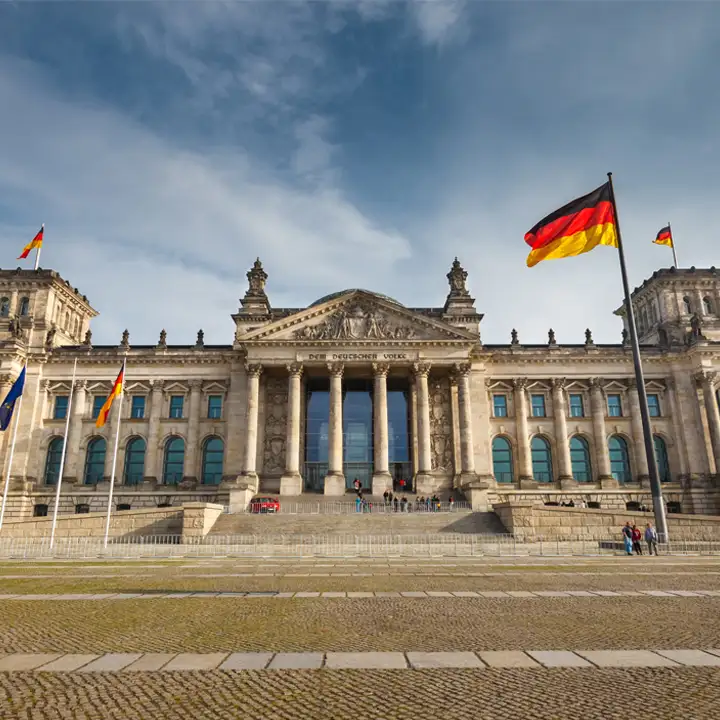
Officially, the Reichstag is actually the Bundestag, which means the federal parliament. The Reichstag was reduced to a ruined shell by arson in 1933 and by World War II fighting, but it was rebuilt with a striking egg-shaped glass dome. Visitors are given a free audio guide that discusses the building’s history and architecture, while also orientating you to the sites of Berlin. It is an excellent introduction to the city. Note that it is usually necessary to book well in advance!

Guided Walking Tour of Berlin
OverviewGuided Walking Tour of Berlin
On this 3 hour tour, your guide will show you the highlights of Berlin and help you understand what makes this city so unique. Sites visited will include the boulevard Unter den Linden, the Gendarmenmarkt, Check Point Charlie, remnants of the Berlin Wall, Potsdamer Platz, the Holocaust Memorial, the Brandenburg Gate, and the Reichstag.

Brandenburg Gate
Highlight of Guided Walking Tour of BerlinQuadriga. Hey, There's a Word to Know When Learning About this Historic Gate
The Brandenburg Gate was built as a symbol of peace, perverted into a symbol of power by the Nazis, and became a symbol of division during the Cold War. Now, however, it is a symbol of reunification. Completed in 1791, it was topped by the quadriga, a chariot drawn by four horses driven by the goddess of peace. Napoleon seized the quadriga as a spoil of war, but after his defeat, it was returned to the city and met by cheering crowds along the way, transforming the goddess of peace into a goddess of victory, holding a Germanic cross.

Reichstag
Highlight of Guided Walking Tour of BerlinMake your way to the top of the dome enjoying amazing views and looking down at debating members of the German Parliament below.
Officially, the Reichstag is actually the Bundestag, which means the federal parliament. The Reichstag was reduced to a ruined shell by arson in 1933 and by World War II fighting, but it was rebuilt with a striking egg-shaped glass dome. Visitors are given a free audio guide that discusses the building’s history and architecture, while also orientating you to the sites of Berlin. It is an excellent introduction to the city. Note that it is usually necessary to book well in advance!

Guided Walking Tour of Berlin
OverviewGuided Walking Tour of Berlin
On this 3 hour tour, your guide will show you the highlights of Berlin and help you understand what makes this city so unique. Sites visited will include the boulevard Unter den Linden, the Gendarmenmarkt, Check Point Charlie, remnants of the Berlin Wall, Potsdamer Platz, the Holocaust Memorial, the Brandenburg Gate, and the Reichstag.

Brandenburg Gate
Highlight of Guided Walking Tour of BerlinQuadriga. Hey, There's a Word to Know When Learning About this Historic Gate
The Brandenburg Gate was built as a symbol of peace, perverted into a symbol of power by the Nazis, and became a symbol of division during the Cold War. Now, however, it is a symbol of reunification. Completed in 1791, it was topped by the quadriga, a chariot drawn by four horses driven by the goddess of peace. Napoleon seized the quadriga as a spoil of war, but after his defeat, it was returned to the city and met by cheering crowds along the way, transforming the goddess of peace into a goddess of victory, holding a Germanic cross.

Day 3
Berlin
Day 3
Berlin
Morning to Late Afternoon
For most visitors, Potsdam means Sanssouci, Frederick the Great's palace and his majestically landscaped park of architectural treasures that once competed with Berlin as the grand Prussian capital. But there is much more to Potsdam than just Sanssouci. From taking a cruise through pristine lakes, exploring the charming city center, or wandering the numerous tranquil parks studded with fantastical palaces, visitors will be hard pressed to fit a visit to Potsdam into just one day. In fact many choose to rent a bike to fit more in, as well they should, as Potsdam is the perfect place to discover on a bicycle.

Visit Holland in this delightful quarter of Potsdam.
Show More
See how Frederick the Great lived in his beautiful baroque summer palace and gardens.
Show More
Tour a colossal palace building built by Frederick the Great as a demonstration of the Prussian state’s power and wealth.
Show More
Browse the gallery to see some of the highlights

Furtively cross the Bridge of Spies which once separated East and West Berlin
Show More
Visit Holland in this delightful quarter of Potsdam.
Show More
See how Frederick the Great lived in his beautiful baroque summer palace and gardens.
Show More
Tour a colossal palace building built by Frederick the Great as a demonstration of the Prussian state’s power and wealth.
Show More
Browse the gallery to see some of the highlights

Furtively cross the Bridge of Spies which once separated East and West Berlin
Show More
Visit Holland in this delightful quarter of Potsdam.
Show More
Day 3
Berlin

Dutch Quarter
Highlight of PotsdamVisit Holland in this delightful quarter of Potsdam.
The Prussian King Friedrich Wilhelm I - the Soldier King and the father of Frederick the Great - wanted to extend his garrison quarters in Potsdam and needed skilled Dutch workers. So he had the Dutch builders already in his service construct the 134 gabled, red-brick houses in Dutch style, attracting further Dutch immigrants. Nowadays, its streets contain galleries, cafes and antique shops, all you need for a lackadaisical Pottsdammer afternoon.

Sansscouci Palace
Highlight of PotsdamSee how Frederick the Great lived in his beautiful baroque summer palace and gardens.
In 1744 Frederick built a terraced garden in his Sanssouci Park to cultivate plums, figs and wine on Potsdam’s doorstep. But because the view was so exceptionally beautiful, the king decided to build a large and elegant summer residence above the terraces just a year later.

Neues Palais
Highlight of PotsdamTour a colossal palace building built by Frederick the Great as a demonstration of the Prussian state’s power and wealth.
Neues Palais contrasts hugely with the intimate and rather modest Sanssouci Palace, with its grand banquet halls, sumptuous galleries and regally designed suites, as well as a Baroque palace theater in the southern wing. The last imperial resident was Kaiser Wilhelm II, who fled from there after World War I with much of the palace's furnishings and content.

Potsdam
OverviewPotsdam
For most visitors, Potsdam means Sanssouci, Frederick the Great's palace and his majestically landscaped park of architectural treasures that once competed with Berlin as the grand Prussian capital. But there is much more to Potsdam than just Sanssouci. From taking a cruise through pristine lakes, exploring the charming city center, or wandering the numerous tranquil parks studded with fantastical palaces, visitors will be hard pressed to fit a visit to Potsdam into just one day. In fact many choose to rent a bike to fit more in, as well they should, as Potsdam is the perfect place to discover on a bicycle.

Bridge of Spies
Highlight of PotsdamFurtively cross the Bridge of Spies which once separated East and West Berlin
The Glienicke Bridge was the site of Cold War intrigue and drama, earning it the title role in the 2015 Tom Hanks movie, Bridge of Spies. The bridge was off-limits to citizens on both sides of the border and therefore it was the site of the famous prisoner exchange which brought captured American pilot Gary Powers home. In 1988 three citizens of Potsdam (then part of East Germany) spectacularly broke through the border in a truck.

Dutch Quarter
Highlight of PotsdamVisit Holland in this delightful quarter of Potsdam.
The Prussian King Friedrich Wilhelm I - the Soldier King and the father of Frederick the Great - wanted to extend his garrison quarters in Potsdam and needed skilled Dutch workers. So he had the Dutch builders already in his service construct the 134 gabled, red-brick houses in Dutch style, attracting further Dutch immigrants. Nowadays, its streets contain galleries, cafes and antique shops, all you need for a lackadaisical Pottsdammer afternoon.

Sansscouci Palace
Highlight of PotsdamSee how Frederick the Great lived in his beautiful baroque summer palace and gardens.
In 1744 Frederick built a terraced garden in his Sanssouci Park to cultivate plums, figs and wine on Potsdam’s doorstep. But because the view was so exceptionally beautiful, the king decided to build a large and elegant summer residence above the terraces just a year later.

Neues Palais
Highlight of PotsdamTour a colossal palace building built by Frederick the Great as a demonstration of the Prussian state’s power and wealth.
Neues Palais contrasts hugely with the intimate and rather modest Sanssouci Palace, with its grand banquet halls, sumptuous galleries and regally designed suites, as well as a Baroque palace theater in the southern wing. The last imperial resident was Kaiser Wilhelm II, who fled from there after World War I with much of the palace's furnishings and content.

Potsdam
OverviewPotsdam
For most visitors, Potsdam means Sanssouci, Frederick the Great's palace and his majestically landscaped park of architectural treasures that once competed with Berlin as the grand Prussian capital. But there is much more to Potsdam than just Sanssouci. From taking a cruise through pristine lakes, exploring the charming city center, or wandering the numerous tranquil parks studded with fantastical palaces, visitors will be hard pressed to fit a visit to Potsdam into just one day. In fact many choose to rent a bike to fit more in, as well they should, as Potsdam is the perfect place to discover on a bicycle.

Bridge of Spies
Highlight of PotsdamFurtively cross the Bridge of Spies which once separated East and West Berlin
The Glienicke Bridge was the site of Cold War intrigue and drama, earning it the title role in the 2015 Tom Hanks movie, Bridge of Spies. The bridge was off-limits to citizens on both sides of the border and therefore it was the site of the famous prisoner exchange which brought captured American pilot Gary Powers home. In 1988 three citizens of Potsdam (then part of East Germany) spectacularly broke through the border in a truck.

Dutch Quarter
Highlight of PotsdamVisit Holland in this delightful quarter of Potsdam.
The Prussian King Friedrich Wilhelm I - the Soldier King and the father of Frederick the Great - wanted to extend his garrison quarters in Potsdam and needed skilled Dutch workers. So he had the Dutch builders already in his service construct the 134 gabled, red-brick houses in Dutch style, attracting further Dutch immigrants. Nowadays, its streets contain galleries, cafes and antique shops, all you need for a lackadaisical Pottsdammer afternoon.

Day 4
Berlin to Prague
Day 4
Berlin to Prague
Morning
Once the hunting ground of the Prussian kings, the Tiergarten is Berlin’s most famous and expansive park. It is a wonderful escape from urban stress located in the very center of the city. You will discover beautiful forests, fields, and ponds, all easily reached through an extensive and well maintained network of trails. Some of Berlin's favorite beer gardens are also located in the park.

Take a Break in a Popular Beer Garden Nestled Within the Park.
Show More

Shop within the forest at Berlin’s best flea market.
Show More
Browse the gallery to see some of the highlights

Climb the historic column for a panoramic view of the city amidst a sea of green trees.
Show More
Take a Break in a Popular Beer Garden Nestled Within the Park.
Show More
Shop within the forest at Berlin’s best flea market.
Show More
Browse the gallery to see some of the highlights

Climb the historic column for a panoramic view of the city amidst a sea of green trees.
Show More
Day 4
Berlin to Prague

Café am Neuen See
Highlight of TiergartenTake a Break in a Popular Beer Garden Nestled Within the Park.
Even if you don’t feel like stopping for a drink or a meal, it is still worth a quick peek just to experience the atmosphere. The location is absolutely ideal, surrounded by forest and looking over the lake with its many paddle boaters. There's a formal sit-down café on the terrace and a self-service beer garden, where sharing benches is expected and completely normal.

Trödel Markt
Highlight of TiergartenShop within the forest at Berlin’s best flea market.
If you are looking for a unique purchase then this is the place. The market takes place every weekend from 10am-5pm. Discover art, family heirlooms, furniture, clothing, souvenirs, food, and more.

Tiergarten
OverviewTiergarten
Once the hunting ground of the Prussian kings, the Tiergarten is Berlin’s most famous and expansive park. It is a wonderful escape from urban stress located in the very center of the city. You will discover beautiful forests, fields, and ponds, all easily reached through an extensive and well maintained network of trails. Some of Berlin's favorite beer gardens are also located in the park.

Victory Column
Highlight of TiergartenClimb the historic column for a panoramic view of the city amidst a sea of green trees.
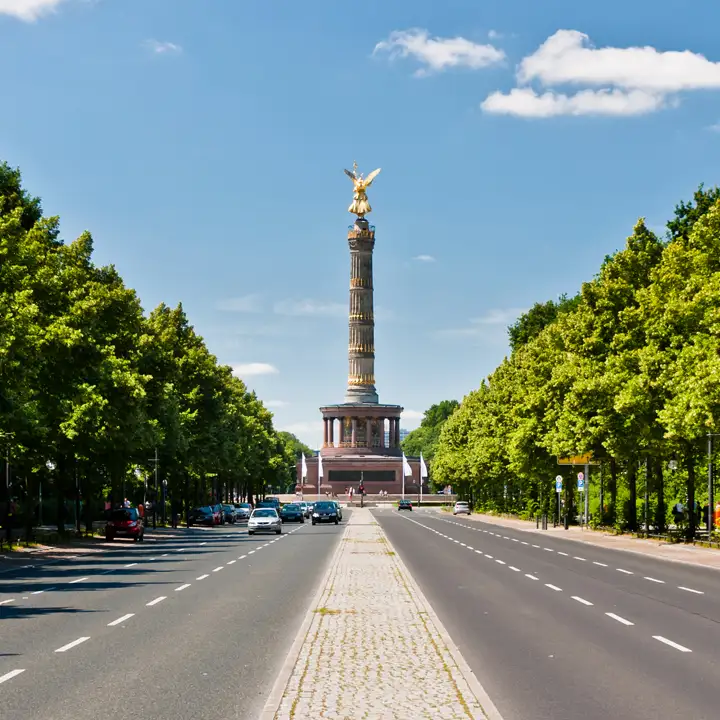
One of Berlin’s most familiar sights, the column commemorates victories over Denmark, Austria, and France during the mid-19th century. These victories enabled the founding of the German Empire in 1871. It was moved to the current location on the express orders of Hitler.

Café am Neuen See
Highlight of TiergartenTake a Break in a Popular Beer Garden Nestled Within the Park.
Even if you don’t feel like stopping for a drink or a meal, it is still worth a quick peek just to experience the atmosphere. The location is absolutely ideal, surrounded by forest and looking over the lake with its many paddle boaters. There's a formal sit-down café on the terrace and a self-service beer garden, where sharing benches is expected and completely normal.

Trödel Markt
Highlight of TiergartenShop within the forest at Berlin’s best flea market.
If you are looking for a unique purchase then this is the place. The market takes place every weekend from 10am-5pm. Discover art, family heirlooms, furniture, clothing, souvenirs, food, and more.

Tiergarten
OverviewTiergarten
Once the hunting ground of the Prussian kings, the Tiergarten is Berlin’s most famous and expansive park. It is a wonderful escape from urban stress located in the very center of the city. You will discover beautiful forests, fields, and ponds, all easily reached through an extensive and well maintained network of trails. Some of Berlin's favorite beer gardens are also located in the park.

Victory Column
Highlight of TiergartenClimb the historic column for a panoramic view of the city amidst a sea of green trees.
One of Berlin’s most familiar sights, the column commemorates victories over Denmark, Austria, and France during the mid-19th century. These victories enabled the founding of the German Empire in 1871. It was moved to the current location on the express orders of Hitler.

Day 5
Prague
Day 5
Prague
9:00 AM - 12:30 PM
On this charming guided walk, you will explore the Prague Castle, the largest castle complex in all of Europe. To reach the castle you will trace the Royal Coronation Route and cross the Charles Bridge, whose “speaking stones” reveal the amazing and often cruel history that occurred there. Your tour guide will then take you either through the castle courtyards and into the dramatic St. Vitus Cathedral in the center of the castle complex, or through the upper part of the castle district around the oversized palaces of the old Catholic nobility and the top of the Castle Steps for incomparable views over the red rooftops of the Little Quarter.

Cross the river dividing Prague's most historic neighborhoods, and experience one of Europe's most iconic landmarks.
Show More
See a historic wall that has been covered in John Lennon-inspired graffiti since Communist days.
Show More
Browse the gallery to see some of the highlights

Prague Castle is one of the main attractions in Prague and is also the largest castle complex in the world.
Show More
Cross the river dividing Prague's most historic neighborhoods, and experience one of Europe's most iconic landmarks.
Show More
See a historic wall that has been covered in John Lennon-inspired graffiti since Communist days.
Show More
Browse the gallery to see some of the highlights

Prague Castle is one of the main attractions in Prague and is also the largest castle complex in the world.
Show More
Day 5
Prague

Charles Bridge
Highlight of Royal Route Guided TourCross the river dividing Prague's most historic neighborhoods, and experience one of Europe's most iconic landmarks.
Bridge construction began in 1357 under King Charles IV (hence the name), and it was the only bridge across the Vltava River until 1841. 30 baroque statues of saints line the bridge, and it is filled with street artists and entertainers. Not to be missed.

Maltese Square & Lennon Wall
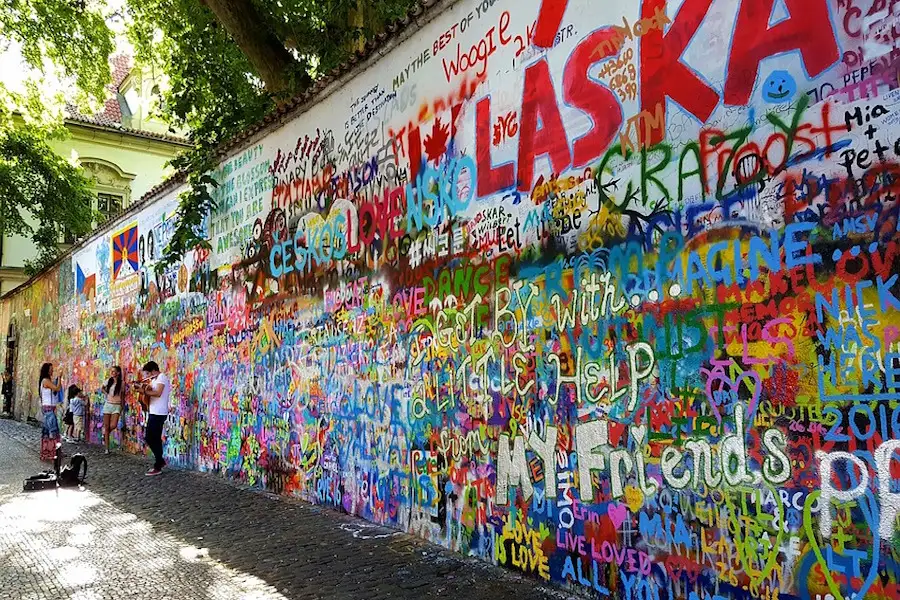
Highlight of Royal Route Guided TourSee a historic wall that has been covered in John Lennon-inspired graffiti since Communist days.
The wall has been covered in graffiti since the 1960s, and during Communism anti-regime sentiment was common. John Lennon's assassination inspired grafitti reflecting his song, Imagine, which earned the wall its current moniker. It is now a favorite gathering place for tourists, and musicians sometimes congregate there as well. Just around the corner is the Maltese Square, which is one of Prague's more quaint and relaxed public spaces, despite being just off the main tourist route.

Royal Route Guided Tour
OverviewRoyal Route Guided Tour
On this charming guided walk, you will explore the Prague Castle, the largest castle complex in all of Europe. To reach the castle you will trace the Royal Coronation Route and cross the Charles Bridge, whose “speaking stones” reveal the amazing and often cruel history that occurred there. Your tour guide will then take you either through the castle courtyards and into the dramatic St. Vitus Cathedral in the center of the castle complex, or through the upper part of the castle district around the oversized palaces of the old Catholic nobility and the top of the Castle Steps for incomparable views over the red rooftops of the Little Quarter.

Prague Castle
Highlight of Royal Route Guided TourPrague Castle is one of the main attractions in Prague and is also the largest castle complex in the world.
The Prague Castle is the largest castle complex in the world with structures dating back to the 9th century. The St Vitus Cathedral and Basilica of St George can be found within the castle walls. The Prague Castle also includes several gardens, palaces, and a monastery. This castle was the seat of power for the Kings of Bohemia, Holy Roman Emperors, and presidents of former Czechoslovakia. Prague Castle is a UNESCO world heritage site and is one of the most visited places in the country.

Charles Bridge
Highlight of Royal Route Guided TourCross the river dividing Prague's most historic neighborhoods, and experience one of Europe's most iconic landmarks.
Bridge construction began in 1357 under King Charles IV (hence the name), and it was the only bridge across the Vltava River until 1841. 30 baroque statues of saints line the bridge, and it is filled with street artists and entertainers. Not to be missed.

Maltese Square & Lennon Wall
Highlight of Royal Route Guided TourSee a historic wall that has been covered in John Lennon-inspired graffiti since Communist days.
The wall has been covered in graffiti since the 1960s, and during Communism anti-regime sentiment was common. John Lennon's assassination inspired grafitti reflecting his song, Imagine, which earned the wall its current moniker. It is now a favorite gathering place for tourists, and musicians sometimes congregate there as well. Just around the corner is the Maltese Square, which is one of Prague's more quaint and relaxed public spaces, despite being just off the main tourist route.

Royal Route Guided Tour
OverviewRoyal Route Guided Tour
On this charming guided walk, you will explore the Prague Castle, the largest castle complex in all of Europe. To reach the castle you will trace the Royal Coronation Route and cross the Charles Bridge, whose “speaking stones” reveal the amazing and often cruel history that occurred there. Your tour guide will then take you either through the castle courtyards and into the dramatic St. Vitus Cathedral in the center of the castle complex, or through the upper part of the castle district around the oversized palaces of the old Catholic nobility and the top of the Castle Steps for incomparable views over the red rooftops of the Little Quarter.

Prague Castle
Highlight of Royal Route Guided TourPrague Castle is one of the main attractions in Prague and is also the largest castle complex in the world.
The Prague Castle is the largest castle complex in the world with structures dating back to the 9th century. The St Vitus Cathedral and Basilica of St George can be found within the castle walls. The Prague Castle also includes several gardens, palaces, and a monastery. This castle was the seat of power for the Kings of Bohemia, Holy Roman Emperors, and presidents of former Czechoslovakia. Prague Castle is a UNESCO world heritage site and is one of the most visited places in the country.

Day 6
Prague
Day 6
Prague
Morning to Afternoon
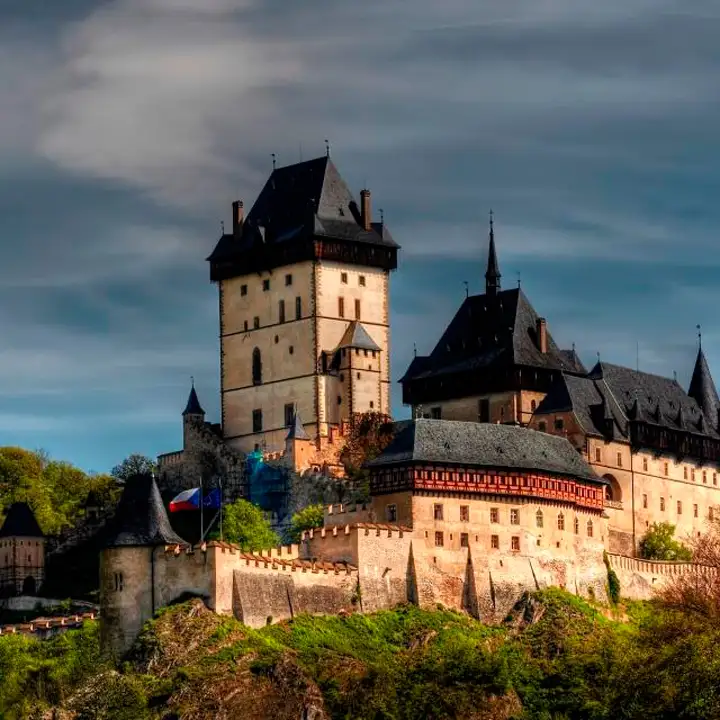
Karlštejn, i.e. Charles' Stone Castle, is the most famous castle in the Czech Republic. The fairy-tale perfect castle was founded by King Charles IV in 1348 to guard his royal treasures. It's massive towers and walls are spread out over a series of rocky peaks above the Berounka River and commands striking views of the surrounding hills.

Browse the gallery to see some of the highlights

Tour a closely-guarded and jewel-encrusted chapel decorated with amazing medieval art.
Show More
Browse the gallery to see some of the highlights

Tour a closely-guarded and jewel-encrusted chapel decorated with amazing medieval art.
Show More
Browse the gallery to see some of the highlights

Tour a closely-guarded and jewel-encrusted chapel decorated with amazing medieval art.
Show More
Day 6
Prague

Karlštejn Castle
OverviewKarlštejn Castle
Karlštejn, i.e. Charles' Stone Castle, is the most famous castle in the Czech Republic. The fairy-tale perfect castle was founded by King Charles IV in 1348 to guard his royal treasures. It's massive towers and walls are spread out over a series of rocky peaks above the Berounka River and commands striking views of the surrounding hills.

Chapel of the Holy Rood
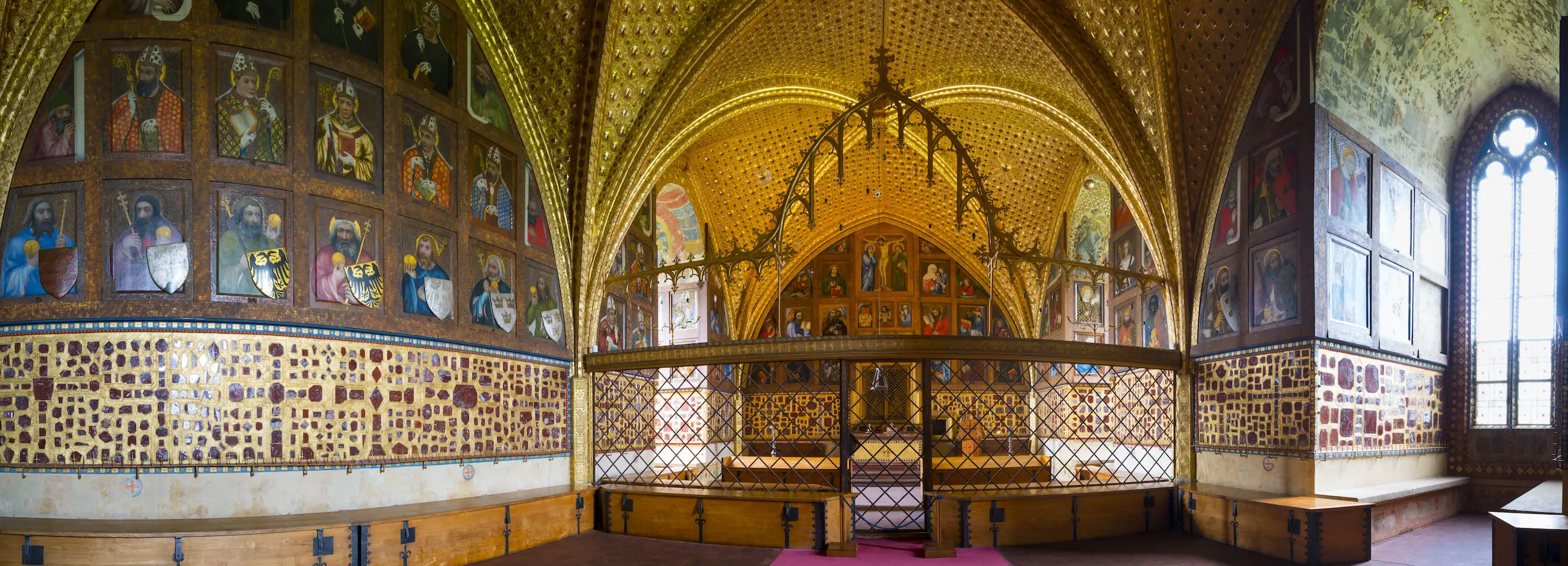
Highlight of Karlštejn CastleTour a closely-guarded and jewel-encrusted chapel decorated with amazing medieval art.
The most important and impressive part of the castle, the Chapel of the Holy Rood, is open only to special guided tours due to the fact that its walls are literally covered in precious jewels.

Karlštejn Castle
OverviewKarlštejn Castle
Karlštejn, i.e. Charles' Stone Castle, is the most famous castle in the Czech Republic. The fairy-tale perfect castle was founded by King Charles IV in 1348 to guard his royal treasures. It's massive towers and walls are spread out over a series of rocky peaks above the Berounka River and commands striking views of the surrounding hills.

Chapel of the Holy Rood
Highlight of Karlštejn CastleTour a closely-guarded and jewel-encrusted chapel decorated with amazing medieval art.
The most important and impressive part of the castle, the Chapel of the Holy Rood, is open only to special guided tours due to the fact that its walls are literally covered in precious jewels.

Karlštejn Castle
OverviewKarlštejn Castle
Karlštejn, i.e. Charles' Stone Castle, is the most famous castle in the Czech Republic. The fairy-tale perfect castle was founded by King Charles IV in 1348 to guard his royal treasures. It's massive towers and walls are spread out over a series of rocky peaks above the Berounka River and commands striking views of the surrounding hills.

Chapel of the Holy Rood
Highlight of Karlštejn CastleTour a closely-guarded and jewel-encrusted chapel decorated with amazing medieval art.
The most important and impressive part of the castle, the Chapel of the Holy Rood, is open only to special guided tours due to the fact that its walls are literally covered in precious jewels.

Day 7
Prague to Vienna
Day 7
Prague to Vienna
Morning/Mid-Day
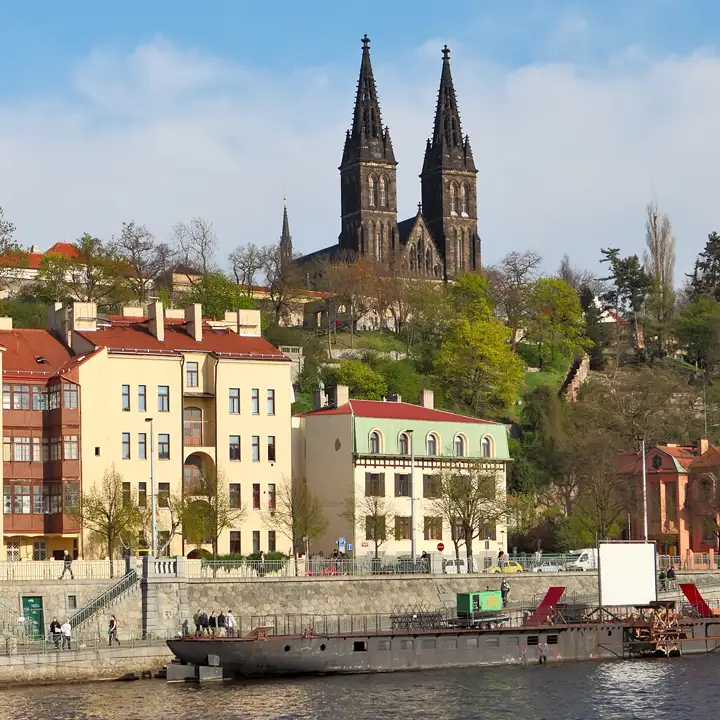
The castle of Vyšehrad was the seat of Bohemia's kings from the 11th to the 12th centuries. Due to its strategic position on a hill overlooking the Vltava River and Prague, it became an important army garrison in the 17th century, and it was transformed into a fortress with huge walls, gates, and ramparts. Walking along these ramparts will offer you wonderful views of the city and river. The interior of the fortress is now given over to a pleasant and quiet park which is a favorite of locals.
Wander in a graveyard where many prominent Czechs are buried, such as famed composers Dvořák & Smětana.
Show More
Enjoy stunning city views from atop the fortress walls.
Show More
Browse the gallery to see some of the highlights

Venture within the fortress's massive 17th-century walls and gates.
Show More
Wander in a graveyard where many prominent Czechs are buried, such as famed composers Dvořák & Smětana.
Show More
Enjoy stunning city views from atop the fortress walls.
Show More
Browse the gallery to see some of the highlights

Venture within the fortress's massive 17th-century walls and gates.
Show More
Day 7
Prague to Vienna

Vyšehrad Cemetery
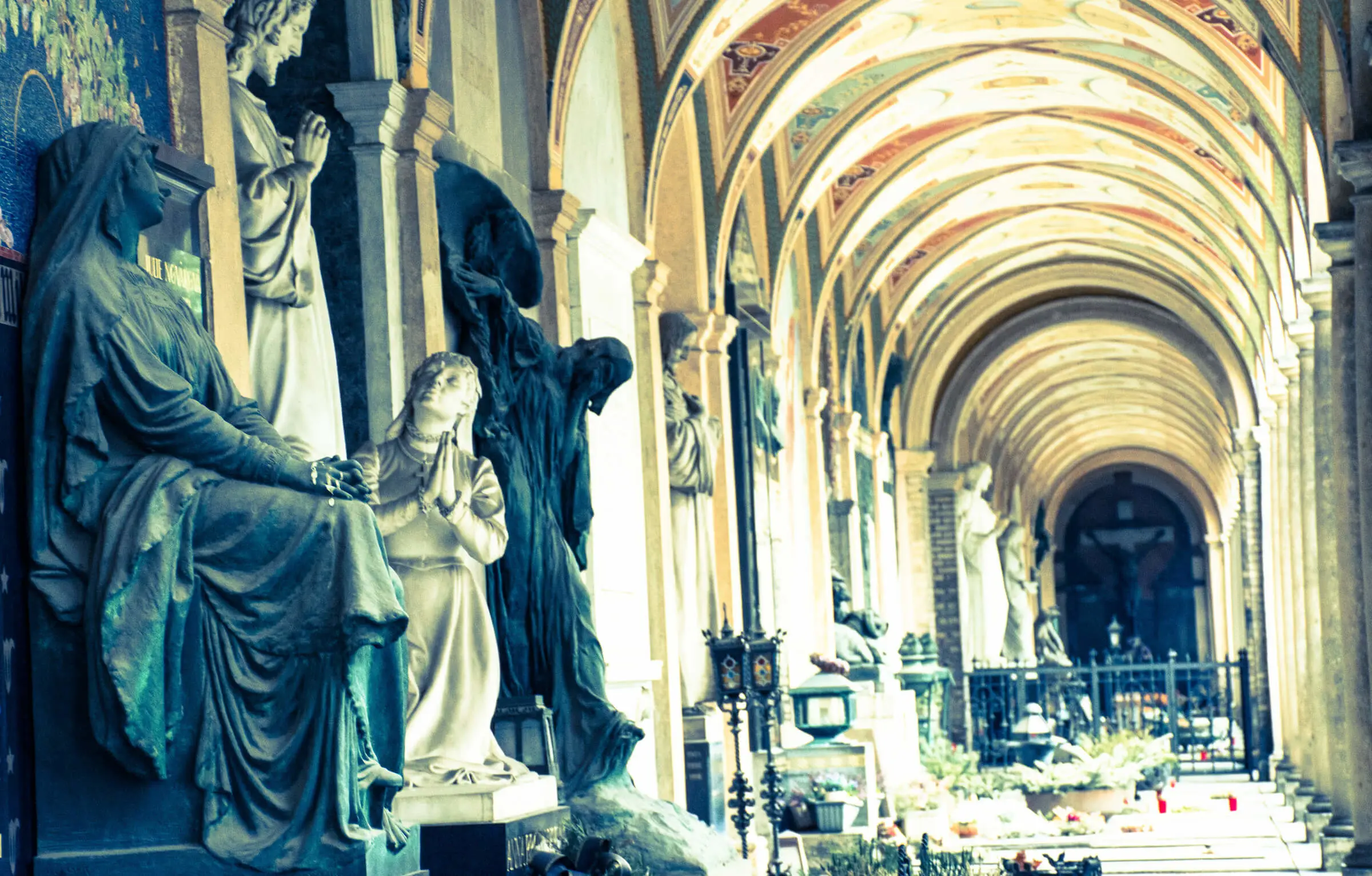
Highlight of Vyšehrad FortressWander in a graveyard where many prominent Czechs are buried, such as famed composers Dvořák & Smětana.
The cemetery is filled with many tombs which are works of art in themselves, including several arcades with beautiful art-nouveau frescoes. The monumental Slavin tomb is a sort of pantheon of the Czech people, with over 55 prominent persons buried within it. Dvořák and Smětana have their own more modest graves.

Fortress Walls Viewpoint
Highlight of Vyšehrad FortressEnjoy stunning city views from atop the fortress walls.
Prague Castle and most of the city can be seen from above the cavernous Gorlice Hall. A walk along the fortress walls is a delightful experience, as you will enjoy numerous excellent vantage points on all sides of the fortress, enjoying Prague from a different perspective without all the crowds.

Vyšehrad Fortress
OverviewVyšehrad Fortress
The castle of Vyšehrad was the seat of Bohemia's kings from the 11th to the 12th centuries. Due to its strategic position on a hill overlooking the Vltava River and Prague, it became an important army garrison in the 17th century, and it was transformed into a fortress with huge walls, gates, and ramparts. Walking along these ramparts will offer you wonderful views of the city and river. The interior of the fortress is now given over to a pleasant and quiet park which is a favorite of locals.

Brick Gate and Casemates
Highlight of Vyšehrad FortressVenture within the fortress's massive 17th-century walls and gates.
A tour through the Brick Gate on the fortress's north side will take you through the narrow underground passageways and casemates of the fortress. You will see a historical exhibit on Vyšehrad as well as the underground Gorlice Hall, where the original statues from the Charles Bridge are stored for safe-keeping (many of the statues on the bridge are copies).

Vyšehrad Cemetery
Highlight of Vyšehrad FortressWander in a graveyard where many prominent Czechs are buried, such as famed composers Dvořák & Smětana.
The cemetery is filled with many tombs which are works of art in themselves, including several arcades with beautiful art-nouveau frescoes. The monumental Slavin tomb is a sort of pantheon of the Czech people, with over 55 prominent persons buried within it. Dvořák and Smětana have their own more modest graves.

Fortress Walls Viewpoint
Highlight of Vyšehrad FortressEnjoy stunning city views from atop the fortress walls.
Prague Castle and most of the city can be seen from above the cavernous Gorlice Hall. A walk along the fortress walls is a delightful experience, as you will enjoy numerous excellent vantage points on all sides of the fortress, enjoying Prague from a different perspective without all the crowds.

Vyšehrad Fortress
OverviewVyšehrad Fortress
The castle of Vyšehrad was the seat of Bohemia's kings from the 11th to the 12th centuries. Due to its strategic position on a hill overlooking the Vltava River and Prague, it became an important army garrison in the 17th century, and it was transformed into a fortress with huge walls, gates, and ramparts. Walking along these ramparts will offer you wonderful views of the city and river. The interior of the fortress is now given over to a pleasant and quiet park which is a favorite of locals.

Brick Gate and Casemates
Highlight of Vyšehrad FortressVenture within the fortress's massive 17th-century walls and gates.
A tour through the Brick Gate on the fortress's north side will take you through the narrow underground passageways and casemates of the fortress. You will see a historical exhibit on Vyšehrad as well as the underground Gorlice Hall, where the original statues from the Charles Bridge are stored for safe-keeping (many of the statues on the bridge are copies).

Day 8
Vienna
Day 8
Vienna
1:45 PM - 4:15 PM
This tour takes you back in history to explore the Vienna that stood within the old city walls. You will learn about the humble beginnings of Vienna before it became the capital of a great empire and one of the most important cities in Europe. You will discover how Vienna's early inhabitants lived and how they left their mark on the city and its beautiful Medieval, Renaissance, and Baroque architecture.


Day 8
Vienna

Guided Walk of the Inner City
OverviewGuided Walk of the Inner City
This tour takes you back in history to explore the Vienna that stood within the old city walls. You will learn about the humble beginnings of Vienna before it became the capital of a great empire and one of the most important cities in Europe. You will discover how Vienna's early inhabitants lived and how they left their mark on the city and its beautiful Medieval, Renaissance, and Baroque architecture.

Guided Walk of the Inner City
OverviewGuided Walk of the Inner City
This tour takes you back in history to explore the Vienna that stood within the old city walls. You will learn about the humble beginnings of Vienna before it became the capital of a great empire and one of the most important cities in Europe. You will discover how Vienna's early inhabitants lived and how they left their mark on the city and its beautiful Medieval, Renaissance, and Baroque architecture.

Guided Walk of the Inner City
OverviewGuided Walk of the Inner City
This tour takes you back in history to explore the Vienna that stood within the old city walls. You will learn about the humble beginnings of Vienna before it became the capital of a great empire and one of the most important cities in Europe. You will discover how Vienna's early inhabitants lived and how they left their mark on the city and its beautiful Medieval, Renaissance, and Baroque architecture.

Guided Walk of the Inner City
OverviewGuided Walk of the Inner City
This tour takes you back in history to explore the Vienna that stood within the old city walls. You will learn about the humble beginnings of Vienna before it became the capital of a great empire and one of the most important cities in Europe. You will discover how Vienna's early inhabitants lived and how they left their mark on the city and its beautiful Medieval, Renaissance, and Baroque architecture.

Guided Walk of the Inner City
OverviewGuided Walk of the Inner City
This tour takes you back in history to explore the Vienna that stood within the old city walls. You will learn about the humble beginnings of Vienna before it became the capital of a great empire and one of the most important cities in Europe. You will discover how Vienna's early inhabitants lived and how they left their mark on the city and its beautiful Medieval, Renaissance, and Baroque architecture.

Day 9
Vienna
Day 9
Vienna
Early Morning to Early Evening
A one-and-a-half-hour train ride from Vienna brings you to the town of Melk, where you can tour the vast Melk Abbey. From there you can begin a 22-mile cruise through the Wachau Valley, considered the most beautiful stretch of the entire Danube River. You'll pass medieval castle ruins, hills covered in vineyards, and several charming villages, where you can debark to try some wine or take a hike up to a castle. The valley is also a perfect destination for cyclers and winery tours.

Stop to taste the wine in a postcard-pretty town surrounded by vineyards.
Show More
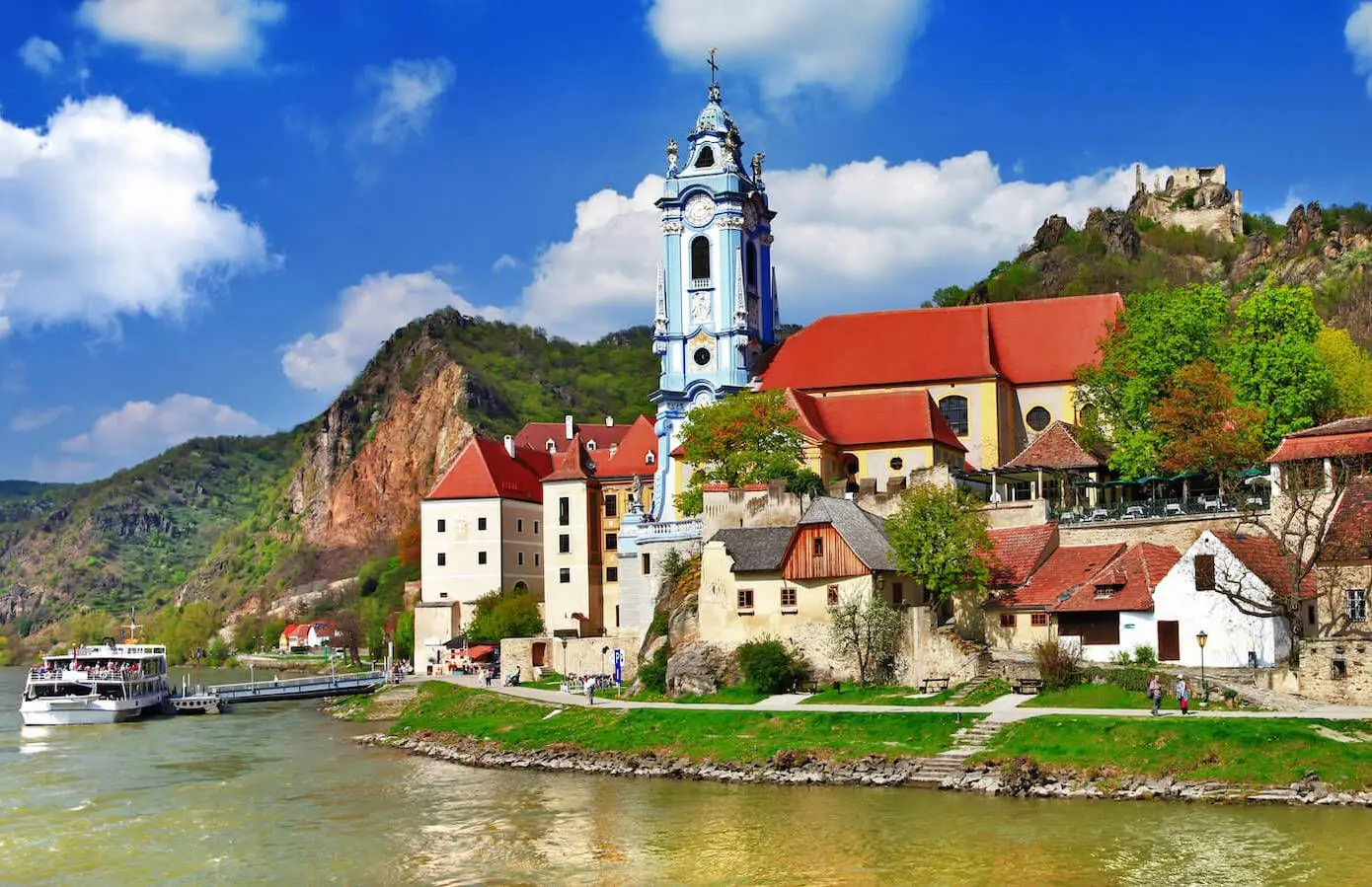
Explore the twisting narrow lanes of this delightful monastery town.
Show More
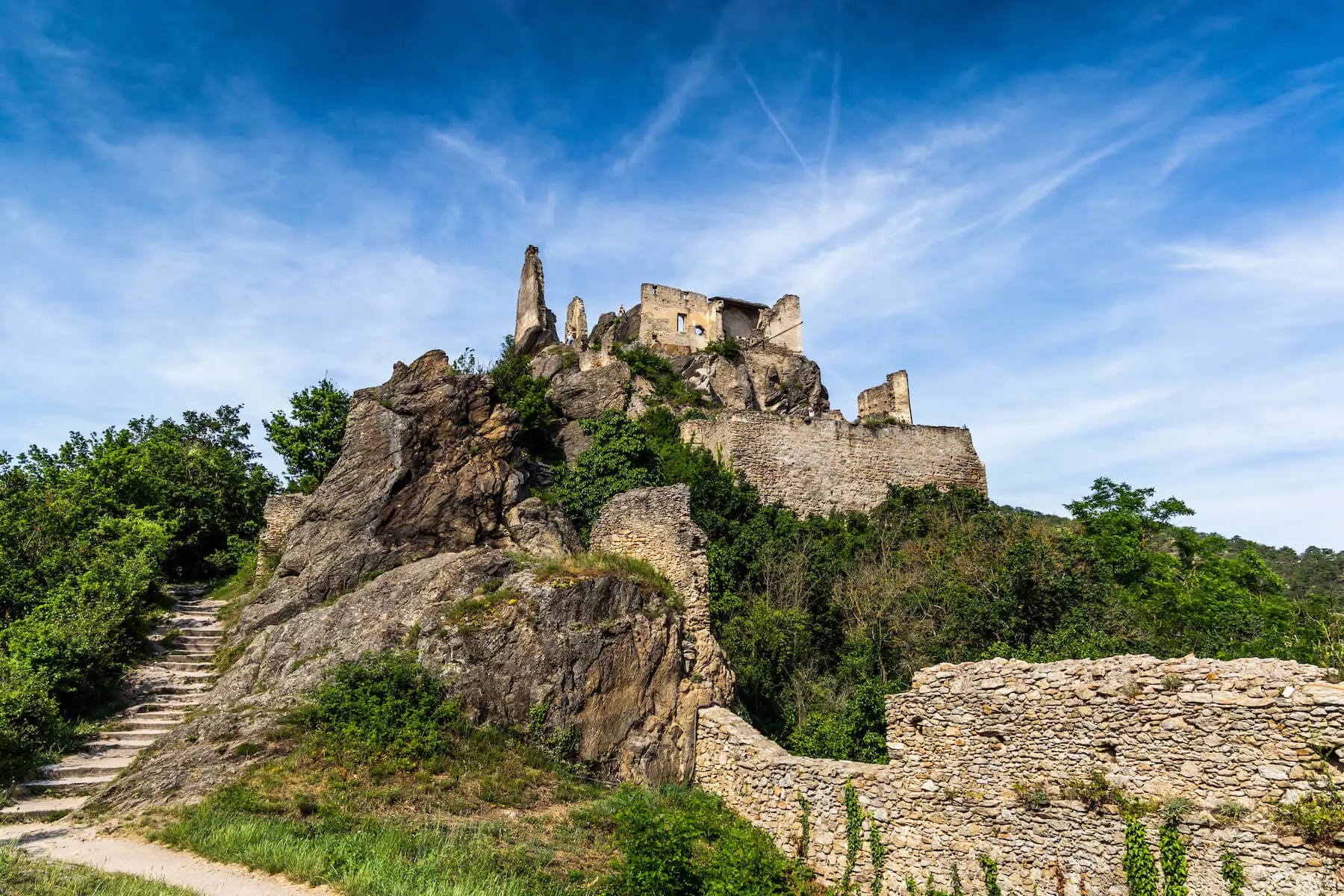
Hike to the dramatic ruins of a medieval castle built in 1100's.
Show More
Browse the gallery to see some of the highlights

Tour a huge and splendid Baroque monastery.
Show More
Stop to taste the wine in a postcard-pretty town surrounded by vineyards.
Show More
Explore the twisting narrow lanes of this delightful monastery town.
Show More
Hike to the dramatic ruins of a medieval castle built in 1100's.
Show More
Browse the gallery to see some of the highlights

Tour a huge and splendid Baroque monastery.
Show More
Stop to taste the wine in a postcard-pretty town surrounded by vineyards.
Show More
Day 9
Vienna

Spitz
Highlight of Wachau ValleyStop to taste the wine in a postcard-pretty town surrounded by vineyards.
Spitz is a favorite stop due to its bucolic atmosphere and abundance of wine taverns and restaurants. It is also home to the Tausendeimerberg or "House of a Thousand Buckets" (so named for the abundance of wine fields) and the castle ruins of Hinterhaus, which make for a nice (if steep) hike from the village.

Dürnstein
Highlight of Wachau ValleyExplore the twisting narrow lanes of this delightful monastery town.
Named for the castle that overlooks it, Dürnstein is probably the most-visited stop in the Wachau valley. Reached by an ancient tunnel leading from the boat docks, it is well-known for its wine as well as the beautiful blue church tower of its Augustinian monastery.

Dürnstein Castle Ruins
Highlight of Wachau ValleyHike to the dramatic ruins of a medieval castle built in 1100's.
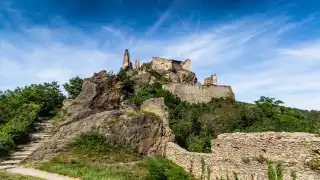
The hike leading to the castle is steep, but the amazing view you are rewarded with makes it all worth while. The fascinating ruins are extensive and can be freely explored. The castle was made famous by its most illustrious prisoner, King Richard the Lionhearted of England, who was held there for ransom.

Wachau Valley
OverviewWachau Valley
A one-and-a-half-hour train ride from Vienna brings you to the town of Melk, where you can tour the vast Melk Abbey. From there you can begin a 22-mile cruise through the Wachau Valley, considered the most beautiful stretch of the entire Danube River. You'll pass medieval castle ruins, hills covered in vineyards, and several charming villages, where you can debark to try some wine or take a hike up to a castle. The valley is also a perfect destination for cyclers and winery tours.

Melk Abbey
Highlight of Wachau ValleyTour a huge and splendid Baroque monastery.
Founded in 1089 when the Austrian duke gave one of his castles to Benedictine monks, Melk Abbey is now both a place of pilgrimage and a major tourist attraction. Visitors come for the museum of religious artifacts, the jaw-dropping library, and the sublime church. The town square below the abbey is also a great place for a meal or wine.

Spitz
Highlight of Wachau ValleyStop to taste the wine in a postcard-pretty town surrounded by vineyards.
Spitz is a favorite stop due to its bucolic atmosphere and abundance of wine taverns and restaurants. It is also home to the Tausendeimerberg or "House of a Thousand Buckets" (so named for the abundance of wine fields) and the castle ruins of Hinterhaus, which make for a nice (if steep) hike from the village.

Dürnstein
Highlight of Wachau ValleyExplore the twisting narrow lanes of this delightful monastery town.
Named for the castle that overlooks it, Dürnstein is probably the most-visited stop in the Wachau valley. Reached by an ancient tunnel leading from the boat docks, it is well-known for its wine as well as the beautiful blue church tower of its Augustinian monastery.

Dürnstein Castle Ruins
Highlight of Wachau ValleyHike to the dramatic ruins of a medieval castle built in 1100's.
The hike leading to the castle is steep, but the amazing view you are rewarded with makes it all worth while. The fascinating ruins are extensive and can be freely explored. The castle was made famous by its most illustrious prisoner, King Richard the Lionhearted of England, who was held there for ransom.

Wachau Valley
OverviewWachau Valley
A one-and-a-half-hour train ride from Vienna brings you to the town of Melk, where you can tour the vast Melk Abbey. From there you can begin a 22-mile cruise through the Wachau Valley, considered the most beautiful stretch of the entire Danube River. You'll pass medieval castle ruins, hills covered in vineyards, and several charming villages, where you can debark to try some wine or take a hike up to a castle. The valley is also a perfect destination for cyclers and winery tours.

Melk Abbey
Highlight of Wachau ValleyTour a huge and splendid Baroque monastery.
Founded in 1089 when the Austrian duke gave one of his castles to Benedictine monks, Melk Abbey is now both a place of pilgrimage and a major tourist attraction. Visitors come for the museum of religious artifacts, the jaw-dropping library, and the sublime church. The town square below the abbey is also a great place for a meal or wine.

Spitz
Highlight of Wachau ValleyStop to taste the wine in a postcard-pretty town surrounded by vineyards.
Spitz is a favorite stop due to its bucolic atmosphere and abundance of wine taverns and restaurants. It is also home to the Tausendeimerberg or "House of a Thousand Buckets" (so named for the abundance of wine fields) and the castle ruins of Hinterhaus, which make for a nice (if steep) hike from the village.

Day 10
Vienna
Day 10
Vienna
Early Morning/Morning
The magnificent Baroque palace of Schönbrunn is most famously associated with Empress Maria Theresa, who lived here surrounded by 16 little archdukes and duchesses who also happened to be her children. On your tour of the palace, you will see how Maria Theresa and other past imperial residents lived. No visit is complete without a stroll in the vast gardens surrounding the palace.

Join local families enjoying one of Europe's best zoos.
Show More
Get lost in the huge imperial gardens.
Show More
Browse the gallery to see some of the highlights

Join local families enjoying one of Europe's best zoos.
Show More
Get lost in the huge imperial gardens.
Show More
Browse the gallery to see some of the highlights

Join local families enjoying one of Europe's best zoos.
Show More
Day 10
Vienna

Schönbrunn Zoo
Highlight of Schönbrunn PalaceJoin local families enjoying one of Europe's best zoos.
With an entrance directly connected to the Schönbrunn palace gardens, visiting the zoo can be a great addition to any trip to the palace. Founded as an imperial menagerie in 1752, it is the oldest continually operated zoo in the world, and today is home to many rare species such as giant pandas.

Schönbrunn Gardens
Highlight of Schönbrunn PalaceGet lost in the huge imperial gardens.
The beautiful park is a mix of formal gardens and woodlands, and is dotted with enchanting statues & fountains, including a massive fountain of Neptune. The Gloriette pavilion sits on a rise opposite the palace and commands a wonderful view. Kids will love the labyrinth, racing to find the tower at the center of the maze.

Schönbrunn Palace
OverviewSchönbrunn Palace
The magnificent Baroque palace of Schönbrunn is most famously associated with Empress Maria Theresa, who lived here surrounded by 16 little archdukes and duchesses who also happened to be her children. On your tour of the palace, you will see how Maria Theresa and other past imperial residents lived. No visit is complete without a stroll in the vast gardens surrounding the palace.

Schönbrunn Zoo
Highlight of Schönbrunn PalaceJoin local families enjoying one of Europe's best zoos.
With an entrance directly connected to the Schönbrunn palace gardens, visiting the zoo can be a great addition to any trip to the palace. Founded as an imperial menagerie in 1752, it is the oldest continually operated zoo in the world, and today is home to many rare species such as giant pandas.

Schönbrunn Gardens
Highlight of Schönbrunn PalaceGet lost in the huge imperial gardens.
The beautiful park is a mix of formal gardens and woodlands, and is dotted with enchanting statues & fountains, including a massive fountain of Neptune. The Gloriette pavilion sits on a rise opposite the palace and commands a wonderful view. Kids will love the labyrinth, racing to find the tower at the center of the maze.

Schönbrunn Palace
OverviewSchönbrunn Palace
The magnificent Baroque palace of Schönbrunn is most famously associated with Empress Maria Theresa, who lived here surrounded by 16 little archdukes and duchesses who also happened to be her children. On your tour of the palace, you will see how Maria Theresa and other past imperial residents lived. No visit is complete without a stroll in the vast gardens surrounding the palace.

Schönbrunn Zoo
Highlight of Schönbrunn PalaceJoin local families enjoying one of Europe's best zoos.
With an entrance directly connected to the Schönbrunn palace gardens, visiting the zoo can be a great addition to any trip to the palace. Founded as an imperial menagerie in 1752, it is the oldest continually operated zoo in the world, and today is home to many rare species such as giant pandas.

Day 11
Depart Vienna
Day 11
Depart Vienna
To Be Determined
Vienna taxis are generally reliable and honest, so taking a taxi is cheaper than a pre-arranged transfer. Your hotel will be happy to arrange a pick up for you. If you are picked up three hours prior to departure, you should have plenty of time to catch your flight. If you are leaving during rush hour, you may want to budget an extra fifteen minutes or so.


Day 11
Depart Vienna

Taxi Transfer to Vienna Airport
OverviewTaxi Transfer to Vienna Airport
Vienna taxis are generally reliable and honest, so taking a taxi is cheaper than a pre-arranged transfer. Your hotel will be happy to arrange a pick up for you. If you are picked up three hours prior to departure, you should have plenty of time to catch your flight. If you are leaving during rush hour, you may want to budget an extra fifteen minutes or so.

Taxi Transfer to Vienna Airport
OverviewTaxi Transfer to Vienna Airport
Vienna taxis are generally reliable and honest, so taking a taxi is cheaper than a pre-arranged transfer. Your hotel will be happy to arrange a pick up for you. If you are picked up three hours prior to departure, you should have plenty of time to catch your flight. If you are leaving during rush hour, you may want to budget an extra fifteen minutes or so.

Taxi Transfer to Vienna Airport
OverviewTaxi Transfer to Vienna Airport
Vienna taxis are generally reliable and honest, so taking a taxi is cheaper than a pre-arranged transfer. Your hotel will be happy to arrange a pick up for you. If you are picked up three hours prior to departure, you should have plenty of time to catch your flight. If you are leaving during rush hour, you may want to budget an extra fifteen minutes or so.

Taxi Transfer to Vienna Airport
OverviewTaxi Transfer to Vienna Airport
Vienna taxis are generally reliable and honest, so taking a taxi is cheaper than a pre-arranged transfer. Your hotel will be happy to arrange a pick up for you. If you are picked up three hours prior to departure, you should have plenty of time to catch your flight. If you are leaving during rush hour, you may want to budget an extra fifteen minutes or so.

Taxi Transfer to Vienna Airport
OverviewTaxi Transfer to Vienna Airport
Vienna taxis are generally reliable and honest, so taking a taxi is cheaper than a pre-arranged transfer. Your hotel will be happy to arrange a pick up for you. If you are picked up three hours prior to departure, you should have plenty of time to catch your flight. If you are leaving during rush hour, you may want to budget an extra fifteen minutes or so.
Pre-Paid Tours and Activities:
Pre-Paid Transportation:
Accommodation:
Go Real Travel Mobile App:

7 Days

7 Days

10 Days
Discover Eastern Europe: 10-Day Journey through Prague, Dresden, and Berlin
Czech Republic, Germany

14 Days
Imperial Elegance: Prague, Vienna and Budapest Itinerary 14 Days
Czech Republic, Austria, Hungary

12 Days
12 Days in the Heart of Central Europe: Berlin, Prague, Vienna, and Munich
Germany, Czech Republic, Austria

14 Days
2-Week Journey Through Central & Eastern Europe: History
Germany, Czech Republic, Austria, Hungary, Poland

15 Days
Timeless Central Europe:: From Berlin to Vienna through the Czech Republic
Germany, Czech Republic, Austria

21 Days
Jewels of Europe: Art, History and Waterways in Paris, Amsterdam, Berlin, Prague, Vienna & Budapest
France, Netherlands, Germany, Czech Republic, Austria, Hungary

7 Days
One Week in Berlin & Prague: See the Highlights and Experience the Local Scene
Germany, Czech Republic

7 Days

7 Days

10 Days
Discover Eastern Europe: 10-Day Journey through Prague, Dresden, and Berlin
Czech Republic, Germany

14 Days
Imperial Elegance: Prague, Vienna and Budapest Itinerary 14 Days
Czech Republic, Austria, Hungary

12 Days
12 Days in the Heart of Central Europe: Berlin, Prague, Vienna, and Munich
Germany, Czech Republic, Austria

14 Days
2-Week Journey Through Central & Eastern Europe: History
Germany, Czech Republic, Austria, Hungary, Poland

15 Days
Timeless Central Europe:: From Berlin to Vienna through the Czech Republic
Germany, Czech Republic, Austria

21 Days
Jewels of Europe: Art, History and Waterways in Paris, Amsterdam, Berlin, Prague, Vienna & Budapest
France, Netherlands, Germany, Czech Republic, Austria, Hungary

7 Days
One Week in Berlin & Prague: See the Highlights and Experience the Local Scene
Germany, Czech Republic


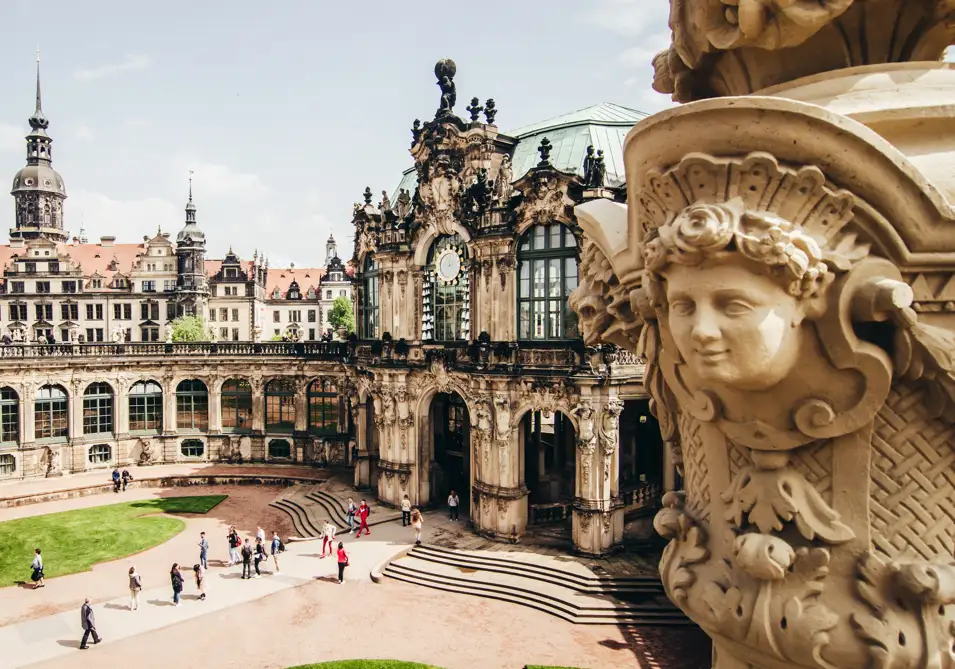
Nearly every wall and rooftop in Dresden seems to be finished with a flourish. Defined by its ornamental baroque architecture, a power statement of Saxon royalty, Dresden is made all the more miraculous considering the city was leveled by firebombing in WWII. After the war, the city was reconstructed, brick by painstaking brick. Even under East German-Soviet rule, which usually eschewed frivolous design, buildings like the Semper Opera House were pieced back to their former glory. Restoration of the majestic Zwinger Palace and bell domed Church of Our Lady slowly followed, with the Frauenkirche only fully repaired in 2005. Arguably there is no other city in Europe that cherishes its hard-won architecture as much as Dresden. Although it is a compact city, so many of its buildings will stop you in your tracks that architecture fans will easily lose a whole day in the Old Town area. Especially during the winter months, Dresden sparkles with a joyous, uplifting ambiance. The city is recognized as having the best-ever Christmas market in all of Europe. Between the twinkling lights, the scent of hot wine and gingerbread, and the towering Christmas tree, it’s worth going out of your way to see Dresden at this time of year.
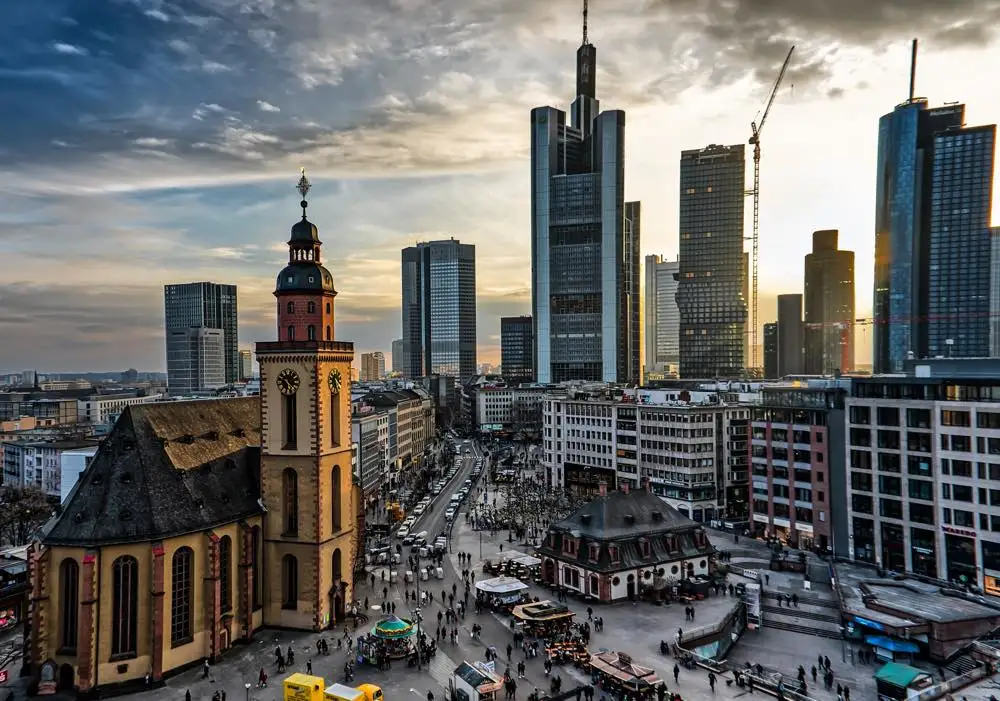
Dubbed ‘Mainhatten’ for its glass highrises, financial prowess, and proximity to the Main River, Frankfurt offers a fascinating glimpse into the ‘engine room’ of Europe’s economy with an unexpected twist. Among the glass and steel buildings, the old-worldly Römerberg square will give you a double-take. The square’s 15th-century half-timbered houses, old statues, and church spires contrast dramatically against the modern 21st-century skyscrapers beyond. If you visit at Christmas, the Römerberg is truly special, aglow with the light of the tallest Christmas tree in Germany. The square fills with stalls selling handicrafts, and the air is scented with hot apple wine, honey, and cinnamon. Delve deeper into Frankfurt and you’ll find a substantial museum district, the Museumsufer (Museum Embankment). This area features a cluster of twelve museums on either side of Main River. This includes the Städel, home to Tischbein’s famous painting of renowned writer Johann Wolfgang von Goethe, one of Frankfurt’s most prestigious sons. The more time you spend in Frankfurt, the more you’ll discover a highly cultured city lurking beneath its glass facades. If you have the time, Frankfurt is certainly worth a second look.
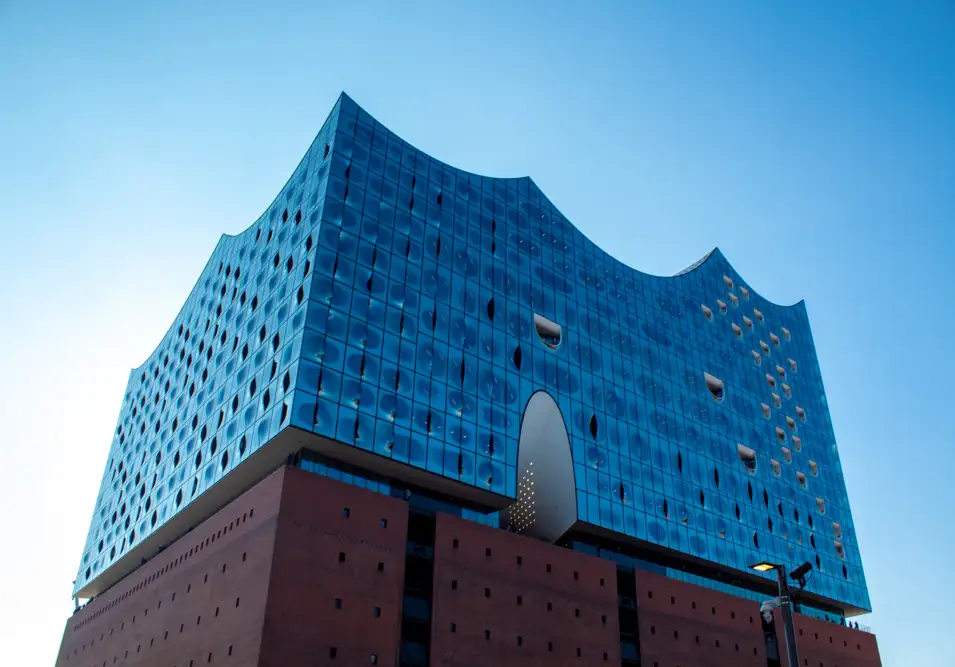
Compared to other German cities, Hamburg has a moody, nautical charisma all of its own. Despite being battered throughout history by floods, fires, and bombs, Hamburg has always held its head up high. Resilience is in the air in Hamburg, along with the briny smell of the North Sea. In recent years Hamburg has garnered a reputation for commerce and nightlife. Frequent travelers whisper that Hamburg is Germany’s ‘undiscovered’ city, the place to go for a little business and a lot of fun. Known as Germany’s ‘gateway to the world’, ships dock in Hamburg as they haul cargo up and down the Elbe River. The city thrives as Germany’s primary seaport and has been a center of trade since the middle ages. Its affluence shows in the 19th-century brick warehouses, flourishing restaurant scene, and recently constructed Elbphilharmonie concert hall, which floats majestically in the harbor, part ship and part island. Hamburg is a city for those who like to live large - in a cultured, German kind of way. Attend a performance at the orchestra, cruise on a boat around the Außenalster Lake, or have a night on the Reeperbahn, the Vegas-like strip where the Beatles once performed. Whatever you do in the city, Hamburg will make you look twice and see Germany from a totally different point of view.
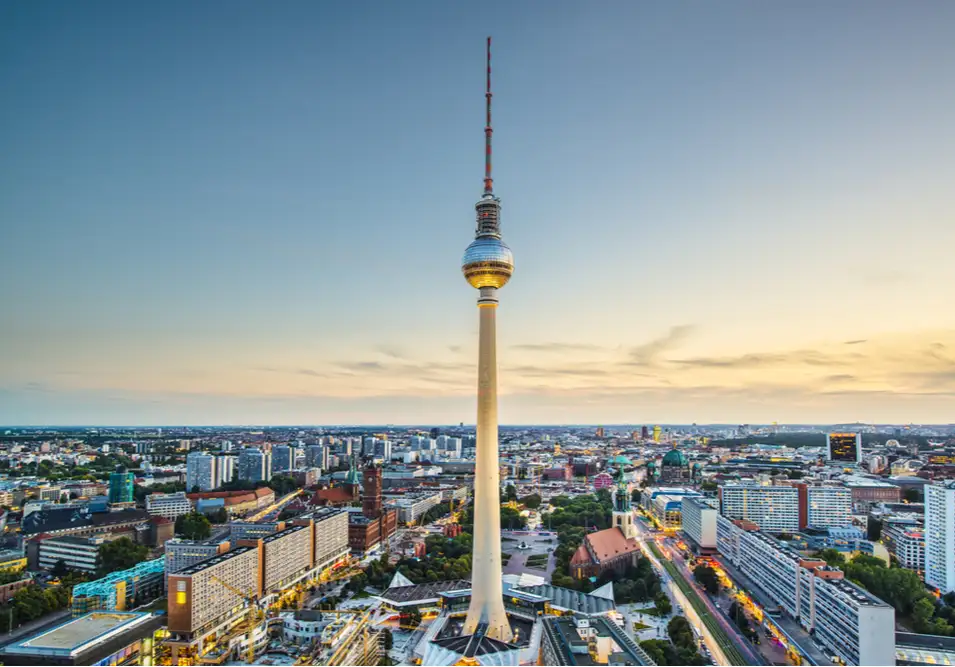
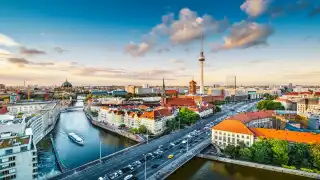
Since the fall of its notorious wall, Berlin’s unification has seen it go from strength to strength. No wonder the city feels like it hasn’t stopped partying since the 1990s. There is so much to celebrate here. Fueled by the robust economy, a thriving tech scene, and straight-up German bonhomie, when you step into Berlin you’ll soon be caught up in its spirit. For all this gusto, Berlin hasn’t forgotten its troubled past. A visit to Berlin is to bear witness to history. Portions of the wall remain intact, and the city’s Jewish Museum offers a detailed, emotional examination of the Holocaust. Inside the reconstructed Reichstag, every attempt has been made to preserve the parliament’s beleaguered history. The buildings' glass dome addition feels less like a triumphal crown and more like a freshly healed battle scar. Days in Berlin are easily spent wandering from a cafe to the cultural institutions on Museum Island, or over to the Charlottenburg Palace. By night, crowds wander through the booming bars and nightclubs or gaze upon the floodlit Brandenburg Gate and Victory Column monuments. An international city that can offer something to everyone, Berlin is an unmissable stop on your German journey.
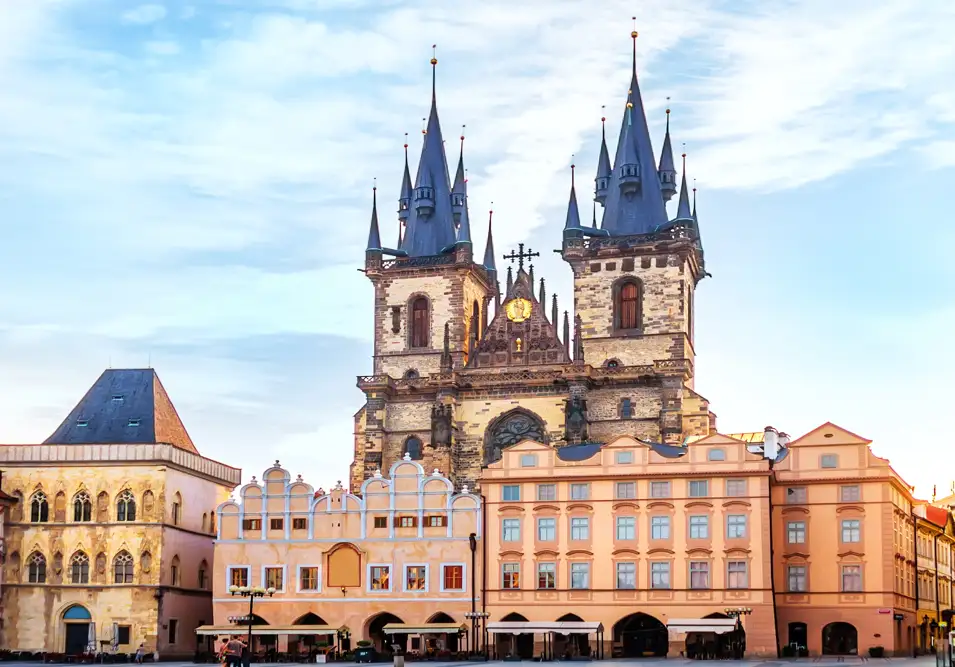
The city of Prague is indisputably the gem of Central Europe. Full of history, culture, and classic Czech pubs around every corner, Prague is teeming with nooks and crannies just waiting to be discovered. The narrow cobblestone streets and warm red rooftops give the city a homey feel, while the well-preserved medieval architecture transports you back in time. Walking across the Charles Bridge with the view of the Prague Castle will make you feel like you’re living in a fairytale, and you might as well be. As an up-and-coming destination, Prague is a perfect mix of classic and modern. New trendy cafes and bistros are always popping up, and you can always find a group of lively locals chowing down on goulash and quaffing pivo (the best beer in Europe!) at traditional Czech restaurants across the city. The clash of modernity and tradition, preservation and innovation, gives this city a mysterious air that you won’t soon forget.
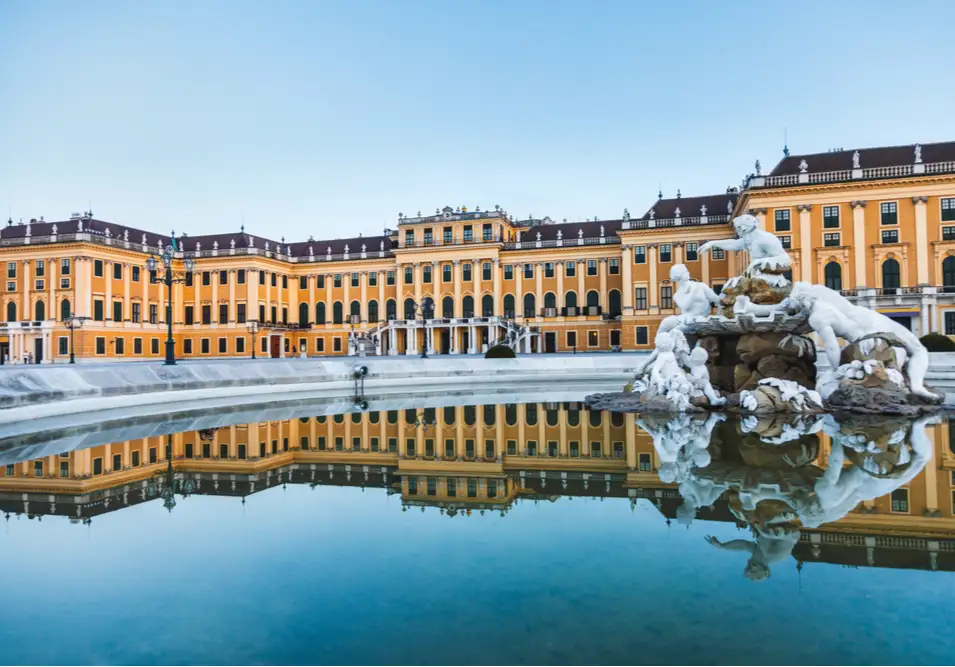
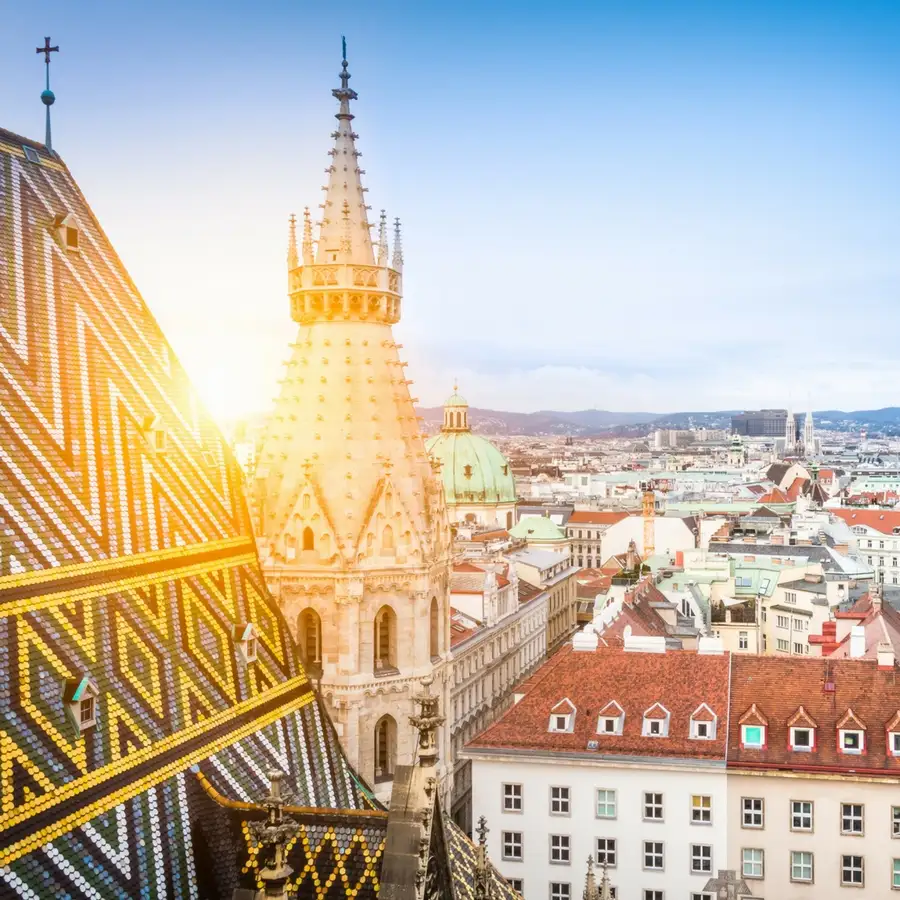
Artistic and musical, historical and elegant, Vienna is the definition of class. The seat of the Habsburg monarchy for over six centuries, it's no wonder this city is still fit for royalty. Baroque buildings and imperial palaces dominate the cityscape, while locals stride gracefully through the streets, likely on their way to a classical music concert or art exhibition. Visitors from all over the world flock to Schonbrunn Palace, historical museums, and local eateries for authentic Viennese schnitzel. Vienna is also home to world-class wining and dining. Famous dishes include Wiener schnitzel, Tafelspitz (prime boiled beef), and apfelstrudel (apple strudel), all of which pair well with a glass of fine Austrian wine. No matter how long you spend in Vienna, you'll leave with a new appreciation for the finer things in life.

Nearly every wall and rooftop in Dresden seems to be finished with a flourish. Defined by its ornamental baroque architecture, a power statement of Saxon royalty, Dresden is made all the more miraculous considering the city was leveled by firebombing in WWII. After the war, the city was reconstructed, brick by painstaking brick. Even under East German-Soviet rule, which usually eschewed frivolous design, buildings like the Semper Opera House were pieced back to their former glory. Restoration of the majestic Zwinger Palace and bell domed Church of Our Lady slowly followed, with the Frauenkirche only fully repaired in 2005. Arguably there is no other city in Europe that cherishes its hard-won architecture as much as Dresden. Although it is a compact city, so many of its buildings will stop you in your tracks that architecture fans will easily lose a whole day in the Old Town area. Especially during the winter months, Dresden sparkles with a joyous, uplifting ambiance. The city is recognized as having the best-ever Christmas market in all of Europe. Between the twinkling lights, the scent of hot wine and gingerbread, and the towering Christmas tree, it’s worth going out of your way to see Dresden at this time of year.

Dubbed ‘Mainhatten’ for its glass highrises, financial prowess, and proximity to the Main River, Frankfurt offers a fascinating glimpse into the ‘engine room’ of Europe’s economy with an unexpected twist. Among the glass and steel buildings, the old-worldly Römerberg square will give you a double-take. The square’s 15th-century half-timbered houses, old statues, and church spires contrast dramatically against the modern 21st-century skyscrapers beyond. If you visit at Christmas, the Römerberg is truly special, aglow with the light of the tallest Christmas tree in Germany. The square fills with stalls selling handicrafts, and the air is scented with hot apple wine, honey, and cinnamon. Delve deeper into Frankfurt and you’ll find a substantial museum district, the Museumsufer (Museum Embankment). This area features a cluster of twelve museums on either side of Main River. This includes the Städel, home to Tischbein’s famous painting of renowned writer Johann Wolfgang von Goethe, one of Frankfurt’s most prestigious sons. The more time you spend in Frankfurt, the more you’ll discover a highly cultured city lurking beneath its glass facades. If you have the time, Frankfurt is certainly worth a second look.

Compared to other German cities, Hamburg has a moody, nautical charisma all of its own. Despite being battered throughout history by floods, fires, and bombs, Hamburg has always held its head up high. Resilience is in the air in Hamburg, along with the briny smell of the North Sea. In recent years Hamburg has garnered a reputation for commerce and nightlife. Frequent travelers whisper that Hamburg is Germany’s ‘undiscovered’ city, the place to go for a little business and a lot of fun. Known as Germany’s ‘gateway to the world’, ships dock in Hamburg as they haul cargo up and down the Elbe River. The city thrives as Germany’s primary seaport and has been a center of trade since the middle ages. Its affluence shows in the 19th-century brick warehouses, flourishing restaurant scene, and recently constructed Elbphilharmonie concert hall, which floats majestically in the harbor, part ship and part island. Hamburg is a city for those who like to live large - in a cultured, German kind of way. Attend a performance at the orchestra, cruise on a boat around the Außenalster Lake, or have a night on the Reeperbahn, the Vegas-like strip where the Beatles once performed. Whatever you do in the city, Hamburg will make you look twice and see Germany from a totally different point of view.

Since the fall of its notorious wall, Berlin’s unification has seen it go from strength to strength. No wonder the city feels like it hasn’t stopped partying since the 1990s. There is so much to celebrate here. Fueled by the robust economy, a thriving tech scene, and straight-up German bonhomie, when you step into Berlin you’ll soon be caught up in its spirit. For all this gusto, Berlin hasn’t forgotten its troubled past. A visit to Berlin is to bear witness to history. Portions of the wall remain intact, and the city’s Jewish Museum offers a detailed, emotional examination of the Holocaust. Inside the reconstructed Reichstag, every attempt has been made to preserve the parliament’s beleaguered history. The buildings' glass dome addition feels less like a triumphal crown and more like a freshly healed battle scar. Days in Berlin are easily spent wandering from a cafe to the cultural institutions on Museum Island, or over to the Charlottenburg Palace. By night, crowds wander through the booming bars and nightclubs or gaze upon the floodlit Brandenburg Gate and Victory Column monuments. An international city that can offer something to everyone, Berlin is an unmissable stop on your German journey.

The city of Prague is indisputably the gem of Central Europe. Full of history, culture, and classic Czech pubs around every corner, Prague is teeming with nooks and crannies just waiting to be discovered. The narrow cobblestone streets and warm red rooftops give the city a homey feel, while the well-preserved medieval architecture transports you back in time. Walking across the Charles Bridge with the view of the Prague Castle will make you feel like you’re living in a fairytale, and you might as well be. As an up-and-coming destination, Prague is a perfect mix of classic and modern. New trendy cafes and bistros are always popping up, and you can always find a group of lively locals chowing down on goulash and quaffing pivo (the best beer in Europe!) at traditional Czech restaurants across the city. The clash of modernity and tradition, preservation and innovation, gives this city a mysterious air that you won’t soon forget.

Artistic and musical, historical and elegant, Vienna is the definition of class. The seat of the Habsburg monarchy for over six centuries, it's no wonder this city is still fit for royalty. Baroque buildings and imperial palaces dominate the cityscape, while locals stride gracefully through the streets, likely on their way to a classical music concert or art exhibition. Visitors from all over the world flock to Schonbrunn Palace, historical museums, and local eateries for authentic Viennese schnitzel. Vienna is also home to world-class wining and dining. Famous dishes include Wiener schnitzel, Tafelspitz (prime boiled beef), and apfelstrudel (apple strudel), all of which pair well with a glass of fine Austrian wine. No matter how long you spend in Vienna, you'll leave with a new appreciation for the finer things in life.


Zoom In to the cities to see your itinerary in more detail