An Active Adventure to Berlin, Dresden, Prague, and the Saxon Switzerland

destination-icon10 Day Tour of Berlin, Dresden and Prague

Destinations on this trip: Berlin,Dresden,Prague

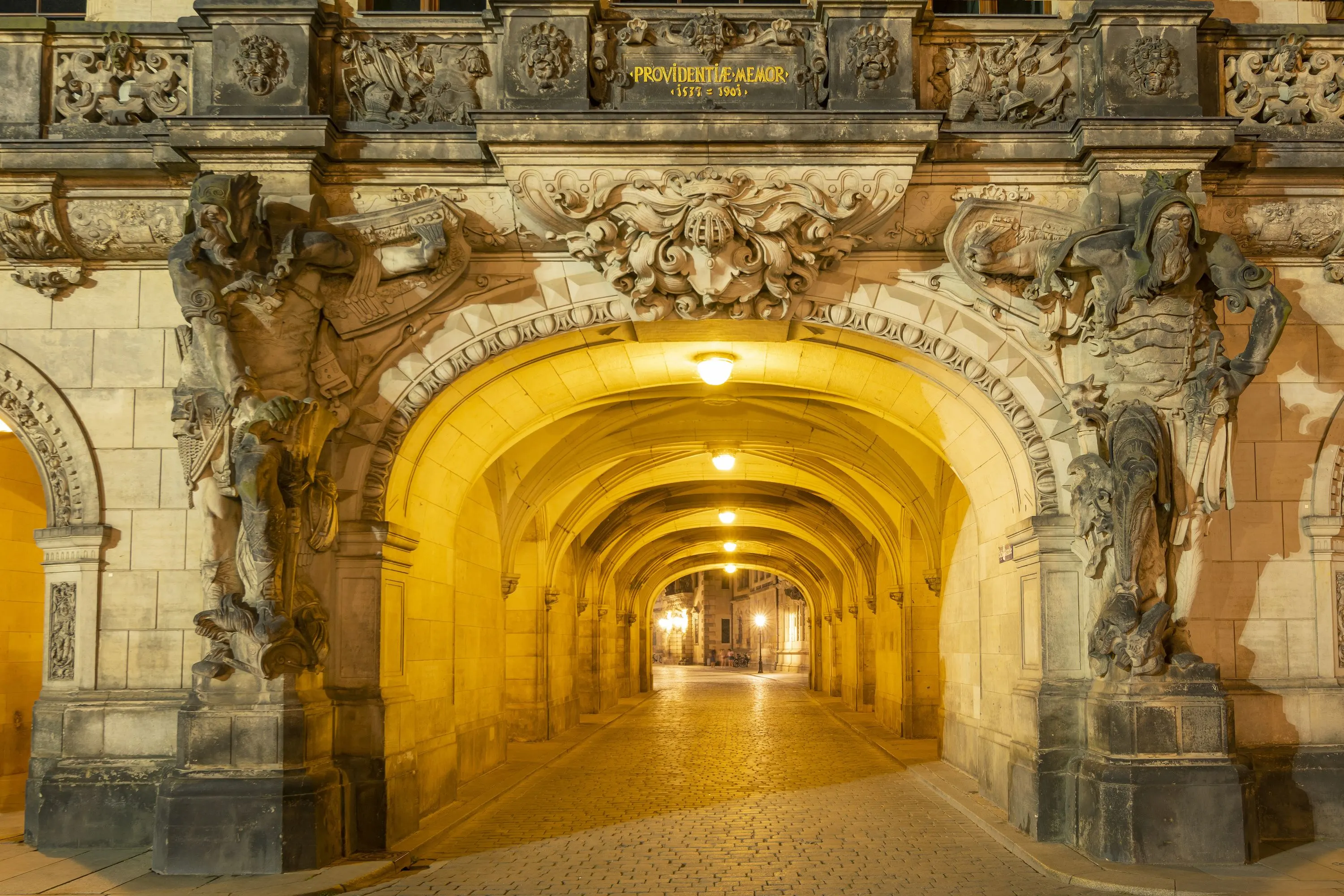
Dresden on the River Elbe
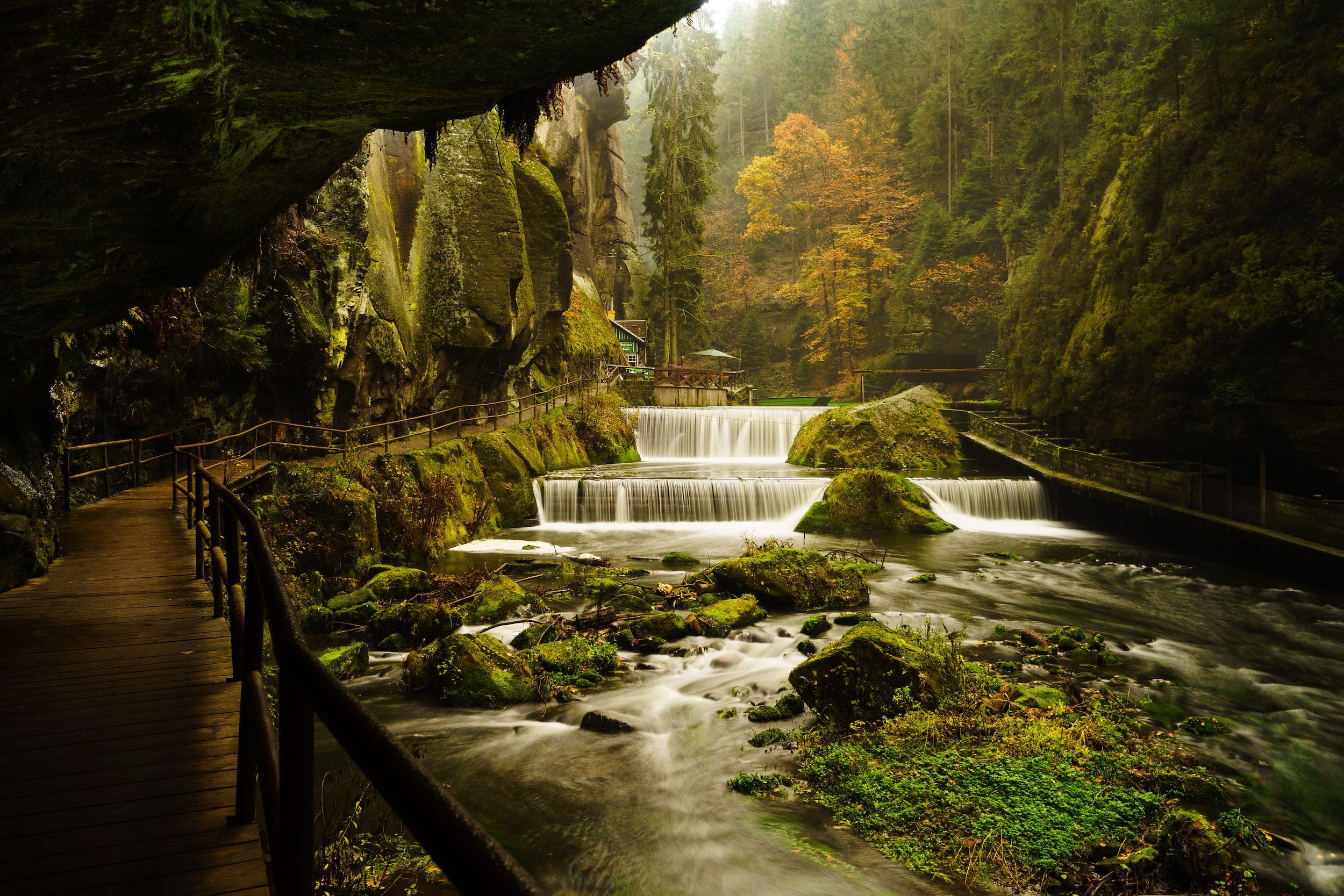
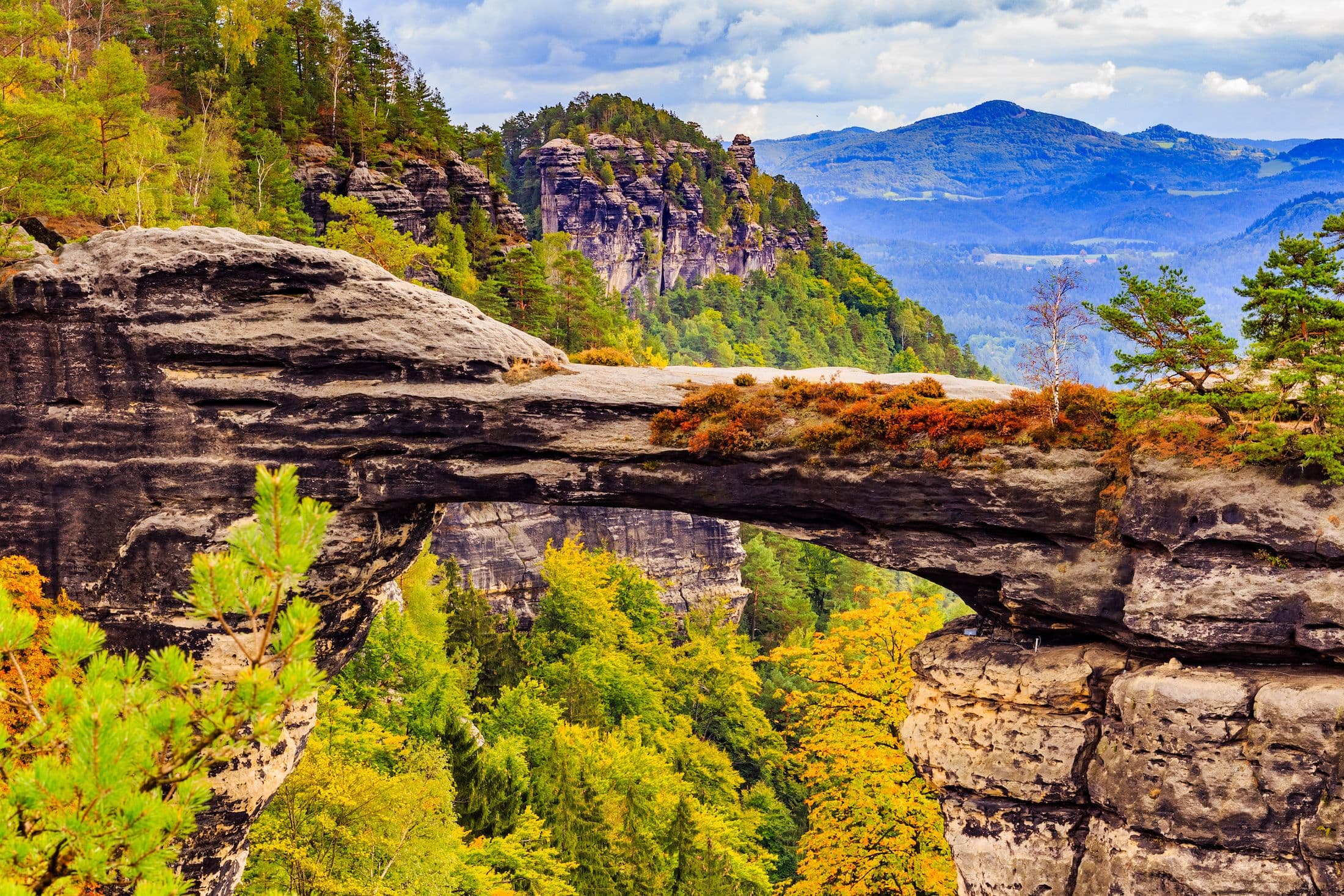
Saxon Switzerland
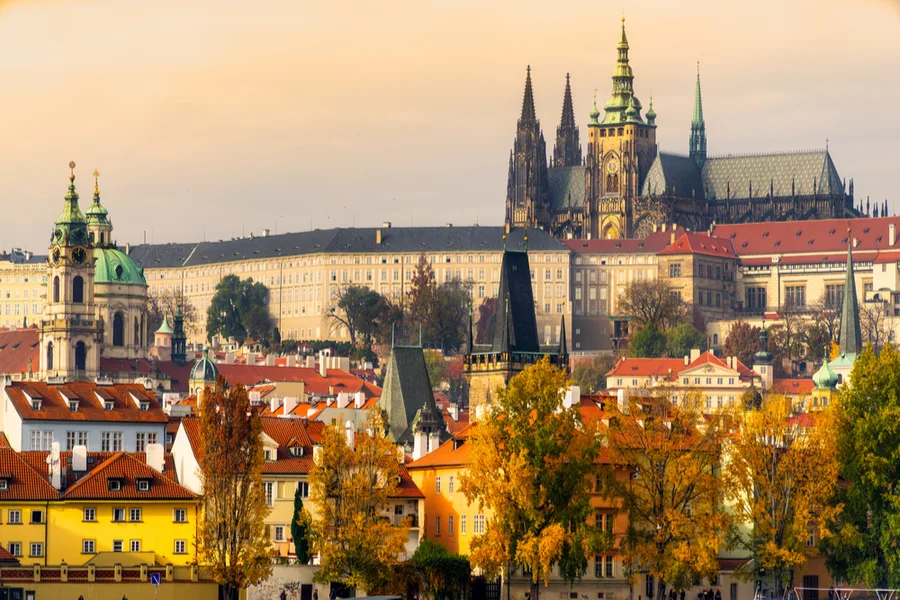
Prague St. Nicholas Church
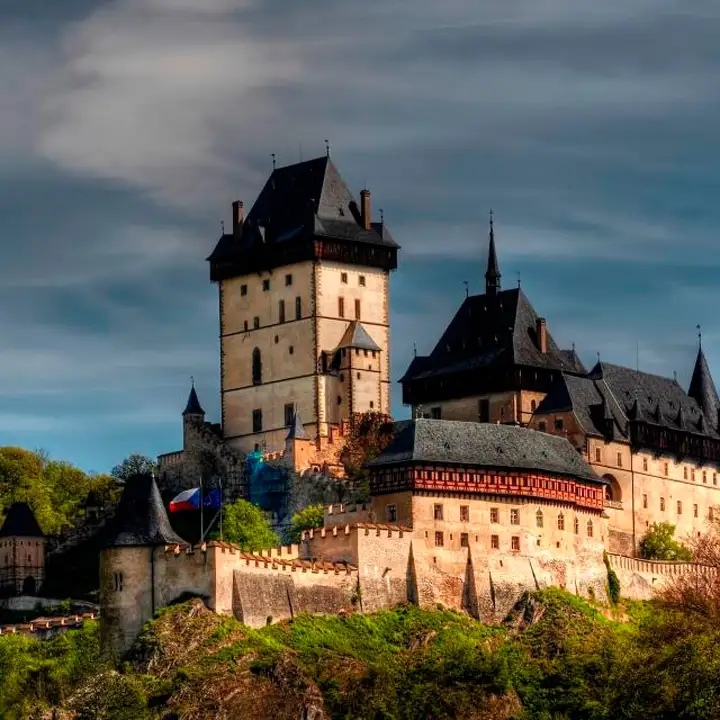
Forest-shrouded Karlstejn Castle near Prague
image
arrowLightLeft
arrowLightRight

How Long Is the Bohemian & Saxon Highlights Trip and What Does It Cost?

Outdoor ActivitiesNature Lovers
  • Duration
    10 days / 9 nights
  • Best time
    Jan-Dec
  • From
    $1995 / person (Flights not included)
Uncover hidden histories local cultures, and natural beauty on this active adventure to Berlin, Dresden, and Prague. Explore Berlin on a private guided cycling tour and see iconic landmarks like the Brandenburg Gate. Discover Dresden's baroque Old Town and venture into the countryside to see the natural wonders of Saxon Switzerland. Check out Prague's incredible beauty, from Charles Bridge to Prague Castle, and take a guided cycling tour through the Czech countryside to a castle. Throughout the trip, enjoy the benefits of our detailed itinerary and mobile app, making your adventure not only exciting but seamless.
  • Navigate Berlin's hidden courtyards and climb the glass dome of the Reichstag for epic city views.
  • Admire the baroque beauty of Dresden's Old Town on a guided walking tour.
  • Discover Saxon Switzerland's natural wonders on a self-guided excursion.
  • Explore Prague's fairytale environs on an expert-led tour of Prague Castle and the Royal Route.
  • Cycle through the Czech countryside to the forest-shrouded Karlstejn Castle.
Uncover hidden histories local cultures, and natural beauty on this active adventure to Berlin, Dresden, and Prague. Explore Berlin on a private guided cycling tour and see iconic landmarks like the Brandenburg Gate. Discover Dresden's baroque Old Town and venture into the countryside to see the natural wonders of Saxon Switzerland. Check out Prague's incredible beauty, from Charles Bridge to Prague Castle, and take a guided cycling tour through the Czech countryside to a castle. Throughout the trip, enjoy the benefits of our detailed itinerary and mobile app, making your adventure not only exciting but seamless.
  • Navigate Berlin's hidden courtyards and climb the glass dome of the Reichstag for epic city views.
  • Admire the baroque beauty of Dresden's Old Town on a guided walking tour.
  • Discover Saxon Switzerland's natural wonders on a self-guided excursion.
  • Explore Prague's fairytale environs on an expert-led tour of Prague Castle and the Royal Route.
  • Cycle through the Czech countryside to the forest-shrouded Karlstejn Castle.
The Brandenburg Gate - Must-See Sight
The Brandenburg Gate
Historic Landmarks
The Berlin Wall - Must-See Sight
The Berlin Wall
Historic Landmarks
Checkpoint Charlie - Must-See Sight
Checkpoint Charlie
European History
The Albertinum - Must-See Sight
The Albertinum
Museums & Galleries
Church of our Lady  - Must-See Sight
Church of our Lady
Churches & Monasteries
Zwinger - Must-See Sight
Zwinger
Museums & Galleries
Prague Castle - Must-See Sight
Prague Castle
Castles & Chateaux
Charles Bridge - Must-See Sight
Charles Bridge
Historic Landmarks
Wenceslas Square - Must-See Sight
Wenceslas Square
European History

Must see sights

The Brandenburg Gate - Must-See Sight
The Brandenburg Gate
Historic Landmarks
The Berlin Wall - Must-See Sight
The Berlin Wall
Historic Landmarks
Checkpoint Charlie - Must-See Sight
Checkpoint Charlie
European History
The Albertinum - Must-See Sight
The Albertinum
Museums & Galleries
Church of our Lady  - Must-See Sight
Church of our Lady
Churches & Monasteries
Zwinger - Must-See Sight
Zwinger
Museums & Galleries
Prague Castle - Must-See Sight
Prague Castle
Castles & Chateaux
Charles Bridge - Must-See Sight
Charles Bridge
Historic Landmarks
Wenceslas Square - Must-See Sight
Wenceslas Square
European History
Loading...

Starting from

$1995

per person

no-flightNot included

Price varies by group size, hotel selection, and travel season.


Secure Your Customizable Trip

Enter your details to embark on a journey that can be tailored just for you.

Start

Travelers

0 travelers
Add Room
Remove Room

Preferred Hotel Stars

Select Hotel Stars
Craft Your Own Itinerary

Select your interests and destinations for a trip plan inspired by you.

Where Does the Bohemian & Saxon Highlights Trip Trip Go?

Enable/Disable Map Scrolling

Click To Make Map Interactive

Bohemian & Saxon Highlights Trip Timeline

Arrival

3 nights

Berlin

Germany

Train: 2h

2 nights

Dresden

Germany

Train: 2.5h

4 nights

Prague

Czech Republic

Departure

What Does the Bohemian & Saxon Highlights Trip Itinerary Look Like?
image

Day 1

Arrive Berlin

Day 1

Arrive Berlin

icon
icon
icon

To Be Determined

Airport Transfer

Flying into Berlin you will arrive in the brand new Berlin Brandenburg Airport to the south of the city. Taxis are available at the airport, or you can arrange a private transfer for added convenience. The cheapest and fastest way to reach central Berlin is by train. The Airport Express train delivers you to Berlin's main station (Hauptbahnhof) in the center of the city, from where you can easily hail a taxi.

Airport Transfer

To Be Determined — Airport Transfer

Flying into Berlin you will arrive in the brand new Berlin Brandenburg Airport to the south of the city. Taxis are available at the airport, or you can arrange a private transfer for added convenience. The cheapest and fastest way to reach central Berlin is by train. The Airport Express train delivers you to Berlin's main station (Hauptbahnhof) in the center of the city, from where you can easily hail a taxi.
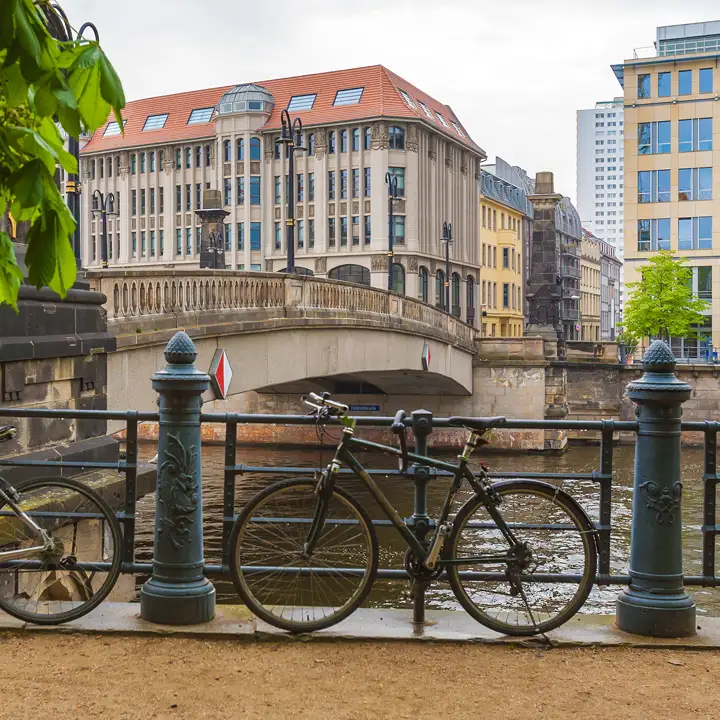
Mid-Day/Afternoon — TV Tower & Old Berlin

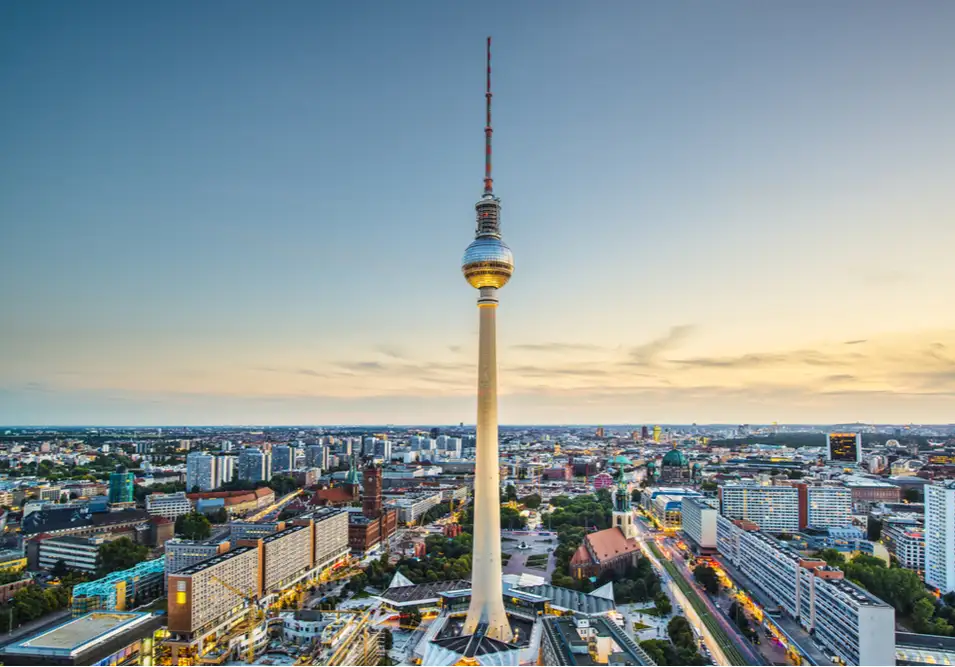
The Television Tower and its surroundings in Alexanderplatz are Berlin's main architectural monument to the former East Germany. Despite the high-rent stores and offices that now fill the buildings, you can still detect quite a bit of that old communist character. Somewhat ironically, you'll find the medieval Nikolaiviertel, the oldest residential area of Berlin, just a few steps away. You'll also find nearby the Marienkirche (Berlin's oldest parish church), the displaced Neptune Fountain, the Red Town Hall, statues of Karl Marx and Friedrich Engels, and the massive Loxx model railway that even non-model train enthusiasts will gasp at.

Television Tower

Soar to the top of this iconic symbol of Berlin in just 40 seconds, and enjoy amazing views from its observation deck.

The 1960s TV Tower (Fernsehturm) is possibly the best surviving example of East Germany’s architectural legacy. In total, it is 1,197 feet tall (368 meters), but you can only go 666 ft to the observation deck, or a bit higher if you have a ticket to the revolving Sphere Restaurant. You ascend in one of two 10-person elevators that take a mere 40 seconds to reach the observation deck.

DDR Museum

Experience life in Communist East Germany in this interactive museum.

This brilliantly evocative and interactive museum helps visitors imagine what life under the Communist East German regime was like. A homage to Ostalgie (nostalgia for East Germany), it offers up memories of the school system, pioneer camps (something like Communist scouts), and the wonderfully clumsy attempts to rival Western clothing and food fashions. It'd all be adorable, if it weren't so oppressive.

Nikolaikirche

Visit the beautifully restored medieval Gothic church which gave the surrounding neighborhood its name.

Dating all the way back to the earliest days of Berlin, this church was probably built just after Berlin was granted town privileges. An unusual feature of its interior is the bright colouring of the vault ribbings: the orange, purple, green and other vivid lines look like a 1960s Pop Art addition, but actually follow a medieval pattern discovered by a 1980s restorer. 

Nikolaiviertel

Escape to Berlin's medieval past in this reconstructed historic district.

The Nikolaiviertel or St. Nicholas Quarter is Berlin's oldest residential area. With its medieval lanes and numerous restaurants and bars, it was a favorite haunt of the artistically-minded in the years before WWII, but that war left it a devastated wasteland. In the 1980's the East German regime attempted a renovation of the neighborhood based on historical models, but the “old Berlin” illusion is not all entirely convincing. The use of East German construction techniques is glaringly obvious in some places, such as prefabricated gables and corrugated concrete panels. As a result, it was scornfully nicknamed “Honecker's Disneyland” after the former East German leader, but today it is a historic curiousity in its own right.

Late Afternoon/Early Evening — Courtyards of Berlin

With booming 19th-century population growth, nearly every unoccupied space in Berlin was filled by tenement buildings surrounding small courtyards. The Spandauer Vorstadt neighborhood possesses some of Berlin’s most beautiful courtyards, the Hackesche Höfe, as well as other courtyards which better recall the crowded conditions of industrial Berlin. Here you can discover the partially reconstructed New Synagogue, the former site of the Jewish cemetery, and many hidden reminders of a once vibrant community.

Hackesche Höfe

Stop for a drink or go shopping within Berlin’s most beautiful courtyards.

These nine courtyards are classic examples of Art Deco. Built in 1905-1907 to house businesses, flats and places of entertainment, Hackesche Höfe was conceived of as an antidote to the dowdy and overcrowded courtyards of working-class Berlin. They are elaborately decorated with blue mosaic tiles and other artistic finishes, but nevertheless preserve a layout that was highly typical of much of pre-war Berlin.

Haus Schwarzenberg

Explore a traditional Berlin alleyway courtyard which harbours a trio of small museums relating to the Jewish experience during WWII.

The courtyard's crumbling and grafittied facades give visitors a feel for Berlin tenement life during the late 19th and early 20th centuries. Among the museums is the fascinating Museum Blindenwerkstatt Otto Wendt (free; open 10am-8pm daily). It is located in the former rooms of a broom and brush factory run by one Otto Wendt, whose employees were mainly deaf, blind and Jewish. He managed to protect his workers from the concentration camps by having the factory declared essential to the war effort.  

New Synagogue

Visit one of the most important legacies of Berlin's pre-Holocaust Jewish community.

The partially reconstructed synagogue was damaged on Kristallnacht, an anti-Jewish Nazi pogrom. It was not completely destroyed thanks to the intervention of the local police chief. Its ultimate destruction was left to Allied bombers and reconstruction didn’t begin until the late 1980s. While large parts remain unreconstructed, it is still possible to visit the interior.

image

Day 1

Arrive Berlin


icon
icon
icon

To Be Determined:

Airport Transfer

Mid-Day/Afternoon:

TV Tower & Old Berlin

Late Afternoon/Early Evening:

Courtyards of Berlin

Airport Transfer

Airport Transfer

Flying into Berlin you will arrive in the brand new Berlin Brandenburg Airport to the south of the city. Taxis are available at the airport, or you can arrange a private transfer for added convenience. The cheapest and fastest way to reach central Berlin is by train. The Airport Express train delivers you to Berlin's main station (Hauptbahnhof) in the center of the city, from where you can easily hail a taxi.

To Be Determined — Airport Transfer

Flying into Berlin you will arrive in the brand new Berlin Brandenburg Airport to the south of the city. Taxis are available at the airport, or you can arrange a private transfer for added convenience. The cheapest and fastest way to reach central Berlin is by train. The Airport Express train delivers you to Berlin's main station (Hauptbahnhof) in the center of the city, from where you can easily hail a taxi.

Mid-Day/Afternoon — TV Tower & Old Berlin

The Television Tower and its surroundings in Alexanderplatz are Berlin's main architectural monument to the former East Germany. Despite the high-rent stores and offices that now fill the buildings, you can still detect quite a bit of that old communist character. Somewhat ironically, you'll find the medieval Nikolaiviertel, the oldest residential area of Berlin, just a few steps away. You'll also find nearby the Marienkirche (Berlin's oldest parish church), the displaced Neptune Fountain, the Red Town Hall, statues of Karl Marx and Friedrich Engels, and the massive Loxx model railway that even non-model train enthusiasts will gasp at.

Television Tower

Soar to the top of this iconic symbol of Berlin in just 40 seconds, and enjoy amazing views from its observation deck.

The 1960s TV Tower (Fernsehturm) is possibly the best surviving example of East Germany’s architectural legacy. In total, it is 1,197 feet tall (368 meters), but you can only go 666 ft to the observation deck, or a bit higher if you have a ticket to the revolving Sphere Restaurant. You ascend in one of two 10-person elevators that take a mere 40 seconds to reach the observation deck.

DDR Museum

Experience life in Communist East Germany in this interactive museum.

This brilliantly evocative and interactive museum helps visitors imagine what life under the Communist East German regime was like. A homage to Ostalgie (nostalgia for East Germany), it offers up memories of the school system, pioneer camps (something like Communist scouts), and the wonderfully clumsy attempts to rival Western clothing and food fashions. It'd all be adorable, if it weren't so oppressive.

Nikolaikirche

Visit the beautifully restored medieval Gothic church which gave the surrounding neighborhood its name.

Dating all the way back to the earliest days of Berlin, this church was probably built just after Berlin was granted town privileges. An unusual feature of its interior is the bright colouring of the vault ribbings: the orange, purple, green and other vivid lines look like a 1960s Pop Art addition, but actually follow a medieval pattern discovered by a 1980s restorer. 

Nikolaiviertel

Escape to Berlin's medieval past in this reconstructed historic district.

The Nikolaiviertel or St. Nicholas Quarter is Berlin's oldest residential area. With its medieval lanes and numerous restaurants and bars, it was a favorite haunt of the artistically-minded in the years before WWII, but that war left it a devastated wasteland. In the 1980's the East German regime attempted a renovation of the neighborhood based on historical models, but the “old Berlin” illusion is not all entirely convincing. The use of East German construction techniques is glaringly obvious in some places, such as prefabricated gables and corrugated concrete panels. As a result, it was scornfully nicknamed “Honecker's Disneyland” after the former East German leader, but today it is a historic curiousity in its own right.

Late Afternoon/Early Evening — Courtyards of Berlin

With booming 19th-century population growth, nearly every unoccupied space in Berlin was filled by tenement buildings surrounding small courtyards. The Spandauer Vorstadt neighborhood possesses some of Berlin’s most beautiful courtyards, the Hackesche Höfe, as well as other courtyards which better recall the crowded conditions of industrial Berlin. Here you can discover the partially reconstructed New Synagogue, the former site of the Jewish cemetery, and many hidden reminders of a once vibrant community.

Hackesche Höfe

Stop for a drink or go shopping within Berlin’s most beautiful courtyards.

These nine courtyards are classic examples of Art Deco. Built in 1905-1907 to house businesses, flats and places of entertainment, Hackesche Höfe was conceived of as an antidote to the dowdy and overcrowded courtyards of working-class Berlin. They are elaborately decorated with blue mosaic tiles and other artistic finishes, but nevertheless preserve a layout that was highly typical of much of pre-war Berlin.

Haus Schwarzenberg

Explore a traditional Berlin alleyway courtyard which harbours a trio of small museums relating to the Jewish experience during WWII.

The courtyard's crumbling and grafittied facades give visitors a feel for Berlin tenement life during the late 19th and early 20th centuries. Among the museums is the fascinating Museum Blindenwerkstatt Otto Wendt (free; open 10am-8pm daily). It is located in the former rooms of a broom and brush factory run by one Otto Wendt, whose employees were mainly deaf, blind and Jewish. He managed to protect his workers from the concentration camps by having the factory declared essential to the war effort.  

New Synagogue

Visit one of the most important legacies of Berlin's pre-Holocaust Jewish community.

The partially reconstructed synagogue was damaged on Kristallnacht, an anti-Jewish Nazi pogrom. It was not completely destroyed thanks to the intervention of the local police chief. Its ultimate destruction was left to Allied bombers and reconstruction didn’t begin until the late 1980s. While large parts remain unreconstructed, it is still possible to visit the interior.

image

Day 2

Berlin

Day 2

Berlin

icon
icon
icon

9:30 AM - 12:00 PM

Guided Bike Tour of Berlin

It is said that some cities were made for pedestrians, and others were made for cars. In that case then, Berlin was made for bicycles. Nearly perfectly flat, and filled with beautiful parks and broad avenues, Berlin is crisscrossed by one of the world’s most extensive networks of urban bike paths and lanes. You will cycle past grand architecture, through green parks, and along charming canals, exploring Berlin in a unique and memorable way.

Guided Bike Tour of Berlin

9:30 AM - 12:00 PM — Guided Bike Tour of Berlin

It is said that some cities were made for pedestrians, and others were made for cars. In that case then, Berlin was made for bicycles. Nearly perfectly flat, and filled with beautiful parks and broad avenues, Berlin is crisscrossed by one of the world’s most extensive networks of urban bike paths and lanes. You will cycle past grand architecture, through green parks, and along charming canals, exploring Berlin in a unique and memorable way.

Mid-Day to Late Afternoon — Iconic Berlin

Many of Berlin’s most iconic symbols are found within a short walk of each other. Most famous of all is the Brandenburg Gate. First built as a symbol of peace, it became a symbol of division during the Cold War. A few steps away stands the Reichstag, which was destroyed in the climax of World War II but which has been beautifully rebuilt with a glass dome. Meanwhile, the modernistic Sony Center also symbolizes a revitalized and rebuilt Berlin. Also close by is the sobering Holocaust Memorial, with its more than 2700 concrete slabs creating an ominous impression of loss. Just beyond it is another reminder of Germany's darkest period - the site of Hitler's bunker during the seige of Berlin.

Brandenburg Gate

Quadriga. Hey, There's a Word to Know When Learning About this Historic Gate

The Brandenburg Gate was built as a symbol of peace, perverted into a symbol of power by the Nazis, and became a symbol of division during the Cold War. Now, however, it is a symbol of reunification. Completed in 1791, it was topped by the quadriga, a chariot drawn by four horses driven by the goddess of peace. Napoleon seized the quadriga as a spoil of war, but after his defeat, it was returned to the city and met by cheering crowds along the way, transforming the goddess of peace into a goddess of victory, holding a  Germanic cross.

Reichstag

Make your way to the top of the dome enjoying amazing views and looking down at debating members of the German Parliament below.

Officially, the Reichstag is actually the Bundestag, which means the federal parliament. The Reichstag was reduced to a ruined shell by arson in 1933 and by World War II fighting, but it was rebuilt with a striking egg-shaped glass dome. Visitors are given a free audio guide that discusses the building’s history and architecture, while also orientating you to the sites of Berlin. It is an excellent introduction to the city. Note that it is usually necessary to book well in advance!

Sony Center

Check out the futuristic and ground-breaking Sony Center at Potsdamer Platz.

The visually dramatic and future-aesthetic Sony Center is a complex of entertainment, shopping, and office buildings surrounding a plaza canopied by a tentlike glass roof with supporting beams radiating out like bicycle spokes. It also integrates rare relics from Potsdamer Platz's prewar era, such as the opulent Kaisersaal – a fragment of the luxurious pre-war Esplanade Hotel.

Holocaust Memorial

Wander amongst 2,711 columns forming a vast mazelike Holocaust memorial.

The Memorial to the Murdered Jews of Europe. It consists of a 19,000 square meter site with over 2700 concrete slabs that grow larger and more ominous as you approach the center of the monument. Beneath the monument lies an information center. 

Late Afternoon to Evening — River Cruise

The Spree is a 250 mile long river that flows through the German states of Saxony and Brandenburg. But it’s best known for its final stretch where it drifts through the city center of Berlin, flowing under more bridges than in Venice and passing the Berlin Cathedral (Berliner Dom), the Reichstag and the Charlottenburg chateau. Taking a cruise, whether for an hour or half the day, offers a wonderful way to see the city in a relaxed manner.

image

Day 2

Berlin

image

Day 3

Berlin

Day 3

Berlin

icon
icon

Morning to Afternoon

Museum Island

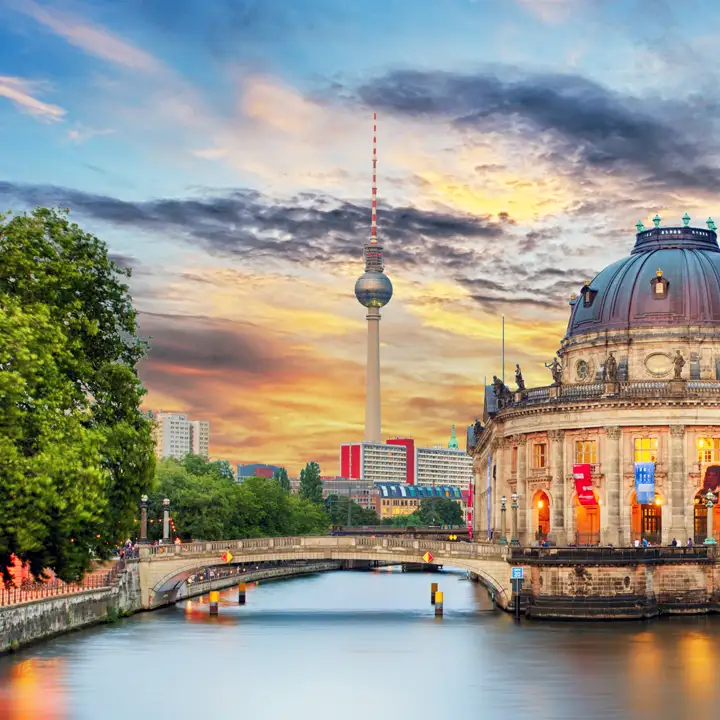
This island in the River Spree is home to five world-renowned museums, which could easily fill up a whole trip just by themselves. The island is covered in trees and green lawns, while the classically-inspired architecture of the museums can be enjoyed without even stepping inside. Unfortunately, the biggest star of the island, the Pergamon Museum, with its wholly reconstructed ancient buildings, is closed until 2026 for renovations. However, you can still visit a massive 360-panorama depicting the ancient city of Pergamon, and there's still more museums to visit than you could possibly fit in. Also to be found on and around Museum Island are the majestic Berliner Dom cathedral and the huge Berlin Palace.

Museum Island

Morning to Afternoon — Museum Island

This island in the River Spree is home to five world-renowned museums, which could easily fill up a whole trip just by themselves. The island is covered in trees and green lawns, while the classically-inspired architecture of the museums can be enjoyed without even stepping inside. Unfortunately, the biggest star of the island, the Pergamon Museum, with its wholly reconstructed ancient buildings, is closed until 2026 for renovations. However, you can still visit a massive 360-panorama depicting the ancient city of Pergamon, and there's still more museums to visit than you could possibly fit in. Also to be found on and around Museum Island are the majestic Berliner Dom cathedral and the huge Berlin Palace.

Pergamonmuseum

Relive the past in one of the world's premier museums of archealogy and ancient art. You can step into enormous ancient structures, wholly reconstructed.

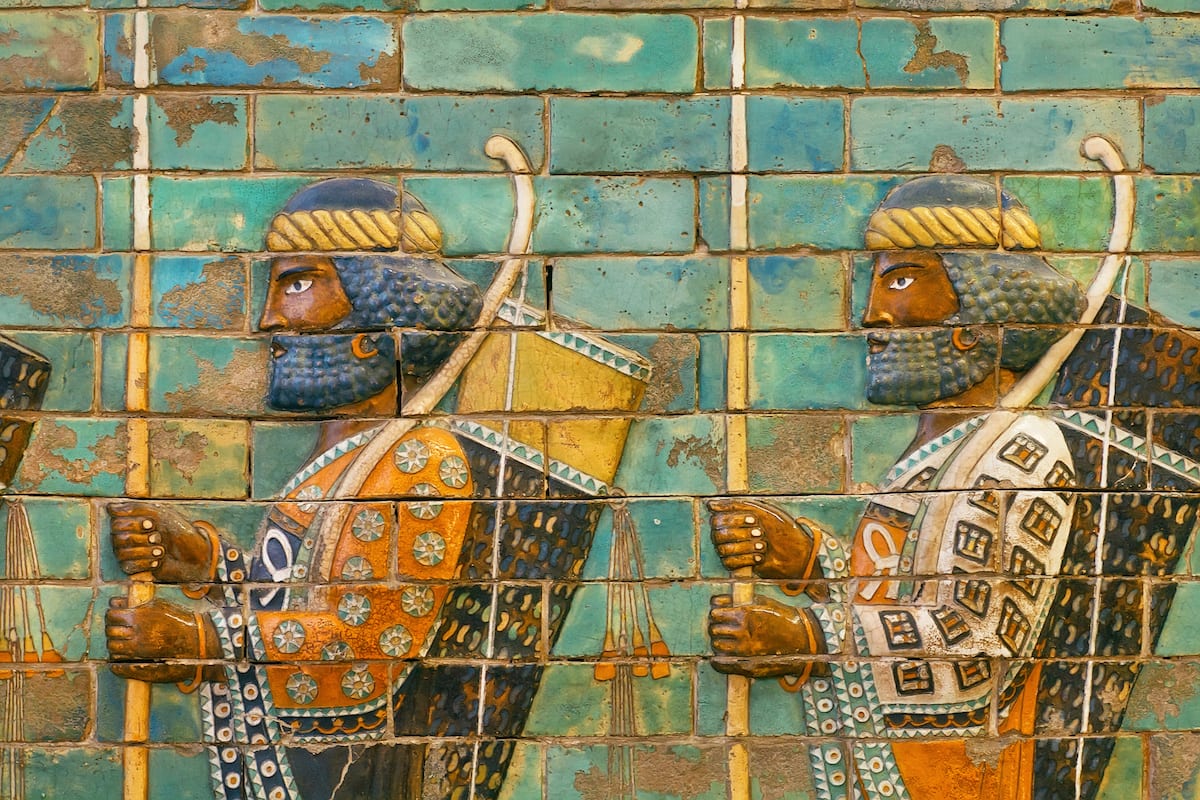
The museum is a jaw-dropping feast of classical sculpture and monumental architecture from Greece, Rome, Babylon and the Middle East divided into three parts. Highlights include the radiant-blue Ishtar Gate from Babylon, the Roman Market Gate of Miletus and the Caliph's Palace of Mshatta.

Neues Museum

Stare into the eyes of the famed Egyptian queen Nefertiti and see other ancient artwork and archeological artifacts.

The New Museum was opened in 1859 to relieve pressure on the over-crowded Old Museum. The three exhibition floors were decorated by leading Classical painters, with a focal point being a grand staircase winding up all three stories. Exhibits include the archaeological collections of the Egyptian Museum and Papyrus Collection, the Museum of Pre- and Early History, and the Collection of Classical Antiquities. The 3300-year-old bust of Egyptian Queen Nefertiti is the showstopper.

Berliner Dom

Climb 270 steps to the top of this massive 19th century cathedral for a unique panoramic view of the city.

Berlin Cathedral, nestled on Museum Island, epitomizes German neo-Renaissance grandeur with its striking dome. Built from 1894 to 1905 and restored post-World War II, its lavish interior, stained glass, and notable pipe organ draw visitors. Beyond a place of worship, it houses the former imperial ruling family's, the Hohenzollern, crypt, revealing the dynastic past of Germany.

Afternoon to Early Evening — Checkpoint Charlie

The best-known Berlin Wall crossing point between East Berlin and West Berlin during the Cold War, Checkpoint Charlie was the main gateway between the two Berlins for most non-Germans. Next to it is the Mauermuseum recounting the history of the Berlin Wall, while a few hundred yards away is the Topography of Terror depicting the history of the Nazi regime. Nearby, the Jewish Museum explores the fascinating history of Germany's Jewish heritage in a striking modern building - uneven floors, empty spaces, and sharp zig-zags reflect its turbulent experience in Germany.

Jewish Museum

Unveil a fascinating story of triumph, tragedy, and also everyday life in Germany's leading Jewish history museum.

The history of Germany’s once-thriving Jewish population and culture is brilliantly detailed behind American architect Daniel Libeskind’s equally brilliant and shimmering titanium-zinc facade.

Trabi Museum

Sit behind the wheel of East Germany's infamously toxic Trabi.

This little museum is devoted to East Germany's iconic product - the Trabant automobile. Here you'll learn to appreciate the “fewer parts means less trouble” principles of the fibreglass car. 

Topography of Terror

Learn about the horrors of Nazism and the security apparatus it used to enforce its will in this documentation center.

The center has free admission. It is located on a site that headquartered Adolf Hitler's elite killers, the SS, the Gestapo secret police and the Reich Main Security Office, making it the main cog in the Nazi security regime. Standing there today in testament to the evil perpetrated during those years is the Topography of Terror, Germany’s most significant museum on the agents of Nazi terror. 

image

Day 3

Berlin

image

Day 4

Berlin to Dresden

Day 4

Berlin to Dresden

icon
icon
icon
icon
icon
icon

10:10 AM

Transfer to Rail Station

Most trains depart from Berlin Hbf station, the largest station in the city. Before spending money on a transfer, be sure to check whether your hotel is within easy walking distance. It is well connected by public transport, including U-bahn, S-bahn, and bus, making it relatively easy and often fastest to reach by public transport. However, if traveling with bags, you may prefer the convenience of taking a taxi, Uber, or private transfer. Berlin taxis are generally reliable and honest. If you are staying in central Berlin and are picked up one hour prior to departure, you should have time to catch your train.

Transfer to Rail Station

10:10 AM — Transfer to Rail Station

Most trains depart from Berlin Hbf station, the largest station in the city. Before spending money on a transfer, be sure to check whether your hotel is within easy walking distance. It is well connected by public transport, including U-bahn, S-bahn, and bus, making it relatively easy and often fastest to reach by public transport. However, if traveling with bags, you may prefer the convenience of taking a taxi, Uber, or private transfer. Berlin taxis are generally reliable and honest. If you are staying in central Berlin and are picked up one hour prior to departure, you should have time to catch your train.

11:16 - 13:06 — Train to Dresden

Your scenic journey to Dresden should take a little over two hours. You will first travel through the German state of Brandenburg, which is blanketed by thick pine forests. Then you will journey across the pleasant countryside of the state of Saxony, of which Dresden is the capital.

1:06 PM — Transfer from Rail Station

Most trains arrive in Dresden hbf (i.e. hauptbahnhof, main station) station, the largest station in the city. Some trains also stop at Dresden-Neustadt station, which if you are staying on the north side of the river, may be a more convenient place to get off. Before spending money on a transfer, be sure to check whether your hotel is within easy walking distance. Also consider that public transport is the cheapest and sometimes fastest option. Taxis are available at all rail stations and are generally honest, so if you prefer the convenience of not carrying your bags on public transport, they are an option. Some private transfers even meet you directly on the platform to help with bags.

2:15 PM - 4:45 PM — Old Town Walking Tour

During this 2 hour tour you will discover the most impressive sights of Dresden Old Town, like the world famous Zwinger Palace, the Semper Opera House, the Cathedral or the Royal Palace. Our guide will give you all the historic background. You will also have a chance to see the reconstructed Frauenkirche, a symbol of reconciliation and peace in the world, a real pride of inhabitants of Dresden.

Zwinger Palace

See why the palace and its gardens were considered beautiful enough to hold some of Germany's most precious artworks.

There is much to see in the Zwinger besides the Old Masters' Gallery. The palace is one of the most admired Baroque structures in all of Germany, if not in Europe, so the architecture and gardens are attractions in themselves. There is also a porcelain collection and Royal Cabinet of Mathematical and Physical Instruments. The palace was originally built in 1709 as an orangery and garden. However, its beautifully adorned galleries and pavilions were intended to eventually serve as a forecourt for a much larger palace, which would be a testament to the power and greatness of Saxony's then ruler, Augustus the Strong. After his death that plan was dropped, and it would not be until the 19th century that the palace would find a suitable role to live up to its grandness, when it was transformed into a museum complex.

Late Afternoon/Early Evening — Neustadt

Completely different to Altstadt in feel and ambiance, Neustadt on the right bank of the River Elbe is far less touristed and is the favorite stomping ground of Dresdener youth thanks to its proliferation of cheaper restaurants, cafes, and pubs. Neustadt means New Town, but its history stretches back centuries and it's only new in comparison to the Old Town on the opposite side of the river. Less damaged than the Altstadt in the firestorm bombing raid of February 1945, the riverbank is populated with exquisitely constructed palaces, administrative buildings, and museums, while Königstraße still hosts an array of 18th-century Baroque townhouses. The more modern Hauptstraße leads you to the fascinating DDR World Museum depicting life under the former communist regime. Strolling along the river and enjoying the parks and statuary along the banks is a great way to see the locals relaxing.

Goldener Reiter

See a gold-covered statue of the man who re-made Dresden to advertise his greatness.

Golden Rider statue of Augustus the Strong. Famed statue covered in gold leaf of King August II dressed as a Roman Caesar & riding a horse.

Early Evening/Evening — Dining Out

Dresden's Neustadt is a young and lively neighborhood that offers a large variety of eating options. You can find traditional German or specifically Saxon cuisine, and many international, vegan, and vegetarian restaurants. There are a plethora of beer gardens and bars in the area for a drink before and after dinner as well. Louisenstraße is the most popular street in the area for dining out. This part of town is populated mostly by students and young thirty-somethings. Along the street, you will find bars, restaurants, beer gardens and food trucks offering a beautiful blend of local and international foods. On most evenings the streets are bustling with activity, and on weekends the airwaves are filled with live music performances from open-air stages.

image

Day 4

Berlin to Dresden

image

Day 5

Dresden

Day 5

Dresden

icon
icon

Early Morning to Late Afternoon

Saxon Switzerland

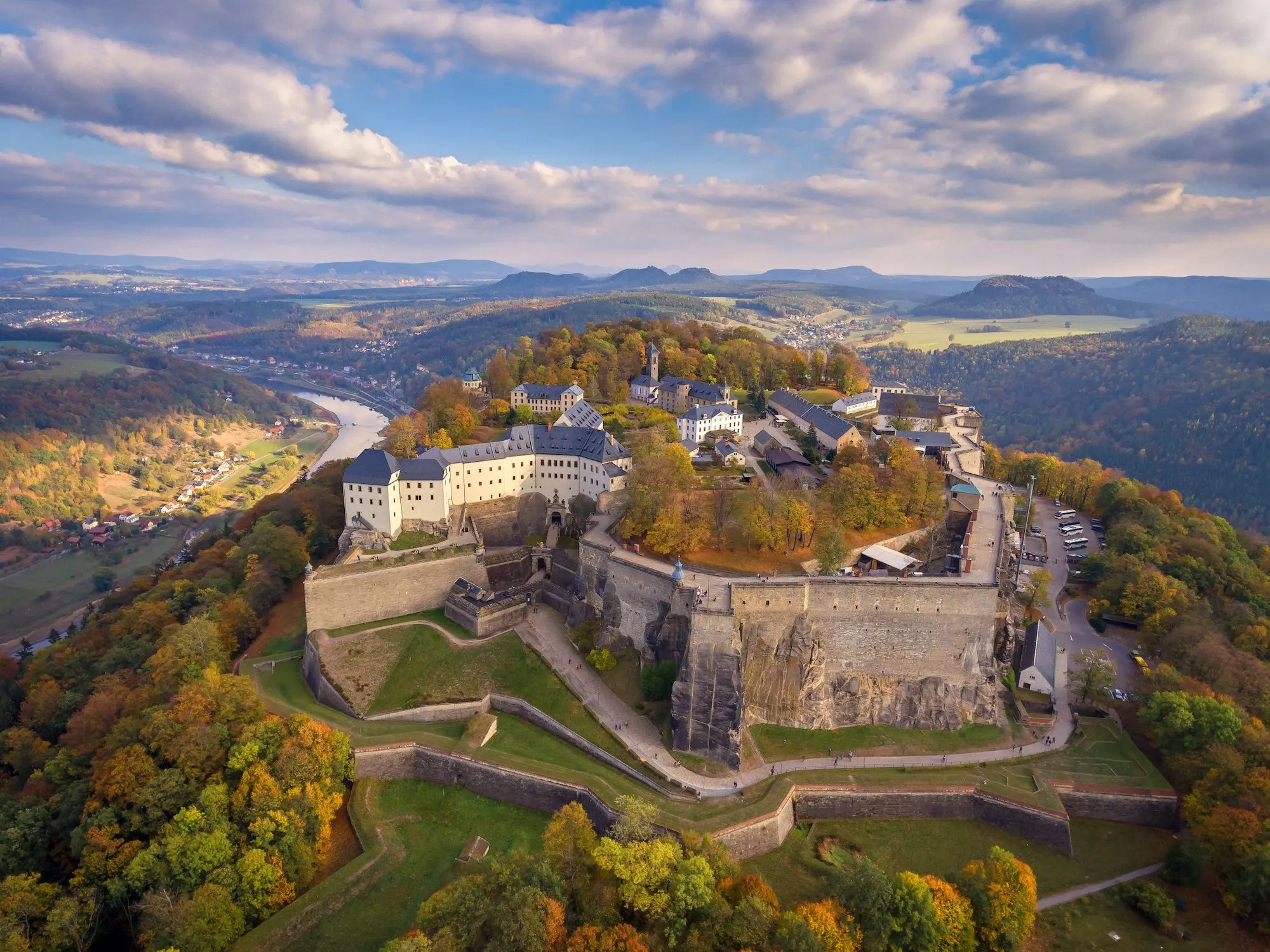
Located about 45 minutes south of Dresden, the Saxon Switzerland National Park has over 1,100 chalk-sandstone peaks amidst a fantastic landscape carved by the Elbe River.  An extensive network of trails covers the park, as well as the adjoining Bohemian Switzerland National Park across the border in the Czech Republic, making it easy to experience one of Central Europe's most scenic natural areas. It is a place with something for everyone, offering hiking, river sports, and many beautiful places to relax and enjoy the scenery. It is also home to Königstein Fortress, one of Saxony's most famous historic sites.

Saxon Switzerland

Early Morning to Late Afternoon — Saxon Switzerland

Located about 45 minutes south of Dresden, the Saxon Switzerland National Park has over 1,100 chalk-sandstone peaks amidst a fantastic landscape carved by the Elbe River.  An extensive network of trails covers the park, as well as the adjoining Bohemian Switzerland National Park across the border in the Czech Republic, making it easy to experience one of Central Europe's most scenic natural areas. It is a place with something for everyone, offering hiking, river sports, and many beautiful places to relax and enjoy the scenery. It is also home to Königstein Fortress, one of Saxony's most famous historic sites.

Königstein Fortress

Visit a colossal fortress perched on a clifftop overlooking the River Elbe.

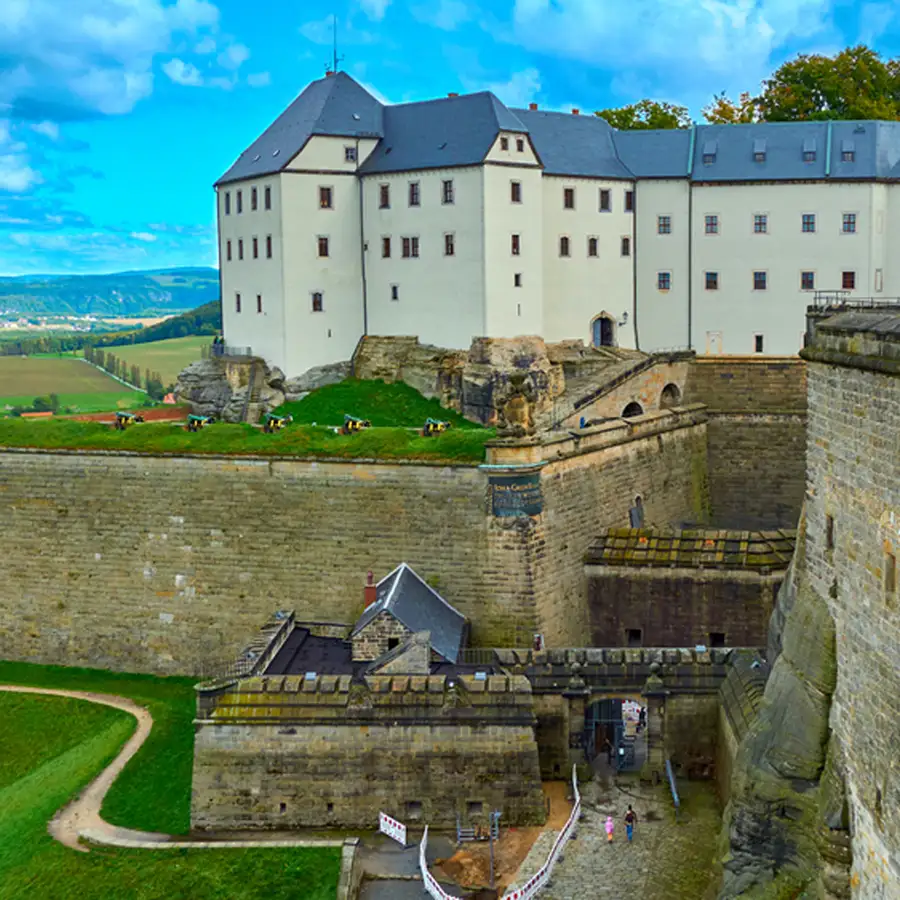
Sitting atop a nearly 1000 feet tall (247m) sandstone table mountain, the Königstein Fortress began as castle in the early 1200’s. In the 1500’s the fortifications were expanded to make it impregnable. But just as no one could break-in, no one could break out, and thus the fortress was eventually transformed into a state prison, which held politically important prisoners until the early 1900s. You’ll have two ways of reaching the fortress. The easy way; taking the “Fortress Express” bus to the top, or the old-fashioned way; hiking to the top. 

Bastei Bridge

Cross a bridge which soars across Europe's deepest river canyon.

The famous stone bridge "Bastei" is the must see in Saxon Switzerland. As you seek out the best photo spots, the sandstone towers and the Neurathen castle ruins will create an atmosphere of medieval fantasy. You'll gaze down at the river Elbe canyon and a surreally beautiful landscape.

Kamenice Gorge

Journey by boat into an enchanting river gorge.

Located just over the Czech border in the so-called Bohemian Switzerland, the gorge is a sandstone canyon formed over 100 million years ago. Venturing within is like entering a fairy tale. You'll squeeze between narrow gaps in the cliff faces, beneath bizarre rock formations and stone pillars. Eventually the way becomes too wild and narrow even for a small boat, and you can continue exploring on foot.

Pravčická Archway

See the largest stone archway in all of Europe.

The hundred-thousand-year-old sandstone rock formation in the Bohemian Switzerland cannot be crossed but can be visited up close. In fact, one of the best view points of the national park is located directly beneath the arch. As you navigate the trails leading to the archway, you'll enjoy many amazing panoramic views and observe the startling variety of rock formations which rise out of the mountain tops. 

Early Evening/Evening — Concert, Self Guided

Enjoy an evening out at Dresden's world famous Semperoper opera house next to the Zwinger Palace, or choose another cultural performance. Your consultant will be happy to help you select something to your liking on the day in question.  line-holder  NOTE : Most opera companies and orchestras take holidays in July and August.

Semperoper

Tour one of Europe's most lavish opera houses.

Originally built in 1841, the hall was rebuilt by the original architect after a fire in 1869. Having been given a second chance, he did an even better job. Unfortunately, it had to rebuilt again after WWII, however it is now restored in all its glory, and with more modern stage equipment to boot. It's home to the Saxon State Orchestra, one of the world’s oldest orchestras. It was also the venue of Wagner premieres for Tannhäuser, Rienzi and The Flying Dutchman, making the Semper a household name. You can admire the beauty of its reconstructed interior during an English speaking guided tour, which starts daily at 3pm. As there is only one daily English tour, we recommend purchasing tickets in advance.

image

Day 5

Dresden

image

Day 6

Dresden to Prague

Day 6

Dresden to Prague

icon
icon
icon
icon
icon

Morning

Old Town

Picturesquely located on a bend of the Elbe River, Dresden is the capital of the German federal state of Saxony and was long the royal residence for the Kings of Saxony. They transformed their home over the centuries into a splendid architectural jewel. Because of its fascinating baroque and rococo city center, as well as its art collections, Dresden was often called the “Florence on the Elbe”.  But Dresden also became a major industrial center, making it a target in WWII. The entire city center was destroyed in a fire-bombing raid, and over 20,000 inhabitants died in the flames and rubble. After the war, the city’s former beauty was gradually reconstructed and Dresden is now again a leading center of art, culture and classical music. During your visit, you will have the opportunity to admire restored architectural gems, impressive museums, and rich art collections.

Old Town

Morning — Old Town

Picturesquely located on a bend of the Elbe River, Dresden is the capital of the German federal state of Saxony and was long the royal residence for the Kings of Saxony. They transformed their home over the centuries into a splendid architectural jewel. Because of its fascinating baroque and rococo city center, as well as its art collections, Dresden was often called the “Florence on the Elbe”.  But Dresden also became a major industrial center, making it a target in WWII. The entire city center was destroyed in a fire-bombing raid, and over 20,000 inhabitants died in the flames and rubble. After the war, the city’s former beauty was gradually reconstructed and Dresden is now again a leading center of art, culture and classical music. During your visit, you will have the opportunity to admire restored architectural gems, impressive museums, and rich art collections.

Frauenkirche

Take the elevator to peer into the breathtaking dome of Dresden's most beautiful and famous church, and to look out upon surrounding city.

This outstanding baroque Lutheran church was completely rebuilt after Germany’s reunification from the rubble that had deliberately been left on site as a reminder of the war. Go inside to admire its impressive interior or take an elevator to get an unforgettable view of the cupola, as well as the Old Town and the Elbe River. The church was built both as a symbol of Protestant self-assertion and Dresden's municipal wealth, and was so magnificent that it soon became a fixture on the European grand tour.

Albertinum

Visit the palatial Albertinum and experience an outstanding collection of 19th and 20th century art.

The palatial Albertinum is a museum housing works by Claude Monet, Vincent van Gogh, and Edgar Degas, as well as a Sculpture Collection - the main hall is worth a look without even purchasing a ticket and viewing the artworks on display. The Galerie Neue Meister spans the genres from the Romantics like Caspar David Friedrich to Modernists like Otto Dix, whose triptych, War, is a searing indictment of his time in the trenches during WWI. 

Residenzschloss (Dresden Castle)

Admire priceless treasures and gobsmacking architecture as you wander the corridors of this palace turned museum.

Flanked by statues of muscled warriors reflecting the might of Dresden's rulers, the Residenzschloss (or Royal Palace) is now a large museum complex housing Europe’s largest collection of treasures (the Green Vault) as well as imposing collections of coins, works on paper, weapons, and Ottoman art. Destroyed in WWII, it was not until 1985 that the communist regime finally began reconstruction and returned the famed Grünes Gewölbe (Green Vault) to the palace. It's a regular Ali Baba's cave of priceless silver, gold, diamond, ivory and mother-of-pearl craftsmanship that is one of the most outstanding treasuries on the planet.

Semperoper

Tour one of Europe's most lavish opera houses.

Originally built in 1841, the hall was rebuilt by the original architect after a fire in 1869. Having been given a second chance, he did an even better job. Unfortunately, it had to rebuilt again after WWII, however it is now restored in all its glory, and with more modern stage equipment to boot. It's home to the Saxon State Orchestra, one of the world’s oldest orchestras. It was also the venue of Wagner premieres for Tannhäuser, Rienzi and The Flying Dutchman, making the Semper a household name. You can admire the beauty of its reconstructed interior during an English speaking guided tour, which starts daily at 3pm. As there is only one daily English tour, we recommend purchasing tickets in advance.

Afternoon — Zwinger Gallery

Once you see the superb collection of old masters in the magnificent Zwinger Palace, you'll understand why Dresden is known as the "Florence of the North". A visit to the "Gemäldegalerie Alte Meister" is an absolute must for any art lover. The collection is renowned for its Italian Renaissance art, with major works by Giorgione, Titian, Correggio, Mantegna, Botticelli, Parmigianino, Veronese, Tintoretto, and Raphael, including his priceless “Sistine Madonna”. It is also famous for its collection of 17th-century Dutch and Flemish masters, which includes paintings by Rembrandt and his school, as well as Ruysdael and the great Flemish artists Rubens, Jordaens and Van Dyck.

Zwinger Palace

See why the palace and its gardens were considered beautiful enough to hold some of Germany's most precious artworks.

There is much to see in the Zwinger besides the Old Masters' Gallery. The palace is one of the most admired Baroque structures in all of Germany, if not in Europe, so the architecture and gardens are attractions in themselves. There is also a porcelain collection and Royal Cabinet of Mathematical and Physical Instruments. The palace was originally built in 1709 as an orangery and garden. However, its beautifully adorned galleries and pavilions were intended to eventually serve as a forecourt for a much larger palace, which would be a testament to the power and greatness of Saxony's then ruler, Augustus the Strong. After his death that plan was dropped, and it would not be until the 19th century that the palace would find a suitable role to live up to its grandness, when it was transformed into a museum complex.

4:10 PM — Transfer to Rail Station

Most trains depart from Dresden hbf (i.e. hauptbahnhof, main station) station, the largest station in the city, although many trains make a stop at Dresden-Neustadt station. If you are staying on the north side of the river, this may be a more convenient departure point for you. Before spending money on a transfer, be sure to check whether your hotel is within easy walking distance. Also consider that public transport is the cheapest and sometimes fastest option. If staying at a hotel, they can order a reliable taxi. Some private transfers will even help with your bags.

17:10 - 19:24 — Rail Journey to Prague

Your scenic journey should take a little over two hours. Soon after departing Dresden, you will enter an area known as Saxon Switzerland, which is filled with fascinating rock formations. You'll even pass beneath the imposing Fortress Königstein, which towers above the narrow river vally. After crossing the border into the Czech Republic, the beautiful scenery continues as you enter what is now known as Bohemian Switzerland. You'll then follow the Elbe and Vltava rivers through the pretty Bohemian countryside until reaching Prague.

7:24 PM — Transfer from Rail Station

Most trains arrive in Prague Main Station (Praha hl.n.) station, the largest station in the city. Before spending money on a transfer, be sure to check whether your hotel is within easy walking distance. Also consider that the easiest way to reach your hotel may be by public transport. Taxis are available but are known for taking advantage of tourists. However if you prefer the convenience of not carrying your bags on public transport, they are an option. Some private transfers even meet you directly on the platform to help with bags. Uber and Bolt Taxis are also available for those with the app.

image

Day 6

Dresden to Prague

image

Day 7

Prague

Day 7

Prague

icon
icon
icon

9:00 AM - 12:30 PM

Royal Route Guided Tour

On this charming guided walk, you will explore the Prague Castle, the largest castle complex in all of Europe. To reach the castle you will trace the Royal Coronation Route and cross the Charles Bridge, whose “speaking stones” reveal the amazing and often cruel history that occurred there. Your tour guide will then take you either through the castle courtyards and into the dramatic St. Vitus Cathedral in the center of the castle complex, or through the upper part of the castle district around the oversized palaces of the old Catholic nobility and the top of the Castle Steps for incomparable views over the red rooftops of the Little Quarter.
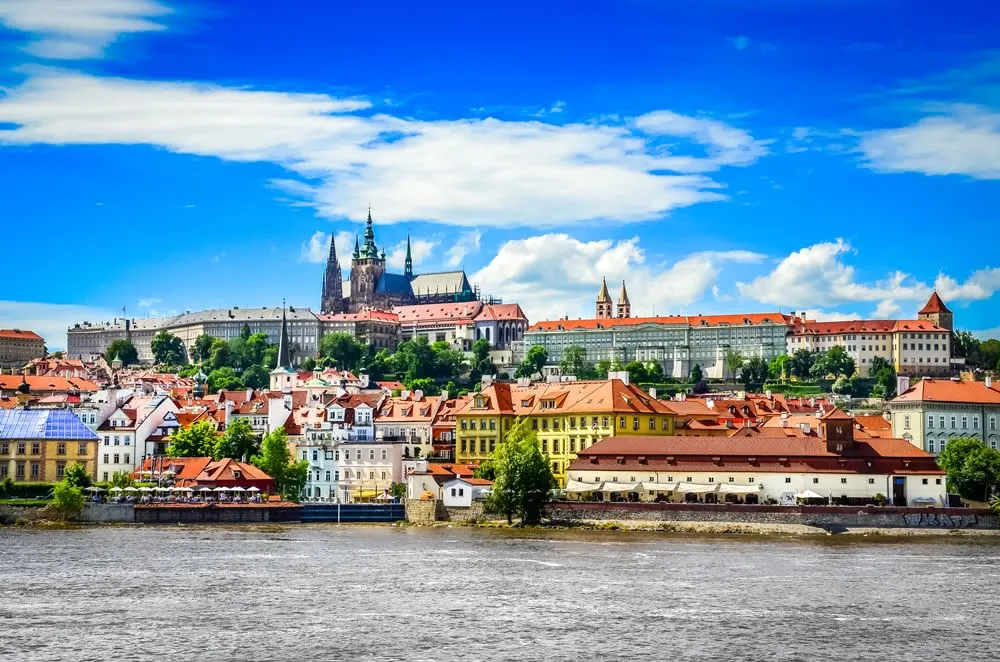
Royal Route Guided Tour

9:00 AM - 12:30 PM — Royal Route Guided Tour

On this charming guided walk, you will explore the Prague Castle, the largest castle complex in all of Europe. To reach the castle you will trace the Royal Coronation Route and cross the Charles Bridge, whose “speaking stones” reveal the amazing and often cruel history that occurred there. Your tour guide will then take you either through the castle courtyards and into the dramatic St. Vitus Cathedral in the center of the castle complex, or through the upper part of the castle district around the oversized palaces of the old Catholic nobility and the top of the Castle Steps for incomparable views over the red rooftops of the Little Quarter.

Prague Castle

Prague Castle is one of the main attractions in Prague and is also the largest castle complex in the world.

The Prague Castle is the largest castle complex in the world with structures dating back to the 9th century. The St Vitus Cathedral and Basilica of St George can be found within the castle walls. The Prague Castle also includes several gardens, palaces, and a monastery. This castle was the seat of power for the Kings of Bohemia, Holy Roman Emperors, and presidents of former Czechoslovakia. Prague Castle is a UNESCO world heritage site and is one of the most visited places in the country. 

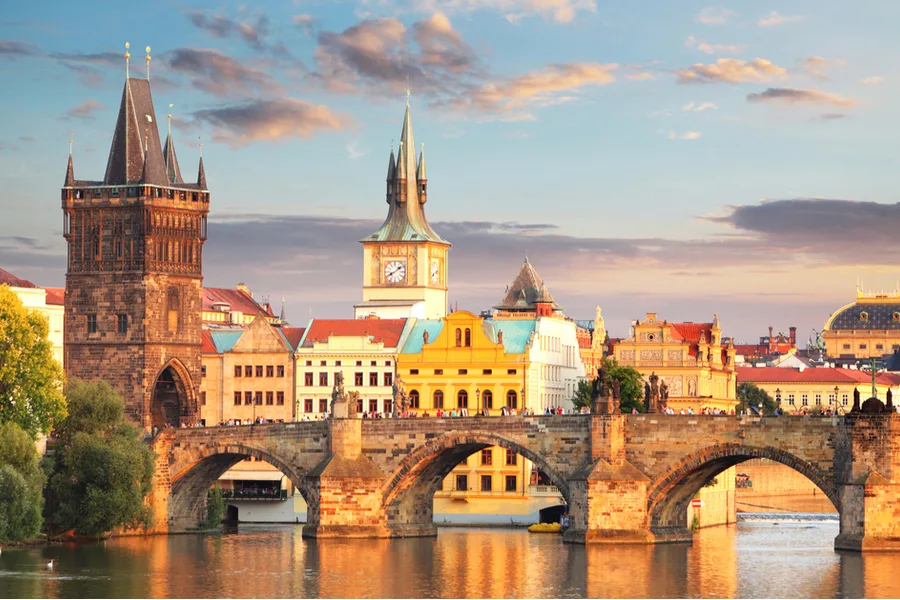
Charles Bridge

Cross the river dividing Prague's most historic neighborhoods, and experience one of Europe's most iconic landmarks.

Bridge construction began in 1357 under King Charles IV (hence the name), and it was the only bridge across the Vltava River until 1841. 30 baroque statues of saints line the bridge, and it is filled with street artists and entertainers. Not to be missed.

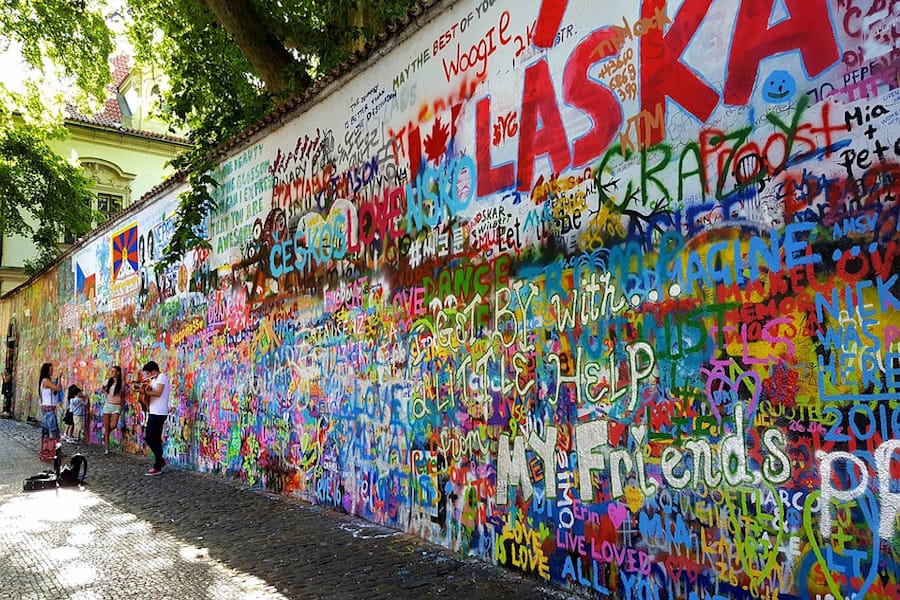
Maltese Square & Lennon Wall

See a historic wall that has been covered in John Lennon-inspired graffiti since Communist days.

The wall has been covered in graffiti since the 1960s, and during Communism anti-regime sentiment was common. John Lennon's assassination inspired grafitti reflecting his song, Imagine, which earned the wall its current moniker. It is now a favorite gathering place for tourists, and musicians sometimes congregate there as well. Just around the corner is the Maltese Square, which is one of Prague's more quaint and relaxed public spaces, despite being just off the main tourist route.

Mid-Day to Late Afternoon — Prague Castle

Prague Castle is the most visited destination in Prague, and for good reason. The castle's history stretches back over a 1000 years, and it has served as the seat of government for Bohemian kings, Holy Roman Emperors, and presidents of Czechoslovakia and the Czech Republic. The castle sits impressively perched on a hill overlooking the city, providing a breathtaking and romantic view.

St Vitus Cathedral

Venture into a mesmerizing gothic church which is the resting place of saints, Bohemian kings, and Holy Roman emperors .

Located within the castle walls and acting as a symbol of the Czech nation, St Vitus Cathedral is the country's largest and most prominent church. Although construction on the cathedral began in 1344 it was not completed for another 600 years, although the later construction was faithful to the original medieval design. It even contains stained glass windows from the famed Czech artist Alfons Mucha. Entry to the front nave is free, although the crypts and other parts of the church are paid entry.

Golden Lane

Wander a narrow street of brightly painted and picturesque cottages literally built out from the walls of the castle.

The Golden Lane is a street situated within the castle grounds. Originally built in the 16th century to house Rudolf II's castle guards, it takes its name from the goldsmiths that lived there in the 17th century. Throughout history, it's been occupied by castle guards, goldsmiths, and others, including for a short time Franz Kafka. The houses are now filled by shops. 

Strahov Monastery

Wander just slightly off-the-beaten-path to discover a hilltop medieval monastery with a stucco-paneled theological hall, a vast library, and a baroque church.

Strahov Monastery was founded in 1143 and in 1420, during the Hussite wars, it was attacked and plundered by the citizens of Prague. Luckily, this was before the monastery's prize attraction was built; a magnificent library with a magnificently painted ceiling. The monastery also contains a beautiful Baroque church, and you can find one of Prague's best viewpoints in the vineyards planted near its south entrance. 

Lobkowicz Palace

Take an intimate audio tour of an art-filled palace, which is narrated by its owners.

The Lobkowicz Palace is the only privately owned building in the Prague Castle complex. The excellent museum tells the fascinating tale of the noble family that once resided within it. An audio guide is narrated by actual family members, who tell the back story behind the beautiful art and artifacts their ancestors collected over the centuries, and describe their flight to America after Nazi and Communist political persecution. 

Late Afternoon to Evening — The Little Quarter

The Little Quarter is a quaint yet lively quarter of Prague tightly nestled on the slope and riverbank beneath the Prague Castle. It is filled with the homes of medieval and renaissance nobility who wanted to live as closely as possible to the castle. Picturesque side streets, beautiful churches, and impressive Baroque architecture all abound within the Little Quarter.

Charles Bridge

Cross the river dividing Prague's most historic neighborhoods, and experience one of Europe's most iconic landmarks.

Bridge construction began in 1357 under King Charles IV (hence the name), and it was the only bridge across the Vltava River until 1841. 30 baroque statues of saints line the bridge, and it is filled with street artists and entertainers. Not to be missed.

Church of St. Nicholas

Stare in wonder at Prague's largest and most beautiful baroque church.

Construction on this elegant and incredibly ornate church began in 1745 and took 100 years and 3 generations of architects to complete. You can also climb the tower for a view.

Wallenstein Garden

Escape to these tranquil 17th-century gardens located behind the walls of the Senate palace.

Open from April to October, these grand late renaissance gardens feature a massive limestone grotto created by artificial stalactites, ornamental pools, & classically-inspired statues. Most tourists miss this hidden gem, as the gardens are reached through inconspicious passageways in Wallenstein Palace, which houses the Czech Senate, and the nearby the Malostranská Metro station.

Maltese Square & Lennon Wall

See a historic wall that has been covered in John Lennon-inspired graffiti since Communist days.

The wall has been covered in graffiti since the 1960s, and during Communism anti-regime sentiment was common. John Lennon's assassination inspired grafitti reflecting his song, Imagine, which earned the wall its current moniker. It is now a favorite gathering place for tourists, and musicians sometimes congregate there as well. Just around the corner is the Maltese Square, which is one of Prague's more quaint and relaxed public spaces, despite being just off the main tourist route.

Infant Jesus of Prague

See the Infant Jesus of Prague, a wax effigy of the baby Jesus credited with many miracles, which attracts visitors from around the world.

The church was completed in 1613 in the Baroque style and houses the 18.5-inch statue. The church is somewhat plain in comparison to most churches in Prague, but visitors come to see the Infant Jesus of Prague (il Bambino di Praga).

image

Day 7

Prague

image

Day 8

Prague

Day 8

Prague

icon
icon
icon

Morning

Jewish Quarter

Jews have lived in Prague since its beginnings in the 10th century and have endowed it with a rich heritage. The ghetto was created in the 12th century, as Jews were forced to live separately from Christians. Despite persecution, the community prospered, but sadly, only a small minority survived the Nazi occupation. A lasting legacy remains, including synagogues, architecture, and a fascinating cemetery.
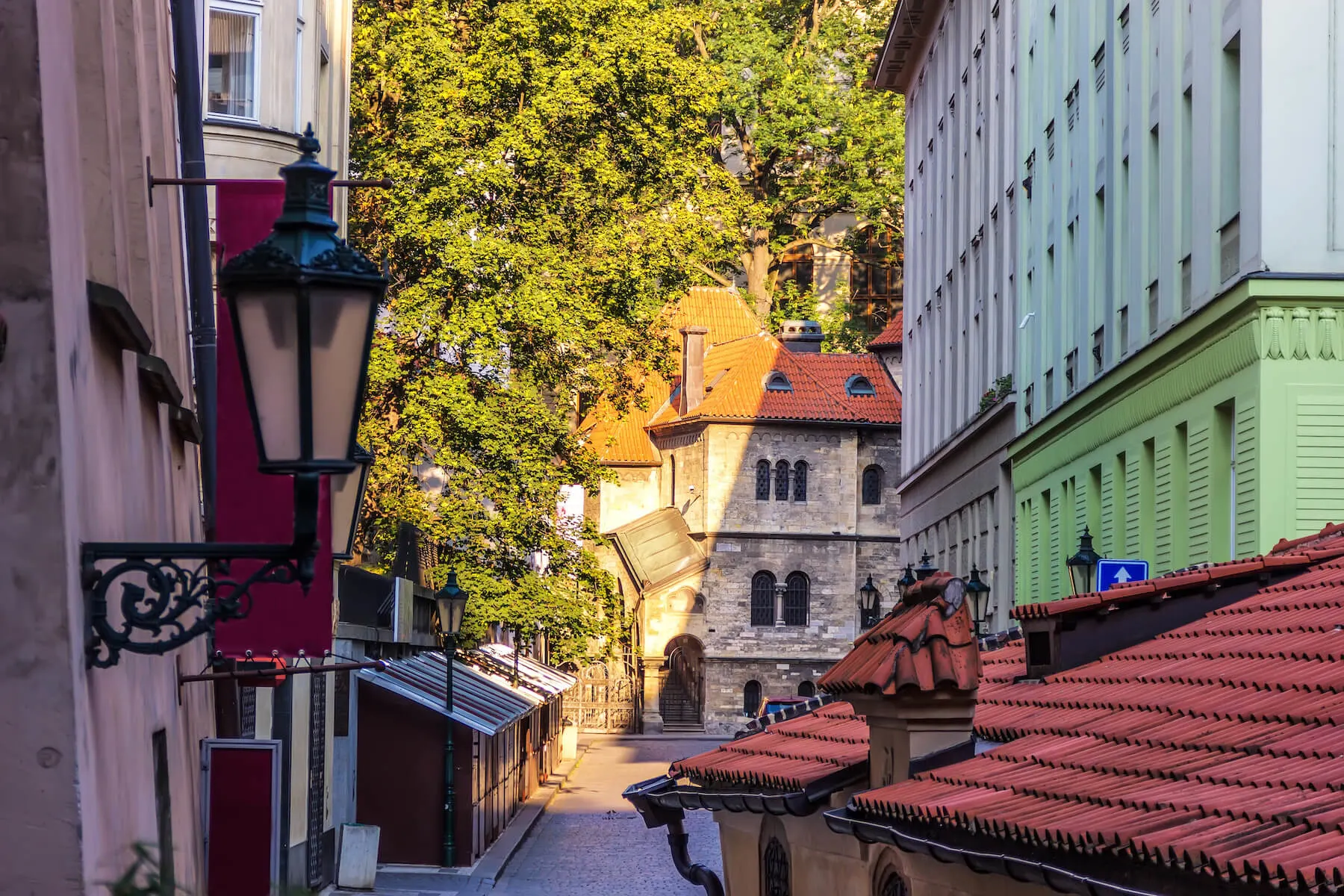
Jewish Quarter

Morning — Jewish Quarter

Jews have lived in Prague since its beginnings in the 10th century and have endowed it with a rich heritage. The ghetto was created in the 12th century, as Jews were forced to live separately from Christians. Despite persecution, the community prospered, but sadly, only a small minority survived the Nazi occupation. A lasting legacy remains, including synagogues, architecture, and a fascinating cemetery.

Old Jewish Cemetery

Take an unforgettable visit to one of Europe's largest medieval Jewish cemeteries.

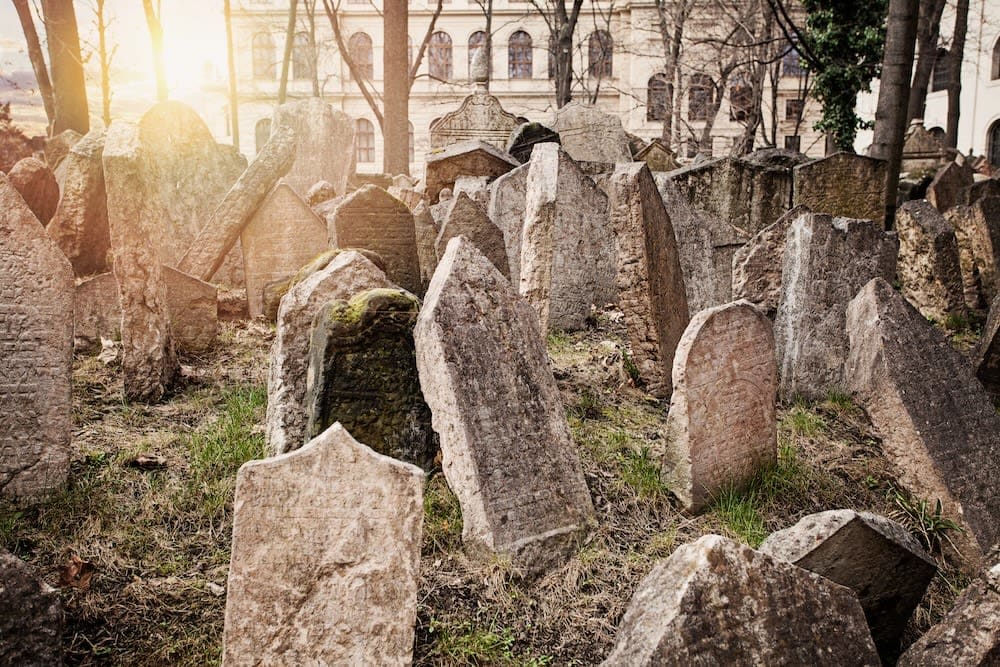
As the Jewish Ghetto was quite cramped, there was no room to expand the cemetery. Unable to acquire further land, and not wishing to dishonor ancestors through the demolition of existing graves, Prague's Jews buried their loved ones in multiple levels. Gravestones are packed in tightly and in some areas the burials reach 12 layers!

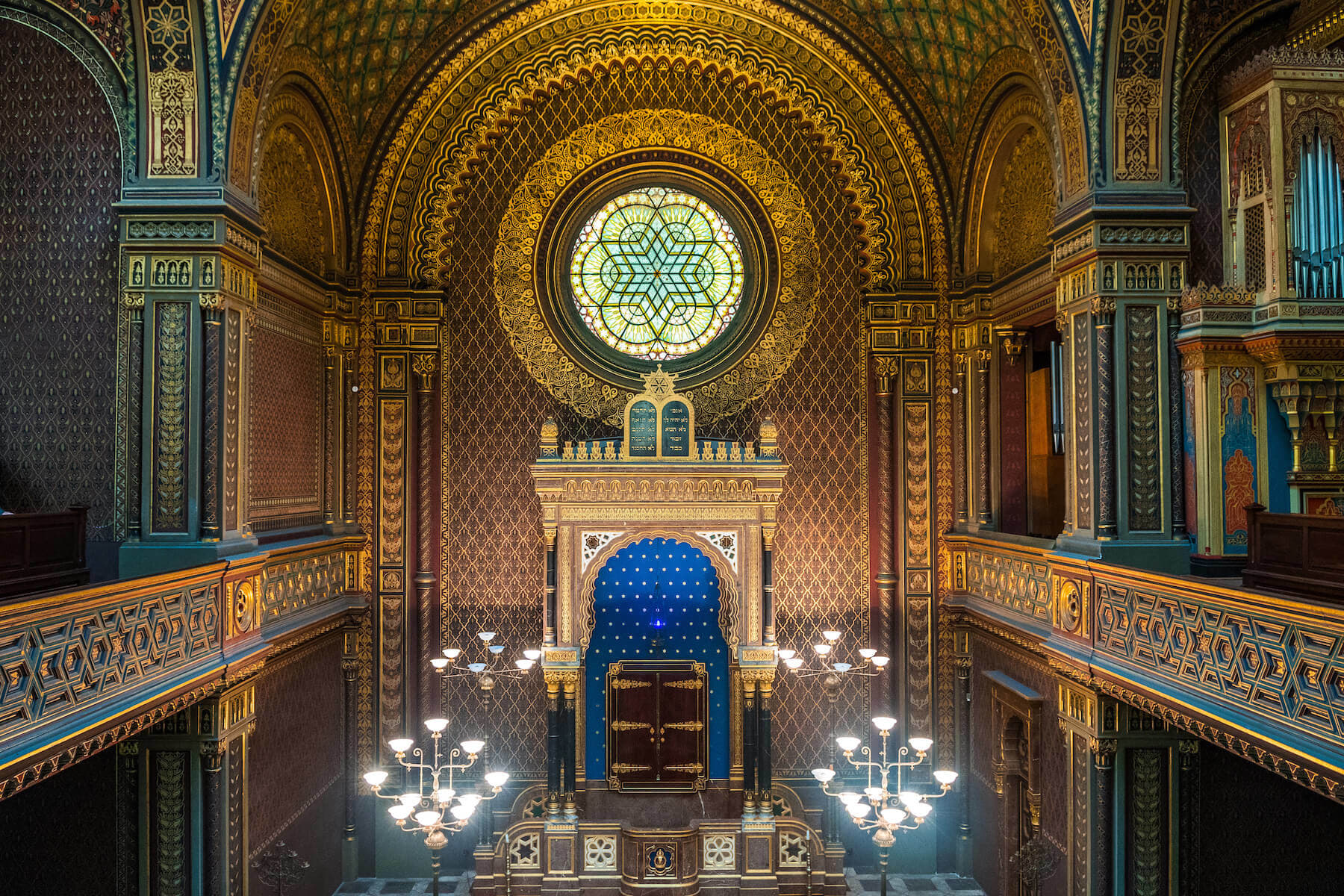
Spanish Synagogue

Discover the synagogue considered by many to be Prague's most beautiful.

Completed in 1868, the Spanish Synagogue is the newest synagogue in Prague's Jewish Quarter, but happens to be built on the site of the former Oldest Synagogue in Prague. It is built in a stunning Spanish Moorish style as a symbol of the flowering of the Jewish culture which occurred under Muslim rule on the Iberian Peninsula.

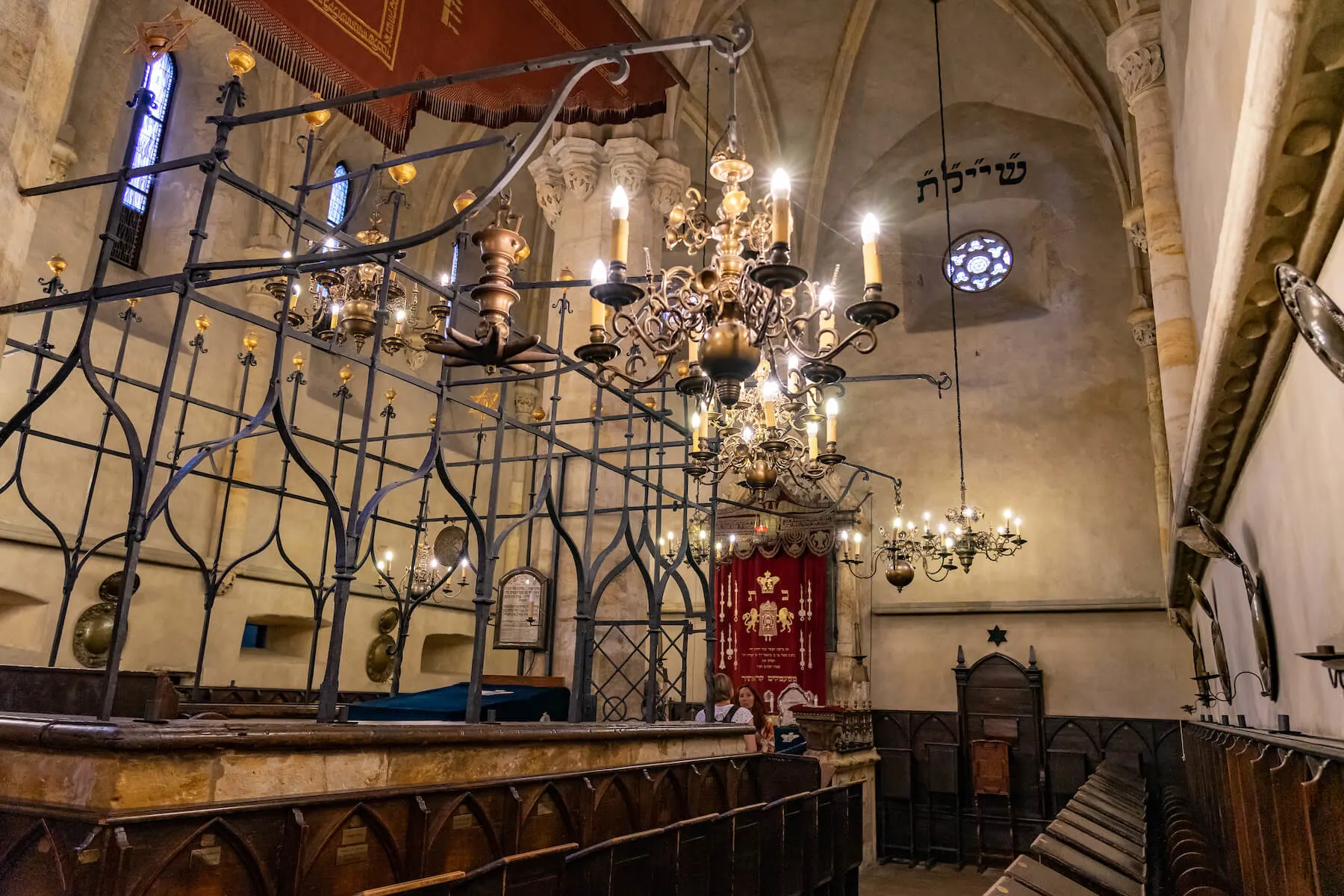
Old-New Synagogue

See the oldest surviving synagogue in Europe and also one of Prague's earliest Gothic buildings.

When built it was Prague’s newest synagogue, but over time became its oldest – hence the “Old-New”. A beautiful ark holds the Torah and legend says its attic is the hiding place of the legendary clay Golem.

Afternoon — Old Town

A visit to the Old Town transports you to an entirely different era. A labyrinth of twisting cobblestone lanes and alleys surrounds Old Town Square, which has been Prague's municipal center since the Middle Ages. The square is lined by magnificent churches and imposing Renaissance palaces. As you wander through the Old Town, you discover numerous other delights, including several beautiful churches, a plentiful supply of cozy cafes and pubs, and an outdoor market dating back to the Middle Ages.

Old Town Square

Make sure to visit one of Europe's most important, historic, and stunning city squares.

The square is filled with rich history and surrounded by many beautiful old buildings, such as the gothic church of Our Lady before Týn and the baroque church of St. Nicholas. At the center of the square is a large statue of Jan Hus, a church reformer burnt at the stake in 1415, and a lovely and recently-restored column topped by the Virgin Mary. Today the square is filled with street performers, food stalls, and horse-drawn carriages. 

Old Town Hall and Astronomical Clock

See Prague's most photographed moment when the late medieval timepiece constructed on the side of the Old Town Hall Tower comes to life at the top of the hour.

Apostles proceed from the tower’s 1410 astronomical clock hourly, flanked by figures representing vanity, greed, death, and pleasure. You can also take an elevator to the top of the Old Town Hall tower for a great view of the Old Town Square and rooftops. Tours of the town hall and its gothic cellars are also offered. 

Church of Our Lady before Týn

Count the spires on the Church of Our Lady Týn before discovering the hidden courtyard behind it.

The 14th-century, Gothic church is a stunning structure with asymmetrical towers (note that the one on the right is slightly larger than the one on the left). It is the dominant feature of Old Town square and serves as an extensive gallery of Gothic, Renaissance and Early Baroque works. The church is the final resting place for the great astronomer Tycho Brahe.

Clementinum

Discover a large historical complex of buildings and courtyards "hidden in plain sight" within the Old Town.

Founded as an abbey in the 11th century and later transformed into a Jesuit university, it is the second largest complex of buildings in Prague after the castle and contains four separate churches. Guided tours begin at 10am, and include an awe-inspiring Baroque library hall and the Astronomical Tower, from which you have a beautiful view of the Old Town.

Late Afternoon/Early Evening — Vyšehrad Fortress

The castle of Vyšehrad was the seat of Bohemia's kings from the 11th to the 12th centuries. Due to its strategic position on a hill overlooking the Vltava River and Prague, it became an important army garrison in the 17th century, and it was transformed into a fortress with huge walls, gates, and ramparts. Walking along these ramparts will offer you wonderful views of the city and river. The interior of the fortress is now given over to a pleasant and quiet park which is a favorite of locals.

Brick Gate and Casemates

Venture within the fortress's massive 17th-century walls and gates.

A tour through the Brick Gate on the fortress's north side will take you through the narrow underground passageways and casemates of the fortress. You will see a historical exhibit on Vyšehrad as well as the underground Gorlice Hall, where the original statues from the Charles Bridge are stored for safe-keeping (many of the statues on the bridge are copies). 

Vyšehrad Cemetery

Wander in a graveyard where many prominent Czechs are buried, such as famed composers Dvořák & Smětana.

The cemetery is filled with many tombs which are works of art in themselves, including several arcades with beautiful art-nouveau frescoes. The monumental Slavin tomb is a sort of pantheon of the Czech people, with over 55 prominent persons buried within it. Dvořák and Smětana have their own more modest graves.

Fortress Walls Viewpoint

Enjoy stunning city views from atop the fortress walls.

Prague Castle and most of the city can be seen from above the cavernous Gorlice Hall. A walk along the fortress walls is a delightful experience, as you will enjoy numerous excellent vantage points on all sides of the fortress, enjoying Prague from a different perspective without all the crowds.

image

Day 8

Prague

image

Day 9

Prague

Day 9

Prague

icon
icon

9:00 AM - 4:00 PM

Guided Bike to Karlštejn

In this tour, you will bicycle alongside a beautiful river and through forested hills to reach one of Europe's most famous and awe-inspiring castles. After picking up your bikes in Prague, you will cycle to a rail station where you will catch a train and take a 40-minute ride through the Czech countryside to the town of Beroun. You will then begin a beautiful journey along the Berounka River, stopping in a pub in a riverside village for lunch. After lunch, you will make your way up into the hills above the castle Karlštejn and then descend to the fairy-tale perfect, Medieval castle below.

Guided Bike to Karlštejn

9:00 AM - 4:00 PM — Guided Bike to Karlštejn

In this tour, you will bicycle alongside a beautiful river and through forested hills to reach one of Europe's most famous and awe-inspiring castles. After picking up your bikes in Prague, you will cycle to a rail station where you will catch a train and take a 40-minute ride through the Czech countryside to the town of Beroun. You will then begin a beautiful journey along the Berounka River, stopping in a pub in a riverside village for lunch. After lunch, you will make your way up into the hills above the castle Karlštejn and then descend to the fairy-tale perfect, Medieval castle below.

Early Evening — New Town

Despite being 700 years old, the New Town (Nové Město) is the youngest of the original five independent towns that made up Medieval Prague. The heart of New Town is one of the three original markets around which the town was planned, Wenceslas Square. Not fully given over to tourism like the Old Town, the New Town combines a historic atmosphere with the daily commercial and social life of locals, making it a great place to get a taste of the real Prague.

Wenceslas Square

Experience a mishmash of interesting architecture on Wenceslas Square, Prague's main commercial center.

The square, which could also be described as a wide boulevard, is named after the Patron Saint of Bohemia, whose statue can be seen at the top of the square. Many historical events have taken place here, including the demonstrations of the Velvet Revolution in 1989, which resulted in the collapse of the Communist regime. Today the square is lined by department stores, hotels, and office buildings, many of them notable architectural highlights of the 19th, 20th, and 21st century.

Municipal House

Tour a breathtaking art nouveau venue and stay for a concert, opera, or ballet.

The stunning concert hall is open for tours and hosts performances on most evenings. The main hall is painted by famous Czech artists including Alfons Mucha. A beautiful cafe and restaurant are also housed in the building, and you can find one of Prague's most ornate pubs in the cellar (the "American Bar").

Dancing House

Stroll down the river to find this curvaceous office block designed by Frank Gehry, and whi msically nicknamed Fred & Ginger.

There is no tour of the interior, so most visitors just snap a photo and head out. However, there is a restaurant and bar at the top called Ginger&Fred. For a spectacular view of the city check out the terrace on the top floor (only for paying customers).

National Theater

Experience nationally-sponsored ballet & opera in a magnificent venue.

This concert hall is Prague's most prestigious, and it is not only a symbol of the 19th century Czech national revival but also arguably one of the most beautiful concert venues in Europe. Unfortunately, tours are not regularly offered, but you may attend an opera or ballet if you purchase tickets in advance. The riverfront near the concert hall is one of the most photographed spots in Prague.

National Museum

Explore an interesting museum collection in a grand building completed in 1891.

The recently renovated and improved National Museum is fronted by the iconic equestrian statue of "good king Wenceslas". Beyond it's dramatic exterior you'll find a grand staircase which is a highlight of any visit. Founded in 1818, the museum played a major role in bringing natural science and history to the common man, and also played an important part in the Czech national revival occurring in the 19th century.

image

Day 9

Prague

image

Day 10

Depart Prague

Day 10

Depart Prague

icon

To Be Determined

Taxi Transfer to Airport

Taxi Transfer to Airport

To Be Determined — Taxi Transfer to Airport

image

Day 10

Depart Prague

What's Included in the Bohemian & Saxon Highlights Trip Trip?

Fork

Pre-Paid Tours and Activities:

  • Guided Cycling Tour of Berlin
  • Guided Walking Tour of Old Town
  • Prague Castle & Royal Route Guided Walk
  • Guided Bike Ride through the Czech Countryside to Karlštejn Castle
  • City Card for Berlin, including discounts to many popular attractions
train

Pre-Paid Transportation:

  • 2nd Class Train Tickets from Berlin to Dresden
  • 2nd Class Train Tickets from Dresden Hbf to Praha hl.n.
  • Public Transport Tickets for Berlin
train

Accommodation:

  • 3 nights at a hotel of your choice in Berlin
  • 2 nights at a hotel of your choice in Dresden
  • 4 nights at a hotel of your choice in Prague
mobile

Go Real Travel Mobile App:

  • Itinerary Plan & Reservations Info
  • Points of Interest
  • Detailed Travel Information
  • Maps & Directions

Other Trips You May Like

Timeless Central Europe:: From Berlin to Vienna through the Czech Republic

15 Days

From$3249USD

Timeless Central Europe:: From Berlin to Vienna through the Czech Republic

View Trip
Discover Eastern Europe: 10-Day Journey through Prague, Dresden, and Berlin

10 Days

From$1925USD

Discover Eastern Europe: 10-Day Journey through Prague, Dresden, and Berlin

View Trip
Exploring the Best of east Germany and Prague In One Week

7 Days

From$1195USD

Exploring the Best of east Germany and Prague In One Week

View Trip
One Week in Berlin & Prague: See the Highlights and Experience the Local Scene

7 Days

From$1495USD

One Week in Berlin & Prague: See the Highlights and Experience the Local Scene

View Trip
Capitals, Canals, and Castles: A 9-Day Tour of Amsterdam, Berlin, and Prague

9 Days

From$2240USD

Capitals, Canals, and Castles: A 9-Day Tour of Amsterdam, Berlin, and Prague

View Trip
Rivers and Revelries in the Cultural Capitals of Central Europe - Berlin, Prague & Budapest

10 Days

From$1927USD

Rivers and Revelries in the Cultural Capitals of Central Europe - Berlin, Prague & Budapest

View Trip
11 Day Itinerary in Berlin, Prague & Vienna: Castles, Palaces, and Much More

11 Days

From$2045USD

11 Day Itinerary in Berlin, Prague & Vienna: Castles, Palaces, and Much More

View Trip
12 Days in the Heart of Central Europe: Berlin, Prague, Vienna, and Munich

12 Days

From$2449USD

12 Days in the Heart of Central Europe: Berlin, Prague, Vienna, and Munich

View Trip
10 Days of Holiday Spirit in Germany's Best Christmas Markets

10 Days

From$1415USD

10 Days of Holiday Spirit in Germany's Best Christmas Markets

View Trip

Featured Blogs

10 Most Amazing Day Trips From Prague in 2024
Prague
Day trips

10 Most Amazing Day Trips From Prague in 2024

How to Plan a Trip to Germany – Step-by-Step Guide
Germany
Trip planning

How to Plan a Trip to Germany – Step-by-Step Guide

13 Most Happening Things to Do in Prague at Night
Prague
Nightlife

13 Most Happening Things to Do in Prague at Night

18 Cheap and Free Things to do in Prague
Prague
Cheap

18 Cheap and Free Things to do in Prague

Top 10 Reasons to Visit Prague
Prague
Why visit

Top 10 Reasons to Visit Prague

Flying Solo: The Best Places to Travel Alone in Europe
Europe
Travel solo

Flying Solo: The Best Places to Travel Alone in Europe

16 Most Romantic Destinations in Europe
Europe
Romantic

16 Most Romantic Destinations in Europe

Our Customers Say It Best

Malini Dutta, Boston, Massachusetts
We can't thank you enough for the detailed plans, maps, and suggestions. It really felt that someone was holding our hands and showing us around. We had all the excitement of discovering foreign lands, with none of the problems that can happen while negotiating unfamiliar places. In fact, all the cities felt like home within a few hours of arriving and exploring.
Bev and Mark Frankel, Williamsburg, Virginia
We could not be more pleased with Go Real Travel! You took the guess work out of things like public transport but still managed to allow us the freedom to tour as we wanted. Our guides were exceptional and every time I saw a Viking Cruise tour of 25 people, I realized the quality experience we were getting with Go Real.
Marianne Strydom, Paarl, South Africa
I just wanted to thank you for organizing an amazing trip for me – I packed in so much in such a short period of time and everything was just perfect. The way you do things makes it possible to really get to know the destination, which for me as a travel agent could not have been better.
Otto Chuy, Los Angeles, California
I am still surprised how everything worked as planned, without a hitch. All instructions in your itinerary were precise and correct. Your suggestions and comments in each of the locations we went to were very helpful. All your guides, without exception, were wonderful and exactly on time.
Go Real Travel, Inc. BBB Business ReviewASTA Member

Explore cities in more detail

The Television Tower in Berlin at Sunrise

Berlin

Since the fall of its notorious wall, Berlin’s unification has seen it go from strength to strength. No wonder the city feels like it hasn’t stopped partying since the 1990s. There is so much to celebrate here. Fueled by the robust economy, a thriving tech scene, and straight-up German bonhomie, when you step into Berlin you’ll soon be caught up in its spirit.  For all this gusto, Berlin hasn’t forgotten its troubled past. A visit to Berlin is to bear witness to history. Portions of the wall remain intact, and the city’s Jewish Museum offers a detailed, emotional examination of the Holocaust. Inside the reconstructed Reichstag, every attempt has been made to preserve the parliament’s beleaguered history. The buildings' glass dome addition feels less like a triumphal crown and more like a freshly healed battle scar.  Days in Berlin are easily spent wandering from a cafe to the cultural institutions on Museum Island, or over to the Charlottenburg Palace. By night, crowds wander through the booming bars and nightclubs or gaze upon the floodlit Brandenburg Gate and Victory Column monuments. An international city that can offer something to everyone, Berlin is an unmissable stop on your German journey.  

Baroque Zwinger Palace in Dresden Germany

Dresden

Nearly every wall and rooftop in Dresden seems to be finished with a flourish. Defined by its ornamental baroque architecture, a power statement of Saxon royalty, Dresden is made all the more miraculous considering the city was leveled by firebombing in WWII. After the war, the city was reconstructed, brick by painstaking brick. Even under East German-Soviet rule, which usually eschewed frivolous design, buildings like the Semper Opera House were pieced back to their former glory. Restoration of the majestic Zwinger Palace and bell domed Church of Our Lady slowly followed, with the Frauenkirche only fully repaired in 2005. Arguably there is no other city in Europe that cherishes its hard-won architecture as much as Dresden. Although it is a compact city, so many of its buildings will stop you in your tracks that architecture fans will easily lose a whole day in the Old Town area. Especially during the winter months, Dresden sparkles with a joyous, uplifting ambiance. The city is recognized as having the best-ever Christmas market in all of Europe. Between the twinkling lights, the scent of hot wine and gingerbread, and the towering Christmas tree, it’s worth going out of your way to see Dresden at this time of year.   

Church of Our Lady before Týn old town prague czech republic

Prague

The city of Prague is indisputably the gem of Central Europe. Full of history, culture, and classic Czech pubs around every corner, Prague is teeming with nooks and crannies just waiting to be discovered. The narrow cobblestone streets and warm red rooftops give the city a homey feel, while the well-preserved medieval architecture transports you back in time. Walking across the Charles Bridge with the view of the Prague Castle will make you feel like you’re living in a fairytale, and you might as well be.    As an up-and-coming destination, Prague is a perfect mix of classic and modern. New trendy cafes and bistros are always popping up, and you can always find a group of lively locals chowing down on goulash and quaffing pivo (the best beer in Europe!) at traditional Czech restaurants across the city. The clash of modernity and tradition, preservation and innovation, gives this city a mysterious air that you won’t soon forget.

half timbered houses in nuremberg germany

Nuremberg

One of the most authentic, storied German destinations, Nuremberg's picturesque old town, glorious castle, and buzzing Christmas Market makes this city a time-true classic. The ideal gateway to old Bavaria, Nuremberg offers a primer in German history before you embark on the lovely journey through old Bavaria, known as the Romantic Road. Considered the capital of the Holy Roman Empire in the middle ages, Nuremberg would have felt like the center of the world as a procession of kings and emperors passed through its magnificent gates. When the German Renaissance came, Nuremberg was at its heart. Albrecht Dürer, the great German master artist, was born here, and Martin Luther called Nuremberg Germany's 'eyes and ears'. Skip forward a few centuries, and the city took a dark turn, as Nuremberg became a gathering point for the German National Socialists. Slightly outside of town, you can still find the Nazi Party Rallying Grounds, a sobering reminder of the not so distant past. If it all gets too heavy, you can end the day with a glass of rotbier (red beer) and mull it over. Nuremberg is a must-see for anyone who wants to delve into Germany's past. 

Skyscrapers and an old church at sunset in Frankfurt

Frankfurt

Dubbed ‘Mainhatten’ for its glass highrises, financial prowess, and proximity to the Main River, Frankfurt offers a fascinating glimpse into the ‘engine room’ of Europe’s economy with an unexpected twist. Among the glass and steel buildings, the old-worldly Römerberg square will give you a double-take. The square’s 15th-century half-timbered houses, old statues, and church spires contrast dramatically against the modern 21st-century skyscrapers beyond. If you visit at Christmas, the Römerberg is truly special, aglow with the light of the tallest Christmas tree in Germany. The square fills with stalls selling handicrafts, and the air is scented with hot apple wine, honey, and cinnamon.  Delve deeper into Frankfurt and you’ll find a substantial museum district, the Museumsufer (Museum Embankment). This area features a cluster of twelve museums on either side of Main River. This includes the Städel, home to Tischbein’s famous painting of renowned writer Johann Wolfgang von Goethe, one of Frankfurt’s most prestigious sons. The more time you spend in Frankfurt, the more you’ll discover a highly cultured city lurking beneath its glass facades. If you have the time, Frankfurt is certainly worth a second look.      

concert hall in hamburg germany

Hamburg

Compared to other German cities, Hamburg has a moody, nautical charisma all of its own. Despite being battered throughout history by floods, fires, and bombs, Hamburg has always held its head up high. Resilience is in the air in Hamburg, along with the briny smell of the North Sea. In recent years Hamburg has garnered a reputation for commerce and nightlife. Frequent travelers whisper that Hamburg is Germany’s ‘undiscovered’ city, the place to go for a little business and a lot of fun.  Known as Germany’s ‘gateway to the world’, ships dock in Hamburg as they haul cargo up and down the Elbe River. The city thrives as Germany’s primary seaport and has been a center of trade since the middle ages. Its affluence shows in the 19th-century brick warehouses, flourishing restaurant scene, and recently constructed Elbphilharmonie concert hall, which floats majestically in the harbor, part ship and part island. Hamburg is a city for those who like to live large - in a cultured, German kind of way. Attend a performance at the orchestra, cruise on a boat around the Außenalster Lake, or have a night on the Reeperbahn, the Vegas-like strip where the Beatles once performed. Whatever you do in the city, Hamburg will make you look twice and see Germany from a totally different point of view.       

👋

Hi! Need help planning your dream trip? 🌍

Go Real Travel Assistant

Online

Welcome! Where are you in your journey?

Pick the option that fits you best so we can route you to the right help.