👋

Hi! Need help planning your dream trip? 🌍

Go Real Travel Assistant

Online

Welcome! Where are you in your journey?

Pick the option that fits you best so we can route you to the right help.

Italian Glory - Rome, Naples & Amalfi Coast Itinerary 10 Days

destination-icon10 Day Tour of Rome, Sorrento and Naples

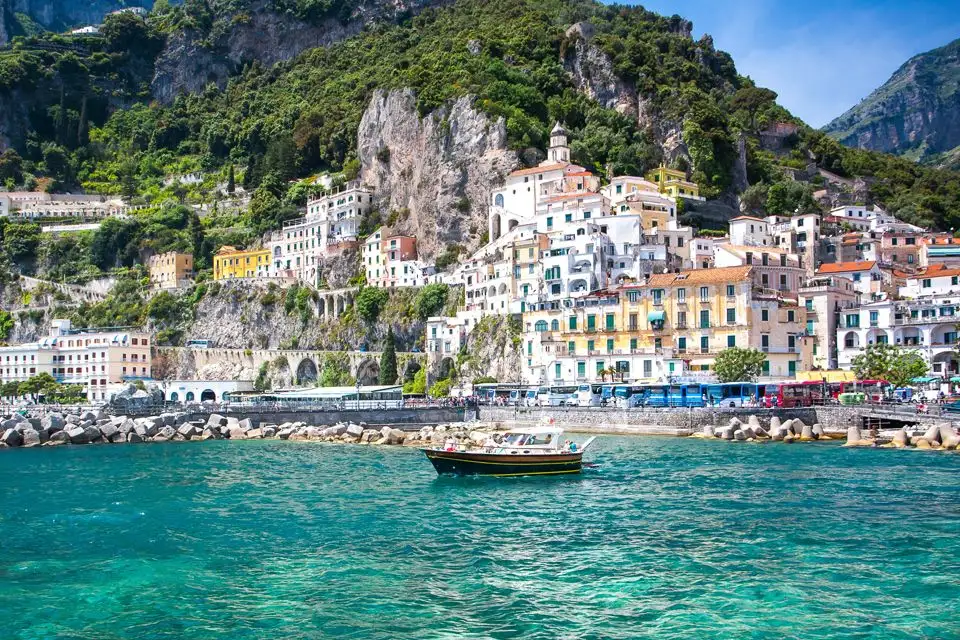
View over Amalfi Town
Trevi Fountain in Rome
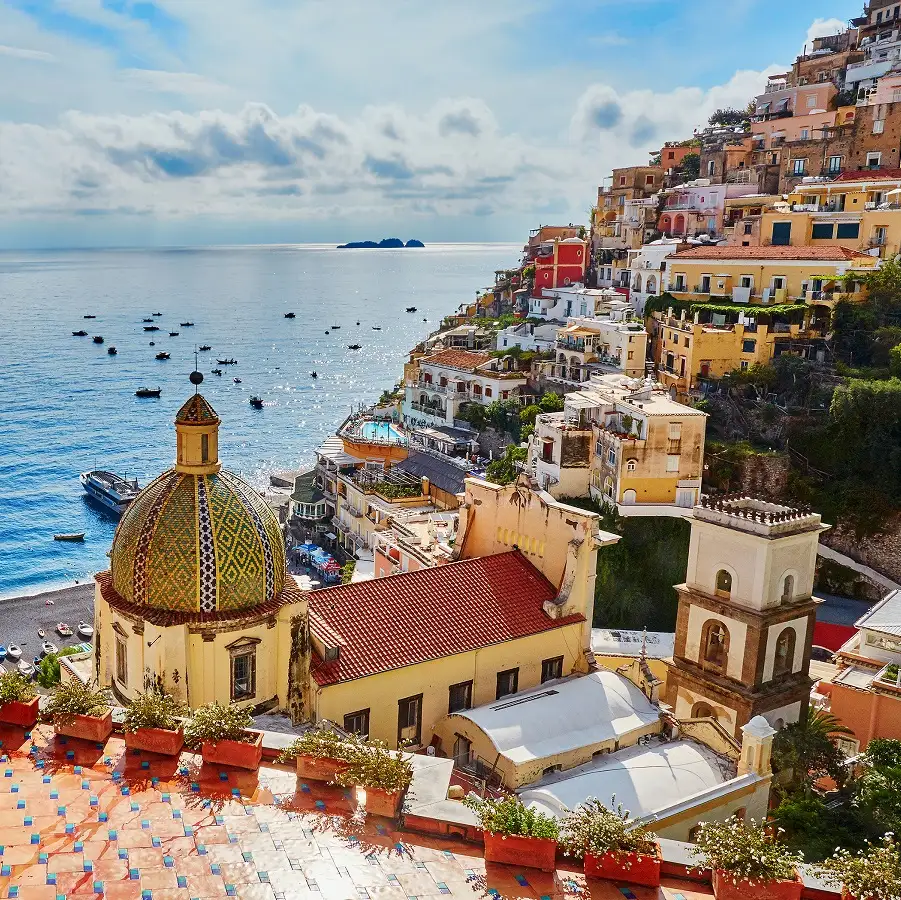
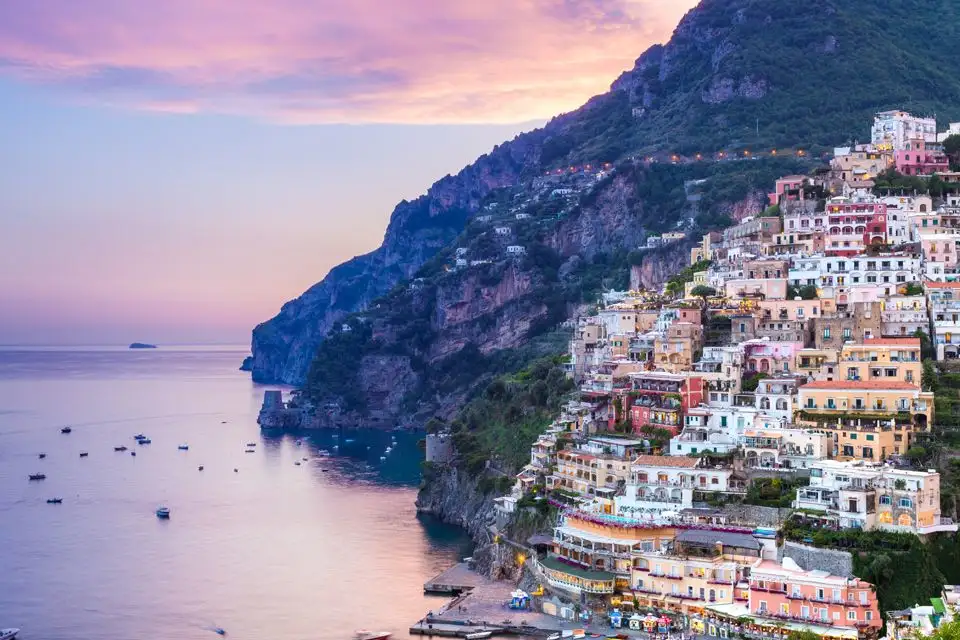
Hillside View of Positano at sunset
image
arrowLightLeft
arrowLightRight
calendar-icon
10 Days 9 Nights
calendar-icon
Best Time: Jan-Dec
building-icon
History Buffs
family-icon
Local Cuisine & Wine
Journey down Italy’s west-coast on this 10 day tour from Rome to the Amalfi Coast. Begin your trip in Rome, where ancient wonders and vibrant culinary scenes await. Explore the grandeur of the Vatican City, savor local delicacies in Trastevere, and delve into the heart of the Roman Empire with private guided tours. Continue to the breathtaking Amalfi Coast, experiencing its stunning views and hillside towns by boat on an Amalfi Coast day trip. Conclude your adventure in Naples, where the rich history of Pompeii and the dramatic beauty of Mount Vesuvius provide unforgettable moments.
  • Discover ancient Rome with a private guided tour, exploring the Colosseum and Roman Forum.
  • Savor the flavors of Italy on a twilight Trastevere group food tour.
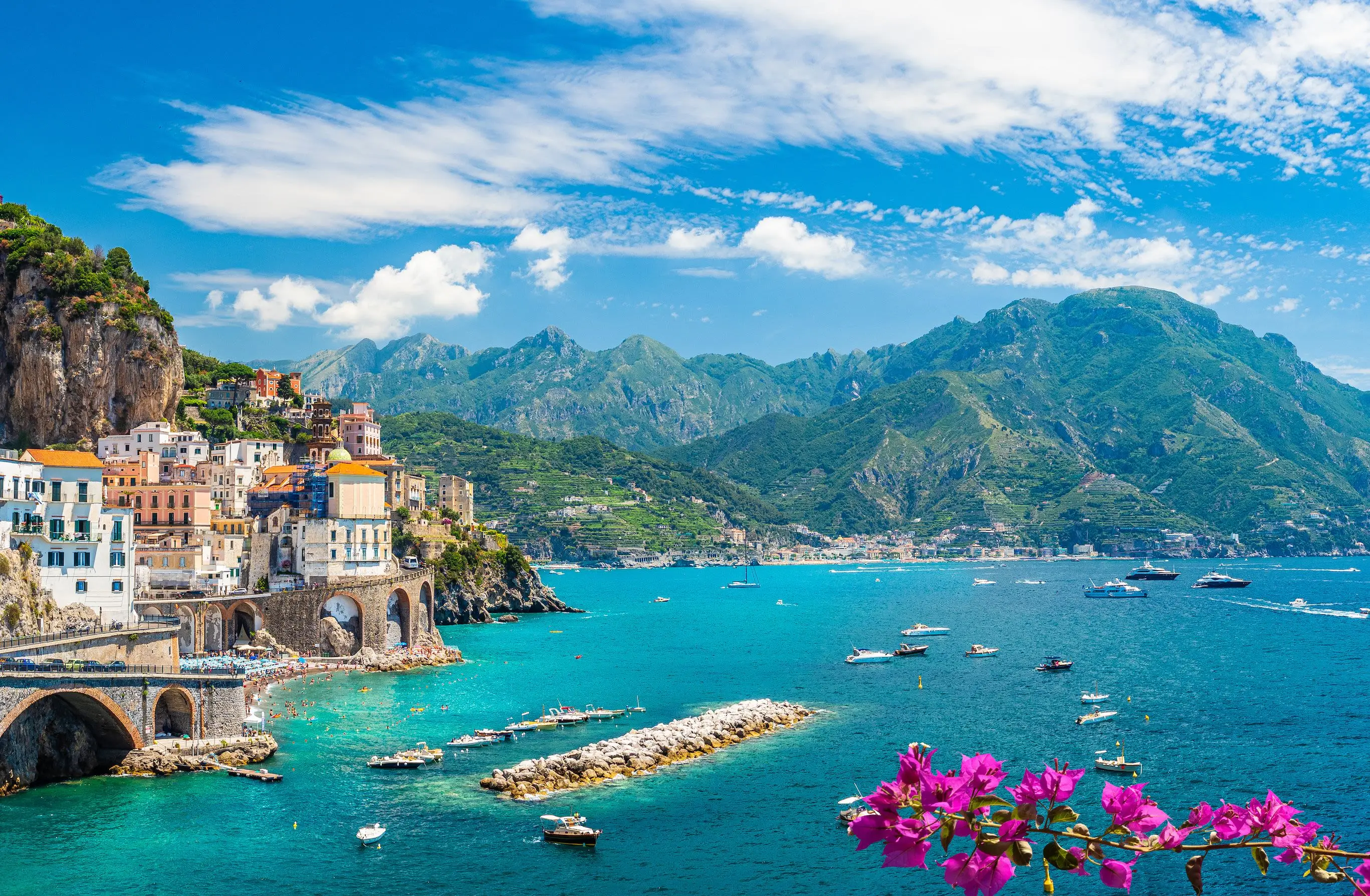
  • Experience the stunning Amalfi Coast on a private guided tour with a boat ride.
  • Ascend Mount Vesuvius on a guided excursion, enjoying spectacular views and historical insights.
  • Explore the preserved ruins of Pompeii, gaining a vivid glimpse into ancient life.
Journey down Italy’s west-coast on this 10 day tour from Rome to the Amalfi Coast. Begin your trip in Rome, where ancient wonders and vibrant culinary scenes await. Explore the grandeur of the Vatican City, savor local delicacies in Trastevere, and delve into the heart of the Roman Empire with private guided tours. Continue to the breathtaking Amalfi Coast, experiencing its stunning views and hillside towns by boat on an Amalfi Coast day trip. Conclude your adventure in Naples, where the rich history of Pompeii and the dramatic beauty of Mount Vesuvius provide unforgettable moments.
  • Discover ancient Rome with a private guided tour, exploring the Colosseum and Roman Forum.
  • Savor the flavors of Italy on a twilight Trastevere group food tour.
  • Experience the stunning Amalfi Coast on a private guided tour with a boat ride.
  • Ascend Mount Vesuvius on a guided excursion, enjoying spectacular views and historical insights.
  • Explore the preserved ruins of Pompeii, gaining a vivid glimpse into ancient life.
European Adventure
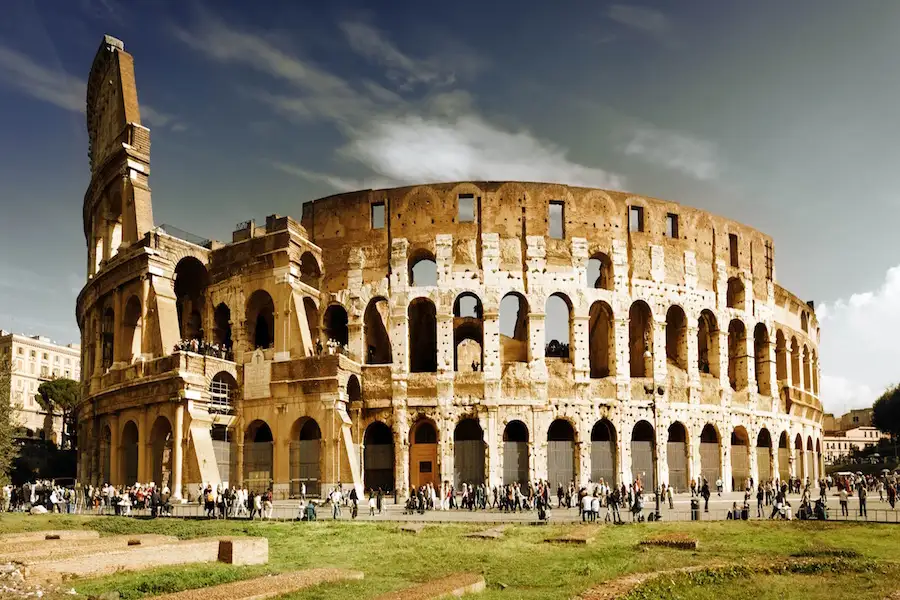
Colosseum
Historic Landmarks
Scenic Europe
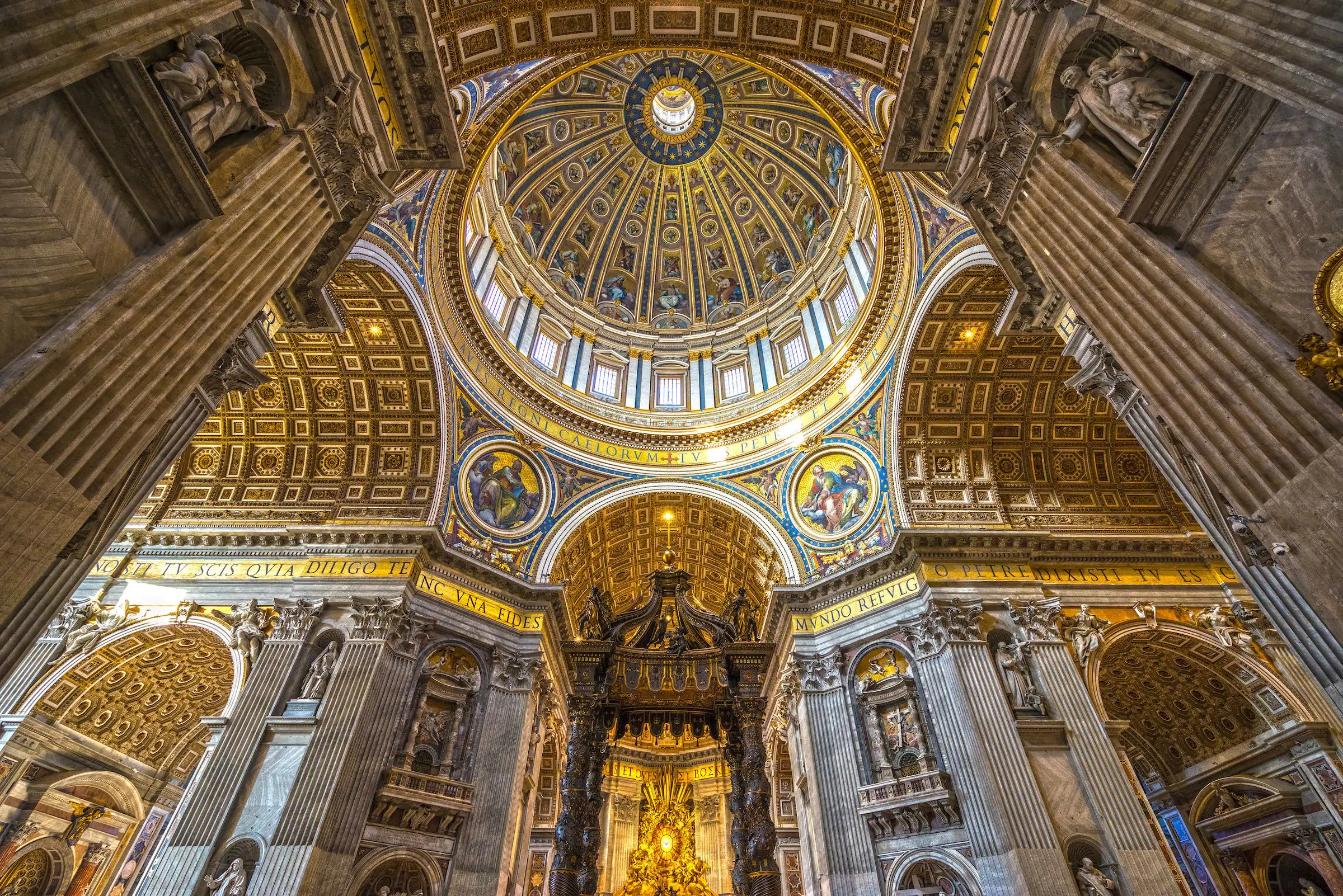
Vatican City
Churches & Monasteries
Exploring European Beauty
Piazza Venezia & Trajan's Market
Historic Landmarks
Traveling Through Europe
Piazza Tasso
Architecture
European Wonders
The Veiled Christ
Churches & Monasteries
Captivating European Destinations
Archaeological Museum
Museums & Galleries

Must see sights

European Adventure
Colosseum
Historic Landmarks
Scenic Europe
Vatican City
Churches & Monasteries
Exploring European Beauty
Piazza Venezia & Trajan's Market
Historic Landmarks
Traveling Through Europe
Piazza Tasso
Architecture
European Wonders
The Veiled Christ
Churches & Monasteries
Captivating European Destinations
Archaeological Museum
Museums & Galleries
Loading...

Starting from

$3870

per person

no-flightNot included

Secure Your Customizable Trip

Enter your details to embark on a journey that can be tailored just for you.

Start

Travelers

0 travelers
Add Room
Remove Room

Preferred Hotel Stars

Select Hotel Stars
Craft Your Own Itinerary

Select your interests and destinations for a trip plan inspired by you.

Southern Italy in Ten Days Trip - Map & Itinerary

Enable/Disable Map Scrolling

Click To Make Map Interactive

Southern Italy in Ten Days Trip Timeline

Arrival

4 nights

Rome

Italy

2 nights

Sorrento

Italy

Shuttle: 1h10m

3 nights

Naples

Italy

Departure

Day-By-Day Itinerary of Southern Italy in Ten Days Trip

image

Day 1

Arrive Rome

Day 1

Arrive Rome

icon
icon
icon
icon

11:30 AM

Private Transfer to your Hotel

For your arrival in Rome, we will provide information on the customs and passport procedures. We will schedule a pick up for your flight's arrival time. You will be met at arrivals inside the terminal by a driver holding a sign with your name on it. The transfer is for your party only - you will not be sharing a vehicle. The cost of the ride will be included in your itinerary package and you will be taken directly to your hotel.  IMPORTANT NOTE:  Please be aware the car service can fit up to 1 checked item of luggage and 1 personal item per person, such as a purse or small backpack. If you think you will have more baggage, please inform your travel consultant as this may result in an additional fee.

Private Transfer to your Hotel

11:30 AM — Private Transfer to your Hotel

For your arrival in Rome, we will provide information on the customs and passport procedures. We will schedule a pick up for your flight's arrival time. You will be met at arrivals inside the terminal by a driver holding a sign with your name on it. The transfer is for your party only - you will not be sharing a vehicle. The cost of the ride will be included in your itinerary package and you will be taken directly to your hotel.  IMPORTANT NOTE:  Please be aware the car service can fit up to 1 checked item of luggage and 1 personal item per person, such as a purse or small backpack. If you think you will have more baggage, please inform your travel consultant as this may result in an additional fee.
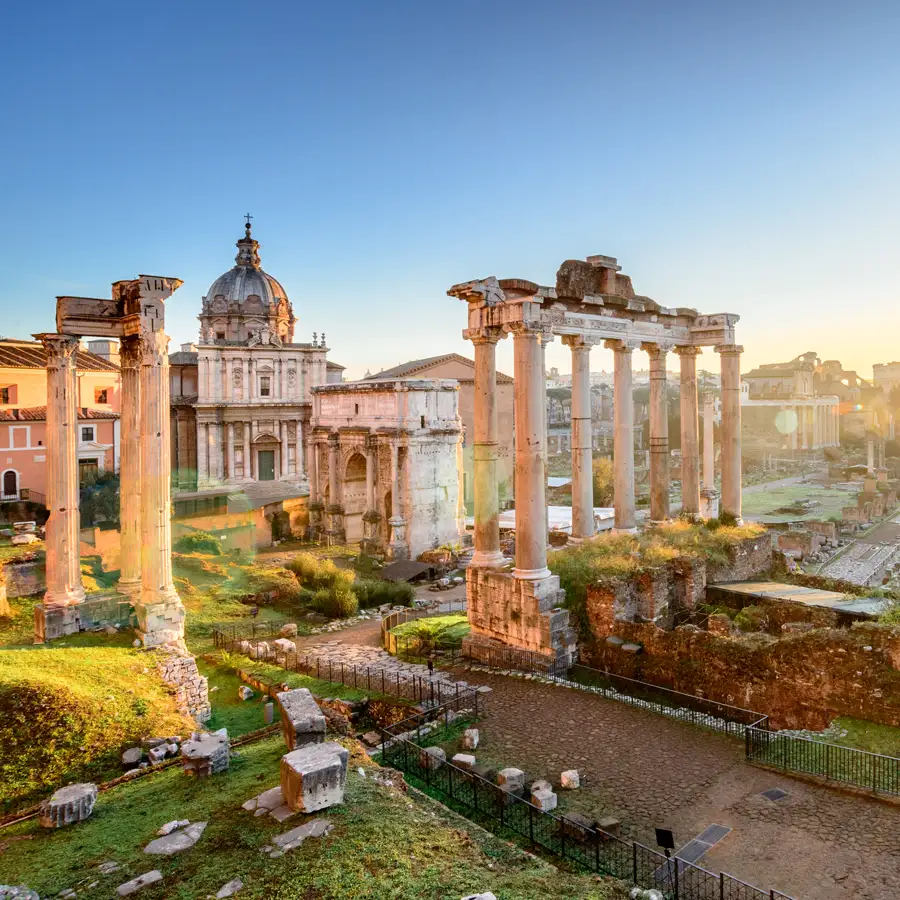
Mid-Day/Afternoon — Rome's Historic Center

Rome's tangled historical center is packed full of some of the most fascinating and incredible sights. Explore elegant squares and piazzas, centuries-year-old churches, and baroque fountains and wander at leisure the labyrinth of ancient Roman cobbled lanes. Highlights include the Baroque grandeur of Piazza Navona and the great and endlessly copied Roman Pantheon.

Piazza Navona

Stand in one of the most beautiful squares in Rome, home to the famous Fontana dei Fiumi Fountain by Bernini.

A Roman rendezvous, Piazza Navona is, for many people, the most beautiful square in the world. Like many of Rome's landmarks, Piazza Navona is located over the foundations of an ancient monument, a 30,000 seat stadium of Domitian. The former tiers of seats have since made way for ornate fountains, exuberant baroque palazzi, and bustling pavement cafes. The square has long been the hub for local life, hosting Rome's main market for over 300 years. Today it attracts a colorful circus of tourists, performers, hawkers, street artists, and pigeons. The first visit to Piazza Navona might well result in a stiff neck from gazing up at all the sumptuous Baroque beauty.

Pantheon

Visit this iconic former pagan temple converted into a Christian church.

This sanctuary of impressive dimensions is one of the best-preserved buildings of ancient Rome. Erected on the foundations of an earlier temple dating back to 27 BC, its construction was ordered by the Emporer Hadrian in the second century AD. The Pantheon was originally a Pagan temple dedidated to all of the gods. The building's consecration as a church in 609 AD saved it from the abandonment, destruction, and the worst of the spoliation that befell the majority of ancient Rome's buildings during the early medieval period. Its greying exterior may look its age, but inside, a spectacular experience awaits. With light streaming through its oculus, the marble-clad interior seems vast. The Pantheon is home to some notable tombs, including those of painters Annibale Carracci and Raphael and King Vittorio Emanuele II.

Column of Marcus Aurelius

Column formerly dedicated to Emperor Marcus Aurelius; a statue of St. Paul now stands in place of his.

If you turn left at the far end of the Temple of Adrian, you'll arrive at the Column of Marcus Aurelius (Colonna di Marco Aurelio). The column located on Piazza Colonna commemorates the Roman Emperor Marcus Aurelius and his victories over the Germanic tribes in Danubian and Marcomannic wars. It was modeled on Trajan's Column (which is located in Trajan's Forum). The column consists of 27 or 28 blocks of Carrara marble, each of 3.7 meters (12 ft) diameter, and was nicknamed the Centenaria, "hundred-footer" because it was 100 Roman feet or 29.60 meters high. On the top of the column was a statue of Marcus Aurelius; today, the apostle Paul stands there.

Via del Corso

One of the main streets in Rome.

The main street running alongside the Piazza Colonna is one of the main streets in Rome, called the Via del Corso. It is remarkable for being absolutely straight in an area characterized by narrow meandering alleys and small piazzas. Its runs 1.5km from Piazza del Popolo all the way to Piazza Venezia and is one of the busiest shopping streets in Rome. You’ll find lots of large international stores all over the street including major retailers such as Nike and Zara, as well as smaller Italian retailers where bargains on boutique pieces of Italian clothing and souvenirs can be found.

Late Afternoon/Early Evening — Spanish Steps

The streets spreading out from grand Piazza del Popolo (People's Square) form a trident that hosts some of the most popular shopping and tourist sights in Rome. These include the Spanish Steps, the adjacent Keats-Shelley House where Keats died of tuberculosis in 1821, Trevi Fountain where Anita Ekberg jumped into the water in the famous scene from Frederico Fellini's La Dolce Vita, and the Mausoleum of Emperor Augustus.

Spanish Steps

Take a scenic walk up the 18th-century stairway where Audrey Hepburn and Gregory Peck set out on their Roman Holiday.

The majestically balustraded Spanish Steps were built in 1723-6 to connect the piazza with the church of the Trinita dei Monti and the Pincio. It quickly became a favorite spot of poets, artists, and writers who gathered on its 137 steps, and it's now a favorite stop for tourists from all over the world. Yet this highly attractive stairway still somehow manages to retain a sense of romance even at the height of the tourist season, and if you happen to get there at the beginning of May you’ll find it laden with tubs of magnificent azaleas. A masterpiece of 18th-century town planning, the steps actually contain a religious message – the three flights and three landings are an allusion to the Holy Trinity.

Keats-Shelly House

Visit the last residence of poet John Keats, now a memorial museum.

The Keats-Shelley House at the foot of the Spanish Steps to the right contains the apartment where the poet John Keats spent the last three months of his life. The House is essentially an archive of English-language literary and historical works and a museum of manuscripts and literary mementoes relating to the Keats circle of the early 19th century, i.e. Keats himself, Percy and Mary Shelley and Byron (who at one time lived across the square).

The Trevi Fountain

Admire one of the most iconic sights in Rome, made famous by Anita Ekberg in La Dolce Vita.

The Trevi Fountain is one of the most iconic sights in Rome thanks to the antics of the shapely Anita Ekberg casting herself into its waters in Frederico Fellini’s cinematic masterpiece, La Dolce Vita. The fountain curiously seems to appear out of virtually nowhere within a warren of backstreets but is nevertheless discovered reasonably early each day by endless crowds of tourists looking to ensure their future return to Rome by tossing a coin back over their should into its crystal clear water (the coins are raked up each morning and donated to the Church organization Caritas). 

Mausoleum of Augustus

Visit the tomb of the first Roman Emperor and his family, which is finally being restored after more than a millenium of neglect.

The huge circular Mausoleum of Augustus, holding the tomb of the Emperor and the principal members of his family was one of the most sacred monuments of the ancient city, but has been somewhat neglected in recent decades, though it has undergone recent restoration. Erected in 28 BC and originally surrounded by a huge public park, it has a diameter of 87m (330 Roman feet), the largest circular mausoleum in the world. 

Piazza del Popolo

Take some time to admire this elegant square that once served as an impressive main entry point into the city of Rome.

The Piazza del Popolo was created in 1538 for Paul III in strict alignment with the three long straight streets which penetrate the city here as a trident. The piazza once acted as one the primary entrances into Rome, and many travelers recorded their first arrival in Rome through the monumental Porta del Popolo, which may have been designed by Michelangelo. An obelisk, 24m high, rises in the center and on the side of the piazza opposite the porta are the twin decorative 17th-century Baroque churches, Santa Maria dei Miracoli and Santa Maria in Montesanto.

Early Evening/Evening — Dining in Piazza Navona

Arguably the most beautiful of all the piazzas in Rome, Piazza Navona is particularly stunning at night. As one of the largest and most romantic piazza squares in Rome, it is a great spot to spend the evening, with a whole host of restaurants, bars and entertainment on offer. See its three impressive fountains illuminated by night, sip on an Aperol Spritz, take an evening stroll or simply sit on a bench with an ice cream. When night falls, this is the place to be.

image

Day 1

Arrive Rome


icon
icon
icon
icon

11:30 AM:

Private Transfer to your Hotel

Mid-Day/Afternoon:

Rome's Historic Center

Late Afternoon/Early Evening:

Spanish Steps

Early Evening/Evening:

Dining in Piazza Navona

Private Transfer to your Hotel

Private Transfer to your Hotel

For your arrival in Rome, we will provide information on the customs and passport procedures. We will schedule a pick up for your flight's arrival time. You will be met at arrivals inside the terminal by a driver holding a sign with your name on it. The transfer is for your party only - you will not be sharing a vehicle. The cost of the ride will be included in your itinerary package and you will be taken directly to your hotel.  IMPORTANT NOTE:  Please be aware the car service can fit up to 1 checked item of luggage and 1 personal item per person, such as a purse or small backpack. If you think you will have more baggage, please inform your travel consultant as this may result in an additional fee.

11:30 AM — Private Transfer to your Hotel

For your arrival in Rome, we will provide information on the customs and passport procedures. We will schedule a pick up for your flight's arrival time. You will be met at arrivals inside the terminal by a driver holding a sign with your name on it. The transfer is for your party only - you will not be sharing a vehicle. The cost of the ride will be included in your itinerary package and you will be taken directly to your hotel.  IMPORTANT NOTE:  Please be aware the car service can fit up to 1 checked item of luggage and 1 personal item per person, such as a purse or small backpack. If you think you will have more baggage, please inform your travel consultant as this may result in an additional fee.

Mid-Day/Afternoon — Rome's Historic Center

Rome's tangled historical center is packed full of some of the most fascinating and incredible sights. Explore elegant squares and piazzas, centuries-year-old churches, and baroque fountains and wander at leisure the labyrinth of ancient Roman cobbled lanes. Highlights include the Baroque grandeur of Piazza Navona and the great and endlessly copied Roman Pantheon.

Piazza Navona

Stand in one of the most beautiful squares in Rome, home to the famous Fontana dei Fiumi Fountain by Bernini.

A Roman rendezvous, Piazza Navona is, for many people, the most beautiful square in the world. Like many of Rome's landmarks, Piazza Navona is located over the foundations of an ancient monument, a 30,000 seat stadium of Domitian. The former tiers of seats have since made way for ornate fountains, exuberant baroque palazzi, and bustling pavement cafes. The square has long been the hub for local life, hosting Rome's main market for over 300 years. Today it attracts a colorful circus of tourists, performers, hawkers, street artists, and pigeons. The first visit to Piazza Navona might well result in a stiff neck from gazing up at all the sumptuous Baroque beauty.

Pantheon

Visit this iconic former pagan temple converted into a Christian church.

This sanctuary of impressive dimensions is one of the best-preserved buildings of ancient Rome. Erected on the foundations of an earlier temple dating back to 27 BC, its construction was ordered by the Emporer Hadrian in the second century AD. The Pantheon was originally a Pagan temple dedidated to all of the gods. The building's consecration as a church in 609 AD saved it from the abandonment, destruction, and the worst of the spoliation that befell the majority of ancient Rome's buildings during the early medieval period. Its greying exterior may look its age, but inside, a spectacular experience awaits. With light streaming through its oculus, the marble-clad interior seems vast. The Pantheon is home to some notable tombs, including those of painters Annibale Carracci and Raphael and King Vittorio Emanuele II.

Column of Marcus Aurelius

Column formerly dedicated to Emperor Marcus Aurelius; a statue of St. Paul now stands in place of his.

If you turn left at the far end of the Temple of Adrian, you'll arrive at the Column of Marcus Aurelius (Colonna di Marco Aurelio). The column located on Piazza Colonna commemorates the Roman Emperor Marcus Aurelius and his victories over the Germanic tribes in Danubian and Marcomannic wars. It was modeled on Trajan's Column (which is located in Trajan's Forum). The column consists of 27 or 28 blocks of Carrara marble, each of 3.7 meters (12 ft) diameter, and was nicknamed the Centenaria, "hundred-footer" because it was 100 Roman feet or 29.60 meters high. On the top of the column was a statue of Marcus Aurelius; today, the apostle Paul stands there.

Via del Corso

One of the main streets in Rome.

The main street running alongside the Piazza Colonna is one of the main streets in Rome, called the Via del Corso. It is remarkable for being absolutely straight in an area characterized by narrow meandering alleys and small piazzas. Its runs 1.5km from Piazza del Popolo all the way to Piazza Venezia and is one of the busiest shopping streets in Rome. You’ll find lots of large international stores all over the street including major retailers such as Nike and Zara, as well as smaller Italian retailers where bargains on boutique pieces of Italian clothing and souvenirs can be found.

Late Afternoon/Early Evening — Spanish Steps

The streets spreading out from grand Piazza del Popolo (People's Square) form a trident that hosts some of the most popular shopping and tourist sights in Rome. These include the Spanish Steps, the adjacent Keats-Shelley House where Keats died of tuberculosis in 1821, Trevi Fountain where Anita Ekberg jumped into the water in the famous scene from Frederico Fellini's La Dolce Vita, and the Mausoleum of Emperor Augustus.

Spanish Steps

Take a scenic walk up the 18th-century stairway where Audrey Hepburn and Gregory Peck set out on their Roman Holiday.

The majestically balustraded Spanish Steps were built in 1723-6 to connect the piazza with the church of the Trinita dei Monti and the Pincio. It quickly became a favorite spot of poets, artists, and writers who gathered on its 137 steps, and it's now a favorite stop for tourists from all over the world. Yet this highly attractive stairway still somehow manages to retain a sense of romance even at the height of the tourist season, and if you happen to get there at the beginning of May you’ll find it laden with tubs of magnificent azaleas. A masterpiece of 18th-century town planning, the steps actually contain a religious message – the three flights and three landings are an allusion to the Holy Trinity.

Keats-Shelly House

Visit the last residence of poet John Keats, now a memorial museum.

The Keats-Shelley House at the foot of the Spanish Steps to the right contains the apartment where the poet John Keats spent the last three months of his life. The House is essentially an archive of English-language literary and historical works and a museum of manuscripts and literary mementoes relating to the Keats circle of the early 19th century, i.e. Keats himself, Percy and Mary Shelley and Byron (who at one time lived across the square).

The Trevi Fountain

Admire one of the most iconic sights in Rome, made famous by Anita Ekberg in La Dolce Vita.

The Trevi Fountain is one of the most iconic sights in Rome thanks to the antics of the shapely Anita Ekberg casting herself into its waters in Frederico Fellini’s cinematic masterpiece, La Dolce Vita. The fountain curiously seems to appear out of virtually nowhere within a warren of backstreets but is nevertheless discovered reasonably early each day by endless crowds of tourists looking to ensure their future return to Rome by tossing a coin back over their should into its crystal clear water (the coins are raked up each morning and donated to the Church organization Caritas). 

Mausoleum of Augustus

Visit the tomb of the first Roman Emperor and his family, which is finally being restored after more than a millenium of neglect.

The huge circular Mausoleum of Augustus, holding the tomb of the Emperor and the principal members of his family was one of the most sacred monuments of the ancient city, but has been somewhat neglected in recent decades, though it has undergone recent restoration. Erected in 28 BC and originally surrounded by a huge public park, it has a diameter of 87m (330 Roman feet), the largest circular mausoleum in the world. 

Piazza del Popolo

Take some time to admire this elegant square that once served as an impressive main entry point into the city of Rome.

The Piazza del Popolo was created in 1538 for Paul III in strict alignment with the three long straight streets which penetrate the city here as a trident. The piazza once acted as one the primary entrances into Rome, and many travelers recorded their first arrival in Rome through the monumental Porta del Popolo, which may have been designed by Michelangelo. An obelisk, 24m high, rises in the center and on the side of the piazza opposite the porta are the twin decorative 17th-century Baroque churches, Santa Maria dei Miracoli and Santa Maria in Montesanto.

Early Evening/Evening — Dining in Piazza Navona

Arguably the most beautiful of all the piazzas in Rome, Piazza Navona is particularly stunning at night. As one of the largest and most romantic piazza squares in Rome, it is a great spot to spend the evening, with a whole host of restaurants, bars and entertainment on offer. See its three impressive fountains illuminated by night, sip on an Aperol Spritz, take an evening stroll or simply sit on a bench with an ice cream. When night falls, this is the place to be.

image

Day 2

Rome

Day 2

Rome

icon
icon
icon

9:00 AM - 12:00 PM

Ancient Rome Guided Walk

On this 3-hour private guided tour, you will explore the imposing remains of ancient Rome. Your guide will explain the extraordinary history of the birth of Rome, life in the city and everything about the fall of the Empire. Visit the Colosseum, the monumental ruins of the Roman Forum, and end the tour on the Capitoline Hill, the smallest and most important of the seven hills of Ancient Rome.
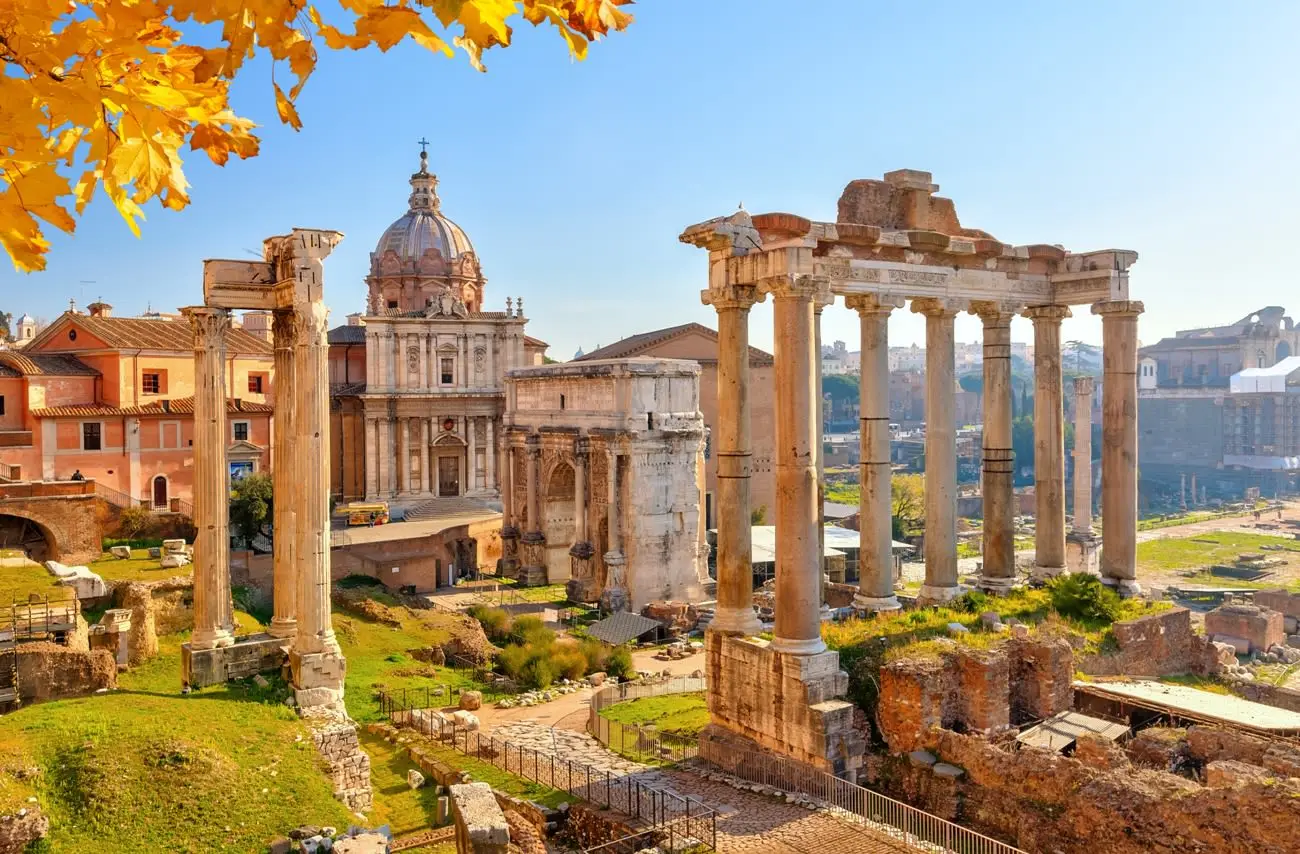
Ancient Rome Guided Walk

9:00 AM - 12:00 PM — Ancient Rome Guided Walk

On this 3-hour private guided tour, you will explore the imposing remains of ancient Rome. Your guide will explain the extraordinary history of the birth of Rome, life in the city and everything about the fall of the Empire. Visit the Colosseum, the monumental ruins of the Roman Forum, and end the tour on the Capitoline Hill, the smallest and most important of the seven hills of Ancient Rome.

Colosseum

Ancient Roman Ampitheater

Monumental Roman amphitheater once used for gladiatorial games

Mid-Day to Late Afternoon — Piazza Venezia

The Piazza Venezia is not only the central hub of Rome, but is also located at the foot of the Capitoline Hill, which is the ancient heart of Rome. Thus it was chosen as a fitting space for a memorial to the first king of modern Italy, Victor Emmanuel II, who led the unification of the Italian states in the 1860s. The gigantic monument now overlooks the Piazza Venezia in overwhelming marble glory, standing as an unmissable symbol of Italian unity. The open space and dramatic setting were used to great effect by Mussolini, who staged rallies here. However, the monument is just one of the several sights that can be found around Piazza Venezia, an area often overlooked by tourists who pass from the historic center directly to the Colosseum further down the street. For instance, just below it you'll find Trajan's Forum, containing some of Rome's most notable ruins, and just above it on the Capitoline Hill, an elegant square designed by Michelangelo.

Vittorio Emanuele II Monument

Visit this grand monument and ascend to the roof through an elevator at the back for the wonderful views of the Roman Forum and Colosseum.

Standing grand and mighty on Capitoline Hill overlooking Piazza Venezia, the monumental marble temple honouring Italy's first king Vittorio Emanuele II is a sight often overlooked by tourists. The impressive wedding cake-like building is home to one of the best views in Rome. Ascend to its rooftop and you can enjoy amazing views over the Roman Forum and Colosseum.  The monument is also the sight of the Altar of the Fatherland (Altare della Patria), which includes an altar to the goddess Rome, and a shrine to the Italian Unknown Soldier, thus making the monument a sort of secular temple dedicated to the country. However, it's unlikely the relatively modest and unassuming Vittorio would have appreciated this massive monument built to his legacy. Inaugurated in 1911 to symbolize the achievement of Italian unity, it irrevocably changed the aspect of the city, throwing out of scale the Capitoline hill itself and causing indiscriminate damage. Familiarly known as ‘Mussolini’s typewriter’ (it was finished during his regime in 1937), it is thought by some locals to be a colossal monstrosity, although for others its symbolic importance makes it a place of reverence, regardless of any architectural criticism.

Capitoline Square & Capitoline Museums

See the square Michelangelo designed to mark the spot of Rome's legendary origins.

This square at the top of the Capitoline Hill, Piazza del Campidoglio, is a lovely piece of town planning designed by Michelangelo. It is surrounded on three sides by stately palaces and an open-end featuring a balustrade. This is the historical center of ancient Rome, and to reflect this fact, Pope Paul III ordered that the famous gilded bronze equestrian statue of Marcus Aurelius be moved here from the Lateran hill.  Off of one corner of the square you will find a reproduction of the famous Lupa Capitolina, that is, the statue of the she-wolf that suckled the legendary founders of Rome, Romulus and Remus. Wander just a bit further and you will be rewarded with an amazing view over the Forum. You'll also find the Capitoline Museums in one of the 15th century palaces fronting the square. These are some of the oldest collections in Rome, containing Classical Roman, Greek, and Egyptian sculptures, as well as Renaissance art.

Markets of Trajan

Take a look around the world's first shopping mall.

Trajan's Forum was the last great forum built in Rome and rivaled the original Forum in scale and grandiosity. However, the only significant structure that remains now is the semicircular ruins of the Trajan Markets, which are often described as the world's first shopping mall. Arcaded passageways led to offices, shops, and apartments, situated in a multi-story structure. It is still possible to visit some of these levels. Within Trajan's Market you will find the Museum of Imperial Fora, one of the best interactive museums covering Ancient Rome. The labeling in English is unsurpassed and the exhibition rooms both in the museum and the rooms of the markets provide a superb introduction to Roman life and the architecture and building methods that were lost for centuries after the fall of the Roman Empire. Two or three hours spent here is time well invested.

Trajan's Column

Relive a saga of war and conquest on this carved frieze as it winds its way up a 140-foot high ancient column.

Built in 113 AD out of 18 massive blocks of marble, the column is decorated with exquisitely executed reliefs which spiral up around it. There are over 2,500 carved figures, and the column tells a detailed and highly visual tale of the Emperor Trajan’s Dacian wars. At the top of the column once stood a statue of the victorious Emperor (replaced by St Peter in 1588), and a spiral stone staircase inside led to a platform from which extensive views could be enjoyed over the rooftops of the city. Today the column is visible from the Piazza Venezia without a ticket, but those with a particular interest in Roman history might consider hiring a private guide who can explain the story depicted by the column in more detail.

Late Afternoon/Early Evening — Jewish Ghetto

The Ghetto is an area of confusing switchback streets and alleys which is currently undergoing a resurgence with lots of kosher cafes and restaurants. The highlight is the huge synagogue built in 1904, which includes the Museo Ebriaca recounting the history of Roman Jews, many of whom died in the Holocaust. Immediately across the road is the Teatro di Marcello built by Julius Caesar and Augustus. The remains of the first Roman bridge to cross the Tiber are also nearby.

Theater of Marcellus

Walk around this ancient Roman amphitheatre that could once hold over 15,000 spectators.

The Theater of Marcellus (Teatro di Marcello) is an ancient Roman theater that has been partly rebuilt and partly restored. Begun by Julius Caesar and finished in A.D. 13 by Augustus, who demolished several temples for the purpose, the theater was dedicated to the son of Augustus's sister Octavia, who died as a young man. While the theater is closed to the public, you can see the 16th-century palazzo that was constructed in part of its huge cavea and admire the theater from three sides as you walk around its arches towards the Portico of Octavia. 

image

Day 2

Rome

image

Day 3

Rome

Day 3

Rome

icon
icon
icon

Early Morning to Afternoon

Vatican City

Rome is unique in the world in that it contains an independent country within its city limits - the Vatican City, from where the Pope administers the Catholic Church. The symbolic center of Catholicism is St Peter's Basilica, the second-largest Catholic church in the world and among the most beautiful. The Vatican Museum contains one of the greatest collections of art in existence, including Michelangelo's jaw-dropping Sistine Chapel. The popes had a bigger influence on Rome than just the collection of art. The Pope's title is actually Bishop of Rome, and popes administed the city for centuries, shaping its architecture & public spaces. Rome was re-built to be an example of urban beauty, and the Vatican was meant to be the showcase within the showcase. Their success is evident from the throngs of visitors who flock here even today.

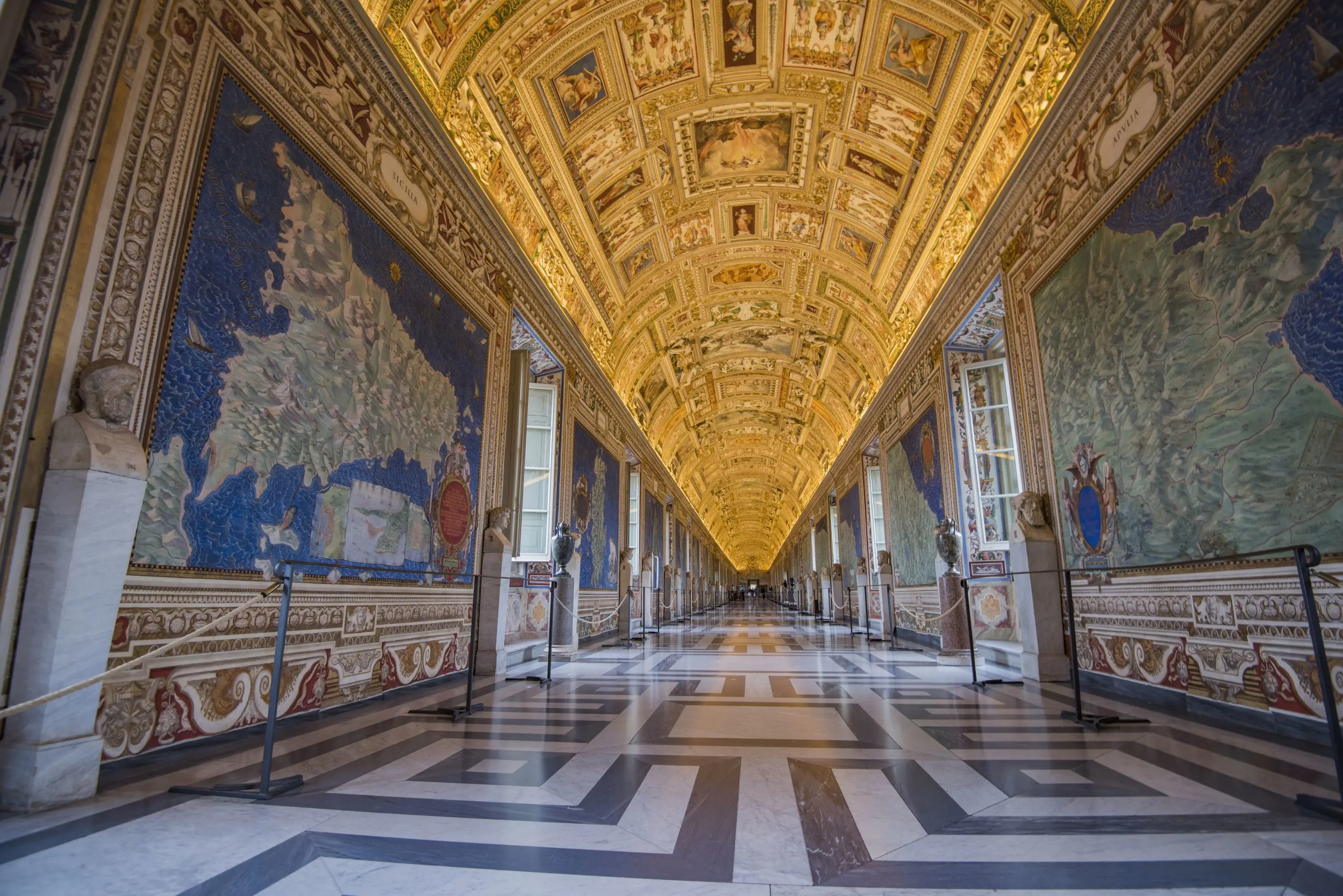
Vatican City

Early Morning to Afternoon — Vatican City

Rome is unique in the world in that it contains an independent country within its city limits - the Vatican City, from where the Pope administers the Catholic Church. The symbolic center of Catholicism is St Peter's Basilica, the second-largest Catholic church in the world and among the most beautiful. The Vatican Museum contains one of the greatest collections of art in existence, including Michelangelo's jaw-dropping Sistine Chapel. The popes had a bigger influence on Rome than just the collection of art. The Pope's title is actually Bishop of Rome, and popes administed the city for centuries, shaping its architecture & public spaces. Rome was re-built to be an example of urban beauty, and the Vatican was meant to be the showcase within the showcase. Their success is evident from the throngs of visitors who flock here even today.

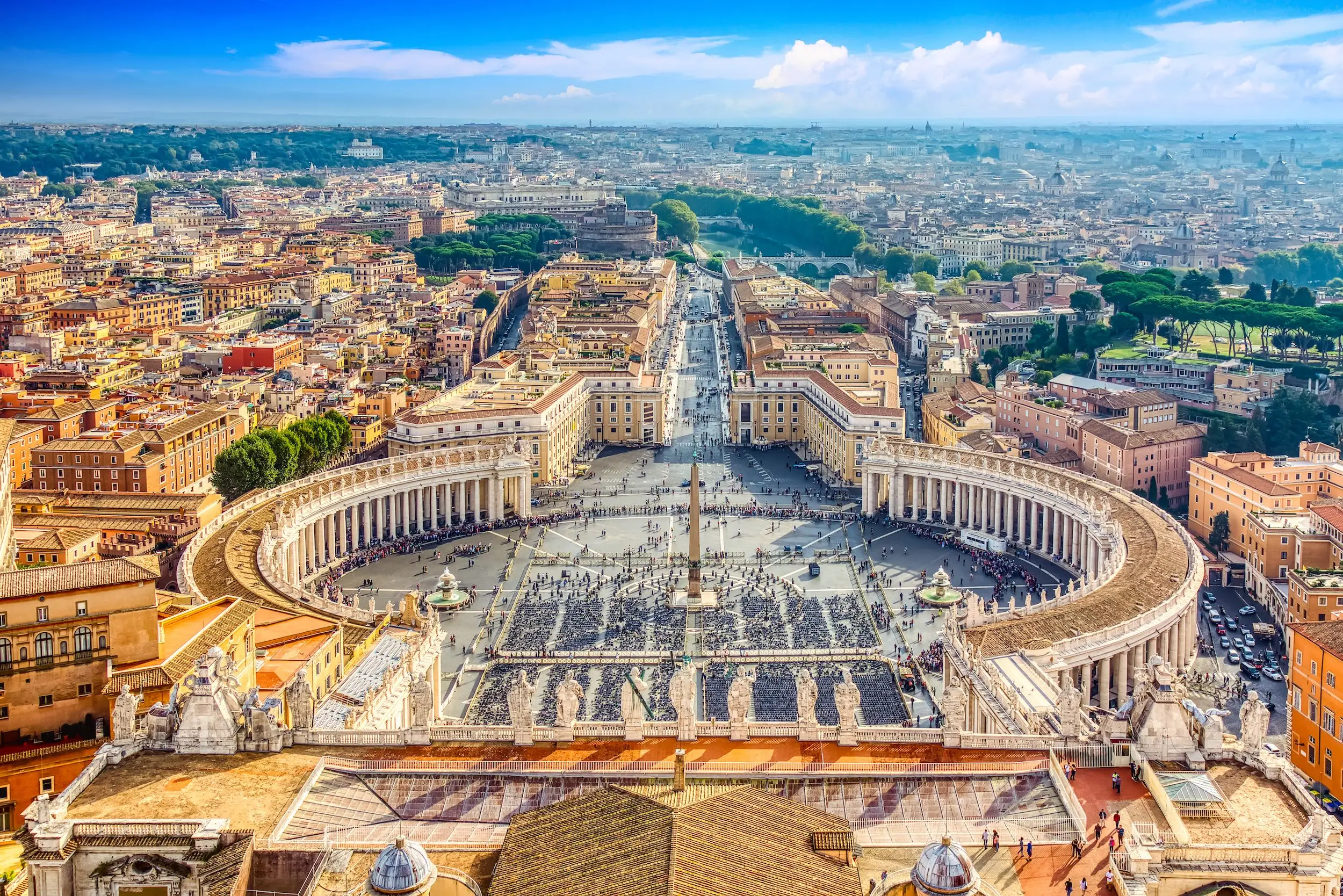
St Peter's Square

Stand in the middle of this famous square in which the faithful gather to hear the Pope give audiences and celebrate mass.

As one of the most superb conceptions of its kind in civic architecture, St Peter’s Square is the masterpiece of Gian Lorenzo Bernini and makes a wonderful approach to one of the world’s most magnificent churches, St Peter's Basilica. An oval rather than an actual square, the piazza, laid out in 1656-67, is partially enclosed by two semi-circular colonnades on which stand 96 statues of saints and martyrs. At the center of the oval stands an 84-foot (26m) tall Egyptian obelisk of red granite.

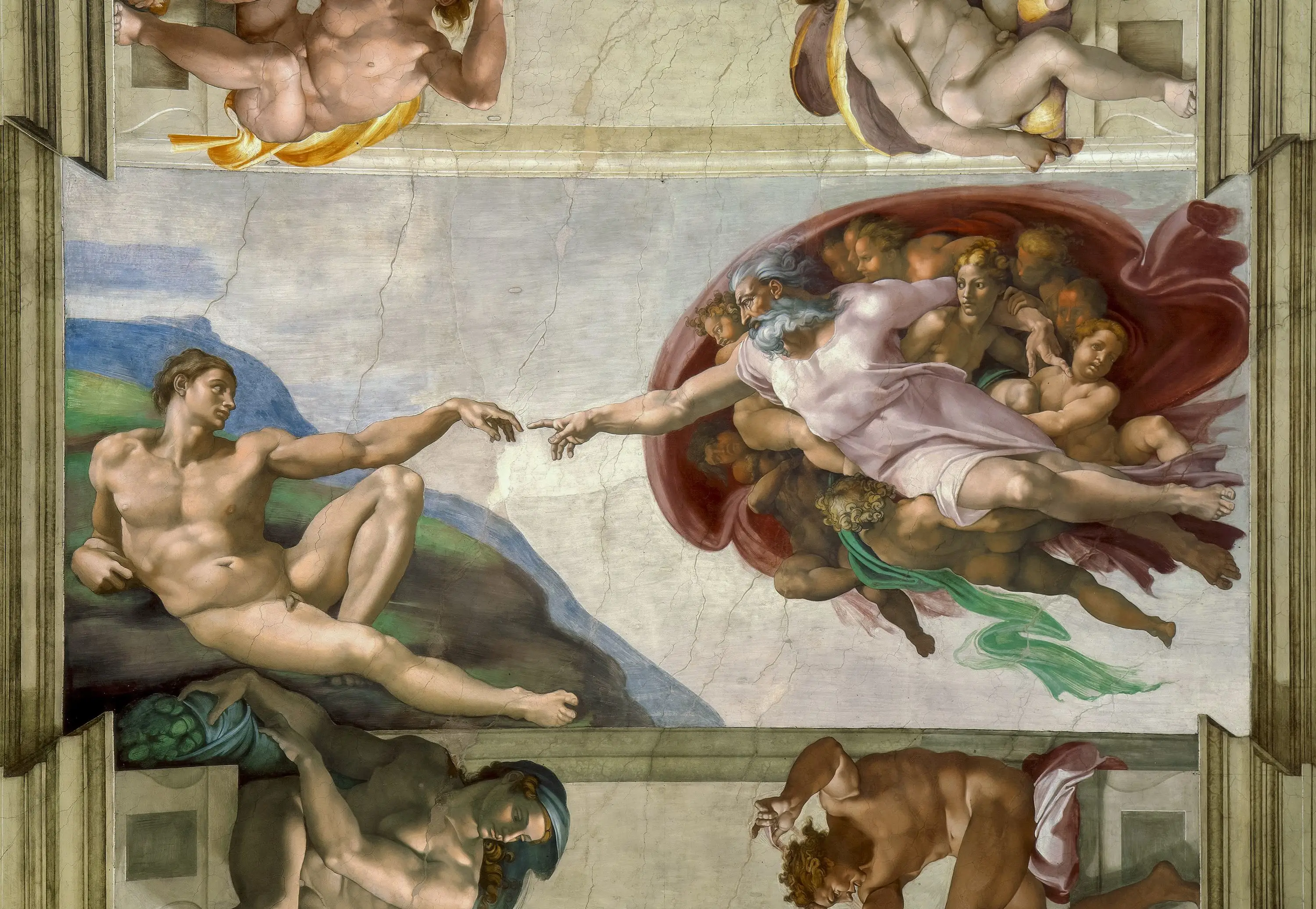
Sistine Chapel

Gaze up at the world's most famous ceiling, the masterpiece of Michelangelo.

This famous chapel inside the Vatican Museums is best known for Michelangelo's 16th-century painted ceiling of "The Creation of Adam" and "The Last Judgement" fresco that covers the whole altar wall of the chapel. The jaw-dropping sight is not to be missed, considered one of the top highlights of visiting the Vatican Museums and one of the top artistic wonders of the world. 

Vatican Museums

Book early if you want to see the Vatican Museum's monumental works of art from the greatest Italian artists of the Renaissance.

The Vatican Museum is actually 26 different museums, which include not only exhibitions but chapels, apartments, and other rooms of the Vatican palace, covering a huge range of fine and applied arts patronized by the popes. There's also an outstanding collection of ancient antiquities (including even the Emperor Nero's red stone bathtub), a gallery of hand-painted maps, and whole rooms turned into works of art. In addition to ancient and medieval works of art, you'll see masterpieces by the "who's who" of the Italian Renaissance, including Raphael, Leonardo da Vinci, Titian, and Caravaggio. Other highlights include panels by the brilliant monk-artist Fra Angelico, works from the Venetian school, including Vavarini, and much, much more.  Booking in advance is highly recommended as otherwise you can wait for hours or not even be able to get in at all.

St Peter’s Basilica

Explore the gigantic and incredibly beautiful church known as "the greatest of all churches of Christendom".

The basilica is one of the chief pilgrimage sites in the Christian world, and one of the most popular tourist destinations in Rome. The basilica is the symbolic center of the church not only because the Pope frequently celebrates Mass there, but because it is believed that the apostle St. Peter is buried beneath it. Catholics consider Peter as the first Bishop of Rome and "the rock" upon which the Catholic Church was built, in accordance with Christ's instructions. Inside you can admire sculptures by Bernini as well as Michelangelo's famous sculpture of the Virgin Mary holding the crucified Jesus, known as The Pietà. The church's elaborate and impressive golden interior is a sight to behold. Other sights include St Peter's tomb, the Papal crypts in the necropolis under the basilica, as well as the dome, which rewards visitors with views over Rome.  Entry is free, but queues to visit the Basilica can be lengthy, so it is highly advised to either get there early or to purchase a skip the line entrance. The dome is also paid entry. 

Vatican Gardens

Escape the crowds in this oasis of green hidden behind the walls of the Vatican.

Accessible only via a guided tour, the gardens are definitely worth a visit. Just as the Popes have for hundreds of years, you can stroll the gardens and relax amidst the greenery, while taking in the perfect view of St. Peter's. 

Late Afternoon — Castel Sant'Angelo

Designed and built by Emperor Hadrian as his own mausoleum, the great circular hulk of Castel Sant'Angelo provides one of the best routes to the Vatican and St Peter's via the Ponte Sant'Angelo bridge. Appropriated by the popes, the mausoleum was turned into a fortress and attached to the Vatican with a passageway for the popes to use as a refuge in times of siege or invasion - this is where Pope Clement VII sheltered during the Sack of Rome in 1527.

Mausoleum of Hadrian

Visit this iconic 2nd Century Castle built as the Mausoleum For Emperor Hadrian.

Known as Hadrian's Tomb, the Castel Sant'Angelo is a fortress on the banks of the River Tiber. Originally built as a tomb for the Emperor, it has evolved over the centuries and today it is one of Rome's most underrated museums. Inside you can see the historic Papal apartments, decorated with frescoes from the Renaissance period. Outside you can admire the castle's bastion and rooftop with beautiful views over the river and the Vatican. 

Ponte Sant'Angelo

Walk across this pedestrian bridge that was built in 134 A.D. by Emperor Hadrian.

Hadrian had the bridge built as an approach to his mausoleum, but it didn't gain its magnificent angel statues by Bernini until late in the 17th century. Spanning the River Tiber, it is completely pedestrianised, which allows for great photo opportunities of the castle and St Peter's Basilica in the near distance. 

6:30 PM - 10:30 AM — Trastevere Group Food Tour

Enjoy an evening of food and wine in one of the most popular and camera-ready neighborhoods in Rome, Trastevere. Be treated to 10 unforgettable food and wine tastings at some of the city’s most beloved and historic places. You'll enter a tourist and leave a local, a feeling you won’t soon forget.

image

Day 3

Rome

image

Day 4

Rome

Day 4

Rome

icon
icon

Morning/Mid-Day

Esquilino District

Upon first glance, this urban neighborhood of Rome may seem busy and overwhelming, but hidden among its traffic-noisy streets are some of Rome's most beautiful churches, artistic treasures, and cultural museums, including the Baths of Diocletian.
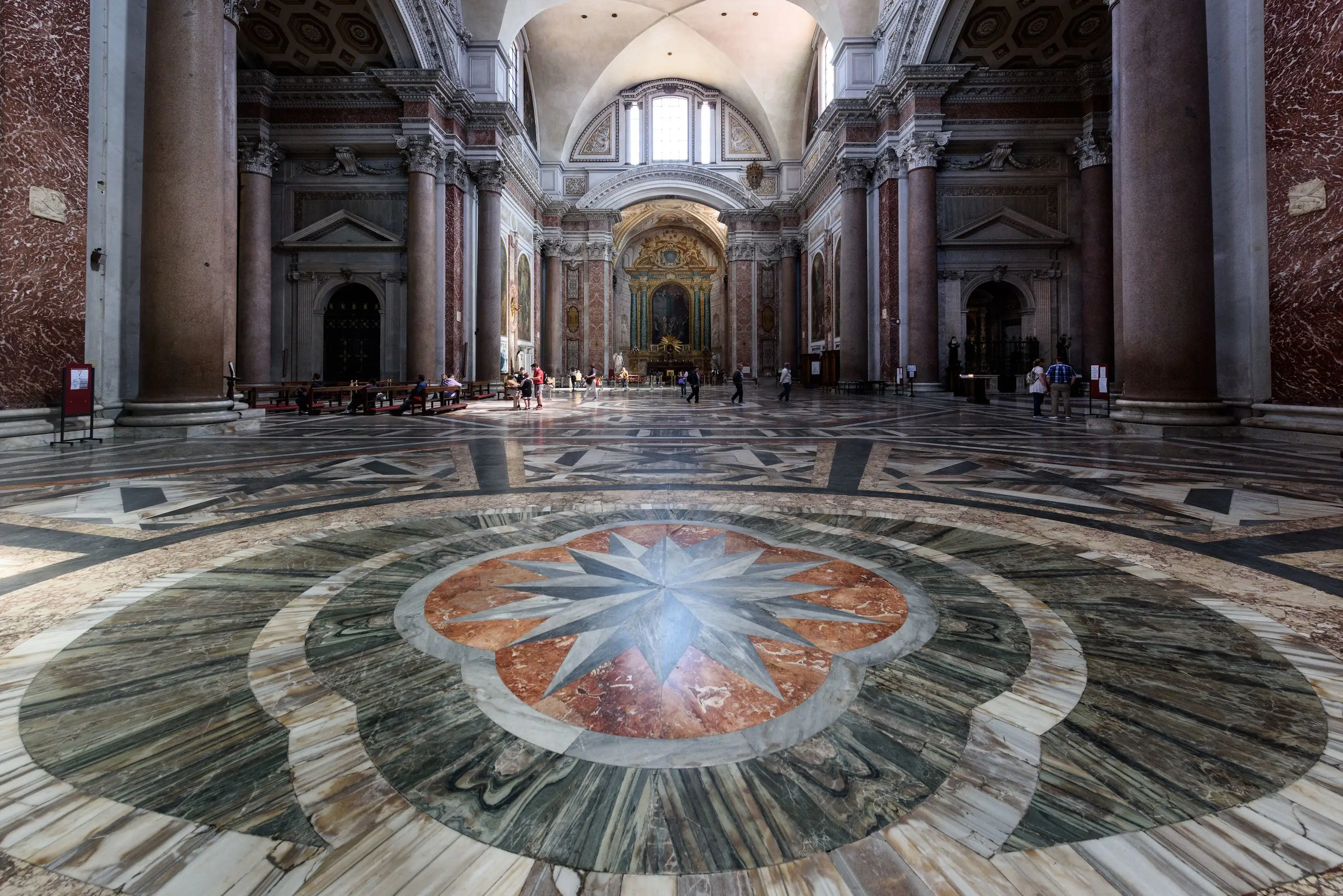
Esquilino District

Morning/Mid-Day — Esquilino District

Upon first glance, this urban neighborhood of Rome may seem busy and overwhelming, but hidden among its traffic-noisy streets are some of Rome's most beautiful churches, artistic treasures, and cultural museums, including the Baths of Diocletian.

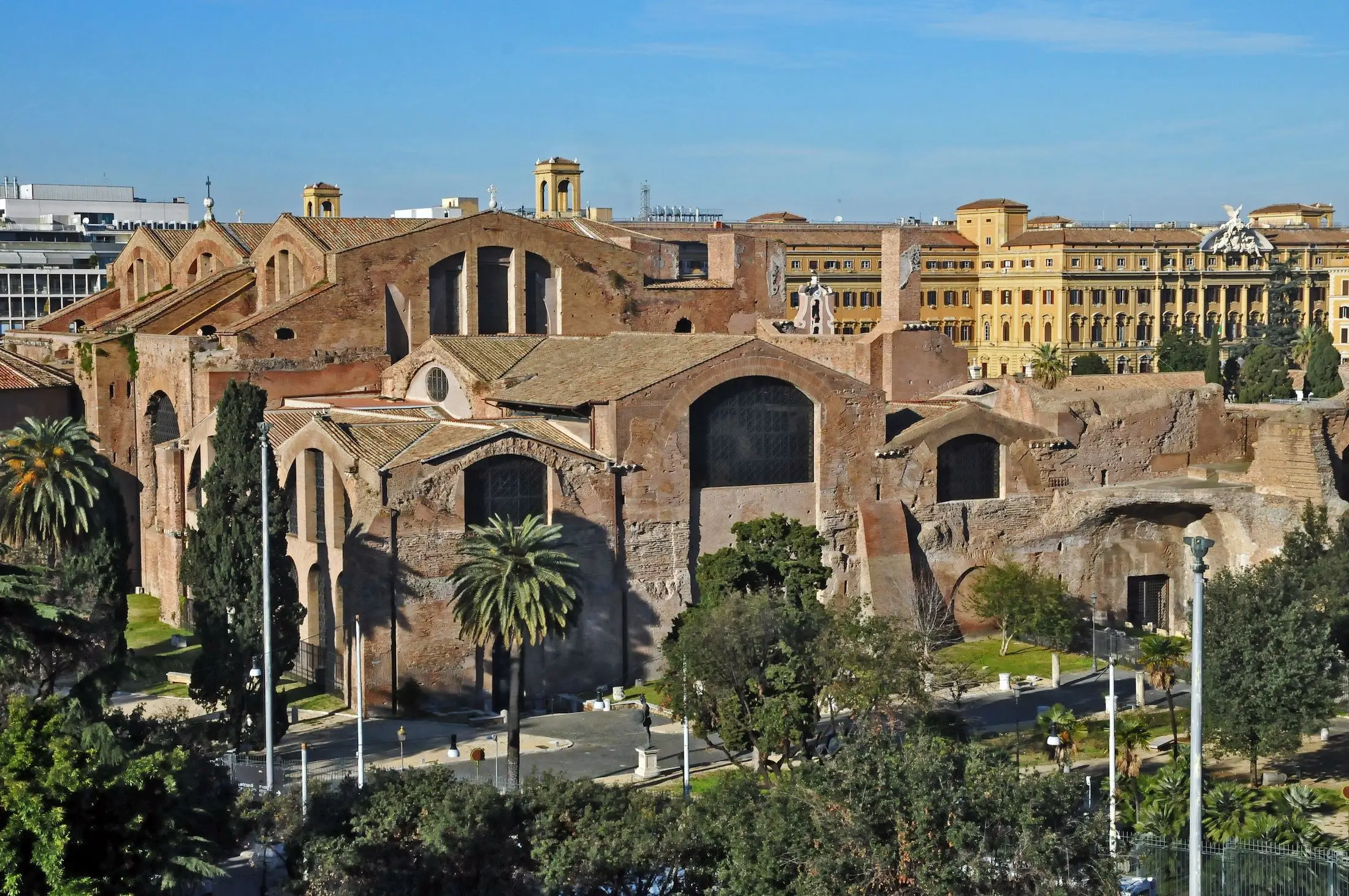
Baths of Diocletian

Walk the ruins of what was once the largest themal baths in the ancient Roman world.

Covering an area of more than 13 hectares (some 32 acres), the bath complex was commissioned by Emperor Diocletian in 298 AD, with a capacity to host over 3,000 people (twice as many as the Baths of Caracalla). The baths were made of bricks, coated in marble and decorated with mosaics and sculptures. The complex included a gymnasium, a library, a large outdoor swimming pool and cold, hot, and tepid public baths. They remained open until 537 when the Goths cut off the aqueducts in an attempt to conquer Rome. After they fell into disrepair and were left abandoned. Even though only a small part of the public bath complex can be seen and visited, it is extremely impressive, with the possibility to see at some points the high ceilings the baths possessed. The interior includes part of the National Museum of Rome and a permanent exhibition on pre-historic populations of the area. In the outdoor part of the baths, it is possible to stroll through a sixteenth-century garden with nearly 400 works of art, including statues, sarcophagi and reliefs. 

Basilica of Santa Maria degli Angeli

See a Michelangelo-designed church built within the former Baths of Diocletian.

In 1561, almost 1000 years after the baths of Diocletian fell into disuse, Pope Pius IV decided to build a basilica consecrated to Our Lady of the Angels within the baths. He commisioned the 86-year-old Michelangelo to plan the church, making use of some of the existing structures of the baths. Today a visit to the basilica gives you an idea of the enormous size of the baths. The church was constructed at the site of the former frigidarium (a large cold pool which would be used to close the pores after using the hot baths) and incorporates several elements of the former thermae. The vestibule occupies the former tepidarium (a Roman-style relaxation room) and the imposing entrance is an exedra of the caldarium (a room with a hot plunge bath). Other highlights include the meridian solar line running across the floor, which still accurately calculates the length of the year and the summer and winter solstices. There is also an impressive organ with 5,400 tubes. It is capable of leaving those visitors lucky enough to hear it spellbound.

Palazzo Massimo alle Terme

Visit one of Rome's greatest but most unheralded museums of antiquity.

This light-filled museum holds one of the best classical art collections in the world. The ground and first-floor feature famous Greek and Roman sculptures, mosaics and statues, as well as impressive sarcophagi and high reliefs. The second floor showcases the best preserved Roman frescoes in the world, which are considered the highlight of the museum. Originally located in Villa of Livia (the wife of Augustus) and Villa Farnesina, these colourful frescoes, sometimes covering an entire room, offer a unique view into life in ancient Rome and the critical importance of gardens, nature, and the villa atmosphere to upper echelon Romans. A must visit room is the painted garden room of Villa Livia. There is also a cinema room with a video showing a 3D reconstruction of the Villa Farnesina as it would have been, showing the layout of the rooms in the villa and the frescoes you had seen just moments before. 

Mid-Day/Afternoon — South of Center

While most tourists stick to the Vatican and historic center of Rome, just south of the Palatine Hill lay several attractions that are definitely worth seeing. Start with a quick visit to the Circus Maximus, where chariot races were held in ancient Rome, and then make your way further south for a look at the fascinating pyramid tomb of Caius Cestius, one of classical Rome's best preserved ruins. It was built for a Roman aristocrat during a time when all things Egyptian were the rage. Just next to pyramid is the Protestant Cemetery, holding the earthly remains of Rome's non-Catholic residents, locals and foreigners alike, and not just Protestants. Within this beautiful cemetery, you will find the graves of the poets Keats and Shelley and Gregory Corso, as well as the Italian Marxist philosopher Antonio Gramsci. Farther up the road are the huge Baths of Caracalla - named after one of classical Rome's cruelest emperors.

Circus Maximus

Watch the locals go for a jog or walk their dogs through what was once the most illustrious sporting venue in the ancient world, where frenzied crowds cheered on their favored team of charioteers in dramatic and sometimes deadly races.

The Circus Maximus lies in the valley between the Palatine and Aventine hills and is the largest uninterrupted open space in the city. It was the first and largest chariot racing circus in Rome, with the first factual reference to it dating from 328 BC. In the days of ancient Rome, the circus was the scene of great entertainment and chariot races and games were held here. Not much remains of it today, but the form of it can still be imagined. 

Baths of Caracalla

Walk around one of the few lasting physical legacies of Emperor Caracalla and admire the structures and well-preserved mosaics of the baths and gyms.

The huge baths are now the best-preserved and most splendid Imperial-era baths in Rome. Built between the years 212 and 216, the baths are one of the most impressive thermae that remains, a site that in its heyday could accommodate 1,600 bathers at a time. As you walk around the imposing walls of the bathhouse you can easily imagine what it would have been like in its glory and splendour. The mosaics on the ground floor are very well preserved and in some places you can even see remnants of games that were carved into the marble of the pool. 

Protestant Cemetery

Visit the lovely final resting place of many famous non-Catholics who died in Rome.

It may not look it from outside the cemetery walls, but it's actually a very romantic setting with tall cypresses and pine trees, and it's beautifully maintained and inhabited by numerous cats. The cemetery was created due to the fact that non-Catholics were not allowed to be buried in Rome's Catholic cemeteries. Since the earliest recorded grave dating from 1738, some 4,000 people have been buried here. The cemetery famously contains the mortal remains of the English romantic poets Johns Keats and Percy Shelley. Other famous tombs in the cemetery include those of the Italian Marxist philosopher Antonio Gramsci, the son of Goethe, and the American Beat poet Gregory Corso, who was buried here in 2001 at his request next to Shelley.

Basilica of Saint Paul Outside the Walls

Venture even further south to discover this magnificent and usually missed basilica which holds the tomb of St. Paul and dates back to 324 AD.

Founded by the Emperor Constantine over the tomb of St. Paul, the church is one of Rome's four major papal basilicas. Well off the beaten path, those who do visit it are often surprised to have never heard of such a beautiful and impressive church. Decorated with mosaic tile, the interior is breathtaking. Visitors can also find portraits of every pope from St. Peter to Pope Francis.

image

Day 4

Rome

image

Day 5

Rome to Sorrento

Day 5

Rome to Sorrento

icon
icon
icon
icon

8:55 AM

Private Transfer to Rome Train Station

A private transfer service will pick you up from the N/A and deliver you to Rome Termini Train Station. Your itinerary will provide detailed information on navigating the train station and finding your train, making the whole process simple and stress-free.

Private Transfer to Rome Train Station

8:55 AM — Private Transfer to Rome Train Station

A private transfer service will pick you up from the N/A and deliver you to Rome Termini Train Station. Your itinerary will provide detailed information on navigating the train station and finding your train, making the whole process simple and stress-free.

09:53 - 11:03 — Train to Naples

The journey to Naples will be aboard one of Italy's high-speed trains - the Frecciarossa, which reaches speeds of up to 250 miles per hour (400 km/h) and offers maximum comfort. Your route will take you directly to Rome in approximately 1h10m. There are no intermediate stops when travelling by fast train from Rome to Naples. Instead, you can sit back and admire the beautiful countryside of Lazio and Campania from the train window. Definitely, a pleasant way to spend an hour and a bit on a train!

11:12 AM — Private Transfer from Naples to Sorrento

A private transfer service will pick you up from Naples and take you directly to your hotel in Sorrento. The journey will be in an air-conditioned vehicle with an English-speaking driver and will take around 1 hour 10 minutes in normal traffic.   IMPORTANT NOTE:  Please be aware the car service can fit up to 1 checked item of luggage and 1 personal item per person, such as a purse or small backpack. If you think you will have more baggage, please inform your travel consultant as this may result in an additional fee.

Mid-Day — Sorrento Old Town

The center of Sorrento is quite compact and closed to traffic. Its grid-like layout makes the old town of Sorrento easy to navigate on foot and a joy to explore. Spend time pottering around its pedestrian lanes and streets, home to a number of interesting sights, little tourist boutiques, limoncello tastings and restaurants.

Piazza Tasso

Check out Sorrento's main square surrounded by colorful architecture and five-star hotels.

Piazza Tasso is the central square in Sorrento, and is named after the poet Torquato Tasso whose statue stands in the center of the square. The piazza is often used as a main point of reference, as it is situated in the heart of the town where the old and new towns meet. 

Sorrento Cathedral

Step inside this beautiful Roman Catholic Cathedral known for its exquisite ceiling paintings.

The Sorrento Cathedral (Duomo) is located in Sorrento's Old Town, and is dedicated to Saints Philip and James. With its beautiful yet relatively simple white Romanesque facade, it is easily spotted just off of the Corso Italia, one of the main east-west streets through town. It dates as far back as the 11th century but the interior was completely remodeled in the 15th century. It is well worth a visit to see its lovely interior. Be sure to check out the floral ceiling motifs which frame paintings of martyrs of Sorrento, as well as saints and angels lounging amidst the clouds. The choir, meanwhile, is a masterpiece of Sorrentine wood working. 

Sorrento's Men's Club

See the beautifully painted walls and dome of the historic Men's Club in Sorrento, that is, if you are a man yourself.

One of Sorrento's "main" sights is the Sorrento Men's Club. Once the meeting place for Sorrento's noblemen, it is now a daily "retreat" spot where the town's retired gentlemen while away sultry afternoons under the 16th-century frescoed dome, playing cards, board games or reading the newspaper. Sorry, absolutely no women or mobile phones are allowed in the club.

San Francesco Church

Take a peaceful walk around the 14th Century Church and Cloister of San Francesco.

Although the exterior is fairly modest, the church of St. Francis has a rich history. A convent and a cloister, both also dedicated to St. Francis, stand by the church. The cloister mixes many architectural styles, from the Roman era to the Middle Ages, although it remains mostly unchanged since the 14th century. It is surrounded by a park which enjoys wonderful views of the sea. The overall effect creates a wonderfully peaceful atmosphere which makes it a perfect spot for a relaxing walk, as well as a popular wedding venue.

image

Day 5

Rome to Sorrento

image

Day 6

Sorrento

Day 6

Sorrento

icon

9:00 AM - 5:00 PM

Amalfi Coast, Guided

Experience the stunning Amalfi Coast, said to be one of Europe's most beautiful stretches of coastline, in the comfort of a boat and private car with your own guide-driver. The corniche winding road that winds around the towering cliffs with sheer drops into the sea and magnificent pastel-colored villages are much more easily visited with a private driver than with public transport or your own car.

Amalfi Coast, Guided

9:00 AM - 5:00 PM — Amalfi Coast, Guided

Experience the stunning Amalfi Coast, said to be one of Europe's most beautiful stretches of coastline, in the comfort of a boat and private car with your own guide-driver. The corniche winding road that winds around the towering cliffs with sheer drops into the sea and magnificent pastel-colored villages are much more easily visited with a private driver than with public transport or your own car.

Ravello Town Center (Amalfi Coast)

image

Day 6

Sorrento

image

Day 7

Sorrento to Naples

Day 7

Sorrento to Naples

icon
icon
icon
icon

9:00 AM - 1:00 PM

Mount Vesuvius, Guided

Take a private tour to Mount Vesuvius, the Volcano that 2 millenniums ago buried several Roman settlements such as Pompeii and Herculaneum. Certainly, the most observed and the most dangerous volcanoes of the planet, this 4 hours guided tour promises active walking, up-close encounters with the crater of the volcano and beautiful views over the Bay of Naples.

Mount Vesuvius, Guided

9:00 AM - 1:00 PM — Mount Vesuvius, Guided

Take a private tour to Mount Vesuvius, the Volcano that 2 millenniums ago buried several Roman settlements such as Pompeii and Herculaneum. Certainly, the most observed and the most dangerous volcanoes of the planet, this 4 hours guided tour promises active walking, up-close encounters with the crater of the volcano and beautiful views over the Bay of Naples.

2:30 PM — Private Transfer from Sorrento to Naples

A private transfer service will pick you up from your hotel in Sorrento and take you directly to your hotel or the train station in Naples. The journey will be in an air-conditioned vehicle with an English-speaking driver and will take around 1 hour 10 minutes in normal traffic.   IMPORTANT NOTE:  Please be aware the car service can fit up to 1 checked item of luggage and 1 personal item per person, such as a purse or small backpack. If you think you will have more baggage, please inform your travel consultant as this may result in an additional fee.

Afternoon/Late Afternoon — Naples Old Town

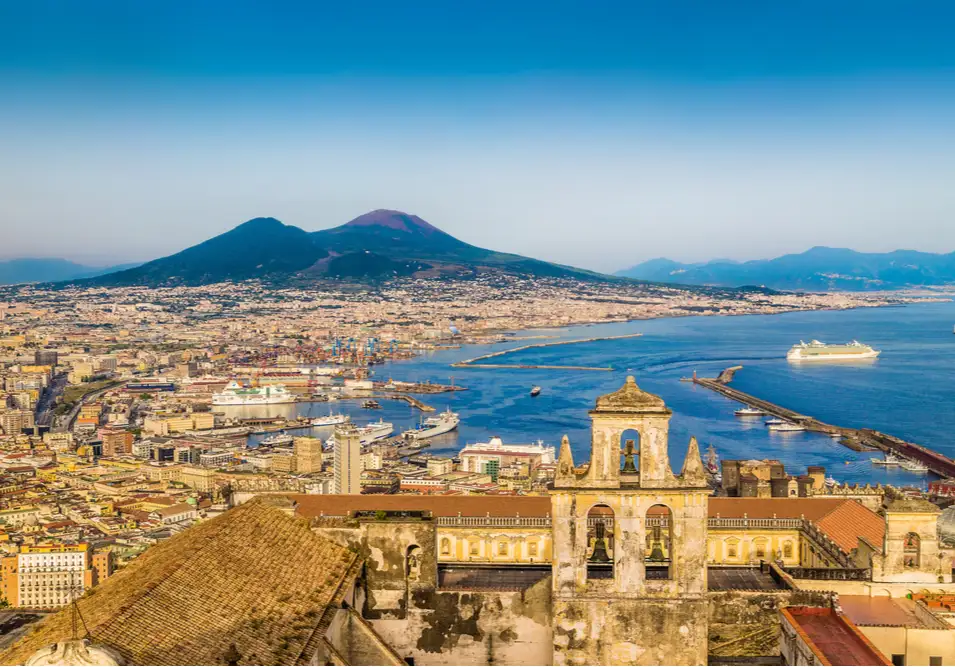
Slightly dilapidated and chaotic, but always energetic and effervescent, Naples's historic center has plenty of historic buildings and narrow alleys to keep you busy for several hours. Neapolitans often keep their front door open directly onto the street, exposing everyday life and family routines to passersby, making the experience all the more memorable and authentic.  Starting out from the Piazza del Gesù, with its fanciful Baroque plague column, you can cut right through the heart of old Naples on the crowded, chaotic Spaccanapoli. This straight, narrow main street was first built as the main thoroughfare of the original Roman town. Spaccanapoli is actually not an official street name but a popular term that literally means the "Naples splitter". It's full of life and noisy motorpeds at most times of the day, with some of the best street food on offer in Naples. It gets very crowded at certain spots in the evenings when the student population descends upon its favorite outdoor cafes and bars. But of course you'll want to wander into the warren of narrow lanes on either side of the Spaccanapoli, where you'll discover amazing churches, tiny little squares, and an abundance of restaurants, pubs, and cafes.

Sansevero Chapel Museum

See for yourself why the Veiled Christ is the most famous and celebrated sculpture in Naples.

Located inside the Sansevero Chapel is what is considered one of the greatest sculptural masterpieces - the Veiled Christ. The effect of the fabric shroud on the supine Christ delicately covering and yet revealing every detail of the body (even down to the impressions of the stigmata) has made this also one of the most famous and moving sculptures in the world.  The rest of the chapel's interior is also striking. The chapel's patron, Raimondo di Sangro, was a mason and it is filled with masonic symbolism. The slightly erotic statue of Veiled Modesty was sculpted in memory of Raimondo's mother, who died at the age of 23, and is remarkable for the subtlety with which the veil clings to her body. Also of note are the two human cadavers in the chapel's crypt, which perfectly illustrate the complete vascular, renal and digestive systems of the human body. 

Napoli Sotterranea

Discover ancient Greek and Roman ruins in the labyrinth of underground tunnels located 130 feet (40m) below street level.

Head underground to see a fascinating side of Naples where hidden mysteries and interesting historic stories appear around every corner. Located at the original site of the ancient Forum, you can see the remnants of a Roman theater as well as the aqueducts and cisterns which once supplied the city with drinking water. The passages were originally hewn to extract tufa stone used in construction and to channel water from Mt Vesuvius. More recently, the network of conduits and cisterns was used as an air-raid shelter during WWII. Part of the tour takes place by candlelight via extremely narrow passages, so it's not suitable for those who are claustrophobic or have trouble squeezing through tight spaces.

Via San Gregorio Armeno

Walk down this picturesque street to shop where the Neapolitans do when they create their beloved Christmas nativity scenes.

Still central to the city's traditional core is the centuries-old tradition of the nativity scene, or as they are locally known, "presepe" (i.e. cribs). Crowds throng the narrow Via San Gregorio Armeno to stock up on tiny figurines and settings for their own home nativity scenes. The street is lined with souvenir shops selling less expensive figurines as well as the shops of highly-specialized craftsmen making true works of art. 

Duomo

Admire this lavish 13th-century Gothic cathedral which contains miraculous vials of blood of the patron saint of the city, San Gennaro.

The Duomo is a Gothic building from the early 13th century, although its 19th-century facade is actually Gothic Revival. The jaw-droppingly ornate Royal Chapel of the Treasure of St. Januarius is a Baroque addition to church. The church is dedicated to the patron saint of the city, San Gennaro, and precious vials of the saint's blood have been preserved in the chapel.  San Gennaro was martyred at Pozzuoli, just outside Naples in 304 AD under the purges of Emperor Diocletian. Tradition has it that when his body was transferred to Naples' Duomo, two vials of his dried blood liquefied in the bishop's hands, since which time the miracle has continued to repeat itself no fewer than three times a year. Pope Francis was present for the miracle in March 2015, though the blood only half liquified, prompting the pontiff to quip that "the saint only half loves us". He then extorted the congregants to "spread the word, so that he loves us more!".

Early Evening/Late Afternoon — Dining Out in the Historic Quarter

Naples is rightly famous for its street food, the people's version, that of the “mangiamaccheroni” (pasta eaters), with its corner shop windows. But then there are also the more up-market recipes of the monzù (derived from the French word monsieur), the professional chefs who used to work for the lower nobility aristocracy in the more bourgeois parts of the city. You get can get to know both worlds using our detailed map and list of dining recommendations in the city's historic quarter.

Da Michele Pizza

Taste the most famous pizza in Naples at the pizzeria featured in Eat, Pray, Love.

This pizzeria has been making pizza since 1870, and many claim that it is the best pizza in Naples. They serve only two kinds of pizza - Margherita and Marinara (without Mozzarella but with lots of garlic and oregano). Be prepared to wait for a spot, at any time of the day. Be prepared to wait and to share a table - no reservations are accepted.

Sea Front Pasta Bar

One of the best pasta places in Naples.

$$$$. Watch your chef prepare your meal in front of you. If you've had your fill of pizza and seafood and want to get back to the Italian staple, then this is one of the best places in Naples. Prices are a bit higher than elsewhere here. [Piazza Municipio 1, Tel. 39 081 1849 6287, www.facebook.com/dimartinoseafront].

image

Day 7

Sorrento to Naples

image

Day 8

Naples

Day 8

Naples

icon
icon
icon
icon

10:00 AM - 1:00 PM

Food Tasting, Guided

Food is a vital part of Neopolitan cultural heritage, spirit, and identity. Your private tour guide will accompany you off the beaten path, through the lively narrow streets and hidden corners of the old town of Naples to provide you with an insider's look at the food scene of one of the greatest culinary centers in Italy.

Food Tasting, Guided

10:00 AM - 1:00 PM — Food Tasting, Guided

Food is a vital part of Neopolitan cultural heritage, spirit, and identity. Your private tour guide will accompany you off the beaten path, through the lively narrow streets and hidden corners of the old town of Naples to provide you with an insider's look at the food scene of one of the greatest culinary centers in Italy.

Da Michele Pizza

Taste the most famous pizza in Naples at the pizzeria featured in Eat, Pray, Love.

This pizzeria has been making pizza since 1870, and many claim that it is the best pizza in Naples. They serve only two kinds of pizza - Margherita and Marinara (without Mozzarella but with lots of garlic and oregano). Be prepared to wait for a spot, at any time of the day. Be prepared to wait and to share a table - no reservations are accepted.

Sea Front Pasta Bar

One of the best pasta places in Naples.

$$$$. Watch your chef prepare your meal in front of you. If you've had your fill of pizza and seafood and want to get back to the Italian staple, then this is one of the best places in Naples. Prices are a bit higher than elsewhere here. [Piazza Municipio 1, Tel. 39 081 1849 6287, www.facebook.com/dimartinoseafront].

Afternoon — National Archaeological Museum

The greatest Italian archaeological museum outside Rome, the Neopolitan National Archaeological Museum is a mandatory stop for anyone planning to visit Pompeii and Herculaneum, boasting as it does the greatest treasures from those two fateful townships. It also contains some of the most jaw-dropping sculptures from antiquity, including the fabulous Farnese Bull and the muscle-bound Ercole (Hercules) that once graced the Baths of Caracalla in Rome.

Late Afternoon — Naples Waterfront

As you walk along the historic Neopolitan waterfront you'll encounter two imposing yet stately medieval castle-fortresses. Built by Naples' former Spanish rulers, they command glorious views out over the Bay of Naples and Mt Vesuvius beyond. There's also the grand Palazzo Reale, a palace erected by the Bourbon kings that faces the monumental square of Piazza del Plebiscito on one side and the famous San Carlo Theater on the other.  You can cut right through the heart of Naples on the Spaccanapoli, a straight, narrow main street that has been that way since it was first built in Roman times is the straight and narrow main street that traverses the old, historic center of the city of Naples, Italy. The name is a popular usage and means, literally, "Naples splitter". TBut of course you'll want to wander of the many side streets amazing churches, and chaotic.

Piazza del Plebiscito

Visit the city's most iconic square and its most popular gathering spot.

Piazza del Plebiscito is Naples' largest and most important piazza. Entering the more than 6 acre large square on the southwest corner, you will be greeted by a grand spectacle. The Royal Palace (Palazzo Reale) stands on one side of the piazza and a long classically-inspired collonade runs along the other side. You are still only steps from the waterfront, and behind you the sea stretches across the Gulf of Naples and Mount Vesuvius looms. The colonnade was first created by Joachim Murat, one of Napoleon's field marshall's who was made King of Naples as a reward for his loyalty and success. After his overthrow though, the Bourbon King Ferdinand I made sure to add a church to the center of the colonnade: the Basilica of St. Francis of Paola. This was partially intended as a thumb in the eye to Murat and to the secular ideals of the French Revolution which had briefly overthrown his kingdom. Despite this, the basilica does at least reinforce Murat's classical theme, as it resembles the Pantheon of Rome. Ironically, the square is now also a rebuke to the Bourbons, as it was renamed the "Piazza del Plebiscito" after the referendum which ratified the end of Bourbon rule.

Castel Nuovo

Wander a medieval castle which is one of the city's most famous monuments.

Built in 1282 by the Angevins rulers and later converted into a royal residence by the Aragon monarchs from Spain, the imposing fortress is an important symbol of Naples. Take a stroll around its towering walls, enjoy excellent views over the bay and visit the Palatine Chapel to see its beautiful frescoes. You can also take a guided tour of the castle, including the uppermost terrace, towers, and the basement, which doubled as the castle's dungeon.

Royal Palace (Palazzo Reale)

Discover the lavish former home of Naples' Kings and Queens inside this restored historic palace.

The Palazzo Reale (Royal Palace) was built in the 1600's during Spanish rule. The Spanish viceroys had tired of living in the next-door Castel Nuovo, which by then was a drafty, old-fashioned castle. The palace later became the royal residence of the Kingdom of Naples. You can explore its lavishly decorated apartments and impressive throne room while learning all about the city's royal history.  The palace interior is now the Museo dell'Appartamento Storico del Palazzo Reale - a complex of fine halls with period furniture, tapestries, paintings, and porcelain, accessed by a grand staircase. There are good views of Castel Nuovo from the upper floors, and the chapel on the far side of the central courtyard has one of the city's biggest presepi (Christmas crib) filled with 210 18th-century figures. Behind the palace, you'll find the tranquil Giardino Reale gardens and a group of 19th-century sculptures called Horse Trainers by Czar Nicholas I's favorite sculptor. It's also the location of the National Library, founded in 1734 and the most important library in southern Italy

Castel dell'Ovo

Enjoy amazing views as you stand on the ramparts of this imposing fortress jutting out into the sea.

Standing on the ancient island of Megaris which is joined to the shore by a pier, this medieval fortress was built in the 1200's AD on the remains of an earlier Roman villa. Known as the "egg-castle", it takes its name from the legend that it was built over an egg placed here by the Roman poet Virgil: it is believed that if the egg breaks, Naples will fall. According to another old legend, the lifeless body of the mermaid Parthenope was washed ashore here after she gave herself up to death upon failing to win the heart of Ulysses. Hence the name of the waterfront street facing the castle - Via Partenhope. Other than the Museum of Ethnoprehistory housed within the castle, there's not too much to see in the interiors, but that's okay because the views are the best in town: a 360-degree panorama over the entire bay and back over Naples itself. When you're finished, you can go for drinks at one of the quayside restaurants in the Borgo Marinaro below.

Early Evening — Dining Out, Spanish Quarter

You can experience the best pizza and famous Neopolitan pasta and seafood dishes in the Quartieri Spagnoli (Spanish Quarter), a bustling, colorful, crumbling, energetic, gritty, and crowded neighborhood that is the most densely populated part of the city. The tight grid of streets looks like graph paper on the map; reflecting the street network laid out in the 1600s when the Spanish ruled the Kingdom of Naples. It is, in short, the stereotype of Naples that is seen in movies. It was once a bedrock of support for the Camorra, the Neapolitan crime organization, but those days are long gone. Apart from being the self-styled home of pizza, Naples and Spanish Quarter restaurants in particular also specialize in spaghetti alle vongole (spaghetti with tiny local clams called vongole verace) and mountainous platters of frutti di mare ("fruits of the sea," a combination of crustaceans, shellfish, bivalves, calamari, and octopus - more or less any seafood that's not actually a fish). You can also find more great restaurants nearby in the adjacent Ferdinando quarter close to the seafront. If you still have room at the end of a meal, or simply want to try something sweet while on the go, try a sfogliatella. Small delicacies in the shape of shells, sfogliatellas are created by rolling a delicious filling of ricotta and almond paste into a rich number of dough layers. When baked, the layers become crisp and separate from each other, giving the sfogliatella its characteristic ridged look. Icing sugar sprinkled on top completes these heavenly bites.

Da Michele Pizza

Taste the most famous pizza in Naples at the pizzeria featured in Eat, Pray, Love.

This pizzeria has been making pizza since 1870, and many claim that it is the best pizza in Naples. They serve only two kinds of pizza - Margherita and Marinara (without Mozzarella but with lots of garlic and oregano). Be prepared to wait for a spot, at any time of the day. Be prepared to wait and to share a table - no reservations are accepted.

image

Day 8

Naples

image

Day 9

Naples

Day 9

Naples

icon

Mid-Day to Evening

Ruins of Pompeii

Possibly the most fascinating and accessible archaeological site in the world, Pompeii has been slowly revealing its secrets to the world since excavations began in earnest back in the late 18th century. Even today archaeologists are still uncovering unexplored parts of the site and building up a more accurate picture of how Pompeians lived prior to the catastrophic explosion of nearby Mt Vesuvius in 79 AD. While the ruins are fairly easy to reach via the local train network, taking a guided tour from Naples can be a more comfortable experience. Since the site is so incredibly large, it is also helpful to see it with a good guide who will organize your time there, as well as tell you the history and stories behind what you see. On the other hand, traveling independently and using the very cost-effective Artecard for entrance allows you to see the ruins at your own pace.

Ruins of Pompeii

Mid-Day to Evening — Ruins of Pompeii

Possibly the most fascinating and accessible archaeological site in the world, Pompeii has been slowly revealing its secrets to the world since excavations began in earnest back in the late 18th century. Even today archaeologists are still uncovering unexplored parts of the site and building up a more accurate picture of how Pompeians lived prior to the catastrophic explosion of nearby Mt Vesuvius in 79 AD. While the ruins are fairly easy to reach via the local train network, taking a guided tour from Naples can be a more comfortable experience. Since the site is so incredibly large, it is also helpful to see it with a good guide who will organize your time there, as well as tell you the history and stories behind what you see. On the other hand, traveling independently and using the very cost-effective Artecard for entrance allows you to see the ruins at your own pace.

Brothel

Visit the Lupanare (brothel) of Pompeii to see the preserved erotic paintings and ancient grafiti.

The only brothel in town is located behind the Stabian Baths and has five small cells, each with its own built-in stone bed and a series of explicitly erotic paintings, possibly acting as a menu from which customers could identify their required services, or perhaps simply as a bit of "inspirational" decoration. Unsurprisingly, it is one of the most visited ruins in Pompeii.  

House of the Tragic Poet

Visit this fascinating restored Pompeiian home with a famous animal mosaic.

On the threshold is a mosaic dog, with the inscription cave canem ('beware of the dog'). Some of the most striking wall paintings housed in the National Archaeological Museum in the center of Naples were taken from this house.

House of the Vettii

Visit this incredibly well-preserved upper class residence.

The House of the Vetti is one of the richest and most famous sights in Pompeii. It was the property of two wealthy merchants, and it features some beautiful original wall paintings, still in their original positions, the most famous (or notorious) of which is the extraordinary front image of the god Priapus weighing his enormous phallus against a money bag.

Amphitheater

See the oldest surviving Roman amphitheatre - built in 70 BC!

The amphitheatre was used as a venue for bloody gladiatorial shows with a capacity to hold over 20,000 spectators. It is one of the oldest and most complete pre-Colosseum amphitheatres in the Roman world and was miraculously well preserved following the eruption in 79 AD. 

image

Day 9

Naples

image

Day 10

Depart Naples

Day 10

Depart Naples

icon

To Be Determined

Airport Drop-Off

A private transfer service will pick you up from the N/A and take you directly to Naples Capodichino Airport. This is a private transfer for you and your travel party. You do not need to pay the driver as the cost of the transfer is included in your itinerary.   IMPORTANT NOTE:  Please be aware the car service can fit up to 1 checked item of luggage and 1 personal item per person, such as a purse or small backpack. If you think you will have more baggage, please inform your travel consultant as this may result in an additional fee.

Airport Drop-Off

To Be Determined — Airport Drop-Off

A private transfer service will pick you up from the N/A and take you directly to Naples Capodichino Airport. This is a private transfer for you and your travel party. You do not need to pay the driver as the cost of the transfer is included in your itinerary.   IMPORTANT NOTE:  Please be aware the car service can fit up to 1 checked item of luggage and 1 personal item per person, such as a purse or small backpack. If you think you will have more baggage, please inform your travel consultant as this may result in an additional fee.

image

Day 10

Depart Naples

What's Included In Southern Italy in Ten Days Trip

Fork

Pre-Paid Tours and Activities:

  • Heart of the Empire - Private Tour of Ancient Rome & the Colosseum
  • Twilight Trastevere Group Food Tour
  • Private Amalfi Coast Tour
  • Guided trip to Mount Vesuvius
  • Food Tasting Tour
  • City Card for Rome, including discounts to many popular attractions
train

Pre-Paid Transportation:

  • 2nd Class Train Tickets from Rome-Naples
  • Shuttle Service from Naples to Sorrento
  • Shuttle Service from Sorrento to Naples
  • Public Transport Tickets for Rome and Naples
  • Private Transfer from Rome Fiumicino to Hotel
  • Private Transfer to Rome Termini Train Station
  • Private Transfer to Airport
train

Accommodation:

  • 4 nights at a hotel of your choice in Rome
  • 2 nights at a hotel of your choice in Sorrento
  • 3 nights at a hotel of your choice in Naples
mobile

Go Real Travel Mobile App:

  • Itinerary Plan & Reservations Info
  • Points of Interest
  • Detailed Travel Information
  • Maps & Directions

Other Trips You May Like

Trip image

11 Days

From$4300USD

A Roman Holiday, Napoli Delights & Amalfi Allure

View Trip
Trip image

9 Days

From$3790USD

Culinary Delights of Rome, Sorrento & the Amalfi Coast

View Trip
Trip image

9 Days

From$2356USD

Togas & Turquoise Seas: Rome to the Amalfi Coast in 9 Days

View Trip
Trip image

10 Days

From$2699USD

Italian Seaside Splendor: A 10-Day Journey Through Naples & Sorrento

View Trip
Trip image

7 Days

From$1859USD

Naples & Amalfi Coast: Timeless Beauty and Coastal Charm

View Trip
Trip image

7 Days

From$2995USD

Rome, Sorrento, and the Amalfi Coast - The Very Best of Italy in Just One Week

View Trip
Trip image

5 Days

From$1399USD

Sacred Rome: A Journey Through History and Faiths

View Trip
Trip image

5 Days

From$1290USD

5-Day Amalfi Coast and Gulf of Naples Adventure

View Trip
Trip image

7 Days

From$1995USD

7 Sun-Drenched Days in Sorrento and the Amalfi Coast

View Trip

Featured Blogs

Trip image
Italy
Romantic

The 8 Most Romantic Places You Should Visit in Italy

Trip image
Europe
Seasonal guide

10 European Cities to Visit in Winter

Trip image
Italy
Villages

12 Most Beautiful Towns and Villages in Tuscany

Trip image
Europe
Family

How to Plan the Perfect Family Trip to Europe

Trip image
Europe
Travel tips

11 Tips for First Time Travelers to Europe

Trip image
Europe
Booking flights

What’s The Best Time to Book International Flights to Europe?

Trip image
Europe
Transport

A Guide To Public Transportation and Taxis in Europe

Our Customers Say It Best

Malini Dutta, Boston, Massachusetts
We can't thank you enough for the detailed plans, maps, and suggestions. It really felt that someone was holding our hands and showing us around. We had all the excitement of discovering foreign lands, with none of the problems that can happen while negotiating unfamiliar places. In fact, all the cities felt like home within a few hours of arriving and exploring.
Bev and Mark Frankel, Williamsburg, Virginia
We could not be more pleased with Go Real Travel! You took the guess work out of things like public transport but still managed to allow us the freedom to tour as we wanted. Our guides were exceptional and every time I saw a Viking Cruise tour of 25 people, I realized the quality experience we were getting with Go Real.
Marianne Strydom, Paarl, South Africa
I just wanted to thank you for organizing an amazing trip for me – I packed in so much in such a short period of time and everything was just perfect. The way you do things makes it possible to really get to know the destination, which for me as a travel agent could not have been better.
Otto Chuy, Los Angeles, California
I am still surprised how everything worked as planned, without a hitch. All instructions in your itinerary were precise and correct. Your suggestions and comments in each of the locations we went to were very helpful. All your guides, without exception, were wonderful and exactly on time.

Explore cities in more detail

sunset over colosseum in rome italy

Rome

One of the must-sees of Italy, and indeed all of Europe, Rome is a city with history flowing through its veins. There is an endless amount to see, do, and learn here, with something for every taste and disposition. Rome was the center of Western civilization for a Millenium and during that time, accumulated a list of historical and cultural treasures that no other destination can truly match. The Pantheon, Colosseum, Roman Forum, and Cirus of Maxentius are just a few examples of what can be seen and experienced in Rome, which at times feels more like a giant outdoor museum than a city. At Rome’s heart, you’ll find the Vatican, home of the Roman Catholic Church and the Pope. Here visitors can see the legendary Sistine Chapel. Transcending a mere building, the chapel is a walk-in work of art. Although historical sights can be found on just about every corner, it’s entirely possible to fill a day just wandering around Rome. The city’s charming streets and open Piazzas are filled with beautiful sights and places to sit, grab the best Cappuccino in the world, and enjoy the view.

boats in a marina and colorful houses in sorrento italy

Sorrento

Sorrento is the perfect place to bask in the Mediterranean mood, somewhere to enjoy the sun, the sea, fine dining, and good wine. Churches like the Duomo and the Church del Carmine beg to be explored, along with museums, galleries, and castles. But mostly Sorrento is somewhere to kick back and, for a few days, focus entirely on the business of living - and living well. Seafood dinners, Limoncello evenings, swimming, hiking, and boat trips are all perfect ways to pass time in this seaside haven.    If you really tire of all that, Sorrento is well-placed for those looking to explore its surrounding region. A train ride away from Naples, and within fairly easy reach of Pompeii, Sorrento is the doorstep to the attractions of Campania. A short ferry ride away is the island of Capri, with its own collection of beaches, restaurants, and excellent hiking. It’s not necessary, however, to pack the days full of exploring and adventure. While all that is certainly possible, a perfectly acceptable alternative is just to relax and soak in the special Mediterranean vibe.

view of naples italy and mount vesuvius

Naples

Gritty and chaotic Naples calls to travelers who want to experience the real Italy. Pressed along the coast of Campania, hilly Naples is jammed with maze-like streets, strung with outdoor clotheslines, descending toward the sea below. A much deserved UNESCO World Heritage site, Naples is famous for its churches, museums, castles, and catacombs. As you navigate the city, you’ll find yourself immersed by its culture and history.  You can easily occupy a full day gazing at churches like the Naples Cathedral, San Francesco di Paola, and Cappella Sansevero.   If you cast your eyes toward the Gulf of Naples, you’ll see Mount Vesuvius looming over the harbor. This foreboding volcano erupted in AD 79. Not far from the inner city — less than an hour by train — you’ll find the ancient town of Pompeii, its dramatic ruins still preserved in ash from the eruption. One of the best things you can do in Naples is to eat. This is the city where pizza was born. Propped up by its ripe tomatoes, local cheeses, and fresh fish, food from Naples has come to define what many see as the height of Italian cuisine. Everything you taste in Naples seems like a delicacy. Authentic and vivid, Naples is a true Italian city where the ancient world meets the modern-day with a bang.

gondola ride on a canal in venice italy

Venice

Venice is a city with no equal. Built on a series of islands on a lagoon, it was once a powerful city-state. Echoes of that old magnificence can be seen everywhere here, from the stunning buildings that rise out of the canals, to the bridges that arc across them.   Take a Gondola ride through the canals that form the city’s veins, or wander through the winding streets drinking in the sights. You’ll see Venice attracts tourists in huge numbers, and that’s with good reason. It’s home to a seemingly limitless amount of art, culture, history, and architecture. St Mark’s Basilica, the Doge’s Palace, and the Campanile di San Marco just barely scratch the surface. There’s a 700-year-old market, Rialto, which is still open today. The Ponte di Rialto bridge connects the neighborhoods of San Marco and San Polo, stretching across the Grand Canal.   Venice has weathered the last several centuries with elegance and pride, a place that will surpass even your highest expectations.
Florence Italy Skyline with Duomo

Florence

Culture and history are thick in the air in Florence. Located on the banks of the Arno River in Tuscany, Florence’s past is deeply compelling. The birthplace of the Renaissance, Florence is where innovators like Dante, Machiavelli, Michelangelo, and Da Vinci made their fortunes. Centuries of art, politics, and commerce have left their mark on every stone in this Northern Italian city.  In the 15th and 16th centuries, Florentine banks funded new enterprises that went on to change the history of the world. Powerful families like the Medici’s financed some of the finest art in history and pioneered new ways of doing statecraft and politics. As you stand in the Piazzale Michelangelo and gaze upon the city below it’s hard to take it all in at once. It feels like behind every door in Florence might hide a work of genius. Michelangelo’s David and Botticelli’s Primavera can be found just a short walk away. After a long day wandering the streets and gazing at art, fueled by exquisite coffee and gelato, relax like the locals do: with a glass of some of the best wine in the world.

lion monument in front of milan cathedral in italy

Milan

Milan is Italy’s most forward-looking city. An international center for fashion, fine dining, and design, it seems as though Milanese people breathe style. From the gleam on your wine glass to the twists of its cathedral’s spires, everything in Milan is finished to perfection. Home to the Italian stock exchange, a world-famous fashion industry, and a frantic business district, Milan is fast-paced and commercially minded. The shopping in Milan is second to none. At the Galleria Vittorio Emanuele II, one of the world’s oldest shopping malls, a glass-iron ceiling soars over brands like Louis Vuitton, Gucci, Massimo Dutti, and Amani. Along with the fashion, Milan’s cathedral, castle, and canals are also must-sees. But to view the city’s most prized possession - Leonardo da Vinci’s Last Supper, you must make an appointment. Tickets to view this mural sell out weeks in advance. It is truly a bucket-list worthy work of art. After a day taking in all the glamor and culture, take a seat in one of Milan’s well-appointed eateries. The Navigli Quarter is packed with restaurants, bars, and cafes, perfect for a relaxed Aperol spritz or pizza along the city’s canals.