


Sorrento Travel Guide

Must See Attractions in Sorrento

Housed in a former oratory, San Francesco d’Assisi Church is characterized by its serene marble facade and open arcade with stone arches dripping in ivy. At the center of the courtyard is a large tree surrounded by exotic foliage. It’s not surprising that many Italian couples choose this church as their ideal wedding venue. Visit during the spring or summer, and you might catch a glimpse of a beautiful bride on her special day. It’s also a peaceful setting to relax and admire the landscaped surroundings.
Read more

Situated on the lemon tree-lined Corso Italia, Sorrento Cathedral is an impressive Romanesque church with a triple-tiered bell tower. The inside was remodeled in a Baroque fashion after a 16th-century invasion. Upon walking into the cathedral, you’ll notice the dramatic altar at the center flanked by vivid wall and ceiling frescoes. Examples of Sorrento’s famed intarsio (wood mosaic) work can also be spotted, along with paintings by artists from Sorrento’s Neapolitan School of the 1700s.
Read more
Named after the famous Sorrento-born poet Torquato Tasso, Piazza Tasso is the main square and heart of the coastal town. It was built on top of a gorge that cuts Sorrento into two parts. During the day, crowds of locals and tourists venture into the piazza to dine at a surrounding restaurant or sample fresh produce from a fruit stands. The Baroque Church of Santa Maria del Carmine is one of the stunning historical monuments surrounding the square. Step inside and admire its impressive collection of Renaissance frescoes. Piazza Tasso is also a great starting point for Via San Cesareo, a leafy street lined with souvenir shops, fashion boutiques, and hip cafes.
Read more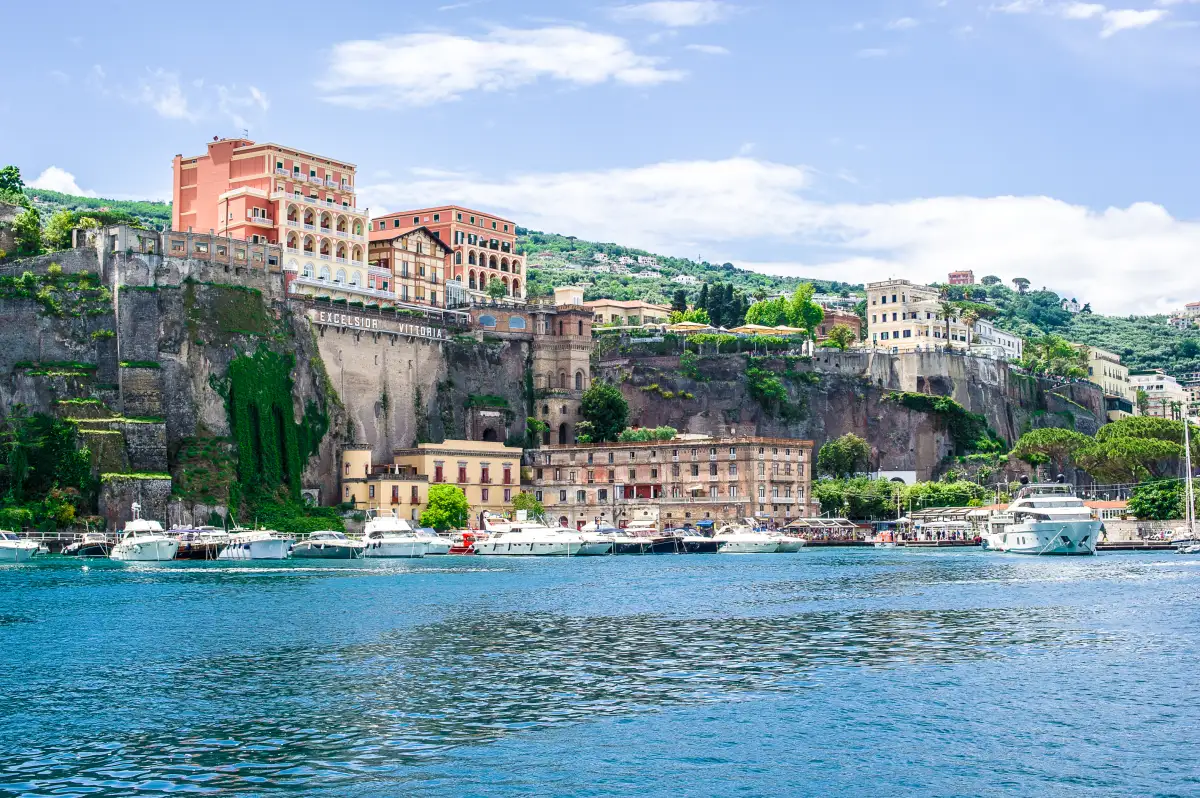
Just a few steps from Piazza Tasso, Marina Piccola is a small harbor in Sorrento. When you visit, you can hop on a ferry or jet boat to the islands of Capri or Ischia Porto, as well as other nearby coastal towns, including the Amalfi Coast and Positano. If you want to spend a day at the beach, the port also features a small yet gorgeous stretch of beach with a nearby parade of restaurants and cafes offering sea views. On a hot summer day, there’s nothing better than to sip a refreshing Aperol Spritz while sunbathing near the crystal clear waters.
Read moreShow more
Optional Day Trips from Sorrento

Take a short ferry ride from Sorrento by ferry to the island of Capri, or get a taste of the many yachts anchored in its stunning waters by traveling on a hydrofoil. Capri is renowned as a resort and a playground for the rich and famous. The best way to see the island is by boat, taking in the majestic grandeur of towering cliff faces, and the intimate and mysterious beauty of pristine bays and natural caves like the famed Blue Grotto. After a swim, there is plenty of delicious seafood, as well as shopping in the boutiques of Capri Town and Anacapri.
Read more
Ischia is a large volcanic island, with more room to move and enjoy nature than the teeming city of Naples across the water. Drenched in history, the Aragonese Castle (built in 474BC) stands on a small rocky outcrop just off the island, surrounded by fortifications to defend the settlement from pirates, and can be visited via a stone causeway. Away from Ischia’s six towns and artisanal pottery stores, the volcanic peaks at the center of the island afford spectacular views, and Monte Epemeo (788m in height) giving clear sight of Mount Vesuvius. Hiring a scooter will let you explore the island’s lush gardens and villas, and historic thermal pools.
Read more
Mount Vesuvius is the only active volcano in continental Europe – it last erupted as recently as 1944. Beautiful views of the Naples gulf on a clear day belie its menacing history – in 79AD, its explosion of volcanic ash rained terror down on the Roman town of Pompeii and completely buried the city and those inhabitants who could not flee in time. It sits against the wall of an even larger caldera created by an eruption some 17,000 years ago. Its proximity to cities and millions of people means it is regarded as one of the most dangerous volcanoes in the world, but also makes its smoldering crater one of the most popular day trips in the Sorrento and Naples areas. The Circumvesuviana train will drop you off a short walk (around 30 minutes uphill and 20 back down) to the peak.
Read more
Step back in time to 79AD to the last day of the doomed Roman city of Pompeii. The astonishing preserved city was submerged under 10 meters of volcanic ash over 18 hours during the eruption of Mount Vesuvius, and is an unmissable must-see. Discovered by accident during the construction of a palace, and subsequently excavated, in the early 19th century, it is an incredible experience of the living past only a short train trip from Sorrento. Guided tours are offered, but most people can spend the whole day wandering by themselves through the ruins, taking in a detailed snapshot of metropolitan life in the Empire, and the detailed plaster casts of unlucky victims (taken from the cavities in the ash that surrounded the 2000 bodies) who could not flee the city’s and their own fates.
Read more
Sorrento acts as the gateway to the extraordinary fusion of natural and manmade beauty on the Amalfi Coast. A strip of thirteen seaside towns make up the famously romantic coast, which has UNESCO world heritage status. The narrow, winding clifftop road SS.163 that connects the coast also furnishes spectacular views of the azure sea and the mountains, while the seaside rock faces and hills explode with the color of towering, cascading homes. The coast has been terraced and adapted over the years so that the settlements are now part of the landscape — towns spring magically from the hills, pebbly beaches give way to ancient towers. Stroll along the promenade, take a dip in the aquamarine waters, or browse the many high-end boutiques and shops dotted within the town.
Read moreShow more
Create a custom trip
plan for Sorrento
Travelling made easy:
- ✓ 100% customizable trip
- ✓ On-trip support, around the clock
- ✓ Local travel expertise


Featured Blogs


Your custom trip package includes

A day to day itinerary

Centrally located hotels

Door to door transportation
Self-guided & private tours
Create Your Perfect Trip in Minutes
Discover A Better Way To Travel.
Once you Go Real, you’ll never go back to ordinary travel.