10 Day Munich and Prague Tour: Castles, Culture, and Beer Tasting Adventures

destination-icon10 Day Tour of Munich and Prague

Destinations on this trip: Munich,Prague

Neuschwanstein Castle in Bavaria
German beer in Munich
Nymphenburg Palace in Munich
Karlstejn Castle in Prague
image
arrowLightLeft
arrowLightRight

How Long Is the Castles of Bavaria & Bohemia Trip and What Does It Cost?

Castle & Palace ToursBeer Drinkers
  • Duration
    10 days / 9 nights
  • Best time
    Jan-Dec
  • From
    $1695 / person (Flights not included)
Take a journey to Munich and Prague, where castles and the world-renowned beer culture of Central Europe await to create a unique adventure. Your adventure includes four guided tours, two focused on the rich history of the cities, and two indulging in the local beer scenes. Venture beyond the city limits to marvel at the fairy-tale Neuschwanstein and the historic Karlštejn castles. This trip offers a blend of urban exploration and countryside charm, accompanied by detailed travel guidance for a seamless experience.
  • Enjoy a scenic direct train ride between Munich and Prague, passing through the Bohemian Forest
  • See the fairy-tale castles of Neuschwanstein & Karlštejn Castle, set amidst stunning landscapes
  • Learn about the rich brewing traditions of Munich and Prague on two guided beer tours
  • Cross the Charles Bridge, a marvel of Gothic architecture and history in Prague
  • Explore the grounds of Prague Castle, Europe's largest castle complex
Take a journey to Munich and Prague, where castles and the world-renowned beer culture of Central Europe await to create a unique adventure. Your adventure includes four guided tours, two focused on the rich history of the cities, and two indulging in the local beer scenes. Venture beyond the city limits to marvel at the fairy-tale Neuschwanstein and the historic Karlštejn castles. This trip offers a blend of urban exploration and countryside charm, accompanied by detailed travel guidance for a seamless experience.
  • Enjoy a scenic direct train ride between Munich and Prague, passing through the Bohemian Forest
  • See the fairy-tale castles of Neuschwanstein & Karlštejn Castle, set amidst stunning landscapes
  • Learn about the rich brewing traditions of Munich and Prague on two guided beer tours
  • Cross the Charles Bridge, a marvel of Gothic architecture and history in Prague
  • Explore the grounds of Prague Castle, Europe's largest castle complex
Old Town - Must-See Sight
Old Town
Architecture
Residence Palace - Must-See Sight
Residence Palace
Castles & Chateaux
Deutsches Museum  - Must-See Sight
Deutsches Museum
Museums & Galleries
Prague Castle - Must-See Sight
Prague Castle
Castles & Chateaux
Charles Bridge - Must-See Sight
Charles Bridge
Historic Landmarks
Wenceslas Square - Must-See Sight
Wenceslas Square
European History

Must see sights

Old Town - Must-See Sight
Old Town
Architecture
Residence Palace - Must-See Sight
Residence Palace
Castles & Chateaux
Deutsches Museum  - Must-See Sight
Deutsches Museum
Museums & Galleries
Prague Castle - Must-See Sight
Prague Castle
Castles & Chateaux
Charles Bridge - Must-See Sight
Charles Bridge
Historic Landmarks
Wenceslas Square - Must-See Sight
Wenceslas Square
European History
Loading...

Starting from

$1695

per person

no-flightNot included

Price varies by group size, hotel selection, and travel season.


Secure Your Customizable Trip

Enter your details to embark on a journey that can be tailored just for you.

Start

Travelers

0 travelers
Add Room
Remove Room

Preferred Hotel Stars

Select Hotel Stars
Craft Your Own Itinerary

Select your interests and destinations for a trip plan inspired by you.

Where Does the Castles of Bavaria & Bohemia Trip Trip Go?

Enable/Disable Map Scrolling

Click To Make Map Interactive

Castles of Bavaria & Bohemia Trip Timeline

Arrival

4 nights

Munich

Germany

Train: 8.5h

5 nights

Prague

Czech Republic

Departure

What Does the Castles of Bavaria & Bohemia Trip Itinerary Look Like?

image

Day 1

Arrive Munich

Day 1

Arrive Munich

icon
icon
icon

To Be Determined

Transfer from Airport

Munich has one main airport, Munich International Airport, where almost all visitors arrive. Taxis are available directly at the terminal exit, or you can arrange a private transfer for added convenience. The cheapest and fastest way to reach central Munich from is by train. The regional "S-bahn" trains delivers you from the airport train station (just follow the signs) directly to Munich's main station (München hbf) in the center of the city, from where you can easily hail a taxi that will be much less expensive than from the airport.

Transfer from Airport

To Be Determined — Transfer from Airport

Munich has one main airport, Munich International Airport, where almost all visitors arrive. Taxis are available directly at the terminal exit, or you can arrange a private transfer for added convenience. The cheapest and fastest way to reach central Munich from is by train. The regional "S-bahn" trains delivers you from the airport train station (just follow the signs) directly to Munich's main station (München hbf) in the center of the city, from where you can easily hail a taxi that will be much less expensive than from the airport.

Mid-Day/Afternoon — Residence Palace

The Munich Residenz was the seat of Bavaria's Dukes and Kings from the middle ages until 1918. Originally a medieval castle, it was transformed over the centuries into a beautiful palace. Today it is open to the public and you can explore its magnificent interiors, numerous courtyards, and elegant garden. The living quarters of the royal family have been transformed into a museum which provides a fascinating glimpse into the lives of Kings and Queens. You can also peruse numerous jewels, gold objects, and other precious items which are held in the Residenz Schatzkammer (treasury).

Residenz Palace Museum

Wander where you will, audio guide in hand, through the spectactular royal residence.

You'll experience jaw-dropping architecture and beautiful artwork as you explore the museum and the adjacent Royal Treasury. Among the many highlights, unmissable is the Antiquarium, the largest and most lavish Renaissance hall north of the Alps. The window reveals are decorated with 102 views of towns, markets, and palaces in what was then the Duchy of Bavaria, providing an unique insight into how the country once looked. The Rich Chapel (Reiche Kapelle) was the private place of worship of Duke Maximilian I and his wife, and it was decorated with particular magnificence using colored marble and gilt reliefs. The Ornate Rooms (Reiche Zimmer) meanwhile represent a high point of the court Rococo style, and are works of art in their own right. 

Cuvilliés-Theatre

Visit what is perhaps the most ostentatious and sensually overwhelming building in Munich.

The exceptionally extravagant court theatre was built by Elector Max III Joseph's court architect François Cuvilliés between 1751 and 1755, and was intended to showcase Munich as a home to the arts and the enlightenment. It only survived the destruction of WWII because the elaborately carved tiers of boxes were removed from their original location in the Alte Residenztheater building for safekeeping. It's still used as a theatre today.FYI - to visit the Cuvilliés-Theatre you need to exit the museum and walk around the palace to get onto Residenzstraße and then re-enter the palace and cross through either the Chapel Courtyard or the Imperial Courtyard. 

Odeonsplatz

See the square where Hitler's Beer Hall Putsch came to a bloody end.

The square directly adjacent to the Residence is the Odeonsplatz, which is guarded by the Feldherrnhalle (Field Marshalls' Hall) in honor of the Bavarian army. It was here that Hitler's Beer Hall Putsch in 1923 came to a bloody end in a gun battle with the police. During the Nazi regime, anyone passing the Feldherrnhalle was obliged to give the Nazi salute, which prompted some locals to instead take a side street. The Nazis derogatorily nicknamed it the Shirkers' Alley, but the 'shirkers' are memorialized in a trail of brass cobblestones. Also on the square is the bright yellow Theatinerkirche with its two massive twin towers. It was the personal church of Bavaria's rulers and many of them are interred there.  

Early Evening — Maxvorstadt

Maxvorstadt is not just Munich’s most central nightlife hotspot, it’s one of the most historically fascinating neighborhoods in all of Bavaria. The area is often called the “Brains of Munich” for its concentration of arts and education centers, including seven universities and several museums and galleries. It’s a lively spot from day to evening to be sure, with a diversity of cozy bars, restaurants, and cafes appealing to the large student population and foreign visitors.

image

Day 1

Arrive Munich


icon
icon
icon

To Be Determined:

Transfer from Airport

Mid-Day/Afternoon:

Residence Palace

Early Evening:

Maxvorstadt

Transfer from Airport

Transfer from Airport

Munich has one main airport, Munich International Airport, where almost all visitors arrive. Taxis are available directly at the terminal exit, or you can arrange a private transfer for added convenience. The cheapest and fastest way to reach central Munich from is by train. The regional "S-bahn" trains delivers you from the airport train station (just follow the signs) directly to Munich's main station (München hbf) in the center of the city, from where you can easily hail a taxi that will be much less expensive than from the airport.

To Be Determined — Transfer from Airport

Munich has one main airport, Munich International Airport, where almost all visitors arrive. Taxis are available directly at the terminal exit, or you can arrange a private transfer for added convenience. The cheapest and fastest way to reach central Munich from is by train. The regional "S-bahn" trains delivers you from the airport train station (just follow the signs) directly to Munich's main station (München hbf) in the center of the city, from where you can easily hail a taxi that will be much less expensive than from the airport.

Mid-Day/Afternoon — Residence Palace

The Munich Residenz was the seat of Bavaria's Dukes and Kings from the middle ages until 1918. Originally a medieval castle, it was transformed over the centuries into a beautiful palace. Today it is open to the public and you can explore its magnificent interiors, numerous courtyards, and elegant garden. The living quarters of the royal family have been transformed into a museum which provides a fascinating glimpse into the lives of Kings and Queens. You can also peruse numerous jewels, gold objects, and other precious items which are held in the Residenz Schatzkammer (treasury).

Residenz Palace Museum

Wander where you will, audio guide in hand, through the spectactular royal residence.

You'll experience jaw-dropping architecture and beautiful artwork as you explore the museum and the adjacent Royal Treasury. Among the many highlights, unmissable is the Antiquarium, the largest and most lavish Renaissance hall north of the Alps. The window reveals are decorated with 102 views of towns, markets, and palaces in what was then the Duchy of Bavaria, providing an unique insight into how the country once looked. The Rich Chapel (Reiche Kapelle) was the private place of worship of Duke Maximilian I and his wife, and it was decorated with particular magnificence using colored marble and gilt reliefs. The Ornate Rooms (Reiche Zimmer) meanwhile represent a high point of the court Rococo style, and are works of art in their own right. 

Cuvilliés-Theatre

Visit what is perhaps the most ostentatious and sensually overwhelming building in Munich.

The exceptionally extravagant court theatre was built by Elector Max III Joseph's court architect François Cuvilliés between 1751 and 1755, and was intended to showcase Munich as a home to the arts and the enlightenment. It only survived the destruction of WWII because the elaborately carved tiers of boxes were removed from their original location in the Alte Residenztheater building for safekeeping. It's still used as a theatre today.FYI - to visit the Cuvilliés-Theatre you need to exit the museum and walk around the palace to get onto Residenzstraße and then re-enter the palace and cross through either the Chapel Courtyard or the Imperial Courtyard. 

Odeonsplatz

See the square where Hitler's Beer Hall Putsch came to a bloody end.

The square directly adjacent to the Residence is the Odeonsplatz, which is guarded by the Feldherrnhalle (Field Marshalls' Hall) in honor of the Bavarian army. It was here that Hitler's Beer Hall Putsch in 1923 came to a bloody end in a gun battle with the police. During the Nazi regime, anyone passing the Feldherrnhalle was obliged to give the Nazi salute, which prompted some locals to instead take a side street. The Nazis derogatorily nicknamed it the Shirkers' Alley, but the 'shirkers' are memorialized in a trail of brass cobblestones. Also on the square is the bright yellow Theatinerkirche with its two massive twin towers. It was the personal church of Bavaria's rulers and many of them are interred there.  

Early Evening — Maxvorstadt

Maxvorstadt is not just Munich’s most central nightlife hotspot, it’s one of the most historically fascinating neighborhoods in all of Bavaria. The area is often called the “Brains of Munich” for its concentration of arts and education centers, including seven universities and several museums and galleries. It’s a lively spot from day to evening to be sure, with a diversity of cozy bars, restaurants, and cafes appealing to the large student population and foreign visitors.

image

Day 2

Munich

Day 2

Munich

icon
icon
icon

9:00 AM - 11:30 AM

Guided Walk Tour of Historic Munich

Munich contains many reminders of a long and varied history but also encompasses the modern features of a strong and vibrant city. The insights of a local help make sense of the traditions, trends, and promises of Bavaria's Capital - sometimes referred to as the city of laptops and lederhosen. On this tour, your guide will show you the highlights of Munich and point out the many hidden treasures.

Guided Walk Tour of Historic Munich

9:00 AM - 11:30 AM — Guided Walk Tour of Historic Munich

Munich contains many reminders of a long and varied history but also encompasses the modern features of a strong and vibrant city. The insights of a local help make sense of the traditions, trends, and promises of Bavaria's Capital - sometimes referred to as the city of laptops and lederhosen. On this tour, your guide will show you the highlights of Munich and point out the many hidden treasures.

Mid-Day to Late Afternoon — Altstadt

Munich boasts a large old town (Altstadt) with many beautiful historic buildings. Sometimes called the world's largest village, it is a perfect place to wander. You will discover many Medieval, Renaissance, and Baroque buildings, as well as several stunning examples of modern architecture. Pleasant cafes, beer halls, cozy restaurants, and great shopping all add to the charming atmosphere.

Hofbräuhaus

Enjoy some fine Bavarian brews in a beer hall that dates back to 1589.

Originally built in 1598 by Maximilian I, Duke of Bavaria, as an extension to the state brewery, this beer hall was opened to the public in 1828, remodeled in 1897, almost completely destroyed during World War II, and reopened following its restoration in 1958. It is now situated across three floors, with a restaurant, ballroom, and beer garden, and is one of the largest tourist attractions in the city as well as a favorite of locals. This is where the ingurgitation of vast quantities of beer and pretzels has been taking place since 1644. Even if you're a teetotaller, you'll want to at least take a look at the interior of the three-storied temple to the consumption of fermented hops and watch the odd local quaff his or her ale amid the sea of tourists. There's also an attractive courtyard where you can escape the din on a summer's day or evening.

New Town Hall & Glockenspiel

Enjoy the mechanical show as the figures on the Glockenspiel on the New City Hall come to life and re-enact stories from the 16th century.

The Marienplatz is the main square of the Altstadt, and its centerpiece is the domineering facade of the neo-Gothic Neues Rathaus (New Town Hall). It is decorated with gargoyles and statues, including a dragon scaling the turrets. For a great view of the city, ascend the 279ft (85m) tower (elevator available to the left just inside the main entrance to the town hall). The highlight of the building is the Glockenspiel, which attracts large numbers of tourists at 11 am and noon (and 5pm in the summer) who come to watch the contraption in operation. There's dancing, a joust, and more, all set to musical chimes. Unusually, the New Town Hall mostly survived WWII intact, probably because it was used by Allied bombers as a direction finder for obliterating the rest of the city.

Peterskirche

Climb to the top of Munich's oldest church tower for what is still today its best view.

The best views of central Munich can be viewed from the 302ft (92m) tower of St Peterskirche, inner Munich's oldest church and possibly the city's origin point. The presence of a church on its site goes back to before the city's founding, and it has existed in a number of iterations since. Its nearly 3000ft-tall tower is affectionately called "Alter Pete" or "Old Pete" as a recognition of its significance to Munich's social and cultural history.

Viktualienmarkt

Assemble a gourmet picnic lunch in one of Europe's best known markets.

The Viktualienmarkt is one of Central Europe's finest gourmet markets where many of the stalls have been run by generations of the same family. Prices are high, but you can gather all the ingredients for an haute cuisine picnic and then seat yourself in the market's own beer garden to enjoy an al fresco lunch. The very existence of such a market in an old town quarter is the result of Munich's dedication to preserving its past. Fearing that fast food chains will replace the old-fashioned market stalls and quaint eateries that make the Viktulienmarkt one of Europe’s most charming squares, the city subsidizes the rent so they can survive on the some of Germany’s most expensive real estate.

Jewish Museum

Learn about Munich's rich Jewish heritage and see it's most striking synagogue.

The museum focuses on Munich's Jewish heritage, as well as Jewish history and culture in general, with a contemporary flair and modern means of display. Adjacent to the museum is the Ohel Jakob synagogue, which ranks among the most striking structures built in the city in recent years. It is the first synagogue to serve as the main synagogue of the city since the Nazi Kristallnacht (i.e. the Night of Broken Glass). Tours are offered but must be arranged 10 days in advance.

Frauenkirche

Restored Gothic church.

The Frauenkirche, or Church of Our Lady, dominates the Altstadt. This is because the twin onion-domed towers inspired the city council to prohibit any other building in the Altstadt from exceeding their height of 325ft (99m). Much of the interior was destroyed during WWII, but it has been rebuilt. An attraction that survived the bombing in original form is the Teufelstritt, or Devil's Footstep, at the entrance. This is a black mark resembling a footprint, which according to legend is the result of a deal the devil made with the builder to finance construction of the church on the condition that it contains no windows. The clever builder, however, tricked the devil by positioning columns so that the windows were not visible from the spot where the devil stood in the foyer. By the time the devil discovered that he had been tricked, he could not enter the already consecrated church. The devil could only stand in the foyer and stomp his foot furiously, which left the dark footprint that remains visible in the church's entrance today.

Early Evening/Evening — Augustiner Keller

This vast beer garden under leafy chestnut trees is immensely popular with the locals, so you can study the lederhosen-clad men and dirndl attired women at close quarters while quaffing the Augustiner's own Edelstaff beer from your Maßkrug (one-liter glass beer mug) and wolfing down a plate stacked high with Bavarian sausage and mashed potato.

image

Day 2

Munich

image

Day 3

Munich

Day 3

Munich

icon
icon

Early Morning to Early Evening

Excursion to Neuschwanstein Castle

An inspiration for the Disney Castles, numerous fairy tales, and countless dreamers, the Castle of Neuschwanstein is perhaps the most famous castle in the world. The eccentric Bavarian King Ludwig II created this amazing palace in the 19th century as an idyllic version of a medieval castle. You can visit by taking a guided tour from Munich or traveling independently by train and bus. In addition to enjoying spectacular views you can take a guided tour of the castle interior which is well worth the experience (but keep in mind that there a lots of steps to negotiate). If traveling independentally, be sure to book your interior tour reservations at least two days in advance.

Excursion to Neuschwanstein Castle

Early Morning to Early Evening — Excursion to Neuschwanstein Castle

An inspiration for the Disney Castles, numerous fairy tales, and countless dreamers, the Castle of Neuschwanstein is perhaps the most famous castle in the world. The eccentric Bavarian King Ludwig II created this amazing palace in the 19th century as an idyllic version of a medieval castle. You can visit by taking a guided tour from Munich or traveling independently by train and bus. In addition to enjoying spectacular views you can take a guided tour of the castle interior which is well worth the experience (but keep in mind that there a lots of steps to negotiate). If traveling independentally, be sure to book your interior tour reservations at least two days in advance.

Linderhof Palace

Stop by King Ludwig II's smallest palace on your way to Neuschwanstein and explore its delightful gardens.

Another of the eccentric (some say mad) King Ludwig II's creations is Linderhof Palace, which with its fantastic grotto and Moorish pavilion testifies to the king's vision. The smallest of his three palaces that he built, it is the only one that he lived to see completed. The palace is in between Munich and Neuschwanstein, meaning many tours stop there along the way.

Mary's Bridge

Enjoy a stunning view of the castle while suspended over a mountainous gorge.

You definitely won't want to miss taking in the best views and photographs of Neuschwanstein from Marienbrücke (Mary's Bridge) over the dramatic Pöllat Gorge. The minibus terminal is very close at just 5 min walk away, while it's a steepish 10-15min climb on a wide and well-groomed path to get there from behind the castle. As noted above, Mary's Bridge can get a little crowded, so you might have to wait for a gap before you can fit on.

7:00 PM - 9:30 PM — Guided Beer Tasting Tour

Munich is the beer hall capital of the world, and the best way to get to know the age-old tradition of imbibing beer the Bavarian way is by going out at night, and not just to the touristy places. Your guide will show you different venues to get a feel for Munich. Some of the beer hall options include one or more of the city's famous pub-breweries like the Hofbräuhaus or the Augustiner Keller.

Hofbräuhaus

Enjoy some fine Bavarian brews in a beer hall that dates back to 1589.

Originally built in 1598 by Maximilian I, Duke of Bavaria, as an extension to the state brewery, this beer hall was opened to the public in 1828, remodeled in 1897, almost completely destroyed during World War II, and reopened following its restoration in 1958. It is now situated across three floors, with a restaurant, ballroom, and beer garden, and is one of the largest tourist attractions in the city as well as a favorite of locals. This is where the ingurgitation of vast quantities of beer and pretzels has been taking place since 1644. Even if you're a teetotaller, you'll want to at least take a look at the interior of the three-storied temple to the consumption of fermented hops and watch the odd local quaff his or her ale amid the sea of tourists. There's also an attractive courtyard where you can escape the din on a summer's day or evening.

Augustiner Keller

Classical Bavarian restaurant and beer garden.

In summer the Augustiner beer garden is divided into two section for serviced tables and self-service tables. The former is closest to the main entrance and the latter make up the vast majority of tables to the rear. If you're in the serviced area you can simply order from your waiters/waitresses and pay them at the end. If you're seated in the self-service area you need to go to the long wooden stalls at the back of the garden where there is one queue for food and another for beer. The queue for food is usually longer, so if you only want a beer then make sure you choose the right line. A couple of barmen will be drawing beer into one-liter Maßkrugs on a permanent basis and slamming them down on the stainless steel counter, so take one or however many you need without asking (unless the barmen are taking a breather). If you want something other than a Maßkrug then you will have to say so, even if it's a half-liter glass you want. You then pay for your beer at one of the half-dozen cashiers. It's all very efficient even if the garden is totally packed with customers. Most beer gardens will make you pay a deposit for your glass and issue with a plastic coupon that you can redeem when you return your glass, but not at the Augustiner; electric carts are constantly going up and down the garden collecting empty glasses and crockery.

image

Day 3

Munich

image

Day 4

Munich

Day 4

Munich

icon
icon

Morning to Afternoon

Nymphenburg Palace

Only a short tram ride from Munich's city center, you'll find a lovely palace scenically situated amidst a large park. Created as the summer residence of the Bavarian electors, the size, and dimension of the grounds, designed by a student of the Palace of Versailles' landscape designer, is astounding. The main palace building consists of a large villa and two wings of creaking parquet floors and sumptuous period rooms. The palace managed to survive the carpet bombing of the Second World War that destroyed around 80% of the inner city.

Nymphenburg Palace

Morning to Afternoon — Nymphenburg Palace

Only a short tram ride from Munich's city center, you'll find a lovely palace scenically situated amidst a large park. Created as the summer residence of the Bavarian electors, the size, and dimension of the grounds, designed by a student of the Palace of Versailles' landscape designer, is astounding. The main palace building consists of a large villa and two wings of creaking parquet floors and sumptuous period rooms. The palace managed to survive the carpet bombing of the Second World War that destroyed around 80% of the inner city.

Marstallmuseum

Stare up close at the splendid and ostentatious carriages built for Bavaria's rulers.

Also housed in the main building is the Marstallmuseum, displaying royal coaches and riding gear dripping with gild and golden ornamentation, including King Ludwig II's outrageously fairy tale–like rococo sleigh, ingeniously fitted with oil lamps for his impromptu nocturnal outings. Upstairs is the world's largest collection of porcelain made by the famous Nymphenburger Manufaktur. Also known as the Sammlung Bäuml, it presents the entire product palette from the company's founding in 1747 until 1930.

Botanical Garden

Visit M unich's large Botanical Gardens just north of the Nymphenburg Palace.

There are over 52 acres in the gardens, included greenhouses, a lake, a fountain, and houses dedicated to Africa and Madagascar, Mexico, palms and cactuses, and other themes.

Gallery of Beauties

Stare into the eyes of King Ludwig I's mistresses.

One of the high points of the magnificent palace is the Schönheitengalerie, or the Gallery of Beauties, featuring 38 portraits of attractive females admired by King Ludwig I, including some of his mistresses, many with fascinating stories of their own related via the audio guide. Be sure to check out the story of Ludwig's longstanding infamous mistress, the Irish dancer Lola Montez, over whom Ludwig lost his crown.

Nymphenburg Garden

Escape to the favorite natural retreat of locals.

The sprawling park behind Nymphenburg Palace is a favorite spot with Munich residents and visitors alike. It started out as an Italian garden and was later redesigned in the French style, but in the 19th century most of the park was transformed into the more natural English style. It is embellished with a number of water features, including a large lake, a cascade and a 1.5 mile-long canal - a great venue for ice skating and ice curling when it freezes over in winter.

Afternoon to Early Evening — English Gardens

The English Garden is one of Europe's largest parks; in fact, it is larger than New York's Central Park. While it is called the "English Garden" after the style of the park, it was actually designed by an American-Englishman and is now a symbol of the very Bavarian city of Munich. The park is a perfect place to escape the city for a long stroll, where you can enjoy the natural scenery and the people watching.

Chinese Tower

Enjoy some Bavarian brews with the locals in Munich's second largest beer garden.

Located in the middle of the English Gardens, this beer garden (7,000 seats) is located beneath the wooden Chinese Tower. The 25 meter high (75 feet) pagoda was built in 1789 during a pan-European craze for all things East Asian. The food stalls around the pagoda offer traditional beer garden food such as Steckerlfisch (grilled fish on a stick), Hendl (roasted chicken) and Schweinshaxn (roasted pork knuckle). The beer served is Hofbräu and a Maß Hell (lager).

Eisbachwelle

Watch surfers catch some waves in the middle of the city.

At the extreme southern end of the park you can find one of the more unusual and entertaining pastimes enjoyed by the locals - surfing on the man-made Eisbach river. There is a standing wave produced by the water pumping mechanism and surfers line up along the bank taking turns entering the water with their boards. After a minute or so, successful surfers will voluntarily drop out, returning to the end of the line allowing the next person in line an opportunity. The water is cold and shallow (sometimes only 40 cm deep), making it suitable only for experienced surfers.

image

Day 4

Munich

image

Day 5

Munich to Prague

Day 5

Munich to Prague

icon
icon
icon
icon
icon

11:00 PM

Transfer to Rail Station

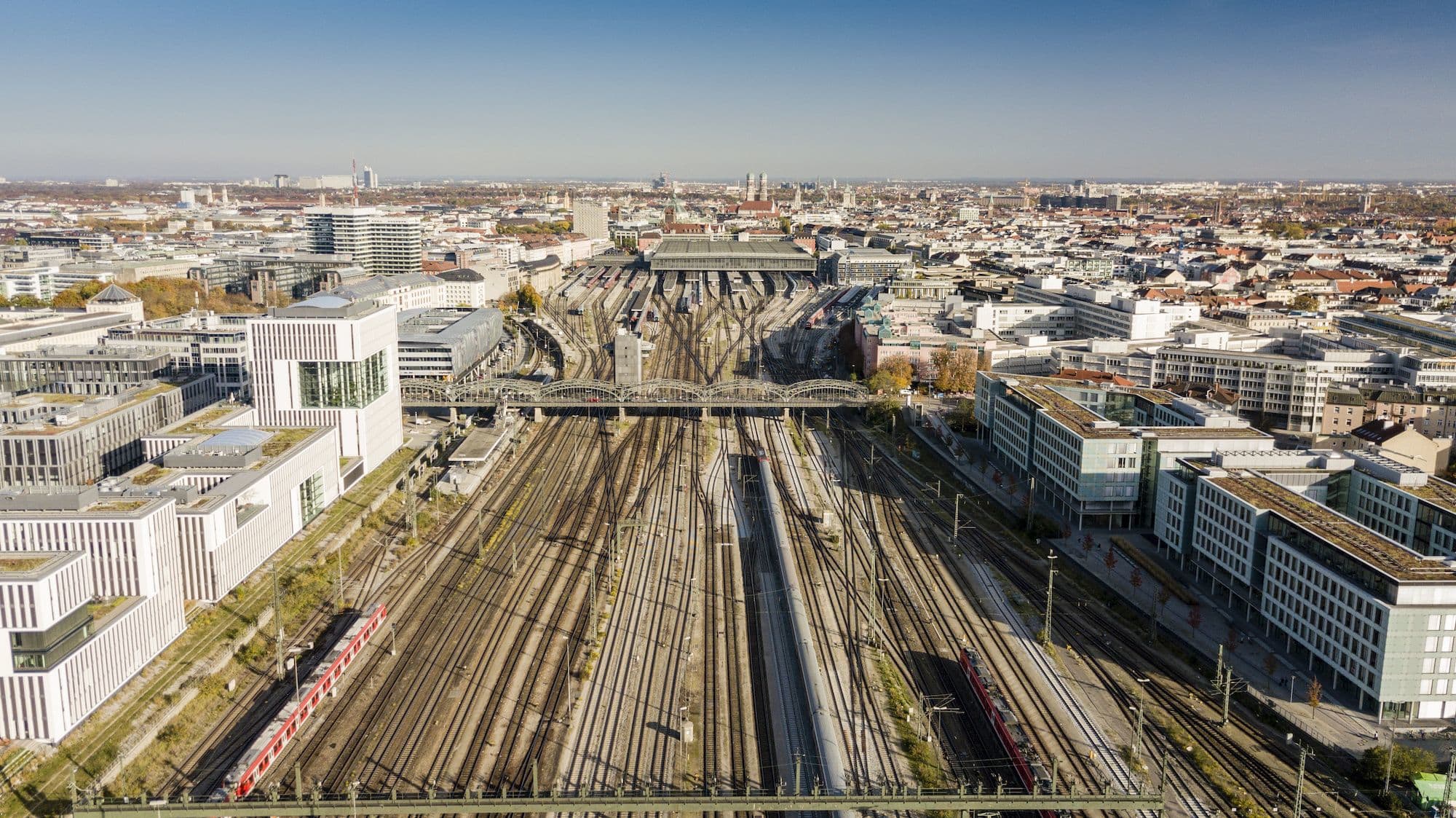
Most trains depart from Müchen Hbf station, the largest station in the city. Before spending money on a transfer, be sure to check whether your hotel is within easy walking distance. Also consider that public transport is the cheapest and sometimes fastest option. If staying at a hotel, they can order a reliable taxi. Some private transfers will even help with your bags. Uber is also available for those with the app.

Transfer to Rail Station

11:00 PM — Transfer to Rail Station

Most trains depart from Müchen Hbf station, the largest station in the city. Before spending money on a transfer, be sure to check whether your hotel is within easy walking distance. Also consider that public transport is the cheapest and sometimes fastest option. If staying at a hotel, they can order a reliable taxi. Some private transfers will even help with your bags. Uber is also available for those with the app.

00:00 - 00:00 — Train to Prague

Your scenic journey to Prague should take about six hours. After departing Munich, you will pass through the pretty countryside of Lower Bavaria. The countryside is relatively flat in comparison to the Alps of southern Bavaria, but is still quite scenic. As you cross the border you will be passing alongside two national parks - the Bavarian Forest national park in Germany, and the Šumava national park in the Czech Republic. These parks are covered by deep forests and low-lying but very beautiful mountain ranges. You will then travel through the hilly countryside of Bohemia, stopping in the city of Plzen, where pilsner beer was first brewed, and then shortly thereafter reach Prague.

12:00 AM — Transfer from Rail Station

Most trains arrive in Prague Main Station (Praha hl.n.) station, the largest station in the city. Before spending money on a transfer, be sure to check whether your hotel is within easy walking distance. Also consider that the easiest way to reach your hotel may be by public transport. Taxis are available but are known for taking advantage of tourists. However if you prefer the convenience of not carrying your bags on public transport, they are an option. Some private transfers even meet you directly on the platform to help with bags. Uber and Bolt Taxis are also available for those with the app.

3:00 PM - 6:30 PM — Royal Route Guided Tour

On this charming guided walk, you will explore the Prague Castle, the largest castle complex in all of Europe. To reach the castle you will trace the Royal Coronation Route and cross the Charles Bridge, whose “speaking stones” reveal the amazing and often cruel history that occurred there. Your tour guide will then take you either through the castle courtyards and into the dramatic St. Vitus Cathedral in the center of the castle complex, or through the upper part of the castle district around the oversized palaces of the old Catholic nobility and the top of the Castle Steps for incomparable views over the red rooftops of the Little Quarter.

Prague Castle

Prague Castle is one of the main attractions in Prague and is also the largest castle complex in the world.

The Prague Castle is the largest castle complex in the world with structures dating back to the 9th century. The St Vitus Cathedral and Basilica of St George can be found within the castle walls. The Prague Castle also includes several gardens, palaces, and a monastery. This castle was the seat of power for the Kings of Bohemia, Holy Roman Emperors, and presidents of former Czechoslovakia. Prague Castle is a UNESCO world heritage site and is one of the most visited places in the country. 

Charles Bridge

Cross the river dividing Prague's most historic neighborhoods, and experience one of Europe's most iconic landmarks.

Bridge construction began in 1357 under King Charles IV (hence the name), and it was the only bridge across the Vltava River until 1841. 30 baroque statues of saints line the bridge, and it is filled with street artists and entertainers. Not to be missed.

Maltese Square & Lennon Wall

See a historic wall that has been covered in John Lennon-inspired graffiti since Communist days.

The wall has been covered in graffiti since the 1960s, and during Communism anti-regime sentiment was common. John Lennon's assassination inspired grafitti reflecting his song, Imagine, which earned the wall its current moniker. It is now a favorite gathering place for tourists, and musicians sometimes congregate there as well. Just around the corner is the Maltese Square, which is one of Prague's more quaint and relaxed public spaces, despite being just off the main tourist route.

Early Evening/Evening — Evening Boat Cruise

Embark on a captivating evening river cruise in Prague on the Vltava River, where the city's historic landmarks come alive under the soft glow of twilight. Glide past Prague Castle, Charles Bridge, and the Old Town while enjoying a glass of bubbly or a gourmet dining experience with fine wines. This enchanting journey offers a unique perspective of Prague's beauty, creating memories against the backdrop of the city's sparkling lights.

image

Day 5

Munich to Prague

image

Day 6

Prague

Day 6

Prague

icon
icon
icon

Morning/Mid-Day

Old Town

A visit to the Old Town transports you to an entirely different era. A labyrinth of twisting cobblestone lanes and alleys surrounds Old Town Square, which has been Prague's municipal center since the Middle Ages. The square is lined by magnificent churches and imposing Renaissance palaces. As you wander through the Old Town, you discover numerous other delights, including several beautiful churches, a plentiful supply of cozy cafes and pubs, and an outdoor market dating back to the Middle Ages.

Old Town

Morning/Mid-Day — Old Town

A visit to the Old Town transports you to an entirely different era. A labyrinth of twisting cobblestone lanes and alleys surrounds Old Town Square, which has been Prague's municipal center since the Middle Ages. The square is lined by magnificent churches and imposing Renaissance palaces. As you wander through the Old Town, you discover numerous other delights, including several beautiful churches, a plentiful supply of cozy cafes and pubs, and an outdoor market dating back to the Middle Ages.

Old Town Square

Make sure to visit one of Europe's most important, historic, and stunning city squares.

The square is filled with rich history and surrounded by many beautiful old buildings, such as the gothic church of Our Lady before Týn and the baroque church of St. Nicholas. At the center of the square is a large statue of Jan Hus, a church reformer burnt at the stake in 1415, and a lovely and recently-restored column topped by the Virgin Mary. Today the square is filled with street performers, food stalls, and horse-drawn carriages. 

Old Town Hall and Astronomical Clock

See Prague's most photographed moment when the late medieval timepiece constructed on the side of the Old Town Hall Tower comes to life at the top of the hour.

Apostles proceed from the tower’s 1410 astronomical clock hourly, flanked by figures representing vanity, greed, death, and pleasure. You can also take an elevator to the top of the Old Town Hall tower for a great view of the Old Town Square and rooftops. Tours of the town hall and its gothic cellars are also offered. 

Church of Our Lady before Týn

Count the spires on the Church of Our Lady Týn before discovering the hidden courtyard behind it.

The 14th-century, Gothic church is a stunning structure with asymmetrical towers (note that the one on the right is slightly larger than the one on the left). It is the dominant feature of Old Town square and serves as an extensive gallery of Gothic, Renaissance and Early Baroque works. The church is the final resting place for the great astronomer Tycho Brahe.

Clementinum

Discover a large historical complex of buildings and courtyards "hidden in plain sight" within the Old Town.

Founded as an abbey in the 11th century and later transformed into a Jesuit university, it is the second largest complex of buildings in Prague after the castle and contains four separate churches. Guided tours begin at 10am, and include an awe-inspiring Baroque library hall and the Astronomical Tower, from which you have a beautiful view of the Old Town.

Afternoon/Late Afternoon — Prague Castle

Prague Castle is the most visited destination in Prague, and for good reason. The castle's history stretches back over a 1000 years, and it has served as the seat of government for Bohemian kings, Holy Roman Emperors, and presidents of Czechoslovakia and the Czech Republic. The castle sits impressively perched on a hill overlooking the city, providing a breathtaking and romantic view.

St Vitus Cathedral

Venture into a mesmerizing gothic church which is the resting place of saints, Bohemian kings, and Holy Roman emperors .

Located within the castle walls and acting as a symbol of the Czech nation, St Vitus Cathedral is the country's largest and most prominent church. Although construction on the cathedral began in 1344 it was not completed for another 600 years, although the later construction was faithful to the original medieval design. It even contains stained glass windows from the famed Czech artist Alfons Mucha. Entry to the front nave is free, although the crypts and other parts of the church are paid entry.

Golden Lane

Wander a narrow street of brightly painted and picturesque cottages literally built out from the walls of the castle.

The Golden Lane is a street situated within the castle grounds. Originally built in the 16th century to house Rudolf II's castle guards, it takes its name from the goldsmiths that lived there in the 17th century. Throughout history, it's been occupied by castle guards, goldsmiths, and others, including for a short time Franz Kafka. The houses are now filled by shops. 

Strahov Monastery

Wander just slightly off-the-beaten-path to discover a hilltop medieval monastery with a stucco-paneled theological hall, a vast library, and a baroque church.

Strahov Monastery was founded in 1143 and in 1420, during the Hussite wars, it was attacked and plundered by the citizens of Prague. Luckily, this was before the monastery's prize attraction was built; a magnificent library with a magnificently painted ceiling. The monastery also contains a beautiful Baroque church, and you can find one of Prague's best viewpoints in the vineyards planted near its south entrance. 

Lobkowicz Palace

Take an intimate audio tour of an art-filled palace, which is narrated by its owners.

The Lobkowicz Palace is the only privately owned building in the Prague Castle complex. The excellent museum tells the fascinating tale of the noble family that once resided within it. An audio guide is narrated by actual family members, who tell the back story behind the beautiful art and artifacts their ancestors collected over the centuries, and describe their flight to America after Nazi and Communist political persecution. 

Early Evening/Evening — The Little Quarter

The Little Quarter is a quaint yet lively quarter of Prague tightly nestled on the slope and riverbank beneath the Prague Castle. It is filled with the homes of medieval and renaissance nobility who wanted to live as closely as possible to the castle. Picturesque side streets, beautiful churches, and impressive Baroque architecture all abound within the Little Quarter.

Charles Bridge

Cross the river dividing Prague's most historic neighborhoods, and experience one of Europe's most iconic landmarks.

Bridge construction began in 1357 under King Charles IV (hence the name), and it was the only bridge across the Vltava River until 1841. 30 baroque statues of saints line the bridge, and it is filled with street artists and entertainers. Not to be missed.

Church of St. Nicholas

Stare in wonder at Prague's largest and most beautiful baroque church.

Construction on this elegant and incredibly ornate church began in 1745 and took 100 years and 3 generations of architects to complete. You can also climb the tower for a view.

Wallenstein Garden

Escape to these tranquil 17th-century gardens located behind the walls of the Senate palace.

Open from April to October, these grand late renaissance gardens feature a massive limestone grotto created by artificial stalactites, ornamental pools, & classically-inspired statues. Most tourists miss this hidden gem, as the gardens are reached through inconspicious passageways in Wallenstein Palace, which houses the Czech Senate, and the nearby the Malostranská Metro station.

Maltese Square & Lennon Wall

See a historic wall that has been covered in John Lennon-inspired graffiti since Communist days.

The wall has been covered in graffiti since the 1960s, and during Communism anti-regime sentiment was common. John Lennon's assassination inspired grafitti reflecting his song, Imagine, which earned the wall its current moniker. It is now a favorite gathering place for tourists, and musicians sometimes congregate there as well. Just around the corner is the Maltese Square, which is one of Prague's more quaint and relaxed public spaces, despite being just off the main tourist route.

Infant Jesus of Prague

See the Infant Jesus of Prague, a wax effigy of the baby Jesus credited with many miracles, which attracts visitors from around the world.

The church was completed in 1613 in the Baroque style and houses the 18.5-inch statue. The church is somewhat plain in comparison to most churches in Prague, but visitors come to see the Infant Jesus of Prague (il Bambino di Praga).

image

Day 6

Prague

image

Day 7

Prague

Day 7

Prague

icon
icon
icon

Morning to Afternoon

Karlštejn Castle

Karlštejn, i.e. Charles' Stone Castle, is the most famous castle in the Czech Republic. The fairy-tale perfect castle was founded by King Charles IV in 1348 to guard his royal treasures. It's massive towers and walls are spread out over a series of rocky peaks above the Berounka River and commands striking views of the surrounding hills.

Karlštejn Castle

Morning to Afternoon — Karlštejn Castle

Karlštejn, i.e. Charles' Stone Castle, is the most famous castle in the Czech Republic. The fairy-tale perfect castle was founded by King Charles IV in 1348 to guard his royal treasures. It's massive towers and walls are spread out over a series of rocky peaks above the Berounka River and commands striking views of the surrounding hills.

Chapel of the Holy Rood

Tour a closely-guarded and jewel-encrusted chapel decorated with amazing medieval art.

The most important and impressive part of the castle, the Chapel of the Holy Rood, is open only to special guided tours due to the fact that its walls are literally covered in precious jewels.

Late Afternoon/Early Evening — Vyšehrad Fortress

The castle of Vyšehrad was the seat of Bohemia's kings from the 11th to the 12th centuries. Due to its strategic position on a hill overlooking the Vltava River and Prague, it became an important army garrison in the 17th century, and it was transformed into a fortress with huge walls, gates, and ramparts. Walking along these ramparts will offer you wonderful views of the city and river. The interior of the fortress is now given over to a pleasant and quiet park which is a favorite of locals.

Brick Gate and Casemates

Venture within the fortress's massive 17th-century walls and gates.

A tour through the Brick Gate on the fortress's north side will take you through the narrow underground passageways and casemates of the fortress. You will see a historical exhibit on Vyšehrad as well as the underground Gorlice Hall, where the original statues from the Charles Bridge are stored for safe-keeping (many of the statues on the bridge are copies). 

Vyšehrad Cemetery

Wander in a graveyard where many prominent Czechs are buried, such as famed composers Dvořák & Smětana.

The cemetery is filled with many tombs which are works of art in themselves, including several arcades with beautiful art-nouveau frescoes. The monumental Slavin tomb is a sort of pantheon of the Czech people, with over 55 prominent persons buried within it. Dvořák and Smětana have their own more modest graves.

Fortress Walls Viewpoint

Enjoy stunning city views from atop the fortress walls.

Prague Castle and most of the city can be seen from above the cavernous Gorlice Hall. A walk along the fortress walls is a delightful experience, as you will enjoy numerous excellent vantage points on all sides of the fortress, enjoying Prague from a different perspective without all the crowds.

7:00 PM - 9:30 PM — Prague Beer Tasting & Pub Walk

The Czech Republic's pilsner brewing style is imitated the world over, from Budweiser to Stella Artois, but imitators have failed to capture the true essence of this distinct brew. It can only truly be appreciated in the Czech Republic. Just as important as the beer itself, are Prague's amazing and interesting places to drink. From small pubs with thick wooden tables, where Czechs once gathered to complain about the Communist regime, to outdoor beer gardens with majestic views of the cities spires.

image

Day 7

Prague

image

Day 8

Prague

Day 8

Prague

icon
icon

Early Morning to Late Afternoon

Plzeň

Beer connoisseurs won't want to pass up the opportunity of a train journey to the home of Pilsner-style beer. Known internationally as Pilsner Urquell and locally as Plzeňský Prazdroj, the beer is the original blond lager. Take a tour of the Pilsner brewery, or visit the monuments to General Patton and the US 3rd Army who liberated the town from the Nazis at the end of WWII. The historic town center of Plzen, with its expansive town square, is also definitely worth a visit.

Plzeň

Early Morning to Late Afternoon — Plzeň

Beer connoisseurs won't want to pass up the opportunity of a train journey to the home of Pilsner-style beer. Known internationally as Pilsner Urquell and locally as Plzeňský Prazdroj, the beer is the original blond lager. Take a tour of the Pilsner brewery, or visit the monuments to General Patton and the US 3rd Army who liberated the town from the Nazis at the end of WWII. The historic town center of Plzen, with its expansive town square, is also definitely worth a visit.

Pilsner Urquell Brewery

Tour the first brewery to produce pale lager, which gave the pilsner beer its name.

The brewery was founded in 1842, and the popularity of its pale lager resulted in it being copied all over the world. Now more than two-thirds of the beer produced in the world today is pale lager, sometimes named pils, pilsner and pilsener after Pilsner Urquell. 

Grand Synagogue

See Europe's second largest synagogue, which was built to reflect a variety of different historical architecture styles.

The Grand Synagogue is the largest surviving synagogue in the Czech Republic and claims to be the second largest in Europe. When it was built in 1888, it could just about seat the city's entire Jewish population of 5,500. The still ornate interior contains an exhibition on the history of the local Jewish inhabitants.

Patton Memorial

Discover a small military history museum which explores Pilsen's liberation during WWII.

The Liberation Monument serves as a reminder of General Patton's liberation of Pilsen at the end of the World War II before he was forced to halt his advance on Prague in order to comply with the post-war agreement made at Yalta. The museum includes period equipment and photos.

Early Evening/Evening — Žižkov

The "Žižkov Republic" that lies just east of the main train station and north of Vinohrady has always enjoyed an identity separate from Prague's Old Town. Once known as Red Žižkov – because it was so working class and such a Communist party stronghold – today it retains something of its old working class ambiance, although it also is partially on its way to gentrification. As a result, it is flourishing and full of students, artists, and musicians enjoying its relatively cheap rents in comparison to nearby Vinohrady.

Žižkov Television Tower

Reach Prague's highest point by ascending a TV tower with an observatory offering 360-degree views.

Built in the 1980s, the tower stands high above the city's skyline on top of a hill in Žižkov, from which it takes its name. Originally it was less charitably known as "Jakeš's finger" (Jakeš was the Communist leader of the country at the time). In addition to the viewpoints, there is also a restaurant near the top. Today it is perhaps most famous for the gigantic status of babies crawling their way to the top of the tower.

image

Day 8

Prague

image

Day 9

Prague

Day 9

Prague

icon
icon
icon

Morning/Mid-Day

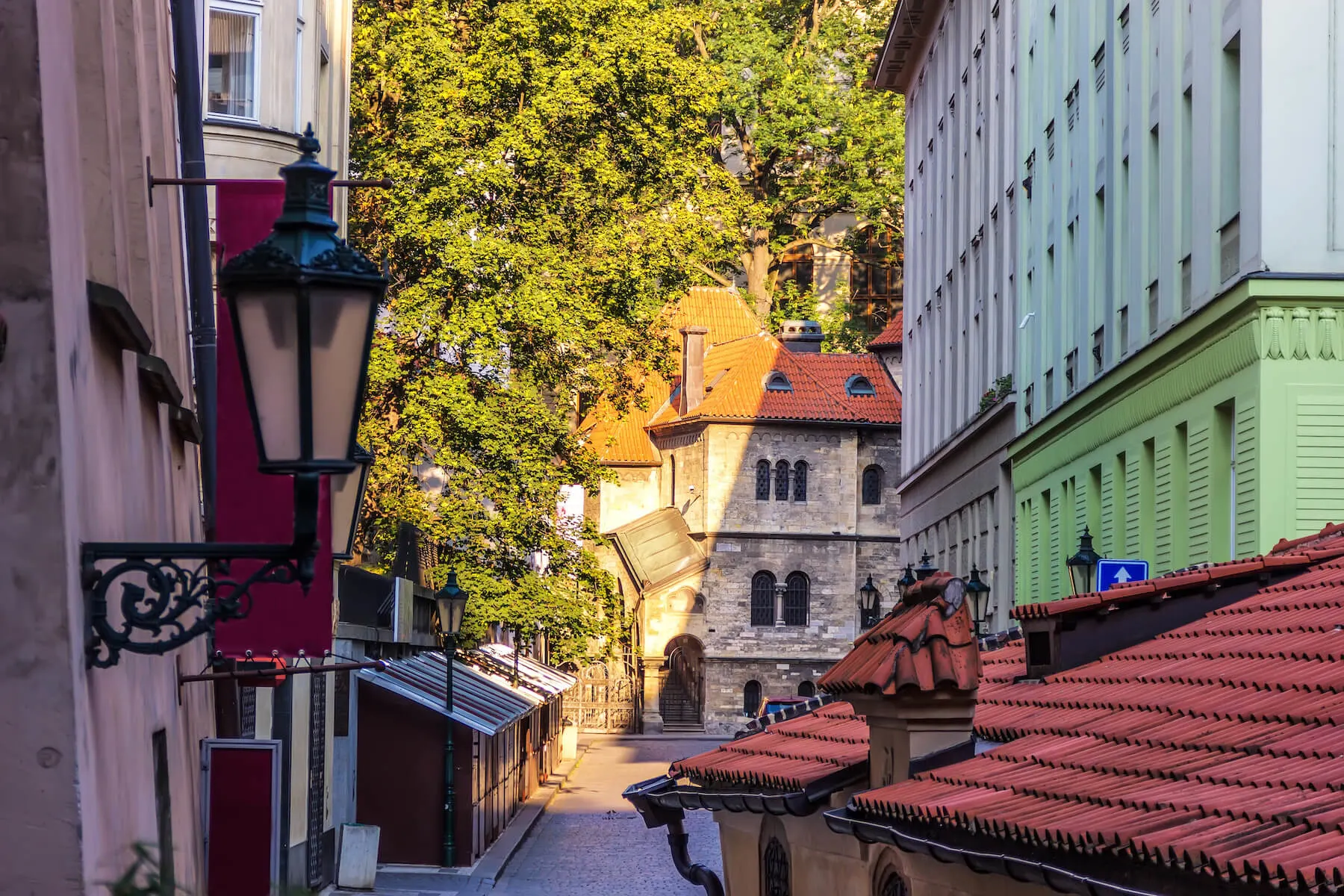
Jewish Quarter

Jews have lived in Prague since its beginnings in the 10th century and have endowed it with a rich heritage. The ghetto was created in the 12th century, as Jews were forced to live separately from Christians. Despite persecution, the community prospered, but sadly, only a small minority survived the Nazi occupation. A lasting legacy remains, including synagogues, architecture, and a fascinating cemetery.

Jewish Quarter

Morning/Mid-Day — Jewish Quarter

Jews have lived in Prague since its beginnings in the 10th century and have endowed it with a rich heritage. The ghetto was created in the 12th century, as Jews were forced to live separately from Christians. Despite persecution, the community prospered, but sadly, only a small minority survived the Nazi occupation. A lasting legacy remains, including synagogues, architecture, and a fascinating cemetery.

Old Jewish Cemetery

Take an unforgettable visit to one of Europe's largest medieval Jewish cemeteries.

As the Jewish Ghetto was quite cramped, there was no room to expand the cemetery. Unable to acquire further land, and not wishing to dishonor ancestors through the demolition of existing graves, Prague's Jews buried their loved ones in multiple levels. Gravestones are packed in tightly and in some areas the burials reach 12 layers!

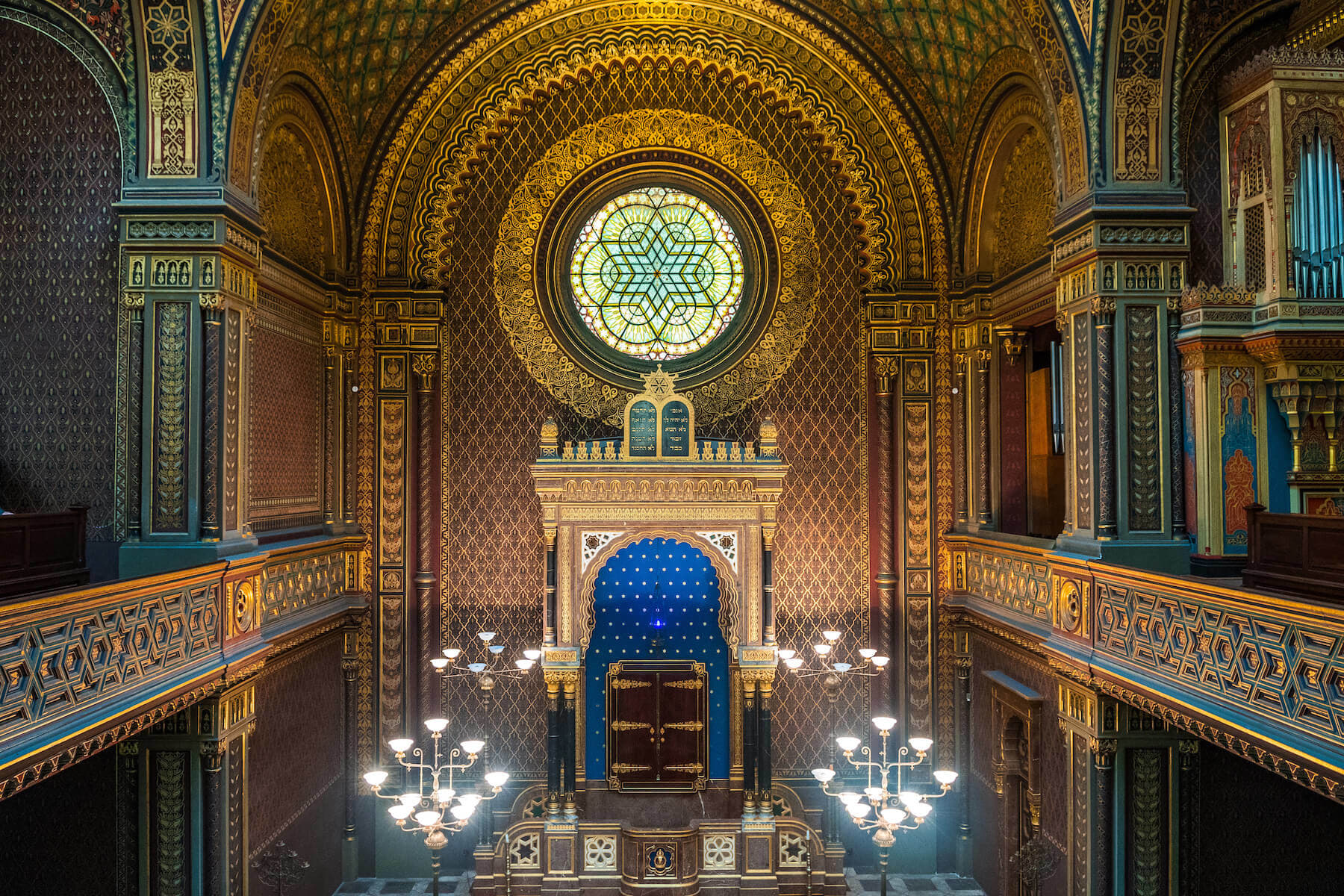
Spanish Synagogue

Discover the synagogue considered by many to be Prague's most beautiful.

Completed in 1868, the Spanish Synagogue is the newest synagogue in Prague's Jewish Quarter, but happens to be built on the site of the former Oldest Synagogue in Prague. It is built in a stunning Spanish Moorish style as a symbol of the flowering of the Jewish culture which occurred under Muslim rule on the Iberian Peninsula.

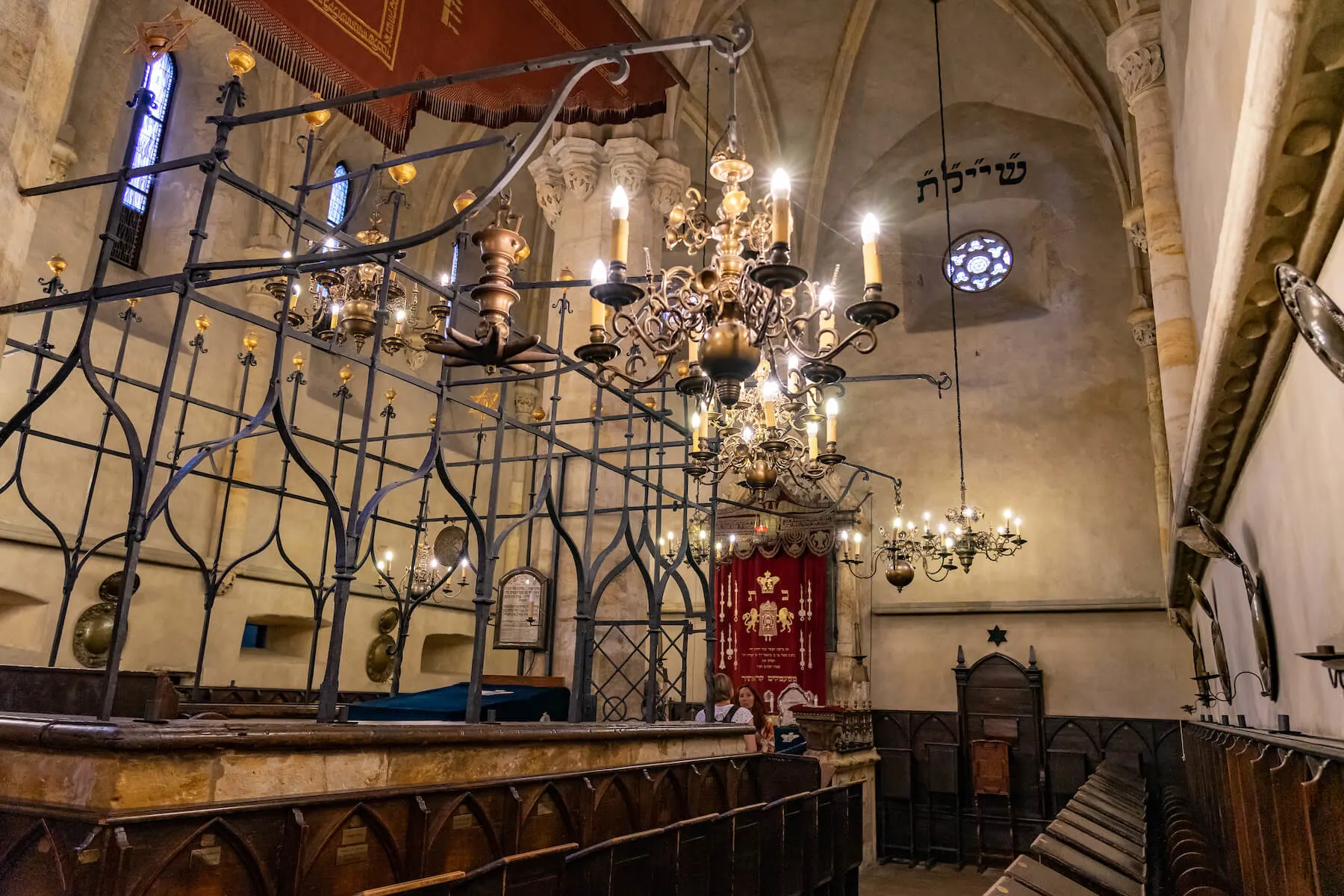
Old-New Synagogue

See the oldest surviving synagogue in Europe and also one of Prague's earliest Gothic buildings.

When built it was Prague’s newest synagogue, but over time became its oldest – hence the “Old-New”. A beautiful ark holds the Torah and legend says its attic is the hiding place of the legendary clay Golem.

Afternoon/Late Afternoon — New Town

Despite being 700 years old, the New Town (Nové Město) is the youngest of the original five independent towns that made up Medieval Prague. The heart of New Town is one of the three original markets around which the town was planned, Wenceslas Square. Not fully given over to tourism like the Old Town, the New Town combines a historic atmosphere with the daily commercial and social life of locals, making it a great place to get a taste of the real Prague.

Wenceslas Square

Experience a mishmash of interesting architecture on Wenceslas Square, Prague's main commercial center.

The square, which could also be described as a wide boulevard, is named after the Patron Saint of Bohemia, whose statue can be seen at the top of the square. Many historical events have taken place here, including the demonstrations of the Velvet Revolution in 1989, which resulted in the collapse of the Communist regime. Today the square is lined by department stores, hotels, and office buildings, many of them notable architectural highlights of the 19th, 20th, and 21st century.

Municipal House

Tour a breathtaking art nouveau venue and stay for a concert, opera, or ballet.

The stunning concert hall is open for tours and hosts performances on most evenings. The main hall is painted by famous Czech artists including Alfons Mucha. A beautiful cafe and restaurant are also housed in the building, and you can find one of Prague's most ornate pubs in the cellar (the "American Bar").

Dancing House

Stroll down the river to find this curvaceous office block designed by Frank Gehry, and whi msically nicknamed Fred & Ginger.

There is no tour of the interior, so most visitors just snap a photo and head out. However, there is a restaurant and bar at the top called Ginger&Fred. For a spectacular view of the city check out the terrace on the top floor (only for paying customers).

National Theater

Experience nationally-sponsored ballet & opera in a magnificent venue.

This concert hall is Prague's most prestigious, and it is not only a symbol of the 19th century Czech national revival but also arguably one of the most beautiful concert venues in Europe. Unfortunately, tours are not regularly offered, but you may attend an opera or ballet if you purchase tickets in advance. The riverfront near the concert hall is one of the most photographed spots in Prague.

National Museum

Explore an interesting museum collection in a grand building completed in 1891.

The recently renovated and improved National Museum is fronted by the iconic equestrian statue of "good king Wenceslas". Beyond it's dramatic exterior you'll find a grand staircase which is a highlight of any visit. Founded in 1818, the museum played a major role in bringing natural science and history to the common man, and also played an important part in the Czech national revival occurring in the 19th century.

Early Evening — Vinohrady

Vinohrady, which translates literally as 'vineyards', is a beautiful residential area of Prague that carries a reputation of prestige and elegance. Most of its grand Neo-Renaissance, Art Nouveau, Pseudo Baroque, and Neo-Gothic buildings come from the second half of the 19th century and first half of the 20th century, and many have been and continue to be restored in an amazing array of color and architectural detail. It also contains an eclectic range of restaurants, wine bars, cafes and pubs that offer great venues for an evening meal or a night out.

Havlíček Gardens

Relax in a beautiful park inspired by the Italian Renaissance.

The park offers a beautiful panorama of the city overlooking a small vineyard. You'll find fountains and water cascades, lakes, pavilions, statues and a charming grotto. The Vineyard Gazebo and Grébovka Pavilion café are surrounded by large vineyards. Its unique replica of the original historic bowling alley from the 1870s is a pleasant place to sit.

Beer Garden in Riegrovy Park

Spend an evening relaxing in one of Prague's most popular and largest beer gardens.

The beer garden features benches and long tables shaded beneath trees. It is popular with locals, expats, and tourists. It is located in Riegrovy Gardens, a classic English garden of the 19th century. The park has great views of the city on its western side. 

image

Day 9

Prague

image

Day 10

Depart Prague

Day 10

Depart Prague

icon
icon

Morning/Mid-Day

Letna

Three inter-linking public gardens provide a great walking experience free of noise and traffic in the very heart of Prague, ending at the most famous of Prague's beer gardens and a stone's throw from the city's best interactive museum experience at the National Technical Museum. The Royal Garden is part of the Prague Castle complex and contains a number of interesting buildings, including the former presidential residence and Queen Anne's Summer Palace.

Letna

Morning/Mid-Day — Letna

Three inter-linking public gardens provide a great walking experience free of noise and traffic in the very heart of Prague, ending at the most famous of Prague's beer gardens and a stone's throw from the city's best interactive museum experience at the National Technical Museum. The Royal Garden is part of the Prague Castle complex and contains a number of interesting buildings, including the former presidential residence and Queen Anne's Summer Palace.

Royal Garden

Stroll a l ush English-style park with fountains and shaded pathways which create a tranquil atmosphere.

Originally the site of a vineyard, the Royal Garden is an Italian Renaissance garden, situated next to the castle entrance. It was created around 1540 by the orders of Emperor Ferdinand I of Habsburg. It contains many very old and rare trees.

Letna Beer Garden

Hang with the locals enjoying a beer and an exquisite view over the river and city.

This is paradise for anyone who appreciates quaffing an ale or two in the shade of a tree on a hot day or on a balmy spring or summer evening when the lamps give the whole garden a romantic edge. And you’ve got some of the most impressive views of Prague and the bridges across the Vltava to soak in as well.The beer garden is open till 11 PM in the spring and summer. The booths dotted around the tables and benches sell beer in plastic half-liter cups, as well as the traditional fare of sausages and pickled camembert. Don’t be afraid to share a bench with someone if it looks like there are no empty ones – this is normal and expected.

National Technical Museum

See vintage vehicles, old astronomical instruments, a coal mining exhibition, and much more.

Prague is generally not renowned for its museums, but this one is definitely worth visiting. They’ve done a great job of making it as interactive as possible and the descriptions in English are adequate. If you’re into anything mechanical, and particularly how all types of vehicles look and work, then you’ll love this museum.

To Be Determined — Taxi Transfer to Airport

image

Day 10

Depart Prague

What's Included in the Castles of Bavaria & Bohemia Trip Trip?

Fork

Pre-Paid Tours and Activities:

  • Guided Walk Tour of Historic Munich
  • Guided Beer Tasting Tour
  • Prague Castle & Royal Route Guided Walk
  • Prague Beer Experience - Tasting and Pub Walk
  • City Card for Munich, including discounts to many popular attractions
train

Pre-Paid Transportation:

  • 2nd Class Train Tickets from München Hbf to Praha hl.n.
  • Public Transport Tickets for Munich
train

Accommodation:

  • 4 nights at a hotel of your choice in Munich
  • 5 nights at a hotel of your choice in Prague
mobile

Go Real Travel Mobile App:

  • Itinerary Plan & Reservations Info
  • Points of Interest
  • Detailed Travel Information
  • Maps & Directions

Other Trips You May Like

The Ultimate Munich and Prague Itinerary in 8 Days

8 Days

From$1499USD

The Ultimate Munich and Prague Itinerary in 8 Days

View Trip
Enchanting Christmas Market Trip to Bavaria & Prague with Gabriella-Maria

10 Days

From$3250USD

Enchanting Christmas Market Trip to Bavaria & Prague with Gabriella-Maria

View Trip
Munich, Vienna & Prague: Urban Treasures of Central Europe

8 Days

From$1729USD

Munich, Vienna & Prague: Urban Treasures of Central Europe

View Trip
12 Days in the Heart of Central Europe: Berlin, Prague, Vienna, and Munich

12 Days

From$2449USD

12 Days in the Heart of Central Europe: Berlin, Prague, Vienna, and Munich

View Trip
Palaces, Culture & Capitals: Munich to Budapest Epic

11 Days

From$2098USD

Palaces, Culture & Capitals: Munich to Budapest Epic

View Trip
14-Day Trip to Historic Munich, Salzburg, Vienna, and Prague

14 Days

From$2897USD

14-Day Trip to Historic Munich, Salzburg, Vienna, and Prague

View Trip
Central European Journey through Switzerland, Germany, Austria and the Czech Republic

21 Days

From$5199USD

Central European Journey through Switzerland, Germany, Austria and the Czech Republic

View Trip
4 Days of Culture, Food, and Bavarian Beer in Munich

4 Days

From$799USD

4 Days of Culture, Food, and Bavarian Beer in Munich

View Trip
Oktoberfest in Munich: Bavarian Hops and Alpine Tops

7 Days

From$1650USD

Oktoberfest in Munich: Bavarian Hops and Alpine Tops

View Trip

Featured Blogs

13 Most Happening Things to Do in Prague at Night
Prague
Nightlife

13 Most Happening Things to Do in Prague at Night

18 Cheap and Free Things to do in Prague
Prague
Cheap

18 Cheap and Free Things to do in Prague

Top 10 Reasons to Visit Prague
Prague
Why visit

Top 10 Reasons to Visit Prague

10 Most Amazing Day Trips From Prague in 2024
Prague
Day trips

10 Most Amazing Day Trips From Prague in 2024

Flying Solo: The Best Places to Travel Alone in Europe
Europe
Travel solo

Flying Solo: The Best Places to Travel Alone in Europe

How to Plan a Trip to Germany – Step-by-Step Guide
Germany
Trip planning

How to Plan a Trip to Germany – Step-by-Step Guide

16 Most Romantic Destinations in Europe
Europe
Romantic

16 Most Romantic Destinations in Europe

Our Customers Say It Best

Malini Dutta, Boston, Massachusetts
We can't thank you enough for the detailed plans, maps, and suggestions. It really felt that someone was holding our hands and showing us around. We had all the excitement of discovering foreign lands, with none of the problems that can happen while negotiating unfamiliar places. In fact, all the cities felt like home within a few hours of arriving and exploring.
Bev and Mark Frankel, Williamsburg, Virginia
We could not be more pleased with Go Real Travel! You took the guess work out of things like public transport but still managed to allow us the freedom to tour as we wanted. Our guides were exceptional and every time I saw a Viking Cruise tour of 25 people, I realized the quality experience we were getting with Go Real.
Marianne Strydom, Paarl, South Africa
I just wanted to thank you for organizing an amazing trip for me – I packed in so much in such a short period of time and everything was just perfect. The way you do things makes it possible to really get to know the destination, which for me as a travel agent could not have been better.
Otto Chuy, Los Angeles, California
I am still surprised how everything worked as planned, without a hitch. All instructions in your itinerary were precise and correct. Your suggestions and comments in each of the locations we went to were very helpful. All your guides, without exception, were wonderful and exactly on time.
Go Real Travel, Inc. BBB Business ReviewASTA Member

Explore cities in more detail

old town square munich germany

Munich

Arriving in Munich, you would be forgiven for thinking you were on the set of a movie about old Bavaria. At the Old Town beer halls, barmaids laced in dirndl dresses serve up frosty Helles lager, as oom-pah music drifts across the Marienplatz square. Men in lederhosen and checked shirts merrily give toasts as they knock glasses, or steins, as they’re known here. They sit at tables laden with wurst sausage and giant pretzels oozing with herby butter. This is Germany’s Germany, a place where folk traditions never stopped, and the revelry doesn’t either. Even when it isn’t Oktoberfest, the town’s notorious beer-drinking celebration, Munich is always happy to show you a good time. Simply cast your eyes around the lavish, gilded banquet hall at the Munich Residenz, the 13th-century Wittelsbach palace. You’ll see Munich has been impressing guests for centuries. Or, swing by the BMW Museum and check out the classic German cars. They even let you sit inside to test out the new models. At the city’s English Gardens, surfers ride waves on one of the park’s rivers. Munich is filled to the brim with this kind of pure-hearted German fun.     

Church of Our Lady before Týn old town prague czech republic

Prague

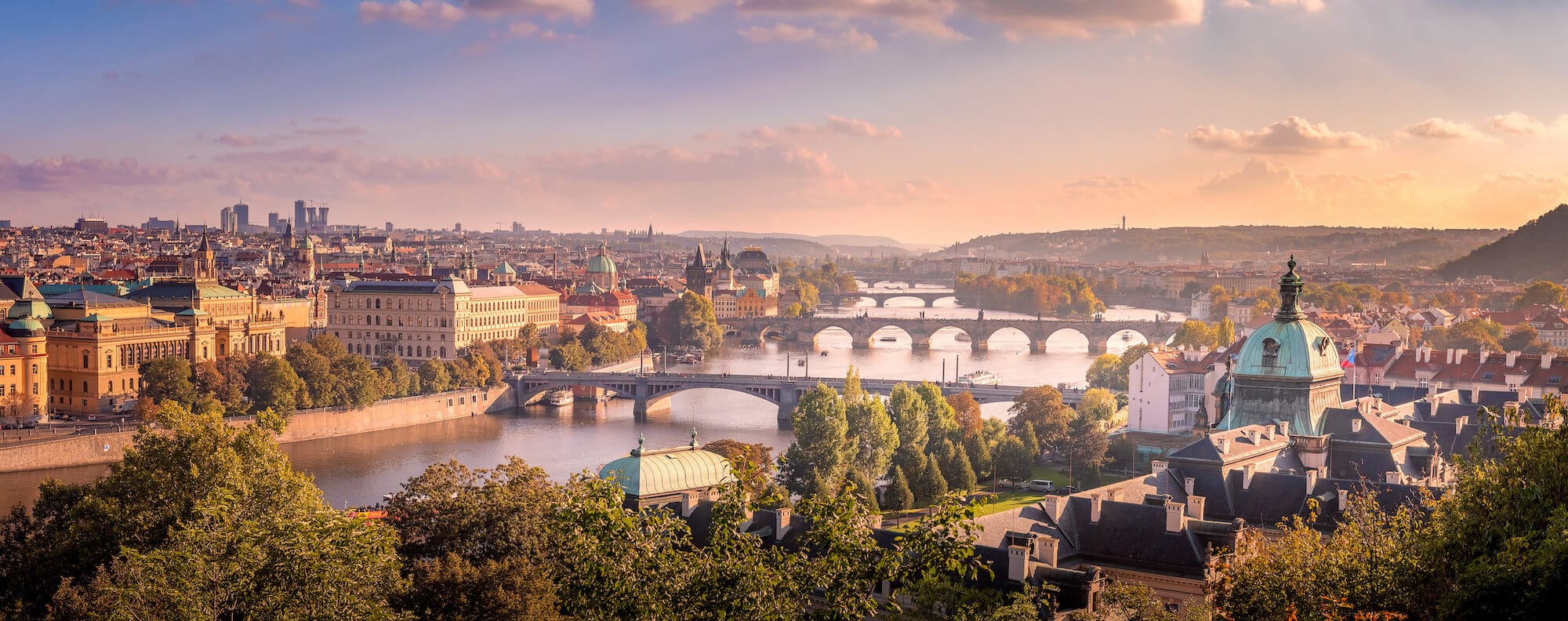
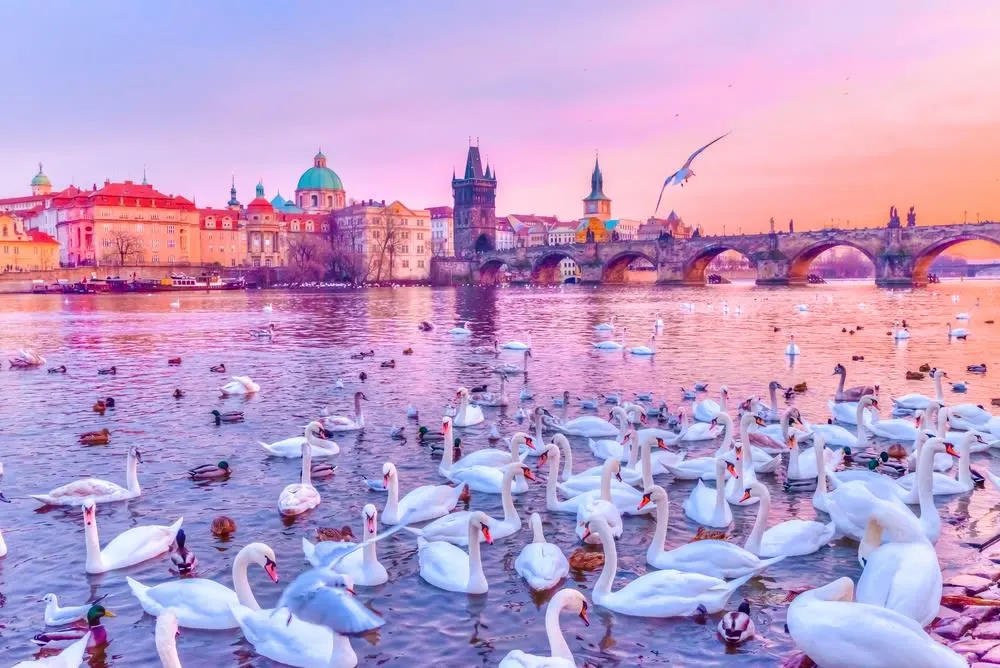
The city of Prague is indisputably the gem of Central Europe. Full of history, culture, and classic Czech pubs around every corner, Prague is teeming with nooks and crannies just waiting to be discovered. The narrow cobblestone streets and warm red rooftops give the city a homey feel, while the well-preserved medieval architecture transports you back in time. Walking across the Charles Bridge with the view of the Prague Castle will make you feel like you’re living in a fairytale, and you might as well be.    As an up-and-coming destination, Prague is a perfect mix of classic and modern. New trendy cafes and bistros are always popping up, and you can always find a group of lively locals chowing down on goulash and quaffing pivo (the best beer in Europe!) at traditional Czech restaurants across the city. The clash of modernity and tradition, preservation and innovation, gives this city a mysterious air that you won’t soon forget.

winter in salzburg germany

Salzburg

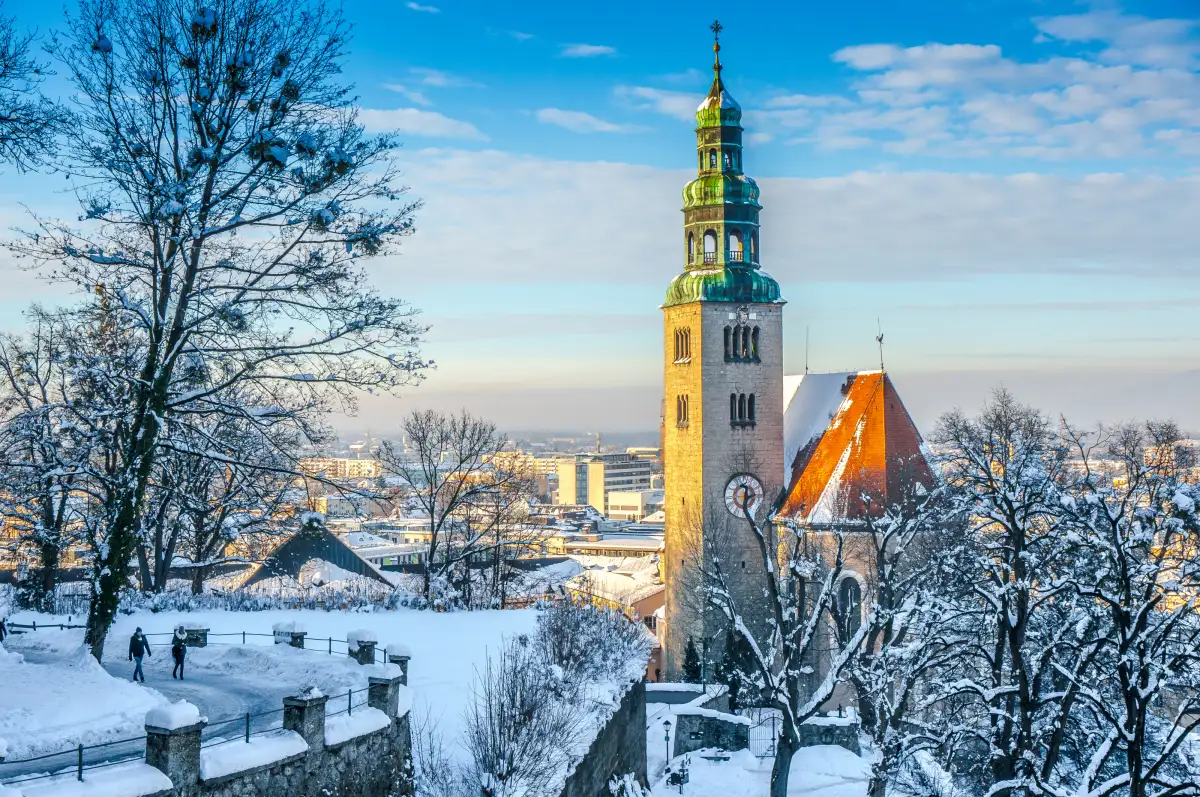
You've probably heard this before— the city of Salzburg is straight out of a fairytale. Nestled in the mountains, this romantic city's Baroque architecture with colorful domes and spires is especially striking against the ancient fortress and Austrian Alpine backdrop. If you're looking for an amazing view, climb up to Hohensalzburg Fortress, Central Europe's largest intact fortress, for a jaw-dropping panorama of the city backed by misty mountains. Perhaps most famous for being the birthplace of the renowned composer Wolfgang Amadeus Mozart and the filming location for the classic The Sound of Music, this city has much to offer. Salzburg has become an important artistic and cultural center, featuring magnificent concert halls that uphold the city's tradition of classical music every day of the year, as well as acclaimed art exhibitions and museums. If you do it right, your visit to Salzburg will immerse you in the city's unforgettable atmosphere and keep you coming back for more. 

Overhead View of Red Rooftops in Cesky Krumlov

Cesky Krumlov

Cesky Krumlov is a charming little town in South Bohemia. It might be small, but it’s full of whimsical character and mystery. Walking through the narrow streets and across the bridge, the views of the medieval Cesky Krumlov Castle will take your breath away. At night, street musicians serenade visitors on the bridge where you can dance beneath the stars and the watchful eye of the magnificent tower.  Dozens of unique local artisan shops, cafes, and restaurants are woven among the winding streets. In the summer, the city is lush with life and greenery. Rafters race down the river, stopping in the center along the way to enjoy a hearty meal before continuing their journey. In the winter, the main square transforms into a magnificent Christmas market and light blankets of snow cover the rooftops. This quaint little town will exceed your expectations and you may never want to leave.  

half timbered houses in nuremberg germany

Nuremberg

One of the most authentic, storied German destinations, Nuremberg's picturesque old town, glorious castle, and buzzing Christmas Market makes this city a time-true classic. The ideal gateway to old Bavaria, Nuremberg offers a primer in German history before you embark on the lovely journey through old Bavaria, known as the Romantic Road. Considered the capital of the Holy Roman Empire in the middle ages, Nuremberg would have felt like the center of the world as a procession of kings and emperors passed through its magnificent gates. When the German Renaissance came, Nuremberg was at its heart. Albrecht Dürer, the great German master artist, was born here, and Martin Luther called Nuremberg Germany's 'eyes and ears'. Skip forward a few centuries, and the city took a dark turn, as Nuremberg became a gathering point for the German National Socialists. Slightly outside of town, you can still find the Nazi Party Rallying Grounds, a sobering reminder of the not so distant past. If it all gets too heavy, you can end the day with a glass of rotbier (red beer) and mull it over. Nuremberg is a must-see for anyone who wants to delve into Germany's past. 

Skyscrapers and an old church at sunset in Frankfurt

Frankfurt

Dubbed ‘Mainhatten’ for its glass highrises, financial prowess, and proximity to the Main River, Frankfurt offers a fascinating glimpse into the ‘engine room’ of Europe’s economy with an unexpected twist. Among the glass and steel buildings, the old-worldly Römerberg square will give you a double-take. The square’s 15th-century half-timbered houses, old statues, and church spires contrast dramatically against the modern 21st-century skyscrapers beyond. If you visit at Christmas, the Römerberg is truly special, aglow with the light of the tallest Christmas tree in Germany. The square fills with stalls selling handicrafts, and the air is scented with hot apple wine, honey, and cinnamon.  Delve deeper into Frankfurt and you’ll find a substantial museum district, the Museumsufer (Museum Embankment). This area features a cluster of twelve museums on either side of Main River. This includes the Städel, home to Tischbein’s famous painting of renowned writer Johann Wolfgang von Goethe, one of Frankfurt’s most prestigious sons. The more time you spend in Frankfurt, the more you’ll discover a highly cultured city lurking beneath its glass facades. If you have the time, Frankfurt is certainly worth a second look.      

👋

Hi! Need help planning your dream trip? 🌍

Go Real Travel Assistant

Online

Welcome! Where are you in your journey?

Pick the option that fits you best so we can route you to the right help.