👋

Hi! Need help planning your dream trip? 🌍

Go Real Travel Assistant

Online

Welcome! Where are you in your journey?

Pick the option that fits you best so we can route you to the right help.

12-Day Voyage to Italy's Iconic Cities & Enchanting Countryside

destination-icon12 Day Tour of Rome, Florence and Venice

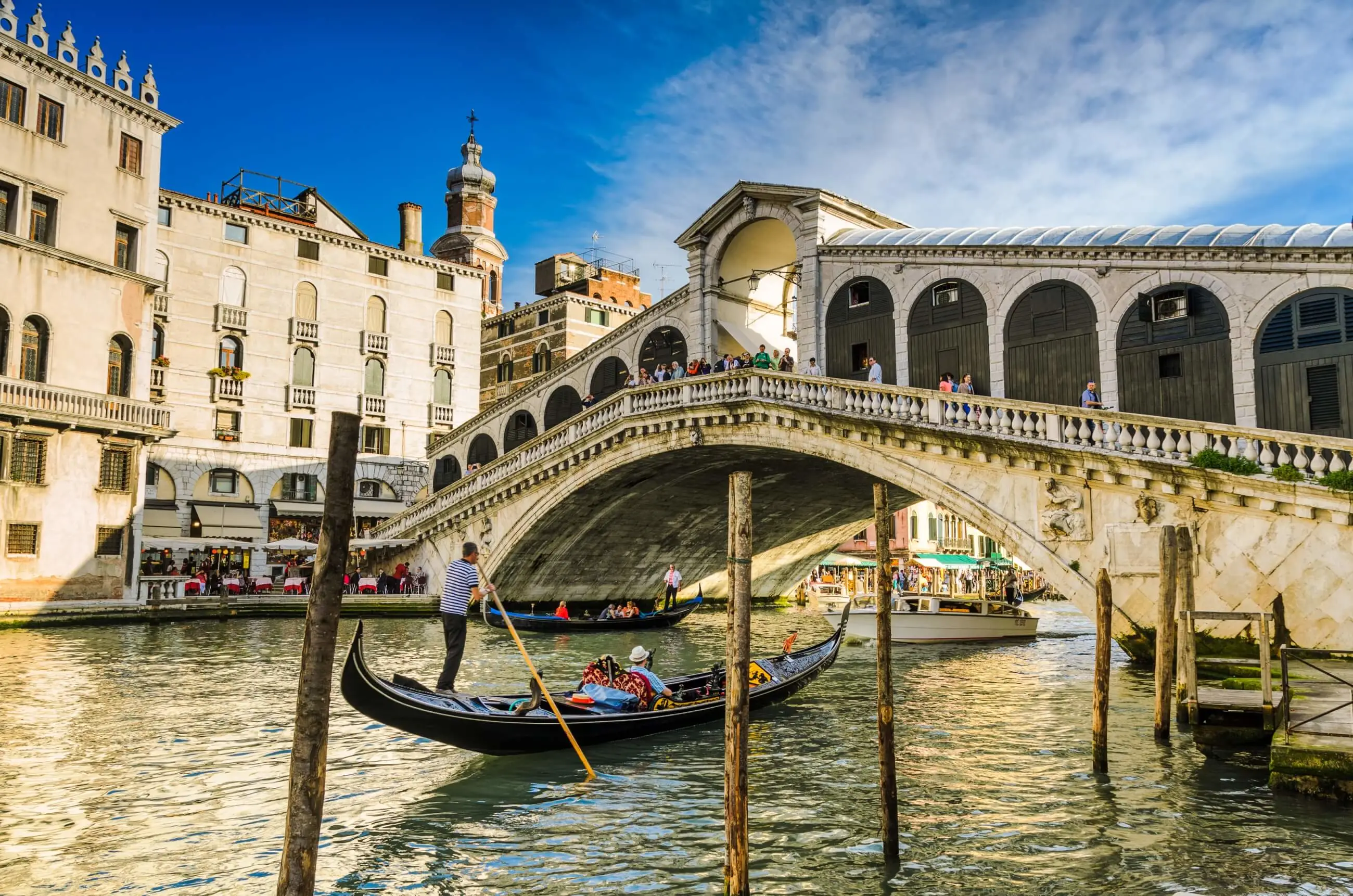
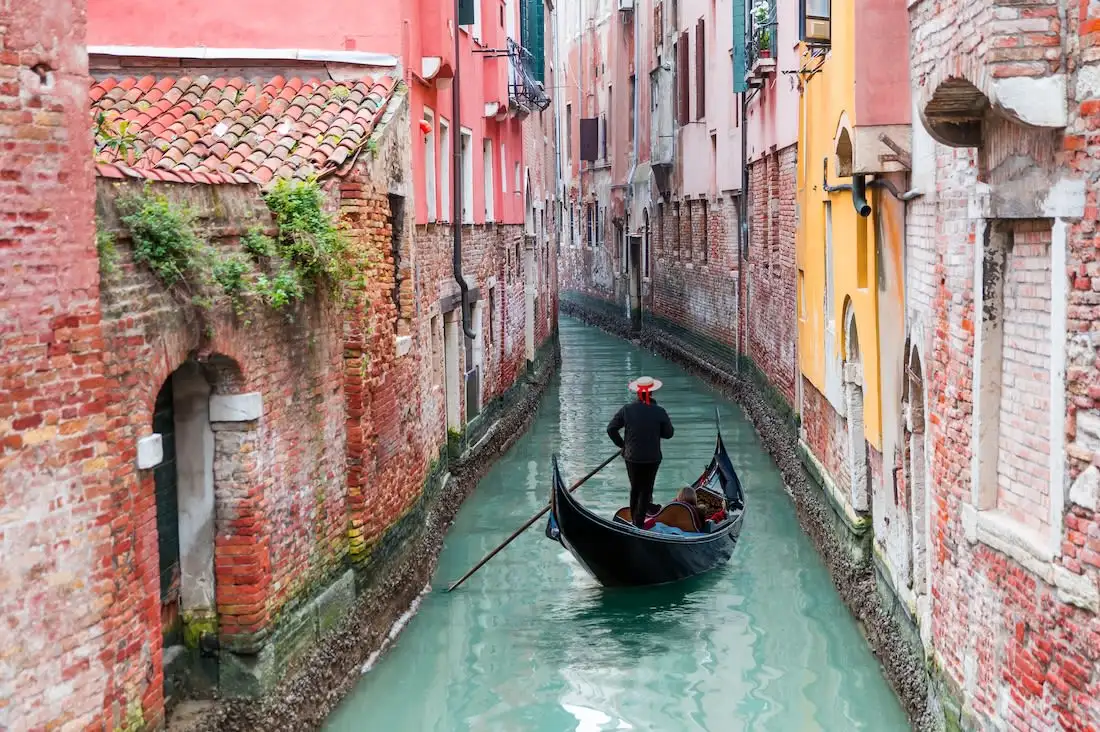
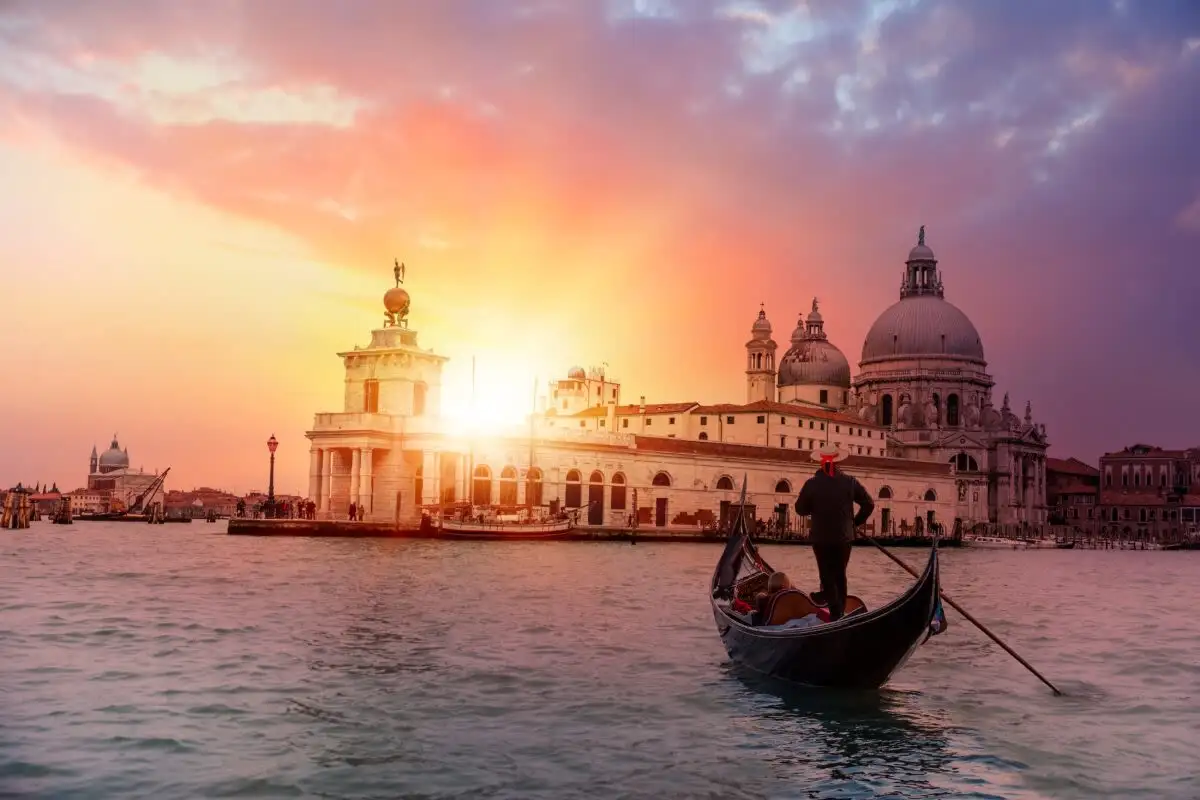
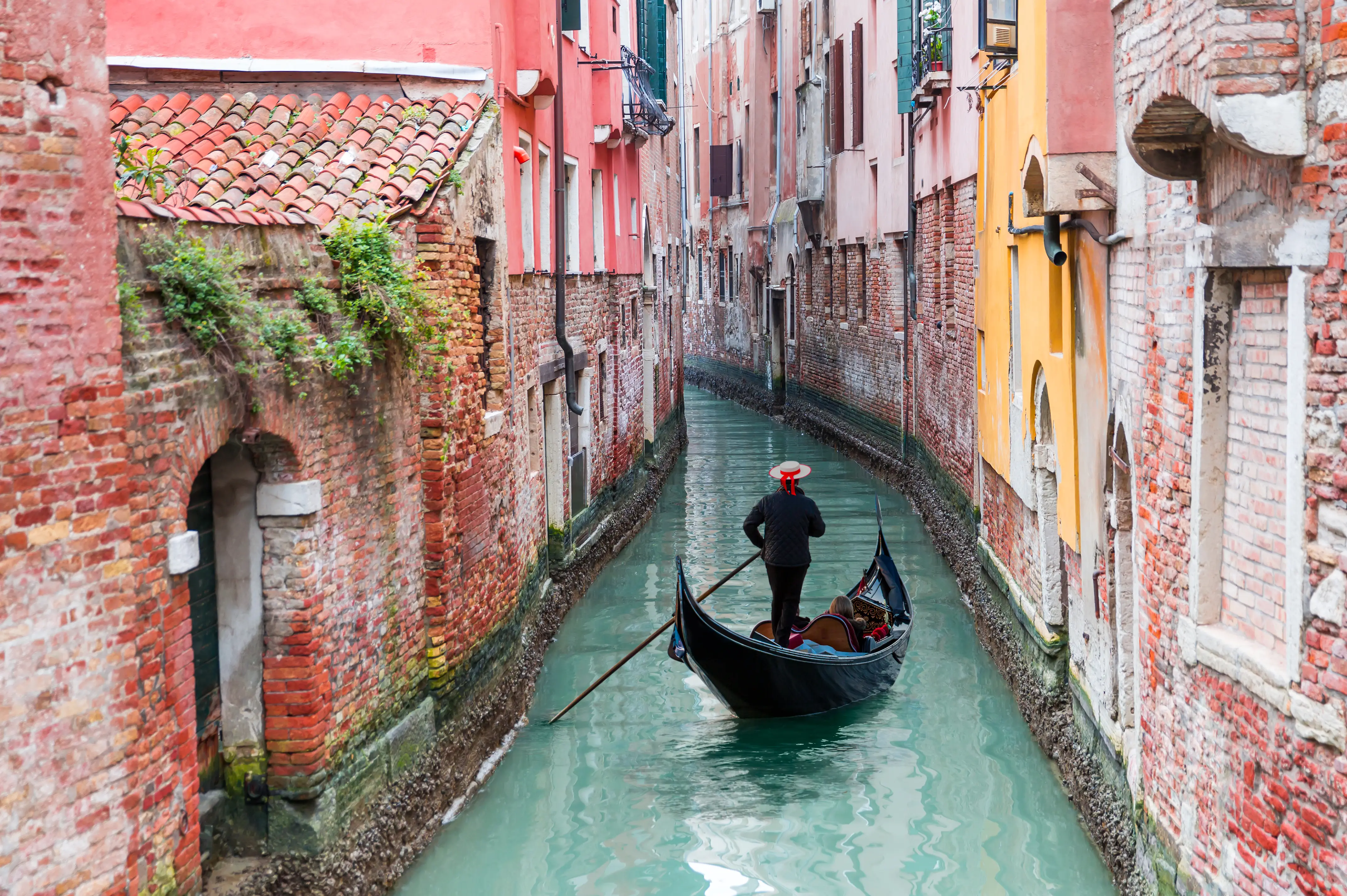
Canal in Venice
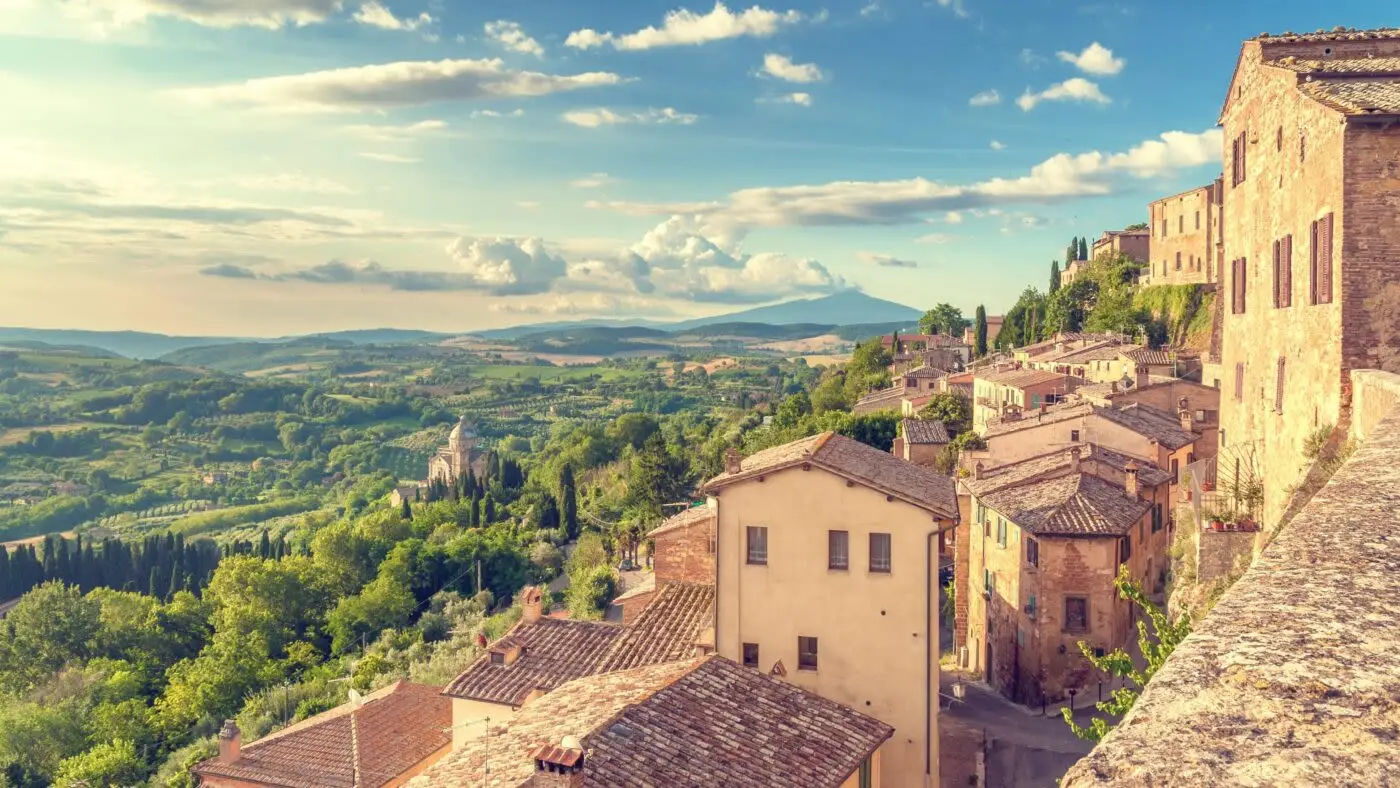
Villa gardens near Florence, Italy
Trevi Fountain in Rome
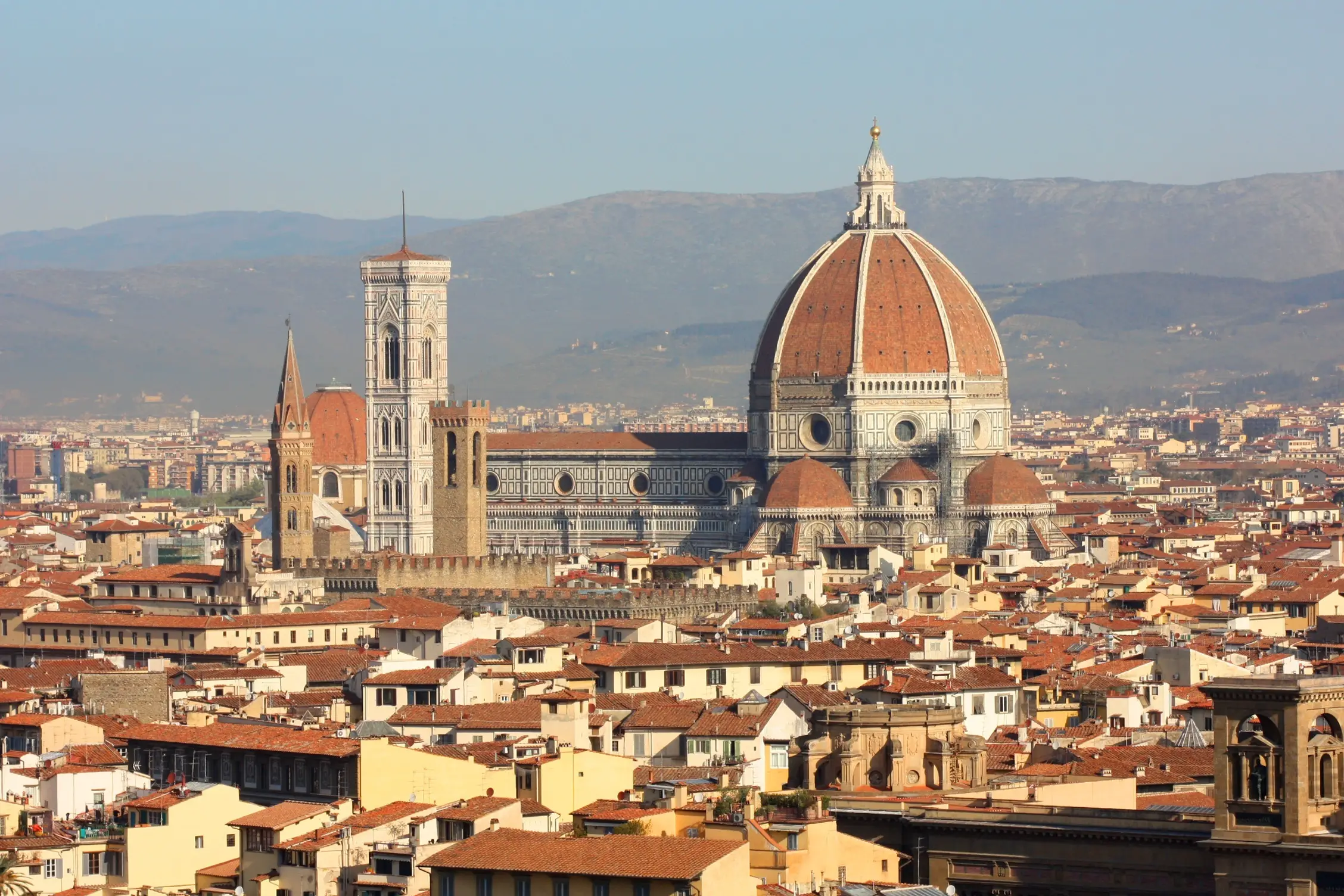
View of the Duomo in florence
image
arrowLightLeft
arrowLightRight
calendar-icon
12 Days 11 Nights
calendar-icon
Best Time: Jan-Dec
building-icon
Exploring Scenic Countryside
family-icon
History Buffs
See the best of Italy as you journey through its enchanting countryside and most beautiful and historic cities. This 12-day itinerary will take you from the ancient ruins of Rome to the rolling hills of Tuscany, and from the Renaissance splendor of Florence to the romantic canals of Venice. Explore iconic landmarks like St. Peter's Basilica in the Vatican City, the Uffizi Gallery in Florence, and the Rialto Bridge spanning Venice's Grand Canal. You'll savor the charm of the Tuscan countryside with day trips to medieval towns and vineyards. Enjoy private guided tours in each city and detailed travel guidance through our mobile app.
  • Marvel at the Vatican City's grandeur, including the Sistine Chapel & its stunning art collections.
  • Wander through the Tuscan countryside and savor Chianti Classico wines.
  • Gaze at Renaissance artistic masterpieces in Florence's famed Uffizi Gallery.
  • Stroll across Venice's iconic Rialto Bridge and enjoy a private gondola ride.
  • Uncover Classical Rome with a private guided tour of the ancient ruins on Palatine Hill.
See the best of Italy as you journey through its enchanting countryside and most beautiful and historic cities. This 12-day itinerary will take you from the ancient ruins of Rome to the rolling hills of Tuscany, and from the Renaissance splendor of Florence to the romantic canals of Venice. Explore iconic landmarks like St. Peter's Basilica in the Vatican City, the Uffizi Gallery in Florence, and the Rialto Bridge spanning Venice's Grand Canal. You'll savor the charm of the Tuscan countryside with day trips to medieval towns and vineyards. Enjoy private guided tours in each city and detailed travel guidance through our mobile app.
  • Marvel at the Vatican City's grandeur, including the Sistine Chapel & its stunning art collections.
  • Wander through the Tuscan countryside and savor Chianti Classico wines.
  • Gaze at Renaissance artistic masterpieces in Florence's famed Uffizi Gallery.
  • Stroll across Venice's iconic Rialto Bridge and enjoy a private gondola ride.
  • Uncover Classical Rome with a private guided tour of the ancient ruins on Palatine Hill.
European Adventure
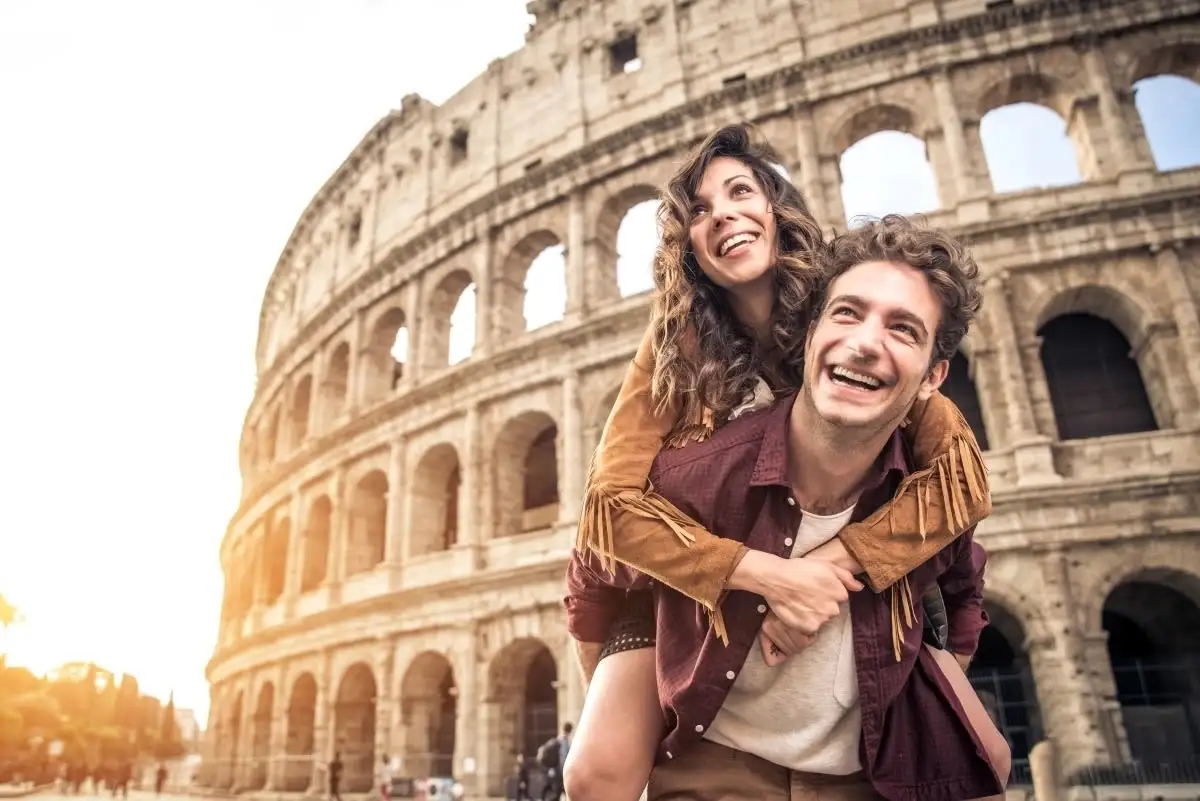
Colosseum
Historic Landmarks
Scenic Europe
Vatican City
Churches & Monasteries
Exploring European Beauty
Trevi Fountain
Historic Landmarks
Traveling Through Europe
Piazza del Duomo
Churches & Monasteries
European Wonders
Uffizi Gallery
Museums & Galleries
Captivating European Destinations
Galleria dell'Accademia
Museums & Galleries
Picturesque Europe
Oltrarno & Piazzale Michelangelo
Cultural
European Charm
Grand Canal
European History
Discovering Europe's Treasures
Saint Mark's Basilica
Architecture

Must see sights

European Adventure
Colosseum
Historic Landmarks
Scenic Europe
Vatican City
Churches & Monasteries
Exploring European Beauty
Trevi Fountain
Historic Landmarks
Traveling Through Europe
Piazza del Duomo
Churches & Monasteries
European Wonders
Uffizi Gallery
Museums & Galleries
Captivating European Destinations
Galleria dell'Accademia
Museums & Galleries
Picturesque Europe
Oltrarno & Piazzale Michelangelo
Cultural
European Charm
Grand Canal
European History
Discovering Europe's Treasures
Saint Mark's Basilica
Architecture
Loading...

Starting from

$3129

per person

no-flightNot included

Secure Your Customizable Trip

Enter your details to embark on a journey that can be tailored just for you.

Start

Travelers

0 travelers
Add Room
Remove Room

Preferred Hotel Stars

Select Hotel Stars
Craft Your Own Itinerary

Select your interests and destinations for a trip plan inspired by you.

Grand Italian Classics Trip - Map & Itinerary

Enable/Disable Map Scrolling

Click To Make Map Interactive

Grand Italian Classics Trip Timeline

Arrival

4 nights

Rome

Italy

Train: 2h

3 nights

Florence

Italy

Train: 2.5h

4 nights

Venice

Italy

Departure

Day-By-Day Itinerary of Grand Italian Classics Trip

image

Day 1

Arrive Rome

Day 1

Arrive Rome

icon
icon
icon

11:30 AM

Private Transfer to your Hotel

For your arrival in Rome, we will provide information on the customs and passport procedures. We will schedule a pick up for your flight's arrival time. You will be met at arrivals inside the terminal by a driver holding a sign with your name on it. The transfer is for your party only - you will not be sharing a vehicle. The cost of the ride will be included in your itinerary package and you will be taken directly to your hotel.  IMPORTANT NOTE:  Please be aware the car service can fit up to 1 checked item of luggage and 1 personal item per person, such as a purse or small backpack. If you think you will have more baggage, please inform your travel consultant as this may result in an additional fee.

Private Transfer to your Hotel

11:30 AM — Private Transfer to your Hotel

For your arrival in Rome, we will provide information on the customs and passport procedures. We will schedule a pick up for your flight's arrival time. You will be met at arrivals inside the terminal by a driver holding a sign with your name on it. The transfer is for your party only - you will not be sharing a vehicle. The cost of the ride will be included in your itinerary package and you will be taken directly to your hotel.  IMPORTANT NOTE:  Please be aware the car service can fit up to 1 checked item of luggage and 1 personal item per person, such as a purse or small backpack. If you think you will have more baggage, please inform your travel consultant as this may result in an additional fee.

Mid-Day/Afternoon — Rome's Historic Center

Rome's tangled historical center is packed full of some of the most fascinating and incredible sights. Explore elegant squares and piazzas, centuries-year-old churches, and baroque fountains and wander at leisure the labyrinth of ancient Roman cobbled lanes. Highlights include the Baroque grandeur of Piazza Navona and the great and endlessly copied Roman Pantheon.
Piazza Navona

Stand in one of the most beautiful squares in Rome, home to the famous Fontana dei Fiumi Fountain by Bernini.

A Roman rendezvous, Piazza Navona is, for many people, the most beautiful square in the world. Like many of Rome's landmarks, Piazza Navona is located over the foundations of an ancient monument, a 30,000 seat stadium of Domitian. The former tiers of seats have since made way for ornate fountains, exuberant baroque palazzi, and bustling pavement cafes. The square has long been the hub for local life, hosting Rome's main market for over 300 years. Today it attracts a colorful circus of tourists, performers, hawkers, street artists, and pigeons. The first visit to Piazza Navona might well result in a stiff neck from gazing up at all the sumptuous Baroque beauty.

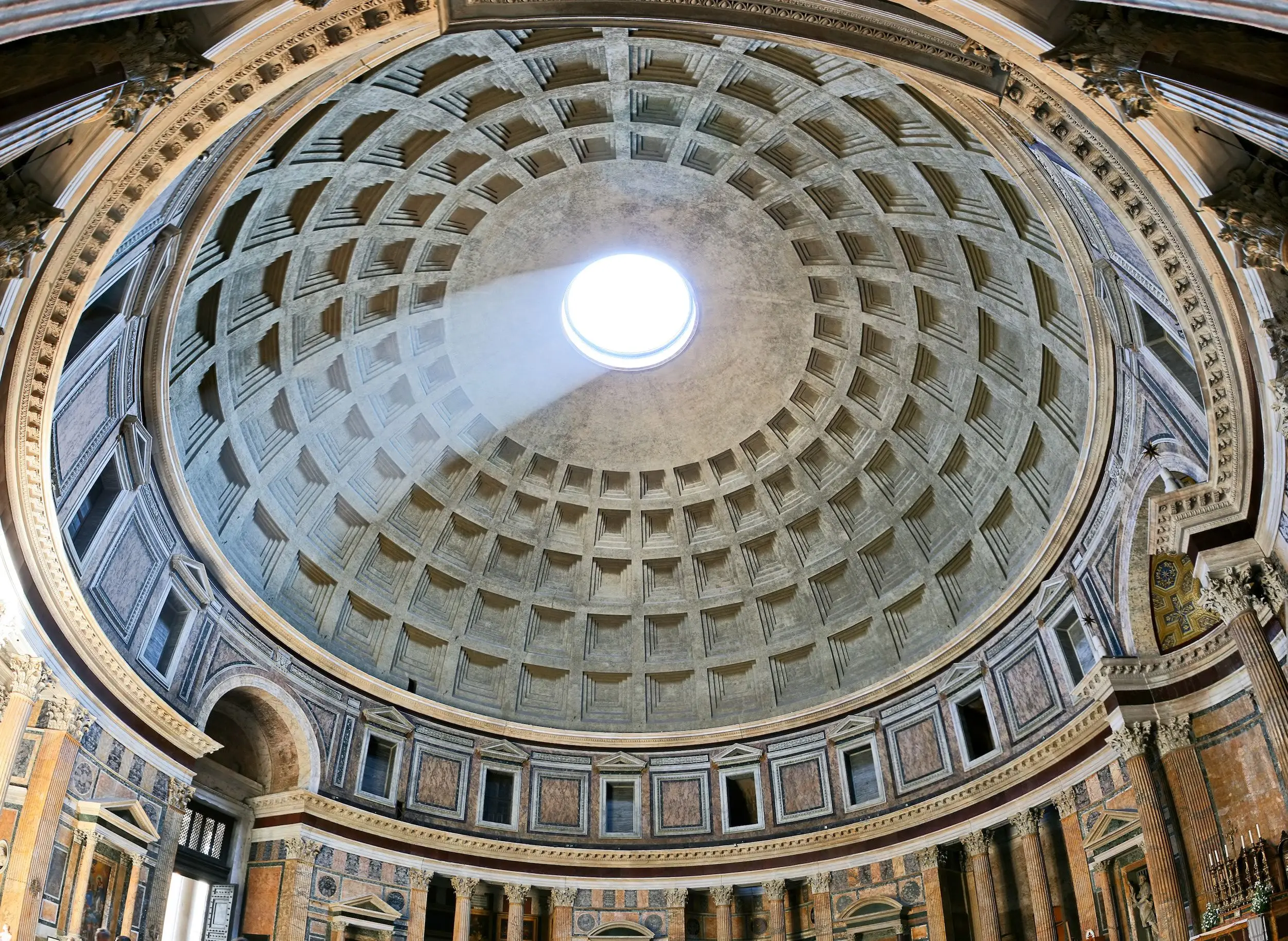
Pantheon

Visit this iconic former pagan temple converted into a Christian church.

This sanctuary of impressive dimensions is one of the best-preserved buildings of ancient Rome. Erected on the foundations of an earlier temple dating back to 27 BC, its construction was ordered by the Emporer Hadrian in the second century AD. The Pantheon was originally a Pagan temple dedidated to all of the gods. The building's consecration as a church in 609 AD saved it from the abandonment, destruction, and the worst of the spoliation that befell the majority of ancient Rome's buildings during the early medieval period. Its greying exterior may look its age, but inside, a spectacular experience awaits. With light streaming through its oculus, the marble-clad interior seems vast. The Pantheon is home to some notable tombs, including those of painters Annibale Carracci and Raphael and King Vittorio Emanuele II.
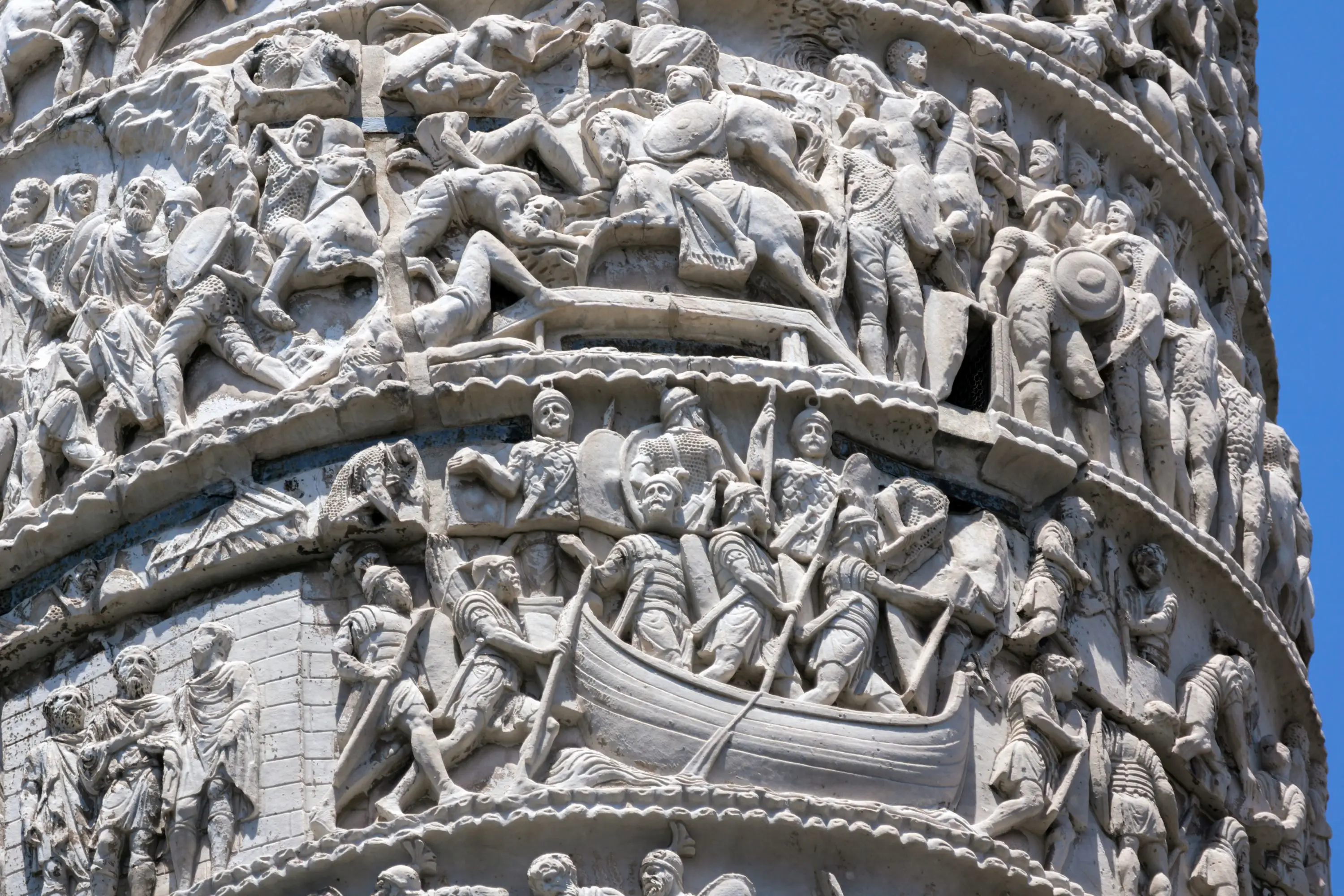
Column of Marcus Aurelius

Column formerly dedicated to Emperor Marcus Aurelius; a statue of St. Paul now stands in place of his.

If you turn left at the far end of the Temple of Adrian, you'll arrive at the Column of Marcus Aurelius (Colonna di Marco Aurelio). The column located on Piazza Colonna commemorates the Roman Emperor Marcus Aurelius and his victories over the Germanic tribes in Danubian and Marcomannic wars. It was modeled on Trajan's Column (which is located in Trajan's Forum). The column consists of 27 or 28 blocks of Carrara marble, each of 3.7 meters (12 ft) diameter, and was nicknamed the Centenaria, "hundred-footer" because it was 100 Roman feet or 29.60 meters high. On the top of the column was a statue of Marcus Aurelius; today, the apostle Paul stands there.

Via del Corso

One of the main streets in Rome.

The main street running alongside the Piazza Colonna is one of the main streets in Rome, called the Via del Corso. It is remarkable for being absolutely straight in an area characterized by narrow meandering alleys and small piazzas. Its runs 1.5km from Piazza del Popolo all the way to Piazza Venezia and is one of the busiest shopping streets in Rome. You’ll find lots of large international stores all over the street including major retailers such as Nike and Zara, as well as smaller Italian retailers where bargains on boutique pieces of Italian clothing and souvenirs can be found.

Late Afternoon/Early Evening — Spanish Steps

The streets spreading out from grand Piazza del Popolo (People's Square) form a trident that hosts some of the most popular shopping and tourist sights in Rome. These include the Spanish Steps, the adjacent Keats-Shelley House where Keats died of tuberculosis in 1821, Trevi Fountain where Anita Ekberg jumped into the water in the famous scene from Frederico Fellini's La Dolce Vita, and the Mausoleum of Emperor Augustus.

Spanish Steps

Take a scenic walk up the 18th-century stairway where Audrey Hepburn and Gregory Peck set out on their Roman Holiday.

The majestically balustraded Spanish Steps were built in 1723-6 to connect the piazza with the church of the Trinita dei Monti and the Pincio. It quickly became a favorite spot of poets, artists, and writers who gathered on its 137 steps, and it's now a favorite stop for tourists from all over the world. Yet this highly attractive stairway still somehow manages to retain a sense of romance even at the height of the tourist season, and if you happen to get there at the beginning of May you’ll find it laden with tubs of magnificent azaleas. A masterpiece of 18th-century town planning, the steps actually contain a religious message – the three flights and three landings are an allusion to the Holy Trinity.

Keats-Shelly House

Visit the last residence of poet John Keats, now a memorial museum.

The Keats-Shelley House at the foot of the Spanish Steps to the right contains the apartment where the poet John Keats spent the last three months of his life. The House is essentially an archive of English-language literary and historical works and a museum of manuscripts and literary mementoes relating to the Keats circle of the early 19th century, i.e. Keats himself, Percy and Mary Shelley and Byron (who at one time lived across the square).

The Trevi Fountain

Admire one of the most iconic sights in Rome, made famous by Anita Ekberg in La Dolce Vita.

The Trevi Fountain is one of the most iconic sights in Rome thanks to the antics of the shapely Anita Ekberg casting herself into its waters in Frederico Fellini’s cinematic masterpiece, La Dolce Vita. The fountain curiously seems to appear out of virtually nowhere within a warren of backstreets but is nevertheless discovered reasonably early each day by endless crowds of tourists looking to ensure their future return to Rome by tossing a coin back over their should into its crystal clear water (the coins are raked up each morning and donated to the Church organization Caritas). 

Mausoleum of Augustus

Visit the tomb of the first Roman Emperor and his family, which is finally being restored after more than a millenium of neglect.

The huge circular Mausoleum of Augustus, holding the tomb of the Emperor and the principal members of his family was one of the most sacred monuments of the ancient city, but has been somewhat neglected in recent decades, though it has undergone recent restoration. Erected in 28 BC and originally surrounded by a huge public park, it has a diameter of 87m (330 Roman feet), the largest circular mausoleum in the world. 

Piazza del Popolo

Take some time to admire this elegant square that once served as an impressive main entry point into the city of Rome.

The Piazza del Popolo was created in 1538 for Paul III in strict alignment with the three long straight streets which penetrate the city here as a trident. The piazza once acted as one the primary entrances into Rome, and many travelers recorded their first arrival in Rome through the monumental Porta del Popolo, which may have been designed by Michelangelo. An obelisk, 24m high, rises in the center and on the side of the piazza opposite the porta are the twin decorative 17th-century Baroque churches, Santa Maria dei Miracoli and Santa Maria in Montesanto.

image

Day 1

Arrive Rome


icon
icon
icon

11:30 AM:

Private Transfer to your Hotel

Mid-Day/Afternoon:

Rome's Historic Center

Late Afternoon/Early Evening:

Spanish Steps

Private Transfer to your Hotel

Private Transfer to your Hotel

For your arrival in Rome, we will provide information on the customs and passport procedures. We will schedule a pick up for your flight's arrival time. You will be met at arrivals inside the terminal by a driver holding a sign with your name on it. The transfer is for your party only - you will not be sharing a vehicle. The cost of the ride will be included in your itinerary package and you will be taken directly to your hotel.  IMPORTANT NOTE:  Please be aware the car service can fit up to 1 checked item of luggage and 1 personal item per person, such as a purse or small backpack. If you think you will have more baggage, please inform your travel consultant as this may result in an additional fee.

11:30 AM — Private Transfer to your Hotel

For your arrival in Rome, we will provide information on the customs and passport procedures. We will schedule a pick up for your flight's arrival time. You will be met at arrivals inside the terminal by a driver holding a sign with your name on it. The transfer is for your party only - you will not be sharing a vehicle. The cost of the ride will be included in your itinerary package and you will be taken directly to your hotel.  IMPORTANT NOTE:  Please be aware the car service can fit up to 1 checked item of luggage and 1 personal item per person, such as a purse or small backpack. If you think you will have more baggage, please inform your travel consultant as this may result in an additional fee.

Mid-Day/Afternoon — Rome's Historic Center

Rome's tangled historical center is packed full of some of the most fascinating and incredible sights. Explore elegant squares and piazzas, centuries-year-old churches, and baroque fountains and wander at leisure the labyrinth of ancient Roman cobbled lanes. Highlights include the Baroque grandeur of Piazza Navona and the great and endlessly copied Roman Pantheon.

Piazza Navona

Stand in one of the most beautiful squares in Rome, home to the famous Fontana dei Fiumi Fountain by Bernini.

A Roman rendezvous, Piazza Navona is, for many people, the most beautiful square in the world. Like many of Rome's landmarks, Piazza Navona is located over the foundations of an ancient monument, a 30,000 seat stadium of Domitian. The former tiers of seats have since made way for ornate fountains, exuberant baroque palazzi, and bustling pavement cafes. The square has long been the hub for local life, hosting Rome's main market for over 300 years. Today it attracts a colorful circus of tourists, performers, hawkers, street artists, and pigeons. The first visit to Piazza Navona might well result in a stiff neck from gazing up at all the sumptuous Baroque beauty.

Pantheon

Visit this iconic former pagan temple converted into a Christian church.

This sanctuary of impressive dimensions is one of the best-preserved buildings of ancient Rome. Erected on the foundations of an earlier temple dating back to 27 BC, its construction was ordered by the Emporer Hadrian in the second century AD. The Pantheon was originally a Pagan temple dedidated to all of the gods. The building's consecration as a church in 609 AD saved it from the abandonment, destruction, and the worst of the spoliation that befell the majority of ancient Rome's buildings during the early medieval period. Its greying exterior may look its age, but inside, a spectacular experience awaits. With light streaming through its oculus, the marble-clad interior seems vast. The Pantheon is home to some notable tombs, including those of painters Annibale Carracci and Raphael and King Vittorio Emanuele II.

Column of Marcus Aurelius

Column formerly dedicated to Emperor Marcus Aurelius; a statue of St. Paul now stands in place of his.

If you turn left at the far end of the Temple of Adrian, you'll arrive at the Column of Marcus Aurelius (Colonna di Marco Aurelio). The column located on Piazza Colonna commemorates the Roman Emperor Marcus Aurelius and his victories over the Germanic tribes in Danubian and Marcomannic wars. It was modeled on Trajan's Column (which is located in Trajan's Forum). The column consists of 27 or 28 blocks of Carrara marble, each of 3.7 meters (12 ft) diameter, and was nicknamed the Centenaria, "hundred-footer" because it was 100 Roman feet or 29.60 meters high. On the top of the column was a statue of Marcus Aurelius; today, the apostle Paul stands there.

Via del Corso

One of the main streets in Rome.

The main street running alongside the Piazza Colonna is one of the main streets in Rome, called the Via del Corso. It is remarkable for being absolutely straight in an area characterized by narrow meandering alleys and small piazzas. Its runs 1.5km from Piazza del Popolo all the way to Piazza Venezia and is one of the busiest shopping streets in Rome. You’ll find lots of large international stores all over the street including major retailers such as Nike and Zara, as well as smaller Italian retailers where bargains on boutique pieces of Italian clothing and souvenirs can be found.

Late Afternoon/Early Evening — Spanish Steps

The streets spreading out from grand Piazza del Popolo (People's Square) form a trident that hosts some of the most popular shopping and tourist sights in Rome. These include the Spanish Steps, the adjacent Keats-Shelley House where Keats died of tuberculosis in 1821, Trevi Fountain where Anita Ekberg jumped into the water in the famous scene from Frederico Fellini's La Dolce Vita, and the Mausoleum of Emperor Augustus.

Spanish Steps

Take a scenic walk up the 18th-century stairway where Audrey Hepburn and Gregory Peck set out on their Roman Holiday.

The majestically balustraded Spanish Steps were built in 1723-6 to connect the piazza with the church of the Trinita dei Monti and the Pincio. It quickly became a favorite spot of poets, artists, and writers who gathered on its 137 steps, and it's now a favorite stop for tourists from all over the world. Yet this highly attractive stairway still somehow manages to retain a sense of romance even at the height of the tourist season, and if you happen to get there at the beginning of May you’ll find it laden with tubs of magnificent azaleas. A masterpiece of 18th-century town planning, the steps actually contain a religious message – the three flights and three landings are an allusion to the Holy Trinity.

Keats-Shelly House

Visit the last residence of poet John Keats, now a memorial museum.

The Keats-Shelley House at the foot of the Spanish Steps to the right contains the apartment where the poet John Keats spent the last three months of his life. The House is essentially an archive of English-language literary and historical works and a museum of manuscripts and literary mementoes relating to the Keats circle of the early 19th century, i.e. Keats himself, Percy and Mary Shelley and Byron (who at one time lived across the square).

The Trevi Fountain

Admire one of the most iconic sights in Rome, made famous by Anita Ekberg in La Dolce Vita.

The Trevi Fountain is one of the most iconic sights in Rome thanks to the antics of the shapely Anita Ekberg casting herself into its waters in Frederico Fellini’s cinematic masterpiece, La Dolce Vita. The fountain curiously seems to appear out of virtually nowhere within a warren of backstreets but is nevertheless discovered reasonably early each day by endless crowds of tourists looking to ensure their future return to Rome by tossing a coin back over their should into its crystal clear water (the coins are raked up each morning and donated to the Church organization Caritas). 

Mausoleum of Augustus

Visit the tomb of the first Roman Emperor and his family, which is finally being restored after more than a millenium of neglect.

The huge circular Mausoleum of Augustus, holding the tomb of the Emperor and the principal members of his family was one of the most sacred monuments of the ancient city, but has been somewhat neglected in recent decades, though it has undergone recent restoration. Erected in 28 BC and originally surrounded by a huge public park, it has a diameter of 87m (330 Roman feet), the largest circular mausoleum in the world. 

Piazza del Popolo

Take some time to admire this elegant square that once served as an impressive main entry point into the city of Rome.

The Piazza del Popolo was created in 1538 for Paul III in strict alignment with the three long straight streets which penetrate the city here as a trident. The piazza once acted as one the primary entrances into Rome, and many travelers recorded their first arrival in Rome through the monumental Porta del Popolo, which may have been designed by Michelangelo. An obelisk, 24m high, rises in the center and on the side of the piazza opposite the porta are the twin decorative 17th-century Baroque churches, Santa Maria dei Miracoli and Santa Maria in Montesanto.

image

Day 2

Rome

Day 2

Rome

icon
icon
icon

9:00 AM - 12:00 PM

Ancient Rome Guided Walk

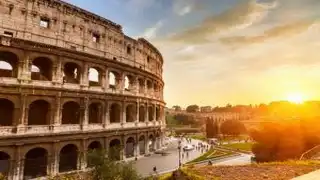
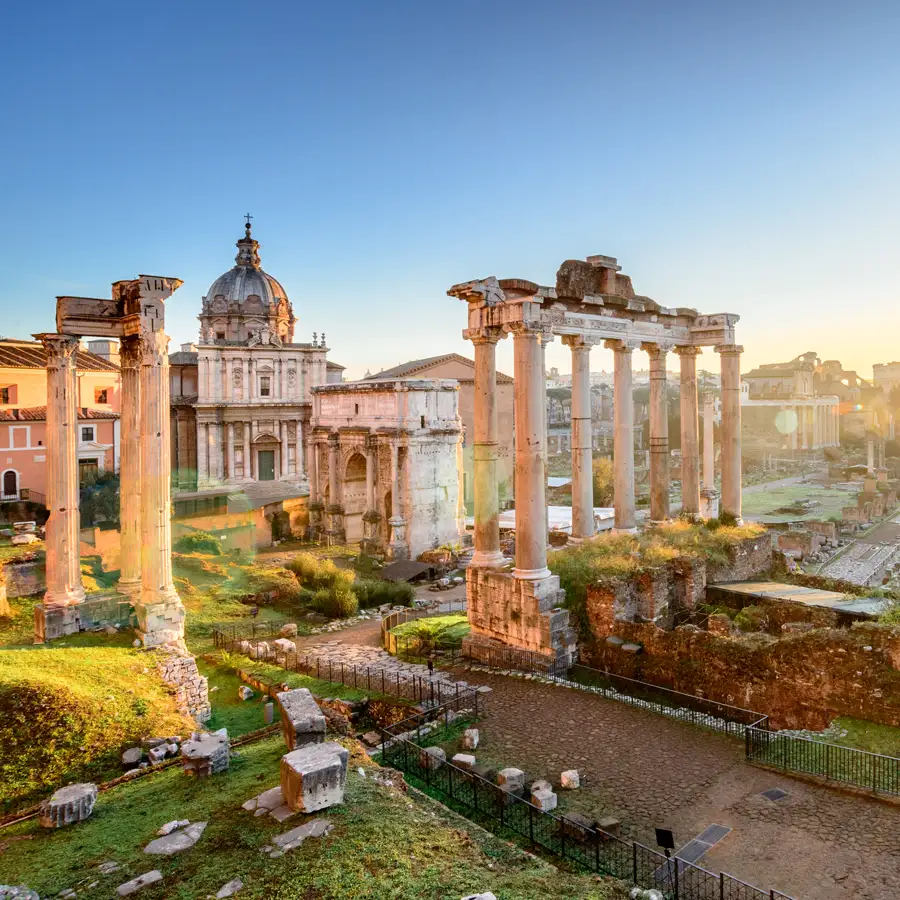
On this 3-hour private guided tour, you will explore the imposing remains of ancient Rome. Your guide will explain the extraordinary history of the birth of Rome, life in the city and everything about the fall of the Empire. Visit the Colosseum, the monumental ruins of the Roman Forum, and end the tour on the Capitoline Hill, the smallest and most important of the seven hills of Ancient Rome.
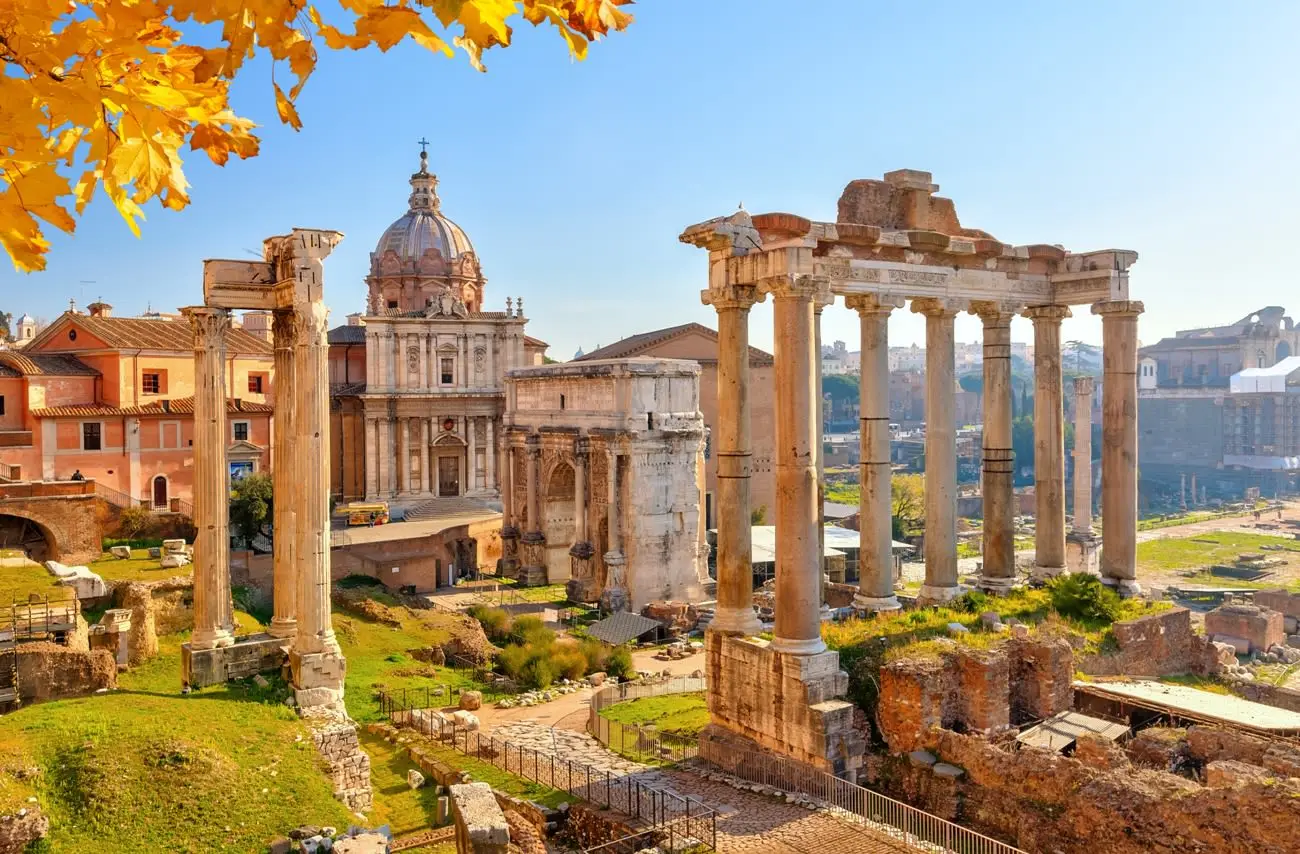
Ancient Rome Guided Walk

9:00 AM - 12:00 PM — Ancient Rome Guided Walk

On this 3-hour private guided tour, you will explore the imposing remains of ancient Rome. Your guide will explain the extraordinary history of the birth of Rome, life in the city and everything about the fall of the Empire. Visit the Colosseum, the monumental ruins of the Roman Forum, and end the tour on the Capitoline Hill, the smallest and most important of the seven hills of Ancient Rome.
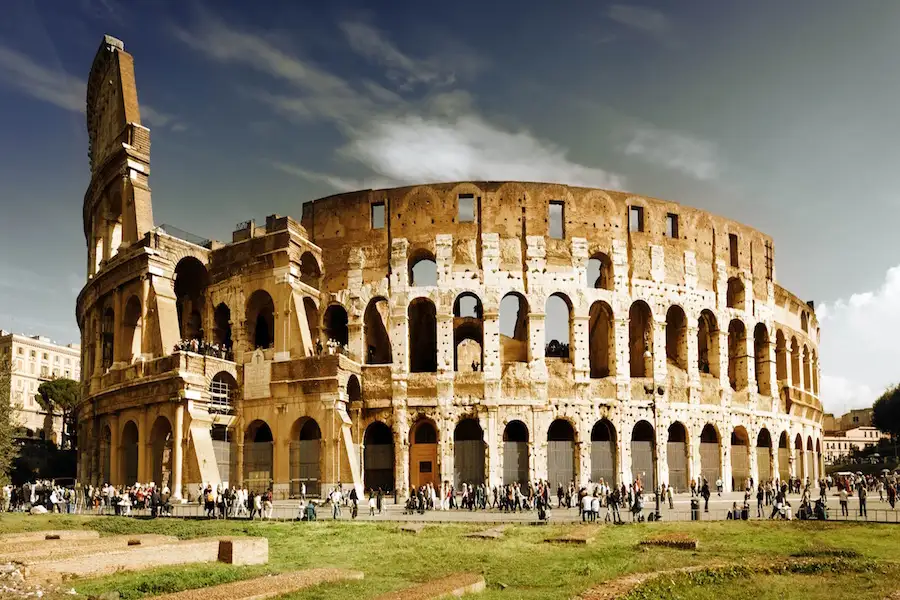
Colosseum

Ancient Roman Ampitheater

Monumental Roman amphitheater once used for gladiatorial games

Mid-Day to Late Afternoon — Piazza Venezia

The Piazza Venezia is not only the central hub of Rome, but is also located at the foot of the Capitoline Hill, which is the ancient heart of Rome. Thus it was chosen as a fitting space for a memorial to the first king of modern Italy, Victor Emmanuel II, who led the unification of the Italian states in the 1860s. The gigantic monument now overlooks the Piazza Venezia in overwhelming marble glory, standing as an unmissable symbol of Italian unity. The open space and dramatic setting were used to great effect by Mussolini, who staged rallies here. However, the monument is just one of the several sights that can be found around Piazza Venezia, an area often overlooked by tourists who pass from the historic center directly to the Colosseum further down the street. For instance, just below it you'll find Trajan's Forum, containing some of Rome's most notable ruins, and just above it on the Capitoline Hill, an elegant square designed by Michelangelo.

Vittorio Emanuele II Monument

Visit this grand monument and ascend to the roof through an elevator at the back for the wonderful views of the Roman Forum and Colosseum.

Standing grand and mighty on Capitoline Hill overlooking Piazza Venezia, the monumental marble temple honouring Italy's first king Vittorio Emanuele II is a sight often overlooked by tourists. The impressive wedding cake-like building is home to one of the best views in Rome. Ascend to its rooftop and you can enjoy amazing views over the Roman Forum and Colosseum.  The monument is also the sight of the Altar of the Fatherland (Altare della Patria), which includes an altar to the goddess Rome, and a shrine to the Italian Unknown Soldier, thus making the monument a sort of secular temple dedicated to the country. However, it's unlikely the relatively modest and unassuming Vittorio would have appreciated this massive monument built to his legacy. Inaugurated in 1911 to symbolize the achievement of Italian unity, it irrevocably changed the aspect of the city, throwing out of scale the Capitoline hill itself and causing indiscriminate damage. Familiarly known as ‘Mussolini’s typewriter’ (it was finished during his regime in 1937), it is thought by some locals to be a colossal monstrosity, although for others its symbolic importance makes it a place of reverence, regardless of any architectural criticism.

Capitoline Square & Capitoline Museums

See the square Michelangelo designed to mark the spot of Rome's legendary origins.

This square at the top of the Capitoline Hill, Piazza del Campidoglio, is a lovely piece of town planning designed by Michelangelo. It is surrounded on three sides by stately palaces and an open-end featuring a balustrade. This is the historical center of ancient Rome, and to reflect this fact, Pope Paul III ordered that the famous gilded bronze equestrian statue of Marcus Aurelius be moved here from the Lateran hill.  Off of one corner of the square you will find a reproduction of the famous Lupa Capitolina, that is, the statue of the she-wolf that suckled the legendary founders of Rome, Romulus and Remus. Wander just a bit further and you will be rewarded with an amazing view over the Forum. You'll also find the Capitoline Museums in one of the 15th century palaces fronting the square. These are some of the oldest collections in Rome, containing Classical Roman, Greek, and Egyptian sculptures, as well as Renaissance art.

Markets of Trajan

Take a look around the world's first shopping mall.

Trajan's Forum was the last great forum built in Rome and rivaled the original Forum in scale and grandiosity. However, the only significant structure that remains now is the semicircular ruins of the Trajan Markets, which are often described as the world's first shopping mall. Arcaded passageways led to offices, shops, and apartments, situated in a multi-story structure. It is still possible to visit some of these levels. Within Trajan's Market you will find the Museum of Imperial Fora, one of the best interactive museums covering Ancient Rome. The labeling in English is unsurpassed and the exhibition rooms both in the museum and the rooms of the markets provide a superb introduction to Roman life and the architecture and building methods that were lost for centuries after the fall of the Roman Empire. Two or three hours spent here is time well invested.

Trajan's Column

Relive a saga of war and conquest on this carved frieze as it winds its way up a 140-foot high ancient column.

Built in 113 AD out of 18 massive blocks of marble, the column is decorated with exquisitely executed reliefs which spiral up around it. There are over 2,500 carved figures, and the column tells a detailed and highly visual tale of the Emperor Trajan’s Dacian wars. At the top of the column once stood a statue of the victorious Emperor (replaced by St Peter in 1588), and a spiral stone staircase inside led to a platform from which extensive views could be enjoyed over the rooftops of the city. Today the column is visible from the Piazza Venezia without a ticket, but those with a particular interest in Roman history might consider hiring a private guide who can explain the story depicted by the column in more detail.

Early Evening to Late Evening — Trastevere

Stroll around Trastevere, a formerly working-class district which has now been transformed into one of its hippest neighborhoods. You'll discover a heady nightlife mostly free of the tourist traps which mar other parts of the center, and you'll discover hidden corners beloved by locals and visitors alike. We highly recommend dining out in one of the district's top-rated restaurants or cafes, but beware, this is Rome's most popular spot for dinner, so booking ahead or dining early is highly advised. If you don't make a reservation, here's one tip for finding a restaurant: if someone is standing outside trying to convince you to come in, it's not popular with the locals.

Basilica di Santa Maria

Step inside this mosaic-covered gem of Rome, and then linger for a while to people watch on the square its located on.

Said to be the oldest church dedicated to the Virgin Mary in Rome, it dates back to the 3rd Century. Despite being located on the central square of one of Rome's most popular neighborhoods for dining and nightlife, the Basilica di Santa Maria is often missed by visitors. Most just stop outside to admire its 12th-century facade and its glittering mosaic depicting Mary feeding Jesus. Its interior though is the true draw, as it is home to impressive golden mosaics from the 13th century by Pietro Cavallini, and its nave is held up by 21 ancient Roman columns pillaged from the Baths of Caracalla.  After visiting the church, be sure to hang out for a little while on the square to appreciate the lively vibe of the Trastevere neighborhood.

image

Day 2

Rome

image

Day 3

Rome

Day 3

Rome

icon
icon

Early Morning to Late Afternoon

Vatican City

Rome is unique in the world in that it contains an independent country within its city limits - the Vatican City, from where the Pope administers the Catholic Church. The symbolic center of Catholicism is St Peter's Basilica, the second-largest Catholic church in the world and among the most beautiful. The Vatican Museum contains one of the greatest collections of art in existence, including Michelangelo's jaw-dropping Sistine Chapel. The popes had a bigger influence on Rome than just the collection of art. The Pope's title is actually Bishop of Rome, and popes administed the city for centuries, shaping its architecture & public spaces. Rome was re-built to be an example of urban beauty, and the Vatican was meant to be the showcase within the showcase. Their success is evident from the throngs of visitors who flock here even today.

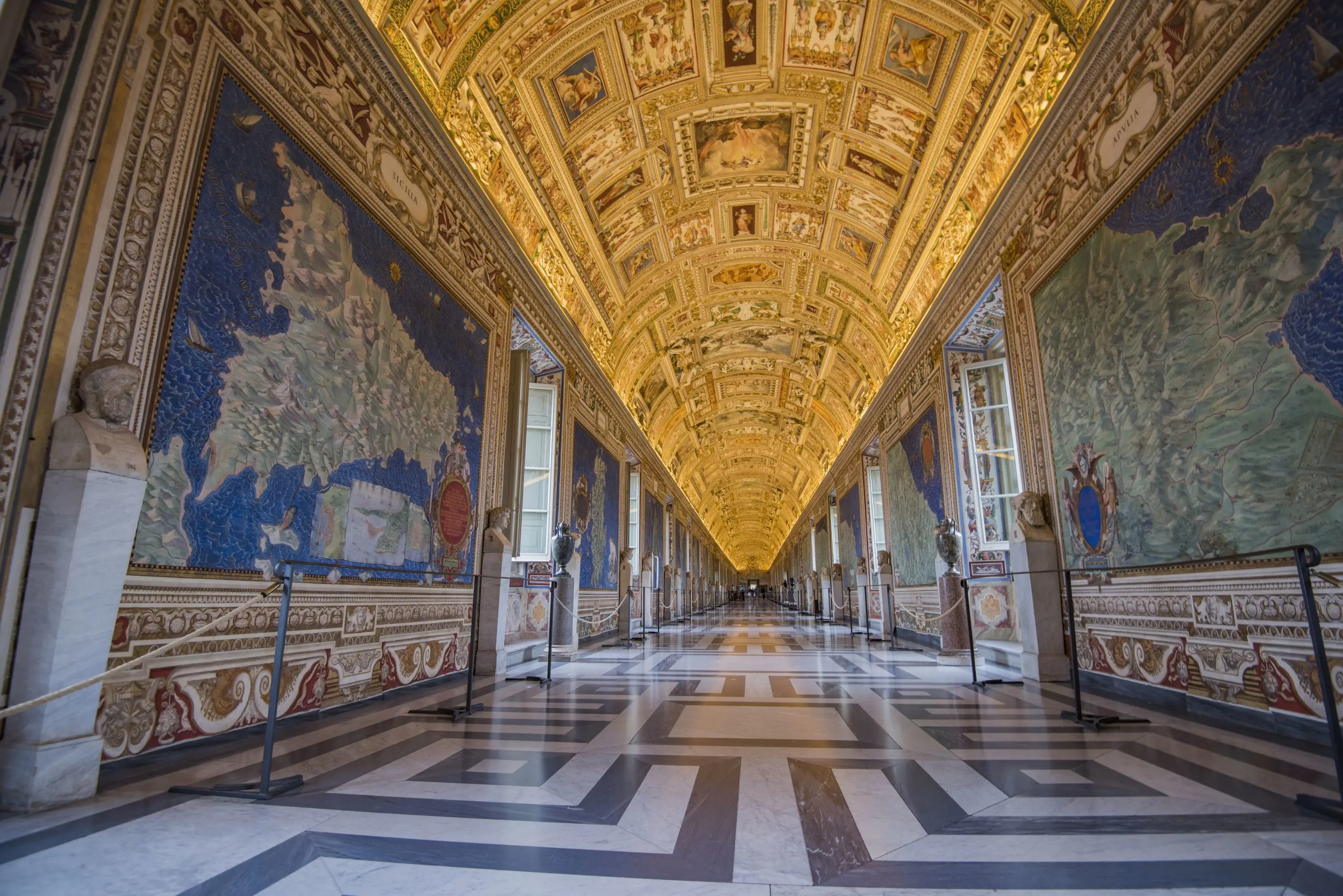
Vatican City

Early Morning to Late Afternoon — Vatican City

Rome is unique in the world in that it contains an independent country within its city limits - the Vatican City, from where the Pope administers the Catholic Church. The symbolic center of Catholicism is St Peter's Basilica, the second-largest Catholic church in the world and among the most beautiful. The Vatican Museum contains one of the greatest collections of art in existence, including Michelangelo's jaw-dropping Sistine Chapel. The popes had a bigger influence on Rome than just the collection of art. The Pope's title is actually Bishop of Rome, and popes administed the city for centuries, shaping its architecture & public spaces. Rome was re-built to be an example of urban beauty, and the Vatican was meant to be the showcase within the showcase. Their success is evident from the throngs of visitors who flock here even today.

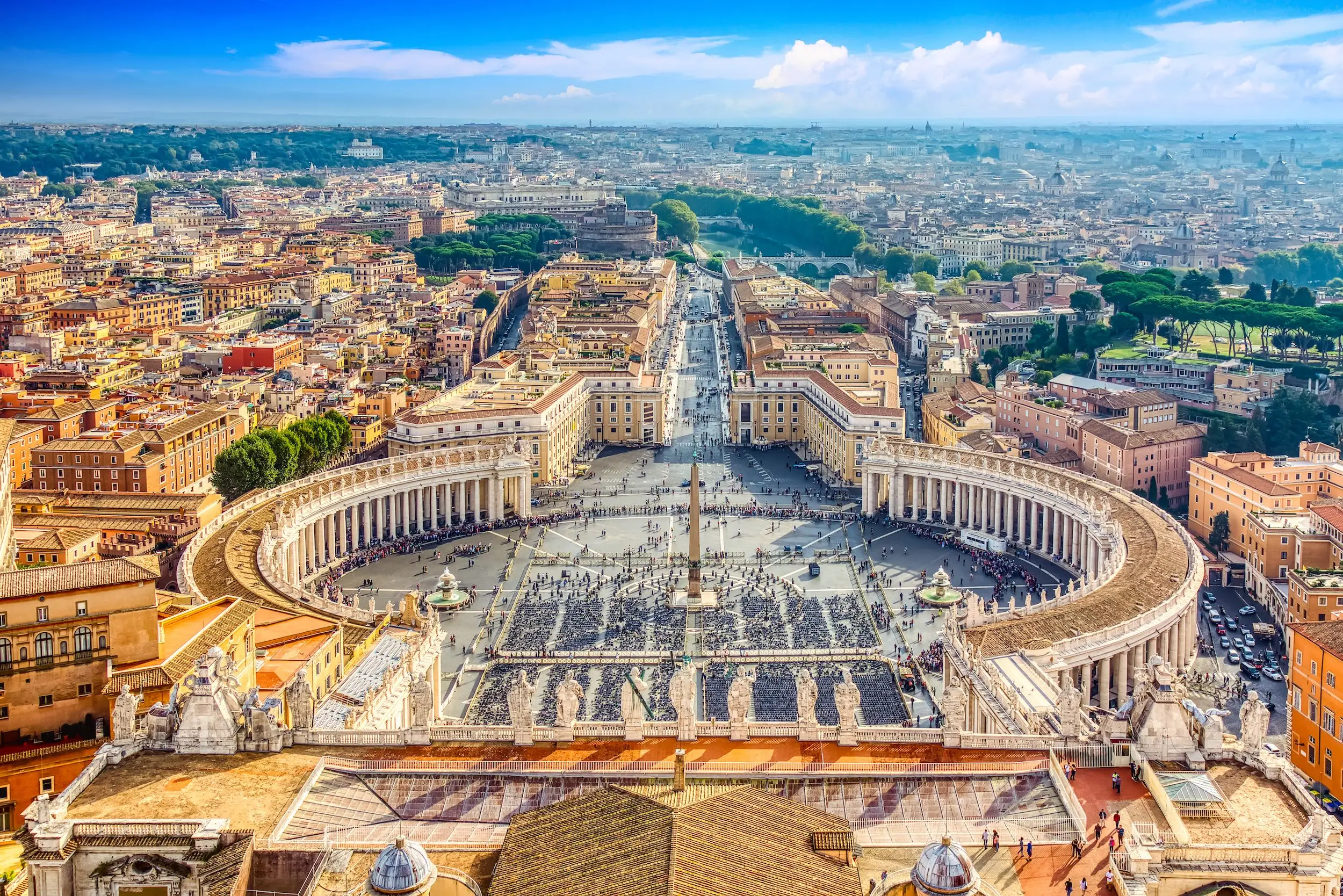
St Peter's Square

Stand in the middle of this famous square in which the faithful gather to hear the Pope give audiences and celebrate mass.

As one of the most superb conceptions of its kind in civic architecture, St Peter’s Square is the masterpiece of Gian Lorenzo Bernini and makes a wonderful approach to one of the world’s most magnificent churches, St Peter's Basilica. An oval rather than an actual square, the piazza, laid out in 1656-67, is partially enclosed by two semi-circular colonnades on which stand 96 statues of saints and martyrs. At the center of the oval stands an 84-foot (26m) tall Egyptian obelisk of red granite.

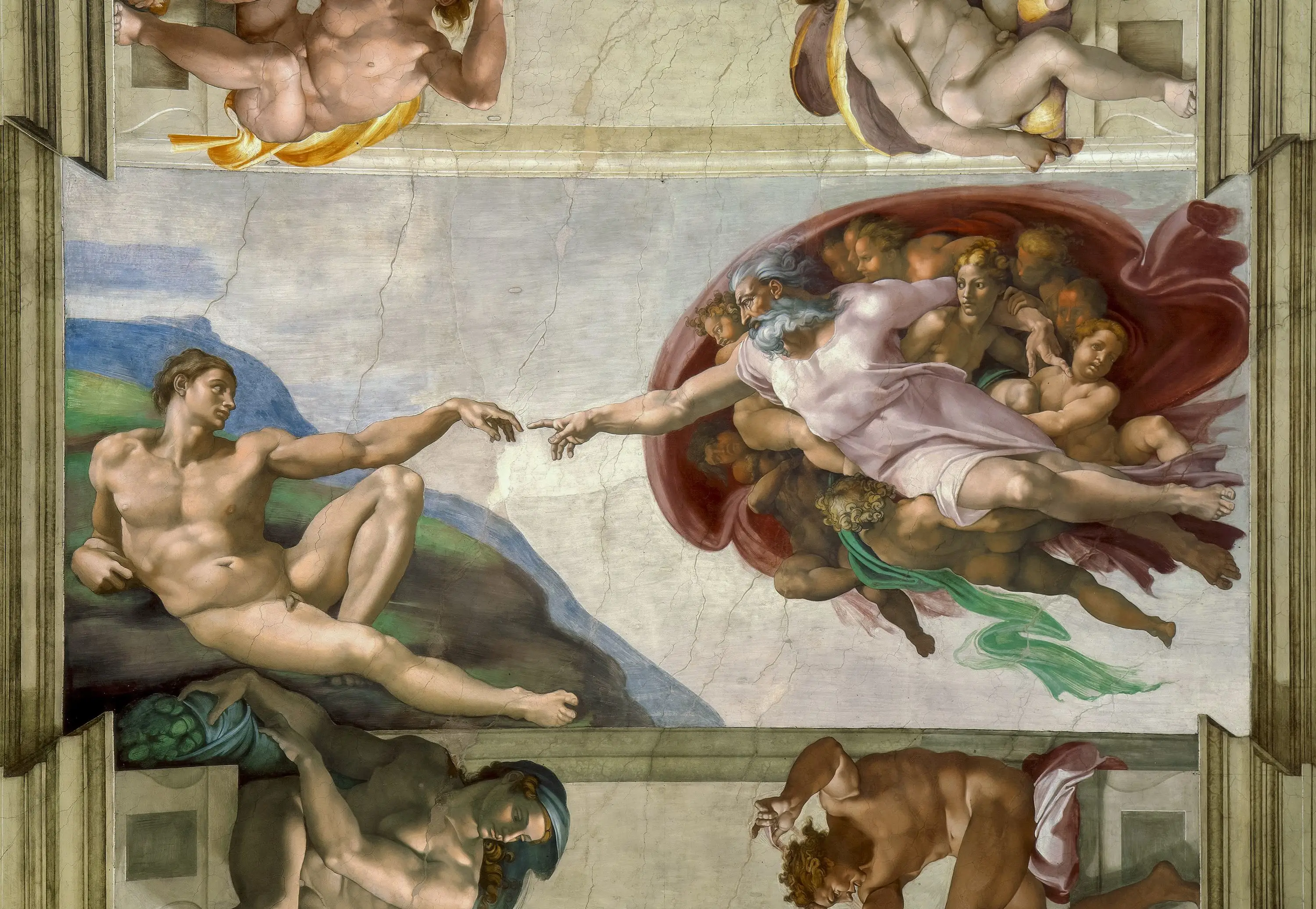
Sistine Chapel

Gaze up at the world's most famous ceiling, the masterpiece of Michelangelo.

This famous chapel inside the Vatican Museums is best known for Michelangelo's 16th-century painted ceiling of "The Creation of Adam" and "The Last Judgement" fresco that covers the whole altar wall of the chapel. The jaw-dropping sight is not to be missed, considered one of the top highlights of visiting the Vatican Museums and one of the top artistic wonders of the world. 

Vatican Museums

Book early if you want to see the Vatican Museum's monumental works of art from the greatest Italian artists of the Renaissance.

The Vatican Museum is actually 26 different museums, which include not only exhibitions but chapels, apartments, and other rooms of the Vatican palace, covering a huge range of fine and applied arts patronized by the popes. There's also an outstanding collection of ancient antiquities (including even the Emperor Nero's red stone bathtub), a gallery of hand-painted maps, and whole rooms turned into works of art. In addition to ancient and medieval works of art, you'll see masterpieces by the "who's who" of the Italian Renaissance, including Raphael, Leonardo da Vinci, Titian, and Caravaggio. Other highlights include panels by the brilliant monk-artist Fra Angelico, works from the Venetian school, including Vavarini, and much, much more.  Booking in advance is highly recommended as otherwise you can wait for hours or not even be able to get in at all.

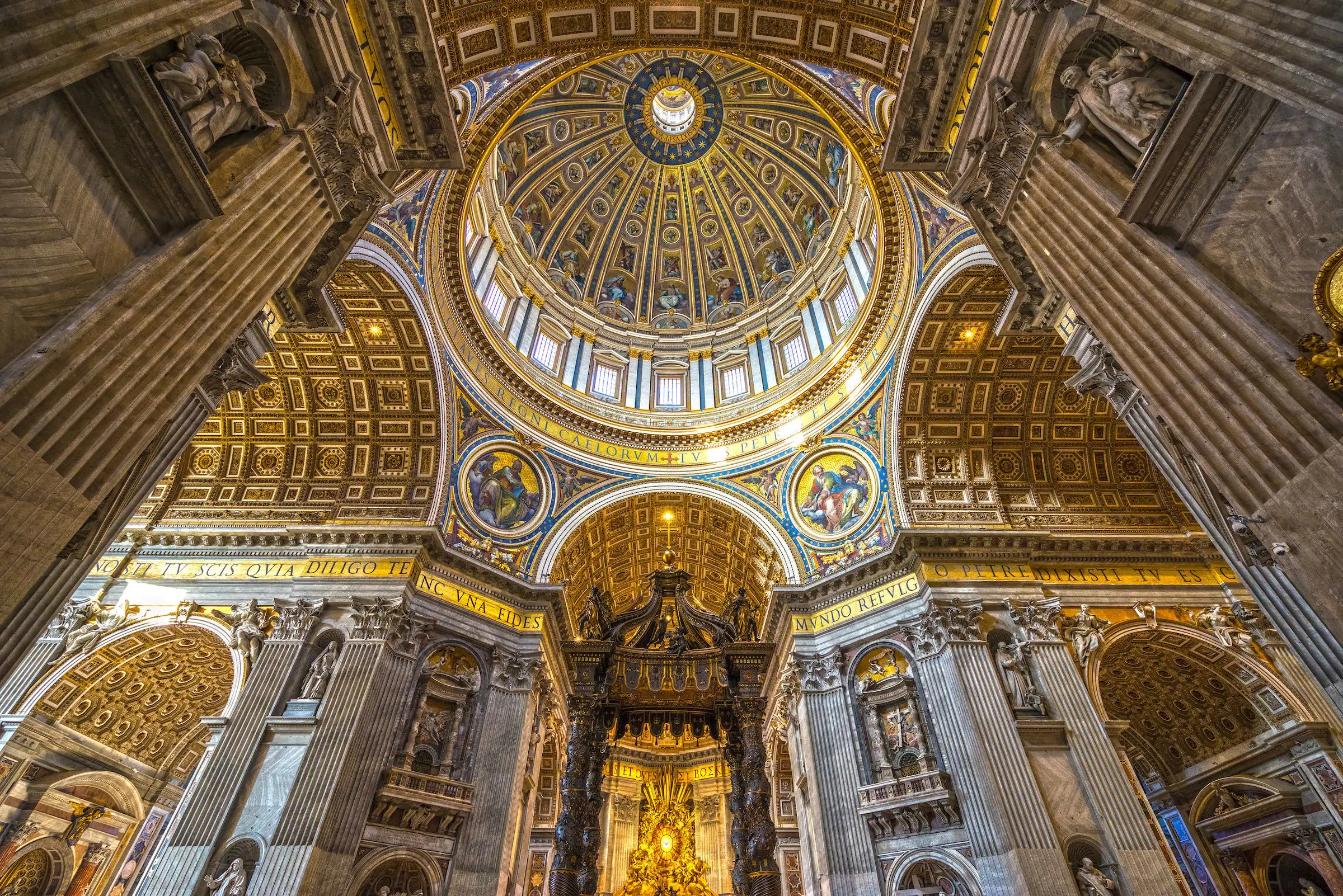
St Peter’s Basilica

Explore the gigantic and incredibly beautiful church known as "the greatest of all churches of Christendom".

The basilica is one of the chief pilgrimage sites in the Christian world, and one of the most popular tourist destinations in Rome. The basilica is the symbolic center of the church not only because the Pope frequently celebrates Mass there, but because it is believed that the apostle St. Peter is buried beneath it. Catholics consider Peter as the first Bishop of Rome and "the rock" upon which the Catholic Church was built, in accordance with Christ's instructions. Inside you can admire sculptures by Bernini as well as Michelangelo's famous sculpture of the Virgin Mary holding the crucified Jesus, known as The Pietà. The church's elaborate and impressive golden interior is a sight to behold. Other sights include St Peter's tomb, the Papal crypts in the necropolis under the basilica, as well as the dome, which rewards visitors with views over Rome.  Entry is free, but queues to visit the Basilica can be lengthy, so it is highly advised to either get there early or to purchase a skip the line entrance. The dome is also paid entry. 

Vatican Gardens

Escape the crowds in this oasis of green hidden behind the walls of the Vatican.

Accessible only via a guided tour, the gardens are definitely worth a visit. Just as the Popes have for hundreds of years, you can stroll the gardens and relax amidst the greenery, while taking in the perfect view of St. Peter's. 

Late Afternoon/Early Evening — Castel Sant'Angelo

Designed and built by Emperor Hadrian as his own mausoleum, the great circular hulk of Castel Sant'Angelo provides one of the best routes to the Vatican and St Peter's via the Ponte Sant'Angelo bridge. Appropriated by the popes, the mausoleum was turned into a fortress and attached to the Vatican with a passageway for the popes to use as a refuge in times of siege or invasion - this is where Pope Clement VII sheltered during the Sack of Rome in 1527.

Mausoleum of Hadrian

Visit this iconic 2nd Century Castle built as the Mausoleum For Emperor Hadrian.

Known as Hadrian's Tomb, the Castel Sant'Angelo is a fortress on the banks of the River Tiber. Originally built as a tomb for the Emperor, it has evolved over the centuries and today it is one of Rome's most underrated museums. Inside you can see the historic Papal apartments, decorated with frescoes from the Renaissance period. Outside you can admire the castle's bastion and rooftop with beautiful views over the river and the Vatican. 

Ponte Sant'Angelo

Walk across this pedestrian bridge that was built in 134 A.D. by Emperor Hadrian.

Hadrian had the bridge built as an approach to his mausoleum, but it didn't gain its magnificent angel statues by Bernini until late in the 17th century. Spanning the River Tiber, it is completely pedestrianised, which allows for great photo opportunities of the castle and St Peter's Basilica in the near distance. 

image

Day 3

Rome

image

Day 4

Rome

Day 4

Rome

icon
icon

Morning/Mid-Day

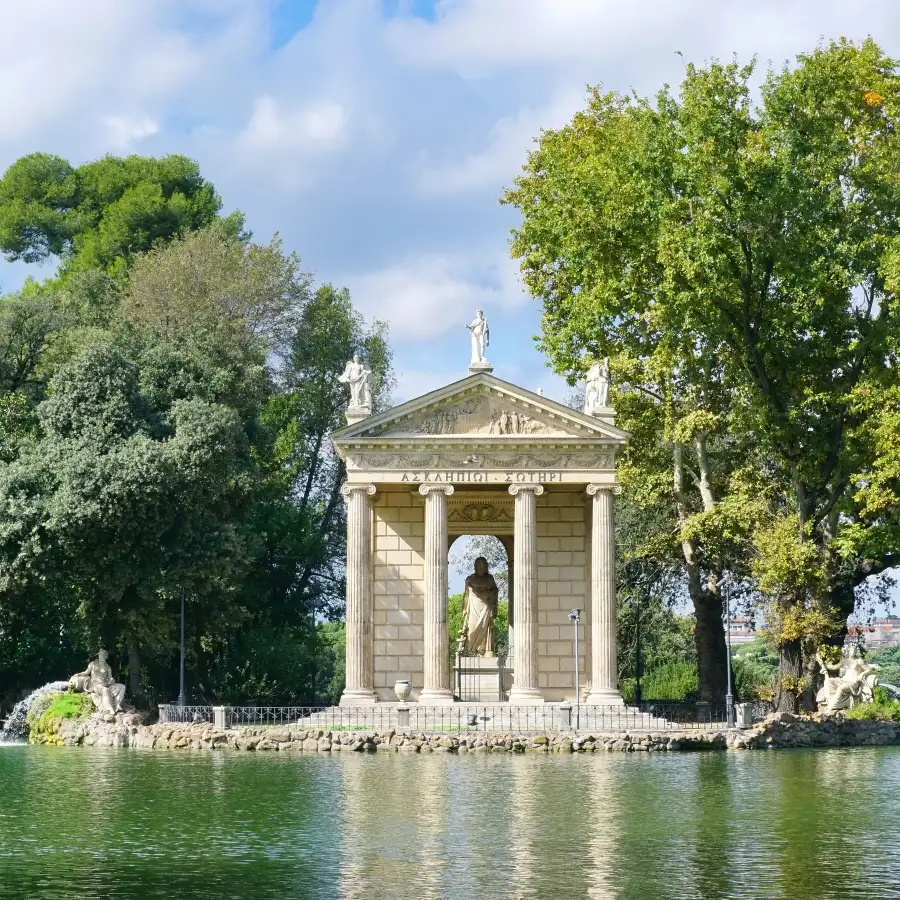
Villa Borghese Gardens

The Villa Borghese Park acts as the main respite and sanctuary for Romans and tourists alike away from the din of central Rome. Overlooking Piazza del Popolo and only a stone's throw from the Spanish Steps, the area was a district of market gardens, olive groves, and patrician villas until taken over as summer estates by the city's wealthy during the Renaissance. The most notable is Villa Borghese, which now houses one of the city's best non-Vatican art collections. The adjacent Pincio Gardens offer a grand vista over Rome.
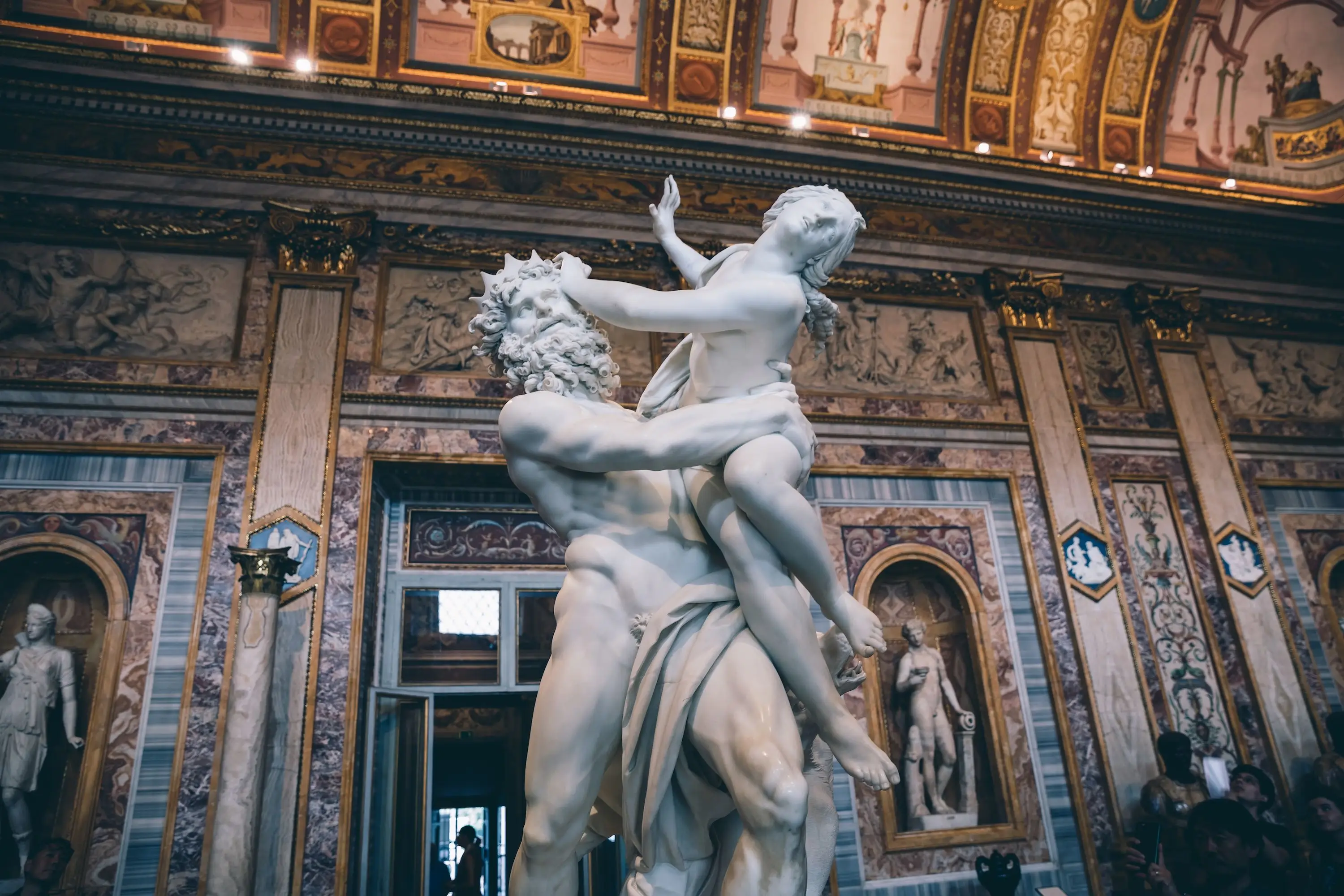
Villa Borghese Gardens

Morning/Mid-Day — Villa Borghese Gardens

The Villa Borghese Park acts as the main respite and sanctuary for Romans and tourists alike away from the din of central Rome. Overlooking Piazza del Popolo and only a stone's throw from the Spanish Steps, the area was a district of market gardens, olive groves, and patrician villas until taken over as summer estates by the city's wealthy during the Renaissance. The most notable is Villa Borghese, which now houses one of the city's best non-Vatican art collections. The adjacent Pincio Gardens offer a grand vista over Rome.

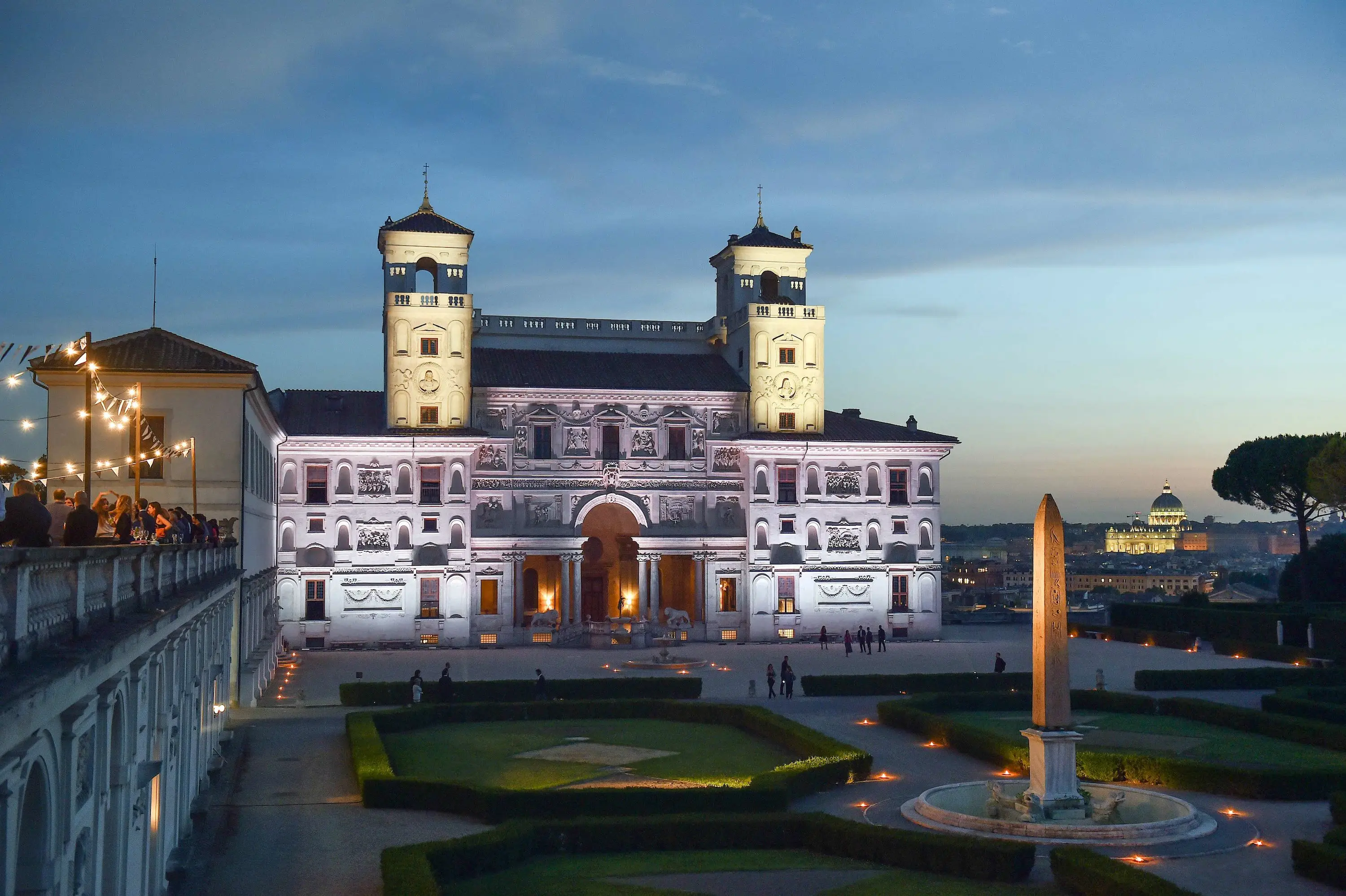
Medici Villa

Take a peak at a 16th-century cardinal's villa that was once considered one of the grandest residences in the city.

Built-in 1564-74 and bought by Cardinal Ferdinando de'Medici in 1576, who further enlarged it, the Medici Villa was considered one of the grandest residences in the city. Galileo was held under house arrest here by the Inquisition in 1630-3. In 1801, the villa was bought by Napoleon and the French Academy was transferred here where it has remained to this day, meaning it is closed to the general public. French students who win the Prix de Rome are sent to study here for periods of six months to two years at the expense of the French government. Well-known scholars include Berlioz, Debussy, and Ingres. It remains one of the most important cultural institutions in Europe and the most beautiful villas to have preserved its garden in the center of Rome.

Galleria Borghese

Visit Rome's most famous art gallery outside of the Vatican Museums.

The gallery started out as the private family collection of the powerful Borghese family, who poured much of their wealth into the patronage of the best Renaissance-era artists. It contains masterpieces not only by Bernini and Caravaggio, but also Raphael, Rubens, and Titian. Don't miss in particular Caravaggio's David with the Head of Goliath - the head is said to be a self-portrait. It's obligatory to book your visit in advance, you'll need a printable confirmation and a booking number.

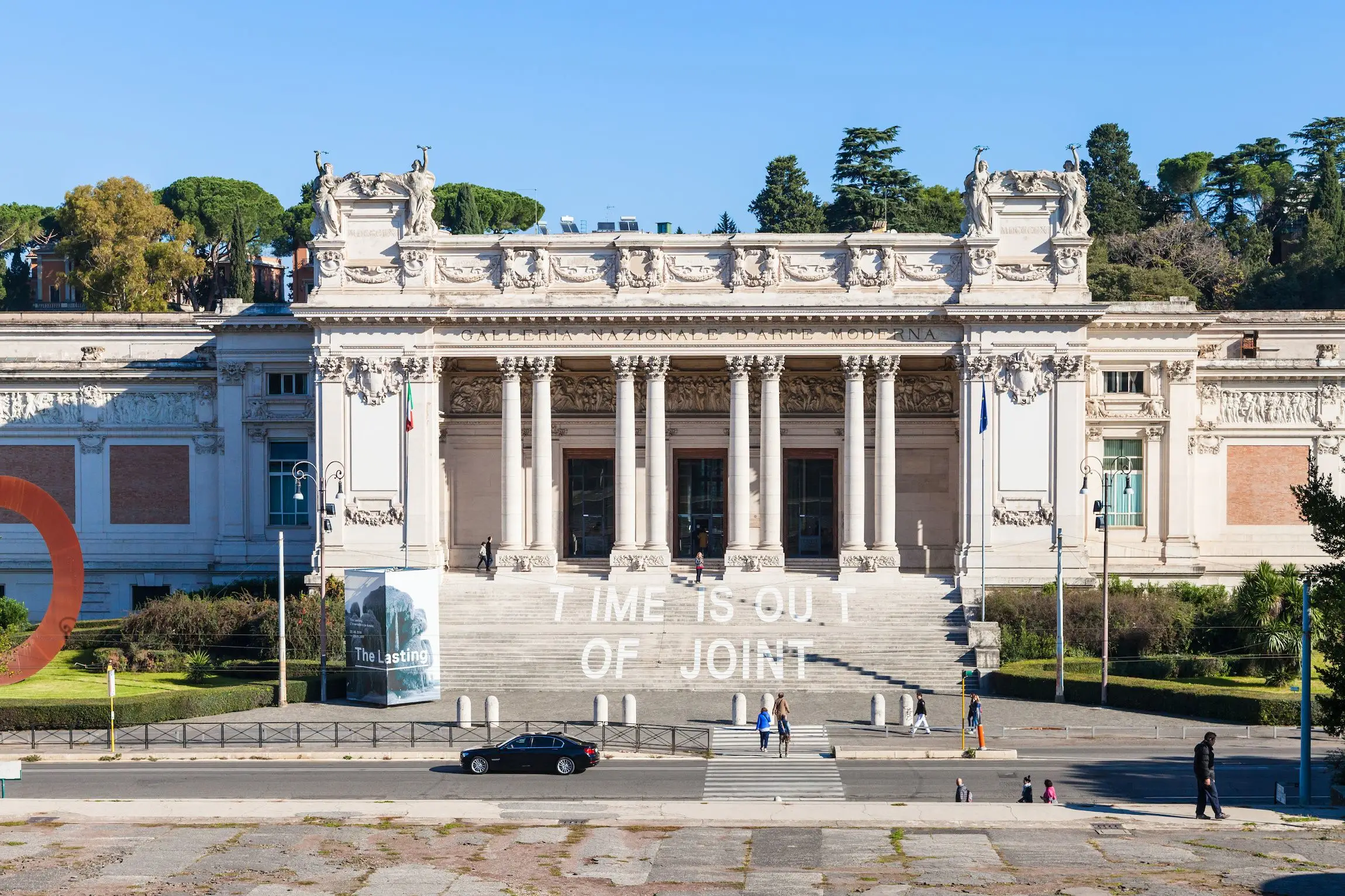
National Gallery of Modern and Contemporary Art

See the most important collection in existence of Italian modern art.

The gallery was founded in 1883, although the current museum building was purpose-built for it in 1911. It displays paintings and sculptures of the nineteenth and twentieth centuries and is the largest such collection in Italy. In addition to Italian artists such as Giorgio de Chirico and Giorgio Morandi, you'll find works from non-Italian artists including Degas, Monet, and Jackson Pollock.

Mid-Day to Evening — Ostia Antica

Just 20 miles from Rome lies one of the largest and most interesting excavation sites and preserved ruins of the Roman Empire outside of Pompeii; the former port city of Ostia Antica. As one of Rome’s most overlooked and undervalued site by tourists visiting the city, it's a must-do day trip for anyone interested in the Roman history and life as it was in one of Rome's original port cities. It is especially nice to be able to enjoy the ruins in quiet and contemplation without the crowds which fill the ruins of Pompeii. Getting there is easy. A suburban commuter train service (or overground metro) runs several times an hour from central Rome to the coast and stops at Ostia Antica station. Since the train is part of Rome's Metro Network, you won't even need to purchase additional tickets if you have a Roma Pass.

Bath of Neptune

Admire the mosaic floors of this once luxurious bath built for the people of Ostia.

Built by Emperor Hadrian in 139 AD, these luxurious bathhouses were a gift to the people of Ostia. Bathhouses were a very important aspect of Roman culture, a place where the common man could mingle with senators and centurions on a daily basis. Like most grand bathhouses, the floors of the Ostia bathhouse were adorned with beautiful mosaics. Many of the black and white mosaics have been relatively well preserved with the largest mosaic of Neptune riding four horses through the sea being the most impressive.

Square of Guilds

Take a peaceful stroll through a place which was once filled with the hubbub of business dealings.

This open-air market was essential for Rome, with merchants from foreign lands gathering here to sell anything from grain and shipping services to elephants and giraffes. The most notable detail of the Square of Guilds are the intricate black and white mosaics that lie in front and inside of each shop. These mosaics indicated the professional associations of each vendor as well as inspired a sense of nostalgia for the distant homes of each of the merchants. It is important to note that these shops did not have any merchandise in them (they were too small). Instead, they functioned more as offices where people could meet and create deals.

Theater

Stare down at the theater stage as the audience did two milennia ago.

Originally built during the reign of Emperor Augustus, it was later enlarged to seat up to 2,700 spectators. Most of the theater's structure remains visible, and you can climb to the top level (where women would have typically sat thanks to the gender division rules of Ancient Rome) to get a good overview. Musicians and typically performed in the ground floor semi-circle, while actors would have used the wooden stage. In ancient times, there would have been a large brick wall behind the stage where scenery would be hung.

Ostia Antica Museum

Visit a museum filled with sculptures and artwork rescued from the ruins.

This splendid Renaissance building was originally built to store salt supplies from the nearby salt pans. Today, it is home to a rich collection of sculptures, busts, paintings and mosaics which have been discovered during the numerous excavations at Ostia. Among the museum's highlights are a large marble statue of Minerva that was probably from Porta Romana; a relief from the Temple of Hercules dating from between 80 and 65 BC; a statue of Perseus holding the head of Medusa found in a villa outside Porta Laurentina; and a portrait of Trajan, a rare masterpiece that was found in the theater.

image

Day 4

Rome

image

Day 5

Rome to Florence

Day 5

Rome to Florence

icon
icon
icon
icon
icon

Morning/Mid-Day

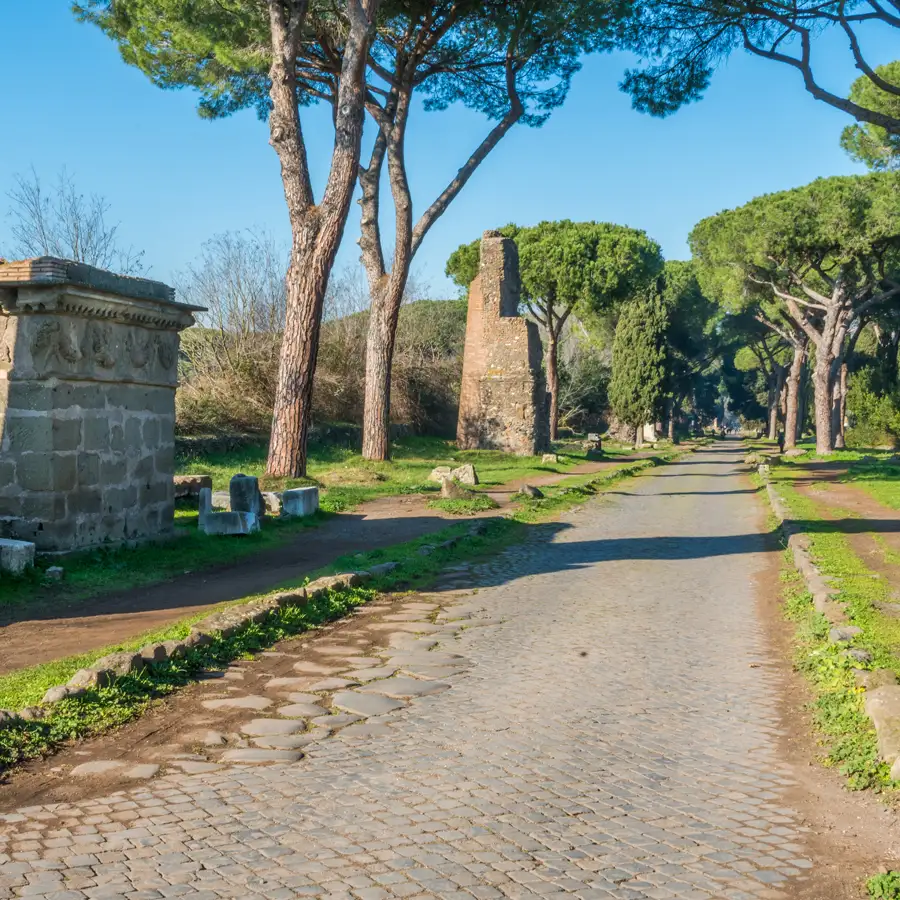
Via Appia Antica

One of the earliest and strategically most important Roman roads of the ancient republic, the Via Appia (or Appian Way) once spanned 350 miles (563km), all the way from the Roman Forum in Rome to modern-day Brindisi. On the south side of Rome lies one of the best preserved stretches of the road, the Via Apia Antica. Take an afternoon to explore the ruins, catacombs, and sights along this infamously cobbled way. Exploring on foot is a relaxed and easy way to do it, made easier by the fact that bus stops along the way mean you don't have to backtrack. Bike rentals are also available and are a good way to cover as much ground as possible. But as an ancient cobbled road, sections of this walk are very bumpy, and depending on which route you take, you may encounter traffic. So you may want to consider if biking with a guided tour makes more sense.

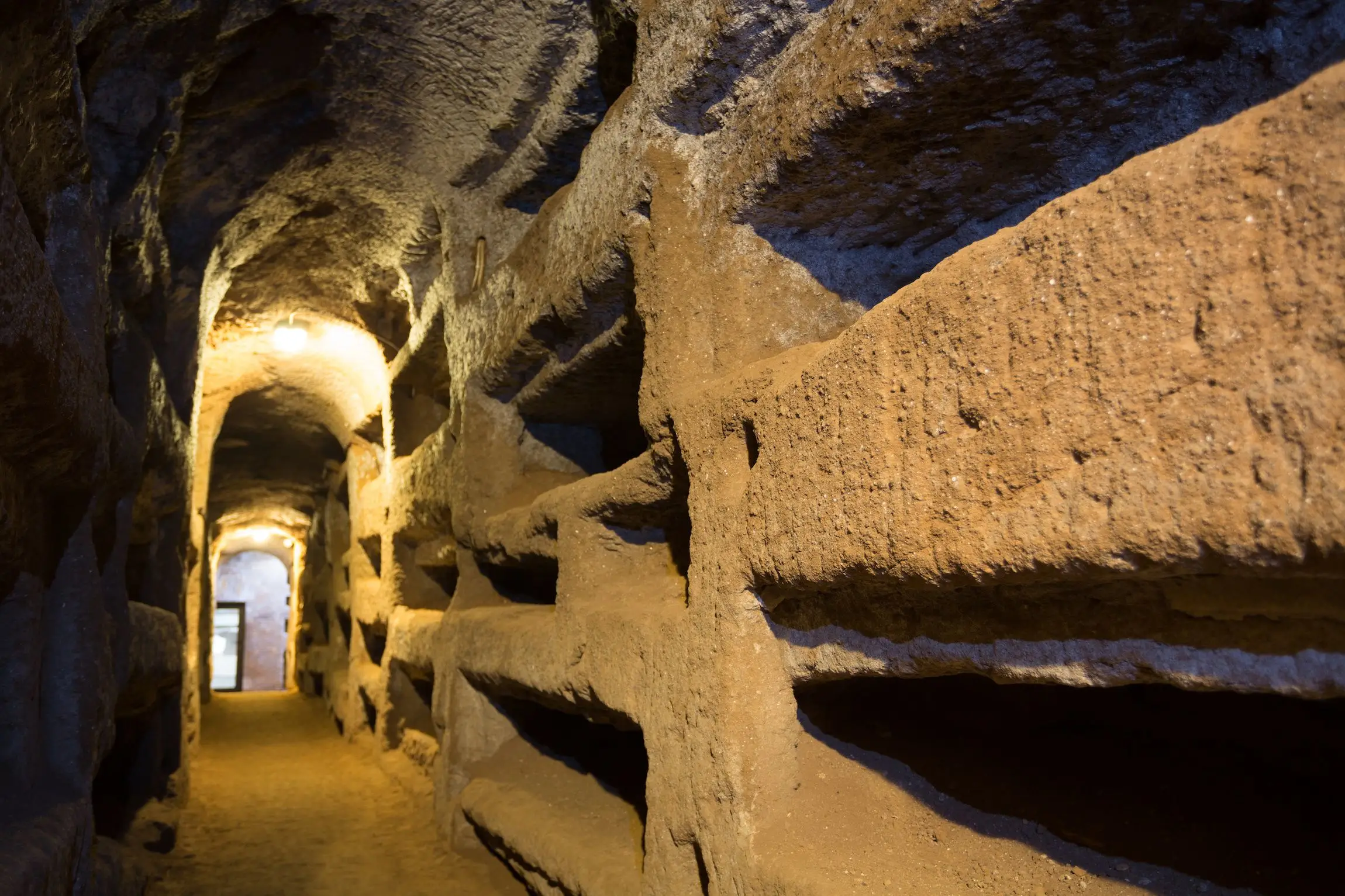
Via Appia Antica

Morning/Mid-Day — Via Appia Antica

One of the earliest and strategically most important Roman roads of the ancient republic, the Via Appia (or Appian Way) once spanned 350 miles (563km), all the way from the Roman Forum in Rome to modern-day Brindisi. On the south side of Rome lies one of the best preserved stretches of the road, the Via Apia Antica. Take an afternoon to explore the ruins, catacombs, and sights along this infamously cobbled way. Exploring on foot is a relaxed and easy way to do it, made easier by the fact that bus stops along the way mean you don't have to backtrack. Bike rentals are also available and are a good way to cover as much ground as possible. But as an ancient cobbled road, sections of this walk are very bumpy, and depending on which route you take, you may encounter traffic. So you may want to consider if biking with a guided tour makes more sense.

Catacombs of San Callisto (i.e. St. Callixtus)

Discover the crypt and catacombs of an ancient Christian burial site estimated to hold half a million bodies.

The catacombs are the most important landmark along the ancient Appian Way route because they include the Crypt of the Popes, which contained the remains of nine popes buried between the 2nd and 4th centuries. In times of persecution, the catacombs also provided a secret place of worship for early Christians. There are five levels and roughly 12 miles (20km) of passageways. Over time, the catacombs were mostly forgotten as the relics of the popes and saints they contained had been moved to different churces of Rome. It was not until the 19th century that Italian architects rediscovered it.

Mid-Day/Afternoon — Esquilino District

Upon first glance, this urban neighborhood of Rome may seem busy and overwhelming, but hidden among its traffic-noisy streets are some of Rome's most beautiful churches, artistic treasures, and cultural museums, including the Baths of Diocletian.

Baths of Diocletian

Walk the ruins of what was once the largest themal baths in the ancient Roman world.

Covering an area of more than 13 hectares (some 32 acres), the bath complex was commissioned by Emperor Diocletian in 298 AD, with a capacity to host over 3,000 people (twice as many as the Baths of Caracalla). The baths were made of bricks, coated in marble and decorated with mosaics and sculptures. The complex included a gymnasium, a library, a large outdoor swimming pool and cold, hot, and tepid public baths. They remained open until 537 when the Goths cut off the aqueducts in an attempt to conquer Rome. After they fell into disrepair and were left abandoned. Even though only a small part of the public bath complex can be seen and visited, it is extremely impressive, with the possibility to see at some points the high ceilings the baths possessed. The interior includes part of the National Museum of Rome and a permanent exhibition on pre-historic populations of the area. In the outdoor part of the baths, it is possible to stroll through a sixteenth-century garden with nearly 400 works of art, including statues, sarcophagi and reliefs. 

Basilica of Santa Maria degli Angeli

See a Michelangelo-designed church built within the former Baths of Diocletian.

In 1561, almost 1000 years after the baths of Diocletian fell into disuse, Pope Pius IV decided to build a basilica consecrated to Our Lady of the Angels within the baths. He commisioned the 86-year-old Michelangelo to plan the church, making use of some of the existing structures of the baths. Today a visit to the basilica gives you an idea of the enormous size of the baths. The church was constructed at the site of the former frigidarium (a large cold pool which would be used to close the pores after using the hot baths) and incorporates several elements of the former thermae. The vestibule occupies the former tepidarium (a Roman-style relaxation room) and the imposing entrance is an exedra of the caldarium (a room with a hot plunge bath). Other highlights include the meridian solar line running across the floor, which still accurately calculates the length of the year and the summer and winter solstices. There is also an impressive organ with 5,400 tubes. It is capable of leaving those visitors lucky enough to hear it spellbound.

Palazzo Massimo alle Terme

Visit one of Rome's greatest but most unheralded museums of antiquity.

This light-filled museum holds one of the best classical art collections in the world. The ground and first-floor feature famous Greek and Roman sculptures, mosaics and statues, as well as impressive sarcophagi and high reliefs. The second floor showcases the best preserved Roman frescoes in the world, which are considered the highlight of the museum. Originally located in Villa of Livia (the wife of Augustus) and Villa Farnesina, these colourful frescoes, sometimes covering an entire room, offer a unique view into life in ancient Rome and the critical importance of gardens, nature, and the villa atmosphere to upper echelon Romans. A must visit room is the painted garden room of Villa Livia. There is also a cinema room with a video showing a 3D reconstruction of the Villa Farnesina as it would have been, showing the layout of the rooms in the villa and the frescoes you had seen just moments before. 

4:10 PM — Private Transfer to Rome Train Station

A private transfer service will pick you up from the N/A and deliver you to Rome Termini Train Station. Your itinerary will provide detailed information on navigating the train station and finding your train, making the whole process simple and stress-free.

17:10 - 18:46 — Train to Florence

Your approximately hour-and-a-half-hour rail journey to Florence will leave Rome behind and shortly enter the picturesque region of Umbria, where you can watch for the medieval hilltop town of Orvieto. You'll then travel through the famously beautiful countryside of of Tuscany, where you'll enjoy a landscape of green hills covered by vineyards, fields, and forests, and see winding roads lined by the iconic cypress trees. Be sure to keep an eye out for more medieval hilltop towns, such as Montepulciano and Arrezo. The journey is especially convenient since you can take a direct, high-speed train - the Frecciarossa, which reaches speeds of up to 250 miles per hour (400 km/h) and offers maximum comfort.

6:46 PM — Transfer from Rail Station

Most trains arrive in Firenza S.M.N. (i.e. Florence Santa Maria Novella Station) station, the largest station in the city. Before spending money on a transfer, be sure to check whether your hotel is within easy walking distance. Also consider that public transport is the cheapest and sometimes fastest option, and trams and buses pick up next to the station. Uber is not available in Florence, but taxis are available at all rail stations and are usually honest (but certainly not always). Some private transfers even meet you directly on the platform to help with bags.

image

Day 5

Rome to Florence

image

Day 6

Florence

Day 6

Florence

icon
icon
icon

Morning to Afternoon

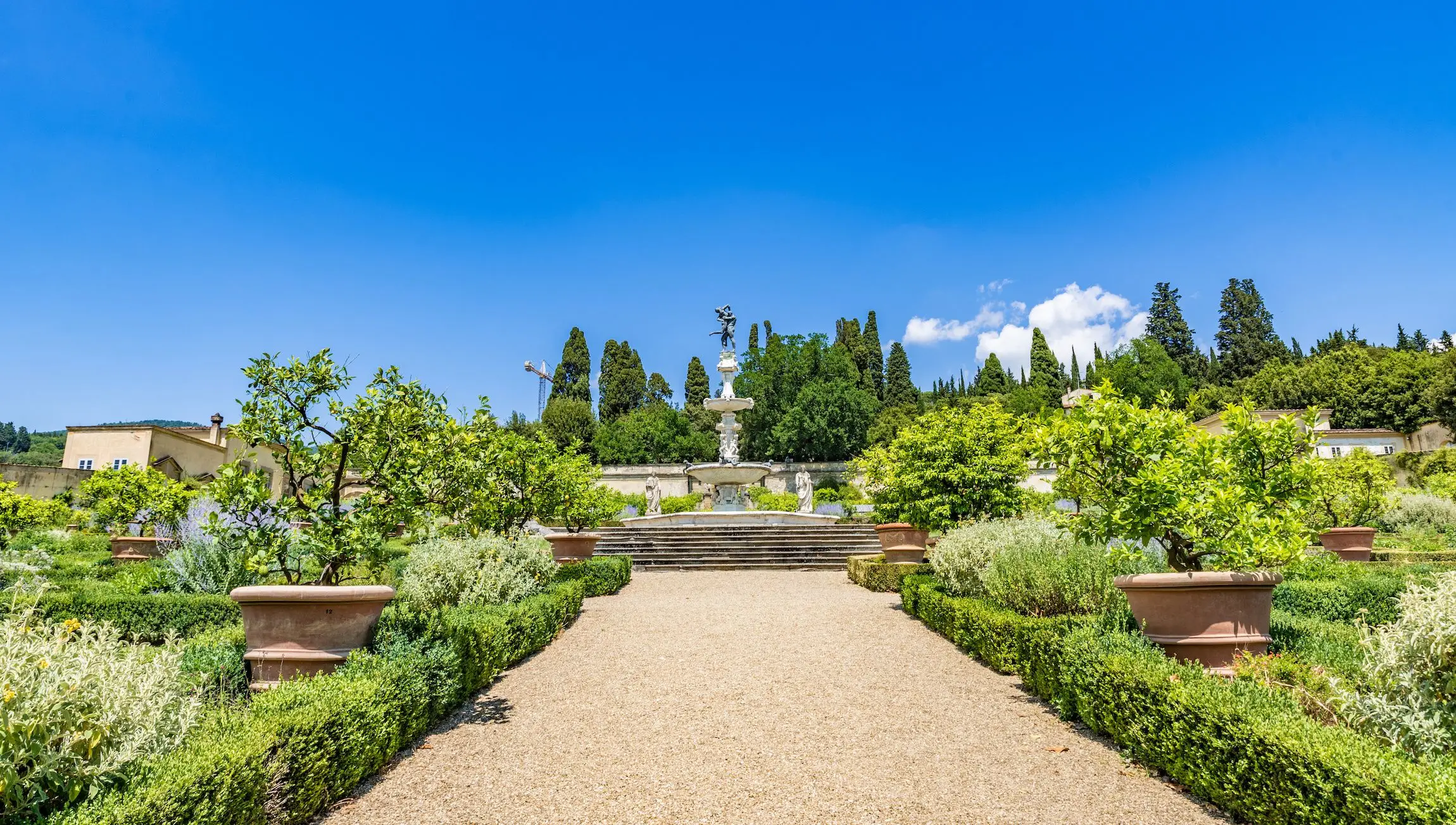
Country Villas

The Medicis and other powerful families of Renaissance Florence constructed magnificent country villas in the foothills surrounding the city and surrounded them with elaborate gardens populated with rose bushes, manicured hedgerows, and citrus trees. You can explore these beautiful villas which are concentrated in an area just a short bus ride from the city center of Florence. The villas served several functions, first and foremost as country palaces demonstrating power and wealth. They were also recreational resorts for the leisure and pleasure of their owners; and, more prosaically, they were the center of agricultural activities on the surrounding estates.

Country Villas

Morning to Afternoon — Country Villas

The Medicis and other powerful families of Renaissance Florence constructed magnificent country villas in the foothills surrounding the city and surrounded them with elaborate gardens populated with rose bushes, manicured hedgerows, and citrus trees. You can explore these beautiful villas which are concentrated in an area just a short bus ride from the city center of Florence. The villas served several functions, first and foremost as country palaces demonstrating power and wealth. They were also recreational resorts for the leisure and pleasure of their owners; and, more prosaically, they were the center of agricultural activities on the surrounding estates.

Villa di Castello

See the villa where Tuscany's first Grand Duke spent his childhood.

Villa di Castello is a 15th century Medici villa mostly famous as the residence where Duke Cosimo I de’Medici spent his childhood. Cosimo, who was later called the Father of the Nation, was the first member of the Medici political dynasty. Not surprisingly, Villa di Castello was his favourite villa and as an adult he expanded it with an extensive garden second only to the Boboli Gardens that included footpaths, fountains and the world famous Animal Grotto. The Villa is not accessible to the public since it has been the home of the prestigious Crusca Academy since 1583, a school dedicated to the study of the Italian language. You can, however, visit the splendid gardens without paying.

Villa La Petraia

Experience an amazing view of Florence as you stroll the gardens of this Medici family villa.

This fortified hilltop mansion was purchased by the Medici in the 16th century and transformed into a princely residence by Cardinal Ferdinando. The villa is richly decorated in the interior and has a beautiful Italian garden that attracts visitors from all around the world. The courtyard that is decorated with frescoes by Cosimo Daddi is probably the most impressive part of the villa, while a series of rooms you can visit present a later style. Both the structured Italian garden and the villa are open to visitors and the admission is free, with guided visits.

Afternoon to Early Evening — Piazza del Duomo

Discover the medieval marvel of the Duomo, Santa Maria del Fiore, with its iconic dome offering panoramic views of Florence. Founded in 1296, it aimed to be the world's largest church, showcasing unmatched Renaissance grandeur in Piazza del Duomo. While entry to the Duomo is free, dome access requires a reservation. Consider a Firenze Card for easy access to other sites.

Campanile (i.e. the Bell Tower)

Climb 414 steps to the top of Italy's most famous bell tower.

The campanile, or bell tower, is at 278ft/84.7m tall and approximately 49ft/15m in breadth the most eloquent example of 14th century Gothic architecture in Florence. Clad in white, red and green marble like the cathedral directly adjacent to it, the majestic square bell tower is considered to be the most beautiful campanile in Italy. There are 414 steps to climb and no elevator available.

Opera Duomo Museum

See how the master architect Brunelleschi planned and built the cathedral, as well as many sculptural masterpieces.

The museum contains the largest concentration of Florentine sculpture in the world, including medieval and Renaissance works in marble, bronze, and silver by the leading artists of the era. Most of the masterpieces on display were designed to adorn the religious monuments that still stand on the Piazza del Duomo. You'll find a number of sculptures by Donatello, a forerunner of Michelangelo, as well as a mock-up of Brunelleschi's building site, complete with broken bricks, wooden scaffolding and some of the tools that were used to build the dome. Plus there are displays of various proposals for completing parts of the dome, as well as the original wooden model of the cathedral lantern presumably made by Brunelleschi himself.

Loggia del Bigallo & Museo della Misericordia

Discover these hidden-in-plain-sight gems and learn about a noble organization which has done much to alleviate the suffering of Florence's population over the centuries.

The Loggia del Bigallo is a small museum in a medieval building. It is home to several jewels of Florentine Gothic painting. It was built in the 1350s for the Compagnia della Misericordia (the Company of Mercy), a religious charitable organization founded in 1244 to aid the sick and bury the dead. It still exists today and you can see their ambulances parked just across the street at the Museo della Misericordia, which was originally an orphanage. The building was commissioned as a place to display abandoned babies in the hope they might be recognized before being given to foster parents. Today it houses a small museum which tells the history of the charity.

Baptistery of St John

Stand before the "Gate of Paradise".

The Baptistery of San Giovanni (St. John) is one of the most ancient churches in Florence, sitting opposite the Duomo. It is the most conspicuous illustration of the special relationship between Florence and ancient Rome, as the Florentines believe the Baptistery is actually a converted Roman temple to Mars. The granite columns inside were probably taken from the city's old Roman Capitol. But it's the doors to the Baptistery which are the primary attraction. They took 27 years to complete and were so beautiful that they became known as the "Gate of Paradise". 

Early Evening/Evening — Concert

Florence is well-known as the home of the Renaissance but many are unaware that it also lies at the heart of the Western musical tradition, as it was here that the first operas were performed in the mid-16th century. Today, the musical tradition remains strong, and you can see a performance in one of several theaters. Notable among them are the Teatro Niccolini, the oldest in Florence and one of the oldest in Europe, and the stunning Teatro della Pergola, one of the first theaters to use box seating. Famous Florentine festivals include Estate Fiesolana from mid-June to late August and the Maggio Musicale Fiorentino (i.e. the Florence Musical May).

image

Day 6

Florence

image

Day 7

Florence

Day 7

Florence

icon
icon

9:00 AM - 3:00 PM

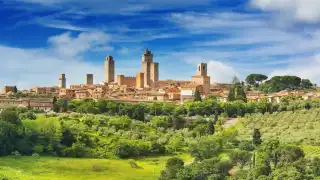
Half Day Excursion to San Gimignano & Vineyard Lunch

Drive through the scenic Tuscan countryside to San Gimignano, one of the most charming and picturesque Tuscan hill towns with medieval towers built for the richest families of the time. You can choose to visit the Cathedral, climb the “Torre Grossa”, take pictures of the gorgeous landscape and enjoy a delicious gelato in the Cistern Square. After, you will be driven to a local Tuscan winery for lunch and some wine tasting.   IMPORTANT NOTE : This excursion does not include a guide, only a driver.
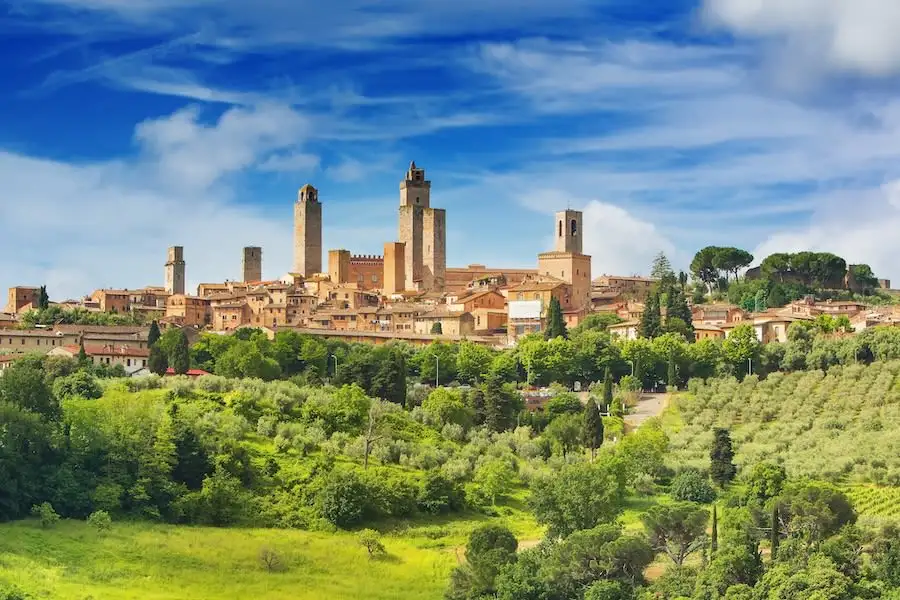
Half Day Excursion to San Gimignano & Vineyard Lunch

9:00 AM - 3:00 PM — Half Day Excursion to San Gimignano & Vineyard Lunch

Drive through the scenic Tuscan countryside to San Gimignano, one of the most charming and picturesque Tuscan hill towns with medieval towers built for the richest families of the time. You can choose to visit the Cathedral, climb the “Torre Grossa”, take pictures of the gorgeous landscape and enjoy a delicious gelato in the Cistern Square. After, you will be driven to a local Tuscan winery for lunch and some wine tasting.   IMPORTANT NOTE : This excursion does not include a guide, only a driver.

Late Afternoon/Early Evening — Piazza Della Signoria

Piazza Della Signoria represents the very soul of Renaissance Florence and Italy. It was here in the Palazzo Vecchio that the rulers of Florence began commissioning work from the great masters of the Florentine, Roman and Venetian art world before they moved across the Arno River to Palazzo Pitti. The piazza remains an open-air sculpture museum, with eye-catching works such as the Neptune Fountain. Nearby the world famous Bargello Gallery contains the overflow of masterpieces from the Uffizi Gallery, including Donatella's famous rendering of David, while the Loggia dei Lanzi houses some of the greatest statuary to have come out of Renaissance Italy. The piazza is still the most popular meeting point in the city, particularly during political campaigns when speakers address the crowds from the terrace in front of the Palazzo Vecchio.

Loggia dei Lanzi

See Florence's wealth of sculptural treasures in this 14th-century open-air gallery.

Originally completed in 1382 as a platform for the swearing in of public officials and other state affairs, it was only in the late 18th century that the Loggia was reserved exclusively for the display of the city's greatest exponents of sculpture. In the corner by the palazzo is a copy of one of the Renaissance's most iconic works, Benvenuto Cellini's Perseus Trampling Medusa (1545). If you examine the sculpture from the back, you can see the self-image of the sculptor Cellini on the backside of Perseus' helmet. Another headturner is Giambologna's Rape of the Sabine Woman, created from the largest single piece of sculptural marble ever seen in Florence.

Palazzo Vecchio

Venture into the richly-adorned chambers of the palace from which Florence and Tuscany were governed for centuries.

The fortress-like Palazzo Vecchio was originally constructed around 1299 to house the government administration, but underwent many reconstructions and was utlized for many purposes over the following centuries. Visiting the palazzo is usually a lot simpler than lining up with the crowds next door trying to get into the Uffizi Gallery. You simply need to go through the courtyard at the front entrance to the ticket office where the queues should be relatively short. Highlights of the palace include the magnificent inner courtyard, the chancery once used by Machiavelli, and the lovely Sala delle Carte decorated with 57 maps painted in 1563 depicting what was then the entire known world.

Bargello Museum

Escape the crowds to visit this gallery filled with the greatest works of Renaissance sculpture.

The Palazzo del Bargello dates back to 1255 and was the former residence of the chief of police (Bargello means police station). But in 1865 it was transformed into a museum containing the richest collection of Renaissance sculpture in Italy, although it is thankfully free of the huge crowds that are attracted to the Uffizi. You'll encounter masterpieces by Michelango, Donatello, Cellini, and many others.

image

Day 7

Florence

image

Day 8

Florence to Venice

Day 8

Florence to Venice

icon
icon
icon
icon

Early Morning to Late Afternoon

Siena Excursion

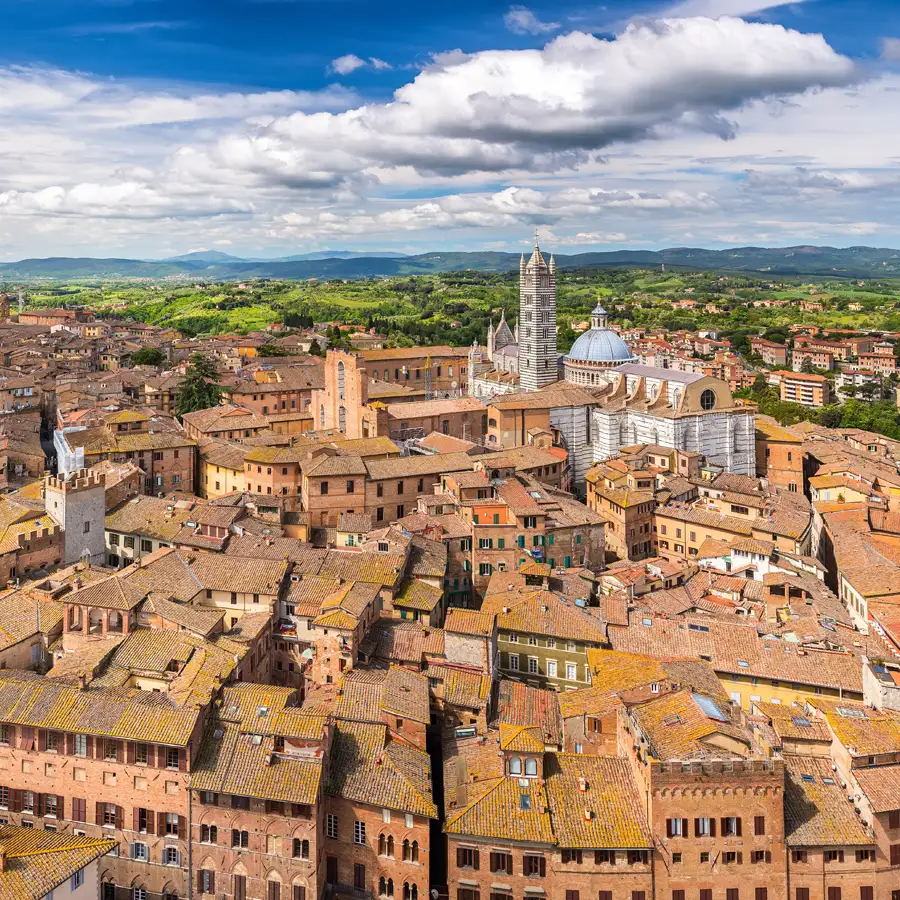
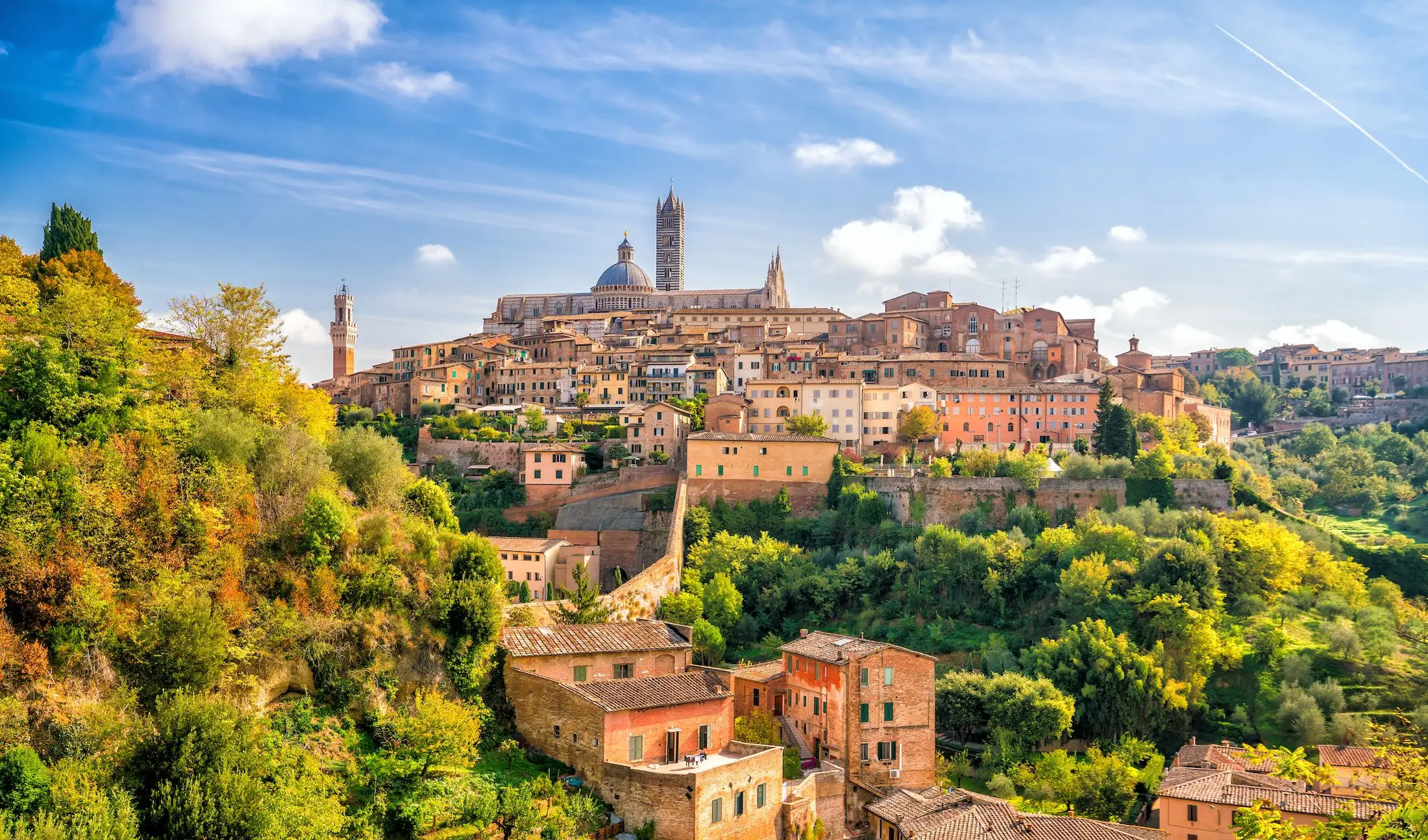
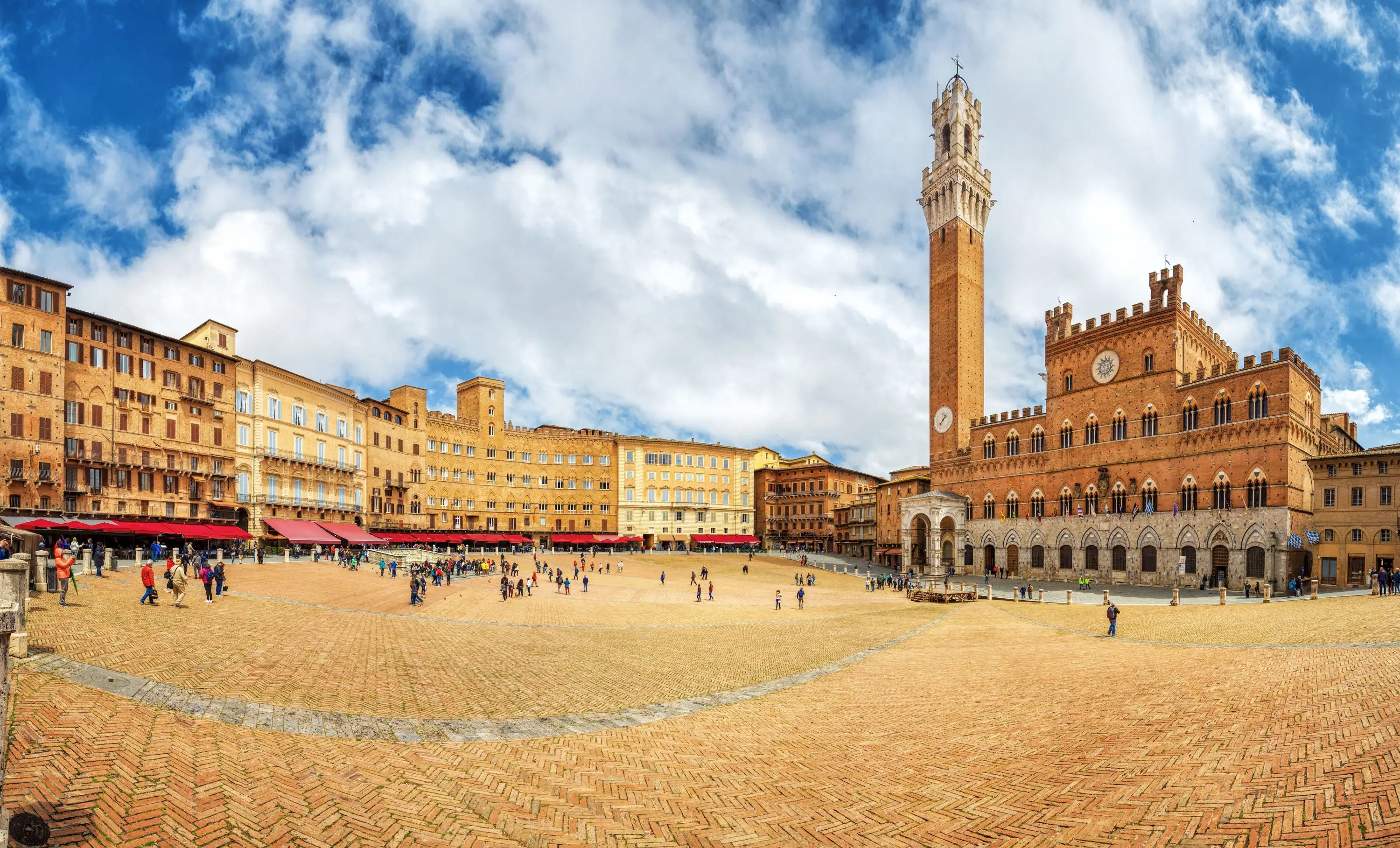
For beauty and interest in Tuscany, only Siena comes close to Florence. Only an hour-and-a-half from Florence by train, it makes for a perfect day trip. The mesmerising brick-built medieval town with its narrow streets winding down into the valleys below was once a great regional power which rivaled Florence, and famously defeated the larger town in the legendary Battle of Montaperti. Its main square, the Campo, is one of the most satisfying urban spaces ever built, playing host to the annual Palio horse race in which each of the town's 17 contrade (i.e. city districts) participate. The traffic-free streets have been wonderfully preserved and its great Gothic buildings still exhibit the artistic masterpieces of the Sienese school of painting commissioned for them during the town's heyday in the 14th century.
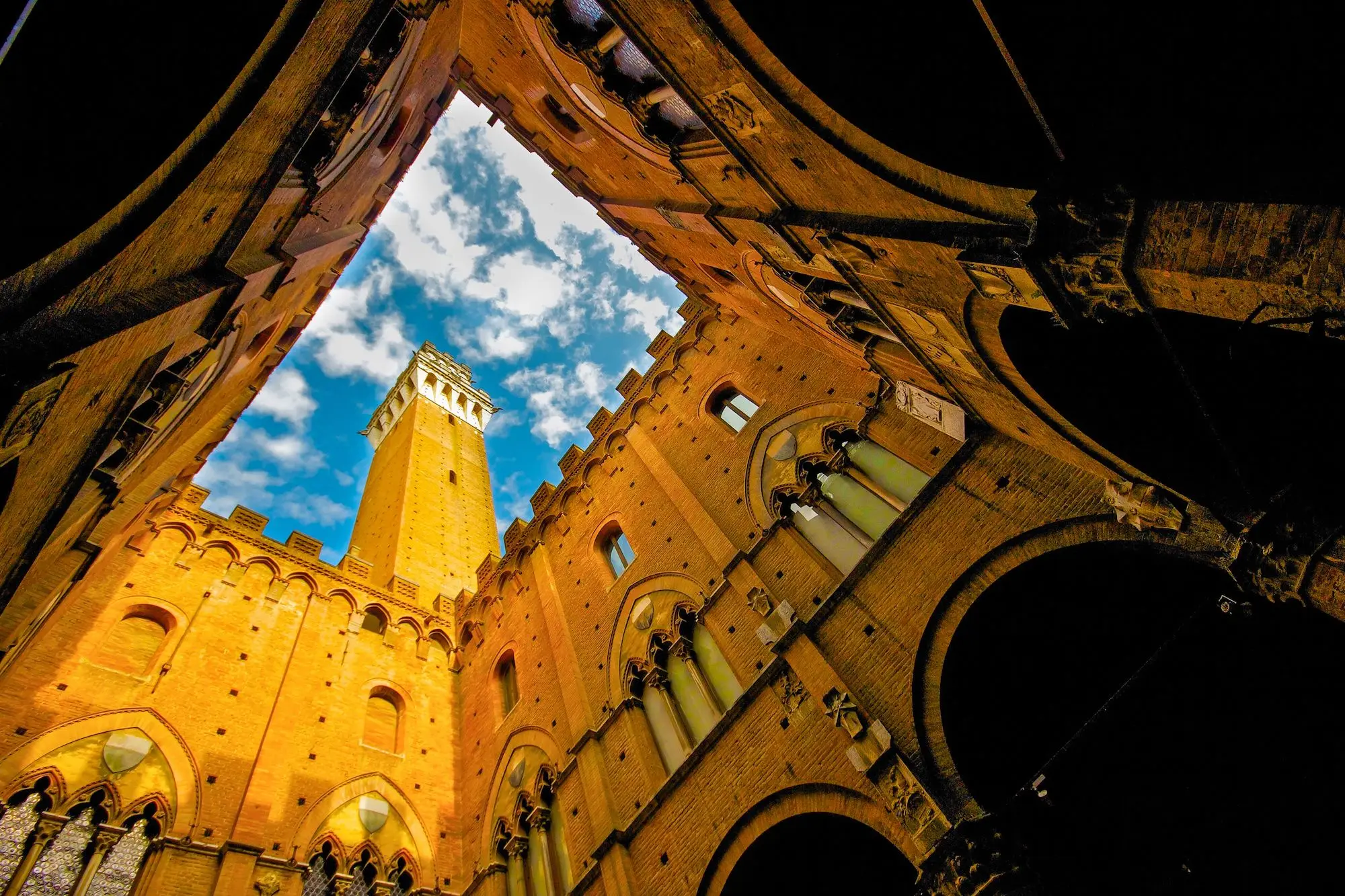
Siena Excursion

Early Morning to Late Afternoon — Siena Excursion

For beauty and interest in Tuscany, only Siena comes close to Florence. Only an hour-and-a-half from Florence by train, it makes for a perfect day trip. The mesmerising brick-built medieval town with its narrow streets winding down into the valleys below was once a great regional power which rivaled Florence, and famously defeated the larger town in the legendary Battle of Montaperti. Its main square, the Campo, is one of the most satisfying urban spaces ever built, playing host to the annual Palio horse race in which each of the town's 17 contrade (i.e. city districts) participate. The traffic-free streets have been wonderfully preserved and its great Gothic buildings still exhibit the artistic masterpieces of the Sienese school of painting commissioned for them during the town's heyday in the 14th century.

Piazza del Campo

Stop and linger in one of the more glorious and satisfying urban spaces ever built.

With its remarkable fan shape and gentle slope, the Piazza del Campo is one of the more memorable and unique public squares in Europe. It has been heart of Siena since the mid-12th century when it was built on the site of a Roman marketplace. Cafes line the square offering coffee and aperitivo for the young and old alike who relax and take in the scene. The piazza is made doubly famous by the fact that it hosts the annual Palio horse race, a hotly-contested event which splits the city into competing factions. 

Palazzo Pubblico and Museo Civico

Make your way into the courtyard of this brick palace built in the 13th century and enter the Museo Civico, where you will marvel at the beautiful murals which adorn the interiors.

Dominating the Piazza del Campo, this 13th century palace and tower was built as a symbol of the independence and wealth of Siena by the Government of Nine (Governo dei Nove) - nine representatives of the people elected by the merchant class, not noble families. Looking at its façade from the Piazza del Campo, it's possible to immediately see its different periods of construction: on the lower level of the three-mullioned (triple-arched) windows the stone that was used and then later brick. The 400 steps to the top of the palace tower is no easy feat even for the fittest of travelers, but the view over the city and Piazza del Campo below make the narrow ascent worth it. Inside the palace courtyard you will find the entrance to the Museo Civico, a treasure trove of magnificent works of art which can be seen inside the palace. One of the most beautiful rooms in the palace is the Sala dei Nove, the Hall of the Nine, with the Allegories of Good and Bad Government by Ambrogio Lorenzetti where you can see the medieval city with its workshops and artisans. 

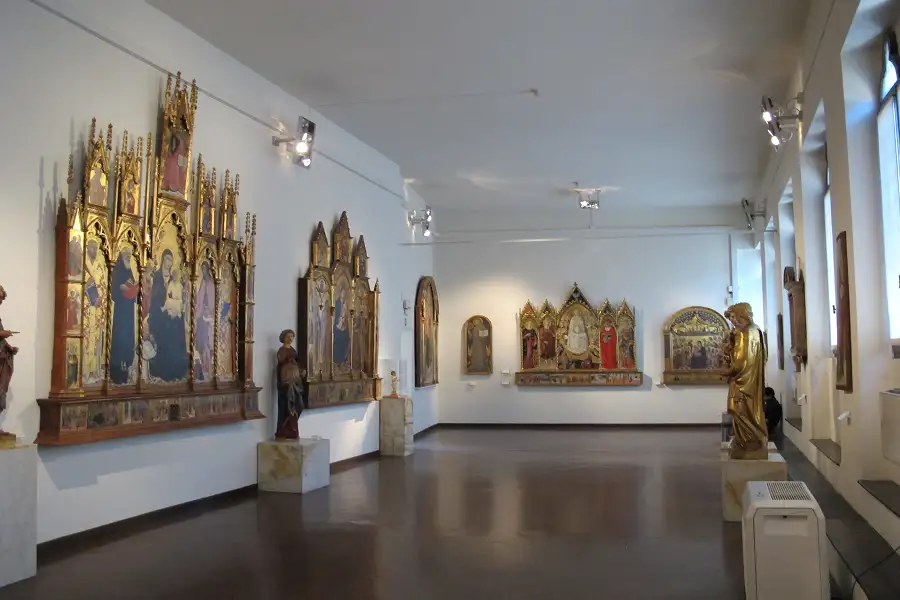
Pinacoteca Nazionale

Make time to visit this gallery holding precious art and history from the Gothic era, when Siena's power and influence peaked.

This is the main state art museum of the city and includes a rich collection of masterpieces from the famous Sienese school of artists, which created mainly large, majestic altarpieces with golden decorations. The "gold" background paintings include a piece by Master of Tressa which marks the beginning of the golden age of Sienese painting.

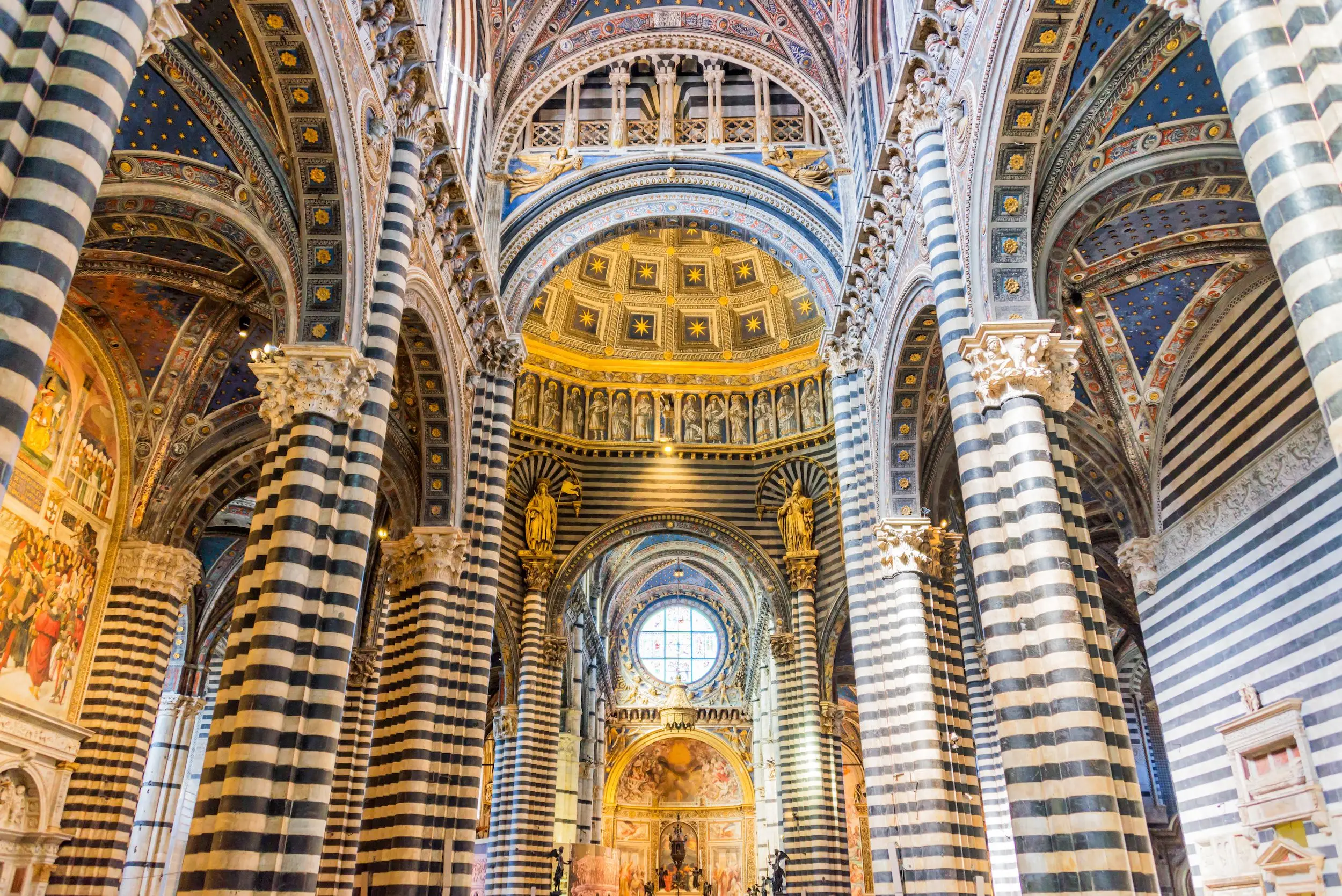
Duomo di Siena

Experience a riot of the senses as you walk into one of Tuscany's most colorful and remarkable cathedrals.

Siena's Duomo is a fabulous conglomeration of Romanesque and Gothic architecture, delineated by encircling bands of black and white marble. It is the earliest of all the great Tuscan cathedrals, having been mostly completed by 1263. Before you enter, take a moment to admire the marble facade and its remarkable statuary. Once inside, you can invest in the audio guide to get the most out of a visit. The standout artistic treasure is the pulpit with columns resting on the backs of alternating lions and lionesses. The Piccolomini Library was added on to the cathedral in 1495 by the future Pope Pius III, and is one of the loveliest rooms in all Italy thanks to its cycle of crystal-sharp, brilliantly colorful frescoes.

6:20 PM — Transfer to Rail Station

Most trains depart from Firenza S.M.N. (i.e. Florence Santa Maria Novella Station) station, the largest station in the city. Before spending money on a transfer, be sure to check whether your hotel is within easy walking distance. Also consider that public transport is the cheapest and sometimes fastest option; trams and buses drop off next to the station. Uber is available in Florence, and if staying at a hotel, they can order a reliable taxi. Some private transfers will even help with your bags.

19:20 - 21:23 — Train to Venice

Your approximately two-hour rail journey to Venice will travel through the famously beautiful countryside of Tuscany and cross the also picturesque regions of Emilia Romagna and Veneto, traversing the Apennine Mountains and passing through historical cities such as Bologna and Padua. The journey is especially convenient since you can take a direct, high-speed train - the Frecciarossa, which reaches speeds of up to 250 miles per hour (400 km/h) and offers maximum comfort.

9:23 PM — Transfer from Rail Station

All trains should arrive in Venice Santa Lucia (Venezia S Lucia) station, the main station in Venice. If by chance your train ends in Venice Mestre Railway Station, that means you have not actually arrived in Venice, and must switch to a train that takes you across the water to Santa Lucia station. Before spending money on a transfer, be sure to check whether your hotel is within easy walking distance. Also, consider that there is no wheeled traffic in Venice. That means you will either need to take a public water bus or pre-book a private water taxi to the dock nearest your hotel. Water buses are very reliable and one-way tickets can be purchased on the spot. Better yet, you can also purchase Venezia Unica Cards or another city pass which includes transport. Private Water Taxis are generally expensive (around 70 euros depending on the distance) but they will take you nearer to your hotel, or if your hotel has a dock, directly to the dock.

image

Day 8

Florence to Venice

image

Day 9

Venice

Day 9

Venice

icon
icon
icon

Morning to Afternoon

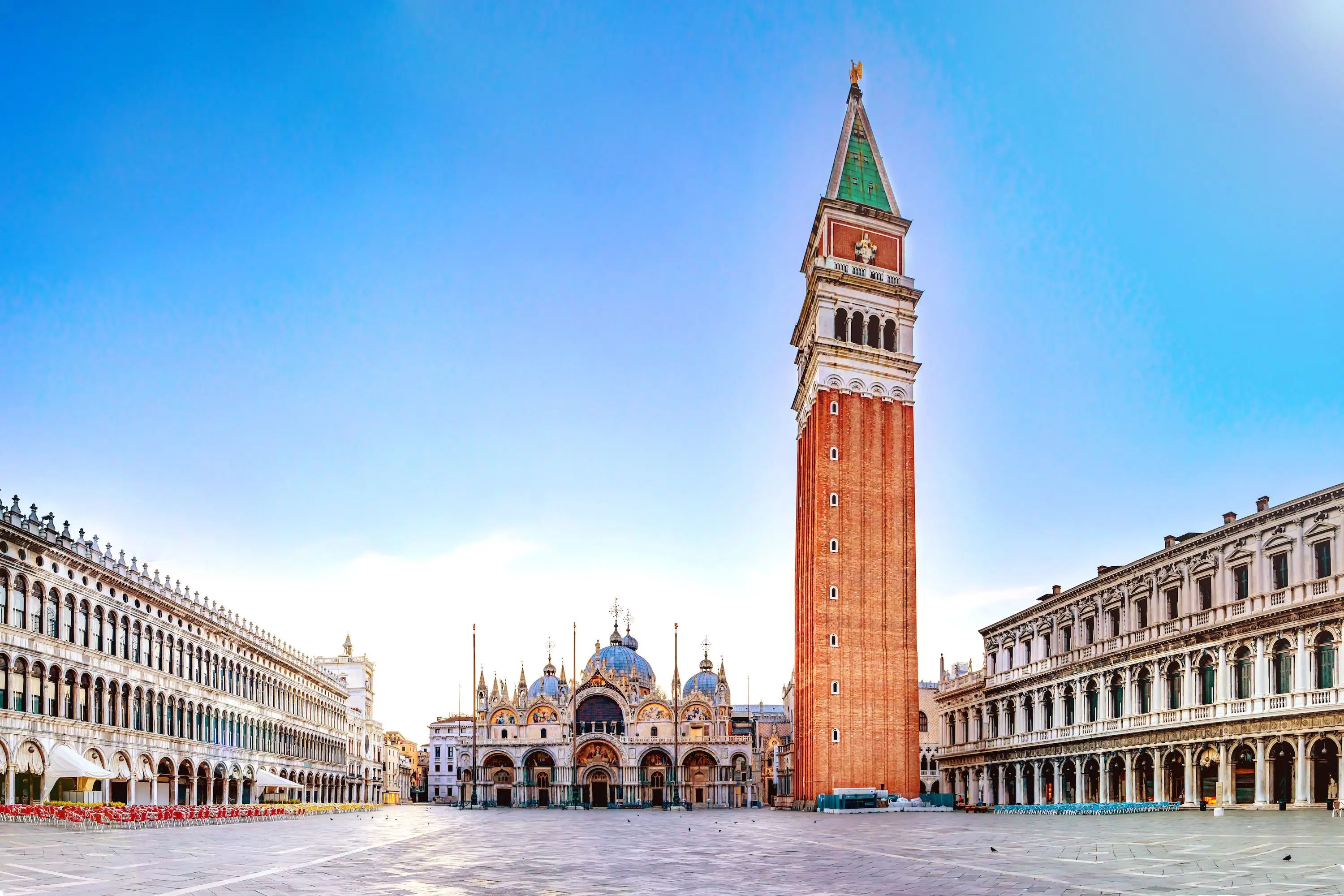
St Mark's Square

St Mark's Square was the embodiment of The Most Serene Republic of Venice's power and prestige, and as such contains its most magnificent public buildings: the extraordinary golden mosaic-encrusted basilica of St Mark's, the exquisite Doge's Palace, the all-seeing bell tower, the Bibliotecca Marciana library, and what is nowadays the famous Correr Museum. If timed correctly, it is possible to see all these sights on your own within half a day, although a guide can make the process much more efficient (and more educational as well). Keep in mind that the square is one of the most heavily touristed places in the world, so crowds and lines can be an issue. St Mark the Evangelist was not the patrion saint of Venice until 829 AD, when two Venetian merchants stole St. Mark's remains from their original resting place in a chuch in Alexandria, Egypt, and then smuggled the relics home trussed up in a canvas sheet. The pretext for the theft was that the Muslim conquerors of Alexandria were expected to defile and plunder the church. While this may have been true, it is no coincidence that bringing such an important saint's relics to Venice was hugely important politically and signaled Venice's place as a rising independent power. A church was built to house the relics, and St. Mark's Square was established as the spiritual and political heart of the city.

St Mark's Square

Morning to Afternoon — St Mark's Square

St Mark's Square was the embodiment of The Most Serene Republic of Venice's power and prestige, and as such contains its most magnificent public buildings: the extraordinary golden mosaic-encrusted basilica of St Mark's, the exquisite Doge's Palace, the all-seeing bell tower, the Bibliotecca Marciana library, and what is nowadays the famous Correr Museum. If timed correctly, it is possible to see all these sights on your own within half a day, although a guide can make the process much more efficient (and more educational as well). Keep in mind that the square is one of the most heavily touristed places in the world, so crowds and lines can be an issue. St Mark the Evangelist was not the patrion saint of Venice until 829 AD, when two Venetian merchants stole St. Mark's remains from their original resting place in a chuch in Alexandria, Egypt, and then smuggled the relics home trussed up in a canvas sheet. The pretext for the theft was that the Muslim conquerors of Alexandria were expected to defile and plunder the church. While this may have been true, it is no coincidence that bringing such an important saint's relics to Venice was hugely important politically and signaled Venice's place as a rising independent power. A church was built to house the relics, and St. Mark's Square was established as the spiritual and political heart of the city.

St Mark's Square Campanile

Ascend this reconstructed cathedral bell tower for amazing views over St Marks Square, St Mark's Basilica and the Venetian lagoon.

Standing at 325 feet (99m) high, the Campanile, i.e. bell tower, of St. Mark's Basilica dominates the city's iconic square. Crowned by a spire that once acted as a lighthouse for Venice's naval ships, the cathedral tower was first built in the 10th century AD but underwent repeated repairs, reconstructions, and additions until reaching its current form in the 16th century. It was also a prominent part of the Venetian penal system as criminals were sometimes subjected to the Supplizio della Cheba (Torture of the Cage), which involved being incarcerated inside a crate that was hoisted up the south side of the tower to be left dangling there for several days or more in all weather. The tower collapsed in 1902, and what you see today is actually an exact replica (with the convenient addition of an elevator). The bell tower is now one of the most visited sights in Venice, offering some incredible panoramic views over the city and its canals. Lines are long, but a ticket can be reserved in advance for an extra few Euros.

St Marks Basilica

Step inside Venice's most sacred and famous landmark and admire the glittering mosaics of the basilica's domes.

Important Note: Entry to the basilica itself is free, but there are huge crowds queuing up outside to see the interior at almost any time of year (waiting times are on average 45min), so we very strongly advise you to purchase a 'skip the line' ticket A private chapel for the use of the Doges, the rulers of Venice, was purpose-built on the site and consecrated in 832 to house the stolen relics of St Mark. Destroyed in a fire, a replica was soon built, but this was in turn superseded by a third structure in 1063-94; the Basilica of St Mark. Today, it is one of the most iconic landmarks in Venice and a sight to behold for all visitors. The glittering mosaics, the golden altar behind St Mark's sarcophagus, its beautiful chapels, and treasury make it a sight you absolutely can not afford to miss.  The stunning golden mosaics lining the interior were begun in the 12th century and work continued on them over the intervening centuries, but much of the exterior and interior decoration is actually art and monuments looted from cities defeated by Venice in its many wars. Many trophies seem out of place in a church, such as the Four Horses of San Marco, which were taken from Constantinople where they had once stood in the Hippodrome (the chariot racing arena). But the Venetians felt that anything which glorified Venice also reflected the glory and intercession of their patron saint, and thus belonged in the Basilica.

Doges' Palace

Explore the staterooms and masterpieces inside this famous Gothic-style Palace.

Important Note: Entry lines can be very long. We suggest taking advantage of skip the line entry. As the name suggests, the Palace was the official residence of the Venetian rulers, the Doges, and the chief magistrates. The building was founded in the 9th century, but the present one dates from the 14th century. Tour its elaborate staterooms, grand halls and the 24-carat golden staircase before seeking out its collection of priceless masterpieces by Venetian artists including Titan, Veronese and Tintoretto. Be sure to spend some time in the most incredible room of all, the Chamber of the Great Council, the assembly hall where all Venetian patricians gathered to participate in the running of the city - up to 2,500 at any one time. There you will find the Doge's throne and the world's longest canvas painting in the world, Tintoretto's Il Paradiso.

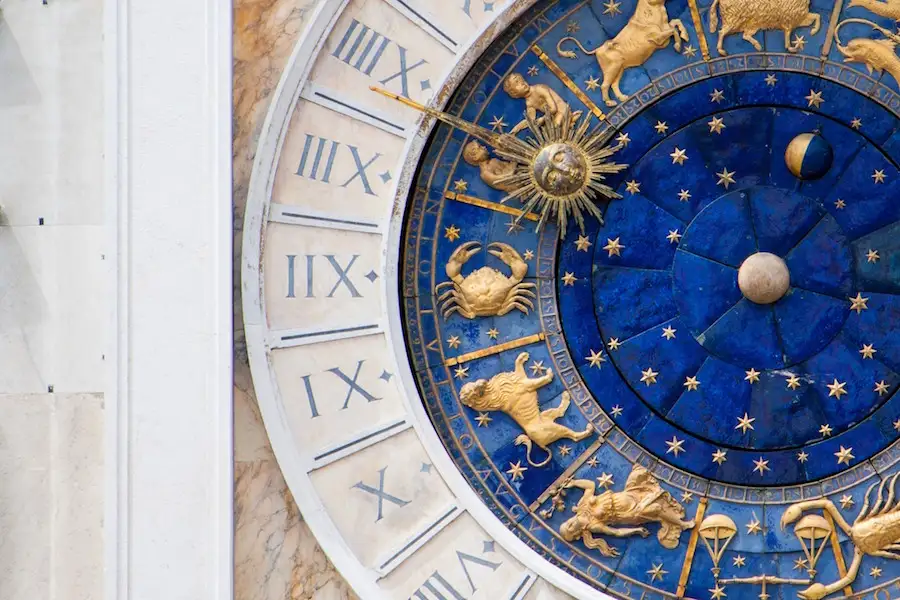
Torre dell'Orologio

Check out a renaissance clock tower dating from 1499.

St Mark's Clocktower or the Moors' Clocktower is one of the most famous historical landmarks in Venice. Originally built during the 15th century, the clocktower features an elaborate clock that displays the signs of the Zodiac and the current phase of the moon. It played an essential part of daily life in historical Venice, with seafarers setting out from the Grand Canal replying on its time to decide when to head out to sea. You'll notice at the top of the tower, two bronze wild men. They ring the bell on the hour. One of the men is old, the other is young, representing the passing of time.

Correr Museum

Take a fascinating journey through the history and art of Venice inside one of its most important museums.

Established in 1830, 33 years after Venice lost its independence, the Museo Correr depicts life and culture in Venice during its glory days of wealth and strength. Somewhat ironically given that the museum is dedicated to Venice's glory, the city's loss of independence made the collection possible, as many formerly wealthy Venetian families were forced to sell their treasures in the difficult conditions. Highlights in the museum include works by the famed Neoclassical sculptor Antonio Canova and a fine art collection that covers the work of many famous Venetian painters of the 13th to 16th centuries. Also fascinating are the collected antiquities from the city's long history, such as ship flags, nautical instruments, books, maps, and coins. 

Library of St Mark

Visit the magnificent monumental rooms of the Marciana Library, one of the oldest public libraries in Venice.

The Sansoviniana library, also referred to as National Marciana Library, is one of the biggest and most important libraries in Italy. Located in a beautiful Renaissance building opposite the Doge's Palace, it holds a number of valuable Greek and Latin manuscripts. The interior is richly decorated, with an impressive ceiling and a collection of Venetian paintings including works by Tintoretto and Veronese. 

2:15 PM - 5:15 PM — 'First Walk', Guided Tour in Venice

If you are a first-time visitor to Venice, the best approach is an introductory tour. This 3-hour private guided walking excursion begins with a selection of the “must sees,” including St. Mark's Square, the former political center of the Venetian Republic, with its many famous buildings: the Doges' Palace, the Bridge of Sighs, the Marciana Library, the Bell Tower, and the Clock Tower. You'll end your tour in the Rialto neighborhood next to the famous Rialto Bridge.

Doges' Palace

Explore the staterooms and masterpieces inside this famous Gothic-style Palace.

Important Note: Entry lines can be very long. We suggest taking advantage of skip the line entry. As the name suggests, the Palace was the official residence of the Venetian rulers, the Doges, and the chief magistrates. The building was founded in the 9th century, but the present one dates from the 14th century. Tour its elaborate staterooms, grand halls and the 24-carat golden staircase before seeking out its collection of priceless masterpieces by Venetian artists including Titan, Veronese and Tintoretto. Be sure to spend some time in the most incredible room of all, the Chamber of the Great Council, the assembly hall where all Venetian patricians gathered to participate in the running of the city - up to 2,500 at any one time. There you will find the Doge's throne and the world's longest canvas painting in the world, Tintoretto's Il Paradiso.

Early Evening — The Grand Canal

Snaking through the heart of Venice, the Grand Canal is the main artery of Venice. Flanked by Gothic, Renaissance and Moorish palaces, a trip down the Canal is often the highlight of many people's trip. While the Gondola is the most romantic option, many opt for the less glamorous but equally as enjoyable ride on the 3.8 kilometres Water Bus Line 1, which passes some 50 palazzi and passes underneath the famous Rialto Bridge.

Rialto Bridge

Walk over or ride under the most famous bridge on the Grand Canal.

The 16th-century Rialto Bridge is the most iconic bridge in Venice. With a width of other 75 feet (23m) and span of over 100 feet (31m), the wide stone footbridge crosses over the Grand Canal and connects the San Marco and San Polo districts. It stands on the spot of an earlier wooden drawbridge which collapsed under the weight of a crowd gathered on it to watch a wedding procession. It took almost 150 years before the current Rialto bridge was built, this time in stone, and thus still stands as a symbol of the city. Surrounded by tourist shops and pricey restaurants, it sits on 12,000 wooden pilings and will be forever immortalised in millions of photographs as the backdrop to the classic Venetian photo shot, which captures the city's gondolas as they ferry lovers around the Grand Canal. While for many a gondola ride is a must-do experience in Venice, it's also possible to admire the bridge on foot. For a less-pricey way of seeing it from the water, you can always take the Number 1 local Vaporetto (water bus) and see the bridge as you pass underneath. 

Ca'd'Oro

Admire the elaborate 15th-century Gothic facade of this famous building along the Grand Canal.

The fifteenth-century Gothic and Renaissance style building is known as the house of gold because it once covered in gold leaf decoration. Despite the loss of the gilt facade, it is still one of the Venice’s most striking buildings and its best preserved Gothic palace. It can be appreciated from the Grand Canal but for those who want a closer look, it also houses the Galleria Giorgio Franchetti, a small art museum with a lovely restored interior. Just as good as the art is the opportunity to admire the lovely courtyard and to stand on the loggia above the Grand Canal and take in the view.

image

Day 9

Venice

image

Day 10

Venice

Day 10

Venice

icon
icon
icon
icon

Morning/Mid-Day

San Polo District

The graceful arch of the Rialto Bridge is perhaps the single most iconic sight in Venice since nearly everyone passes beneath it on their journey along the Grand Canal. It connects Venice's two most visited districts, San Marco and San Polo. While San Marco is famous for St. Mark's Square, San Polo more than holds its own as a must-see destination, as it contains some of the city's oldest neighborhoods and most picturesque canals and bridges. It is also home to some of the best restaurants in Venice, and admittedly some of its worst tourist traps as well. Among many highlights is the bustling Rialto Market, which was once one of medieval Europe's busiest financial and trade markets, and still does a brisk trade in fresh seafood and produce.
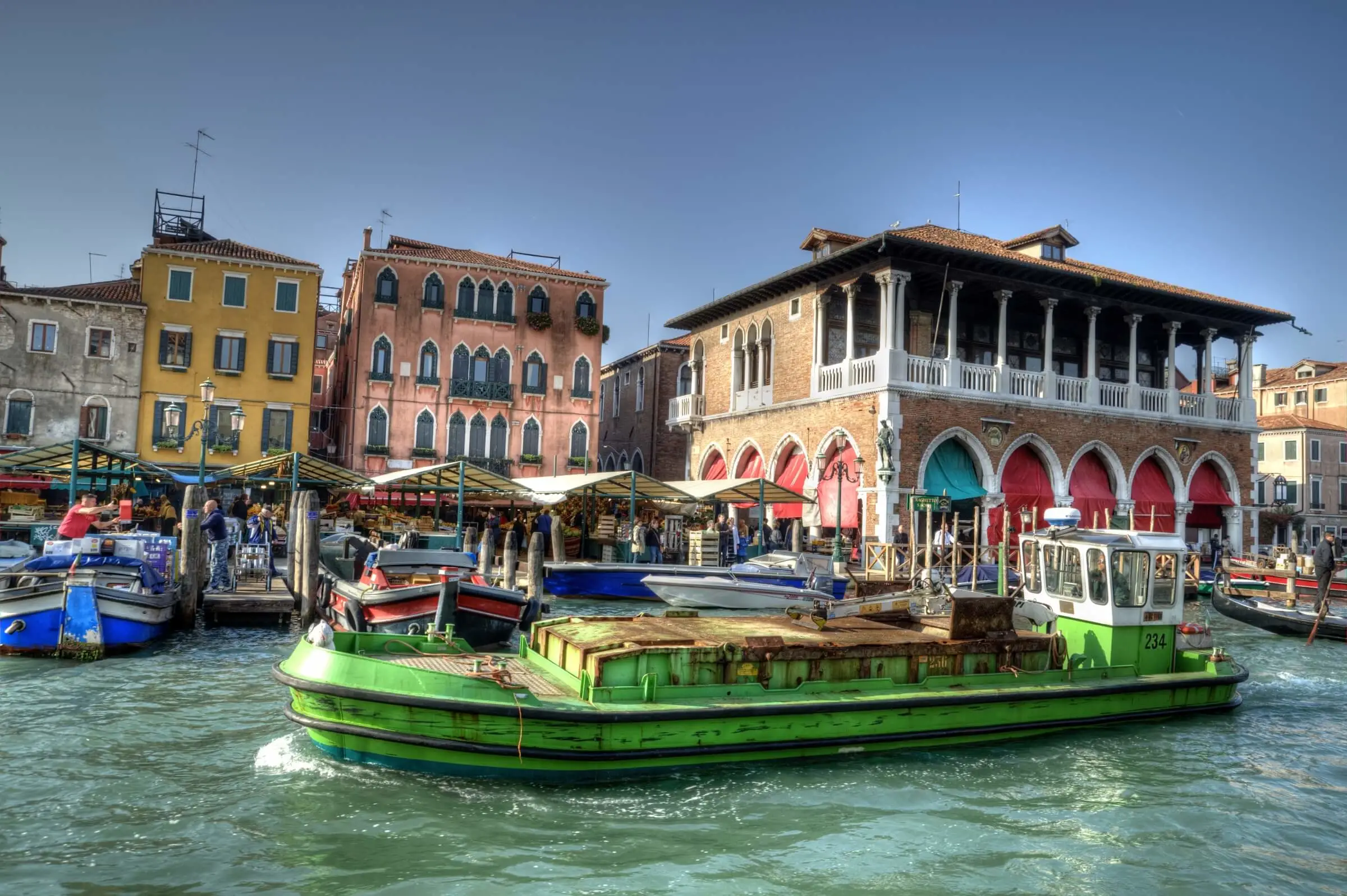
San Polo District

Morning/Mid-Day — San Polo District

The graceful arch of the Rialto Bridge is perhaps the single most iconic sight in Venice since nearly everyone passes beneath it on their journey along the Grand Canal. It connects Venice's two most visited districts, San Marco and San Polo. While San Marco is famous for St. Mark's Square, San Polo more than holds its own as a must-see destination, as it contains some of the city's oldest neighborhoods and most picturesque canals and bridges. It is also home to some of the best restaurants in Venice, and admittedly some of its worst tourist traps as well. Among many highlights is the bustling Rialto Market, which was once one of medieval Europe's busiest financial and trade markets, and still does a brisk trade in fresh seafood and produce.

Rialto Bridge

Walk over or ride under the most famous bridge on the Grand Canal.

The 16th-century Rialto Bridge is the most iconic bridge in Venice. With a width of other 75 feet (23m) and span of over 100 feet (31m), the wide stone footbridge crosses over the Grand Canal and connects the San Marco and San Polo districts. It stands on the spot of an earlier wooden drawbridge which collapsed under the weight of a crowd gathered on it to watch a wedding procession. It took almost 150 years before the current Rialto bridge was built, this time in stone, and thus still stands as a symbol of the city. Surrounded by tourist shops and pricey restaurants, it sits on 12,000 wooden pilings and will be forever immortalised in millions of photographs as the backdrop to the classic Venetian photo shot, which captures the city's gondolas as they ferry lovers around the Grand Canal. While for many a gondola ride is a must-do experience in Venice, it's also possible to admire the bridge on foot. For a less-pricey way of seeing it from the water, you can always take the Number 1 local Vaporetto (water bus) and see the bridge as you pass underneath. 

Rialto Markets

Experience the sights, tastes, and smells of Venice's historic "Pescaria" fish market, as well as the fresh produce market.

Located close to the Rialto Bridge stands the Rialto Market, "the incomparable fish market of Venice, a glorious wet, colorful, high-smelling concourse of the sea, to which in the down hours fleets of barges bring the day's supply of sea-foods" (Jan Morris). Established well before the bridge was built, Venice's iconic market is a sight to behold, with colourful vegetable stalls and loud market vendors touting for business. It is a great spot for photographs and of course for a taste of the freshly caught fish with a host of appetising snacks on offer. Adjacent to the fish market you'll find a produce market, which is also important for a city which demands fresh ingredients for its cuisine. Keep in mind that the markets close at 1pm, and both markets are closed on Sundays (the fish market is also closed on Mondays).

Frari Church

Step inside this inconspicuous Gothic 15th-century church to discover some of Venice's most famous tombs and artwork.

The relatively austere brick Gothic Church of Santa Maria Gloriosa dei Frari holds many surprises. It has the second tallest campanile in Venice after St Mark's, and contains numerous masterpieces of painting and sculpture by the likes of Titian, Bellini and Donatello, plus a number of important doges' tombs, as well as Titian's tomb. Titian's majestic painting of The Assumption in the sanctuary, with its dramatic movement and coloring, is the work that established Titian's reputation as one of the greatest of all Italian painters. Even if you feel you've seen too many churches already, this one is definitely worth visiting and we recommend investing in the audio guide to get the best out of your time here.

Scuola Grande di San Rocco

Visit this underrated art museum featuring works by the famed Renaissance artist Tintoretto.

Next door to the Frari, one of the most magnificent of Venice's charitable associations, The Scuola Grande di San Rocco is one of the most magnificent of Venice's charitable associations. The building was completed in 1560, and Tintoretto won a competition held to select an artist to decorate the interior. Over the next 23 years, he executed an incomparable series of paintings that cover the walls and ceilings. According to the writer Jan Morris, "no collection of sacred pictures is more overwhelming of impact than the immense series of Tintorettos in the Scuola [...] - often dark, often grandiose, often incomprehensible, but culminating in the huge masterpiece of the Crucifixion, which Velazquez humbly copied, and before which, to this day, you may still see strong men moved to tears."

1:15 PM - 1:45 PM — Gondola Ride

The gondola is no doubt one of the most universally known symbols of Venice; this elegant, elongated black wooden boat inspired innumerable writers & poets and was used by rich & famous people of any age. From Lord Byron to Hemingway, from Elton John to George Clooney, they’ve all been on a gondola ride! Now it is your turn to be rocked down the ancient, peaceful canals, while your gondolier will tell you about the construction of gondola itself and the meaning of the strangely shaped iron on its bow. Venetian palaces will appear to you in all their charm, as the fanciest facade is always the one facing the water!

Afternoon to Early Evening — Murano & Burano

Explore the intricacies of two famed Italian handicrafts with a day trip from Venice to the nearby islands of Murano and Burano. Stop by a glass factory or two and watch a live demonstration of glass artisans at work on the island of Murano, before hopping over to Burano, known for its brightly colored buildings and lace making, a tradition that dates back to the 16th Century.  Both quiet islands offer a peaceful retreat from the often tourist filled squares of Venice's mainland. You can easily reach them by taking a guided tour or simply by catching the Vaporetto. It only takes about ten minutes to reach Murano from the F.te Nove stop, and another 30 minutes to reach Burano. Once arrived you will surely enjoy the laid-back island havens, both with their own Grand Canals, colorful buildings and a host of fascinating workshops, showrooms, and picturesque sidewalk cafes.

Glass Museum & Murano's Glass-Making Factories

See a superb collection of Venetian glass inside the Museum of Glass, and then stop by one of the island's workshops for a live demonstration.

Primarily known as the island of glass-making, Murano has sat at the epicenter of creative glassmaking for centuries. In the late 13th century Venice's Government deemed it too dangerous to have open furnaces in the city, as they posed a huge fire risk to a confined island city whose buildings were often made entirely of wood. Glass production was moved to the nearby island of Murano, and here the industry prospered. The Museum of Glass is housed inside an ancient palace and boasts a large collection of Murano glass, including world-class masterpieces by artists as Venini, Zecchin and Carlo Scarpa. Meanwhile, many of the island's workshops have belonged to the same families for centuries. Several furnaces are open to the public and you can watch short demonstrations. Be aware many also follow with a hard sales pitch, but you are never obligated to buy anything. A few tips: 1) The farther away from the Colonna Waterbus stop you walk—toward the glass museum and the Basilica of Santi Maria e Donato—the better the values. 2) Some glass houses—especially Barovier & Toso, Moretti, Pauly, Seguso, and Venini—command higher prices than others because of the quality of their work and the long tradition behind their names.  3) Shipping delicate pieces home can prove both costly and hazardous. If you do, don’t forget to get the seller’s email address, record the tracking number, and insure, insure, insure.

Museum of Lace (Museo del Merletto)

Observe firsthand one of the world's oldest and most famous traditions of lace making.

Burano is historically a fishing village known for its handcrafted lace and technicolor houses. The legend goes that a sailor was lured to the island by a beautiful mermaid. She splashed her tail and created intricately patterned sea spray which she used as her wedding veil for her upcoming nuptials to the sailor. The village girls were very jealous of her veil and did their best to replicate the airy patterns with needle and thread, thus beginning Burano’s tradition of handcrafted lace. The Museo del Merletto was established in 1978 in the former gothic palace of the magistrate of Torcello. Inside the museum you can observe not only how the famous lace is made, but also learn about its history. You'll see artefacts from the collection of the Lace School of Burano, which occupied the building during the late 19th century.

Burano's Colorful Houses

Take a walk through Venice's most colorful island and enjoy the unusual sight of its brightly-painted flourescent houses.

Burano is filled with colorful houses famous for their fluorescent shades. The colors are heavily regulated in Burano (you have to write for permission before painting) and their origins disputed. Some say the houses were painted brightly so fisherman returning from the sea could spot their houses through the thick fog. A less romantic version say the houses were painted distinctively so fishermen could find their way home after a night on the town.

Evening/Late Evening — Zattere

The Fondamenta delle Zattere in the Dorsoduro sestiere (district) is a beautiful promenade with many bars, restaurants and ice cream parlors. It has a great view across the Giudecca Canal and therefore makes for a lovely evening out to enjoy some Venetian cuisine and wines from the Veneto region. The nearby canals of Dorsoduro are also home to myriad bars and al fresco dining venues in the summer months.

image

Day 10

Venice

image

Day 11

Venice

Day 11

Venice

icon

Morning to Early Evening

Verona

Fair Verona, located just to the east of Lake Garda, is renowned for its beauty, its numerous buildings of immense artistic and historic value, and, of course, for its legendary story of Romeo and Juliet. There is more to Verona than just the Shakespearean tale, however. It is also home to one of the best preserved first-century amphitheaters in the world, as well as to a bustling historical center full of markets, boutique shops, and some fantastic eateries in which a stop for a taste of the regional wine is a must. Verona is an easy trip, as the fastest trains reach Verona in less than 75 minutes, and the historical heart of the city is only 1.2 miles (2 km) from the train station. There is a bus that connects the station to the central square, Piazza Brà. Verona's Old Town is surrounded by the River Adige on three sides, and many of its key attractions are located within a tightly-bound area of pedestrian-only streets. This makes exploring the city on foot very easy, which is a good thing since there is no public transport in the historical center.

Verona

Morning to Early Evening — Verona

Fair Verona, located just to the east of Lake Garda, is renowned for its beauty, its numerous buildings of immense artistic and historic value, and, of course, for its legendary story of Romeo and Juliet. There is more to Verona than just the Shakespearean tale, however. It is also home to one of the best preserved first-century amphitheaters in the world, as well as to a bustling historical center full of markets, boutique shops, and some fantastic eateries in which a stop for a taste of the regional wine is a must. Verona is an easy trip, as the fastest trains reach Verona in less than 75 minutes, and the historical heart of the city is only 1.2 miles (2 km) from the train station. There is a bus that connects the station to the central square, Piazza Brà. Verona's Old Town is surrounded by the River Adige on three sides, and many of its key attractions are located within a tightly-bound area of pedestrian-only streets. This makes exploring the city on foot very easy, which is a good thing since there is no public transport in the historical center.

Giardino Giusti

Take a break in one of Verona's most beautiful and historic gardens.

A litle ways from the center you'll discover an enchanting and relaxing retreat, the Giardino Giusti. These gardens are named after the Giusti family, which first used the property for wool dyeing in the 15th century. In the 16th century, the now quite wealthy family decided to use part of the property for more refined purposes, and a formal Renaissance garden was laid out, with maze-like short hedge rows, cypress trees, fountains, and grottoes.

Casa di Giulietta

Visit the fictional setting of Shakespeare's tale of the star-crossed lovers Romeo and Juliet.

Shakespeare never set foot in Verona, yet his legendary tale lives on. The restored medieval building with its 1930s balcony opens into a courtyard of giggling teenagers and chattering tourists. Its bronze statue of Juliet is kept shiny by hundreds of thousands of hands who touch her right breast for good luck. Inside the house, period furniture and cinematic memorabilia are often overlooked by the hordes of tourists in line for the must-have "balcony" photograph.

Piazza dei Signori

Be sure not to miss this oft-overlooked historic square surrounded by beautiful buildings.

Lined by notable buildings and historic palaces, this public square is often overlooked by tourists. That is a shame as it is not only one of the most historic spaces in the city, but also one of the most elegant. Lining the square you'll see a number of buildings intricately tied to the city and its historic governance, such as the courthouse and the Scala Family Palace. In the center of the square you'll discover a monument of Dante, who spent seven years in Verona during his exile from Florence. 

Roman Arena

Stand in a first century Roman amphitheatre that is so well preserved that it hosts concerts even today.

From gladiators to grand summer operas, this magnificent first-century Roman Arena, sitting in the heart of the city, has seen it all. In its heyday (circa 130-1100 AD), the arena could seat 30,000 spectators and was one of the biggest of its kind in the world. These days it hosts one of the most famous opera festivals in the world between June and September. While there’s little to see inside except the impressive stonework, it is quite an experience to visit a Roman arena that is still a thriving concert venue. Indeed, for many, the arena is more memorable than even the ruins of the Colosseum in Rome, simply because it is so intact. Indeed, when stepping inside the arena, you can truly feel as if you are experiencing the same venue that specators visited two thousand years ago. If you climb to the top, you’ll also enjoy great city views.

Torre dei Lamberti & Piazza delle Erbe

Climb to the top of the 275 feet (84m) high medieval tower overlooking the heart of historic Verona.

The Torre dei Lamberti is Verona's tallest Medieval tower, built by the Lamberti family in 1172. The red-brick clock tower dominates the Piazza delle Erbe that sits below, and defines Verona's medieval skyline. As such it is a popular tourist attraction, with visitors heading to the top of the tower to admire the 360-degree panoramic views over the city and the 13th-century bells in the belfry. The Piazza delle Erbe, meanwhile, is one of the most beautiful squares in the city. What used to be a Roman forum and later a medieval marketplace, the square is now home to a number of cafes, souvenir stalls, and the Madonna Verona fountain, which dates back to the time of Roman rule.

image

Day 11

Venice

image

Day 12

Depart Venice

Day 12

Depart Venice

icon

To Be Determined

Transfer to Airport

Most visitors will depart from the Venice Marco Polo Airport, which is located just across the water on the mainland. Because of the impossibility of driving inside Venice, you will need to take a water bus to Piazzale Roma on the edge of the city and then a land taxi to the airport (40 EUR), or take a water bus directly to the airport (15 EUR). It is also possible to take a private water taxi directly from your hotel to the airport, but it's very expensive. If you are departing from Venice Treviso Airport, you have much further to go. You can either take an expensive taxi ride (about 100 EUR) or take a shuttle bus for 12 EUR. The ATVO line departs from Piazzale Roma and takes 70 minutes, while the Barzi line picks up at the less convenient Tronchetto (the docks) but only takes 40 minutes.

Transfer to Airport

To Be Determined — Transfer to Airport

Most visitors will depart from the Venice Marco Polo Airport, which is located just across the water on the mainland. Because of the impossibility of driving inside Venice, you will need to take a water bus to Piazzale Roma on the edge of the city and then a land taxi to the airport (40 EUR), or take a water bus directly to the airport (15 EUR). It is also possible to take a private water taxi directly from your hotel to the airport, but it's very expensive. If you are departing from Venice Treviso Airport, you have much further to go. You can either take an expensive taxi ride (about 100 EUR) or take a shuttle bus for 12 EUR. The ATVO line departs from Piazzale Roma and takes 70 minutes, while the Barzi line picks up at the less convenient Tronchetto (the docks) but only takes 40 minutes.

image

Day 12

Depart Venice

What's Included In Grand Italian Classics Trip

Fork

Pre-Paid Tours and Activities:

  • Heart of the Empire - Private Tour of Ancient Rome & the Colosseum
  • Half Day Excursion to San Gimignano and lunch stop at a local vineyard
  • 'First Walk' Guided Tour in Venice
  • Private Gondola Ride
  • City Card for Rome, including discounts to many popular attractions
train

Pre-Paid Transportation:

  • 2nd Class Train Tickets from Rome-Florence
  • 2nd Class Train Tickets from Florence-Venice
  • Public Transport Tickets for Venice and Rome
  • Private Transfer from Rome Fiumicino to Hotel
  • Private Transfer to Rome Termini Train Station
train

Accommodation:

  • 4 nights at a hotel of your choice in Rome
  • 3 nights at a hotel of your choice in Florence
  • 4 nights at a hotel of your choice in Venice
mobile

Go Real Travel Mobile App:

  • Itinerary Plan & Reservations Info
  • Points of Interest
  • Detailed Travel Information
  • Maps & Directions

Other Trips You May Like

Trip image

10 Days

From$2600USD

Eternal Italy: A Family Journey Through History in Rome, Florence & Venice

View Trip
Trip image

10 Days

From$4033USD

Dreaming the Italian Classics: A 10-day voyage through Rome, Florence & Venice

View Trip
Trip image

14 Days

From$3559USD

2-Week Tour of Rome, Florence, Venice, & Italy's Scenic Countryside

View Trip
Trip image

7 Days

From$2139USD

Essential Italy: Rome, Florence & Venice in 7 Days

View Trip
Trip image

8 Days

From$2424USD

The Ultimate Italian 8-Day Adventure: Rome, Florence and Venice

View Trip
Trip image

10 Days

From$4600USD

Italian Highlights and Culinary Delights with Gabriella-Maria

View Trip
Trip image

14 Days

From$3847USD

The Essence of Italy: From Ancient Wonders to Scenic Beauty

View Trip
Trip image

12 Days

From$2999USD

Relaxed Winter Trip to Italy: Venice, Milan, Florence, & Rome

View Trip
Trip image

15 Days

From$4266USD

Italian Elegance: 15 Days of Wine, Dine & Cultured Shine

View Trip

Featured Blogs

Trip image
Italy
Romantic

The 8 Most Romantic Places You Should Visit in Italy

Trip image
Europe
Romantic

16 Most Romantic Destinations in Europe

Trip image
Europe
Seasonal guide

10 European Cities to Visit in Winter

Trip image
Italy
Villages

12 Most Beautiful Towns and Villages in Tuscany

Trip image
Europe
Family

How to Plan the Perfect Family Trip to Europe

Trip image
Europe
Travel tips

11 Tips for First Time Travelers to Europe

Trip image
Europe
Booking flights

What’s The Best Time to Book International Flights to Europe?

Our Customers Say It Best

Malini Dutta, Boston, Massachusetts
We can't thank you enough for the detailed plans, maps, and suggestions. It really felt that someone was holding our hands and showing us around. We had all the excitement of discovering foreign lands, with none of the problems that can happen while negotiating unfamiliar places. In fact, all the cities felt like home within a few hours of arriving and exploring.
Bev and Mark Frankel, Williamsburg, Virginia
We could not be more pleased with Go Real Travel! You took the guess work out of things like public transport but still managed to allow us the freedom to tour as we wanted. Our guides were exceptional and every time I saw a Viking Cruise tour of 25 people, I realized the quality experience we were getting with Go Real.
Marianne Strydom, Paarl, South Africa
I just wanted to thank you for organizing an amazing trip for me – I packed in so much in such a short period of time and everything was just perfect. The way you do things makes it possible to really get to know the destination, which for me as a travel agent could not have been better.
Otto Chuy, Los Angeles, California
I am still surprised how everything worked as planned, without a hitch. All instructions in your itinerary were precise and correct. Your suggestions and comments in each of the locations we went to were very helpful. All your guides, without exception, were wonderful and exactly on time.

Explore cities in more detail

sunset over colosseum in rome italy

Rome

One of the must-sees of Italy, and indeed all of Europe, Rome is a city with history flowing through its veins. There is an endless amount to see, do, and learn here, with something for every taste and disposition. Rome was the center of Western civilization for a Millenium and during that time, accumulated a list of historical and cultural treasures that no other destination can truly match. The Pantheon, Colosseum, Roman Forum, and Cirus of Maxentius are just a few examples of what can be seen and experienced in Rome, which at times feels more like a giant outdoor museum than a city. At Rome’s heart, you’ll find the Vatican, home of the Roman Catholic Church and the Pope. Here visitors can see the legendary Sistine Chapel. Transcending a mere building, the chapel is a walk-in work of art. Although historical sights can be found on just about every corner, it’s entirely possible to fill a day just wandering around Rome. The city’s charming streets and open Piazzas are filled with beautiful sights and places to sit, grab the best Cappuccino in the world, and enjoy the view.

Florence Italy Skyline with Duomo

Florence

Culture and history are thick in the air in Florence. Located on the banks of the Arno River in Tuscany, Florence’s past is deeply compelling. The birthplace of the Renaissance, Florence is where innovators like Dante, Machiavelli, Michelangelo, and Da Vinci made their fortunes. Centuries of art, politics, and commerce have left their mark on every stone in this Northern Italian city.  In the 15th and 16th centuries, Florentine banks funded new enterprises that went on to change the history of the world. Powerful families like the Medici’s financed some of the finest art in history and pioneered new ways of doing statecraft and politics. As you stand in the Piazzale Michelangelo and gaze upon the city below it’s hard to take it all in at once. It feels like behind every door in Florence might hide a work of genius. Michelangelo’s David and Botticelli’s Primavera can be found just a short walk away. After a long day wandering the streets and gazing at art, fueled by exquisite coffee and gelato, relax like the locals do: with a glass of some of the best wine in the world.

gondola ride on a canal in venice italy

Venice

Venice is a city with no equal. Built on a series of islands on a lagoon, it was once a powerful city-state. Echoes of that old magnificence can be seen everywhere here, from the stunning buildings that rise out of the canals, to the bridges that arc across them.   Take a Gondola ride through the canals that form the city’s veins, or wander through the winding streets drinking in the sights. You’ll see Venice attracts tourists in huge numbers, and that’s with good reason. It’s home to a seemingly limitless amount of art, culture, history, and architecture. St Mark’s Basilica, the Doge’s Palace, and the Campanile di San Marco just barely scratch the surface. There’s a 700-year-old market, Rialto, which is still open today. The Ponte di Rialto bridge connects the neighborhoods of San Marco and San Polo, stretching across the Grand Canal.   Venice has weathered the last several centuries with elegance and pride, a place that will surpass even your highest expectations.

lion monument in front of milan cathedral in italy

Milan

Milan is Italy’s most forward-looking city. An international center for fashion, fine dining, and design, it seems as though Milanese people breathe style. From the gleam on your wine glass to the twists of its cathedral’s spires, everything in Milan is finished to perfection. Home to the Italian stock exchange, a world-famous fashion industry, and a frantic business district, Milan is fast-paced and commercially minded. The shopping in Milan is second to none. At the Galleria Vittorio Emanuele II, one of the world’s oldest shopping malls, a glass-iron ceiling soars over brands like Louis Vuitton, Gucci, Massimo Dutti, and Amani. Along with the fashion, Milan’s cathedral, castle, and canals are also must-sees. But to view the city’s most prized possession - Leonardo da Vinci’s Last Supper, you must make an appointment. Tickets to view this mural sell out weeks in advance. It is truly a bucket-list worthy work of art. After a day taking in all the glamor and culture, take a seat in one of Milan’s well-appointed eateries. The Navigli Quarter is packed with restaurants, bars, and cafes, perfect for a relaxed Aperol spritz or pizza along the city’s canals. 

Colorful Buildings of Manarola Village in Cinque Terre

Cinque Terre

Cinque Terre, a string of five fishing villages in the Liguria region of Italy, is a rare snapshot of a traditional way of life. Rustic and charming, these clusters of pastel houses clinging to steep Mediterranean cliffs hold a special allure.   Hiking between the five villages is a popular way to experience the rugged Mediterranean landscape close up. There are no roads here — the only other way to get between the villages is by boat or train.   Seafood, hauled in from the azure waters of the sea that laps against the rocky shore, is abundant and delicious here. It pairs well with the local wine, and perhaps a plate of olives. Cinque Terre is a place to take it slow, to breathe in the fresh sea air and bask in the balmy climate, many miles from the chaos and frenzy of the modern world.
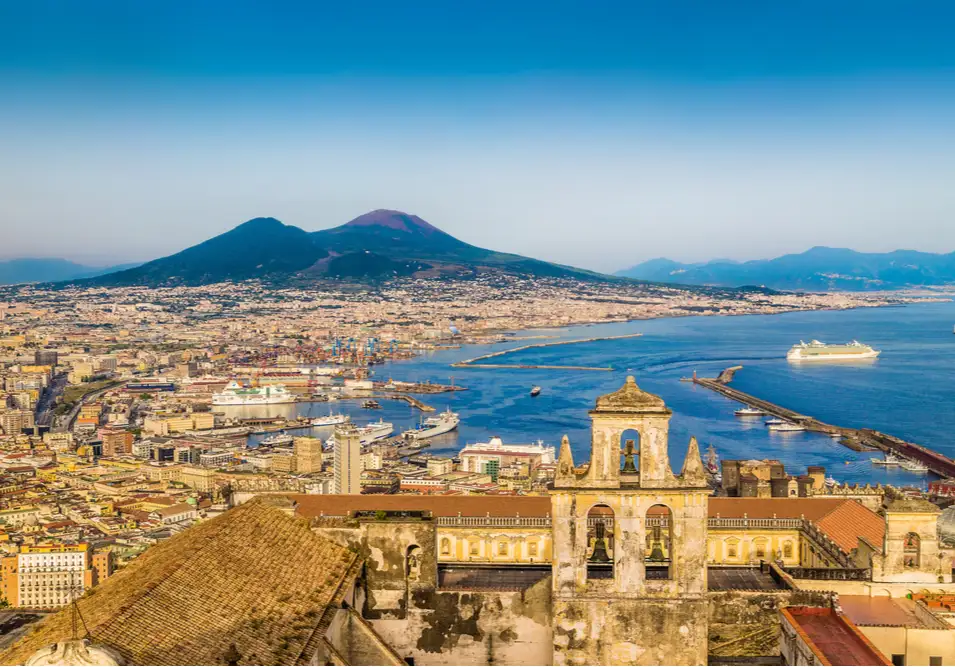
view of naples italy and mount vesuvius

Naples

Gritty and chaotic Naples calls to travelers who want to experience the real Italy. Pressed along the coast of Campania, hilly Naples is jammed with maze-like streets, strung with outdoor clotheslines, descending toward the sea below. A much deserved UNESCO World Heritage site, Naples is famous for its churches, museums, castles, and catacombs. As you navigate the city, you’ll find yourself immersed by its culture and history.  You can easily occupy a full day gazing at churches like the Naples Cathedral, San Francesco di Paola, and Cappella Sansevero.   If you cast your eyes toward the Gulf of Naples, you’ll see Mount Vesuvius looming over the harbor. This foreboding volcano erupted in AD 79. Not far from the inner city — less than an hour by train — you’ll find the ancient town of Pompeii, its dramatic ruins still preserved in ash from the eruption. One of the best things you can do in Naples is to eat. This is the city where pizza was born. Propped up by its ripe tomatoes, local cheeses, and fresh fish, food from Naples has come to define what many see as the height of Italian cuisine. Everything you taste in Naples seems like a delicacy. Authentic and vivid, Naples is a true Italian city where the ancient world meets the modern-day with a bang.