👋

Hi! Need help planning your dream trip? 🌍

Go Real Travel Assistant

Online

Welcome! Where are you in your journey?

Pick the option that fits you best so we can route you to the right help.

Historic Streets & Seaside Wonders: The Ultimate Madrid to Lisbon Escape

destination-icon7 Day Tour of Madrid and Lisbon

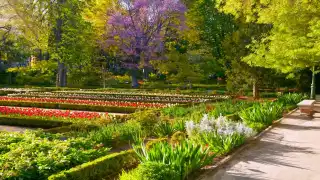
Retiro Park Madrid Spain
Setúbal Beaches
El Escorial Madrid
skyline with coulourful buidlings in the Alfama district of Lisbon, Portugal
image
arrowLightLeft
arrowLightRight
calendar-icon
7 Days 6 Nights
calendar-icon
Best Time: Jan-Dec
building-icon
Beach Lovers
family-icon
History Buffs
Set off on a 7-day journey from Madrid to Lisbon, where historic cityscapes meet sun-kissed coastlines. Enjoy a private tour of Spain’s Royal Palace, wander Madrid’s lively streets, and savor authentic tapas. Then, explore Lisbon’s charming alleys, unveiling the majestic Lisbon Cathedral and iconic Belem Tower. Private guided tours provide deep cultural insights, while our mobile app offers expert travel guidance for a seamless experience
  • Explore Retiro Park and marvel at Madrid's Royal Palace, a symbol of Spain's imperial grandeur
  • Experience Madrid’s heritage on a day trip to El Escorial, where history meets modern life
  • Walk Lisbon’s winding streets from Graça to Alfama, immersing yourself in centuries of history
  • Discover culture and history at the National Tile Museum, then enjoy Setúbal’s scenic seaside charm
  • Finish in Belem, where Jerónimos Monastery and Belem Tower honor Portugal's Age of Discovery.
Set off on a 7-day journey from Madrid to Lisbon, where historic cityscapes meet sun-kissed coastlines. Enjoy a private tour of Spain’s Royal Palace, wander Madrid’s lively streets, and savor authentic tapas. Then, explore Lisbon’s charming alleys, unveiling the majestic Lisbon Cathedral and iconic Belem Tower. Private guided tours provide deep cultural insights, while our mobile app offers expert travel guidance for a seamless experience
  • Explore Retiro Park and marvel at Madrid's Royal Palace, a symbol of Spain's imperial grandeur
  • Experience Madrid’s heritage on a day trip to El Escorial, where history meets modern life
  • Walk Lisbon’s winding streets from Graça to Alfama, immersing yourself in centuries of history
  • Discover culture and history at the National Tile Museum, then enjoy Setúbal’s scenic seaside charm
  • Finish in Belem, where Jerónimos Monastery and Belem Tower honor Portugal's Age of Discovery.
European Adventure
The Royal Palace
UNESCO World Heritage
Scenic Europe
Prado Museum
Museums & Galleries
Exploring European Beauty
The Gran Via
ArchitectureCultural
Traveling Through Europe
Retiro Park
Parks & Gardens
European Wonders
Plaza Mayor
ArchitectureHistoric Landmarks
Captivating European Destinations
Baixa
Neighborhood
Picturesque Europe
Praça do Comércio
Architecture
European Charm
Jerónimos Monastery
Discovering Europe's Treasures
Belém Tower
Architecture

Must see sights

European Adventure
The Royal Palace
UNESCO World Heritage
Scenic Europe
Prado Museum
Museums & Galleries
Exploring European Beauty
The Gran Via
ArchitectureCultural
Traveling Through Europe
Retiro Park
Parks & Gardens
European Wonders
Plaza Mayor
ArchitectureHistoric Landmarks
Captivating European Destinations
Baixa
Neighborhood
Picturesque Europe
Praça do Comércio
Architecture
European Charm
Jerónimos Monastery
Discovering Europe's Treasures
Belém Tower
Architecture
Loading...

Starting from

$1700

per person

no-flightNot included

Secure Your Customizable Trip

Enter your details to embark on a journey that can be tailored just for you.

Start

Travelers

0 travelers
Add Room
Remove Room

Preferred Hotel Stars

Select Hotel Stars
Craft Your Own Itinerary

Select your interests and destinations for a trip plan inspired by you.

Iberian Capitals Escape Trip - Map & Itinerary

Enable/Disable Map Scrolling

Click To Make Map Interactive

Iberian Capitals Escape Trip Timeline

Arrival

3 nights

Madrid

Spain

Air: 1h25m

3 nights

Lisbon

Portugal

Departure

Day-By-Day Itinerary of Iberian Capitals Escape Trip

image

Day 1

Arrive Madrid

Day 1

Arrive Madrid

icon
icon
icon
icon

To Be Determined

Taxi from Airport

Madrid- Barajas is Madrid's major airport. Taxis to the center of Madrid are managed well by the airport and city, but one must always be aware of questionable practices. Private transfers on request and Uber taxis are also available as well as taking public transport by metro or bus.

Taxi from Airport

To Be Determined — Taxi from Airport

Madrid- Barajas is Madrid's major airport. Taxis to the center of Madrid are managed well by the airport and city, but one must always be aware of questionable practices. Private transfers on request and Uber taxis are also available as well as taking public transport by metro or bus.

Mid-Day — Retiro Park

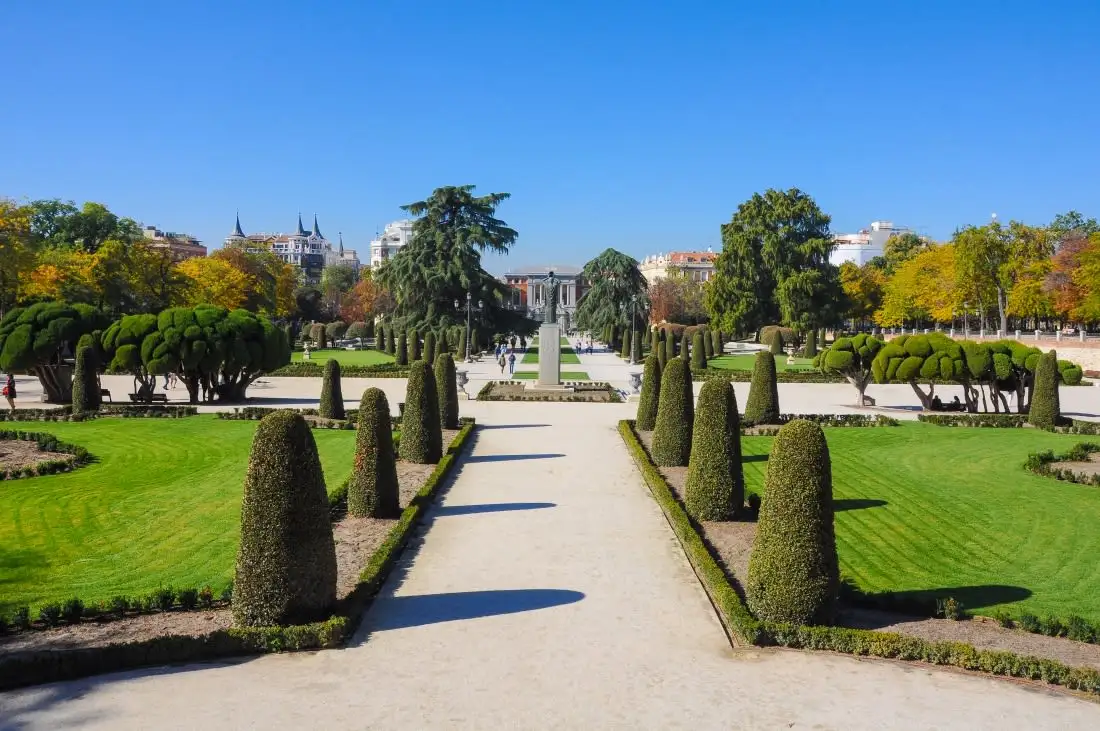
Retiro Park offers an idyllic retreat right amid central Madrid. The expansive green space is more than a park though, it is a part of the city's historical and cultural fabric. Residents and tourists come to relax here, admiring the formal gardens, strolling shaded lanes through manicured forests, and finding a nice spot to picnic near a water feature. Art and architecture are also prominent features of the park, as you can discover in the Palacio de Cristal.
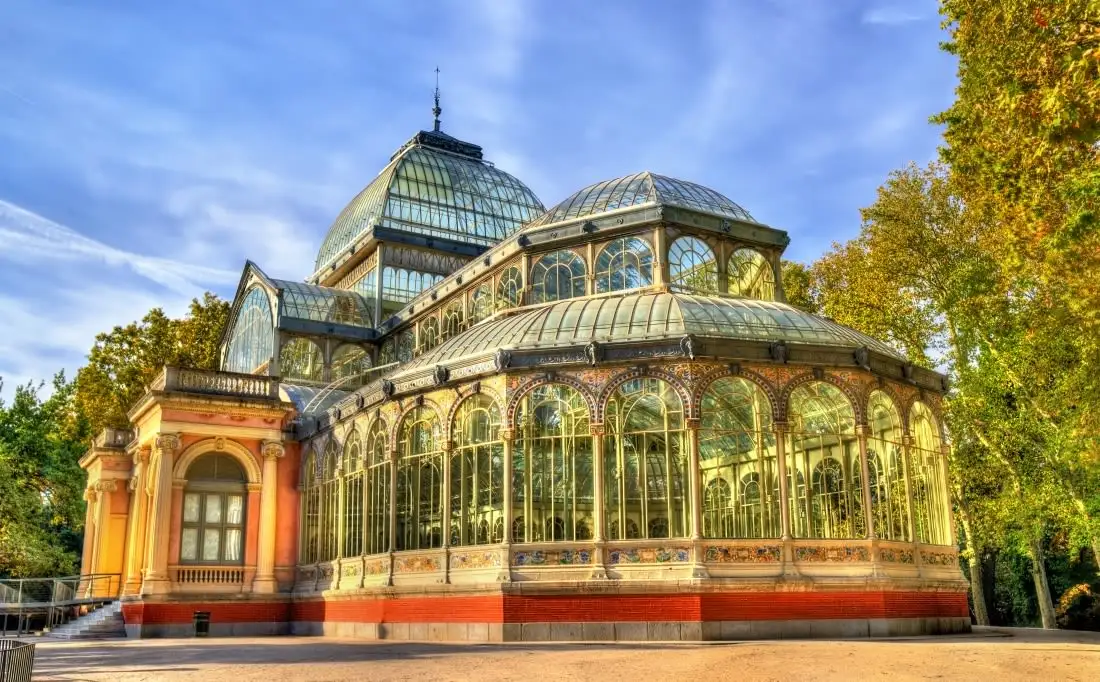
Palacio de Cristal

Feel Genteel next to This Monument of 19th-Century Spanish Industry

The Palacio de Cristal, a stunning and early example of glass and iron architecture, was built in 1887 within Madrid's Retiro Park. Originally a greenhouse, it now serves as an exquisite extension of the Reina Sofia Art Museum. Surrounded by lush gardens and a small lake mirroring its structure, the Palacio evokes a cultured and sophisticated past... and a pleasant present. 

Estanque Grande

Row Your Worries Away on the Grand Water of El Retiro Park

The Estanque Grande, Retiro Park's grand lake, offers an aqueous view of the park. Visitors can rent rowboats and glide across the tranquil waters with the magnificent Monument to Alfonso XII as a backdrop. The relaxation and romance of this languid space makes it a favorite for couples, familes, and anyone looking for a moment of peace on the water.

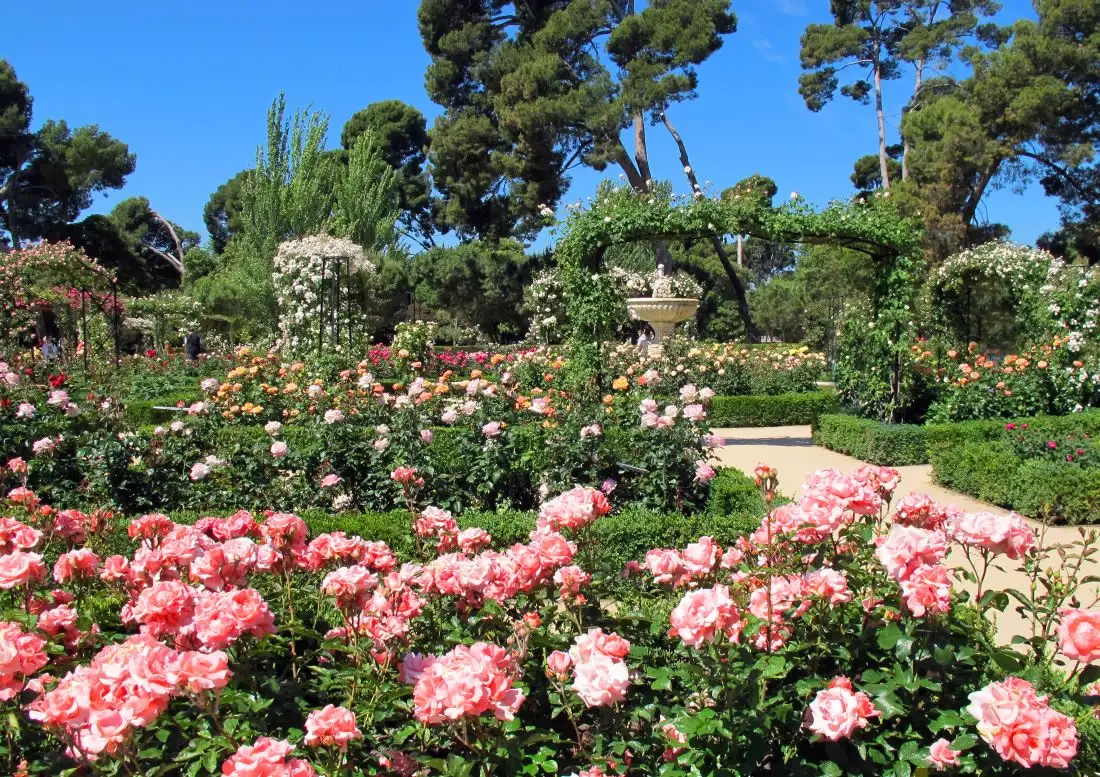
Rosaleda Garden

In Madrid, of Course You Have to Stop and Smell the...

...Rosaleda garden in Retiro Park, featuring over 4,000 varieties of roses from around the world. With over 100 years of tradition meticulously maintaining this garden, it bursts into vibrant colors and fragrances from spring through fall, offering a fragrant and sensual experience to visitors wise or lucky enough to walk through the garden. The annual rose competition held here highlights the garden's significance in the world of horticulture, but be warned, the competition can get thorny.

Puerta de Alcalá

This Granite Arch once guarded the walls of Madrid...

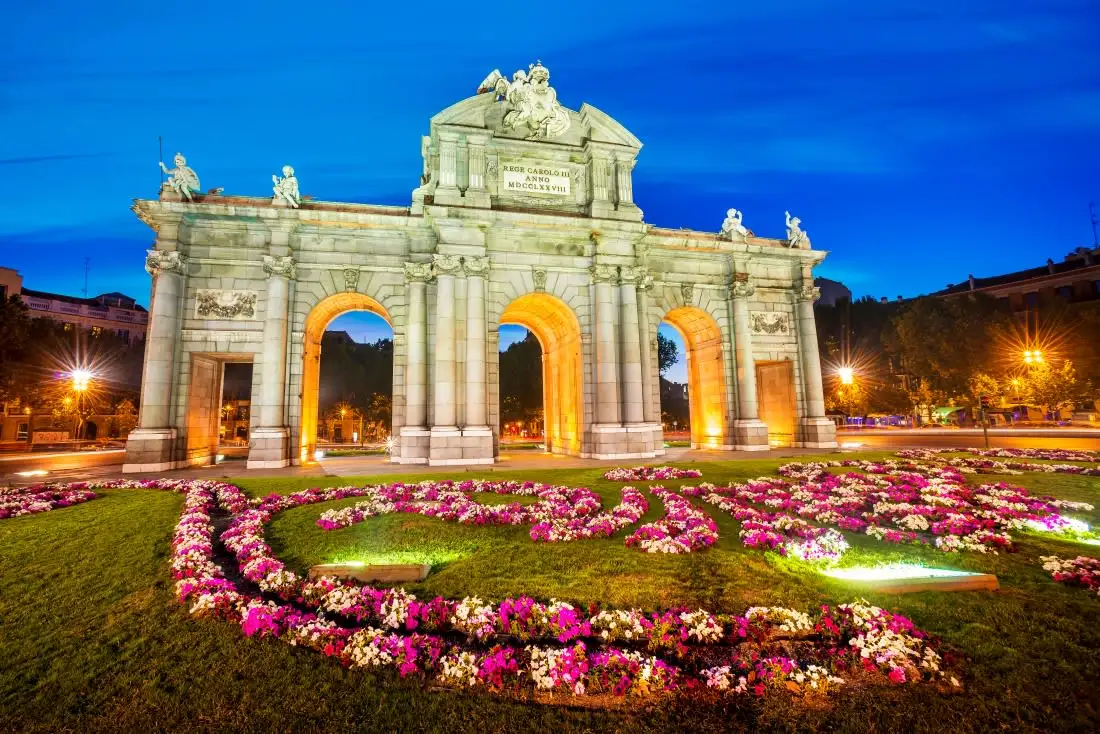
The Puerta de Alcalá stands as a monumental gateway to Madrid. Erected in 1778, this neoclassical archway, the first of its kind since ancient Rome, was a symbol of modernity and rational society. The city has long expanded beyond the gate, and now serves as an entry marking one of Madrid's greatest treasures - Retiro Park. 

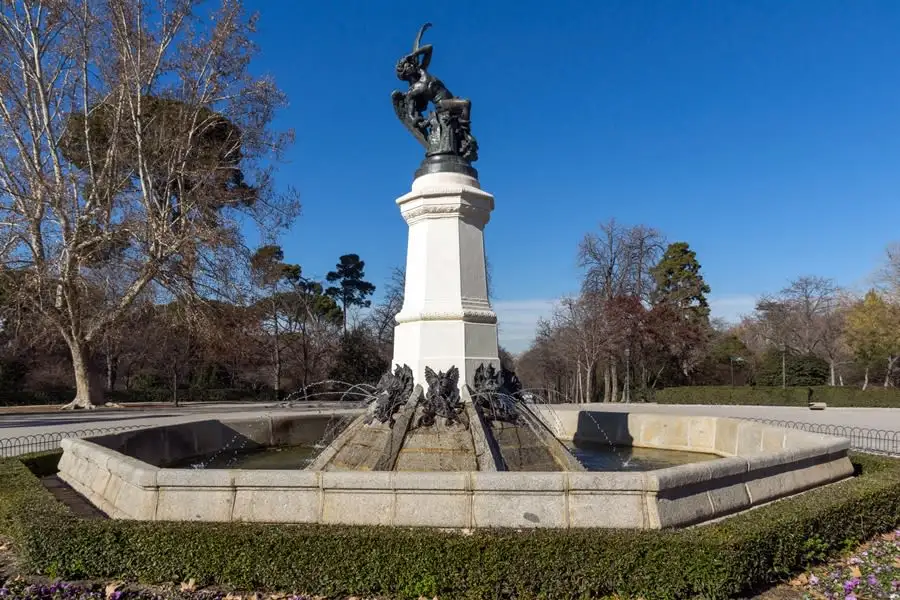
Fountain of the Fallen Angel

The Fallen Angel statue in El Retiro Park, Madrid, is a striking monument that captures the imagination of visitors. Created by sculptor Ricardo Bellver in 1877, the statue depicts Lucifer falling from Heaven, inspired by John Milton's epic poem "Paradise Lost."

The Fallen Angel statue in Madrid's El Retiro Park is a captivating and enigmatic sculpture by Ricardo Bellver, completed in 1877. Depicting Lucifer in his moment of downfall, the statue is inspired by John Milton's "Paradise Lost" and stands atop a dramatic pedestal adorned with sinister figures and ornate details. This monument is unique for its rare subject matter, being one of the few public statues in the world dedicated to the figure of a fallen angel. Nestled in the verdant surroundings of El Retiro, the statue offers an intriguing contrast to the park's tranquility, making it a fascinating highlight for visitors.

Afternoon/Late Afternoon — Art Triangle

Madrid's Art Triangle, nestled along the magnificent avenue known as the Paseo del Prado, draws art lovers from around the world. And while the triangle itself is obtuse, the art isn't: its three major museums contain some of the most prestigious and recognizable art in the world. The Prado awes with its distinguished collection of European masters; the Thyssen-Bornemisza, journeys through art history from the Renaissance to Modernism; and, the Reina Sofía, home to Picasso's "Guernica" pays tribute to to Spain's impressive heritage of modern art. Numerous other museums and even a lovely botanical garden are also within steps of the main attractions.

Prado Museum

Marvel at one of the world's greatest art collections...

Lose yourself in the Prado Museum, the cornerstone of Madrid's Art Triangle housing a breathtaking collection of European art, from the Middle Ages to the 19th century. Adorned with masterpieces by Velázquez, Goya, Rubens, an der Weyden, and Bosch make it a world-class museum. The first two artists, the Spainards Velázquez and Goya, recieve thorough treatment here, and one can fully appreciate the breadth and arc of their careers. 

Thyssen-Bornemisza Museum

Explore an unparalleled private art collection

The Thyssen-Bornemisza Museum... to walk its halls and read its artists' name, one might get a feeling of dejá-vu. We've seen the paintings, heard of these names before - the museum is nearly a comprehensive of who's-who of popular art from the 13th to the 20th centuries.  From Duccio to Van Eck to Dürer to Caravaggio to Rembrandt to Renoir, Van Gogh, Monet, and on and on down to Hopper and Pollock. This museum complements its counterparts by covering artistic periods and styles not extensively represented in the other two, providing a panoramic view of the last 800 years of Western art.

Reina Sofía Museum

Take a deep dive in Spain's modern art movement

The Reina Sofía Museum is dedicated to modern and contemporary art, with a particular focus on Spanish artists. Internationally renowned for housing Picasso's powerful anti-war masterpiece, "Guernica." The museum's collections also feature significant works by Salvador Dalí, Joan Miró, and Juan Gris, among others, showcasing the expansive influence of 20th-century Spanish art.

Royal Botanical Garden

Discover an historic oasis in the heart of Madrid.

Established by King Ferdinand VI in 1755, the Royal Botanical Garden offers a retreat from the hurly-burly of Madrid. With its extensive collection of plants from around the globe, visitors can explore thematic gardens, historical herbariums, and vibrant floral displays that change with the seasons. This living museum provides a serene escape  while simultaneously educating its visitors on biodiversity, conservation, and the importance of plant life in our world.

CaixaForum Madrid

What does Spain enter culture and art today? Find out here.

CaixaForum Madrid, housed in a strikingly renovated former power station, is a modern social and cultural center that hosts a dynamic array of exhibitions, from ancient arts to contemporary installations. Its vertical garden and varied program, including music, poetry readings, and educational workshops, make it a hub of artistic and cultural innovation in the heart of Madrid.

Late Afternoon/Early Evening — Sol & Gran Vía

The Centro area, encompassing Sol and Gran Vía, beats as the heart of Madrid, and in some ways all of Spain. And that's not just metaphorically, as all distances in Spain are measured in terms of their position relative to the Puerta del Sol, the public square designated as Kilometer Zero. The district invites visitors to see, experience, and taste the city's history and culture. Whether its enjoying a drink while enclosed by Baroque palaces on the Plaza Mayor, shopping along the frenetic Gran Vía, or admiring the bronze bear and strawberry tree of Puerta del Sol, time in Centro is quintessential to the Madrid experience.

Puerta del Sol

A Post Office that Isn't? A Bear Eating From Strawberry trees ? Madrid Can be Discombobulatingly Fun, and This Is Its Happy Center.

Puerta del Sol, the symbolic center of Madrid and Spain, welcomes celebrations, occasional protests, and intrepid travellers to its friendly square.  Overseen by the Royal Post Office Building (Which is no longer a post office but is the seat of the President of the Community of Madrid but president shouldn't be understood in the same way as in the USA - politics are complicated), the square boasts a lively atmosphere and an adorable statue of the symbol of Madrid: a bear eating from a strawberry tree (chorleywood).

Gran Vía

Let Madrid's Premier Shopping and Entertainment Boulevard Electrify You

Gran Vía is a bustling thoroughfare known for magnificent architecture, theaters, and high-end shops. It runs through the heart of Madrid, and epitomizes the city's dynamic blend of traditional elegance and modern vitality. By day, it's a hub of activity; by night, it transforms into a dazzling display of neon lights, making it a must-see when exploring the city.

Plaza Mayor

Isolated from Roads or Traffic, This Square Can Express Its 16th- and 17-century Glory.

The Plaza Mayor is an imposing yet charming square encircled by palaces and other residential buildings from the 17th century. Markets were held here, bullfights, soccer (football) games and even executions. Today, it's a lively space for outdoor cafes and the the yearly Christmas market.  No truly world-defining events happened here, so why visit?  It's beautiful and broad, and gives you a chance to do something very Spanish - hang out.

Edificio Metrópolis

Check on the iconic beacon on this building marking the entrance of Madrid's Gran Vía

The Edificio Metrópolis is neither the biggest, or the tallest, or the most ornate, and yet it is superlative. This magnificent example of early 20th-century Beaux-Arts architecture rises above the streets Calle de Alcalá and Gran Vía, presiding graciously over the bustle of feet and traffic beneath it. Generally not open to the public for tours or visits, the Edificio Metrópolis adresses us with the elegant silence of its figures, culminating in the statue of Victory upon its roof.

Mercado de San Miguel

Get a Taste of Spain in This Architectural and Gastronomical Jewel.

The popular market Mercado de San Miguel, located near the Plaza Mayor, attracts locals and tourists alike to indulge in a variety of gourmet tapas, fresh seafood, and Spanish delicacies. Originally built in 1916, its beautifully preserved iron and glass structure feeds the eyes while you contemplate your next bite!

Monastery of las Descalzas Reales

Behind These Humble Walls Reigned a Royal Poverty...

The Monastery of las Descalzas Reales, nestled in the Sol district, reveals the opulent poverty of royalty that devotes themselves to Sts. Francis and Clare. Founded in the 16th century by Princess Joanna of Austria, this still-active convent contains works by the Italian master Titian, and tapestries by Peter Paul Reubens, among others. Among the artworks, you might still see some nuns walking in simple sandals: these women are "Barefoot Royalty" of the monastery's name.

image

Day 1

Arrive Madrid


icon
icon
icon
icon

To Be Determined:

Taxi from Airport

Mid-Day:

Retiro Park

Afternoon/Late Afternoon:

Art Triangle

Late Afternoon/Early Evening:

Sol & Gran Vía

Taxi from Airport

Taxi from Airport

Madrid- Barajas is Madrid's major airport. Taxis to the center of Madrid are managed well by the airport and city, but one must always be aware of questionable practices. Private transfers on request and Uber taxis are also available as well as taking public transport by metro or bus.

To Be Determined — Taxi from Airport

Madrid- Barajas is Madrid's major airport. Taxis to the center of Madrid are managed well by the airport and city, but one must always be aware of questionable practices. Private transfers on request and Uber taxis are also available as well as taking public transport by metro or bus.

Mid-Day — Retiro Park

Retiro Park offers an idyllic retreat right amid central Madrid. The expansive green space is more than a park though, it is a part of the city's historical and cultural fabric. Residents and tourists come to relax here, admiring the formal gardens, strolling shaded lanes through manicured forests, and finding a nice spot to picnic near a water feature. Art and architecture are also prominent features of the park, as you can discover in the Palacio de Cristal.

Palacio de Cristal

Feel Genteel next to This Monument of 19th-Century Spanish Industry

The Palacio de Cristal, a stunning and early example of glass and iron architecture, was built in 1887 within Madrid's Retiro Park. Originally a greenhouse, it now serves as an exquisite extension of the Reina Sofia Art Museum. Surrounded by lush gardens and a small lake mirroring its structure, the Palacio evokes a cultured and sophisticated past... and a pleasant present. 

Estanque Grande

Row Your Worries Away on the Grand Water of El Retiro Park

The Estanque Grande, Retiro Park's grand lake, offers an aqueous view of the park. Visitors can rent rowboats and glide across the tranquil waters with the magnificent Monument to Alfonso XII as a backdrop. The relaxation and romance of this languid space makes it a favorite for couples, familes, and anyone looking for a moment of peace on the water.

Rosaleda Garden

In Madrid, of Course You Have to Stop and Smell the...

...Rosaleda garden in Retiro Park, featuring over 4,000 varieties of roses from around the world. With over 100 years of tradition meticulously maintaining this garden, it bursts into vibrant colors and fragrances from spring through fall, offering a fragrant and sensual experience to visitors wise or lucky enough to walk through the garden. The annual rose competition held here highlights the garden's significance in the world of horticulture, but be warned, the competition can get thorny.

Puerta de Alcalá

This Granite Arch once guarded the walls of Madrid...

The Puerta de Alcalá stands as a monumental gateway to Madrid. Erected in 1778, this neoclassical archway, the first of its kind since ancient Rome, was a symbol of modernity and rational society. The city has long expanded beyond the gate, and now serves as an entry marking one of Madrid's greatest treasures - Retiro Park. 

Fountain of the Fallen Angel

The Fallen Angel statue in El Retiro Park, Madrid, is a striking monument that captures the imagination of visitors. Created by sculptor Ricardo Bellver in 1877, the statue depicts Lucifer falling from Heaven, inspired by John Milton's epic poem "Paradise Lost."

The Fallen Angel statue in Madrid's El Retiro Park is a captivating and enigmatic sculpture by Ricardo Bellver, completed in 1877. Depicting Lucifer in his moment of downfall, the statue is inspired by John Milton's "Paradise Lost" and stands atop a dramatic pedestal adorned with sinister figures and ornate details. This monument is unique for its rare subject matter, being one of the few public statues in the world dedicated to the figure of a fallen angel. Nestled in the verdant surroundings of El Retiro, the statue offers an intriguing contrast to the park's tranquility, making it a fascinating highlight for visitors.

Afternoon/Late Afternoon — Art Triangle

Madrid's Art Triangle, nestled along the magnificent avenue known as the Paseo del Prado, draws art lovers from around the world. And while the triangle itself is obtuse, the art isn't: its three major museums contain some of the most prestigious and recognizable art in the world. The Prado awes with its distinguished collection of European masters; the Thyssen-Bornemisza, journeys through art history from the Renaissance to Modernism; and, the Reina Sofía, home to Picasso's "Guernica" pays tribute to to Spain's impressive heritage of modern art. Numerous other museums and even a lovely botanical garden are also within steps of the main attractions.

Prado Museum

Marvel at one of the world's greatest art collections...

Lose yourself in the Prado Museum, the cornerstone of Madrid's Art Triangle housing a breathtaking collection of European art, from the Middle Ages to the 19th century. Adorned with masterpieces by Velázquez, Goya, Rubens, an der Weyden, and Bosch make it a world-class museum. The first two artists, the Spainards Velázquez and Goya, recieve thorough treatment here, and one can fully appreciate the breadth and arc of their careers. 

Thyssen-Bornemisza Museum

Explore an unparalleled private art collection

The Thyssen-Bornemisza Museum... to walk its halls and read its artists' name, one might get a feeling of dejá-vu. We've seen the paintings, heard of these names before - the museum is nearly a comprehensive of who's-who of popular art from the 13th to the 20th centuries.  From Duccio to Van Eck to Dürer to Caravaggio to Rembrandt to Renoir, Van Gogh, Monet, and on and on down to Hopper and Pollock. This museum complements its counterparts by covering artistic periods and styles not extensively represented in the other two, providing a panoramic view of the last 800 years of Western art.

Reina Sofía Museum

Take a deep dive in Spain's modern art movement

The Reina Sofía Museum is dedicated to modern and contemporary art, with a particular focus on Spanish artists. Internationally renowned for housing Picasso's powerful anti-war masterpiece, "Guernica." The museum's collections also feature significant works by Salvador Dalí, Joan Miró, and Juan Gris, among others, showcasing the expansive influence of 20th-century Spanish art.

Royal Botanical Garden

Discover an historic oasis in the heart of Madrid.

Established by King Ferdinand VI in 1755, the Royal Botanical Garden offers a retreat from the hurly-burly of Madrid. With its extensive collection of plants from around the globe, visitors can explore thematic gardens, historical herbariums, and vibrant floral displays that change with the seasons. This living museum provides a serene escape  while simultaneously educating its visitors on biodiversity, conservation, and the importance of plant life in our world.

CaixaForum Madrid

What does Spain enter culture and art today? Find out here.

CaixaForum Madrid, housed in a strikingly renovated former power station, is a modern social and cultural center that hosts a dynamic array of exhibitions, from ancient arts to contemporary installations. Its vertical garden and varied program, including music, poetry readings, and educational workshops, make it a hub of artistic and cultural innovation in the heart of Madrid.

Late Afternoon/Early Evening — Sol & Gran Vía

The Centro area, encompassing Sol and Gran Vía, beats as the heart of Madrid, and in some ways all of Spain. And that's not just metaphorically, as all distances in Spain are measured in terms of their position relative to the Puerta del Sol, the public square designated as Kilometer Zero. The district invites visitors to see, experience, and taste the city's history and culture. Whether its enjoying a drink while enclosed by Baroque palaces on the Plaza Mayor, shopping along the frenetic Gran Vía, or admiring the bronze bear and strawberry tree of Puerta del Sol, time in Centro is quintessential to the Madrid experience.

Puerta del Sol

A Post Office that Isn't? A Bear Eating From Strawberry trees ? Madrid Can be Discombobulatingly Fun, and This Is Its Happy Center.

Puerta del Sol, the symbolic center of Madrid and Spain, welcomes celebrations, occasional protests, and intrepid travellers to its friendly square.  Overseen by the Royal Post Office Building (Which is no longer a post office but is the seat of the President of the Community of Madrid but president shouldn't be understood in the same way as in the USA - politics are complicated), the square boasts a lively atmosphere and an adorable statue of the symbol of Madrid: a bear eating from a strawberry tree (chorleywood).

Gran Vía

Let Madrid's Premier Shopping and Entertainment Boulevard Electrify You

Gran Vía is a bustling thoroughfare known for magnificent architecture, theaters, and high-end shops. It runs through the heart of Madrid, and epitomizes the city's dynamic blend of traditional elegance and modern vitality. By day, it's a hub of activity; by night, it transforms into a dazzling display of neon lights, making it a must-see when exploring the city.

Plaza Mayor

Isolated from Roads or Traffic, This Square Can Express Its 16th- and 17-century Glory.

The Plaza Mayor is an imposing yet charming square encircled by palaces and other residential buildings from the 17th century. Markets were held here, bullfights, soccer (football) games and even executions. Today, it's a lively space for outdoor cafes and the the yearly Christmas market.  No truly world-defining events happened here, so why visit?  It's beautiful and broad, and gives you a chance to do something very Spanish - hang out.

Edificio Metrópolis

Check on the iconic beacon on this building marking the entrance of Madrid's Gran Vía

The Edificio Metrópolis is neither the biggest, or the tallest, or the most ornate, and yet it is superlative. This magnificent example of early 20th-century Beaux-Arts architecture rises above the streets Calle de Alcalá and Gran Vía, presiding graciously over the bustle of feet and traffic beneath it. Generally not open to the public for tours or visits, the Edificio Metrópolis adresses us with the elegant silence of its figures, culminating in the statue of Victory upon its roof.

Mercado de San Miguel

Get a Taste of Spain in This Architectural and Gastronomical Jewel.

The popular market Mercado de San Miguel, located near the Plaza Mayor, attracts locals and tourists alike to indulge in a variety of gourmet tapas, fresh seafood, and Spanish delicacies. Originally built in 1916, its beautifully preserved iron and glass structure feeds the eyes while you contemplate your next bite!

Monastery of las Descalzas Reales

Behind These Humble Walls Reigned a Royal Poverty...

The Monastery of las Descalzas Reales, nestled in the Sol district, reveals the opulent poverty of royalty that devotes themselves to Sts. Francis and Clare. Founded in the 16th century by Princess Joanna of Austria, this still-active convent contains works by the Italian master Titian, and tapestries by Peter Paul Reubens, among others. Among the artworks, you might still see some nuns walking in simple sandals: these women are "Barefoot Royalty" of the monastery's name.

image

Day 2

Madrid

Day 2

Madrid

icon
icon
icon
icon

9:30 AM - 12:30 PM

Highlights Walking Tour

Immerse yourself in the heart of Spanish history with a captivating 3-hour walking tour in Madrid, focusing on the majestic Royal Palace (exterior) and the bustling Plaza Mayor. At the Royal Palace, you will learn how the Habsburg Empire came to Spain, grew to cover the New World, and then discovered that the Iberian peninsula was enough land. Then, meander toward the vibrant Plaza Mayor, a grand square framed by historic buildings, lively cafes, and street performers. Among the frescos of these Baroque buildings you'll hear Madrid's history, the good and the bad, the everyday and the dramatic. Through it all, you will have the chance to see and hear the buzz of life the proceeds from Spain's capital!

Highlights Walking Tour

9:30 AM - 12:30 PM — Highlights Walking Tour

Immerse yourself in the heart of Spanish history with a captivating 3-hour walking tour in Madrid, focusing on the majestic Royal Palace (exterior) and the bustling Plaza Mayor. At the Royal Palace, you will learn how the Habsburg Empire came to Spain, grew to cover the New World, and then discovered that the Iberian peninsula was enough land. Then, meander toward the vibrant Plaza Mayor, a grand square framed by historic buildings, lively cafes, and street performers. Among the frescos of these Baroque buildings you'll hear Madrid's history, the good and the bad, the everyday and the dramatic. Through it all, you will have the chance to see and hear the buzz of life the proceeds from Spain's capital!

Mid-Day/Afternoon — Royal Madrid

Madrid's most courtly districts, Asturias and La Latina, sing of the Spanish Empire. The Royal Palace, built from the wealth of that empire when it stretched from the Iberian Peninsula to the Philippines via Argentina and Florida, exudes power and imputiny.  But you can impetuously walk through the gates, buy a ticket and oogle the grandeur - it's a free country.  The striking Almudena Cathedral rests a short, noble walk across a grand square.  On their fringes rest the tranquil Sabatini Gardens, designed for relaxation with a (spectacular) view.  In the La Latinas district , the regal sites continues with the Royal Basilica of San Francesco el Grande and its immense dome and masterful frescos. You'll also find the city-run Museum of the History of Madrid, offering gratis the long story of Madrid.

Plaza de Oriente

Take a Regal Stroll up to the Palace, or down to the Theater...

The Plaza de Oriente, with its harmonious layout, stretches from the Royal Theater to the base of the Royal Palace, creating an ensemble both demure and grandiose . Adorned with statues of Spanish monarchs turning it into a majestic open-air gallery, one must make use of its manicured gardens and elegant cafés while enjoying the central fountain.

Royal Palace

A Proper Palace Won't Be Offended If You Are Awestruck

The Royal Palace presides over Madrid, a symbol of the magnificence and power of Spanish royalty. With over 3400 opulent rooms, the palace contains unimaginable riches, a treasure trove of art, history, and architecture. Visitors are welcome to visit various chambers including the Throne Room, the Hall of Mirrors, and the Royal Armory, each designed to reflect the wishes of one of Old Europes most powerful royal families.

Sabatini Garden

These Gardens, Named After an Architect...

... Who had nothing to do with their design. In fact, Francesco Sabatini's illustrious stables were torn down to make way for the construction of the three verdant terraces in the 1930s.  The gardens were just named in his honor. Directly adjacent to the Royal Palace, the Sabatini Gardens make for a restful pause when roaming about the royal grounds, the geometric designs bring a sense of order and peace.

Almudena Cathedral

Process like Nobility towards the Almudena Cathedral's Astonishing Architecture

It's a long walk across the Plaza de la Armería to the Cathedral of Almudena, its façade promising stories of Habsburg Spain. These promises are unmet: Constructed through the tumult of 20th-century Spain the Cathedral was only consecrated by Pope John Paul II in 1993.  Hidden within its adherence to classical architecture, modern stained-glass and a stunning coffered ceiling express a faith moving with, but not bidden to, modernity. 

Royal Basilica of Saint Francis the Great

Stare in awe at the grandeur of the Royal Basilica.

The Royal Basilica of Saint Francis the Great, fusing baroque and neoclassical styles and renowned for its colossal dome—one of the largest in Christianity—boasts an interior adorned with exquisite frescoes and artworks by prominent Spanish artists like Goya and Zubarán. It is held that the church rests on land offerd to St. Francis himself while he was on pilgrimage to Santiago de Compostela.

Late Afternoon/Early Evening — Princesa & Plaza de España

A refreshing blend of timeworn and modern, the Plaza de España and Princesa neighborhood gives you a taste of neoclassical grandeur to contemporary city life within a matter of steps. At its heart lies the plaza, with leafy paths, lively foot traffic, and families enjoying the extensive playground. Just uphill, the Temple of Debod offers a surreal sunset backdrop. Tucked nearby are the elegant Museo Cerralbo and Palacio de Liria, two aristocratic mansions that reveal the lavish lives and art collections of Madrid’s 19th-century elite.

Plaza de España

This Is One Quixotic Quest You Can Acheive, Even on Holiday

At the heart of Madrid and the western terminus of the Gran Via, Plaza de España celebrates its greatest literary hero, Don Quixote.  With his "squire", Pancho, Quixote seeks adventure, possibly oblivious to the modern city around him.  Visit their statues here while admiring the 20th-century architecture behind them - maybe he's riding away because he didn't find a windmill...

Templo de Debod

Experience ancient Egypt in modern-day Madrid

An oasis of ancient Egyptian history in the bustling city of Madrid, the Templo de Debod is a gift from Egypt, dating back to the 2nd century BC. This temple, with its mystical aura and stunning setting, offers a peaceful retreat and a remarkable insight into ancient architecture. As the sun sets, the temple lights up, casting a magical glow that transports visitors thousands of miles away to the banks of the Nile.

Cerralbo Museum

Uncover a Treasure Trove of Art and History in This Palace Converted to a Museum

Looking for a change in your home decor? Have you dreamt about becoming Spanish nobility? Find inspiration at Museo Cerralbo, the former palace of a 19th-century Spanish nobleman. This home of the 17th Marquess of Cerralbo is reserved enough from the outside, making the opulent interior all the more shocking. Home to an extensive collection of European art, antiques, and armor, the rooms illustrate the lives of nobles past.

Hermitage of San Antonio de la Florida

See the resting place of Goya lying beneath the soaring ceilings he painted.

This chapel, devoted to St. Anthony of Padua, is also the final resting place of the master Francisco Goya, who painted the frescos along the ceiling and dome of this chapel.  Resting a bit farther from the center, it can offer a respite from busier areas, allowing one the chance to contemplate one of Goya's masterworks in relative peace.  After all, it is a hermitage...

Early Evening/Evening — Malasaña & Chueca

Explore an alternative side of Madrid in Malasaña and Chueca. Among these venerable streets and historic architecture, throb the mores and sounds of modern life.Malasaña, steeped in history and rebellion, buzzes with cafes, vintage shops, and street art, epitomizing Madrid's avant-garde. Chueca, as the LGBTQ+ epicenter, exudes a hip atmosphere, making it an essential experience for nightlife enthusiasts. Whether you're exploring Madrid's history at the Museo de Historia or soaking up the local scene, these districts offer an unforgettable slice of Madrid's dynamic character.

Plaza del Dos de Mayo

Explore the Lively Center of Malasaña While Surrounded by Its Long History

This bustling square, the heart of Malasaña, commemorates the 1808 uprising against Napoleonic forces. Today, a popular gathering spot surrounded by bars, cafes, and shops, it celebrates facets of Madrid's revolutionary spirit and contemporary lifestyle.

Mercado de San Ildefonso

Eat through Madrid's innovative market scene

Mercado de San Ildefonso reimagines traditional Spanish markets with a modern flair. Situated in the heart of Malasaña, this culinary hotspot offers an array of gourmet tapas, international dishes, and artisanal treats in a lively, urban setting. Food enthusiasts can indulge in everything from freshly made tacos and sushi to classic Spanish croquetas and vermouth. Its open-air terraces and industrial chic decor make it an ideal spot for a casual dinner or a night out with friends.

Museum of Romanticism

Go! Please! Swoon in the Museum of Romanticism...!

Ok, that was a bit dramatic, but Romanticism emphasizes emotion, right? Cached away in a restored 19th-century palace, the Museum of Romanticism offers a dizzying entrance into the Romantic era in Spain. Visitors can revel in the rich collection of paintings, furniture, and decorative arts that resurrect the long-forgotten social nuances of the 1800s. The museum offers a respite from the city's inhumanity, inviting guests to find solace, if just for a moment, in the solemn tranquility of its cafe. Like a damsel offering her lanquid hand, this musuem promises heart-rending thrills for history buffs and anyone looking to immerse themselves in the elegance and emotional depth of Romanticism.  Hmmm, that was still pretty dramatic...

image

Day 2

Madrid

image

Day 3

Madrid

Day 3

Madrid

icon
icon

Morning to Afternoon

Excursion to El Escorial

Take a trip into the mountains just outside of Madrid and disover El Escorial. At one time a royal monastery filled with monks praying for the Spanish Empire, El Escorial also served as a royal retreat. Since the king and family slept there, many of the rooms are far from austere. Where once only a precious few could admire the frescos and statues of the largest Renaissance building in the world, you can freely visit!

Excursion to El Escorial

Morning to Afternoon — Excursion to El Escorial

Take a trip into the mountains just outside of Madrid and disover El Escorial. At one time a royal monastery filled with monks praying for the Spanish Empire, El Escorial also served as a royal retreat. Since the king and family slept there, many of the rooms are far from austere. Where once only a precious few could admire the frescos and statues of the largest Renaissance building in the world, you can freely visit!

El Escorial Monastery

The inhabitants were sworn to poverty, the furnishings, not so much.

Set in the rugged landscapes of Central Spain, ever turn at El Escorial will awe you. With the Habsburgs running the show in the 16th century, Spain needed a lot of prayers, and the royal family set up this monastery specifically that monks would pray for them. King and family had their spaces too, big ones: it is the largest Renaissance building in the world.

La Herrería Forest

Roam the woods and fields of this former royal hunting ground.

There was a time, from 1561 to about 1870, that to be an animal here meant you were a trophy or dinner. The vast royal hunting grounds, of which only La Herrería Forest remain, was the playground of the Spanish King.  Nowadays, this undulating landscapes especially protects the large variety of birds that flit through the Pyrenean oak Cherry trees.  Deer, the occasional shy bobcat, and even otters grace the landscape, and maybe even they appreciate the stunning views of the El Escorial Monastery.

Afternoon/Late Afternoon — Salamanca District

The Salamanca District in Madrid is known for its refined elegance, with a mix of luxurious shopping, fine dining, and rich cultural experiences.  Elegant, Nineteeth-century flourishes characterize the architecture, and upscale boutiques, art galleries, and superlative restaurants characterize its streets. The National Archaeological Museum is also found in Salamanca, and the immensely happy and intimate Sorolla Museum rests not far. The district's broad, tree-lined streets and sophisticated atmosphere have politely invited you to visit: Shall you accept?

National Archaeological Museum

Spain, FYI, is not new...

...and the National Archaeological Museum reveals just how far back people have been partying on the Iberian Peninsula. Presenting Spain's underappreciated history, from  prehistoric artifacts to the modern era, the museum includes intricate, pre-Roman sculptures, Roman artifacts, and Medieval treasures, illustrating the country's complicated cultural heritage.

Calle de José Ortega y Gasset

Check out the goods on Madrid's most luxurious shopping street.

Calle de José Ortega y Gasset rests as Madrid's emblem of luxury, lined with the finest boutiques and flagship stores of international fashion houses. This prestigious street lends a Spanish accent to the finer things in life. With its elegant facades and exclusive atmosphere, it's the height of fashion and sophistication in Spain's capital to shop here.

Sorolla Museum

The Light thatInfused His Paintings...

... Seemed to infuse his life and home too. Not every artist is tortured. The Sorolla Museum, located just beyond the Salamanca District, was once the residence and studio of the painter Joaquín Sorolla. Today it showcases the artist's masterpieces among the furnishings and other personal items. Visitors are treated to rooms filled with light, color, and the serene beauty that defines Sorolla's work, all preserved in the intimate setting of his former home. The museum's gardens, designed by Sorolla himself, contain a central fountain. 

Calle de Claudio Coello

Stroll through the upscale charm of Calle de Claudio Coello, a premier shopping street lined with designer boutiques and elegant cafes.

Calle de Claudio Coello is a must-visit destination for luxury shopping enthusiasts in Madrid’s prestigious Salamanca district. This tree-lined avenue is home to an array of high-end fashion boutiques, from renowned international designers to exclusive local brands. The street exudes an air of sophistication, with its stylish storefronts and meticulously curated displays inviting you to indulge in a world of fashion and luxury. In addition to shopping, the street offers a selection of chic cafes and gourmet eateries, perfect for taking a leisurely break while soaking in the refined atmosphere of one of Madrid’s most fashionable neighborhoods.

Calle de Jorge Juan

Stroll along Calle de Jorge Juan for an upscale shopping and dining experience in Madrid’s Salamanca district.

Calle de Jorge Juan is one of the most elegant streets in Madrid, located in the fashionable Salamanca neighborhood. Known for its luxury boutiques, high-end restaurants, and vibrant atmosphere, this street offers a perfect blend of traditional Spanish charm and modern sophistication. Wander through the tree-lined avenues, explore designer stores like Loewe and Prada, and indulge in gourmet cuisine at Michelin-starred restaurants. 

National Library of Spain

Explore the vast collections of Spain's national heritage at the National Library of Spain.

The National Libarary of Spain is the largest library in Spain and one of the most important in the world. Established in 1712 by King Philip V, it houses over 30 million items, including rare manuscripts, incunabula, maps, and historical documents that span centuries of Spanish history and culture. With it's neoclassical architecture, stunning reading rooms and exhibitions, it is not just a repository of books but a vital cultural institution that preserves the nation's intellectual heritage.

Basílica de la Concepción de Nuestra Señora

Explore the stunning architecture and serene atmosphere of the Basilica of the Conception of Our Lady, a hidden gem in the heart of Madrid.

Built between 1902 and 1914, the Basílica de la Concepción de Nuestra Señora stands out with its beautiful white façade and intricate neo-Gothic details, a contrast to the modernity of its surroundings. The church, designed by Jesús Encina, showcases exquisite stained-glass windows, soaring spires, and a masterfully crafted interior that evokes a sense of reverence and tranquility. This lesser-known basilica offers a serene escape and a glimpse into the architectural trends of early 20th-century Spain, making it a worthwhile stop for those exploring Madrid’s diverse religious and historical sites.

Sweet Space Museum

Immerse yourself in a colorful, interactive experience where art, technology, and sweets collide in Madrid's Sweet Space Museum.

The Sweet Space Museum offers a unique, multi-sensory journey through a series of vibrant, candy-themed rooms designed by various artists. Each space combines art installations with playful elements, from giant lollipops to neon-lit tunnels, creating an environment where imagination takes center stage. Perfect for both adults and children, this museum allows visitors to touch, taste, and interact with the exhibits, making it a delightful experience for anyone with a sweet tooth or a love for whimsical art. Don't miss the chance to snap fun photos at every turn! ENTER THROUGH THE ABC SERRANO SHOPPING MALL

Lázaro Galdiano Museum

Wander through the exquisite halls of the Lázaro Galdiano Museum, where over 9,000 pieces of European art and decorative objects, collected by financier José Lázaro Galdiano, are on display.

The Lázaro Galdiano Museum houses the vast and diverse art collection of José Lázaro Galdiano, a prominent Spanish financier and bibliophile. This museum, located in his former residence, showcases over 12,000 pieces, including works by masters such as Goya, El Greco, and Bosch. The collection is notable for its eclectic range, featuring paintings, sculptures, jewelry, and rare books, reflecting the diverse interests and refined tastes of its founder. The museum's collection offers a unique window into European art history and is a must-visit for art lovers seeking a more intimate museum experience in Madrid.

Cicero Madrid

Immerse yourself in the vibrant culinary scene of Madrid at Cicero Madrid, maybe even with your own personal chef!

Cicero Madrid is a highly-rated restaurant, great for those seeking an authentic yet contemporary Spanish dining experience. Located in the heart of Madrid, this restaurant is renowned for its creative take on classic Spanish dishes, using fresh, locally sourced ingredients. One of its most celebrated attractions is its Cícero Table, a communal table for 18 diners at which a private chef cooks and dialogues with customers. If you are interested in the Cicero Table visit their website: https://ciceromadrid.es/cicero-experience/, there you will find details and a contact to make a reservation. PLEASE NOTE: As of September 2024 Cicero Madrid is temporarily closed, visit their website (above) and see if that has changed. 

image

Day 3

Madrid

image

Day 4

Madrid to Lisbon

Day 4

Madrid to Lisbon

icon
icon
icon
icon

To Be Determined

Taxi to Airport

Madrid has one main airport, Madrid-Barajas Airport. Taxis can provide a relatively inexpensive trip to the airport, and your hotel can arrange a reliable taxi for you.  Depending on you hotel's location and time of day, an taxi ride may take as little as 20 minutes or over 50 minutes. If you are picked up about three hours before your departure time, you should arrive at the airport with about two hours to spare, depending on traffic. If you are leaving during rush hour, you may want to budget an extra fifteen to thirty minutes. You can also call an Uber or Bolt taxi from your smart phone if you have the app downloaded.

Taxi to Airport

To Be Determined — Taxi to Airport

Madrid has one main airport, Madrid-Barajas Airport. Taxis can provide a relatively inexpensive trip to the airport, and your hotel can arrange a reliable taxi for you.  Depending on you hotel's location and time of day, an taxi ride may take as little as 20 minutes or over 50 minutes. If you are picked up about three hours before your departure time, you should arrive at the airport with about two hours to spare, depending on traffic. If you are leaving during rush hour, you may want to budget an extra fifteen to thirty minutes. You can also call an Uber or Bolt taxi from your smart phone if you have the app downloaded.

To Be Determined — Flight to Lisbon (Cost not included)

Traveling from Lisbon to Barcelona generally involves direct flights, with several airlines like Ryanair, easyJet, and TAP Air Portugal operating on this route. Flight duration is approximately 2 hours. As both cities are within the Schengen zone, you'll enjoy seamless travel without the need for immigration checks. While low-cost airlines provide many of these flights, consider that the base fare may not cover additional charges for luggage and other services. Booking flights early is advisable as schedules and fares are subject to change. IMPORTANT: the flight cost is not included in your itinerary.

To Be Determined — Taxi from Airport

Lisbon has one main airport, Aeroporto Humberto Delgado. The most affordable way from the airport to central Lisbon is by the Metro Red Line, up to a 40-minute ride. Oftern quicker are taxis, Ubers and Bolts. Taxi may be pick up by the stands directly outside your terminal and Uber and Bolt can pick up people at the airport (with certain complications). You can also arrange a private transfer. A ride to the city center will take 20-40 minutes depending on traffic and will cost between 12-25€ for a taxi.

Early Evening — Baixa

The Baixa neighborhood, also known as Baixa Pombalina, is the bustling downtown district of Lisbon, meticulously rebuilt after the devastating 1755 earthquake under the direction of the Marquês de Pombal. This area is characterized by its grand neoclassical architecture, broad squares, and straight, grid-like streets. Highlights include the majestic Praça do Comércio, a riverside square offering stunning views of the Tagus River and a grand triumphal arch; Rossio Square, famous for its wave-patterned pavement and lively cafés; and Rua Augusta, a vibrant pedestrian street lined with shops, restaurants, and street performers. Baixa is the perfect place to experience Lisbon's rich history, shop for souvenirs, and enjoy traditional Portuguese cuisine.

Sé de Lisbon (Lisbon Cathedral)

Step inside Lisbon's oldest church, the Sé Cathedral, a historical marvel with stunning architectural features.

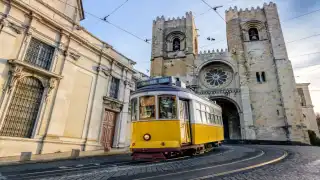
Sé de Lisboa, also known as the Lisbon Cathedral, is the city’s oldest church, built in 1147 after the reconquest from the Moors. The cathedral showcases a blend of Romanesque, Gothic, and Baroque architectural styles, with notable features like the rose window, Gothic cloister, and a treasury of sacred art. Its historical significance and stunning interior make it a must-visit landmark for anyone exploring Lisbon.  

Arco da Rua Augusta

It's not the oldest archway in the world, but gosh is it beautiful!

The Arco da Rua Augusta is a grand triumphal arch located at the northern end of Praça do Comércio in Lisbon's Baixa district. Completed in 1875, it commemorates the city's reconstruction after the devastating 1755 earthquake. The arch is adorned with statues of historical figures, including Vasco da Gama and the Marquis of Pombal, and offers panoramic views of Lisbon from its terrace. It serves as a gateway between the bustling Rua Augusta and the expansive Praça do Comércio.

Praça do Comércio

This square opened up onto the riches of the world.

Praça do Comércio, also known as Terreiro do Paço, is a large, waterfront square in Lisbon, bordered by classical 18th-century buildings. It was once the site of the Royal Ribeira Palace before the 1755 earthquake, and today, it is a symbol of Lisbon's resilience and renewal. The square features the Arco da Rua Augusta and a central statue of King José I on horseback. It serves as a central hub for both locals and tourists, offering cafés, restaurants, and views of the Tagus River.

Carmo Archaeological Museum / Igreja do Carmo

A visit to this museum will show you just how deep Portugal's history goes.

The Igreja do Carmo, also known as the Carmo Convent, is a former Gothic church in Lisbon that was partially destroyed in the 1755 earthquake.  The convent now houses the Carmo Archaeological Museum, which established in 1864, showcases a diverse collection of artifacts ranging from prehistoric times to the Middle Ages, including tombs, ceramics, and ancient sculptures. Visitors can explore the evocative open-air nave, where the remains of the church's roofless arches frame the sky, creating a striking backdrop for the exhibits.

image

Day 4

Madrid to Lisbon

image

Day 5

Lisbon

Day 5

Lisbon

icon
icon
icon

10:00 AM - 1:00 PM

Introduction to Lisbon Walking Tour

Immerse yourself in the centuries of history on this 3 hour winding walking tour through the heart of Lisbon. Get acquainted with Lisbon's three most influential neighbourhoods, Bairro Alto, Chiado and Baixa with an expert Lisbon guide who specialises in history and archaeology.

Introduction to Lisbon Walking Tour

10:00 AM - 1:00 PM — Introduction to Lisbon Walking Tour

Immerse yourself in the centuries of history on this 3 hour winding walking tour through the heart of Lisbon. Get acquainted with Lisbon's three most influential neighbourhoods, Bairro Alto, Chiado and Baixa with an expert Lisbon guide who specialises in history and archaeology.

Afternoon — Tile Museum

This is a beautiful visit... Just a little outside the main tourist destinations rest a museum central to Portuguese expression, the National Tile Museum. The museum recounts the importance of azulejos (pronounced AH-zoo-lay-zho) in Portugal. Azulejos can be traced back to their introduction during the 15th century, incorporating past influences of the Moors, who brought the technique from North Africa. (Decorative tiles themselves go back much farther, making an appearance at least as early as almost 5000 years ago in Egypt.) Over time, Portuguese artisans developed their own styles, incorporating local motifs, religious themes, and historical events into the designs. Azulejos became a means of storytelling, capturing significant moments in Portugal's history and everyday life. Their widespread use also demonstrates the country's  cultural exchanges during the Age of Exploration, reflecting influences from Asia, Africa, and the Americas. Azulejos are celebrated for their artistic merit, showcasing intricate patterns and vibrant colors that enhance the architectural beauty of Portuguese cities. Today, azulejos remain a symbol of national pride, preserving Portugal's historical narratives and artistic achievements while continuing to inspire contemporary art and design. All these aspects and more are beautifully illustrated at the museum, housed in the former Franciscan convent of the Madre de Deus (Convent of the Mother of God). The structure still boasts the otherworldly splendor of the gold-leafed church and choir. This visit is truly a feast for the eyes.

Afternoon/Late Afternoon — Graca & Alfama

Wander into Alfama, Lisbon’s oldest and most atmospheric neighborhood, where narrow alleyways twist between sun-bleached facades and traditional Fado melodies drift out of tucked-away taverns. This historic district clings to the hillside below the castle, and as you climb its maze of cobbled lanes, you'll uncover viewpoints, tiled courtyards, and a glimpse into Lisbon’s soul. Just uphill from here, the neighborhood of Graça offers a quieter, more local vibe. From the panoramic terrace of Miradouro da Senhora do Monte to unassuming cafés where life ticks by at a relaxed pace, Graça makes a perfect complement to Alfama's intensity.

Our Lady of the Mountain Viewpoint

Start or end your day with the spectacular views from the Chapel of Our Lady of the Mountain.

This scenic viewpoint of Our Lady of the Mountain, known in Portuguese as Capela da Senhora do Monte, is situated at one of the highest points in Lisbon, providing an exceptional vantage point over the city. Built in the late 18th century, the chapel is dedicated to Our Lady of the Mountain, a revered figure among locals. The simple yet charming interior houses a revered statue of the Virgin Mary. Outside, the chapel's terrace offers a breathtaking panoramic outlook over the city, including the Castle of São Jorge, the River Tagus, and the downtown area. It's a perfect spot for photography and enjoying the sunset.

São Jorge Castle

Discover the historic Castelo de São Jorge with its impressive fortifications and panoramic views over Lisbon.

Castelo de São Jorge, perched atop one of Lisbon's highest hills, is a testament to the city's rich history, dating back to the 11th century. The structure was built by the Moors upon fortifications going back to at least the Roman Empire. The castle has been a royal residence and military stronghold over the centuries. Today, visitors can explore the well-preserved ramparts, towers, and courtyards, while enjoying breathtaking views of the city and the Tagus River, making it a must-visit attraction for history enthusiasts and sightseers.

Panteão Nacional

Meet some Portuguese notables and heros...

Most likely, we don't know the names of many of the people who are buried here, memorialized in the National Pantheon of Portugal. But we probably could learn something from their lives. The Panteão Nacional is sacred space. Step in here to make a deeper understanding of the Portugal, and its people.

São Vicente de Fora Church and Monastery

Visit the tombs of the Royal Family at this church and monastery

Discover the historic São Vicente de Fora Church and Monastery, a masterpiece of Mannerist architecture that stands as one of Lisbon's most significant religious sites. Built in the late 16th century under the orders of King Philip II of Spain, this complex is dedicated to Saint Vincent, the patron saint of Lisbon.The monastery, still partially active, houses the royal pantheon of the Braganza dynasty and offers visitors a peaceful cloister and a museum showcasing religious art and historical artifacts. The terrace provides stunning views over the Alfama district and the Tagus River.

image

Day 5

Lisbon

image

Day 6

Lisbon

Day 6

Lisbon

icon
icon

Early Morning to Mid-Day

Excursion to Setubal

Setúbal, a sun-drenched coastal city in Portugal, is renowned for its sea-faring heritage, delectable seafood, and scenic beauty. Located just south of Lisbon, Setúbal boasts a charming old town with narrow, cobbled streets, historic buildings, and lively markets. Key attractions include the impressive São Filipe Fortress, offering panoramic views of the city and the Sado River, and the bustling Livramento Market, famous for its fresh fish and regional faretiles. Nature lovers will appreciate the nearby Arrábida Natural Park, with its lush landscapes and pristine beaches, including the serene Albarquel Beach. Setúbal's maritime culture, combined with its natural and historical attractions, makes it a delightful destination for travelers seeking a blend of urban and outdoor experiences.

Excursion to Setubal

Early Morning to Mid-Day — Excursion to Setubal

Setúbal, a sun-drenched coastal city in Portugal, is renowned for its sea-faring heritage, delectable seafood, and scenic beauty. Located just south of Lisbon, Setúbal boasts a charming old town with narrow, cobbled streets, historic buildings, and lively markets. Key attractions include the impressive São Filipe Fortress, offering panoramic views of the city and the Sado River, and the bustling Livramento Market, famous for its fresh fish and regional faretiles. Nature lovers will appreciate the nearby Arrábida Natural Park, with its lush landscapes and pristine beaches, including the serene Albarquel Beach. Setúbal's maritime culture, combined with its natural and historical attractions, makes it a delightful destination for travelers seeking a blend of urban and outdoor experiences.

Livramento Market

One of the top fish markets in Europe, but it's not limited to just that.

With a wide range of voluptuous fruit and vegetables, cheese breads and wines, this market hustles from Tuesday until Sunday, filled with tourists and locals alike.  A stop here will show the culinary riches of Setubal and its region, including Queijo de Azeitão, grapes, melons, and Setubal wines, generally sweet and powerfully complex.  While you probably will not buy fish to take back to Lisbon, you can go to the restaurants surrounding the market to try some fine, grilled specimens.

Fortress of Sao Filipo

São Filipe Fortress is a remarkable 16th-century military stronghold that offers views of the Atlantic and the region's storied past. Constructed under the reign of King Philip II of Spain, the fortress played a key role in defending the strategic Sado River and the town of Setúbal from maritime threats. Visitors can explore its well-preserved walls, bastions, and barracks, and marvel at the intricate azulejo tiles depicting religious scenes in the chapel. Perched atop a hill, the fortress provides panoramic views of Setúbal, the Atlantic Ocean, and the lush Arrábida Natural Park. A visit to São Filipe Fortress combines historical intrigue with stunning scenery, making it a must-see destination in Setúbal.

The Beaches of Setúbal / Albarquel Urban Park

One does not have to travel far in Setúbal to find a good beach!

Albarquel Urban Park is coastal retreat known for its golden sands and crystal-clear waters. Nestled at the edge of the Arrábida Natural Park, the city park offers a tranquil escape surrounded by lush greenery and dramatic limestone cliffs. Albarquel and Saúde beaches are popular among locals and visitors alike for their calm waters, making them ideal for swimming and paddleboarding. The beach's well-maintained facilities include a café, restrooms, and picnic areas, ensuring a comfortable visit. With its stunning natural beauty and peaceful ambiance, Albarquel Urban Park is a perfect spot for relaxation and enjoying the scenic views of the Sado River estuary.

2:00 PM - 7:45 PM — Belem with Jerónimos Monastery Walking Tour

Join an engaging, local expert ran tour of the picturesque district of Belem, known for its historical significance, cultural landmarks, and beautiful riverside location. This area is a treasure trove of Portuguese history and heritage, symbolizing the Age of Discoveries when Portuguese explorers embarked on voyages around the world. Your three hour tour will visit the Jerónimos Monastery-UNESCO World Heritage site, an important example of Manueline architecture Padrão dos Descobrimentos-monument honoring the Age of Discovery and Portuguese explorers Belém Tower (exterior)- UNESCO World Heritage site, stands as an emblem of the Age of Discovery. Note this tour does not include entry to the interior of the Bélem Tower.

image

Day 6

Lisbon

image

Day 7

Depart Lisbon

Day 7

Depart Lisbon

icon

To Be Determined

Taxi to Airport

Lisbon Airport, officially known as Humberto Delgado Airport, is the busiest airport in Portugal. The journey from the city center to the airport typically takes around 15-20 minutes. The airport has two main terminals: Terminal 1 is used for international flights and most airlines, while Terminal 2 handles low-cost carriers. The airport is modern and equipped with various amenities, including shops, restaurants, and lounges. We recommend getting to the airport a little more than 2 hours to spare before your flight's departure to allow for any unexpected delays and time for check-in and security procedures. If you are flying outside of the Schengen zone, put 3 hours between your arrival and your flight.

Taxi to Airport

To Be Determined — Taxi to Airport

Lisbon Airport, officially known as Humberto Delgado Airport, is the busiest airport in Portugal. The journey from the city center to the airport typically takes around 15-20 minutes. The airport has two main terminals: Terminal 1 is used for international flights and most airlines, while Terminal 2 handles low-cost carriers. The airport is modern and equipped with various amenities, including shops, restaurants, and lounges. We recommend getting to the airport a little more than 2 hours to spare before your flight's departure to allow for any unexpected delays and time for check-in and security procedures. If you are flying outside of the Schengen zone, put 3 hours between your arrival and your flight.

image

Day 7

Depart Lisbon

What's Included In Iberian Capitals Escape Trip

Fork

Pre-Paid Tours and Activities:

  • Highlights of Madrid Private Walking Tour
  • Introduction to Lisbon Tour: Bairro Alto, Chiado, and Baixa
  • Lisbon Belém Tour with Jerónimos Monastery
  • City Card for Lisbon, including discounts to many popular attractions
train

Pre-Paid Transportation:

  • Public Transport Tickets for Lisbon
train

Accommodation:

  • 3 nights at a hotel of your choice in Madrid
  • 3 nights at a hotel of your choice in Lisbon
mobile

Go Real Travel Mobile App:

  • Itinerary Plan & Reservations Info
  • Points of Interest
  • Detailed Travel Information
  • Maps & Directions

Other Trips You May Like

Trip image

10 Days

From$2599USD

Cultural Tapestry: Barcelona, Madrid, Lisbon Encounter

View Trip
Trip image

14 Days

From$3679USD

Iberian Insights: A 14-Day Journey Through Art, History, and Charm

View Trip
Trip image

15 Days

From$3832USD

Explore the Best of France, Spain, and Portugal in 2 Weeks

View Trip
Trip image

21 Days

From$4999USD

Relaxed 3-Week Spain and Portugal Itinerary

View Trip
Trip image

14 Days

From$2259USD

2-Week In-Depth Journey Through Portugal: From Lisbon to Porto

View Trip
Trip image

7 Days

From$1998USD

7 Days in Lisbon and Barcelona: An Introduction to Spain & Portugal

View Trip
Trip image

7 Days

From$1149USD

Essence of Portugal: A 7-Day Cultural Journey Through Lisbon and Porto

View Trip
Trip image

7 Days

From$1725USD

Majestic Spain: A Journey Through Madrid and Seville

View Trip
Trip image

10 Days

From$2890USD

Spain's Cultural Treasures: Barcelona, Madrid & Seville

View Trip

Featured Blogs

Trip image
Europe
Family

How to Plan the Perfect Family Trip to Europe

Trip image
Europe
Travel tips

11 Tips for First Time Travelers to Europe

Trip image
Europe
Booking flights

What’s The Best Time to Book International Flights to Europe?

Trip image
Europe
Transport

A Guide To Public Transportation and Taxis in Europe

Trip image
Austria
Villages

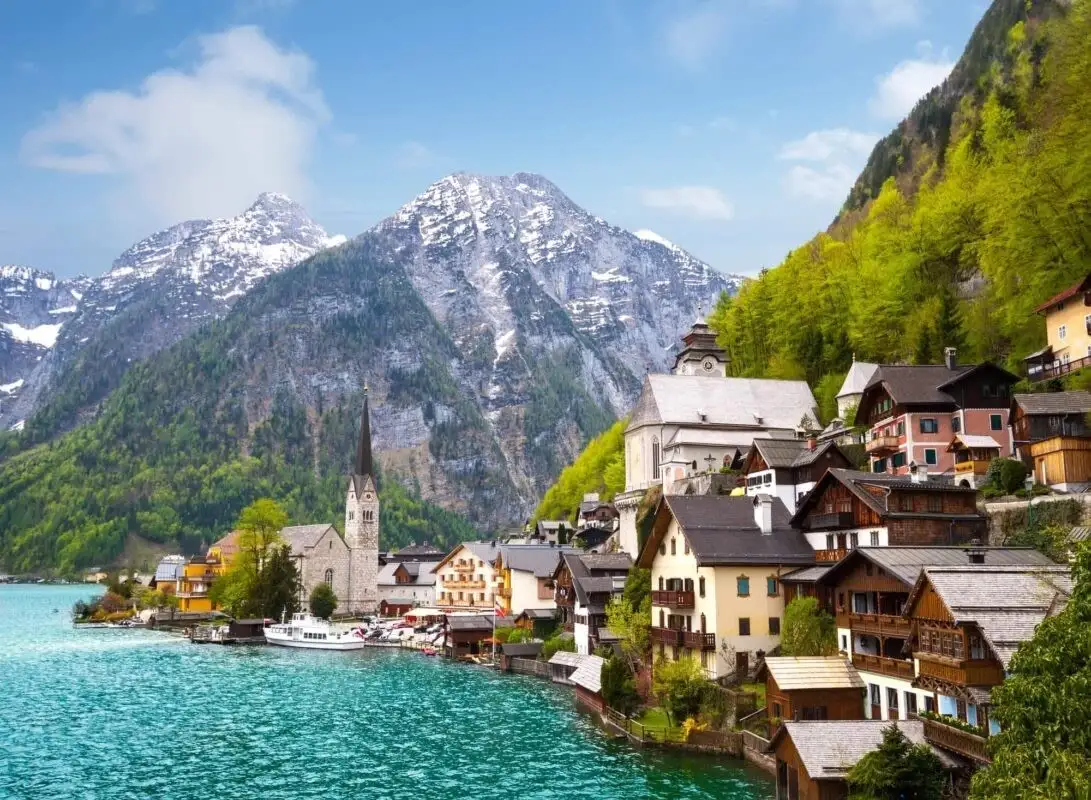
14 Most Beautiful Villages in Austria: Discover the Hidden Gems

Trip image
Italy
Villages

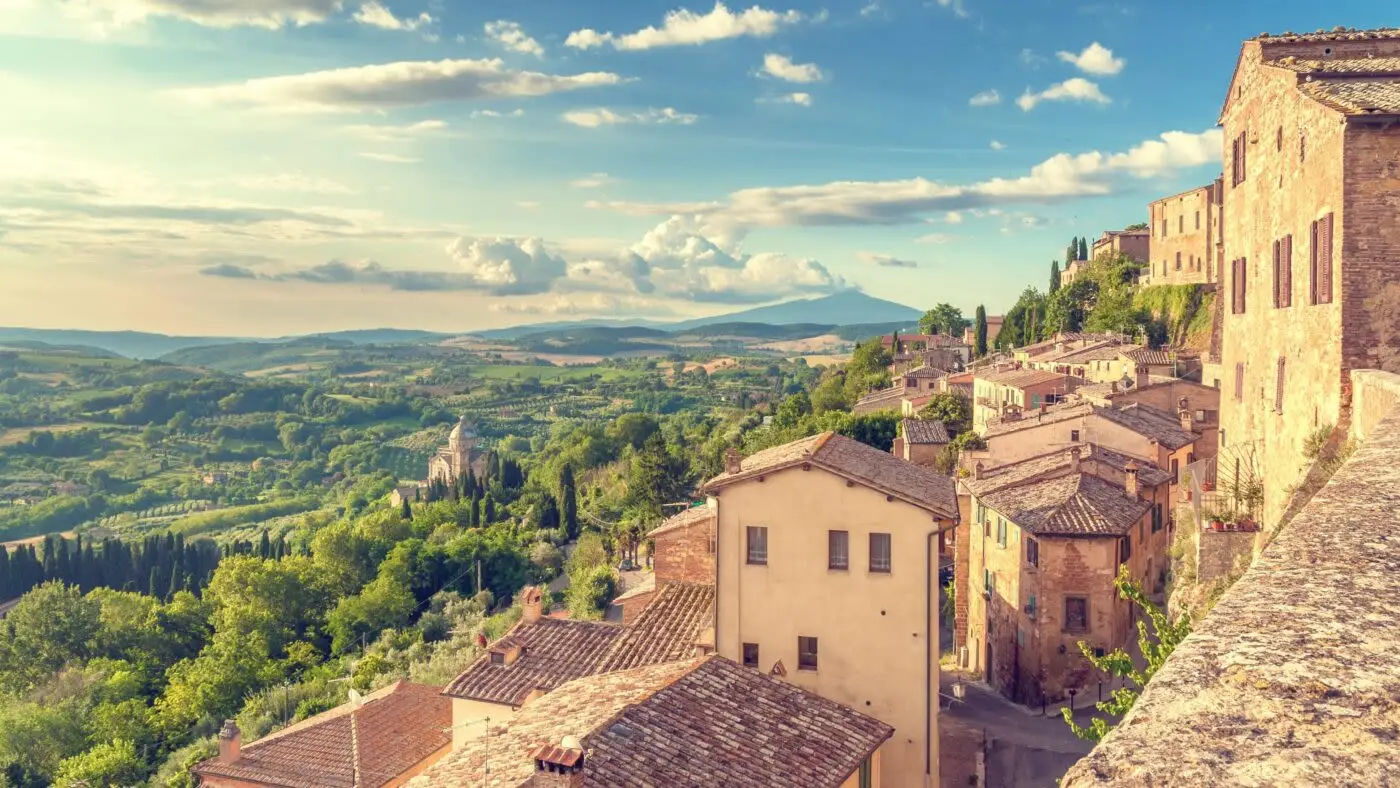
12 Most Beautiful Towns and Villages in Tuscany

Trip image
Germany
Villages

15 Most Beautiful Towns & Villages in Germany

Our Customers Say It Best

Malini Dutta, Boston, Massachusetts
We can't thank you enough for the detailed plans, maps, and suggestions. It really felt that someone was holding our hands and showing us around. We had all the excitement of discovering foreign lands, with none of the problems that can happen while negotiating unfamiliar places. In fact, all the cities felt like home within a few hours of arriving and exploring.
Bev and Mark Frankel, Williamsburg, Virginia
We could not be more pleased with Go Real Travel! You took the guess work out of things like public transport but still managed to allow us the freedom to tour as we wanted. Our guides were exceptional and every time I saw a Viking Cruise tour of 25 people, I realized the quality experience we were getting with Go Real.
Marianne Strydom, Paarl, South Africa
I just wanted to thank you for organizing an amazing trip for me – I packed in so much in such a short period of time and everything was just perfect. The way you do things makes it possible to really get to know the destination, which for me as a travel agent could not have been better.
Otto Chuy, Los Angeles, California
I am still surprised how everything worked as planned, without a hitch. All instructions in your itinerary were precise and correct. Your suggestions and comments in each of the locations we went to were very helpful. All your guides, without exception, were wonderful and exactly on time.

Explore cities in more detail

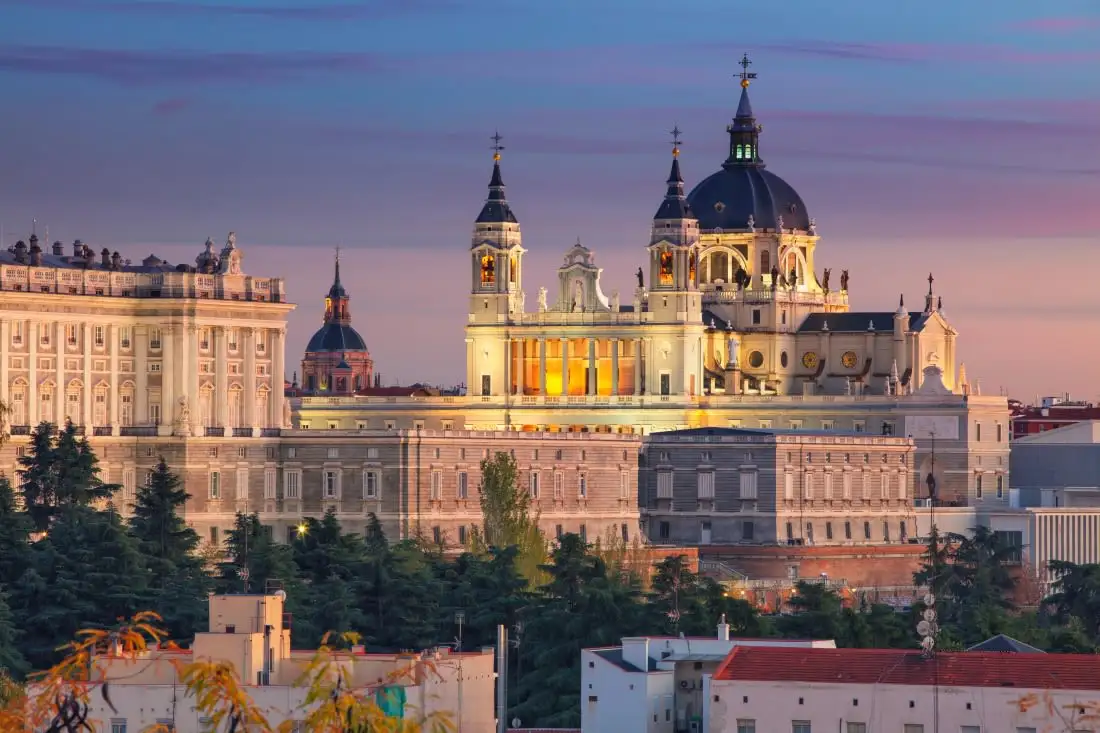
skyline of madrid with catedral de la almudena at sunset

Madrid

     What are the best Madrid recommendations for Madrid travel? Take two parts culture, two part history, douse it with art, sprinkle it all with lots of Spanish zest, and live vigorously: That's the recipe for Madrid, Spain's capital. Let Go Real be your guide to Madrid, the city alive with the rhythms of passionate flamenco on its cosmopolitan streets, inviting travelers into its warm embrace. Here, art enthusiasts can lose themselves in the hallowed halls of the Prado Museum, home to masterpieces by Velázquez, Goya, and El Greco, while the Reina Sofia and Thyssen-Bornemisza museums complete Madrid's famed Art Triangle, offering a journey through centuries of art history. The city's culinary scene is equally compelling, with tapas bars and bustling markets like Mercado San Miguel offering a taste of Spain's rich gastronomic heritage through an array of tapas, wines, and cheeses. Madrid's architectural splendor is evident in its royal palaces, ornate plazas, and expansive parks, such as the Retiro, a green oasis in the heart of the city where locals and tourists alike find respite by its serene lake.  As night falls, Madrid's streets come alive with an infectious energy, from the historic tapas bars in the Latina district to the chic dancehalls in Malasaña and Chueca, reflecting the city's open-hearted spirit and its inhabitants' joie de vivre. With Go Real's Madrid sightseeing guide and using our Madrid tips, you will find the best place to bask in the sun at a lively terrace café, explore the treasures of the Hapsburg Madrid, or discover your own precious finds at Rastro's flea market. With our best Madrid travelguide, the city offers an endless array of experiences that beckon the curious traveler to taste its many charms.

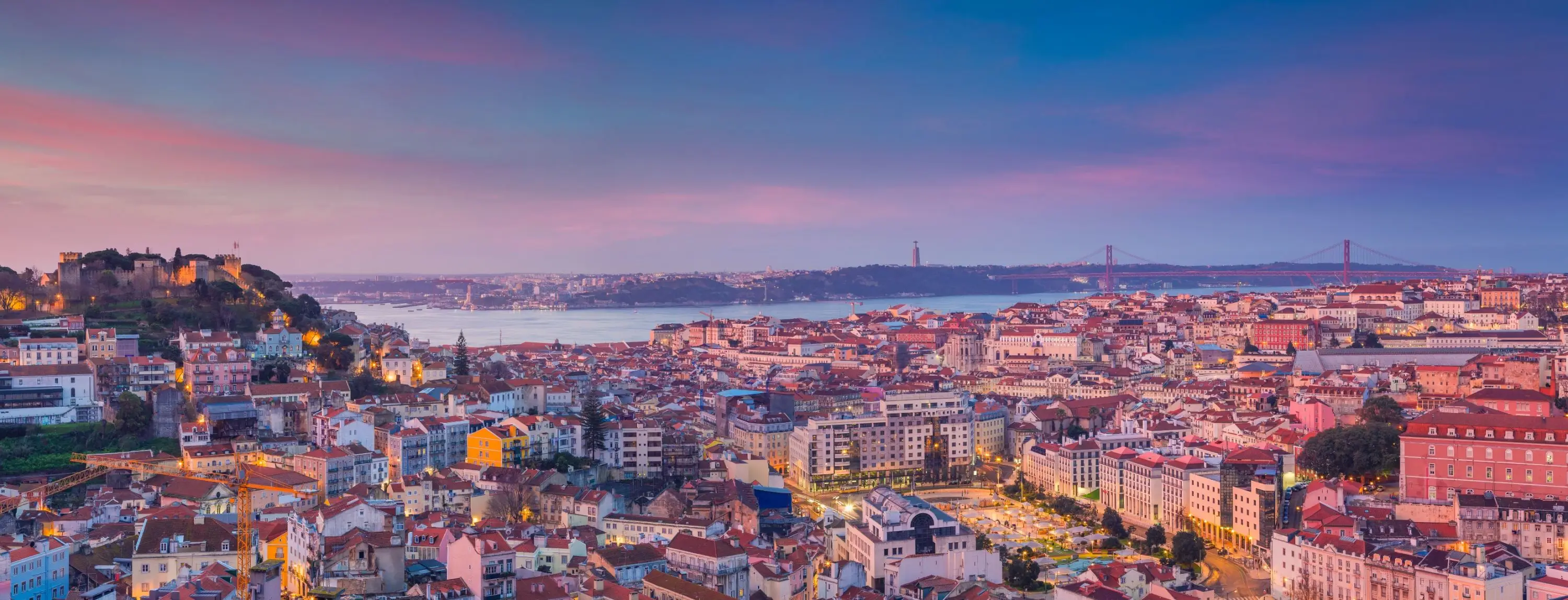
Lisbon at Sunrise

Lisbon

The charm of Lisbon is simply irresistible. One of Europe's "forgotten" capitals, Lisbon effortlessly blends old-world history with a modern, cosmopolitan vibe. A must-visit destination for any traveler, Lisbon offers iconic sights like the historic Belém Tower and the stunning Jerónimos Monastery, both UNESCO World Heritage Sites. There is so much to experience in this city, and it helps to explore it through your own personal interests. Foodie? You’re in luck. Lisbon's cuisine will capture your heart with fresh seafood at Mercado da Ribeira and the famed pastéis de nata from Pastéis de Belém. Love history? Discover the city’s past through the ancient streets of Alfama, where every corner unveils a piece of Lisbon’s storied heritage, from Roman influences to the Age of Exploration. Art and architecture lovers will be enchanted by the Azulejos (traditional tiles) that decorate the city, or can dive into contemporary works at the MAAT museum. And as you climb the hills of Bairro Alto or gaze across the city from the iconic viewpoint at Miradouro da Senhora do Monte, you'll realize that Lisbon’s beauty never fades. Whether riding a vintage tram through the narrow streets or watching the sunset over the River Tagus, it’s easy to fall in love with this sun-drenched gem of Portugal.

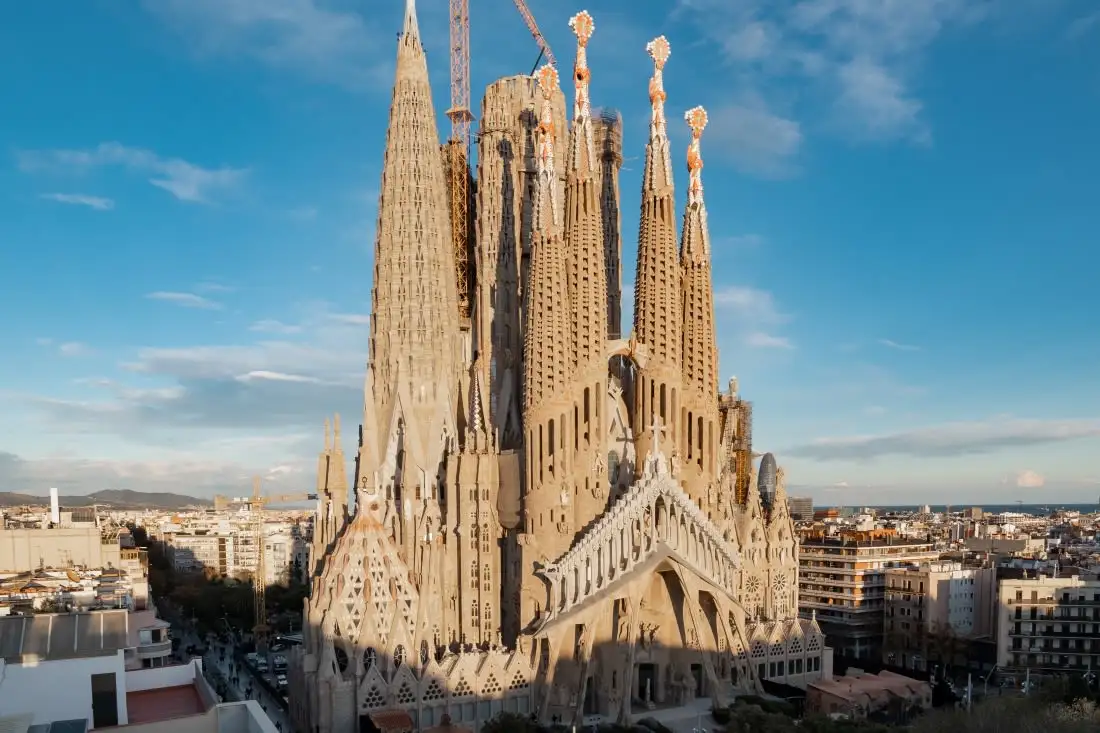
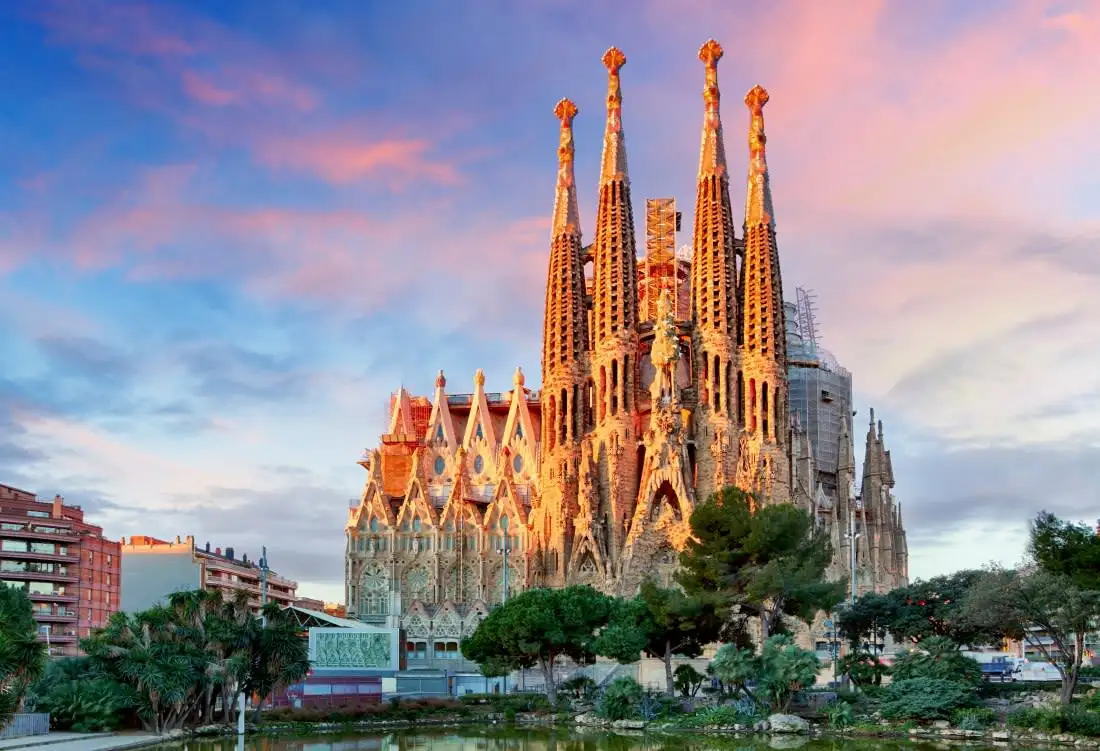
Sagrada Familia in Barcelona at sunset

Barcelona

Barcelona, the cosmopolitan capital of Catalonia, is a city that dances to a rhythm of its own. Known for its architectural wonders and vibrant street life, this city is a tapestry of rich history and contemporary culture. Wander through its bustling streets and you'll feel the pulse of heritage and innovation beating as one. From the awe-inspiring Sagrada Familia to the colorful mosaics of Park Guell, Barcelona offers endless avenues to explore and discover. As the sun sets, the city transforms into a lively spectacle of lights and shadows, inviting you to indulge in its culinary delights and spirited nightlife. Whether you’re soaking up the Mediterranean sun on its beaches or exploring its Gothic quarters, Barcelona promises an unforgettable journey that will captivate your heart and stir your soul.

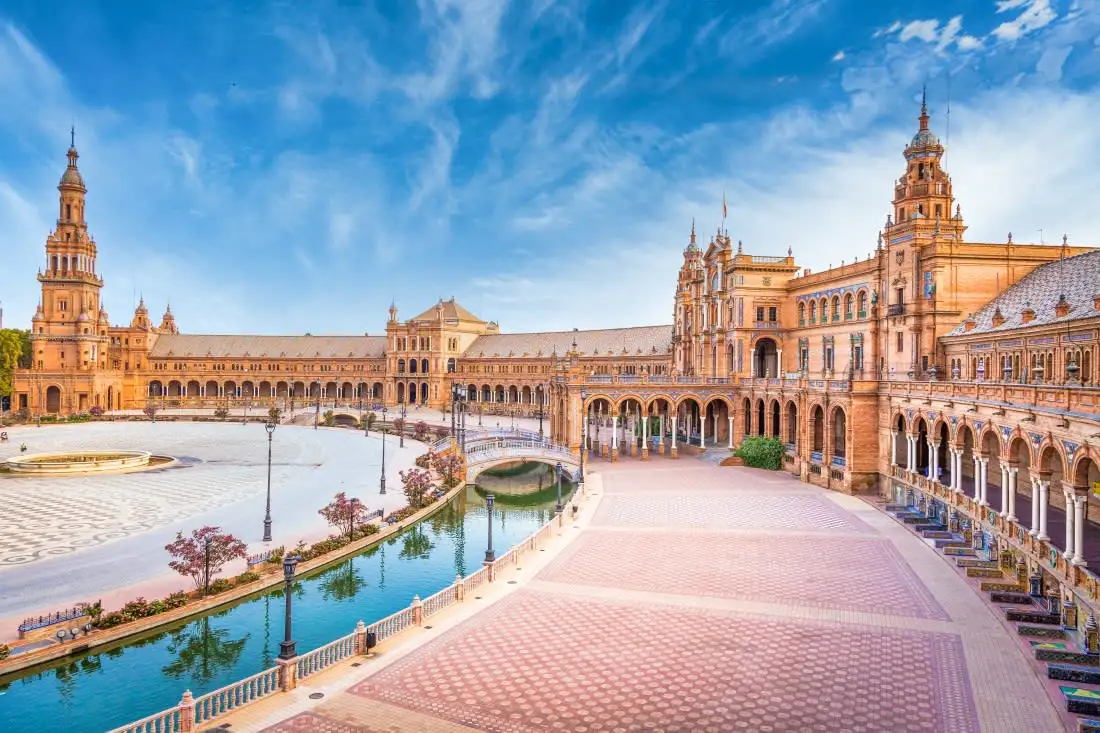
Plaza de España

Seville

Seville, the capital of Spain's Andalusia region, is a city rich in history and culture. Architectural marvels like Plaza de España, Seville Cathedral, and the Alcazar reflect its storied past, while its vibrant cuisine and flamenco music showcase its lively present. Key landmarks include the Giralda, a minaret turned bell tower, and the bustling old town, filled with narrow streets, traditional tapas bars, and lively plazas. Whether exploring historical sites or savoring local flavors, Seville captivates with its spirited atmosphere and colorful heritage, making it a true center of Spanish culture and tradition.

malaga cathedral and castle cityscape

Malaga

Málaga, a gem on Spain’s sun-drenched Costa del Sol, is a city that effortlessly blends the charm of its Moorish past with the vibrancy of modern Mediterranean life. Nestled between the azure waves of the Alboran Sea and the rolling hills of Andalusia, Málaga invites you to explore its rich history, from the ancient Alcazaba fortress to the birthplace of Picasso. Wander through bustling plazas lined with palm trees, sip sangria at a beachside chiringuito, and feast on fresh seafood at the lively Atarazanas Market. This city is a sensory delight where sun-kissed days melt into nights buzzing with flamenco rhythms and the laughter of locals enjoying late-night tapas. Whether you're seeking cultural treasures, coastal relaxation, or a taste of Andalusian zest, Málaga promises a vibrant, warm, and unforgettable escape.
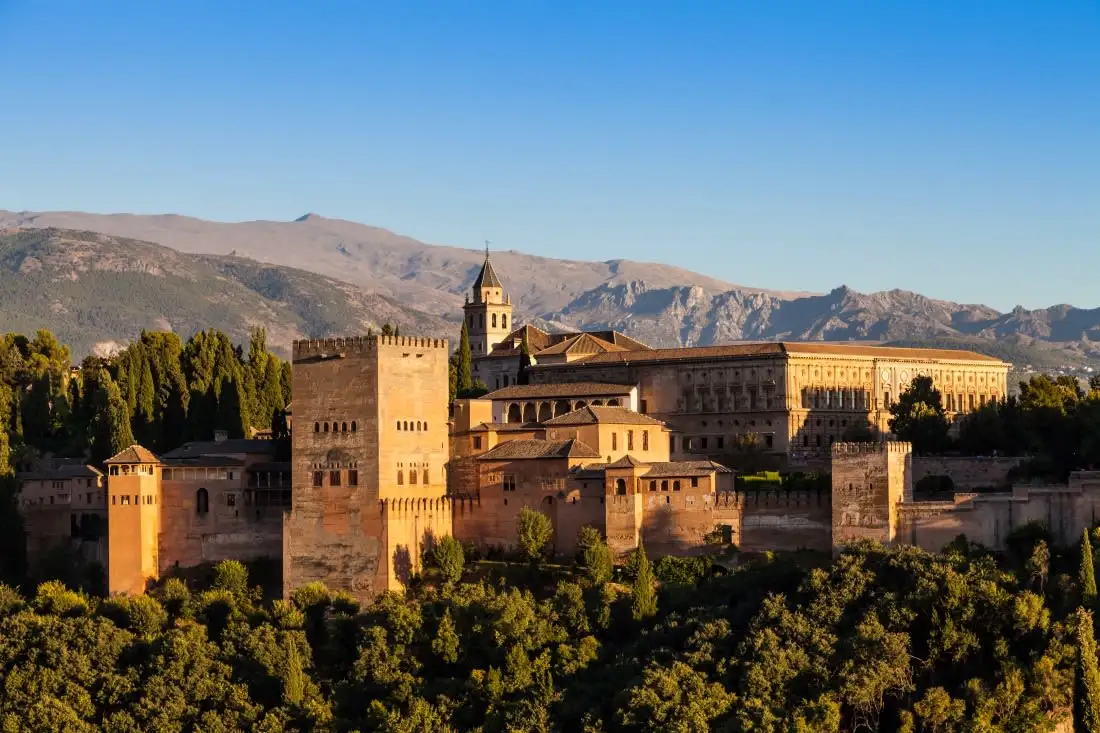
a view of the alhambra with mountains in background

Granada

Granada is a city where history, culture, and natural beauty converge to create an unforgettable travel experience. At the heart of this enchanting destination lies the iconic Alhambra Palace, a breathtaking masterpiece of Moorish architecture that captures the essence of Spain's rich Islamic past. Wander through the Nasrid Palaces and be transported to a world of intricate designs and tranquil gardens. Explore the bustling streets of the Centro, where the Granada Cathedral stands as a monumental symbol of the city’s Catholic history. The nearby Albaicín district, with its narrow, winding streets, offers a glimpse into the daily life Granada’s Medieval past. Here, the Mirador de San Nicolás provides an amazing view of the Alhambra, especially magical at sunset when the palace glows against the backdrop of the Sierra Nevada mountains. Granada’s unique cuisine is a delightful fusion of Spanish and Moorish flavors, with tapas bars offering a taste of the city’s culinary traditions. Whether you’re savoring the local dishes, exploring historical sites, or simply enjoying the unique atmosphere, Granada promises a journey that’s as enriching as it is unforgettable.