Mid-Day/Afternoon: Graca & Alfama
Wander into Alfama, Lisbon’s oldest and most atmospheric neighborhood, where narrow alleyways twist between sun-bleached facades and traditional Fado melodies drift out of tucked-away taverns. This historic district clings to the hillside below the castle, and as you climb its maze of cobbled lanes, you'll uncover viewpoints, tiled courtyards, and a glimpse into Lisbon’s soul. Just uphill from here, the neighborhood of Graça offers a quieter, more local vibe. From the panoramic terrace of Miradouro da Senhora do Monte to unassuming cafés where life ticks by at a relaxed pace, Graça makes a perfect complement to Alfama's intensity.
Our Lady of the Mountain Viewpoint
Start or end your day with the spectacular views from the Chapel of Our Lady of the Mountain.
This scenic viewpoint of Our Lady of the Mountain, known in Portuguese as Capela da Senhora do Monte, is situated at one of the highest points in Lisbon, providing an exceptional vantage point over the city. Built in the late 18th century, the chapel is dedicated to Our Lady of the Mountain, a revered figure among locals. The simple yet charming interior houses a revered statue of the Virgin Mary. Outside, the chapel's terrace offers a breathtaking panoramic outlook over the city, including the Castle of São Jorge, the River Tagus, and the downtown area. It's a perfect spot for photography and enjoying the sunset.
São Jorge Castle
Discover the historic Castelo de São Jorge with its impressive fortifications and panoramic views over Lisbon.
Castelo de São Jorge, perched atop one of Lisbon's highest hills, is a testament to the city's rich history, dating back to the 11th century. The structure was built by the Moors upon fortifications going back to at least the Roman Empire. The castle has been a royal residence and military stronghold over the centuries. Today, visitors can explore the well-preserved ramparts, towers, and courtyards, while enjoying breathtaking views of the city and the Tagus River, making it a must-visit attraction for history enthusiasts and sightseers.
Panteão Nacional
Meet some Portuguese notables and heros...
Most likely, we don't know the names of many of the people who are buried here, memorialized in the National Pantheon of Portugal. But we probably could learn something from their lives. The Panteão Nacional is sacred space. Step in here to make a deeper understanding of the Portugal, and its people.
São Vicente de Fora Church and Monastery
Visit the tombs of the Royal Family at this church and monastery
Discover the historic São Vicente de Fora Church and Monastery, a masterpiece of Mannerist architecture that stands as one of Lisbon's most significant religious sites. Built in the late 16th century under the orders of King Philip II of Spain, this complex is dedicated to Saint Vincent, the patron saint of Lisbon.The monastery, still partially active, houses the royal pantheon of the Braganza dynasty and offers visitors a peaceful cloister and a museum showcasing religious art and historical artifacts. The terrace provides stunning views over the Alfama district and the Tagus River.
Afternoon/Late Afternoon: Tile Museum
This is a beautiful visit...
Just a little outside the main tourist destinations rest a museum central to Portuguese expression, the National Tile Museum. The museum recounts the importance of azulejos (pronounced AH-zoo-lay-zho) in Portugal. Azulejos can be traced back to their introduction during the 15th century, incorporating past influences of the Moors, who brought the technique from North Africa. (Decorative tiles themselves go back much farther, making an appearance at least as early as almost 5000 years ago in Egypt.) Over time, Portuguese artisans developed their own styles, incorporating local motifs, religious themes, and historical events into the designs. Azulejos became a means of storytelling, capturing significant moments in Portugal's history and everyday life.
Their widespread use also demonstrates the country's cultural exchanges during the Age of Exploration, reflecting influences from Asia, Africa, and the Americas. Azulejos are celebrated for their artistic merit, showcasing intricate patterns and vibrant colors that enhance the architectural beauty of Portuguese cities.
Today, azulejos remain a symbol of national pride, preserving Portugal's historical narratives and artistic achievements while continuing to inspire contemporary art and design.
All these aspects and more are beautifully illustrated at the museum, housed in the former Franciscan convent of the Madre de Deus (Convent of the Mother of God). The structure still boasts the otherworldly splendor of the gold-leafed church and choir. This visit is truly a feast for the eyes.
Late Afternoon/Early Evening: Baixa
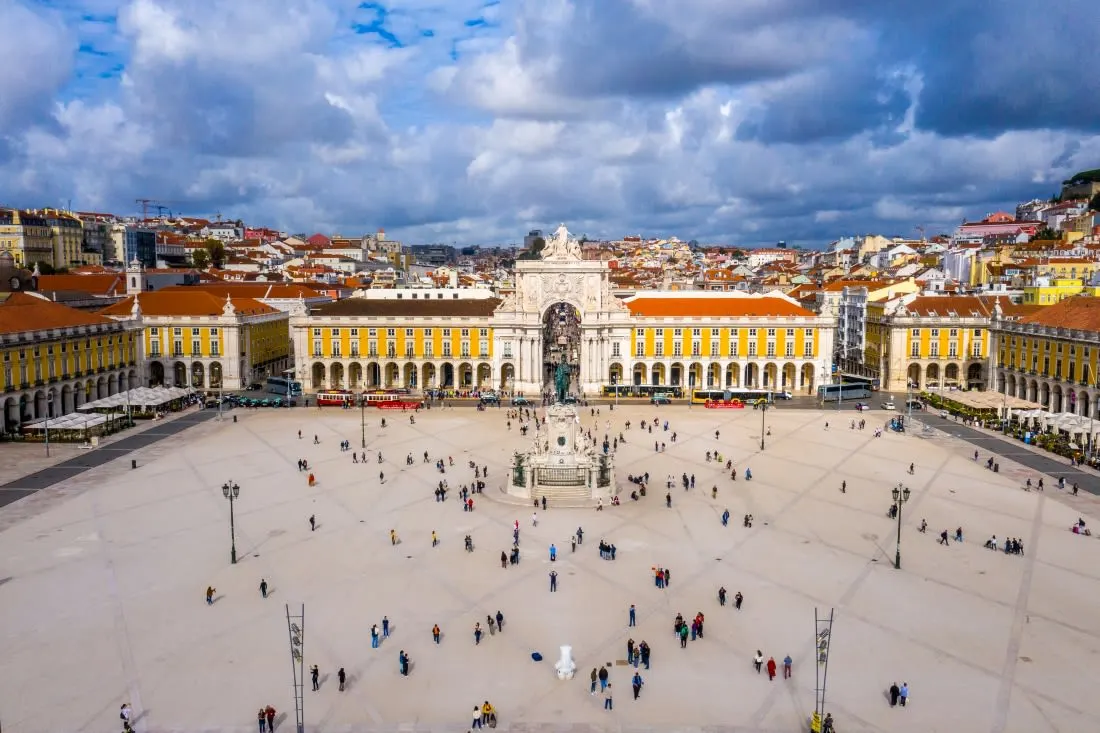
The Baixa neighborhood, also known as Baixa Pombalina, is the bustling downtown district of Lisbon, meticulously rebuilt after the devastating 1755 earthquake under the direction of the Marquês de Pombal. This area is characterized by its grand neoclassical architecture, broad squares, and straight, grid-like streets. Highlights include the majestic Praça do Comércio, a riverside square offering stunning views of the Tagus River and a grand triumphal arch; Rossio Square, famous for its wave-patterned pavement and lively cafés; and Rua Augusta, a vibrant pedestrian street lined with shops, restaurants, and street performers. Baixa is the perfect place to experience Lisbon's rich history, shop for souvenirs, and enjoy traditional Portuguese cuisine.
Sé de Lisbon (Lisbon Cathedral)
Step inside Lisbon's oldest church, the Sé Cathedral, a historical marvel with stunning architectural features.
Sé de Lisboa, also known as the Lisbon Cathedral, is the city’s oldest church, built in 1147 after the reconquest from the Moors. The cathedral showcases a blend of Romanesque, Gothic, and Baroque architectural styles, with notable features like the rose window, Gothic cloister, and a treasury of sacred art. Its historical significance and stunning interior make it a must-visit landmark for anyone exploring Lisbon.
Arco da Rua Augusta
It's not the oldest archway in the world, but gosh is it beautiful!
The Arco da Rua Augusta is a grand triumphal arch located at the northern end of Praça do Comércio in Lisbon's Baixa district. Completed in 1875, it commemorates the city's reconstruction after the devastating 1755 earthquake. The arch is adorned with statues of historical figures, including Vasco da Gama and the Marquis of Pombal, and offers panoramic views of Lisbon from its terrace. It serves as a gateway between the bustling Rua Augusta and the expansive Praça do Comércio.
Praça do Comércio
This square opened up onto the riches of the world.
Praça do Comércio, also known as Terreiro do Paço, is a large, waterfront square in Lisbon, bordered by classical 18th-century buildings. It was once the site of the Royal Ribeira Palace before the 1755 earthquake, and today, it is a symbol of Lisbon's resilience and renewal. The square features the Arco da Rua Augusta and a central statue of King José I on horseback. It serves as a central hub for both locals and tourists, offering cafés, restaurants, and views of the Tagus River.
Carmo Archaeological Museum / Igreja do Carmo
A visit to this museum will show you just how deep Portugal's history goes.
The Igreja do Carmo, also known as the Carmo Convent, is a former Gothic church in Lisbon that was partially destroyed in the 1755 earthquake. The convent now houses the Carmo Archaeological Museum, which established in 1864, showcases a diverse collection of artifacts ranging from prehistoric times to the Middle Ages, including tombs, ceramics, and ancient sculptures. Visitors can explore the evocative open-air nave, where the remains of the church's roofless arches frame the sky, creating a striking backdrop for the exhibits.