Exploring the Best of Paris, Amsterdam, and Rome

destination-icon10 Day Tour of Paris, Amsterdam and Rome

Destinations on this trip: Paris,Amsterdam,Rome

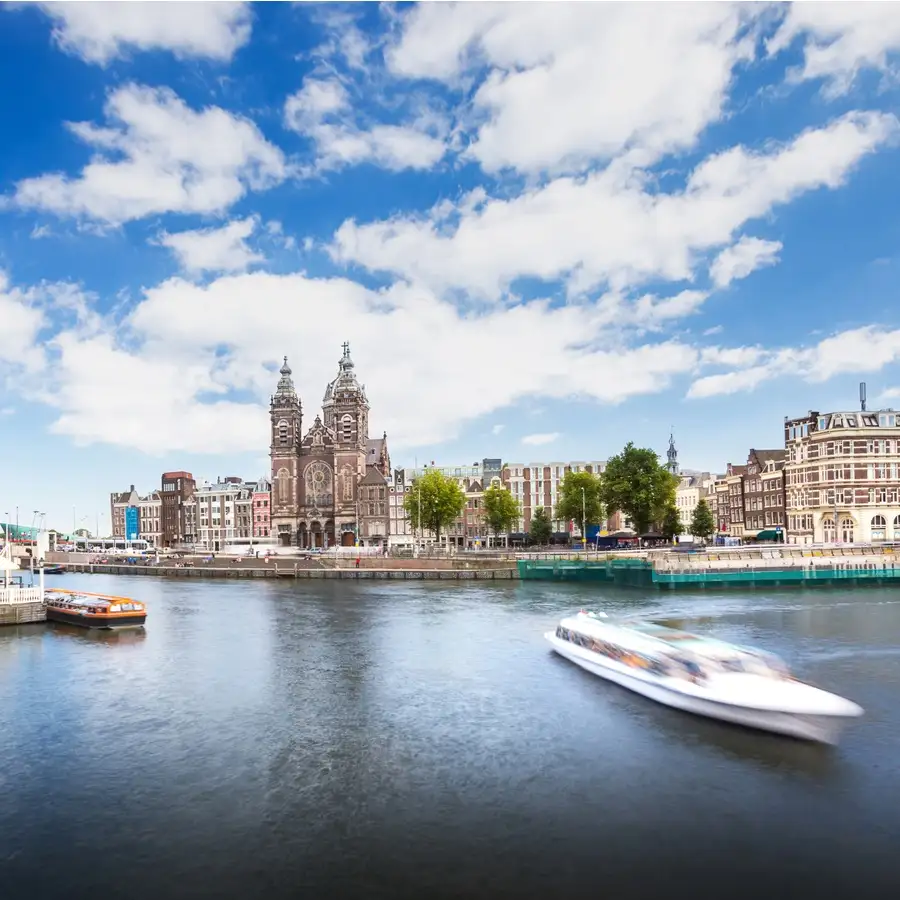
Zuiderkerk in Amsterdam
Paris view with Eiffel Tower
Trevi Fountain in Rome
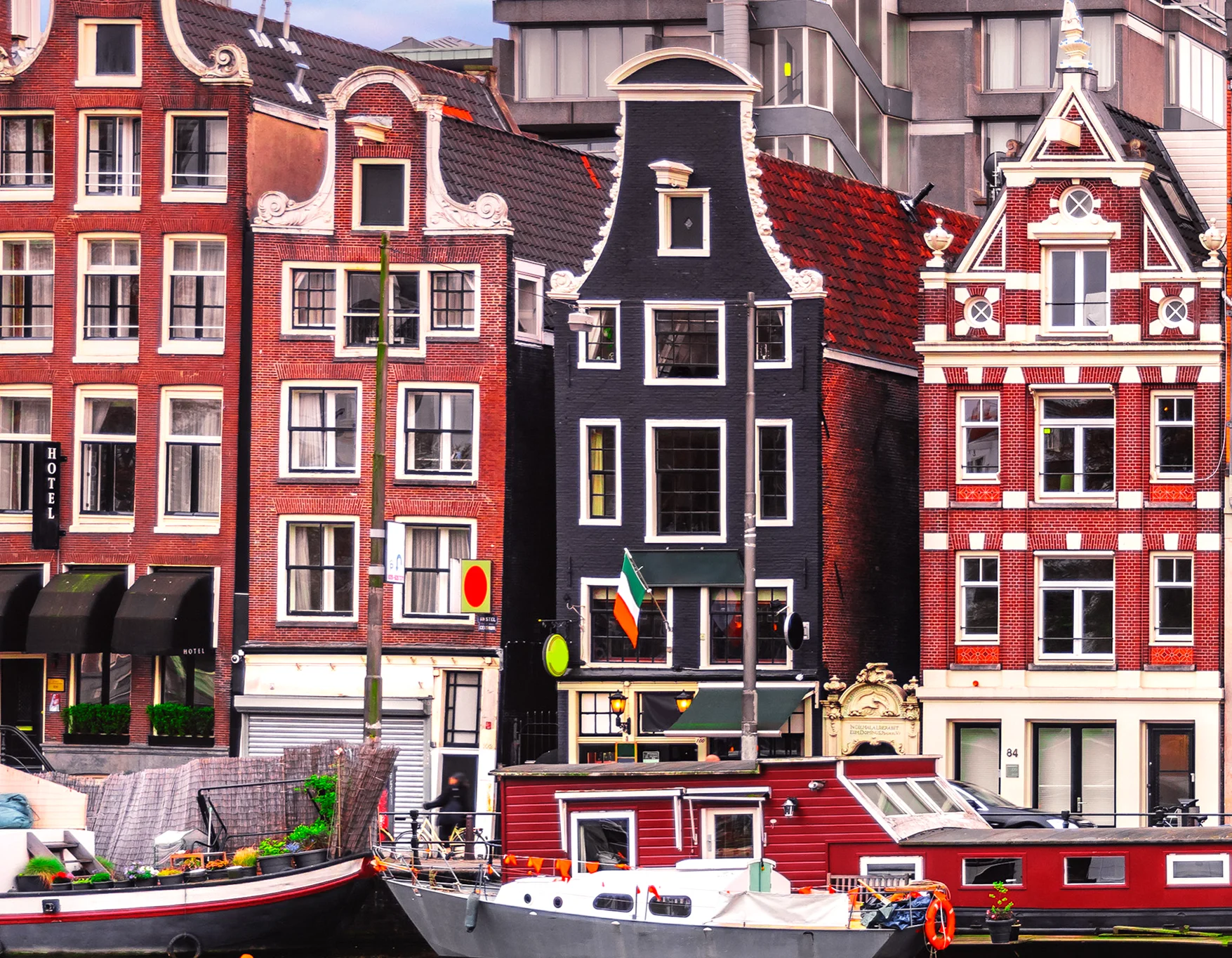
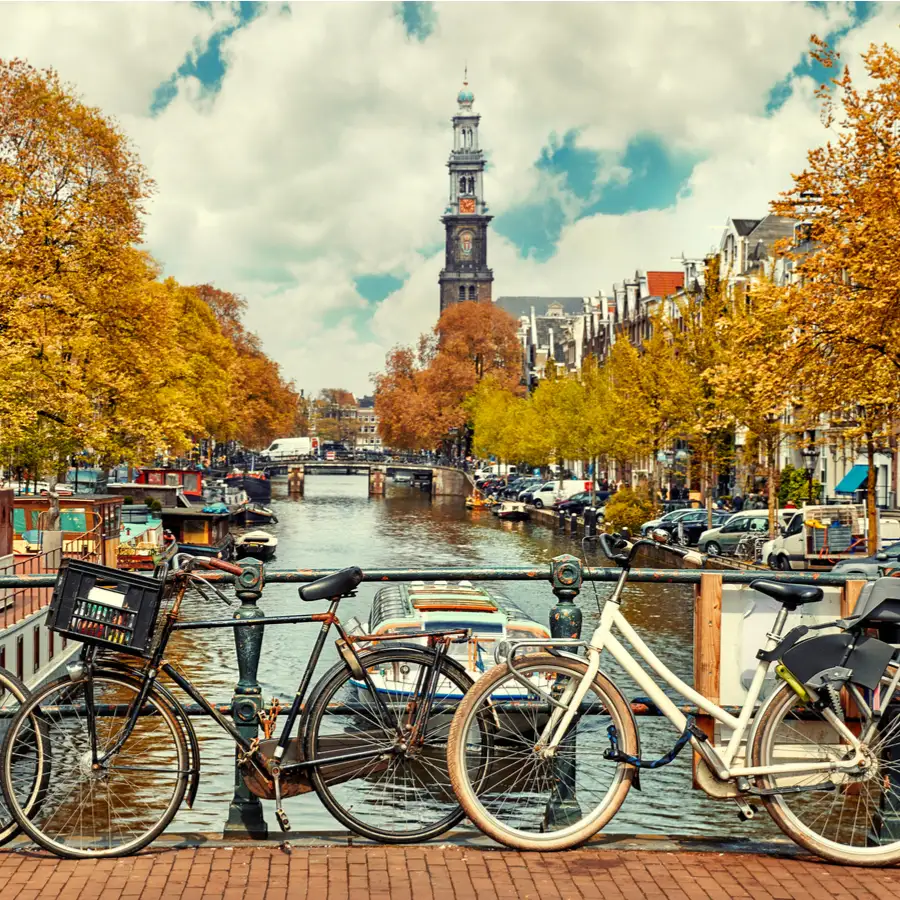
Bicycles in front of canal in Amsterdam
image
arrowLightLeft
arrowLightRight

How Long Is the European City Trifecta Trip and What Does It Cost?

Cultural ExplorationVisiting Museums & Art Galleries
  • Duration
    10 days / 9 nights
  • Best time
    Jan-Dec
  • From
    $2980 / person (Flights not included)
Experience three diverse old-world cultures on our 10-day journey to Paris, Amsterdam, and Rome. These cities are emblematic of the best that Europe offers, and incredible art, fantastic food, and stunning architecture await you. Paris enchants with romantic alleys and offers an unparalleled collection of art in the Louvre Museum. Amsterdam reveals a vibrant fabric woven alongside its iconic canals, and hosts its own masterpieces within the Rijksmuseum. In Rome, ancient history and culinary delights blend seamlessly. With private tours in each city, you'll enjoy a fast-paced but immersive itinerary, made easy by comprehensive travel guidance.
  • See impressionist masterpieces in the Musée d'Orsay amidst the backdrop of a beaux-arts rail station
  • Experience the must-see collections of the Vatican Museums, including the Sistine Chapel
  • Feel the pulse of Amsterdam at Dam Square, a bustling hub of history and modern-day Dutch life
  • Marvel at the Colosseum, a testament to both the ingenuity and cruelty of Ancient Rome
  • Stand beneath the Arc de Triomphe, symbol of French glory and gateway to the elegant Champs-Élysées
Experience three diverse old-world cultures on our 10-day journey to Paris, Amsterdam, and Rome. These cities are emblematic of the best that Europe offers, and incredible art, fantastic food, and stunning architecture await you. Paris enchants with romantic alleys and offers an unparalleled collection of art in the Louvre Museum. Amsterdam reveals a vibrant fabric woven alongside its iconic canals, and hosts its own masterpieces within the Rijksmuseum. In Rome, ancient history and culinary delights blend seamlessly. With private tours in each city, you'll enjoy a fast-paced but immersive itinerary, made easy by comprehensive travel guidance.
  • See impressionist masterpieces in the Musée d'Orsay amidst the backdrop of a beaux-arts rail station
  • Experience the must-see collections of the Vatican Museums, including the Sistine Chapel
  • Feel the pulse of Amsterdam at Dam Square, a bustling hub of history and modern-day Dutch life
  • Marvel at the Colosseum, a testament to both the ingenuity and cruelty of Ancient Rome
  • Stand beneath the Arc de Triomphe, symbol of French glory and gateway to the elegant Champs-Élysées
Eiffel Tower - Must-See Sight
Eiffel Tower
Historic Landmarks
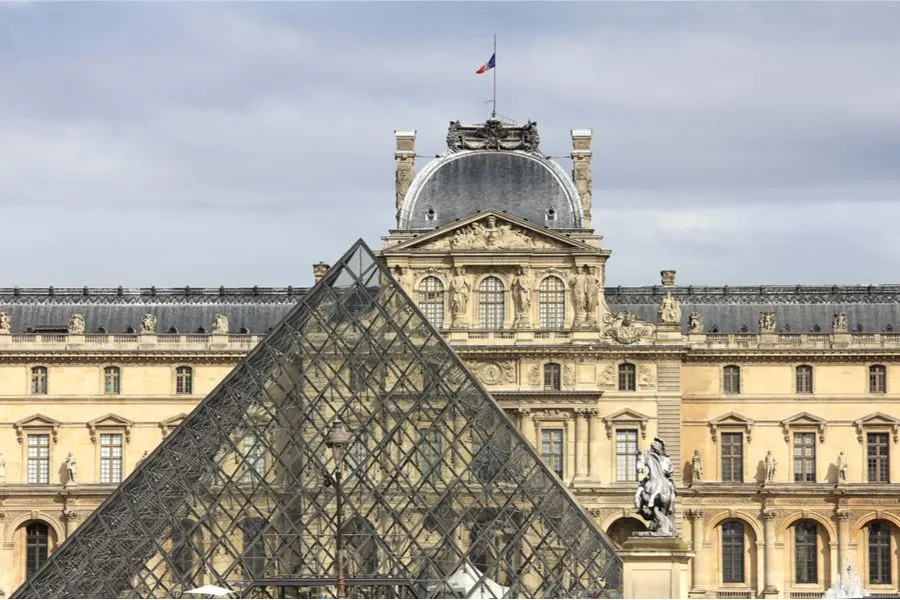
Louvre Museum - Must-See Sight
Louvre Museum
Museums & Galleries
Old Town - Must-See Sight
Old Town
Historic Landmarks
Museum Quarter - Must-See Sight
Museum Quarter
Museums & Galleries
Colosseum - Must-See Sight
Colosseum
Historic Landmarks
Vatican City - Must-See Sight
Vatican City
Churches & Monasteries

Must see sights

Eiffel Tower - Must-See Sight
Eiffel Tower
Historic Landmarks
Louvre Museum - Must-See Sight
Louvre Museum
Museums & Galleries
Old Town - Must-See Sight
Old Town
Historic Landmarks
Museum Quarter - Must-See Sight
Museum Quarter
Museums & Galleries
Colosseum - Must-See Sight
Colosseum
Historic Landmarks
Vatican City - Must-See Sight
Vatican City
Churches & Monasteries
Loading...

Starting from

$2980

per person

no-flightNot included

Price varies by group size, hotel selection, and travel season.


Secure Your Customizable Trip

Enter your details to embark on a journey that can be tailored just for you.

Start

Travelers

0 travelers
Add Room
Remove Room

Preferred Hotel Stars

Select Hotel Stars
Craft Your Own Itinerary

Select your interests and destinations for a trip plan inspired by you.

Where Does the European City Trifecta Trip Trip Go?

Enable/Disable Map Scrolling

Click To Make Map Interactive

European City Trifecta Trip Timeline

Arrival

3 nights

Paris

France

Train: 3.5h

2 nights

Amsterdam

Netherlands

Air: 2h15m

4 nights

Rome

Italy

Departure

What Does the European City Trifecta Trip Itinerary Look Like?
image

Day 1

Arrive Paris

Day 1

Arrive Paris

icon
icon
icon

To Be Determined

Airport Taxi Pick-Up

Upon arrival at one of Paris's Charles de Gaulle or Orly Airports, it's fairly easy to catch a taxi from outside the main terminal building to your hotel. This is cheaper than a pre-arranged private transfer, although that option is also available if you wish - just ask your consultant. Parisien taxi drivers are generally reliable and honest, but we will provide you with instructions on how to avoid possible scammers and charlatans. If you want to save money, and often quite a lot of time as well, we will also give you alternative instructions on taking public transport into the city center. Details are contained in the full itinerary and mobile app available to our travelers. If on the other hand, you are arriving at Paris's third airport, Beauvais Airport (BVA), then you should always take the shuttle bus. The taxi fare might cost more than the flight - it's  nearly 50 miles (75km) outside the city.

Airport Taxi Pick-Up

To Be Determined — Airport Taxi Pick-Up

Upon arrival at one of Paris's Charles de Gaulle or Orly Airports, it's fairly easy to catch a taxi from outside the main terminal building to your hotel. This is cheaper than a pre-arranged private transfer, although that option is also available if you wish - just ask your consultant. Parisien taxi drivers are generally reliable and honest, but we will provide you with instructions on how to avoid possible scammers and charlatans. If you want to save money, and often quite a lot of time as well, we will also give you alternative instructions on taking public transport into the city center. Details are contained in the full itinerary and mobile app available to our travelers. If on the other hand, you are arriving at Paris's third airport, Beauvais Airport (BVA), then you should always take the shuttle bus. The taxi fare might cost more than the flight - it's  nearly 50 miles (75km) outside the city.

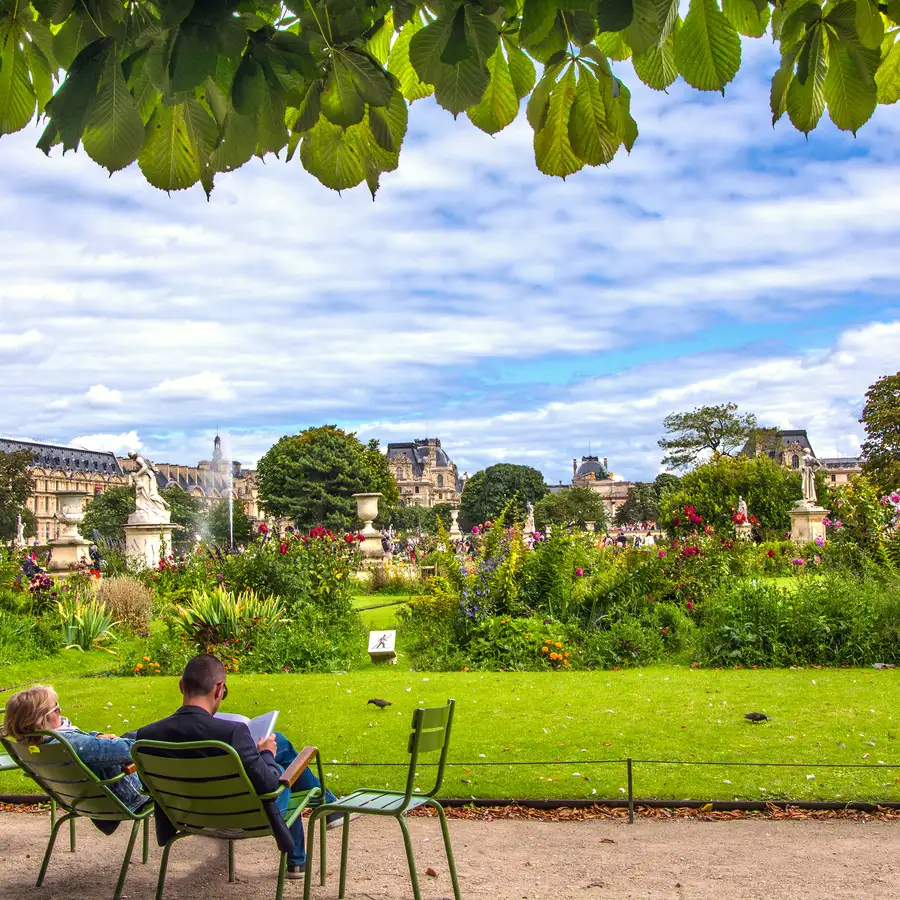
Mid-Day/Afternoon — Tuileries Gardens & Nearby Museums

Stroll in the Tuileries and attend one of the nearby museums, a classic way to spend your free hours in Paris. Originally cultivated in 1564 as the grounds for the Tuileries Palace, the gardens are the oldest in Paris. Its succession of royal owners ended and the garden became a public park in the 19th century; Parisians congregated to relax and socialize beside the fountains and leafy horse chestnut trees - they still do today. The Musée de l'Orangerie, in the Western corner of the gardens, exhibits many Impressionist and 20th-century artworks, including Claude Monet’s famous water lilies.

Tuileries Garden

Relax in the beautiful Tuileries Gardens, an oasis of manicured landscapes and historic statues in the heart of Paris.

The Tuileries Gardens, located next to the Louvre Museum, offer a peaceful retreat amidst the bustling city. Originally created as the royal gardens for the Tuileries Palace in the 16th century, they represent a classic example of French garden design. Visitors can marvel at the array of statues, including works by Rodin and Maillol, stroll along its perfectly aligned trees and flowerbeds, and enjoy panoramic views of the Seine and the Eiffel Tower.

Museum d'Orsay

Soak it all in at the Musée d'Orsay, a former Beaux-Arts railway station transformed into a stunning showcase of Impressionist and Post-Impressionist masterpieces.

The Musée d'Orsay, housed in an elegantly converted railway station, offers a world-renowned collection of Impressionist and Post-Impressionist art, featuring works by masters like Monet, Van Gogh, and Renoir. Its unique architecture, with grand clocks and sweeping galleries, complements the diverse array of sculptures, paintings, and decorative arts on display. A visit to the Musée d'Orsay is not just a tour of art history, but an immersive experience in a space where the past and present merge beautifully.

Orangerie

Let your vision swim with Monet's Water Lilies and other Impressionist artwork at the Musée de l'Orangerie

The Musée de l'Orangerie, nestled in a corner of the Tuileries Gardens, exhibits the stunning "Water Lilies" series by Claude Monet. This series of large-scale paintings, designed specifically for the two oval rooms they inhabit, offers an immersive experience into Monet's impressionist vision of his garden at Giverny. Beyond Monet, the museum boasts the Jean Walter and Paul Guillaume collection, featuring masterpieces by renowned artists such as Renoir, Cézanne, Matisse, Picasso, and Modigliani.   

Late Afternoon/Early Evening — Hôtel des Invalides

The Eglise du Dome Church close to the Eiffel Tower is where you observe the gilded tomb of the historic French General and Emperor, Napoleon, but his bones are just a miniscule part of the gigantic Hôtel des Invalides housing the French National Army Museum. Spend some time learning about French warfare from the earliest times to the wax and wane of the Napoloenic Wars and on to the modern French army and a new section dedicated to the life of General Charles de Gaulle.

Napoleon's Tomb

Discover the tomb of one of history's most fearsome generals, and a controversial figure of the 19th century.

Reflect at the sarcophagus resting underneath the dome of Les Invalides' church - Napoleon's tomb is as still as his life was frenetic. Crafted from red quartzite and set upon a green granite base within a circular crypt, Napoleon's sarcophagus is surrounded by a series of statues representing his victories and achievements. The entire ensemble, designed with solemn grandeur, reflect both the power and complexity of his legacy. But visitors can come and go please, this great general commands no one now.

The Army Museum

Exploring the martial history of France in this regal strucure

Gather your forces and lay touristic seige to the French Army Museum and its immersive expositions of French military history from medieval times to the present. Will you conquer the extensive Medieval Collections, Napoleon Bonaparte's grand tomb, and detailed exhibits of the World Wars, or will they conquer you? These exhibts and more offer insights into the evolution of warfare, strategic intracacies, and personal narratives of conflict. A visit to the Army Museum encourages discussion about the contradictions and complexities of war, one of the most important, and disturbing, traits of our humanity.

Rodin Museum

Let the greatest sculptures of the 19th and 20th centuries inspire you

The remarkable sanctuary of art and beauty that is the Musée de Rodin displays the greatest works of the French sculptor Auguste Rodin. Nestled in the exquisite Hôtel Biron, and its serene garden, this museum invites visitors to discover the profound depth of Rodin's creativity. Thrill at the world-reknowned pieces "The Thinker" and "The Gates of Hell," among others, each piece exploring  human emotion and thought through its dynamic forms. Wander through the garden paths to encounter these and other masterpieces in an intimate setting, where the fusion of art and nature crafts a truly unforgettable experience.

image

Day 1

Arrive Paris


icon
icon
icon

To Be Determined:

Airport Taxi Pick-Up

Mid-Day/Afternoon:

Tuileries Gardens & Nearby Museums

Late Afternoon/Early Evening:

Hôtel des Invalides

Airport Taxi Pick-Up

Airport Taxi Pick-Up

Upon arrival at one of Paris's Charles de Gaulle or Orly Airports, it's fairly easy to catch a taxi from outside the main terminal building to your hotel. This is cheaper than a pre-arranged private transfer, although that option is also available if you wish - just ask your consultant. Parisien taxi drivers are generally reliable and honest, but we will provide you with instructions on how to avoid possible scammers and charlatans. If you want to save money, and often quite a lot of time as well, we will also give you alternative instructions on taking public transport into the city center. Details are contained in the full itinerary and mobile app available to our travelers. If on the other hand, you are arriving at Paris's third airport, Beauvais Airport (BVA), then you should always take the shuttle bus. The taxi fare might cost more than the flight - it's  nearly 50 miles (75km) outside the city.

To Be Determined — Airport Taxi Pick-Up

Upon arrival at one of Paris's Charles de Gaulle or Orly Airports, it's fairly easy to catch a taxi from outside the main terminal building to your hotel. This is cheaper than a pre-arranged private transfer, although that option is also available if you wish - just ask your consultant. Parisien taxi drivers are generally reliable and honest, but we will provide you with instructions on how to avoid possible scammers and charlatans. If you want to save money, and often quite a lot of time as well, we will also give you alternative instructions on taking public transport into the city center. Details are contained in the full itinerary and mobile app available to our travelers. If on the other hand, you are arriving at Paris's third airport, Beauvais Airport (BVA), then you should always take the shuttle bus. The taxi fare might cost more than the flight - it's  nearly 50 miles (75km) outside the city.

Mid-Day/Afternoon — Tuileries Gardens & Nearby Museums

Stroll in the Tuileries and attend one of the nearby museums, a classic way to spend your free hours in Paris. Originally cultivated in 1564 as the grounds for the Tuileries Palace, the gardens are the oldest in Paris. Its succession of royal owners ended and the garden became a public park in the 19th century; Parisians congregated to relax and socialize beside the fountains and leafy horse chestnut trees - they still do today. The Musée de l'Orangerie, in the Western corner of the gardens, exhibits many Impressionist and 20th-century artworks, including Claude Monet’s famous water lilies.

Tuileries Garden

Relax in the beautiful Tuileries Gardens, an oasis of manicured landscapes and historic statues in the heart of Paris.

The Tuileries Gardens, located next to the Louvre Museum, offer a peaceful retreat amidst the bustling city. Originally created as the royal gardens for the Tuileries Palace in the 16th century, they represent a classic example of French garden design. Visitors can marvel at the array of statues, including works by Rodin and Maillol, stroll along its perfectly aligned trees and flowerbeds, and enjoy panoramic views of the Seine and the Eiffel Tower.

Museum d'Orsay

Soak it all in at the Musée d'Orsay, a former Beaux-Arts railway station transformed into a stunning showcase of Impressionist and Post-Impressionist masterpieces.

The Musée d'Orsay, housed in an elegantly converted railway station, offers a world-renowned collection of Impressionist and Post-Impressionist art, featuring works by masters like Monet, Van Gogh, and Renoir. Its unique architecture, with grand clocks and sweeping galleries, complements the diverse array of sculptures, paintings, and decorative arts on display. A visit to the Musée d'Orsay is not just a tour of art history, but an immersive experience in a space where the past and present merge beautifully.

Orangerie

Let your vision swim with Monet's Water Lilies and other Impressionist artwork at the Musée de l'Orangerie

The Musée de l'Orangerie, nestled in a corner of the Tuileries Gardens, exhibits the stunning "Water Lilies" series by Claude Monet. This series of large-scale paintings, designed specifically for the two oval rooms they inhabit, offers an immersive experience into Monet's impressionist vision of his garden at Giverny. Beyond Monet, the museum boasts the Jean Walter and Paul Guillaume collection, featuring masterpieces by renowned artists such as Renoir, Cézanne, Matisse, Picasso, and Modigliani.   

Late Afternoon/Early Evening — Hôtel des Invalides

The Eglise du Dome Church close to the Eiffel Tower is where you observe the gilded tomb of the historic French General and Emperor, Napoleon, but his bones are just a miniscule part of the gigantic Hôtel des Invalides housing the French National Army Museum. Spend some time learning about French warfare from the earliest times to the wax and wane of the Napoloenic Wars and on to the modern French army and a new section dedicated to the life of General Charles de Gaulle.

Napoleon's Tomb

Discover the tomb of one of history's most fearsome generals, and a controversial figure of the 19th century.

Reflect at the sarcophagus resting underneath the dome of Les Invalides' church - Napoleon's tomb is as still as his life was frenetic. Crafted from red quartzite and set upon a green granite base within a circular crypt, Napoleon's sarcophagus is surrounded by a series of statues representing his victories and achievements. The entire ensemble, designed with solemn grandeur, reflect both the power and complexity of his legacy. But visitors can come and go please, this great general commands no one now.

The Army Museum

Exploring the martial history of France in this regal strucure

Gather your forces and lay touristic seige to the French Army Museum and its immersive expositions of French military history from medieval times to the present. Will you conquer the extensive Medieval Collections, Napoleon Bonaparte's grand tomb, and detailed exhibits of the World Wars, or will they conquer you? These exhibts and more offer insights into the evolution of warfare, strategic intracacies, and personal narratives of conflict. A visit to the Army Museum encourages discussion about the contradictions and complexities of war, one of the most important, and disturbing, traits of our humanity.

Rodin Museum

Let the greatest sculptures of the 19th and 20th centuries inspire you

The remarkable sanctuary of art and beauty that is the Musée de Rodin displays the greatest works of the French sculptor Auguste Rodin. Nestled in the exquisite Hôtel Biron, and its serene garden, this museum invites visitors to discover the profound depth of Rodin's creativity. Thrill at the world-reknowned pieces "The Thinker" and "The Gates of Hell," among others, each piece exploring  human emotion and thought through its dynamic forms. Wander through the garden paths to encounter these and other masterpieces in an intimate setting, where the fusion of art and nature crafts a truly unforgettable experience.

image

Day 2

Paris

Day 2

Paris

icon
icon
icon

9:00 AM - 1:00 PM

Paris Highlights Walking Tour

Embark on a captivating 4-hour walking tour of the center of Paris, the City of Lights, where history and modernity blend seamlessly along its enchanting streets. Starting from Odette Pastry Shop (77 Rue Galande), you will explore the heart of this dynamic city and learn how to navigate Paris as a local.

Paris Highlights Walking Tour

9:00 AM - 1:00 PM — Paris Highlights Walking Tour

Embark on a captivating 4-hour walking tour of the center of Paris, the City of Lights, where history and modernity blend seamlessly along its enchanting streets. Starting from Odette Pastry Shop (77 Rue Galande), you will explore the heart of this dynamic city and learn how to navigate Paris as a local.

Afternoon/Late Afternoon — Louvre Museum

It might be the greatest art museum in the world; it certainly is the largest with over 380,000 objects; to view every single one for even a minute apiece would take 75 days.  And those descriptions still don't do the building and its collection justice. Marvel at treasures inside, including Leonardo Da Vinci's mysterious woman, the Mona Lisa, and everything from an Egyptian masterpiece of mummification to the famed Hellenistic sculpture, Venus de Milo, to patriotic French masterpieces like Delacroix’s Liberty Leading the People. Although the Louvre is vast and ever-crowded, with some strategy and a few helpful tips your visit will take in maximum artworks with minimal hassle.

Early Evening/Evening — Eiffel Tower

Maybe the most recognized landmark in the world, the Eiffel Tower never fails to impress and inspire.  Its elegance has always drawn crowds, and it demands a little logistical planning in order to expedite the security checks and avoid the crowds. We'll provide you with very detailed information on how to do this in the Full Itinerary, along with how to purchase tickets to speed up your visit. Let your consultant know if you wish to have your Eiffel Tower tickets purchased for you - they require a very specific time slot. We will also provide you with information on the other grand sights to visit nearby, including the famous Museum of Man across the river at Trocadero, and the Quai Branly Museum.

Quai Branly Museum

Discover a captivating collection of indigenous art in this literally verdant building.

The Quai Branly Museum, oficially known as L'Musée du quai Branly - Jacques Chirac, is a vibrant celebration of indigenous art and cultures from Africa, Asia, Oceania, and the Americas. Located on the banks of the Seine near the Eiffel Tower, this innovative museum stands out with its striking modern architecture and a lush wall garden adorning its exterior. Inside, visitors are treated to a rich tapestry of artifacts, including traditional costumes, masks, sculptures, and jewelry, all showcased in a dynamic and immersive display. The museum's commitment to cultural diversity and its extensive collection offer a unique opportunity to explore the history, art, and traditions of non-Western civilizations.

Museum of Man

Ponder some of the Big Questions while visiting this museum...

Le Musée de l'Homme in Paris's Place du Trocadéro delves into human evolution and diversity through anthropology, ethnology, and prehistory. Showcasing artifacts from prehistoric tools to modern art, it highlights humans' biological and cultural development while exploring our identities, societies, and relationship with nature. Interactive and engaging, the museum offers a profound investigation into the essence of humanity, prompting reflection on our collective past and future.

Palais de Tokyo

Discovering the greatest of modern and contemporary French art in this dramatic structure

Que vous seriez un peu plus parisien(ne)... That you would be a bit more Parisian, visit the Palais de Tokyo in the 16th arrondissement, a beacon of contemporary art known for its avant-garde exhibitions and innovative art installations. Blending historical elegance with modern creativity, it offers visitors a privilaged exploration of the latest artistic expressions. Highlights include its own modernist architecture, a constantly evolving array of exhibitions showcasing everything from installations to live performances, and the Yoyo nightclub and Le Tokyo Eat for leisure and dining. Visit the Palais de Tokyo to step into an intersection of art, culture, and architecture, and let the cutting edge of contemporary art in Paris take you away.

image

Day 2

Paris

image

Day 3

Paris

Day 3

Paris

icon
icon
icon

Morning/Mid-Day

Île de la Cité

Discover the origins of Paris on the Ile de la Cité, it's glorious heart. The original settlement from which Paris grew overwhelms with the iconic Notre-Dame Cathedral, the Revolutionary history of the Conciergerie, the numinous kaleidoscope of Sainte-Chapelle's stained glass, and a plethora of other interesting sights. This island is a captivating blend of Parisian history and beauty, offering unforgettable experiences at every turn. A visit here traverses the river Seine and centuries, perfect for capturing the spirit of Paris.

Île de la Cité

Morning/Mid-Day — Île de la Cité

Discover the origins of Paris on the Ile de la Cité, it's glorious heart. The original settlement from which Paris grew overwhelms with the iconic Notre-Dame Cathedral, the Revolutionary history of the Conciergerie, the numinous kaleidoscope of Sainte-Chapelle's stained glass, and a plethora of other interesting sights. This island is a captivating blend of Parisian history and beauty, offering unforgettable experiences at every turn. A visit here traverses the river Seine and centuries, perfect for capturing the spirit of Paris.

Sainte-Chapelle

It's ok, you can be dumbstruck at the incomparable stained glass of this royal chapel

The Sainte-Chapelle glows in the heart of Paris with its breathtaking stained-glass windows. Regard in awe the 15 windows, each 15m high, illustrating biblical stories in vibrant colors and intricate detail. Built in the 13th century on the Île de la Cité for Saint King Louis IX, this chapel was originally conceived to house precious Christian relics, including spines from Jesus Christ's Crown of Thorns. Visitors today, like kings and kings of yesteryear are often awestruck by the celestial light and serene ambiance that these windows transmit, casting a kaleidoscope of colors across the chapel's interior. The upper chapel, in particular, offers an ethereal experience, with its towering windows and star-studded vaulted ceiling.

Conciergerie

Explore the somber past of this Gothic riverside fortress, a heart of the Great Terror that followed the French Revolution

  The Conciergerie in Paris is a historic monument and former prison on the Île de la Cité, and an inflection point between France's royal and revolutionary pasts. Once part of the royal palace, but later transformed into a prison during the French Revolution, its most infamous inmate was Queen Marie Antoinette before her execution. Visitors can explore the medieval halls, the somber cells - even the Queen's own - while absorbing the tales of justice, power, and tragedy that echo through its walls. This site stands as a poignant reminder of France's turbulent history, here where the Revolutionary Tribunal sat from 1793, condemning some 2,600 persons to the guillotine.

Notre-Dame de Paris

Thrill at one of the most beautiful and recognized churches on Earth.

Gaze at the heart of Paris, Notre-Dame Cathedral, as iconic to the city as it is to Gothic architecture. Standing on the Île de la Cité, this 13th-century medieval masterpiece, still boasts its stunning rose windows, flying buttresses, and sculpted facades, despite a devastating fire in 2019.  The ongoing reconstruction of this center of French spirituality is captivating in itself, and people around the world await the full restoration's of this symbol's élégance, planned for December 8th, 2024.

Afternoon/Late Afternoon — Arc de Triomphe

The Arc de Triomphe de l'Étoile is an enduring icon of Paris and offers a spectacular view across the city. In fact, some people say the best view of Paris is from the Arc de Triomphe, as the sweeping vista found at the top includes the Eiffel Tower. 'De l'Étoile' or 'star' refers to the junction on which the Arc de Triomphe stands. This is the meeting point of 12 straight avenues including the Avenue des Champs-Élysées, famous for its theatres, cafés, and luxury shops, and the inspiration for the catchy, eponymous song by Joe Dassin. Although this area of Paris bustles with shoppers, tourists, and commercial enterprises there is still much to explore, see, and do here, and some secret places to be found away from the crowds.

Arc de Triomphe

Ascend one of the most iconic monuments in the world, and view Paris from this beloved symbol of France

L' Arc is not just a symbol of French pride and triumph. Yes, this monument crowning the western end of the Champs-Élysées honors those who fought and died in the French Revolutionary and Napoleonic War. However, it also commorates the horrific losses of World War I with the Tomb of the Unknown Soldier.  Your visit here can be surprisingly poignant. Visitors can ascend to the top for panoramic views of the City of Lights below, whose energy somehow rotates around this reminder that there is a little sobriety in every party.

Grand Palais

Structure built for the Universal Exhibition in 1900, now a children's science museum and art gallery.

The Grand Palais, built for the Universal Exhibition in 1900, boasts a large glass and iron roof. It is home to the Palais de la Découverte science museum for children - be aware this museum only offers information in French, which greatly reduces its value to English speakers. Another wing of the building features rotating art exhibitions, which are usually curated by theme (such as The Moon or Soviet Art). Look on the website https://www.grandpalais.fr/en if you are interested in finding out what's on during your time in Paris. You may purchase tickets on site should you choose to attend.

Petit Palais

Pop in for a Rembrandt painting and discover a secret garden in one of Paris's "hidden gems".

The Petit Palais in Paris, built for the 1900 Exposition Universelle, is a Beaux-Arts architectural marvel that houses the City of Paris Museum of Fine Arts. With free admission to its permanent collections, it showcases an extensive array of artworks from ancient to early 20th century, including notable pieces by Rembrandt and Courbet. Its stunning architecture, complete with a grand dome and a serene courtyard garden, makes it a cultural and visual haven. Located just off the Champs-Élysées, the Petit Palais is a key destination for art enthusiasts.

Champs-Elysées

Experience a promenade on the most famous road in the world!

Stretch your legs on the Avenue Champs-Élysées, an emblem of French prestige and elegance. On this unparalleled thoroughfare stretching from Place de la Concorde to the Arc de Triomphe waits a parade of luxury shops, fine dining, and lush greenery, offering an unparalleled urban experience. On the "Champs" you can indulge in world-class shopping, savor exquisite French cuisine at chic cafés, and marvel at the architectural beauty of illustrious building.

Late Afternoon to Evening — Montmartre

Montmartre, Paris's bohemian heart, where countless artists have whiled away their time, beckons with its cobblestone streets and vibrant history. Ascend the butte to find the Sacré-Cœur Basilica, a white-domed sentinel offering breathtaking views of the city below. Wander through Place du Tertre, where artists capture the essence of Paris on canvas. Delve into the nightlife at the Moulin Rouge, a testament to the area's hedonistic past. Montmartre, a blend of artistic legacy and lively modern culture, offers a captivating escape into the soul of Paris, where every corner tells a story, and every moment is a brushstroke on the canvas of the city.

Moulin Rouge

World Famous Dinner Theater and Cabaret

The Moulin Rouge, the iconic cabaret of Paris, beckons visitors with an unforgettable evening in the City of Lights. Famous for pioneering the can-can dance, this legendary establishment has been dazzling audiences since 1889 with its extravagant performances, featuring a troupe of highly-trained dancers adorned in outrageous costumes. Dive into an evening of glamour and romance, where the spirit of Parisian nightlife comes alive amidst spectacular shows in the historic ambiance of a venue that has hosted generations of artists and admirers.

Montmartre Museum

Experience la vie bohémienne at the Montmartre museum

To peruse the charming Montmartre Museum is to experience the captivating, artistic history of bohemian Paris. Housed in a 17th-century building that once served as a studio for many notable artists, including Renoir and Raoul Dufy, the museum invites visitors to its rich collection of paintings, photographs, and memorabilia. The museum vividly brings to life the rollicking, artistic fervor that defined Montmartre at the turn of the 20th century.

L’Espace Dali

Indulge your surreality in Dalí Paris while twitching your mustache at his largest collection in France, over 300 pieces.

The Spaniard found fame in Paris in the 1920s and 30s, and developed his paranoic-critical method designed to access the sub-conscious and enhance creativity. He lived in Montmartre for a while before moving to Montparnasse. The collection here, mostly of sculpture and etchings, with titles like Space Elephant and Moses and Montheism, will have you questioning your sensibilities, or maybe Dalí's.

Sacre-Coeur Basilica

Iconic white domed church that features mosaics, stained glass windows, and a crypt

The exterior, with its domes and stark white façade, looks ancient but was finished only a century ago. In 1870 war broke out between France and Prussia. The Council that was being held in the Vatican at the time was suspended and the Pope, no longer under the protection of French troops, considered himself a prisoner within the Vatican. France was subsequently defeated and partially occupied by German troops. Alexandre Legentil and Hubert Rohault de Fleury vowed to build a church dedicated to the Sacred Heart “as reparation,” as penance for infidelity and sin for they held that the misfortunes of France had spiritual rather than political causes.

Mur des je t’aime (I Love You Wall)

A wall trying to bring a little tenderness into the world

The singer Paul Simon wrote a song "Fifty Ways To Leave Your Lover,"  but this wall below Montmartre teaches you how to say "I love you" in 250 languages. Find the one that sounds most beautiful to you, and then practice saying it to yourself and others.

image

Day 3

Paris

image

Day 4

Paris to Amsterdam

Day 4

Paris to Amsterdam

icon
icon
icon
icon
icon
icon

9:10 AM

Taxi to Rail Station

Paris traffic can be heavy and unpredictable, so we recommend leaving for the station with plenty of time to spare. Taxis in Paris are generally reliable and often more economical than pre-arranged private transfers. Gare du Nord is a large and busy station, and if you are traveling on Eurostar, you should allow additional time for check-in, security screening, and passport controls. Below, we provide instructions to help you find your way through the station and locate your train.

Taxi to Rail Station

9:10 AM — Taxi to Rail Station

Paris traffic can be heavy and unpredictable, so we recommend leaving for the station with plenty of time to spare. Taxis in Paris are generally reliable and often more economical than pre-arranged private transfers. Gare du Nord is a large and busy station, and if you are traveling on Eurostar, you should allow additional time for check-in, security screening, and passport controls. Below, we provide instructions to help you find your way through the station and locate your train.

10:25 - 13:44 — Train to Amsterdam

Tickets and seat reservations for this approximately 3h20min rail journey from Paris to Amsterdam are included in the purchase of the itinerary package. Detailed directions and instructions that make the trip easy and stress-free are also included in the Full Itinerary.

1:44 PM — Taxi Transfer from Rail Station

Most trains arrive in Amsterdam Central Station (Centraal) station, the largest station in the city. Before spending money on a transfer, be sure to check whether your hotel is within easy walking distance. Also consider that public transport is the cheapest and sometimes fastest option, and trams pick up directly in front of the station at the main entrance (on the Centrum side of the station). You'll also find an entrance to the Metro just outside the main entrance. You won't, however, find taxis or Uber drivers in front of the main entrance, as it is a pedestrian zone. Instead, taxis can be found on the Ij-zijde (waterside) to the left of the Western tunnel. Simply look at the overhead signs that indicate the direction. If in any doubt, follow the ferry symbols.

4:00 PM - 5:00 PM — Canal Cruise

A canal cruise is one of the best ways to discover Amsterdam! A 1-hour tour includes many of Amsterdam's most famous monuments and memorials. Starting from the dock near the Anne Frank House, you will float along the impressive Unesco Heritage Golden Age canals of Amsterdam, and pass the Jordaan neighborhood known for its famous Prinsengracht (Princes' Canal). Spy the romantic Magere Brug, the Amstel river, the 7 bridges, and the important Golden Bend before returning to land.

Early Evening — Jordaan

The Jordaan district beckons with its narrow streets and quaint canals, epitomizing the charm and history of Amsterdam. Originally a working-class neighborhood established in the 17th century, Jordaan has evolved into one of Amsterdam's most sought-after areas. Known for its bohemian vibe, the district boasts an array of art galleries, unique shops, and cozy cafes, alongside traditional cafés and indie music venues. The Jordaan is also famous for its outdoor markets, such as the Noordermarkt, where locals and tourists alike browse for organic food, vintage clothes, and antiques. The area's historical architecture, including beautifully restored houses and hidden courtyards, provides a picturesque backdrop for leisurely walks.

Westerkerk

Visit Rembrandt's burial place in this Renaissance-era Protestant church with a crown-topped spire.

Westerkerk, in English, the Western Church, is is the most largest and most important church in the city. Built between 1619 to 1631, the church and its bell tower – the Westerkerk Tower – are often regarded as the symbol of the city.  Come visit Westerkerk, if only to pay respects to that great master, the painter Rembrandt. Although technically a part of the canal ring, both the church and Anne Frank House are often described as a part of the Jordaan district as well. Since both these highlights rest on right on the border, it is the perfect starting point to explore either neighborhood!

Noorderkerk

Visit this beautiful 17th-century Protestant church built for the common folk of Jordaan.

Besides functioning as an active community, the church serves as one of the city’s most beautiful event venues. Built in the years 1620–1623 to serve the rapidly growing population of the Jordaan neighborhood, the Noorderkerk became the church for the common people. The classical appearance of the church and excellent acoustics make it well suited for a variety of events, including receptions, small conferences, meetings, fashion shows, concerts, and more. 

Lindengracht Market

There's something for all tastes at the Lindengracht Market

Lindengracht, which translates into the Lindentree Canal in English, was filled in 1895 and has been turned into a wide street with two rows of linden trees in the middle. This market, more than 900 meters long and offering a large variety of products, was held for the first time in 1894. Now, each Saturday, 232 market stands are erected along the whole street. Together with the nearby Farmer’s Market on the Nordermarkt, (both open on Saturday); Lindenmarkt is probably the best food market in Amsterdam. Local in nature, the market, and its many stalls feature cheeses, fresh fish, and beautiful bouquets.

Evening/Late Evening — Grachtengordel

The Grachtengordel, or Canal Ring, in Amsterdam, a UNESCO World Heritage Site, embodies the city's 17th-century architectural and urban planning. This historic network of canals, designed during the Dutch Golden Age, is lined with elegant merchant houses and bridges, reflecting Amsterdam's rich past. Today, it's a lively district filled with cafes, galleries, and boutiques, A visit here is essential to understanding both Amsterdam's past and present.

Westerkerk

Visit Rembrandt's burial place in this Renaissance-era Protestant church with a crown-topped spire.

Westerkerk, in English, the Western Church, is is the most largest and most important church in the city. Built between 1619 to 1631, the church and its bell tower – the Westerkerk Tower – are often regarded as the symbol of the city.  Come visit Westerkerk, if only to pay respects to that great master, the painter Rembrandt. Although technically a part of the canal ring, both the church and Anne Frank House are often described as a part of the Jordaan district as well. Since both these highlights rest on right on the border, it is the perfect starting point to explore either neighborhood!

Amsterdam Anne Frank House

Learn about one life of six million lives

The Anne Frank House in Amsterdam stands as a poignant tribute to the young Jewish girl who, along with her family, hid from Nazi persecution during World War II. Visitors are invited to explore the secret annex where Anne penned her now-famous diary, offering a deeply moving glimpse into the struggles faced during one of history's darkest periods.

image

Day 4

Paris to Amsterdam

image

Day 5

Amsterdam

Day 5

Amsterdam

icon
icon
icon

9:00 AM - 12:00 PM

Highlights Walking Tour

Make your introductions to Amsterdam with this 3-hour privately-guided walking tour. After picking you up from your hotel, your professional guide will lead you past many of the greatest highlights of the city, including its center, as well as the Jordaan, the Grachtengordel, and the infamous Red-Light District. The guide will explain how all these feature in the citiy's history and contemporary life. Your guide will be happy to share some great tips for the rest of your stay.

Highlights Walking Tour

9:00 AM - 12:00 PM — Highlights Walking Tour

Make your introductions to Amsterdam with this 3-hour privately-guided walking tour. After picking you up from your hotel, your professional guide will lead you past many of the greatest highlights of the city, including its center, as well as the Jordaan, the Grachtengordel, and the infamous Red-Light District. The guide will explain how all these feature in the citiy's history and contemporary life. Your guide will be happy to share some great tips for the rest of your stay.

Mid-Day to Late Afternoon — Old Town

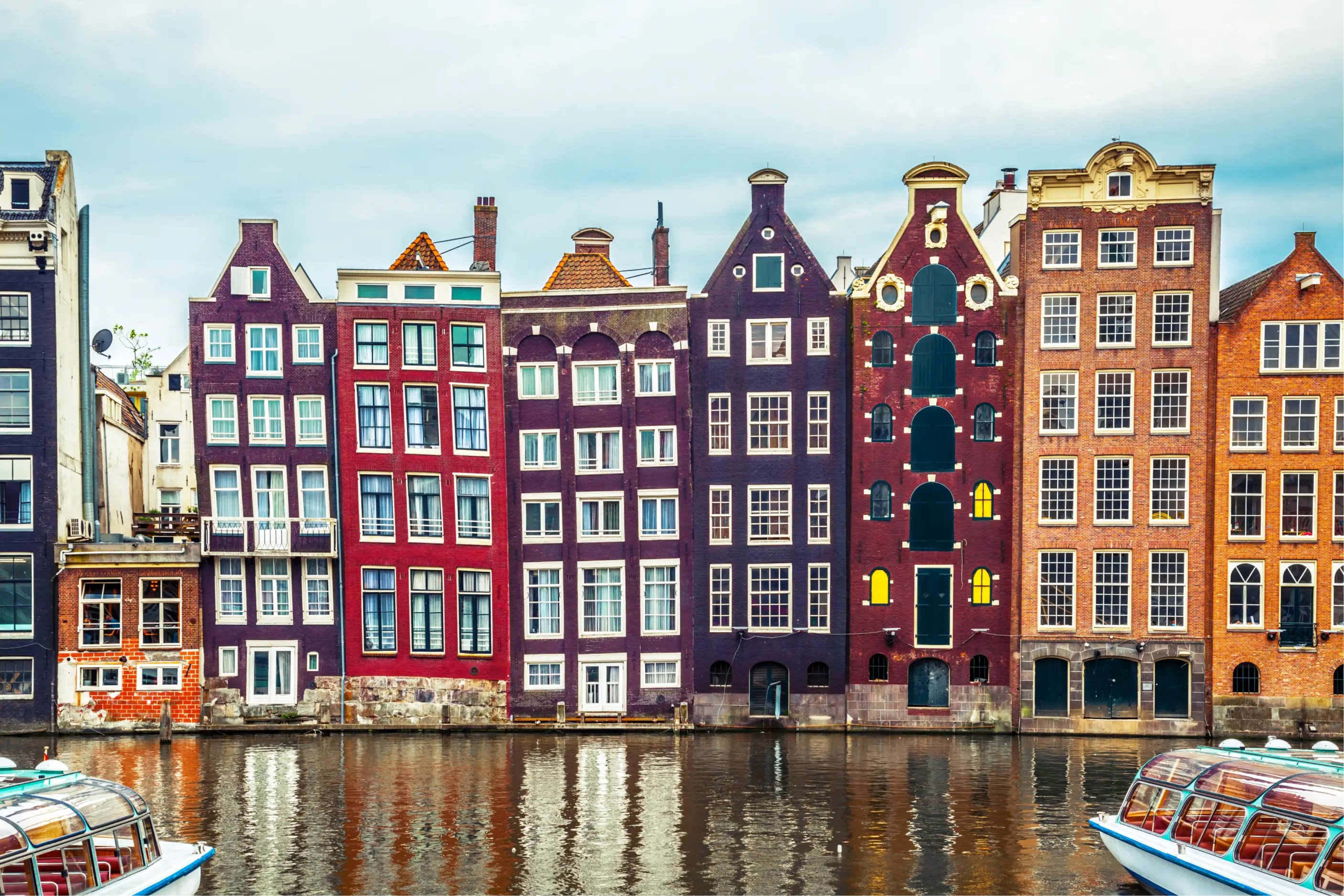
The basis of the old joke that 'God created Earth, but the Dutch created the Netherlands' can best be seen in the horseshoe-shaped old center of Amsterdam where the early inhabitants reclaimed much of their city from the sea and built the perfectly straight canals to keep the new land dry. Most of the picture-perfect gabled houses still retain their winch beams and hooks for hauling goods to the attic. These days its most renown historic buildings share space with Amsterdam's famous Red Light District.

Koninklijk Paleis

Yes, the Dutch Have Royalty, and You Can Often Visit Their Home.

Amsterdam's Royal Palace, originally built as the city hall in the 17th century during the Dutch Golden Age, stands majestically in Dam Square. Renowned for its classical architecture and opulent interiors, the palace serves as one of the King's official residences and is used for state visits, awards ceremonies, and other official functions. Its rich history and architectural grandeur, including lavish rooms and intricate sculptures, reflect Amsterdam's past prominence and wealth.

Jewish History Museum

Examine hundreds of years of stories and histories.

The Jewish Historical Museum in Amsterdam, set in the city's former Jewish Quarter in four 17th-century synagogues, delves into Jewish traditions, religion, and contributions to Dutch society. It features artifacts, personal Holocaust stories, and interactive exhibits, highlighting Amsterdam's Jewish heritage and its impact on the Netherlands. This museum fosters understanding and dialogue, making it vital for anyone interested in exploring Jewish history and culture.

Late Afternoon to Evening — Old Jewish Quarter

At the time of the Nazi occupation of The Netherlands, Amsterdam had about 75-80,000 Jews living in the just the city alone. The Old Jewish Quarter is home to several museums that memorialize the 104,000 Dutch Jews who lost their lives along with those who made it through and whose families live in the country today. You can explore the Portuguese Synagogue, learn about Jewish culture at the Jewish History Museum, and pay respects at the National Holocaust Museum and Memorial.

Jewish History Museum

Examine hundreds of years of stories and histories.

The Jewish Historical Museum in Amsterdam, set in the city's former Jewish Quarter in four 17th-century synagogues, delves into Jewish traditions, religion, and contributions to Dutch society. It features artifacts, personal Holocaust stories, and interactive exhibits, highlighting Amsterdam's Jewish heritage and its impact on the Netherlands. This museum fosters understanding and dialogue, making it vital for anyone interested in exploring Jewish history and culture.

Portuguese Synagogue

Take a moment in this active synagogue to learn about this historic building

The Portuguese Synagogue, located in the heart of Amsterdam, is a magnificent testament to the city's rich Jewish heritage. Known for its 17th-century architecture, this grand edifice stands as one of the most important legacies of the Jewish community that once flourished in Amsterdam. The synagogue's spacious interior expresses timeless tranquility and spiritual depth. Notable for its historical and cultural significance, the synagogue also houses an extensive library and archives, making it a center for Jewish learning and heritage.

Holocaust Museum

Remember and Learn

The Dutch National Holocaust Museum in Amsterdam offers an in-depth look at the Holocaust's effects in the Netherlands. Located in the Jewish Cultural Quarter, it combines personal stories with artifacts to highlight Dutch Jews' experiences during World War II, focusing on themes of resistance, persecution, and survival. The museum acts as both a memorial and an educational resource, promoting tolerance and awareness of human rights issues. It's essential for understanding the Holocaust's impact on Dutch society.

image

Day 5

Amsterdam

image

Day 6

Amsterdam to Rome

Day 6

Amsterdam to Rome

icon
icon
icon
icon

Morning/Mid-Day

Museum Quarter

Arranged in a tight knot on the aptly named Museumplein, Amsterdam's premier world-class museums include the Van Gogh Museum (pre-booked tickets required), the Rijks Museum with its collection of Rembrandts, and the Stedelijk Museum of modern and contemporary art. The Amsterdam Diamond Museum is nearby as well. Choose to visit one or more of these wonderful cultural venues from the detailed descriptions provided in the Full Itinerary.
Museum Quarter

Morning/Mid-Day — Museum Quarter

Arranged in a tight knot on the aptly named Museumplein, Amsterdam's premier world-class museums include the Van Gogh Museum (pre-booked tickets required), the Rijks Museum with its collection of Rembrandts, and the Stedelijk Museum of modern and contemporary art. The Amsterdam Diamond Museum is nearby as well. Choose to visit one or more of these wonderful cultural venues from the detailed descriptions provided in the Full Itinerary.

Rijks Museum Shop

Find Tickets and Trinkets related to the Rijks- and Van Gogh Museums

Located on Museumplein (Museum Square), this convienent shop is operated by both museums to contend with the overflow at their respective ticket offices.  Even this shop can become busy.  However, if you don't plan on visiting the museums, but still want to pick up some souvenirs, this is your spot: both museums supply this store with their own merchandise.

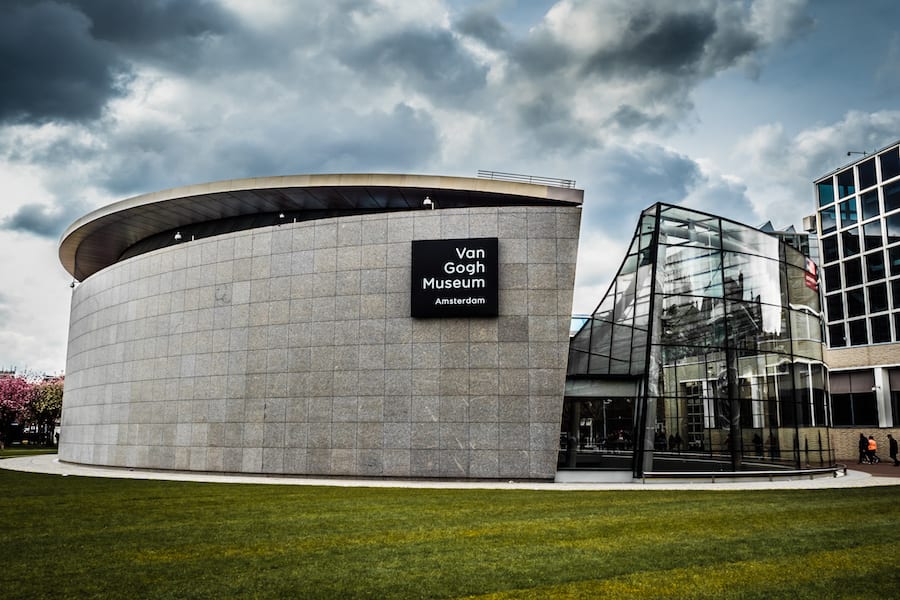
Van Gogh Museum

The Van Gogh Museum - How Can't You Be Impressed?

Maybe no other artist since Michelangelo has touched the Western World as deeply as Vincent Van Gogh.  His exhuberent palates of color, the frenetic pace at which he painted, the humanity of his subjects, not to mention the pathos of his own life, all combined to make unforgettable works - many of whic hare at this museum.  Millions of words have been written about the man and his art; but somehow, seeing them live often leaves a person speechless.

Moco Museum

Contemporary in an Old City Can Be Beautiful Too

The MoCo Museum dedicates itself to showcasing modern, cutting-edge works from some of the most influential artists of the 20th and 21st centuries. Situated in a renovated townhouse in the heart of Amsterdam, it offers a dynamic and engaging art experience, featuring both permanent and temporary exhibitions. Highlights include pieces by Maria Abramović, Banksy, Andy Warhol, and other iconic figures who have shaped the contemporary art scene. The museum's intimate scale allows for a personal exploration of the artworks

Diamond Museum

This museum will defintely make your eyes sparkle.

The Diamant Museum in Amsterdam delves into this dazzling gem's history, highlighting Amsterdam's significance in the diamond industry since the 16th century.  Simultaneously, it showcases its journey from raw stones to exquisite jewelry, emphasizing the art of diamond cutting and polishing, and, of course, features a collection of gems and artifacts,.

To Be Determined — Taxi Transfer to Airport

Amsterdam has one main airport, Amsterdam Airport Schiphol. The most affordable and often fastest way to reach the airport is by train. Local direct trains to the airport depart every ten minutes, usually from platform 14a or platform 15, and get you there in about 20 minutes. Your hotel can arrange a reliable taxi or if you have the app, Uber is also a good option. You can also arrange a private transfer. If you are picked up about two hours and 45 minutes before your departure time, you should arrive at the airport with about two hours to spare, depending on traffic. If you are leaving during rush hour, you may want to budget an extra fifteen to thirty minutes.

To Be Determined — Flight to Rome

There are 2.5-hour long direct flights from Amsterdam to Rome, making the trip by air quite convenient. You are most likely to fly on Alitalia or KLM. Both the Netherlands and Italy are part of the European Union's internal visa-free Schengen Area, so you won't need to undergo any immigration or customs control when flying between the two countries. However, you will need to purchase your own flight tickets. Your personal Go Real travel consultant will help you find the flight that suits you best.

8:55 PM — Private Transfer to your Hotel

For your arrival in Rome, we will provide information on the customs and passport procedures. We will schedule a pick up for your flight's arrival time. You will be met at arrivals inside the terminal by a driver holding a sign with your name on it. The transfer is for your party only - you will not be sharing a vehicle. The cost of the ride will be included in your itinerary package and you will be taken directly to your hotel.  IMPORTANT NOTE:  Please be aware the car service can fit up to 1 checked item of luggage and 1 personal item per person, such as a purse or small backpack. If you think you will have more baggage, please inform your travel consultant as this may result in an additional fee.

image

Day 6

Amsterdam to Rome

image

Day 7

Rome

Day 7

Rome

icon
icon
icon
icon

Early Morning/Morning

Colosseum

Surviving over 2000 years of earthquakes, looters and modern-day tourism, the Colosseum may not be the best-preserved sight in the city, but a visit to the most thrilling of Rome's ancient sights will surely help you picture the extravagance of the entertainments that were once hosted inside this world famous amphitheater. But be aware, during peak travel months (May to early October) it is impossible to enter the Colosseum without advance entrance tickets, so we highly encourage booking well in advance. If you purchase the highly recommended Roma Card, you may use it for your entry, but you will still need to reserve a time. Booking a guided tour can also be a good way to get in without needing to wait in line or purchase tickets.
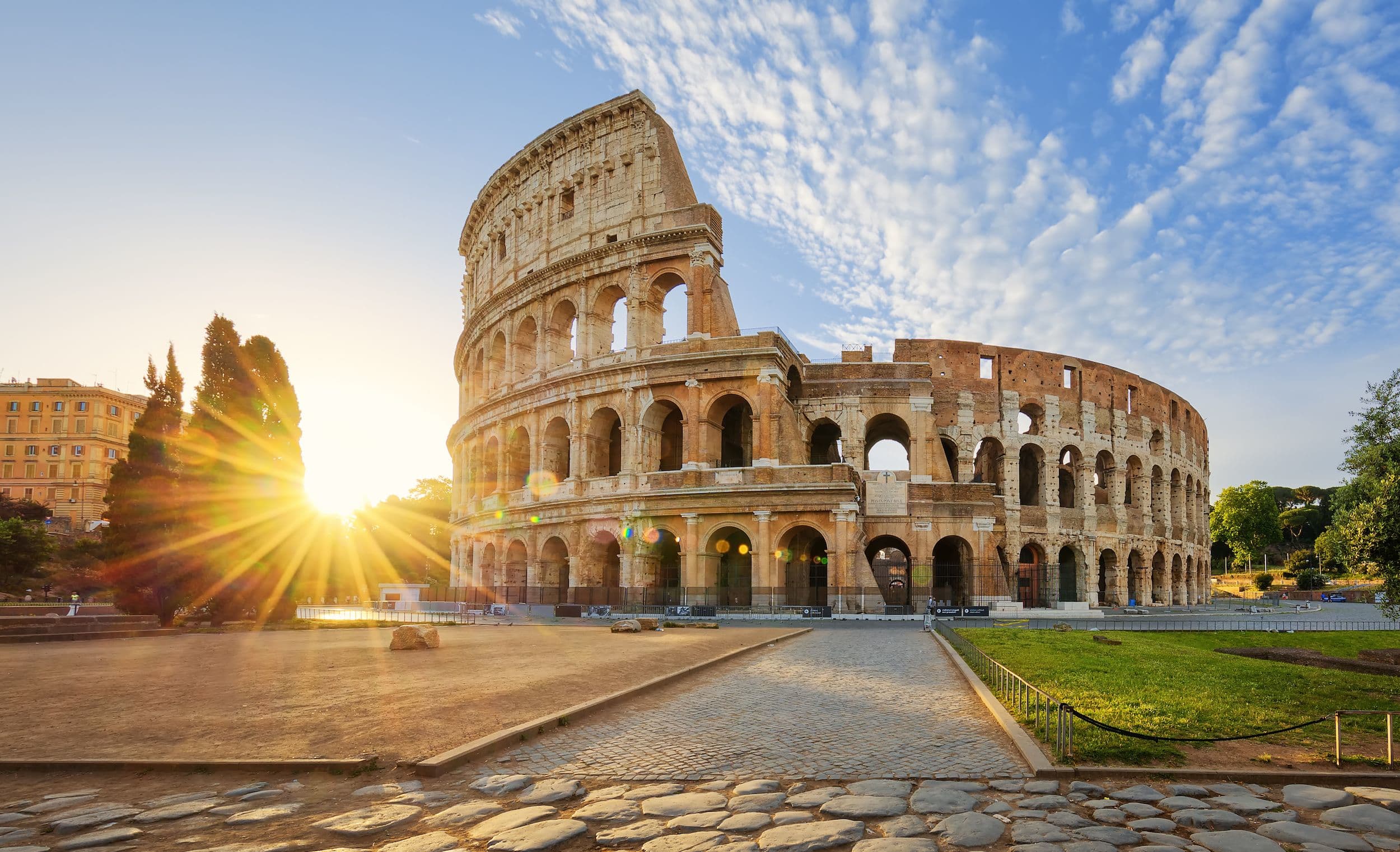
Colosseum

Early Morning/Morning — Colosseum

Surviving over 2000 years of earthquakes, looters and modern-day tourism, the Colosseum may not be the best-preserved sight in the city, but a visit to the most thrilling of Rome's ancient sights will surely help you picture the extravagance of the entertainments that were once hosted inside this world famous amphitheater. But be aware, during peak travel months (May to early October) it is impossible to enter the Colosseum without advance entrance tickets, so we highly encourage booking well in advance. If you purchase the highly recommended Roma Card, you may use it for your entry, but you will still need to reserve a time. Booking a guided tour can also be a good way to get in without needing to wait in line or purchase tickets.

Hypogeum - the Arena Underground

Venture into the bowels of the Colosseum to see how the complex spectacles were staged.

Beneath the Colosseum's arena lay the Hypogeum, a labyrinth of passages which were used to bring animals, actors, and gladiators into the arena. Trap doors enabled not only scenery to be moved onto the stage, but for gladiators to suddenly appear from beneath, or for wild animals to jump into fray without warning. It was of course a very complex operation, requiring a complex architectural design and careful preparation. Taking a tour can help to make sense of it all, but keep in mind that standard access to the Colosseum does not include entry into the underground.

1:00 PM - 4:00 PM — Grand Tour of Historic Center, Guided

Get to know the historic core of Rome on this three hour private guided walking tour that takes in such famous sights as People's Square (Piazza Popolo), the Spanish Steps, Trevi Fountain where Anita Ekberg jumped into the water in Frederico Fellini's La Dolce Vita, the column of Marcus Aurelius, the Pantheon, and the most beautiful square in all of Italy - Piazza Navona.

Pantheon

Visit this iconic former pagan temple converted into a Christian church.

This sanctuary of impressive dimensions is one of the best-preserved buildings of ancient Rome. Erected on the foundations of an earlier temple dating back to 27 BC, its construction was ordered by the Emporer Hadrian in the second century AD. The Pantheon was originally a Pagan temple dedidated to all of the gods. The building's consecration as a church in 609 AD saved it from the abandonment, destruction, and the worst of the spoliation that befell the majority of ancient Rome's buildings during the early medieval period. Its greying exterior may look its age, but inside, a spectacular experience awaits. With light streaming through its oculus, the marble-clad interior seems vast. The Pantheon is home to some notable tombs, including those of painters Annibale Carracci and Raphael and King Vittorio Emanuele II.

Spanish Steps

Take a scenic walk up the 18th-century stairway where Audrey Hepburn and Gregory Peck set out on their Roman Holiday.

The majestically balustraded Spanish Steps were built in 1723-6 to connect the piazza with the church of the Trinita dei Monti and the Pincio. It quickly became a favorite spot of poets, artists, and writers who gathered on its 137 steps, and it's now a favorite stop for tourists from all over the world. Yet this highly attractive stairway still somehow manages to retain a sense of romance even at the height of the tourist season, and if you happen to get there at the beginning of May you’ll find it laden with tubs of magnificent azaleas. A masterpiece of 18th-century town planning, the steps actually contain a religious message – the three flights and three landings are an allusion to the Holy Trinity.

The Trevi Fountain

Admire one of the most iconic sights in Rome, made famous by Anita Ekberg in La Dolce Vita.

The Trevi Fountain is one of the most iconic sights in Rome thanks to the antics of the shapely Anita Ekberg casting herself into its waters in Frederico Fellini’s cinematic masterpiece, La Dolce Vita. The fountain curiously seems to appear out of virtually nowhere within a warren of backstreets but is nevertheless discovered reasonably early each day by endless crowds of tourists looking to ensure their future return to Rome by tossing a coin back over their should into its crystal clear water (the coins are raked up each morning and donated to the Church organization Caritas). 

Late Afternoon/Early Evening — Rome's Historic Center

Rome's tangled historical center is packed full of some of the most fascinating and incredible sights. Explore elegant squares and piazzas, centuries-year-old churches, and baroque fountains and wander at leisure the labyrinth of ancient Roman cobbled lanes. Highlights include the Baroque grandeur of Piazza Navona and the great and endlessly copied Roman Pantheon.

Piazza Navona

Stand in one of the most beautiful squares in Rome, home to the famous Fontana dei Fiumi Fountain by Bernini.

A Roman rendezvous, Piazza Navona is, for many people, the most beautiful square in the world. Like many of Rome's landmarks, Piazza Navona is located over the foundations of an ancient monument, a 30,000 seat stadium of Domitian. The former tiers of seats have since made way for ornate fountains, exuberant baroque palazzi, and bustling pavement cafes. The square has long been the hub for local life, hosting Rome's main market for over 300 years. Today it attracts a colorful circus of tourists, performers, hawkers, street artists, and pigeons. The first visit to Piazza Navona might well result in a stiff neck from gazing up at all the sumptuous Baroque beauty.

Pantheon

Visit this iconic former pagan temple converted into a Christian church.

This sanctuary of impressive dimensions is one of the best-preserved buildings of ancient Rome. Erected on the foundations of an earlier temple dating back to 27 BC, its construction was ordered by the Emporer Hadrian in the second century AD. The Pantheon was originally a Pagan temple dedidated to all of the gods. The building's consecration as a church in 609 AD saved it from the abandonment, destruction, and the worst of the spoliation that befell the majority of ancient Rome's buildings during the early medieval period. Its greying exterior may look its age, but inside, a spectacular experience awaits. With light streaming through its oculus, the marble-clad interior seems vast. The Pantheon is home to some notable tombs, including those of painters Annibale Carracci and Raphael and King Vittorio Emanuele II.

Column of Marcus Aurelius

Column formerly dedicated to Emperor Marcus Aurelius; a statue of St. Paul now stands in place of his.

If you turn left at the far end of the Temple of Adrian, you'll arrive at the Column of Marcus Aurelius (Colonna di Marco Aurelio). The column located on Piazza Colonna commemorates the Roman Emperor Marcus Aurelius and his victories over the Germanic tribes in Danubian and Marcomannic wars. It was modeled on Trajan's Column (which is located in Trajan's Forum). The column consists of 27 or 28 blocks of Carrara marble, each of 3.7 meters (12 ft) diameter, and was nicknamed the Centenaria, "hundred-footer" because it was 100 Roman feet or 29.60 meters high. On the top of the column was a statue of Marcus Aurelius; today, the apostle Paul stands there.

Via del Corso

One of the main streets in Rome.

The main street running alongside the Piazza Colonna is one of the main streets in Rome, called the Via del Corso. It is remarkable for being absolutely straight in an area characterized by narrow meandering alleys and small piazzas. Its runs 1.5km from Piazza del Popolo all the way to Piazza Venezia and is one of the busiest shopping streets in Rome. You’ll find lots of large international stores all over the street including major retailers such as Nike and Zara, as well as smaller Italian retailers where bargains on boutique pieces of Italian clothing and souvenirs can be found.

Evening/Late Evening — Dining in Piazza Navona

Arguably the most beautiful of all the piazzas in Rome, Piazza Navona is particularly stunning at night. As one of the largest and most romantic piazza squares in Rome, it is a great spot to spend the evening, with a whole host of restaurants, bars and entertainment on offer. See its three impressive fountains illuminated by night, sip on an Aperol Spritz, take an evening stroll or simply sit on a bench with an ice cream. When night falls, this is the place to be.

image

Day 7

Rome

image

Day 8

Rome

Day 8

Rome

icon
icon
icon

Morning

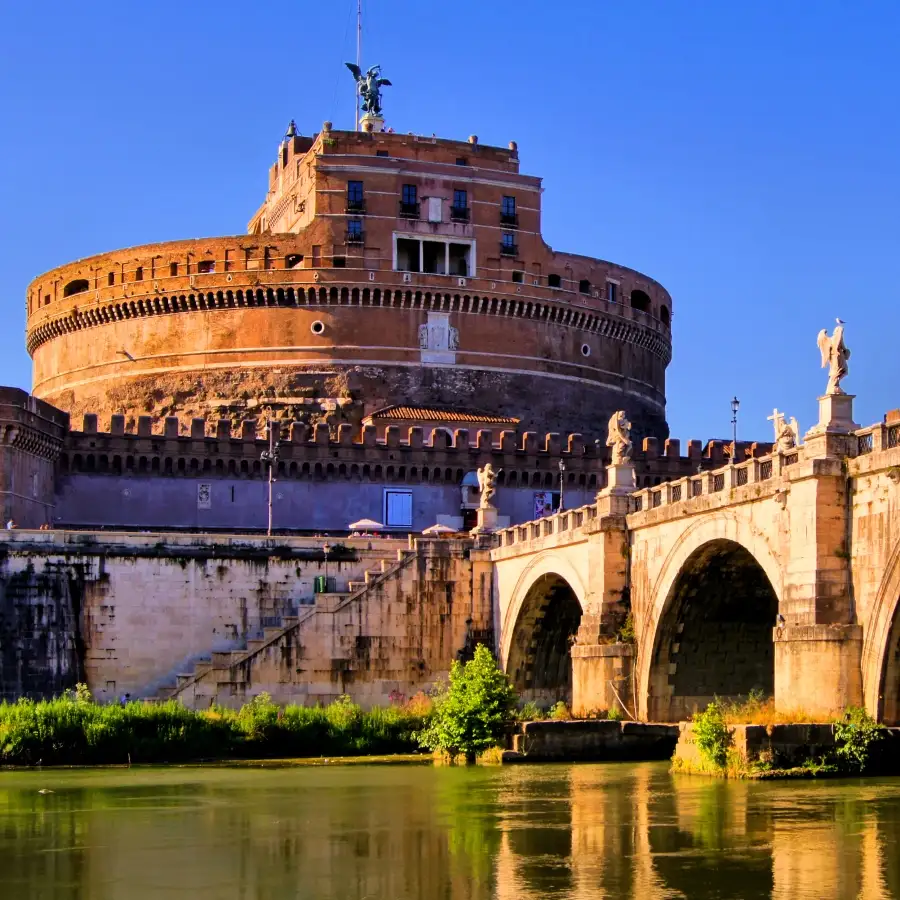
Castel Sant'Angelo

Designed and built by Emperor Hadrian as his own mausoleum, the great circular hulk of Castel Sant'Angelo provides one of the best routes to the Vatican and St Peter's via the Ponte Sant'Angelo bridge. Appropriated by the popes, the mausoleum was turned into a fortress and attached to the Vatican with a passageway for the popes to use as a refuge in times of siege or invasion - this is where Pope Clement VII sheltered during the Sack of Rome in 1527.

Castel Sant'Angelo

Morning — Castel Sant'Angelo

Designed and built by Emperor Hadrian as his own mausoleum, the great circular hulk of Castel Sant'Angelo provides one of the best routes to the Vatican and St Peter's via the Ponte Sant'Angelo bridge. Appropriated by the popes, the mausoleum was turned into a fortress and attached to the Vatican with a passageway for the popes to use as a refuge in times of siege or invasion - this is where Pope Clement VII sheltered during the Sack of Rome in 1527.

Mausoleum of Hadrian

Visit this iconic 2nd Century Castle built as the Mausoleum For Emperor Hadrian.

Known as Hadrian's Tomb, the Castel Sant'Angelo is a fortress on the banks of the River Tiber. Originally built as a tomb for the Emperor, it has evolved over the centuries and today it is one of Rome's most underrated museums. Inside you can see the historic Papal apartments, decorated with frescoes from the Renaissance period. Outside you can admire the castle's bastion and rooftop with beautiful views over the river and the Vatican. 

Ponte Sant'Angelo

Walk across this pedestrian bridge that was built in 134 A.D. by Emperor Hadrian.

Hadrian had the bridge built as an approach to his mausoleum, but it didn't gain its magnificent angel statues by Bernini until late in the 17th century. Spanning the River Tiber, it is completely pedestrianised, which allows for great photo opportunities of the castle and St Peter's Basilica in the near distance. 

Mid-Day to Late Afternoon — Forum (Ancient Rome)

Few sites in Rome are so filled with as much of a sense of history as the Roman Forum, which was once the hub of political and social activity in ancient Rome. Located between Piazza Venezia and the mighty Colosseum, the Forum and the adjoining Palatine Hill is one of the most visited sites in Rome. You'll walk down what was once a long square lined by the most important temples, government buildings, and business places. It was filled with dramatic and often gaudy monuments and statues commerating victories and great Romans from the past. Even today you can still get some sense of what an amazing sight it must have been, as you'll encounter an impressive collection of Roman ruins still remaining.

House of the Vestal Virgins

See the ancient statues of the virgins on whose chastity the fate of Rome depended.

You can see the remnants of statues of the Vestal Virgins which surrounded the courtyard of their palace. A Vestal was a young girl, picked between the ages of 6 and 10 and committed to 30 years of service: ten years learning the rituals, ten actively serving, and ten tutoring the new priestesses. Throughout that time, she had two big responsibilities. She had to tend Rome's sacred fire and she had to guard her virginity. If either was extinguished, it was thought, Rome would fall. The virgins lived a life of privilege, influence, and honor; that is, so long as they remained virgins. If not they were buried alive. They were largely picked for their beauty - making it a challenge for all involved.

Temples of Castor & Pollux and Vesta

See the ruins of the temple dedicated to the mythical twin gods, Castor and Pollux.

The Temple of Castor and Pollux was built in 484 BC for the "twins" of Gemini (i.e. the twin sons of Jupiter), as a thanks for their help in the Republican triumph over the last King of Rome. After it was destroyed by a fire it was rebuilt by the Emporer Tiberius in 6 AD. Standing just next to it are the ruins of the Temple of the Vesta. It was there that the sacred fire of Vesta was tended by the Vestal Virgins.

Basilica of Constantine

Admire the remains of a Roman basilica that once housed a giant statue of Constantine.

Formerly the greatest of the Roman basilicas, it covered approx. 7,000 square yards (5,600 square m), including a central nave that was 265 feet (80 m) long and 83 feet (25 m) wide. Begun by the emperor Maxentius and finished by Constantine about AD 313, the basilica was not a church, but a Roman hall of justice. It housed a giant statue of Constantine, the remains of which are in the courtyard of the Conservators' Palace of the Capitoline Museum.

Arch of Titus

Gaze up at the triumphal arch with inscriptions and sculptures that honor the military victories of Emperor Titus.

Said to be the inspiration for the Arc de Triomphe in Paris, the well-preserved arch was built in the 1st Century AD by Emperor Domitian shortly after the death of his older brother Titus to commemorate Titus's victories. These included the Siege of Jerusalem, which saw over 50,000 Jewish slaves, brought to Rome, who were then forced to build this arch and the Colosseum. It is one of the most recognisable monuments in the Roman Forum and often used as a reference point and meeting point for tours. 

Palatine Hill

Escape the crowds and climb to the hill overlooking the Forum, where the emperors built their luxurious palaces.

Reached via a path on the eastern end of the Forum, the Palatine Hill offers wonderful views over the city and the opportunity to see the ruins of the vast palaces built by past emperors, including that of Domitian, which contained swimming baths, saunas, and a sporting arena. The Palatine is not actually a part of the Forum, which was a public space, but it is visited with the same ticket.   

Late Afternoon to Evening — Piazza Venezia

The Piazza Venezia is not only the central hub of Rome, but is also located at the foot of the Capitoline Hill, which is the ancient heart of Rome. Thus it was chosen as a fitting space for a memorial to the first king of modern Italy, Victor Emmanuel II, who led the unification of the Italian states in the 1860s. The gigantic monument now overlooks the Piazza Venezia in overwhelming marble glory, standing as an unmissable symbol of Italian unity. The open space and dramatic setting were used to great effect by Mussolini, who staged rallies here. However, the monument is just one of the several sights that can be found around Piazza Venezia, an area often overlooked by tourists who pass from the historic center directly to the Colosseum further down the street. For instance, just below it you'll find Trajan's Forum, containing some of Rome's most notable ruins, and just above it on the Capitoline Hill, an elegant square designed by Michelangelo.

Vittorio Emanuele II Monument

Visit this grand monument and ascend to the roof through an elevator at the back for the wonderful views of the Roman Forum and Colosseum.

Standing grand and mighty on Capitoline Hill overlooking Piazza Venezia, the monumental marble temple honouring Italy's first king Vittorio Emanuele II is a sight often overlooked by tourists. The impressive wedding cake-like building is home to one of the best views in Rome. Ascend to its rooftop and you can enjoy amazing views over the Roman Forum and Colosseum.  The monument is also the sight of the Altar of the Fatherland (Altare della Patria), which includes an altar to the goddess Rome, and a shrine to the Italian Unknown Soldier, thus making the monument a sort of secular temple dedicated to the country. However, it's unlikely the relatively modest and unassuming Vittorio would have appreciated this massive monument built to his legacy. Inaugurated in 1911 to symbolize the achievement of Italian unity, it irrevocably changed the aspect of the city, throwing out of scale the Capitoline hill itself and causing indiscriminate damage. Familiarly known as ‘Mussolini’s typewriter’ (it was finished during his regime in 1937), it is thought by some locals to be a colossal monstrosity, although for others its symbolic importance makes it a place of reverence, regardless of any architectural criticism.

Capitoline Square & Capitoline Museums

See the square Michelangelo designed to mark the spot of Rome's legendary origins.

This square at the top of the Capitoline Hill, Piazza del Campidoglio, is a lovely piece of town planning designed by Michelangelo. It is surrounded on three sides by stately palaces and an open-end featuring a balustrade. This is the historical center of ancient Rome, and to reflect this fact, Pope Paul III ordered that the famous gilded bronze equestrian statue of Marcus Aurelius be moved here from the Lateran hill.  Off of one corner of the square you will find a reproduction of the famous Lupa Capitolina, that is, the statue of the she-wolf that suckled the legendary founders of Rome, Romulus and Remus. Wander just a bit further and you will be rewarded with an amazing view over the Forum. You'll also find the Capitoline Museums in one of the 15th century palaces fronting the square. These are some of the oldest collections in Rome, containing Classical Roman, Greek, and Egyptian sculptures, as well as Renaissance art.

Markets of Trajan

Take a look around the world's first shopping mall.

Trajan's Forum was the last great forum built in Rome and rivaled the original Forum in scale and grandiosity. However, the only significant structure that remains now is the semicircular ruins of the Trajan Markets, which are often described as the world's first shopping mall. Arcaded passageways led to offices, shops, and apartments, situated in a multi-story structure. It is still possible to visit some of these levels. Within Trajan's Market you will find the Museum of Imperial Fora, one of the best interactive museums covering Ancient Rome. The labeling in English is unsurpassed and the exhibition rooms both in the museum and the rooms of the markets provide a superb introduction to Roman life and the architecture and building methods that were lost for centuries after the fall of the Roman Empire. Two or three hours spent here is time well invested.

Trajan's Column

Relive a saga of war and conquest on this carved frieze as it winds its way up a 140-foot high ancient column.

Built in 113 AD out of 18 massive blocks of marble, the column is decorated with exquisitely executed reliefs which spiral up around it. There are over 2,500 carved figures, and the column tells a detailed and highly visual tale of the Emperor Trajan’s Dacian wars. At the top of the column once stood a statue of the victorious Emperor (replaced by St Peter in 1588), and a spiral stone staircase inside led to a platform from which extensive views could be enjoyed over the rooftops of the city. Today the column is visible from the Piazza Venezia without a ticket, but those with a particular interest in Roman history might consider hiring a private guide who can explain the story depicted by the column in more detail.

image

Day 8

Rome

image

Day 9

Rome

Day 9

Rome

icon
icon
icon

Early Morning to Afternoon

Vatican City

Rome is unique in the world in that it contains an independent country within its city limits - the Vatican City, from where the Pope administers the Catholic Church. The symbolic center of Catholicism is St Peter's Basilica, the second-largest Catholic church in the world and among the most beautiful. The Vatican Museum contains one of the greatest collections of art in existence, including Michelangelo's jaw-dropping Sistine Chapel. The popes had a bigger influence on Rome than just the collection of art. The Pope's title is actually Bishop of Rome, and popes administed the city for centuries, shaping its architecture & public spaces. Rome was re-built to be an example of urban beauty, and the Vatican was meant to be the showcase within the showcase. Their success is evident from the throngs of visitors who flock here even today.

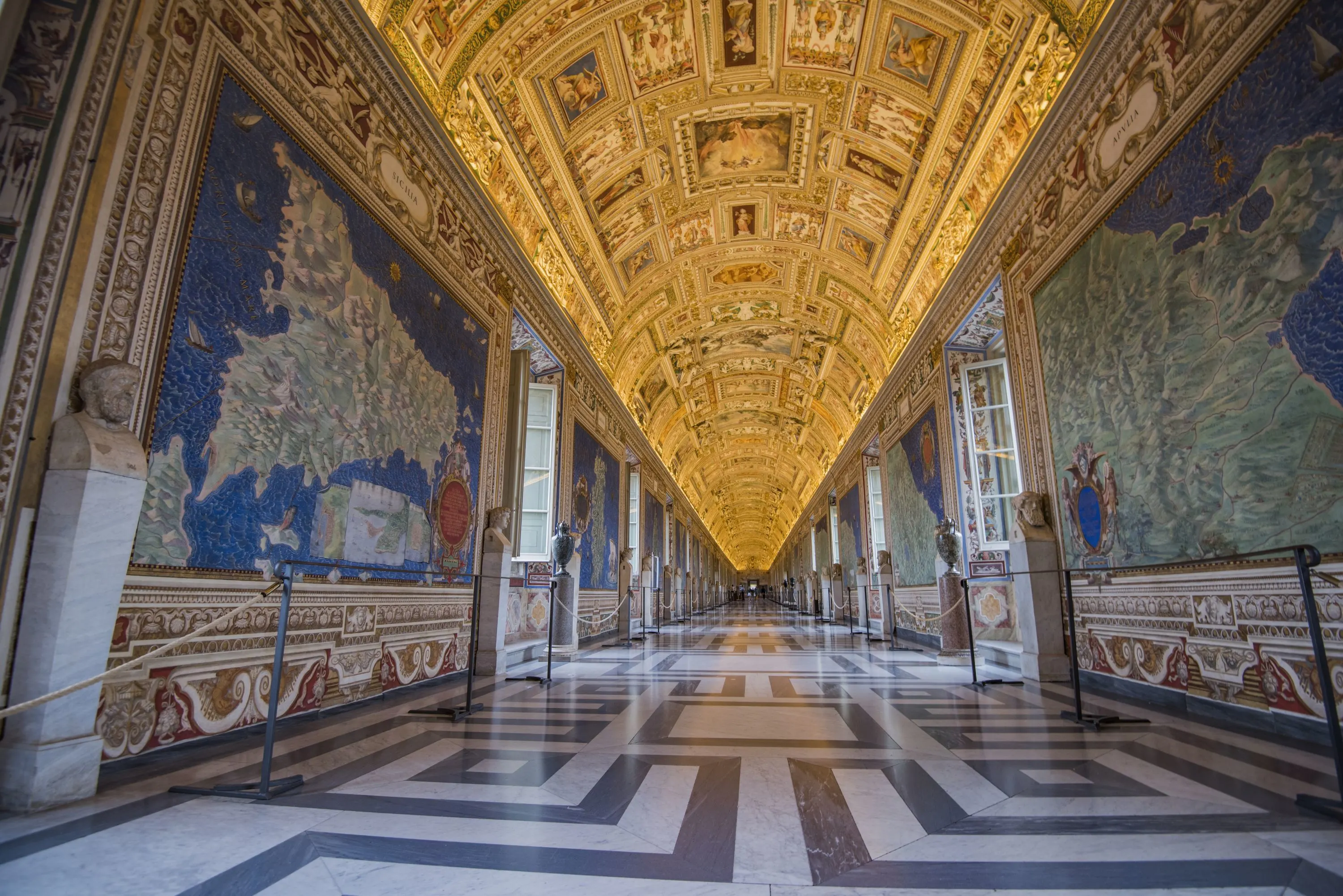
Vatican City

Early Morning to Afternoon — Vatican City

Rome is unique in the world in that it contains an independent country within its city limits - the Vatican City, from where the Pope administers the Catholic Church. The symbolic center of Catholicism is St Peter's Basilica, the second-largest Catholic church in the world and among the most beautiful. The Vatican Museum contains one of the greatest collections of art in existence, including Michelangelo's jaw-dropping Sistine Chapel. The popes had a bigger influence on Rome than just the collection of art. The Pope's title is actually Bishop of Rome, and popes administed the city for centuries, shaping its architecture & public spaces. Rome was re-built to be an example of urban beauty, and the Vatican was meant to be the showcase within the showcase. Their success is evident from the throngs of visitors who flock here even today.

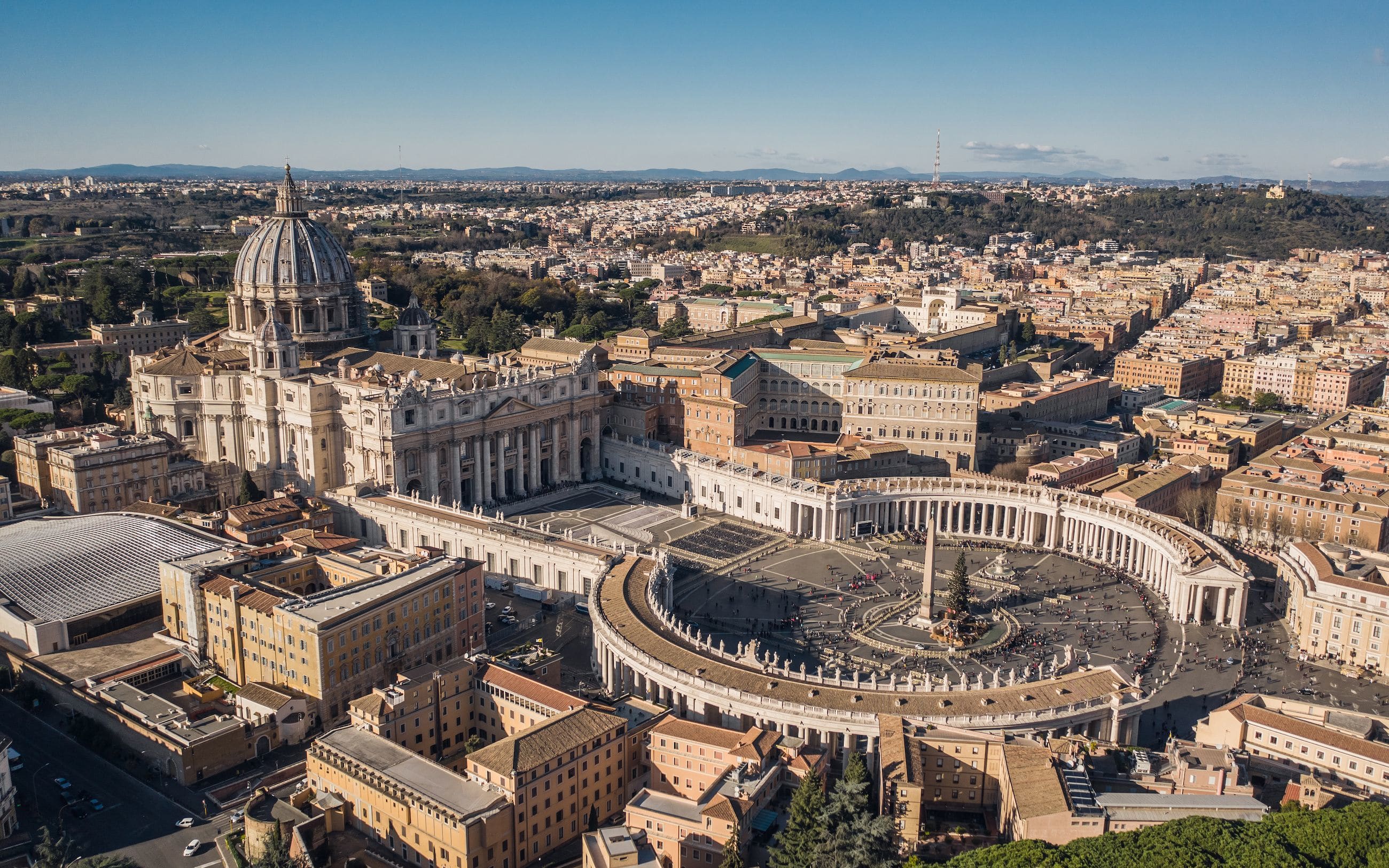
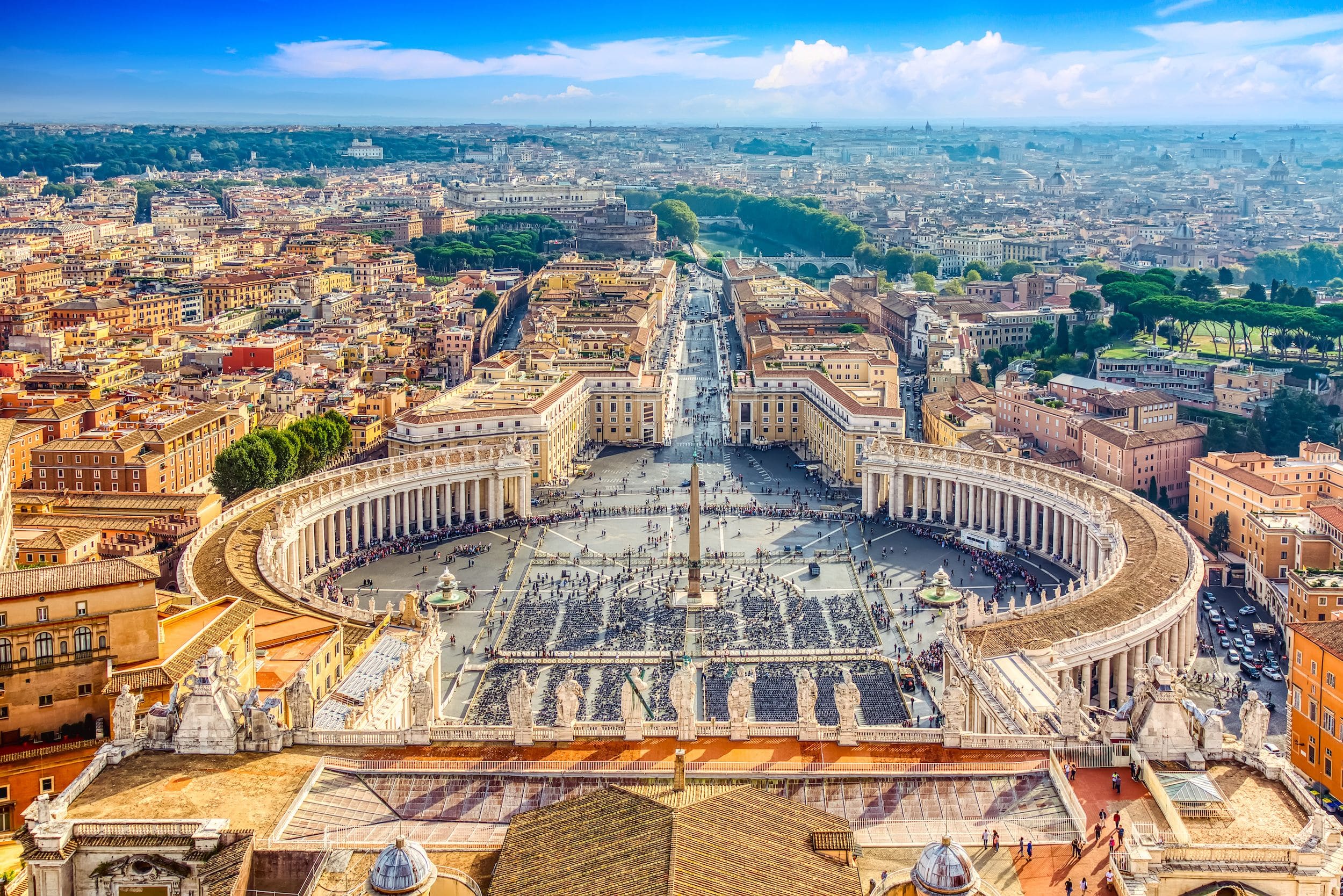
St Peter's Square

Stand in the middle of this famous square in which the faithful gather to hear the Pope give audiences and celebrate mass.

As one of the most superb conceptions of its kind in civic architecture, St Peter’s Square is the masterpiece of Gian Lorenzo Bernini and makes a wonderful approach to one of the world’s most magnificent churches, St Peter's Basilica. An oval rather than an actual square, the piazza, laid out in 1656-67, is partially enclosed by two semi-circular colonnades on which stand 96 statues of saints and martyrs. At the center of the oval stands an 84-foot (26m) tall Egyptian obelisk of red granite.

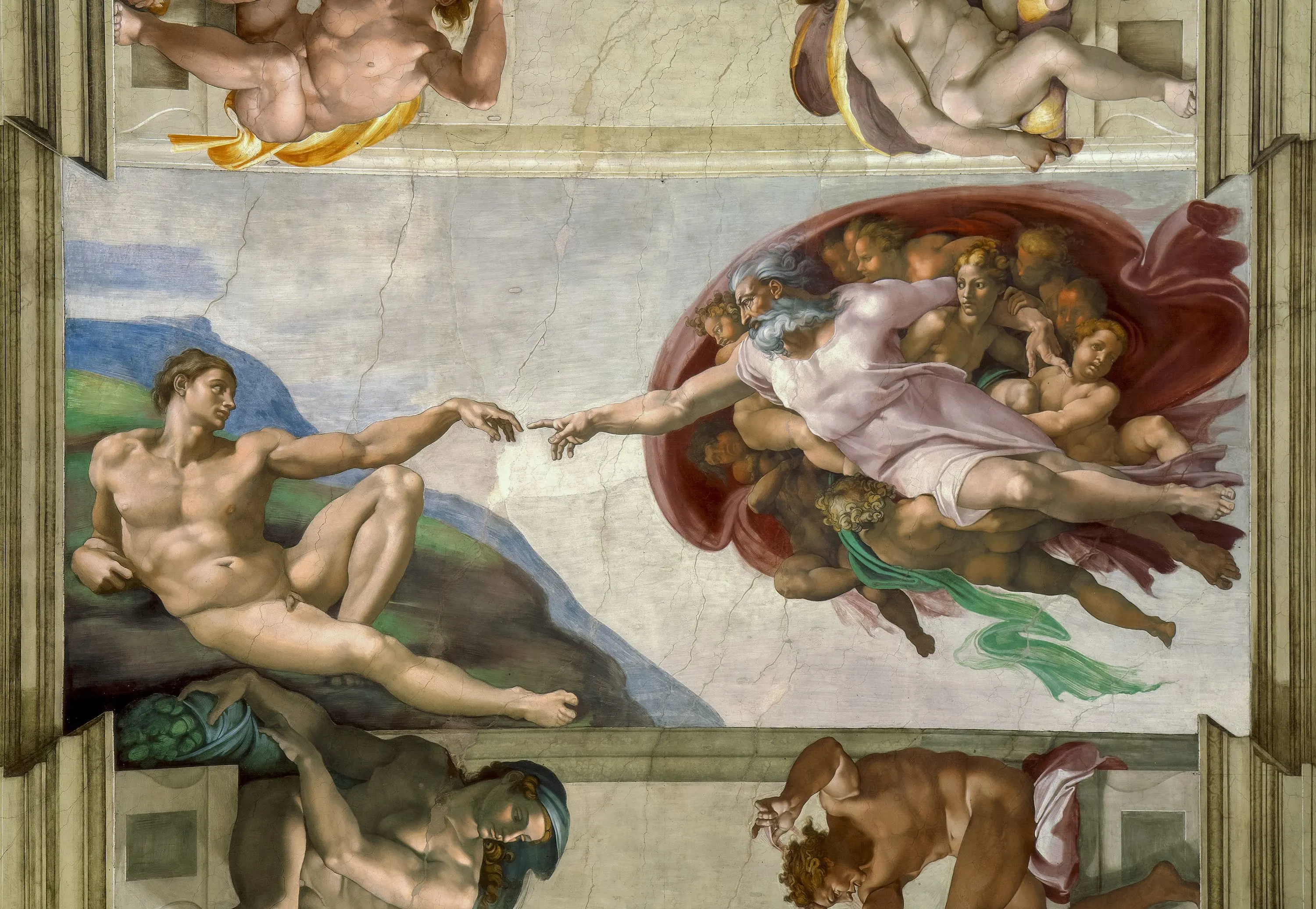
Sistine Chapel

Gaze up at the world's most famous ceiling, the masterpiece of Michelangelo.

This famous chapel inside the Vatican Museums is best known for Michelangelo's 16th-century painted ceiling of "The Creation of Adam" and "The Last Judgement" fresco that covers the whole altar wall of the chapel. The jaw-dropping sight is not to be missed, considered one of the top highlights of visiting the Vatican Museums and one of the top artistic wonders of the world. 

Vatican Museums

Book early if you want to see the Vatican Museum's monumental works of art from the greatest Italian artists of the Renaissance.

The Vatican Museum is actually 26 different museums, which include not only exhibitions but chapels, apartments, and other rooms of the Vatican palace, covering a huge range of fine and applied arts patronized by the popes. There's also an outstanding collection of ancient antiquities (including even the Emperor Nero's red stone bathtub), a gallery of hand-painted maps, and whole rooms turned into works of art. In addition to ancient and medieval works of art, you'll see masterpieces by the "who's who" of the Italian Renaissance, including Raphael, Leonardo da Vinci, Titian, and Caravaggio. Other highlights include panels by the brilliant monk-artist Fra Angelico, works from the Venetian school, including Vavarini, and much, much more.  Booking in advance is highly recommended as otherwise you can wait for hours or not even be able to get in at all.

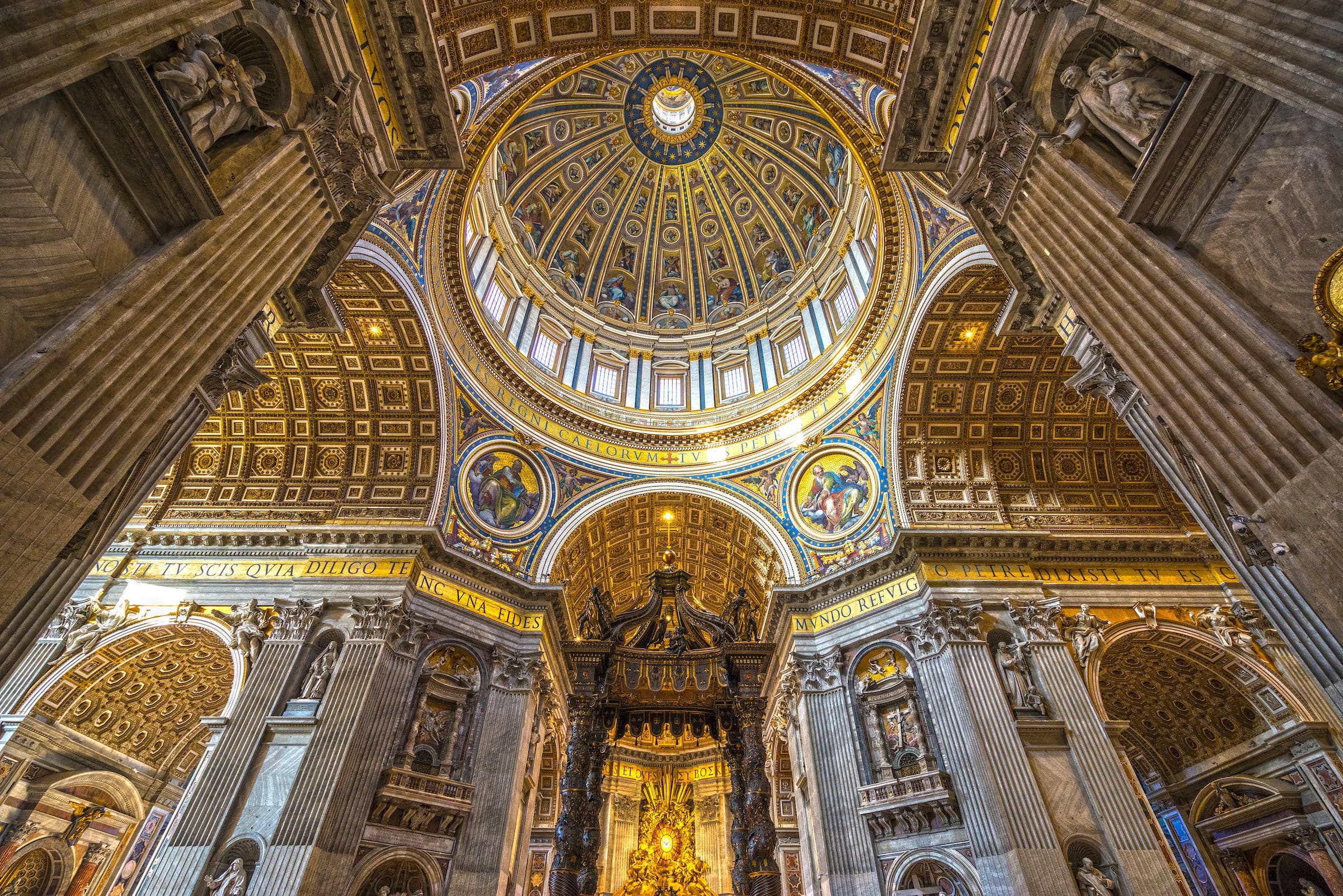
St Peter’s Basilica

Explore the gigantic and incredibly beautiful church known as "the greatest of all churches of Christendom".

The basilica is one of the chief pilgrimage sites in the Christian world, and one of the most popular tourist destinations in Rome. The basilica is the symbolic center of the church not only because the Pope frequently celebrates Mass there, but because it is believed that the apostle St. Peter is buried beneath it. Catholics consider Peter as the first Bishop of Rome and "the rock" upon which the Catholic Church was built, in accordance with Christ's instructions. Inside you can admire sculptures by Bernini as well as Michelangelo's famous sculpture of the Virgin Mary holding the crucified Jesus, known as The Pietà. The church's elaborate and impressive golden interior is a sight to behold. Other sights include St Peter's tomb, the Papal crypts in the necropolis under the basilica, as well as the dome, which rewards visitors with views over Rome.  Entry is free, but queues to visit the Basilica can be lengthy, so it is highly advised to either get there early or to purchase a skip the line entrance. The dome is also paid entry. 

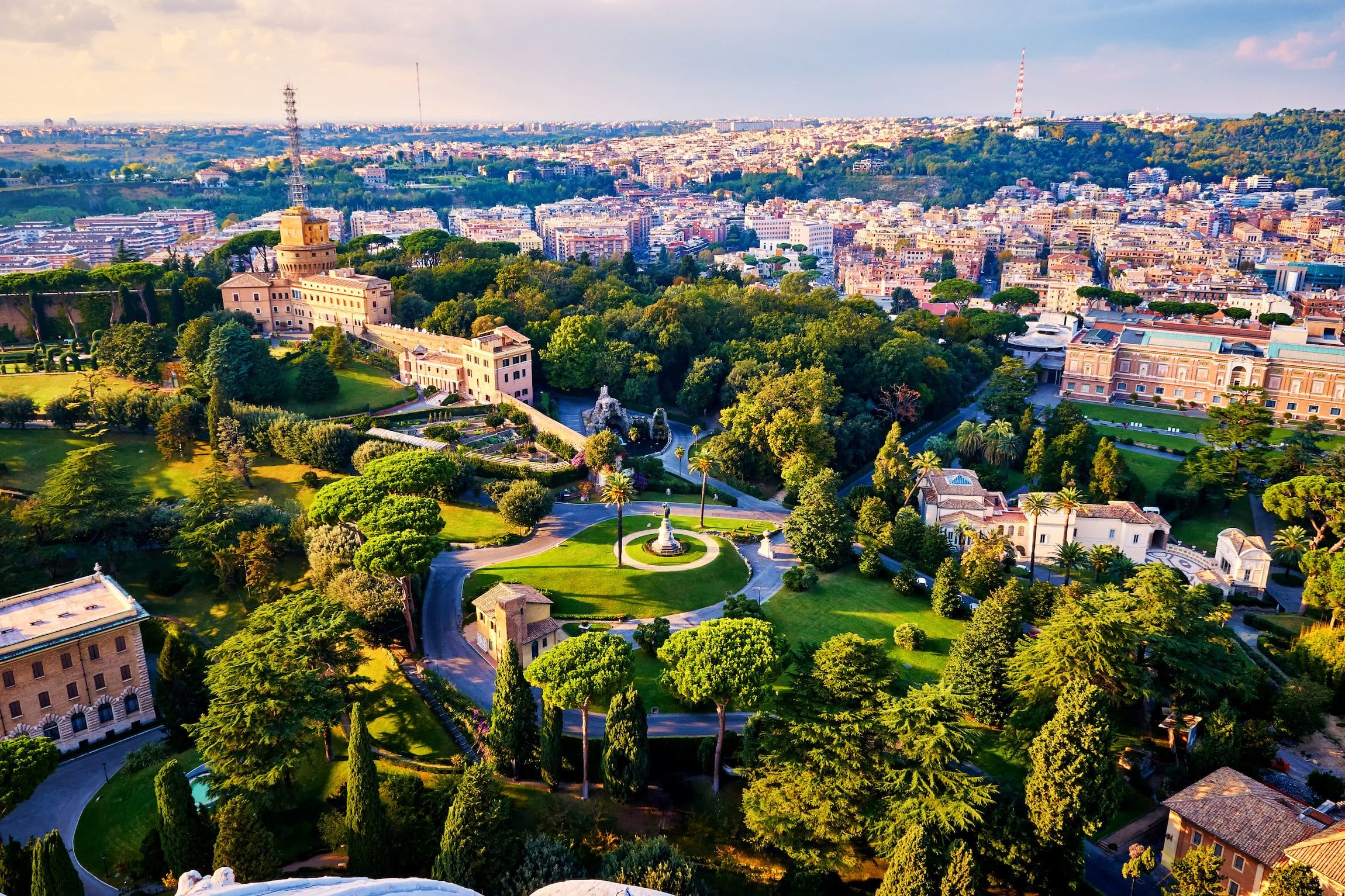
Vatican Gardens

Escape the crowds in this oasis of green hidden behind the walls of the Vatican.

Accessible only via a guided tour, the gardens are definitely worth a visit. Just as the Popes have for hundreds of years, you can stroll the gardens and relax amidst the greenery, while taking in the perfect view of St. Peter's. 

Afternoon/Late Afternoon — Villa Borghese Gardens

The Villa Borghese Park acts as the main respite and sanctuary for Romans and tourists alike away from the din of central Rome. Overlooking Piazza del Popolo and only a stone's throw from the Spanish Steps, the area was a district of market gardens, olive groves, and patrician villas until taken over as summer estates by the city's wealthy during the Renaissance. The most notable is Villa Borghese, which now houses one of the city's best non-Vatican art collections. The adjacent Pincio Gardens offer a grand vista over Rome.

Medici Villa

Take a peak at a 16th-century cardinal's villa that was once considered one of the grandest residences in the city.

Built-in 1564-74 and bought by Cardinal Ferdinando de'Medici in 1576, who further enlarged it, the Medici Villa was considered one of the grandest residences in the city. Galileo was held under house arrest here by the Inquisition in 1630-3. In 1801, the villa was bought by Napoleon and the French Academy was transferred here where it has remained to this day, meaning it is closed to the general public. French students who win the Prix de Rome are sent to study here for periods of six months to two years at the expense of the French government. Well-known scholars include Berlioz, Debussy, and Ingres. It remains one of the most important cultural institutions in Europe and the most beautiful villas to have preserved its garden in the center of Rome.

Galleria Borghese

Visit Rome's most famous art gallery outside of the Vatican Museums.

The gallery started out as the private family collection of the powerful Borghese family, who poured much of their wealth into the patronage of the best Renaissance-era artists. It contains masterpieces not only by Bernini and Caravaggio, but also Raphael, Rubens, and Titian. Don't miss in particular Caravaggio's David with the Head of Goliath - the head is said to be a self-portrait. It's obligatory to book your visit in advance, you'll need a printable confirmation and a booking number.

National Gallery of Modern and Contemporary Art

See the most important collection in existence of Italian modern art.

The gallery was founded in 1883, although the current museum building was purpose-built for it in 1911. It displays paintings and sculptures of the nineteenth and twentieth centuries and is the largest such collection in Italy. In addition to Italian artists such as Giorgio de Chirico and Giorgio Morandi, you'll find works from non-Italian artists including Degas, Monet, and Jackson Pollock.

Early Evening/Evening — Spanish Steps

The streets spreading out from grand Piazza del Popolo (People's Square) form a trident that hosts some of the most popular shopping and tourist sights in Rome. These include the Spanish Steps, the adjacent Keats-Shelley House where Keats died of tuberculosis in 1821, Trevi Fountain where Anita Ekberg jumped into the water in the famous scene from Frederico Fellini's La Dolce Vita, and the Mausoleum of Emperor Augustus.

Spanish Steps

Take a scenic walk up the 18th-century stairway where Audrey Hepburn and Gregory Peck set out on their Roman Holiday.

The majestically balustraded Spanish Steps were built in 1723-6 to connect the piazza with the church of the Trinita dei Monti and the Pincio. It quickly became a favorite spot of poets, artists, and writers who gathered on its 137 steps, and it's now a favorite stop for tourists from all over the world. Yet this highly attractive stairway still somehow manages to retain a sense of romance even at the height of the tourist season, and if you happen to get there at the beginning of May you’ll find it laden with tubs of magnificent azaleas. A masterpiece of 18th-century town planning, the steps actually contain a religious message – the three flights and three landings are an allusion to the Holy Trinity.

Keats-Shelly House

Visit the last residence of poet John Keats, now a memorial museum.

The Keats-Shelley House at the foot of the Spanish Steps to the right contains the apartment where the poet John Keats spent the last three months of his life. The House is essentially an archive of English-language literary and historical works and a museum of manuscripts and literary mementoes relating to the Keats circle of the early 19th century, i.e. Keats himself, Percy and Mary Shelley and Byron (who at one time lived across the square).

The Trevi Fountain

Admire one of the most iconic sights in Rome, made famous by Anita Ekberg in La Dolce Vita.

The Trevi Fountain is one of the most iconic sights in Rome thanks to the antics of the shapely Anita Ekberg casting herself into its waters in Frederico Fellini’s cinematic masterpiece, La Dolce Vita. The fountain curiously seems to appear out of virtually nowhere within a warren of backstreets but is nevertheless discovered reasonably early each day by endless crowds of tourists looking to ensure their future return to Rome by tossing a coin back over their should into its crystal clear water (the coins are raked up each morning and donated to the Church organization Caritas). 

Mausoleum of Augustus

Visit the tomb of the first Roman Emperor and his family, which is finally being restored after more than a millenium of neglect.

The huge circular Mausoleum of Augustus, holding the tomb of the Emperor and the principal members of his family was one of the most sacred monuments of the ancient city, but has been somewhat neglected in recent decades, though it has undergone recent restoration. Erected in 28 BC and originally surrounded by a huge public park, it has a diameter of 87m (330 Roman feet), the largest circular mausoleum in the world. 

Piazza del Popolo

Take some time to admire this elegant square that once served as an impressive main entry point into the city of Rome.

The Piazza del Popolo was created in 1538 for Paul III in strict alignment with the three long straight streets which penetrate the city here as a trident. The piazza once acted as one the primary entrances into Rome, and many travelers recorded their first arrival in Rome through the monumental Porta del Popolo, which may have been designed by Michelangelo. An obelisk, 24m high, rises in the center and on the side of the piazza opposite the porta are the twin decorative 17th-century Baroque churches, Santa Maria dei Miracoli and Santa Maria in Montesanto.

image

Day 9

Rome

image

Day 10

Depart Rome

Day 10

Depart Rome

icon

To Be Determined

Private Transfer to Rome Fiumicino or Ciampino Airport

A car service will pick you up from your hotel and take you directly to Rome Fiumicino Airport. This is a private transfer for you and your travel party. You do not need to pay the driver as the cost of the private transfer is included in your itinerary.   IMPORTANT NOTE:  Please be aware the car service can fit up to 1 checked item of luggage and 1 personal item per person, such as a purse or small backpack. If you think you will have more baggage, please inform your travel consultant as this may result in an additional fee.

Private Transfer to Rome Fiumicino or Ciampino Airport

To Be Determined — Private Transfer to Rome Fiumicino or Ciampino Airport

A car service will pick you up from your hotel and take you directly to Rome Fiumicino Airport. This is a private transfer for you and your travel party. You do not need to pay the driver as the cost of the private transfer is included in your itinerary.   IMPORTANT NOTE:  Please be aware the car service can fit up to 1 checked item of luggage and 1 personal item per person, such as a purse or small backpack. If you think you will have more baggage, please inform your travel consultant as this may result in an additional fee.

image

Day 10

Depart Rome

What's Included in the European City Trifecta Trip Trip?

Fork

Pre-Paid Tours and Activities:

  • Private Guided Walking Tour of the Center of Paris
  • Canal Cruise in Amsterdam
  • Privately Guided Walking Tour of Amsterdam
  • Grand Guided Walking Tour of the Historic Center
  • City Card for Rome, including discounts to many popular attractions
train

Pre-Paid Transportation:

  • 2nd Class Train Tickets from Paris-Amsterdam
  • Public Transport Tickets for Amsterdam and Rome
  • Private Transfer from Rome Fiumicino to Hotel
  • Private Transfer to Rome Fiumicino or Ciampino Airport
train

Accommodation:

  • 3 nights at a hotel of your choice in Paris
  • 2 nights at a hotel of your choice in Amsterdam
  • 4 nights at a hotel of your choice in Rome
mobile

Go Real Travel Mobile App:

  • Itinerary Plan & Reservations Info
  • Points of Interest
  • Detailed Travel Information
  • Maps & Directions

Other Trips You May Like

An exciting and immersive 13 day tour of Paris, Amsterdam & Rome

13 Days

From$3699USD

An exciting and immersive 13 day tour of Paris, Amsterdam & Rome

View Trip
Europe's Crown Jewels: A 7-Day Odyssey to Rome and Paris

7 Days

From$1899USD

Europe's Crown Jewels: A 7-Day Odyssey to Rome and Paris

View Trip
European Epilogue: London, Paris, Amsterdam

10 Days

From$3780USD

European Epilogue: London, Paris, Amsterdam

View Trip
European Splendor: London to Rome via Paris

10 Days

From$3172USD

European Splendor: London to Rome via Paris

View Trip
Epic Trifecta: London, Paris, & Rome - A Cultural Odyssey

14 Days

From$3999USD

Epic Trifecta: London, Paris, & Rome - A Cultural Odyssey

View Trip
Capitals of Culture: Exploring Paris, Amsterdam, and Berlin

10 Days

From$2995USD

Capitals of Culture: Exploring Paris, Amsterdam, and Berlin

View Trip
Art, History, and Heritage in Amsterdam, Brussels, & Paris

9 Days

From$2829USD

Art, History, and Heritage in Amsterdam, Brussels, & Paris

View Trip
Two-Week Adventure in Paris, Brussels, and Amsterdam

14 Days

From$3895USD

Two-Week Adventure in Paris, Brussels, and Amsterdam

View Trip
Paris, Rome, Florence: An Unforgettable 10-Day Itinerary to Europe's Most Iconic Destinations

10 Days

From$2645USD

Paris, Rome, Florence: An Unforgettable 10-Day Itinerary to Europe's Most Iconic Destinations

View Trip

Featured Blogs

16 Most Romantic Destinations in Europe
Europe
Romantic

16 Most Romantic Destinations in Europe

18 Most Romantic Things to do in Amsterdam
Amsterdam
Romantic

18 Most Romantic Things to do in Amsterdam

Plan a Trip To Netherlands: Your Ultimate Travel Guide
Netherlands
Travel guide

Plan a Trip To Netherlands: Your Ultimate Travel Guide

The Best Time to Visit Paris: A Seasonal Guide
Paris
Seasonal guide

The Best Time to Visit Paris: A Seasonal Guide

Flying Solo: The Best Places to Travel Alone in Europe
Europe
Travel solo

Flying Solo: The Best Places to Travel Alone in Europe

10 European Cities to Visit in Winter
Europe
Seasonal guide

10 European Cities to Visit in Winter

12 Most Beautiful Towns and Villages in Tuscany
Italy
Villages

12 Most Beautiful Towns and Villages in Tuscany

Our Customers Say It Best

Malini Dutta, Boston, Massachusetts
We can't thank you enough for the detailed plans, maps, and suggestions. It really felt that someone was holding our hands and showing us around. We had all the excitement of discovering foreign lands, with none of the problems that can happen while negotiating unfamiliar places. In fact, all the cities felt like home within a few hours of arriving and exploring.
Bev and Mark Frankel, Williamsburg, Virginia
We could not be more pleased with Go Real Travel! You took the guess work out of things like public transport but still managed to allow us the freedom to tour as we wanted. Our guides were exceptional and every time I saw a Viking Cruise tour of 25 people, I realized the quality experience we were getting with Go Real.
Marianne Strydom, Paarl, South Africa
I just wanted to thank you for organizing an amazing trip for me – I packed in so much in such a short period of time and everything was just perfect. The way you do things makes it possible to really get to know the destination, which for me as a travel agent could not have been better.
Otto Chuy, Los Angeles, California
I am still surprised how everything worked as planned, without a hitch. All instructions in your itinerary were precise and correct. Your suggestions and comments in each of the locations we went to were very helpful. All your guides, without exception, were wonderful and exactly on time.
Go Real Travel, Inc. BBB Business ReviewASTA Member

Explore cities in more detail

the Eiffel tower at sunset in Paris

Paris

The magic of Paris is undeniable. This is the most romantic destination in Europe, and surely the number one bucket list destination of all time. If you want to say you've traveled, you have to visit Paris at least once.  Along with classic must-sees like the Eiffel Tower and the  Sacre-Coeur, there is so much to see and do in Paris that it helps to narrow it down by interest. Fashion and shopping enthusiast? Look no further than the Galeries Lafayette, Avenue des Champs-Élysées, or the Marais. Art aficionado? Once you're done with the Louvre, make a start on the Musée d'Orsay. History buffs won't be able to walk a block without uncovering a monument to Napoleon or Louis XIV. If you visit Paris with a foodie, be warned — you'll gaze in a lot of patisserie windows, and sample your weight in croissants. Because Paris always has so much on offer, it never grows old.  At dusk, as you stroll the wide boulevards past Haussmann apartment buildings and sharply dressed Parisians, or gaze down at the city from the hill at Montmarte, you might find yourself saying 'Paris Je t' aime'. This is, after all, the City of Love.

A Row of Colorful Gable Houses by a Canal

Amsterdam

A waterside metropolis with a low-key vibe, a visit to Amsterdam is as fun and freewheeling as a fixed-gear bicycle. This is the city where you can let it all go. The streets of Amsterdam chime with bicycle bells and the laughter of people making their way between bars. Yellow wheels of cheese line shop windows, and in springtime, market stalls are abundant with the famous Dutch tulips.      Younger than other cities in the Netherlands, Amsterdam sprang to life in the 17th century, when it became flush with trade from the Dutch colonies. From the gable tipped houses standing shoulder-to-shoulder on the canals to the Rembrandt paintings hanging on the walls of the Rijksmuseum, Amsterdam is strewn with relics from the Dutch Golden Age. Whether you rent a bicycle, float down a canal, or just sip on an amber-colored lager and watch the world go by, Amsterdam makes a lasting impression from start to finish.   

sunset over colosseum in rome italy

Rome

One of the must-sees of Italy, and indeed all of Europe, Rome is a city with history flowing through its veins. There is an endless amount to see, do, and learn here, with something for every taste and disposition. Rome was the center of Western civilization for a Millenium and during that time, accumulated a list of historical and cultural treasures that no other destination can truly match. The Pantheon, Colosseum, Roman Forum, and Cirus of Maxentius are just a few examples of what can be seen and experienced in Rome, which at times feels more like a giant outdoor museum than a city. At Rome’s heart, you’ll find the Vatican, home of the Roman Catholic Church and the Pope. Here visitors can see the legendary Sistine Chapel. Transcending a mere building, the chapel is a walk-in work of art. Although historical sights can be found on just about every corner, it’s entirely possible to fill a day just wandering around Rome. The city’s charming streets and open Piazzas are filled with beautiful sights and places to sit, grab the best Cappuccino in the world, and enjoy the view.

The Grand Place Square in Brussels

Brussels

It feels as though everything in Brussels is tinted with gold. From the gilded rooftops of the old houses on the Grand Palace to the foil-wrapped bonbons piled in chocolatier windows, Brussels seems to sparkle and wink at you around every corner. Aside from the lustrous architecture and Trappist ales, this shiny city is probably still best known for its iconic street food options: salty, golden fries, and fluffy, honey-colored waffles.    While a major political center, home of the EU and NATO, don’t be fooled by Brussels stern ‘Eurocratic’ facade. Brussels revels in cheeky humor and mischief. So much so, Brussel’s beloved mascot, the ‘Manneken Pis’, is a statue of a small child urinating into a fountain. The city takes great pleasure in dressing this statue in festive-themed costumes. It’s no surprise that the artist Magritte, one of the great visual tricksters of the 20th century, called Brussels home. After a few days exploring the city, and taking in its sights and scenes, you’re sure to come away smiling.         

A cemetery with American and French flags

Bayeux

Bayeux is an old, well-preserved town in Normandy. Most known as the backdrop for the Battle of Normandy, visitors who descend from WWII veterans often feel a special, somber connection to this part of France. On June 6, 1944, otherwise known as ‘D-Day’, thousands of Allied troops landed on Normandy’s Atlantic Coast, with a mission to drive out the German occupying forces. More than 120,000 Allied soldiers died in combat over the next three months. Although victorious, the campaign for Normandy caused the highest number of losses for America in all of WWII. A landscape of remembrance, on a tour of the Norman countryside you’ll see the remains of tanks, aircraft, and military bunkers. Special cemeteries and memorials in the area pay tribute to the sacrifice of fallen soldiers.  Despite the destruction of nearly every neighboring village, the town of Bayeux endured WWII unscathed. Along with all its medieval architecture, the town’s most precious treasure, the Bayeux Tapestry, was miraculously spared. Stitched in the 11th century, the Tapestry tells the story of William the Conqueror’s invasion of England in 1066. As you view the tapestry and stroll through the charming streets of Bayeux, the sweeping cathedral spires and gently flowing River Aure cast you back to another time. A landscape of war, but also remembrance, a trip to Bayeux and Normandy will deepen your appreciation and respect for the past.  

pont du faisan

Strasbourg

Strasbourg, the enchanting capital of Alsace, blends French elegance with German charm in a way that feels utterly unique. This riverside city invites you to stroll through cobblestone streets where half-timbered houses and flower-decked canals paint a storybook scene. At its heart rises the majestic Strasbourg Cathedral, a Gothic masterpiece whose spire once made it the tallest building in the world. Nearby, the fairytale district of Petite France beckons with its winding lanes and medieval ambiance. Beyond its old-world beauty, Strasbourg proudly serves as the seat of European unity, home to institutions like the European Parliament. In winter, its world-famous Christmas markets transform the city into a glittering wonderland of lights, aromas, and festive cheer. Whether you’re admiring centuries-old architecture or savoring Alsatian cuisine beside the river, Strasbourg offers an experience that’s both timeless and alive with spirit.
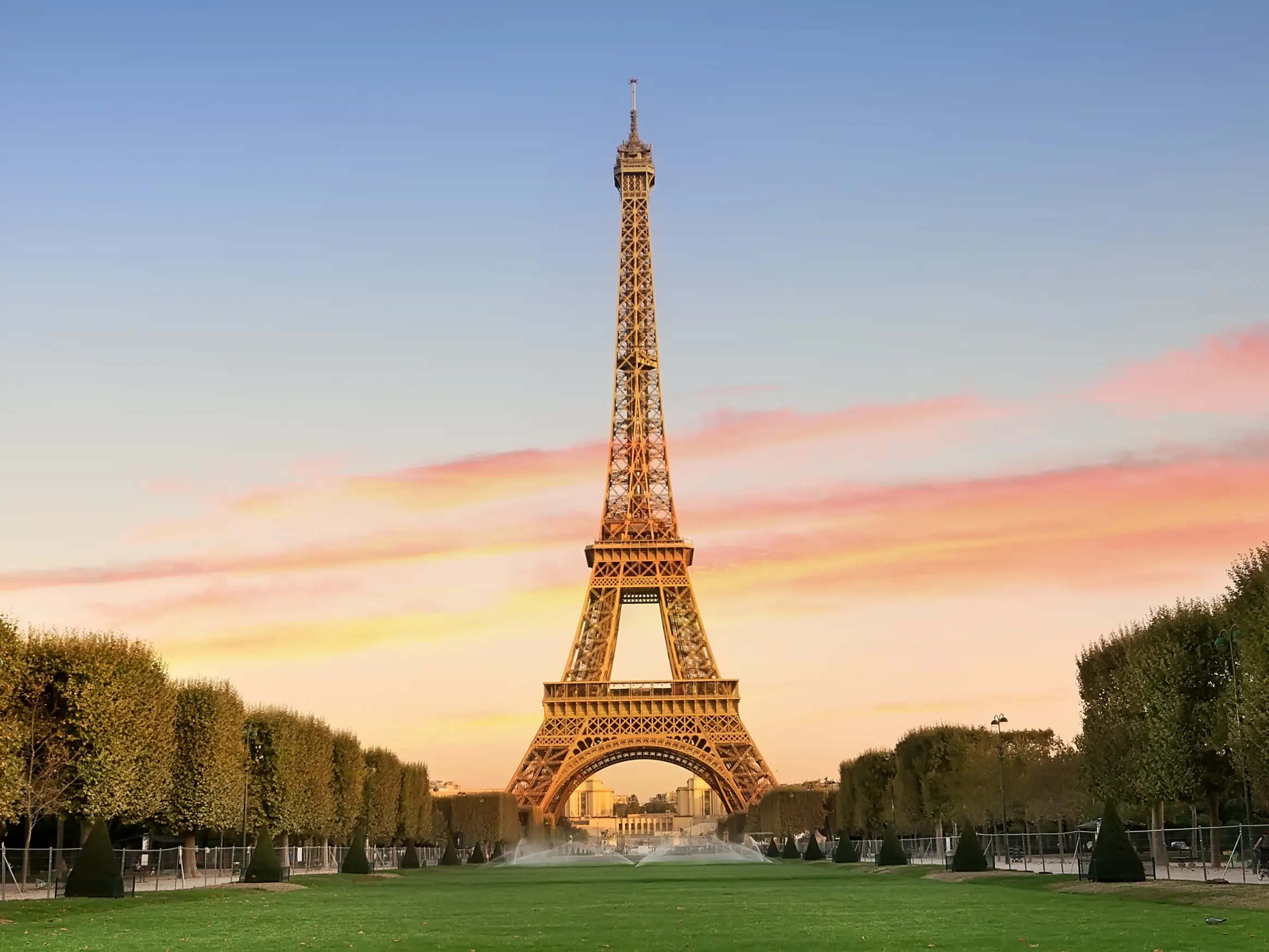
👋

Hi! Need help planning your dream trip? 🌍

Go Real Travel Assistant

Online

Welcome! Where are you in your journey?

Pick the option that fits you best so we can route you to the right help.