Overview
Overview
Overview
Overview
Overview
This website uses ‘cookies’ to give you the best, most relevant experience. By using this website, you consent to our Privacy Policy
×Overview
Trip Map
Itinerary
Inclusions
Reviews


Must see sights


Starting from
per person
Enter your details to embark on a journey that can be tailored just for you.
Start
Travelers
Preferred Hotel Stars
Select your interests and destinations for a trip plan inspired by you.
| ← | Move left |
| → | Move right |
| ↑ | Move up |
| ↓ | Move down |
| + | Zoom in |
| - | Zoom out |
| Home | Jump left by 75% |
| End | Jump right by 75% |
| Page Up | Jump up by 75% |
| Page Down | Jump down by 75% |


Click To Make Map Interactive
Overview
Overview
Overview
Overview
OverviewArrival
2 nights
Rome
Italy
Air: 2h5m
4 nights
Paris
France
Departure

Day 1
Arrive Rome
Day 1
Arrive Rome
Late Afternoon/Early Evening
Few sites in Rome are so filled with as much of a sense of history as the Roman Forum, which was once the hub of political and social activity in ancient Rome. Located between Piazza Venezia and the mighty Colosseum, the Forum and the adjoining Palatine Hill is one of the most visited sites in Rome. You'll walk down what was once a long square lined by the most important temples, government buildings, and business places. It was filled with dramatic and often gaudy monuments and statues commerating victories and great Romans from the past. Even today you can still get some sense of what an amazing sight it must have been, as you'll encounter an impressive collection of Roman ruins still remaining.

Admire the remains of a Roman basilica that once housed a giant statue of Constantine.
Show More
Gaze up at the triumphal arch with inscriptions and sculptures that honor the military victories of Emperor Titus.
Show More
Escape the crowds and climb to the hill overlooking the Forum, where the emperors built their luxurious palaces.
Show More
Browse the gallery to see some of the highlights

See the ancient statues of the virgins on whose chastity the fate of Rome depended.
Show More
See the ruins of the temple dedicated to the mythical twin gods, Castor and Pollux.
Show More
Admire the remains of a Roman basilica that once housed a giant statue of Constantine.
Show More
Gaze up at the triumphal arch with inscriptions and sculptures that honor the military victories of Emperor Titus.
Show More
Escape the crowds and climb to the hill overlooking the Forum, where the emperors built their luxurious palaces.
Show More
Browse the gallery to see some of the highlights

See the ancient statues of the virgins on whose chastity the fate of Rome depended.
Show More
See the ruins of the temple dedicated to the mythical twin gods, Castor and Pollux.
Show More
Day 1
Arrive Rome

Day 1
Arrive Rome
11:30 AM:
Private Transfer to your Hotel
Mid-Day/Afternoon:
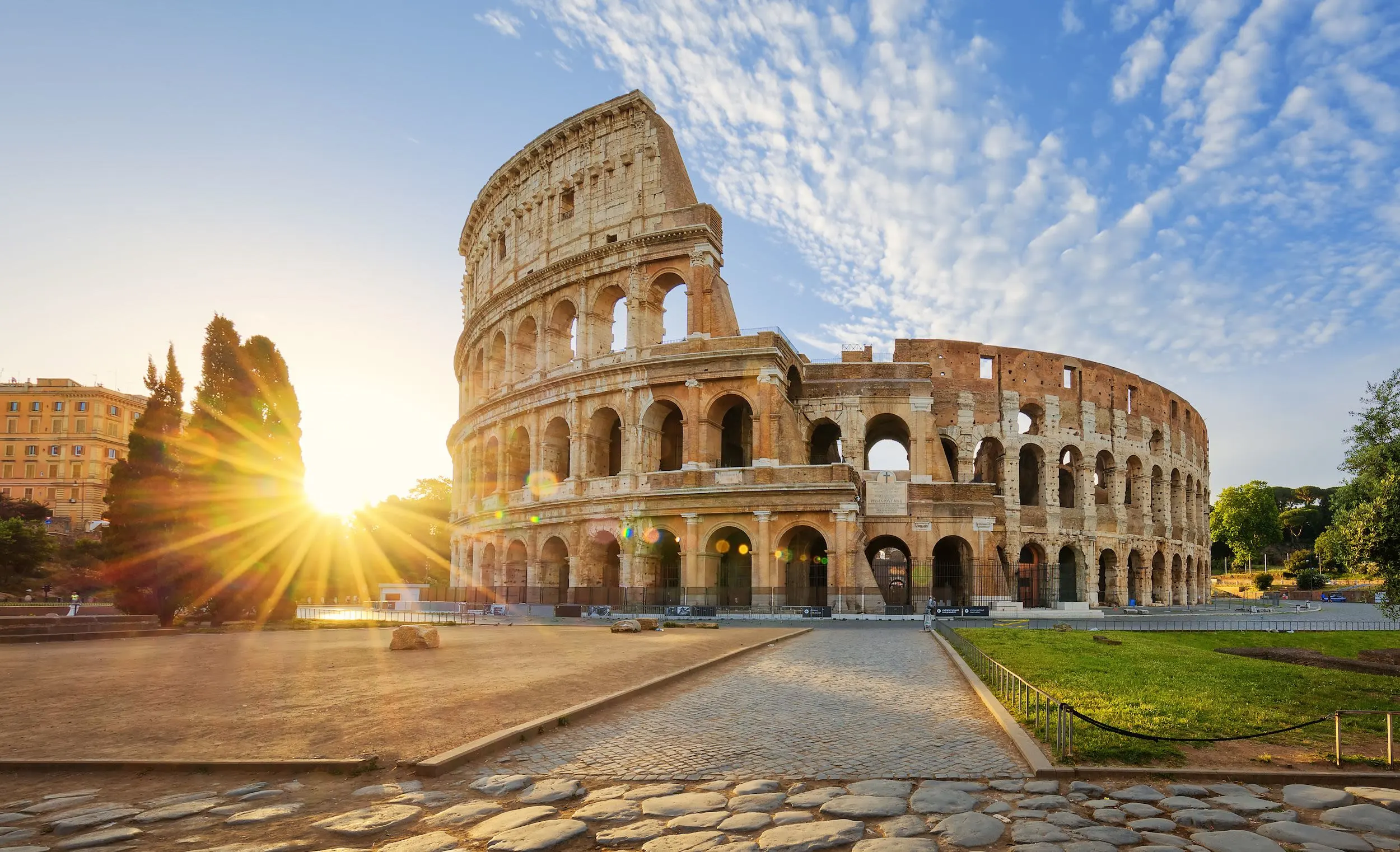
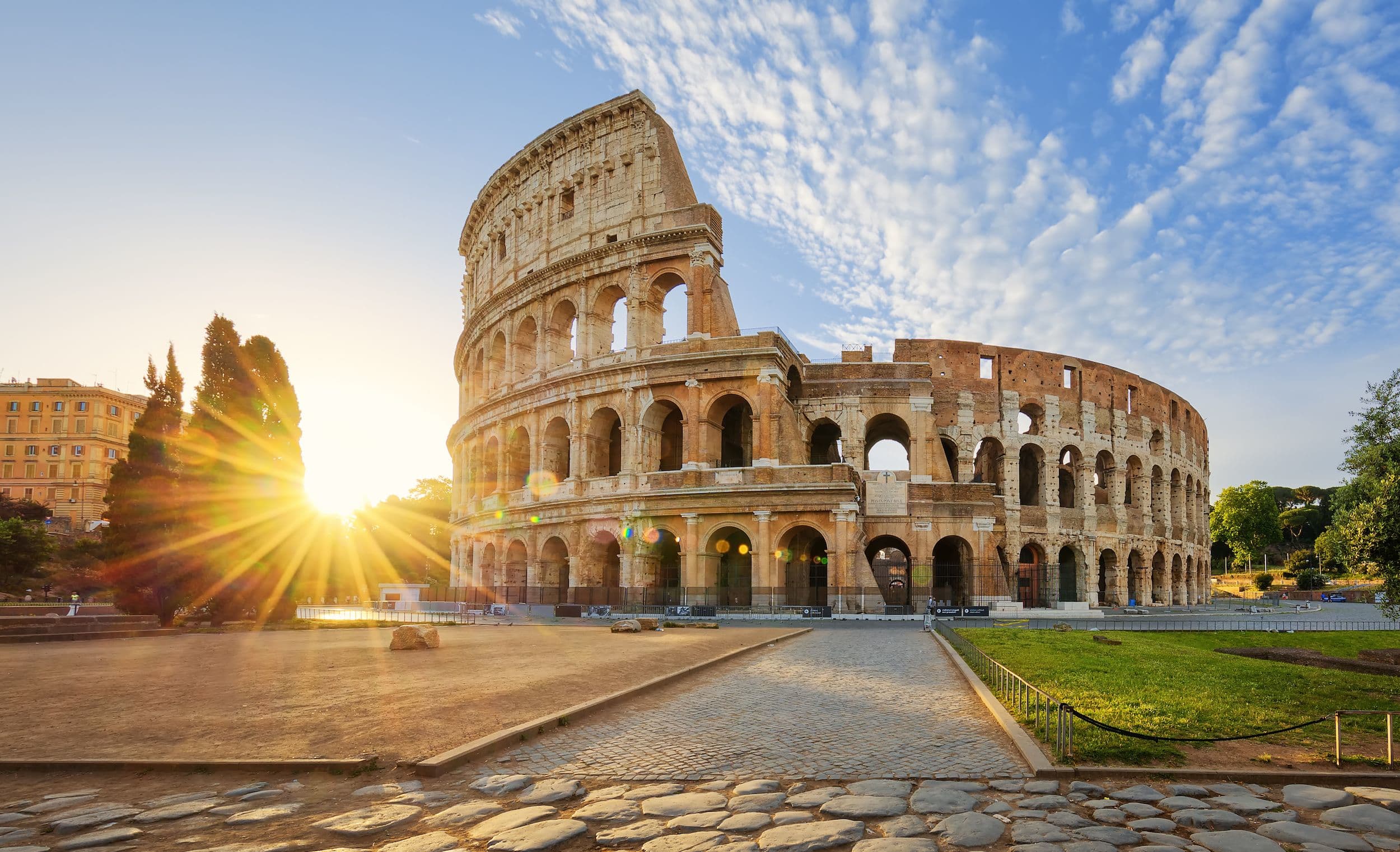
Colosseum
Late Afternoon/Early Evening:
Forum (Ancient Rome)


Basilica of Constantine
Highlight of Forum (Ancient Rome)Admire the remains of a Roman basilica that once housed a giant statue of Constantine.
Formerly the greatest of the Roman basilicas, it covered approx. 7,000 square yards (5,600 square m), including a central nave that was 265 feet (80 m) long and 83 feet (25 m) wide. Begun by the emperor Maxentius and finished by Constantine about AD 313, the basilica was not a church, but a Roman hall of justice. It housed a giant statue of Constantine, the remains of which are in the courtyard of the Conservators' Palace of the Capitoline Museum.


Arch of Titus
Highlight of Forum (Ancient Rome)Gaze up at the triumphal arch with inscriptions and sculptures that honor the military victories of Emperor Titus.
Said to be the inspiration for the Arc de Triomphe in Paris, the well-preserved arch was built in the 1st Century AD by Emperor Domitian shortly after the death of his older brother Titus to commemorate Titus's victories. These included the Siege of Jerusalem, which saw over 50,000 Jewish slaves, brought to Rome, who were then forced to build this arch and the Colosseum. It is one of the most recognisable monuments in the Roman Forum and often used as a reference point and meeting point for tours.


Palatine Hill
Highlight of Forum (Ancient Rome)Escape the crowds and climb to the hill overlooking the Forum, where the emperors built their luxurious palaces.
Reached via a path on the eastern end of the Forum, the Palatine Hill offers wonderful views over the city and the opportunity to see the ruins of the vast palaces built by past emperors, including that of Domitian, which contained swimming baths, saunas, and a sporting arena. The Palatine is not actually a part of the Forum, which was a public space, but it is visited with the same ticket.


Forum (Ancient Rome)
OverviewForum (Ancient Rome)
Few sites in Rome are so filled with as much of a sense of history as the Roman Forum, which was once the hub of political and social activity in ancient Rome. Located between Piazza Venezia and the mighty Colosseum, the Forum and the adjoining Palatine Hill is one of the most visited sites in Rome. You'll walk down what was once a long square lined by the most important temples, government buildings, and business places. It was filled with dramatic and often gaudy monuments and statues commerating victories and great Romans from the past. Even today you can still get some sense of what an amazing sight it must have been, as you'll encounter an impressive collection of Roman ruins still remaining.


House of the Vestal Virgins
Highlight of Forum (Ancient Rome)See the ancient statues of the virgins on whose chastity the fate of Rome depended.
You can see the remnants of statues of the Vestal Virgins which surrounded the courtyard of their palace. A Vestal was a young girl, picked between the ages of 6 and 10 and committed to 30 years of service: ten years learning the rituals, ten actively serving, and ten tutoring the new priestesses. Throughout that time, she had two big responsibilities. She had to tend Rome's sacred fire and she had to guard her virginity. If either was extinguished, it was thought, Rome would fall. The virgins lived a life of privilege, influence, and honor; that is, so long as they remained virgins. If not they were buried alive. They were largely picked for their beauty - making it a challenge for all involved.


Temples of Castor & Pollux and Vesta
Highlight of Forum (Ancient Rome)See the ruins of the temple dedicated to the mythical twin gods, Castor and Pollux.
The Temple of Castor and Pollux was built in 484 BC for the "twins" of Gemini (i.e. the twin sons of Jupiter), as a thanks for their help in the Republican triumph over the last King of Rome. After it was destroyed by a fire it was rebuilt by the Emporer Tiberius in 6 AD. Standing just next to it are the ruins of the Temple of the Vesta. It was there that the sacred fire of Vesta was tended by the Vestal Virgins.


Basilica of Constantine
Highlight of Forum (Ancient Rome)Admire the remains of a Roman basilica that once housed a giant statue of Constantine.
Formerly the greatest of the Roman basilicas, it covered approx. 7,000 square yards (5,600 square m), including a central nave that was 265 feet (80 m) long and 83 feet (25 m) wide. Begun by the emperor Maxentius and finished by Constantine about AD 313, the basilica was not a church, but a Roman hall of justice. It housed a giant statue of Constantine, the remains of which are in the courtyard of the Conservators' Palace of the Capitoline Museum.


Arch of Titus
Highlight of Forum (Ancient Rome)Gaze up at the triumphal arch with inscriptions and sculptures that honor the military victories of Emperor Titus.
Said to be the inspiration for the Arc de Triomphe in Paris, the well-preserved arch was built in the 1st Century AD by Emperor Domitian shortly after the death of his older brother Titus to commemorate Titus's victories. These included the Siege of Jerusalem, which saw over 50,000 Jewish slaves, brought to Rome, who were then forced to build this arch and the Colosseum. It is one of the most recognisable monuments in the Roman Forum and often used as a reference point and meeting point for tours.


Palatine Hill
Highlight of Forum (Ancient Rome)Escape the crowds and climb to the hill overlooking the Forum, where the emperors built their luxurious palaces.
Reached via a path on the eastern end of the Forum, the Palatine Hill offers wonderful views over the city and the opportunity to see the ruins of the vast palaces built by past emperors, including that of Domitian, which contained swimming baths, saunas, and a sporting arena. The Palatine is not actually a part of the Forum, which was a public space, but it is visited with the same ticket.


Forum (Ancient Rome)
OverviewForum (Ancient Rome)
Few sites in Rome are so filled with as much of a sense of history as the Roman Forum, which was once the hub of political and social activity in ancient Rome. Located between Piazza Venezia and the mighty Colosseum, the Forum and the adjoining Palatine Hill is one of the most visited sites in Rome. You'll walk down what was once a long square lined by the most important temples, government buildings, and business places. It was filled with dramatic and often gaudy monuments and statues commerating victories and great Romans from the past. Even today you can still get some sense of what an amazing sight it must have been, as you'll encounter an impressive collection of Roman ruins still remaining.


House of the Vestal Virgins
Highlight of Forum (Ancient Rome)See the ancient statues of the virgins on whose chastity the fate of Rome depended.
You can see the remnants of statues of the Vestal Virgins which surrounded the courtyard of their palace. A Vestal was a young girl, picked between the ages of 6 and 10 and committed to 30 years of service: ten years learning the rituals, ten actively serving, and ten tutoring the new priestesses. Throughout that time, she had two big responsibilities. She had to tend Rome's sacred fire and she had to guard her virginity. If either was extinguished, it was thought, Rome would fall. The virgins lived a life of privilege, influence, and honor; that is, so long as they remained virgins. If not they were buried alive. They were largely picked for their beauty - making it a challenge for all involved.


Temples of Castor & Pollux and Vesta
Highlight of Forum (Ancient Rome)See the ruins of the temple dedicated to the mythical twin gods, Castor and Pollux.
The Temple of Castor and Pollux was built in 484 BC for the "twins" of Gemini (i.e. the twin sons of Jupiter), as a thanks for their help in the Republican triumph over the last King of Rome. After it was destroyed by a fire it was rebuilt by the Emporer Tiberius in 6 AD. Standing just next to it are the ruins of the Temple of the Vesta. It was there that the sacred fire of Vesta was tended by the Vestal Virgins.

Basilica of Constantine
Highlight of Forum (Ancient Rome)Admire the remains of a Roman basilica that once housed a giant statue of Constantine.
Formerly the greatest of the Roman basilicas, it covered approx. 7,000 square yards (5,600 square m), including a central nave that was 265 feet (80 m) long and 83 feet (25 m) wide. Begun by the emperor Maxentius and finished by Constantine about AD 313, the basilica was not a church, but a Roman hall of justice. It housed a giant statue of Constantine, the remains of which are in the courtyard of the Conservators' Palace of the Capitoline Museum.

Arch of Titus
Highlight of Forum (Ancient Rome)Gaze up at the triumphal arch with inscriptions and sculptures that honor the military victories of Emperor Titus.
Said to be the inspiration for the Arc de Triomphe in Paris, the well-preserved arch was built in the 1st Century AD by Emperor Domitian shortly after the death of his older brother Titus to commemorate Titus's victories. These included the Siege of Jerusalem, which saw over 50,000 Jewish slaves, brought to Rome, who were then forced to build this arch and the Colosseum. It is one of the most recognisable monuments in the Roman Forum and often used as a reference point and meeting point for tours.

Palatine Hill
Highlight of Forum (Ancient Rome)Escape the crowds and climb to the hill overlooking the Forum, where the emperors built their luxurious palaces.
Reached via a path on the eastern end of the Forum, the Palatine Hill offers wonderful views over the city and the opportunity to see the ruins of the vast palaces built by past emperors, including that of Domitian, which contained swimming baths, saunas, and a sporting arena. The Palatine is not actually a part of the Forum, which was a public space, but it is visited with the same ticket.

Forum (Ancient Rome)
OverviewForum (Ancient Rome)
Few sites in Rome are so filled with as much of a sense of history as the Roman Forum, which was once the hub of political and social activity in ancient Rome. Located between Piazza Venezia and the mighty Colosseum, the Forum and the adjoining Palatine Hill is one of the most visited sites in Rome. You'll walk down what was once a long square lined by the most important temples, government buildings, and business places. It was filled with dramatic and often gaudy monuments and statues commerating victories and great Romans from the past. Even today you can still get some sense of what an amazing sight it must have been, as you'll encounter an impressive collection of Roman ruins still remaining.

House of the Vestal Virgins
Highlight of Forum (Ancient Rome)See the ancient statues of the virgins on whose chastity the fate of Rome depended.
You can see the remnants of statues of the Vestal Virgins which surrounded the courtyard of their palace. A Vestal was a young girl, picked between the ages of 6 and 10 and committed to 30 years of service: ten years learning the rituals, ten actively serving, and ten tutoring the new priestesses. Throughout that time, she had two big responsibilities. She had to tend Rome's sacred fire and she had to guard her virginity. If either was extinguished, it was thought, Rome would fall. The virgins lived a life of privilege, influence, and honor; that is, so long as they remained virgins. If not they were buried alive. They were largely picked for their beauty - making it a challenge for all involved.

Temples of Castor & Pollux and Vesta
Highlight of Forum (Ancient Rome)See the ruins of the temple dedicated to the mythical twin gods, Castor and Pollux.
The Temple of Castor and Pollux was built in 484 BC for the "twins" of Gemini (i.e. the twin sons of Jupiter), as a thanks for their help in the Republican triumph over the last King of Rome. After it was destroyed by a fire it was rebuilt by the Emporer Tiberius in 6 AD. Standing just next to it are the ruins of the Temple of the Vesta. It was there that the sacred fire of Vesta was tended by the Vestal Virgins.

Basilica of Constantine
Highlight of Forum (Ancient Rome)Admire the remains of a Roman basilica that once housed a giant statue of Constantine.
Formerly the greatest of the Roman basilicas, it covered approx. 7,000 square yards (5,600 square m), including a central nave that was 265 feet (80 m) long and 83 feet (25 m) wide. Begun by the emperor Maxentius and finished by Constantine about AD 313, the basilica was not a church, but a Roman hall of justice. It housed a giant statue of Constantine, the remains of which are in the courtyard of the Conservators' Palace of the Capitoline Museum.

Arch of Titus
Highlight of Forum (Ancient Rome)Gaze up at the triumphal arch with inscriptions and sculptures that honor the military victories of Emperor Titus.
Said to be the inspiration for the Arc de Triomphe in Paris, the well-preserved arch was built in the 1st Century AD by Emperor Domitian shortly after the death of his older brother Titus to commemorate Titus's victories. These included the Siege of Jerusalem, which saw over 50,000 Jewish slaves, brought to Rome, who were then forced to build this arch and the Colosseum. It is one of the most recognisable monuments in the Roman Forum and often used as a reference point and meeting point for tours.

Palatine Hill
Highlight of Forum (Ancient Rome)Escape the crowds and climb to the hill overlooking the Forum, where the emperors built their luxurious palaces.
Reached via a path on the eastern end of the Forum, the Palatine Hill offers wonderful views over the city and the opportunity to see the ruins of the vast palaces built by past emperors, including that of Domitian, which contained swimming baths, saunas, and a sporting arena. The Palatine is not actually a part of the Forum, which was a public space, but it is visited with the same ticket.

Forum (Ancient Rome)
OverviewForum (Ancient Rome)
Few sites in Rome are so filled with as much of a sense of history as the Roman Forum, which was once the hub of political and social activity in ancient Rome. Located between Piazza Venezia and the mighty Colosseum, the Forum and the adjoining Palatine Hill is one of the most visited sites in Rome. You'll walk down what was once a long square lined by the most important temples, government buildings, and business places. It was filled with dramatic and often gaudy monuments and statues commerating victories and great Romans from the past. Even today you can still get some sense of what an amazing sight it must have been, as you'll encounter an impressive collection of Roman ruins still remaining.

House of the Vestal Virgins
Highlight of Forum (Ancient Rome)See the ancient statues of the virgins on whose chastity the fate of Rome depended.
You can see the remnants of statues of the Vestal Virgins which surrounded the courtyard of their palace. A Vestal was a young girl, picked between the ages of 6 and 10 and committed to 30 years of service: ten years learning the rituals, ten actively serving, and ten tutoring the new priestesses. Throughout that time, she had two big responsibilities. She had to tend Rome's sacred fire and she had to guard her virginity. If either was extinguished, it was thought, Rome would fall. The virgins lived a life of privilege, influence, and honor; that is, so long as they remained virgins. If not they were buried alive. They were largely picked for their beauty - making it a challenge for all involved.

Temples of Castor & Pollux and Vesta
Highlight of Forum (Ancient Rome)See the ruins of the temple dedicated to the mythical twin gods, Castor and Pollux.
The Temple of Castor and Pollux was built in 484 BC for the "twins" of Gemini (i.e. the twin sons of Jupiter), as a thanks for their help in the Republican triumph over the last King of Rome. After it was destroyed by a fire it was rebuilt by the Emporer Tiberius in 6 AD. Standing just next to it are the ruins of the Temple of the Vesta. It was there that the sacred fire of Vesta was tended by the Vestal Virgins.

Day 2
Rome
Day 2
Rome
9:00 AM - 12:00 PM
Get to know the historic core of Rome on this three hour private guided walking tour that takes in such famous sights as People's Square (Piazza Popolo), the Spanish Steps, Trevi Fountain where Anita Ekberg jumped into the water in Frederico Fellini's La Dolce Vita, the column of Marcus Aurelius, the Pantheon, and the most beautiful square in all of Italy - Piazza Navona.

Take a scenic walk up the 18th-century stairway where Audrey Hepburn and Gregory Peck set out on their Roman Holiday.
Show More
Admire one of the most iconic sights in Rome, made famous by Anita Ekberg in La Dolce Vita.
Show More
Browse the gallery to see some of the highlights

Visit this iconic former pagan temple converted into a Christian church.
Show More
Take a scenic walk up the 18th-century stairway where Audrey Hepburn and Gregory Peck set out on their Roman Holiday.
Show More
Admire one of the most iconic sights in Rome, made famous by Anita Ekberg in La Dolce Vita.
Show More
Browse the gallery to see some of the highlights

Visit this iconic former pagan temple converted into a Christian church.
Show More
Day 2
Rome

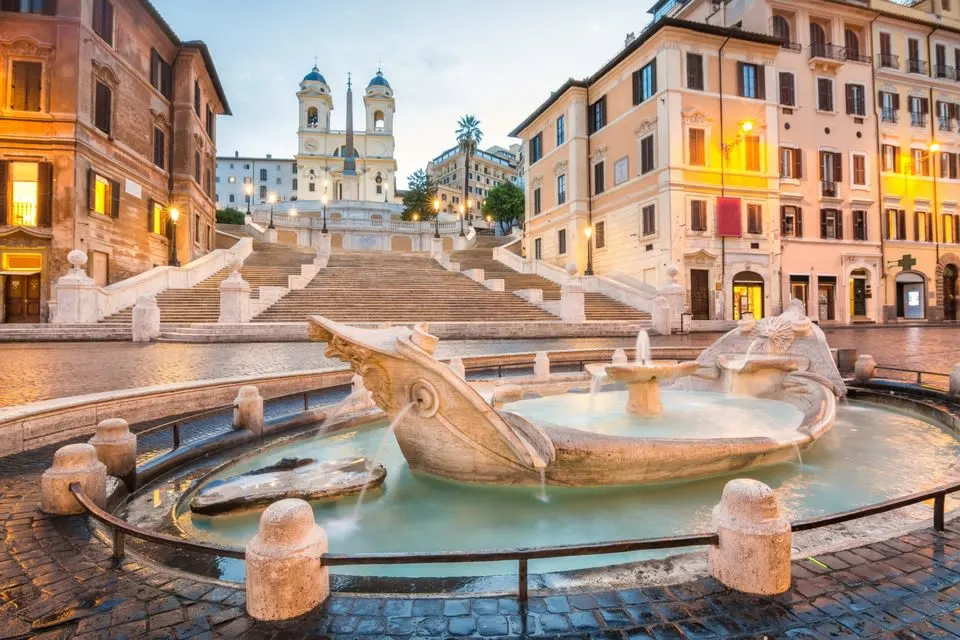
Spanish Steps
Highlight of Grand Tour of Historic Center, GuidedTake a scenic walk up the 18th-century stairway where Audrey Hepburn and Gregory Peck set out on their Roman Holiday.
The majestically balustraded Spanish Steps were built in 1723-6 to connect the piazza with the church of the Trinita dei Monti and the Pincio. It quickly became a favorite spot of poets, artists, and writers who gathered on its 137 steps, and it's now a favorite stop for tourists from all over the world. Yet this highly attractive stairway still somehow manages to retain a sense of romance even at the height of the tourist season, and if you happen to get there at the beginning of May you’ll find it laden with tubs of magnificent azaleas. A masterpiece of 18th-century town planning, the steps actually contain a religious message – the three flights and three landings are an allusion to the Holy Trinity.

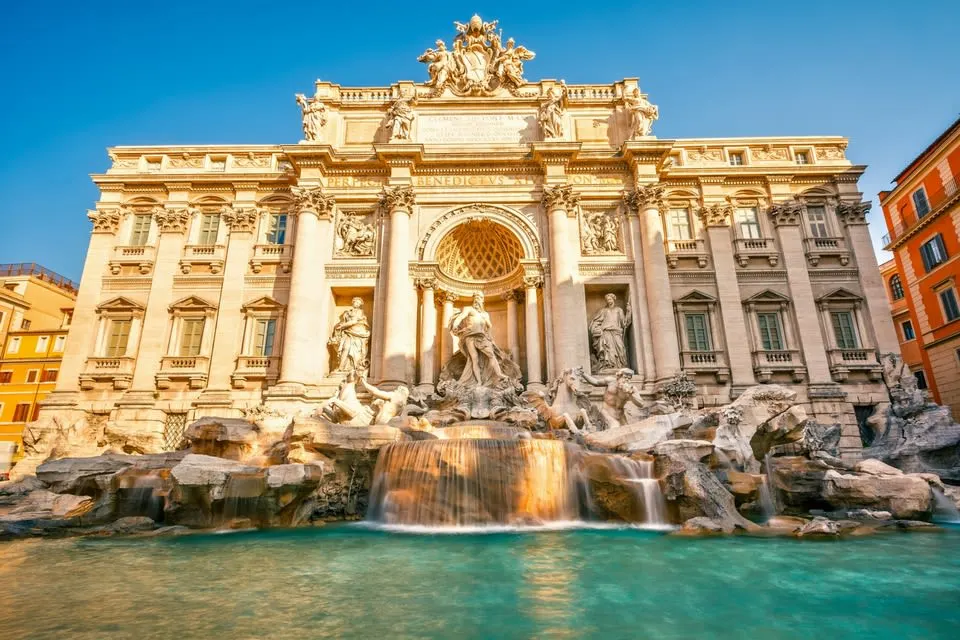
The Trevi Fountain
Highlight of Grand Tour of Historic Center, GuidedAdmire one of the most iconic sights in Rome, made famous by Anita Ekberg in La Dolce Vita.
The Trevi Fountain is one of the most iconic sights in Rome thanks to the antics of the shapely Anita Ekberg casting herself into its waters in Frederico Fellini’s cinematic masterpiece, La Dolce Vita. The fountain curiously seems to appear out of virtually nowhere within a warren of backstreets but is nevertheless discovered reasonably early each day by endless crowds of tourists looking to ensure their future return to Rome by tossing a coin back over their should into its crystal clear water (the coins are raked up each morning and donated to the Church organization Caritas).

Grand Tour of Historic Center, Guided
OverviewGrand Tour of Historic Center, Guided
Get to know the historic core of Rome on this three hour private guided walking tour that takes in such famous sights as People's Square (Piazza Popolo), the Spanish Steps, Trevi Fountain where Anita Ekberg jumped into the water in Frederico Fellini's La Dolce Vita, the column of Marcus Aurelius, the Pantheon, and the most beautiful square in all of Italy - Piazza Navona.
Pantheon
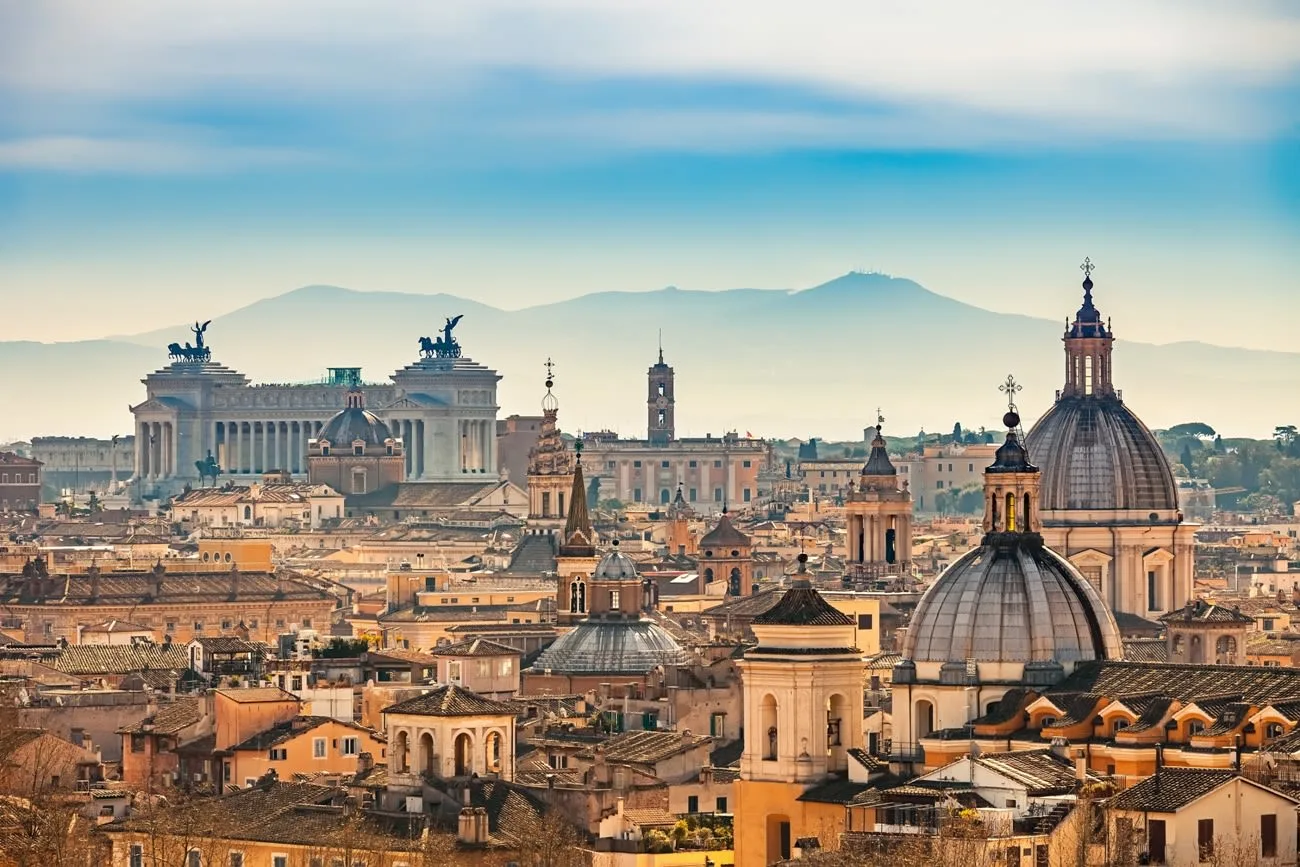
Highlight of Grand Tour of Historic Center, GuidedVisit this iconic former pagan temple converted into a Christian church.
This sanctuary of impressive dimensions is one of the best-preserved buildings of ancient Rome. Erected on the foundations of an earlier temple dating back to 27 BC, its construction was ordered by the Emporer Hadrian in the second century AD. The Pantheon was originally a Pagan temple dedidated to all of the gods. The building's consecration as a church in 609 AD saved it from the abandonment, destruction, and the worst of the spoliation that befell the majority of ancient Rome's buildings during the early medieval period. Its greying exterior may look its age, but inside, a spectacular experience awaits. With light streaming through its oculus, the marble-clad interior seems vast. The Pantheon is home to some notable tombs, including those of painters Annibale Carracci and Raphael and King Vittorio Emanuele II.

Spanish Steps
Highlight of Grand Tour of Historic Center, GuidedTake a scenic walk up the 18th-century stairway where Audrey Hepburn and Gregory Peck set out on their Roman Holiday.
The majestically balustraded Spanish Steps were built in 1723-6 to connect the piazza with the church of the Trinita dei Monti and the Pincio. It quickly became a favorite spot of poets, artists, and writers who gathered on its 137 steps, and it's now a favorite stop for tourists from all over the world. Yet this highly attractive stairway still somehow manages to retain a sense of romance even at the height of the tourist season, and if you happen to get there at the beginning of May you’ll find it laden with tubs of magnificent azaleas. A masterpiece of 18th-century town planning, the steps actually contain a religious message – the three flights and three landings are an allusion to the Holy Trinity.

The Trevi Fountain
Highlight of Grand Tour of Historic Center, GuidedAdmire one of the most iconic sights in Rome, made famous by Anita Ekberg in La Dolce Vita.
The Trevi Fountain is one of the most iconic sights in Rome thanks to the antics of the shapely Anita Ekberg casting herself into its waters in Frederico Fellini’s cinematic masterpiece, La Dolce Vita. The fountain curiously seems to appear out of virtually nowhere within a warren of backstreets but is nevertheless discovered reasonably early each day by endless crowds of tourists looking to ensure their future return to Rome by tossing a coin back over their should into its crystal clear water (the coins are raked up each morning and donated to the Church organization Caritas).

Grand Tour of Historic Center, Guided
OverviewGrand Tour of Historic Center, Guided
Get to know the historic core of Rome on this three hour private guided walking tour that takes in such famous sights as People's Square (Piazza Popolo), the Spanish Steps, Trevi Fountain where Anita Ekberg jumped into the water in Frederico Fellini's La Dolce Vita, the column of Marcus Aurelius, the Pantheon, and the most beautiful square in all of Italy - Piazza Navona.

Pantheon
Highlight of Grand Tour of Historic Center, GuidedVisit this iconic former pagan temple converted into a Christian church.
This sanctuary of impressive dimensions is one of the best-preserved buildings of ancient Rome. Erected on the foundations of an earlier temple dating back to 27 BC, its construction was ordered by the Emporer Hadrian in the second century AD. The Pantheon was originally a Pagan temple dedidated to all of the gods. The building's consecration as a church in 609 AD saved it from the abandonment, destruction, and the worst of the spoliation that befell the majority of ancient Rome's buildings during the early medieval period. Its greying exterior may look its age, but inside, a spectacular experience awaits. With light streaming through its oculus, the marble-clad interior seems vast. The Pantheon is home to some notable tombs, including those of painters Annibale Carracci and Raphael and King Vittorio Emanuele II.

Day 3
Rome to Paris
Day 3
Rome to Paris
Early Morning to Mid-Day
Rome is unique in the world in that it contains an independent country within its city limits - the Vatican City, from where the Pope administers the Catholic Church. The symbolic center of Catholicism is St Peter's Basilica, the second-largest Catholic church in the world and among the most beautiful. The Vatican Museum contains one of the greatest collections of art in existence, including Michelangelo's jaw-dropping Sistine Chapel. The popes had a bigger influence on Rome than just the collection of art. The Pope's title is actually Bishop of Rome, and popes administed the city for centuries, shaping its architecture & public spaces. Rome was re-built to be an example of urban beauty, and the Vatican was meant to be the showcase within the showcase. Their success is evident from the throngs of visitors who flock here even today.

Book early if you want to see the Vatican Museum's monumental works of art from the greatest Italian artists of the Renaissance.
Show More
Explore the gigantic and incredibly beautiful church known as "the greatest of all churches of Christendom".
Show More
Escape the crowds in this oasis of green hidden behind the walls of the Vatican.
Show More
Browse the gallery to see some of the highlights

Stand in the middle of this famous square in which the faithful gather to hear the Pope give audiences and celebrate mass.
Show More
Gaze up at the world's most famous ceiling, the masterpiece of Michelangelo.
Show More
Book early if you want to see the Vatican Museum's monumental works of art from the greatest Italian artists of the Renaissance.
Show More
Explore the gigantic and incredibly beautiful church known as "the greatest of all churches of Christendom".
Show More
Escape the crowds in this oasis of green hidden behind the walls of the Vatican.
Show More
Browse the gallery to see some of the highlights

Stand in the middle of this famous square in which the faithful gather to hear the Pope give audiences and celebrate mass.
Show More
Gaze up at the world's most famous ceiling, the masterpiece of Michelangelo.
Show More
Day 3
Rome to Paris

Vatican Museums
Highlight of Vatican CityBook early if you want to see the Vatican Museum's monumental works of art from the greatest Italian artists of the Renaissance.
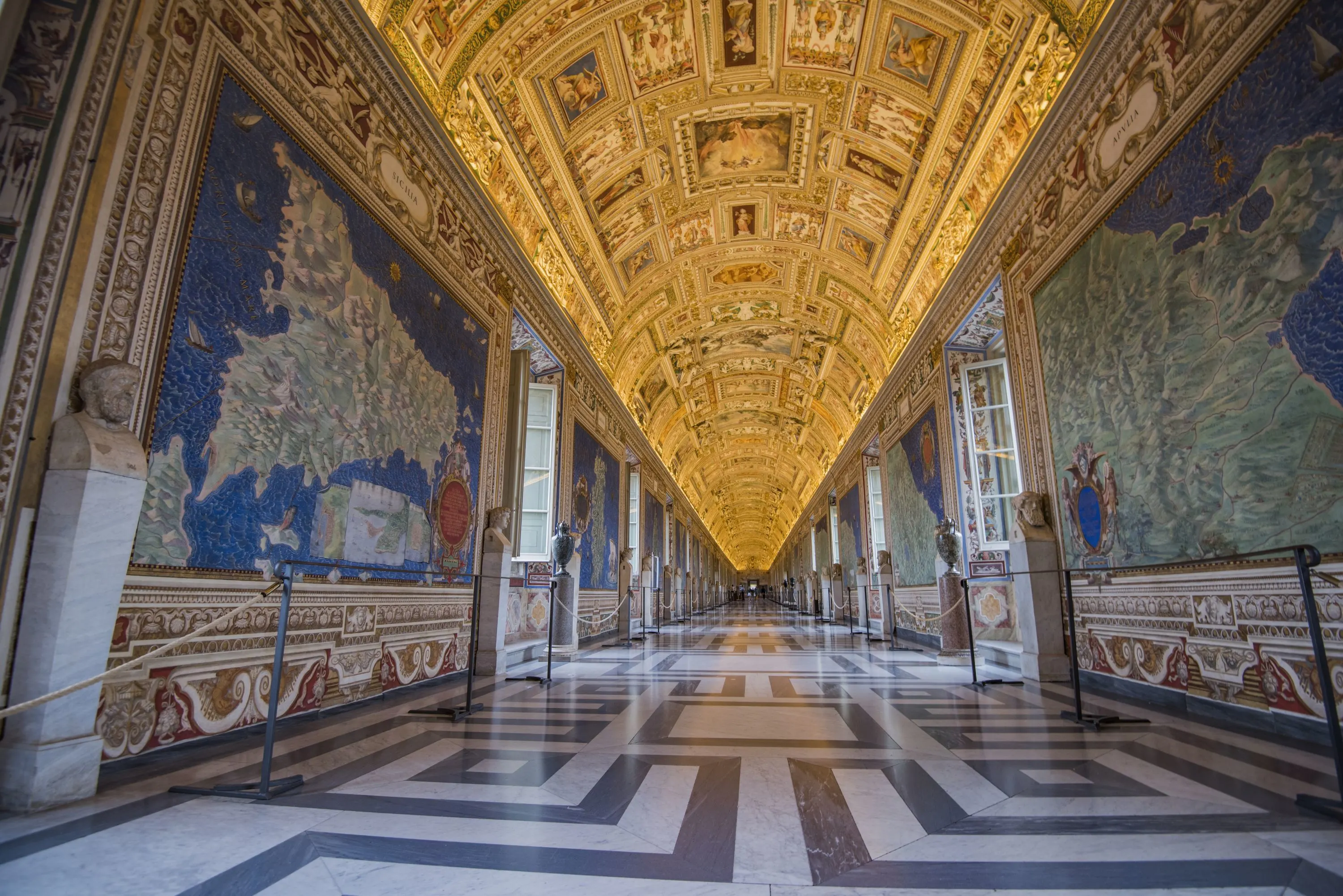
The Vatican Museum is actually 26 different museums, which include not only exhibitions but chapels, apartments, and other rooms of the Vatican palace, covering a huge range of fine and applied arts patronized by the popes. There's also an outstanding collection of ancient antiquities (including even the Emperor Nero's red stone bathtub), a gallery of hand-painted maps, and whole rooms turned into works of art. In addition to ancient and medieval works of art, you'll see masterpieces by the "who's who" of the Italian Renaissance, including Raphael, Leonardo da Vinci, Titian, and Caravaggio. Other highlights include panels by the brilliant monk-artist Fra Angelico, works from the Venetian school, including Vavarini, and much, much more. Booking in advance is highly recommended as otherwise you can wait for hours or not even be able to get in at all.

St Peter’s Basilica
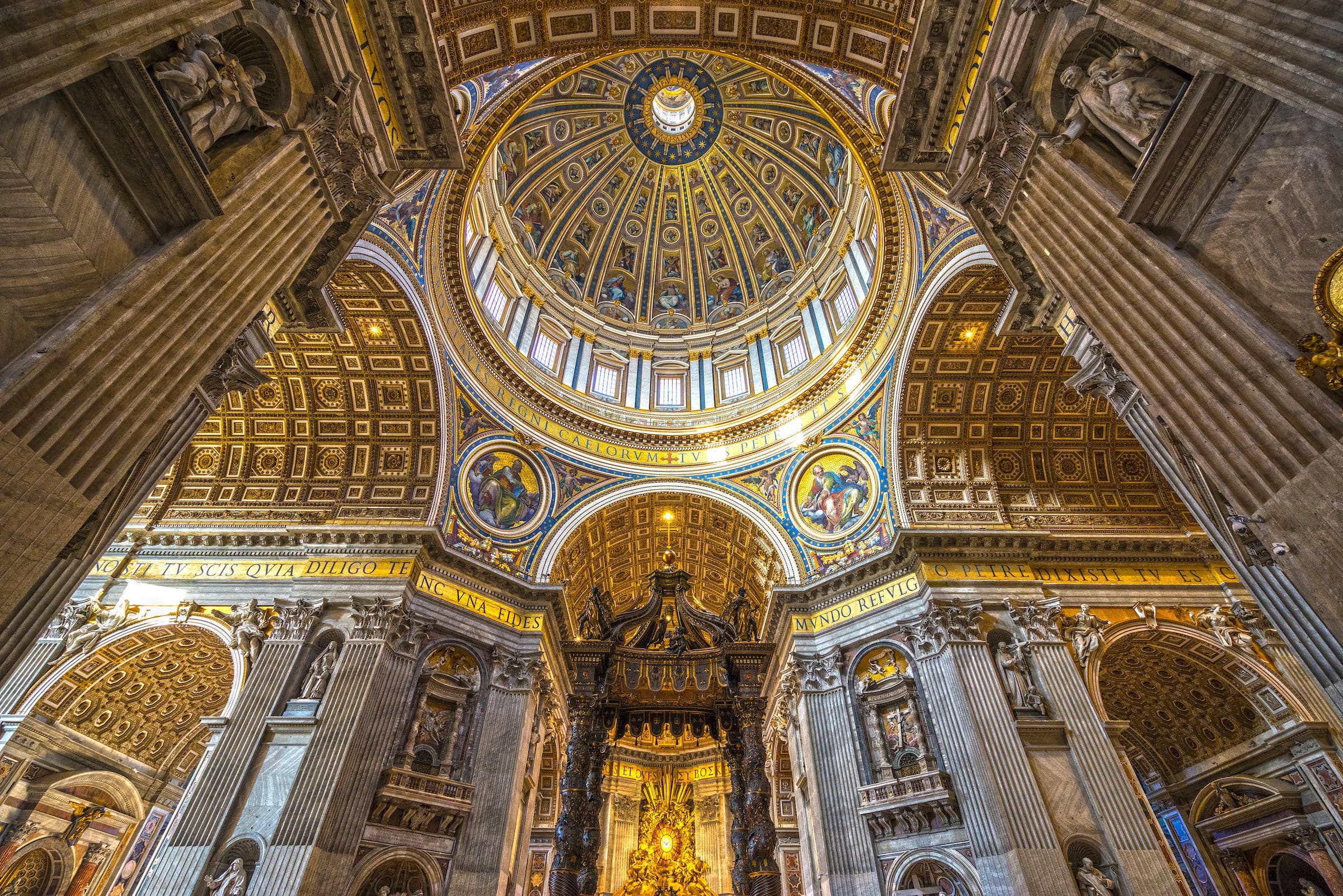
Highlight of Vatican CityExplore the gigantic and incredibly beautiful church known as "the greatest of all churches of Christendom".
The basilica is one of the chief pilgrimage sites in the Christian world, and one of the most popular tourist destinations in Rome. The basilica is the symbolic center of the church not only because the Pope frequently celebrates Mass there, but because it is believed that the apostle St. Peter is buried beneath it. Catholics consider Peter as the first Bishop of Rome and "the rock" upon which the Catholic Church was built, in accordance with Christ's instructions. Inside you can admire sculptures by Bernini as well as Michelangelo's famous sculpture of the Virgin Mary holding the crucified Jesus, known as The Pietà. The church's elaborate and impressive golden interior is a sight to behold. Other sights include St Peter's tomb, the Papal crypts in the necropolis under the basilica, as well as the dome, which rewards visitors with views over Rome. Entry is free, but queues to visit the Basilica can be lengthy, so it is highly advised to either get there early or to purchase a skip the line entrance. The dome is also paid entry.

Vatican Gardens
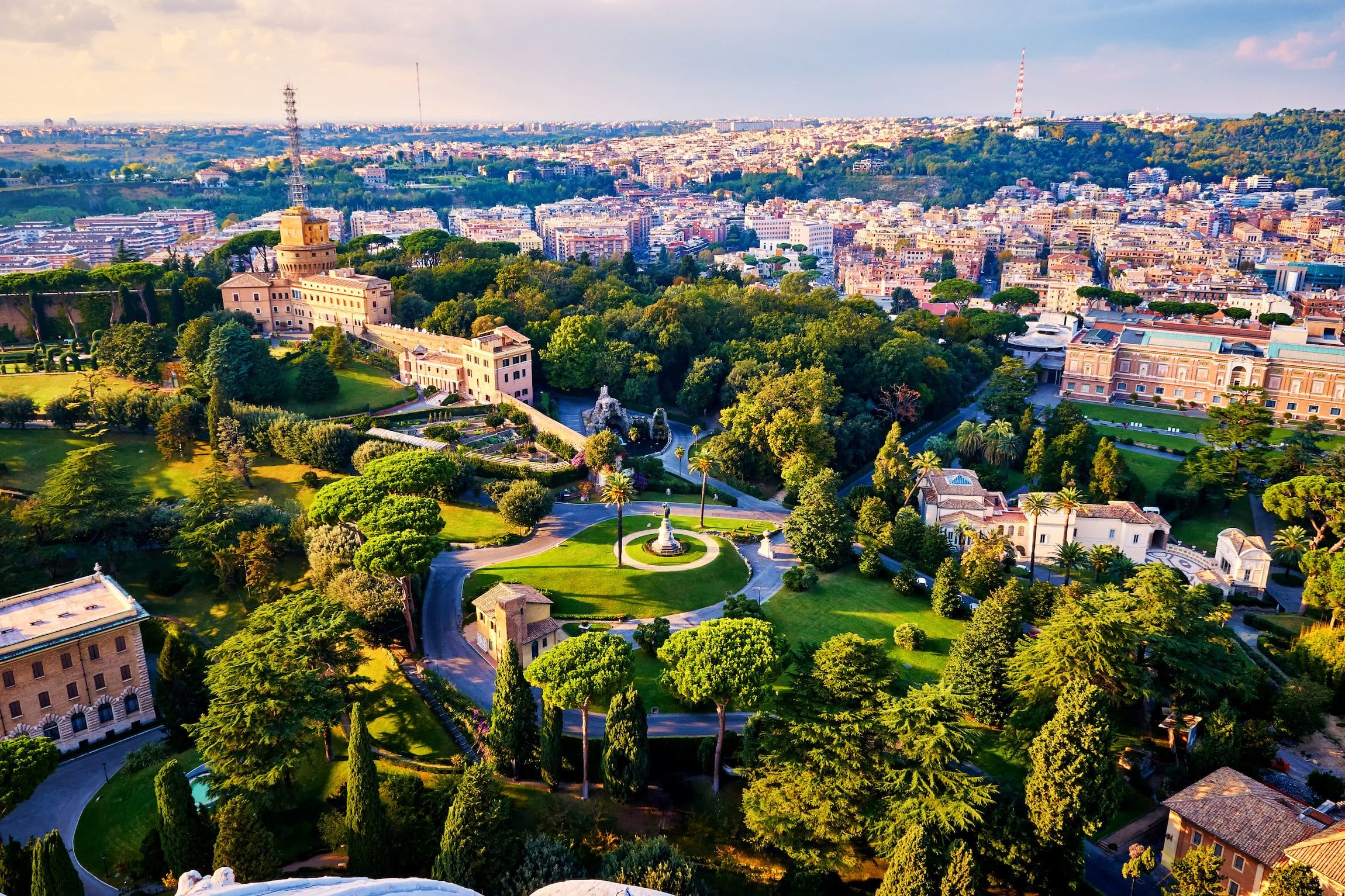
Highlight of Vatican CityEscape the crowds in this oasis of green hidden behind the walls of the Vatican.
Accessible only via a guided tour, the gardens are definitely worth a visit. Just as the Popes have for hundreds of years, you can stroll the gardens and relax amidst the greenery, while taking in the perfect view of St. Peter's.

Vatican City
OverviewVatican City
Rome is unique in the world in that it contains an independent country within its city limits - the Vatican City, from where the Pope administers the Catholic Church. The symbolic center of Catholicism is St Peter's Basilica, the second-largest Catholic church in the world and among the most beautiful. The Vatican Museum contains one of the greatest collections of art in existence, including Michelangelo's jaw-dropping Sistine Chapel. The popes had a bigger influence on Rome than just the collection of art. The Pope's title is actually Bishop of Rome, and popes administed the city for centuries, shaping its architecture & public spaces. Rome was re-built to be an example of urban beauty, and the Vatican was meant to be the showcase within the showcase. Their success is evident from the throngs of visitors who flock here even today.

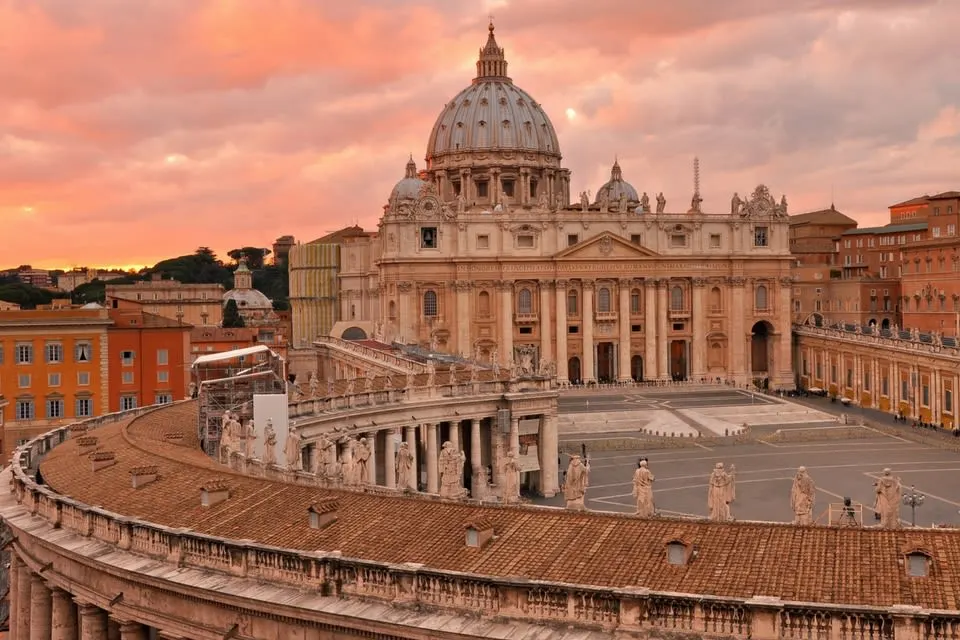
St Peter's Square
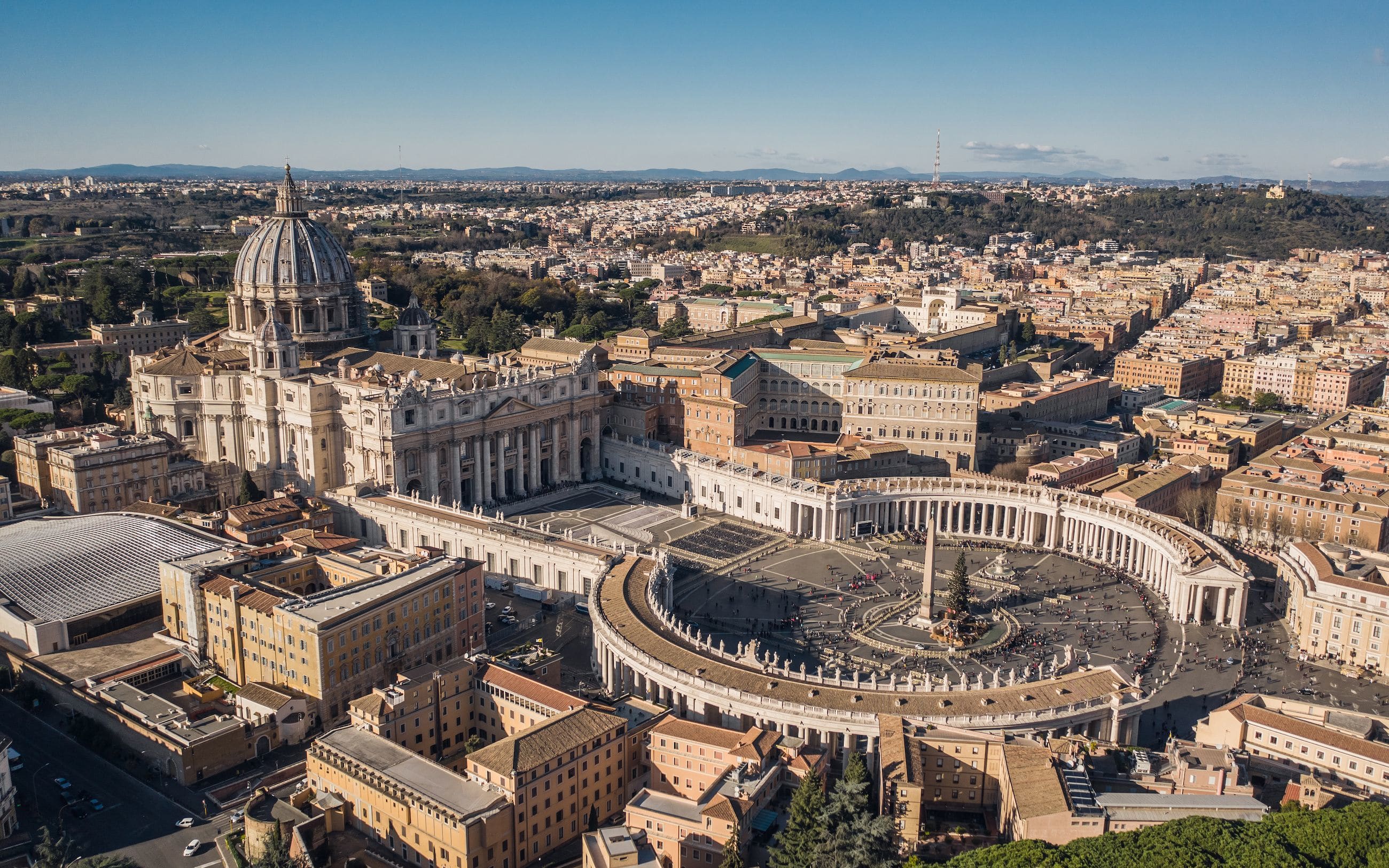
Highlight of Vatican CityStand in the middle of this famous square in which the faithful gather to hear the Pope give audiences and celebrate mass.
As one of the most superb conceptions of its kind in civic architecture, St Peter’s Square is the masterpiece of Gian Lorenzo Bernini and makes a wonderful approach to one of the world’s most magnificent churches, St Peter's Basilica. An oval rather than an actual square, the piazza, laid out in 1656-67, is partially enclosed by two semi-circular colonnades on which stand 96 statues of saints and martyrs. At the center of the oval stands an 84-foot (26m) tall Egyptian obelisk of red granite.

Sistine Chapel
Highlight of Vatican CityGaze up at the world's most famous ceiling, the masterpiece of Michelangelo.
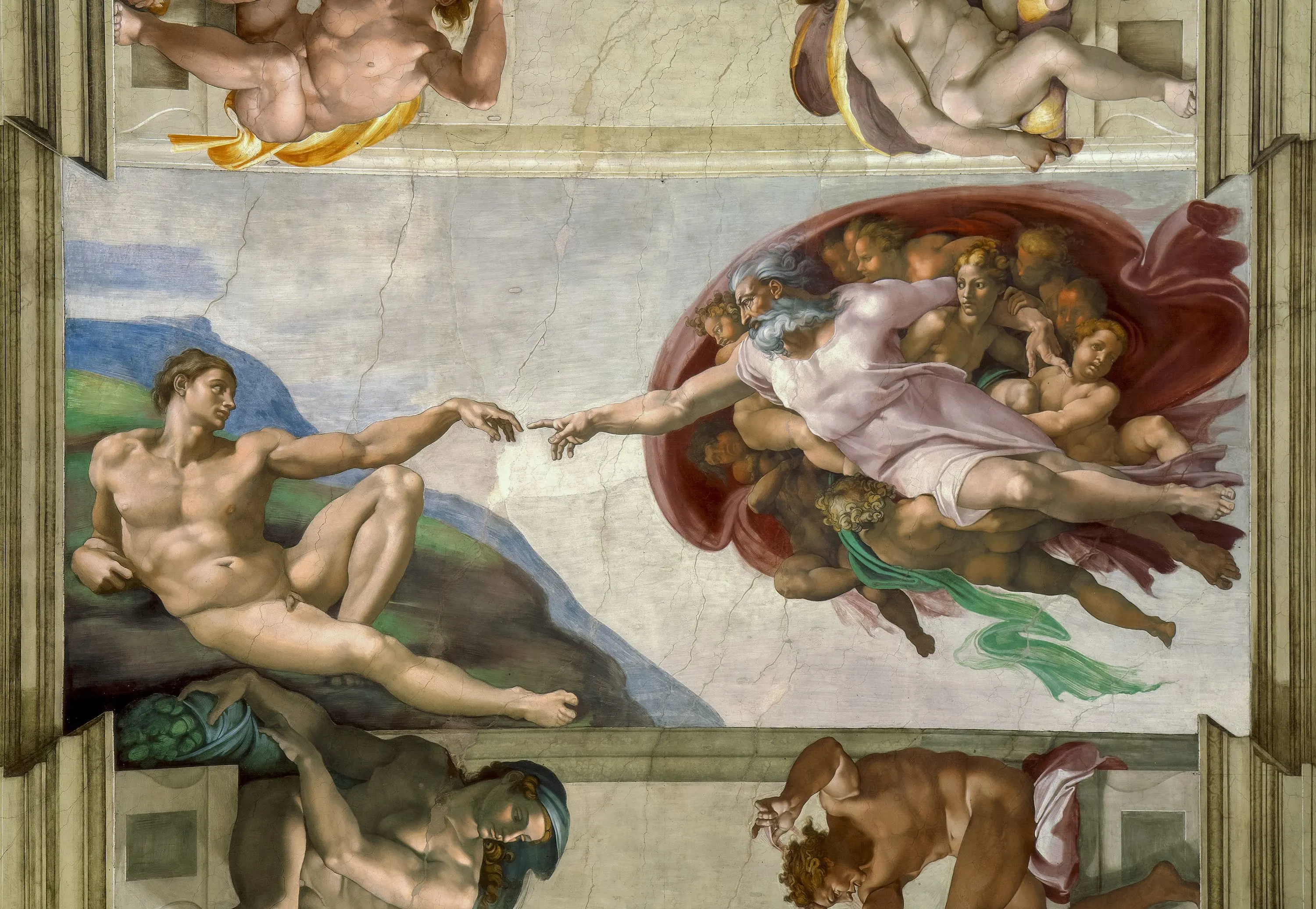
This famous chapel inside the Vatican Museums is best known for Michelangelo's 16th-century painted ceiling of "The Creation of Adam" and "The Last Judgement" fresco that covers the whole altar wall of the chapel. The jaw-dropping sight is not to be missed, considered one of the top highlights of visiting the Vatican Museums and one of the top artistic wonders of the world.

Vatican Museums
Highlight of Vatican CityBook early if you want to see the Vatican Museum's monumental works of art from the greatest Italian artists of the Renaissance.
The Vatican Museum is actually 26 different museums, which include not only exhibitions but chapels, apartments, and other rooms of the Vatican palace, covering a huge range of fine and applied arts patronized by the popes. There's also an outstanding collection of ancient antiquities (including even the Emperor Nero's red stone bathtub), a gallery of hand-painted maps, and whole rooms turned into works of art. In addition to ancient and medieval works of art, you'll see masterpieces by the "who's who" of the Italian Renaissance, including Raphael, Leonardo da Vinci, Titian, and Caravaggio. Other highlights include panels by the brilliant monk-artist Fra Angelico, works from the Venetian school, including Vavarini, and much, much more. Booking in advance is highly recommended as otherwise you can wait for hours or not even be able to get in at all.

St Peter’s Basilica
Highlight of Vatican CityExplore the gigantic and incredibly beautiful church known as "the greatest of all churches of Christendom".
The basilica is one of the chief pilgrimage sites in the Christian world, and one of the most popular tourist destinations in Rome. The basilica is the symbolic center of the church not only because the Pope frequently celebrates Mass there, but because it is believed that the apostle St. Peter is buried beneath it. Catholics consider Peter as the first Bishop of Rome and "the rock" upon which the Catholic Church was built, in accordance with Christ's instructions. Inside you can admire sculptures by Bernini as well as Michelangelo's famous sculpture of the Virgin Mary holding the crucified Jesus, known as The Pietà. The church's elaborate and impressive golden interior is a sight to behold. Other sights include St Peter's tomb, the Papal crypts in the necropolis under the basilica, as well as the dome, which rewards visitors with views over Rome. Entry is free, but queues to visit the Basilica can be lengthy, so it is highly advised to either get there early or to purchase a skip the line entrance. The dome is also paid entry.

Vatican Gardens
Highlight of Vatican CityEscape the crowds in this oasis of green hidden behind the walls of the Vatican.
Accessible only via a guided tour, the gardens are definitely worth a visit. Just as the Popes have for hundreds of years, you can stroll the gardens and relax amidst the greenery, while taking in the perfect view of St. Peter's.

Vatican City
OverviewVatican City
Rome is unique in the world in that it contains an independent country within its city limits - the Vatican City, from where the Pope administers the Catholic Church. The symbolic center of Catholicism is St Peter's Basilica, the second-largest Catholic church in the world and among the most beautiful. The Vatican Museum contains one of the greatest collections of art in existence, including Michelangelo's jaw-dropping Sistine Chapel. The popes had a bigger influence on Rome than just the collection of art. The Pope's title is actually Bishop of Rome, and popes administed the city for centuries, shaping its architecture & public spaces. Rome was re-built to be an example of urban beauty, and the Vatican was meant to be the showcase within the showcase. Their success is evident from the throngs of visitors who flock here even today.

St Peter's Square
Highlight of Vatican CityStand in the middle of this famous square in which the faithful gather to hear the Pope give audiences and celebrate mass.
As one of the most superb conceptions of its kind in civic architecture, St Peter’s Square is the masterpiece of Gian Lorenzo Bernini and makes a wonderful approach to one of the world’s most magnificent churches, St Peter's Basilica. An oval rather than an actual square, the piazza, laid out in 1656-67, is partially enclosed by two semi-circular colonnades on which stand 96 statues of saints and martyrs. At the center of the oval stands an 84-foot (26m) tall Egyptian obelisk of red granite.

Sistine Chapel
Highlight of Vatican CityGaze up at the world's most famous ceiling, the masterpiece of Michelangelo.
This famous chapel inside the Vatican Museums is best known for Michelangelo's 16th-century painted ceiling of "The Creation of Adam" and "The Last Judgement" fresco that covers the whole altar wall of the chapel. The jaw-dropping sight is not to be missed, considered one of the top highlights of visiting the Vatican Museums and one of the top artistic wonders of the world.

Day 4
Paris
Day 4
Paris
9:00 AM - 1:00 PM
Embark on a captivating 4-hour walking tour of the center of Paris, the City of Lights, where history and modernity blend seamlessly along its enchanting streets. Starting from your accommodation, you will explore the heart of this dynamic city and learn how to navigate Paris as a local.


Day 4
Paris

Paris Highlights Walking Tour
OverviewParis Highlights Walking Tour
Embark on a captivating 4-hour walking tour of the center of Paris, the City of Lights, where history and modernity blend seamlessly along its enchanting streets. Starting from your accommodation, you will explore the heart of this dynamic city and learn how to navigate Paris as a local.

Paris Highlights Walking Tour
OverviewParis Highlights Walking Tour
Embark on a captivating 4-hour walking tour of the center of Paris, the City of Lights, where history and modernity blend seamlessly along its enchanting streets. Starting from your accommodation, you will explore the heart of this dynamic city and learn how to navigate Paris as a local.

Paris Highlights Walking Tour
OverviewParis Highlights Walking Tour
Embark on a captivating 4-hour walking tour of the center of Paris, the City of Lights, where history and modernity blend seamlessly along its enchanting streets. Starting from your accommodation, you will explore the heart of this dynamic city and learn how to navigate Paris as a local.

Paris Highlights Walking Tour
OverviewParis Highlights Walking Tour
Embark on a captivating 4-hour walking tour of the center of Paris, the City of Lights, where history and modernity blend seamlessly along its enchanting streets. Starting from your accommodation, you will explore the heart of this dynamic city and learn how to navigate Paris as a local.

Paris Highlights Walking Tour
OverviewParis Highlights Walking Tour
Embark on a captivating 4-hour walking tour of the center of Paris, the City of Lights, where history and modernity blend seamlessly along its enchanting streets. Starting from your accommodation, you will explore the heart of this dynamic city and learn how to navigate Paris as a local.

Day 5
Paris
Day 5
Paris
Morning/Mid-Day
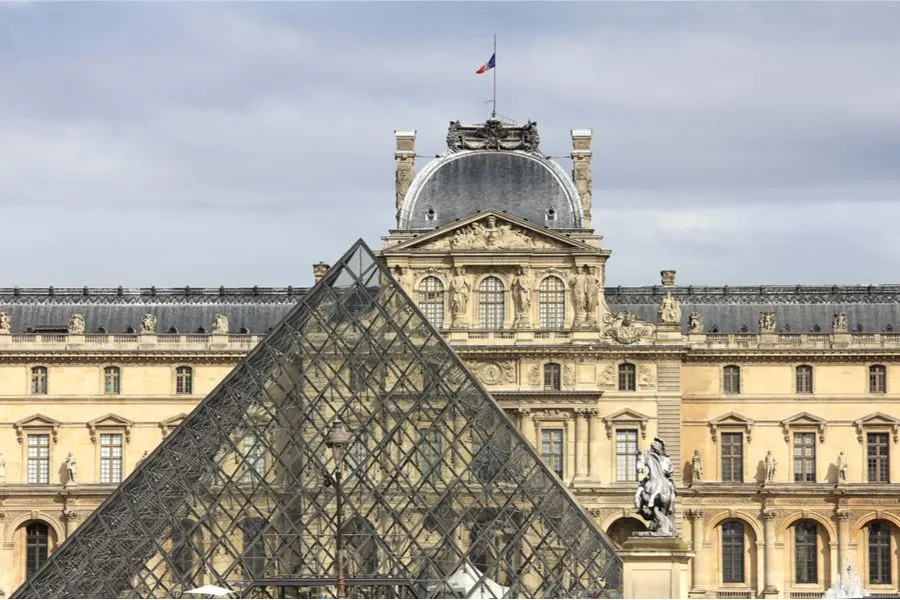
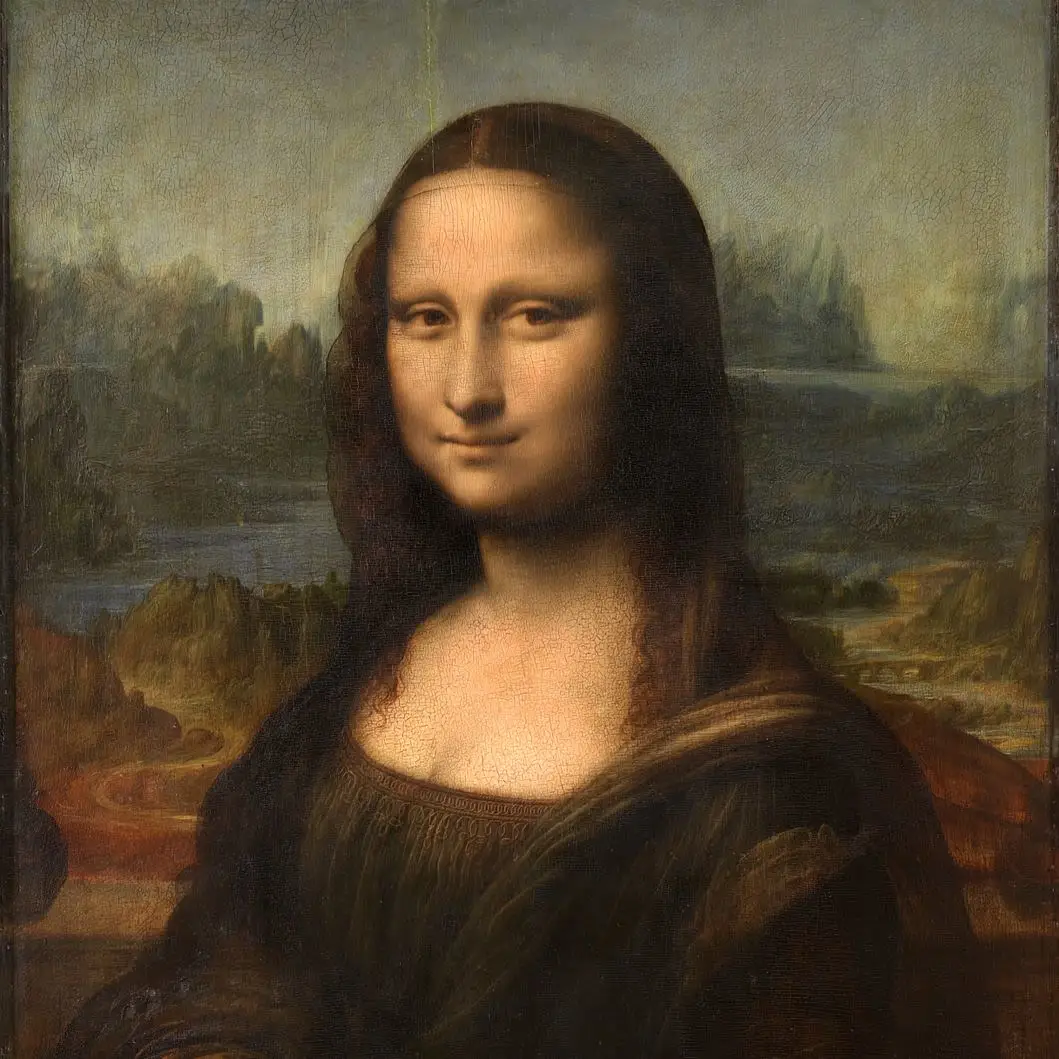
It might be the greatest art museum in the world; it certainly is the largest with over 380,000 objects; to view every single one for even a minute apiece would take 75 days. And those descriptions still don't do the building and its collection justice. Marvel at treasures inside, including Leonardo Da Vinci's mysterious woman, the Mona Lisa, and everything from an Egyptian masterpiece of mummification to the famed Hellenistic sculpture, Venus de Milo, to patriotic French masterpieces like Delacroix’s Liberty Leading the People. Although the Louvre is vast and ever-crowded, with some strategy and a few helpful tips your visit will take in maximum artworks with minimal hassle.


Day 5
Paris

Louvre Museum
OverviewLouvre Museum
It might be the greatest art museum in the world; it certainly is the largest with over 380,000 objects; to view every single one for even a minute apiece would take 75 days. And those descriptions still don't do the building and its collection justice. Marvel at treasures inside, including Leonardo Da Vinci's mysterious woman, the Mona Lisa, and everything from an Egyptian masterpiece of mummification to the famed Hellenistic sculpture, Venus de Milo, to patriotic French masterpieces like Delacroix’s Liberty Leading the People. Although the Louvre is vast and ever-crowded, with some strategy and a few helpful tips your visit will take in maximum artworks with minimal hassle.

Louvre Museum
OverviewLouvre Museum
It might be the greatest art museum in the world; it certainly is the largest with over 380,000 objects; to view every single one for even a minute apiece would take 75 days. And those descriptions still don't do the building and its collection justice. Marvel at treasures inside, including Leonardo Da Vinci's mysterious woman, the Mona Lisa, and everything from an Egyptian masterpiece of mummification to the famed Hellenistic sculpture, Venus de Milo, to patriotic French masterpieces like Delacroix’s Liberty Leading the People. Although the Louvre is vast and ever-crowded, with some strategy and a few helpful tips your visit will take in maximum artworks with minimal hassle.

Louvre Museum
OverviewLouvre Museum
It might be the greatest art museum in the world; it certainly is the largest with over 380,000 objects; to view every single one for even a minute apiece would take 75 days. And those descriptions still don't do the building and its collection justice. Marvel at treasures inside, including Leonardo Da Vinci's mysterious woman, the Mona Lisa, and everything from an Egyptian masterpiece of mummification to the famed Hellenistic sculpture, Venus de Milo, to patriotic French masterpieces like Delacroix’s Liberty Leading the People. Although the Louvre is vast and ever-crowded, with some strategy and a few helpful tips your visit will take in maximum artworks with minimal hassle.

Louvre Museum
OverviewLouvre Museum
It might be the greatest art museum in the world; it certainly is the largest with over 380,000 objects; to view every single one for even a minute apiece would take 75 days. And those descriptions still don't do the building and its collection justice. Marvel at treasures inside, including Leonardo Da Vinci's mysterious woman, the Mona Lisa, and everything from an Egyptian masterpiece of mummification to the famed Hellenistic sculpture, Venus de Milo, to patriotic French masterpieces like Delacroix’s Liberty Leading the People. Although the Louvre is vast and ever-crowded, with some strategy and a few helpful tips your visit will take in maximum artworks with minimal hassle.

Louvre Museum
OverviewLouvre Museum
It might be the greatest art museum in the world; it certainly is the largest with over 380,000 objects; to view every single one for even a minute apiece would take 75 days. And those descriptions still don't do the building and its collection justice. Marvel at treasures inside, including Leonardo Da Vinci's mysterious woman, the Mona Lisa, and everything from an Egyptian masterpiece of mummification to the famed Hellenistic sculpture, Venus de Milo, to patriotic French masterpieces like Delacroix’s Liberty Leading the People. Although the Louvre is vast and ever-crowded, with some strategy and a few helpful tips your visit will take in maximum artworks with minimal hassle.

Day 6
Paris
Day 6
Paris
Early Morning to Afternoon
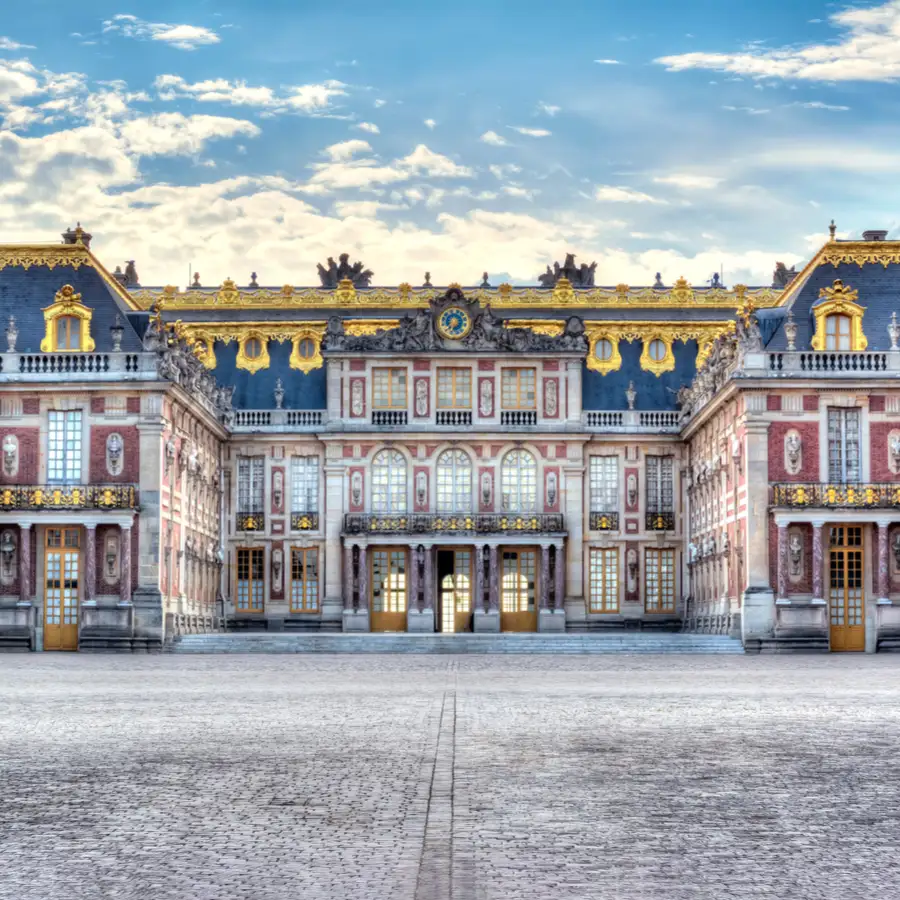
The Château of Versailles, a symbol of the grandeur of French monarchy, invites visitors to explore its lavish history and architectural majesty. From the spellbinding elegance of the Hall of Mirrors, where the Treaty of Versailles was signed, to the vast, meticulously manicured Gardens the pinnacle of French garden design, every corner tells a story of opulence and power. Discover the intimate escapes of royalty at the Grand and Petit Trianon, and marvel at the divine beauty of the Royal Chapel, a masterpiece of Baroque architecture.

Imagine living like the "peasants" here?
Show More
Feel like a king, feel like a queen, hopefully you'll feel good looking out across the park
Show More
Browse the gallery to see some of the highlights
There are palaces, and then there is Versailles...
Show More
Imagine living like the "peasants" here?
Show More
Feel like a king, feel like a queen, hopefully you'll feel good looking out across the park
Show More
Browse the gallery to see some of the highlights

There are palaces, and then there is Versailles...
Show More
Day 6
Paris

The Queen's Hamlet
Highlight of Palace of VersaillesImagine living like the "peasants" here?
Desiring something different, Queen Marie Antoinette had a hamlet erected where she could supervise servants milking cows, tending pigs, collecting eggs from chickens. She dressed down to play her part, but apparently never got her hands dirty, as far as we know. Her peasant cottage only had two living rooms, a billiard room, a dining hall, and a library. If you are accustomed to palaces, only two living rooms is roughing it. Lest the queen got tired of it all, she could return to the Petit Trianon, a beautiful chateau built on the grounds of the Grand Trianon, which was the retreat chateau built on the grounds of the Palace of Versailles, which was a retreat from the Louvre Palace in Paris.

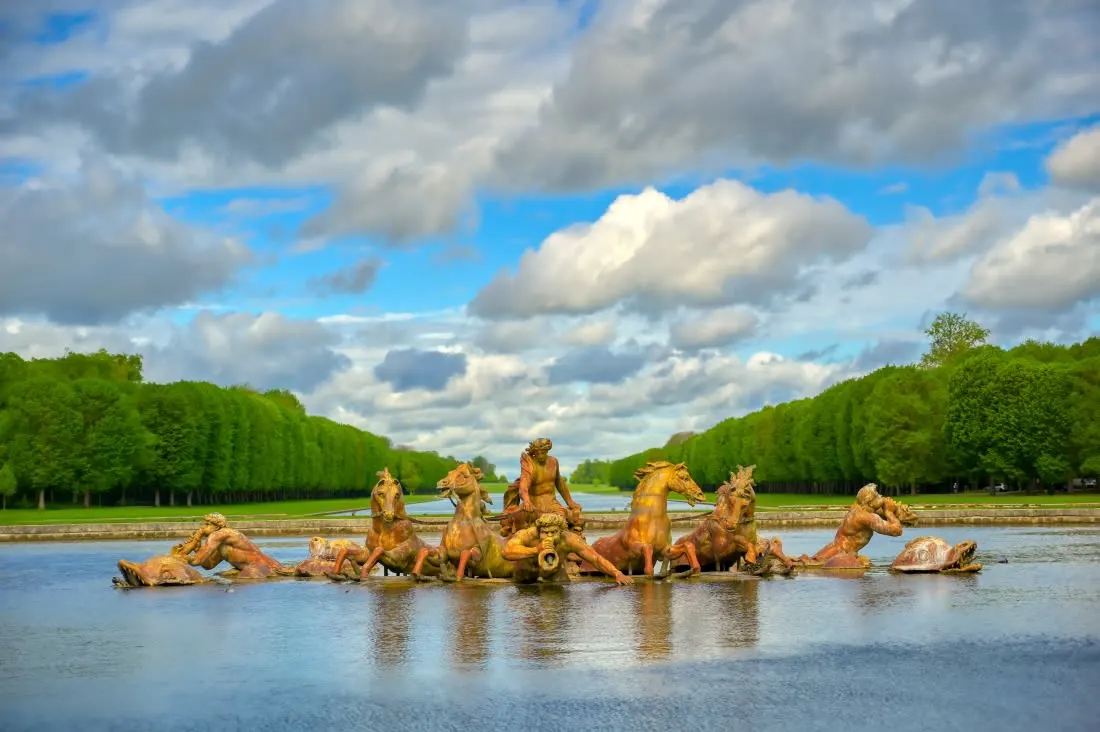
Parc de Versailles
Highlight of Palace of VersaillesFeel like a king, feel like a queen, hopefully you'll feel good looking out across the park
The Parc de Versailles, features some 800 hectares of manicured lawns, stunning fountains, and the Grand Canal, all masterminded by André Le Nôtre. Highlights include the Neptune and Apollo Fountains, the Trianon Palaces, and the Queen's Hamlet. This vast garden symbolizes royal power, but you are welcomed to enjoy yourself on these pleasure grounds.

Palace of Versailles
OverviewPalace of Versailles
The Château of Versailles, a symbol of the grandeur of French monarchy, invites visitors to explore its lavish history and architectural majesty. From the spellbinding elegance of the Hall of Mirrors, where the Treaty of Versailles was signed, to the vast, meticulously manicured Gardens the pinnacle of French garden design, every corner tells a story of opulence and power. Discover the intimate escapes of royalty at the Grand and Petit Trianon, and marvel at the divine beauty of the Royal Chapel, a masterpiece of Baroque architecture.

Main Palace of Versailles
Highlight of Palace of VersaillesThere are palaces, and then there is Versailles...
Enlarged by for Emperor Louis XIV as an escape from the dreary political tension of Paris, Versailles might have been the most luxurious palace in the world. Even now, the building stuptifies with its grandeur and elegance, a stunning representation of the French monarchy's opulence. The famous Hall of Mirrors is just one of many, many (2300!) stunning rooms, only a small percentage of which are open for display. It might be too much, or one visit might never be enough.

The Queen's Hamlet
Highlight of Palace of VersaillesImagine living like the "peasants" here?
Desiring something different, Queen Marie Antoinette had a hamlet erected where she could supervise servants milking cows, tending pigs, collecting eggs from chickens. She dressed down to play her part, but apparently never got her hands dirty, as far as we know. Her peasant cottage only had two living rooms, a billiard room, a dining hall, and a library. If you are accustomed to palaces, only two living rooms is roughing it. Lest the queen got tired of it all, she could return to the Petit Trianon, a beautiful chateau built on the grounds of the Grand Trianon, which was the retreat chateau built on the grounds of the Palace of Versailles, which was a retreat from the Louvre Palace in Paris.

Parc de Versailles
Highlight of Palace of VersaillesFeel like a king, feel like a queen, hopefully you'll feel good looking out across the park
The Parc de Versailles, features some 800 hectares of manicured lawns, stunning fountains, and the Grand Canal, all masterminded by André Le Nôtre. Highlights include the Neptune and Apollo Fountains, the Trianon Palaces, and the Queen's Hamlet. This vast garden symbolizes royal power, but you are welcomed to enjoy yourself on these pleasure grounds.

Palace of Versailles
OverviewPalace of Versailles
The Château of Versailles, a symbol of the grandeur of French monarchy, invites visitors to explore its lavish history and architectural majesty. From the spellbinding elegance of the Hall of Mirrors, where the Treaty of Versailles was signed, to the vast, meticulously manicured Gardens the pinnacle of French garden design, every corner tells a story of opulence and power. Discover the intimate escapes of royalty at the Grand and Petit Trianon, and marvel at the divine beauty of the Royal Chapel, a masterpiece of Baroque architecture.

Main Palace of Versailles
Highlight of Palace of VersaillesThere are palaces, and then there is Versailles...
Enlarged by for Emperor Louis XIV as an escape from the dreary political tension of Paris, Versailles might have been the most luxurious palace in the world. Even now, the building stuptifies with its grandeur and elegance, a stunning representation of the French monarchy's opulence. The famous Hall of Mirrors is just one of many, many (2300!) stunning rooms, only a small percentage of which are open for display. It might be too much, or one visit might never be enough.

Day 7
Depart Paris
Day 7
Depart Paris
Morning
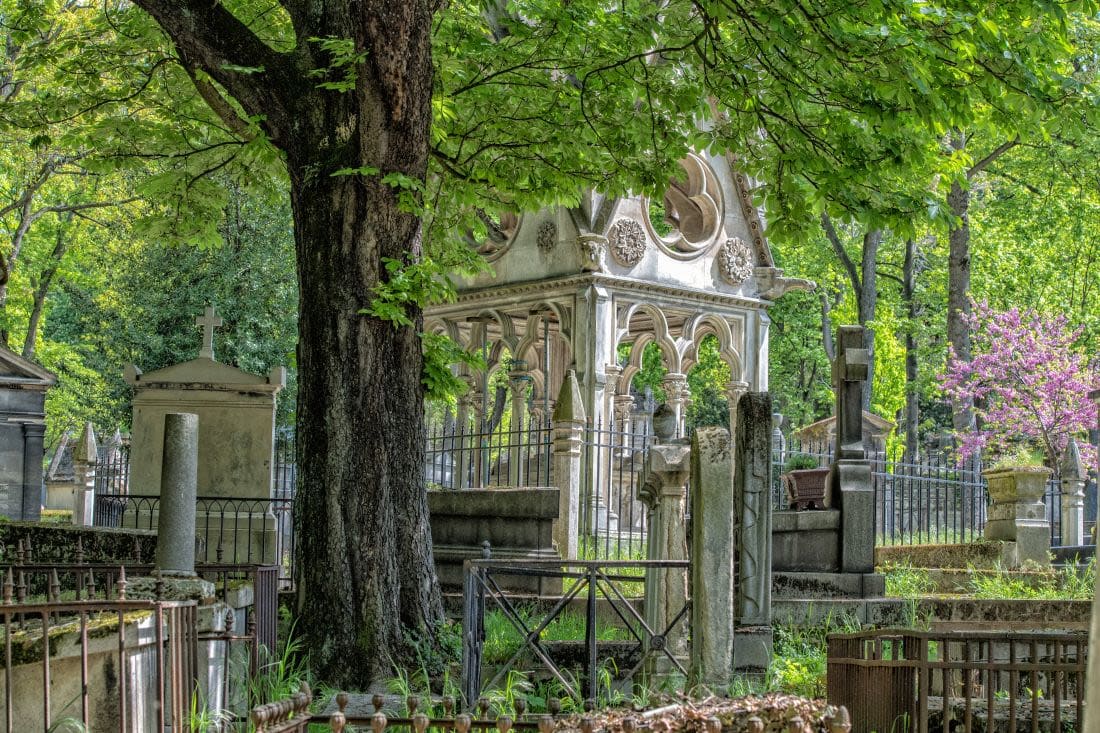
In Père Lachaise cemetery, Jim Morrison and Edith Piaf perform a quiet duet, accompagnied by Chopin and Bizet. Delacroix paints his stilled-life; among the tree-shaded crypts and the mime Marcel Marceau is as he always was, silent. Here we read the names Proust, Colette, and Wilde, but their bons-mots are at an end. A visit to their graves allows us a chance to speak to them, to say how much their art has meant to us. Somehow, our expressions are appreciated.


Day 7
Depart Paris

Père Lachaise Cemetery
OverviewPère Lachaise Cemetery
In Père Lachaise cemetery, Jim Morrison and Edith Piaf perform a quiet duet, accompagnied by Chopin and Bizet. Delacroix paints his stilled-life; among the tree-shaded crypts and the mime Marcel Marceau is as he always was, silent. Here we read the names Proust, Colette, and Wilde, but their bons-mots are at an end. A visit to their graves allows us a chance to speak to them, to say how much their art has meant to us. Somehow, our expressions are appreciated.

Père Lachaise Cemetery
OverviewPère Lachaise Cemetery
In Père Lachaise cemetery, Jim Morrison and Edith Piaf perform a quiet duet, accompagnied by Chopin and Bizet. Delacroix paints his stilled-life; among the tree-shaded crypts and the mime Marcel Marceau is as he always was, silent. Here we read the names Proust, Colette, and Wilde, but their bons-mots are at an end. A visit to their graves allows us a chance to speak to them, to say how much their art has meant to us. Somehow, our expressions are appreciated.

Père Lachaise Cemetery
OverviewPère Lachaise Cemetery
In Père Lachaise cemetery, Jim Morrison and Edith Piaf perform a quiet duet, accompagnied by Chopin and Bizet. Delacroix paints his stilled-life; among the tree-shaded crypts and the mime Marcel Marceau is as he always was, silent. Here we read the names Proust, Colette, and Wilde, but their bons-mots are at an end. A visit to their graves allows us a chance to speak to them, to say how much their art has meant to us. Somehow, our expressions are appreciated.

Père Lachaise Cemetery
OverviewPère Lachaise Cemetery
In Père Lachaise cemetery, Jim Morrison and Edith Piaf perform a quiet duet, accompagnied by Chopin and Bizet. Delacroix paints his stilled-life; among the tree-shaded crypts and the mime Marcel Marceau is as he always was, silent. Here we read the names Proust, Colette, and Wilde, but their bons-mots are at an end. A visit to their graves allows us a chance to speak to them, to say how much their art has meant to us. Somehow, our expressions are appreciated.

Père Lachaise Cemetery
OverviewPère Lachaise Cemetery
In Père Lachaise cemetery, Jim Morrison and Edith Piaf perform a quiet duet, accompagnied by Chopin and Bizet. Delacroix paints his stilled-life; among the tree-shaded crypts and the mime Marcel Marceau is as he always was, silent. Here we read the names Proust, Colette, and Wilde, but their bons-mots are at an end. A visit to their graves allows us a chance to speak to them, to say how much their art has meant to us. Somehow, our expressions are appreciated.
Pre-Paid Tours and Activities:
Pre-Paid Transportation:
Accommodation:
Go Real Travel Mobile App:

7 Days

7 Days

10 Days

7 Days

10 Days
Paris, Rome, Florence: An Unforgettable 10-Day Itinerary to Europe's Most Iconic Destinations
Italy, France

10 Days

13 Days

4 Days

5 Days

7 Days

7 Days

10 Days

7 Days

10 Days
Paris, Rome, Florence: An Unforgettable 10-Day Itinerary to Europe's Most Iconic Destinations
Italy, France

10 Days

13 Days

4 Days

5 Days


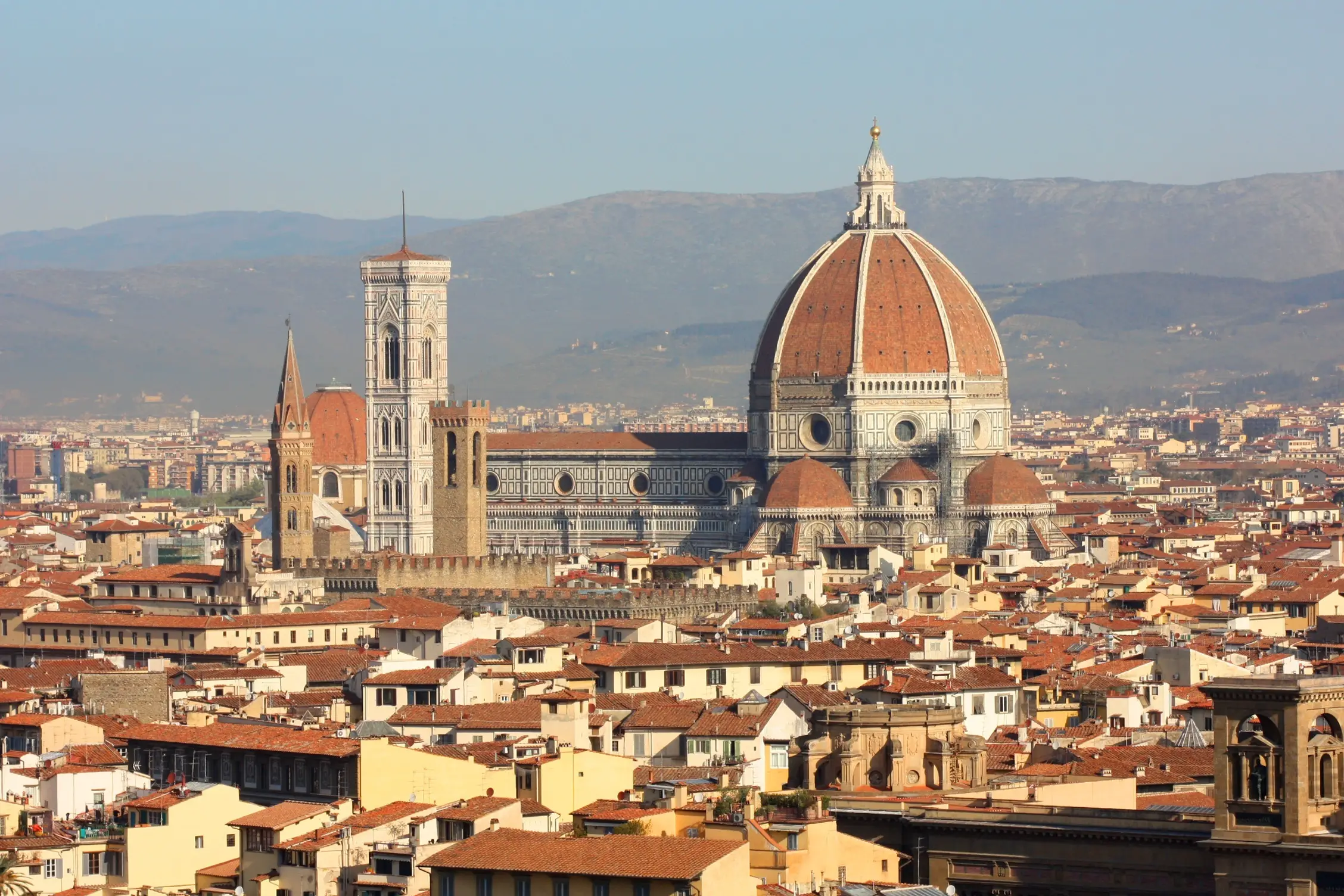
Culture and history are thick in the air in Florence. Located on the banks of the Arno River in Tuscany, Florence’s past is deeply compelling. The birthplace of the Renaissance, Florence is where innovators like Dante, Machiavelli, Michelangelo, and Da Vinci made their fortunes. Centuries of art, politics, and commerce have left their mark on every stone in this Northern Italian city. In the 15th and 16th centuries, Florentine banks funded new enterprises that went on to change the history of the world. Powerful families like the Medici’s financed some of the finest art in history and pioneered new ways of doing statecraft and politics. As you stand in the Piazzale Michelangelo and gaze upon the city below it’s hard to take it all in at once. It feels like behind every door in Florence might hide a work of genius. Michelangelo’s David and Botticelli’s Primavera can be found just a short walk away. After a long day wandering the streets and gazing at art, fueled by exquisite coffee and gelato, relax like the locals do: with a glass of some of the best wine in the world.

Milan is Italy’s most forward-looking city. An international center for fashion, fine dining, and design, it seems as though Milanese people breathe style. From the gleam on your wine glass to the twists of its cathedral’s spires, everything in Milan is finished to perfection. Home to the Italian stock exchange, a world-famous fashion industry, and a frantic business district, Milan is fast-paced and commercially minded. The shopping in Milan is second to none. At the Galleria Vittorio Emanuele II, one of the world’s oldest shopping malls, a glass-iron ceiling soars over brands like Louis Vuitton, Gucci, Massimo Dutti, and Amani. Along with the fashion, Milan’s cathedral, castle, and canals are also must-sees. But to view the city’s most prized possession - Leonardo da Vinci’s Last Supper, you must make an appointment. Tickets to view this mural sell out weeks in advance. It is truly a bucket-list worthy work of art. After a day taking in all the glamor and culture, take a seat in one of Milan’s well-appointed eateries. The Navigli Quarter is packed with restaurants, bars, and cafes, perfect for a relaxed Aperol spritz or pizza along the city’s canals.
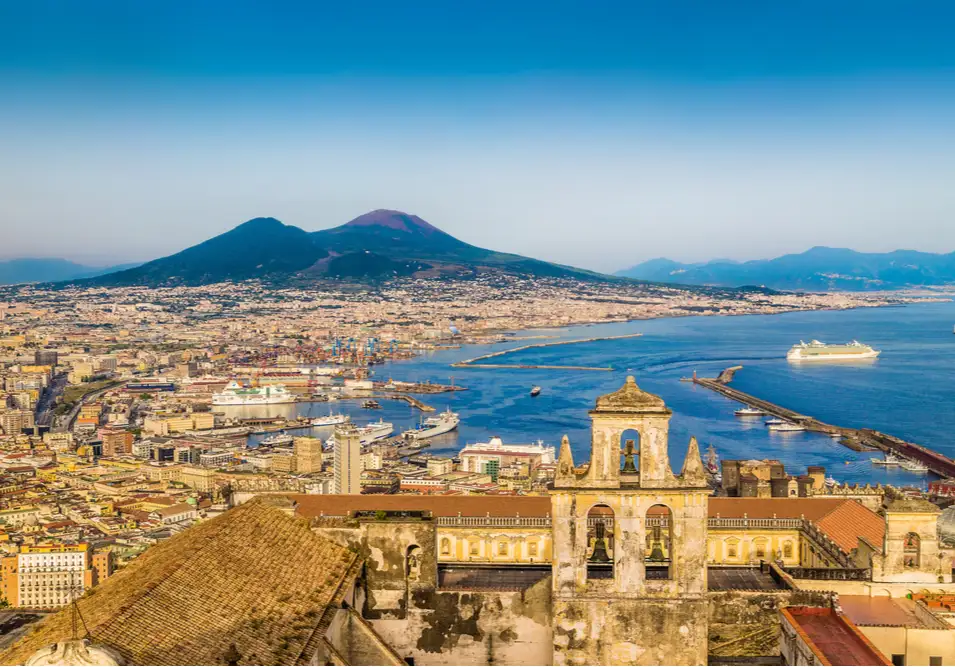
Gritty and chaotic Naples calls to travelers who want to experience the real Italy. Pressed along the coast of Campania, hilly Naples is jammed with maze-like streets, strung with outdoor clotheslines, descending toward the sea below. A much deserved UNESCO World Heritage site, Naples is famous for its churches, museums, castles, and catacombs. As you navigate the city, you’ll find yourself immersed by its culture and history. You can easily occupy a full day gazing at churches like the Naples Cathedral, San Francesco di Paola, and Cappella Sansevero. If you cast your eyes toward the Gulf of Naples, you’ll see Mount Vesuvius looming over the harbor. This foreboding volcano erupted in AD 79. Not far from the inner city — less than an hour by train — you’ll find the ancient town of Pompeii, its dramatic ruins still preserved in ash from the eruption. One of the best things you can do in Naples is to eat. This is the city where pizza was born. Propped up by its ripe tomatoes, local cheeses, and fresh fish, food from Naples has come to define what many see as the height of Italian cuisine. Everything you taste in Naples seems like a delicacy. Authentic and vivid, Naples is a true Italian city where the ancient world meets the modern-day with a bang.

One of the must-sees of Italy, and indeed all of Europe, Rome is a city with history flowing through its veins. There is an endless amount to see, do, and learn here, with something for every taste and disposition. Rome was the center of Western civilization for a Millenium and during that time, accumulated a list of historical and cultural treasures that no other destination can truly match. The Pantheon, Colosseum, Roman Forum, and Cirus of Maxentius are just a few examples of what can be seen and experienced in Rome, which at times feels more like a giant outdoor museum than a city. At Rome’s heart, you’ll find the Vatican, home of the Roman Catholic Church and the Pope. Here visitors can see the legendary Sistine Chapel. Transcending a mere building, the chapel is a walk-in work of art. Although historical sights can be found on just about every corner, it’s entirely possible to fill a day just wandering around Rome. The city’s charming streets and open Piazzas are filled with beautiful sights and places to sit, grab the best Cappuccino in the world, and enjoy the view.
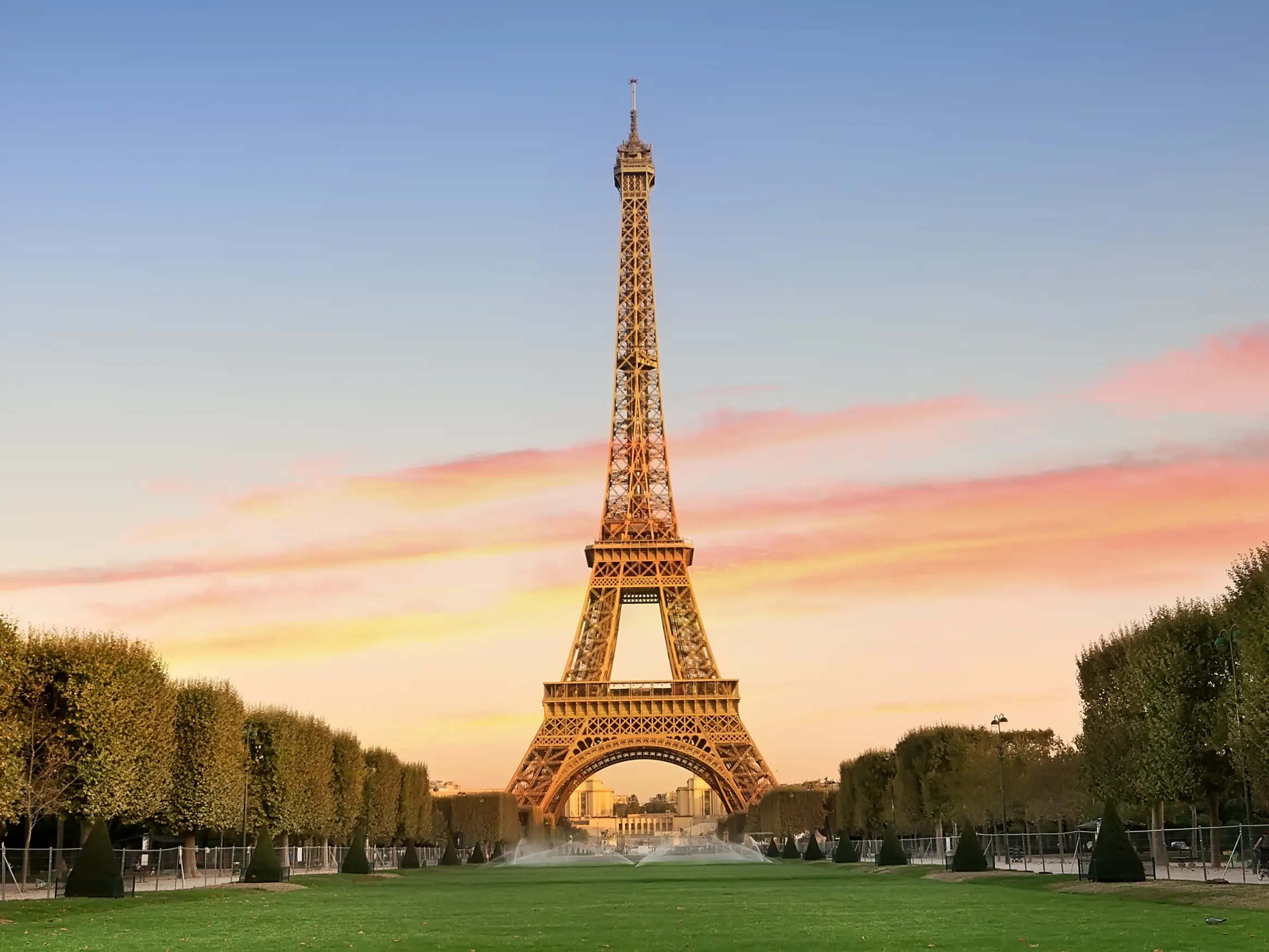
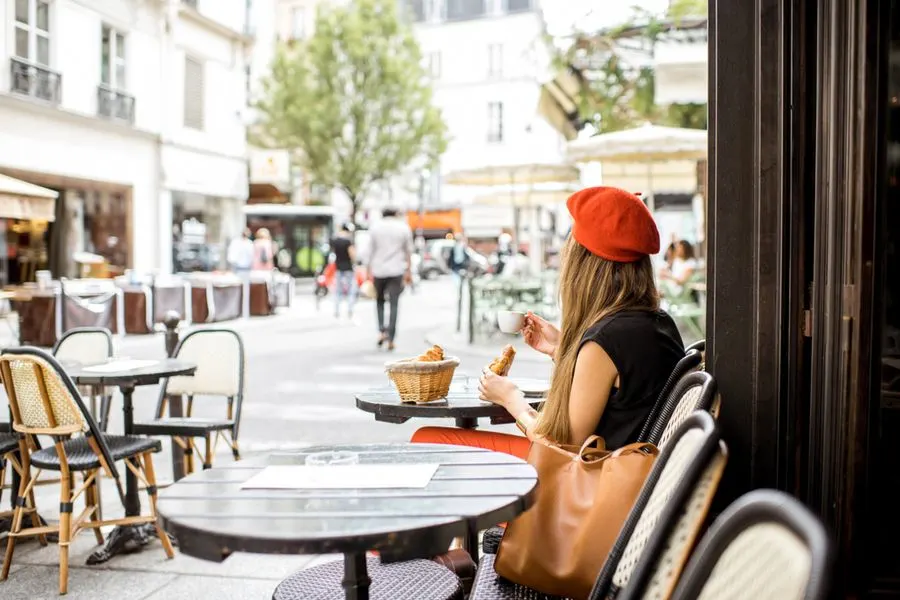
The magic of Paris is undeniable. This is the most romantic destination in Europe, and surely the number one bucket list destination of all time. If you want to say you've traveled, you have to visit Paris at least once. Along with classic must-sees like the Eiffel Tower and the Sacre-Coeur, there is so much to see and do in Paris that it helps to narrow it down by interest. Fashion and shopping enthusiast? Look no further than the Galeries Lafayette, Avenue des Champs-Élysées, or the Marais. Art aficionado? Once you're done with the Louvre, make a start on the Musée d'Orsay. History buffs won't be able to walk a block without uncovering a monument to Napoleon or Louis XIV. If you visit Paris with a foodie, be warned — you'll gaze in a lot of patisserie windows, and sample your weight in croissants. Because Paris always has so much on offer, it never grows old. At dusk, as you stroll the wide boulevards past Haussmann apartment buildings and sharply dressed Parisians, or gaze down at the city from the hill at Montmarte, you might find yourself saying 'Paris Je t' aime'. This is, after all, the City of Love.
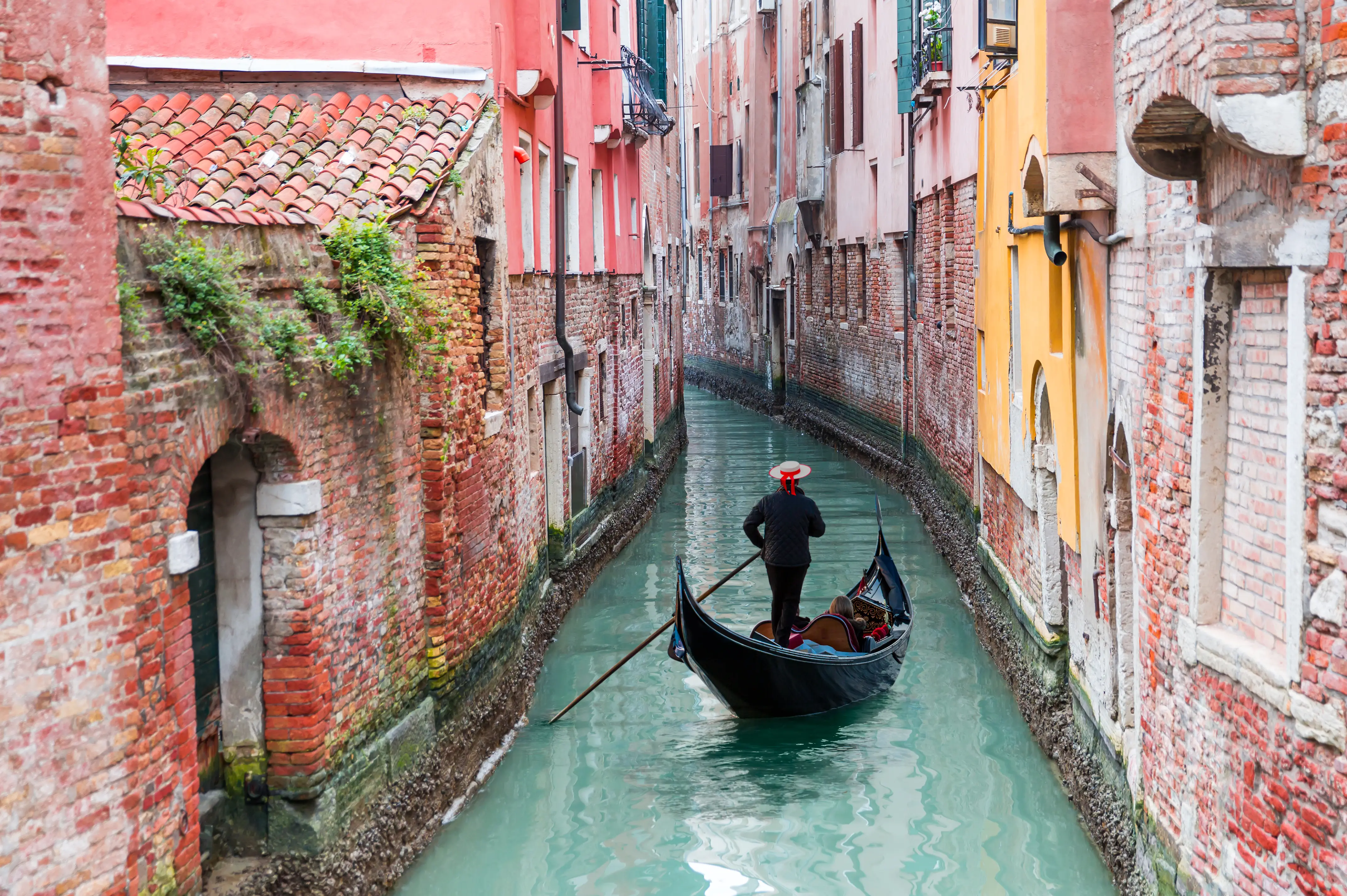
Venice is a city with no equal. Built on a series of islands on a lagoon, it was once a powerful city-state. Echoes of that old magnificence can be seen everywhere here, from the stunning buildings that rise out of the canals, to the bridges that arc across them. Take a Gondola ride through the canals that form the city’s veins, or wander through the winding streets drinking in the sights. You’ll see Venice attracts tourists in huge numbers, and that’s with good reason. It’s home to a seemingly limitless amount of art, culture, history, and architecture. St Mark’s Basilica, the Doge’s Palace, and the Campanile di San Marco just barely scratch the surface. There’s a 700-year-old market, Rialto, which is still open today. The Ponte di Rialto bridge connects the neighborhoods of San Marco and San Polo, stretching across the Grand Canal. Venice has weathered the last several centuries with elegance and pride, a place that will surpass even your highest expectations.

Culture and history are thick in the air in Florence. Located on the banks of the Arno River in Tuscany, Florence’s past is deeply compelling. The birthplace of the Renaissance, Florence is where innovators like Dante, Machiavelli, Michelangelo, and Da Vinci made their fortunes. Centuries of art, politics, and commerce have left their mark on every stone in this Northern Italian city. In the 15th and 16th centuries, Florentine banks funded new enterprises that went on to change the history of the world. Powerful families like the Medici’s financed some of the finest art in history and pioneered new ways of doing statecraft and politics. As you stand in the Piazzale Michelangelo and gaze upon the city below it’s hard to take it all in at once. It feels like behind every door in Florence might hide a work of genius. Michelangelo’s David and Botticelli’s Primavera can be found just a short walk away. After a long day wandering the streets and gazing at art, fueled by exquisite coffee and gelato, relax like the locals do: with a glass of some of the best wine in the world.

Milan is Italy’s most forward-looking city. An international center for fashion, fine dining, and design, it seems as though Milanese people breathe style. From the gleam on your wine glass to the twists of its cathedral’s spires, everything in Milan is finished to perfection. Home to the Italian stock exchange, a world-famous fashion industry, and a frantic business district, Milan is fast-paced and commercially minded. The shopping in Milan is second to none. At the Galleria Vittorio Emanuele II, one of the world’s oldest shopping malls, a glass-iron ceiling soars over brands like Louis Vuitton, Gucci, Massimo Dutti, and Amani. Along with the fashion, Milan’s cathedral, castle, and canals are also must-sees. But to view the city’s most prized possession - Leonardo da Vinci’s Last Supper, you must make an appointment. Tickets to view this mural sell out weeks in advance. It is truly a bucket-list worthy work of art. After a day taking in all the glamor and culture, take a seat in one of Milan’s well-appointed eateries. The Navigli Quarter is packed with restaurants, bars, and cafes, perfect for a relaxed Aperol spritz or pizza along the city’s canals.

Gritty and chaotic Naples calls to travelers who want to experience the real Italy. Pressed along the coast of Campania, hilly Naples is jammed with maze-like streets, strung with outdoor clotheslines, descending toward the sea below. A much deserved UNESCO World Heritage site, Naples is famous for its churches, museums, castles, and catacombs. As you navigate the city, you’ll find yourself immersed by its culture and history. You can easily occupy a full day gazing at churches like the Naples Cathedral, San Francesco di Paola, and Cappella Sansevero. If you cast your eyes toward the Gulf of Naples, you’ll see Mount Vesuvius looming over the harbor. This foreboding volcano erupted in AD 79. Not far from the inner city — less than an hour by train — you’ll find the ancient town of Pompeii, its dramatic ruins still preserved in ash from the eruption. One of the best things you can do in Naples is to eat. This is the city where pizza was born. Propped up by its ripe tomatoes, local cheeses, and fresh fish, food from Naples has come to define what many see as the height of Italian cuisine. Everything you taste in Naples seems like a delicacy. Authentic and vivid, Naples is a true Italian city where the ancient world meets the modern-day with a bang.

One of the must-sees of Italy, and indeed all of Europe, Rome is a city with history flowing through its veins. There is an endless amount to see, do, and learn here, with something for every taste and disposition. Rome was the center of Western civilization for a Millenium and during that time, accumulated a list of historical and cultural treasures that no other destination can truly match. The Pantheon, Colosseum, Roman Forum, and Cirus of Maxentius are just a few examples of what can be seen and experienced in Rome, which at times feels more like a giant outdoor museum than a city. At Rome’s heart, you’ll find the Vatican, home of the Roman Catholic Church and the Pope. Here visitors can see the legendary Sistine Chapel. Transcending a mere building, the chapel is a walk-in work of art. Although historical sights can be found on just about every corner, it’s entirely possible to fill a day just wandering around Rome. The city’s charming streets and open Piazzas are filled with beautiful sights and places to sit, grab the best Cappuccino in the world, and enjoy the view.

The magic of Paris is undeniable. This is the most romantic destination in Europe, and surely the number one bucket list destination of all time. If you want to say you've traveled, you have to visit Paris at least once. Along with classic must-sees like the Eiffel Tower and the Sacre-Coeur, there is so much to see and do in Paris that it helps to narrow it down by interest. Fashion and shopping enthusiast? Look no further than the Galeries Lafayette, Avenue des Champs-Élysées, or the Marais. Art aficionado? Once you're done with the Louvre, make a start on the Musée d'Orsay. History buffs won't be able to walk a block without uncovering a monument to Napoleon or Louis XIV. If you visit Paris with a foodie, be warned — you'll gaze in a lot of patisserie windows, and sample your weight in croissants. Because Paris always has so much on offer, it never grows old. At dusk, as you stroll the wide boulevards past Haussmann apartment buildings and sharply dressed Parisians, or gaze down at the city from the hill at Montmarte, you might find yourself saying 'Paris Je t' aime'. This is, after all, the City of Love.

Venice is a city with no equal. Built on a series of islands on a lagoon, it was once a powerful city-state. Echoes of that old magnificence can be seen everywhere here, from the stunning buildings that rise out of the canals, to the bridges that arc across them. Take a Gondola ride through the canals that form the city’s veins, or wander through the winding streets drinking in the sights. You’ll see Venice attracts tourists in huge numbers, and that’s with good reason. It’s home to a seemingly limitless amount of art, culture, history, and architecture. St Mark’s Basilica, the Doge’s Palace, and the Campanile di San Marco just barely scratch the surface. There’s a 700-year-old market, Rialto, which is still open today. The Ponte di Rialto bridge connects the neighborhoods of San Marco and San Polo, stretching across the Grand Canal. Venice has weathered the last several centuries with elegance and pride, a place that will surpass even your highest expectations.


Zoom In to the cities to see your itinerary in more detail