
“Shoulder season” sounds simple, but in our experience at Go Real Travel, it’s one of the most misunderstood travel planning terms out there. Many travelers hear it and assume it means “anytime after summer.” That assumption is exactly how people end up in Rome in September, sweating in lines that feel even longer than July.
Shoulder season is not a universal date range. It’s a moving target that changes by region, weather patterns, school calendars, cruise schedules, and even ferry timetables. When you hit it right, it can feel like the destination is finally exhaling: fewer crowds, easier logistics, and a more natural day-to-day rhythm. When you hit it wrong, you get peak conditions in disguise.
We design custom travel itineraries for travelers who want to explore independently, but don’t want to spend months researching. Shoulder season is one of our favorite tools because it creates space: physical space on sidewalks and museum halls, and mental space in your day.
Why Shoulder Season Beats Peak Season for Real Travelers
-
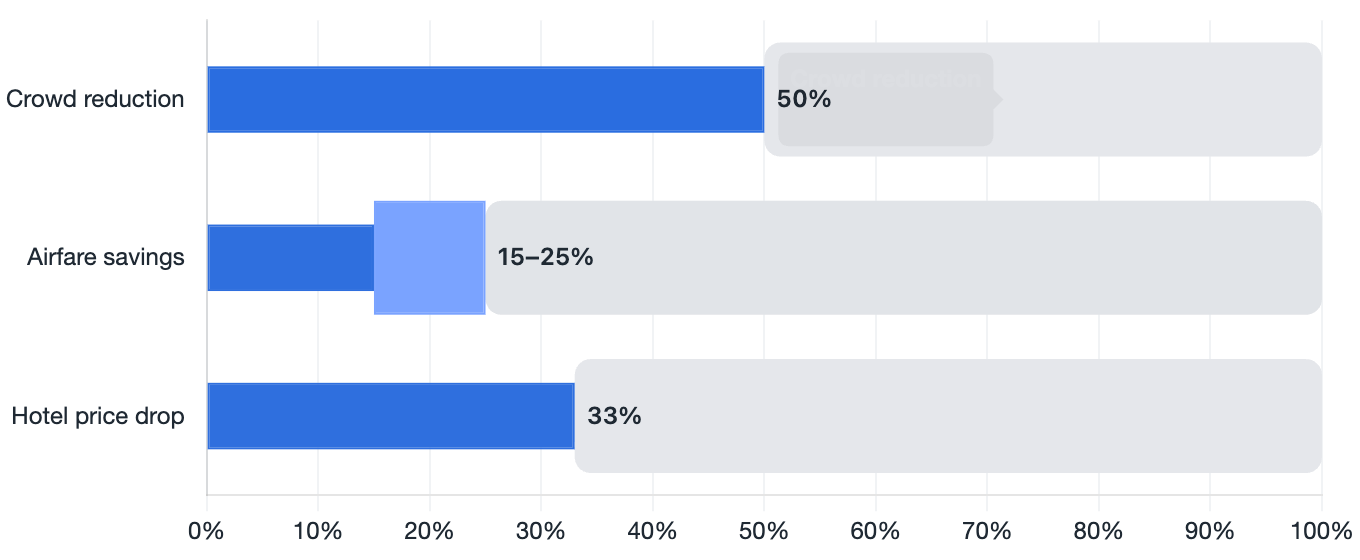
Fewer crowds: Tourist nights in EU hotels drop by up to 50% from August to late October (Eurostat 2024).
-
Better prices: Airfare can be 15–25% cheaper; Paris hotels average 33% less in November vs. June (Google Flights, Hopper).
-
Comfortable weather: Skip the record heatwaves and enjoy walk-friendly temps perfect for city exploring or alpine hikes.
-
Authentic vibe: Locals reclaim their cities once the high-season surge subsides, creating room for genuine connection.
-
Energy management: Easier museum entries, shorter transit lines, and relaxed pacing keep decision fatigue in check—crucial for families, couples, and solo travelers alike.
“Shoulder season is the savvy traveler’s secret. You get all the benefits—open restaurants, good weather—but with room to breathe.”
— Samantha Brown, Travel Host
What “Shoulder Season” Actually Means (and Why Timing Is Everything)
Shoulder season is the period just before or just after peak season, when the destination is “open for business” but not fully flooded. Think: restaurants are running full menus, tours operate normally, transportation is reliable, and the place feels alive. But you’re not fighting the summer surge for every ticket, taxi, or table.
Here’s the catch: shoulder season varies by destination. Southern Spain in November can still be lovely and walkable. Central Europe in November can be magical or gray and drizzly. The Greek Islands in May can be ideal. The Greek Islands in March can feel half-shuttered.
So the real question isn’t “Is it shoulder season in Europe?” It’s “Is it shoulder season in your European destination?” That’s where expert trip design makes the difference.
The Shoulder Season Mistake We See All the Time
Let’s talk about September in Italy. People often plan it because they think they’ll avoid summer crowds and heat. The irony is that September is frequently still peak in cities like Rome, Florence, and Venice. It can be hot, and the crowds can be intense because everyone had the same idea.
That’s why we don’t treat “shoulder season” like a blanket recommendation. We treat it like a design question. Where are you going, how do you like to move through a city, and what kind of day feels enjoyable to you?
Our Favorite Shoulder Season Windows (with the “Why” Behind Them)
|
Destination |
Season Window |
Key Highlights |
|---|---|---|
|
Southern Spain |
Apr–early May & mid‑Oct–Nov |
Orange blossoms, outdoor tapas |
|
Central Europe |
Late Oct–Early Nov |
Cultural attractions, cozy cafés |
|
The Alps |
Late Sep–Mid Oct |
Fall colors, mountain trails |
|
The Greek Islands |
May & Early Oct |
Full ferry schedules, budget-friendly hotels |
Below are a few shoulder season patterns we often build around. These aren’t rigid rules. They’re starting points we tailor based on your pace, interests, and who’s traveling.
Southern Spain: April to Early May, and Mid-October to November ☀️🍊
For many travelers, this feels like a summer trip with slightly cooler weather and fewer crowds. Cities like Seville and Granada become more walkable, which is not a small thing when you’re navigating cobblestones, plazas, and long sightseeing days.
Spring brings orange blossoms and outdoor café culture that feels genuinely local. Fall brings a relaxed market season and a slower tempo. And yes, you can often stretch into November here more comfortably than you can in much of Europe.
Planning note from our team: major sites still require smart timing. The Alcázar and the Alhambra reward travelers who plan ahead, even in shoulder season. We bake that into the itinerary so you’re not trying to solve it on the ground.
Central Europe: Late October to Early November (a narrow, high-reward window) 🍂☕
From roughly late October into early November, crowds can drop noticeably in places like Prague, Vienna, and Budapest. You may catch crisp fall weather and lingering color in the parks. But this window is a gamble: you might also get rainy skies and early cold snaps.
We like Central Europe in this period because it has a built-in “bad weather plan.” If it’s gloomy, you’re still surrounded by warm interiors: art nouveau cafés, palaces, museums, and concert halls. It’s one of the easiest regions to enjoy without needing perfect conditions.
This is where pacing matters most. We’ll often design days with shorter outdoor blocks, longer indoor anchors, and planned downtime. Not because we’re trying to slow you down, but because we want you to finish the day with energy left.
The Alps: Late September to Mid-October (scenery without the summer crush) 🏔️🍺
For nature-forward travelers, late September through mid-October is a favorite: trails are often still snow-free, the fall color is peaking in Switzerland and Austria, and summer vacationers have mostly gone home. Many cable cars are still operating, which makes big views accessible even if not everyone in your group wants a full hike.
We also love the cultural overlap this time of year brings. Depending on where you go, you might catch village festivals or traditional cattle drives. That’s the kind of “local texture” we’re always trying to weave into a trip, not as a spectacle, but as a living community moment you can respectfully witness.
The Greek Islands – May & Early Oct
- Ferries operate on full schedules; beaches are blissfully roomy on islands like Santorini.
- Hotels often 20–30% cheaper than in July/August.
- Warm seas linger into autumn for shoulder-season swimming.
How We Plan Shoulder Season Trips So They Feel Effortless
Shoulder season shines when the trip is thoughtfully designed. If you’re winging it day to day, you can still have a great time, but you’re more likely to hit friction: reduced schedules, surprise closures, or weather that forces last-minute decision-making.
At Go Real Travel, we plan end-to-end journeys, not fragments. As we explain on our about us page, we organize the full trip so you can enjoy the journey without the hassle of travel prep, and we’re reachable with ongoing support while you travel.
-
We design for pacing and flow: realistic walking distances, logical neighborhoods, and smoother transitions between cities.
-
We keep your independence intact: you explore on your own, but with a vetted plan as your safety net.
-
We reduce “decision fatigue”: key logistics and daily structure live together in one place, so you’re not juggling tabs, screenshots, and email threads.
-
We think about the whole group: if you’re traveling with parents, kids, or both, we build in rest windows that make the trip feel humane.
And yes, we care about the emotional side too. Shoulder season can raise questions like: “Will it be safe walking back after dinner?” or “What if I get there and everything’s closed?” We plan around those worries with clear routing, smart neighborhoods, and alternatives that don’t feel like consolation prizes.
One Tip That Matters More Than Any Calendar: Mindset 🌦️
Even with great planning, shoulder season requires a flexible mindset. If you expect postcard weather every day, you’ll probably be disappointed at least once. But if you expect a little unpredictability, you’ll be pleasantly surprised more often than not.
Also, summer isn’t “risk-free.” Heat waves, wildfires, and long queues under harsh sun are real. Shoulder season simply shifts the trade-offs. Our job is to make those trade-offs feel worth it by matching the right places to the right weeks.
Frequently Asked Questions
Is September shoulder season in Italy?
In most major Italian cities, no. Crowds and prices stay high until late September or early October. For true shoulder-season benefits, target late October or early November—or choose Southern Spain or the Greek Islands in September instead.
How much money can I save by traveling in shoulder season?
On average, expect 15–25% savings on airfare and up to 33% on hotels compared with peak summer months. Exact numbers vary by destination and booking window.
Will everything be open during shoulder season?
Yes, in the true shoulder period most restaurants, museums, and tours run normal hours. Very early spring or late autumn can see reduced ferry or train schedules, which we account for in your itinerary.
Is shoulder season good for families with kids?
Absolutely. Cooler temperatures make stroller pushing and outdoor activities easier, while shorter lines reduce meltdown risk. We build in playground stops and flexible meal times to suit little travelers.
How far in advance should I plan a shoulder-season trip?
For popular destinations, 6–9 months ahead locks in the best airfares and boutique hotels. Last-minute trips are possible, but choice narrows quickly, especially for limited-capacity experiences like the Alhambra.
Conclusion: Shoulder Season Is a Strategy, Not a Guess
Shoulder season travel is often the best time to travel to Europe, but only when it’s timed to the destination and designed around how you actually like to move. Done well, it gives you breathing room: calmer days, easier logistics, and a more authentic sense of place.
If you want help choosing the right shoulder season window and turning it into a trip that feels connected and effortless, Start planning your custom itinerary.