
Venice & Florence Highlights: Exclusive Tours, Exquisite Wine & Breathtaking Scenery
 7 Day Tour of Venice and Florence
Overview
Trip Map
Itinerary
Inclusions
Reviews





How Long Is the Treasures of Venice & Florence Trip and What Does It Cost?
 Duration7 days / 6 nights
- Best timeJan-Dec
 From$2593 / person (Flights not included)
- In Venice, a private tour unveils Doge's Palace’s grandeur and the echoing steps of Piazza San Marco
- Savor Venetian flavors in a cooking class, where local wines perfectly complement traditional dishes
- Experience Chianti’s serene beauty on a day trip to a winery and a glass of Chianti Classico
- Explore Florence’s Uffizi Gallery, with Renaissance masterpieces by Michelangelo and Da Vinci
- Travel to San Gimignano, where medieval towers, stunning views, and a delightful winery lunch await
- In Venice, a private tour unveils Doge's Palace’s grandeur and the echoing steps of Piazza San Marco
- Savor Venetian flavors in a cooking class, where local wines perfectly complement traditional dishes
- Experience Chianti’s serene beauty on a day trip to a winery and a glass of Chianti Classico
- Explore Florence’s Uffizi Gallery, with Renaissance masterpieces by Michelangelo and Da Vinci
- Travel to San Gimignano, where medieval towers, stunning views, and a delightful winery lunch await


Must see sights
Starting from
$2593
per person
 Not included
 Price varies by group size, hotel selection, and travel season.
Secure Your Customizable Trip
Enter your details to embark on a journey that can be tailored just for you.
Start
Travelers
Preferred Hotel Stars

Craft Your Own Itinerary
Select your interests and destinations for a trip plan inspired by you.
Where Does the Treasures of Venice & Florence Trip Trip Go?
| ← | Move left |
| → | Move right |
| ↑ | Move up |
| ↓ | Move down |
| + | Zoom in |
| - | Zoom out |
| Home | Jump left by 75% |
| End | Jump right by 75% |
| Page Up | Jump up by 75% |
| Page Down | Jump down by 75% |


Click To Make Map Interactive
Treasures of Venice & Florence Trip Timeline
Arrival
3 nights
Venice
Italy
Train: 2.5h
3 nights
Florence
Italy
Departure
What Does the Treasures of Venice & Florence Trip Itinerary Look Like?

Day 1
Arrive Venice

Day 1
Arrive Venice


Mid-Day/Afternoon
St Mark's Square
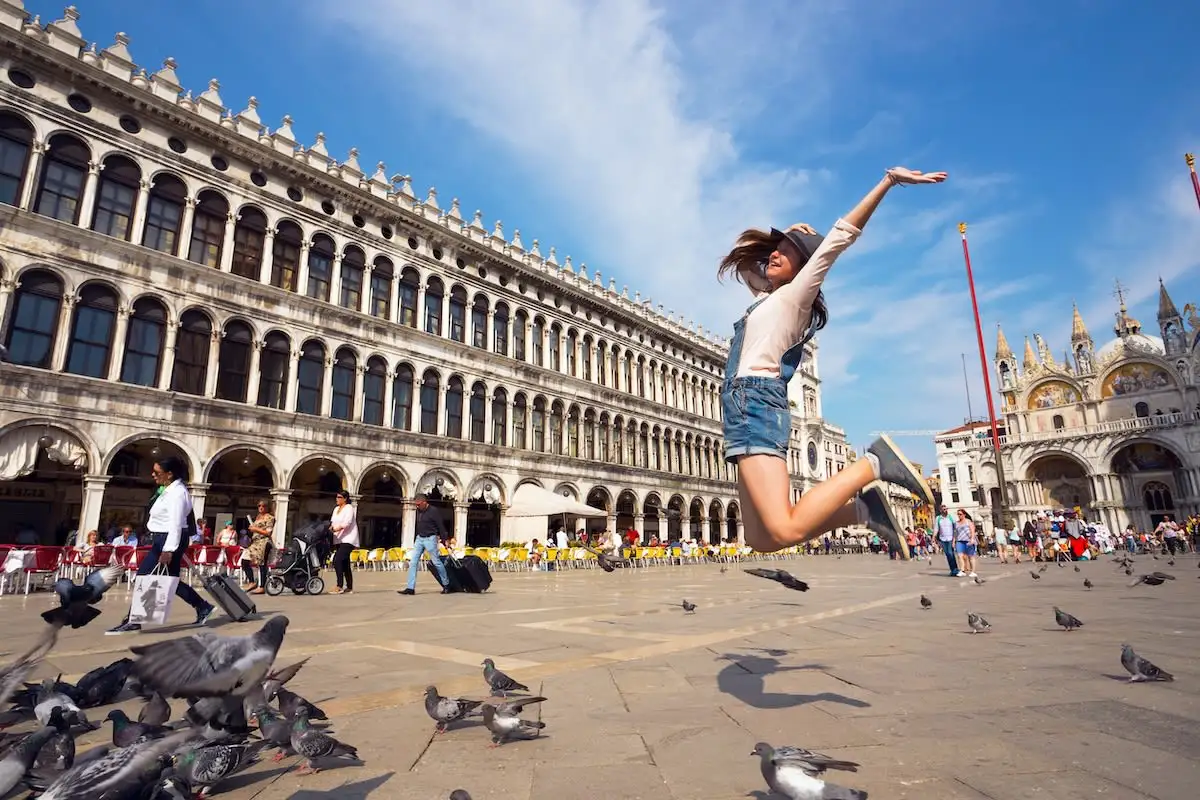
St Mark's Square was the embodiment of The Most Serene Republic of Venice's power and prestige, and as such contains its most magnificent public buildings: the extraordinary golden mosaic-encrusted basilica of St Mark's, the exquisite Doge's Palace, the all-seeing bell tower, the Bibliotecca Marciana library, and what is nowadays the famous Correr Museum. If timed correctly, it is possible to see all these sights on your own within half a day, although a guide can make the process much more efficient (and more educational as well). Keep in mind that the square is one of the most heavily touristed places in the world, so crowds and lines can be an issue. St Mark the Evangelist was not the patrion saint of Venice until 829 AD, when two Venetian merchants stole St. Mark's remains from their original resting place in a chuch in Alexandria, Egypt, and then smuggled the relics home trussed up in a canvas sheet. The pretext for the theft was that the Muslim conquerors of Alexandria were expected to defile and plunder the church. While this may have been true, it is no coincidence that bringing such an important saint's relics to Venice was hugely important politically and signaled Venice's place as a rising independent power. A church was built to house the relics, and St. Mark's Square was established as the spiritual and political heart of the city.


Explore the staterooms and masterpieces inside this famous Gothic-style Palace.
Show More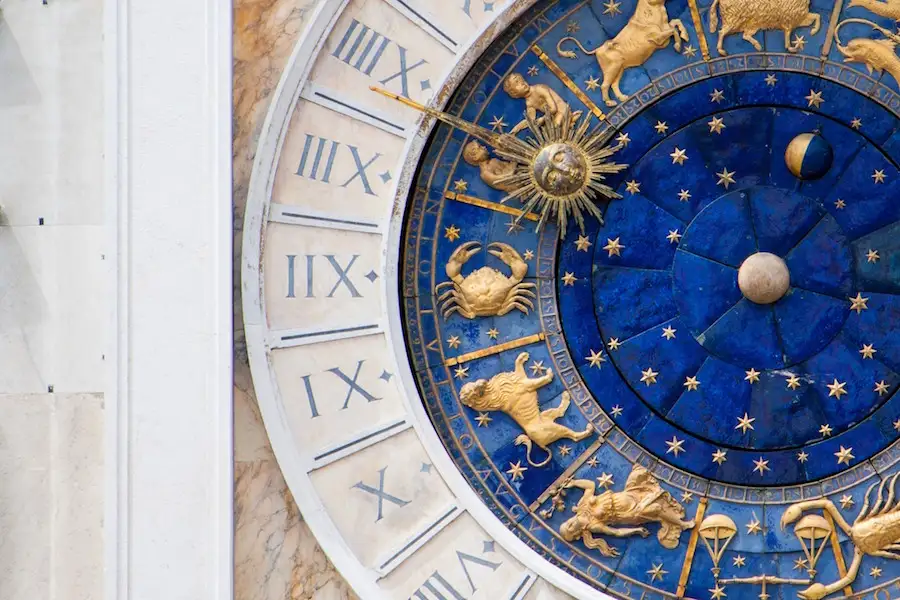
Check out a renaissance clock tower dating from 1499.
Show More
Take a fascinating journey through the history and art of Venice inside one of its most important museums.
Show More
Visit the magnificent monumental rooms of the Marciana Library, one of the oldest public libraries in Venice.
Show More

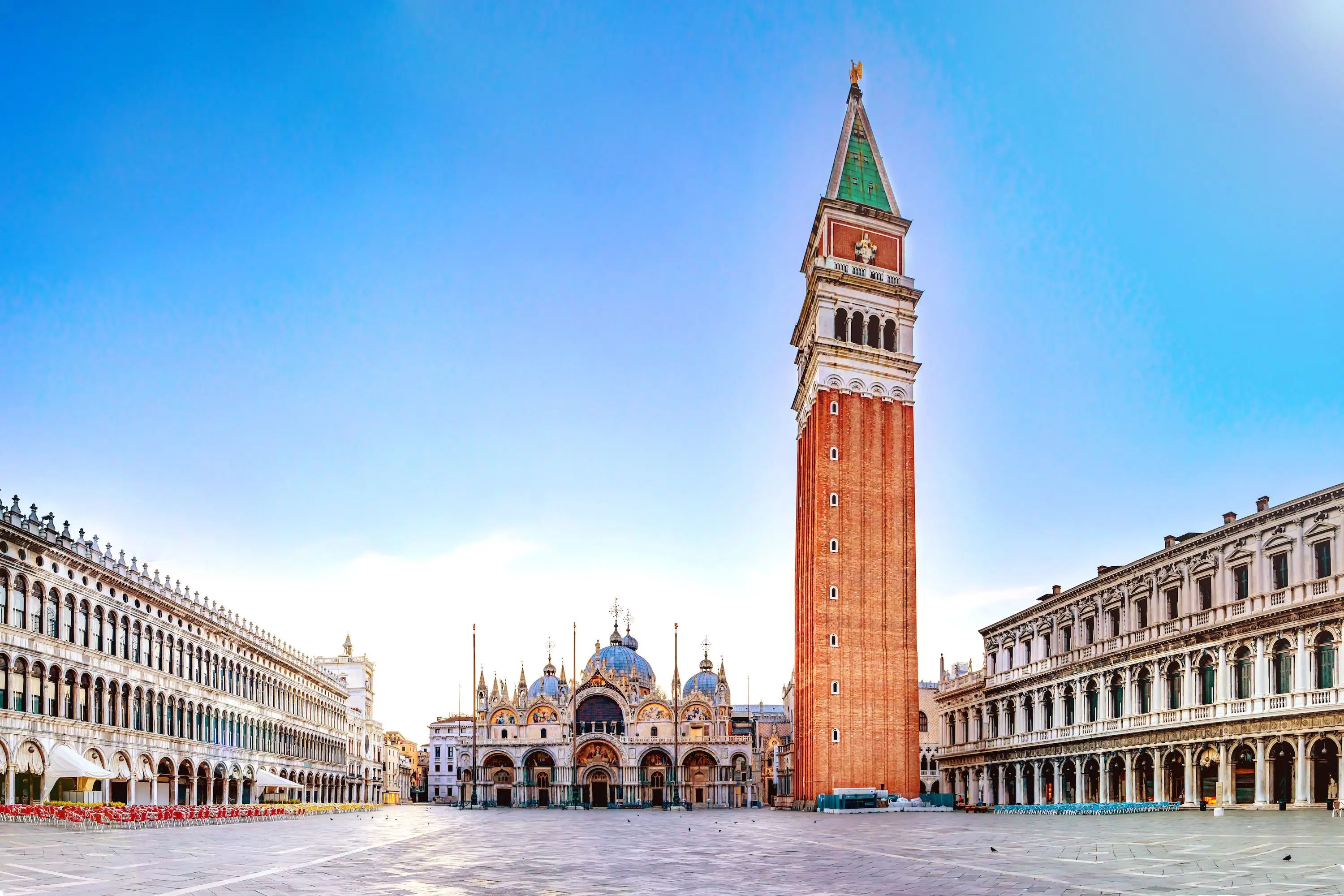
Ascend this reconstructed cathedral bell tower for amazing views over St Marks Square, St Mark's Basilica and the Venetian lagoon.
Show More
Step inside Venice's most sacred and famous landmark and admire the glittering mosaics of the basilica's domes.
Show MoreExplore the staterooms and masterpieces inside this famous Gothic-style Palace.
Show MoreCheck out a renaissance clock tower dating from 1499.
Show MoreTake a fascinating journey through the history and art of Venice inside one of its most important museums.
Show MoreVisit the magnificent monumental rooms of the Marciana Library, one of the oldest public libraries in Venice.
Show MoreAscend this reconstructed cathedral bell tower for amazing views over St Marks Square, St Mark's Basilica and the Venetian lagoon.
Show MoreStep inside Venice's most sacred and famous landmark and admire the glittering mosaics of the basilica's domes.
Show MoreExplore the staterooms and masterpieces inside this famous Gothic-style Palace.
Show MoreDay 1
Arrive Venice

Day 1
Arrive Venice
To Be Determined:
Transfer from Airport
Mid-Day/Afternoon:
St Mark's Square
Late Afternoon:
The Grand Canal
:
:
Doges' Palace
 Highlight of St Mark's Square
Explore the staterooms and masterpieces inside this famous Gothic-style Palace.
Important Note: Entry lines can be very long. We suggest taking advantage of skip the line entry. As the name suggests, the Palace was the official residence of the Venetian rulers, the Doges, and the chief magistrates. The building was founded in the 9th century, but the present one dates from the 14th century. Tour its elaborate staterooms, grand halls and the 24-carat golden staircase before seeking out its collection of priceless masterpieces by Venetian artists including Titan, Veronese and Tintoretto. Be sure to spend some time in the most incredible room of all, the Chamber of the Great Council, the assembly hall where all Venetian patricians gathered to participate in the running of the city - up to 2,500 at any one time. There you will find the Doge's throne and the world's longest canvas painting in the world, Tintoretto's Il Paradiso.
Torre dell'Orologio
Highlight of St Mark's SquareCheck out a renaissance clock tower dating from 1499.
St Mark's Clocktower or the Moors' Clocktower is one of the most famous historical landmarks in Venice. Originally built during the 15th century, the clocktower features an elaborate clock that displays the signs of the Zodiac and the current phase of the moon. It played an essential part of daily life in historical Venice, with seafarers setting out from the Grand Canal replying on its time to decide when to head out to sea. You'll notice at the top of the tower, two bronze wild men. They ring the bell on the hour. One of the men is old, the other is young, representing the passing of time.
Correr Museum
Highlight of St Mark's SquareTake a fascinating journey through the history and art of Venice inside one of its most important museums.
Established in 1830, 33 years after Venice lost its independence, the Museo Correr depicts life and culture in Venice during its glory days of wealth and strength. Somewhat ironically given that the museum is dedicated to Venice's glory, the city's loss of independence made the collection possible, as many formerly wealthy Venetian families were forced to sell their treasures in the difficult conditions. Highlights in the museum include works by the famed Neoclassical sculptor Antonio Canova and a fine art collection that covers the work of many famous Venetian painters of the 13th to 16th centuries. Also fascinating are the collected antiquities from the city's long history, such as ship flags, nautical instruments, books, maps, and coins.
Library of St Mark
Highlight of St Mark's SquareVisit the magnificent monumental rooms of the Marciana Library, one of the oldest public libraries in Venice.
The Sansoviniana library, also referred to as National Marciana Library, is one of the biggest and most important libraries in Italy. Located in a beautiful Renaissance building opposite the Doge's Palace, it holds a number of valuable Greek and Latin manuscripts. The interior is richly decorated, with an impressive ceiling and a collection of Venetian paintings including works by Tintoretto and Veronese.
St Mark's Square
OverviewSt Mark's Square
St Mark's Square was the embodiment of The Most Serene Republic of Venice's power and prestige, and as such contains its most magnificent public buildings: the extraordinary golden mosaic-encrusted basilica of St Mark's, the exquisite Doge's Palace, the all-seeing bell tower, the Bibliotecca Marciana library, and what is nowadays the famous Correr Museum. If timed correctly, it is possible to see all these sights on your own within half a day, although a guide can make the process much more efficient (and more educational as well). Keep in mind that the square is one of the most heavily touristed places in the world, so crowds and lines can be an issue. St Mark the Evangelist was not the patrion saint of Venice until 829 AD, when two Venetian merchants stole St. Mark's remains from their original resting place in a chuch in Alexandria, Egypt, and then smuggled the relics home trussed up in a canvas sheet. The pretext for the theft was that the Muslim conquerors of Alexandria were expected to defile and plunder the church. While this may have been true, it is no coincidence that bringing such an important saint's relics to Venice was hugely important politically and signaled Venice's place as a rising independent power. A church was built to house the relics, and St. Mark's Square was established as the spiritual and political heart of the city.
St Mark's Square Campanile
Highlight of St Mark's SquareAscend this reconstructed cathedral bell tower for amazing views over St Marks Square, St Mark's Basilica and the Venetian lagoon.
Standing at 325 feet (99m) high, the Campanile, i.e. bell tower, of St. Mark's Basilica dominates the city's iconic square. Crowned by a spire that once acted as a lighthouse for Venice's naval ships, the cathedral tower was first built in the 10th century AD but underwent repeated repairs, reconstructions, and additions until reaching its current form in the 16th century. It was also a prominent part of the Venetian penal system as criminals were sometimes subjected to the Supplizio della Cheba (Torture of the Cage), which involved being incarcerated inside a crate that was hoisted up the south side of the tower to be left dangling there for several days or more in all weather. The tower collapsed in 1902, and what you see today is actually an exact replica (with the convenient addition of an elevator). The bell tower is now one of the most visited sights in Venice, offering some incredible panoramic views over the city and its canals. Lines are long, but a ticket can be reserved in advance for an extra few Euros.
St Marks Basilica
Highlight of St Mark's SquareStep inside Venice's most sacred and famous landmark and admire the glittering mosaics of the basilica's domes.
Important Note: Entry to the basilica itself is free, but there are huge crowds queuing up outside to see the interior at almost any time of year (waiting times are on average 45min), so we very strongly advise you to purchase a 'skip the line' ticket A private chapel for the use of the Doges, the rulers of Venice, was purpose-built on the site and consecrated in 832 to house the stolen relics of St Mark. Destroyed in a fire, a replica was soon built, but this was in turn superseded by a third structure in 1063-94; the Basilica of St Mark. Today, it is one of the most iconic landmarks in Venice and a sight to behold for all visitors. The glittering mosaics, the golden altar behind St Mark's sarcophagus, its beautiful chapels, and treasury make it a sight you absolutely can not afford to miss. The stunning golden mosaics lining the interior were begun in the 12th century and work continued on them over the intervening centuries, but much of the exterior and interior decoration is actually art and monuments looted from cities defeated by Venice in its many wars. Many trophies seem out of place in a church, such as the Four Horses of San Marco, which were taken from Constantinople where they had once stood in the Hippodrome (the chariot racing arena). But the Venetians felt that anything which glorified Venice also reflected the glory and intercession of their patron saint, and thus belonged in the Basilica.
Doges' Palace
Highlight of St Mark's SquareExplore the staterooms and masterpieces inside this famous Gothic-style Palace.
Important Note: Entry lines can be very long. We suggest taking advantage of skip the line entry. As the name suggests, the Palace was the official residence of the Venetian rulers, the Doges, and the chief magistrates. The building was founded in the 9th century, but the present one dates from the 14th century. Tour its elaborate staterooms, grand halls and the 24-carat golden staircase before seeking out its collection of priceless masterpieces by Venetian artists including Titan, Veronese and Tintoretto. Be sure to spend some time in the most incredible room of all, the Chamber of the Great Council, the assembly hall where all Venetian patricians gathered to participate in the running of the city - up to 2,500 at any one time. There you will find the Doge's throne and the world's longest canvas painting in the world, Tintoretto's Il Paradiso.
Torre dell'Orologio
Highlight of St Mark's SquareCheck out a renaissance clock tower dating from 1499.
St Mark's Clocktower or the Moors' Clocktower is one of the most famous historical landmarks in Venice. Originally built during the 15th century, the clocktower features an elaborate clock that displays the signs of the Zodiac and the current phase of the moon. It played an essential part of daily life in historical Venice, with seafarers setting out from the Grand Canal replying on its time to decide when to head out to sea. You'll notice at the top of the tower, two bronze wild men. They ring the bell on the hour. One of the men is old, the other is young, representing the passing of time.
Correr Museum
Highlight of St Mark's SquareTake a fascinating journey through the history and art of Venice inside one of its most important museums.
Established in 1830, 33 years after Venice lost its independence, the Museo Correr depicts life and culture in Venice during its glory days of wealth and strength. Somewhat ironically given that the museum is dedicated to Venice's glory, the city's loss of independence made the collection possible, as many formerly wealthy Venetian families were forced to sell their treasures in the difficult conditions. Highlights in the museum include works by the famed Neoclassical sculptor Antonio Canova and a fine art collection that covers the work of many famous Venetian painters of the 13th to 16th centuries. Also fascinating are the collected antiquities from the city's long history, such as ship flags, nautical instruments, books, maps, and coins.
Library of St Mark
Highlight of St Mark's SquareVisit the magnificent monumental rooms of the Marciana Library, one of the oldest public libraries in Venice.
The Sansoviniana library, also referred to as National Marciana Library, is one of the biggest and most important libraries in Italy. Located in a beautiful Renaissance building opposite the Doge's Palace, it holds a number of valuable Greek and Latin manuscripts. The interior is richly decorated, with an impressive ceiling and a collection of Venetian paintings including works by Tintoretto and Veronese.
St Mark's Square
OverviewSt Mark's Square
St Mark's Square was the embodiment of The Most Serene Republic of Venice's power and prestige, and as such contains its most magnificent public buildings: the extraordinary golden mosaic-encrusted basilica of St Mark's, the exquisite Doge's Palace, the all-seeing bell tower, the Bibliotecca Marciana library, and what is nowadays the famous Correr Museum. If timed correctly, it is possible to see all these sights on your own within half a day, although a guide can make the process much more efficient (and more educational as well). Keep in mind that the square is one of the most heavily touristed places in the world, so crowds and lines can be an issue. St Mark the Evangelist was not the patrion saint of Venice until 829 AD, when two Venetian merchants stole St. Mark's remains from their original resting place in a chuch in Alexandria, Egypt, and then smuggled the relics home trussed up in a canvas sheet. The pretext for the theft was that the Muslim conquerors of Alexandria were expected to defile and plunder the church. While this may have been true, it is no coincidence that bringing such an important saint's relics to Venice was hugely important politically and signaled Venice's place as a rising independent power. A church was built to house the relics, and St. Mark's Square was established as the spiritual and political heart of the city.
St Mark's Square Campanile
Highlight of St Mark's SquareAscend this reconstructed cathedral bell tower for amazing views over St Marks Square, St Mark's Basilica and the Venetian lagoon.
Standing at 325 feet (99m) high, the Campanile, i.e. bell tower, of St. Mark's Basilica dominates the city's iconic square. Crowned by a spire that once acted as a lighthouse for Venice's naval ships, the cathedral tower was first built in the 10th century AD but underwent repeated repairs, reconstructions, and additions until reaching its current form in the 16th century. It was also a prominent part of the Venetian penal system as criminals were sometimes subjected to the Supplizio della Cheba (Torture of the Cage), which involved being incarcerated inside a crate that was hoisted up the south side of the tower to be left dangling there for several days or more in all weather. The tower collapsed in 1902, and what you see today is actually an exact replica (with the convenient addition of an elevator). The bell tower is now one of the most visited sights in Venice, offering some incredible panoramic views over the city and its canals. Lines are long, but a ticket can be reserved in advance for an extra few Euros.
St Marks Basilica
Highlight of St Mark's SquareStep inside Venice's most sacred and famous landmark and admire the glittering mosaics of the basilica's domes.
Important Note: Entry to the basilica itself is free, but there are huge crowds queuing up outside to see the interior at almost any time of year (waiting times are on average 45min), so we very strongly advise you to purchase a 'skip the line' ticket A private chapel for the use of the Doges, the rulers of Venice, was purpose-built on the site and consecrated in 832 to house the stolen relics of St Mark. Destroyed in a fire, a replica was soon built, but this was in turn superseded by a third structure in 1063-94; the Basilica of St Mark. Today, it is one of the most iconic landmarks in Venice and a sight to behold for all visitors. The glittering mosaics, the golden altar behind St Mark's sarcophagus, its beautiful chapels, and treasury make it a sight you absolutely can not afford to miss. The stunning golden mosaics lining the interior were begun in the 12th century and work continued on them over the intervening centuries, but much of the exterior and interior decoration is actually art and monuments looted from cities defeated by Venice in its many wars. Many trophies seem out of place in a church, such as the Four Horses of San Marco, which were taken from Constantinople where they had once stood in the Hippodrome (the chariot racing arena). But the Venetians felt that anything which glorified Venice also reflected the glory and intercession of their patron saint, and thus belonged in the Basilica.
Doges' Palace
Highlight of St Mark's SquareExplore the staterooms and masterpieces inside this famous Gothic-style Palace.
Important Note: Entry lines can be very long. We suggest taking advantage of skip the line entry. As the name suggests, the Palace was the official residence of the Venetian rulers, the Doges, and the chief magistrates. The building was founded in the 9th century, but the present one dates from the 14th century. Tour its elaborate staterooms, grand halls and the 24-carat golden staircase before seeking out its collection of priceless masterpieces by Venetian artists including Titan, Veronese and Tintoretto. Be sure to spend some time in the most incredible room of all, the Chamber of the Great Council, the assembly hall where all Venetian patricians gathered to participate in the running of the city - up to 2,500 at any one time. There you will find the Doge's throne and the world's longest canvas painting in the world, Tintoretto's Il Paradiso.

Day 2
Venice
Day 2
Venice


9:00 AM - 12:00 PM
'First Walk', Guided Tour in Venice
If you are a first-time visitor to Venice, the best approach is an introductory tour. This 3-hour private guided walking excursion begins with a selection of the “must sees,” including St. Mark's Square, the former political center of the Venetian Republic, with its many famous buildings: the Doges' Palace, the Bridge of Sighs, the Marciana Library, the Bell Tower, and the Clock Tower. You'll end your tour in the Rialto neighborhood next to the famous Rialto Bridge.

Explore the staterooms and masterpieces inside this famous Gothic-style Palace.
Show MoreExplore the staterooms and masterpieces inside this famous Gothic-style Palace.
Show MoreExplore the staterooms and masterpieces inside this famous Gothic-style Palace.
Show MoreDay 2
Venice

Day 3
Venice
Day 3
Venice

10:00 AM - 2:00 PM
Culinary Experience
Make your stay in Venice memorable, and indulge in delicious Venetian food and fruity Veneto wines! The goal of this four-hour guided tour is to provide a first-hand culinary experience and show you all the different processes used for several dishes, all under the supervision of a food expert who will be pleased to impart their knowledge to you in the comfort of a private home.

Day 3
Venice

Day 4
Venice to Florence
Day 4
Venice to Florence


10:30 PM
Transfer to Rail Station
Because it's impossible to travel by a land taxi in Venice you will need to take a water bus (Vaporetto) from the nearest dock on the Grand Canal to Santa Lucia train station. You can use a Venezia Unica card or other travel pass, or simply buy a one-way ticket on the spot. If you do not want to take the Vaporetto, you can arrange a private transfer by water taxi or ask your hotel front desk to arrange one for you. Be sure to give your front desk some advance notice though, as it can be difficult to get a water taxi on the spot. Water taxis are expensive (about 75 EUR +), but they should be able to pick you up much closer to your place of lodging, or if your hotel has its own dock, directly from the dock.

Day 4
Venice to Florence

Day 5
Florence
Day 5
Florence
9:00 AM - 2:00 PM
Chianti Excursion
Spend a wonderful afternoon with in the Chianti wine region near Florence on a half-day guided deluxe van tour. With hotel pick-up and drop-off you can relax and enjoy the scenery and the Chianti Classico wine region.

Day 5
Florence

Day 6
Florence
Day 6
Florence
9:00 AM - 3:00 PM
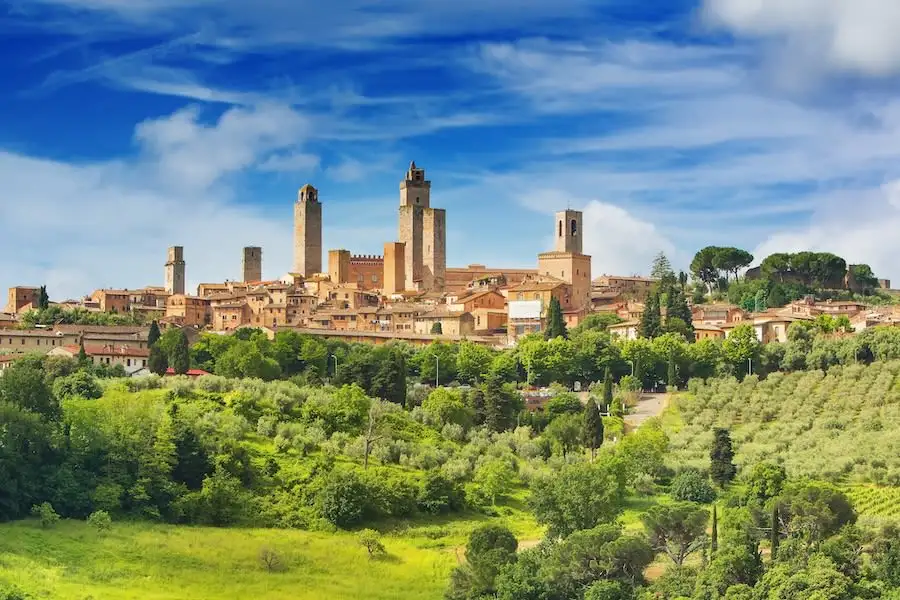
Half Day Excursion to San Gimignano & Vineyard Lunch
Drive through the scenic Tuscan countryside to San Gimignano, one of the most charming and picturesque Tuscan hill towns with medieval towers built for the richest families of the time. You can choose to visit the Cathedral, climb the “Torre Grossa”, take pictures of the gorgeous landscape and enjoy a delicious gelato in the Cistern Square. After, you will be driven to a local Tuscan winery for lunch and some wine tasting. IMPORTANT NOTE : This excursion does not include a guide, only a driver.
Day 6
Florence

Day 7
Depart Florence
Day 7
Depart Florence
To Be Determined
Private Transfer to Florence Airport
A private transfer service will pick you up from the N/A and take you directly to Florence Airport. This is a private transfer for you and your travel party. You do not need to pay the driver as the cost of the transfer is included in your itinerary. IMPORTANT NOTE: Please be aware the car service can fit up to 1 checked item of luggage and 1 personal item per person, such as a purse or small backpack. If you think you will have more baggage, please inform your travel consultant as this may result in an additional fee.

Day 7
Depart Florence
What's Included in the Treasures of Venice & Florence Trip Trip?
Pre-Paid Tours and Activities:
- 'First Walk' Guided Tour in Venice
- Venice For Foodies: Cooking Class or Culinary Tour
- Florence in Half a Day: Guided Highlights Walk
- Half Day Guided Excursion to Chianti
- Half Day Excursion to San Gimignano and lunch stop at a local vineyard

Pre-Paid Transportation:
- 2nd Class Train Tickets from Venezia Santa Lucia to Firenze S.M.N.
- Public Transport Tickets for Venice
- Private Transfer from Hotel to Florence Airport

Accommodation:
- 3 nights at a hotel of your choice in Venice
- 3 nights at a hotel of your choice in Florence

Go Real Travel Mobile App:
- Itinerary Plan & Reservations Info
- Points of Interest
- Detailed Travel Information
- Maps & Directions
Other Trips You May Like


10 Days
Italian Highlights and Culinary Delights with Gabriella-Maria




10 Days
Italian Highlights and Culinary Delights with Gabriella-Maria
Featured Blogs



Our Customers Say It Best


Malini Dutta, Boston, Massachusetts

Bev and Mark Frankel, Williamsburg, Virginia
Marianne Strydom, Paarl, South Africa
Otto Chuy, Los Angeles, California
Malini Dutta, Boston, Massachusetts
Bev and Mark Frankel, Williamsburg, Virginia
Marianne Strydom, Paarl, South Africa
Otto Chuy, Los Angeles, California
Malini Dutta, Boston, Massachusetts
Bev and Mark Frankel, Williamsburg, Virginia
Marianne Strydom, Paarl, South Africa
Otto Chuy, Los Angeles, California



Explore cities in more detail
Lake Bled
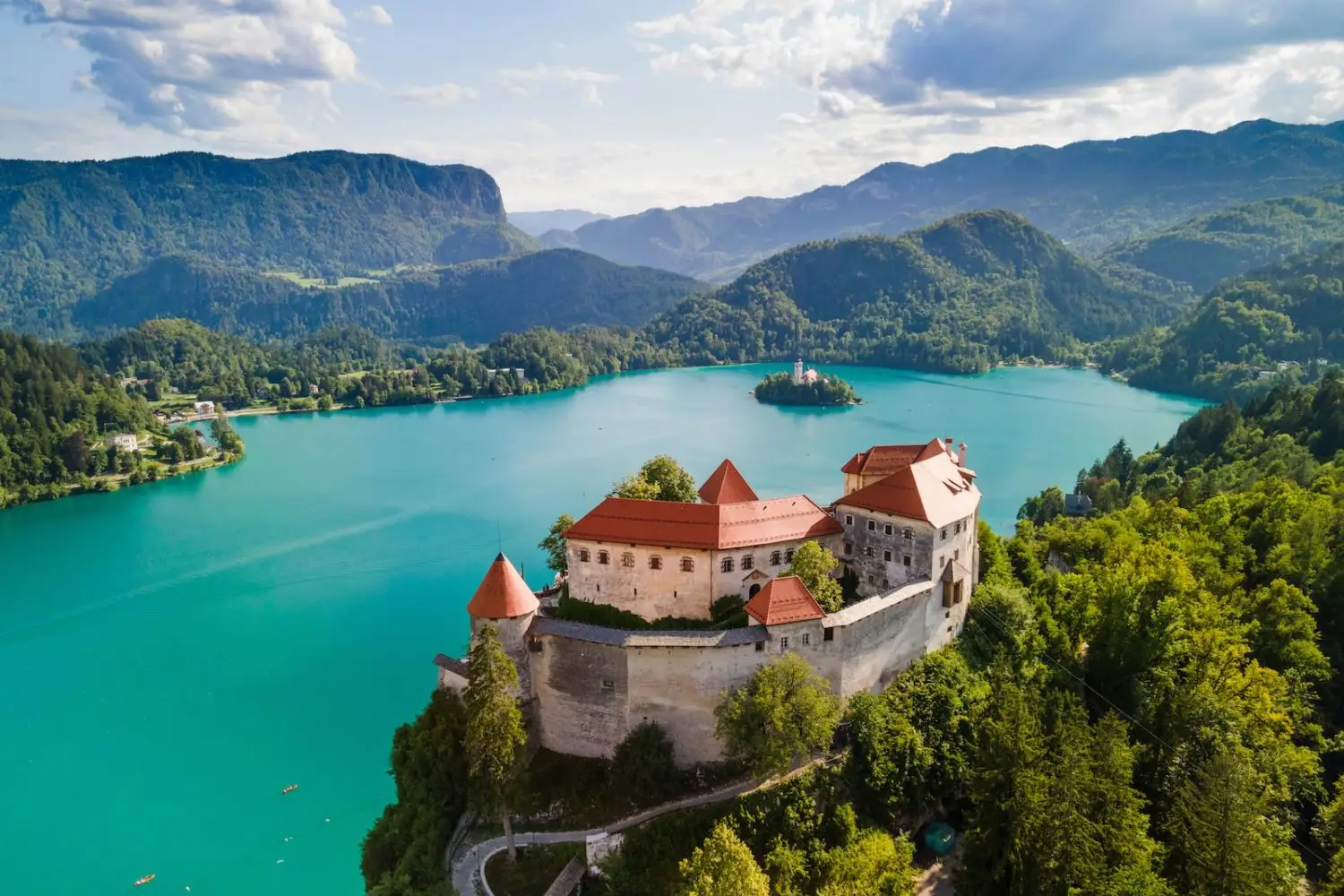
Lake Bled, cradled by the Julian Alps, feels almost improbably serene. At its edge, a small alpine town unfolds with gracious villas, lakeside paths, and cafés that look out toward the water, while a medieval castle rises dramatically from a cliff above. Just offshore, the tiny island crowned by its white church has anchored local legend and tradition for centuries. Life here moves at a gentler rhythm. You might glide across the lake in a traditional pletna boat, explore the castle’s terraces for sweeping views, wander forested trails, or simply linger over a slice of the famous kremšnita cream cake. As evening settles and the light fades over the mountains, Bled becomes noticeably quieter, taking on a calm and relaxed atmosphere.

Rovinj
Rovinj, set along the western coast of Croatia’s Istrian Peninsula, feels at once deeply Mediterranean and distinctly its own. The old town rises from a small peninsula in a tangle of narrow stone lanes, pastel façades, and worn stairways that lead gradually upward to the hilltop Church of St. Euphemia. Fishing boats still drift in the harbor below, while small cafés and galleries occupy buildings shaped by centuries of Venetian influence. Life here unfolds at an easy, unhurried pace. Locals gather along the waterfront promenade in the evening light, and the sea is never far from view—glimmering between houses or stretching wide beyond the rocky shoreline. Rovinj is less about grand monuments than atmosphere: the scent of salt in the air, the rhythm of waves against the harbor, and the quiet beauty of a town that has grown slowly and gracefully beside the Adriatic.

Verona
Verona, set along a gentle bend of the Adige River, blends ancient history with an easy, romantic rhythm of daily life. Roman monuments, medieval bridges, and elegant piazzas shape a compact city that’s ideal for unhurried exploration, from the grandeur of the Arena to the lively energy of Piazza delle Erbe. Literary legends and local traditions sit side by side, with quiet courtyards, riverside walks, and inviting cafés just steps apart.Whether you’re wandering historic streets, lingering over a glass of Valpolicella, or watching the light fade from an ancient bridge, Verona delivers a timeless and effortlessly rewarding Italian experience.
Venice
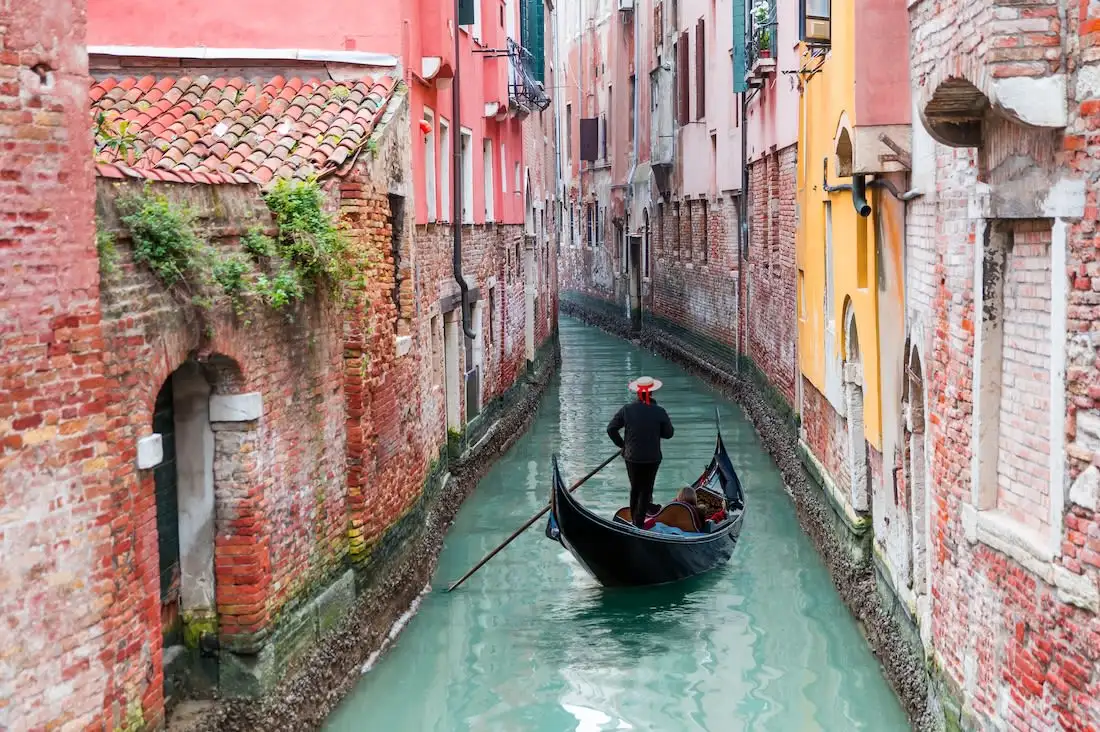
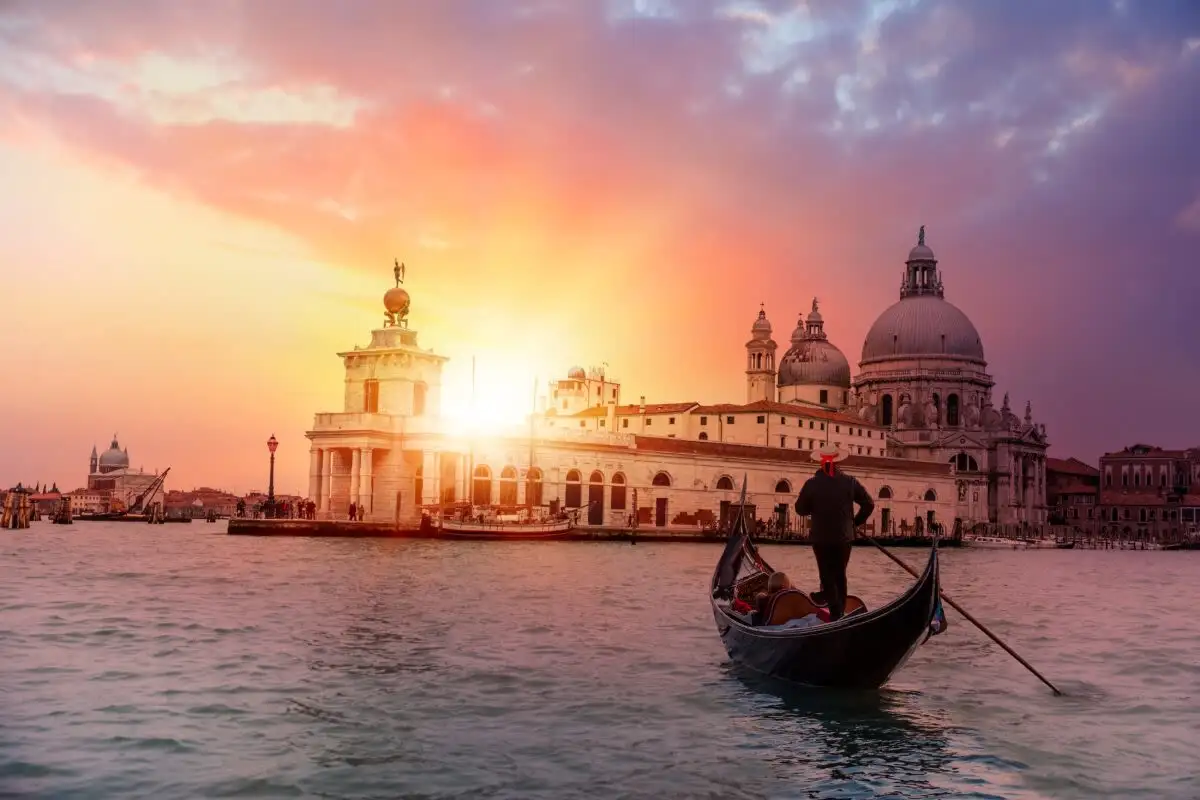
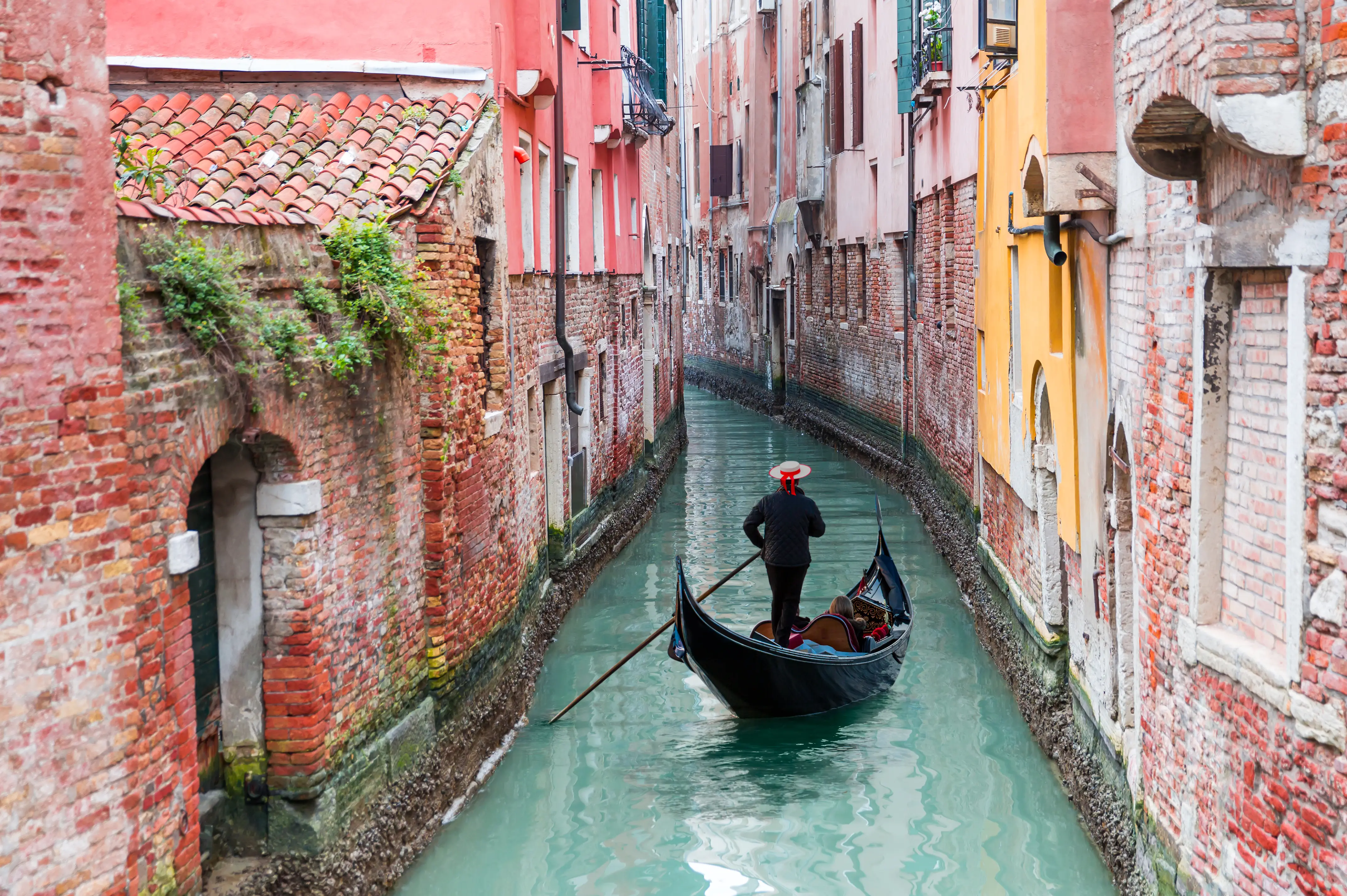
Venice is a city with no equal. Built on a series of islands on a lagoon, it was once a powerful city-state. Echoes of that old magnificence can be seen everywhere here, from the stunning buildings that rise out of the canals, to the bridges that arc across them. Take a Gondola ride through the canals that form the city’s veins, or wander through the winding streets drinking in the sights. You’ll see Venice attracts tourists in huge numbers, and that’s with good reason. It’s home to a seemingly limitless amount of art, culture, history, and architecture. St Mark’s Basilica, the Doge’s Palace, and the Campanile di San Marco just barely scratch the surface. There’s a 700-year-old market, Rialto, which is still open today. The Ponte di Rialto bridge connects the neighborhoods of San Marco and San Polo, stretching across the Grand Canal. Venice has weathered the last several centuries with elegance and pride, a place that will surpass even your highest expectations.
Florence
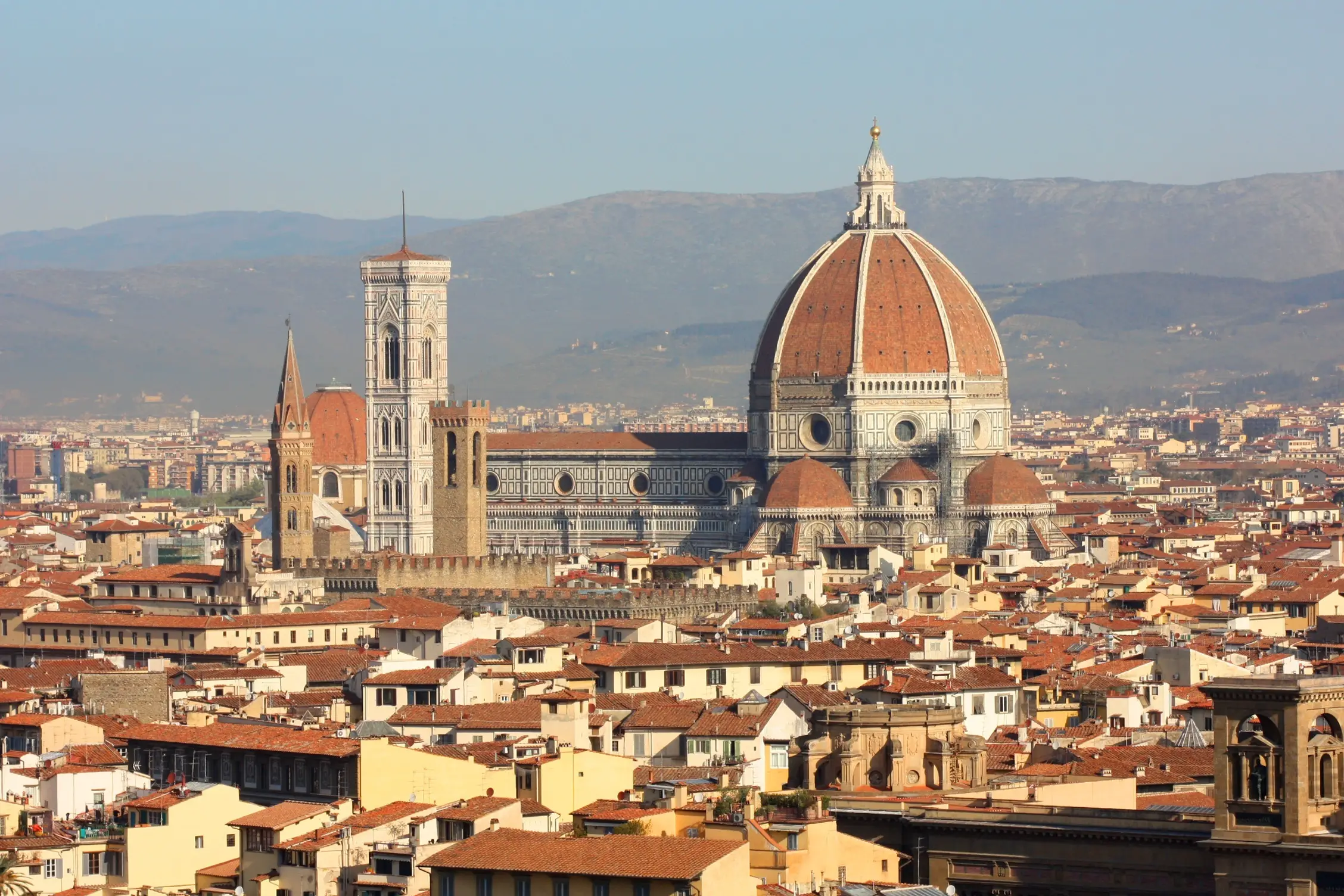
Culture and history are thick in the air in Florence. Located on the banks of the Arno River in Tuscany, Florence’s past is deeply compelling. The birthplace of the Renaissance, Florence is where innovators like Dante, Machiavelli, Michelangelo, and Da Vinci made their fortunes. Centuries of art, politics, and commerce have left their mark on every stone in this Northern Italian city. In the 15th and 16th centuries, Florentine banks funded new enterprises that went on to change the history of the world. Powerful families like the Medici’s financed some of the finest art in history and pioneered new ways of doing statecraft and politics. As you stand in the Piazzale Michelangelo and gaze upon the city below it’s hard to take it all in at once. It feels like behind every door in Florence might hide a work of genius. Michelangelo’s David and Botticelli’s Primavera can be found just a short walk away. After a long day wandering the streets and gazing at art, fueled by exquisite coffee and gelato, relax like the locals do: with a glass of some of the best wine in the world.

Ljubljana
One of Europe's smallest capitals, Ljubljana is still Slovenia's biggest city. What it lacks in size, though, it more than makes up for in charm, beauty, and personality. It's also one of Europe's greenest cities and is perfect for a bike ride or a leisurely walk. With plenty of open spaces, gorgeous architecture, and cultural treats, it's easy to fill the time here. The Tromostovje, or Triple Bridge, is one of Ljubljana's main attractions, connecting the Old Town with the new. Excellent pizza can be found here, and a series of bars and cafes are dotted throughout the town and along the banks of the river. The anarchic Metelkova City reveals Ljubljana's grittier side, with art exhibitions and performances housed in a disused military barracks. Ljubljana is charm and beauty compressed neatly into a small and pretty space.
Lake Bled
Lake Bled, cradled by the Julian Alps, feels almost improbably serene. At its edge, a small alpine town unfolds with gracious villas, lakeside paths, and cafés that look out toward the water, while a medieval castle rises dramatically from a cliff above. Just offshore, the tiny island crowned by its white church has anchored local legend and tradition for centuries. Life here moves at a gentler rhythm. You might glide across the lake in a traditional pletna boat, explore the castle’s terraces for sweeping views, wander forested trails, or simply linger over a slice of the famous kremšnita cream cake. As evening settles and the light fades over the mountains, Bled becomes noticeably quieter, taking on a calm and relaxed atmosphere.
Rovinj
Rovinj, set along the western coast of Croatia’s Istrian Peninsula, feels at once deeply Mediterranean and distinctly its own. The old town rises from a small peninsula in a tangle of narrow stone lanes, pastel façades, and worn stairways that lead gradually upward to the hilltop Church of St. Euphemia. Fishing boats still drift in the harbor below, while small cafés and galleries occupy buildings shaped by centuries of Venetian influence. Life here unfolds at an easy, unhurried pace. Locals gather along the waterfront promenade in the evening light, and the sea is never far from view—glimmering between houses or stretching wide beyond the rocky shoreline. Rovinj is less about grand monuments than atmosphere: the scent of salt in the air, the rhythm of waves against the harbor, and the quiet beauty of a town that has grown slowly and gracefully beside the Adriatic.
Verona
Verona, set along a gentle bend of the Adige River, blends ancient history with an easy, romantic rhythm of daily life. Roman monuments, medieval bridges, and elegant piazzas shape a compact city that’s ideal for unhurried exploration, from the grandeur of the Arena to the lively energy of Piazza delle Erbe. Literary legends and local traditions sit side by side, with quiet courtyards, riverside walks, and inviting cafés just steps apart.Whether you’re wandering historic streets, lingering over a glass of Valpolicella, or watching the light fade from an ancient bridge, Verona delivers a timeless and effortlessly rewarding Italian experience.
Venice
Venice is a city with no equal. Built on a series of islands on a lagoon, it was once a powerful city-state. Echoes of that old magnificence can be seen everywhere here, from the stunning buildings that rise out of the canals, to the bridges that arc across them. Take a Gondola ride through the canals that form the city’s veins, or wander through the winding streets drinking in the sights. You’ll see Venice attracts tourists in huge numbers, and that’s with good reason. It’s home to a seemingly limitless amount of art, culture, history, and architecture. St Mark’s Basilica, the Doge’s Palace, and the Campanile di San Marco just barely scratch the surface. There’s a 700-year-old market, Rialto, which is still open today. The Ponte di Rialto bridge connects the neighborhoods of San Marco and San Polo, stretching across the Grand Canal. Venice has weathered the last several centuries with elegance and pride, a place that will surpass even your highest expectations.
Florence
Culture and history are thick in the air in Florence. Located on the banks of the Arno River in Tuscany, Florence’s past is deeply compelling. The birthplace of the Renaissance, Florence is where innovators like Dante, Machiavelli, Michelangelo, and Da Vinci made their fortunes. Centuries of art, politics, and commerce have left their mark on every stone in this Northern Italian city. In the 15th and 16th centuries, Florentine banks funded new enterprises that went on to change the history of the world. Powerful families like the Medici’s financed some of the finest art in history and pioneered new ways of doing statecraft and politics. As you stand in the Piazzale Michelangelo and gaze upon the city below it’s hard to take it all in at once. It feels like behind every door in Florence might hide a work of genius. Michelangelo’s David and Botticelli’s Primavera can be found just a short walk away. After a long day wandering the streets and gazing at art, fueled by exquisite coffee and gelato, relax like the locals do: with a glass of some of the best wine in the world.
Ljubljana
One of Europe's smallest capitals, Ljubljana is still Slovenia's biggest city. What it lacks in size, though, it more than makes up for in charm, beauty, and personality. It's also one of Europe's greenest cities and is perfect for a bike ride or a leisurely walk. With plenty of open spaces, gorgeous architecture, and cultural treats, it's easy to fill the time here. The Tromostovje, or Triple Bridge, is one of Ljubljana's main attractions, connecting the Old Town with the new. Excellent pizza can be found here, and a series of bars and cafes are dotted throughout the town and along the banks of the river. The anarchic Metelkova City reveals Ljubljana's grittier side, with art exhibitions and performances housed in a disused military barracks. Ljubljana is charm and beauty compressed neatly into a small and pretty space.
Hi! Need help planning your dream trip? 🌍
Go Real Travel Assistant
OnlineWelcome! Where are you in your journey?
Pick the option that fits you best so we can route you to the right help.