Overview
Overview
Overview
Overview
Overview
This website uses ‘cookies’ to give you the best, most relevant experience. By using this website, you consent to our Privacy Policy
×Overview
Trip Map
Itinerary
Inclusions
Reviews


Must see sights


Starting from
per person
Enter your details to embark on a journey that can be tailored just for you.
Start
Travelers
Preferred Hotel Stars
Select your interests and destinations for a trip plan inspired by you.
| ← | Move left |
| → | Move right |
| ↑ | Move up |
| ↓ | Move down |
| + | Zoom in |
| - | Zoom out |
| Home | Jump left by 75% |
| End | Jump right by 75% |
| Page Up | Jump up by 75% |
| Page Down | Jump down by 75% |


Click To Make Map Interactive
Overview
Overview
Overview
Overview
OverviewArrival
5 nights
Rome
Italy
Train: 2h
4 nights
Florence
Italy
Departure

Day 1
Arrive Rome
Day 1
Arrive Rome
Late Afternoon/Early Evening
The streets spreading out from grand Piazza del Popolo (People's Square) form a trident that hosts some of the most popular shopping and tourist sights in Rome. These include the Spanish Steps, the adjacent Keats-Shelley House where Keats died of tuberculosis in 1821, Trevi Fountain where Anita Ekberg jumped into the water in the famous scene from Frederico Fellini's La Dolce Vita, and the Mausoleum of Emperor Augustus.

Admire one of the most iconic sights in Rome, made famous by Anita Ekberg in La Dolce Vita.
Show More
Visit the tomb of the first Roman Emperor and his family, which is finally being restored after more than a millenium of neglect.
Show More
Take some time to admire this elegant square that once served as an impressive main entry point into the city of Rome.
Show More
Browse the gallery to see some of the highlights

Take a scenic walk up the 18th-century stairway where Audrey Hepburn and Gregory Peck set out on their Roman Holiday.
Show More
Visit the last residence of poet John Keats, now a memorial museum.
Show More
Admire one of the most iconic sights in Rome, made famous by Anita Ekberg in La Dolce Vita.
Show More
Visit the tomb of the first Roman Emperor and his family, which is finally being restored after more than a millenium of neglect.
Show More
Take some time to admire this elegant square that once served as an impressive main entry point into the city of Rome.
Show More
Browse the gallery to see some of the highlights

Take a scenic walk up the 18th-century stairway where Audrey Hepburn and Gregory Peck set out on their Roman Holiday.
Show More
Visit the last residence of poet John Keats, now a memorial museum.
Show More
Day 1
Arrive Rome

Day 1
Arrive Rome
11:30 AM:
Private Transfer to your Hotel
Mid-Day/Afternoon:
Rome's Historic Center
Late Afternoon/Early Evening:
Spanish Steps


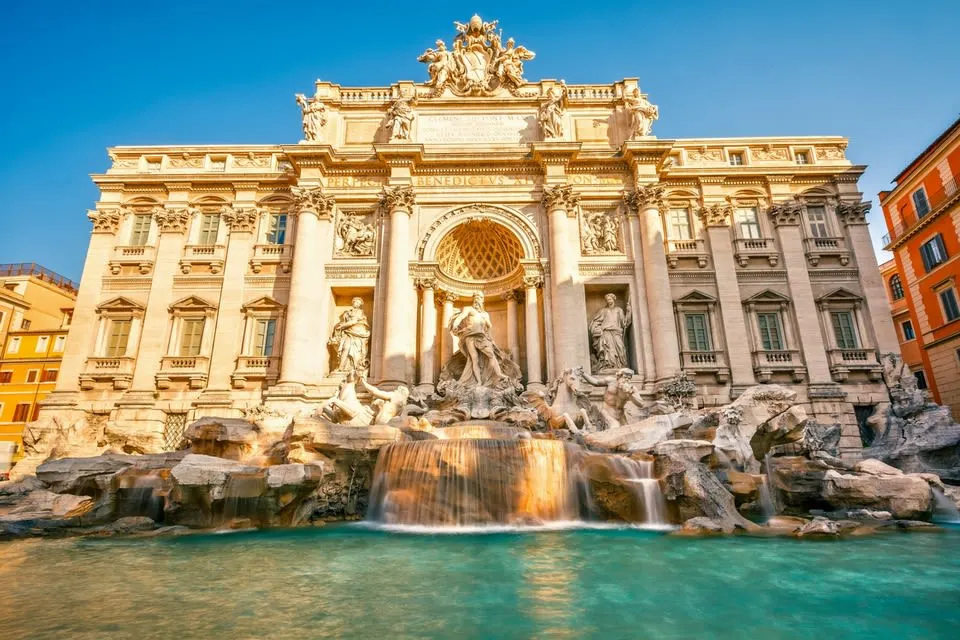
The Trevi Fountain
Highlight of Spanish StepsAdmire one of the most iconic sights in Rome, made famous by Anita Ekberg in La Dolce Vita.
The Trevi Fountain is one of the most iconic sights in Rome thanks to the antics of the shapely Anita Ekberg casting herself into its waters in Frederico Fellini’s cinematic masterpiece, La Dolce Vita. The fountain curiously seems to appear out of virtually nowhere within a warren of backstreets but is nevertheless discovered reasonably early each day by endless crowds of tourists looking to ensure their future return to Rome by tossing a coin back over their should into its crystal clear water (the coins are raked up each morning and donated to the Church organization Caritas).


Mausoleum of Augustus
Highlight of Spanish StepsVisit the tomb of the first Roman Emperor and his family, which is finally being restored after more than a millenium of neglect.
The huge circular Mausoleum of Augustus, holding the tomb of the Emperor and the principal members of his family was one of the most sacred monuments of the ancient city, but has been somewhat neglected in recent decades, though it has undergone recent restoration. Erected in 28 BC and originally surrounded by a huge public park, it has a diameter of 87m (330 Roman feet), the largest circular mausoleum in the world.


Piazza del Popolo
Highlight of Spanish StepsTake some time to admire this elegant square that once served as an impressive main entry point into the city of Rome.
The Piazza del Popolo was created in 1538 for Paul III in strict alignment with the three long straight streets which penetrate the city here as a trident. The piazza once acted as one the primary entrances into Rome, and many travelers recorded their first arrival in Rome through the monumental Porta del Popolo, which may have been designed by Michelangelo. An obelisk, 24m high, rises in the center and on the side of the piazza opposite the porta are the twin decorative 17th-century Baroque churches, Santa Maria dei Miracoli and Santa Maria in Montesanto.


Spanish Steps
OverviewSpanish Steps
The streets spreading out from grand Piazza del Popolo (People's Square) form a trident that hosts some of the most popular shopping and tourist sights in Rome. These include the Spanish Steps, the adjacent Keats-Shelley House where Keats died of tuberculosis in 1821, Trevi Fountain where Anita Ekberg jumped into the water in the famous scene from Frederico Fellini's La Dolce Vita, and the Mausoleum of Emperor Augustus.


Spanish Steps
Highlight of Spanish StepsTake a scenic walk up the 18th-century stairway where Audrey Hepburn and Gregory Peck set out on their Roman Holiday.
The majestically balustraded Spanish Steps were built in 1723-6 to connect the piazza with the church of the Trinita dei Monti and the Pincio. It quickly became a favorite spot of poets, artists, and writers who gathered on its 137 steps, and it's now a favorite stop for tourists from all over the world. Yet this highly attractive stairway still somehow manages to retain a sense of romance even at the height of the tourist season, and if you happen to get there at the beginning of May you’ll find it laden with tubs of magnificent azaleas. A masterpiece of 18th-century town planning, the steps actually contain a religious message – the three flights and three landings are an allusion to the Holy Trinity.


Keats-Shelly House
Highlight of Spanish StepsVisit the last residence of poet John Keats, now a memorial museum.
The Keats-Shelley House at the foot of the Spanish Steps to the right contains the apartment where the poet John Keats spent the last three months of his life. The House is essentially an archive of English-language literary and historical works and a museum of manuscripts and literary mementoes relating to the Keats circle of the early 19th century, i.e. Keats himself, Percy and Mary Shelley and Byron (who at one time lived across the square).


The Trevi Fountain
Highlight of Spanish StepsAdmire one of the most iconic sights in Rome, made famous by Anita Ekberg in La Dolce Vita.
The Trevi Fountain is one of the most iconic sights in Rome thanks to the antics of the shapely Anita Ekberg casting herself into its waters in Frederico Fellini’s cinematic masterpiece, La Dolce Vita. The fountain curiously seems to appear out of virtually nowhere within a warren of backstreets but is nevertheless discovered reasonably early each day by endless crowds of tourists looking to ensure their future return to Rome by tossing a coin back over their should into its crystal clear water (the coins are raked up each morning and donated to the Church organization Caritas).


Mausoleum of Augustus
Highlight of Spanish StepsVisit the tomb of the first Roman Emperor and his family, which is finally being restored after more than a millenium of neglect.
The huge circular Mausoleum of Augustus, holding the tomb of the Emperor and the principal members of his family was one of the most sacred monuments of the ancient city, but has been somewhat neglected in recent decades, though it has undergone recent restoration. Erected in 28 BC and originally surrounded by a huge public park, it has a diameter of 87m (330 Roman feet), the largest circular mausoleum in the world.


Piazza del Popolo
Highlight of Spanish StepsTake some time to admire this elegant square that once served as an impressive main entry point into the city of Rome.
The Piazza del Popolo was created in 1538 for Paul III in strict alignment with the three long straight streets which penetrate the city here as a trident. The piazza once acted as one the primary entrances into Rome, and many travelers recorded their first arrival in Rome through the monumental Porta del Popolo, which may have been designed by Michelangelo. An obelisk, 24m high, rises in the center and on the side of the piazza opposite the porta are the twin decorative 17th-century Baroque churches, Santa Maria dei Miracoli and Santa Maria in Montesanto.


Spanish Steps
OverviewSpanish Steps
The streets spreading out from grand Piazza del Popolo (People's Square) form a trident that hosts some of the most popular shopping and tourist sights in Rome. These include the Spanish Steps, the adjacent Keats-Shelley House where Keats died of tuberculosis in 1821, Trevi Fountain where Anita Ekberg jumped into the water in the famous scene from Frederico Fellini's La Dolce Vita, and the Mausoleum of Emperor Augustus.


Spanish Steps
Highlight of Spanish StepsTake a scenic walk up the 18th-century stairway where Audrey Hepburn and Gregory Peck set out on their Roman Holiday.
The majestically balustraded Spanish Steps were built in 1723-6 to connect the piazza with the church of the Trinita dei Monti and the Pincio. It quickly became a favorite spot of poets, artists, and writers who gathered on its 137 steps, and it's now a favorite stop for tourists from all over the world. Yet this highly attractive stairway still somehow manages to retain a sense of romance even at the height of the tourist season, and if you happen to get there at the beginning of May you’ll find it laden with tubs of magnificent azaleas. A masterpiece of 18th-century town planning, the steps actually contain a religious message – the three flights and three landings are an allusion to the Holy Trinity.


Keats-Shelly House
Highlight of Spanish StepsVisit the last residence of poet John Keats, now a memorial museum.
The Keats-Shelley House at the foot of the Spanish Steps to the right contains the apartment where the poet John Keats spent the last three months of his life. The House is essentially an archive of English-language literary and historical works and a museum of manuscripts and literary mementoes relating to the Keats circle of the early 19th century, i.e. Keats himself, Percy and Mary Shelley and Byron (who at one time lived across the square).

The Trevi Fountain
Highlight of Spanish StepsAdmire one of the most iconic sights in Rome, made famous by Anita Ekberg in La Dolce Vita.
The Trevi Fountain is one of the most iconic sights in Rome thanks to the antics of the shapely Anita Ekberg casting herself into its waters in Frederico Fellini’s cinematic masterpiece, La Dolce Vita. The fountain curiously seems to appear out of virtually nowhere within a warren of backstreets but is nevertheless discovered reasonably early each day by endless crowds of tourists looking to ensure their future return to Rome by tossing a coin back over their should into its crystal clear water (the coins are raked up each morning and donated to the Church organization Caritas).

Mausoleum of Augustus
Highlight of Spanish StepsVisit the tomb of the first Roman Emperor and his family, which is finally being restored after more than a millenium of neglect.
The huge circular Mausoleum of Augustus, holding the tomb of the Emperor and the principal members of his family was one of the most sacred monuments of the ancient city, but has been somewhat neglected in recent decades, though it has undergone recent restoration. Erected in 28 BC and originally surrounded by a huge public park, it has a diameter of 87m (330 Roman feet), the largest circular mausoleum in the world.

Piazza del Popolo
Highlight of Spanish StepsTake some time to admire this elegant square that once served as an impressive main entry point into the city of Rome.
The Piazza del Popolo was created in 1538 for Paul III in strict alignment with the three long straight streets which penetrate the city here as a trident. The piazza once acted as one the primary entrances into Rome, and many travelers recorded their first arrival in Rome through the monumental Porta del Popolo, which may have been designed by Michelangelo. An obelisk, 24m high, rises in the center and on the side of the piazza opposite the porta are the twin decorative 17th-century Baroque churches, Santa Maria dei Miracoli and Santa Maria in Montesanto.

Spanish Steps
OverviewSpanish Steps
The streets spreading out from grand Piazza del Popolo (People's Square) form a trident that hosts some of the most popular shopping and tourist sights in Rome. These include the Spanish Steps, the adjacent Keats-Shelley House where Keats died of tuberculosis in 1821, Trevi Fountain where Anita Ekberg jumped into the water in the famous scene from Frederico Fellini's La Dolce Vita, and the Mausoleum of Emperor Augustus.

Spanish Steps
Highlight of Spanish StepsTake a scenic walk up the 18th-century stairway where Audrey Hepburn and Gregory Peck set out on their Roman Holiday.
The majestically balustraded Spanish Steps were built in 1723-6 to connect the piazza with the church of the Trinita dei Monti and the Pincio. It quickly became a favorite spot of poets, artists, and writers who gathered on its 137 steps, and it's now a favorite stop for tourists from all over the world. Yet this highly attractive stairway still somehow manages to retain a sense of romance even at the height of the tourist season, and if you happen to get there at the beginning of May you’ll find it laden with tubs of magnificent azaleas. A masterpiece of 18th-century town planning, the steps actually contain a religious message – the three flights and three landings are an allusion to the Holy Trinity.

Keats-Shelly House
Highlight of Spanish StepsVisit the last residence of poet John Keats, now a memorial museum.
The Keats-Shelley House at the foot of the Spanish Steps to the right contains the apartment where the poet John Keats spent the last three months of his life. The House is essentially an archive of English-language literary and historical works and a museum of manuscripts and literary mementoes relating to the Keats circle of the early 19th century, i.e. Keats himself, Percy and Mary Shelley and Byron (who at one time lived across the square).

The Trevi Fountain
Highlight of Spanish StepsAdmire one of the most iconic sights in Rome, made famous by Anita Ekberg in La Dolce Vita.
The Trevi Fountain is one of the most iconic sights in Rome thanks to the antics of the shapely Anita Ekberg casting herself into its waters in Frederico Fellini’s cinematic masterpiece, La Dolce Vita. The fountain curiously seems to appear out of virtually nowhere within a warren of backstreets but is nevertheless discovered reasonably early each day by endless crowds of tourists looking to ensure their future return to Rome by tossing a coin back over their should into its crystal clear water (the coins are raked up each morning and donated to the Church organization Caritas).

Mausoleum of Augustus
Highlight of Spanish StepsVisit the tomb of the first Roman Emperor and his family, which is finally being restored after more than a millenium of neglect.
The huge circular Mausoleum of Augustus, holding the tomb of the Emperor and the principal members of his family was one of the most sacred monuments of the ancient city, but has been somewhat neglected in recent decades, though it has undergone recent restoration. Erected in 28 BC and originally surrounded by a huge public park, it has a diameter of 87m (330 Roman feet), the largest circular mausoleum in the world.

Piazza del Popolo
Highlight of Spanish StepsTake some time to admire this elegant square that once served as an impressive main entry point into the city of Rome.
The Piazza del Popolo was created in 1538 for Paul III in strict alignment with the three long straight streets which penetrate the city here as a trident. The piazza once acted as one the primary entrances into Rome, and many travelers recorded their first arrival in Rome through the monumental Porta del Popolo, which may have been designed by Michelangelo. An obelisk, 24m high, rises in the center and on the side of the piazza opposite the porta are the twin decorative 17th-century Baroque churches, Santa Maria dei Miracoli and Santa Maria in Montesanto.

Spanish Steps
OverviewSpanish Steps
The streets spreading out from grand Piazza del Popolo (People's Square) form a trident that hosts some of the most popular shopping and tourist sights in Rome. These include the Spanish Steps, the adjacent Keats-Shelley House where Keats died of tuberculosis in 1821, Trevi Fountain where Anita Ekberg jumped into the water in the famous scene from Frederico Fellini's La Dolce Vita, and the Mausoleum of Emperor Augustus.

Spanish Steps
Highlight of Spanish StepsTake a scenic walk up the 18th-century stairway where Audrey Hepburn and Gregory Peck set out on their Roman Holiday.
The majestically balustraded Spanish Steps were built in 1723-6 to connect the piazza with the church of the Trinita dei Monti and the Pincio. It quickly became a favorite spot of poets, artists, and writers who gathered on its 137 steps, and it's now a favorite stop for tourists from all over the world. Yet this highly attractive stairway still somehow manages to retain a sense of romance even at the height of the tourist season, and if you happen to get there at the beginning of May you’ll find it laden with tubs of magnificent azaleas. A masterpiece of 18th-century town planning, the steps actually contain a religious message – the three flights and three landings are an allusion to the Holy Trinity.

Keats-Shelly House
Highlight of Spanish StepsVisit the last residence of poet John Keats, now a memorial museum.
The Keats-Shelley House at the foot of the Spanish Steps to the right contains the apartment where the poet John Keats spent the last three months of his life. The House is essentially an archive of English-language literary and historical works and a museum of manuscripts and literary mementoes relating to the Keats circle of the early 19th century, i.e. Keats himself, Percy and Mary Shelley and Byron (who at one time lived across the square).

Day 2
Rome
Day 2
Rome
9:00 AM - 12:00 PM
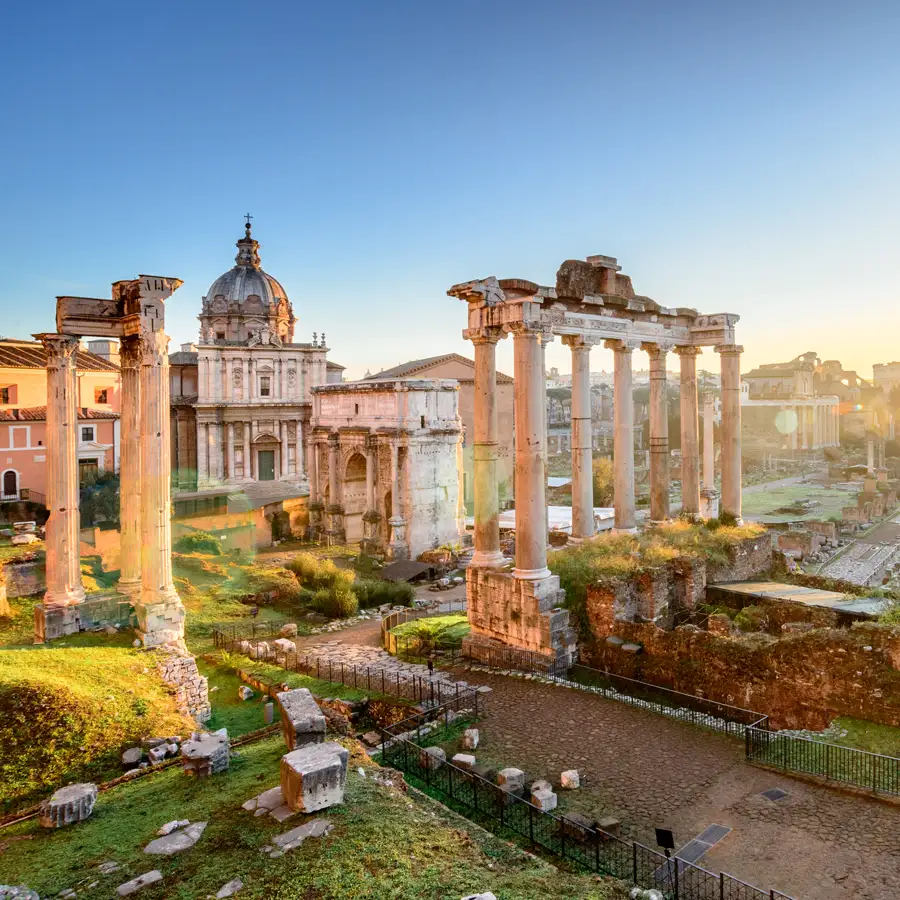
On this 3-hour private guided tour, you will explore the imposing remains of ancient Rome. Your guide will explain the extraordinary history of the birth of Rome, life in the city and everything about the fall of the Empire. Visit the Colosseum, the monumental ruins of the Roman Forum, and end the tour on the Capitoline Hill, the smallest and most important of the seven hills of Ancient Rome.

Browse the gallery to see some of the highlights

Ancient Roman Ampitheater
Show More
Browse the gallery to see some of the highlights

Ancient Roman Ampitheater
Show More
Browse the gallery to see some of the highlights

Ancient Roman Ampitheater
Show More
Day 2
Rome

Ancient Rome Guided Walk
OverviewAncient Rome Guided Walk
On this 3-hour private guided tour, you will explore the imposing remains of ancient Rome. Your guide will explain the extraordinary history of the birth of Rome, life in the city and everything about the fall of the Empire. Visit the Colosseum, the monumental ruins of the Roman Forum, and end the tour on the Capitoline Hill, the smallest and most important of the seven hills of Ancient Rome.

Colosseum
Highlight of Ancient Rome Guided WalkAncient Roman Ampitheater
Monumental Roman amphitheater once used for gladiatorial games

Ancient Rome Guided Walk
OverviewAncient Rome Guided Walk
On this 3-hour private guided tour, you will explore the imposing remains of ancient Rome. Your guide will explain the extraordinary history of the birth of Rome, life in the city and everything about the fall of the Empire. Visit the Colosseum, the monumental ruins of the Roman Forum, and end the tour on the Capitoline Hill, the smallest and most important of the seven hills of Ancient Rome.

Colosseum
Highlight of Ancient Rome Guided WalkAncient Roman Ampitheater
Monumental Roman amphitheater once used for gladiatorial games

Ancient Rome Guided Walk
OverviewAncient Rome Guided Walk
On this 3-hour private guided tour, you will explore the imposing remains of ancient Rome. Your guide will explain the extraordinary history of the birth of Rome, life in the city and everything about the fall of the Empire. Visit the Colosseum, the monumental ruins of the Roman Forum, and end the tour on the Capitoline Hill, the smallest and most important of the seven hills of Ancient Rome.

Colosseum
Highlight of Ancient Rome Guided WalkAncient Roman Ampitheater
Monumental Roman amphitheater once used for gladiatorial games

Day 3
Rome
Day 3
Rome
Early Morning to Late Afternoon
Rome is unique in the world in that it contains an independent country within its city limits - the Vatican City, from where the Pope administers the Catholic Church. The symbolic center of Catholicism is St Peter's Basilica, the second-largest Catholic church in the world and among the most beautiful. The Vatican Museum contains one of the greatest collections of art in existence, including Michelangelo's jaw-dropping Sistine Chapel. The popes had a bigger influence on Rome than just the collection of art. The Pope's title is actually Bishop of Rome, and popes administed the city for centuries, shaping its architecture & public spaces. Rome was re-built to be an example of urban beauty, and the Vatican was meant to be the showcase within the showcase. Their success is evident from the throngs of visitors who flock here even today.

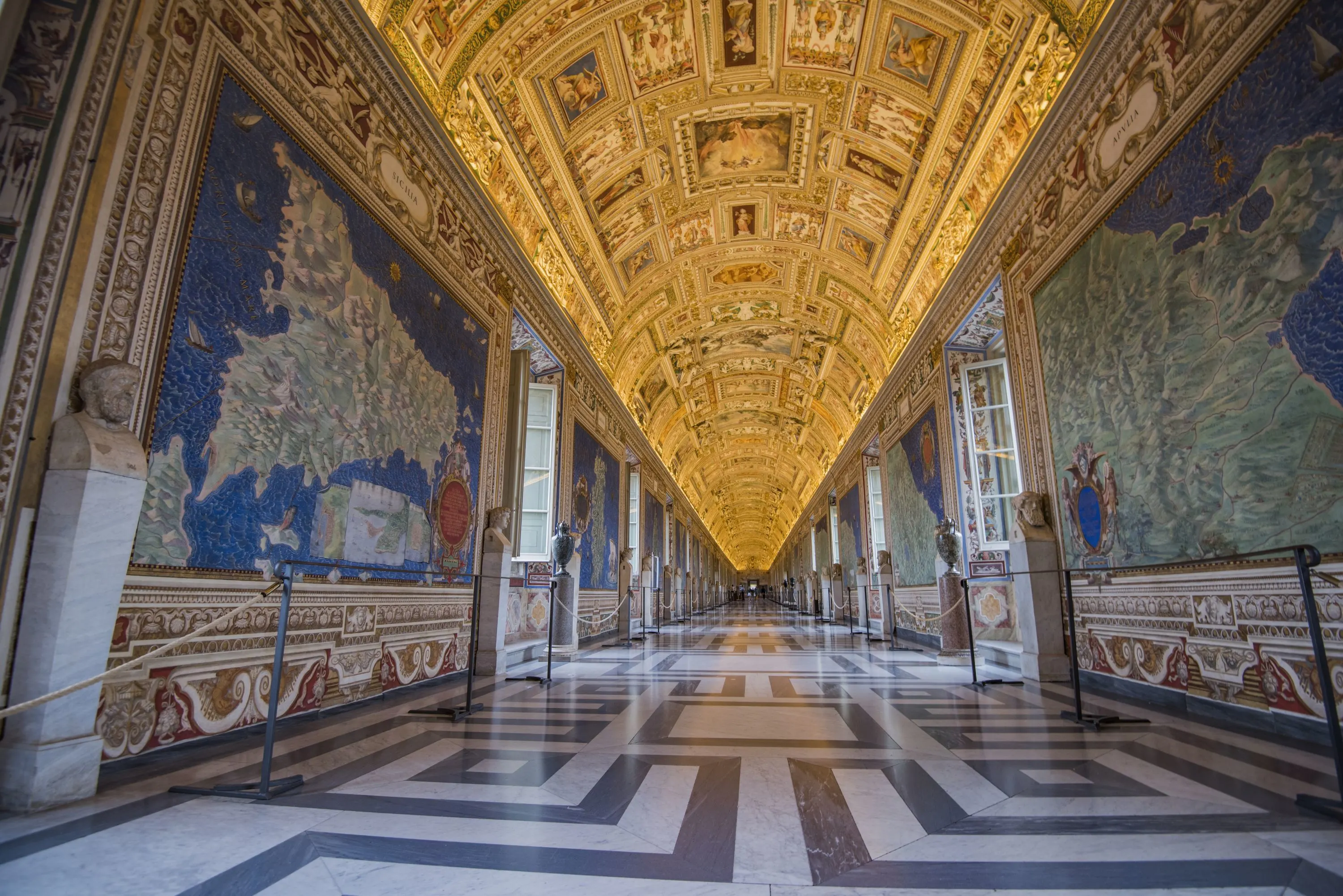
Book early if you want to see the Vatican Museum's monumental works of art from the greatest Italian artists of the Renaissance.
Show More
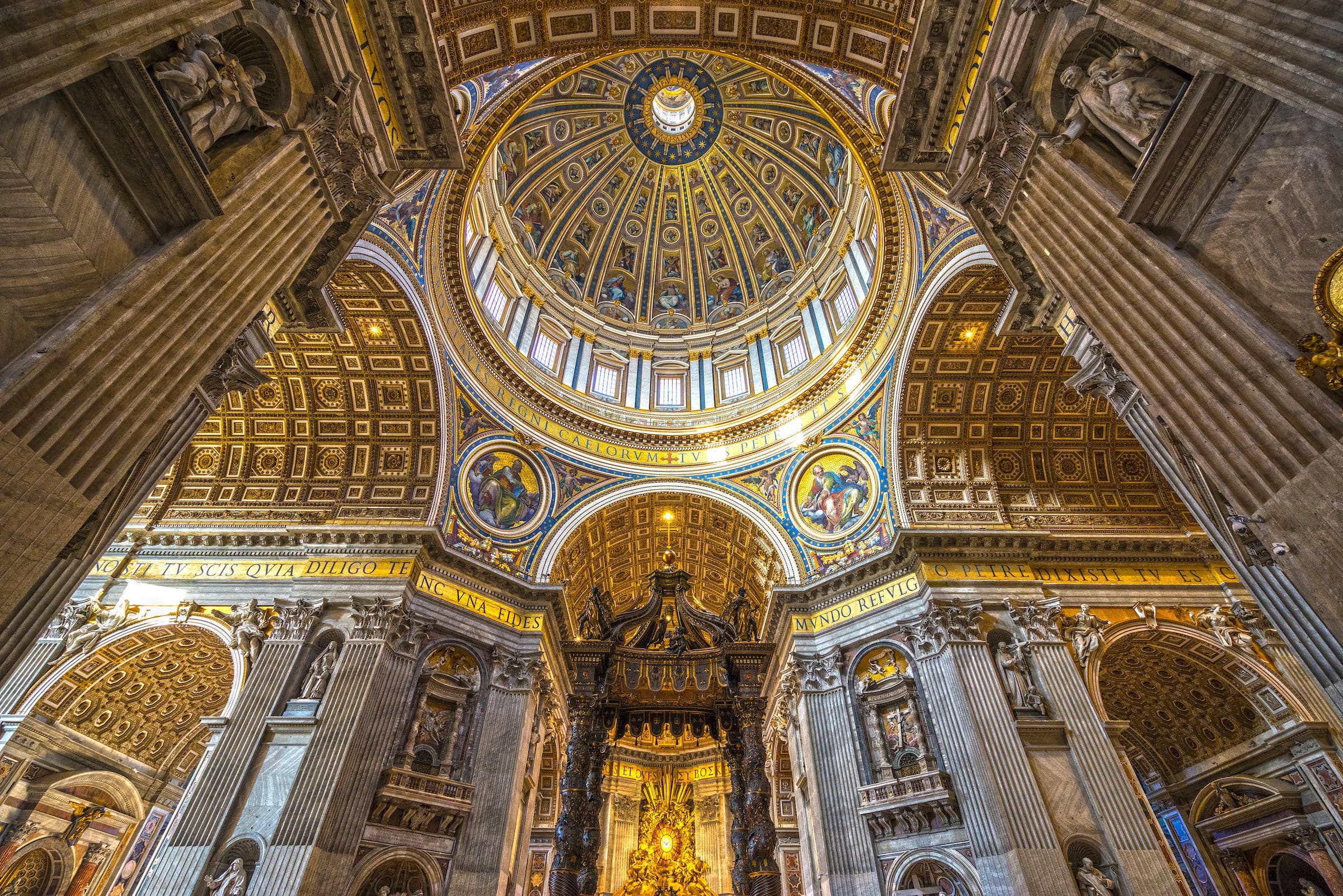
Explore the gigantic and incredibly beautiful church known as "the greatest of all churches of Christendom".
Show More
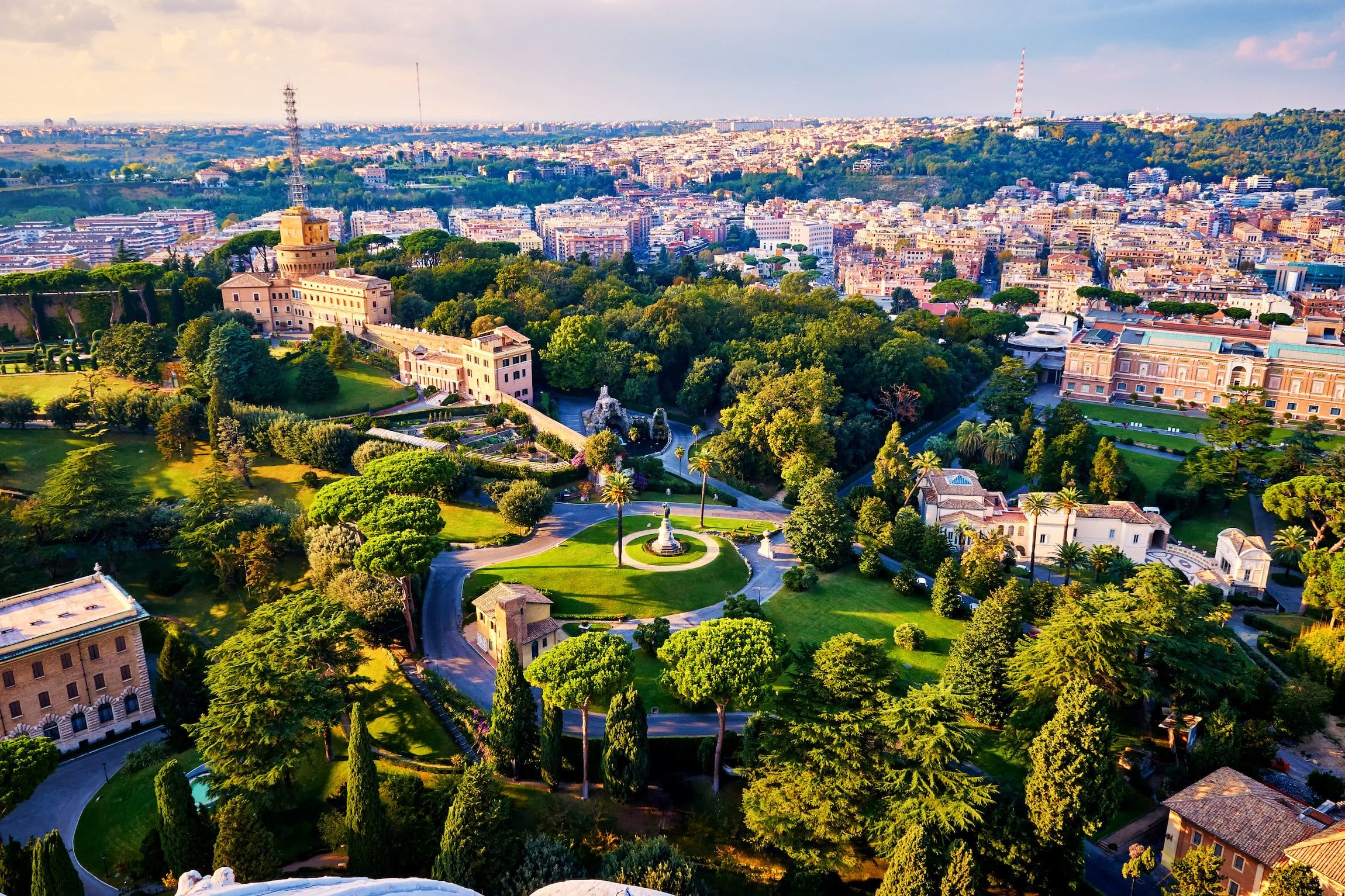
Escape the crowds in this oasis of green hidden behind the walls of the Vatican.
Show More
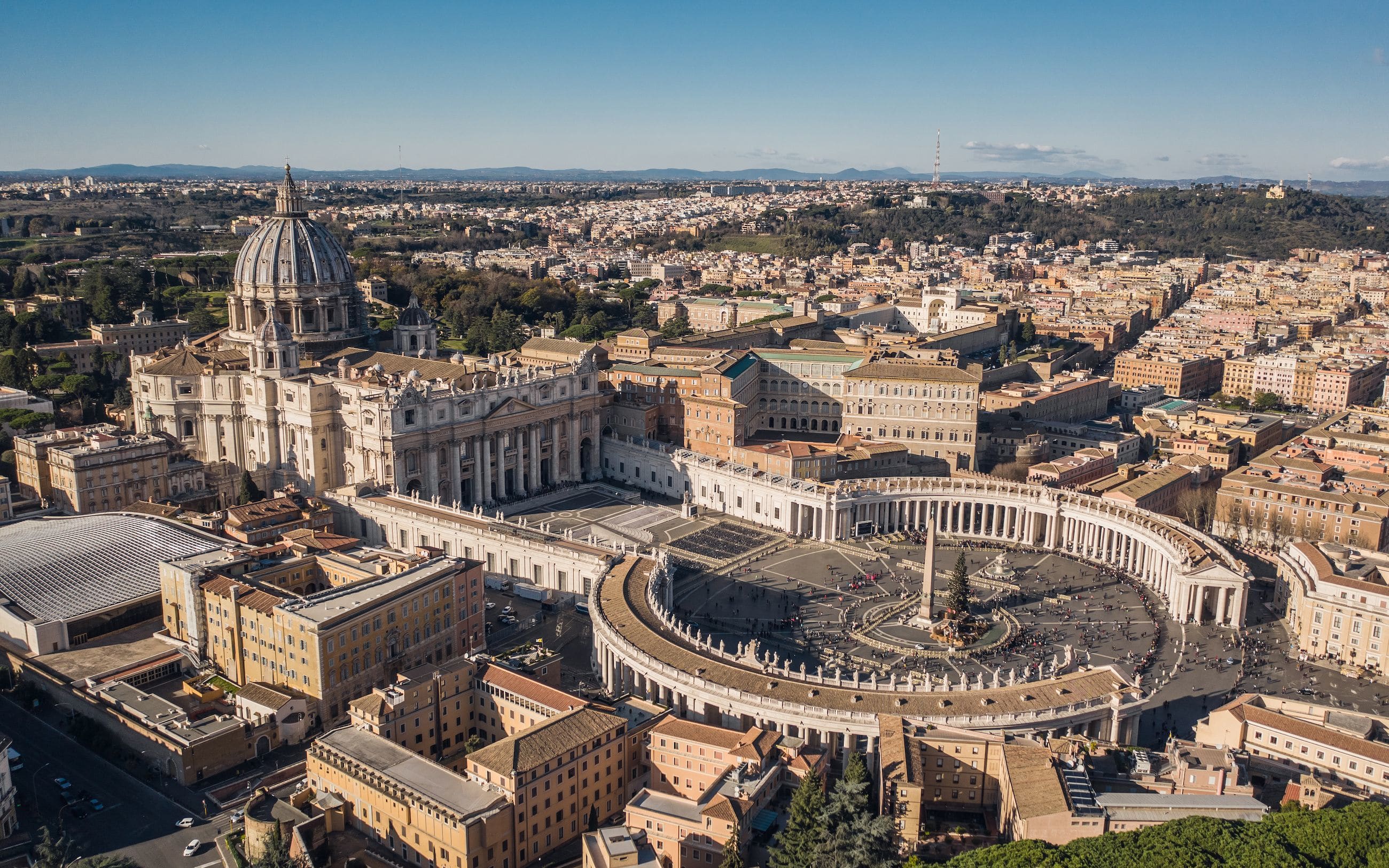
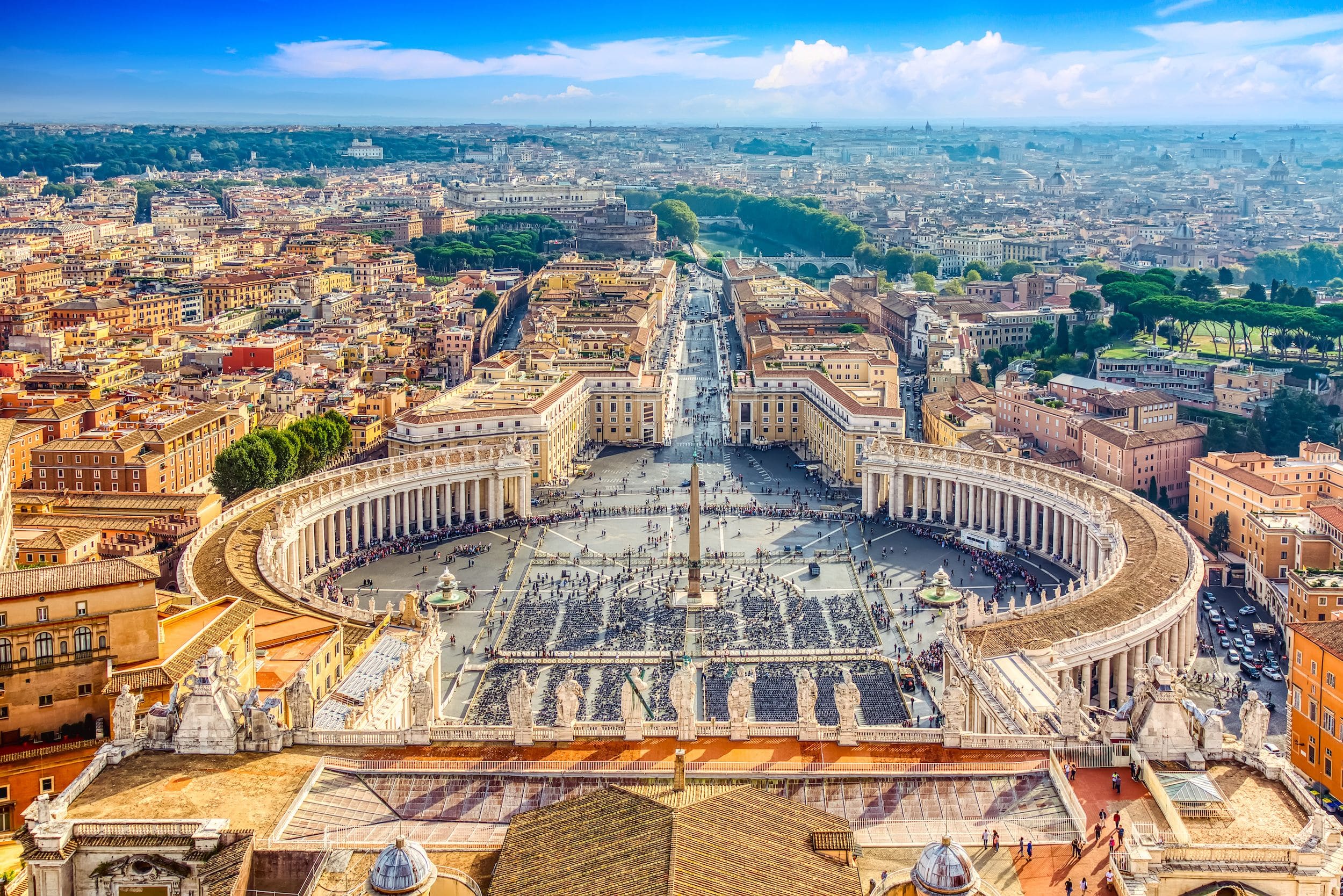
Browse the gallery to see some of the highlights

Stand in the middle of this famous square in which the faithful gather to hear the Pope give audiences and celebrate mass.
Show More
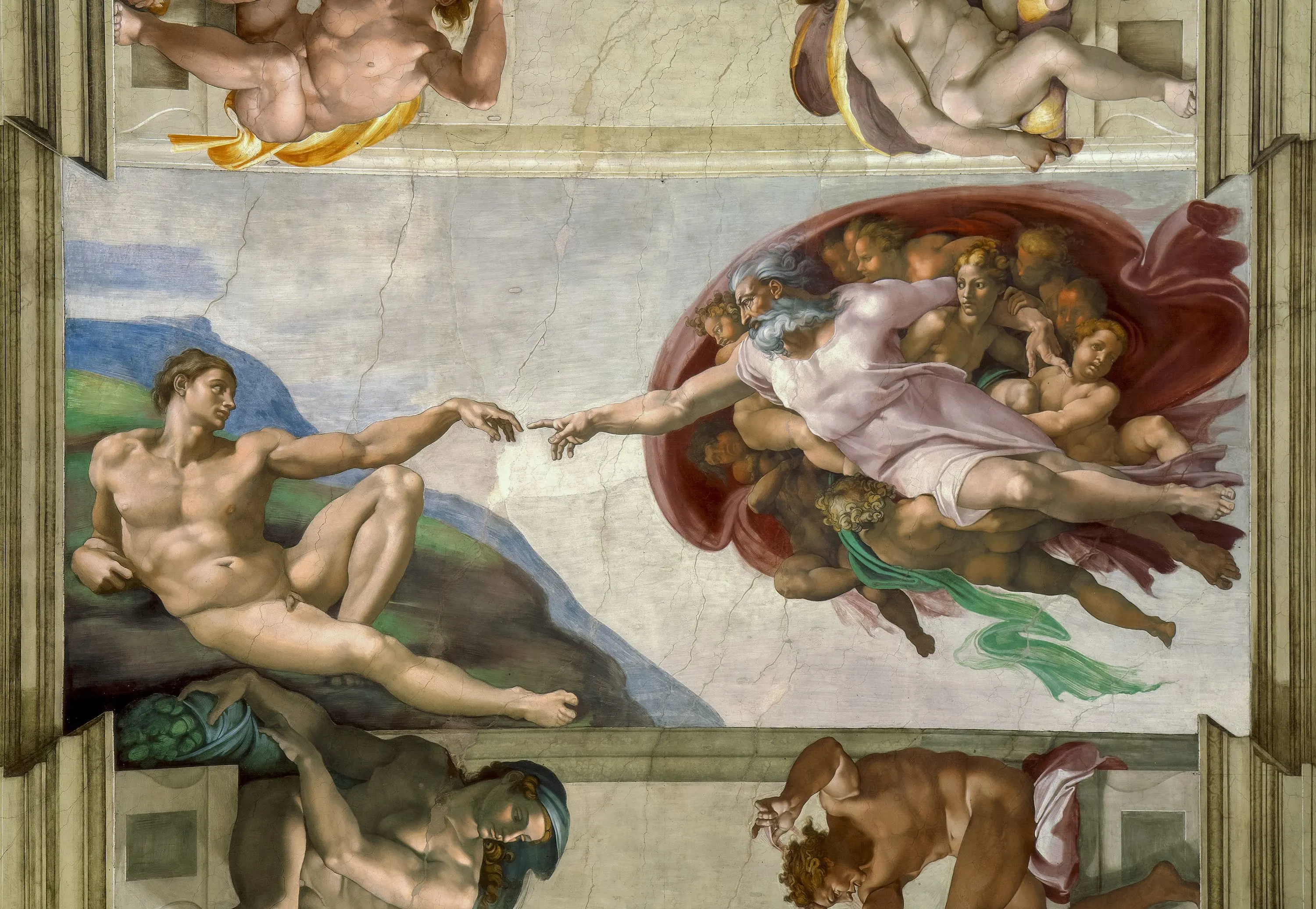
Gaze up at the world's most famous ceiling, the masterpiece of Michelangelo.
Show More
Book early if you want to see the Vatican Museum's monumental works of art from the greatest Italian artists of the Renaissance.
Show More
Explore the gigantic and incredibly beautiful church known as "the greatest of all churches of Christendom".
Show More
Escape the crowds in this oasis of green hidden behind the walls of the Vatican.
Show More
Browse the gallery to see some of the highlights

Stand in the middle of this famous square in which the faithful gather to hear the Pope give audiences and celebrate mass.
Show More
Gaze up at the world's most famous ceiling, the masterpiece of Michelangelo.
Show More
Day 3
Rome

Vatican Museums
Highlight of Vatican CityBook early if you want to see the Vatican Museum's monumental works of art from the greatest Italian artists of the Renaissance.
The Vatican Museum is actually 26 different museums, which include not only exhibitions but chapels, apartments, and other rooms of the Vatican palace, covering a huge range of fine and applied arts patronized by the popes. There's also an outstanding collection of ancient antiquities (including even the Emperor Nero's red stone bathtub), a gallery of hand-painted maps, and whole rooms turned into works of art. In addition to ancient and medieval works of art, you'll see masterpieces by the "who's who" of the Italian Renaissance, including Raphael, Leonardo da Vinci, Titian, and Caravaggio. Other highlights include panels by the brilliant monk-artist Fra Angelico, works from the Venetian school, including Vavarini, and much, much more. Booking in advance is highly recommended as otherwise you can wait for hours or not even be able to get in at all.

St Peter’s Basilica
Highlight of Vatican CityExplore the gigantic and incredibly beautiful church known as "the greatest of all churches of Christendom".
The basilica is one of the chief pilgrimage sites in the Christian world, and one of the most popular tourist destinations in Rome. The basilica is the symbolic center of the church not only because the Pope frequently celebrates Mass there, but because it is believed that the apostle St. Peter is buried beneath it. Catholics consider Peter as the first Bishop of Rome and "the rock" upon which the Catholic Church was built, in accordance with Christ's instructions. Inside you can admire sculptures by Bernini as well as Michelangelo's famous sculpture of the Virgin Mary holding the crucified Jesus, known as The Pietà. The church's elaborate and impressive golden interior is a sight to behold. Other sights include St Peter's tomb, the Papal crypts in the necropolis under the basilica, as well as the dome, which rewards visitors with views over Rome. Entry is free, but queues to visit the Basilica can be lengthy, so it is highly advised to either get there early or to purchase a skip the line entrance. The dome is also paid entry.

Vatican Gardens
Highlight of Vatican CityEscape the crowds in this oasis of green hidden behind the walls of the Vatican.
Accessible only via a guided tour, the gardens are definitely worth a visit. Just as the Popes have for hundreds of years, you can stroll the gardens and relax amidst the greenery, while taking in the perfect view of St. Peter's.

Vatican City
OverviewVatican City
Rome is unique in the world in that it contains an independent country within its city limits - the Vatican City, from where the Pope administers the Catholic Church. The symbolic center of Catholicism is St Peter's Basilica, the second-largest Catholic church in the world and among the most beautiful. The Vatican Museum contains one of the greatest collections of art in existence, including Michelangelo's jaw-dropping Sistine Chapel. The popes had a bigger influence on Rome than just the collection of art. The Pope's title is actually Bishop of Rome, and popes administed the city for centuries, shaping its architecture & public spaces. Rome was re-built to be an example of urban beauty, and the Vatican was meant to be the showcase within the showcase. Their success is evident from the throngs of visitors who flock here even today.

St Peter's Square
Highlight of Vatican CityStand in the middle of this famous square in which the faithful gather to hear the Pope give audiences and celebrate mass.
As one of the most superb conceptions of its kind in civic architecture, St Peter’s Square is the masterpiece of Gian Lorenzo Bernini and makes a wonderful approach to one of the world’s most magnificent churches, St Peter's Basilica. An oval rather than an actual square, the piazza, laid out in 1656-67, is partially enclosed by two semi-circular colonnades on which stand 96 statues of saints and martyrs. At the center of the oval stands an 84-foot (26m) tall Egyptian obelisk of red granite.

Sistine Chapel
Highlight of Vatican CityGaze up at the world's most famous ceiling, the masterpiece of Michelangelo.
This famous chapel inside the Vatican Museums is best known for Michelangelo's 16th-century painted ceiling of "The Creation of Adam" and "The Last Judgement" fresco that covers the whole altar wall of the chapel. The jaw-dropping sight is not to be missed, considered one of the top highlights of visiting the Vatican Museums and one of the top artistic wonders of the world.

Vatican Museums
Highlight of Vatican CityBook early if you want to see the Vatican Museum's monumental works of art from the greatest Italian artists of the Renaissance.
The Vatican Museum is actually 26 different museums, which include not only exhibitions but chapels, apartments, and other rooms of the Vatican palace, covering a huge range of fine and applied arts patronized by the popes. There's also an outstanding collection of ancient antiquities (including even the Emperor Nero's red stone bathtub), a gallery of hand-painted maps, and whole rooms turned into works of art. In addition to ancient and medieval works of art, you'll see masterpieces by the "who's who" of the Italian Renaissance, including Raphael, Leonardo da Vinci, Titian, and Caravaggio. Other highlights include panels by the brilliant monk-artist Fra Angelico, works from the Venetian school, including Vavarini, and much, much more. Booking in advance is highly recommended as otherwise you can wait for hours or not even be able to get in at all.

St Peter’s Basilica
Highlight of Vatican CityExplore the gigantic and incredibly beautiful church known as "the greatest of all churches of Christendom".
The basilica is one of the chief pilgrimage sites in the Christian world, and one of the most popular tourist destinations in Rome. The basilica is the symbolic center of the church not only because the Pope frequently celebrates Mass there, but because it is believed that the apostle St. Peter is buried beneath it. Catholics consider Peter as the first Bishop of Rome and "the rock" upon which the Catholic Church was built, in accordance with Christ's instructions. Inside you can admire sculptures by Bernini as well as Michelangelo's famous sculpture of the Virgin Mary holding the crucified Jesus, known as The Pietà. The church's elaborate and impressive golden interior is a sight to behold. Other sights include St Peter's tomb, the Papal crypts in the necropolis under the basilica, as well as the dome, which rewards visitors with views over Rome. Entry is free, but queues to visit the Basilica can be lengthy, so it is highly advised to either get there early or to purchase a skip the line entrance. The dome is also paid entry.

Vatican Gardens
Highlight of Vatican CityEscape the crowds in this oasis of green hidden behind the walls of the Vatican.
Accessible only via a guided tour, the gardens are definitely worth a visit. Just as the Popes have for hundreds of years, you can stroll the gardens and relax amidst the greenery, while taking in the perfect view of St. Peter's.

Vatican City
OverviewVatican City
Rome is unique in the world in that it contains an independent country within its city limits - the Vatican City, from where the Pope administers the Catholic Church. The symbolic center of Catholicism is St Peter's Basilica, the second-largest Catholic church in the world and among the most beautiful. The Vatican Museum contains one of the greatest collections of art in existence, including Michelangelo's jaw-dropping Sistine Chapel. The popes had a bigger influence on Rome than just the collection of art. The Pope's title is actually Bishop of Rome, and popes administed the city for centuries, shaping its architecture & public spaces. Rome was re-built to be an example of urban beauty, and the Vatican was meant to be the showcase within the showcase. Their success is evident from the throngs of visitors who flock here even today.

St Peter's Square
Highlight of Vatican CityStand in the middle of this famous square in which the faithful gather to hear the Pope give audiences and celebrate mass.
As one of the most superb conceptions of its kind in civic architecture, St Peter’s Square is the masterpiece of Gian Lorenzo Bernini and makes a wonderful approach to one of the world’s most magnificent churches, St Peter's Basilica. An oval rather than an actual square, the piazza, laid out in 1656-67, is partially enclosed by two semi-circular colonnades on which stand 96 statues of saints and martyrs. At the center of the oval stands an 84-foot (26m) tall Egyptian obelisk of red granite.

Sistine Chapel
Highlight of Vatican CityGaze up at the world's most famous ceiling, the masterpiece of Michelangelo.
This famous chapel inside the Vatican Museums is best known for Michelangelo's 16th-century painted ceiling of "The Creation of Adam" and "The Last Judgement" fresco that covers the whole altar wall of the chapel. The jaw-dropping sight is not to be missed, considered one of the top highlights of visiting the Vatican Museums and one of the top artistic wonders of the world.

Day 4
Rome
Day 4
Rome
Morning to Early Evening
Tivoli was a celebrated holiday resort even in ancient times, thanks to its climate and its idyllic position, with scenic cascades and an abundance of water issuing from the Aniene River. The travertine stone used at sites like the Colosseum was quarried here, meaning it was also a convenient place to build big, fancy villas. During your day trip to Tivoli, you can visit the Villa d’ Este, which is famous for its terraced hillside Italian Renaissance garden. It was conceived to appear like a mythical garden of the ancient past and is unique for its incredible profusion of magnificent fountains. The town is also famous for its villa built by and for Emperor Hadrian, Villa Adriana.

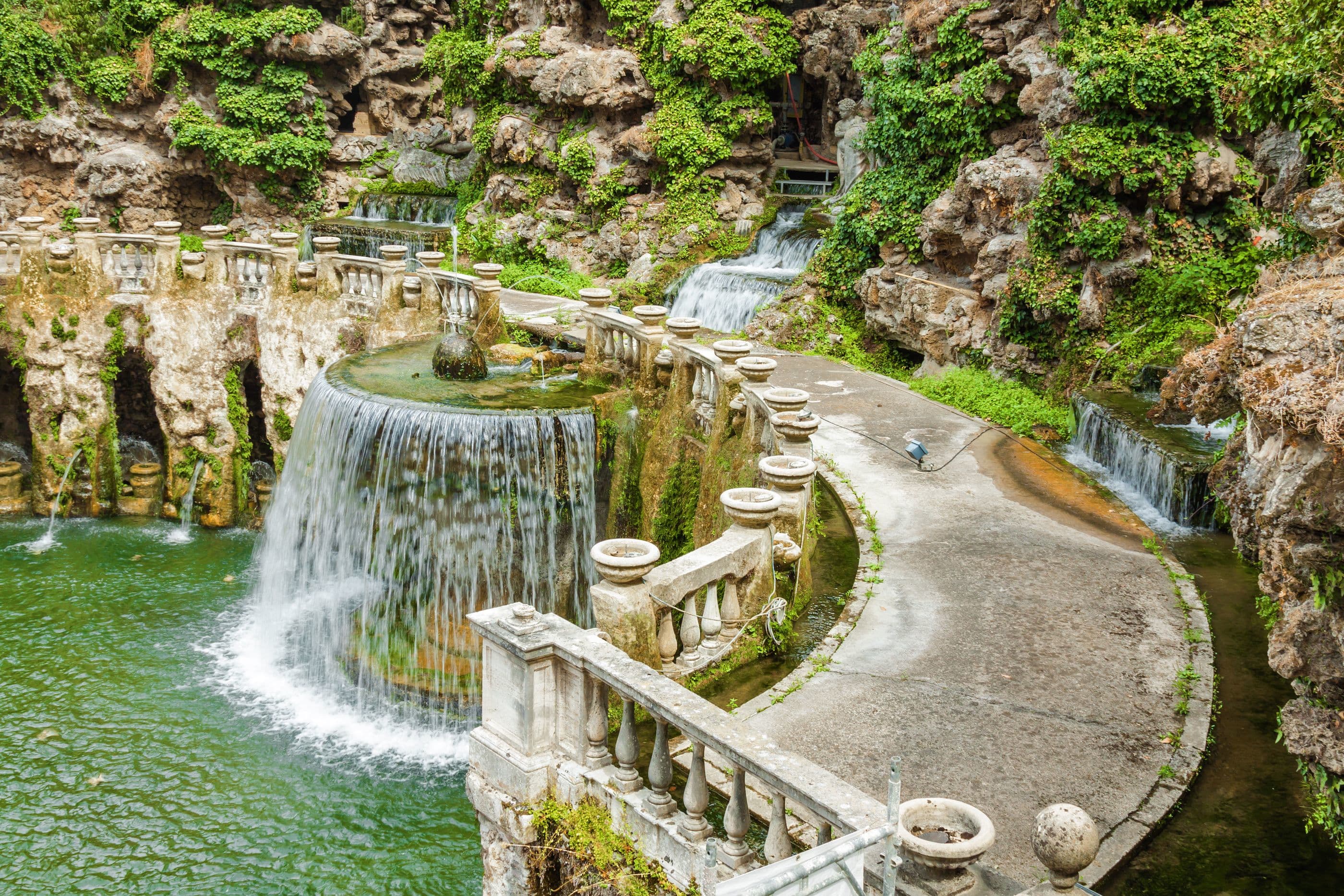
Find all the fountains and grottos in these sumptuous Renaissance gardens.
Show More
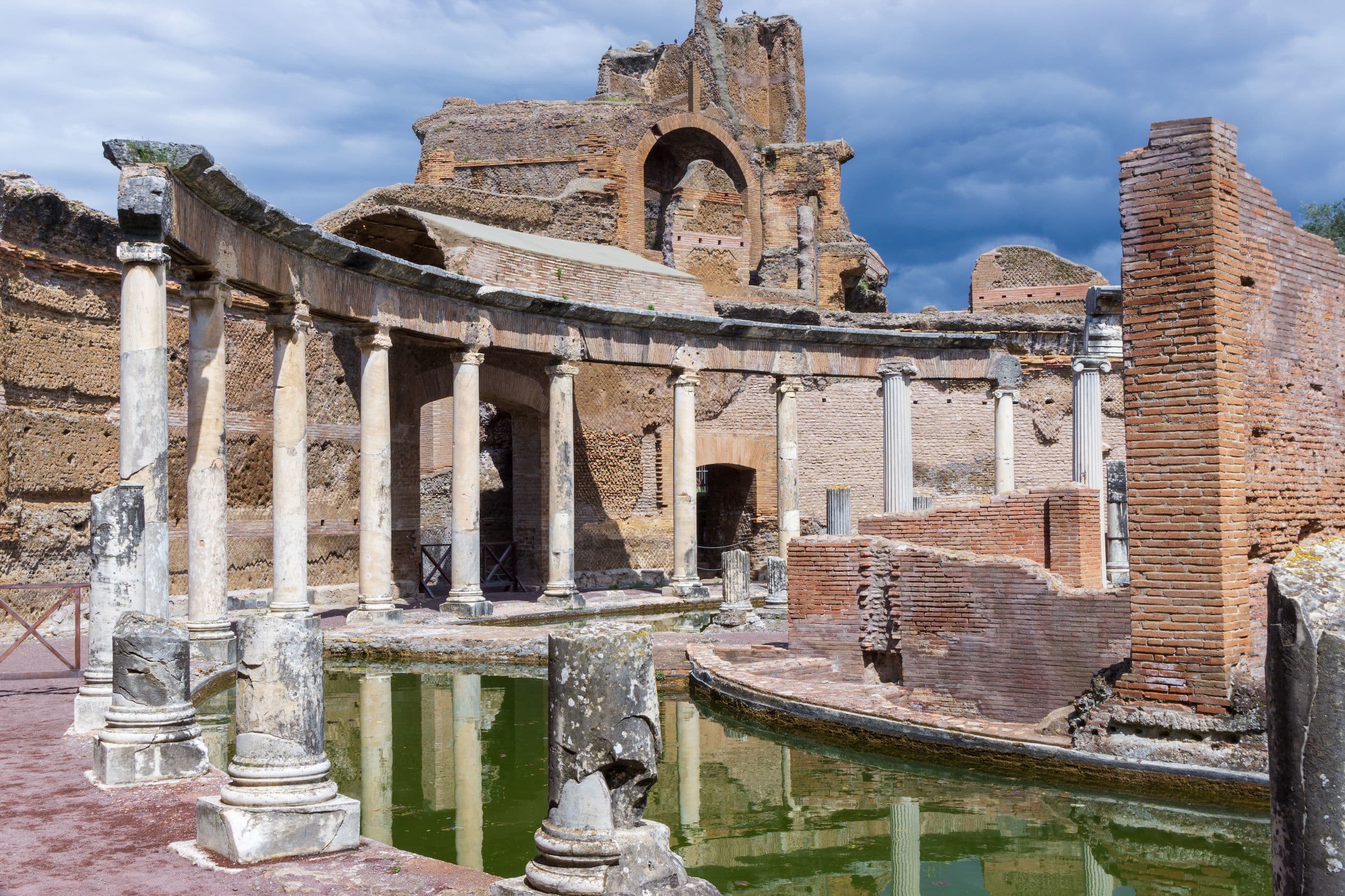
Explore the ruins of this once luxurious retreat built for one of Rome's greatest Emperors.
Show More
Browse the gallery to see some of the highlights

Find all the fountains and grottos in these sumptuous Renaissance gardens.
Show More
Explore the ruins of this once luxurious retreat built for one of Rome's greatest Emperors.
Show More
Browse the gallery to see some of the highlights

Find all the fountains and grottos in these sumptuous Renaissance gardens.
Show More
Day 4
Rome

Villa d'Este
Highlight of TivoliFind all the fountains and grottos in these sumptuous Renaissance gardens.
Perhaps the biggest surprise for visitors to Villa d'Este is the grand gardens and fountains that surround the villa. They encompass terraces, stairways, and slopes which lead to an impressive number of fountains and grottos. While the main attraction is the garden, the palace's rooms contain some beautifully lavish frescoes on the walls and ceilings, and intricately painted and decorated reception rooms. The Villa d'Este was built in the 1550s for Cardinal Ippolito d'Este, the governor of Tivoli and the son of Lucretia Borgia, an Italian noblewoman of the House of Borgia and daughter of Pope Alexander VI. Built over a Benedictine convent, the palace was intended for entertaining, with the Cardinal looking to relive the splendors of the courts of Ferrara, Rome and Fontainebleau.

Villa Hadrian
Highlight of TivoliExplore the ruins of this once luxurious retreat built for one of Rome's greatest Emperors.
Built at the peak fo Emperor Hadrian's power, Villa Adriana was the Emperor's preferred country retreat, away from the stresses, demands and political life of Rome. His exuberant palace and surrounding buildings once spread over an area of 120 acres of countryside, consisting of a theatre, libraries, a stadium, grand water features, thermal baths, servants' quarters and underground supply tunnels. It is said the Emperor fell in love with Tivoli and his palace so much that he eventually spent his last decade living and ruling from this place. Many of the structures remain in good condition, despite being plundered of its marble, statues, mosaics, and monuments, and today's visitors can spend hours wandering among the extensive ruins.

Tivoli
OverviewTivoli
Tivoli was a celebrated holiday resort even in ancient times, thanks to its climate and its idyllic position, with scenic cascades and an abundance of water issuing from the Aniene River. The travertine stone used at sites like the Colosseum was quarried here, meaning it was also a convenient place to build big, fancy villas. During your day trip to Tivoli, you can visit the Villa d’ Este, which is famous for its terraced hillside Italian Renaissance garden. It was conceived to appear like a mythical garden of the ancient past and is unique for its incredible profusion of magnificent fountains. The town is also famous for its villa built by and for Emperor Hadrian, Villa Adriana.

Villa d'Este
Highlight of TivoliFind all the fountains and grottos in these sumptuous Renaissance gardens.
Perhaps the biggest surprise for visitors to Villa d'Este is the grand gardens and fountains that surround the villa. They encompass terraces, stairways, and slopes which lead to an impressive number of fountains and grottos. While the main attraction is the garden, the palace's rooms contain some beautifully lavish frescoes on the walls and ceilings, and intricately painted and decorated reception rooms. The Villa d'Este was built in the 1550s for Cardinal Ippolito d'Este, the governor of Tivoli and the son of Lucretia Borgia, an Italian noblewoman of the House of Borgia and daughter of Pope Alexander VI. Built over a Benedictine convent, the palace was intended for entertaining, with the Cardinal looking to relive the splendors of the courts of Ferrara, Rome and Fontainebleau.

Villa Hadrian
Highlight of TivoliExplore the ruins of this once luxurious retreat built for one of Rome's greatest Emperors.
Built at the peak fo Emperor Hadrian's power, Villa Adriana was the Emperor's preferred country retreat, away from the stresses, demands and political life of Rome. His exuberant palace and surrounding buildings once spread over an area of 120 acres of countryside, consisting of a theatre, libraries, a stadium, grand water features, thermal baths, servants' quarters and underground supply tunnels. It is said the Emperor fell in love with Tivoli and his palace so much that he eventually spent his last decade living and ruling from this place. Many of the structures remain in good condition, despite being plundered of its marble, statues, mosaics, and monuments, and today's visitors can spend hours wandering among the extensive ruins.

Tivoli
OverviewTivoli
Tivoli was a celebrated holiday resort even in ancient times, thanks to its climate and its idyllic position, with scenic cascades and an abundance of water issuing from the Aniene River. The travertine stone used at sites like the Colosseum was quarried here, meaning it was also a convenient place to build big, fancy villas. During your day trip to Tivoli, you can visit the Villa d’ Este, which is famous for its terraced hillside Italian Renaissance garden. It was conceived to appear like a mythical garden of the ancient past and is unique for its incredible profusion of magnificent fountains. The town is also famous for its villa built by and for Emperor Hadrian, Villa Adriana.

Villa d'Este
Highlight of TivoliFind all the fountains and grottos in these sumptuous Renaissance gardens.
Perhaps the biggest surprise for visitors to Villa d'Este is the grand gardens and fountains that surround the villa. They encompass terraces, stairways, and slopes which lead to an impressive number of fountains and grottos. While the main attraction is the garden, the palace's rooms contain some beautifully lavish frescoes on the walls and ceilings, and intricately painted and decorated reception rooms. The Villa d'Este was built in the 1550s for Cardinal Ippolito d'Este, the governor of Tivoli and the son of Lucretia Borgia, an Italian noblewoman of the House of Borgia and daughter of Pope Alexander VI. Built over a Benedictine convent, the palace was intended for entertaining, with the Cardinal looking to relive the splendors of the courts of Ferrara, Rome and Fontainebleau.

Day 5
Rome
Day 5
Rome
Morning/Mid-Day
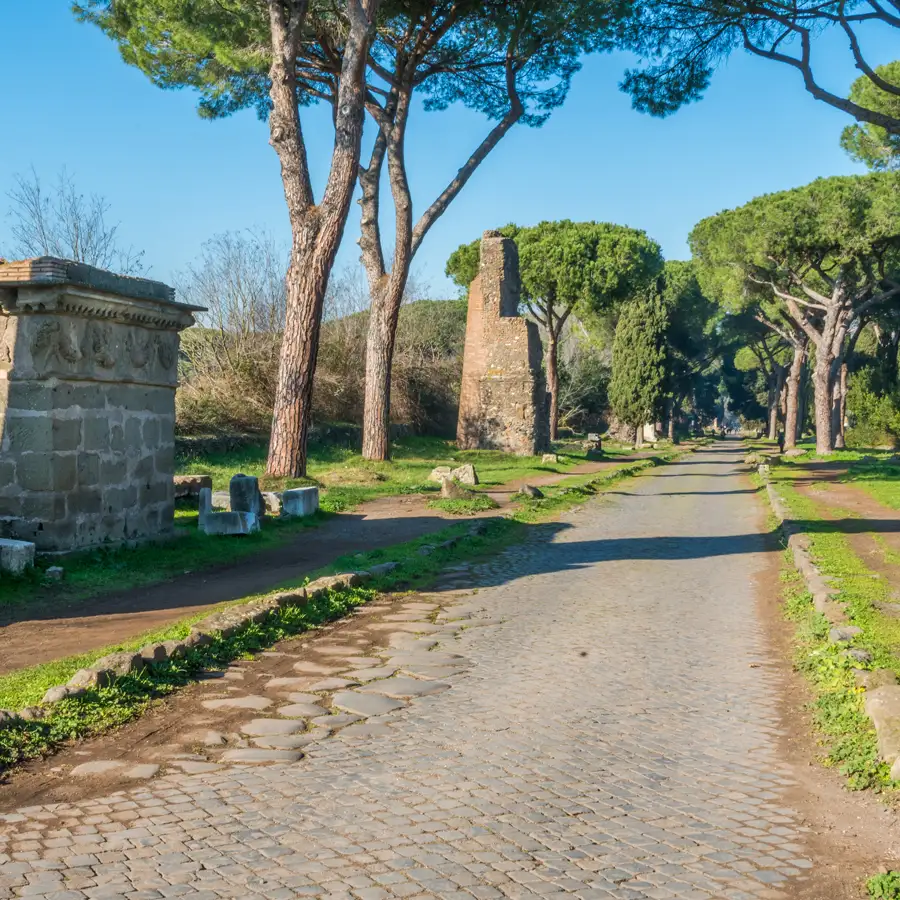
One of the earliest and strategically most important Roman roads of the ancient republic, the Via Appia (or Appian Way) once spanned 350 miles (563km), all the way from the Roman Forum in Rome to modern-day Brindisi. On the south side of Rome lies one of the best preserved stretches of the road, the Via Apia Antica. Take an afternoon to explore the ruins, catacombs, and sights along this infamously cobbled way. Exploring on foot is a relaxed and easy way to do it, made easier by the fact that bus stops along the way mean you don't have to backtrack. Bike rentals are also available and are a good way to cover as much ground as possible. But as an ancient cobbled road, sections of this walk are very bumpy, and depending on which route you take, you may encounter traffic. So you may want to consider if biking with a guided tour makes more sense.

Browse the gallery to see some of the highlights

Discover the crypt and catacombs of an ancient Christian burial site estimated to hold half a million bodies.
Show More
Browse the gallery to see some of the highlights

Discover the crypt and catacombs of an ancient Christian burial site estimated to hold half a million bodies.
Show More
Browse the gallery to see some of the highlights

Discover the crypt and catacombs of an ancient Christian burial site estimated to hold half a million bodies.
Show More
Day 5
Rome

Via Appia Antica
OverviewVia Appia Antica
One of the earliest and strategically most important Roman roads of the ancient republic, the Via Appia (or Appian Way) once spanned 350 miles (563km), all the way from the Roman Forum in Rome to modern-day Brindisi. On the south side of Rome lies one of the best preserved stretches of the road, the Via Apia Antica. Take an afternoon to explore the ruins, catacombs, and sights along this infamously cobbled way. Exploring on foot is a relaxed and easy way to do it, made easier by the fact that bus stops along the way mean you don't have to backtrack. Bike rentals are also available and are a good way to cover as much ground as possible. But as an ancient cobbled road, sections of this walk are very bumpy, and depending on which route you take, you may encounter traffic. So you may want to consider if biking with a guided tour makes more sense.

Catacombs of San Callisto (i.e. St. Callixtus)
Highlight of Via Appia AnticaDiscover the crypt and catacombs of an ancient Christian burial site estimated to hold half a million bodies.
The catacombs are the most important landmark along the ancient Appian Way route because they include the Crypt of the Popes, which contained the remains of nine popes buried between the 2nd and 4th centuries. In times of persecution, the catacombs also provided a secret place of worship for early Christians. There are five levels and roughly 12 miles (20km) of passageways. Over time, the catacombs were mostly forgotten as the relics of the popes and saints they contained had been moved to different churces of Rome. It was not until the 19th century that Italian architects rediscovered it.

Via Appia Antica
OverviewVia Appia Antica
One of the earliest and strategically most important Roman roads of the ancient republic, the Via Appia (or Appian Way) once spanned 350 miles (563km), all the way from the Roman Forum in Rome to modern-day Brindisi. On the south side of Rome lies one of the best preserved stretches of the road, the Via Apia Antica. Take an afternoon to explore the ruins, catacombs, and sights along this infamously cobbled way. Exploring on foot is a relaxed and easy way to do it, made easier by the fact that bus stops along the way mean you don't have to backtrack. Bike rentals are also available and are a good way to cover as much ground as possible. But as an ancient cobbled road, sections of this walk are very bumpy, and depending on which route you take, you may encounter traffic. So you may want to consider if biking with a guided tour makes more sense.

Catacombs of San Callisto (i.e. St. Callixtus)
Highlight of Via Appia AnticaDiscover the crypt and catacombs of an ancient Christian burial site estimated to hold half a million bodies.
The catacombs are the most important landmark along the ancient Appian Way route because they include the Crypt of the Popes, which contained the remains of nine popes buried between the 2nd and 4th centuries. In times of persecution, the catacombs also provided a secret place of worship for early Christians. There are five levels and roughly 12 miles (20km) of passageways. Over time, the catacombs were mostly forgotten as the relics of the popes and saints they contained had been moved to different churces of Rome. It was not until the 19th century that Italian architects rediscovered it.

Via Appia Antica
OverviewVia Appia Antica
One of the earliest and strategically most important Roman roads of the ancient republic, the Via Appia (or Appian Way) once spanned 350 miles (563km), all the way from the Roman Forum in Rome to modern-day Brindisi. On the south side of Rome lies one of the best preserved stretches of the road, the Via Apia Antica. Take an afternoon to explore the ruins, catacombs, and sights along this infamously cobbled way. Exploring on foot is a relaxed and easy way to do it, made easier by the fact that bus stops along the way mean you don't have to backtrack. Bike rentals are also available and are a good way to cover as much ground as possible. But as an ancient cobbled road, sections of this walk are very bumpy, and depending on which route you take, you may encounter traffic. So you may want to consider if biking with a guided tour makes more sense.

Catacombs of San Callisto (i.e. St. Callixtus)
Highlight of Via Appia AnticaDiscover the crypt and catacombs of an ancient Christian burial site estimated to hold half a million bodies.
The catacombs are the most important landmark along the ancient Appian Way route because they include the Crypt of the Popes, which contained the remains of nine popes buried between the 2nd and 4th centuries. In times of persecution, the catacombs also provided a secret place of worship for early Christians. There are five levels and roughly 12 miles (20km) of passageways. Over time, the catacombs were mostly forgotten as the relics of the popes and saints they contained had been moved to different churces of Rome. It was not until the 19th century that Italian architects rediscovered it.

Day 6
Rome to Florence
Day 6
Rome to Florence
Morning
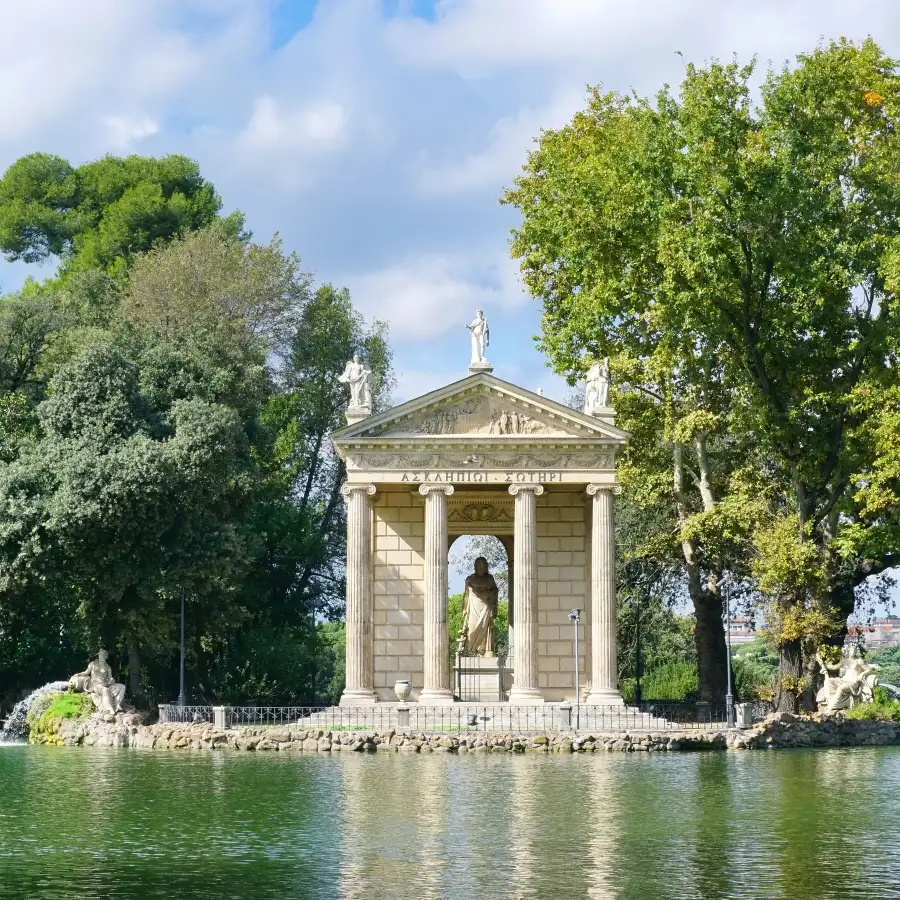
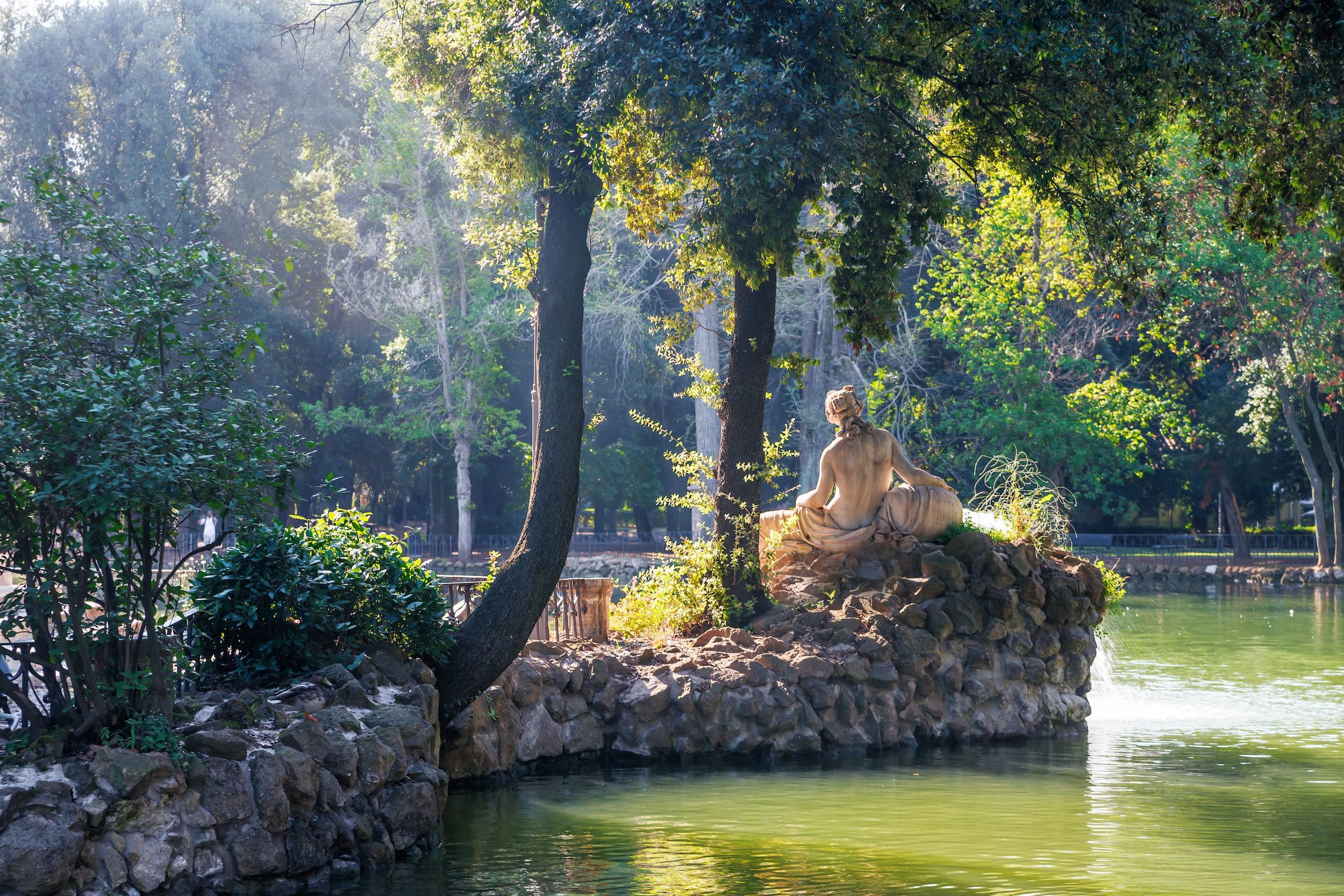
The Villa Borghese Park acts as the main respite and sanctuary for Romans and tourists alike away from the din of central Rome. Overlooking Piazza del Popolo and only a stone's throw from the Spanish Steps, the area was a district of market gardens, olive groves, and patrician villas until taken over as summer estates by the city's wealthy during the Renaissance. The most notable is Villa Borghese, which now houses one of the city's best non-Vatican art collections. The adjacent Pincio Gardens offer a grand vista over Rome.
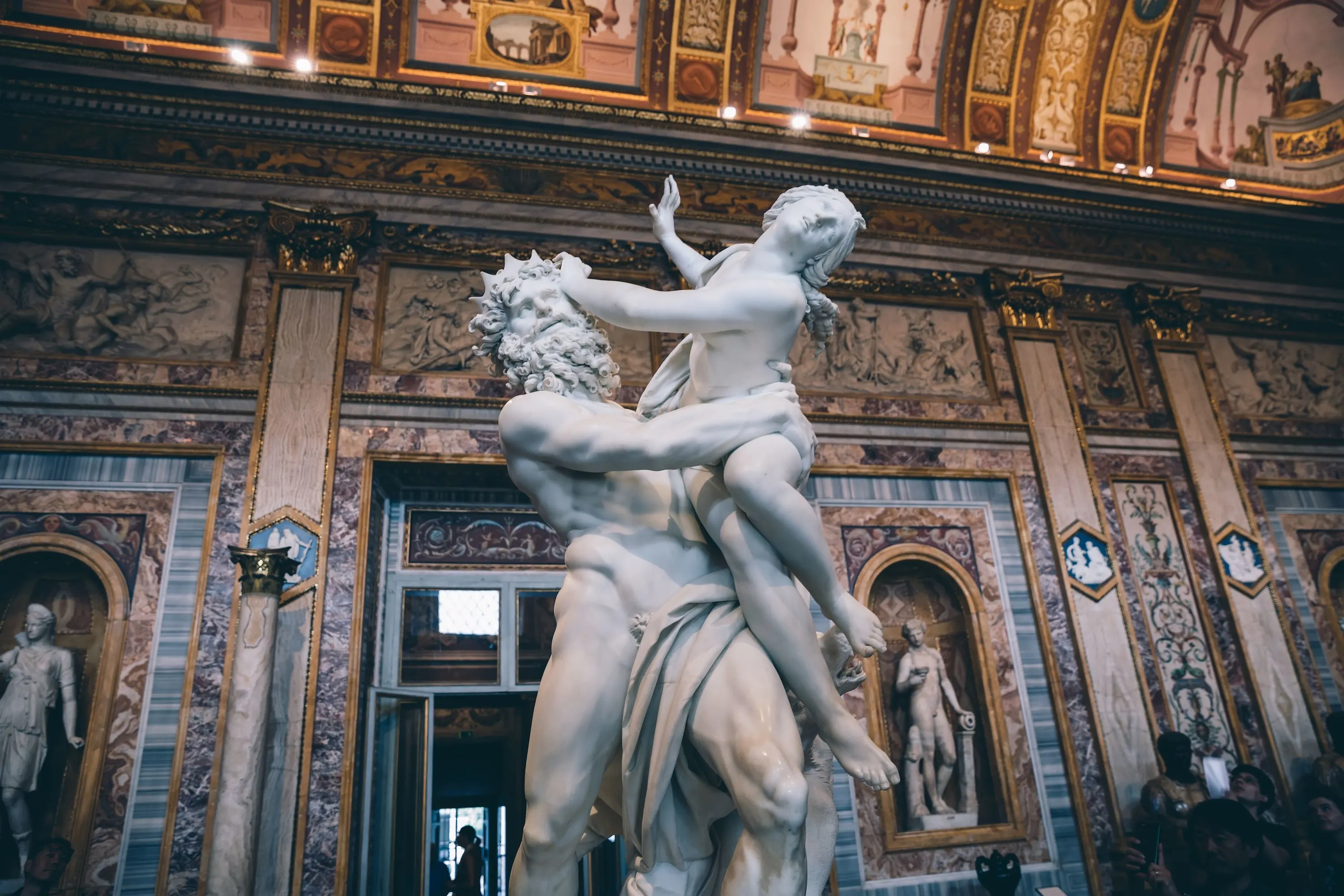
Visit Rome's most famous art gallery outside of the Vatican Museums.
Show More
See the most important collection in existence of Italian modern art.
Show More
Browse the gallery to see some of the highlights

Take a peak at a 16th-century cardinal's villa that was once considered one of the grandest residences in the city.
Show More
Visit Rome's most famous art gallery outside of the Vatican Museums.
Show More
See the most important collection in existence of Italian modern art.
Show More
Browse the gallery to see some of the highlights

Take a peak at a 16th-century cardinal's villa that was once considered one of the grandest residences in the city.
Show More
Day 6
Rome to Florence

Galleria Borghese
Highlight of Villa Borghese GardensVisit Rome's most famous art gallery outside of the Vatican Museums.
The gallery started out as the private family collection of the powerful Borghese family, who poured much of their wealth into the patronage of the best Renaissance-era artists. It contains masterpieces not only by Bernini and Caravaggio, but also Raphael, Rubens, and Titian. Don't miss in particular Caravaggio's David with the Head of Goliath - the head is said to be a self-portrait. It's obligatory to book your visit in advance, you'll need a printable confirmation and a booking number.

National Gallery of Modern and Contemporary Art
Highlight of Villa Borghese GardensSee the most important collection in existence of Italian modern art.
The gallery was founded in 1883, although the current museum building was purpose-built for it in 1911. It displays paintings and sculptures of the nineteenth and twentieth centuries and is the largest such collection in Italy. In addition to Italian artists such as Giorgio de Chirico and Giorgio Morandi, you'll find works from non-Italian artists including Degas, Monet, and Jackson Pollock.

Villa Borghese Gardens
OverviewVilla Borghese Gardens
The Villa Borghese Park acts as the main respite and sanctuary for Romans and tourists alike away from the din of central Rome. Overlooking Piazza del Popolo and only a stone's throw from the Spanish Steps, the area was a district of market gardens, olive groves, and patrician villas until taken over as summer estates by the city's wealthy during the Renaissance. The most notable is Villa Borghese, which now houses one of the city's best non-Vatican art collections. The adjacent Pincio Gardens offer a grand vista over Rome.

Medici Villa
Highlight of Villa Borghese GardensTake a peak at a 16th-century cardinal's villa that was once considered one of the grandest residences in the city.
Built-in 1564-74 and bought by Cardinal Ferdinando de'Medici in 1576, who further enlarged it, the Medici Villa was considered one of the grandest residences in the city. Galileo was held under house arrest here by the Inquisition in 1630-3. In 1801, the villa was bought by Napoleon and the French Academy was transferred here where it has remained to this day, meaning it is closed to the general public. French students who win the Prix de Rome are sent to study here for periods of six months to two years at the expense of the French government. Well-known scholars include Berlioz, Debussy, and Ingres. It remains one of the most important cultural institutions in Europe and the most beautiful villas to have preserved its garden in the center of Rome.

Galleria Borghese
Highlight of Villa Borghese GardensVisit Rome's most famous art gallery outside of the Vatican Museums.
The gallery started out as the private family collection of the powerful Borghese family, who poured much of their wealth into the patronage of the best Renaissance-era artists. It contains masterpieces not only by Bernini and Caravaggio, but also Raphael, Rubens, and Titian. Don't miss in particular Caravaggio's David with the Head of Goliath - the head is said to be a self-portrait. It's obligatory to book your visit in advance, you'll need a printable confirmation and a booking number.

National Gallery of Modern and Contemporary Art
Highlight of Villa Borghese GardensSee the most important collection in existence of Italian modern art.
The gallery was founded in 1883, although the current museum building was purpose-built for it in 1911. It displays paintings and sculptures of the nineteenth and twentieth centuries and is the largest such collection in Italy. In addition to Italian artists such as Giorgio de Chirico and Giorgio Morandi, you'll find works from non-Italian artists including Degas, Monet, and Jackson Pollock.

Villa Borghese Gardens
OverviewVilla Borghese Gardens
The Villa Borghese Park acts as the main respite and sanctuary for Romans and tourists alike away from the din of central Rome. Overlooking Piazza del Popolo and only a stone's throw from the Spanish Steps, the area was a district of market gardens, olive groves, and patrician villas until taken over as summer estates by the city's wealthy during the Renaissance. The most notable is Villa Borghese, which now houses one of the city's best non-Vatican art collections. The adjacent Pincio Gardens offer a grand vista over Rome.

Medici Villa
Highlight of Villa Borghese GardensTake a peak at a 16th-century cardinal's villa that was once considered one of the grandest residences in the city.
Built-in 1564-74 and bought by Cardinal Ferdinando de'Medici in 1576, who further enlarged it, the Medici Villa was considered one of the grandest residences in the city. Galileo was held under house arrest here by the Inquisition in 1630-3. In 1801, the villa was bought by Napoleon and the French Academy was transferred here where it has remained to this day, meaning it is closed to the general public. French students who win the Prix de Rome are sent to study here for periods of six months to two years at the expense of the French government. Well-known scholars include Berlioz, Debussy, and Ingres. It remains one of the most important cultural institutions in Europe and the most beautiful villas to have preserved its garden in the center of Rome.

Day 7
Florence
Day 7
Florence
9:00 AM - 3:00 PM
Drive through the scenic Tuscan countryside to San Gimignano, one of the most charming and picturesque Tuscan hill towns with medieval towers built for the richest families of the time. You can choose to visit the Cathedral, climb the “Torre Grossa”, take pictures of the gorgeous landscape and enjoy a delicious gelato in the Cistern Square. After, you will be driven to a local Tuscan winery for lunch and some wine tasting. IMPORTANT NOTE : This excursion does not include a guide, only a driver.


Day 7
Florence

Half Day Excursion to San Gimignano & Vineyard Lunch
OverviewHalf Day Excursion to San Gimignano & Vineyard Lunch
Drive through the scenic Tuscan countryside to San Gimignano, one of the most charming and picturesque Tuscan hill towns with medieval towers built for the richest families of the time. You can choose to visit the Cathedral, climb the “Torre Grossa”, take pictures of the gorgeous landscape and enjoy a delicious gelato in the Cistern Square. After, you will be driven to a local Tuscan winery for lunch and some wine tasting. IMPORTANT NOTE : This excursion does not include a guide, only a driver.

Half Day Excursion to San Gimignano & Vineyard Lunch
OverviewHalf Day Excursion to San Gimignano & Vineyard Lunch
Drive through the scenic Tuscan countryside to San Gimignano, one of the most charming and picturesque Tuscan hill towns with medieval towers built for the richest families of the time. You can choose to visit the Cathedral, climb the “Torre Grossa”, take pictures of the gorgeous landscape and enjoy a delicious gelato in the Cistern Square. After, you will be driven to a local Tuscan winery for lunch and some wine tasting. IMPORTANT NOTE : This excursion does not include a guide, only a driver.

Half Day Excursion to San Gimignano & Vineyard Lunch
OverviewHalf Day Excursion to San Gimignano & Vineyard Lunch
Drive through the scenic Tuscan countryside to San Gimignano, one of the most charming and picturesque Tuscan hill towns with medieval towers built for the richest families of the time. You can choose to visit the Cathedral, climb the “Torre Grossa”, take pictures of the gorgeous landscape and enjoy a delicious gelato in the Cistern Square. After, you will be driven to a local Tuscan winery for lunch and some wine tasting. IMPORTANT NOTE : This excursion does not include a guide, only a driver.

Half Day Excursion to San Gimignano & Vineyard Lunch
OverviewHalf Day Excursion to San Gimignano & Vineyard Lunch
Drive through the scenic Tuscan countryside to San Gimignano, one of the most charming and picturesque Tuscan hill towns with medieval towers built for the richest families of the time. You can choose to visit the Cathedral, climb the “Torre Grossa”, take pictures of the gorgeous landscape and enjoy a delicious gelato in the Cistern Square. After, you will be driven to a local Tuscan winery for lunch and some wine tasting. IMPORTANT NOTE : This excursion does not include a guide, only a driver.

Half Day Excursion to San Gimignano & Vineyard Lunch
OverviewHalf Day Excursion to San Gimignano & Vineyard Lunch
Drive through the scenic Tuscan countryside to San Gimignano, one of the most charming and picturesque Tuscan hill towns with medieval towers built for the richest families of the time. You can choose to visit the Cathedral, climb the “Torre Grossa”, take pictures of the gorgeous landscape and enjoy a delicious gelato in the Cistern Square. After, you will be driven to a local Tuscan winery for lunch and some wine tasting. IMPORTANT NOTE : This excursion does not include a guide, only a driver.

Day 8
Florence
Day 8
Florence
Morning to Afternoon
The Medicis and other powerful families of Renaissance Florence constructed magnificent country villas in the foothills surrounding the city and surrounded them with elaborate gardens populated with rose bushes, manicured hedgerows, and citrus trees. You can explore these beautiful villas which are concentrated in an area just a short bus ride from the city center of Florence. The villas served several functions, first and foremost as country palaces demonstrating power and wealth. They were also recreational resorts for the leisure and pleasure of their owners; and, more prosaically, they were the center of agricultural activities on the surrounding estates.
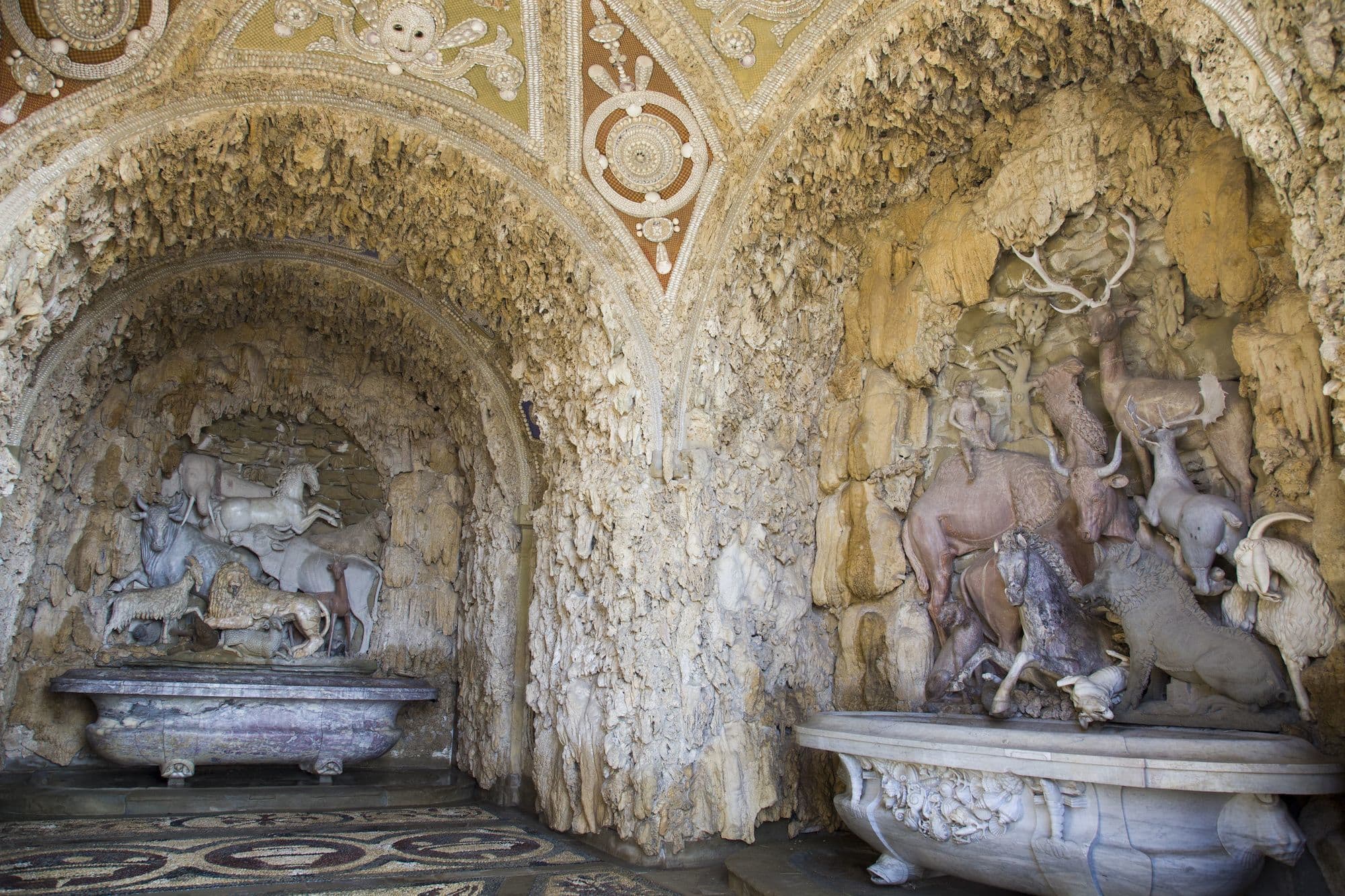
See the villa where Tuscany's first Grand Duke spent his childhood.
Show More
Experience an amazing view of Florence as you stroll the gardens of this Medici family villa.
Show More
Browse the gallery to see some of the highlights

See the villa where Tuscany's first Grand Duke spent his childhood.
Show More
Experience an amazing view of Florence as you stroll the gardens of this Medici family villa.
Show More
Browse the gallery to see some of the highlights

See the villa where Tuscany's first Grand Duke spent his childhood.
Show More
Day 8
Florence

Villa di Castello
Highlight of Country VillasSee the villa where Tuscany's first Grand Duke spent his childhood.
Villa di Castello is a 15th century Medici villa mostly famous as the residence where Duke Cosimo I de’Medici spent his childhood. Cosimo, who was later called the Father of the Nation, was the first member of the Medici political dynasty. Not surprisingly, Villa di Castello was his favourite villa and as an adult he expanded it with an extensive garden second only to the Boboli Gardens that included footpaths, fountains and the world famous Animal Grotto. The Villa is not accessible to the public since it has been the home of the prestigious Crusca Academy since 1583, a school dedicated to the study of the Italian language. You can, however, visit the splendid gardens without paying.

Villa La Petraia
Highlight of Country VillasExperience an amazing view of Florence as you stroll the gardens of this Medici family villa.
This fortified hilltop mansion was purchased by the Medici in the 16th century and transformed into a princely residence by Cardinal Ferdinando. The villa is richly decorated in the interior and has a beautiful Italian garden that attracts visitors from all around the world. The courtyard that is decorated with frescoes by Cosimo Daddi is probably the most impressive part of the villa, while a series of rooms you can visit present a later style. Both the structured Italian garden and the villa are open to visitors and the admission is free, with guided visits.

Country Villas
OverviewCountry Villas
The Medicis and other powerful families of Renaissance Florence constructed magnificent country villas in the foothills surrounding the city and surrounded them with elaborate gardens populated with rose bushes, manicured hedgerows, and citrus trees. You can explore these beautiful villas which are concentrated in an area just a short bus ride from the city center of Florence. The villas served several functions, first and foremost as country palaces demonstrating power and wealth. They were also recreational resorts for the leisure and pleasure of their owners; and, more prosaically, they were the center of agricultural activities on the surrounding estates.

Villa di Castello
Highlight of Country VillasSee the villa where Tuscany's first Grand Duke spent his childhood.
Villa di Castello is a 15th century Medici villa mostly famous as the residence where Duke Cosimo I de’Medici spent his childhood. Cosimo, who was later called the Father of the Nation, was the first member of the Medici political dynasty. Not surprisingly, Villa di Castello was his favourite villa and as an adult he expanded it with an extensive garden second only to the Boboli Gardens that included footpaths, fountains and the world famous Animal Grotto. The Villa is not accessible to the public since it has been the home of the prestigious Crusca Academy since 1583, a school dedicated to the study of the Italian language. You can, however, visit the splendid gardens without paying.

Villa La Petraia
Highlight of Country VillasExperience an amazing view of Florence as you stroll the gardens of this Medici family villa.
This fortified hilltop mansion was purchased by the Medici in the 16th century and transformed into a princely residence by Cardinal Ferdinando. The villa is richly decorated in the interior and has a beautiful Italian garden that attracts visitors from all around the world. The courtyard that is decorated with frescoes by Cosimo Daddi is probably the most impressive part of the villa, while a series of rooms you can visit present a later style. Both the structured Italian garden and the villa are open to visitors and the admission is free, with guided visits.

Country Villas
OverviewCountry Villas
The Medicis and other powerful families of Renaissance Florence constructed magnificent country villas in the foothills surrounding the city and surrounded them with elaborate gardens populated with rose bushes, manicured hedgerows, and citrus trees. You can explore these beautiful villas which are concentrated in an area just a short bus ride from the city center of Florence. The villas served several functions, first and foremost as country palaces demonstrating power and wealth. They were also recreational resorts for the leisure and pleasure of their owners; and, more prosaically, they were the center of agricultural activities on the surrounding estates.

Villa di Castello
Highlight of Country VillasSee the villa where Tuscany's first Grand Duke spent his childhood.
Villa di Castello is a 15th century Medici villa mostly famous as the residence where Duke Cosimo I de’Medici spent his childhood. Cosimo, who was later called the Father of the Nation, was the first member of the Medici political dynasty. Not surprisingly, Villa di Castello was his favourite villa and as an adult he expanded it with an extensive garden second only to the Boboli Gardens that included footpaths, fountains and the world famous Animal Grotto. The Villa is not accessible to the public since it has been the home of the prestigious Crusca Academy since 1583, a school dedicated to the study of the Italian language. You can, however, visit the splendid gardens without paying.

Day 9
Florence
Day 9
Florence
Early Morning to Early Evening
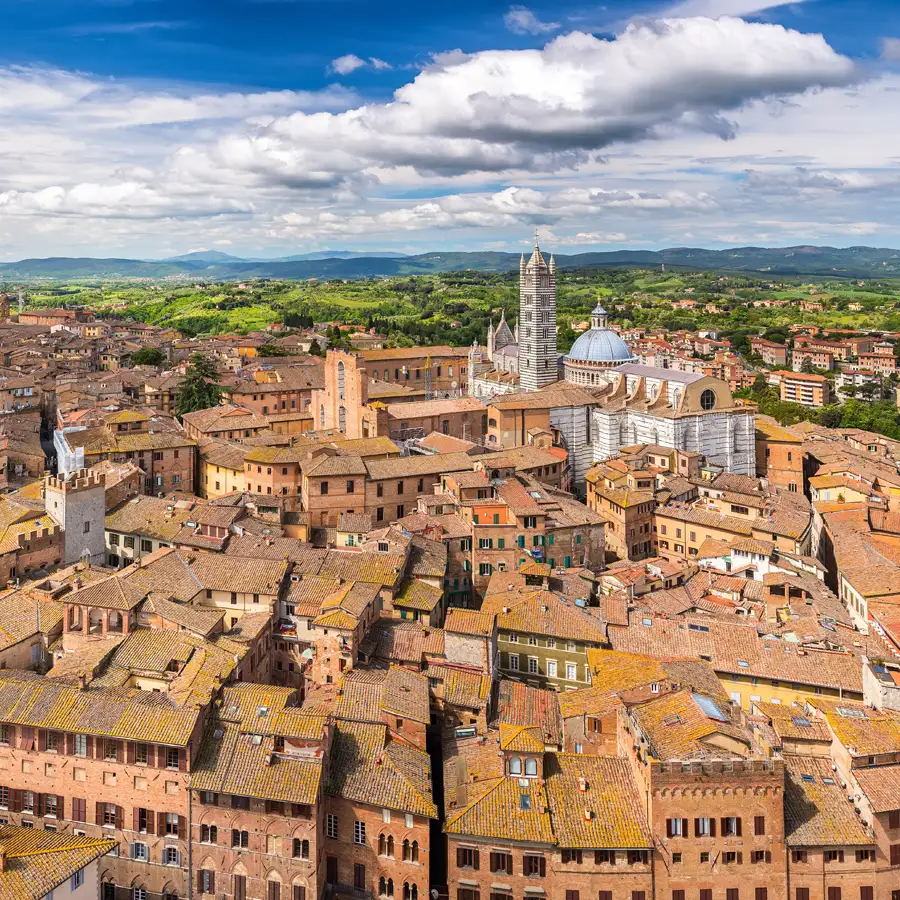
For beauty and interest in Tuscany, only Siena comes close to Florence. Only an hour-and-a-half from Florence by train, it makes for a perfect day trip. The mesmerising brick-built medieval town with its narrow streets winding down into the valleys below was once a great regional power which rivaled Florence, and famously defeated the larger town in the legendary Battle of Montaperti. Its main square, the Campo, is one of the most satisfying urban spaces ever built, playing host to the annual Palio horse race in which each of the town's 17 contrade (i.e. city districts) participate. The traffic-free streets have been wonderfully preserved and its great Gothic buildings still exhibit the artistic masterpieces of the Sienese school of painting commissioned for them during the town's heyday in the 14th century.
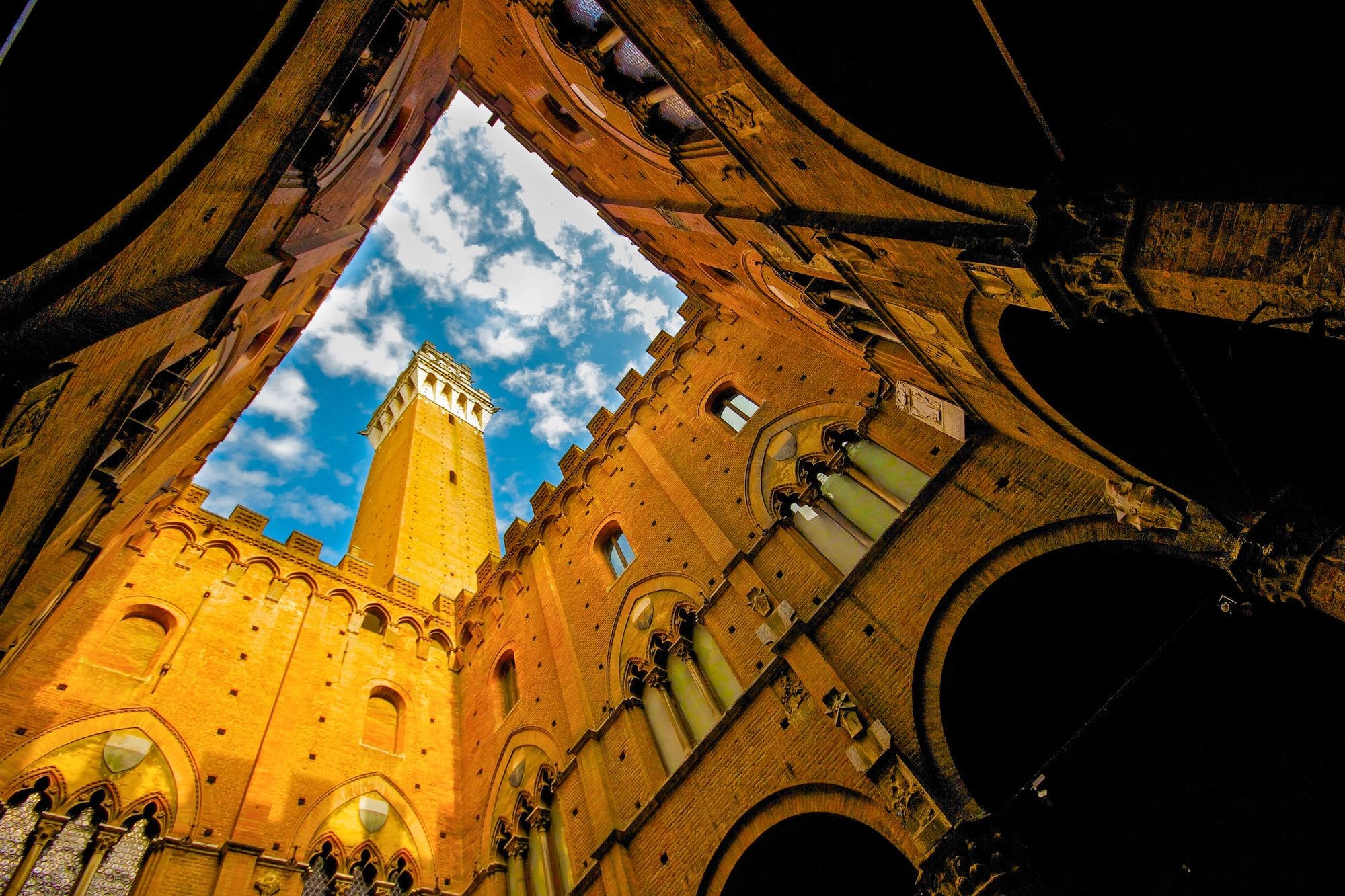
Make your way into the courtyard of this brick palace built in the 13th century and enter the Museo Civico, where you will marvel at the beautiful murals which adorn the interiors.
Show More
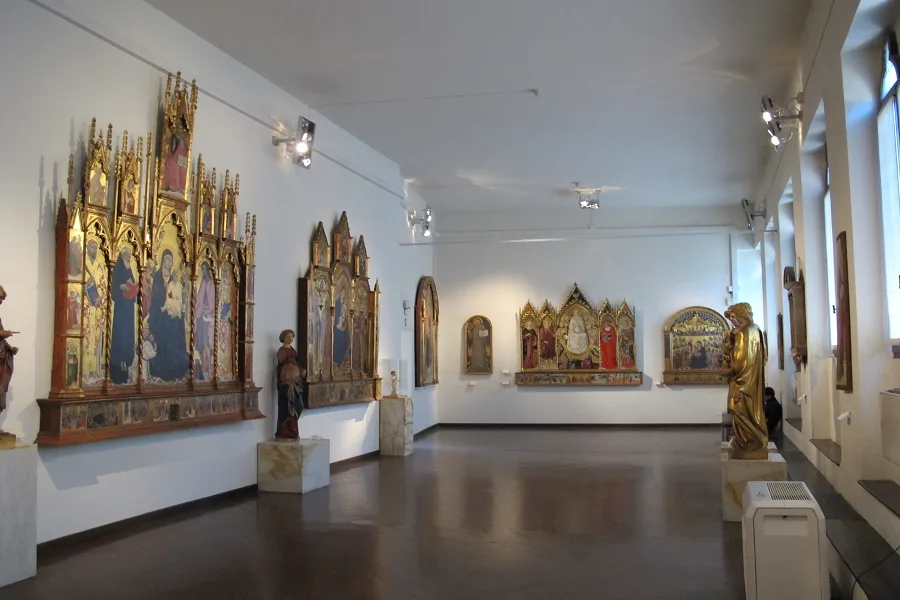
Make time to visit this gallery holding precious art and history from the Gothic era, when Siena's power and influence peaked.
Show More
Experience a riot of the senses as you walk into one of Tuscany's most colorful and remarkable cathedrals.
Show More
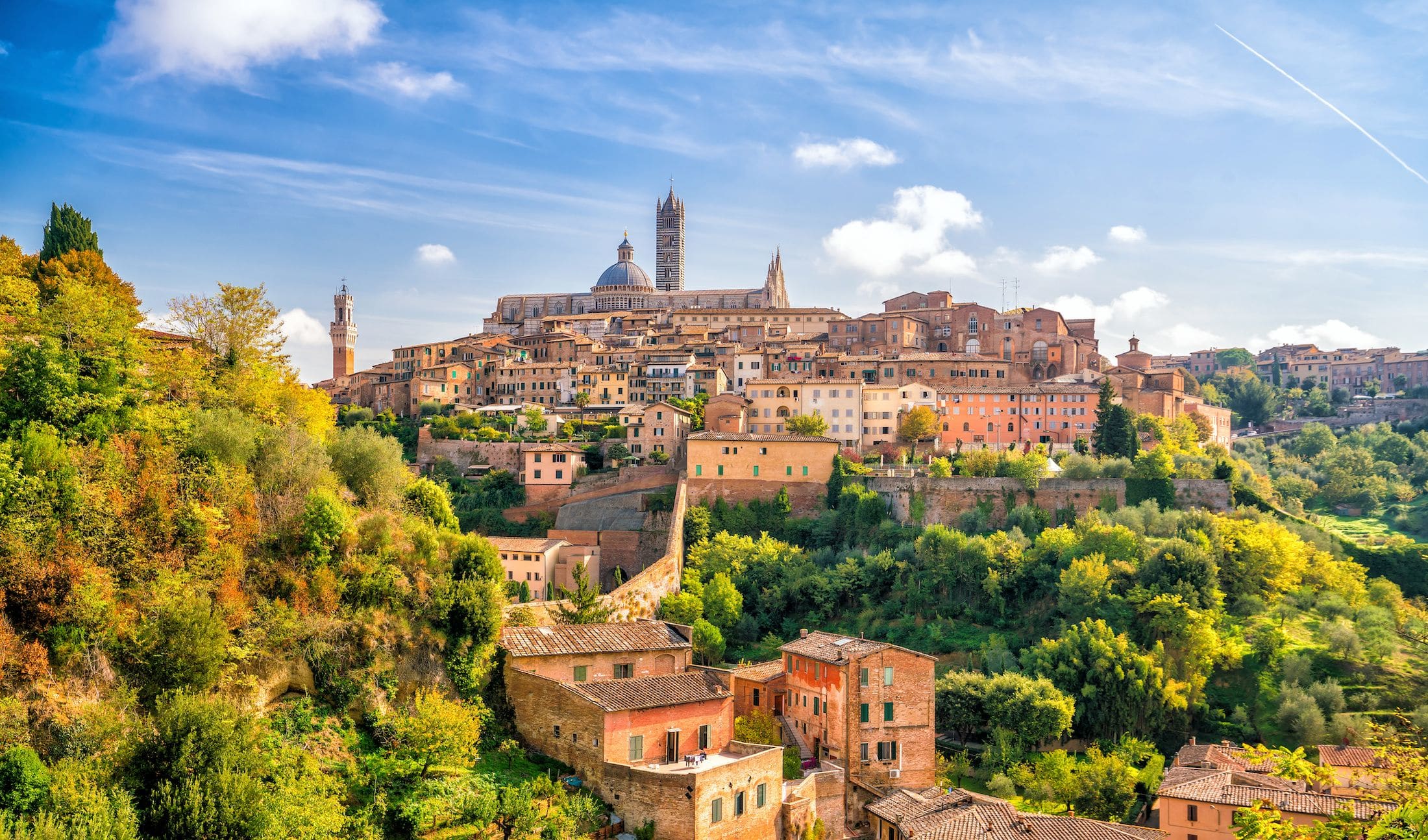
Browse the gallery to see some of the highlights

Stop and linger in one of the more glorious and satisfying urban spaces ever built.
Show More
Make your way into the courtyard of this brick palace built in the 13th century and enter the Museo Civico, where you will marvel at the beautiful murals which adorn the interiors.
Show More
Make time to visit this gallery holding precious art and history from the Gothic era, when Siena's power and influence peaked.
Show More
Experience a riot of the senses as you walk into one of Tuscany's most colorful and remarkable cathedrals.
Show More
Browse the gallery to see some of the highlights

Stop and linger in one of the more glorious and satisfying urban spaces ever built.
Show More
Make your way into the courtyard of this brick palace built in the 13th century and enter the Museo Civico, where you will marvel at the beautiful murals which adorn the interiors.
Show More
Day 9
Florence

Palazzo Pubblico and Museo Civico
Highlight of Siena ExcursionMake your way into the courtyard of this brick palace built in the 13th century and enter the Museo Civico, where you will marvel at the beautiful murals which adorn the interiors.
Dominating the Piazza del Campo, this 13th century palace and tower was built as a symbol of the independence and wealth of Siena by the Government of Nine (Governo dei Nove) - nine representatives of the people elected by the merchant class, not noble families. Looking at its façade from the Piazza del Campo, it's possible to immediately see its different periods of construction: on the lower level of the three-mullioned (triple-arched) windows the stone that was used and then later brick. The 400 steps to the top of the palace tower is no easy feat even for the fittest of travelers, but the view over the city and Piazza del Campo below make the narrow ascent worth it. Inside the palace courtyard you will find the entrance to the Museo Civico, a treasure trove of magnificent works of art which can be seen inside the palace. One of the most beautiful rooms in the palace is the Sala dei Nove, the Hall of the Nine, with the Allegories of Good and Bad Government by Ambrogio Lorenzetti where you can see the medieval city with its workshops and artisans.

Pinacoteca Nazionale
Highlight of Siena ExcursionMake time to visit this gallery holding precious art and history from the Gothic era, when Siena's power and influence peaked.
This is the main state art museum of the city and includes a rich collection of masterpieces from the famous Sienese school of artists, which created mainly large, majestic altarpieces with golden decorations. The "gold" background paintings include a piece by Master of Tressa which marks the beginning of the golden age of Sienese painting.

Duomo di Siena
Highlight of Siena ExcursionExperience a riot of the senses as you walk into one of Tuscany's most colorful and remarkable cathedrals.
Siena's Duomo is a fabulous conglomeration of Romanesque and Gothic architecture, delineated by encircling bands of black and white marble. It is the earliest of all the great Tuscan cathedrals, having been mostly completed by 1263. Before you enter, take a moment to admire the marble facade and its remarkable statuary. Once inside, you can invest in the audio guide to get the most out of a visit. The standout artistic treasure is the pulpit with columns resting on the backs of alternating lions and lionesses. The Piccolomini Library was added on to the cathedral in 1495 by the future Pope Pius III, and is one of the loveliest rooms in all Italy thanks to its cycle of crystal-sharp, brilliantly colorful frescoes.

Siena Excursion
OverviewSiena Excursion
For beauty and interest in Tuscany, only Siena comes close to Florence. Only an hour-and-a-half from Florence by train, it makes for a perfect day trip. The mesmerising brick-built medieval town with its narrow streets winding down into the valleys below was once a great regional power which rivaled Florence, and famously defeated the larger town in the legendary Battle of Montaperti. Its main square, the Campo, is one of the most satisfying urban spaces ever built, playing host to the annual Palio horse race in which each of the town's 17 contrade (i.e. city districts) participate. The traffic-free streets have been wonderfully preserved and its great Gothic buildings still exhibit the artistic masterpieces of the Sienese school of painting commissioned for them during the town's heyday in the 14th century.

Piazza del Campo
Highlight of Siena ExcursionStop and linger in one of the more glorious and satisfying urban spaces ever built.
With its remarkable fan shape and gentle slope, the Piazza del Campo is one of the more memorable and unique public squares in Europe. It has been heart of Siena since the mid-12th century when it was built on the site of a Roman marketplace. Cafes line the square offering coffee and aperitivo for the young and old alike who relax and take in the scene. The piazza is made doubly famous by the fact that it hosts the annual Palio horse race, a hotly-contested event which splits the city into competing factions.

Palazzo Pubblico and Museo Civico
Highlight of Siena ExcursionMake your way into the courtyard of this brick palace built in the 13th century and enter the Museo Civico, where you will marvel at the beautiful murals which adorn the interiors.
Dominating the Piazza del Campo, this 13th century palace and tower was built as a symbol of the independence and wealth of Siena by the Government of Nine (Governo dei Nove) - nine representatives of the people elected by the merchant class, not noble families. Looking at its façade from the Piazza del Campo, it's possible to immediately see its different periods of construction: on the lower level of the three-mullioned (triple-arched) windows the stone that was used and then later brick. The 400 steps to the top of the palace tower is no easy feat even for the fittest of travelers, but the view over the city and Piazza del Campo below make the narrow ascent worth it. Inside the palace courtyard you will find the entrance to the Museo Civico, a treasure trove of magnificent works of art which can be seen inside the palace. One of the most beautiful rooms in the palace is the Sala dei Nove, the Hall of the Nine, with the Allegories of Good and Bad Government by Ambrogio Lorenzetti where you can see the medieval city with its workshops and artisans.

Pinacoteca Nazionale
Highlight of Siena ExcursionMake time to visit this gallery holding precious art and history from the Gothic era, when Siena's power and influence peaked.
This is the main state art museum of the city and includes a rich collection of masterpieces from the famous Sienese school of artists, which created mainly large, majestic altarpieces with golden decorations. The "gold" background paintings include a piece by Master of Tressa which marks the beginning of the golden age of Sienese painting.

Duomo di Siena
Highlight of Siena ExcursionExperience a riot of the senses as you walk into one of Tuscany's most colorful and remarkable cathedrals.
Siena's Duomo is a fabulous conglomeration of Romanesque and Gothic architecture, delineated by encircling bands of black and white marble. It is the earliest of all the great Tuscan cathedrals, having been mostly completed by 1263. Before you enter, take a moment to admire the marble facade and its remarkable statuary. Once inside, you can invest in the audio guide to get the most out of a visit. The standout artistic treasure is the pulpit with columns resting on the backs of alternating lions and lionesses. The Piccolomini Library was added on to the cathedral in 1495 by the future Pope Pius III, and is one of the loveliest rooms in all Italy thanks to its cycle of crystal-sharp, brilliantly colorful frescoes.

Siena Excursion
OverviewSiena Excursion
For beauty and interest in Tuscany, only Siena comes close to Florence. Only an hour-and-a-half from Florence by train, it makes for a perfect day trip. The mesmerising brick-built medieval town with its narrow streets winding down into the valleys below was once a great regional power which rivaled Florence, and famously defeated the larger town in the legendary Battle of Montaperti. Its main square, the Campo, is one of the most satisfying urban spaces ever built, playing host to the annual Palio horse race in which each of the town's 17 contrade (i.e. city districts) participate. The traffic-free streets have been wonderfully preserved and its great Gothic buildings still exhibit the artistic masterpieces of the Sienese school of painting commissioned for them during the town's heyday in the 14th century.

Piazza del Campo
Highlight of Siena ExcursionStop and linger in one of the more glorious and satisfying urban spaces ever built.
With its remarkable fan shape and gentle slope, the Piazza del Campo is one of the more memorable and unique public squares in Europe. It has been heart of Siena since the mid-12th century when it was built on the site of a Roman marketplace. Cafes line the square offering coffee and aperitivo for the young and old alike who relax and take in the scene. The piazza is made doubly famous by the fact that it hosts the annual Palio horse race, a hotly-contested event which splits the city into competing factions.

Palazzo Pubblico and Museo Civico
Highlight of Siena ExcursionMake your way into the courtyard of this brick palace built in the 13th century and enter the Museo Civico, where you will marvel at the beautiful murals which adorn the interiors.
Dominating the Piazza del Campo, this 13th century palace and tower was built as a symbol of the independence and wealth of Siena by the Government of Nine (Governo dei Nove) - nine representatives of the people elected by the merchant class, not noble families. Looking at its façade from the Piazza del Campo, it's possible to immediately see its different periods of construction: on the lower level of the three-mullioned (triple-arched) windows the stone that was used and then later brick. The 400 steps to the top of the palace tower is no easy feat even for the fittest of travelers, but the view over the city and Piazza del Campo below make the narrow ascent worth it. Inside the palace courtyard you will find the entrance to the Museo Civico, a treasure trove of magnificent works of art which can be seen inside the palace. One of the most beautiful rooms in the palace is the Sala dei Nove, the Hall of the Nine, with the Allegories of Good and Bad Government by Ambrogio Lorenzetti where you can see the medieval city with its workshops and artisans.

Day 10
Depart Florence
Day 10
Depart Florence
To Be Determined
A private transfer service will pick you up from the N/A and take you directly to Florence Airport. This is a private transfer for you and your travel party. You do not need to pay the driver as the cost of the transfer is included in your itinerary. IMPORTANT NOTE: Please be aware the car service can fit up to 1 checked item of luggage and 1 personal item per person, such as a purse or small backpack. If you think you will have more baggage, please inform your travel consultant as this may result in an additional fee.


Day 10
Depart Florence

Private Transfer to Florence Airport
OverviewPrivate Transfer to Florence Airport
A private transfer service will pick you up from the N/A and take you directly to Florence Airport. This is a private transfer for you and your travel party. You do not need to pay the driver as the cost of the transfer is included in your itinerary. IMPORTANT NOTE: Please be aware the car service can fit up to 1 checked item of luggage and 1 personal item per person, such as a purse or small backpack. If you think you will have more baggage, please inform your travel consultant as this may result in an additional fee.

Private Transfer to Florence Airport
OverviewPrivate Transfer to Florence Airport
A private transfer service will pick you up from the N/A and take you directly to Florence Airport. This is a private transfer for you and your travel party. You do not need to pay the driver as the cost of the transfer is included in your itinerary. IMPORTANT NOTE: Please be aware the car service can fit up to 1 checked item of luggage and 1 personal item per person, such as a purse or small backpack. If you think you will have more baggage, please inform your travel consultant as this may result in an additional fee.

Private Transfer to Florence Airport
OverviewPrivate Transfer to Florence Airport
A private transfer service will pick you up from the N/A and take you directly to Florence Airport. This is a private transfer for you and your travel party. You do not need to pay the driver as the cost of the transfer is included in your itinerary. IMPORTANT NOTE: Please be aware the car service can fit up to 1 checked item of luggage and 1 personal item per person, such as a purse or small backpack. If you think you will have more baggage, please inform your travel consultant as this may result in an additional fee.

Private Transfer to Florence Airport
OverviewPrivate Transfer to Florence Airport
A private transfer service will pick you up from the N/A and take you directly to Florence Airport. This is a private transfer for you and your travel party. You do not need to pay the driver as the cost of the transfer is included in your itinerary. IMPORTANT NOTE: Please be aware the car service can fit up to 1 checked item of luggage and 1 personal item per person, such as a purse or small backpack. If you think you will have more baggage, please inform your travel consultant as this may result in an additional fee.

Private Transfer to Florence Airport
OverviewPrivate Transfer to Florence Airport
A private transfer service will pick you up from the N/A and take you directly to Florence Airport. This is a private transfer for you and your travel party. You do not need to pay the driver as the cost of the transfer is included in your itinerary. IMPORTANT NOTE: Please be aware the car service can fit up to 1 checked item of luggage and 1 personal item per person, such as a purse or small backpack. If you think you will have more baggage, please inform your travel consultant as this may result in an additional fee.
Pre-Paid Tours and Activities:
Pre-Paid Transportation:
Accommodation:
Go Real Travel Mobile App:

12 Days

10 Days

10 Days

12 Days

10 Days
Paris, Rome, Florence: An Unforgettable 10-Day Itinerary to Europe's Most Iconic Destinations
Italy, France

7 Days

14 Days

10 Days

8 Days

12 Days

10 Days

10 Days

12 Days

10 Days
Paris, Rome, Florence: An Unforgettable 10-Day Itinerary to Europe's Most Iconic Destinations
Italy, France

7 Days

14 Days

10 Days

8 Days


Milan is Italy’s most forward-looking city. An international center for fashion, fine dining, and design, it seems as though Milanese people breathe style. From the gleam on your wine glass to the twists of its cathedral’s spires, everything in Milan is finished to perfection. Home to the Italian stock exchange, a world-famous fashion industry, and a frantic business district, Milan is fast-paced and commercially minded. The shopping in Milan is second to none. At the Galleria Vittorio Emanuele II, one of the world’s oldest shopping malls, a glass-iron ceiling soars over brands like Louis Vuitton, Gucci, Massimo Dutti, and Amani. Along with the fashion, Milan’s cathedral, castle, and canals are also must-sees. But to view the city’s most prized possession - Leonardo da Vinci’s Last Supper, you must make an appointment. Tickets to view this mural sell out weeks in advance. It is truly a bucket-list worthy work of art. After a day taking in all the glamor and culture, take a seat in one of Milan’s well-appointed eateries. The Navigli Quarter is packed with restaurants, bars, and cafes, perfect for a relaxed Aperol spritz or pizza along the city’s canals.

Cinque Terre, a string of five fishing villages in the Liguria region of Italy, is a rare snapshot of a traditional way of life. Rustic and charming, these clusters of pastel houses clinging to steep Mediterranean cliffs hold a special allure. Hiking between the five villages is a popular way to experience the rugged Mediterranean landscape close up. There are no roads here — the only other way to get between the villages is by boat or train. Seafood, hauled in from the azure waters of the sea that laps against the rocky shore, is abundant and delicious here. It pairs well with the local wine, and perhaps a plate of olives. Cinque Terre is a place to take it slow, to breathe in the fresh sea air and bask in the balmy climate, many miles from the chaos and frenzy of the modern world.
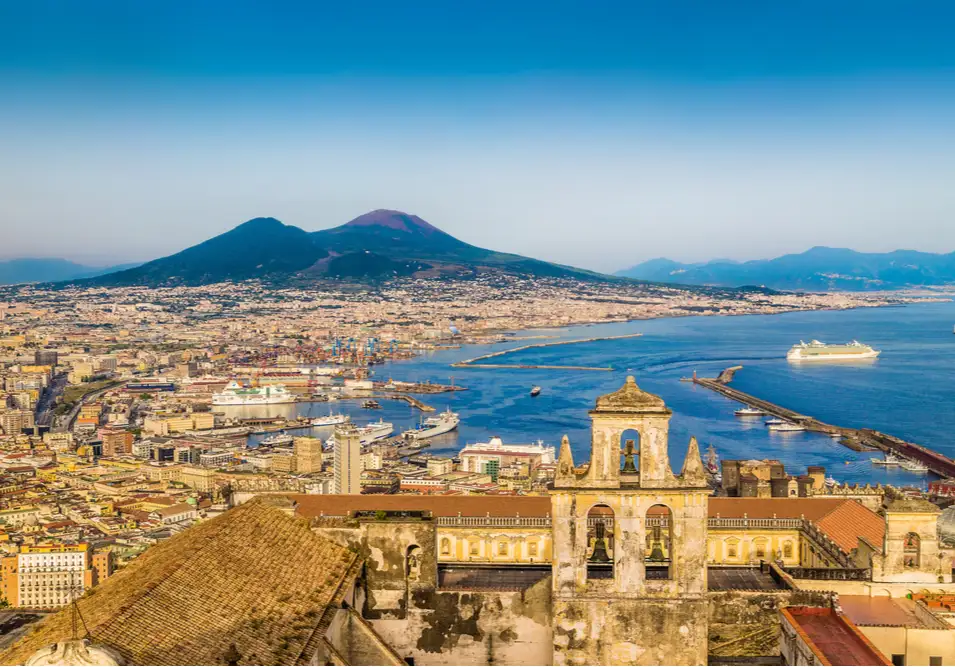
Gritty and chaotic Naples calls to travelers who want to experience the real Italy. Pressed along the coast of Campania, hilly Naples is jammed with maze-like streets, strung with outdoor clotheslines, descending toward the sea below. A much deserved UNESCO World Heritage site, Naples is famous for its churches, museums, castles, and catacombs. As you navigate the city, you’ll find yourself immersed by its culture and history. You can easily occupy a full day gazing at churches like the Naples Cathedral, San Francesco di Paola, and Cappella Sansevero. If you cast your eyes toward the Gulf of Naples, you’ll see Mount Vesuvius looming over the harbor. This foreboding volcano erupted in AD 79. Not far from the inner city — less than an hour by train — you’ll find the ancient town of Pompeii, its dramatic ruins still preserved in ash from the eruption. One of the best things you can do in Naples is to eat. This is the city where pizza was born. Propped up by its ripe tomatoes, local cheeses, and fresh fish, food from Naples has come to define what many see as the height of Italian cuisine. Everything you taste in Naples seems like a delicacy. Authentic and vivid, Naples is a true Italian city where the ancient world meets the modern-day with a bang.

One of the must-sees of Italy, and indeed all of Europe, Rome is a city with history flowing through its veins. There is an endless amount to see, do, and learn here, with something for every taste and disposition. Rome was the center of Western civilization for a Millenium and during that time, accumulated a list of historical and cultural treasures that no other destination can truly match. The Pantheon, Colosseum, Roman Forum, and Cirus of Maxentius are just a few examples of what can be seen and experienced in Rome, which at times feels more like a giant outdoor museum than a city. At Rome’s heart, you’ll find the Vatican, home of the Roman Catholic Church and the Pope. Here visitors can see the legendary Sistine Chapel. Transcending a mere building, the chapel is a walk-in work of art. Although historical sights can be found on just about every corner, it’s entirely possible to fill a day just wandering around Rome. The city’s charming streets and open Piazzas are filled with beautiful sights and places to sit, grab the best Cappuccino in the world, and enjoy the view.
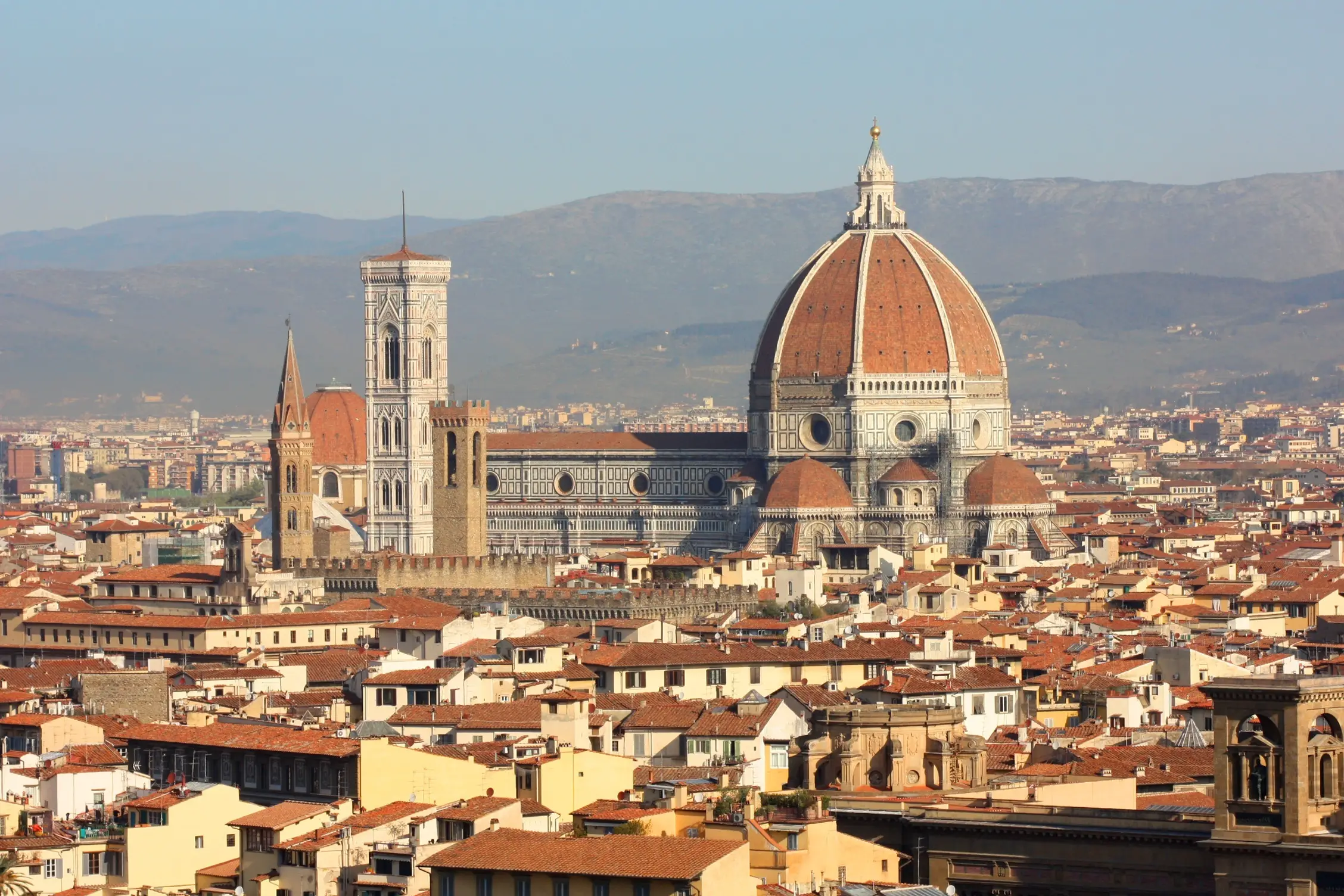
Culture and history are thick in the air in Florence. Located on the banks of the Arno River in Tuscany, Florence’s past is deeply compelling. The birthplace of the Renaissance, Florence is where innovators like Dante, Machiavelli, Michelangelo, and Da Vinci made their fortunes. Centuries of art, politics, and commerce have left their mark on every stone in this Northern Italian city. In the 15th and 16th centuries, Florentine banks funded new enterprises that went on to change the history of the world. Powerful families like the Medici’s financed some of the finest art in history and pioneered new ways of doing statecraft and politics. As you stand in the Piazzale Michelangelo and gaze upon the city below it’s hard to take it all in at once. It feels like behind every door in Florence might hide a work of genius. Michelangelo’s David and Botticelli’s Primavera can be found just a short walk away. After a long day wandering the streets and gazing at art, fueled by exquisite coffee and gelato, relax like the locals do: with a glass of some of the best wine in the world.
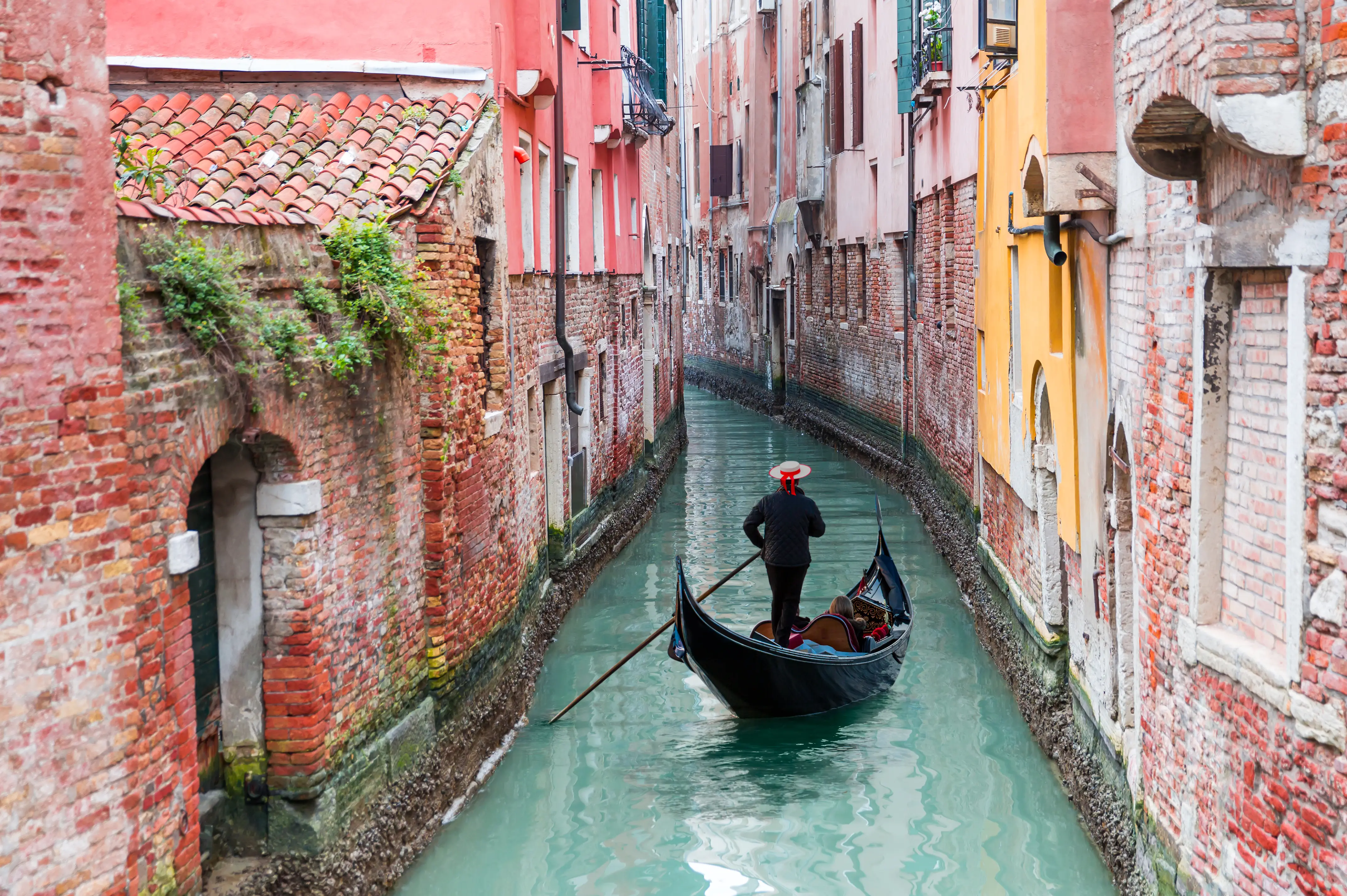
Venice is a city with no equal. Built on a series of islands on a lagoon, it was once a powerful city-state. Echoes of that old magnificence can be seen everywhere here, from the stunning buildings that rise out of the canals, to the bridges that arc across them. Take a Gondola ride through the canals that form the city’s veins, or wander through the winding streets drinking in the sights. You’ll see Venice attracts tourists in huge numbers, and that’s with good reason. It’s home to a seemingly limitless amount of art, culture, history, and architecture. St Mark’s Basilica, the Doge’s Palace, and the Campanile di San Marco just barely scratch the surface. There’s a 700-year-old market, Rialto, which is still open today. The Ponte di Rialto bridge connects the neighborhoods of San Marco and San Polo, stretching across the Grand Canal. Venice has weathered the last several centuries with elegance and pride, a place that will surpass even your highest expectations.

Milan is Italy’s most forward-looking city. An international center for fashion, fine dining, and design, it seems as though Milanese people breathe style. From the gleam on your wine glass to the twists of its cathedral’s spires, everything in Milan is finished to perfection. Home to the Italian stock exchange, a world-famous fashion industry, and a frantic business district, Milan is fast-paced and commercially minded. The shopping in Milan is second to none. At the Galleria Vittorio Emanuele II, one of the world’s oldest shopping malls, a glass-iron ceiling soars over brands like Louis Vuitton, Gucci, Massimo Dutti, and Amani. Along with the fashion, Milan’s cathedral, castle, and canals are also must-sees. But to view the city’s most prized possession - Leonardo da Vinci’s Last Supper, you must make an appointment. Tickets to view this mural sell out weeks in advance. It is truly a bucket-list worthy work of art. After a day taking in all the glamor and culture, take a seat in one of Milan’s well-appointed eateries. The Navigli Quarter is packed with restaurants, bars, and cafes, perfect for a relaxed Aperol spritz or pizza along the city’s canals.

Cinque Terre, a string of five fishing villages in the Liguria region of Italy, is a rare snapshot of a traditional way of life. Rustic and charming, these clusters of pastel houses clinging to steep Mediterranean cliffs hold a special allure. Hiking between the five villages is a popular way to experience the rugged Mediterranean landscape close up. There are no roads here — the only other way to get between the villages is by boat or train. Seafood, hauled in from the azure waters of the sea that laps against the rocky shore, is abundant and delicious here. It pairs well with the local wine, and perhaps a plate of olives. Cinque Terre is a place to take it slow, to breathe in the fresh sea air and bask in the balmy climate, many miles from the chaos and frenzy of the modern world.

Gritty and chaotic Naples calls to travelers who want to experience the real Italy. Pressed along the coast of Campania, hilly Naples is jammed with maze-like streets, strung with outdoor clotheslines, descending toward the sea below. A much deserved UNESCO World Heritage site, Naples is famous for its churches, museums, castles, and catacombs. As you navigate the city, you’ll find yourself immersed by its culture and history. You can easily occupy a full day gazing at churches like the Naples Cathedral, San Francesco di Paola, and Cappella Sansevero. If you cast your eyes toward the Gulf of Naples, you’ll see Mount Vesuvius looming over the harbor. This foreboding volcano erupted in AD 79. Not far from the inner city — less than an hour by train — you’ll find the ancient town of Pompeii, its dramatic ruins still preserved in ash from the eruption. One of the best things you can do in Naples is to eat. This is the city where pizza was born. Propped up by its ripe tomatoes, local cheeses, and fresh fish, food from Naples has come to define what many see as the height of Italian cuisine. Everything you taste in Naples seems like a delicacy. Authentic and vivid, Naples is a true Italian city where the ancient world meets the modern-day with a bang.

One of the must-sees of Italy, and indeed all of Europe, Rome is a city with history flowing through its veins. There is an endless amount to see, do, and learn here, with something for every taste and disposition. Rome was the center of Western civilization for a Millenium and during that time, accumulated a list of historical and cultural treasures that no other destination can truly match. The Pantheon, Colosseum, Roman Forum, and Cirus of Maxentius are just a few examples of what can be seen and experienced in Rome, which at times feels more like a giant outdoor museum than a city. At Rome’s heart, you’ll find the Vatican, home of the Roman Catholic Church and the Pope. Here visitors can see the legendary Sistine Chapel. Transcending a mere building, the chapel is a walk-in work of art. Although historical sights can be found on just about every corner, it’s entirely possible to fill a day just wandering around Rome. The city’s charming streets and open Piazzas are filled with beautiful sights and places to sit, grab the best Cappuccino in the world, and enjoy the view.

Culture and history are thick in the air in Florence. Located on the banks of the Arno River in Tuscany, Florence’s past is deeply compelling. The birthplace of the Renaissance, Florence is where innovators like Dante, Machiavelli, Michelangelo, and Da Vinci made their fortunes. Centuries of art, politics, and commerce have left their mark on every stone in this Northern Italian city. In the 15th and 16th centuries, Florentine banks funded new enterprises that went on to change the history of the world. Powerful families like the Medici’s financed some of the finest art in history and pioneered new ways of doing statecraft and politics. As you stand in the Piazzale Michelangelo and gaze upon the city below it’s hard to take it all in at once. It feels like behind every door in Florence might hide a work of genius. Michelangelo’s David and Botticelli’s Primavera can be found just a short walk away. After a long day wandering the streets and gazing at art, fueled by exquisite coffee and gelato, relax like the locals do: with a glass of some of the best wine in the world.

Venice is a city with no equal. Built on a series of islands on a lagoon, it was once a powerful city-state. Echoes of that old magnificence can be seen everywhere here, from the stunning buildings that rise out of the canals, to the bridges that arc across them. Take a Gondola ride through the canals that form the city’s veins, or wander through the winding streets drinking in the sights. You’ll see Venice attracts tourists in huge numbers, and that’s with good reason. It’s home to a seemingly limitless amount of art, culture, history, and architecture. St Mark’s Basilica, the Doge’s Palace, and the Campanile di San Marco just barely scratch the surface. There’s a 700-year-old market, Rialto, which is still open today. The Ponte di Rialto bridge connects the neighborhoods of San Marco and San Polo, stretching across the Grand Canal. Venice has weathered the last several centuries with elegance and pride, a place that will surpass even your highest expectations.


Zoom In to the cities to see your itinerary in more detail