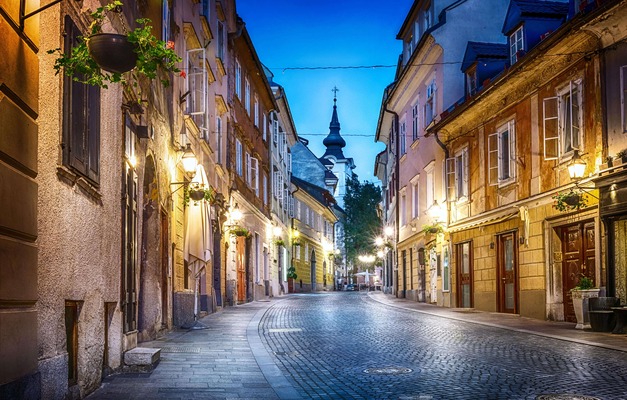
Overview
Overview
Overview
Overview
Overview
This website uses ‘cookies’ to give you the best, most relevant experience. By using this website, you consent to our Privacy Policy
×Overview
Trip Map
Itinerary
Inclusions
Reviews


Must see sights


Starting from
per person
Enter your details to embark on a journey that can be tailored just for you.
Start
Travelers
Preferred Hotel Stars
Select your interests and destinations for a trip plan inspired by you.
| ← | Move left |
| → | Move right |
| ↑ | Move up |
| ↓ | Move down |
| + | Zoom in |
| - | Zoom out |
| Home | Jump left by 75% |
| End | Jump right by 75% |
| Page Up | Jump up by 75% |
| Page Down | Jump down by 75% |


Click To Make Map Interactive
Overview
Overview
Overview
Overview
OverviewArrival
2 nights
Prague
Czech Republic
Train: 4h
Train: 1.5h
2 nights
Salzburg
Austria
Train: 2.5h
3 nights
Vienna
Austria
Train: 3h
4 nights
Budapest
Hungary
Departure

Day 1
Arrive Prague
Day 1
Arrive Prague
Late Afternoon/Early Evening
The Little Quarter is a quaint yet lively quarter of Prague tightly nestled on the slope and riverbank beneath the Prague Castle. It is filled with the homes of medieval and renaissance nobility who wanted to live as closely as possible to the castle. Picturesque side streets, beautiful churches, and impressive Baroque architecture all abound within the Little Quarter.

Escape to these tranquil 17th-century gardens located behind the walls of the Senate palace.
Show More
See a historic wall that has been covered in John Lennon-inspired graffiti since Communist days.
Show More
See the Infant Jesus of Prague, a wax effigy of the baby Jesus credited with many miracles, which attracts visitors from around the world.
Show More
Browse the gallery to see some of the highlights

Cross the river dividing Prague's most historic neighborhoods, and experience one of Europe's most iconic landmarks.
Show More
Stare in wonder at Prague's largest and most beautiful baroque church.
Show More
Escape to these tranquil 17th-century gardens located behind the walls of the Senate palace.
Show More
See a historic wall that has been covered in John Lennon-inspired graffiti since Communist days.
Show More
See the Infant Jesus of Prague, a wax effigy of the baby Jesus credited with many miracles, which attracts visitors from around the world.
Show More
Browse the gallery to see some of the highlights

Cross the river dividing Prague's most historic neighborhoods, and experience one of Europe's most iconic landmarks.
Show More
Stare in wonder at Prague's largest and most beautiful baroque church.
Show More
Day 1
Arrive Prague

Day 1
Arrive Prague
To Be Determined:
Airport Transfer
Mid-Day/Afternoon:
Old Town
Late Afternoon/Early Evening:
The Little Quarter


Wallenstein Garden
Highlight of The Little QuarterEscape to these tranquil 17th-century gardens located behind the walls of the Senate palace.
Open from April to October, these grand late renaissance gardens feature a massive limestone grotto created by artificial stalactites, ornamental pools, & classically-inspired statues. Most tourists miss this hidden gem, as the gardens are reached through inconspicious passageways in Wallenstein Palace, which houses the Czech Senate, and the nearby the Malostranská Metro station.


Maltese Square & Lennon Wall
Highlight of The Little QuarterSee a historic wall that has been covered in John Lennon-inspired graffiti since Communist days.
The wall has been covered in graffiti since the 1960s, and during Communism anti-regime sentiment was common. John Lennon's assassination inspired grafitti reflecting his song, Imagine, which earned the wall its current moniker. It is now a favorite gathering place for tourists, and musicians sometimes congregate there as well. Just around the corner is the Maltese Square, which is one of Prague's more quaint and relaxed public spaces, despite being just off the main tourist route.


Infant Jesus of Prague
Highlight of The Little QuarterSee the Infant Jesus of Prague, a wax effigy of the baby Jesus credited with many miracles, which attracts visitors from around the world.
The church was completed in 1613 in the Baroque style and houses the 18.5-inch statue. The church is somewhat plain in comparison to most churches in Prague, but visitors come to see the Infant Jesus of Prague (il Bambino di Praga).


The Little Quarter
OverviewThe Little Quarter
The Little Quarter is a quaint yet lively quarter of Prague tightly nestled on the slope and riverbank beneath the Prague Castle. It is filled with the homes of medieval and renaissance nobility who wanted to live as closely as possible to the castle. Picturesque side streets, beautiful churches, and impressive Baroque architecture all abound within the Little Quarter.


Charles Bridge
Highlight of The Little QuarterCross the river dividing Prague's most historic neighborhoods, and experience one of Europe's most iconic landmarks.
Bridge construction began in 1357 under King Charles IV (hence the name), and it was the only bridge across the Vltava River until 1841. 30 baroque statues of saints line the bridge, and it is filled with street artists and entertainers. Not to be missed.


Church of St. Nicholas
Highlight of The Little QuarterStare in wonder at Prague's largest and most beautiful baroque church.
Construction on this elegant and incredibly ornate church began in 1745 and took 100 years and 3 generations of architects to complete. You can also climb the tower for a view.


Wallenstein Garden
Highlight of The Little QuarterEscape to these tranquil 17th-century gardens located behind the walls of the Senate palace.
Open from April to October, these grand late renaissance gardens feature a massive limestone grotto created by artificial stalactites, ornamental pools, & classically-inspired statues. Most tourists miss this hidden gem, as the gardens are reached through inconspicious passageways in Wallenstein Palace, which houses the Czech Senate, and the nearby the Malostranská Metro station.


Maltese Square & Lennon Wall
Highlight of The Little QuarterSee a historic wall that has been covered in John Lennon-inspired graffiti since Communist days.
The wall has been covered in graffiti since the 1960s, and during Communism anti-regime sentiment was common. John Lennon's assassination inspired grafitti reflecting his song, Imagine, which earned the wall its current moniker. It is now a favorite gathering place for tourists, and musicians sometimes congregate there as well. Just around the corner is the Maltese Square, which is one of Prague's more quaint and relaxed public spaces, despite being just off the main tourist route.


Infant Jesus of Prague
Highlight of The Little QuarterSee the Infant Jesus of Prague, a wax effigy of the baby Jesus credited with many miracles, which attracts visitors from around the world.
The church was completed in 1613 in the Baroque style and houses the 18.5-inch statue. The church is somewhat plain in comparison to most churches in Prague, but visitors come to see the Infant Jesus of Prague (il Bambino di Praga).


The Little Quarter
OverviewThe Little Quarter
The Little Quarter is a quaint yet lively quarter of Prague tightly nestled on the slope and riverbank beneath the Prague Castle. It is filled with the homes of medieval and renaissance nobility who wanted to live as closely as possible to the castle. Picturesque side streets, beautiful churches, and impressive Baroque architecture all abound within the Little Quarter.


Charles Bridge
Highlight of The Little QuarterCross the river dividing Prague's most historic neighborhoods, and experience one of Europe's most iconic landmarks.
Bridge construction began in 1357 under King Charles IV (hence the name), and it was the only bridge across the Vltava River until 1841. 30 baroque statues of saints line the bridge, and it is filled with street artists and entertainers. Not to be missed.


Church of St. Nicholas
Highlight of The Little QuarterStare in wonder at Prague's largest and most beautiful baroque church.
Construction on this elegant and incredibly ornate church began in 1745 and took 100 years and 3 generations of architects to complete. You can also climb the tower for a view.

Wallenstein Garden
Highlight of The Little QuarterEscape to these tranquil 17th-century gardens located behind the walls of the Senate palace.
Open from April to October, these grand late renaissance gardens feature a massive limestone grotto created by artificial stalactites, ornamental pools, & classically-inspired statues. Most tourists miss this hidden gem, as the gardens are reached through inconspicious passageways in Wallenstein Palace, which houses the Czech Senate, and the nearby the Malostranská Metro station.

Maltese Square & Lennon Wall
Highlight of The Little QuarterSee a historic wall that has been covered in John Lennon-inspired graffiti since Communist days.
The wall has been covered in graffiti since the 1960s, and during Communism anti-regime sentiment was common. John Lennon's assassination inspired grafitti reflecting his song, Imagine, which earned the wall its current moniker. It is now a favorite gathering place for tourists, and musicians sometimes congregate there as well. Just around the corner is the Maltese Square, which is one of Prague's more quaint and relaxed public spaces, despite being just off the main tourist route.

Infant Jesus of Prague
Highlight of The Little QuarterSee the Infant Jesus of Prague, a wax effigy of the baby Jesus credited with many miracles, which attracts visitors from around the world.
The church was completed in 1613 in the Baroque style and houses the 18.5-inch statue. The church is somewhat plain in comparison to most churches in Prague, but visitors come to see the Infant Jesus of Prague (il Bambino di Praga).

The Little Quarter
OverviewThe Little Quarter
The Little Quarter is a quaint yet lively quarter of Prague tightly nestled on the slope and riverbank beneath the Prague Castle. It is filled with the homes of medieval and renaissance nobility who wanted to live as closely as possible to the castle. Picturesque side streets, beautiful churches, and impressive Baroque architecture all abound within the Little Quarter.

Charles Bridge
Highlight of The Little QuarterCross the river dividing Prague's most historic neighborhoods, and experience one of Europe's most iconic landmarks.
Bridge construction began in 1357 under King Charles IV (hence the name), and it was the only bridge across the Vltava River until 1841. 30 baroque statues of saints line the bridge, and it is filled with street artists and entertainers. Not to be missed.

Church of St. Nicholas
Highlight of The Little QuarterStare in wonder at Prague's largest and most beautiful baroque church.
Construction on this elegant and incredibly ornate church began in 1745 and took 100 years and 3 generations of architects to complete. You can also climb the tower for a view.

Wallenstein Garden
Highlight of The Little QuarterEscape to these tranquil 17th-century gardens located behind the walls of the Senate palace.
Open from April to October, these grand late renaissance gardens feature a massive limestone grotto created by artificial stalactites, ornamental pools, & classically-inspired statues. Most tourists miss this hidden gem, as the gardens are reached through inconspicious passageways in Wallenstein Palace, which houses the Czech Senate, and the nearby the Malostranská Metro station.

Maltese Square & Lennon Wall
Highlight of The Little QuarterSee a historic wall that has been covered in John Lennon-inspired graffiti since Communist days.
The wall has been covered in graffiti since the 1960s, and during Communism anti-regime sentiment was common. John Lennon's assassination inspired grafitti reflecting his song, Imagine, which earned the wall its current moniker. It is now a favorite gathering place for tourists, and musicians sometimes congregate there as well. Just around the corner is the Maltese Square, which is one of Prague's more quaint and relaxed public spaces, despite being just off the main tourist route.

Infant Jesus of Prague
Highlight of The Little QuarterSee the Infant Jesus of Prague, a wax effigy of the baby Jesus credited with many miracles, which attracts visitors from around the world.
The church was completed in 1613 in the Baroque style and houses the 18.5-inch statue. The church is somewhat plain in comparison to most churches in Prague, but visitors come to see the Infant Jesus of Prague (il Bambino di Praga).

The Little Quarter
OverviewThe Little Quarter
The Little Quarter is a quaint yet lively quarter of Prague tightly nestled on the slope and riverbank beneath the Prague Castle. It is filled with the homes of medieval and renaissance nobility who wanted to live as closely as possible to the castle. Picturesque side streets, beautiful churches, and impressive Baroque architecture all abound within the Little Quarter.

Charles Bridge
Highlight of The Little QuarterCross the river dividing Prague's most historic neighborhoods, and experience one of Europe's most iconic landmarks.
Bridge construction began in 1357 under King Charles IV (hence the name), and it was the only bridge across the Vltava River until 1841. 30 baroque statues of saints line the bridge, and it is filled with street artists and entertainers. Not to be missed.

Church of St. Nicholas
Highlight of The Little QuarterStare in wonder at Prague's largest and most beautiful baroque church.
Construction on this elegant and incredibly ornate church began in 1745 and took 100 years and 3 generations of architects to complete. You can also climb the tower for a view.

Day 2
Prague
Day 2
Prague
9:00 AM - 12:30 PM
On this charming guided walk, you will explore the Prague Castle, the largest castle complex in all of Europe. To reach the castle you will trace the Royal Coronation Route and cross the Charles Bridge, whose “speaking stones” reveal the amazing and often cruel history that occurred there. Your tour guide will then take you either through the castle courtyards and into the dramatic St. Vitus Cathedral in the center of the castle complex, or through the upper part of the castle district around the oversized palaces of the old Catholic nobility and the top of the Castle Steps for incomparable views over the red rooftops of the Little Quarter.

Cross the river dividing Prague's most historic neighborhoods, and experience one of Europe's most iconic landmarks.
Show More
See a historic wall that has been covered in John Lennon-inspired graffiti since Communist days.
Show More
Browse the gallery to see some of the highlights

Prague Castle is one of the main attractions in Prague and is also the largest castle complex in the world.
Show More
Cross the river dividing Prague's most historic neighborhoods, and experience one of Europe's most iconic landmarks.
Show More
See a historic wall that has been covered in John Lennon-inspired graffiti since Communist days.
Show More
Browse the gallery to see some of the highlights

Prague Castle is one of the main attractions in Prague and is also the largest castle complex in the world.
Show More
Day 2
Prague

Charles Bridge
Highlight of Royal Route Guided TourCross the river dividing Prague's most historic neighborhoods, and experience one of Europe's most iconic landmarks.
Bridge construction began in 1357 under King Charles IV (hence the name), and it was the only bridge across the Vltava River until 1841. 30 baroque statues of saints line the bridge, and it is filled with street artists and entertainers. Not to be missed.

Maltese Square & Lennon Wall
Highlight of Royal Route Guided TourSee a historic wall that has been covered in John Lennon-inspired graffiti since Communist days.
The wall has been covered in graffiti since the 1960s, and during Communism anti-regime sentiment was common. John Lennon's assassination inspired grafitti reflecting his song, Imagine, which earned the wall its current moniker. It is now a favorite gathering place for tourists, and musicians sometimes congregate there as well. Just around the corner is the Maltese Square, which is one of Prague's more quaint and relaxed public spaces, despite being just off the main tourist route.

Royal Route Guided Tour
OverviewRoyal Route Guided Tour
On this charming guided walk, you will explore the Prague Castle, the largest castle complex in all of Europe. To reach the castle you will trace the Royal Coronation Route and cross the Charles Bridge, whose “speaking stones” reveal the amazing and often cruel history that occurred there. Your tour guide will then take you either through the castle courtyards and into the dramatic St. Vitus Cathedral in the center of the castle complex, or through the upper part of the castle district around the oversized palaces of the old Catholic nobility and the top of the Castle Steps for incomparable views over the red rooftops of the Little Quarter.

Prague Castle
Highlight of Royal Route Guided TourPrague Castle is one of the main attractions in Prague and is also the largest castle complex in the world.
The Prague Castle is the largest castle complex in the world with structures dating back to the 9th century. The St Vitus Cathedral and Basilica of St George can be found within the castle walls. The Prague Castle also includes several gardens, palaces, and a monastery. This castle was the seat of power for the Kings of Bohemia, Holy Roman Emperors, and presidents of former Czechoslovakia. Prague Castle is a UNESCO world heritage site and is one of the most visited places in the country.

Charles Bridge
Highlight of Royal Route Guided TourCross the river dividing Prague's most historic neighborhoods, and experience one of Europe's most iconic landmarks.
Bridge construction began in 1357 under King Charles IV (hence the name), and it was the only bridge across the Vltava River until 1841. 30 baroque statues of saints line the bridge, and it is filled with street artists and entertainers. Not to be missed.

Maltese Square & Lennon Wall
Highlight of Royal Route Guided TourSee a historic wall that has been covered in John Lennon-inspired graffiti since Communist days.
The wall has been covered in graffiti since the 1960s, and during Communism anti-regime sentiment was common. John Lennon's assassination inspired grafitti reflecting his song, Imagine, which earned the wall its current moniker. It is now a favorite gathering place for tourists, and musicians sometimes congregate there as well. Just around the corner is the Maltese Square, which is one of Prague's more quaint and relaxed public spaces, despite being just off the main tourist route.

Royal Route Guided Tour
OverviewRoyal Route Guided Tour
On this charming guided walk, you will explore the Prague Castle, the largest castle complex in all of Europe. To reach the castle you will trace the Royal Coronation Route and cross the Charles Bridge, whose “speaking stones” reveal the amazing and often cruel history that occurred there. Your tour guide will then take you either through the castle courtyards and into the dramatic St. Vitus Cathedral in the center of the castle complex, or through the upper part of the castle district around the oversized palaces of the old Catholic nobility and the top of the Castle Steps for incomparable views over the red rooftops of the Little Quarter.

Prague Castle
Highlight of Royal Route Guided TourPrague Castle is one of the main attractions in Prague and is also the largest castle complex in the world.
The Prague Castle is the largest castle complex in the world with structures dating back to the 9th century. The St Vitus Cathedral and Basilica of St George can be found within the castle walls. The Prague Castle also includes several gardens, palaces, and a monastery. This castle was the seat of power for the Kings of Bohemia, Holy Roman Emperors, and presidents of former Czechoslovakia. Prague Castle is a UNESCO world heritage site and is one of the most visited places in the country.

Day 3
Prague to Salzburg
Day 3
Prague to Salzburg
Morning/Mid-Day
Jews have lived in Prague since its beginnings in the 10th century and have endowed it with a rich heritage. The ghetto was created in the 12th century, as Jews were forced to live separately from Christians. Despite persecution, the community prospered, but sadly, only a small minority survived the Nazi occupation. A lasting legacy remains, including synagogues, architecture, and a fascinating cemetery.

Discover the synagogue considered by many to be Prague's most beautiful.
Show More
See the oldest surviving synagogue in Europe and also one of Prague's earliest Gothic buildings.
Show More
Browse the gallery to see some of the highlights

Take an unforgettable visit to one of Europe's largest medieval Jewish cemeteries.
Show More
Discover the synagogue considered by many to be Prague's most beautiful.
Show More
See the oldest surviving synagogue in Europe and also one of Prague's earliest Gothic buildings.
Show More
Browse the gallery to see some of the highlights

Take an unforgettable visit to one of Europe's largest medieval Jewish cemeteries.
Show More
Day 3
Prague to Salzburg

Spanish Synagogue
Highlight of Jewish QuarterDiscover the synagogue considered by many to be Prague's most beautiful.
Completed in 1868, the Spanish Synagogue is the newest synagogue in Prague's Jewish Quarter, but happens to be built on the site of the former Oldest Synagogue in Prague. It is built in a stunning Spanish Moorish style as a symbol of the flowering of the Jewish culture which occurred under Muslim rule on the Iberian Peninsula.

Old-New Synagogue
Highlight of Jewish QuarterSee the oldest surviving synagogue in Europe and also one of Prague's earliest Gothic buildings.
When built it was Prague’s newest synagogue, but over time became its oldest – hence the “Old-New”. A beautiful ark holds the Torah and legend says its attic is the hiding place of the legendary clay Golem.

Jewish Quarter
OverviewJewish Quarter
Jews have lived in Prague since its beginnings in the 10th century and have endowed it with a rich heritage. The ghetto was created in the 12th century, as Jews were forced to live separately from Christians. Despite persecution, the community prospered, but sadly, only a small minority survived the Nazi occupation. A lasting legacy remains, including synagogues, architecture, and a fascinating cemetery.

Old Jewish Cemetery
Highlight of Jewish QuarterTake an unforgettable visit to one of Europe's largest medieval Jewish cemeteries.
As the Jewish Ghetto was quite cramped, there was no room to expand the cemetery. Unable to acquire further land, and not wishing to dishonor ancestors through the demolition of existing graves, Prague's Jews buried their loved ones in multiple levels. Gravestones are packed in tightly and in some areas the burials reach 12 layers!

Spanish Synagogue
Highlight of Jewish QuarterDiscover the synagogue considered by many to be Prague's most beautiful.
Completed in 1868, the Spanish Synagogue is the newest synagogue in Prague's Jewish Quarter, but happens to be built on the site of the former Oldest Synagogue in Prague. It is built in a stunning Spanish Moorish style as a symbol of the flowering of the Jewish culture which occurred under Muslim rule on the Iberian Peninsula.

Old-New Synagogue
Highlight of Jewish QuarterSee the oldest surviving synagogue in Europe and also one of Prague's earliest Gothic buildings.
When built it was Prague’s newest synagogue, but over time became its oldest – hence the “Old-New”. A beautiful ark holds the Torah and legend says its attic is the hiding place of the legendary clay Golem.

Jewish Quarter
OverviewJewish Quarter
Jews have lived in Prague since its beginnings in the 10th century and have endowed it with a rich heritage. The ghetto was created in the 12th century, as Jews were forced to live separately from Christians. Despite persecution, the community prospered, but sadly, only a small minority survived the Nazi occupation. A lasting legacy remains, including synagogues, architecture, and a fascinating cemetery.

Old Jewish Cemetery
Highlight of Jewish QuarterTake an unforgettable visit to one of Europe's largest medieval Jewish cemeteries.
As the Jewish Ghetto was quite cramped, there was no room to expand the cemetery. Unable to acquire further land, and not wishing to dishonor ancestors through the demolition of existing graves, Prague's Jews buried their loved ones in multiple levels. Gravestones are packed in tightly and in some areas the burials reach 12 layers!

Day 4
Salzburg
Day 4
Salzburg
9:00 AM - 11:30 AM
Salzburg is simply overwhelming in all the best ways. It is alive with fascinating history, grandiose and sublime architecture fills every street and square, culture and music permeate the atmosphere, and it is surrounded by breath-taking natural scenery. This guided tour with a local will provide the context needed to bring all of this beauty into perspective, and to connect the physical city to its history, culture, and environment.

One of several grand squares in the center of Altstadt in Salzburg.
Show More
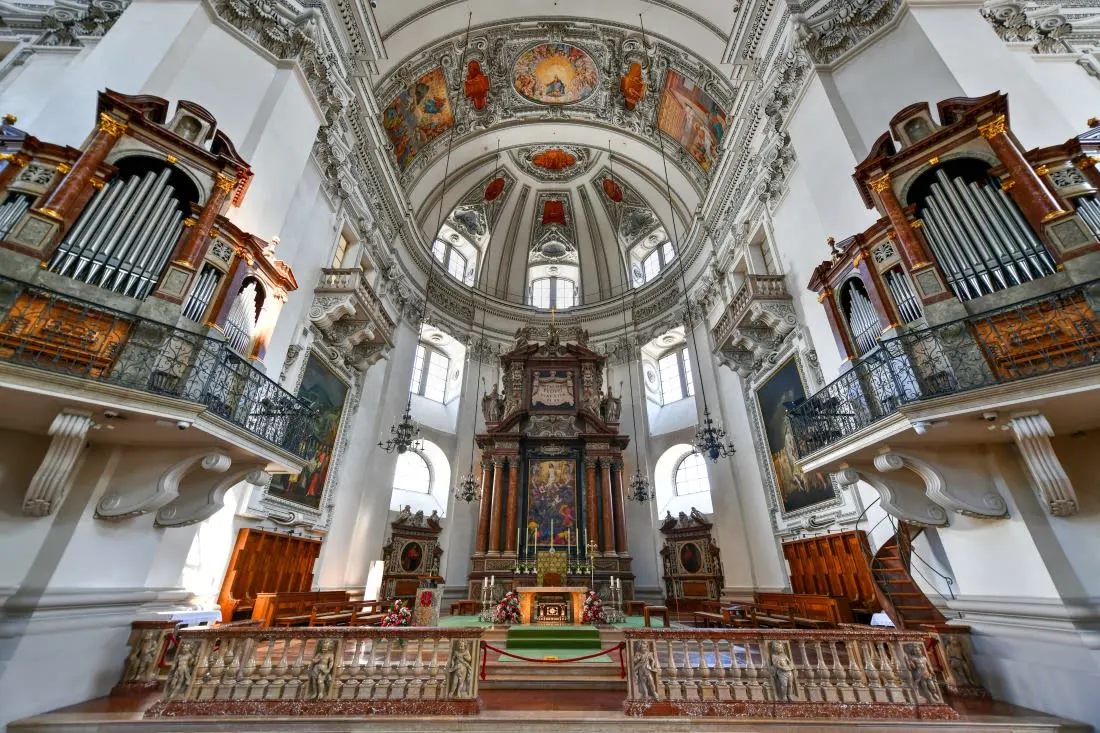
Visit Salzburg's largest and most impressive church.
Show More
Browse the gallery to see some of the highlights

One of several grand squares in the center of Altstadt in Salzburg.
Show More
Visit Salzburg's largest and most impressive church.
Show More
Browse the gallery to see some of the highlights

One of several grand squares in the center of Altstadt in Salzburg.
Show More
Day 4
Salzburg

Mozartplatz
Highlight of Guided Walking Tour of SalzburgOne of several grand squares in the center of Altstadt in Salzburg.
One of several grand squares in the center of Altstadt in Salzburg. In the Mozartplatz you can find a statue of the famous composer.

Salzburg Cathedral
Highlight of Guided Walking Tour of SalzburgVisit Salzburg's largest and most impressive church.
The current cathedral was built between 1614-1628 and is a masterpiece of baroque architecture. The cathedral was largely destroyed by an Allied bomb in WWII but was restored by 1959. One of the most significant treasures in the cathedral is the Baptismal Font, which was cast in 1321 and rests on copper lions dating back to the 1100s.

Guided Walking Tour of Salzburg
OverviewGuided Walking Tour of Salzburg
Salzburg is simply overwhelming in all the best ways. It is alive with fascinating history, grandiose and sublime architecture fills every street and square, culture and music permeate the atmosphere, and it is surrounded by breath-taking natural scenery. This guided tour with a local will provide the context needed to bring all of this beauty into perspective, and to connect the physical city to its history, culture, and environment.

Mozartplatz
Highlight of Guided Walking Tour of SalzburgOne of several grand squares in the center of Altstadt in Salzburg.
One of several grand squares in the center of Altstadt in Salzburg. In the Mozartplatz you can find a statue of the famous composer.

Salzburg Cathedral
Highlight of Guided Walking Tour of SalzburgVisit Salzburg's largest and most impressive church.
The current cathedral was built between 1614-1628 and is a masterpiece of baroque architecture. The cathedral was largely destroyed by an Allied bomb in WWII but was restored by 1959. One of the most significant treasures in the cathedral is the Baptismal Font, which was cast in 1321 and rests on copper lions dating back to the 1100s.

Guided Walking Tour of Salzburg
OverviewGuided Walking Tour of Salzburg
Salzburg is simply overwhelming in all the best ways. It is alive with fascinating history, grandiose and sublime architecture fills every street and square, culture and music permeate the atmosphere, and it is surrounded by breath-taking natural scenery. This guided tour with a local will provide the context needed to bring all of this beauty into perspective, and to connect the physical city to its history, culture, and environment.

Mozartplatz
Highlight of Guided Walking Tour of SalzburgOne of several grand squares in the center of Altstadt in Salzburg.
One of several grand squares in the center of Altstadt in Salzburg. In the Mozartplatz you can find a statue of the famous composer.

Day 5
Salzburg to Vienna
Day 5
Salzburg to Vienna
Morning/Mid-Day
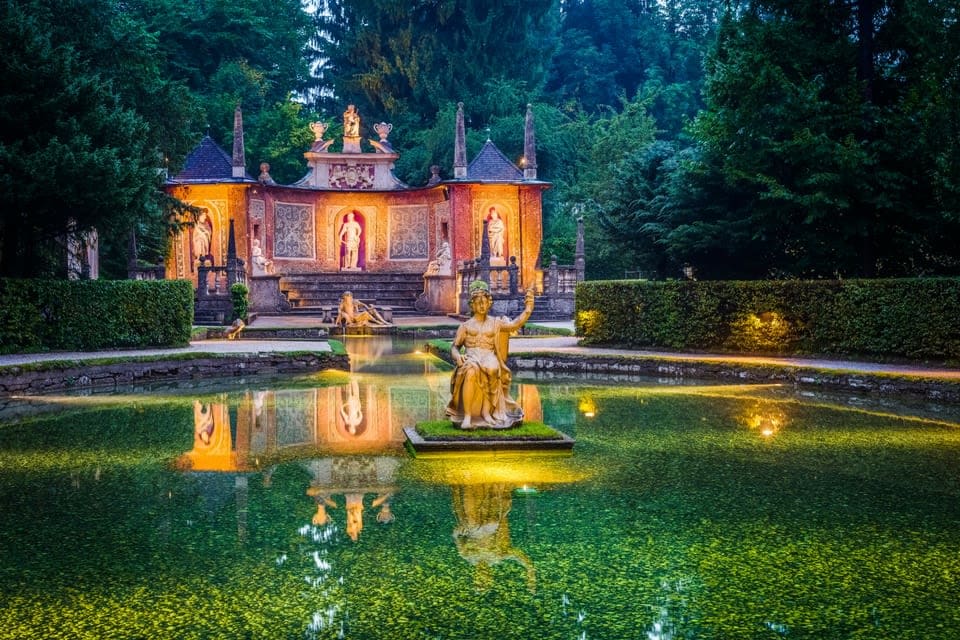
Built as a summer palace by Salzburg's Prince-Bishop, the Hellbrunn Palace is a picturesque palace surrounded by even more beautiful gardens. The early baroque palace was built exclusively for the purpose of entertainment, as the Prince-Bishop would actually return to Salzburg in the evening. It can be toured with an audio guide and includes several beautiful frescoed ceilings. There is a great deal to discover in the gardens - hidden grottos, clever statues, reflecting pools, as well as flora and fauna. And the trick fountains are a must for every visit. Both the transportation (bus #25) and the entry are covered by the Salzburg Card.

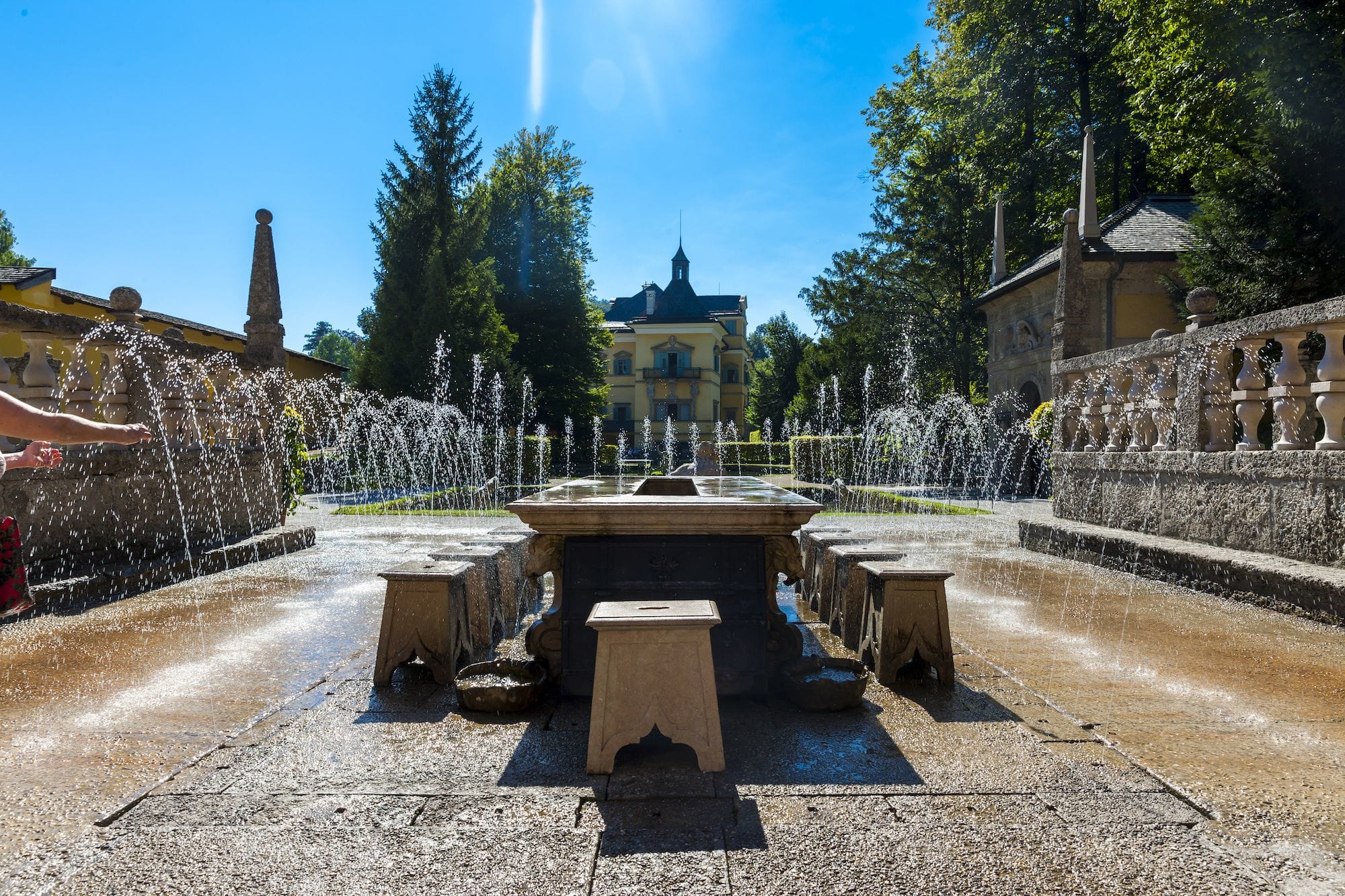
Browse the gallery to see some of the highlights

Get a little wet in this delightful garden of tricks.
Show More
Browse the gallery to see some of the highlights

Get a little wet in this delightful garden of tricks.
Show More
Browse the gallery to see some of the highlights

Get a little wet in this delightful garden of tricks.
Show More
Day 5
Salzburg to Vienna

Hellbrunn Palace
OverviewHellbrunn Palace
Built as a summer palace by Salzburg's Prince-Bishop, the Hellbrunn Palace is a picturesque palace surrounded by even more beautiful gardens. The early baroque palace was built exclusively for the purpose of entertainment, as the Prince-Bishop would actually return to Salzburg in the evening. It can be toured with an audio guide and includes several beautiful frescoed ceilings. There is a great deal to discover in the gardens - hidden grottos, clever statues, reflecting pools, as well as flora and fauna. And the trick fountains are a must for every visit. Both the transportation (bus #25) and the entry are covered by the Salzburg Card.

Trick Water Fountains
Highlight of Hellbrunn PalaceGet a little wet in this delightful garden of tricks.
The famous "Wasserspiele" are trick water fountains that never fail to delight, astonish, and befuddle. The fountains were actually built with the express purpose of playing practical jokes on guests, and they continue to provide plenty of amusement today.

Hellbrunn Palace
OverviewHellbrunn Palace
Built as a summer palace by Salzburg's Prince-Bishop, the Hellbrunn Palace is a picturesque palace surrounded by even more beautiful gardens. The early baroque palace was built exclusively for the purpose of entertainment, as the Prince-Bishop would actually return to Salzburg in the evening. It can be toured with an audio guide and includes several beautiful frescoed ceilings. There is a great deal to discover in the gardens - hidden grottos, clever statues, reflecting pools, as well as flora and fauna. And the trick fountains are a must for every visit. Both the transportation (bus #25) and the entry are covered by the Salzburg Card.

Trick Water Fountains
Highlight of Hellbrunn PalaceGet a little wet in this delightful garden of tricks.
The famous "Wasserspiele" are trick water fountains that never fail to delight, astonish, and befuddle. The fountains were actually built with the express purpose of playing practical jokes on guests, and they continue to provide plenty of amusement today.

Hellbrunn Palace
OverviewHellbrunn Palace
Built as a summer palace by Salzburg's Prince-Bishop, the Hellbrunn Palace is a picturesque palace surrounded by even more beautiful gardens. The early baroque palace was built exclusively for the purpose of entertainment, as the Prince-Bishop would actually return to Salzburg in the evening. It can be toured with an audio guide and includes several beautiful frescoed ceilings. There is a great deal to discover in the gardens - hidden grottos, clever statues, reflecting pools, as well as flora and fauna. And the trick fountains are a must for every visit. Both the transportation (bus #25) and the entry are covered by the Salzburg Card.

Trick Water Fountains
Highlight of Hellbrunn PalaceGet a little wet in this delightful garden of tricks.
The famous "Wasserspiele" are trick water fountains that never fail to delight, astonish, and befuddle. The fountains were actually built with the express purpose of playing practical jokes on guests, and they continue to provide plenty of amusement today.

Day 6
Vienna
Day 6
Vienna
9:00 AM - 11:30 AM
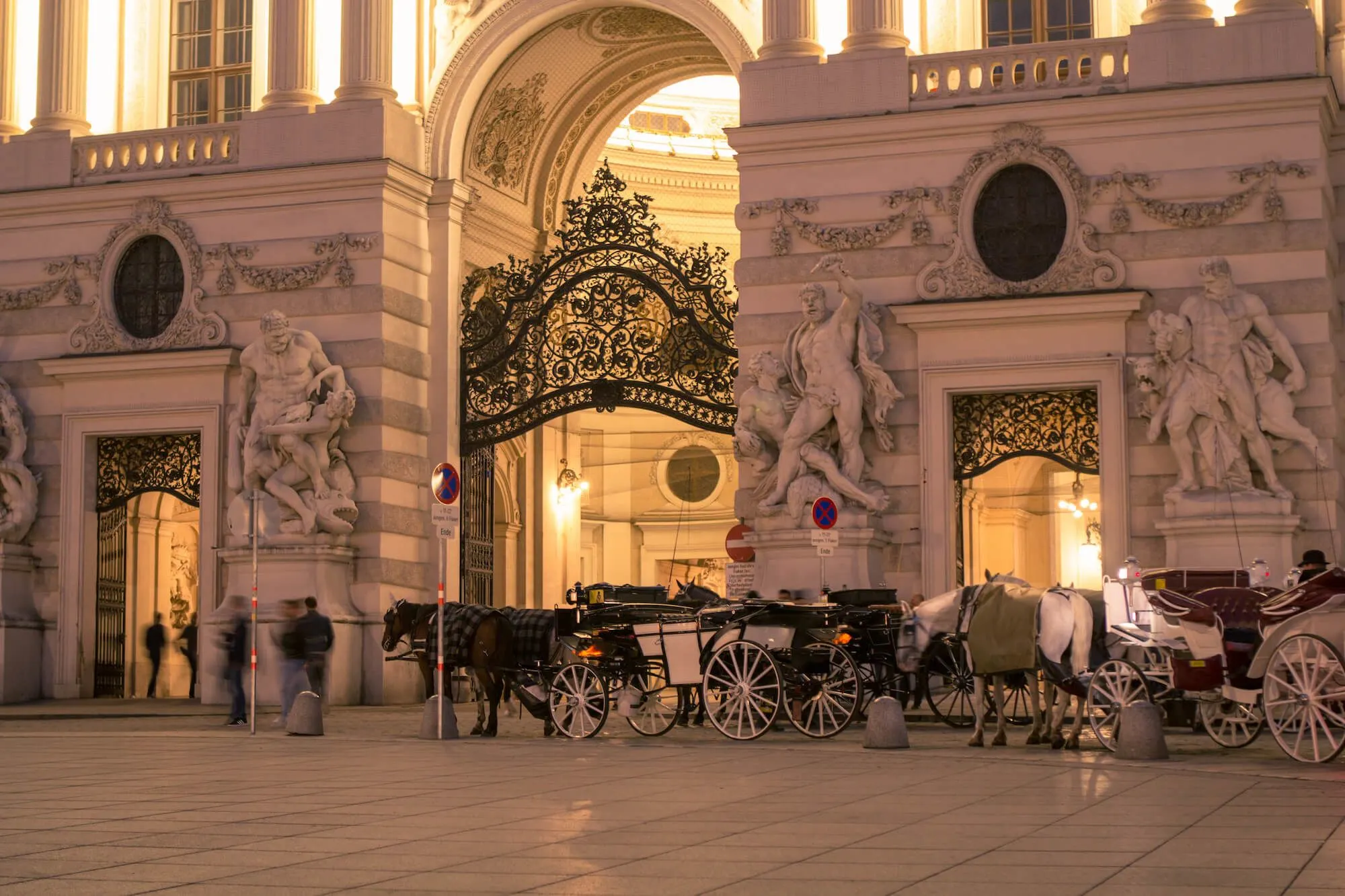
This tour takes you back in history to explore the Vienna that stood within the old city walls. You will learn about the humble beginnings of Vienna before it became the capital of a great empire and one of the most important cities in Europe. You will discover how Vienna's early inhabitants lived and how they left their mark on the city and its beautiful Medieval, Renaissance, and Baroque architecture.


Day 6
Vienna

Guided Walk of the Inner City
OverviewGuided Walk of the Inner City
This tour takes you back in history to explore the Vienna that stood within the old city walls. You will learn about the humble beginnings of Vienna before it became the capital of a great empire and one of the most important cities in Europe. You will discover how Vienna's early inhabitants lived and how they left their mark on the city and its beautiful Medieval, Renaissance, and Baroque architecture.

Guided Walk of the Inner City
OverviewGuided Walk of the Inner City
This tour takes you back in history to explore the Vienna that stood within the old city walls. You will learn about the humble beginnings of Vienna before it became the capital of a great empire and one of the most important cities in Europe. You will discover how Vienna's early inhabitants lived and how they left their mark on the city and its beautiful Medieval, Renaissance, and Baroque architecture.

Guided Walk of the Inner City
OverviewGuided Walk of the Inner City
This tour takes you back in history to explore the Vienna that stood within the old city walls. You will learn about the humble beginnings of Vienna before it became the capital of a great empire and one of the most important cities in Europe. You will discover how Vienna's early inhabitants lived and how they left their mark on the city and its beautiful Medieval, Renaissance, and Baroque architecture.

Guided Walk of the Inner City
OverviewGuided Walk of the Inner City
This tour takes you back in history to explore the Vienna that stood within the old city walls. You will learn about the humble beginnings of Vienna before it became the capital of a great empire and one of the most important cities in Europe. You will discover how Vienna's early inhabitants lived and how they left their mark on the city and its beautiful Medieval, Renaissance, and Baroque architecture.

Guided Walk of the Inner City
OverviewGuided Walk of the Inner City
This tour takes you back in history to explore the Vienna that stood within the old city walls. You will learn about the humble beginnings of Vienna before it became the capital of a great empire and one of the most important cities in Europe. You will discover how Vienna's early inhabitants lived and how they left their mark on the city and its beautiful Medieval, Renaissance, and Baroque architecture.

Day 7
Vienna
Day 7
Vienna
Morning/Mid-Day
Two of Vienna's greatest architectural treasures lie just beyond the Ring Street - the Belvedere Palace and the Karlskirche (St. Charles's Church). Often missed by visitors, these Baroque wonders represent Austria at the peak of its prestige and power and deserve to be on every visitor's list.

Stroll the Belvedere's gardens, and venture inside the palace for a "Kiss".
Show More
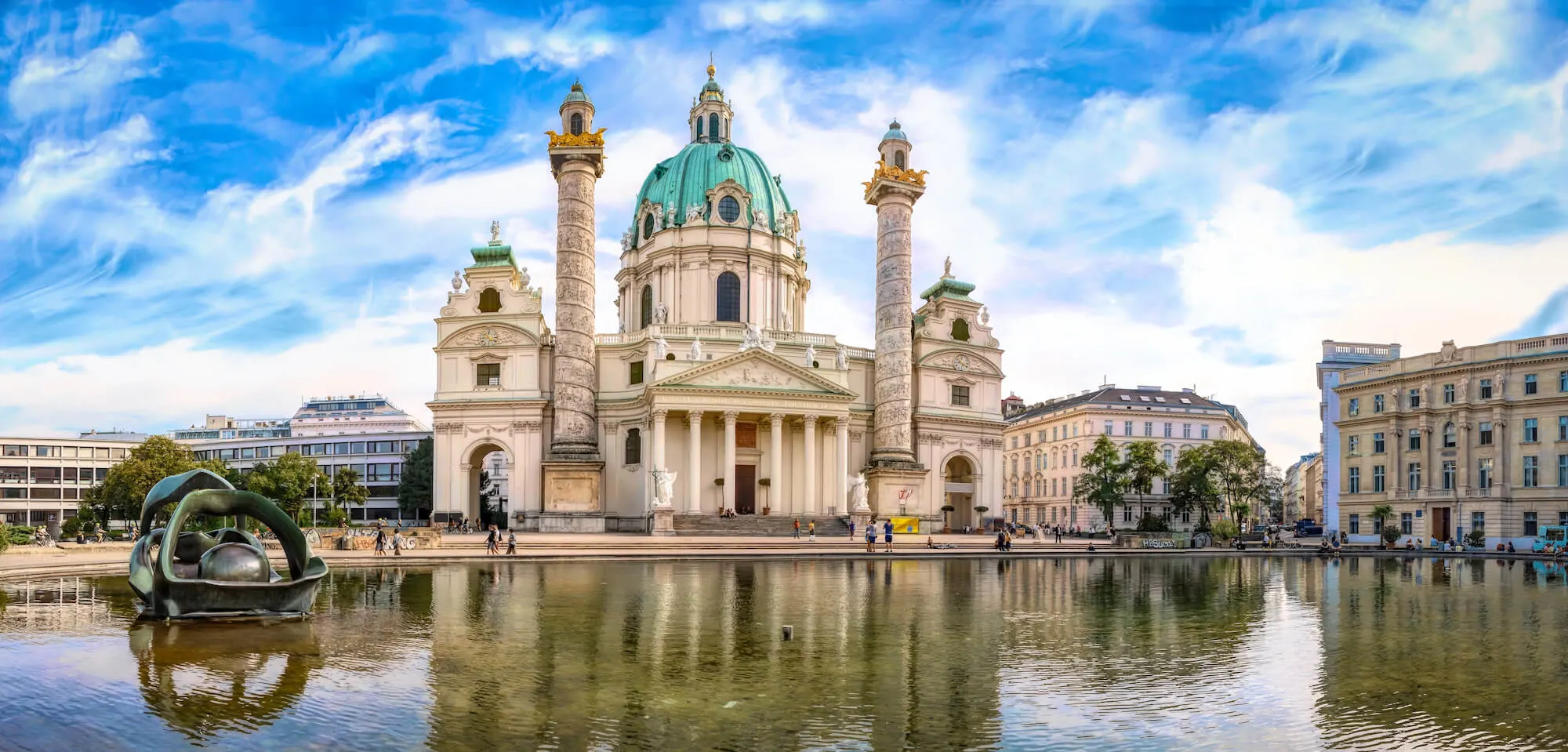
Many argue that this baroque church is as beautiful as St. Peter's - see it and decide for yourself.
Show More
Browse the gallery to see some of the highlights

Stroll the Belvedere's gardens, and venture inside the palace for a "Kiss".
Show More
Many argue that this baroque church is as beautiful as St. Peter's - see it and decide for yourself.
Show More
Browse the gallery to see some of the highlights

Stroll the Belvedere's gardens, and venture inside the palace for a "Kiss".
Show More
Day 7
Vienna

Belvedere Palace
Highlight of Karlskirche & Belvedere PalaceStroll the Belvedere's gardens, and venture inside the palace for a "Kiss".
Two Baraque palaces are connected by a French-style, three-level garden which features delightful fountains. Originally built as a summer residence of Prince Eugene, it now houses the Belvedere Museum where you will find Gustav Klimt's most famous work - The Kiss.

Karlskirche
Highlight of Karlskirche & Belvedere PalaceMany argue that this baroque church is as beautiful as St. Peter's - see it and decide for yourself.
Built between 1716-1737, Emperor Charles VI intended the church to be a thanksgiving for the end of a plague epidemic and dedicated the church to St. Charles Borromeo, who is revered for his care of plague victims. St. Charles was also his namesake, meaning that the church's name evokes the emperor's memory as much as the saint's, which was no accident. Indeed, the two columns in front of the church are meant to represent imperial power.

Karlskirche & Belvedere Palace
OverviewKarlskirche & Belvedere Palace
Two of Vienna's greatest architectural treasures lie just beyond the Ring Street - the Belvedere Palace and the Karlskirche (St. Charles's Church). Often missed by visitors, these Baroque wonders represent Austria at the peak of its prestige and power and deserve to be on every visitor's list.

Belvedere Palace
Highlight of Karlskirche & Belvedere PalaceStroll the Belvedere's gardens, and venture inside the palace for a "Kiss".
Two Baraque palaces are connected by a French-style, three-level garden which features delightful fountains. Originally built as a summer residence of Prince Eugene, it now houses the Belvedere Museum where you will find Gustav Klimt's most famous work - The Kiss.

Karlskirche
Highlight of Karlskirche & Belvedere PalaceMany argue that this baroque church is as beautiful as St. Peter's - see it and decide for yourself.
Built between 1716-1737, Emperor Charles VI intended the church to be a thanksgiving for the end of a plague epidemic and dedicated the church to St. Charles Borromeo, who is revered for his care of plague victims. St. Charles was also his namesake, meaning that the church's name evokes the emperor's memory as much as the saint's, which was no accident. Indeed, the two columns in front of the church are meant to represent imperial power.

Karlskirche & Belvedere Palace
OverviewKarlskirche & Belvedere Palace
Two of Vienna's greatest architectural treasures lie just beyond the Ring Street - the Belvedere Palace and the Karlskirche (St. Charles's Church). Often missed by visitors, these Baroque wonders represent Austria at the peak of its prestige and power and deserve to be on every visitor's list.

Belvedere Palace
Highlight of Karlskirche & Belvedere PalaceStroll the Belvedere's gardens, and venture inside the palace for a "Kiss".
Two Baraque palaces are connected by a French-style, three-level garden which features delightful fountains. Originally built as a summer residence of Prince Eugene, it now houses the Belvedere Museum where you will find Gustav Klimt's most famous work - The Kiss.

Day 8
Vienna to Budapest
Day 8
Vienna to Budapest
Morning/Mid-Day
The charming and unusual Hundertwasserhaus is one of Austria's architectural highlights. The colorful building represents a harmonic place where human beings and nature can live together with equal rights. Just a short walk away is the Prater, a large and pleasant public park. You can make your through the park to Vienna's oldest fun park, which is home to a towering Ferris wheel called the Wiener Riesenrad.
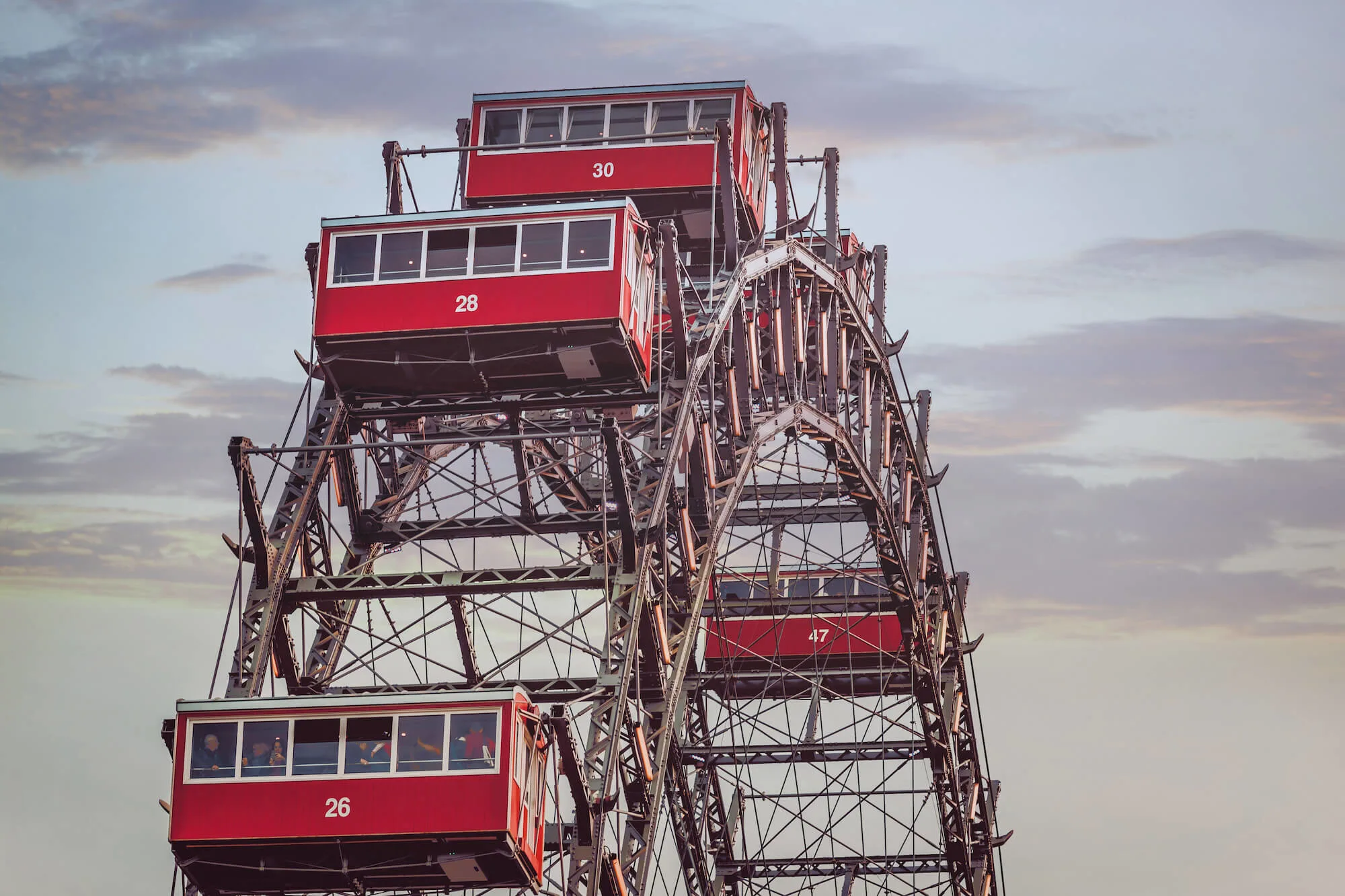
Take a fifteen-minute trip back in time on a 212-foot ferris wheel, enjoying breathtaking views over the roofs of the city.
Show More
See an entirely different idea for what makes a good apartment building.
Show More
Browse the gallery to see some of the highlights

Take a fifteen-minute trip back in time on a 212-foot ferris wheel, enjoying breathtaking views over the roofs of the city.
Show More
See an entirely different idea for what makes a good apartment building.
Show More
Browse the gallery to see some of the highlights

Take a fifteen-minute trip back in time on a 212-foot ferris wheel, enjoying breathtaking views over the roofs of the city.
Show More
Day 8
Vienna to Budapest

Riesenrad
Highlight of Hundertwasser HausTake a fifteen-minute trip back in time on a 212-foot ferris wheel, enjoying breathtaking views over the roofs of the city.
The 'Wiener Riesenrad' was constructed in 1897 and is now a symbol of Vienna. It held the record of the world's tallest Ferris wheel from 1920 until 1985. It's surrounded by a famous amusement park, where you'll find carousels, swings, roller coasters, and haunted houses, as well as coffee houses and beer gardens.

Hundertwasserhaus
Highlight of Hundertwasser HausSee an entirely different idea for what makes a good apartment building.
This extraordinary apartment building with a colorful facade was completed in 1985. It features a grass-covered roof and trees growing out of rooms. It was created by the artist Friedensreich Hundertwasser. As the building is inhabited, it can be viewed only from the outside but in the art café on the ground floor you can watch a free video film, where the artist guides you through his masterpiece.

Hundertwasser Haus
OverviewHundertwasser Haus
The charming and unusual Hundertwasserhaus is one of Austria's architectural highlights. The colorful building represents a harmonic place where human beings and nature can live together with equal rights. Just a short walk away is the Prater, a large and pleasant public park. You can make your through the park to Vienna's oldest fun park, which is home to a towering Ferris wheel called the Wiener Riesenrad.

Riesenrad
Highlight of Hundertwasser HausTake a fifteen-minute trip back in time on a 212-foot ferris wheel, enjoying breathtaking views over the roofs of the city.
The 'Wiener Riesenrad' was constructed in 1897 and is now a symbol of Vienna. It held the record of the world's tallest Ferris wheel from 1920 until 1985. It's surrounded by a famous amusement park, where you'll find carousels, swings, roller coasters, and haunted houses, as well as coffee houses and beer gardens.

Hundertwasserhaus
Highlight of Hundertwasser HausSee an entirely different idea for what makes a good apartment building.
This extraordinary apartment building with a colorful facade was completed in 1985. It features a grass-covered roof and trees growing out of rooms. It was created by the artist Friedensreich Hundertwasser. As the building is inhabited, it can be viewed only from the outside but in the art café on the ground floor you can watch a free video film, where the artist guides you through his masterpiece.

Hundertwasser Haus
OverviewHundertwasser Haus
The charming and unusual Hundertwasserhaus is one of Austria's architectural highlights. The colorful building represents a harmonic place where human beings and nature can live together with equal rights. Just a short walk away is the Prater, a large and pleasant public park. You can make your through the park to Vienna's oldest fun park, which is home to a towering Ferris wheel called the Wiener Riesenrad.

Riesenrad
Highlight of Hundertwasser HausTake a fifteen-minute trip back in time on a 212-foot ferris wheel, enjoying breathtaking views over the roofs of the city.
The 'Wiener Riesenrad' was constructed in 1897 and is now a symbol of Vienna. It held the record of the world's tallest Ferris wheel from 1920 until 1985. It's surrounded by a famous amusement park, where you'll find carousels, swings, roller coasters, and haunted houses, as well as coffee houses and beer gardens.

Day 9
Budapest
Day 9
Budapest
9:00 AM - 12:30 PM
During your tour you will take in a gorgeous vista of the city from the Fisherman's Bastion, explore the winding streets of the Castle District, gaze in awe at the striking interior of St. Stephen's Basilica, travel along the city's most elegant avenue and more. Along the way you will experience the city as a local does, stopping to check out intimate courtyards, enjoying a pastry and soaking in the ambiance of Budapest's most elegant cafes.


Day 9
Budapest
Guided Walk in Budapest
OverviewGuided Walk in Budapest
During your tour you will take in a gorgeous vista of the city from the Fisherman's Bastion, explore the winding streets of the Castle District, gaze in awe at the striking interior of St. Stephen's Basilica, travel along the city's most elegant avenue and more. Along the way you will experience the city as a local does, stopping to check out intimate courtyards, enjoying a pastry and soaking in the ambiance of Budapest's most elegant cafes.

Guided Walk in Budapest
OverviewGuided Walk in Budapest
During your tour you will take in a gorgeous vista of the city from the Fisherman's Bastion, explore the winding streets of the Castle District, gaze in awe at the striking interior of St. Stephen's Basilica, travel along the city's most elegant avenue and more. Along the way you will experience the city as a local does, stopping to check out intimate courtyards, enjoying a pastry and soaking in the ambiance of Budapest's most elegant cafes.

Guided Walk in Budapest
OverviewGuided Walk in Budapest
During your tour you will take in a gorgeous vista of the city from the Fisherman's Bastion, explore the winding streets of the Castle District, gaze in awe at the striking interior of St. Stephen's Basilica, travel along the city's most elegant avenue and more. Along the way you will experience the city as a local does, stopping to check out intimate courtyards, enjoying a pastry and soaking in the ambiance of Budapest's most elegant cafes.

Guided Walk in Budapest
OverviewGuided Walk in Budapest
During your tour you will take in a gorgeous vista of the city from the Fisherman's Bastion, explore the winding streets of the Castle District, gaze in awe at the striking interior of St. Stephen's Basilica, travel along the city's most elegant avenue and more. Along the way you will experience the city as a local does, stopping to check out intimate courtyards, enjoying a pastry and soaking in the ambiance of Budapest's most elegant cafes.

Guided Walk in Budapest
OverviewGuided Walk in Budapest
During your tour you will take in a gorgeous vista of the city from the Fisherman's Bastion, explore the winding streets of the Castle District, gaze in awe at the striking interior of St. Stephen's Basilica, travel along the city's most elegant avenue and more. Along the way you will experience the city as a local does, stopping to check out intimate courtyards, enjoying a pastry and soaking in the ambiance of Budapest's most elegant cafes.

Day 10
Budapest
Day 10
Budapest
Morning/Mid-Day
Budapest was once the site of one of Europe's largest and most vibrant Jewish communities and contains the world's second largest synagogue – the Dohány Street Synagogue. A visit there is an impressive reminder of the wealth and influence the Jewish community in Hungary once possessed. A small but vibrant Jewish population still inhabits the Jewish Quarter today.

Discover Budapest's most unique form of nightlife - pubs located in the ruins of old buildings!
Show More
Learn about the Holocaust in a former synagogue which honors Hungarian Jews killed in WWII.
Show More
Browse the gallery to see some of the highlights

Stare in awe at Europe's largest synagogue (and the second largest in the world).
Show More
Discover Budapest's most unique form of nightlife - pubs located in the ruins of old buildings!
Show More
Learn about the Holocaust in a former synagogue which honors Hungarian Jews killed in WWII.
Show More
Browse the gallery to see some of the highlights

Stare in awe at Europe's largest synagogue (and the second largest in the world).
Show More
Day 10
Budapest

Szimpla Kert
Highlight of Jewish QuarterDiscover Budapest's most unique form of nightlife - pubs located in the ruins of old buildings!
Szimpla Kert was the first pub located in a ruin, and it started a trend that is now a Budapest institution. These pubs have an eclectic vibe and are a great place to mix with the locals as well as other visitors. The concept dates back to the early 2000s when entrepreneurs took over abandoned spaces within dilapidated buildings for underground events. The 7th district, i.e. the Jewish Quarter, is the best place to find them.

Holocaust Memorial Center
Highlight of Jewish QuarterLearn about the Holocaust in a former synagogue which honors Hungarian Jews killed in WWII.
The refurbished 1920s synagogue now serves as a museum and memorial for Hungarian Jewish victims of the Holocaust. It also functions as a documentation center. Note, it is actually not located in the Jewish Quarter, which is in Budapest's 7th District, but the nearby 9th District.

Jewish Quarter
OverviewJewish Quarter
Budapest was once the site of one of Europe's largest and most vibrant Jewish communities and contains the world's second largest synagogue – the Dohány Street Synagogue. A visit there is an impressive reminder of the wealth and influence the Jewish community in Hungary once possessed. A small but vibrant Jewish population still inhabits the Jewish Quarter today.

Great Synagogue
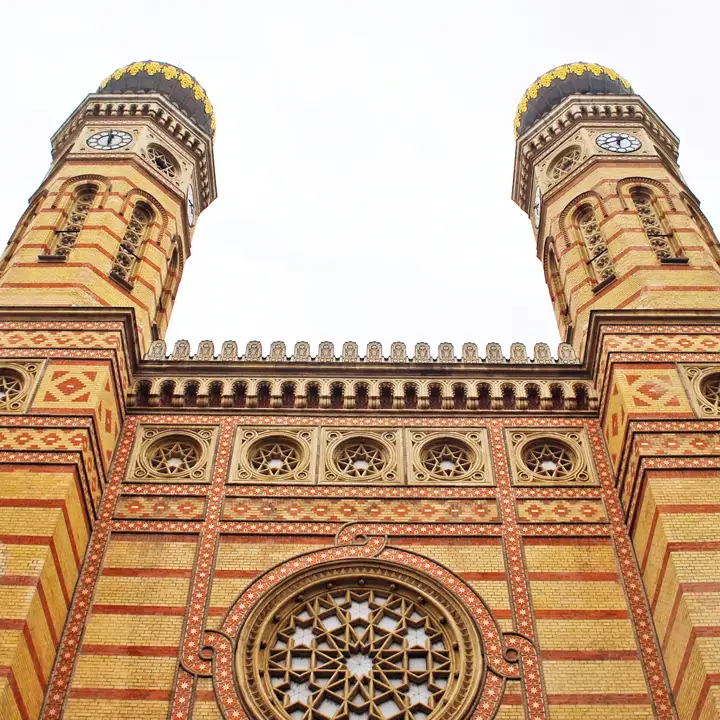
Highlight of Jewish QuarterStare in awe at Europe's largest synagogue (and the second largest in the world).
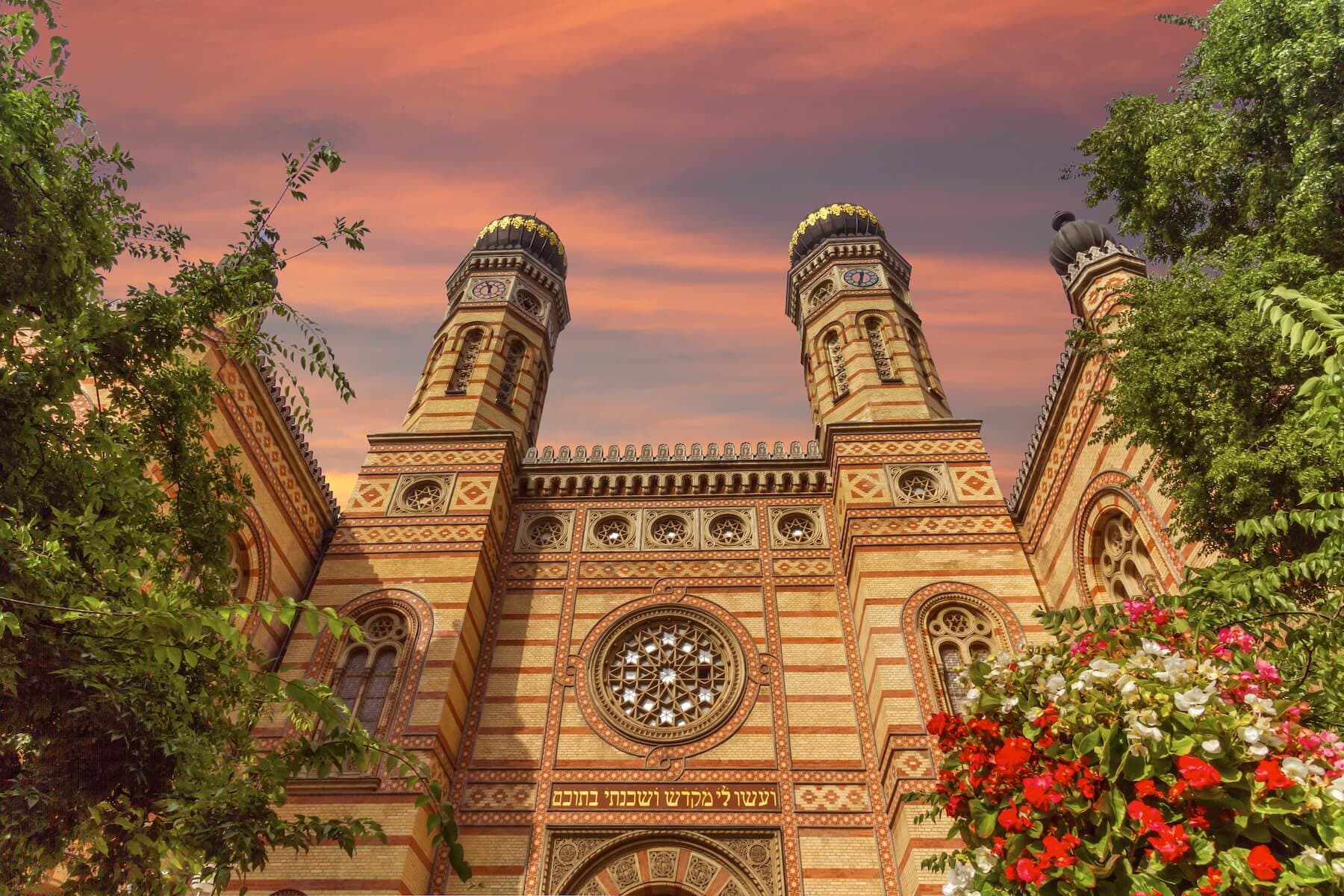
Also known as the Dohány Street Synagogue, it possesses a striking Byzantine Moorish style exterior with an ornate dome, and an opulent interior. Adjacent to it are a memorial to the Holocaust in the form of a weeping willow, and a museum of Jewish culture. Entry is by guided tour only, although wait times can be very long so booking early is recommended.

Szimpla Kert
Highlight of Jewish QuarterDiscover Budapest's most unique form of nightlife - pubs located in the ruins of old buildings!
Szimpla Kert was the first pub located in a ruin, and it started a trend that is now a Budapest institution. These pubs have an eclectic vibe and are a great place to mix with the locals as well as other visitors. The concept dates back to the early 2000s when entrepreneurs took over abandoned spaces within dilapidated buildings for underground events. The 7th district, i.e. the Jewish Quarter, is the best place to find them.

Holocaust Memorial Center
Highlight of Jewish QuarterLearn about the Holocaust in a former synagogue which honors Hungarian Jews killed in WWII.
The refurbished 1920s synagogue now serves as a museum and memorial for Hungarian Jewish victims of the Holocaust. It also functions as a documentation center. Note, it is actually not located in the Jewish Quarter, which is in Budapest's 7th District, but the nearby 9th District.

Jewish Quarter
OverviewJewish Quarter
Budapest was once the site of one of Europe's largest and most vibrant Jewish communities and contains the world's second largest synagogue – the Dohány Street Synagogue. A visit there is an impressive reminder of the wealth and influence the Jewish community in Hungary once possessed. A small but vibrant Jewish population still inhabits the Jewish Quarter today.

Great Synagogue
Highlight of Jewish QuarterStare in awe at Europe's largest synagogue (and the second largest in the world).
Also known as the Dohány Street Synagogue, it possesses a striking Byzantine Moorish style exterior with an ornate dome, and an opulent interior. Adjacent to it are a memorial to the Holocaust in the form of a weeping willow, and a museum of Jewish culture. Entry is by guided tour only, although wait times can be very long so booking early is recommended.

Day 11
Budapest
Day 11
Budapest
Morning/Mid-Day
The little cobblestoned town of Szentendre lies charmingly nestled alongside the Danube River and is less than an hour away from Budapest by train or car. Nearly every building in the town dates back to the period of baroque architecture. It is now a haven for artists, who sell their works throughout town.

A square overlooking the town that is missed by many visitors.
Show More
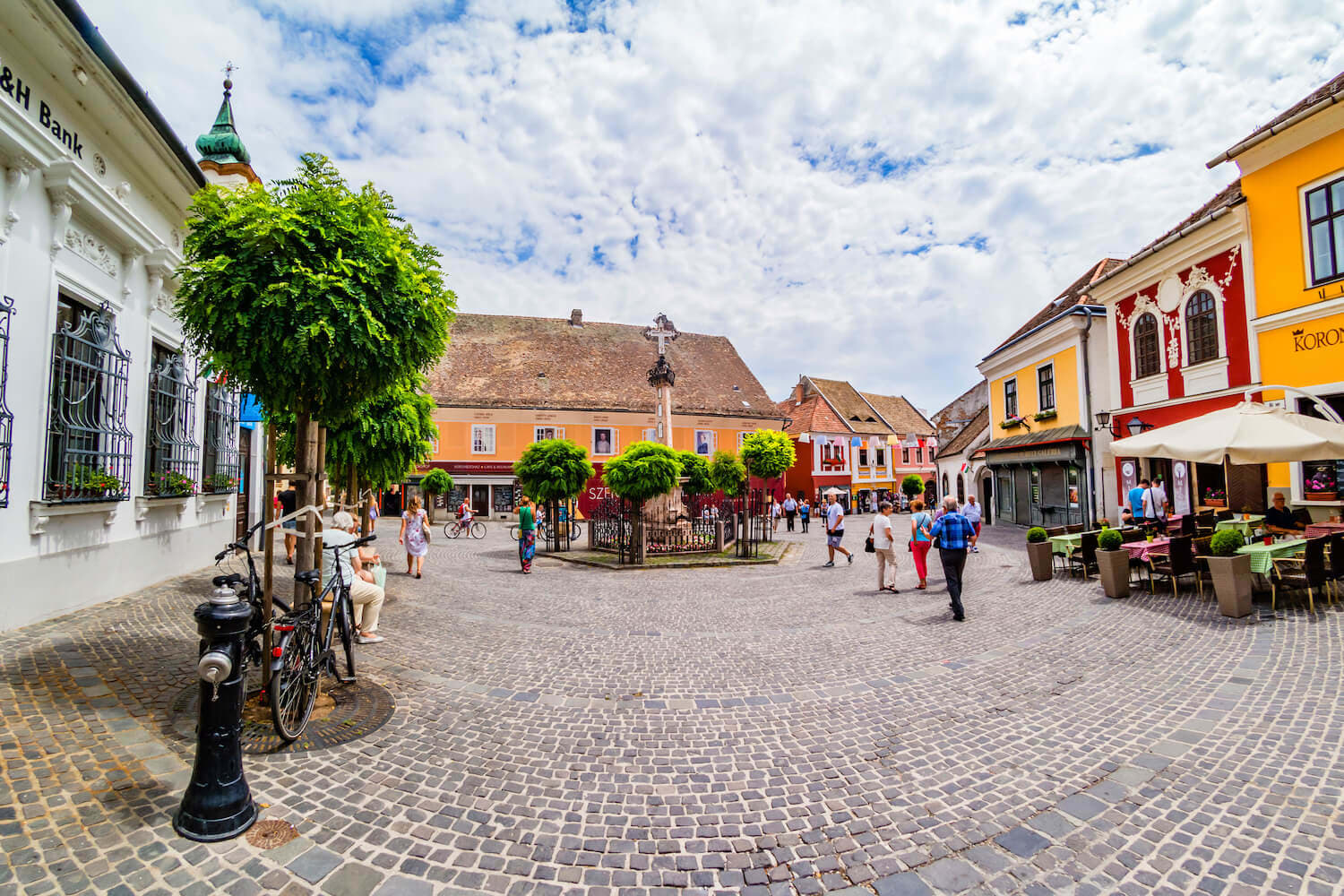
A colorful pedestrian square in the heart of the town.
Show More
A Hungarian folk culture open-air museum
Show More
Browse the gallery to see some of the highlights

A baroque Orthodox church and museum with stunning Orthodox icons and other religious art.
Show More
A square overlooking the town that is missed by many visitors.
Show More
A colorful pedestrian square in the heart of the town.
Show More
A Hungarian folk culture open-air museum
Show More
Browse the gallery to see some of the highlights

A baroque Orthodox church and museum with stunning Orthodox icons and other religious art.
Show More
A square overlooking the town that is missed by many visitors.
Show More
Day 11
Budapest

Templom tér
Highlight of Szentendre ExcursionA square overlooking the town that is missed by many visitors.
The Templom square above Fő square provides a nice viewpoint from which to admire the town, and the Church of St. John is also worth a peak if open. Also on the square is a small art museum dedicated to Béla Czóbel (1883-1976), a Hungarian avant-garde painter.

Fő tér (Fő Square)
Highlight of Szentendre ExcursionA colorful pedestrian square in the heart of the town.
You will find restaurants and shops lining the cobblestoned square. Also on the square is the Szentendre Gallery, which is located in the ground floor of a building dating back to 1720. The Orthodox church adjacent to the square is also definitely worth a look.

Szentendre Skanzen Village Museum
Highlight of Szentendre ExcursionA Hungarian folk culture open-air museum
The museum consists of an entire village, taking visitors back in time to 18th- to 20th-century rural and farming life. You can see reconstructed farm dwellings and a museological collection.

Szentendre Excursion
OverviewSzentendre Excursion
The little cobblestoned town of Szentendre lies charmingly nestled alongside the Danube River and is less than an hour away from Budapest by train or car. Nearly every building in the town dates back to the period of baroque architecture. It is now a haven for artists, who sell their works throughout town.

Belgrade Church, Szentendre
Highlight of Szentendre ExcursionA baroque Orthodox church and museum with stunning Orthodox icons and other religious art.
The museum features art collected from Hungary's formerly Serbian churches. The churches were closed as Serbs emigrated to Serbia or integrated into the Hungarian population, and the finest art from the churches was saved and sent to Szentendre. An 800 HUF admission covers both the church and the museum – you may even have the museum to yourselves.

Templom tér
Highlight of Szentendre ExcursionA square overlooking the town that is missed by many visitors.
The Templom square above Fő square provides a nice viewpoint from which to admire the town, and the Church of St. John is also worth a peak if open. Also on the square is a small art museum dedicated to Béla Czóbel (1883-1976), a Hungarian avant-garde painter.

Fő tér (Fő Square)
Highlight of Szentendre ExcursionA colorful pedestrian square in the heart of the town.
You will find restaurants and shops lining the cobblestoned square. Also on the square is the Szentendre Gallery, which is located in the ground floor of a building dating back to 1720. The Orthodox church adjacent to the square is also definitely worth a look.

Szentendre Skanzen Village Museum
Highlight of Szentendre ExcursionA Hungarian folk culture open-air museum
The museum consists of an entire village, taking visitors back in time to 18th- to 20th-century rural and farming life. You can see reconstructed farm dwellings and a museological collection.

Szentendre Excursion
OverviewSzentendre Excursion
The little cobblestoned town of Szentendre lies charmingly nestled alongside the Danube River and is less than an hour away from Budapest by train or car. Nearly every building in the town dates back to the period of baroque architecture. It is now a haven for artists, who sell their works throughout town.

Belgrade Church, Szentendre
Highlight of Szentendre ExcursionA baroque Orthodox church and museum with stunning Orthodox icons and other religious art.
The museum features art collected from Hungary's formerly Serbian churches. The churches were closed as Serbs emigrated to Serbia or integrated into the Hungarian population, and the finest art from the churches was saved and sent to Szentendre. An 800 HUF admission covers both the church and the museum – you may even have the museum to yourselves.

Templom tér
Highlight of Szentendre ExcursionA square overlooking the town that is missed by many visitors.
The Templom square above Fő square provides a nice viewpoint from which to admire the town, and the Church of St. John is also worth a peak if open. Also on the square is a small art museum dedicated to Béla Czóbel (1883-1976), a Hungarian avant-garde painter.

Day 12
Depart Budapest
Day 12
Depart Budapest
To Be Determined
Budapest has one main airport, Budapest Ferenc Liszt International Airport, where almost all visitors depart. Your hotel can arrange a reliable taxi (there is no Uber in Budapest). You can also arrange a private transfer. If you are picked up about two hours and forty-five minutes before your departure time, you should arrive at the airport with about two hours to spare, depending on traffic. If you are leaving during rush hour, you may want to budget an extra fifteen to thirty minutes.


Day 12
Depart Budapest

Taxi Transfer to Airport
OverviewTaxi Transfer to Airport
Budapest has one main airport, Budapest Ferenc Liszt International Airport, where almost all visitors depart. Your hotel can arrange a reliable taxi (there is no Uber in Budapest). You can also arrange a private transfer. If you are picked up about two hours and forty-five minutes before your departure time, you should arrive at the airport with about two hours to spare, depending on traffic. If you are leaving during rush hour, you may want to budget an extra fifteen to thirty minutes.

Taxi Transfer to Airport
OverviewTaxi Transfer to Airport
Budapest has one main airport, Budapest Ferenc Liszt International Airport, where almost all visitors depart. Your hotel can arrange a reliable taxi (there is no Uber in Budapest). You can also arrange a private transfer. If you are picked up about two hours and forty-five minutes before your departure time, you should arrive at the airport with about two hours to spare, depending on traffic. If you are leaving during rush hour, you may want to budget an extra fifteen to thirty minutes.

Taxi Transfer to Airport
OverviewTaxi Transfer to Airport
Budapest has one main airport, Budapest Ferenc Liszt International Airport, where almost all visitors depart. Your hotel can arrange a reliable taxi (there is no Uber in Budapest). You can also arrange a private transfer. If you are picked up about two hours and forty-five minutes before your departure time, you should arrive at the airport with about two hours to spare, depending on traffic. If you are leaving during rush hour, you may want to budget an extra fifteen to thirty minutes.

Taxi Transfer to Airport
OverviewTaxi Transfer to Airport
Budapest has one main airport, Budapest Ferenc Liszt International Airport, where almost all visitors depart. Your hotel can arrange a reliable taxi (there is no Uber in Budapest). You can also arrange a private transfer. If you are picked up about two hours and forty-five minutes before your departure time, you should arrive at the airport with about two hours to spare, depending on traffic. If you are leaving during rush hour, you may want to budget an extra fifteen to thirty minutes.

Taxi Transfer to Airport
OverviewTaxi Transfer to Airport
Budapest has one main airport, Budapest Ferenc Liszt International Airport, where almost all visitors depart. Your hotel can arrange a reliable taxi (there is no Uber in Budapest). You can also arrange a private transfer. If you are picked up about two hours and forty-five minutes before your departure time, you should arrive at the airport with about two hours to spare, depending on traffic. If you are leaving during rush hour, you may want to budget an extra fifteen to thirty minutes.
Pre-Paid Tours and Activities:
Pre-Paid Transportation:
Accommodation:
Go Real Travel Mobile App:

10 Days

8 Days
Enchanting Central Europe: 8-Days in Prague, Vienna & Budapest
Czech Republic, Austria, Hungary

12 Days
Jewish Heritage and Scenic Rivers: A Journey through Prague, Vienna, and Budapest
Hungary, Austria, Czech Republic

12 Days
A 12-Day Prague, Vienna, Budapest, and Bratislava Itinerary
Czech Republic, Austria, Slovakia, Hungary

10 Days
Perfect Whirlwind Itinerary to Prague, Salzburg, Vienna & Budapest
Czech Republic, Austria, Hungary

14 Days
Central European Treasures of the Czech Republic, Austria, and Hungary
Czech Republic, Austria, Hungary

14 Days
Imperial Elegance: Prague, Vienna and Budapest Itinerary 14 Days
Czech Republic, Austria, Hungary

7 Days

15 Days
Prague, Vienna, and Budapest, 15 Days of Must See Sights & Local Scenes
Czech Republic, Austria, Hungary

10 Days

8 Days
Enchanting Central Europe: 8-Days in Prague, Vienna & Budapest
Czech Republic, Austria, Hungary

12 Days
Jewish Heritage and Scenic Rivers: A Journey through Prague, Vienna, and Budapest
Hungary, Austria, Czech Republic

12 Days
A 12-Day Prague, Vienna, Budapest, and Bratislava Itinerary
Czech Republic, Austria, Slovakia, Hungary

10 Days
Perfect Whirlwind Itinerary to Prague, Salzburg, Vienna & Budapest
Czech Republic, Austria, Hungary

14 Days
Central European Treasures of the Czech Republic, Austria, and Hungary
Czech Republic, Austria, Hungary

14 Days
Imperial Elegance: Prague, Vienna and Budapest Itinerary 14 Days
Czech Republic, Austria, Hungary

7 Days

15 Days
Prague, Vienna, and Budapest, 15 Days of Must See Sights & Local Scenes
Czech Republic, Austria, Hungary


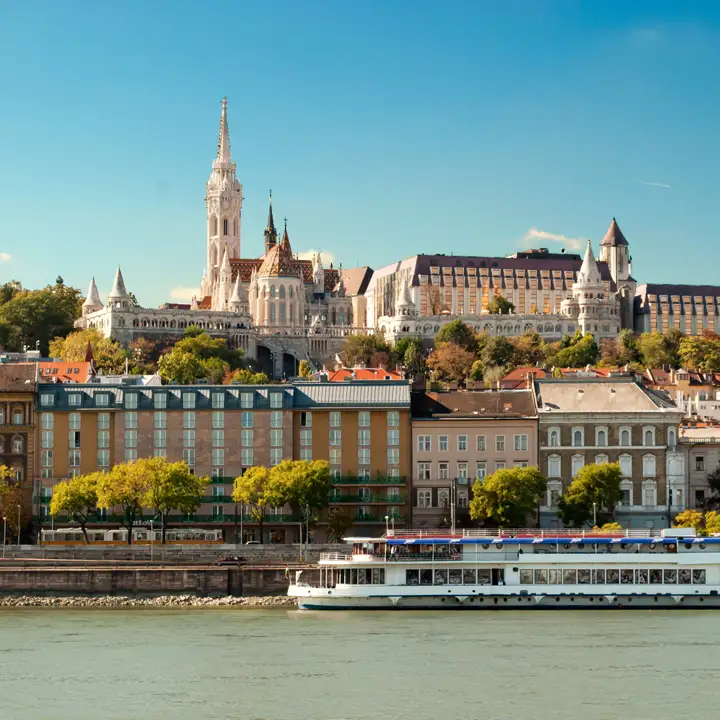
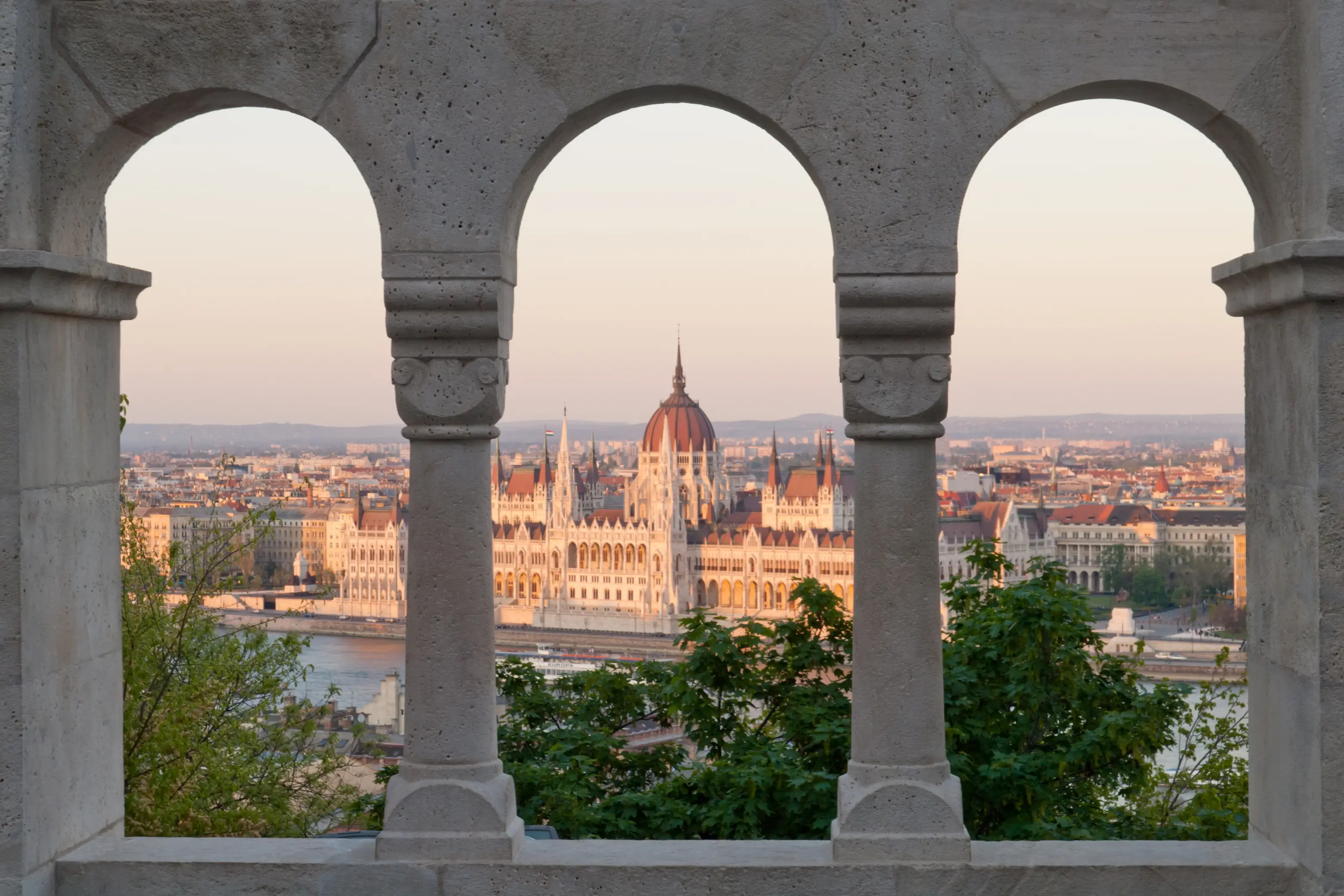
Situated at the heart of Europe, Budapest is the capital of Hungary, appropriately named 'The Pearl of the Danube,' for its fixating and almost haunting beauty. Formerly two separate cities, Buda and Pest were forged into one by time, occupation, and the eight bridges that anchor them together today. From the Romans to the Communists, each occupier left its flavor profile in Budapest, evident in the famous spicy Hungarian stew known as 'goulash.' Budapest is a melting pot of history, culture, and taste, from the magnificent Baroque and neo-Gothic architecture to the Turkish thermal baths. After a long day of sightseeing, treat yourself to a glass of Tokaj, what King Louis XIV of France referred to as the "Wine of Kings, King of Wines". Budapest has a flavor to satisfy any taste.

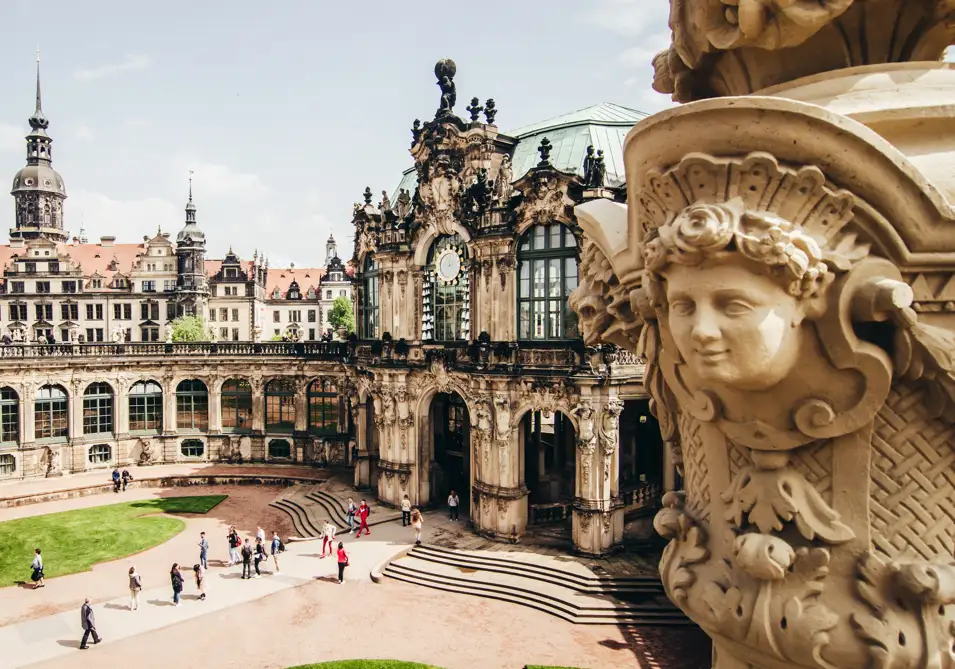
Nearly every wall and rooftop in Dresden seems to be finished with a flourish. Defined by its ornamental baroque architecture, a power statement of Saxon royalty, Dresden is made all the more miraculous considering the city was leveled by firebombing in WWII. After the war, the city was reconstructed, brick by painstaking brick. Even under East German-Soviet rule, which usually eschewed frivolous design, buildings like the Semper Opera House were pieced back to their former glory. Restoration of the majestic Zwinger Palace and bell domed Church of Our Lady slowly followed, with the Frauenkirche only fully repaired in 2005. Arguably there is no other city in Europe that cherishes its hard-won architecture as much as Dresden. Although it is a compact city, so many of its buildings will stop you in your tracks that architecture fans will easily lose a whole day in the Old Town area. Especially during the winter months, Dresden sparkles with a joyous, uplifting ambiance. The city is recognized as having the best-ever Christmas market in all of Europe. Between the twinkling lights, the scent of hot wine and gingerbread, and the towering Christmas tree, it’s worth going out of your way to see Dresden at this time of year.
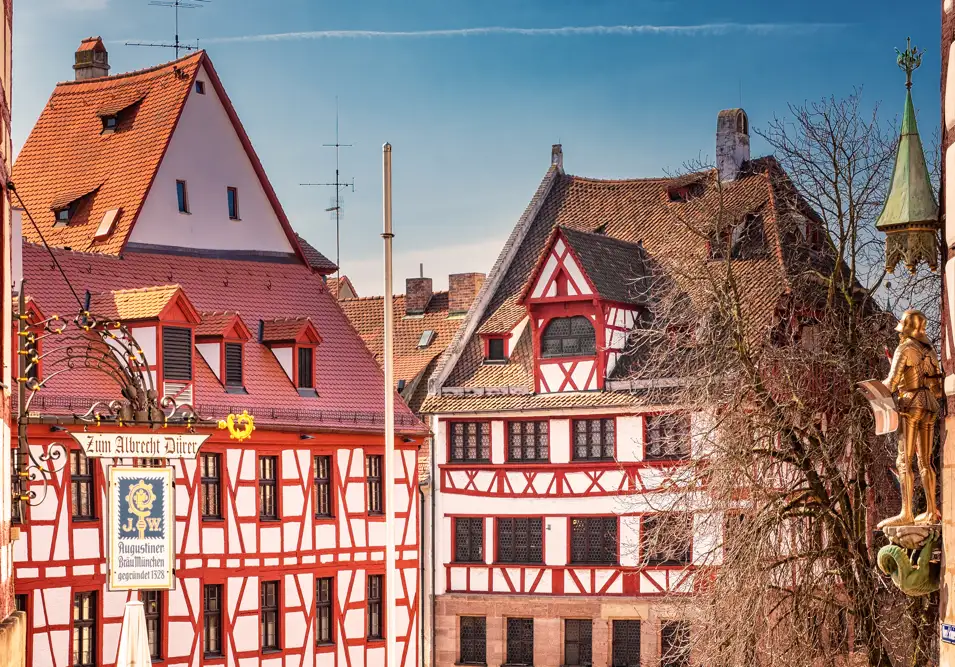
One of the most authentic, storied German destinations, Nuremberg's picturesque old town, glorious castle, and buzzing Christmas Market makes this city a time-true classic. The ideal gateway to old Bavaria, Nuremberg offers a primer in German history before you embark on the lovely journey through old Bavaria, known as the Romantic Road. Considered the capital of the Holy Roman Empire in the middle ages, Nuremberg would have felt like the center of the world as a procession of kings and emperors passed through its magnificent gates. When the German Renaissance came, Nuremberg was at its heart. Albrecht Dürer, the great German master artist, was born here, and Martin Luther called Nuremberg Germany's 'eyes and ears'. Skip forward a few centuries, and the city took a dark turn, as Nuremberg became a gathering point for the German National Socialists. Slightly outside of town, you can still find the Nazi Party Rallying Grounds, a sobering reminder of the not so distant past. If it all gets too heavy, you can end the day with a glass of rotbier (red beer) and mull it over. Nuremberg is a must-see for anyone who wants to delve into Germany's past.
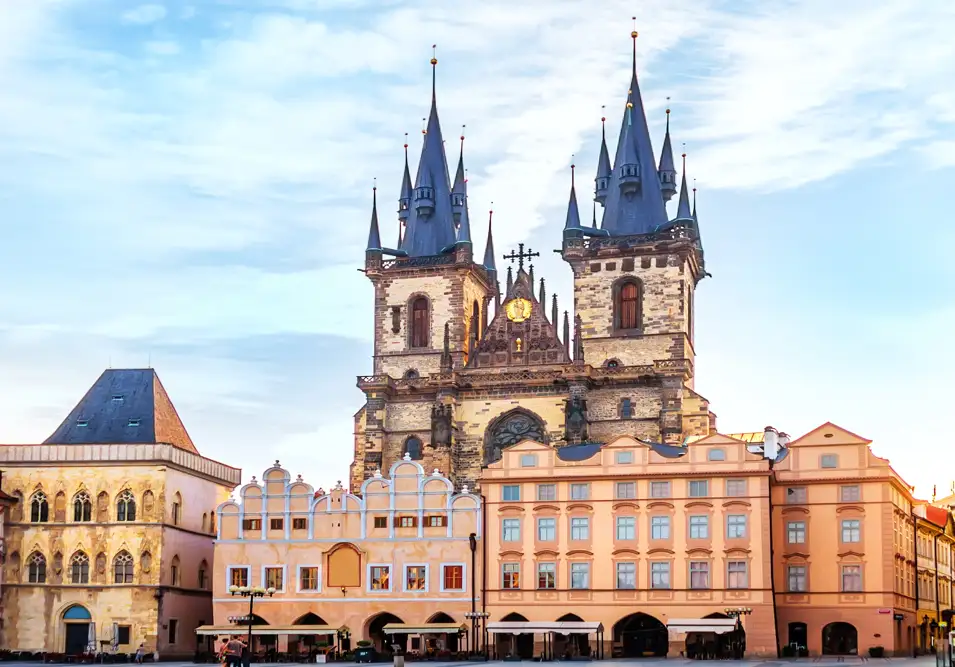
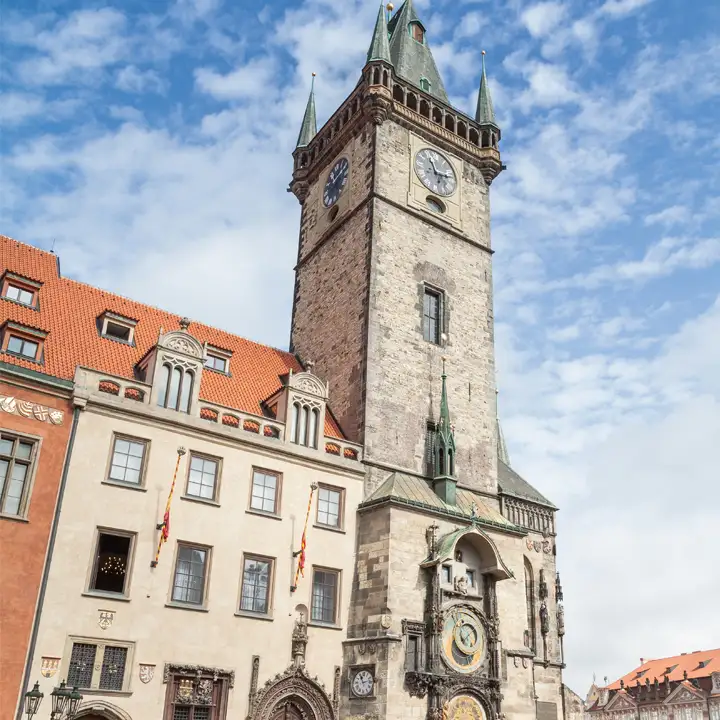
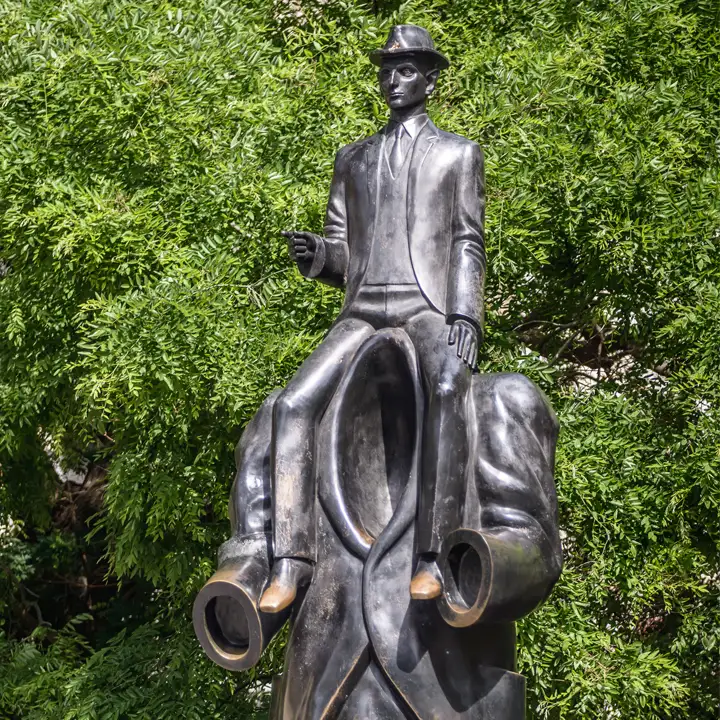
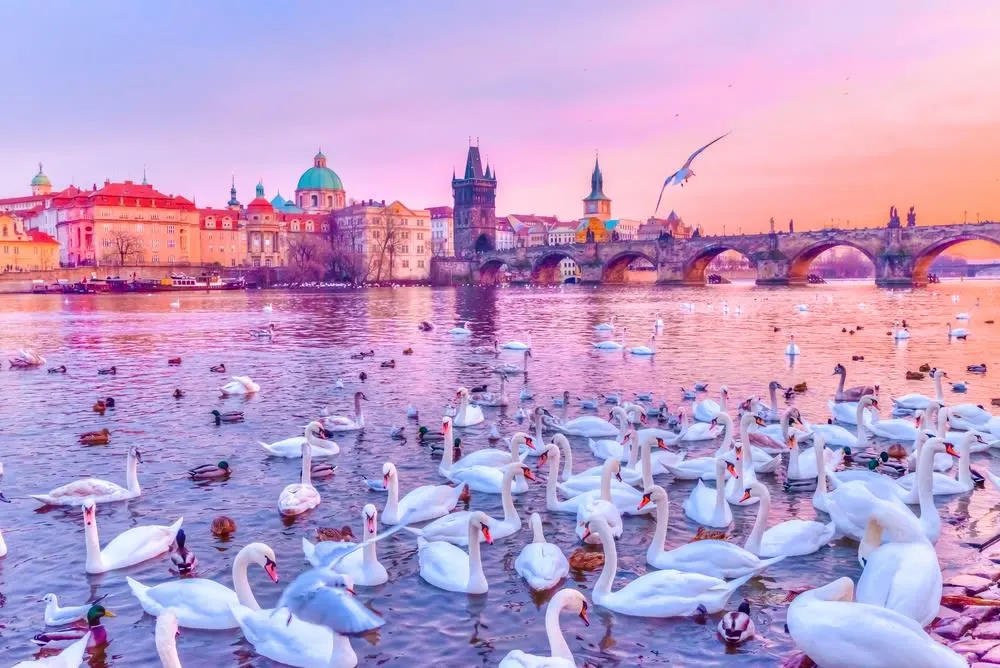
The city of Prague is indisputably the gem of Central Europe. Full of history, culture, and classic Czech pubs around every corner, Prague is teeming with nooks and crannies just waiting to be discovered. The narrow cobblestone streets and warm red rooftops give the city a homey feel, while the well-preserved medieval architecture transports you back in time. Walking across the Charles Bridge with the view of the Prague Castle will make you feel like you’re living in a fairytale, and you might as well be. As an up-and-coming destination, Prague is a perfect mix of classic and modern. New trendy cafes and bistros are always popping up, and you can always find a group of lively locals chowing down on goulash and quaffing pivo (the best beer in Europe!) at traditional Czech restaurants across the city. The clash of modernity and tradition, preservation and innovation, gives this city a mysterious air that you won’t soon forget.
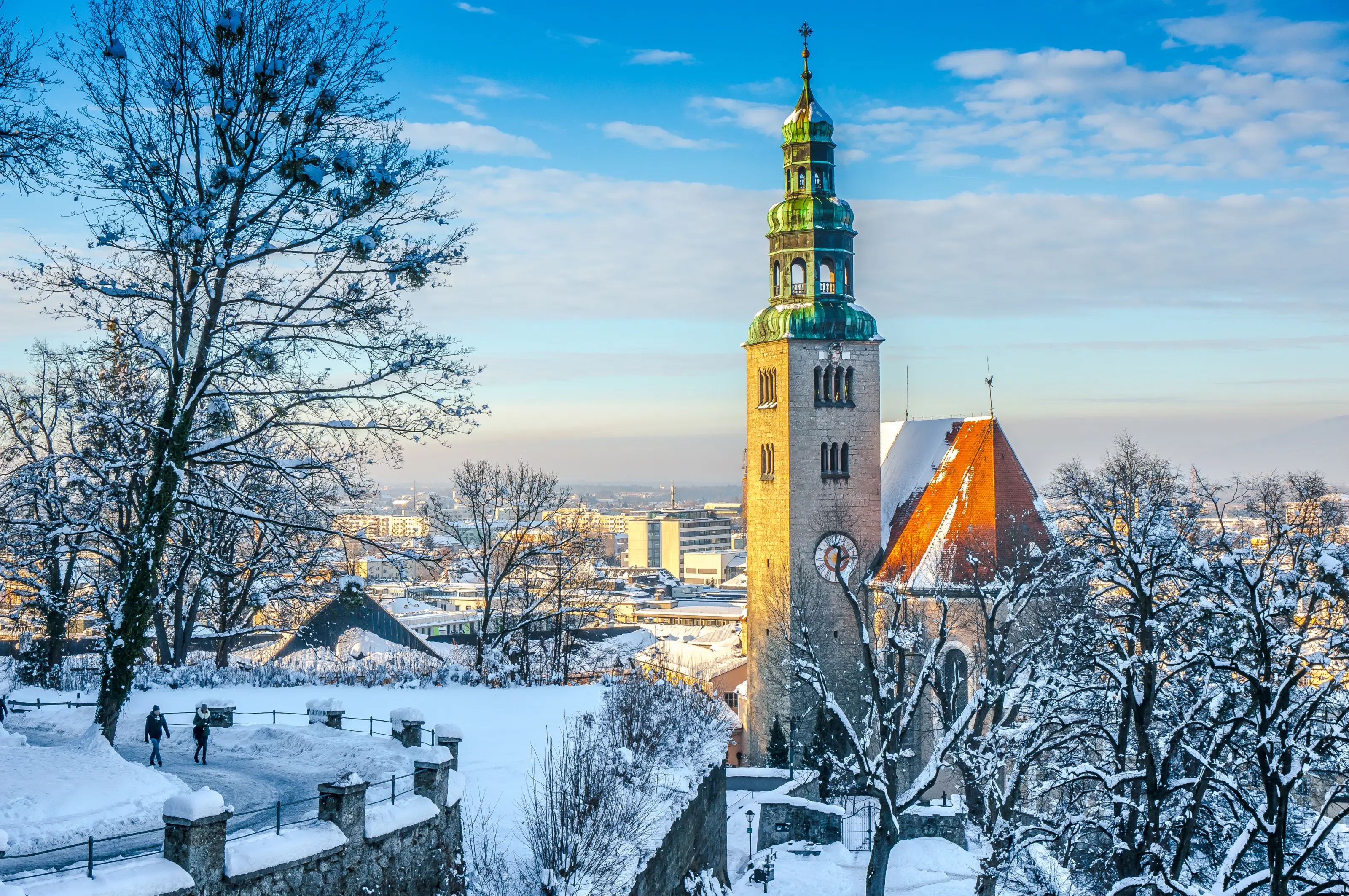
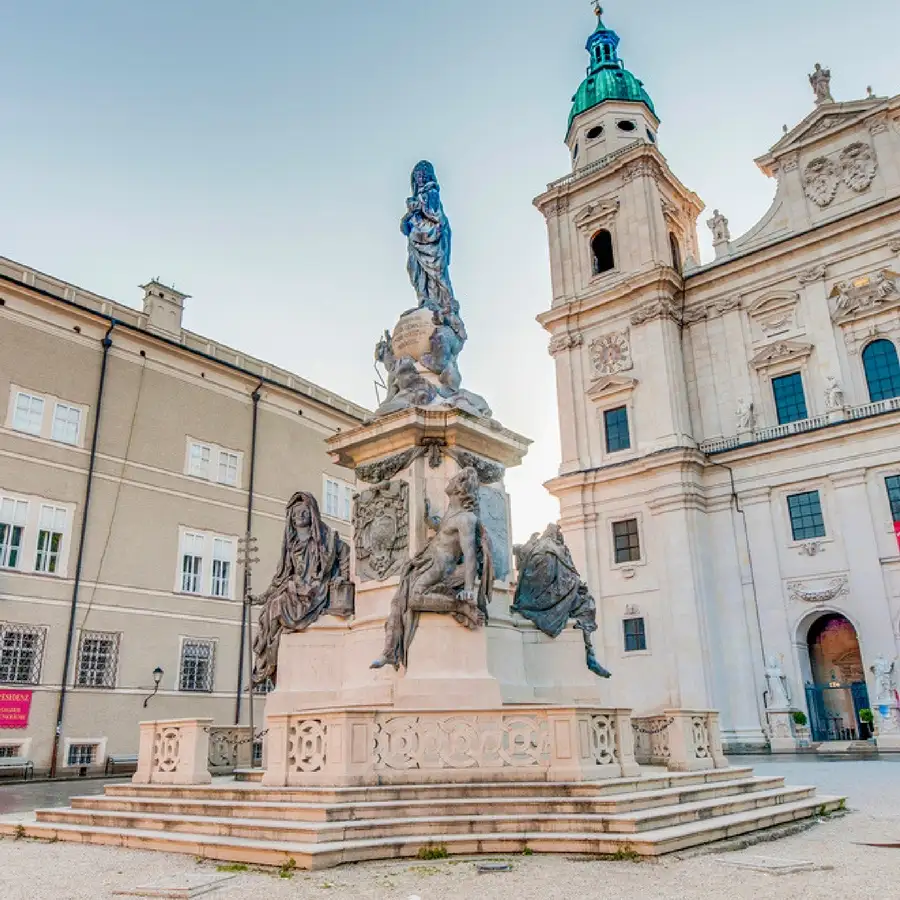
You've probably heard this before— the city of Salzburg is straight out of a fairytale. Nestled in the mountains, this romantic city's Baroque architecture with colorful domes and spires is especially striking against the ancient fortress and Austrian Alpine backdrop. If you're looking for an amazing view, climb up to Hohensalzburg Fortress, Central Europe's largest intact fortress, for a jaw-dropping panorama of the city backed by misty mountains. Perhaps most famous for being the birthplace of the renowned composer Wolfgang Amadeus Mozart and the filming location for the classic The Sound of Music, this city has much to offer. Salzburg has become an important artistic and cultural center, featuring magnificent concert halls that uphold the city's tradition of classical music every day of the year, as well as acclaimed art exhibitions and museums. If you do it right, your visit to Salzburg will immerse you in the city's unforgettable atmosphere and keep you coming back for more.
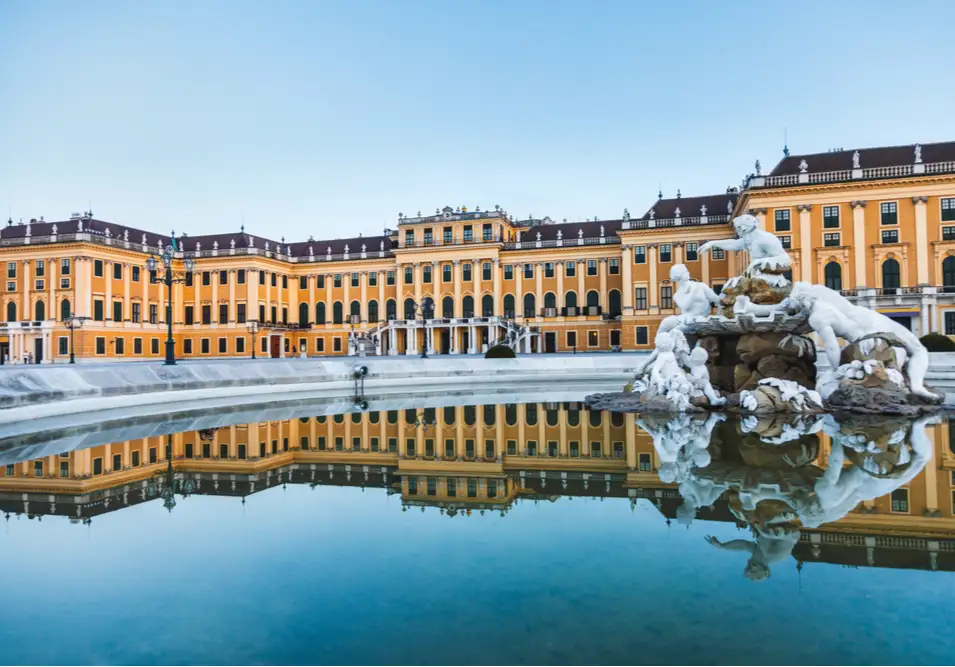
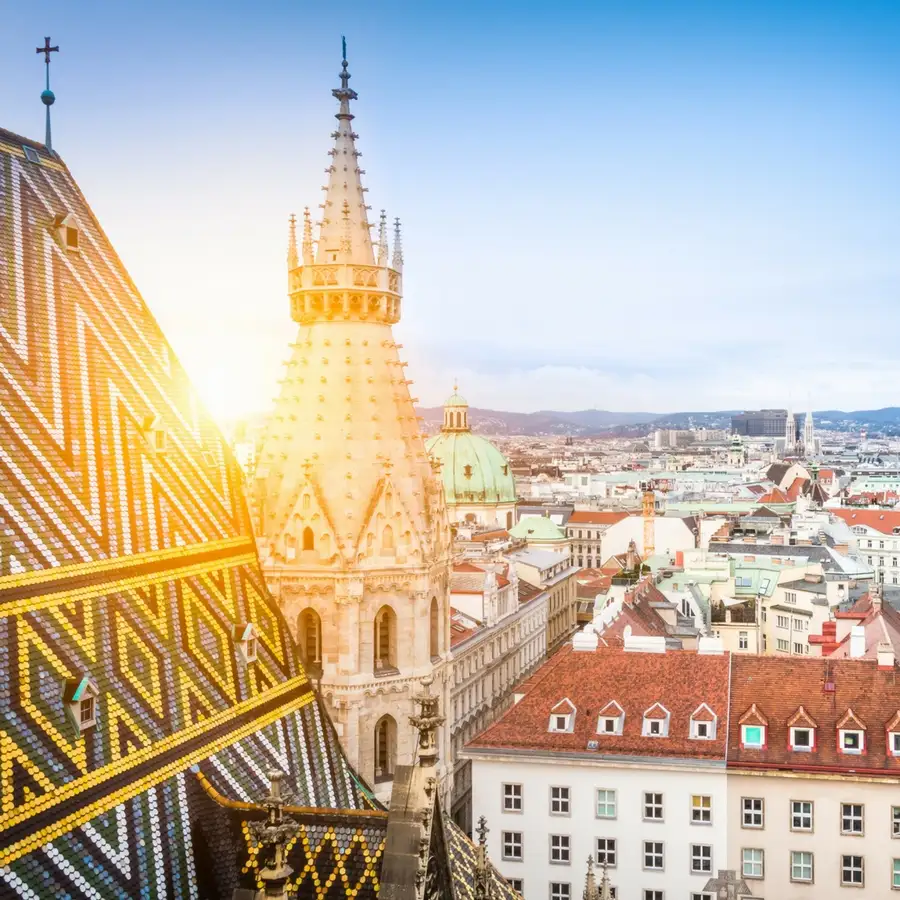
Artistic and musical, historical and elegant, Vienna is the definition of class. The seat of the Habsburg monarchy for over six centuries, it's no wonder this city is still fit for royalty. Baroque buildings and imperial palaces dominate the cityscape, while locals stride gracefully through the streets, likely on their way to a classical music concert or art exhibition. Visitors from all over the world flock to Schonbrunn Palace, historical museums, and local eateries for authentic Viennese schnitzel. Vienna is also home to world-class wining and dining. Famous dishes include Wiener schnitzel, Tafelspitz (prime boiled beef), and apfelstrudel (apple strudel), all of which pair well with a glass of fine Austrian wine. No matter how long you spend in Vienna, you'll leave with a new appreciation for the finer things in life.

Situated at the heart of Europe, Budapest is the capital of Hungary, appropriately named 'The Pearl of the Danube,' for its fixating and almost haunting beauty. Formerly two separate cities, Buda and Pest were forged into one by time, occupation, and the eight bridges that anchor them together today. From the Romans to the Communists, each occupier left its flavor profile in Budapest, evident in the famous spicy Hungarian stew known as 'goulash.' Budapest is a melting pot of history, culture, and taste, from the magnificent Baroque and neo-Gothic architecture to the Turkish thermal baths. After a long day of sightseeing, treat yourself to a glass of Tokaj, what King Louis XIV of France referred to as the "Wine of Kings, King of Wines". Budapest has a flavor to satisfy any taste.

Nearly every wall and rooftop in Dresden seems to be finished with a flourish. Defined by its ornamental baroque architecture, a power statement of Saxon royalty, Dresden is made all the more miraculous considering the city was leveled by firebombing in WWII. After the war, the city was reconstructed, brick by painstaking brick. Even under East German-Soviet rule, which usually eschewed frivolous design, buildings like the Semper Opera House were pieced back to their former glory. Restoration of the majestic Zwinger Palace and bell domed Church of Our Lady slowly followed, with the Frauenkirche only fully repaired in 2005. Arguably there is no other city in Europe that cherishes its hard-won architecture as much as Dresden. Although it is a compact city, so many of its buildings will stop you in your tracks that architecture fans will easily lose a whole day in the Old Town area. Especially during the winter months, Dresden sparkles with a joyous, uplifting ambiance. The city is recognized as having the best-ever Christmas market in all of Europe. Between the twinkling lights, the scent of hot wine and gingerbread, and the towering Christmas tree, it’s worth going out of your way to see Dresden at this time of year.

One of the most authentic, storied German destinations, Nuremberg's picturesque old town, glorious castle, and buzzing Christmas Market makes this city a time-true classic. The ideal gateway to old Bavaria, Nuremberg offers a primer in German history before you embark on the lovely journey through old Bavaria, known as the Romantic Road. Considered the capital of the Holy Roman Empire in the middle ages, Nuremberg would have felt like the center of the world as a procession of kings and emperors passed through its magnificent gates. When the German Renaissance came, Nuremberg was at its heart. Albrecht Dürer, the great German master artist, was born here, and Martin Luther called Nuremberg Germany's 'eyes and ears'. Skip forward a few centuries, and the city took a dark turn, as Nuremberg became a gathering point for the German National Socialists. Slightly outside of town, you can still find the Nazi Party Rallying Grounds, a sobering reminder of the not so distant past. If it all gets too heavy, you can end the day with a glass of rotbier (red beer) and mull it over. Nuremberg is a must-see for anyone who wants to delve into Germany's past.

The city of Prague is indisputably the gem of Central Europe. Full of history, culture, and classic Czech pubs around every corner, Prague is teeming with nooks and crannies just waiting to be discovered. The narrow cobblestone streets and warm red rooftops give the city a homey feel, while the well-preserved medieval architecture transports you back in time. Walking across the Charles Bridge with the view of the Prague Castle will make you feel like you’re living in a fairytale, and you might as well be. As an up-and-coming destination, Prague is a perfect mix of classic and modern. New trendy cafes and bistros are always popping up, and you can always find a group of lively locals chowing down on goulash and quaffing pivo (the best beer in Europe!) at traditional Czech restaurants across the city. The clash of modernity and tradition, preservation and innovation, gives this city a mysterious air that you won’t soon forget.

You've probably heard this before— the city of Salzburg is straight out of a fairytale. Nestled in the mountains, this romantic city's Baroque architecture with colorful domes and spires is especially striking against the ancient fortress and Austrian Alpine backdrop. If you're looking for an amazing view, climb up to Hohensalzburg Fortress, Central Europe's largest intact fortress, for a jaw-dropping panorama of the city backed by misty mountains. Perhaps most famous for being the birthplace of the renowned composer Wolfgang Amadeus Mozart and the filming location for the classic The Sound of Music, this city has much to offer. Salzburg has become an important artistic and cultural center, featuring magnificent concert halls that uphold the city's tradition of classical music every day of the year, as well as acclaimed art exhibitions and museums. If you do it right, your visit to Salzburg will immerse you in the city's unforgettable atmosphere and keep you coming back for more.

Artistic and musical, historical and elegant, Vienna is the definition of class. The seat of the Habsburg monarchy for over six centuries, it's no wonder this city is still fit for royalty. Baroque buildings and imperial palaces dominate the cityscape, while locals stride gracefully through the streets, likely on their way to a classical music concert or art exhibition. Visitors from all over the world flock to Schonbrunn Palace, historical museums, and local eateries for authentic Viennese schnitzel. Vienna is also home to world-class wining and dining. Famous dishes include Wiener schnitzel, Tafelspitz (prime boiled beef), and apfelstrudel (apple strudel), all of which pair well with a glass of fine Austrian wine. No matter how long you spend in Vienna, you'll leave with a new appreciation for the finer things in life.


Zoom In to the cities to see your itinerary in more detail