Explore the heart of Europe, experiencing the cultural and historical riches of the Czech Republic, Austria, and Hungary. This meticulously curated itinerary takes you from the architectural wonders of Prague's Castle District to the fairy-tale setting of Český Krumlov, and immerses you in the musical legacy of Salzburg, the imperial grandeur of Vienna, and the stunning beauty of Budapest. You'll enjoy a blend of old-world charm, elegant cities, and beautiful countryside, and visit imposing castles and opulent palaces. Private guided tours and detailed travel guidance provided by Go Real Travel's mobile app will ensure a stress-free trip.
Trip Highlights
Explore the courtyards and alleyways of Prague Castle, where history is uncovered at every step.
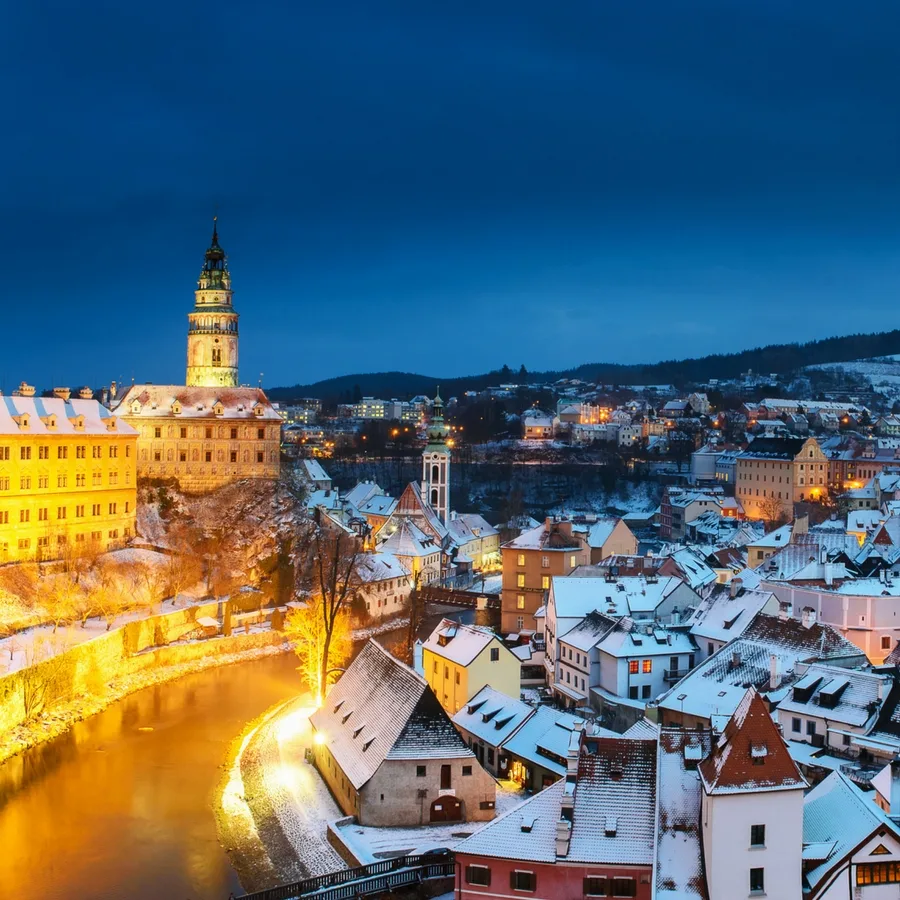
Discover the fairy-tale beauty of Český Krumlov's castle, surrounded by stunning medieval a
Ascend to the formidable Hohensalzburg Fortress for breathtaking views of Salzburg and the Alps.
Wander the lavish halls of Schönbrunn Palace in Vienna, a testament to the grandeur of the Habsburg
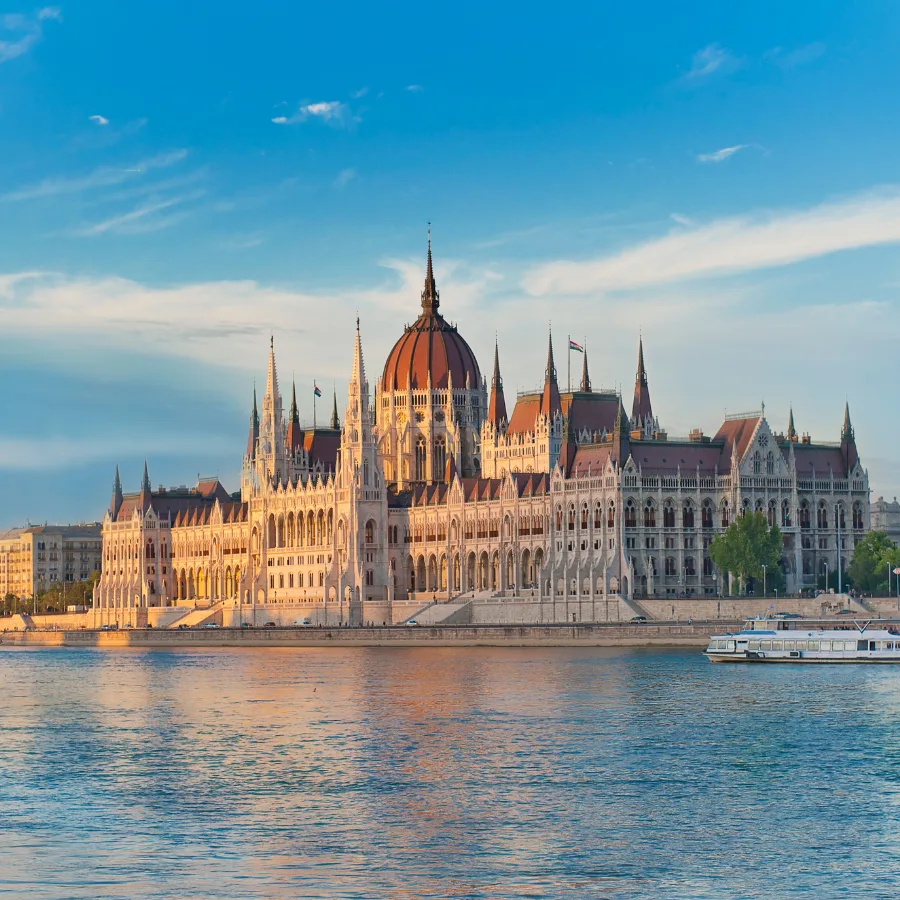
Marvel at the neo-Gothic splendor of the Hungarian Parliament building in Budapest.
Must-See Sights
Prague Castle, built in the 9th century, was once the seat of ancient Bohemian kings and today serves as the office of the President of the Czech Republic. The castle complex itself is a UNESCO World Heritage Site and covers an area of about 70,000 square meters, making it the largest castle complex in the world.
The Prague Castle complex includes historical buildings of various architectural styles, from the Gothic St. Vitus Cathedral to the Renaissance Rosenberg Palace. The history and beauty of the Prague Castle complex are awe-inspiring, as you'll see for yourself when you make your way through the buildings and down the Golden Lane. If you wish to learn more about the castle's history, buy an entry ticket to learn the Story of the Prague Castle and see the Picture Gallery. If you're looking for a view, climb up to the Great South Tower of the Cathedral.
Connecting Old Town and Lesser Town, Charles Bridge is one of the most-visited sites in Prague. It's also the oldest bridge across the Vltava River. The construction of Charles Bridge started in 1357 under the reign of King Charles IV and was finished in the 15th century, while the statues decorating the sides of the bridge were added later.
Today, Charles Bridge is packed with visitors, street performers, and vendors. Take your time walking across the bridge and enjoy the beautiful view of the Prague Castle or stop to enjoy the live music of the street performers. If you want to participate in one of the many legends about the mystical bridge, touch the gold on the base of the statue of St. John of Nepomuk, which is said to bring good luck.
Český Krumlov Castle stands guard over the picturesque little town in all its ancient glory. Originally built as a Gothic castle in 1250 by an important branch of the Rosenberg family, it continued to change hands within noble families until it finally fell into the possession of the Czech state. As you can imagine, the castle architecture transformed through all those years to become the unique work of art you see it as today.
The castle complex is directly accessible from the city center, so there’s no excuse not to explore it. Head to the castle museum, or climb to the top of the tower for panoramic views of the city. Visit the exquisite Baroque gardens, which make up the largest part of the castle grounds. Walk through the various courtyards and admire the architecture before heading inside to see the theatre, the cellars, and the preserved furnishings. No matter how much or how little of the castle grounds you explore, the beauty will take your breath away.
What’s a visit to a European city without seeing the main square? Svornosti Square is the Town Square in Český Krumlov, established in the 13th century, while the beautiful surrounding stone houses were built about a century after. However, the main landmarks in the Town Square were built even later.
The Town Square’s centerpiece is an intricate fountain, along with the Baroque plague column topped with figures of the Virgin Mary and eight saints who were said to be the patrons of the town and protectors from the disease. The column was built in the 1700s as a piece of gratitude for the eradication of the plague from the town. The most notable building on the square is House No. 1, the Town Hall. The facade of this house was created by merging two existing Gothic buildings in the 17th century and bears four coats of arms: the Kingdom of Bohemia, the Eggenbergs, the Schwarzenbergs, and finally, the town of Český Krumlov itself.
Dating back to 1077, Hohensalzburg Fortress is the main landmark of Salzburg and perched atop a cliff overlooking the city. Initially built by the archbishop to show off the power of the Catholic Church and protect the town from attacks, the fortress only ever served as a storage space and a dungeon. Because the fortress was never conquered or even attacked, it's now one of the largest fully-preserved castle complexes in Europe.
To reach the fortress, you can either hike up the hill or take a ride on the funicular, which opened in 1892 and is considered to be the oldest of its kind. At the top, there are over 8 acres to explore. Check out the terrace for a spectacular view of the Austrian Alps and the Altstadt below. Stroll through the interiors of the fortress, which still boast Gothic decorations like wood carvings and paintings. You'll get to see the Golden Hall, Golden Chamber, the dungeon, and decorated staterooms that used to belong to influential archbishops.
Schönbrunn Palace was built in the 1600s as a summer residence of the Habsburg family and today is known to be one of Europe's most beautiful Baroque palace complexes. As a result, the Schönbrunn Palace is a UNESCO World Heritage site. A wealth of history occurred within the walls of this palace: Mozart wrote music, Napoleon held conferences, and Emperor Charles I signed the document that ended the monarchy forever.
Of the 1441 rooms in the palace, 45 of them are open to the public today. Explore the regal interiors of the palace, adorned with rosewood in the Rococo style. During the warmer months, you can tour the zoo and gardens, which were opened to the public in 1779. Nowadays, it's the oldest zoo in the world and home to 700 species, some of which are endangered. The gardens and zoo are truly some sights to behold, so don't miss these while you're in Vienna.
From the ancient history of the Carpathian Basin to the Communist regime, The Hungarian National Museum paints the picture of Hungary's unique and complicated past. The museum was founded in 1802 by the father of Count István Széchényi, who was known as "the Greatest Hungarian."
You'll be able to see and feel history come alive through the museum's collection of ancient Celtic coins, medieval frescos, weapons, and armor. Learn more about Hungary's role in WWI and WWII and check out the museum's fascinating assortment of communist memorabilia.
The Central Market Hall or Great Market Hall is not only one of the largest market halls in Budapest, but also one of the most beautiful. The labyrinth of fresh produce, wine, meat, cheese, and souvenir shops is perfect if you need to find souvenirs while getting a taste of local life.
Stock up on authentic, Hungarian-made gifts ranging from traditional shirts and spicy paprika paste to one of the many bottled wines produced in Hungary. If you're in need of some sustenance, pop up to the second floor for Langos, a savory funnel cake-esque treat, which is also sold at the festive Christmas markets.
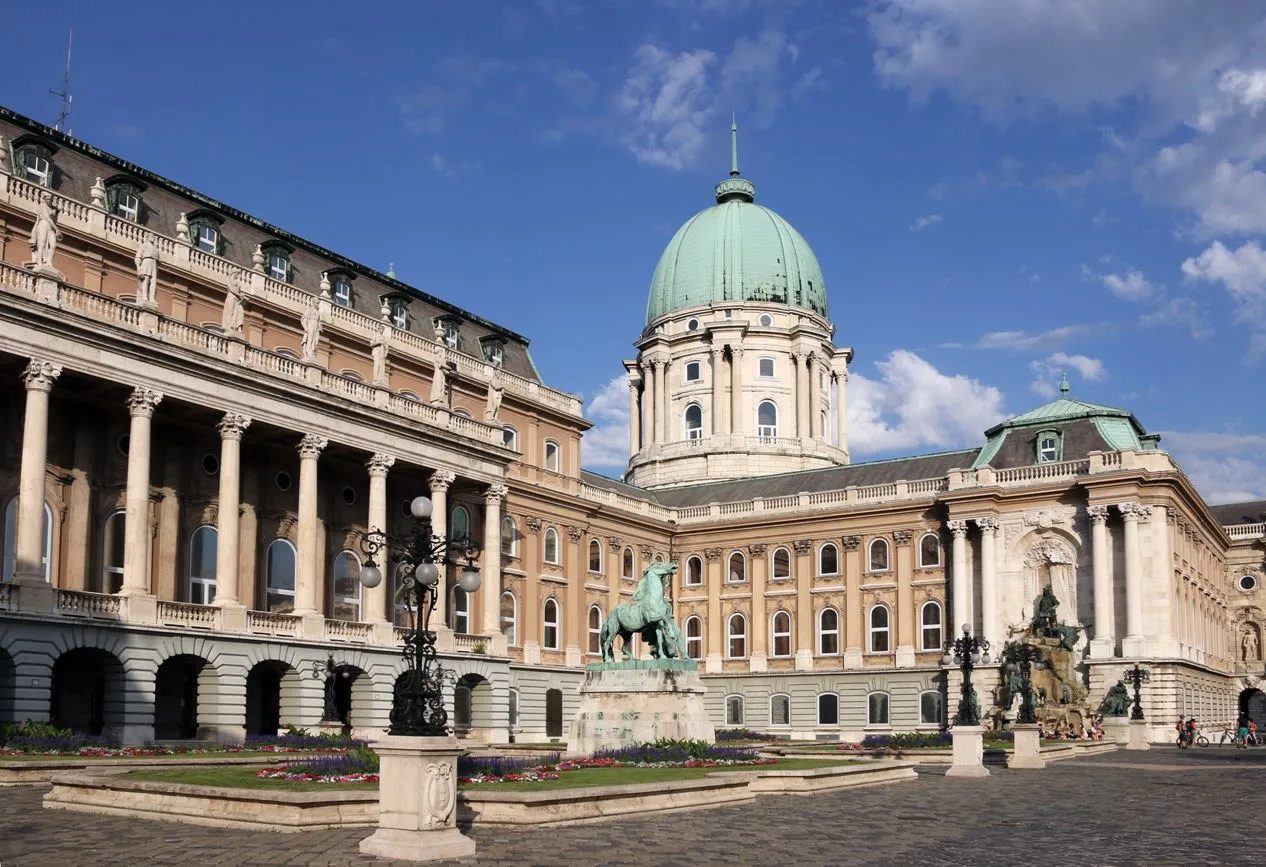
Head to the top of the Castle Hill via the funicular to reach the magnificent Baroque-style Palace complex. This hill is the historical seat of the Hungarian Kings of Budapest, while the palace is home to the Hungarian National Gallery, where you can find the works of Hungarian artists both present and past.
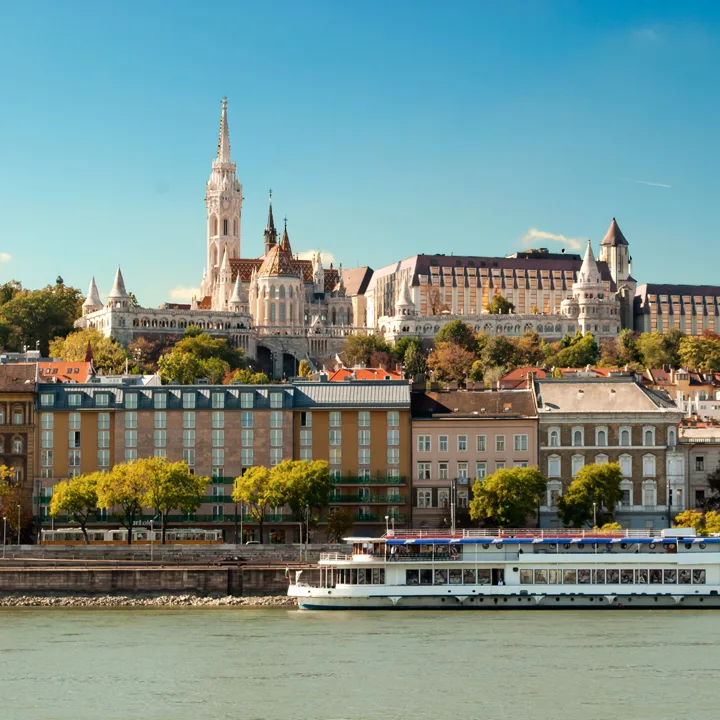
After wandering the courtyards, make your way to St Matthias Church and the neo-Gothic Fisherman's Bastion, a colonnade complete with towers to represent the seven chieftains who led their tribes into present-day Hungary. This spot is perfect for a column-framed photo of the grand Hungarian Parliament across the river below.
Central European Grand Tour Trip Itinerary, Day by Day
Arrival
Bus: 3h
Shuttle: 2h30m
Train: 2.5h
Train: 3h
Departure
Day 1
Arrive Prague
To Be Determined
Arrival in Prague Airport & Transfer by Taxi
Prague has one main airport, Václav Havel Airport Prague, where almost all visitors arrive. Taxis are available directly at the terminal exit, or you can arrange a private transfer for added convenience.
Mid-Day/Afternoon
Visit Prague's Jewish Quarter
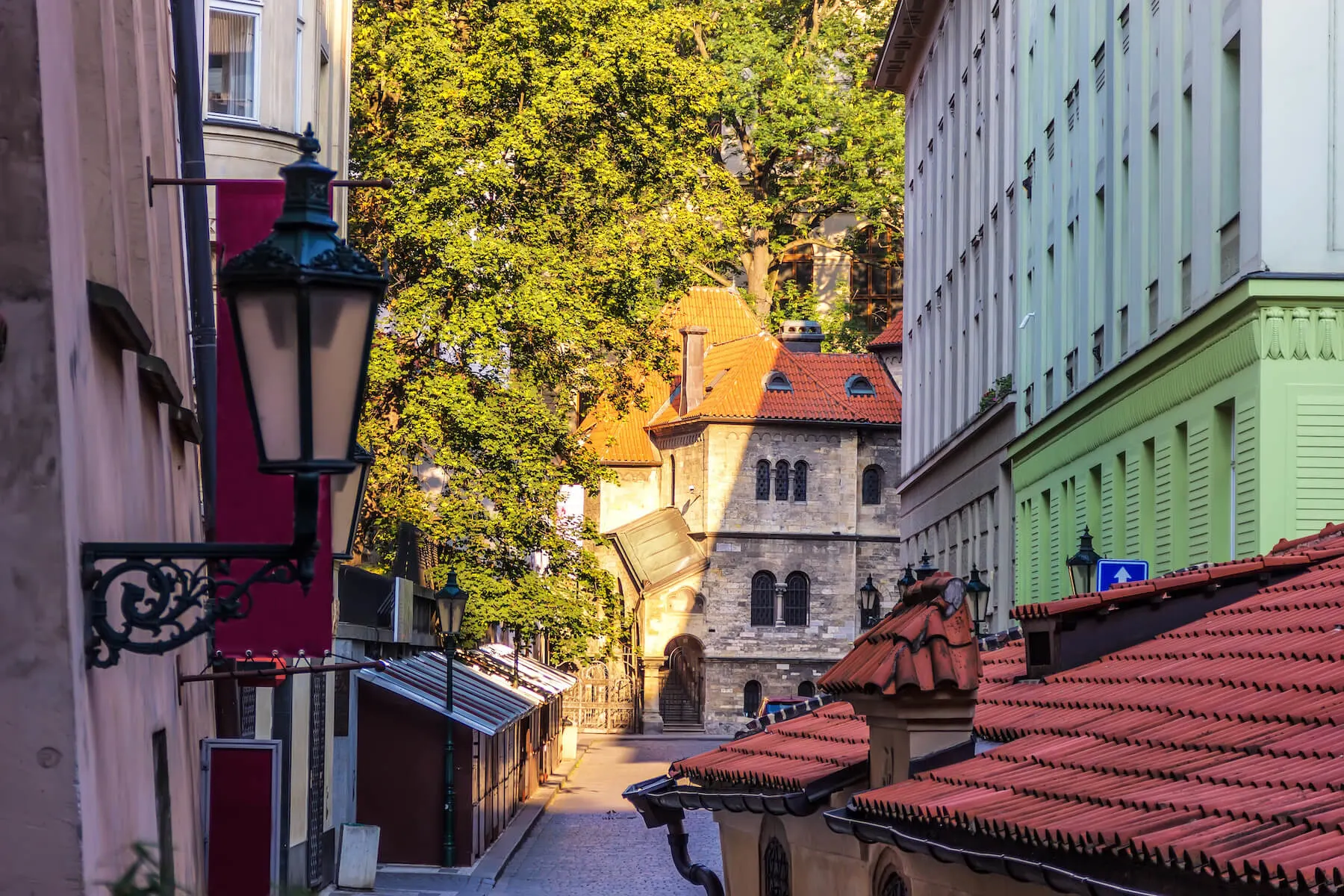
Jews have lived in Prague since its beginnings in the 10th century and have endowed it with a rich heritage. The ghetto was created in the 12th century, as Jews were forced to live separately from Christians. Despite persecution, the community prospered, but sadly, only a small minority survived the Nazi occupation. A lasting legacy remains, including synagogues, architecture, and a fascinating cemetery.
Late Afternoon/Early Evening
Wanderings in the Old Town
A visit to the Old Town transports you to an entirely different era. A labyrinth of twisting cobblestone lanes and alleys surrounds Old Town Square, which has been Prague's municipal center since the Middle Ages. The square is lined by magnificent churches and imposing Renaissance palaces. As you wander through the Old Town, you discover numerous other delights, including several beautiful churches, a plentiful supply of cozy cafes and pubs, and an outdoor market dating back to the Middle Ages.
Day 1 Arrive Prague
Day 1
Arrive Prague
Airport Transfer
Overview
Airport Transfer
Prague has one main airport, Václav Havel Airport Prague, where almost all visitors arrive. Taxis are available directly at the terminal exit, or you can arrange a private transfer for added convenience.
Jewish Quarter
Jews have lived in Prague since its beginnings in the 10th century and have endowed it with a rich heritage. The ghetto was created in the 12th century, as Jews were forced to live separately from Christians. Despite persecution, the community prospered, but sadly, only a small minority survived the Nazi occupation. A lasting legacy remains, including synagogues, architecture, and a fascinating cemetery.
Old Town
A visit to the Old Town transports you to an entirely different era. A labyrinth of twisting cobblestone lanes and alleys surrounds Old Town Square, which has been Prague's municipal center since the Middle Ages. The square is lined by magnificent churches and imposing Renaissance palaces. As you wander through the Old Town, you discover numerous other delights, including several beautiful churches, a plentiful supply of cozy cafes and pubs, and an outdoor market dating back to the Middle Ages.
prev
next
To Be Determined: Airport Transfer
Prague has one main airport, Václav Havel Airport Prague, where almost all visitors arrive. Taxis are available directly at the terminal exit, or you can arrange a private transfer for added convenience.
Mid-Day/Afternoon: Jewish Quarter
Jews have lived in Prague since its beginnings in the 10th century and have endowed it with a rich heritage. The ghetto was created in the 12th century, as Jews were forced to live separately from Christians. Despite persecution, the community prospered, but sadly, only a small minority survived the Nazi occupation. A lasting legacy remains, including synagogues, architecture, and a fascinating cemetery.
Old Jewish Cemetery
Take an unforgettable visit to one of Europe's largest medieval Jewish cemeteries.
As the Jewish Ghetto was quite cramped, there was no room to expand the cemetery. Unable to acquire further land, and not wishing to dishonor ancestors through the demolition of existing graves, Prague's Jews buried their loved ones in multiple levels. Gravestones are packed in tightly and in some areas the burials reach 12 layers!
Spanish Synagogue
Discover the synagogue considered by many to be Prague's most beautiful.
Completed in 1868, the Spanish Synagogue is the newest synagogue in Prague's Jewish Quarter, but happens to be built on the site of the former Oldest Synagogue in Prague. It is built in a stunning Spanish Moorish style as a symbol of the flowering of the Jewish culture which occurred under Muslim rule on the Iberian Peninsula.
Old-New Synagogue
See the oldest surviving synagogue in Europe and also one of Prague's earliest Gothic buildings.
When built it was Prague’s newest synagogue, but over time became its oldest – hence the “Old-New”. A beautiful ark holds the Torah and legend says its attic is the hiding place of the legendary clay Golem.
Late Afternoon/Early Evening: Old Town
A visit to the Old Town transports you to an entirely different era. A labyrinth of twisting cobblestone lanes and alleys surrounds Old Town Square, which has been Prague's municipal center since the Middle Ages. The square is lined by magnificent churches and imposing Renaissance palaces. As you wander through the Old Town, you discover numerous other delights, including several beautiful churches, a plentiful supply of cozy cafes and pubs, and an outdoor market dating back to the Middle Ages.
Old Town Square
Make sure to visit one of Europe's most important, historic, and stunning city squares.
The square is filled with rich history and surrounded by many beautiful old buildings, such as the gothic church of Our Lady before Týn and the baroque church of St. Nicholas. At the center of the square is a large statue of Jan Hus, a church reformer burnt at the stake in 1415, and a lovely and recently-restored column topped by the Virgin Mary. Today the square is filled with street performers, food stalls, and horse-drawn carriages.
Old Town Hall and Astronomical Clock
See Prague's most photographed moment when the late medieval timepiece constructed on the side of the Old Town Hall Tower comes to life at the top of the hour.
Apostles proceed from the tower’s 1410 astronomical clock hourly, flanked by figures representing vanity, greed, death, and pleasure. You can also take an elevator to the top of the Old Town Hall tower for a great view of the Old Town Square and rooftops. Tours of the town hall and its gothic cellars are also offered.
Church of Our Lady before Týn
Count the spires on the Church of Our Lady Týn before discovering the hidden courtyard behind it.
The 14th-century, Gothic church is a stunning structure with asymmetrical towers (note that the one on the right is slightly larger than the one on the left). It is the dominant feature of Old Town square and serves as an extensive gallery of Gothic, Renaissance and Early Baroque works. The church is the final resting place for the great astronomer Tycho Brahe.
Clementinum
Discover a large historical complex of buildings and courtyards "hidden in plain sight" within the Old Town.
Founded as an abbey in the 11th century and later transformed into a Jesuit university, it is the second largest complex of buildings in Prague after the castle and contains four separate churches. Guided tours begin at 10am, and include an awe-inspiring Baroque library hall and the Astronomical Tower, from which you have a beautiful view of the Old Town.
Day 2
Prague
Day 2
Prague
9:00 AM - 12:30 PM
Prague Castle & Royal Route Guided Walk
On this charming guided walk, you will explore the Prague Castle, the largest castle complex in all of Europe. To reach the castle you will trace the Royal Coronation Route and cross the Charles Bridge, whose “speaking stones” reveal the amazing and often cruel history that occurred there. Your tour guide will then take you either through the castle courtyards and into the dramatic St. Vitus Cathedral in the center of the castle complex, or through the upper part of the castle district around the oversized palaces of the old Catholic nobility and the top of the Castle Steps for incomparable views over the red rooftops of the Little Quarter.
Mid-Day to Late Afternoon
Prague Castle and the Castle District
Prague Castle is the most visited destination in Prague, and for good reason. The castle's history stretches back over a 1000 years, and it has served as the seat of government for Bohemian kings, Holy Roman Emperors, and presidents of Czechoslovakia and the Czech Republic. The castle sits impressively perched on a hill overlooking the city, providing a breathtaking and romantic view.
Late Afternoon/Early Evening
Exploring the Little Quarter
The Little Quarter is a quaint yet lively quarter of Prague tightly nestled on the slope and riverbank beneath the Prague Castle. It is filled with the homes of medieval and renaissance nobility who wanted to live as closely as possible to the castle. Picturesque side streets, beautiful churches, and impressive Baroque architecture all abound within the Little Quarter.
Day 2 Prague
9:00 AM - 12:30 PM: Royal Route Guided Tour
On this charming guided walk, you will explore the Prague Castle, the largest castle complex in all of Europe. To reach the castle you will trace the Royal Coronation Route and cross the Charles Bridge, whose “speaking stones” reveal the amazing and often cruel history that occurred there. Your tour guide will then take you either through the castle courtyards and into the dramatic St. Vitus Cathedral in the center of the castle complex, or through the upper part of the castle district around the oversized palaces of the old Catholic nobility and the top of the Castle Steps for incomparable views over the red rooftops of the Little Quarter.
Prague Castle
Prague Castle is one of the main attractions in Prague and is also the largest castle complex in the world.
The Prague Castle is the largest castle complex in the world with structures dating back to the 9th century. The St Vitus Cathedral and Basilica of St George can be found within the castle walls. The Prague Castle also includes several gardens, palaces, and a monastery. This castle was the seat of power for the Kings of Bohemia, Holy Roman Emperors, and presidents of former Czechoslovakia. Prague Castle is a UNESCO world heritage site and is one of the most visited places in the country.
Charles Bridge
Cross the river dividing Prague's most historic neighborhoods, and experience one of Europe's most iconic landmarks.
Bridge construction began in 1357 under King Charles IV (hence the name), and it was the only bridge across the Vltava River until 1841. 30 baroque statues of saints line the bridge, and it is filled with street artists and entertainers. Not to be missed.
Maltese Square & Lennon Wall
See a historic wall that has been covered in John Lennon-inspired graffiti since Communist days.
The wall has been covered in graffiti since the 1960s, and during Communism anti-regime sentiment was common. John Lennon's assassination inspired grafitti reflecting his song, Imagine, which earned the wall its current moniker. It is now a favorite gathering place for tourists, and musicians sometimes congregate there as well. Just around the corner is the Maltese Square, which is one of Prague's more quaint and relaxed public spaces, despite being just off the main tourist route.
Mid-Day to Late Afternoon: Prague Castle
Prague Castle is the most visited destination in Prague, and for good reason. The castle's history stretches back over a 1000 years, and it has served as the seat of government for Bohemian kings, Holy Roman Emperors, and presidents of Czechoslovakia and the Czech Republic. The castle sits impressively perched on a hill overlooking the city, providing a breathtaking and romantic view.
St Vitus Cathedral
Venture into a mesmerizing gothic church which is the resting place of saints, Bohemian kings, and Holy Roman emperors .
Located within the castle walls and acting as a symbol of the Czech nation, St Vitus Cathedral is the country's largest and most prominent church. Although construction on the cathedral began in 1344 it was not completed for another 600 years, although the later construction was faithful to the original medieval design. It even contains stained glass windows from the famed Czech artist Alfons Mucha. Entry to the front nave is free, although the crypts and other parts of the church are paid entry.
Golden Lane
Wander a narrow street of brightly painted and picturesque cottages literally built out from the walls of the castle.
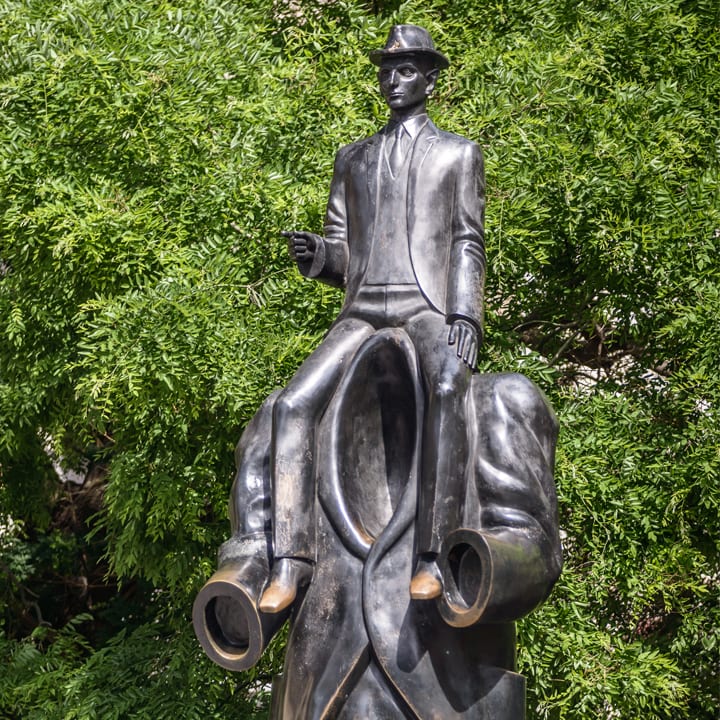
The Golden Lane is a street situated within the castle grounds. Originally built in the 16th century to house Rudolf II's castle guards, it takes its name from the goldsmiths that lived there in the 17th century. Throughout history, it's been occupied by castle guards, goldsmiths, and others, including for a short time Franz Kafka. The houses are now filled by shops.
Strahov Monastery
Wander just slightly off-the-beaten-path to discover a hilltop medieval monastery with a stucco-paneled theological hall, a vast library, and a baroque church.
Strahov Monastery was founded in 1143 and in 1420, during the Hussite wars, it was attacked and plundered by the citizens of Prague. Luckily, this was before the monastery's prize attraction was built; a magnificent library with a magnificently painted ceiling. The monastery also contains a beautiful Baroque church, and you can find one of Prague's best viewpoints in the vineyards planted near its south entrance.
Lobkowicz Palace
Take an intimate audio tour of an art-filled palace, which is narrated by its owners.
The Lobkowicz Palace is the only privately owned building in the Prague Castle complex. The excellent museum tells the fascinating tale of the noble family that once resided within it. An audio guide is narrated by actual family members, who tell the back story behind the beautiful art and artifacts their ancestors collected over the centuries, and describe their flight to America after Nazi and Communist political persecution.
Late Afternoon/Early Evening: The Little Quarter
The Little Quarter is a quaint yet lively quarter of Prague tightly nestled on the slope and riverbank beneath the Prague Castle. It is filled with the homes of medieval and renaissance nobility who wanted to live as closely as possible to the castle. Picturesque side streets, beautiful churches, and impressive Baroque architecture all abound within the Little Quarter.
Charles Bridge
Cross the river dividing Prague's most historic neighborhoods, and experience one of Europe's most iconic landmarks.
Bridge construction began in 1357 under King Charles IV (hence the name), and it was the only bridge across the Vltava River until 1841. 30 baroque statues of saints line the bridge, and it is filled with street artists and entertainers. Not to be missed.
Church of St. Nicholas
Stare in wonder at Prague's largest and most beautiful baroque church.
Construction on this elegant and incredibly ornate church began in 1745 and took 100 years and 3 generations of architects to complete. You can also climb the tower for a view.
Wallenstein Garden
Escape to these tranquil 17th-century gardens located behind the walls of the Senate palace.
Open from April to October, these grand late renaissance gardens feature a massive limestone grotto created by artificial stalactites, ornamental pools, & classically-inspired statues. Most tourists miss this hidden gem, as the gardens are reached through inconspicious passageways in Wallenstein Palace, which houses the Czech Senate, and the nearby the Malostranská Metro station.
Maltese Square & Lennon Wall
See a historic wall that has been covered in John Lennon-inspired graffiti since Communist days.
The wall has been covered in graffiti since the 1960s, and during Communism anti-regime sentiment was common. John Lennon's assassination inspired grafitti reflecting his song, Imagine, which earned the wall its current moniker. It is now a favorite gathering place for tourists, and musicians sometimes congregate there as well. Just around the corner is the Maltese Square, which is one of Prague's more quaint and relaxed public spaces, despite being just off the main tourist route.
Infant Jesus of Prague
See the Infant Jesus of Prague, a wax effigy of the baby Jesus credited with many miracles, which attracts visitors from around the world.
The church was completed in 1613 in the Baroque style and houses the 18.5-inch statue. The church is somewhat plain in comparison to most churches in Prague, but visitors come to see the Infant Jesus of Prague (il Bambino di Praga).
Day 3
Prague
Day 3
Prague
Morning to Afternoon
Excursion by Train to Karlštejn Castle
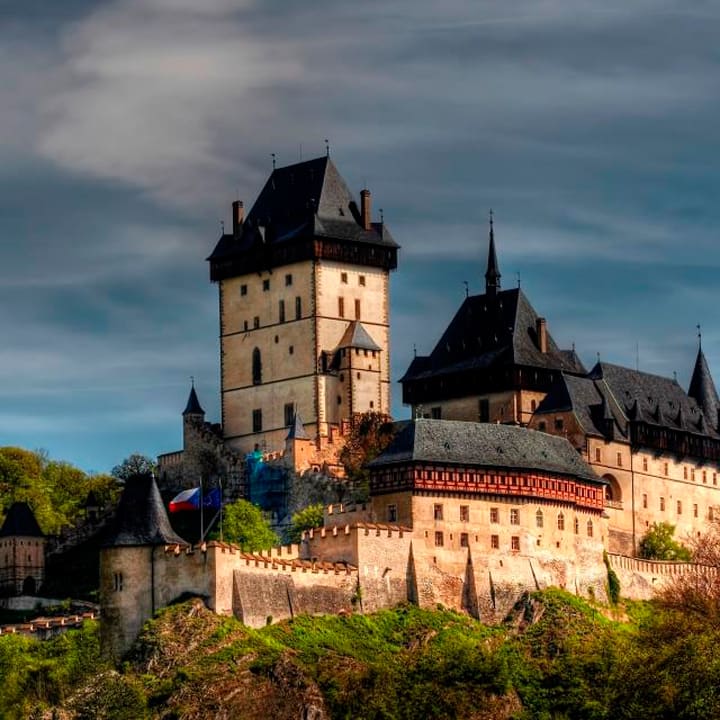
Karlštejn, i.e. Charles' Stone Castle, is the most famous castle in the Czech Republic. The fairy-tale perfect castle was founded by King Charles IV in 1348 to guard his royal treasures. It's massive towers and walls are spread out over a series of rocky peaks above the Berounka River and commands striking views of the surrounding hills.
Afternoon to Early Evening
Vyšehrad Fortress; a Favorite of the Locals
The castle of Vyšehrad was the seat of Bohemia's kings from the 11th to the 12th centuries. Due to its strategic position on a hill overlooking the Vltava River and Prague, it became an important army garrison in the 17th century, and it was transformed into a fortress with huge walls, gates, and ramparts. Walking along these ramparts will offer you wonderful views of the city and river. The interior of the fortress is now given over to a pleasant and quiet park which is a favorite of locals.
Early Evening/Evening
Vltava River Cruise
Embark on a captivating evening river cruise in Prague on the Vltava River, where the city's historic landmarks come alive under the soft glow of twilight. Glide past Prague Castle, Charles Bridge, and the Old Town while enjoying a glass of bubbly or a gourmet dining experience with fine wines. This enchanting journey offers a unique perspective of Prague's beauty, creating memories against the backdrop of the city's sparkling lights.
Day 3 Prague
Morning to Afternoon: Karlštejn Castle
Karlštejn, i.e. Charles' Stone Castle, is the most famous castle in the Czech Republic. The fairy-tale perfect castle was founded by King Charles IV in 1348 to guard his royal treasures. It's massive towers and walls are spread out over a series of rocky peaks above the Berounka River and commands striking views of the surrounding hills.
Chapel of the Holy Rood
Tour a closely-guarded and jewel-encrusted chapel decorated with amazing medieval art.
The most important and impressive part of the castle, the Chapel of the Holy Rood, is open only to special guided tours due to the fact that its walls are literally covered in precious jewels.
Afternoon to Early Evening: Vyšehrad Fortress
The castle of Vyšehrad was the seat of Bohemia's kings from the 11th to the 12th centuries. Due to its strategic position on a hill overlooking the Vltava River and Prague, it became an important army garrison in the 17th century, and it was transformed into a fortress with huge walls, gates, and ramparts. Walking along these ramparts will offer you wonderful views of the city and river. The interior of the fortress is now given over to a pleasant and quiet park which is a favorite of locals.
Brick Gate and Casemates
Venture within the fortress's massive 17th-century walls and gates.
A tour through the Brick Gate on the fortress's north side will take you through the narrow underground passageways and casemates of the fortress. You will see a historical exhibit on Vyšehrad as well as the underground Gorlice Hall, where the original statues from the Charles Bridge are stored for safe-keeping (many of the statues on the bridge are copies).
Vyšehrad Cemetery
Wander in a graveyard where many prominent Czechs are buried, such as famed composers Dvořák & Smětana.
The cemetery is filled with many tombs which are works of art in themselves, including several arcades with beautiful art-nouveau frescoes. The monumental Slavin tomb is a sort of pantheon of the Czech people, with over 55 prominent persons buried within it. Dvořák and Smětana have their own more modest graves.
Fortress Walls Viewpoint
Enjoy stunning city views from atop the fortress walls.
Prague Castle and most of the city can be seen from above the cavernous Gorlice Hall. A walk along the fortress walls is a delightful experience, as you will enjoy numerous excellent vantage points on all sides of the fortress, enjoying Prague from a different perspective without all the crowds.
Early Evening/Evening: Evening Boat Cruise
Embark on a captivating evening river cruise in Prague on the Vltava River, where the city's historic landmarks come alive under the soft glow of twilight. Glide past Prague Castle, Charles Bridge, and the Old Town while enjoying a glass of bubbly or a gourmet dining experience with fine wines. This enchanting journey offers a unique perspective of Prague's beauty, creating memories against the backdrop of the city's sparkling lights.
Day 4 Bus: 3h
Prague to Cesky Krumlov
Day 4 Bus: 3h
Prague to Cesky Krumlov
10:00 AM
Private Transfer to the Bus Station in Prague
A car service will pick you up from the N/A and deliver you to the Na Knížecí bus station, where you will catch your bus.
IMPORTANT NOTE: Please be aware the car service can fit up to 1 checked item of luggage and 1 personal item per person, such as a purse or small backpack. If you think you will have more baggage, please inform your travel consultant as this may result in an additional fee.
11:00 - 13:50
Bus to Cesky Krumlov
On this approximately 3 hour journey, you will enjoy the beautiful scenery of Bohemia on your way to Český Krumlov. The forest-covered hills, rambling fields, and many small lakes of the countryside make for a pleasant ride. Most of the bus lines servicing this connection offer modern and comfortable buses equipped with bathrooms and wi-fi. They usually also serve light refreshments during the ride.
1:50 PM
Cesky Krumlov - Bus Pickup by Taxi (or Walk to Hotel)
You will take a very short taxi ride to your hotel from the bus station. If you prefer you can also walk, most of our featured hotels are only a short distance from the bus station. Details on how to call a taxi and how much to pay are provided with your full itinerary. Walking directions are also included for those who prefer to go by foot.
3:00 PM - 4:30 PM
Guided Walk in Český Krumlov
Thousands of tourists from around the world flock to Český Krumlov to wander its narrow cobblestone lanes, visit its beautiful castle, and admire its splendid Medieval and Renaissance architecture. But most of them leave without ever understanding the town’s rich historical background or discovering its hidden secrets. With this tour, you will avoid this sad fate and have a good time in the process.
Day 4 Bus: 3hPrague to Cesky Krumlov
10:00 AM: Transfer from Prague Bus Station
A car service will pick you up from the N/A and deliver you to the Na Knížecí bus station, where you will catch your bus.
IMPORTANT NOTE: Please be aware the car service can fit up to 1 checked item of luggage and 1 personal item per person, such as a purse or small backpack. If you think you will have more baggage, please inform your travel consultant as this may result in an additional fee.
11:00 - 13:50: Bus to Cesky Krumlov
On this approximately 3 hour journey, you will enjoy the beautiful scenery of Bohemia on your way to Český Krumlov. The forest-covered hills, rambling fields, and many small lakes of the countryside make for a pleasant ride. Most of the bus lines servicing this connection offer modern and comfortable buses equipped with bathrooms and wi-fi. They usually also serve light refreshments during the ride.
1:50 PM: Walk or Taxi to Hotel
You will take a very short taxi ride to your hotel from the bus station. If you prefer you can also walk, most of our featured hotels are only a short distance from the bus station. Details on how to call a taxi and how much to pay are provided with your full itinerary. Walking directions are also included for those who prefer to go by foot.
3:00 PM - 4:30 PM: Guided Walk in Český Krumlov
Thousands of tourists from around the world flock to Český Krumlov to wander its narrow cobblestone lanes, visit its beautiful castle, and admire its splendid Medieval and Renaissance architecture. But most of them leave without ever understanding the town’s rich historical background or discovering its hidden secrets. With this tour, you will avoid this sad fate and have a good time in the process.
Český Krumlov Town Square
Immerse in the medieval charm of Cesky Krumlov's Namesti Svornosti (Main Square), the heart of its UNESCO-listed Old Town.
Namesti Svornosti, the central square of Cesky Krumlov's Old Town, is a medieval marvel, encircled by Renaissance and Baroque buildings. This square is a hub of history, culture, and vibrant city life, hosting markets, festivals, and gatherings. Its picturesque setting, highlighted by the historic Plague Column and the surrounding colorful facades, offers visitors a step back in time. The square's lively cafes and shops provide a modern contrast, making it a must-visit spot to experience the essence of Cesky Krumlov's enduring charm.
Krumlov Castle
State Castle and Chateau Český Krumlov
Renaissance and Baroque buildings & palaces with period interiors, preserved theater & art displays.
Ceske Budejovice Town Hall
Marvel at Ceske Budejovice's elegant baroque town hall with three spires built originally in the mid-16th century.
The Ceske Budejovice Town Hall, originally a mid-16th-century Renaissance structure, boasts a Baroque facade from 1727-1730 by Antonín E. Martinelli. Atop, statues symbolize civic virtues: justice, bravery, wisdom, and diligence. Since 1995, chimes with 16 bells, controlled by a computer, enhance the ambiance, playing 80 motifs varying by time and season. An iron strip in the arcade, the Vienna cubit (77.8 cm), served as a measurement standard. This historical landmark encapsulates the city's heritage, blending architectural beauty with cultural traditions.
Day 5
Cesky Krumlov
Day 5
Cesky Krumlov
9:00 AM - 12:30 PM
Guided Hike to Maidenstone Castle (Dívčí Kámen)
Hidden in a thick forest and perched high atop a rocky hill surrounded by a steep river valley, the romantic ruins of the Maidenstone Castle are a wonderfully adventurous destination for a hike. Your guided hike will take you through fields, meadows, and woods, and you will pass several small waterfalls as you follow the Křemžský stream on your way to a stone path leading up to the castle ruins. This tour is approximately 3 to 4 hours in duration.
Mid-Day/Afternoon
Explore Cesky Krumlov's Castle
Český Krumlov was ruled by the powerful Rožmberk family during the Middle Ages and Renaissance periods. As rivals to the Czech King, the Rožmberks wanted Český Krumlov to have a castle which could compete with Prague Castle in its magnificence, so they poured tremendous wealth and effort into building it.
line-holder
Note : The castle interiors are closed on Mondays, but you can still access the castle grounds.
Late Afternoon
Wander Český Krumlov's Old Town
Český Krumlov is the crown jewel of Southern Bohemia and its picture-perfect setting makes it a magnet for tourists and photographers from around the world. As the base of the powerful Rožmberk family from the 14th-16th centuries, it attracted great wealth, resulting in an abundance of medieval and Renaissance architecture delightfully huddled together between the twisting loops of the Vltava River.
Day 5 Cesky Krumlov
9:00 AM - 12:30 PM: Guided Hike to Maidenstone Castle
Hidden in a thick forest and perched high atop a rocky hill surrounded by a steep river valley, the romantic ruins of the Maidenstone Castle are a wonderfully adventurous destination for a hike. Your guided hike will take you through fields, meadows, and woods, and you will pass several small waterfalls as you follow the Křemžský stream on your way to a stone path leading up to the castle ruins. This tour is approximately 3 to 4 hours in duration.
Mid-Day/Afternoon: Cesky Krumlov Castle
Český Krumlov was ruled by the powerful Rožmberk family during the Middle Ages and Renaissance periods. As rivals to the Czech King, the Rožmberks wanted Český Krumlov to have a castle which could compete with Prague Castle in its magnificence, so they poured tremendous wealth and effort into building it.
line-holder
Note : The castle interiors are closed on Mondays, but you can still access the castle grounds.
Castle Theater
Experience the historic charm of Cesky Krumlov's golden gem, the Castle Theater, one of Europe's oldest Baroque theaters.
Cesky Krumlov's Castle Theater, dating back to the 17th century, is a Baroque architectural wonder. It's among the few theatres worldwide preserving original stage machinery, scenery, and costumes. Offering guided tours, except on Mondays, it invites visitors to delve into its rich theatrical heritage. The experience is a journey through time, showcasing well-preserved artifacts of Baroque stagecraft.
Castle Gardens
Stroll through the sprawling serene beauty of Cesky Krumlov's Castle Gardens, showcasing a splendid Baroque fountain and panoramic town views.
Cesky Krumlov's Castle Gardens offer a peaceful retreat with their meticulously designed landscape. The centerpiece is a majestic Baroque terraced fountain, complemented by formal garden arrangements. Visitors can enjoy a scenic walk that offers captivating views of the town, leading to a tranquil forested area and a serene pond at the park's rear, providing a perfect blend of art and nature.
Late Afternoon: Cesky Krumlov Old Town
Český Krumlov is the crown jewel of Southern Bohemia and its picture-perfect setting makes it a magnet for tourists and photographers from around the world. As the base of the powerful Rožmberk family from the 14th-16th centuries, it attracted great wealth, resulting in an abundance of medieval and Renaissance architecture delightfully huddled together between the twisting loops of the Vltava River.
Day 6 Shuttle: 2h30m
Cesky Krumlov to Salzburg
Day 6 Shuttle: 2h30m
Cesky Krumlov to Salzburg
8:00 AM - 10:30 AM
Cesky Krumlov - Shuttle to Salzburg
A shuttle service will pick you up directly from your hotel in Český Krumlov, N/A, and take you directly to your hotel in Salzburg, N/A. You will climb over the low-lying yet impressive Šumava Mountains. You will then make your way through the beautiful rolling countryside of northern Austria. You will then arrive in Salzburg, at the foot of dramatic Alpine mountains.
Mid-Day to Late Afternoon
Explore the Altstadt
Salzburg's Altstadt, which simply means Old Town, is one of the world's most charming city centers. It possesses an amazing wealth of Baroque buildings, as its 17th and 18th centuries archbishop rulers focused on beautifying their town rather than fighting foreign wars like neighboring states. A series of squares runs through the old town, and most you will find dominated by a beautiful church. Throughout the Altstadt, you will find markets, pleasant shops, and cozy restaurants.
Late Afternoon/Early Evening
Explore the Neustadt and Mirabell Palace Gardens
On the right bank of Salzach river lies the Neustadt (New Town). Although it may be just a bit newer than the Altstadt, it still boasts hundreds of years of history in it's winding and narrow Medieval lanes. The Mirabell Palace, a Baroque masterpiece built in 1606 by the Prince-Archbishop of Salzburg for his concubine, is the most famous site in the Neustadt. As impressive as the palace and its interior are, the elaborate gardens surrounding the palace are more famous than the palace itself.
Day 6 Shuttle: 2h30mCesky Krumlov to Salzburg
8:00 AM - 10:30 AM: Shuttle from Cesky Krumlov to Salzburg
A shuttle service will pick you up directly from your hotel in Český Krumlov, N/A, and take you directly to your hotel in Salzburg, N/A. You will climb over the low-lying yet impressive Šumava Mountains. You will then make your way through the beautiful rolling countryside of northern Austria. You will then arrive in Salzburg, at the foot of dramatic Alpine mountains.
Mid-Day to Late Afternoon: Old Town (Altstadt)
Salzburg's Altstadt, which simply means Old Town, is one of the world's most charming city centers. It possesses an amazing wealth of Baroque buildings, as its 17th and 18th centuries archbishop rulers focused on beautifying their town rather than fighting foreign wars like neighboring states. A series of squares runs through the old town, and most you will find dominated by a beautiful church. Throughout the Altstadt, you will find markets, pleasant shops, and cozy restaurants.
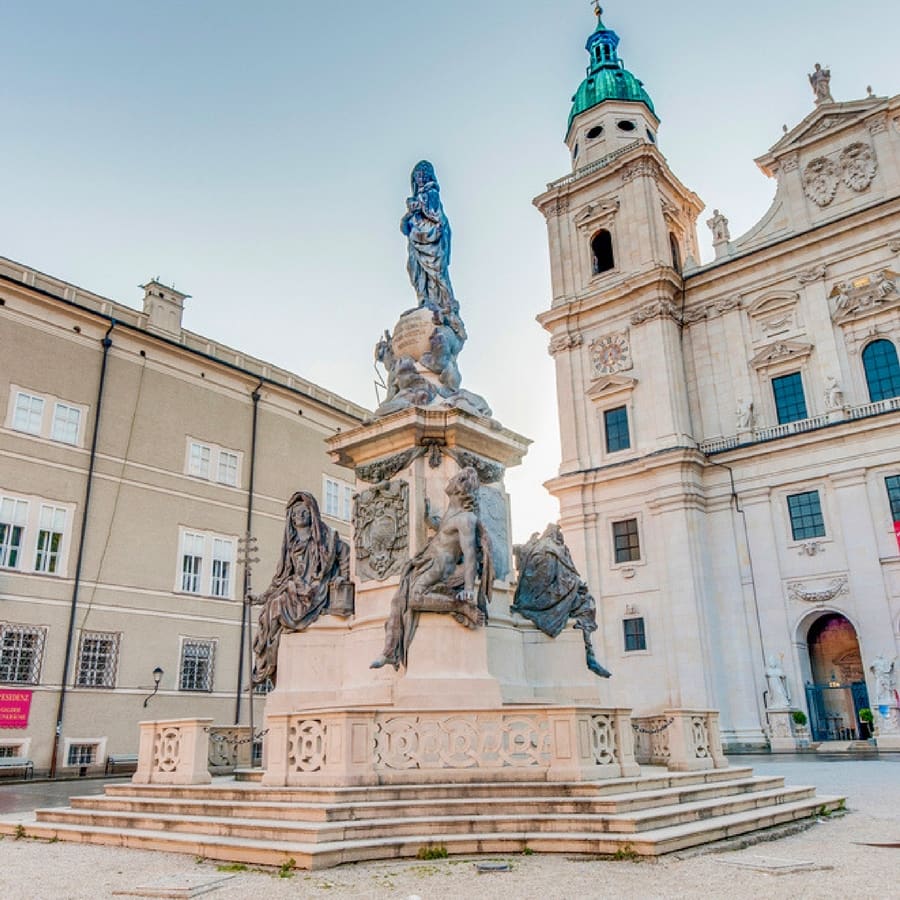
Salzburg Cathedral
Step beneath Salzburg Cathedral’s immense dome to experience the monumental Baroque church at the heart of the city.
The first cathedral at this location was founded in 774 A.D. The current cathedral was built between 1614-1628 and is a masterpiece of baroque architecture. The cathedral was largely destroyed by an Allied bomb in WWII but was restored by 1959. One of the most significant treasures in the cathedral is the Baptismal Font, which was cast in 1321 and rests on copper lions dating back to the 1100s.
Entry should be 7 € for adults and the cathedral closes between 5 - 7 PM depending on the season.
Mozart Birthhouse
Understand Mozart and his music better by discovering the remarkable childhood behind the composer, from his earliest lessons with his father to the concert tours that made him famous across Europe before he was even a teenager.
Wolfgang Amadeus Mozart was born here at Getreidegasse 9 on January 27, 1756, and grew up with his parents, Leopold and Anna Maria, and his musically gifted older sister Nannerl. Leopold, himself a composer, violinist, and respected music teacher, recognized his son’s extraordinary abilities early; by five or six, Wolfgang was performing and composing, and soon he and Nannerl were appearing before aristocratic audiences across Europe on ambitious tours organized by their father.
Today the birthplace is a museum focused on Mozart as both a person and musician, displaying family possessions and original instruments including his childhood violin; adult admission is currently €18, while entry is included with the Salzburg Card.
Felsenreitschule Concert Hall
Sing Eidelweis in the concert venue made famous by The Sound of Music.
You can visit the concert halls of the world's most prestigious international music festival, the Salzburger Festspiele. The Salzburg Festival Halls grew from the former stables and riding schools of Salzburg’s prince-archbishops, first established here under Wolf Dietrich von Raitenau and gradually converted into performance spaces after the Salzburg Festival began in 1920. The most dramatic example is the Felsenreitschule, where 96 arcades were carved into a former stone quarry in 1693 for spectators at equestrian displays, while construction of the Großes Festspielhaus required blasting away some 55,000 cubic meters of the mountain to fit the enormous modern theater behind the historic façade.
The 50-minute tour (provided in English and German simultaneously) includes all the major venues and many backstages as well.
Late Afternoon/Early Evening: Neustadt
On the right bank of Salzach river lies the Neustadt (New Town). Although it may be just a bit newer than the Altstadt, it still boasts hundreds of years of history in it's winding and narrow Medieval lanes. The Mirabell Palace, a Baroque masterpiece built in 1606 by the Prince-Archbishop of Salzburg for his concubine, is the most famous site in the Neustadt. As impressive as the palace and its interior are, the elaborate gardens surrounding the palace are more famous than the palace itself.
Mirabell Palace Gardens
Stroll this tranquil garden amidst the city hubbub and sing "Do-Re-Me" .
Within the gardens, you will discover not only greenery and flowers but also statues of a pegasus, unicorns, lions and other exotic animals, as well as a gnome garden, grand staircases, fountains, and other picturesque spots. Sound of Music fans will recognize it, as this is where several parts of the "Do-Re-Me" song were filmed. Maria and the children march around the pegasus statue and fountain, race through the lattice garden tunnels, pose at the garden gates, and pet the gnomes on the head. Not much of the palace interior is open to visitors, however, the best part of the palace, a marble staircase lined by Raphael Donner statues, is open to those who know how to find it. The corridor to the staircase can be found in the passage that connects the palace courtyard to the gardens and the Pegasus fountain. If you are coming from the courtyard, the door to the corridor is on your right. You will find the staircase within a few steps.
Linzer Gasse
Hang out with locals on this pedestrian street lined by shopping and restaurants.
Linzer Gasse has served as an important route since Roman times. Historically associated with merchants and craftsmen, many of its medieval townhouses survived in restored form after a devastating fire swept through the neighborhood in 1818. Look for the former home of Paracelsus at No. 3, and farther along the street, St. Sebastian’s Church and Cemetery; Linzer Gasse also provides access to the steep historic route up the Kapuzinerberg. Just look for the gateway passage, which is located on the right side of the Linzer Gasse if you are coming from the river and head up the mountain side.
Day 7 Train: 2.5h
Salzburg to Vienna
Day 7 Train: 2.5h
Salzburg to Vienna
9:30 AM - 12:00 PM
Guided Walking Tour of Salzburg
Salzburg is simply overwhelming in all the best ways. It is alive with fascinating history, grandiose and sublime architecture fills every street and square, culture and music permeate the atmosphere, and it is surrounded by breath-taking natural scenery. This guided tour with a local will provide the context needed to bring all of this beauty into perspective, and to connect the physical city to its history, culture, and environment.
Mid-Day/Afternoon
Visit to the Hohensalzburg Fortress
The Festung Hohensalzburg dominates Salzburg, appearing simultaneously formidable and enticing. From one side of the fortress you will enjoy a breathtaking view of the city and from the other a beautiful view of the nearby Alps. In addition to touring the fortress staterooms, you can also visit the Fortress Museum, a Marionette Museum, the Torture Chamber, an observation tower, and more.
Afternoon/Late Afternoon
The Mönchsberg & Augustinian Beer Hall
Although tiny in comparison to the mountains of the nearby Alps, the Mönchsberg (Monk’s Mountain) dominates the Altstadt. While the highest portion of the mountain is occupied by the Fortress Hohensalzburg, the rest of the mountain is covered by idyllic forests and pastures, romantic homes, and castle ruins. A stroll through this enchanting landscape also affords numerous beautiful views of Salzburg's Altstadt below. Perhaps best of all, it can all be enjoyed away from the crowds of the city. The Salzburg Card covers the cost of an elevator built into the side of mountain which will take you to the top!
6:50 PM
Transfer to Station by Taxi or Public Transport
Most trains depart from Salzburg Main Station (Salzburg Hbf) station, the largest station in the city. Before spending money on a transfer, be sure to check whether your hotel is within easy walking distance. Also consider that public transport is the cheapest and sometimes fastest option. If staying at a hotel, they can order a reliable taxi. Some private transfers will even help with your bags. Uber is also available for those with the app.
19:52 - 22:22
Rail Journey from Salzburg to Vienna
The scenic journey on the comfortable train will take about two and a half hours. The journey is aboard a comfortable, modern train with wi-fi, provided either by the Austrian rail company or a private rail carrier called Westbahn. The verdant rolling countryside of northern Austria makes for a pleasant voyage, and on clear days, you can also enjoy a view on the Alps in the distance from the right side of the train. You also have detailed instructions below for the voyage, as well as a translation and explanation of your tickets in your ticket booklet.
10:22 PM
Arrival and Transfer by Taxi or Public Transport
Upon arrival in Vienna, you will exit the rail station and proceed to the taxi stand where you will find taxis waiting for arriving passengers. Taxis in Vienna are generally reliable and honest and are less expensive than using a pre-arranged pick up service for your transfer to the Hotel. Detailed arrival information and instructions for taking a taxi are provided in the Full-Length itinerary with purchase of an itinerary.
Day 7 Train: 2.5hSalzburg to Vienna
9:30 AM - 12:00 PM: Guided Walking Tour of Salzburg
Salzburg is simply overwhelming in all the best ways. It is alive with fascinating history, grandiose and sublime architecture fills every street and square, culture and music permeate the atmosphere, and it is surrounded by breath-taking natural scenery. This guided tour with a local will provide the context needed to bring all of this beauty into perspective, and to connect the physical city to its history, culture, and environment.
Mozartplatz
One of several grand squares in the center of Altstadt in Salzburg.
One of several grand squares in the center of Altstadt in Salzburg. In the Mozartplatz you can find a statue of the famous composer.
Salzburg Cathedral
Step beneath Salzburg Cathedral’s immense dome to experience the monumental Baroque church at the heart of the city.
The first cathedral at this location was founded in 774 A.D. The current cathedral was built between 1614-1628 and is a masterpiece of baroque architecture. The cathedral was largely destroyed by an Allied bomb in WWII but was restored by 1959. One of the most significant treasures in the cathedral is the Baptismal Font, which was cast in 1321 and rests on copper lions dating back to the 1100s.
Entry should be 7 € for adults and the cathedral closes between 5 - 7 PM depending on the season.
Mid-Day/Afternoon: Hohensalzburg Fortress
The Festung Hohensalzburg dominates Salzburg, appearing simultaneously formidable and enticing. From one side of the fortress you will enjoy a breathtaking view of the city and from the other a beautiful view of the nearby Alps. In addition to touring the fortress staterooms, you can also visit the Fortress Museum, a Marionette Museum, the Torture Chamber, an observation tower, and more.
Fortress Funicular
Ascend the steep mountain to the fortress in seconds on the fortress funicular railway.
Hohensalzburg Fortress was never taken by force, although many attempts were made over the centuries. Fortunately, reaching it today is much easier: a steep funicular carries visitors directly up to the fortress. A round-trip Fortress Card costs €19 and includes admission to the fortress attractions, with the exception of the State Apartments and Theatre, which require an additional €3.40 ticket.
Fortress Museums and Interior
Experience the impressive splendor and craftmanship of the castle interior.
The State Apartments/Regency Chambers (Fürstenzimmer) are the top attraction within the fortress. These rooms were built as a showcase for state functions and to receive foreign visitors and dignitaries. You can also visit the Fortress Museum, a Marionette Museum, and the WWI-focused Rainer Museum.
Nonnberg Abbey
Apart from featuring in The Sound of Music , Nonnberg Abbey is also one of the world’s oldest continuously operating convents, where medieval architecture, views across the city, and the real story behind the Sound of Music come together.
Founded around 712–715 by St. Rupert, Nonnberg has remained a Benedictine convent for more than 1,300 years, with St. Erentrudis serving as its first abbess. The abbey later became famous through Maria Kutschera, who was a novice here before the abbess sent her to care for the widowed Georg von Trapp’s children—beginning the real-life story that inspired The Sound of Music.
Visitors cannot enter the working convent itself, but the abbey church and cemetery are freely accessible (and almost empty of tourists); inside the church, look for Romanesque frescoes, a Late Gothic winged altar, and the crypt containing the tomb of St. Erentrudis. Since it is usually empty, you must pay to light up the Romanesque frescoes and a Gothic altar, but this is half of a Euro well spent (especially in the case of the altar). Although you are unlikely to see large groups of nuns in black habits singing in unison as they wonder what to do with a problem like Maria, you may hear them from their enclosed choir during morning prayer or at evening Vespers.
Fortress Terrace
Take in a breathtaking view of the nearby Alps.
The terrace of the fortress offers an absolutely stunning view of the Alps. You can see the Untersberg especially well. It was the mountain which the Von Trapp family climbed at the end of The Sound of Music to escape Austria. Ironically, it's on the Bavarian border, so they were actually climbing into Germany. In reality they took a train to Italy.
Afternoon/Late Afternoon: Mönchsberg
Although tiny in comparison to the mountains of the nearby Alps, the Mönchsberg (Monk’s Mountain) dominates the Altstadt. While the highest portion of the mountain is occupied by the Fortress Hohensalzburg, the rest of the mountain is covered by idyllic forests and pastures, romantic homes, and castle ruins. A stroll through this enchanting landscape also affords numerous beautiful views of Salzburg's Altstadt below. Perhaps best of all, it can all be enjoyed away from the crowds of the city. The Salzburg Card covers the cost of an elevator built into the side of mountain which will take you to the top!
Augustinian Beer Hall
Quaff a beer in Salzburg's favorite and most historic brewery.
At the foot of the Mönchsberg, in the village-like neighborhood of Mülln, lies Austria's largest beer hall. Since 1621 it has served the famously delicious brew of the Augustinian monks. Although it attracts many visitors, it remains a favorite among locals, especially in the warmer months when the beer garden is open. Even if you don't drink beer, it is still a great way to try some traditional Austrian cuisine and mingle with Salzburgers in a wonderfully authentic atmosphere.
Richterhöhe
Discover these castle ruins which most visitors never find and enjoy unique views of the fortress and the Alps.
The Richterhöhe castle ruins date back to the year 1367. After the castle became obsolete, it's courtyard actually provided an ideal locale for grape growing. Vineyards therefore soon took over the bailey and can still be seen today. The most outstanding feature of the Richterhöhe is the amazing panoramic view it offers. It is one of the best views in all of Salzburg, and you will likely have it all to yourself.
6:50 PM: Transfer to Rail Station
Most trains depart from Salzburg Main Station (Salzburg Hbf) station, the largest station in the city. Before spending money on a transfer, be sure to check whether your hotel is within easy walking distance. Also consider that public transport is the cheapest and sometimes fastest option. If staying at a hotel, they can order a reliable taxi. Some private transfers will even help with your bags. Uber is also available for those with the app.
19:52 - 22:22: Train from Salzburg to Vienna
The scenic journey on the comfortable train will take about two and a half hours. The journey is aboard a comfortable, modern train with wi-fi, provided either by the Austrian rail company or a private rail carrier called Westbahn. The verdant rolling countryside of northern Austria makes for a pleasant voyage, and on clear days, you can also enjoy a view on the Alps in the distance from the right side of the train. You also have detailed instructions below for the voyage, as well as a translation and explanation of your tickets in your ticket booklet.
10:22 PM: Transfer from Rail Station
Upon arrival in Vienna, you will exit the rail station and proceed to the taxi stand where you will find taxis waiting for arriving passengers. Taxis in Vienna are generally reliable and honest and are less expensive than using a pre-arranged pick up service for your transfer to the Hotel. Detailed arrival information and instructions for taking a taxi are provided in the Full-Length itinerary with purchase of an itinerary.
Day 8
Vienna
Day 8
Vienna
9:00 AM - 11:30 AM
Guided Walk through Vienna's Inner City
This tour takes you back in history to explore the Vienna that stood within the old city walls. You will learn about the humble beginnings of Vienna before it became the capital of a great empire and one of the most important cities in Europe. You will discover how Vienna's early inhabitants lived and how they left their mark on the city and its beautiful Medieval, Renaissance, and Baroque architecture.
Mid-Day/Afternoon
Experience the Imperial Vienna
Discover the very heart of the Habsburg Empire that once covered most of central Europe. Within the vast Hofburg Palace complex, which was once home to Austria’s emperors and their administrators, you will find palaces, museums, a famed riding hall, the Austrian national library, and much more. The State Opera House and other major monuments are also nearby. Majestically stunning, the buildings and squares of Imperial Vienna still evoke awe in the observer even if the Empire they were built for is now long gone.
Late Afternoon/Early Evening
Exploring Vienna's Inner City
When the Viennese say they are going “into the city”, they are talking about the Inner City (Innere Stadt). The Inner City corresponds to Vienna’s original medieval city, which was once surrounded by defensive walls that stood where the Ringstrasse (Ring Street) now runs. A warren of medieval alleyways crowded into the protected space between the walls, creating a dense network of pedestrian streets that remains to this day.
Evening/Late Evening
Dine with locals in the Spittelberg Quarter
One of the most enjoyable places for an evening out in Vienna is the Spittelberg quarter. Its narrow lanes are filled with pleasant traditional restaurants. The Spittelberg Quarter’s history stretches back to the 1600’s when the Austrian rulers imported artisans and servants from Hungary, Croatia, and other subject lands to help serve the Emperor’s court.
Day 8 Vienna
9:00 AM - 11:30 AM: Guided Walk of the Inner City
This tour takes you back in history to explore the Vienna that stood within the old city walls. You will learn about the humble beginnings of Vienna before it became the capital of a great empire and one of the most important cities in Europe. You will discover how Vienna's early inhabitants lived and how they left their mark on the city and its beautiful Medieval, Renaissance, and Baroque architecture.
Mid-Day/Afternoon: Imperial Vienna
Discover the very heart of the Habsburg Empire that once covered most of central Europe. Within the vast Hofburg Palace complex, which was once home to Austria’s emperors and their administrators, you will find palaces, museums, a famed riding hall, the Austrian national library, and much more. The State Opera House and other major monuments are also nearby. Majestically stunning, the buildings and squares of Imperial Vienna still evoke awe in the observer even if the Empire they were built for is now long gone.
State Opera House
Visit the famous opera house on a guided tour, or better yet, enjoy a world-class performance.
Once the most pre-eminent music hall in the entire Austro-Hungarian Empire, it still dwarfs its surroundings. It was mostly destroyed in bombing during WWII, but the lavish and stunning foyer was encased in a protective structure and saved, and the rest was rebuilt. Just across from the State Opera house is the famous Hotel Sacher, home of the Sachertorte.
Imperial Treasury
See firsthand the treasures collected by Austrian emperors over the last 1,000 years.
The Imperial Treasury is today a museum collection of the secular and religious treasures amassed by the Austrian emporers. You'll see crowns, coronation robes, scepters, bejeweled swords, precious gems, religious relics, and much more. Be sure to get an audio guide.
Spanish Riding School
See an equestrian performance from a world-famous riding school dating back to 1572.
Originally founded in order to train horses for the complicated maneuvers necessary in battle, the riding school today is dedicated to the preservation of classical dressage and the training of the renowned white Lipizzaner stallions. It offers regular demonstrations & shows and is located in the interior of a palace.
Café Central
Dine in an elegant 19th century cafe.
The soaring gothic ceilings and fine cuisine of the Café Central made it the frequent haunt of historic figures such as Freud and Trotsky. Reservations are highly recommended.
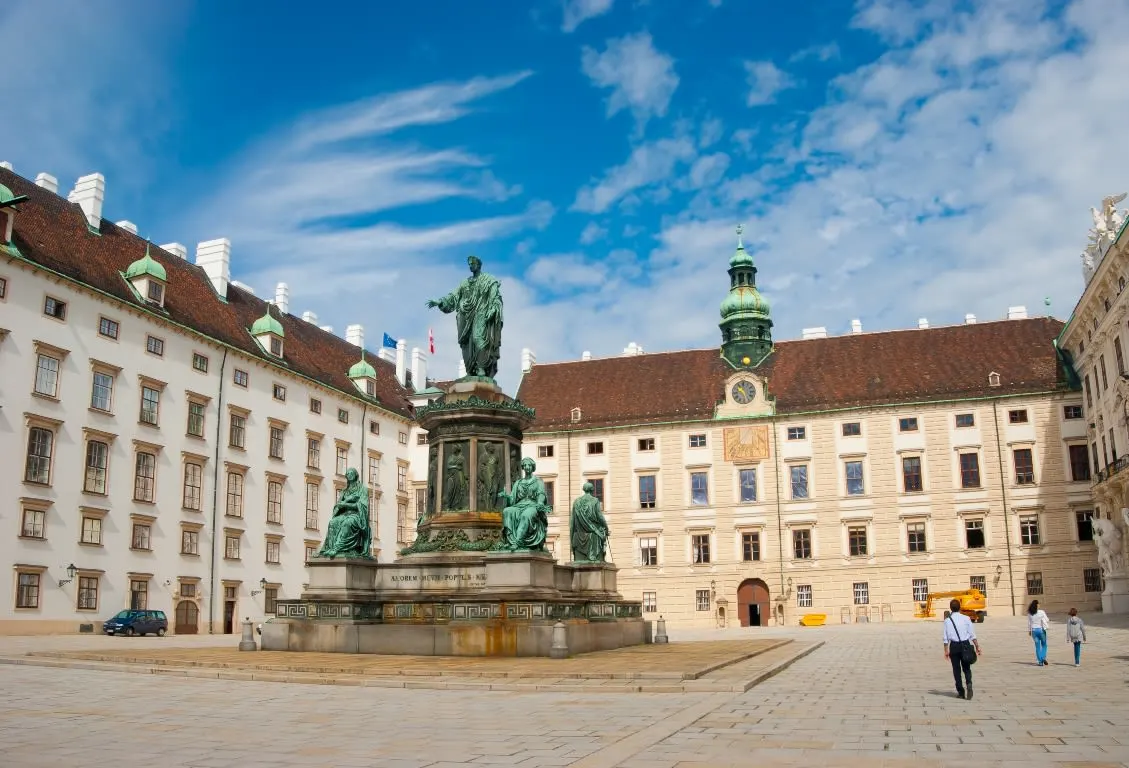
Hofburg Palace
Tour the palaces and courtyards of the massive Hofburg Palace complex.
The complex consists of numerous palaces which once housed the imperial family during the winter months, and also held the offices which were used to administer the state. They now hold museums and collections from the imperial past. There are also grand plazas and pleasant gardens, such as the enchanting Burggarten.
Late Afternoon/Early Evening: Inner City
When the Viennese say they are going “into the city”, they are talking about the Inner City (Innere Stadt). The Inner City corresponds to Vienna’s original medieval city, which was once surrounded by defensive walls that stood where the Ringstrasse (Ring Street) now runs. A warren of medieval alleyways crowded into the protected space between the walls, creating a dense network of pedestrian streets that remains to this day.
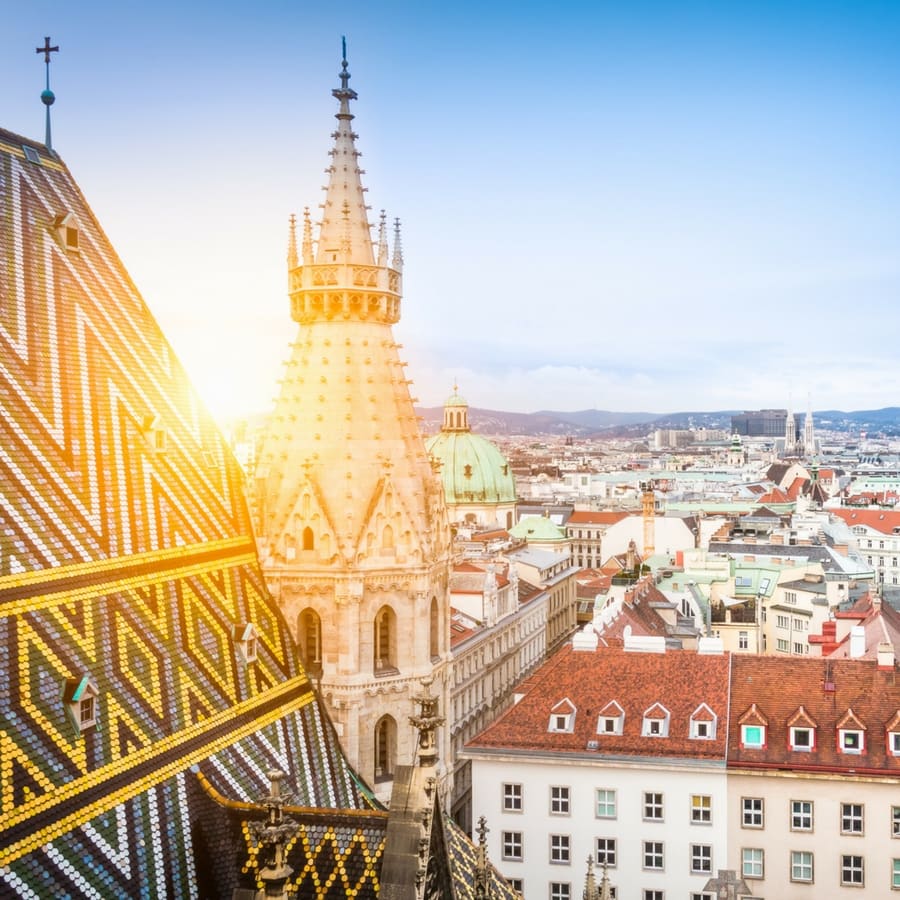
St. Stephen's Cathedral
Visit this awe-inspiring cathedral which is one of the most important and renowned Gothic buildings in Central Europe.
The cathedral is Vienna’s most famous landmark and dominates the Inner City. Founded in 1147 A.D. and built over hundreds of years, it has elements of both Romanesque and Gothic architecture. You can also climb the (many) steps of the tower for a view.
The Graben
Walk the most famous street in Vienna and see stunning monuments and beautiful architecture.
Vienna’s main street since the Middle Ages, this wide pedestrian boulevard abounds in cafes, smart shops, and atmosphere. There are two fountains and a column (built as thanks for the end of the plague), which are beautiful examples of Baroque architecture. Also hidden on the street is the world's most beautiful public restroom.
Mozarthaus
Get to know Mozart in his former apartment, where he spent his happiest years.
Despite his modern-day association with Salzburg, Mozart's time in Vienna was his most productive and happy. Here you can learn about Mozart and what life was like for him and others in the city at the time. You can listen to musical selections and see original scores and other materials.
Peterskirche (Church of St. Peter)
Step into this heavenly 18th-century church featuring incredibly ornate baroque art & architecture.
This church from the early 1700's is Vienna’s first domed baroque building. Amazing architectural details are crammed into the small interior, and glass crypts contain the human remains of martyred saints. There are daily organ recitals in the church.
Jewish Museum
Discover Vienna's rich history of Jewish life.
The museum is located in two separate buildings within the Inner City (one ticket covers both). The branch on the Judenplatz showcases medieval Jewish life, including a virtual tour of life in the 14th century. It is fronted by a monumental Holocaust Memorial. The main branch is located on the street Dorotheergasse.
Evening/Late Evening: Spittelberg Quarter
One of the most enjoyable places for an evening out in Vienna is the Spittelberg quarter. Its narrow lanes are filled with pleasant traditional restaurants. The Spittelberg Quarter’s history stretches back to the 1600’s when the Austrian rulers imported artisans and servants from Hungary, Croatia, and other subject lands to help serve the Emperor’s court.
Day 9
Vienna
Day 9
Vienna
Morning to Afternoon
Tour the Schönbrunn Palace
The magnificent Baroque palace of Schönbrunn is most famously associated with Empress Maria Theresa, who lived here surrounded by 16 little archdukes and duchesses who also happened to be her children. On your tour of the palace, you will see how Maria Theresa and other past imperial residents lived. No visit is complete without a stroll in the vast gardens surrounding the palace.
Afternoon to Early Evening
Along Vienna's Ringstraße (Ring Street)
The Ringstrasse, or the Ring Street, surrounds Vienna's old town where the city walls once stood until the 19th century. The Austro-Hungarian Empire was at the height of its prosperity at the time the walls were torn down, and so it lined the wide Ringstrasse with monumental buildings such as the neo-Gothic town hall and neo-Classical parliament buildling. A fun experience is to take a tram ride around the entire length of the Ringstrasse, soaking in the full richness of the spectacle.
Early Evening to Late Evening
An Evening out in the Wine Village of Grinzing
Nothing better symbolizes the Viennese love of “gemütlichkeit” (roughly translated as coziness) than the wine villages and vineyards which hug the gentle slopes beneath the Vienna woods. They are home to wine taverns known as Heurigen. The most famous of the wine villages is Grinzing, which is easily reached from the city center by tram. Despite its closeness to the city center, a visit to Grinzing seems to transport you to the countryside, as quaint cottages and cozy old farmhouses create a charming village atmosphere.
Day 9 Vienna
Morning to Afternoon: Schönbrunn Palace
The magnificent Baroque palace of Schönbrunn is most famously associated with Empress Maria Theresa, who lived here surrounded by 16 little archdukes and duchesses who also happened to be her children. On your tour of the palace, you will see how Maria Theresa and other past imperial residents lived. No visit is complete without a stroll in the vast gardens surrounding the palace.
Schönbrunn Zoo
Join local families enjoying one of Europe's best zoos.
With an entrance directly connected to the Schönbrunn palace gardens, visiting the zoo can be a great addition to any trip to the palace. Founded as an imperial menagerie in 1752, it is the oldest continually operated zoo in the world, and today is home to many rare species such as giant pandas.
Schönbrunn Gardens
Get lost in the huge imperial gardens.
The beautiful park is a mix of formal gardens and woodlands, and is dotted with enchanting statues & fountains, including a massive fountain of Neptune. The Gloriette pavilion sits on a rise opposite the palace and commands a wonderful view. Kids will love the labyrinth, racing to find the tower at the center of the maze.
Afternoon to Early Evening: Ring Street
The Ringstrasse, or the Ring Street, surrounds Vienna's old town where the city walls once stood until the 19th century. The Austro-Hungarian Empire was at the height of its prosperity at the time the walls were torn down, and so it lined the wide Ringstrasse with monumental buildings such as the neo-Gothic town hall and neo-Classical parliament buildling. A fun experience is to take a tram ride around the entire length of the Ringstrasse, soaking in the full richness of the spectacle.
Rathaus (City Hall)
Get in touch with the local vibe at the Rathausplatz, a huge square in front of the Vienna City Hall.
The 19th-century city hall was built in a fanciful neo-Gothic style with 30 million bricks. It is an important center for social life in the city, hosting balls, concerts, and other events. The square in front of the hall is home to activities all year long, including markets, food fairs, exhibitions, and the city's biggest Christmas Market.
Natural History Museum
Explore one of the world's most important natural history collections.
The museum is a treasure trove of anthropological and archeological exhibits, including dinosaurs and other extinct animals, precious gems, and more. It also holds the famous pre-historic finds from the Austrian village of Hallstatt, where an ancient salt mine was located.
Kunsthistorisches Museum
Find artistic bliss in this lavish 19th-century museum housing art collections & antiquities.
The Kunsthistorisches Museum, or Art History Museum, is one of the world's most important collections of art. It houses many masterpieces as well as ancient and classical art antiquities. Its amazing interior is worth seeing just on its own merits, and includes an incredible mural painted by Gustav Klimt.
Early Evening to Late Evening: Wine Village
Nothing better symbolizes the Viennese love of “gemütlichkeit” (roughly translated as coziness) than the wine villages and vineyards which hug the gentle slopes beneath the Vienna woods. They are home to wine taverns known as Heurigen. The most famous of the wine villages is Grinzing, which is easily reached from the city center by tram. Despite its closeness to the city center, a visit to Grinzing seems to transport you to the countryside, as quaint cottages and cozy old farmhouses create a charming village atmosphere.
Day 10 Train: 3h
Vienna to Budapest
Day 10 Train: 3h
Vienna to Budapest
Morning/Mid-Day
Visit the Karlskirche & Belvedere Palace
Two of Vienna's greatest architectural treasures lie just beyond the Ring Street - the Belvedere Palace and the Karlskirche (St. Charles's Church). Often missed by visitors, these Baroque wonders represent Austria at the peak of its prestige and power and deserve to be on every visitor's list.
Mid-Day/Afternoon
Hip Vienna; the Naschmarkt and Museum Quarter
The centuries-old market known as the Naschmarkt and its surroundings are a great destination for those who love shopping, art, cafes, and nightlife. With a population of students and young professionals this area is one of Vienna’s youngest, and not coincidentally, it’s most hip and bohemian. Even the nearby Museum Quarter is happening, as it's abuzz with activity even well after its outstanding museums have closed.
4:40 PM
Transfer to Station by Taxi or Public Transport
Most trains depart from Vienna Main Station (Wien Hbf) station. If traveling to the west though, there is a good possibility you will leave from the west station (Wien Westbahnhof). Before spending money on a transfer, be sure to check whether your hotel is within easy walking distance. Also consider that public transport is the cheapest and sometimes fastest option. If staying at a hotel, they can order a reliable taxi. Some private transfers will even help with your bags. Uber is also available for those with the app.
17:40 - 20:19
Rail Journey from Vienna to Budapest
The scenic journey to Budapest takes a little less than 3 hours. Even though separated only by a political border, the look and feel of the natural setting changes between Austria and Hungary. It is interesting to consider that the border area used to be a closely guarded and heavily garrisoned no man’s land. During Communism, any Hungarian civilian entering this area risked being shot and killed. Today you will pass empty stations and checkpoints.
8:19 PM
Private Transfer from the Budapest Rail Station
Upon your arrival in Budapest, your driver will meet you on the platform. He will be carrying a sign with your name on it. The driver will drop you off at your hotel. This is a private transfer. The price of the pickup is already included in your itinerary cost so you will not have to pay the driver.
IMPORTANT NOTE: Please be aware the car service can fit up to 1 checked item of luggage and 1 personal item per person, such as a purse or small backpack. If you think you will have more baggage, please inform your travel consultant as this may result in an additional fee.
Day 10 Train: 3hVienna to Budapest
Morning/Mid-Day: Karlskirche & Belvedere Palace
Two of Vienna's greatest architectural treasures lie just beyond the Ring Street - the Belvedere Palace and the Karlskirche (St. Charles's Church). Often missed by visitors, these Baroque wonders represent Austria at the peak of its prestige and power and deserve to be on every visitor's list.
Belvedere Palace
Stroll the Belvedere's gardens, and venture inside the palace for a "Kiss".
Two Baraque palaces are connected by a French-style, three-level garden which features delightful fountains. Originally built as a summer residence of Prince Eugene, it now houses the Belvedere Museum where you will find Gustav Klimt's most famous work - The Kiss.
Karlskirche
Many argue that this baroque church is as beautiful as St. Peter's - see it and decide for yourself.
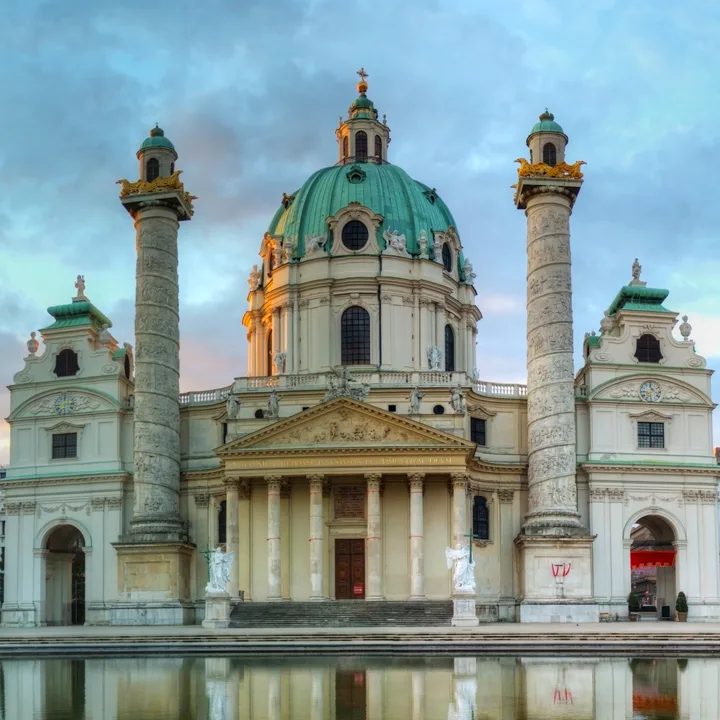
Built between 1716-1737, Emperor Charles VI intended the church to be a thanksgiving for the end of a plague epidemic and dedicated the church to St. Charles Borromeo, who is revered for his care of plague victims. St. Charles was also his namesake, meaning that the church's name evokes the emperor's memory as much as the saint's, which was no accident. Indeed, the two columns in front of the church are meant to represent imperial power.
Mid-Day/Afternoon: Hip Vienna
The centuries-old market known as the Naschmarkt and its surroundings are a great destination for those who love shopping, art, cafes, and nightlife. With a population of students and young professionals this area is one of Vienna’s youngest, and not coincidentally, it’s most hip and bohemian. Even the nearby Museum Quarter is happening, as it's abuzz with activity even well after its outstanding museums have closed.
Leopold Museum
Get acquainted with modern art at one of Vienna's most celebrated artistic collections.
The Leopold hosts the most extensive collection of Egon Schiele works in existence, as well as masterpieces from the Secessionist, Modernist, and Expressionist Movements. Museum visitors can also take a break in a chique roof top café.
MuseumsQuartier
Peruse outstanding art and hang out with the smart crowd.
Once home to the Imperial Stables, the Museumsquartier now hosts several outstanding museums, such as the interactive Zoom Children's Museum. Cafes, bars, and bookstores make this one of Vienna's hippest social scenes. Funky couches and other fun seating arrangements have transformed it into an open-air entertainment district, and on long summer evenings, the sounds of laughter and conversation echo late into the night.
4:40 PM: Taxi Transfer to Rail Station
Most trains depart from Vienna Main Station (Wien Hbf) station. If traveling to the west though, there is a good possibility you will leave from the west station (Wien Westbahnhof). Before spending money on a transfer, be sure to check whether your hotel is within easy walking distance. Also consider that public transport is the cheapest and sometimes fastest option. If staying at a hotel, they can order a reliable taxi. Some private transfers will even help with your bags. Uber is also available for those with the app.
17:40 - 20:19: Train to Budapest
The scenic journey to Budapest takes a little less than 3 hours. Even though separated only by a political border, the look and feel of the natural setting changes between Austria and Hungary. It is interesting to consider that the border area used to be a closely guarded and heavily garrisoned no man’s land. During Communism, any Hungarian civilian entering this area risked being shot and killed. Today you will pass empty stations and checkpoints.
8:19 PM: Private Transfer to Hotel
Upon your arrival in Budapest, your driver will meet you on the platform. He will be carrying a sign with your name on it. The driver will drop you off at your hotel. This is a private transfer. The price of the pickup is already included in your itinerary cost so you will not have to pay the driver.
IMPORTANT NOTE: Please be aware the car service can fit up to 1 checked item of luggage and 1 personal item per person, such as a purse or small backpack. If you think you will have more baggage, please inform your travel consultant as this may result in an additional fee.
Day 11
Budapest
Day 11
Budapest
9:00 AM - 12:30 PM
Best of Budapest: Half-Day Walking Tour of Highlights & Hidden Finds
During your tour you will take in a gorgeous vista of the city from the Fisherman's Bastion, explore the winding streets of the Castle District, gaze in awe at the striking interior of St. Stephen's Basilica, travel along the city's most elegant avenue and more. Along the way you will experience the city as a local does, stopping to check out intimate courtyards, enjoying a pastry and soaking in the ambiance of Budapest's most elegant cafes.
Mid-Day to Late Afternoon
Budapest Castle and the Castle Hill
The historic Renaissance and Baroque architecture of Buda's hilltop Castle District make it feel like a quaint step back in time. Indeed, in the little squares and narrow lanes of the Castle District, you will find the heart of historic Hungary. Numerous points in the Castle District also provide breathtaking views over the Danube and the Pest side of the city.
Late Afternoon to Evening
Gellért Hill, and the Gellért and Rudas Baths
You can enjoy the best view in Budapest from Gellért Hill. Just beneath it you will find two of the city's most famous baths. The Secession-style Gellért baths, with an elegant collonaded main pool and incredible tile-work, and the 500-year-old Rudas Baths, which were built by the Turks when they ruled Hungary.
Day 11 Budapest
9:00 AM - 12:30 PM: Guided Walk in Budapest
During your tour you will take in a gorgeous vista of the city from the Fisherman's Bastion, explore the winding streets of the Castle District, gaze in awe at the striking interior of St. Stephen's Basilica, travel along the city's most elegant avenue and more. Along the way you will experience the city as a local does, stopping to check out intimate courtyards, enjoying a pastry and soaking in the ambiance of Budapest's most elegant cafes.
Mid-Day to Late Afternoon: Castle Hill
The historic Renaissance and Baroque architecture of Buda's hilltop Castle District make it feel like a quaint step back in time. Indeed, in the little squares and narrow lanes of the Castle District, you will find the heart of historic Hungary. Numerous points in the Castle District also provide breathtaking views over the Danube and the Pest side of the city.
Matthias Church
Visit this lovely, late-gothic church and learn its storied history.
This 13th century church is named after King Matthius, who was married here twice. Under Turkish occupation it was converted into a Mosque, then reconverted into a baroque church, and finally was splendidly reinvented in the late 1800's by combining historic elements with neo-Gothic reconstruction. It holds the tomb of Béla III, one of Hungary's tallest medieval kings.
Fisherman's Bastion
Take in stunning panoramic views from this faux fortress with 7 turreted lookout towers.
This fanciful late-19th century creation replaced the original walls where the Fisherman's guild was responsible for town defense. It offers outstanding views of Pest and the river. More photos are taken here than any other place in Budapest. The upper terrace of the bastion offers the best views, but you must pay for entry.
Palace Courtyard
Discover a beautiful fountain in this courtyard in the center of the castle complex.
The north gate into the courtyard features a raven (the symbol of the famed King Matthias) and the south gate features two lions. In the center of the square is a statue of a cowboy and horse from the Hungarian plains. Most strikingly, an ornate fountain shows King Matthias on a hunt and the peasant girl who fell in love with him.
National Gallery
Experience exquisite Hungarian national art in this museum located in the former Royal Palace.
The museum contains the most important collection of Hungarian art works from the 15th century to the modern day. Exquisite Gothic altarpieces, Károly Lotz's Secession-era paintings, and Mihály Munkácsy's tender realism are only a few of its many highlights.
Late Afternoon to Evening: Gellert Hill and Baths
You can enjoy the best view in Budapest from Gellért Hill. Just beneath it you will find two of the city's most famous baths. The Secession-style Gellért baths, with an elegant collonaded main pool and incredible tile-work, and the 500-year-old Rudas Baths, which were built by the Turks when they ruled Hungary.
Gellért Baths
Go for a swim in one of Budapest's most famous and architecturally significant baths.
These early 19th century Secession-style baths are some of city's most popular. They offer open air baths with a wave pool, a glass-ceilinged indoor pool surrounded by columns, and thermal baths separated by sex. The men's thermal baths feature beautiful mosaic tile.
Rudas Baths
Enjoy an otherworldly experience in this 16th-century spa complex with traditional Turkish baths.
These nearly 500 year old steam baths date back to the Turkish occupation. It is a fascinating and exotic experience to bathe beneath the stone cupola, with the dim light filtering through colored stained glass. Bathing is co-ed on weekends, women only on Tuesdays, and men only on other days.
Gellért Hill
Hike up this small mountain in the heart of the city for perfect panoramic views.
A walk up this small hill leads to balconies with scenic views of the Danube. With numerous trails criss-crossing it, the park offers a green oasis in the city and has long been a favorite spot for picnics and weekend outings. The walk to the top is somewhat strenuous, but the park can be enjoyed without making it to the top.
Day 12
Budapest
Day 12
Budapest
Early Morning/Morning
Váci street and the Central Market
The Central Market Hall is a mezzanine shopping arcade first opened in 1897. Today the Central Market teems with activity like small shops and stands offer a remarkable assortment of goods, including fruits and vegetables, meats and cheeses, fish, flowers, and Hungarian specialties. There are also many souvenirs available on the second floor of the market.
Mid-Day/Afternoon
Visiting the Jewish Quarter
Budapest was once the site of one of Europe's largest and most vibrant Jewish communities and contains the world's second largest synagogue – the Dohány Street Synagogue. A visit there is an impressive reminder of the wealth and influence the Jewish community in Hungary once possessed. A small but vibrant Jewish population still inhabits the Jewish Quarter today.
Late Afternoon/Early Evening
Exploring Central Pest
In Central Pest you will discover the beating heart of the city, with grand apartment houses and art nouveau architectural gems. No visit to Budapest is complete without seeing its highlights, including St. Stephen's Basilica, which dramatically rises above the city, and the Chain Bridge, which regally spans the Danube.
Evening/Late Evening
Concert, Ballet, Opera, or other Performance Art
Hungarian musicians, dancers, and actors are some of the world's best and are the product of a long-lasting national obsession with the arts. Much of the city's pride and wealth was devoted to building beautiful concert venues such as the State Opera House and Vigadó concert hall, where you can now enjoy an unforgettable musical experience.
Day 12 Budapest
Early Morning/Morning: Central Market & Váci Street
The Central Market Hall is a mezzanine shopping arcade first opened in 1897. Today the Central Market teems with activity like small shops and stands offer a remarkable assortment of goods, including fruits and vegetables, meats and cheeses, fish, flowers, and Hungarian specialties. There are also many souvenirs available on the second floor of the market.
Váci Street (Váci utca)
Walk one of Budapest's main pedestrian thoroughfares, which is very popular with shoppers and tourists.
The street is lined by shops, boutiques, cafés, and restaurants. Many elegant buildings line the street, most dating to the late19th century. Numerous courtyards and passageways branch off from the street. Although touristy, it is an integral part of the city and an interesting place to stroll.
Promenade
Discover why this pedestrian walkway along the Danube River, with it's beautiful views of the river and castle, is a favorite of both locals and visitors alike.
This promenade above the river embankment was the place to see-and-be-seen in 19th century Budapest. Cafes and luxury hotels lined the promenade, taking advantage of stunning views of the castle. They were destroyed in WWII and replaced with large modern hotels, eliminating some of the charm. The view, however, is still incredible.
Central Market Hall
Shop in a huge market hall built in the late 19th century.
This restored neo-gothic Market Hall is a favorite with visitors but also still visited by locals for its outstanding food stands and grocery stalls on the ground floor. On the upper levels, you can shop for souvenirs and traditional Hungarian goods & crafts.
Mid-Day/Afternoon: Jewish Quarter
Budapest was once the site of one of Europe's largest and most vibrant Jewish communities and contains the world's second largest synagogue – the Dohány Street Synagogue. A visit there is an impressive reminder of the wealth and influence the Jewish community in Hungary once possessed. A small but vibrant Jewish population still inhabits the Jewish Quarter today.
Great Synagogue
Stare in awe at Europe's largest synagogue (and the second largest in the world).
Also known as the Dohány Street Synagogue, it possesses a striking Byzantine Moorish style exterior with an ornate dome, and an opulent interior. Adjacent to it are a memorial to the Holocaust in the form of a weeping willow, and a museum of Jewish culture. Entry is by guided tour only, although wait times can be very long so booking early is recommended.
Szimpla Kert
Discover Budapest's most unique form of nightlife - pubs located in the ruins of old buildings!
Szimpla Kert was the first pub located in a ruin, and it started a trend that is now a Budapest institution. These pubs have an eclectic vibe and are a great place to mix with the locals as well as other visitors. The concept dates back to the early 2000s when entrepreneurs took over abandoned spaces within dilapidated buildings for underground events. The 7th district, i.e. the Jewish Quarter, is the best place to find them.
Holocaust Memorial Center
Learn about the Holocaust in a former synagogue which honors Hungarian Jews killed in WWII.
The refurbished 1920s synagogue now serves as a museum and memorial for Hungarian Jewish victims of the Holocaust. It also functions as a documentation center. Note, it is actually not located in the Jewish Quarter, which is in Budapest's 7th District, but the nearby 9th District.
Late Afternoon/Early Evening: Central Pest
In Central Pest you will discover the beating heart of the city, with grand apartment houses and art nouveau architectural gems. No visit to Budapest is complete without seeing its highlights, including St. Stephen's Basilica, which dramatically rises above the city, and the Chain Bridge, which regally spans the Danube.
St. Stephen's Basilica
Enjoy an awe-inspiring visit to this vast cupola-topped church; the most famous in Budapest.
Completed in 1905, the construction of the neo-classical Catholic church took over 50 years. The mummified hand of Hungary's first king, St. Stephen, is kept in a small chapel in the rear. Take a lift to the dome to enjoy one of Budapest's most interesting panoramic views. The church hosts frequent concerts.
Széchenyi Chain Bridge
Stroll across a beautiful landmark 19th-century suspension bridge which is a symbol of Budapest.
This was Budapest's first permanent bridge over the Danube, enabling the cities of Buda and Pest to merge. Named after Count István Széchenyi, it hangs from iron chains (hence, the Chain Bridge) anchored by two towering river piers. These piers were the only elements to survive WWII fighting. The rest was rebuilt.
Café Gerbeaud
Enjoy a leisurely coffee and cake in one of Budapest's most storied cafes.
Over 160 years old, with a grand, high-ceilinged dining room, the cafe is deservedly one of Budapest's most popular attractions. It serves coffee, mouthwatering Hungarian pastries, and traditional bistro dishes. It retains the elegance and sophistication of its 19th century origins, and the terrace sits on the lively Vörösmarty Square.
Gresham Palace
Take a peak at this pearl of art nouveau architecture, which now houses a Four Seasons Hotel.
The hotel doesn't mind tourists exploring the lavish arcade on the first floor, as it is lined by shops and a café. Be sure to note the organic themes of the façade and the beautiful wrought iron peacock gate on the north side of the building.
Evening/Late Evening: Concert Evening
Hungarian musicians, dancers, and actors are some of the world's best and are the product of a long-lasting national obsession with the arts. Much of the city's pride and wealth was devoted to building beautiful concert venues such as the State Opera House and Vigadó concert hall, where you can now enjoy an unforgettable musical experience.
Day 13
Budapest
Day 13
Budapest
Morning
Hungarian Parliament and its Surroundings
The Hungarian Parliament building is a magnificent sight as it rises above the waters of the Danube, and the interior is also quite jaw-dropping. As a visitor, you may even feel a bit overwhelmed by the sumptuous décor and attention-to-detail. You could be forgiven for expecting a queen to arrive or an aristocratic ball to break out at any moment.
Afternoon/Late Afternoon
Andrássy Avenue & the State Opera House
The wide, tree-lined Andrássy Avenue is Budapest's most prominent street, and is lined by imposing neo-Renaissance palaces and buildings. It is home to the breathtakingly beautiful State Opera House, making it the musical heart of Hungary. You will also find the superb House of Terror museum, which focuses on the horrors inflicted by 20th century totalitarian regimes.
Early Evening/Evening
Szechenyi Baths, Vajdahunyad Castle, Zoo, and Heroes' Square
The Széchenyi Baths are the largest and the most popular of all the city's baths. With eighteen indoor and outdoor pools and impressive neo-Baroque architecture, the baths make for an unforgettable visit. Nearby, you will find the fascinating Vajdahunyad Castle, a delightful zoo, and the monumental Heroes’ Square, which tells a 1,000-year old tale of Hungarian history.
Day 13 Budapest
Morning: Hungarian Parliament & Nearby
The Hungarian Parliament building is a magnificent sight as it rises above the waters of the Danube, and the interior is also quite jaw-dropping. As a visitor, you may even feel a bit overwhelmed by the sumptuous décor and attention-to-detail. You could be forgiven for expecting a queen to arrive or an aristocratic ball to break out at any moment.
Hungarian Parliament
Tour this massive and stunning Gothic Revival–style edifice with a guide.
The Parliament is ostentatious, but undeniably grand and beautiful. A teeming mass of spires, arches, and towers surrounds the central dome, beneath which the royal crown of Hungary lies under armed guard. Tours of the lavish interiors include the crown, parliament chambers, and grand entry hall. Pre-purchasing tickets is recommended as they often sell out well in advance.
Former Museum of Ethnography
This building once housed the Hungarian Supreme Court and the Ethnographic museum. The museum is relocating to City Park and will open in 2022.
It was the second place winner in the competition to design the Hungarian Parliament. Many believe it is as beautiful at the Parliament, especially it's interiors.
Shoes on the Danube Bank
Reflect at a waterside sculpture of shoes memorializing the victims of fascism who died at this spot.
This moving memorial consists of empty shoes by the riverbank. Near the end of World War II a fascist party took control in Hungary. Jews were lined up along the river bank, forced to step out of their shoes (so they could be collected later), and then machine gunned into the river.
Afternoon/Late Afternoon: Andrássy Avenue
The wide, tree-lined Andrássy Avenue is Budapest's most prominent street, and is lined by imposing neo-Renaissance palaces and buildings. It is home to the breathtakingly beautiful State Opera House, making it the musical heart of Hungary. You will also find the superb House of Terror museum, which focuses on the horrors inflicted by 20th century totalitarian regimes.
State Opera House & Opera Metro Station
Experience an unforgettable visit to the incredibly lavish neo-Renaissance Hungarian State Opera House.
The Opera House is a symbol of the Hungarian nation and is one of it's most beautiful buildings. It is among the world's finest venues in terms of beauty and acoustics. When completed in 1886, the Austro-Hungarian Emperor was said to be upset because it outshone the opera house of Vienna. You can experience a performance here, or take an entertaining guided tour.
House of Terror Museum
Experience a chilling museum documenting the terrors of Fascism & Communism in Hungary .
This somber and foreboding interactive museum tells the tragic story of Hungary's totalitarian experiences under Fascism and Communism. It is located in the headquarters building of the Arrow Cross Party (Hungarian fascists), and later the Communist secret police after WWII. Hear stories of those who suffered as well as their oppressors, and wander the dank cells where victims were tortured and interrogated.
Early Evening/Evening: Szechenyi Baths and Nearby
The Széchenyi Baths are the largest and the most popular of all the city's baths. With eighteen indoor and outdoor pools and impressive neo-Baroque architecture, the baths make for an unforgettable visit. Nearby, you will find the fascinating Vajdahunyad Castle, a delightful zoo, and the monumental Heroes’ Square, which tells a 1,000-year old tale of Hungarian history.
Heroes' Square
A dramatic square at the end of Adrássy Avenue, displaying statues of the leaders of 7 tribes who founded Hungary.
The vast square was the center of the Millenium celebrations in 1896, which celebrated Hungary's 1,000th anniversary. The Millenium Monument features a central column and two massive colonnades. The column is topped by the Archangel Gabriel, who offered the crown to Hungary's first king, Stephen. Along the base of the column and colonnades are romantic representations of Hungarian historical figures. The two chariots atop the colonnades represent war and peace.
Vajdahunyad Castle
This fantastical castle with a boating lake shows the evolution of Hungarian architecture in its elaborate design.
Built for the 1896 Millenium celebrations as a temporary exhibit, the castle proved so popular that it was rebuilt as a permanent structure. It's divided into sections by architectural style as a demonstration of the historical phases of Hungary. Each section is fashioned after a renowned Hungarian example of that architectural style.
Budapest Zoo
One of Europe's most enjoyable zoos with hundreds of animal species and historic architecture throughout the park.
The Secession style architecture of the buildings is a delight, incorporating animals and natural themes into the structures. Adjacent to the zoo is Holnemvolt Park, which combines animal exhibits with theme park rides. One ticket covers both.
Day 14
Depart Budapest
Day 14
Depart Budapest
To Be Determined
Transfer to Airport by Taxi
Budapest has one main airport, Budapest Ferenc Liszt International Airport, where almost all visitors depart. Your hotel can arrange a reliable taxi (there is no Uber in Budapest). You can also arrange a private transfer. If you are picked up about two hours and forty-five minutes before your departure time, you should arrive at the airport with about two hours to spare, depending on traffic. If you are leaving during rush hour, you may want to budget an extra fifteen to thirty minutes.
Day 14 Depart Budapest
To Be Determined: Taxi Transfer to Airport
Budapest has one main airport, Budapest Ferenc Liszt International Airport, where almost all visitors depart. Your hotel can arrange a reliable taxi (there is no Uber in Budapest). You can also arrange a private transfer. If you are picked up about two hours and forty-five minutes before your departure time, you should arrive at the airport with about two hours to spare, depending on traffic. If you are leaving during rush hour, you may want to budget an extra fifteen to thirty minutes.
How Booking Works
Get Your Free Itinerary
Choose your dates, travelers and hotel level. Your personalized plan is free, with no commitment.
Fine-Tune It with an Expert
Swap hotels, add or drop tours and change the pace with your travel consultant until it fits.
Pay a Deposit When You're Happy
Your trip is booked once you approve the itinerary and pay the deposit. Nothing is charged before that.
What's Included in Central European Grand Tour Trip
Pre-Paid Tours and Activities
Prague Castle & Royal Route Guided Walk
Guided Walk in Český Krumlov
Guided Hike to Maidenstone Castle (Dívčí Kámen)
Guided Walking Tour of Salzburg
Guided Walk through Vienna's Inner City
Best of Budapest: Half-Day Walking Tour of Highlights & Hidden Finds
Pre-Paid Transportation
2nd Class Train Tickets from Salzburg to Vienna
2nd Class Train Tickets from Vienna to Budapest
Bus Tickets from Prague-Český Krumlov
Shuttle Service from Cesky Krumlov to Salzburg
Public Transport Tickets for Vienna
Private Transfer to the Bus Station in Prague
Private Transfer from the Budapest Rail Station
Accommodation
3 nights at a hotel of your choice in Prague
2 nights at a hotel of your choice in Cesky Krumlov
1 nights at a hotel of your choice in Salzburg
3 nights at a hotel of your choice in Vienna
4 nights at a hotel of your choice in Budapest
Go Real Travel Mobile App
Itinerary Plan & Reservations Info
Points of Interest
Detailed Travel Information
Maps & Directions
City guides
Explore Cities in More Detail
Get a feel for each stop before you build your route.
The city of Prague is indisputably the gem of Central Europe. Full of history, culture, and classic Czech pubs around every corner, Prague is teeming with nooks and crannies just waiting to be discovered. The narrow cobblestone streets and warm red rooftops give the city a homey feel, while the well-preserved medieval architecture transports you back in time. Walking across the Charles Bridge with the view of the Prague Castle will make you feel like you’re living in a fairytale, and you might as well be.
As an up-and-coming destination, Prague is a perfect mix of classic and modern. New trendy cafes and bistros are always popping up, and you can always find a group of lively locals chowing down on goulash and quaffing pivo (the best beer in Europe!) at traditional Czech restaurants across the city. The clash of modernity and tradition, preservation and innovation, gives this city a mysterious air that you won’t soon forget.
Cesky Krumlov is a charming little town in South Bohemia. It might be small, but it’s full of whimsical character and mystery. Walking through the narrow streets and across the bridge, the views of the medieval Cesky Krumlov Castle will take your breath away. At night, street musicians serenade visitors on the bridge where you can dance beneath the stars and the watchful eye of the magnificent tower.
Dozens of unique local artisan shops, cafes, and restaurants are woven among the winding streets. In the summer, the city is lush with life and greenery. Rafters race down the river, stopping in the center along the way to enjoy a hearty meal before continuing their journey. In the winter, the main square transforms into a magnificent Christmas market and light blankets of snow cover the rooftops. This quaint little town will exceed your expectations and you may never want to leave.
You've probably heard this before— the city of Salzburg is straight out of a fairytale. Nestled in the mountains, this romantic city's Baroque architecture with colorful domes and spires is especially striking against the ancient fortress and Austrian Alpine backdrop. If you're looking for an amazing view, climb up to Hohensalzburg Fortress, Central Europe's largest intact fortress, for a jaw-dropping panorama of the city backed by misty mountains.
Perhaps most famous for being the birthplace of the renowned composer Wolfgang Amadeus Mozart and the filming location for the classic The Sound of Music, this city has much to offer. Salzburg has become an important artistic and cultural center, featuring magnificent concert halls that uphold the city's tradition of classical music every day of the year, as well as acclaimed art exhibitions and museums. If you do it right, your visit to Salzburg will immerse you in the city's unforgettable atmosphere and keep you coming back for more.
Artistic and musical, historical and elegant, Vienna is the definition of class. The seat of the Habsburg monarchy for over six centuries, it's no wonder this city is still fit for royalty. Baroque buildings and imperial palaces dominate the cityscape, while locals stride gracefully through the streets, likely on their way to a classical music concert or art exhibition. Visitors from all over the world flock to Schonbrunn Palace, historical museums, and local eateries for authentic Viennese schnitzel.
Vienna is also home to world-class wining and dining. Famous dishes include Wiener schnitzel, Tafelspitz (prime boiled beef), and apfelstrudel (apple strudel), all of which pair well with a glass of fine Austrian wine. No matter how long you spend in Vienna, you'll leave with a new appreciation for the finer things in life.
Situated at the heart of Europe, Budapest is the capital of Hungary, appropriately named 'The Pearl of the Danube,' for its fixating and almost haunting beauty. Formerly two separate cities, Buda and Pest were forged into one by time, occupation, and the eight bridges that anchor them together today. From the Romans to the Communists, each occupier left its flavor profile in Budapest, evident in the famous spicy Hungarian stew known as 'goulash.'
Budapest is a melting pot of history, culture, and taste, from the magnificent Baroque and neo-Gothic architecture to the Turkish thermal baths. After a long day of sightseeing, treat yourself to a glass of Tokaj, what King Louis XIV of France referred to as the "Wine of Kings, King of Wines". Budapest has a flavor to satisfy any taste.
Real travelers · real journeys
Reviews From Similar Trips
See what travelers who went to these destinations have to say.
4.9/5
Average traveler rating
Based on 362 traveler reviews
Trustpilot (255)
Facebook (53)
Go Real Travel Reviews (54)
Recommends us Facebook
Went on a two week trip with this company! And cannot express how amazing it was! Safe comfortable, just enough freedom to do whatever we wanted, but also the safety of know they were with you the whole trip if you needed them. Will use them again! Highly recommended! Amazing! Shout out to Martin our beer guide in Prague!�
Recommends us Facebook
I told our travel consultant (Martin) that if this trip executed as well as it planned, GoRealEurope would have my recommendation and it DOES. Six of us recently returned from a vacation to Prague, Cesky Krumlov, Salzburg, Vienna, and Budapest. We very impressed with all that GoRealEurope did to help the vacation go smoothly. What I would MOST recommend are the 1/2 day private guided tours in each city, given by a local but arranged by GoRealEurope. All shuttles, taxis, and guides arrived as scheduled. Hotels were conveniently located and clean. Train travel and public transportation were thoroughly explained. We did have to contact Martin about an event and he responded to our concern promptly. All in all, a great travel experience. Thanks, GoRealEurope!
Recommends us Facebook
My wife and I (both mid 60's) just returned from a 2 week trip - Prague - Salzburg - Vienna - Budapest organized with Go Real Europe. Excellent in every respect. We discussed interests and preferences and built a plan with our Go Real Agent (Martin). He selected great hotels located within or close to top spots. We visited almost everything on foot. Everything close. Transportation between cities well explained and made easy....really easy. All ticketing provided in advance. Arranged pick-ups to drive us to and from train and bus stations. Private tours in each city by people with deep knowledge of history....great. Go Real's trip designed travel guide had great suggestions and detailed directions on how to get to each site. Best of all however was Go Reals support service. We had a few personal items that had to be worked around. Access to Go Real support was immediate and adjustments easily accommodated. Go Real gave us personal designed travel with all the support and ease of travel one could expect. Better than group tours......flexible, specific to your tastes and well supported.
What Travelers Say About Go Real Travel
Our latest reviews from across all trips on Trustpilot.
Other Trips You May Like
10 Days
From$2249USD
Perfect Whirlwind Itinerary to Prague, Salzburg, Vienna & Budapest