
History, Architecture, and Countryside Cycling in Krakow
 3 Day Tour of Krakow
Destinations on this trip: Krakow
Overview
Trip Map
Itinerary
Inclusions
Reviews





How Long Is the History & Cycling in Krakow Trip and What Does It Cost?
 Duration3 days / 2 nights
- Best timeJan-Dec
 From$419 / person (Flights not included)
- Visit Schindler's Factory Museum to reveal horrific but also hopeful stories of World War II.
- Uncover the enduring spirit of one of Europe's most influential Jewish communities in Kazimierz
- Take a journey back in time and discover Poland's royal and architectural heritage in Wawel Castle.
- The cobblestone paths of Krakow's Old Town lead explorers to Gothic, Renaissance, & Baroque wonders.
- Cycle along the Vistula River to find the tranquility of Tyniec Monastery, Poland's oldest.
- Visit Schindler's Factory Museum to reveal horrific but also hopeful stories of World War II.
- Uncover the enduring spirit of one of Europe's most influential Jewish communities in Kazimierz
- Take a journey back in time and discover Poland's royal and architectural heritage in Wawel Castle.
- The cobblestone paths of Krakow's Old Town lead explorers to Gothic, Renaissance, & Baroque wonders.
- Cycle along the Vistula River to find the tranquility of Tyniec Monastery, Poland's oldest.


Must see sights
Starting from
$419
per person
 Not included
 Price varies by group size, hotel selection, and travel season.
Secure Your Customizable Trip
Enter your details to embark on a journey that can be tailored just for you.
Start
Travelers
Preferred Hotel Stars

Craft Your Own Itinerary
Select your interests and destinations for a trip plan inspired by you.
Where Does the History & Cycling in Krakow Trip Trip Go?
| ← | Move left |
| → | Move right |
| ↑ | Move up |
| ↓ | Move down |
| + | Zoom in |
| - | Zoom out |
| Home | Jump left by 75% |
| End | Jump right by 75% |
| Page Up | Jump up by 75% |
| Page Down | Jump down by 75% |


Click To Make Map Interactive
History & Cycling in Krakow Trip Timeline
Arrival
2 nights
Krakow
Poland
Departure
What Does the History & Cycling in Krakow Trip Itinerary Look Like?
Day 1
Arrive Krakow

Day 1
Arrive Krakow


Mid-Day/Afternoon
Schindler's Factory Museum
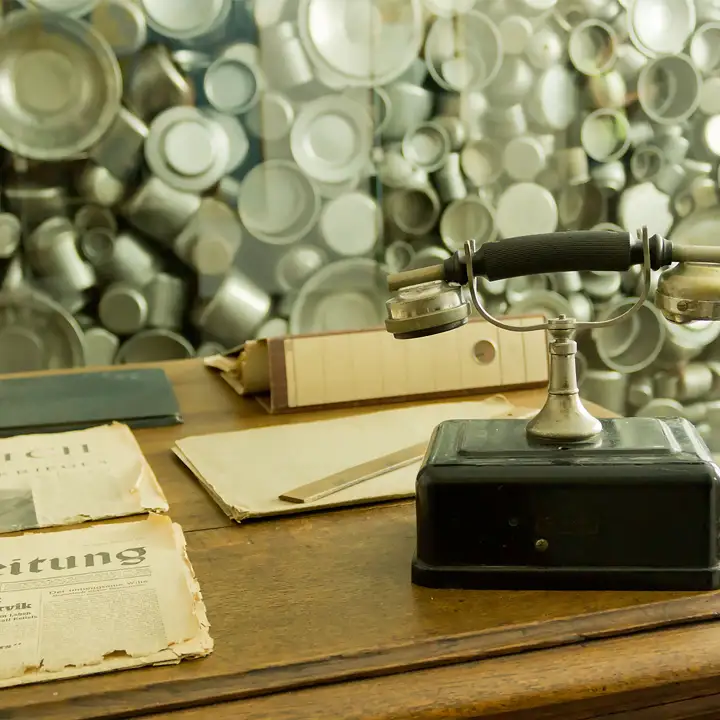
During World War II Oscar Schindler saved the lives of more than 1,100 Jews by employing them in his enamelware factory in Krakow. Until recently still used as a factory, the building now houses one of Europe's most impressive new museums. It tells not only the story of Schindler and the Jews he protected, but of the wider experience of Krakow during World War II.


Wander the streets of the former Jewish Ghetto.
Show MoreWander the streets of the former Jewish Ghetto.
Show MoreWander the streets of the former Jewish Ghetto.
Show MoreDay 1
Arrive Krakow

Day 1
Arrive Krakow
To Be Determined:
Private Krakow Airport Pickup
Mid-Day/Afternoon:
Schindler's Factory Museum
Late Afternoon/Early Evening:
Jewish Quarter
Schindler's Factory Museum
OverviewSchindler's Factory Museum
During World War II Oscar Schindler saved the lives of more than 1,100 Jews by employing them in his enamelware factory in Krakow. Until recently still used as a factory, the building now houses one of Europe's most impressive new museums. It tells not only the story of Schindler and the Jews he protected, but of the wider experience of Krakow during World War II.
Podgórze
 Highlight of Schindler's Factory Museum
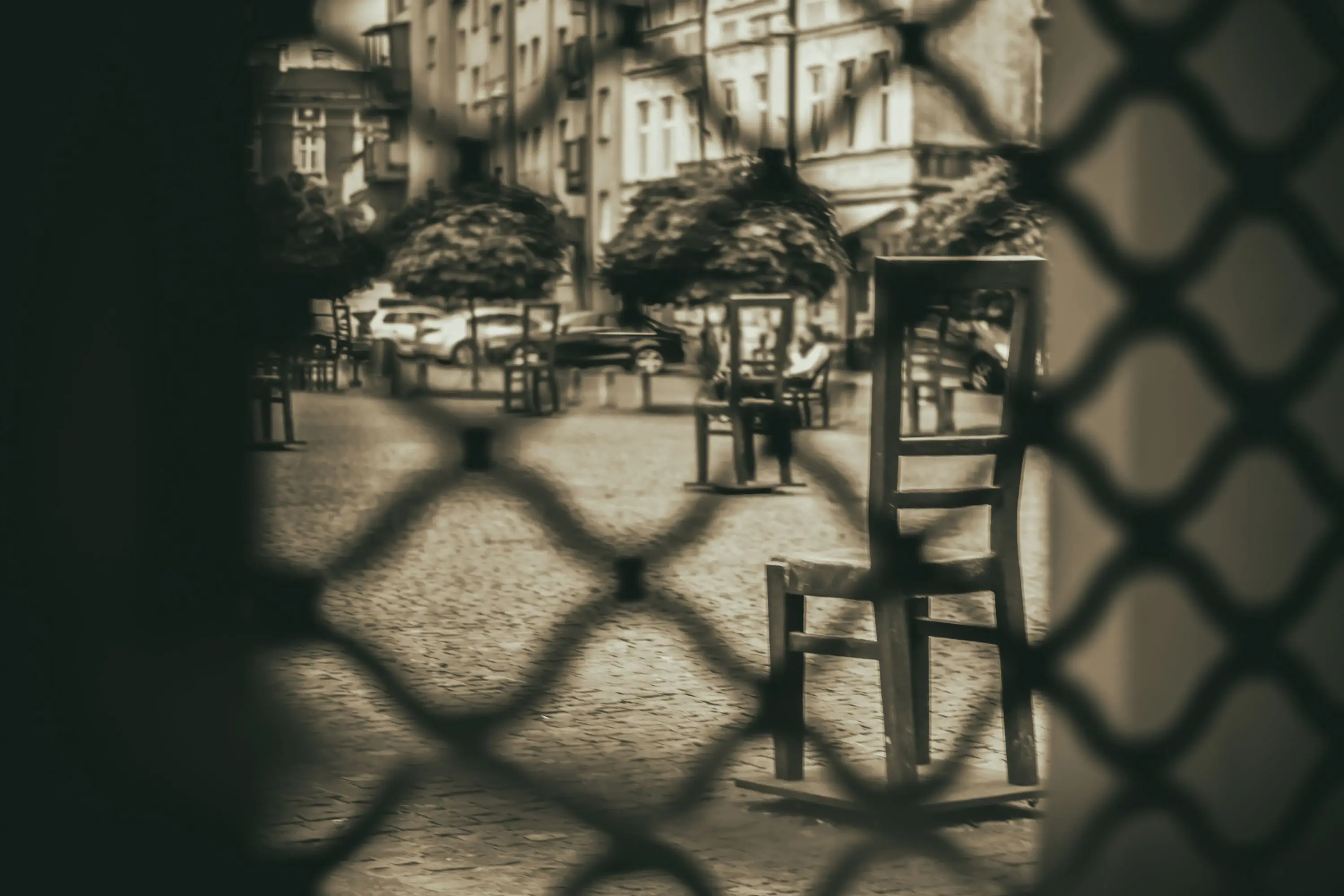
Wander the streets of the former Jewish Ghetto.
Podgórze is the neighborhood where the Krakow Jewish Ghetto was located. At the beginning of the war, only about 3,000 people lived in the district, but over 15,000 Jews were forcibly moved there and surrounded by tall walls and guarded gates. In 1942-3 the ghetto was "liquidated", with residents sent to either labor camps or extermination camps, or simply murdered in the streets. A couple small sections of the wall and a memorial of empty chairs (each chair representing a 1,000 victims) on the ghetto square are among the very few remaining physical reminders of the ghetto. On the corner of the square, you can also visit the small museum of the Apteka pod Orlem (Pharmacy under the Eagle), which was the only pharmacy allowed to operate in the ghetto. The Polish Catholic owner requested permission to operate within the ghetto and provided medical supplies to residents, often for free. Both he and Oscar Schindler were honored by Israel as "Righteous Among the Nations".
Schindler's Factory Museum
OverviewSchindler's Factory Museum
During World War II Oscar Schindler saved the lives of more than 1,100 Jews by employing them in his enamelware factory in Krakow. Until recently still used as a factory, the building now houses one of Europe's most impressive new museums. It tells not only the story of Schindler and the Jews he protected, but of the wider experience of Krakow during World War II.
Podgórze
Highlight of Schindler's Factory MuseumWander the streets of the former Jewish Ghetto.
Podgórze is the neighborhood where the Krakow Jewish Ghetto was located. At the beginning of the war, only about 3,000 people lived in the district, but over 15,000 Jews were forcibly moved there and surrounded by tall walls and guarded gates. In 1942-3 the ghetto was "liquidated", with residents sent to either labor camps or extermination camps, or simply murdered in the streets. A couple small sections of the wall and a memorial of empty chairs (each chair representing a 1,000 victims) on the ghetto square are among the very few remaining physical reminders of the ghetto. On the corner of the square, you can also visit the small museum of the Apteka pod Orlem (Pharmacy under the Eagle), which was the only pharmacy allowed to operate in the ghetto. The Polish Catholic owner requested permission to operate within the ghetto and provided medical supplies to residents, often for free. Both he and Oscar Schindler were honored by Israel as "Righteous Among the Nations".
Schindler's Factory Museum
OverviewSchindler's Factory Museum
During World War II Oscar Schindler saved the lives of more than 1,100 Jews by employing them in his enamelware factory in Krakow. Until recently still used as a factory, the building now houses one of Europe's most impressive new museums. It tells not only the story of Schindler and the Jews he protected, but of the wider experience of Krakow during World War II.
Podgórze
Highlight of Schindler's Factory MuseumWander the streets of the former Jewish Ghetto.
Podgórze is the neighborhood where the Krakow Jewish Ghetto was located. At the beginning of the war, only about 3,000 people lived in the district, but over 15,000 Jews were forcibly moved there and surrounded by tall walls and guarded gates. In 1942-3 the ghetto was "liquidated", with residents sent to either labor camps or extermination camps, or simply murdered in the streets. A couple small sections of the wall and a memorial of empty chairs (each chair representing a 1,000 victims) on the ghetto square are among the very few remaining physical reminders of the ghetto. On the corner of the square, you can also visit the small museum of the Apteka pod Orlem (Pharmacy under the Eagle), which was the only pharmacy allowed to operate in the ghetto. The Polish Catholic owner requested permission to operate within the ghetto and provided medical supplies to residents, often for free. Both he and Oscar Schindler were honored by Israel as "Righteous Among the Nations".
Day 2
Krakow
Day 2
Krakow


9:30 AM - 12:30 PM
Krakow Guided Walk
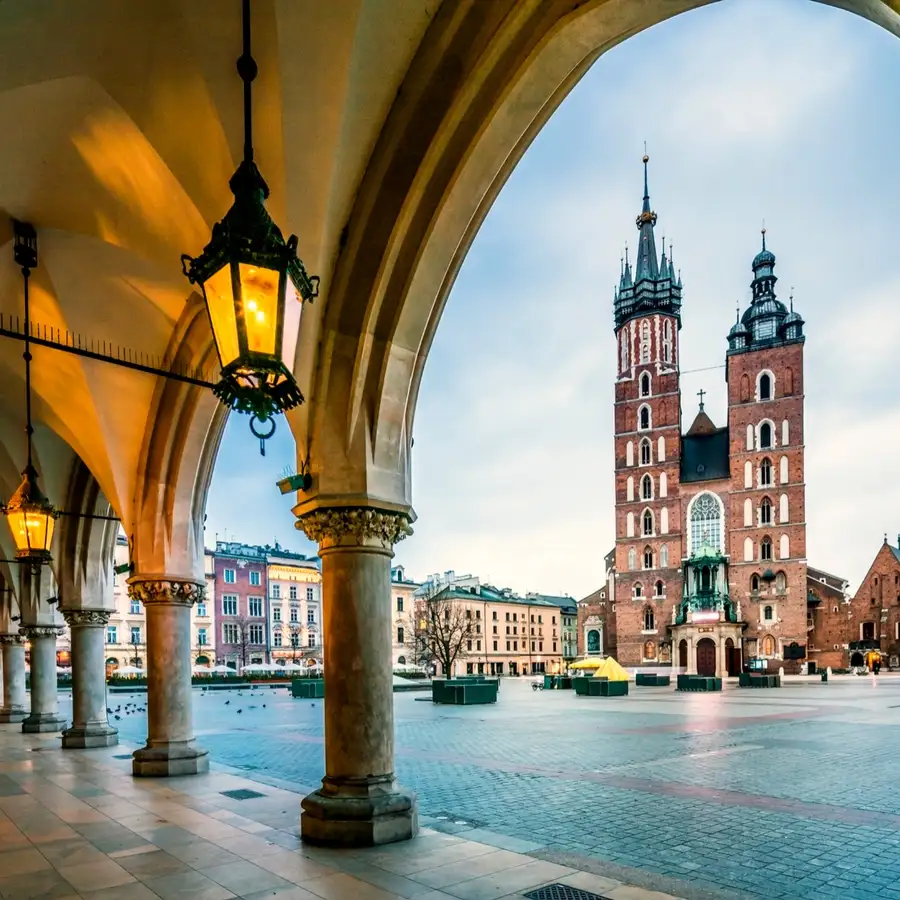
On this three-hour guided walking tour, you will discover the history and legends of old Krakow and gain an excellent overview of the city. The many layers of the city will be revealed to you as your guide points out medieval, Renaissance, and Baroque architecture. You will learn about not only Krakow's glory days many centuries past but also about its more recent struggles during Nazism and Communism oppression.

Show More

Take home something special from a vast market hall built in the 14th century, which is surrounded by arcaded passageways and topped with rows of gargoyles.
Show More
Show More
Take home something special from a vast market hall built in the 14th century, which is surrounded by arcaded passageways and topped with rows of gargoyles.
Show MoreShow More
Day 2
Krakow

Day 3
Depart Krakow
Day 3
Depart Krakow

Morning/Mid-Day
Tyniec Monastery
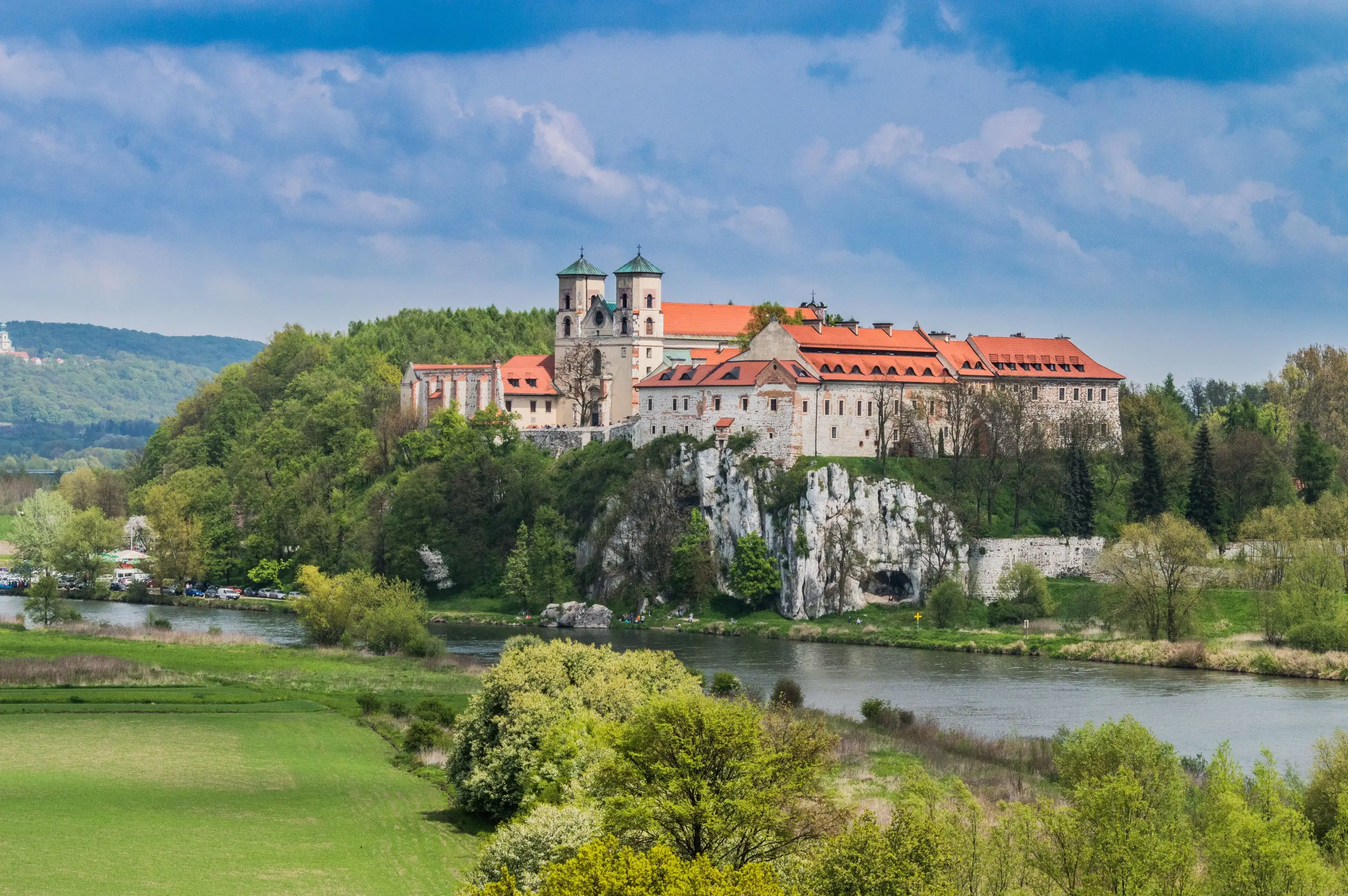
Poland's oldest monastery is neatly perched above the Vistula River only about 15 kilometers from Krakow. The Benedictine Abbey in Tyniec combines nearly 1,000 years of history with a perfect setting overlooking the scenic countryside. Visitors to the abbey can also shop for honey, beer, sweets, cosmetics, and other natural products made by the monks. You can reach the abbey by an enjoyable cycling trip along the river.
Day 3
Depart Krakow
What's Included in the History & Cycling in Krakow Trip Trip?
Pre-Paid Tours and Activities:
- Walking Tour of Krakow's Historic Center
- City Card for Krakow, including discounts to many popular attractions

Pre-Paid Transportation:
- Public Transport Tickets for Krakow
- Arrival in Krakow and Transfer by Private Car to Hotel

Accommodation:
- 2 nights at a hotel of your choice in Krakow

Go Real Travel Mobile App:
- Itinerary Plan & Reservations Info
- Points of Interest
- Detailed Travel Information
- Maps & Directions
Other Trips You May Like




Featured Blogs



Our Customers Say It Best


Malini Dutta, Boston, Massachusetts

Bev and Mark Frankel, Williamsburg, Virginia
Marianne Strydom, Paarl, South Africa
Otto Chuy, Los Angeles, California
Malini Dutta, Boston, Massachusetts
Bev and Mark Frankel, Williamsburg, Virginia
Marianne Strydom, Paarl, South Africa
Otto Chuy, Los Angeles, California
Malini Dutta, Boston, Massachusetts
Bev and Mark Frankel, Williamsburg, Virginia
Marianne Strydom, Paarl, South Africa
Otto Chuy, Los Angeles, California



Explore cities in more detail
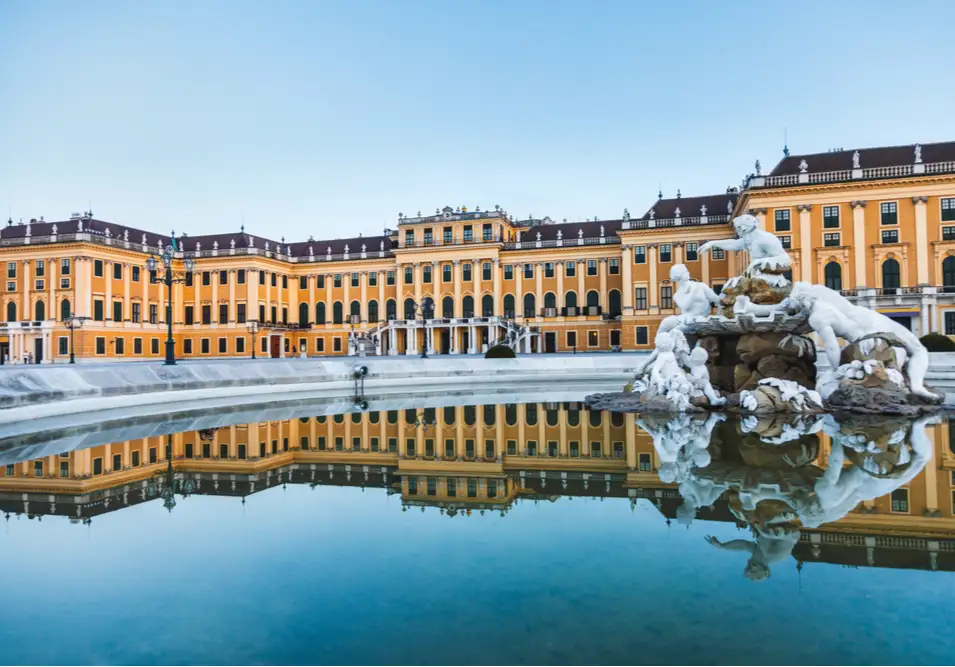
Vienna
Artistic and musical, historical and elegant, Vienna is the definition of class. The seat of the Habsburg monarchy for over six centuries, it's no wonder this city is still fit for royalty. Baroque buildings and imperial palaces dominate the cityscape, while locals stride gracefully through the streets, likely on their way to a classical music concert or art exhibition. Visitors from all over the world flock to Schonbrunn Palace, historical museums, and local eateries for authentic Viennese schnitzel. Vienna is also home to world-class wining and dining. Famous dishes include Wiener schnitzel, Tafelspitz (prime boiled beef), and apfelstrudel (apple strudel), all of which pair well with a glass of fine Austrian wine. No matter how long you spend in Vienna, you'll leave with a new appreciation for the finer things in life.
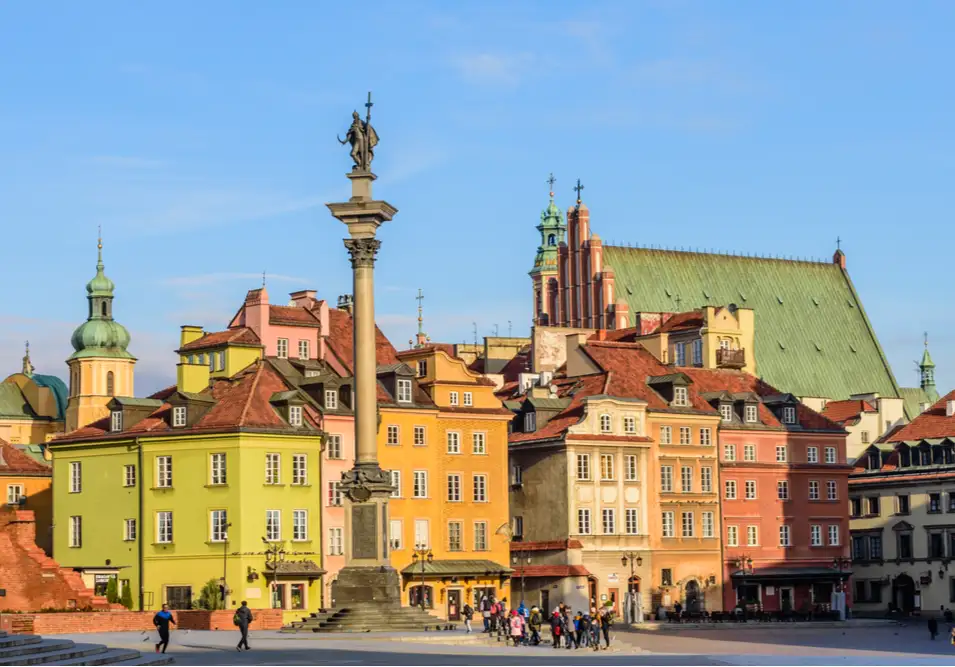
Warsaw
Warsaw is a place that seems almost indestructible. Nearly bombed out of existence in World War II, the city rebuilt itself out of the rubble, and today it’s a shining example of a thriving European capital with a lot to offer. History forms a big part of Warsaw’s allure. Occupied by the Nazis, and losing much of its Jewish population to the Holocaust, Warsaw has several museums dedicated to remembering its dark past. The Warsaw Uprising Museum, POLIN Museum of the History of Polish Jews, and National Museum are among the most prominent. Although its past has been troubled, Warsaw’s present is anything but. The city contains countless opportunities for fun, with a blossoming nightlife scene and a vibrant cafe culture. After a day of wandering through the old streets and charming squares, there are plenty of places to enjoy a meal, from high-end restaurants to affordable milk bars. Warsaw is a place for reflection and remembrance, but also a place that looks firmly towards the future, a future that for this city— appears increasingly bright.
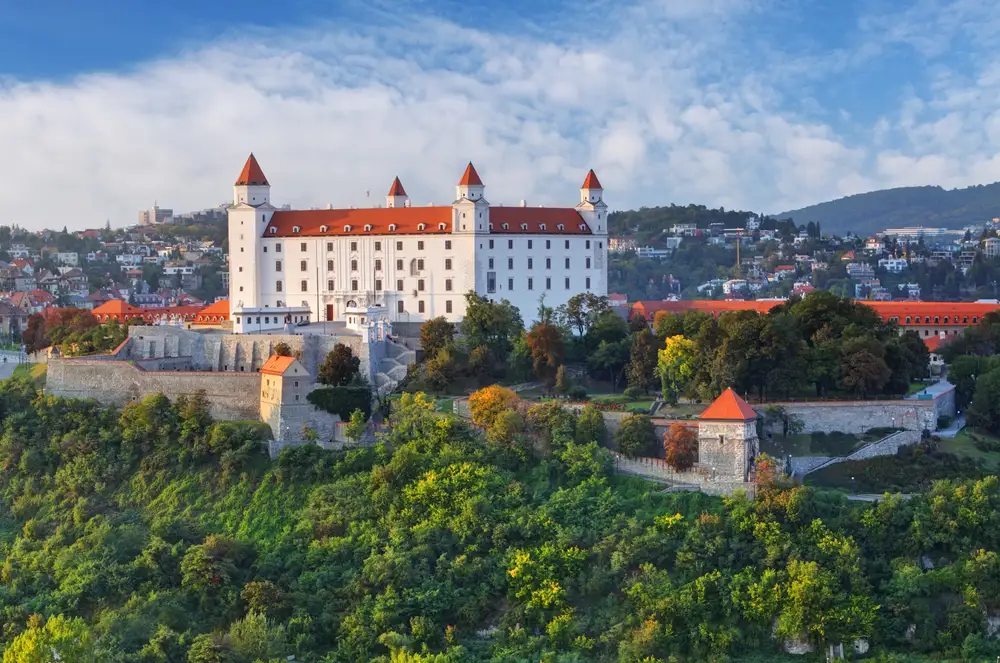
Bratislava
Bratislava is one of the most up-and-coming cities in central Europe. After years in the shadows of the Soviet bloc, and often drowned out by Prague, Bratislava has finally broken out. The Bratislavan region is now one of the richest per capita in the EU. This economic upswing has infused Bratislava with a newfound zeal. Trendy cafes and cool shopping centers are popping up everywhere, and the city’s already happening nightlife scene is only set to get better. Still less crowded than its central European neighbors Prague, Vienna, and Budapest, but just as intriguing, there’s really never been a better time for a visit to Bratislava. Ruled over by the Hungarians, Austrians, and most recently the Soviets, Bratislava is a city of strange contrasts. As soon as you arrive in Bratislava, you’ll see the pastel-hued churches, baroque houses, and the cobbled Old Town Square brush shoulders with modern brutalist buildings, retrofuturistic towers, and the clunky communist built UFO bridge. The city’s oldest building, its castle, is set atop the western edge of the Little Carpathian Hills like a trophy, the city’s hard-won main icon. For the first time in nearly a millennium, Bratislava has now seized control of its own destiny, and it shows.
Krakow
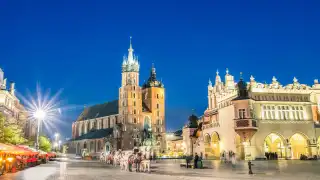
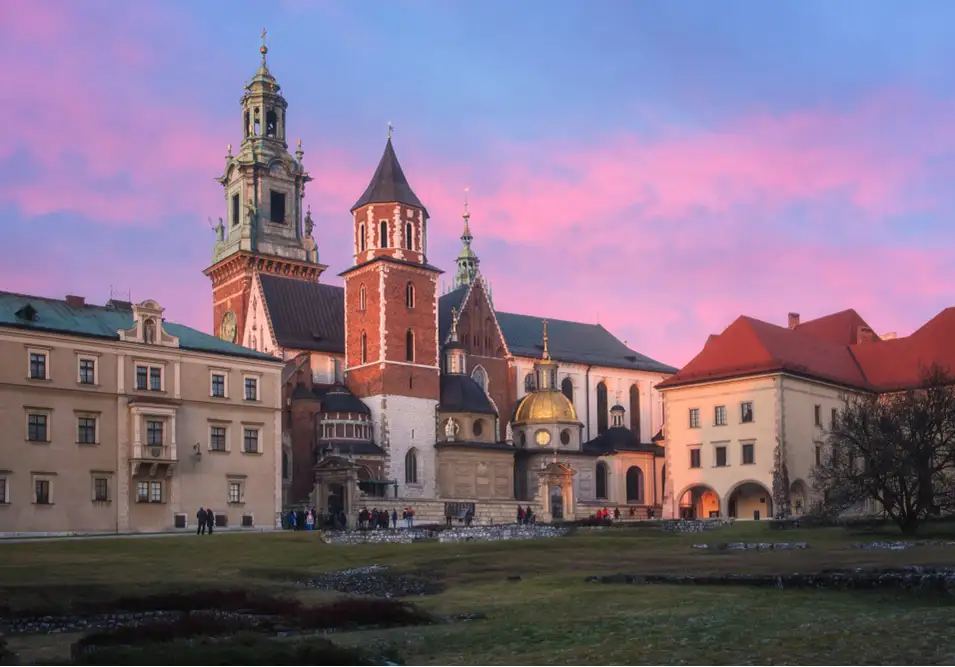
Krakow is a city in the south of Poland and the country’s former royal capital. Thought to have been inhabited for tens of thousands of years, the history here seems to sit comfortably alongside the vibrant, young city that is Krakow today. The main market square at Krakow’s center is overlooked by St Mary’s Basilica, a perfect example of Polish Gothic architecture and a UNESCO World Heritage Site. The square itself is usually filled with life, as the pubs and restaurants around the edges spill out onto the sidewalks. Winter is cold here, but that’s just a perfect excuse to slip inside a cozy, well-heated pub and sip hot mulled wine over a hearty Polish dinner. With all of Krakow’s heady charm, it can be easy to forget the all-too-recent atrocities that occurred in this region. A short trip to the Auschwitz-Birkenau concentration camp nearby, where the Nazis committed their genocide, provides a sober but important reminder of that past. A hard past exists alongside a happy and electric present in Krakow, a city that has endured centuries of trials and emerged looking better than ever.
Budapest
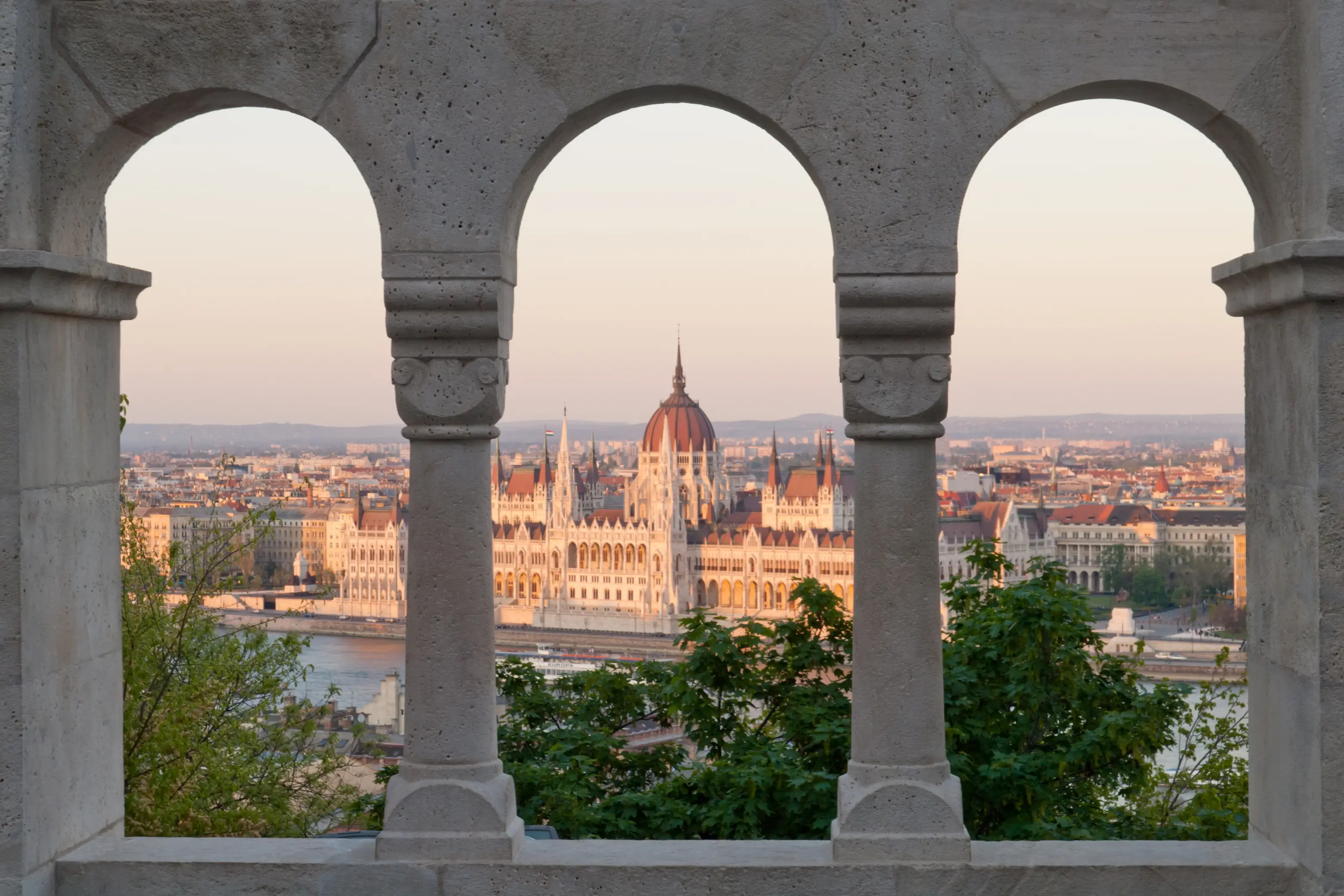
Situated at the heart of Europe, Budapest is the capital of Hungary, appropriately named 'The Pearl of the Danube,' for its fixating and almost haunting beauty. Formerly two separate cities, Buda and Pest were forged into one by time, occupation, and the eight bridges that anchor them together today. From the Romans to the Communists, each occupier left its flavor profile in Budapest, evident in the famous spicy Hungarian stew known as 'goulash.' Budapest is a melting pot of history, culture, and taste, from the magnificent Baroque and neo-Gothic architecture to the Turkish thermal baths. After a long day of sightseeing, treat yourself to a glass of Tokaj, what King Louis XIV of France referred to as the "Wine of Kings, King of Wines". Budapest has a flavor to satisfy any taste.
Prague
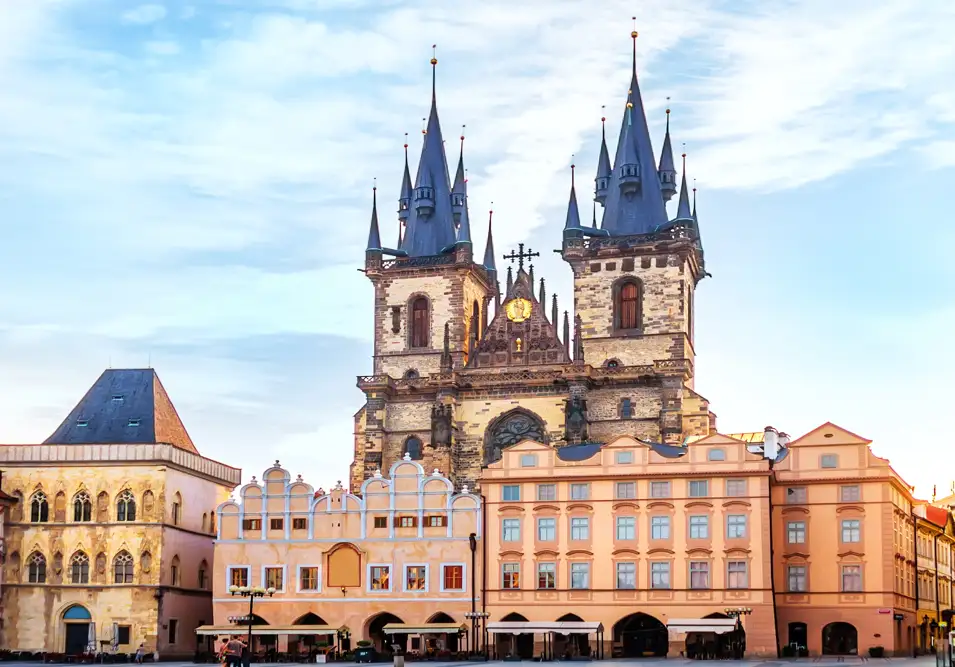
The city of Prague is indisputably the gem of Central Europe. Full of history, culture, and classic Czech pubs around every corner, Prague is teeming with nooks and crannies just waiting to be discovered. The narrow cobblestone streets and warm red rooftops give the city a homey feel, while the well-preserved medieval architecture transports you back in time. Walking across the Charles Bridge with the view of the Prague Castle will make you feel like you’re living in a fairytale, and you might as well be. As an up-and-coming destination, Prague is a perfect mix of classic and modern. New trendy cafes and bistros are always popping up, and you can always find a group of lively locals chowing down on goulash and quaffing pivo (the best beer in Europe!) at traditional Czech restaurants across the city. The clash of modernity and tradition, preservation and innovation, gives this city a mysterious air that you won’t soon forget.
Vienna
Artistic and musical, historical and elegant, Vienna is the definition of class. The seat of the Habsburg monarchy for over six centuries, it's no wonder this city is still fit for royalty. Baroque buildings and imperial palaces dominate the cityscape, while locals stride gracefully through the streets, likely on their way to a classical music concert or art exhibition. Visitors from all over the world flock to Schonbrunn Palace, historical museums, and local eateries for authentic Viennese schnitzel. Vienna is also home to world-class wining and dining. Famous dishes include Wiener schnitzel, Tafelspitz (prime boiled beef), and apfelstrudel (apple strudel), all of which pair well with a glass of fine Austrian wine. No matter how long you spend in Vienna, you'll leave with a new appreciation for the finer things in life.
Warsaw
Warsaw is a place that seems almost indestructible. Nearly bombed out of existence in World War II, the city rebuilt itself out of the rubble, and today it’s a shining example of a thriving European capital with a lot to offer. History forms a big part of Warsaw’s allure. Occupied by the Nazis, and losing much of its Jewish population to the Holocaust, Warsaw has several museums dedicated to remembering its dark past. The Warsaw Uprising Museum, POLIN Museum of the History of Polish Jews, and National Museum are among the most prominent. Although its past has been troubled, Warsaw’s present is anything but. The city contains countless opportunities for fun, with a blossoming nightlife scene and a vibrant cafe culture. After a day of wandering through the old streets and charming squares, there are plenty of places to enjoy a meal, from high-end restaurants to affordable milk bars. Warsaw is a place for reflection and remembrance, but also a place that looks firmly towards the future, a future that for this city— appears increasingly bright.
Bratislava
Bratislava is one of the most up-and-coming cities in central Europe. After years in the shadows of the Soviet bloc, and often drowned out by Prague, Bratislava has finally broken out. The Bratislavan region is now one of the richest per capita in the EU. This economic upswing has infused Bratislava with a newfound zeal. Trendy cafes and cool shopping centers are popping up everywhere, and the city’s already happening nightlife scene is only set to get better. Still less crowded than its central European neighbors Prague, Vienna, and Budapest, but just as intriguing, there’s really never been a better time for a visit to Bratislava. Ruled over by the Hungarians, Austrians, and most recently the Soviets, Bratislava is a city of strange contrasts. As soon as you arrive in Bratislava, you’ll see the pastel-hued churches, baroque houses, and the cobbled Old Town Square brush shoulders with modern brutalist buildings, retrofuturistic towers, and the clunky communist built UFO bridge. The city’s oldest building, its castle, is set atop the western edge of the Little Carpathian Hills like a trophy, the city’s hard-won main icon. For the first time in nearly a millennium, Bratislava has now seized control of its own destiny, and it shows.
Krakow
Krakow is a city in the south of Poland and the country’s former royal capital. Thought to have been inhabited for tens of thousands of years, the history here seems to sit comfortably alongside the vibrant, young city that is Krakow today. The main market square at Krakow’s center is overlooked by St Mary’s Basilica, a perfect example of Polish Gothic architecture and a UNESCO World Heritage Site. The square itself is usually filled with life, as the pubs and restaurants around the edges spill out onto the sidewalks. Winter is cold here, but that’s just a perfect excuse to slip inside a cozy, well-heated pub and sip hot mulled wine over a hearty Polish dinner. With all of Krakow’s heady charm, it can be easy to forget the all-too-recent atrocities that occurred in this region. A short trip to the Auschwitz-Birkenau concentration camp nearby, where the Nazis committed their genocide, provides a sober but important reminder of that past. A hard past exists alongside a happy and electric present in Krakow, a city that has endured centuries of trials and emerged looking better than ever.
Budapest
Situated at the heart of Europe, Budapest is the capital of Hungary, appropriately named 'The Pearl of the Danube,' for its fixating and almost haunting beauty. Formerly two separate cities, Buda and Pest were forged into one by time, occupation, and the eight bridges that anchor them together today. From the Romans to the Communists, each occupier left its flavor profile in Budapest, evident in the famous spicy Hungarian stew known as 'goulash.' Budapest is a melting pot of history, culture, and taste, from the magnificent Baroque and neo-Gothic architecture to the Turkish thermal baths. After a long day of sightseeing, treat yourself to a glass of Tokaj, what King Louis XIV of France referred to as the "Wine of Kings, King of Wines". Budapest has a flavor to satisfy any taste.
Prague
The city of Prague is indisputably the gem of Central Europe. Full of history, culture, and classic Czech pubs around every corner, Prague is teeming with nooks and crannies just waiting to be discovered. The narrow cobblestone streets and warm red rooftops give the city a homey feel, while the well-preserved medieval architecture transports you back in time. Walking across the Charles Bridge with the view of the Prague Castle will make you feel like you’re living in a fairytale, and you might as well be. As an up-and-coming destination, Prague is a perfect mix of classic and modern. New trendy cafes and bistros are always popping up, and you can always find a group of lively locals chowing down on goulash and quaffing pivo (the best beer in Europe!) at traditional Czech restaurants across the city. The clash of modernity and tradition, preservation and innovation, gives this city a mysterious air that you won’t soon forget.
Hi! Need help planning your dream trip? 🌍
Go Real Travel Assistant
OnlineWelcome! Where are you in your journey?
Pick the option that fits you best so we can route you to the right help.